Another Japanese boiling water reactor calls its quits and moves to decommission. This the fifth Japanese boiling water reactor in a week pulled from even having hope of restart along with Fukushima Daini 1 through 4. Who says “operating experience” isn’t shrinking for boiling water reactors in USA and around the world?
02 August 2019
Tohoku Electric Power Company has applied to Japan’s Nuclear Regulation Authority (NRA) for approval of its decommissioning plan for unit 1 of the Onagawa nuclear power plant in Miyagi Prefecture. The company announced in October 2018 its decision to scrap the unit as it said required safety upgrades would be too expensive and time-consuming.
Unit 1 of the 524 MWe boiling water reactor (BWR) that began operations in 1984 is of a different design to the other two larger (825 MWe) BWR units there, which began operating in 1995 and 2002, respectively. Tohoku also operates a single 1100 MWe BWR at its Higashidori plant in Aomori Prefecture, which started operation in late 2005. Tohoku plans to restart units 2 and 3 at the Onagawa plant, as well as its Higashidori plant.
Last October, Tohoku said a problem unique to Onagawa 1 is the restricted space within its containment vessel in which to install additional safety equipment, such as fire extinguishing equipment, power supply equipment and alternative water injection pumps. It decided to decommission the unit after taking into account its generating capacity and the number of years it would be able to operate if it were restarted. Onagawa 1 became the tenth operable Japanese reactor to be declared for decommissioning since the March 2011 Fukushima Daiichi accident.
Its decommissioning plan for the unit, which it submitted to the NRA on 29 July, outlines the facilities and equipment to be dismantled and a timetable for completing the work. Decommissioning will take about 34 years and will be carried out in four stages. The first stage, lasting about eight years, will involve preparing the reactor for dismantling (including the removal of all fuel and surveying radioactive contamination), while the second, lasting seven years, will be to dismantle peripheral equipment from the reactor and other major equipment. The third stage, taking about nine years, will involve the demolition of the reactor itself, while the fourth stage, taking about ten years, will see the demolition of all remaining buildings and the release of land for other uses.
During the first stage, all fuel is to be removed from the operation of Onagawa 1. This includes 821 used fuel assemblies stored in unit 1’s storage pool, which will be transferred to unit 3’s storage pool. These assemblies will later be transported for reprocessing, together with 95 used fuel assemblies from unit 1 currently stored at unit 2 and 66 stored at unit 3. There are also 41 unused fuel assemblies stored at unit 1.
A total 60 tonnes of high-level radioactive waste is expected to be generated through the decommissioning of Onagawa 1, together with 740 tonnes of low-level waste and 5340 tonnes of very low-level waste. A further 12,400 tonnes of non-radioactive waste will also be generated through the clearance of the site.
Tohoku said it expects the decommissioning of the unit to cost a total of JPY41.9 billion (USD392 million), with dismantling activities costing JPY30.0 billion and waste disposal accounting for the remainder.
In March 2015, the Ministry of Economy, Trade and Industry’s Agency for Natural Resources and Energy revised the accounting provisions in the Electricity Business Act, whereby electric power companies can now calculate decommissioning costs in instalments of up to 10 years, instead of one-time as previously. This enhanced cost recovery provision was to encourage the decommissioning of older and smaller units.
The Onagawa plant is on Japan’s northeastern coast and was the closest plant to the epicentre of the earthquake and tsunami of 11 March 2011. Although the earthquake knocked out four of the five external power lines, the remaining line provided sufficient power for the plant’s three reactors to be brought to cold shutdown. Onagawa 1 briefly suffered a fire in the non-nuclear turbine building. A mission from the International Atomic Energy Agency in August 2012 concluded the plant had been largely unaffected by the tsunami as it sits on an elevated embankment more than 14 metres above sea level.
All the nuclear power plants that had operated in Fukushima Prefecture will be decommissioned. This should mark the end of one chapter and promote progress in the area’s reconstruction from the March 2011 Great East Japan Earthquake.
At a board meeting, Tokyo Electric Power Company Holdings Inc. formally decided to scrap all four reactors at the utility’s Fukushima No. 2 nuclear power plant.
Although the power plant was damaged in the 2011 catastrophe, it escaped the kind of major accident that befell the Fukushima No. 1 nuclear power plant. After the disaster, the No. 2 plant served as a rear support base for the No. 1 plant.
TEPCO probably intended to restart operations at the No. 2 plant to help lift its profitability. However, the prefecture and local authorities passed a string of resolutions calling on TEPCO to retire the nuclear plant, so the decision to decommission the reactors can be described as unavoidable.
Decommissioning of the No. 2 plant will be done at the same time as the No. 1 plant is being scrapped. Nuclear fuel at the No. 1 plant melted, so decommissioning work there will be considerably more difficult than it would at undamaged reactors. People are unable to approach the reactor cores because of high radiation levels, so removing the melted fuel will be done by remote control. This is a special situation without precedent anywhere in the world.
Sophisticated technology will be needed to carry out decommissioning work under such extreme conditions. Perhaps this should be considered from the perspective of being an opportunity to make the surrounding area a central hub for decommissioning technologies.
Major domestic manufacturers have been developing technologies such as robots that can enter and inspect the reactor cores. Foreign companies keen to acquire knowledge about decommissioning technologies also are interested in this process.
Treated water still problem
A local plant construction company will be involved in some of the demolition work that has started at the Fukushima No. 1 plant. The company plans to use special cutting equipment it developed to steadily dismantle a 120-meter-tall exhaust stack next to a reactor building.
If more orders for work like this were placed with local companies, it would create new industries and jobs and give impetus to the region’s recovery.
Decommissioning the reactors will take 40 years. Continually securing the required human resources also will be a challenging task.
For the time being, the biggest problem will be disposing of contaminated water that has been generated ever since the nuclear accident.
More than 1 million tons of treated water — contaminated water that has undergone purification — is being stored in more than 900 huge tanks. These tanks occupy much of the ground at the Fukushima No. 1 plant and are becoming an impediment to decommissioning work.
There is a limit to the storage space available for this water. Fishing cooperatives and other groups oppose the option of discharging into the sea treated water containing amounts of the radioactive substance tritium diluted to below the government’s standard. If the sea discharge is to go ahead, the government must carefully explain the situation to gain the understanding of local residents and groups.
The decision to scrap the Fukushima No. 2 plant brings the number of nuclear reactors locked in for decommissioning to 24 — almost half of the reactors in Japan. From the viewpoint of ensuring a stable supply of energy, it is necessary to seek the restart of the remaining nuclear plants after making sure they are safe to operate.
Dismantling work begins Aug. 1 to slice a highly contaminated exhaust stack into parts at the stricken Fukushima No. 1 nuclear power plant complex.
A crane hoists a dismantling mechanism to the top of an exhaust stack at the Fukushima No. 1 nuclear power plant site.
Work begins Aug. 1 to dismantle an exhaust stack at the Fukushima No. 1 nuclear power plant site.
A crane lifts a dismantling mechanism toward the top of an exhaust chimney on the Fukushima No. 1 nuclear power plant site
August 2, 2019
Delicate work got under way Aug. 1 at the crippled Fukushima No. 1 nuclear power plant to dismantle an unstable exhaust stack that is so highly contaminated by radiation the task must be done by remote control.
Initial plans had called for the work to start in March, but the project was delayed by a failure among other things to confirm design plans that led operator Tokyo Electric Power Co. to deploy a crane that was not up to the task.
The exhaust stack, which is 120 meters tall and 3.2 meters in diameter, was used for the No. 1 and No. 2 reactors.
The work is regarded as a crucial phase in the decommissioning of the plant, a task that is projected to take decades and cost billions of yen.
When the nuclear disaster unfolded in March 2011, vapor containing highly radioactive substances was released through the stack. Metal poles used to support the chimney were found to have been damaged following a hydrogen explosion at the No. 1 reactor.
Radiation levels around the base of the stack are believed to be still too high for humans to work in, so the dismantling work must be done by remote control.
There are also concerns that the chimney could collapse. TEPCO plans to dismantle the upper half of the structure by the end of the current fiscal year.
A remote control room was set up in a large remodeled bus located about 200 meters from the site. Workers will operate the special cutting equipment while watching footage from 140 video cameras.
Immediately after the triple meltdown at the Fukushima No. 1 plant, radiation levels at the base of the chimney exceeded more than 10 sieverts per hour. In 2015, radiation levels still hovered at 2 sieverts per hour, the highest among all outdoor areas of the plant.
A 750-ton crane is being used to hoist the dismantling mechanism over the exhaust chimney.
The work was supposed to begin around 7:30 a.m. on Aug. 1 with the cutting of ladders and electric cables at the base of the chimney. But some of the equipment did not function properly because of problems with a telecommunications system.
Work finally started around noon.
From Aug. 2, the dismantling mechanism will be used to slice parts of the chimney from the top. The dismantled pieces will be stored in the grounds of the Fukushima No. 1 plant.
Although plans call for dismantling the upper part of the stack by the end of March 2020, strong winds and other weather conditions could cause delays.
The dismantling mechanism was developed and is being operated by construction company Able Co., based in Okuma, Fukushima Prefecture, where the Fukushima No. 1 plant is located.
It is unusual for a local company to be involved in such a key project on-site, but a company official said, “As a local company, we want to respond to the expectations of the local community by successfully completing the project without incident.”
Eight years after the nuclear disaster in Fukushima, there are still high levels of poverty among mothers who fled the region with their children. Atomic Refugee Moms follows three mothers who struggle to give their children hope for their future.
TEPCO officially decides to abolish Fukushima Daini nuclear plant
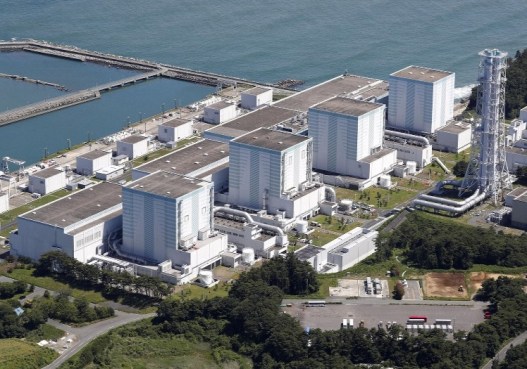
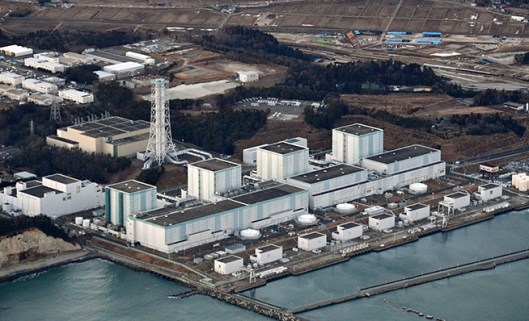
This photo taken from a Kyodo News helicopter on June 14, 2018, shows the Fukushima Daini nuclear power plant in Fukushima Prefecture, northeastern Japan.
July 31, 2019
TOKYO (Kyodo) — Tokyo Electric Power Company Holdings Inc. officially decided Wednesday at a board meeting to abolish the Fukushima Daini nuclear complex near the Daiichi plant crippled by the March 2011 disaster.
It means that all 10 nuclear reactors in the northeastern prefecture, including the six at the Fukushima Daiichi complex, will be scrapped, though this will take decades. TEPCO President Tomoaki Kobayakawa met Fukushima Gov. Masao Uchibori and reported the decision.
The decommissioning work of the four nuclear reactors at the Daini plant will likely cost some 280 billion yen ($2.6 billion) and require more than 40 years. The power company plans to build an on-site facility to store spent nuclear fuel from the plant, though it has yet to pick a final disposal site for the fuel.
The Daini complex started the four reactors’ commercial operation from 1982 to 1987. The nuclear power plant was also hit by the tsunami in the 2011 disaster, temporarily losing key cooling functions, but managed to avoid meltdowns that occurred at the Daiichi plant.
The prefecture has called for scrapping the Daini plant, saying its existence has been hampering reconstruction efforts.
Fukushima gov. accepts TEPCO decision to scrap Daini nuclear plant
This photo taken on June 14, 2018, shows the Fukushima Daini nuclear power plant in the northeastern Japan prefecture of Fukushima
July 31, 2019
FUKUSHIMA, Japan (Kyodo) — Fukushima Gov. Masao Uchibori said Tuesday his prefecture will accept Tokyo Electric Power Company Holdings Inc.’s recent decision to scrap the Fukushima Daini nuclear complex near the Daiichi plant crippled by the March 2011 disaster.
In a meeting with Tomoaki Kobayakawa, the president of the utility known as TEPCO, the governor also accepted its plan to build an on-site storage facility to store spent nuclear fuel.
The decision means all 10 nuclear reactors in the northeastern prefecture, including the six at the Fukushima Daiichi complex 12 kilometers from the Daini plant, will be scrapped, though the decommissioning work will take decades.
The March 2011 earthquake and tsunami did not cause serious structural damage to the Daini plant, while three of the reactors at the Daiichi complex experienced meltdowns.
TEPCO’s decision to scrap the Daini complex, expected to cost around 280 billion yen ($2.6 billion), will be formally approved at the company’s board meeting on Wednesday.
“I’m grateful that I received a certain degree of understanding. We will proceed (with the decommissioning) with a renewed sense of responsibility,” Kobayakawa said in the meeting with the governor.
Uchibori and Kobayakawa discussed TEPCO’s plan last week, with the governor saying that while he welcomed the scrapping of the reactors he needed to consult the towns hosting the complex about the storage facility.
TEPCO has not picked a final disposal site for the spent fuel from the Daini complex, raising concern among local residents that the radioactive nuclear waste may remain stored on-site for a long time.
“The premise is that the nuclear fuel will be transported out of the prefecture. Temporary storage for the time being is unavoidable,” Uchibori said.
He later told reporters TEPCO had assured him that the storage facility would not be permanent.
The Daini plant currently has around 10,000 assemblies of spent fuel cooling in pools.
The scrapping of the Daini plant also means that the central government’s annual subsidies of around 1 billion yen ($9.2 million) each for the towns of Naraha and Tomioka that host the facility will eventually be terminated.
Revenue linked to the nuclear plant, from property taxes and in other forms, accounted for 25 percent of Naraha’s total revenue and 40 percent of Tomioka’s.
Uchibori said he will ask the government to take into account “the financial situation of the two towns in view of the special circumstances relating to the decommissioning.”
It is morally wrong to conceal or manipulate data! Doing so can and will “enshrine the withholding of life-enhancing or life-saving treatment for victims of radiation exposure.” It will also hinder current and future studies into the effects of radiation.
July 19, 2019
This article relies heavily on postings at Fukushima Voice version 2e. Revelations and analysis below would be impossible without the painstaking translations and thoughtful discussion Fukushima Voice provides.
As the Fukushima nuclear catastrophe unfolded in March 2011, experts began applying lessons (some poorly learned or incomplete) from other nuclear disasters, primarily Chernobyl. After Chernobyl, it took nearly a decade for official experts to admit what data were revealing: exposure to radioiodine, one of the nuclides released from nuclear power disasters, increases thyroid cancer. Those who were children at the time of their exposure were particularly vulnerable. As radioactive clouds blanketed the areas surrounding the melting Fukushima reactors, officials were conflicted about the application of stable potassium iodide (KI) to keep radioiodine from penetrating the thyroids of members of the public.
Shunichi Yamashita, a doctor who had studied thyroid cancers in the Chernobyl-contaminated areas, expected no impact from radioiodine exposure. Reports differ, however, with some saying that Yamashita was publicly claiming no danger, while secretly telling experts he had serious concern about child thyroid cancer. He encouraged those who may have been exposed to protect themselves against radiation by being in a good mood and laughing. FMU had taken the precautionary measure of distributing KI to its staff members and their children. FMU claimed this was to cajole nervous hospital staff into staying during the initial disaster, rather than to protect their health. The staff, however, was sworn to secrecy regarding this decision. Fukushima Prefecture failed to tell FMU to administer KI to the public. FMU waited for Yamashita to inform the issue and he said taking KI was unnecessary, so many in the public were left unprotected. “Yamashita admitted that he had given incorrect information shortly after the disaster when he advised FMU not to dispense potassium iodide tablets to children.” After he had made his decision, he reportedly looked at the fallout maps and said “Oops”.
In the wake of continuing contamination threat and public concern, the Fukushima Prefectural government tasked FMU with overseeing the Fukushima Health Management Survey (FHMS) of which thyroid ultrasound examinations (TUEs) were to be a part. Oversight committees were formed to issue reports on data collected through the FHMS. Yamashita was put in charge of the FHMS, making those who had claimed there was no danger from radioiodine exposure the ones in charge of researching the results of their mistake. In fact, Yamashita has “commented that the main aim of the Health Survey is to reassure people.”
Later, when Dr. Yamashita stepped down as head of the FHMS (he remains Vice President of FMU), some claimed he was leaving not because he ran the study poorly, but because he failed to communicate properly. (Yamashita is still involved with the study – his name appearing on much of the published research ostensibly based on FMU data.) Yet from the outset, FMU has provided incomplete and misleading thyroid data from the FHMS to the oversight committees, resulting in reports that are confusing, with conclusions that even by the committee’s reckoning are unreliable. Outside researchers have also noticed this poor quality. Despite obvious shortcomings, Fukushima thyroid data are being wielded to alter the way we study radiation’s impact on thyroid, and to downplay the world-wide increases current research is revealing.
Missing and misused data
FMU is keeping some primary clinical and demographic data hidden, even from the oversight committees, despite the committees’ repeated requests that these data be shared. FMU shares analytical results that are derived from this data but these results are often manipulated – such as with comparisons to data from Chernobyl data that have been misrepresented. At the most recent press conference, June 3, 2019, committee members were asked to grade the conclusions of their report based on the information provided by FMU. They graded the report reliability at under 60%, citing lack of dose information and missing cases.
FMU has failed to report all the thyroid surgeries conducted either by it or other facilities. Since childhood thyroid cancers are rare under normal circumstances, missing even one case can skew data results. Further, FMU has changed data presentation so that it is not comparable to previously collected data. This will probably curtail current, independent, ongoing research into any connection between thyroid cancers and radiation exposure.
FMU often uses methodologies for data analysis that are unclear, illogical, and therefore unable to be explained (Makino, in publication) much less replicated. Attempts to correct some of these shortcomings have not fully succeeded. Much of the data uncertainty is only discernible to those with Japanese language skills. The datasets have never been published in their entirety in Japanese and the fact that data are missing has never been officially disclosed in English.
For any health study, the most reliable data come from comparing disease outcomes among those who were exposed to the pollutant in question (in this case radioiodine), to those who were unexposed. Having an unexposed population is especially important when it is hard to know what level people were exposed to. The amount of disease in the unexposed population is considered a baseline, or the amount that would occur in a population naturally. If the amount of a disease, such as thyroid cancer, is increased in the exposed population compared to the unexposed, the pollutant in question may be responsible.
However, FMU is insisting that they can establish thyroid cancer baseline with data collected beginning in late 2011 using exposed populations. At first, researchers said that the number of thyroid cancers discovered between late 2011 through 2013 – dubbed the first round examinations, would determine baseline cases. Researchers are now claiming that true baseline may include cases that were discovered through 2016 when the second round examination was scheduled for completion. This shifting baseline imperils reliability of thyroid data and further calls into question the methodologies of the researchers tasked with assessing health impacts of radiation.
The minimum latency for thyroid cancer, according to the World Trade Center Health Program, is 1 year (in persons under 20 years old) to 2.5 years. These latencies are based, in part, on the National Academy of Sciences findings on low-dose radiation exposure. But FMU researchers are claiming that if any thyroid cancers were discovered between 2011 and 2013 (or now 2016) these cases would not be attributed to radiation. In fact, these cases could have developed or grown faster because of Fukushima radiation exposure according to accepted latency, but FMU would consider them “normal” or “baseline”, in effect hiding the true impacts of exposure.
FMU claims that the increased cases of thyroid cancer found through TUE are probably due to overdiagnosis, implying that these cancers were “quiet” and would have remained clinically hidden had monitoring not occurred. But enough of these cancers had metastasized to other areas of the body that surgical removal wasindicated (slide 12) for the vast majority of them. In the absence of screening, these cancers would have been caught later, probably requiring more aggressive treatment, leading to a decreased quality of life.
Thyroid cancer data from pre-Fukushima Japan indicates some differences with the post-Fukushima thyroid cancers in the FHMS. For instance, tumor size at removal was smaller for FHMS cases, yet invasion to other tissues was higher, indicating not only that surgical removal was necessary, but that these post-Fukushima smaller tumors could be more aggressive. The pre-Fukushima data from Japan is a very small sample size, so further research should be done. It should be noted that tumor size and invasiveness from FMU cases most closely resemble not those of pre-Fukushima Japan, but those of Belarus post Chernobyl.
Despite misused and missing data, the committee made comparisons of these data to dose estimates from the United Nations Scientific Committee on the Effects of Atomic Radiation (UNSCEAR), which are based on deposition of radiocesium. But the deposition pattern of radiocesium does not necessarily mimic where radioiodine travelled, so doses using this method are full of “significant uncertainties” and should probably not be used. The irony is radioidine is a known exposure concern during the initial phase of a nuclear power catastrophe, so direct radioiodine measurements couldand should have been taken. If they were taken, they should be used. This does not appear to be the case with radioiodine from Fukushima.
Mishandling of data misleads future research and jeopardizes public health
One FHMS committee member, Toru Takano, makes the highly controversial claim that thyroid cancer in children will eventually become “self-limiting” therefore, current screenings are leading to overdiagnosis and unnecessary surgery because these cancers will stop growing and not cause death. There is no scientific proof that childhood thyroid cancers will “self-limit” even after they start invading other organs. Nor is there scientific support for a subclinical pool of thyroid cancer in children, another claim made by FMU researchers. Following on the overdiagnosis trope, some are now questioning whether screening should also be curtailed because it is too psychologically damaging.
It is no surprise then, that the FHMS thyroid committees continue to debate the usefulness of screening, despite clinical indications that screenings have led to necessary surgical removal of invasive thyroid cancers. Yet international bodies like International Agency for Research on Cancer (IARC) are starting to recommend against systematic thyroid screening after a catastrophe like Fukushima, for fear of overdiagnosis and psychological impact. Additionally, IARC’s report, based on input from Fukushima researchers, recommends screening not begin at doses under 100-500 mGy. This despite studies showing increases of thyroid cancer as low as 25mGy for those exposed as children.
In short, Fukushima thyroid data collected and partially hidden from international researchers is being used to alter internationally accepted radiation exposure recommendations. This is all the more ridiculous since the baseline for thyroid cancer after Fukushima uses people who were exposed to Fukushima radioiodine, rather than using unexposed children, even in the face of unknowable doses.
A revelation that pediatric thyroid cancer increased “in the US 4.43% annually from 1998 to 2013” exposes the need to screen people in the wake of nuclear catastrophes, not backpedal on that responsibility. Researchers concluded that this was a “true increase” (not due to increased surveillance –a claim made by researchers using the Fukushima data as evidence). Such data necessitate recognition that we have been exposed to nuclear pollutants from bomb and power fallout since the 1940’s. Failing to research the impact radiation has already had on our current disease environment makes it impossible to fully understand the compounding damage caused by additional radiological catastrophes like Fukushima.
In truth, we are no longer starting from zero man-made radiation exposure, so the concept of “overdiagnosis” is skirting irrelevance since a portion of our current disease burden already comes from exposure to anthropogenic radiation exposure. Given independent data and research (which we currently lack), one could tease out what part of thyroid cancers Fukushima radioiodine is responsible for. Teasing out the role older radioiodine exposures play in background thyroid cancer levels throughout the decades is more difficult. Commenting on the pediatric thyroid study, Dr. David Goldenberg, an ENT-otolaryngologist, Pennsylvania State University College of Medicine advocates for investigating “whether changes in environmental factors or lifestyle changes are driving part of this increase”. He continues: “it is our role as physicians to protect our patients from complacency and undertreatment. Explaining away thyroid cancers as being subclinical or clinically insignificant is reminiscent of days past when we told our patients: ‘don’t worry, it’s good cancer.’”
Manipulation and concealment of Fukushima thyroid data masks the true impact of radioidine exposure. But it is also beginning to influence the way we study thyroid disease overall, having implications beyond study of Fukushima or Chernobyl. Steps to curb screenings and monitoring are pernicious because they enshrine the withholding of life-enhancing or life-saving treatment for victims of radiation exposure. Further, withholding data from independent researchers will disallow any effort to replicate study conclusions made by FMU and the thyroid committees. This is politics masquerading as authoritative and independent decision-making based on science; in reality, it has no true scientific support and is an attempt to bury the story of radiation’s impact on survivors of Fukushima.
This second floor room at the off-site center was used for meetings among the various officials based there to deal with the 2011 Fukushima nuclear disaster.
July 30, 2019
An abandoned two-story building in Okuma, Fukushima Prefecture, with overgrown weeds symbolizes the government’s overconfidence and failure in dealing with a nuclear power plant emergency.
This off-site emergency center for the Fukushima No. 1 nuclear power plant, located about 5 kilometers southwest of the crippled facility, appears headed for demolition by April 2020.
The government seemingly would like to erase this embarrassing reminder of its ineptitude in handling the 2011 nuclear disaster.
The crisis center was to serve as a base of operations for central and local government officials, as well as those at Tokyo Electric Power Co. in charge of the nuclear plant, in the event of a major accident striking the plant.
However, the lack of adequate measures to ensure airtightness in the facility led to its abandonment four days after the Great East Japan Earthquake and tsunami inundated the Fukushima No. 1 plant and crippled its cooling systems.
And while the 150 or so individuals who had gathered at the off-site center were swiftly evacuated to a safer location, the same did not occur for the 90 or so patients at Futaba Hospital, located about 1 kilometer away.
Officials in charge of dealing with the nuclear disaster left the evacuation of patients up to the Self-Defense Forces, but delays and other factors led to the eventual deaths of about 50 of those patients, either while still at the hospital, en route to an evacuation site or later at the gymnasium where the patients were evacuated to.
Most of Okuma was initially classified by the central government as a “difficult-to-return” zone because of high radiation levels. But decontamination efforts were implemented in the central part of the town to turn it into a base for rebuilding and resuscitation of the community. The plan is to lift the evacuation order for that base in the spring of 2022.
The off-site center is situated within that base area and Okuma town officials had asked the central government, which owns the building housing the off-site center, and the Fukushima prefectural government, which manages the building, to demolish it to allow for construction of a residential district in the area.
The local office of the Environment Ministry plans to complete demolition of the building by the end of the current fiscal year. Some items from the building that are considered worthy of preservation will be removed to another exhibition facility now under construction.
However, one expert criticized the move to simply erase what could be considered a blot on the government’s handling of the nuclear disaster.
Naoya Sekiya, an associate professor at the Center for Integrated Disaster Information Research at the University of Tokyo, touched upon the fact that off-site centers around Japan were constructed after the 1999 nuclear criticality accident at the JCO Co.’s uranium-processing plant in Tokai, Ibaraki Prefecture, which killed two workers and exposed hundreds of residents to high levels of radiation.
“While I can understand the need for the town to rebuild, the off-site center serves as a symbol that conveys how optimistic were the expectations about nuclear disasters even in the wake of the JCO accident,” Sekiya said. “Demolishing the building appears to be an attempt to erase that lesson and is not helpful in terms of thinking about preventing future accidents at nuclear plants.”
SEVEN YEARS LATER
The off-site center was visited on June 25 to observe the interior as well as such facilities as the shower room that employees exposed to radiation used before re-entering the building.
The doors on the building were similar to those found at most commercial buildings. The center served as a base of operations for 150 officials from the economy and science ministries, the SDF, the Fukushima prefectural government and TEPCO soon after the March 11, 2011, nuclear disaster.
But blackouts and disconnecting of communications channels meant officials at the off-site center could neither collect or transmit information about the fast-developing nuclear disaster.
Moreover, radiation levels within the building reached 200 microsieverts per hour, more than 50 times the level at which evacuation orders are issued. On March 15, 2011, all officials at the off-site center were evacuated.
The last time the off-site center was open to the media was in March 2012.
On June 25, the radiation level at the entrance to the building was 2 microsieverts per hour. That meant special protective gear was not needed to look around the building.
Seven years ago, one item that caught the eye of reporters was a whiteboard that contained jottings about the developing nuclear disaster.
One note said that the No. 3 reactor at the Fukushima No. 1 plant had exploded. Another said that 48 patients remained at Futaba Hospital as of 10:50 a.m. on March 13, 2011. But that last note showed just how incomplete the data gathering was because at that time there were still about 90 patients at the hospital.
While a Fukushima prefectural government official said that items deemed worthy of preservation had already been moved to another location, there were still dozens of computers and copiers left behind in the office.
Although efforts were made to seal the windows and doors of the building after the nuclear disaster, the rapid rate at which radiation levels increased showed how futile such measures were.
PRESERVING LESSONS OF MISTAKES
Yotaro Hatamura served as chairman of the government’s Investigation Committee on the Accident at the Fukushima Nuclear Power Stations of Tokyo Electric Power Co. He was a professor emeritus at the University of Tokyo and was known for his work on the “science of failure.”
He said recently that the government had set aside money in its budget to deal with radiation exposure, but that the former Nuclear and Industrial Safety Agency (NISA) “just ignored those funds because it was convinced by the thinking that a nuclear accident would never occur.”
Hatamura added, however, that just preserving various items and displaying them after cleaning them would not have any real meaning in terms of learning lessons from the accident.
Debate has occurred in a number of communities over preserving relics from the 2011 nuclear and natural disasters to serve as monuments about what should not be forgotten.
In some communities, extended discussions have been held between residents about whether to preserve local government buildings heavily damaged by the tsunami.
However, Okuma town officials admitted that no such forum for debate had been provided local residents regarding the off-site center.
One official of the Ministry of Economy, Trade and Industry who once worked at NISA said, “Since NISA no longer exists, there are few bureaucrats within the ministry who want to pass on the failures involved in dealing with the nuclear disaster.”
Sukagawa, Japan – Two softball games and one baseball game in Fukushima next summer may be little more than an 2020 Olympic cameo, but local fans are thrilled to have them, largely in the hopes they will give their prefecture a badly needed public relations boost.
Fukushima was one of the three northeastern Japan prefectures that bore the brunt of the March 11, 2011 earthquake and tsunami along with Miyagi and Iwate prefectures and will be part of the focus next year now that Tokyo Olympic organizers have dubbed the games “the Reconstruction Olympics.”
(Baseball fans stand outside Botandai Stadium in Sukagawa, Fukushima Prefecture after a July 17 game between the Fukushima Red Hopes and the Tochigi Golden Braves. From left to right, Koki Unuma, Kaori Unuma and Yukari Koyama.)
In addition to the games in Fukushima, Miyagi Stadium will be one of the Olympic soccer venues, while all three prefectures will be focal points of the Olympic torch relay — which officially starts in Fukushima.
The 2011 disaster killed over 15,800 people and forced the evacuation of up to 470,000, while triggering a triple meltdown at the Fukushima Daiichi nuclear power plant. Even eight years later, Fukushima suffers from the suspicion that food from the prefecture might be contaminated. And locals see the Olympics as an opportunity to show off their region the way they see it.
Koki Unuma, a resident of Koriyama and a baseball fan who follows the local independent minor league club, expressed hope that the Olympics will put Fukushima Prefecture in a good light.
“It’s a chance to show that Fukushima has become vibrant again,” he said at a game in Sukagawa between the Fukushima Red Hopes and the Tochigi Golden Braves. “I wonder how foreign people will view us. I want the place to be packed with foreign visitors, so that people will see we are doing well, and that they tell others. I’m excited to have the games here.”
One man, who declined to give his name but said he had worked until recently not far from the stricken nuclear plant, said Fukushima had largely recovered but felt the symbolism of being included in the Olympics had value.
“There is basically one area that is not back (around the damaged plant), but by and large Fukushima has recovered,” he said. “I think as a symbol the Olympics are a good idea. What they mean by ‘the Reconstruction Olympics’ is a little vague to me. That area around Soma is hard hit, but as a whole Fukushima Prefecture is doing very well.”
(Former major leaguer Akinori Iwamura, manager of the Fukushima Red Hopes, believes hosting great games at next year’s Olympics can make a difference in a prefecture that is still recovering from the 2011 earthquake and tsunami. Photo at Botandai Stadium in Sukagawa, Fukushima Prefecture, July 17, 2019.)
The plight of the prefecture encouraged former major leaguer Akinori Iwamura to help start up the Red Hopes, where he serves in a dual role as manager and team president.
“People living in Fukushima have suffered the most. It’s almost as if they are being treated as wrong doers. The rumors are terrible,” he said in a recent interview with Kyodo News. “Some evacuee children have been bullied in the towns they’ve been relocated to. That is the most intolerable.”
“The (evacuee) kids going back to visit Fukushima might receive some kinds of gifts to take back with them, but some must feel those things, candy and the like, are troublesome, because at rest areas along the expressway people find uneaten candy from Fukushima thrown into the garbage bins.”
“It makes you realize people don’t know how many of the things they hear they can actually believe.”
Iwamura said that consumers outside Fukushima have second thoughts about the safety of the food raised there and local farmers cannot get fair value for their products. But he said the Olympics are a golden opportunity to change peoples’ perceptions of Fukushima.
“For us baseball people here, we want to make the baseball and softball games held here a success,” Iwamura said. “If we can be wildly enthusiastic about them and show that to the people coming from abroad, then they will tell others that Fukushima is safe, that the people here are living good lives.”
Naomi Nukazawa and her daughter Aya are fans of the Red Hopes and are keen to see the local Olympic competition, but so far have been unable to secure tickets.
“We’ll apply again, but right now it is like the people here are getting left out,” Naomi said.
“I work at a hotel. This is a chance to get different kinds of guests, I’m really excited about that. People will visit Fukushima (for the Olympics), but once it’s over that will likely be the end of it. Perhaps some people will be moved by their time here and that will have a lasting impact in some ways.”
“Maybe other Japanese will be influenced by foreigners’ positive responses to us, and will remember us, remember Iwate, remember Miyagi, remember our local specialties, because it seems we’re forgotten now.”
Another Koriyama resident, Yuji Amaha, echoed other locals’ complaints that people outside Fukushima don’t realize that except for a small area around the stricken plant the region is safe from radioactivity.
“Having a big international tournament here in Fukushima Prefecture is getting people excited,” he said. “Iwate Prefecture will take part in the Rugby World Cup, Miyagi Prefecture will have Olympic soccer. In a sense, these things are connected to our recovery and are therefore meaningful.”
“The people who live in Fukushima think it’s safe. I want those people who…question how safe it is to come. I want people who study the data to say it’s safe. Those who doubt the safety should come and see for themselves.”
Iwamura expressed optimism for next year and for the future.
“Most prefectures will have no Olympic sports,” he said. “That Fukushima is going to have baseball and softball is a thrill, something to be really happy about. Twenty or 30 years down the road, nobody will remember what it is like now.”
Tokyo Electric Power Co.’s Fukushima No. 2 nuclear power plant
July 29, 2019
Tokyo Electric Power Co. has announced that it will decommission all four reactors at its Fukushima No. 2 nuclear power plant.
The decision indicates the landscape of nuclear energy in Japan is entering an age of mass decommissioning.
TEPCO plans to work concurrently to scrap a total of 10 nuclear reactors, including all six at the Fukushima No. 1 nuclear power plant, the site of the 2011 disaster. The task will be almost unparalleled and unprecedented in the world in terms of its scale.
TEPCO should fulfill its momentous duties in undertaking the task to help rebuild disaster-stricken communities of Fukushima Prefecture.
It took TEPCO an entire year to make the latest decision after the utility said last year it would consider the decommissioning option. That is enough evidence there are high barriers to be surmounted.
One difficulty consists in ensuring the availability of workers.
A staff of 3,600 is currently working to scrap the Fukushima No. 1 nuclear plant, where four reactors went crippled. Work to grasp the full picture of the reactor interiors, where nuclear fuel melted down, remains in a trial-and-error stage and is facing extremely rough going.
The latest decision means the Fukushima No. 2 plant, a logistic support base for those efforts, will itself be an additional site of decommissioning work.
TEPCO officials said they have largely figured out how the work will be done. We are left to wonder, however, how they plan to get all the necessary, highly skilled workers.
The task should be undertaken cautiously and steadily so there will be no accidents.
While it is believed it takes about 30 years to decommission a typical nuclear reactor, TEPCO officials said it will likely take more than 40 years to scrap all the reactors at the Fukushima No. 2 plant because the work cannot be done on all four reactors there in one continuous period.
That is about the same span of time that someone spends working for a company from entrance as a new hire through retirement age. The efforts will straddle generations.
TEPCO will be required to keep its staff highly motivated and to overcome any difficulties responsibly during all that time.
While the scrapping work will only start after specific plans for it have been approved by the government’s Nuclear Regulation Authority, solutions have yet to be decided for many anticipated problems.
The four reactors of the Fukushima No. 2 plant contain about 10,000 spent nuclear fuel assemblies. TEPCO plans to have them stored temporarily on the grounds of the nuclear plant before having them taken out of Fukushima Prefecture.
But where exactly they will be taken “will be studied in the years to come,” said Tomoaki Kobayakawa, president of TEPCO Holdings Inc.
Some rules remain to be determined for the disposal of radioactive waste, of which more than 50,000 tons are expected to be produced.
Decommissioning of nuclear reactors is a challenge that faces all major electric utilities.
Decisions have been made to scrap 21 nuclear reactors in the wake of the Fukushima disaster, and more are expected over time.
The question of what to do with spent fuel and radioactive waste should not be put on the back burner. The government should work to solve it.
Rising costs due to tightened safety measures have given a push to utilities’ decisions to scrap their reactors. Only nine reactors have so far been brought back online following the Fukushima disaster.
Plans to build new nuclear plants and reactors are making little progress. As a matter of reality, nuclear energy is losing the status of a mainstay power source.
That notwithstanding, utilities still stick to their old stance of continued reliance on nuclear power, saying they want to utilize what they have.
TEPCO is no exception. The owner of seven reactors at the Kashiwazaki-Kariwa nuclear plant in Niigata Prefecture is hoping to reactivate the No. 6 and No. 7 reactors there for starters.
Major utilities, especially TEPCO, are required to face up to the tough reality and look at what lies beyond the age of mass decommissioning. They bear the social responsibility to assign ample human and financial resources for renewable energy sources, which will be a major pillar of power supply for the next generation, among other areas.
This documentary investigates and exposes the plans of Japanese Prime Minister Shinzo Abe to bring the Olympics baseball games to contaminated Fukushima. Although there is over a million tons of tritium radioactive water in tanks surrounding the plan, thousands of contamined bags of waste and melted nuclear rods still in the broken plants Abe has claimed to the Olympic Committee and world that Fukushima has been decontaminated.
This 2019 documentary looks at the plans of Japan Prime Minister Shinzo Abe to bring the Olympic baseball games to Fukushima during the 2020 Japan Olympic games. It interviews experts, community activists and trade unionists about the reality of Fukushima and the massive propaganda campaign to cover-up the continuing dangers and crisis.
PM Abe told the International Olympics Committee that Fukushima had been decontaminated but there is over 1 million tons of tritium radiocative water in tanks surrounding the broken nuclear reactors, the melted nuclear rods still remain and there are tens of thousands of bags of contaminated radioactive material spread throughout the prefecture.
This documentary hears from people in Japan about the reality of having the 2020 Olympics in Japan and Fukushima.
Additional media:
Toxic water level at Fukushima plant still not under control As Abe Pushes Olympics In Fukushima
In reality, however, the situation is not under control even now.
Over 1 Million Tons Of Radioactive Water Surround Fukushima
The Abe government is trying to release 1 million tons of radioactive water with tritium into the Pacific ocean despite opposition of the fisherman and communities.
Highly contaminated water has accumulated in the No. 1 to No. 4 reactor buildings and turbine buildings of the Fukushima No. 1 nuclear power plant.
July 28, 2019
Almost six years after Prime Minister Shinzo Abe famously declared the contaminated water problem at the Fukushima No. 1 nuclear plant “under control,” today it remains anything but.
Tokyo Electric Power Co. (TEPCO) continues to face difficulties in dealing with water contaminated with radioactive substances at its crippled plant.
About 18,000 tons of highly contaminated water remain accumulated in reactor buildings and other places.
Abe made the declaration in September 2013 while Tokyo was bidding to win the 2020 Summer Games.
In reality, however, the situation is not under control even now.
In a meeting of the Nuclear Regulation Authority (NRA) in June, one of its members, Nobuhiko Ban, told TEPCO officials, “I want you to show whether you have a prospect (for the reduction of contaminated water) or you have given up.”
The water level did not fall as planned in an area of a basement floor at the No. 3 reactor building for two months. Asked why the level did not drop, TEPCO officials offered only vague explanations in the meeting. Ban made the remark out of irritation.
Highly contaminated water that has accumulated in reactor buildings and turbine buildings is a major concern at the Fukushima plant. In addition to water that was used to cool melted nuclear fuel at the No. 1, No. 2 and No. 3 reactors, groundwater also has flowed into those buildings through cracks.
The concentration of radioactive substances in the highly contaminated water is about 100 million times that of the contaminated water that has been processed and stored in tanks.
Immediately after the nuclear accident at the Fukushima plant in March 2011, highly contaminated water leaked into the sea through underground tunnels. As a result, radioactive substances whose concentrations were higher than allowable standards were detected in fish and other seafood.
After the nuclear accident, about 100,000 tons of water initially accumulated in the basement portions of buildings that housed the No. 1, No. 2, No. 3 and No. 4 reactors and buildings that accommodated turbines.
TEPCO has removed groundwater through wells. It also created “frozen walls” in the ground by freezing soil around the buildings. Using those methods, the company has decreased the flow of groundwater into the buildings and, as a result, the level of highly contaminated water has dropped there.
Eight years since the nuclear accident occurred, the volume of highly contaminated water in the buildings has fallen to 18,000 tons. TEPCO aims to reduce the volume further to 6,000 tons by the end of fiscal 2020.
However, work to decrease the water has not progressed as expected.
As for the area in the basement of the No. 3 reactor building, it is known that water used to cool melted nuclear fuel is flowing into the area. But why the water level does not drop only in that area is not known.
If the water level in the building remains high, highly contaminated water there could leak into the ground through cracks when the groundwater level outside the building drops. If the leaks occur, the entire effort to decrease the amount of highly contaminated water will be stalled.
The NRA is also requiring TEPCO to take anti-tsunami measures because if a huge tsunami engulfs the buildings again, it could send highly contaminated water pouring into the sea
However, anti-tsunami measures are also delayed.
The work to close openings that could become locations for leakage of highly contaminated water during a tsunami is expected to continue until the end of fiscal 2021. Such openings exist at 50 locations at present.
Additional construction of sea walls as a safeguard against another huge tsunami like the one triggered by the Great East Japan Earthquake will take time until the first half of fiscal 2020.
Fourteen-year-old Karin Hirakuri relished her time at the beach in far north Queensland.
July 28, 2019
Fourteen-year-old Karin Hirakuri hasn’t been allowed to play outside since she was six years old and every time she goes to the supermarket, she worries her food could be unsafe to eat.
Key points
High school students from Fukushima exercise, play and spend most of their time indoors
Refresh programs in Australia give children the chance to connect with families and experience the outdoors
Some children are finding career inspiration through refresh programs
Growing up in Fukushima, Japan, after the catastrophic tsunami and the meltdown of four nuclear reactors in 2011, Karin’s childhood has been spent mostly indoors to limit her exposure to radiation.
She is one of eight high school students in far north Queensland this week with Smile With Kids, a not-for-profit organisation that pairs children from Fukushima with Australian host families.
The program began in 2014, inspired by other “refresh camps” that aim to give Fukushima children a week of outdoor activities.
“They can just come and enjoy nature without worry,” Smile With Kids founder Maki McCarthy said.
A highlight for Karin was sinking her feet in the sand and feeling the spray of seawater on her face at Palm Cove beach, north of Cairns, on Thursday.
“I wasn’t able to go swimming at the beach for five years,” she said.
“We cannot play outside in Fukushima.
“We have to play in the gym or in the house.”
Ongoing concern for young people
Health risks associated with radiation exposure are low in Japan and extremely low in other neighbouring countries, according to the World Health Organisation.
But illness is still a big concern for some young people.
Karin said the fear of developing cancer was always in the back of her mind.
“We think about it a lot,” she said.
The Fukushima Health Management Survey found rates of psychological distress was far greater in Fukushima compared with other areas affected by the earthquake and tsunami that caused the Daiichi power plant meltdown.
It also found an increased prevalence of lifestyle-related diseases like obesity and hypertension after the disaster.
“It’s had a big impact on people,” Ms McCarthy said.
Hirotaka Kuchiki has developed a passion for food and organic farming after the Fukushima disaster.
Looking to the future
Despite the ongoing problems some students in Fukushima face, their experience of the disaster has also been a source of motivation.
Sixteen-year-old Hirotaka Kuchiki said he wanted to become an organic farmer after learning about sustainable agriculture on another refresh camp in Japan.
“After the earthquake everything around me changed,” Hirotaka said.
“I couldn’t eat the food around the area, even the fish I couldn’t eat.
“Later I met an organic farmer in the south of Japan and the organic farmer’s life inspired me, and I want to be like the farmer.”
Families connect
Smile With Kids host Catherine Gunn has been accommodating Fukushima students for the past three years and said the experience had been eye-opening.
“It opens my world up,” Ms Gunn said.
“Also the reflection on how lucky we are in Australia.
“We’ve never experience anything like [the nuclear disaster] in Australia, we have a very free life.”
Ms Gunn said she learnt a lot from the students, including some great card-playing skills.
“Because the students can’t go out and play outside, they play a lot of Uno,” she said.
“When one of the students was here we became really keen on playing Uno and every time she beat me.
“Now I am a champion, but we had so much fun.”
Ms McCarthy said the Smile With Kids program had doubled the number of students it was accepting each year, as more host families came on board.
Maki MaCarthy started Smile With Kids in 2014, three years after the Fukushima disaster and nuclear meltdown.
Voices of Fukushima power plant explosion victims strengthen call to ban nuclear energy
By Rachel Farmer, Anglican Communion News
July 28, 2019
Japanese parish priests shared stories of suffering from victims of the Fukushima nuclear disaster at a May 2019 International Forum for a Nuclear-Free World held in Sendai, Japan. A joint statement from the forum, issued in July 2019, strengthens the call for a worldwide ban on nuclear energy and encourage churches to join in the campaign.
The statement – Affirming the Preciousness of Life, in Order that Life may be Lived – For a World Free of Nuclear Power – noted that “We believe that it is highly important that this issue of nuclear power generation be considered from the perspective of the dignity of life.” The statement went on to point out the dangers of continued radioactive waste production and the connection between nuclear power and nuclear weapons — “two sides of a single coin.” It recommended that “No longer should we continue as a society with the economic priority of reliance upon nuclear power generation.”
The forum, organised by the Nippon Sei Ko Kai (NSKK) – the Anglican Communion in Japan – follows the NSKKs General Synod resolution in 2012 calling for an end to nuclear power plants and activities to help the world go nuclear free.
The disaster in 2011 followed a massive earthquake and tsunami which caused a number of explosions in the town’s coastal nuclear power station and led to widespread radioactive contamination and serious health and environmental effects. The Chair of the forum’s organising committee, Kiyosumi Hasegawa, said: “We have yet to see an end to the damage done to the people and natural environment by the meltdown of TEPCO’s Fukushima Daiichi Nuclear Power Plant. I do think this man-made disaster will haunt countless people for years to come. We still see numerous people who wish to go back to their hometowns but are unable to. We also have people who have given up on ever going home.”
One pastor, Dr Naoya Kawakami, whose church was affected by the tsunami and is the General Secretary of the Sendai Christian Alliance Disaster Relief Network, Touhoku HELP, explained how he had supported sufferers in the aftermath and heard from priests supporting the survivors. He said: “I have been more than 700 times to meet with more than 180 mothers and about 20 fathers, all of whom have seen abnormalities in their children since 2011. . . Thyroid cancer has been found in more than 273 children and many mothers are in deep anxiety.
“The more the situation worsens, the more pastors become aware of their important role. The role is to witness . . . pastors who have stayed in Fukushima with the ‘voiceless survivors’ are showing us the church as the body of Jesus’s resurrection, with wounds and weakness . . . sufferers are usually in voiceless agony and most people never hear them.”
The forum was attended by bishops, clergy and lay representatives from each diocese, together with representatives from the US-based Episcopal Church, USPG, the Episcopal Church of the Philippines, the Diocese of Taiwan, the Anglican Church of Korea, and also ecumenical guests. International experts took part, along with local clergy who shared individual stories from those directly affected by the disaster.
Keynote lecturer Prof Dr Miranda Schreurs, from the Technische Universität München in Germany, launched the forum at Tohoku Diocese’s Cathedral, Sendai Christ Church. The professor currently serves as a member of the Ethic Commission for Safe Energy Supply and significantly influenced Germany’s nuclear free energy policy. Other speakers included the Bishop of Taiwan, David Jun Hsin Lai, and Amos Kim Kisuk from the Anglican Church of Korea.
During the week delegates from outside Japan visited sites and towns near the nuclear power plant. They also visited St John’s Church Isoyama and “Inori no Ie” (House of Prayer) in Shinchi, Fukushima, to offer prayers for all the victims of the disaster.
The NSKK Partners-in-Mission Secretary, Paul Tolhurst, said the visit to Fukushima had brought home the reality of the situation for local people. “Driving past the power station and seeing the ghost town around us as the Geiger counter reading kept going up is something I won’t forget”, he said. “It was like the town time forgot – they still seem to be living the incident, while the rest of Japan has moved on.”
Arguing for an end to nuclear power, NSKK priest John Makito Aizawa said: “Both religiously and ethically, we cannot allow nuclear power plants to continue running. They produce deadly waste, which we have no way of processing into something safe.
“More than 100,000 years are necessary for the radiation of such deadly waste to diminish to the level that it was in the original uranium. This alone is a strong enough reason to prohibit nuclear power plants. Insistence on restarting nuclear power plants seems to come from the insistence on getting more and more money and profit.”
He added: “I am no scientist or engineer of nuclear power generation. I am no expert. Still, as Christians, and to live as humans, I am certain this is an issue we cannot afford to ignore.”
A recent visit suggests that the repercussions of the 2011 nuclear disaster aren’t over.
The New National Stadium at sunset, Tokyo
July 25, 2019
The 2020 Olympic torch relay will commence in Fukushima: a place more often associated with a 2011 earthquake, tsunami, and nuclear disaster than international sports. That’s no accident: the location is meant to convey a narrative of recovery, and the idea that Fukushima is a safe place to visit, live–and of course, do business. Olympic baseball and softball games, also to be held in Fukushima just 55 miles from the meltdown, are meant to hammer the message of these “Recovery Olympics,” as Tokyo 2020 organizers have branded them, home
But after a visit to Fukushima, their claims seem questionable at best. In fact, the entire setup is a profoundly cynical act of “post-truth” politics. Fukushima is not yet safe, and no amount of sunny rhetoric from Olympic bigwigs as well as Japanese politicians, can make it so.
We traveled to Fukushima on a bus full of journalists, filmmakers, and activists from around the world. We were accompanied by professor Fujita Yasumoto who carried a dosimeter, a device that charts the levels of radiation. With two hours to drive before hitting Fukushima, his dosimeter read 0.04; anything above 0.23, he told us, was unsafe. The needle jumped further as we approached the nuclear plants and attendant cleanup operations. Outside the Decommissioning Archive Center, it moved into unsafe territory with a 0.46 reading before spiking to a truly alarming 3.77 as we approached Fukushima Daiichi Unit 1 reactor, one of three that melted down. The Olympic torch run is currently scheduled to pass through some of these high-contamination areas.
As we entered Fukushima, we started to see what looked like black Hefty garbage bags, filled with radioactive topsoil that had been scraped up by workers, most of whom, we are told, travel great distances to Fukushima to work. Thousands of these bags—which locals call “black pyramids”—are piled on top of one another, but the toiling workers aren’t wearing hazmat suits. Some of the piles of bags have vegetation popping out. The sight of the plants poking through the toxic muck could be taken as a sign of hope, but, for others, they’re a portent of danger, raising fears that the wind will blow the most contaminated parts of the topsoil into the less radiated parts of the city.
No one here we met is buying Japanese Prime Minister Shinzo Abe’s line from 2013 when he tried to assuage the concerns of voters at the International Olympic Committee by telling them that things in Fukushima were “under control.” Hiroko Aihara, an independent journalist based in Fukushima, said to us, “The government has pushed propaganda over truth. This has people in Japan divided as to how serious it is. But for the people who live here, the crisis and the cleanup and contamination continue.”
The scientific studies about how safe Fukishima are at the moment are in great dispute. National travel guides put the area that is unsafe at only 3 percent of the prefecture. However, as Scientific American wrote, “In its haste to address the emergency, two months after the accident the Japanese government raised the allowable exposure from 1 mSv annually, an international benchmark, to 20 mSv. Evacuees now fear Abe’s determination to put the Daiichi accident behind the nation is jeopardizing public health, especially among children, who are more susceptible.”
We also spoke with Masumi Kowata. She is a remarkable individual, and the only woman on the 12-person Okuma Town municipal council in Fukushima. She is also the only person on the council who is speaking out on the dangers of nuclear power. Kawata was living in Fukushima when Abe made his grand pronouncement. She said, “Things were absolutely not ‘under control’ and nothing is over yet. The nuclear radiation is still very high. Only one small section is being cleaned. The wider region is still an evacuation zone. There is still radiation in the area. Meanwhile, we’re [hosting] the Olympics.”
The cynicism of branding this “the Recovery Olympics” can also be seen in the streets of Fukushima. Numerous people are still displaced and living outside the prefecture; they’re in the tens of thousands, although the exact total has not been determined. Whatever the number, there is no question that the part of the prefecture surrounding the nuclear meltdown feels empty. In a country with a remarkable lack of dilapidated buildings, they conspicuously blot the landscape in Fukushima. What was destroyed by the earthquake, tsunami, and nuclear meltdown hasn’t been rebuilt. Many businesses also have been “abandoned by owner,” an all-purpose explanation for the state of things. Both homes and businesses—with the crumbling signs for the titans of Japanese corporate culture—Sony, Mitsubishi and Honda—sit vacant.
Despite this bleak scene, Kowata somehow brims with fighting energy. “The local people have come to me and told me to tell the world what is actually happening,” she said. “That’s where I get my strength. There are people getting sick. There are people who are dying from stress. The world needs to know.”
TOMIOKA, Fukushima (Jiji Press) — A fishing port in the town of Tomioka in Fukushima Prefecture reopened Friday, more than eight years after it was closed due to the March 2011 powerful earthquake and tsunami, and the subsequent nuclear accident.
With its reopening, all 10 disaster-hit fishing ports in the prefecture have now become accessible by ships.
Five fishing boats flying flags signifying good catches arrived at the port on the day, and they were welcomed by people concerned.
While noting that false information about radiation persists, Kanji Tachiya, head of a local fishery cooperative, said at a ceremony to mark the port’s reopening, “We’ll try to revitalize the fishery industry as early as possible by appealing safety and security.”
Tomioka Mayor Koichi Miyamoto indicated his hope that the fishery industry will play a leading role in the postdisaster reconstruction.
Before the 2011 disaster, the Tomioka port was known for good landings of expensive fish such as flatfish, but many related facilities were heavily damaged by the quake and tsunami.
In addition, entry to the port area was restricted due to an evacuation order issued by the Japanese government following the triple meltdown at Tokyo Electric Power Company Holdings Inc.’s Fukushima No. 1 nuclear power plant.
The evacuation order was lifted in April 2017, and work to build and repair seawalls, and fishing facilities and equipment was completed by March this year.
According to the Tomioka town government, eight local fishing boats that have been evacuated to ports in the city of Iwaki and the town of Namie, both in Fukushima, are set to return to the Tomioka port.
In 2012, Fukushima fishers started trial operations in which the amount of catches is reduced and fish that passes radiation tests is put on sale.










 nuclear-news