Footage reveals highly radioactive area in crippled Fukushima Daiichi
21 sept. 2021
The Nuclear Regulation Authority reveals footage of a highly radioactive area in Fukushima Daiichi, which may affect decommissioning plans.
“Having a meeting is not necessarily the same as dialogue, and if it is a one-way explanation meeting, it is no different from an online video or television”
September 21, 2021
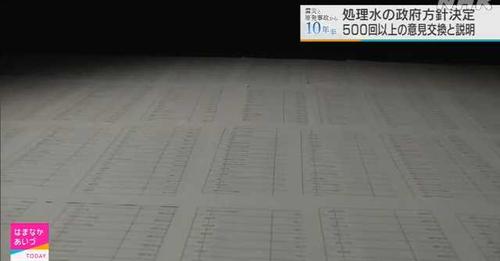
The release of treated water into the ocean was explained 532 times in advance…
A request for information disclosure made by NHK has revealed that the government claimed to have held a total of 532 “opinion exchanges” and “briefing sessions” regarding the increasing amount of treated water at the TEPCO’s Fukushima Daiichi Nuclear Power Plant in the year leading up to April 2012, when it decided to release the water into the ocean.
On the other hand, even after the decision was made, there are still strong opposition to the release of radioactive materials from fishermen in the prefecture, raising questions about the nature of the discussions.
The government says that the decision to release treated water from the Fukushima Daiichi Nuclear Power Plant into the sea was made after listening to the opinions of related parties, based on the report of a national sub-committee which said that “release into the sea or the atmosphere is realistic.
However, even after the decision was made, a series of resolutions and opinion letters opposing the policy were issued by fishery groups and parliamentary assemblies in Fukushima Prefecture, claiming that there was not enough discussion.
Therefore, NHK requested the Ministry of Economy, Trade and Industry (METI), which is in charge of the policy, to disclose the documents showing what discussions the government had with the relevant parties before the decision was made.
In response, the Ministry of Economy, Trade and Industry (METI) disclosed a list of the subjects and dates of “opinion exchanges” and “briefing sessions” held between January 31, 2011, when the national subcommittee compiled its draft report, and April 13, 2011, when the government decided on the policy of oceanic release.
According to the list, a total of 532 “opinion exchanges” and “briefing sessions” were held in and outside of Fukushima Prefecture over a period of more than one year and two months.
The average number of times per day is two per point, with the highest number of times per day being 14.
The breakdown of the targets, in descending order of frequency, is as follows: heads of local governments in the prefecture 83 times, fishery-related organizations 74 times, and local government councils 72 times.
On the other hand, consumers were interviewed 18 times, the tourism industry 12 times, the head of a local government outside the prefecture 23 times, and the assembly of a local government outside the prefecture 15 times.
Masahiro Matsuura, a professor at Meiji University’s Graduate School of Public Policy who is an expert on science and technology policy and consensus building, said, “It is possible that there was a lack of dialogue in the sense of gaining understanding,” and added, “Having a meeting is not necessarily the same as dialogue, and if it is a one-way explanation meeting, it is no different from an online video or television. Dialogue is only possible when the participating fishermen and the general public speak out and the explanation is given in the form of a catch-all game. Even if an opinion is received, if the bureaucrat without authority continues to say, ‘We will take it back to Tokyo for consideration,’ it is not dialogue. If the prime minister, ministers, and other people who can make substantive decisions came to the meeting and answered specific questions on the spot, it might not have been necessary to hold the meeting as many times. It will be important to evaluate the state of the debate over treated water over time,” he said.
Fishermen: “There was no discussion.
The government has held more than 70 “opinion exchanges” and “briefing sessions” with fishermen, but after the policy was decided, fishermen in Fukushima Prefecture said that the decision was unilateral.
In July 2020, the Soma Futaba Fishermen’s Cooperative Association in the northern part of the prefecture held a total of four briefing sessions for fishermen belonging to the cooperative, divided into four districts.
However, according to the fishermen who participated in the briefings, most of the briefings were about the report compiled by the subcommittee, and they rarely exchanged opinions with each other about the disposal method or reputational measures.
Mr. Masahiro Kikuchi, the vice president of the association, said, “At the time of the briefing, we hadn’t decided whether to release the waste into the ocean or into the air, and there were no concrete explanations about measures against harmful rumors. There were no further meetings, and I feel that the decision was made unilaterally. I think that if they had held monthly meetings with young fishermen, including those who will be responsible for the future of the fishery, and listened to their opinions, they would have come up with an answer that would have satisfied some, if not all, of them.
Co-op: “Not enough explanation to consumers”
More than 70 “opinion exchanges” and “briefing sessions” were held for fishermen, heads of local governments and assemblies in the prefecture, but only 18 briefings were given to consumers.
At Fukushima Prefecture’s Co-op Fukushima, where about 200,000 households in the prefecture are members, no briefing was held by the government before the policy was decided.
Shunkichi Nonaka, the general manager of the co-op, said that he feels that there was an overwhelming lack of opportunities to hear the opinions of consumers, some of whom are opposed to the release of radioactive materials into the ocean due to safety concerns.
Mr. Nonaka said, “All citizens are consumers, and I thought it was necessary to give a broad explanation to consumers, but I think the government and TEPCO did not give enough consideration to this. I think the government and TEPCO should have consulted with us before deciding on the policy of releasing radioactive materials into the ocean and asked us what we thought about it.
The government official said, “We discussed it to a great extent.
Regarding the fact that the government and related parties held more than 500 opinion exchanges and briefing sessions over a period of about one year and two months, Mr. Masato Kino, Counselor of the Agency for Natural Resources and Energy of the Ministry of Economy, Trade and Industry, said, “We have been visiting related parties who are likely to be affected by the rumors due to the disposal of the treated water, and our staff members have been working together to make a list of them. We believe that we have exchanged opinions with all kinds of people to a considerable extent. There were people who opposed the release of treated water into the ocean, but I believe we have incorporated the opinions we have heard into our decision-making process.
As for the fact that we have not gained the understanding of fishermen and others regarding our policy on the release of radioactive materials, he said, “We are doing our best to prevent rumors. I think we are still at the stage where people don’t feel safe, so our mission is to do our best.
https://www3.nhk.or.jp/lnews/fukushima/20210921/6050015878.html?fbclid=IwAR22Y7RVJ8eTn7_tON6pDmtV6PdnMZU1BAULMXLY-JseTew3 glnFBLeKhvs
Fukushima aims to attract new residents
September 20, 2021
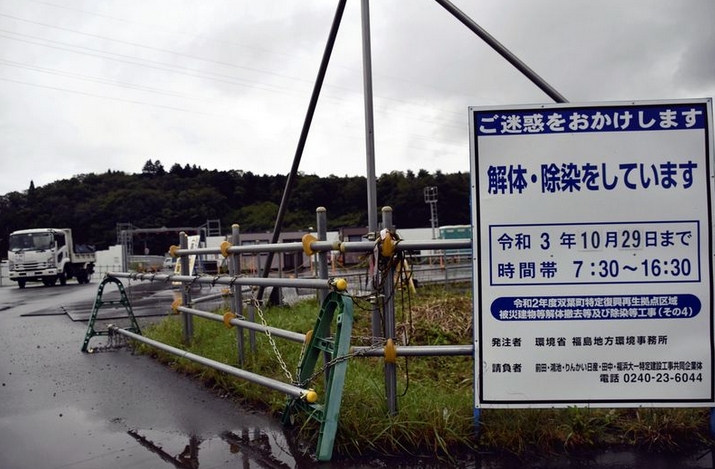
FUKUSHIMA – The central and local governments have begun encouraging people from outside Fukushima Prefecture to move into areas surrounding Tokyo Electric Power Company Holdings, Inc.’s Fukushima No. 1 nuclear power plant, hoping that new residents will revive the areas.
The central government plans to lift evacuation orders in all areas categorized as difficult-to-return zones so that residents wishing to return to their homes can do so within the 2020s. However, in areas where such an order has already been lifted, residents have been slow to return.
300 newcomers sought
I’ve long wanted to contribute to the reconstruction of Fukushima, said Daisuke Yamamoto, 49, an engineer who moved from Sapporo to the city of Tamura, Fukushima Prefecture, in August.
Yamamoto said he aimed to set up his own business there.
The central government’s financial support system, which began in July, encouraged him to move in. The system grants up to 2 million Yen to those who move into 12 municipalities near the nuclear plant from outside the prefecture. Additional funds of up to 4 million Yen will be paid if they launch a business there. The government’s goal is to bring in 300 new people this fiscal year alone.
Local municipalities are preparing for new residents. In July, the Fukushima prefectural government set up a joint support center with the 12 municipalities. In Minami-Soma, vacant houses will be renovated into rental housing. In the village of Katsurao, eight units of municipal apartment housing will be constructed.
10% want to return
Behind the move is the slow return of residents to areas where the evacuation orders were lifted. The Reconstruction Agency and others surveyed the residents of five towns, including Futaba and Okuma, and found that only about 10% wanted to return.
The town of Namie, where the evacuation order was partially lifted in 2017, now has a population of 1,717. In fiscal 2019, 70 people in 49 households moved into the town from outside the prefecture, thanks in part to the presence of factories opened by 10 companies, but the population is still only about a tenth of its pre-disaster size.
The only way to keep the town going is to further increase the number of new arrivals, a town official said.
Commuting, restoring
Over 10 years after the nuclear accident, people who have rebuilt their lives in areas to which they evacuated will have the option of having residences in two locations, commuting to Fukushima Prefecture while carrying on with their present lives elsewhere.
A 66-year-old man who moved his family to Hitachi, Ibaraki Prefecture, has a home in an area categorized as a difficult-to-return zone in Namie. In order to return to that home, he would need to repair the now dilapidated house. His children have found jobs in Ibaraki. The man’s life in Ibaraki, where he grows vegetables in rented fields, has become settled.
I have no choice but to spend two hours each way to get to and from Fukushima, he said.
In a survey conducted last fiscal year by the towns of Futaba, Okuma and Tomioka on their residents, about 60% said they wanted to maintain ties with their hometowns.
The evacuation order for Naraha was lifted in 2015, but the number of residents in the town now has leveled off at 50% of the population before the accident. The town aims to raise the figure to 60% by 2030, or 5,130 people, by subsidizing JR train fares for residents who live in two locations.
The town of Tomioka supports residents who have been evacuated outside the town in the hope of bringing about reconstruction by commuting. It opened social center and support office facilities in Iwaki, Fukushima Prefecture, and Saitama City, which are two places where many evacuated Tomioka residents now live. In those facilities, staff check up on the health of the evacuees or give counseling.
Those who want to go home someday will become important people for the progress of reconstruction, said Yusuke Yamashita, a sociology professor at Tokyo Metropolitan University. The central and local governments should continue to provide assistance from the perspective of reconstruction by commuting.
Japan eyes disposal abroad of radioactive plant equipment
Watch out! Japan’s hoping to export now its radioactive junk!
September 20, 2021
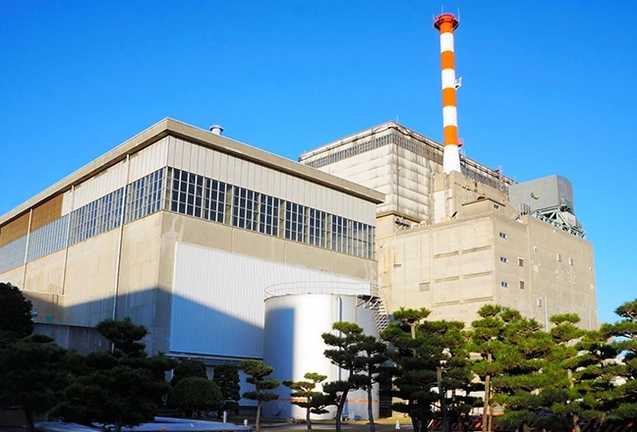
Japan plans to ease regulations to allow exports of large, disused equipment from nuclear power plants for overseas disposal as a way to reduce the mountains of radioactive waste accumulating at home.
The setup would mark a major shift from the government’s existing principle of disposing of all radioactive waste inside the country.
The industry ministry mentioned the revised disposal policy in the draft of the updated Basic Energy Plan, which awaits Cabinet approval in October at the earliest.
Even if the plan is approved, it will likely take some time for the government and nuclear plant operators to clear a slew of hurdles, such as estimating the costs of the project and ensuring the safety of shipments.
The Ministry of Economy, Trade and Industry, which oversees the nuclear industry, is considering outsourcing the disposal of three kinds of large low-level radioactive equipment overseas: steam generators, feed-water heaters and nuclear fuel storing and shipping casks.
These components range in size from 5 to 20 meters and weigh 100 to 300 tons.
Although they are not highly contaminated, compared with nuclear debris generated by spent fuel, they must be disposed of and managed properly, including being buried deep in the ground for years.
The ministry is considering their export as an “exceptional measure” to deal with the grave issue of the radioactive waste accumulating at nuclear facilities across Japan.
“Export regulations will be reviewed to allow for export (of low-level radioactive waste) when certain conditions are met, such as their safe recycling into useful resources,” the draft for the latest version of the Basic Energy Plan said.
The industry ministry is soliciting public opinions on the outsourcing plan until Oct. 4.
Nuclear plant operators have decided to decommission 24 reactors, including the six units at the crippled Fukushima No. 1 nuclear plant.
Work to dismantle those reactors is expected to go into full gear starting in 2025.
Excluding the reactors at the Fukushima plant, the decommissioned units will produce an estimated 165,000 tons of low-level radioactive waste.
But more than 90 percent of that waste has nowhere to go for dismantling and disposal.
Japan still lacks a dedicated disposal site for equipment used at nuclear plants, forcing plant operators to store the waste at their facilities.
The ministry says the storage of the out-of-service equipment is getting in the way of the decommissioning process.
Experts say some businesses in the United States and Sweden clean, melt and recycle metal from radioactive waste sent by foreign countries.
“Japan should first learn the know-how of disposal by outsourcing the work to foreign businesses with a reliable track record in the area and eventually become capable of doing it at home,” said Koji Okamoto, a professor of nuclear engineering at the University of Tokyo.
Under the Joint Convention on the Safety of Spent Fuel Management and on the Safety of Radioactive Waste Management, signatory countries that produce radioactive waste are obliged, in principle, to dispose of it within their territories.
But they can export the waste as exceptional cases if they obtain the consent of countries where business partners are based.
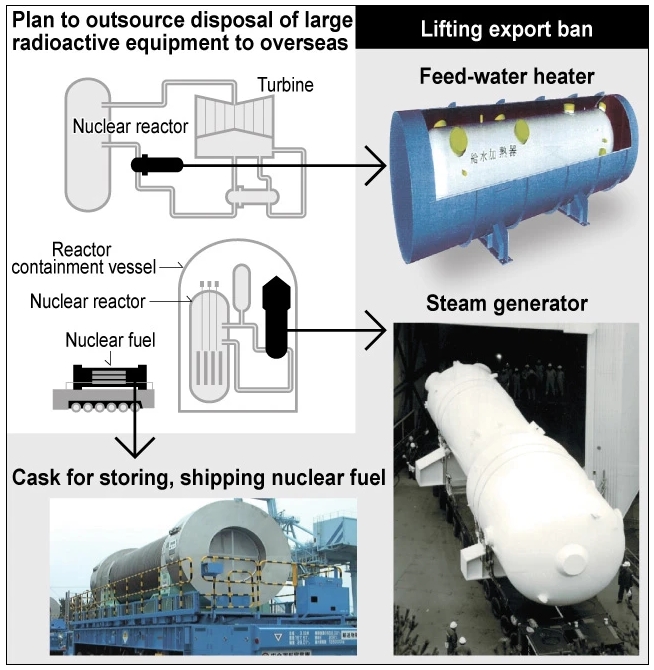
However, Japan’s Foreign Exchange and Foreign Trade Control Law bans such exports.
Utilities have pressed the government for a change in the disposal policy, and the industry ministry has been reviewing the existing setup alongside experts on nuclear technology.
Although the ministry intends to follow the principle of doing away with the waste within Japan, it plans to approve exports of the three types of nuclear plant equipment on condition that they will be recycled.
Ministry officials say the plan can be achieved through a revised ministry directive, without having to change the law.
The equipment intended for recycling overseas could include components kept at nuclear plants that still generate power.
But the ministry needs to work out many issues to turn the plan into reality.
Nuclear plant operators have the primary responsibility for disposing of low-level radioactive waste. And the actual costs these Japanese companies would have to pay to recyclers overseas is still unknown.
The bill could be far more expensive than initially estimated.
How to safely ship the radiation-contaminated equipment abroad is another unresolved issue.
The amount of nuclear waste in Japan has been growing since the 2011 Fukushima nuclear disaster. Utilities have gradually resumed operations at nuclear plants, but some have decided to decommission reactors, particularly aging ones, largely because of the costs needed to upgrade them under new safety standards.
For decades, Japan has been unable to secure a final disposal site for such waste inside the country, mainly because of opposition from residents of candidate sites.
TEPCO bungles placement of 100 fire detectors at nuclear plant
September 20, 2021
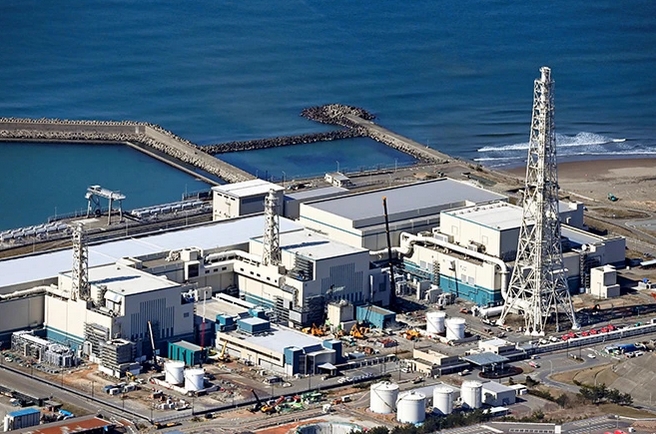
Tokyo Electric Power Co. has continued its bumbling ways concerning safety measures, misplacing dozens of fire detectors at its Kashiwazaki-Kariwa nuclear plant in Niigata Prefecture, sources said.
TEPCO is seeking to restart the No. 7 reactor at the sprawling nuclear plant, but the utility has run into a host of problems following stricter safety standards implemented after the 2011 disaster at its Fukushima No. 1 nuclear plant.
In the latest incident, about 100 fire detectors were not placed in locations set under safety regulations, the sources said.
The misplacements could delay the detection of heat and smoke from a fire, hampering an immediate response to such a potentially disastrous event.
Under the new safety regulations, nuclear plant operators are required to place a fire detector at least 1.5 meters from an air conditioner vent or other opening. That rule is based on the fire protection law.
Inspectors from the government’s Nuclear Regulation Authority in February noticed that a smoke detector was placed only about 1 meter from the ventilating opening in the storage battery room of the No. 7 reactor building.
TEPCO said it has since moved the detector to the proper location and confirmed through visual checks that the other fire detectors were installed in the right places.
But an additional NRA inspection in April found that two other fire detectors were misplaced.
Following that finding, TEPCO undertook a fresh check of about 2,000 detectors throughout the nuclear plant.
The company reported to the nuclear watchdog on Sept. 16 that more cases of misplaced detectors were confirmed, bringing the total to about 100, according to the sources.
With seven reactors, the Kashiwazaki-Kariwa nuclear plant is among the largest in the world in terms of capacity. It is also the only nuclear facility that TEPCO can restart since the company decided to decommission both the Fukushima No. 1 and No. 2 nuclear plants.
TEPCO is eager to put the Kashiwazaki-Kariwa plant back online because burning fossil fuel at its thermal plants has proved costly.
But the NRA in April ordered the company to stop preparations toward a restart following revelations of a number of safety flaws.
In January, the company announced the completion of work to bolster safeguarding of the No. 7 reactor, which has an output of 1.35 gigawatts.
However, fire-prevention work was not finished at many locations of the nuclear plant.
News outlets also reported in January that an employee of the plant entered the central control room of a reactor by using the ID of another employee in September last year, a serious breach of the NRA’s anti-terrorism measures.
In addition, it was found that security devices designed to detect unauthorized entry had not been working properly at 15 sites at the plant since March last year.
TEPCO left most of these devices unfixed for about a month.
The company is expected to submit a report to the NRA on how to prevent a recurrence by Sept. 23.
Regulators: Waste stored poorly at Fukushima plant
Sept. 18, 2021
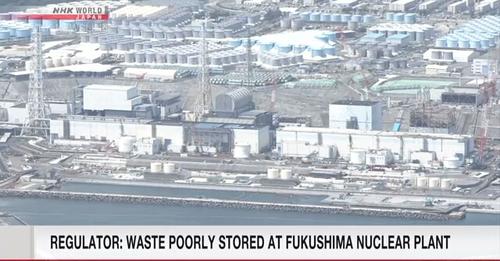
Japanese nuclear regulators have urged the operator of the disabled Fukushima Daiichi nuclear plant to improve the way it manages accumulating waste at the complex.
Most of the radioactive waste generated through decommissioning of the plant is being stored at designated outdoor depots.
But wreckage and other clutter that cannot be quickly transported there is instead being kept at interim sites for up to one year in principle.
The Nuclear Regulation Authority says the volume of waste at the interim sites reached 60,000 cubic meters in July, surging more than eight-fold from the figure in January of last year.
It also says the waste has been kept longer than one year in some sites, and not enough patrols are being conducted.
The plant’s operator, Tokyo Electric Power Company, says it could not send the waste to the outdoor depots while work was underway to rearrange containers there. It adds that the containers had to be inspected following leaks of radioactive substances.
The company says it will review the temporary storage arrangements and manage waste properly.
The total volume of radioactive waste at the plant reached about 480,000 cubic meters as of March of this year, 10 years after the triple nuclear meltdown accident.
Japan’s Plan To Discharge Nuclear Waste Into The Pacific Worries Island Nations
The effects and memory of U.S. nuclear testing endures in the Pacific. “It is a level up from urgent for us,” one Pacific leader says.
Pacific nations and territories aren’t yet convinced their people and waters will be safe when Japan discharges processed nuclear wastewater into the Pacific, as it recently announced it plans to do.
Despite briefings from Japan, and its cooperation with the International Atomic Energy Agency, the Pacific community has yet to fully understand what the ramifications of dropping 1 million tons of wastewater off Japan’s coast might be.
“Currently we are not satisfied there will be no harm to our Blue Pacific,” said Henry Puna, secretary general of the Pacific Islands Forum Secretariat, noting that even basic concerns had not yet been addressed.
Japan triggered immediate and strong opposition when it announced the plan in April, initially from neighboring nations South Korea and China, though countries and territories across the Pacific continue to express their dissatisfaction with Japan’s engagement with them thus far.
The wastewater, which contains debris from the Fukushima Daiichi power station destroyed during the 2011 Tohoku earthquake and tsunami, has been treated and many scientists believe the technology is safe.
But for countries in the Pacific, the nuclear legacy still endures and many have their reservations.
The Pacific Islands Forum Secretariat, an intergovernmental organization comprising 17 Pacific nations and territories, noted the serious concerns over Japan’s plans in a July meeting and, following a briefing on Tuesday, remains unconvinced.
Puna said one issue was the highly technical nature of the briefings. The former Cook Islands prime minister acknowledged Japan was “as committed as we are to having frank and open dialogue,” but the planned action is less than 18 months away.
Puna said a major issue was that the Pacific nations lacked the expertise to interpret the highly technical plans.
“I just want to note that, for us, the issue is very urgent but also requires very careful thinking,” said Puna. “When you have a major development partner explaining that the only way for it to get rid of more than a million cubic tons of treated, but still contaminated water, is to dump it into an ocean, where we share the same tides, current, and fish, it is a level up from urgent for us.”
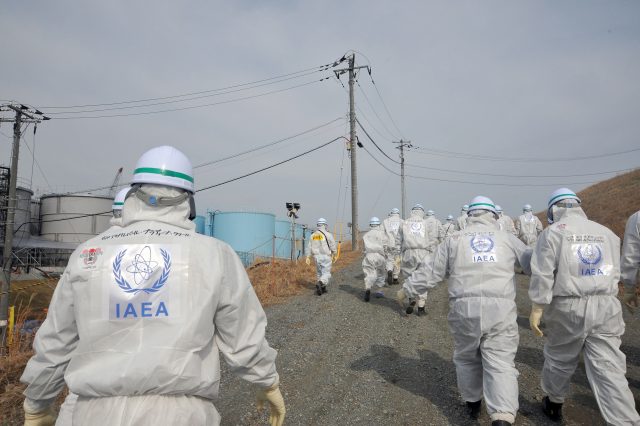
An IAEA review of the waste disposal, agreed to on Sept. 9, would focus on safety, regulation and environmental monitoring, and a team of IAEA experts would review the process in a December visit. PIFs concerns have not been allayed, however, so it was in the process of bringing on three independent scientists to assess the plans.
“This is an area of the planet where people see the ocean as an extension of themselves,” Puna added.
The Republic of the Marshall Islands was subjected to 67 nuclear bombings between 1948 and 1956, and the legacy of nuclear testing endures. Islands were scarred or fully vaporized and people were forced from their homes. Across the Pacific, France and the United Kingdom also tested their nuclear prowess around the same time. The fallout has had generational effects.
A recently released study, conducted as part of ongoing collaboration between IAEA and RMI, found that Bikini Atoll, where the U.S. conducted the Castle Bravo test (a 15 megaton thermonuclear bomb) in 1954, is slowly healing from the test though radioactive material remains.
Given RMI’s nuclear history — even with IAEA’s involvement — Marshallese have maintained a “healthy distrust” of governments and agencies, said Giff Johnson, editor of The Marshall Islands Journal.
He said although Japan and Micronesian nations share a long history, and have enjoyed a healthy diplomatic relationship in more recent times, nuclear issues remain contentious. “That in itself is a big hurdle to get over,” Johnson said. “It makes it complicated, diplomatically.”
This is not the first time Japan has riled Pacific nations with nuclear waste. In 1979, Japanese plans to dump 10,000 drums of nuclear waste in the Marianas Trench were met with virulent opposition from political leaders and protests from citizens.
Given the multi-generational legacy of nuclear testing and waste disposal, young activists are also voicing their concerns. Youngsolwara Pacific, a regional collective of young activists, has condemned the Japanese government’s plans and lack of consultation.
According to Talei Luscia Mangioni, a Pasifika researcher at the Australian National University and Youngsolwara Pacific member, Japan’s nuclear behavior seemed to ignore the region’s ongoing Nuclear Free and Independent Pacific movement and the history of colonizers dumping nuclear waste and testing nuclear weapons.
“Pacific youth acknowledge that this is an act of transboundary harm and is part of a great legacy of where nuclear powers have treated the Pacific as a sacrifice zone,” said Mangioni. “I think that Japan needs to properly consult and engage with Pacific people and their own Japanese civil society instead of making an announcement that they are going to do this, given their history.”
Mangioni was similarly concerned by the proximity of Micronesian nations to the proposed dumping and emphasized that they “have been the vanguard for a lot of nuclear resistance.”
PIFS Secretary General Puna, however, said Micronesia remained part of the forum “family” and said it had endorsed Rhea Moss-Christian, chair of the Marshall Islands National Nuclear Commission, as a representative of its interests on the IAEA safety task force.
Moss-Christian said she was unsure if her involvement with IAEA reassured the Marshallese, and her organization had not yet begun its outreach program in RMI.
Though Japan’s government had been working hard to assure the region’s concerns, whether its plans were robust enough remained to be seen and would be addressed by the task force.
“However, it is still difficult to accept that our backyard should be a dumping ground for our neighbor’s toxic waste, no matter how minimal the risk,” she said.
Clear vision needed for future of still-evacuated Fukushima areas

September 16, 2021
More than a decade after the Fukushima No. 1 nuclear power plant accident, there remains more than 30,000 hectares of land where the evacuation order is still in place and is not expected to be lifted any time soon.
The government recently announced a plan to rebuild ravaged communities in these areas near the crippled plant with high levels of radiation, known as “kitaku konnan kuiki” (difficult-to-return zone).
Under the plan, the government will decontaminate the land and houses of local residents who want to return to their homes so that the order can be lifted by the end of the 2020s.
Initially, the evacuation order covered more than 110,000 hectares. The measure was lifted for some 80,000 hectares by March last year.
In 2017 and 2018, the government thrashed out a plan to designate some 2,700 hectares of land in six municipalities within the zone as reconstruction priority areas eligible for preferential policy support to help improve the living environment. The plan requires the government to make intensive decontamination efforts in the areas and lift the evacuation order by the spring of 2023.
The local administrations involved asked the national government to make clear when the order will be lifted for the remaining areas in the difficult-to-return zone.
The latest plan unveiled by the government may represent a step forward as it offers a specific timeframe for lifting the measure, albeit for only those who wish to return to their homes. The blueprint has brought a ray of hope to local residents who have been facing a distressingly uncertain future outlook.
But the fact remains that the government has yet to offer a realistic road map to deliver on its promise to lift the evacuation order for the entire restricted zone sometime in the future, no matter how long it will take.
The government has pledged to tread carefully in this undertaking, holding multiple meetings with residents to ask about their desire to to return home as well as talks with local administrations on the range of areas to be decontaminated.
But it has yet to announce specifics about the decontamination, such as the areas to be covered or the method to be used.
The residents in these areas have been living as evacuees for more than 10 years. Many of them are likely to find it difficult to decide even if they want to return to where they once lived.
If the government proceeds with the latest plan, it needs to work out details of how it will tackle the challenge in a “careful” manner. The details should cover how the government will confirm the local residents’ wishes and ensure the level of decontamination that can reassure them of the safety of returning to their homes.
Moreover, the land and buildings that nobody wants to return to will not be covered by the plan to lift the order. This will remain a serious issue for the future.
The government has so far spent some 3 trillion yen ($27.45 billion) on decontaminating areas subject to the evacuation order. This effort has allowed some 14,000 residents, or 30 percent of the local population, to return home. It will cost taxpayers a huge additional amount of money to accelerate the cleanup work in the difficult-to-return zone, where nearly 22,000 people are still registered as residents.
The government says the necessary funds will be budgeted from the Fukushima reconstruction special account and other appropriate financing sources. But it admits the total amount of money required cannot be estimated since it depends on the number of local residents who want to return.
In other words, it has no clear and viable plan to raise the necessary funds.
The 2011 special law to deal with contamination by radioactive materials from the Fukushima plant stipulates that it is the government’s “obligation” to deal with radiation pollution caused by the accident.
The government has a duty to offer as soon as possible a clear future vision for tackling this formidable challenge, specifying when and how the evacuation order will be lifted and what kind of policy support will be provided to residents including those who choose not to return to the areas.
Pacific Forum Members Hold Third Briefing With Japan Regarding Fukushima Treated Nuclear Wastewater
Thursday, 16 September 2021, 6:01 am
Press Release: Pacific Islands Forum Secretariat
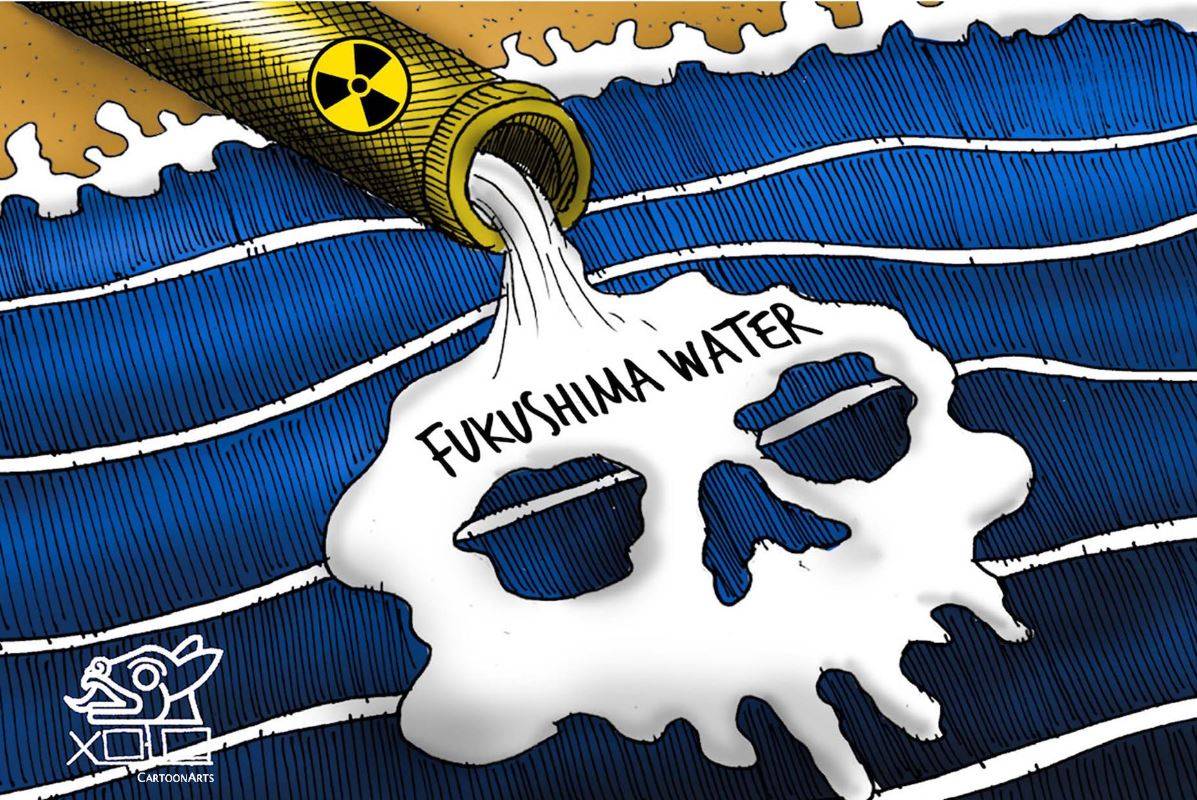
Wed 15th September 2021—Pacific nations continue to raise questions and concerns in closed briefing sessions around plans by Japan to discharge over a million tonnes of treated water from the Fukushima Daiichi Nuclear Power Plant into the Pacific Ocean.
The Government of Japan committed to ongoing dialogue with Forum Members as a priority follow up to the PALM9 Summit in July. This followed Japan’s announcement in April of plans to begin discharge in 2023, for a period of up to 40 years. The announcement drew strong global response, including from the Forum Chair and Leaders.
In his opening comments at the third briefing on Tuesday afternoon, Secretary General of the Pacific Islands Forum Henry Puna noted the issues require “open and frank consultation” along with sustained dialogue at the political and technical level.
Japan officials presented a status update on the ALPS (Advanced Liquid Processing System) Treated Water, interim measures regarding the planned discharge, and outcomes of the latest International Atomic Energy Agency (IAEA) visit to Fukushima.
While appreciative of the information being shared by Japan, Secretary General Puna reiterated the region’s unequivocal need for information as being key to safeguard the Blue Pacific as a nuclear-free zone. “I appeal to the Government of Japan to continue to share the relevant information in its totality, and within agreed timelines.”
“Importantly for us in the Blue Pacific, our fears really lie in the transboundary nature of the impacts. We require nothing less than full and complete disclosure of all information and evidence to enable us to fully understand the nature and extent of the impact, and to enable us to make a comprehensive and unbiased assessment of the impacts of the proposed ALPS water discharge.”
As reiterated by Forum Foreign Ministers on 27 July, the region is actively pursuing efforts to advance Forum Leaders’ commitments to international consultation, international law, and independent expertise to provide guidance and verifiable scientific assessments. To accelerate efforts, the Forum will engage independent experts to support the region’s efforts over the next months.
Thanking the Government of Japan, Secretary General Puna said he is hopeful there will be ways to address Pacific concerns to reach “solutions that are based on science, and consistent with legal and moral obligations.”
Lethal radiation levels detected in Fukushima nuke plant reactor lid

The operator of the crippled Fukushima No. 1 nuclear plant could be forced to reconsider the plant’s decommissioning process after lethal radiation levels equivalent to those of melted nuclear fuel were detected near one of the lids covering a reactor.
The Nuclear Regulation Authority said Sept. 14 that a radiation reading near the surface of the lid of the No. 2 reactor’s containment vessel was 1.2 sieverts per hour, higher than the level previously assumed.
The discovery came on Sept. 9 during a study by the NRA and Tokyo Electric Power Co., the operator of the plant.
TEPCO plans to insert a robotic arm into the No. 2 reactor’s containment vessel from its side in a trial planned for the second half of 2022 to retrieve pieces of melted nuclear fuel.
“We will consider what we can do during the trial on the basis of the detection of the concentration of contamination” in the upper area of the containment vessel, a TEPCO official said.
The round concrete lid, called the shield plug, is 12 meters in diameter and about 60 centimeters thick.
The shield plug consists of three lids placed on top of each other to block extremely high radiation emanating from the reactor core.
Each lid weighs 150 tons.
When operators work on the decommissioning, the shield plug will be removed to allow for the entry into the containment vessel.
The NRA said a huge amount of radioactive cesium that was released during the meltdown of the No. 2 reactor in March 2011 remained between the uppermost lid and middle lid.
In the Sept. 9 study, workers bored two holes measuring 7 cm deep each on the surface of the uppermost lid to measure radiation doses there by deploying remotely controlled robots.
One radiation reading was 1.2 sieverts per hour at a location 4 cm down from the surface in a hole near the center of the lid.

TEPCO not informing the Regulation Agency for 2 years about the 25 damaged filters at Fukushima Daiichi NPP

After finishing my stage (*Mako and her husband Ken are comedians) , we attended a Monitoring and Evaluation meeting of the Nuclear Regulatory Agency and a press conference of TEPCO today.
Various terrible things came out at the Regulatory Agency meeting. As for the holes of ALPS high-performance filters, although no photos came out at the press conference with TEPCO no matter how much I requested, I found them in the document from the Regulatory Agency. https://www.nsr.go.jp/data/000364892.pdf
It was much worse than I had imagined. TEPCO said they didn’t notice that there were such holes for these two years.
They replaced the 25 filters with holes (*out of 25 filters, means all filters had holes) in 2019.(This incident wasn’t published, nor reported to the Regulatory Agency.)
In 2021, 24 out of 25 filters have holes.The photos are here.These filters are not for ALPS’s contaminated water treatment, but the ones for the treatment of gaseous waste generated in the process.
The terrible thing is, until being asked at the press conference on August 31st, TEPCO had not explained the total damage of the filters two years ago.
When I asked, I got the answer that 25 out of 25 filters were damaged two years ago. Why didn’t TEPCO explain it voluntarily? That’s quite important information, isn’t it?
I wanted to know how TEPCO would explain it at today’s Regulatory Agency meeting and what kind of discussion would develop.
TEPCO reported only this year’s filter damages and didn’t explain the damage of all filters two years ago to the Regulatory Agency!
TEPCO finally gave an oral explanation when they were asked by chance, “What was the situation at the time of the last inspection?” by Mr. Yasui, Inspector General of the Regulatory Agency.
The Regulatory Agency got to know for the first time today about the damage of all 25 high-performance filters two years ago (and this time the 24 of 25 filters were damaged again). It was natural that the members of the Regulatory Agency got angry about the fact and the discussion about a completely damaged high-performance filter did not proceed at all …! !!
During unofficial Q and A session at the end of the meeting, we shared various information with Mr. Takeuchi, the director of the Regulatory Agency.
Fukushima plant failed to probe cause of faulty filters

TOKYO (AP) — Officials at Japan’s wrecked Fukushima nuclear power plant have acknowledged they neglected to investigate the cause of faulty exhaust filters that are key to preventing radioactive pollution, after being forced to replace them twice.
Representatives of the operator, Tokyo Electric Power Company Holdings, made the revelation Monday during a regular review of the Fukushima Daiichi plant at a meeting with Japanese regulatory authorities. Three reactors at the plant melted following a massive earthquake and tsunami in 2011.
The filters are designed to prevent particles from escaping into the air from a contaminated water treatment system — called Advanced Liquid Processing System — that removes selected radioactive isotopes in the water to below legal limits.
“At the core of this problem is TEPCO’s attitude,” a Nuclear Regulation Authority commissioner, Nobuhiko Ban, said at the meeting.
TEPCO has been repeatedly criticized for coverups and delayed disclosures of problems at the plant. In February, it said two seismometers at one reactor had remained broken since last year and failed to collect data during a powerful earthquake.
Company officials said that 24 out of 25 filters attached to the water treatment equipment had been found damaged last month, after an alarm went off as workers were moving sludge from the unit to a container, temporarily suspending the water treatment. The operation partially resumed last week after the filters were replaced.
TEPCO said it had detected similar damage in all of the filters two years ago, but never investigated the cause of the problem and did not take any preventive steps after replacing the filters.
Another regulatory commissioner, Satoru Tanaka, said at the meeting that the utility company should have responded to the problem more quickly to minimize the risk of possible radiation leakage into the environment.
TEPCO officials said dust monitors indicated no radiation leaks to the outside or exposure to plant workers inside the water treatment facility.
Akira Ono, head of TEPCO’s decommissioning unit, said he regretted the utility’s failure to address the problem earlier. He promised to improve safety management.
Japanese officials are working with the International Atomic Energy Agency to prepare to discharge into the ocean the wrecked plant’s cooling water, treated so its radioactivity levels are below legal limits. Slated to start in spring 2023, the controversial plan is fiercely opposed by Fukushima’s fishing community, as well as local residents and nearby countries.
Fully decommissioning the nuclear plant is expected to take decades, experts say.
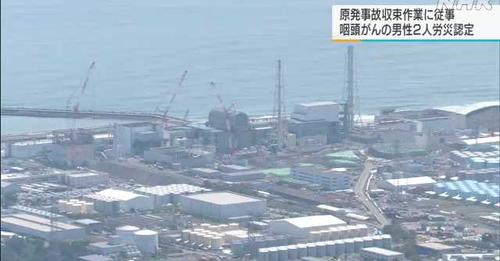
Pharyngeal cancer recognized as work-related injury for two convergence workers after Fukushima Daiichi nuclear accident
September 09, 2011
The Ministry of Health, Labor and Welfare (MHLW) has recognized the causal relationship between the cancer and the work, and certified it as a work-related accident.
This is the first time that pharyngeal cancer has been recognized as an occupational injury related to the convergence work of the nuclear power plant accident.
The two victims were a man in his 60s who worked for TEPCO, and a man who worked for a subcontractor who developed the disease in his 40s and later died.
According to the Ministry of Health, Labor and Welfare, after the accident at the Fukushima No. 1 nuclear power plant in March 2011, the two men worked on the premises of the plant, removing debris and measuring radiation levels.
However, in December 2018 and January of last year, they both developed pharyngeal cancer and applied for workers’ compensation.
The two men were exposed to about 85 millisieverts and 44 millisieverts, respectively, during their work at the plant.
A panel of experts from the Ministry of Health, Labor and Welfare recognized a causal relationship between the two workers’ radiation doses and their cancer, as their radiation doses exceeded 100 millisieverts, which is the standard for certification.
This is the first time that pharyngeal cancer has been recognized as an occupational injury related to the convergence work of the nuclear power plant accident.
Since the accident at the Fukushima Daiichi Nuclear Power Plant, six workers have been recognized as suffering from leukemia, thyroid cancer, and lung cancer.
TEPCO plan to discharge water relies on winning local trust

September 7, 2021
More than four months have passed since the government gave the green light to plans for Tokyo Electric Power Co. to release treated radioactive water from the crippled Fukushima No. 1 nuclear plant into the Pacific Ocean.
TEPCO, the plant’s operator, recently announced it would construct a tunnel to discharge the water about 1 kilometer offshore. At the same time, the government unveiled its strategy for responding to concerns the discharge could cause irreparable reputational damage to local businesses, the fishing industry, in particular.
Ever since the nuclear crisis triggered by the March 2011 earthquake and tsunami disaster, the utility has been pumping tons of water to cool melted nuclear fuel at the wrecked facility. Rain and ground water have added to the deluge with the result that the volume of radiation-contaminated water has continued to grow rapidly.
The water is stored in more than 1,000 tanks installed within the compound after being treated with special equipment to eliminate most of the highly radioactive materials. TEPCO said the tanks will reach capacity around spring 2023. The plant operator then intends to start releasing the treated water after first diluting it with seawater.
Under TEPCO’s plan, an undersea tunnel will be built to discharge the treated water. It said the tunnel will ensure that the treated water does not re-enter the on-site discharge equipment after it has been diluted.
This will be a gigantic construction project that will start with a geological survey of the seabed, something that must be approved by the Nuclear Regulation Authority.
TEPCO pledged to measure the concentration of tritium, a radioactive isotope of hydrogen produced as a byproduct in nuclear reactors which cannot be removed with filtering equipment, before the water is released into the ocean. This is a welcome effort to allay concerns among local businesses and communities, especially the fisheries industry.
The company, whose reputation has further been tarnished by a series of embarrassing revelations about security lapses, including those at the Kashiwazaki-Kariwa nuclear plant in Niigata Prefecture, needs to realize it has an obligation to take all possible steps to ensure the operation is conducted safely and be willing to disclose all related information and options.
No matter how cautiously the problem of tritium-tainted water is handled, the plan to release treated contaminated water into the sea is bound to trigger negative publicity and deter people from eating fish caught in local waters.
To deal with this challenge, the government decided to establish a fund to buy catches that can be put in frozen storage. The fund is framed as an emergency relief measure to assist fishermen and fisheries businesses expecting to face sharp drops in sales. It is a well-conceived proposal to help those affected by the nuclear disaster regain their livelihoods, in addition to providing cash to compensate for their economic losses.
But not all marine products are fit for freezing. Frozen fish tend to fetch lower prices compared with when they are sold fresh. How to secure viable operations of the proposed fund remains a key question, but the government has only said that details will be worked out by the end of the year.
Fisheries businesses may not be only targets of rumors that require compensation payouts. To ease anxiety among local businesses, TEPCO said victims alone will not be forced to bear the burden of proof. The company says it will assess economic losses by comparing prices and sales after it starts releasing the contaminated water into the sea with corresponding estimates for before the operation gets under way.
Still, local businesses remain concerned about whether they will receive appropriate compensation from the utility, which rejected out-of-court settlements with a number of plaintiffs in damages lawsuits proposed by the government’s Nuclear Damage Compensation Dispute Resolution Center. The government, which is effectively the utility’s largest shareholder, has a duty to supervise the company to ensure it offers compensation swiftly and appropriately to any new parties that suffer losses as a result of the water discharge operation.
TEPCO hopes to begin discharging the treated water in spring 2023. It has pledged not to “undertake any disposal measure without gaining the understanding of stakeholders.”
The company will not be able to move forward with the plan unless it first wins the trust of the local communities through sincere and honest talks.
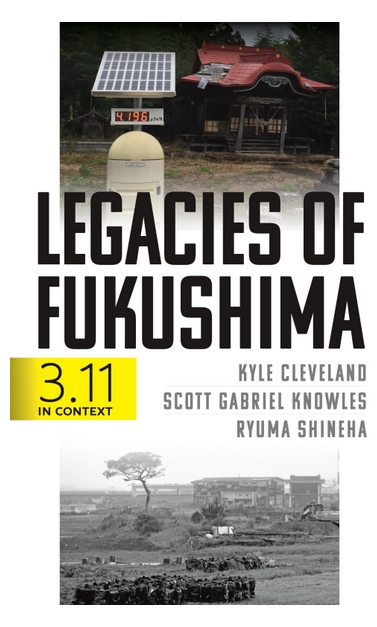
Legacies of Fukushima.
Introduction
Abstract: This special collection of papers reflects the work of contributing authors to the newly released book Legacies of Fukushima: 3.11 in Context (University of Pennsylvania Press, 2021). The edited volume addresses the Fukushima nuclear crisis in Japan, taking a multi-dimensional, cross-disciplinary approach to understanding this epic disaster. The book is an intersectional collaboration that is unique in that it incorporates the work of Japan-area scholars, journalists, nuclear experts and Science, Technology and Society (STS) scholars from Japan and abroad, who discuss the trajectory of the Fukushima nuclear disaster in the first decade since its inception. There are 19 authors whose work is included in the book; this special edition of selected papers for The Asia-Pacific Journal: Japan Focus evokes that work, and while they do not entirely represent the scope of the material included in the edited volume, these papers delve into issues that any disaster studies scholar or student of the Fukushima nuclear disaster will find compelling.
The 3.11 disasters were an implausible convergence of events, the massive 9.0 earthquake (the largest on historical record in Japan), a tsunami that took nearly 20,000 lives, which put the Fukushima Daiichi nuclear power plant underwater, leading to 3 nuclear reactors in meltdown, the most convoluted nuclear disaster in history. When the tsunami pushed ashore onto the coast less than an hour after the earthquake, it swamped the Daiichi plant, inundating the reactors and taking out the electrical backup generators, causing a total station blackout. With no power to run instrumentation or take remedial actions, the Daiichi nuclear power plant descended into chaos. The Fukushima crisis was the first multi-reactor meltdown and the only total station blackout (the only time this had happened in the history of nuclear energy). This “beyond-design-basis” event was unprecedented in the history of nuclear energy, and it was considered so unlikely that it left nuclear authorities wholly unprepared to deal with the crisis as it cascaded out of control. TEPCO (the utility that ran the doomed plant) has since maintained that they should not be held legally accountable because these conjoined events, taken together, were the ultimate “Black Swan” disaster. As Charles Casto, a former plant manager and high-ranking administrator in the U.S. Nuclear Regulatory Commission, who was the chief liaison for the U.S. government during the crisis and who worked closely with the operational staff at the Daiichi plant put it: it was comparable to having the San Francisco earthquake, the Three Mile Island nuclear accident and the Katrina hurricane all happening on the same day.1
Yet as unlikely as they would seem to be, the Tōhoku earthquake and tsunami were hardly unprecedented. Japan is roiled by earthquakes constantly, and while the magnitude of the 3.11 quake was unique, in the months that preceded and followed this event there were clusters of smaller quakes, many in the 7 magnitude (Richter Scale) range, that would be significant outside the context of the penultimate quake of 3.11. And the Sanriku coast in Northeastern Japan has been inundated by tsunami often enough that oral tradition among inhabitants of coastline communities has produced a cautionary mindset in which tsunami have always loomed large in the collective imagination. Under the harsh scrutiny of nuclear critics, scholars, journalists, and industry and governmental officials who were by necessity compelled to address its consequences, a more nuanced and critical perspective eventually took hold and Fukushima, much like Chernobyl, Three Mile Island and other nuclear disasters, seems now in retrospect to be all too predictable, and, avoidable.2
Scandals now buzz around Fukushima like parasites on a dead thing, and a withering indictment of nuclear energy in Japan prevails. Corporate collusion, precursors ignored, lessons unlearned, the failure of regulatory oversight, and a lack of accountability have become commonplace in discussions of the nuclear enterprise in Japan. This is not only a scathing indictment of the hubris that brought Japan to this point in the first place, but it reveals a lack of foresight and analytical rigor that sustained the nuclear authorities in their wishful thinking that such an outcome was unimaginable. March 11, 2011, was a day of reckoning and yet the manner in which the disaster has been addressed betrays a callous disregard for human suffering in the aftermath, as communities have been destroyed and people have been offered little solace nor justice by the institutional authorities who were charged with looking after their best interests.3
In an effort to restore its reputational damage, the government and nuclear industry alike have promoted a narrative of resiliency among those most egregiously affected, but the nuclear village itself has proven perhaps to be the most resilient of all: the government maintains a long-term nuclear agenda to restart most of the reactors, despite the humanitarian cost. Japan is invested in nuclear energy not only because it elevates the country’s status as a member of the league of nuclear nations, but has offered, in its most idealistic construct, a potentially significant portion of its overall energy output, with the economic benefits that would entail. By 2011 nuclear power comprised roughly 30% of Japan’s energy supply, but after the nuclear disaster the entire fleet of 54 reactors that were online in 2011 were shuttered to undergo testing and retrofitting under a newly established regulatory regime. Having replaced Japan’s Atomic Energy Commission, the Nuclear Regulatory Authority set stringent new standards, and deemed that 33 reactors are classified as operable. Of these only 9 units at 5 power plants (all in Western Japan) have restarted; another 16 are at various stages in the process of restart renewal. Two reactors are under construction but are stalled pending approval to move forward, and another eight reactors proposed to be deferred indeterminately. The government now plans for 20% of its energy supply to come from nuclear power by 2030 (at the time of this writing in summer, 2021 only 6.5% of Japan’s electricity is nuclear generated).4
As the government seeks to return nuclear energy to a semblance of its former self, throughout the Tōhoku region, and most especially in the evacuated villages in Fukushima adjacent to the Daiichi plant, a sense of foreboding remains and is unlikely to lift anytime soon. Much of the area most affected by the nuclear disaster is in a remote, mountainous region where agriculture and fisheries were major industries before the radioactive fallout irrevocably wrecked the Fukushima brand. A massive exit migration has depopulated towns (a process that was well underway in the economically stagnant rural areas, long before the Fukushima crisis accelerated this process), or resulted in an age stratified population that remains. Elderly landowners, with ancestral roots and property investments have remained, but those under 40, especially with young children, have sought safer domains, free of the worry of radiation exposure and with better long-term career prospects.
Moreover, not only has the agricultural economy and the Fukushima brand been irrevocably tainted by its association with radioactive fallout, but the shuttering of the nuclear plant itself has removed tens of thousands of jobs, as a skeleton staff remains to implement the plant decommissioning at Daiichi. In Tōhoku the nuclear plants had, in an earlier time, been the hub around which communities where organized, and the tertiary industries that helped feed the beast have diminished to such an extent that many men (and in this culture, the nuclear industry is notably gendered) have had to resort to being employed in the emergent massive decontamination industry, essentially now being paid to clean up their own back yards, while subjecting themselves to continuous radiation exposure in the process. Claims that the true radiation exposure incurred in the process are minimal are cold comfort to those who long ago lost faith in the honesty of institutional actors, and it does not forbode well for authorities in their efforts to repair the reputational damage, however well-meaning their actions may be.
Trust in institutional authority is not a renewable commodity. The government and nuclear authorities are now left to reap the whirlwind sown in the toxic breeze of March 2011, as radiation was released on an ill-informed local population, that only days before could never have imagined such a calamity. Although as a matter of the normal regulatory process disaster protocols were in place, these had never been tested in extremis, and there was little concern among those within the nuclear industry and the locals whose communities were dependent on the nuclear plant’s operations for their livelihood that such an event could happen.
In 2016 and again in 2018 I joined with several colleagues to interview the mayors of Namie, Tomioka, Kawauchi, Futuba and Minami-Soma, the evacuated towns most severely affected by the nuclear disaster as it unfolded in the first few weeks of the disaster. In far reaching interviews with the mayors and their administrative staff, the sense of abandonment and betrayal in those more dire times generated a level of animosity that was palatable. Years later, as the political discourse on Fukushima promoted heroic tropes of long-suffering TEPCO staff at the plant5 and the resiliency of locals who remained to rebuild their lives, these feelings had only deepened as the confusion lifted and was given perspective by time and revelations that had not been known until much later, as secrets were revealed and investigative panels painted a more 3-dimensional picture of what had really unfolded in those darkest days. A lack of real-time support during the evacuations, brusque, tone-deaf messaging by TEPCO and the Japanese government, economic finagling that protected TEPCO from ultimate financial and legal accountability and a lack of sheer decency and empathy for those who had suffered the most was burned into the memory of the victims of Fukushima.
These wounds will be slow to heal and leave scars upon the psyche and land that will remain in the lived experience and subsequent oral tradition of this region,6 irrespective of public relation ploys that attempt to downplay the impact of disaster and recast what is a still unfolding disaster into an artificially abbreviated narrative that celebrates recovery that is far from complete. As the 75-year anniversary of the atomic attacks on Hiroshima and Nagasaki were commemorated not long before the 10-year anniversary of the Tōhoku disasters, it has been a time for reflection for the survivors of these historic tragedies. These survivors carry the weight of history in their experiences and serve as a reminder that the cost of state actions echo in the trauma endured by Hibakusha and those whose lives were disrupted by these disasters.7
The Tōhoku disasters – and the Fukushima nuclear crisis in particular, which captured the world’s attention and resonated symbolically in a way the tsunami never could – served as a vehicle for Japan to reposition its national brand post-3.11. A decade into the still unfolding disaster, Japan hosted the Olympics in the summer of 2021, and the world’s attention returned to Fukushima, with the torch relay beginning inside the previous evacuation zone, and the baseball games being staged in Koriyama, the largest city nearby the Daiichi plant.
The Japan Olympics were essentially the ultimate consolation prize for the tragic events of 3.11, evoking sympathy for the loss of life, the destruction of a vast swath of infrastructure by the tsunami, and the toxic environment that people in Northeastern Japan have endured. By granting Japan the status of host nation, the IOC offered a symbolic gesture of good will toward Japan. Two generations after the 1964 Olympics helped usher Japan into the modern age, symbolically marking a pivot point in history following the devastation of WWII, which utterly devastated 67 Japanese cities through firebombing and the annihilation of Hiroshima and Nagasaki by atomic bomb attacks, the 2020 Olympics promised to cast Japan as an exemplar of long-suffering fortitude and civic-minded communitarian spirit. This was soft-power politics refracted through the prism of disaster and recovery rather than pop-culture consumerism.8 The Olympics hold out the prospect of being the ultimate exercise in soft-power and have often been employed as a form of nation building, an opportunity for the host country to showcase an idealized representation of itself. This was a difficult enough feat to achieve with resentment toward the government’s inept response to the events of 3.11 still lingering in the collective memory, but the emergence of the COVID-19 crisis in 2019 largely eclipsed the grand narrative of Fukushima as the COVID-19 pandemic and the 2020 Olympics became inexorably linked.
The opening ceremony of the Olympics were an eerily sedate and symbolically resonant reflection on how COVID-19 had disrupted the normal operations of the Olympics, evoking confusion and alienation from inter-personal relations upon which the sentiments of Olympian solidarity are grounded. It was as much a commentary on the organization of the games as it was on the higher values the IOC and host nations strive to promote to sustain the idealistic brand of the games.
By the time the Olympics were actually staged, the Japanese authorities had gone down a convoluted path of trying to manage a message that would sanctify the games and burnish Japan’s reputation. Originally this was directed toward the powerful associations attached to the “Fukushima Olympics,” which in the runup to the games was a central concern. Later, this would be almost entirely eclipsed by the COVID pandemic.
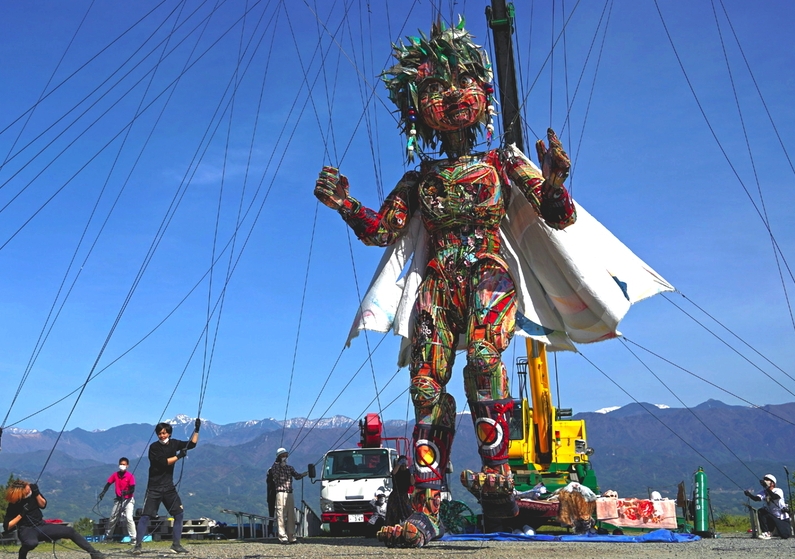
On The Tokyo Organising Committee of the Olympic and Paralympic Games website, MOCCO is characterized by its creators in this way:
“The local dialect where I was born in Miyagi includes the word ‘Odazumokko’, which refers to a popular person who is lively and mischievous. An example sentence is ‘the only son of the family who runs the stationery shop has always been an incorrigible odazumokko, but he’s made it to Tokyo and is doing shows there.’ The word ‘mokko’ originates from a word for carrying a basket, so we used this word for MOCCO to express that he travels bearing people’s thoughts and ideas.” (Kudō Kankurō, scriptwriter, director, actor)
“MOCCO appears abruptly out of nowhere. Neither adults nor children are afraid of him and while he might look a bit scary, it is kind of a cute scariness. There is lively talk about MOCCO all over and everyone has respect for him, which he fully realizes. Everyone knows that MOCCO carries with him dreams and hope, so while you’re having fun with him you should make a wish in your heart. Stomp stomp stomp, MOCCO is here!” (Arai Ryōji, picture book creator, illustrator).
“MOCCO is with you when you are happy or sad, and is somewhere in your tender memories. MOCCO is there when you don’t know what tomorrow holds. MOCCO is always together with everyone”. (Kameda Seiji, music producer of Tōhoku no Sachi).
The design was revealed in May 2019, but the full-motion final rendering of the puppet was performed in Iwate Prefecture, Tōhoku, 50 days before the anticipated start of the 2020 Olympics, and then debuted in Tokyo on July 17, 2020, and was thereafter put on display in Tokyo throughout the duration of the Olympics. Conceived as a collaborative project between children and the puppeteers, who discussed their artistic scribblings of the disaster with the puppet creators, MOCCO looks to be a skeletal bricolage of tsunami debris, rendered in human form. In its dramatic unveiling, MOCCO comes to life bellowing smoke from its mouth, knocking the puppeteers to the ground. Did they imagine this represented the radiation plume? Lacking the redeeming qualities of kitsch that animated the radiated lizard, MOCCO seems nothing less than a modern-day Godzilla for the 3.11 disasters. It immediately reminded me of the grotesquerie of Gunther von Hagen’s platinated human corpses, that were put on display in his exhibit “Human Body Worlds,” discomforting audiences around the world.
Although inspiration may have been provided by children whose lives were disrupted by the Tōhoku disasters, MOCCO seems less the product of an idealist vision of future hope and recovery than an embodiment of their nightmares of having lived through a disaster beyond their imagining. The French playwright Philippe Néricault, (a.k.a. Destouches), famously said: “La critique est aisée et l’art est difficile” (Criticism is easy and art is difficult) and so it is perhaps a cheap shot to parody the intentions of these well-meaning artists who brought this vision to life and paraded it in front of the victims of 3.11 in service of the grand notions of resilient nationalism. But art resonates in our collective unconscious in ways not easy to articulate, and it is hard to imagine that this 10-meter animated puppet comprised of tsunami flotsam on a skeletal frame would be a comforting presence for those who recall the vision of the devastation that lay strewn before them as the tsunami destroyed everything in its path.
Billed as “The Reconstruction Olympics,” Japan was selected as the Olympics host partly in sympathy for the impact the 3.11 disasters had on Japan (the most expensive set of conjoined disasters in world history) and as a form of nation branding in service of a narrative of resiliency, not only with regard to the people of Tōhoku who endured the worst of it, but also of the Japanese nation itself. It is ironic, but hardly surprising, that a kind of political alchemy has rendered the suffering of the victims of the nuclear disaster as a symbol of long-suffering fortitude, while implicitly endorsing the structure of collusive interests which sustain the nuclear village, which set the conditions for the disaster in the first place. For those on the receiving end of this, there has been a withering retrospective accounting of disaster management after 3.11 and hard-earned suspicions about the State’s ability to protect public health while promoting the reactor restarts under the guise of recovery on an Olympics timeline.
The Olympics long ago lost their idealistic luster as representing the epitome of “amateur” athletics and have become a marketing juggernaut and form of symbolic nation branding, providing incentive to hold the games irrespective of the long-term costs they lay at the feet of the hosts. Although the host nation may bask in the short-term glare of world attention and the adoration of their athlete stalking horses, the collusive interests between marketing conglomerates, the International Olympic Committee, and nation-states, they ultimately inherit the economic burdens created by cost overruns and infrastructure projects whose functional use is short-lived and cause for regret as the transient games are played out and the host nation is thereafter left to settle accounts.
At the time of the 10-year anniversary of the 3.11 disasters, competing discourses muddied the waters of institutional memory. The cruel timing of the emergence of the COVID viral pandemic, right on the cusp of the initial scheduling of the Olympics to start in the late summer of 2020, eclipsed the previous focus on Fukushima as the defining motif of these times. Having been saddled with the economic cost of the Tōhoku disasters (the most expensive in world history) the COVID-19 viral pandemic undermined the feel-good rhetoric of the Olympics, which had been branded as the “recovery” and “reconstruction” Olympics, an ode to the protracted efforts of the government to dig itself out of the scurrilous association with its inept response to the crisis. But with COVID-19 running rampant and Japan at the end of the line for vaccinations (with the lowest rate of implementation among affluent countries, in the single digits as of summer 2021), the Olympics were initially postponed and then reluctantly held in defiance of public sentiment (at one point nearly 80% of Japanese citizens opposed holding the Olympics) while Japan imposed a de facto immigration firewall against foreign contagion, a longstanding trope of Japan as an insular, island nation unnerved by the threat of foreign invasion. This was entirely antithetical to the notion of universal inclusion that defines the Olympic mission, and it undermined Japan’s efforts to construct an artifice of salutary resiliency in the face of adversity.
It is difficult to gaze upon the spectacle of the 2020 Japan Olympics being undone by the COVID-19 pandemic and not see this through the lens of the Fukushima disaster response.9 Karl Marx wrote that “Hegel remarks somewhere that all great, world-historical facts and personages occur, as it were, twice. He has forgotten to add: the first time as tragedy, the second as farce.”10
There are obvious parallels between the manner in which the Tōhoku disasters were handled and the Japanese government’s response to both the COVID-19 viral pandemic and the Olympics. These are all epic, culture-transforming events that are historic in scale, and they cast into stark relief all the deficiencies of the State in its inability to address disasters at this scale. Major disasters expose the weakness of governmental institutions to address multi-dimensional complex disasters effectively. While certain aspects of Japanese culture were complicit in this, culture alone cannot account for the systemic failure of institutions, especially when in calmer times these same institutions are held up as exemplars of bureaucratic competence. One of the most shocking things about the Tōhoku disasters is that it highlighted a yawning gap between the stereotype of Japanese hyper-competency and the abject failure of institutions to effectively address the immediate needs of the moment as these severe disasters wreaked havoc, and it exposed an inability to care for people in their darkest hours of need.
In the nuclear crisis, a lack of governmental coordination left local authorities to fend for themselves, playing catch-up in a reactive mode that left them feeling embittered and abandoned. With the COVID pandemic response, a similar dynamic has played out. Despite having experienced at close hand the SARS-COVID outbreak in 2002/2003—which, like the 2019 SARS-2-COVID pandemic, broke in China—and having been reminded by the glancing blow of the 2009 H1N1 (“Swine Flu”) and the MERS Coronavirus crisis of 2012, Japan remained woefully unprepared at a national level to deal with this emerging pandemic. Although comparatively benign “lock-downs” (largely in name only, with no strict enforcement sanctions) limited the spread of the virus, the Japanese authorities doggedly refused to implement wide-spread testing to monitor the pandemic progression, and relied primarily on a local level response whereby medical clinicians were left to their own devices to assess patients, often with no COVID testing to verify their diagnoses, except in the most extreme cases.11
Japan has no national level coordinating body for infectious disease (comparable to the WHO or Centers for Disease Control and Prevention in the U.S.), and thus little guidance was given to medical authorities as to what actions were necessary. The political messaging also reflected this, with the government providing periodic announcements while remaining obstinately reactive to the pandemic as it worked its way through the population. With the penultimate date of the Olympics approaching, the Japanese authorities dithered until they were eventually forced to concede to reality and cancel the Olympics. As the COVID pandemic was amplifying in 2020, this may have been the most prudent decision, but then having had this dress rehearsal and a year-long intermission before the Olympics were set to restart in the summer of 2021, the most obvious mitigating action of vaccinating the population was delayed. A couple of months shy of the start of the 2020 Olympics, Japan still had not implemented a wide-spread testing regime or distributed vaccines. Only 3% of the population had been vaccinated by this time – the lowest among affluent countries by far – and what vaccines that had been given targeted those over the age of 65.
Japan enforced a strict exclusionary policy of closing the borders for immigration, allowing only Japanese nationals and long-term residents with occupation-specific visas to enter the country. At the same time, it was obstinately committed to holding the games despite every indication that it would be a logistical shambles and public opinion polls showing that 80% of the population was opposed to holding the Olympics, it was prohibiting immigration, with the result being that no foreign fans were present. As the virus continued to spread, it was decided that even local Japan-based fans could not attend except in limited circumstances and venues. Japan had great incentive to act decisively on “best-policy” practices and had all the essential information to make informed decisions, both to package the Olympics in a coherent and safe manner, and to protect its population from this insidious disease. And yet, with a series of embarrassing off-brand mishaps that highlighted the tone-deaf messaging of the Tokyo Organising Committee, it let opportunity after opportunity slip by with an almost fatalistic concession to circumstances as though they were beyond their control. They weren’t. Now, as with Fukushima, it is a time of reckoning, and an occasion to reflect on lessons unlearned, a lack of institutional accountability and reform and the consequences of governmental dysfunction and neglect.
In his classic work on suicide, the sociologist Émile Durkheim discussed anomie, a state or condition of normlessness, in which social values and norms are disrupted by social change, leading to a state of moral confusion. This well characterizes the decade following the 3.11 disasters in Japan: the economic disruption, loss of faith in government and legal authority, the disorientation of survivors, a spike in suicide and a general malaise as the Tōhoku region recovers from the tsunami and the Fukushima area is decontaminated and warily reinhabited by returning evacuees. Written over a century ago, Durkheim’s work seems prophetic as it encapsulates the anomic times Japan has experienced through the 3.11 disasters and the COVID viral pandemic, with the sideshow of the Olympics failing to provide the grand narrative of recovery that might have helped redeem State authority and mark a transition point to a return to normalcy. In this light, Durkheim’s words seem not only an indictment of the pursuit of economic solutions to social problems, but a commentary on the 2011 triple-disasters on top of the de facto triple-disasters of 3.11, COVID and the Olympics. Durkheim writes:
“The sphere of trade and industry… instead of being still regarded as a means to an end transcending itself, has become the supreme end of individuals and societies alike. Thereupon the appetites thus excited have become freed of any limiting authority. By sanctifying them, so to speak, this apotheosis of well-being has placed them above human law. Their restraint seems like a sort of sacrilege. So long as the producer could gain his profits only in his immediate neighborhood, the restricted amount of possible gain could not overexcite ambition. Now that he may assume to have the entire world as his customer, how could passions accept their former confinement in the face of such limitless prospects?… From top to bottom of the ladder, greed is aroused without knowing where to find ultimate foothold. Nothing can calm it, since its goal is far beyond all it can attain. Reality seems valueless by comparison with the dreams of fevered imaginations; reality is therefore abandoned…”12
References
Aven, T. (2015) ‘Implications of black swans to the foundations and practice of risk assessment and management,’ Reliability Engineering & System Safety, 134, pp. 83-91.
Casto, C.A. (2018) Station blackout: Inside the Fukushima nuclear disaster and recovery. Radius Book Group.
Downer, J. (2014) ‘Disowning Fukushima: Managing the credibility of nuclear reliability assessment in the wake of disaster.’ Regulation & Governance, 8(3), pp. 287-309.
Durkheim, E. (1951) Suicide: A study in sociology. Translated by J. Spaulding and G. Simpson. The Free Press.
Erikson, K. T. (1995) A new species of trouble: The human experience of modern disasters. WW Norton & Company.
Funabashi, Y. (2021) Meltdown: Inside the Fukushima nuclear crisis. Brookings Institution Press.
Haruta, J., Horiguchi, S., Miyachi, J., Teruyama, J., Kimura, S., Iida, J., Ozone, S., Goto, R., Kaneko, M. and Hama, Y. (2021) ‘Primary care physicians’ narratives on COVID‐19 responses in Japan: Professional roles evoked under a pandemic,’ Journal of General and Family Medicine.
Johnson, D.T., Fukurai, H. and Hirayama, M. (2020) ‘Reflections on the TEPCO trial: Prosecution and acquittal after Japan’s nuclear meltdown’ The Asia‐Pacific Journal, 18(2), pp. 1-35.
Kadota, R. (2014) On the brink: The inside story of Fukushima Daiichi. Kurodahan Press.
Marx Engels Internet Archive. (1995) The Eighteenth Brumaire of Louis Bonaparte [Online]. Accessed: June 5, 2021.
Muto R., and Field, N. (2020) “This will still be true tomorrow: Fukushima ain’t got the time for Olympic games: Two texts on nuclear disaster and pandemic,” Asia-Pacific Journal: Japan Focus, 18(13), no. 2, pp. 1-20.
Ronalds, P. (2019) ‘The ruptures of rhetoric: Cool Japan, Tokyo 2020 and post-3.11 Tōhoku,’ The Japan Foundation: New voices in Japanese Studies, 11, pp. 26-46.
Sakaki, A. and Lukner, K. (2013) ‘Introduction to special issue: Japan’s crisis management amid growing complexity: In search of new approaches,’ Japanese Journal of Political Science, 14(2), pp. 155-176.
The Tokyo Organising Committee of the Olympic and Paralympic Games, 2020. [Online] Accessed July 6, 2021.
Notes
Casto, C.A., 2018.2
Funabashi, Y., 2021. 3
Johnson, D.T., Fukurai, H. and Hirayama, M., 2020. 4
World Nuclear Association, 2021. 5
Kadota, R., 2014. Kadota was the only journalist to interview Daiichi plant manager Yoshida Masao before his untimely death by cancer (not attributable to the Fukushima disaster, according to TEPCO). Kadota’s book promotes a narrative of epic heroism by “The Fukushima 50,” a self-selected group of operational staff at the plant who elected to stay on to fight the battle despite facing the prospect of lethal radiation doses if they remained. This was the basis for a major production film as well. 6
Erikson, K.T., 1995. 7
Ruiko, M., and Field, N., 2020.8
Ronalds, P., 2019.9
Sakaki, A. and Lukner, K., 2013.10
Marx Engels Internet Archive, 1995.11
Haruta, et al., 2021.12
Durkheim, E. 1951, p. 279.
1 This Month

of the week – Shut Down Drone Warfare!


Tell the Ukrainian Government to Drop Prosecution of Peace Activist Yurii Sheliazhenko

Petition to revoke the licensing of the Near Surface Nuclear Disposal Facility (NSDF) at Chalk River. https://www.ourcommons.ca/petitions/en/Petition/Details?Petition=e-7247
To see nuclear-related stories in greater depth and intensity – go to https://nuclearinformation.wordpress.com
-
Archives
- March 2026 (244)
- February 2026 (268)
- January 2026 (308)
- December 2025 (358)
- November 2025 (359)
- October 2025 (376)
- September 2025 (257)
- August 2025 (319)
- July 2025 (230)
- June 2025 (348)
- May 2025 (261)
- April 2025 (305)
-
Categories
- 1
- 1 NUCLEAR ISSUES
- business and costs
- climate change
- culture and arts
- ENERGY
- environment
- health
- history
- indigenous issues
- Legal
- marketing of nuclear
- media
- opposition to nuclear
- PERSONAL STORIES
- politics
- politics international
- Religion and ethics
- safety
- secrets,lies and civil liberties
- spinbuster
- technology
- Uranium
- wastes
- weapons and war
- Women
- 2 WORLD
- ACTION
- AFRICA
- Atrocities
- AUSTRALIA
- Christina's notes
- Christina's themes
- culture and arts
- Events
- Fuk 2022
- Fuk 2023
- Fukushima 2017
- Fukushima 2018
- fukushima 2019
- Fukushima 2020
- Fukushima 2021
- general
- global warming
- Humour (God we need it)
- Nuclear
- RARE EARTHS
- Reference
- resources – print
- Resources -audiovicual
- Weekly Newsletter
- World
- World Nuclear
- YouTube
-
RSS
Entries RSS
Comments RSS
 nuclear-news