Japan to Lift Evacuation Order for Fukushima Katsurao Area June 12

May 16, 2022
Japan will lift on June 12 an evacuation order for a Fukushima Prefecture district that has been in place since the 2011 nuclear disaster.
The district in the northeastern village of Katsurao, designated as a specified reconstruction and revitalization base, will become the first area in the so-called difficult-to-return zone to host permanent residents again.
The central government’s nuclear disaster response headquarters, as well as the Katsurao village and Fukushima prefectural governments, announced an agreement on the removal of the order at a news conference in the village office.
In 2011, all Katsurao residents were ordered to evacuate due to the triple meltdown at Tokyo Electric Power Company Holdings Inc.’s Fukushima No. 1 nuclear plant in the prefecture.
Later, the evacuation order was lifted for most of the village. Still, the Noyuki district, which is some 1,600 hectares and accounts for some 20 pct of the village, remains designated the difficult-to-return zone due to high radiation levels.
Analysis of particles containing alpha-emitters in stagnant water at torus room of Fukushima Dai-ichi Nuclear Power Station’s Unit 2 reactor
May 16, 2022
Abstract
Particles containing alpha (α) nuclides were identified from sediment in stagnant water in the torus room of the Fukushima Dai-ichi Nuclear Power Station(FDiNPS)’s Unit 2 reactor. We analyzed uranium (U), which is the main component of nuclear fuel, using scanning electron microscopy (SEM). Other α-nuclides (plutonium [Pu], americium [Am], and curium [Cm]) were detected by alpha track detection and the morphology of particles with α-nuclides were analyzed by SEM-energy dispersive X-Ray (EDX) analysis. Several uranium-bearing particles ranging from sub-µm to several µm in size were identified by SEM observation. These particles contained zirconium (Zr) and other elements which constituted fuel cladding and structural materials. The 235U/238U isotope ratio in the solid fractions that included U particles was consistent with what was found for the nuclear fuel in the Unit 2 reactor. This indicated that the U of similar fuel composition had made finer. The α-nuclide-containing particles identified by alpha track analysis were several tens to several hundred µm in size. The EDX spectra showed that these particles mainly comprised iron (Fe). Since the amount of α-nuclide material was very small, Pu, Am, and Cm were adsorbed on the Fe particles. This study clarifies that the major morphologies of U and other α-nuclides in the sediment of stagnant water in the torus room of FDiNPS’s Unit 2 reactor differed.
Introduction
TEPCO’s Fukushima Dai-ichi Nuclear Power Station (FDiNPS) was severely damaged by the earthquake and resulting tsunami that struck on March 11, 20111. At the time, Units 1–3 of the six reactors were in operation, and the nuclear fuel in the Units 1–3 reactors was damaged. Seawater and freshwater were injected to remove the decay heat from the nuclear fuels. The water remained in the basement of the building, and the components of the nuclear fuel dissolved in it, resulting in highly radioactive stagnant water. The stagnant water contained radionuclides, such as fission products and actinides derived from nuclear fuels. A chemical treatment process was established to remove the radionuclides, and a recirculating engineering system was established to reuse the recovered cooling water. Since then, the amount of stagnant water has been gradually reduced, but it was discovered that the fine particles containing a higher concentration of Alpha (α)-emitting radionuclides were settling basement in the reactor building2. The concentrations of alpha-nuclides (102–105 Bq/L) in the stagnant water including sediments were higher than the cooling water in the downstream building. Alpha-emitting radionuclides such as uranium (U) and plutonium (Pu) can cause serious internal exposure upon entering the human body. Alpha-nuclides should be strictly controlled when compared to caesium(Cs)-137 and strontium(Sr)-90, which are the main nuclides in fission products. Technology must be developed to effectively remove the alpha-nuclides from the stagnant water. For this purpose, we collected stagnant water in the torus room in the basement of the reactor building of Unit 2 and conducted radiochemical analysis of the precipitates in the stagnant water.The stagnant water is a higher concentration compared with what was detected at the entrance to the Cs adsorption system. In addition, the presence of α-emitting radionuclides was confirmed in the samples containing mixed sludge components from the stagnant water in the reactor building. To proceed with the treatment of the stagnant water deep inside the reactor building in the future, a better understanding is required of the different types of α-emitters, particularly those included in particulate solids in the stagnant water.
In existing research, radioactive particles containing U were detected in association with Cs microparticles (CsMPs) outside the FDiNPS site and their physicochemical composition and morphology were analyzed3,4,5,6,7,8. Abe et al.3 collected CsMPs emitted from the FDiNPS from the atmosphere and analyzed them using synchrotron radiation X-rays to detect U in the CsMPs. Ochiai et al. detected U particles of several hundred nm in CsMPs by scanning electron microscopy-X-ray detection (SEM-EDX) analysis. Their results reflected the composition of UO2 on magnetite by observing the diffraction pattern obtained using transmission electron microscopy. Similarly, diffraction patterns of UO2 and zirconia were obtained from mixed particles of Zirconium (Zr) and U in CsMPs, respectively. This indicated that U was present in CsMPs in both UO2 nanocrystals and U-Zr nanocrystrals forms6. Kurihara et al.8 found that the U in the fuel composition of the Unit 2 reactor was present in the CsMPs by analyzing the isotope ratios of 235U and 238U in the CsMPs using nanoscale secondary ion mass spectrometry. The release of fuel-derived Pu into the environment has also been reported by soil analysis9,10,11,12,13, airborne particles14, and CsMPs7. For americium (Am) and curium (Cm), few reports have been published regarding their release into the environment11. Recently, Morishita et al.15 detected particles containing α-emitters in smear samples collected from inside the FDiNPS using an α-ray imaging detector. The maximum energy of the α-rays indicated the presence of 238Pu; γ-ray spectra indicated the presence of 241Am. The morphology of these α-emitters was not observed.
In this study, we analyzed the concentrations and forms of U and other α-emitters in liquid and solid phases to obtain the basic data necessary for considering a removal method for α-emitters in the stagnant water of Unit 2 of the FDiNPS. The search for radioactive particles in existing studies was conducted primarily using imaging plate (IP)4 or sodium iodide scintillation counters8,16 and by detecting γ-rays from CsMPs. However, while these methods are effective for CsMPs with high radioactivity, it is difficult to selectively detect α-emitters that are present in small amounts and with low specific radioactivity. Therefore, we decided to use a combination of an automated particle measurement method using SEM-EDX17 and a method for detecting particles containing α-emitters using solid-state track detectors18,19,20,21,22,23,24
Results and discussion
Particle size distribution of solids in the stagnant water containing uranium and alpha-emitters
Figure 1a shows a schematic of a sampling location of a stagnant water sample in this study. Figure 1b shows how the particles settled after the sample was collected. The reddish-brown particles had settled over time. The solids in the stagnant water were classified and the U concentration of each fraction was measured by inductively coupled plasma mass spectrometry. The results are shown in Table 1.


As indicated, 238U was quantified in all fractions of all particle sizes, indicating its existence in various particle sizes. More than 99 % of U was present in fractions larger than 10 μm. The 235U/238U isotopic ratio was approximately 1.9 %, which closely matched the Unit 2 composition (1.93 %)25. Analysis of the total α-activity in each fraction showed that more than 99.8 % of the α-emitters were present in fractions larger than 10 μm (see Supporting Information, Table S1). These results suggested that most of the U and α-emitters in the stagnant water sample of the Unit 2 were present in particle fractions larger than 10 μm. Accordingly, a search for particles containing U and α-emitters was attempted using particles in solid fractions.
Detection and composition analysis of uranium particles using scanning electron microscopy-X-ray detection
As the main U isotopes (235U and 238U) in the fuel composition have a long half-life and low specific activity, SEM-EDX was adopted to detect U-rich particles. Precipitates on the filter with a pore size of 5 μm were loaded onto carbon tape (Fig. 1c) and observed by SEM-EDX. Particles containing more than 3 % U by atomic ratio (hereafter referred to as “U particles”) were detected based on the results of elemental composition analysis. An example of the observation result of UP1 is shown in Fig. 2.

Black particle (UP1) was observed on top of the reddish-brown particles in the center of optical image in Fig. 2a. Figure 2b shows a backscattered electron detection(BED) image of the same region as Fig. 2a. In the BED image and its magnified view (Fig. 2b, c), the black particle in Fig. 2a had a high intensity. In general, a particle containing an element with a relatively higher atomic number yields a BED image with higher brightness. The particle (UP1) with high brightness in Fig. 2b, c should contain heavy element. The peaks at 3.18 keV (U Mα), 3.34 keV (U Mβ), and 3.55 keV (U Mγ)26 were observed within the EDX spectrum of the UP1 particle (Fig. 2d), indicating that the particle included U. According to the results of SEM-EDX composition analysis of the U particles (UP1 in Table S2), U was the main component. In addition, the distribution of components in the fuel-structure materials, such as Zr and Cr, was also observed on the U particle (Fig. 2e). In contrast, iron (Fe) was observed to have been distributed around the U particles, indicating that the U particles were attached to the Fe particles. These results suggested that the U particle would be particulate with fuel-structural materials.
Using the same procedure as in the above paragraph, 14 U particles were detected. The observed particle sizes and the elemental maps of U and Zr are shown in Fig. 3a. Elemental composition of U particles are shown in Table S2.

Uranium particles with size ranging from approximately 500 nm to 3 μm were observed. Uranium particles were attached to Fe particles or present on their own (Fig. S1). The content of Fe in the analyzed stagnant water sample was approximately 4,400 times higher compared with U, indicating that the main component of the filtered material was Fe. Uranium particles smaller than the filter pore diameter of 5 μm were trapped, suggesting that they were cake-filtered during centrifugal filtration.
The isotope ratios of U in this fraction were consistent with the fuel composition derived by ICP-MS measurements. The presence of U particles with an isotopic composition the same as the nuclear fuel suggested that these U in the stagnant water sample had been derived from reactor core. The release of U and Pu from the FDiNPS into the environment was investigated and clarified by analyzing bulk soil samples for Pu9,10,11,12,13 and measuring the isotopic composition of U3,6,9 and Pu particles7 associated with CsMPs. Fine U, U, and Zr particles, ranging in size from several tens of nm to several hundreds of nm, have been detected in association with CsMPs in the environment6. In the present study, it was found that particles approximately 10 times larger in size than the particles associated with CsMPs existed in the stagnant water sample. It was also clarified that some U particles were not associated with CsMPs but existed independently.
Many U particles included Zr, which would have been derived from cladding. The ratios of U and Zr in these particles are compared in Fig. 3b. The ratio of U to Zr in each particle varied. In addition, in some particles, Zr was not detected, suggesting that the particles retained their fuel form. An existing report6 suggested the existence of two types of U particles several hundred nm in size that had been derived from the FDiNPS and released into the environment; one of these particles was in the fuel form of UO2 and the other presented as a Zr mixed oxide.
Detection and analysis of particles containing alpha-emitters using alpha track detection
The distribution of α-emitters in solids was investigated using alpha track analysis. An example of α-emitter particles and observed alpha tracks is shown in Fig. 4a, b. The upper left part of the particle in Fig. 4a shows the presence of U particles UP10 and UP13 (Fig. 4c, d), which are identical to those shown in Fig. 3. The distribution of alpha tracks can be observed uniformly from the reddish-brown particles; the uneven distribution of the position of U particles is not presented. Only a few tens of alpha tracks were observed, even for the alpha tracks at the position of the UP1 particle (Fig. S2), which had the largest particle size among the detected U particles with a diameter of 3 μm (Fig. 3a). In comparison, several hundred alpha tracks can be observed in Fig. 4b. This result suggested that the main source of alpha tracks was not U particles but other α-emitters on the reddish-brown particles.

The particle with the most alpha tracks is shown in Fig. 5a, and the alpha tracks derived from this particle are shown in Fig. 5b. The SEM-EDX observation of this particle is shown in Fig. 5c. Three particles can be observed in this image, all of which were found to comprise mainly Fe, based on the elemental mapping results (Fig. 5d, e). Furthermore, the elemental analysis results showed that U and other α-emitters were not detected (Fig. 5d). An almost uniform distribution was observed of α-nuclides on the Fe particles; this indicated that the α-nuclides present in ionic form in the solution may have focused on the Fe particles.

Uranium was also detected in the fractions smaller than 10 μm; however, α-emitters were only detected in fractions larger than 10 μm (Table S1). As Fe particles were in much larger quantities and sizes than U, the most of Fe particles were present in fractions larger than 10 μm by cake-filtration. As a result, most of the α-emitters, such as Pu, Am, and Cm, were observed the fraction lager than 10 μm, although fine U particles were present in each fraction. Iron particles (Fig. 5) were approximately 100 μm in size, which were smaller than those in Fig. 4 (approximately 200 μm). The number of alpha tracks was much larger among the Fe particles in Fig. 5 than in Fig. 4. Thus, the amounts of α-nuclides were not proportional to the size of the Fe particles but varied between particles. As noted above, the contribution of U particles to the alpha tracks was minimal (Fig. S2), and the number of other α-emitters in U particles was negligible compared with the total amount of α-emitters.
Among the three particles, the IP1 particle, i.e., the main source of the alpha tracks, had been dissolved and α-ray measurements were performed. Figure 6 shows the α-ray spectra of the IP1. Alpha nuclides such as 239Pu, 240Pu, 241Am, and 244Cm were detected. For the particle analyzed in this study (IP1), the radioactivity ratio of 238Pu + 241Am to 239Pu + 240Pu was 4.03, and the ratio of 244Cm to 239Pu + 240Pu was 1.17, which was almost consistent with the fuel composition (4.50 and 1.14, respectively)25. Future work should clarify whether the variation of nuclides exists in each Fe particle.

Estimation of the chemical properties of uranium and alpha-emitter particles using micro-Raman spectroscopy
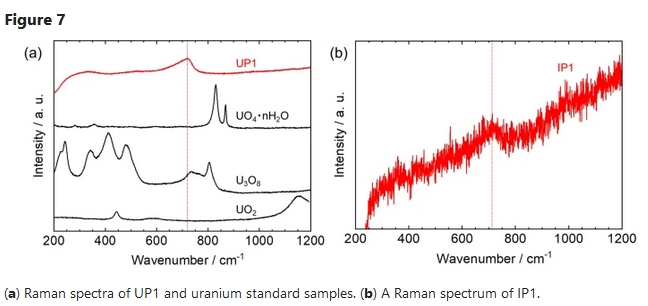
A Raman spectrum of the UP1 particle was obtained by micro-Raman spectroscopy. Figure 7a shows the Raman spectra obtained from the UP1 and uranium standard samples. The Raman peak of UP1 is located at approximately 730 cm−1, suggesting that it is in a different chemical state from UO2 and other U oxides. Figure 7b shows the Raman spectrum obtained from IP1. A Raman peak is only located at approximately 710 cm−1. Hanessh reported that natural ferrihydrite has only strong 710 cm−1 band27.The Raman spectrum of IP1 showed that the surface of the Fe particles existed as ferrihydrite. Since the pH of the stagnant water sample was almost neutral and the adsorption of Pu28,29 and Am29 on Fe oxides was previously reported, the ions or colloids of these α-emitters would be adsorbed onto the Fe particles. Accordingly, it is suggested that α-nuclides are distributed on Fe oxides.
Conclusion
To eliminate the presence of α-emitters in the stagnant water, the particles were collected according to their size. Uranium particles were detected by SEM-EDX. Other α-emitters (Pu, Am, and Cm) were detected using alpha track detection and measured via alpha spectrometry. The average isotopic composition of U in the stagnant water sample match well with the fuel composition of FDiNPS’s Unit 2. The U particles in this sample were up to 10 times larger in size than those observed in the environment. It was also shown that Pu, Am, and Cm α-emitters were adsorbed onto Fe particles. These results demonstrated that the major morphology of U and other α-emitters was different. By understanding these types of α-emitters, important information was obtained for considering the separation method of α-emitters in the treatment of the stagnant water in the Unit 2.
Methods
Sampling of stagnant water in the torus room of FDiNPS’s Unit 2
A 40-mL of stagnant water sample in torus room of FDiNPS’s Unit 2 was provided form TEPCO HD. The stagnant water containing sediment accumulated on the basement floor was collected with a water sampler at 30th June, 2020.
Classification of solids and the distribution of uranium and alpha nuclides in the stagnant water
A 2-mL sample of the stagnant water was collected with a stirring well and transferred to a centrifugal ultra-holder (UHP-13C; Advantec) equipped with a 10 µm pore-size membrane filter (PTFE, o.d.13 mm; Merck). This centrifugal ultra-holder was set in a centrifugal separator (CN-820; Az-one) and centrifuged at a rotation speed of 3000 rpm for 10 min to separate the residue from the filtrate. The filtrate was sequentially filtered through 1, 0.1, and 0.02 µm filters. To dissolve the α-emitters in the residue and filtrate, each sample was transferred to a quartz beaker. Nitric acid (HNO3) and hydrogen peroxide (H2O2) solutions were added to the residue and the filtrate on the filter to create a 2 M HNO3–2% H2O2 solution, which was heated and dissolved on a hotplate at 130 °C for 1 h. Since the 0.02 µm pore size of the Anopore membrane filter (0.02 µm pore size; Whatman) was dissolved by HNO3 and the impure U contained by the filter was eluted, determination of the residue in the 0.02-µm section was derived from the difference in U concentration in the filtrate of the 0.1 and 0.02 µm filters. The heated sample solution was passed through a UTEVA-Resin column (UT-C20-A; Eichrom) conditioned with 6 mL of 2 M HNO3; 15 mL of 2 M HNO3 was used to wash out impurities in the column, and 10 mL of 0.01 M HNO3 was passed through to elute U adsorbed in the column. The collected eluate was heated on a hotplate at 130 °C until just before it dried up and then re-dissolved in 5 mL of 0.32 M HNO3 to make the solution for the ICP-MS measurement. Quantitative analyses of 235U and 238U were performed by ICP-MS (7700x ICP-MS; Agilent) in the “no-gas” mode using the calibration curve method with a natural U solution. The same procedure was repeated two times (sample name: SW-1,-2).
Detection of particles containing alpha-emitters using a solid-state nuclear detector
A 1 mL sample of stagnant water was taken and particles were collected by centrifugal filtration using a filter with a pore size of 5 µm (Millipore). Some of the collected particles were transferred to a carbon tape attached to an aluminum sample table using micro spatulas. The sample was placed on top of a solid-state track detector (TNF-1; Hartzlas) and exposed to alpha-rays from the sample for 19 h. Following the exposure, the detector was etched with a 7 M sodium hydroxide solution at 70 °C for 3 h. After the etching process, the detector was ultrasonically cleaned three times using ultrapure water and dried with a clean wipe. The alpha tracks created on the solid-state track detector were observed using an optical microscope (VHX-5000; Keyence), and the location of the particles with high concentrations of α-emitters was identified. The identified α-rich particles were analyzed to observe their composition using SEM-EDX (JEOL, JCM-7000).
Each of the three particles in the spot where the largest number of alpha tracks were observed was transferred onto a 5 mm square silicon (Si) chip using a micromanipulator (QP-3RH; MicroSupport). The micromanipulator was attached to a sampling tool (MTW-1; MicroSupport) and set with micro tweezers (TW-2525; MicroSupport). Under observation using a ×100 to ×1000 objective lens (VH-Z1000R; Keyence) in a microscope, the microparticles were separated using the micro tweezers and placed on the Si chip. The Si chip loaded with the microparticles was transferred to a quartz beaker using ceramic tweezers (TA-CK-20; Toray). Then, 2 mL of 2M HNO3 + 2% H2O2 was added to the beaker and heated on a hotplate at 150 °C for 1 h to dissolve the microparticles, then it was heated on a hotplate at 180 °C for approximately 1 h. Next, The Si chip was cleaned while removing it from the quartz beaker using 5 mL of 0.5 M HNO3. The mixture of sample and the rinsing solution was re-dried on a hotplate at 180 °C for approximately 1 h and 30 min. Next, 2 mL of 0.5 M HNO3 was added and the sample was heated on a hotplate at 180 °C for approximately 30 min. When the sample solution was approximately 0.1 mL, it was removed from the hotplate. The sample preparation was performed by heating a sample holder for α-ray measurement (o.d.20 mm, stainless steel) at 100 °C, then dropping the sample solution to spread it in the center and baking it on the sample holder.
Detection and analysis of uranium-containing particles using scanning electron microscopy with energy dispersive X-ray analysis
The same sample that had been used to complete alpha track analysis was used for U-containing particles larger than 0.5 µm in diameter using the automatic particle finder17 of the SEM-EDX. First, the field of view was fixed by observing the back-scattered electron image of part of the sample for observation at a magnification of ×1500. Then, in the field of view, the lower limit of brightness was set so that heavy elements beyond Zr could be detected; heavy element particles were automatically detected. The detected particles were automatically elementally analyzed and identified as particles containing more than 3% U by atomic ratio, based on the results of elemental composition analysis. For each U particle detected by the automated particle finder, EDX mapping analysis was performed to determine the elemental composition of U particles. The U and Zr ratios were calculated from the intensity of the 3.18 keV (U Mα) and 2.04 keV (Zr Lα) lines, which were obtained from the EDX spectra of the U particles.
Microscopic Raman spectroscopic analysis of uranium particles and alpha-emitter particles
The micro-Raman spectrometer (Micro-RAM 532A; Lambda Vision Inc., Japan) used in this study was equipped with a 532-nm neodymium-doped yttrium aluminum garnet laser and a Raman charge-coupled device detector. The laser was focused onto the sample using a ×100 magnification objective lens. The laser power at the sample position was measured using an optical power meter (3664; Hioki Inc., Japan). In this study, the laser power at the sample position was adjusted to 0.4 mW for the measurement of U particles. The acquisition times measured 60 s. Each spectrum made of five accumulations was acquired for each particle. For the measurement of each standard U particle, the laser power at the sample position was adjusted to 0.03 mW. The acquisition times measured 60 s. Each spectrum made of ten accumulations was acquired for each uranium particles. For the measurement of α-emitter particles, the laser power at the sample position was adjusted to 0.1 mW. The acquisition times measured 10 s. Each spectrum made of five times was acquired.
Data availability
The data that support the findings of this study are available from Tokyo Electric Power Company Holdings Inc. but restrictions apply to the availability of these data, which were used under license for the current study, and so are not publicly available. Data are however available from the authors upon reasonable request and with permission of TEPCO HD.
To read more: https://www.nature.com/articles/s41598-022-11334-1
Aversion to food from Fukushima remains high in South Korea
TEPCO’s preparing the public for the release of the accumulated stored radioactive water lying through their teeth as always, with the help of the JUapanese mainstream media:
‘The water will be diluted with seawater to bring its radiation level to well within safety standards’

May 16, 2022
Nearly 80 percent of South Koreans want to avoid food products from Fukushima Prefecture regardless of the water-release plan at the crippled Fukushima No. 1 nuclear power plant, a survey showed.
The Reconstruction Agency conducted the online survey in January and February in 10 countries and regions to gauge international feelings toward Tokyo Electric Power Co.’s plan to discharge treated radioactive water into the sea as early as spring 2023. A total of 2,700 individuals responded.
The survey results, released on April 26, will be used to take countermeasures against negative publicity from the water-release plan that could hurt the image of products from the prefecture, the agency said.
The government in April 2021 decided to discharge the water to reduce the more than 1 million tons of processed water stored at the plant.
Although the treatment process cannot remove tritium, the water will be ‘diluted with seawater to bring its radiation level to well within safety standards’, TEPCO has said.
According to the survey, 13 percent of respondents in Japan “do not want to buy” Fukushima-derived foodstuffs as of now. The ratio rose slightly to 14 percent when the water-release plan was included in the scenario.
The percentage increases were 5 to 8 points in five nations and regions, including Hong Kong, Singapore and the United States.
In South Korea, about 77 percent said they do not want to buy Fukushima-made products regardless of whether the water is discharged into the sea.
The survey asked respondents if they knew that Japan’s food safety levels are controlled under some of the strictest standards in the world.
Around 50 percent each in Japan, Singapore, Hong Kong and Taiwan were aware, while the rate topped 30 percent in Europe and the United States.
However, just 15 percent of South Koreans said they were aware of Japan’s safety levels. And 56 percent said they knew about the safety levels but doubted the claims by the Japanese government.
Kosaburo Nishime, the reconstruction minister, on April 26 asked government bodies to show the international community data from the International Atomic Energy Agency and other third parties concerning the water-release plan.
The central government plans to bolster its radiation monitoring of waters around the Fukushima plant after the water is discharged.
Evacuation order to be lifted for Fukushima district on June 12

May 16, 2022
Katsurao, Fukushima Pref. – An evacuation order for a Fukushima Prefecture district that has been in place since the 2011 nuclear disaster will be lifted on June 12.
The district in the village of Katsurao, designated as a specified reconstruction and revitalization base, will become the first area in the so-called difficult-to-return zone to host permanent residents again.
The central government’s nuclear disaster response task force, as well as the Katsurao village and Fukushima prefectural governments, announced an agreement on the removal of the order at a news conference in the village office.
In 2011, all Katsurao residents were ordered to evacuate due to the triple meltdown at Tokyo Electric Power Company Holdings’ Fukushima No. 1 nuclear plant in the prefecture.
Later, the evacuation order was lifted for most of the village. Still, the Noyuki district, which totals some 1,600 hectares and accounts for some 20% of the village, remains designated as a difficult-to-return zone due to high radiation levels.
“We’ve finally reached the starting line,” Katsurao Mayor Hiroshi Shinoki told the news conference, stressing his resolve to provide people from the village with “support for the reconstruction of their lives.”
Masahiro Ishii, state minister of economy, trade and industry, who heads the task force, said he is “aware of the voicing of concerns mainly about radiation levels.”
“We’ll work carefully, including for the establishment of a consultation system, while holding discussions with the village,” he added.
According to the Katsurao government, the village’s specified reconstruction and revitalization base, which is some 95 hectares, has 82 registered residents belonging to 30 households.
But only four members of two households have taken part in a program from the end of November last year that allows locals to stay inside the district to prepare for the expected full return.
“Eleven years have already passed since the disaster, and we cannot return as soon as the order is lifted,” Sayuri Osawa, 67, said.
Osawa, who lives in the Fukushima town of Miharu, was among those who attended a briefing held on Sunday for displaced Katsurao residents.
“If I could return, I would work on a farm and plant flowers,” she said with a smile.
Fukushima has six specified reconstruction and revitalization bases.
Of the municipalities hosting the bases, the towns of Futaba and Okuma are hoping to see the evacuation order lifted for their bases in June and between late June and early July, respectively.
https://www.japantimes.co.jp/news/2022/05/16/national/katsurao-district-evacuation-order-lifting/
Japan, China talks over food import ban not held for over 1 year
But China did not agree to hold panel talks when Japan in November 2021 called for them, in an apparent protest at Japan’s decision in April that year to release treated radioactive water from the crippled nuclear plant in Fukushima into the sea.
May 15, 2022
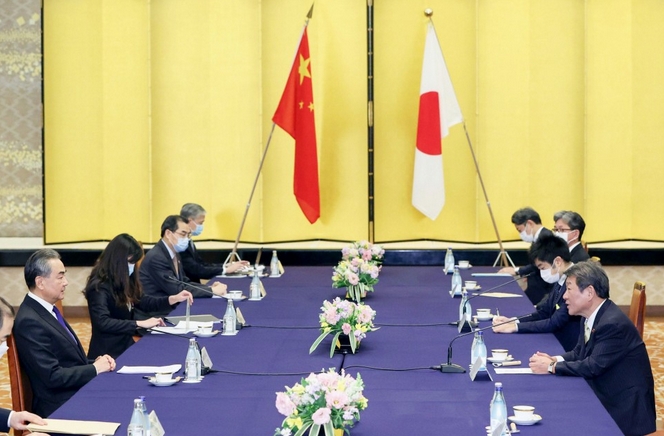
Talks between Japan and China over Beijing’s import ban on Japanese food products have not been held for over a year, sources familiar with bilateral relations told Kyodo News recently.
As China has not responded to Japan’s request for resuming the talks amid soured bilateral ties, it is uncertain when the ban will be lifted, with the deadlock possibly to affect discussions on China’s accession to a major Pacific free trade deal, the sources said.
In the wake of the Fukushima nuclear accident in 2011, Beijing banned imports of food products from Fukushima and several other prefectures over the risks of radioactive contamination. Japan has been asking China to hold a third meeting of a panel they established to discuss lifting the ban, the sources said.
Foreign ministers of the two countries agreed in November 2020 to set up the panel as Tokyo aimed to expand sales of Japanese food in the Chinese market, and Beijing, which has been at odds with the United States, hoped to improve ties with Japan.
Officials on the panel met in virtual meetings held in December 2020 and February 2021, according to the sources.
But China did not agree to hold panel talks when Japan in November 2021 called for them, in an apparent protest at Japan’s decision in April that year to release treated radioactive water from the crippled nuclear plant in Fukushima into the sea.
Bilateral relations further deteriorated as Chinese authorities detained a Japanese diplomat in Beijing temporarily in February this year for allegedly collecting information illegally.
China has banned imports of all food products from Fukushima and eight neighboring prefectures as well as food products except rice from Niigata Prefecture.
In September last year, Beijing applied to join the trade deal formally known as the Comprehensive and Progressive Agreement for Trans-Pacific Partnership.
The trade agreement requires member countries not to unfairly restrict food imports. A Japanese government source said a positive mood for China’s accession to the deal cannot be created in Japan unless the issue of the import ban is resolved.
Fukushima Citizens’ Group Urges TEPCO to Halt Construction Work to Discharge Treated Water from Nuclear Power Plants into Ocean, “Causing Further Burden and Suffering

May 13, 2022
On May 13, the “Don’t Pollute the Sea Anymore! Citizens’ Council” formed by residents of Fukushima prefecture asked TEPCO on March 13 to refrain from constructing facilities for the ocean discharge.
Chiyo Oda, 67, co-chairperson of the Citizens’ Council, and others handed a written request to Seiichi Iguchi, director of TEPCO’s Nuclear Energy Center, at a building near TEPCO’s headquarters in Uchisaiwaicho, Tokyo.
Mr. Oda said, “Many people in Fukushima Prefecture are distrustful of the way TEPCO is sacrificing reconstruction by proceeding with preparations such as undersea construction and prioritizing decommissioning,” and pointed out that the ocean discharge “will impose additional burden and suffering on the victims and is unacceptable. He also criticized TEPCO’s 2015 promise to the Fukushima Prefectural Fisheries Federation that it would not discharge treated water into the ocean without the understanding of all concerned parties, saying, “If TEPCO does not keep its promise and forces the discharge, it will leave a huge mark on the future. The citizens’ meeting protested in front of the TEPCO headquarters.
In addition to protesting in front of TEPCO’s headquarters, the citizens’ group also asked the Nuclear Regulatory Commission not to approve the discharge facilities.
Construction of undersea tunnels and other discharge facilities requires the prior approval of Fukushima Prefecture and the towns of Okuma and Futaba, which are the municipalities where the plant is located, after approval by the Nuclear Regulation Commission. However, TEPCO has partially proceeded with the construction of the tunnel, claiming that excavation of the ground is not subject to prior approval, and has installed a shield machine to dig the tunnel at the launch site, making it ready to start construction at any time. (The construction of the tunnel is ready to start at any time.)
https://www.tokyo-np.co.jp/article/177194?fbclid=IwAR201TgVHRidyK-AQfe1ixMrV-JQX5dl6YrfuliIQ2VaWoSwuixjEXHGzZA
Evacuation order may be lifted in part of Fukushima ‘difficult-to-return’ zone
May 13, 2022
Officials in Japan plan to lift an evacuation order for part of the area designated as a “difficult-to-return” zone in Fukushima Prefecture due to high radiation levels from the 2011 nuclear accident.
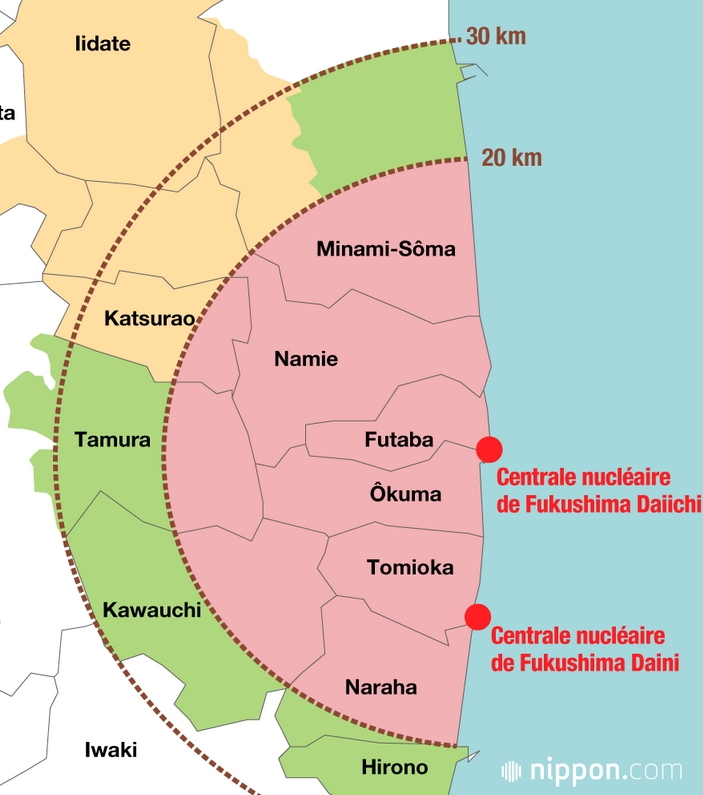
An evacuation order remains in place for the Noyuki district, which covers about 20 percent of Katsurao Village.
Authorities aim to lift the order in about six percent of the district, which has received preferential treatment for decontamination work and infrastructure projects.
Sources say a briefing for residents about the result of the rebuilding work is scheduled for Sunday, after a delay due to the coronavirus pandemic.
The sources say officials from the central and prefectural governments and the village are making arrangements to lift the order on June 5 at the earliest.
It would be the first case in which people will be able to return to their homes in a “difficult-to-return” zone. Katsurao Village officials say eight people from four households are hoping to return to the area.
Interview: Opposition mounts to planned release of Fukushima water into Pacific, says British expert

Xinhua, May 13, 2022
LONDON, May 12 (Xinhua) — A leading British nuclear industry expert has called for a detailed consultation over the Japanese government’s plans to release more than a million tonnes of contaminated water from the wrecked Fukushima Daiichi Nuclear Power Station into the Pacific Ocean.
The concerns “should be listened to and should be considered and discussed with those who are raising those concerns,” Professor David Copplestone, a renowned expert in environmental radioactivity at the University of Stirling in the United Kingdom, told Xinhua in an exclusive interview on Tuesday.
In April last year, the government of Japan decided to release about 1.25 million tonnes of waste water into the ocean in 30 years starting in 2023. The contaminated water contains radioactive cesium, strontium, tritium and other radioactive substances.
The move drew the ire of local fishermen. Opposition parties, including the Constitutional Democratic Party (CDP) of Japan, also criticized the plan and demanded its withdrawal.
“There have been impacts on the fishing industry related to the incident back in 2011,” said Copplestone, who has visited Fukushima and has undertaken extensive research worldwide with the International Atomic Energy Agency (IAEA).
In his opinion, “there are reputational, social and economic impacts that have occurred primarily because, quite often, people become fearful of consuming fish from these areas that may be contaminated.”
On March 11, 2011, a magnitude 9.0 earthquake struck off the coast of Fukushima Prefecture in Japan. An ensuing tsunami engulfed the Fukushima Daiichi plant, causing core meltdowns in three of the units and leading to the worst nuclear crisis since Chernobyl.
Eleven years after this disaster, the aftermath of the meltdown, along with the large amount of contaminated water, continue to cause headaches to Japan and the rest of the world.
Japan has claimed that the contaminated water could be diluted and discharged, but several local and international green activists have said that the claim repeatedly proved wrong as the purification equipment cannot eliminate radioactive materials completely.
“One of the main concerns here is the presence of tritium, which is a hydrogen element that is radioactive as an isotope. It is very difficult to separate it from the contaminated water,” Copplestone said.
“If we want to dispose of that water, we have to think about ways to first get rid of the radionuclides in that water — if at all this is possible. Unfortunately, it is not possible to remove tritium from that water,” he noted.
According to Copplestone, “this is about holding a really open dialogue to educate people about the consequences of the planned release.”
“It’s really important for the Japanese government to engage in dialogue with those voicing their concerns, and to listen to those concerns,” he said.
http://www.china.org.cn/world/Off_the_Wire/2022-05/13/content_78215480.htm
Payouts for nuclear disaster in urgent need of revamp

May 12, 2022
The government’s committee overseeing compensation for victims of the 2011 Fukushima nuclear disaster has begun considering whether existing guidelines for payouts should be revised upward.
Established in the aftermath of the triple meltdown at the Fukushima No. 1 nuclear power plant, the guidelines have long been denounced as woefully inadequate in light of the impact of the unprecedented accident. The committee’s decision comes far too late. Many victims are now advanced in years and there is no time to waste in revamping the guidelines.
The criteria for amounts to be paid out were drawn up in August 2011 by the government’s Dispute Reconciliation Committee for Nuclear Damage Compensation as “interim guidelines.” To expedite payments, the panel set general rules concerning eligibility based on categories of damages.
The guidelines, last reviewed in December 2013, are supposed to indicate minimum amounts of compensation for different types of damages. The utility is supposed to determine the actual sums to be paid after considering the special circumstances of individual victims.
Thirty or so group lawsuits have been filed by victims asserting that estimates of damages based on this method were insufficient. The plaintiffs are also seeking to hold the government liable for damages.
More than 10,000 people are involved in these legal actions. A series of rulings by district and high courts since 2017 granted higher damages to the plaintiffs than the estimates based on the guidelines. Seven of the rulings against plant operator Tokyo Electric Power Co. were finalized by the Supreme Court this spring.
The cases deal with different issues. Some supported the argument that all plaintiffs in a certain area should be compensated for mental stress due to their “loss of homes,” meaning they were deprived of their livelihoods and community life. These rulings represent judicial recognition of certain kinds of damages common to many local residents that are not covered by the guidelines. The guidelines should at least be changed to address these issues. Fukushima Prefecture and other local administrative authorities have urged the central government to review the criteria based on the court decisions.
In a belated move, the committee decided to analyze the rulings and identify types of damages not covered by the guidelines. This is a necessary process, but more needs to be done. The panel should confront the diverse and complicated realities resulting from years of living in forced evacuation.
Many victims have not filed lawsuits despite their unhappiness with damage payments offered by TEPCO. The plaintiffs of the rulings contend that the amounts granted by the courts are still insufficient. The committee should listen to the opinions of the victims and local administrations involved and examine a broad range of cases. It should not hesitate to make necessary adjustments to the guidelines in line with the realities.
This problem is an acid test for TEPCO’s commitment to supporting victims of the disaster. The company has consistently refused to pay compensation beyond the amounts based on the guidelines in both class action lawsuits and in mediations by a government dispute-settlement body. It has apparently decided to wait for the committee’s decision. As the company responsible for the disastrous accident, TEPCO’s stance toward the issue raises serious doubt about its awareness of its obligation to make genuine efforts to provide relief to victims.
The Ministry of Economy, Trade and Industry, which is effectively the primary shareholder of the utility under state control, must instruct the company to address the problem with sincerity.
The central government and TEPCO should not forget that they bear the grave responsibility to make all possible efforts to fully compensate victims for damages caused by the nuclear disaster.
Review the standards for compensation for nuclear accidents based on the reality of the situation

May 12, 2022
A government panel has begun to consider whether to review the guidelines for compensation for damages caused by the accident at TEPCO’s Fukushima Daiichi Nuclear Power Plant. The guidelines were created immediately after the accident, and their inadequacies have been repeatedly pointed out since then. It must be said that it is too late. Many of the victims are elderly, and the revision of the guidelines needs to be hastened.
In August 2011, the Nuclear Damage Dispute Review Panel compiled an interim guideline for compensation. The guidelines were last reviewed in December 2001, and the general framework has not changed since then. The TEPCO was supposed to determine the amount of compensation by taking into account the individual circumstances of each victim.
However, about 30 class-action lawsuits have been filed against TEPCO based on this system, alleging that the company’s compensation is inadequate and questioning the responsibility of the government and other parties. Since 2005, the district and high courts have ordered the defendants to pay more than the calculated amount, and in seven of the cases, the Supreme Court ruled in favor of TEPCO this spring.
Although the content of the judgments differed from each other, there were several cases in which the court found that the plaintiffs in a certain area had suffered psychological damage due to the loss of their hometowns, which deprived them of their livelihood and local communities. It can be said that the judiciary recognized the existence of collective damages that the guidelines did not grasp. At the very least, it is essential to revise the guidelines in this area. Fukushima Prefecture and other local governments are also calling on the government to review the guidelines in light of the court decision.
The Board of Inquiry has finally gotten around to analyzing the content of the court decisions and identifying the types of damages that are omitted from the guidelines. This is necessary work, but it is not the only thing that needs to be done. It is necessary to face the reality of the damage, which is becoming more diverse and complex due to the prolonged evacuation.
Even if they were not satisfied with the amount of compensation TEPCO had awarded them, many of the victims did not take the matter to court. The plaintiffs in the lawsuit also claim that the amount awarded in the judgment is still inadequate. The Board should also listen to the opinions of the victims and local governments involved and scrutinize a wide range of cases. If there are parts of the guidelines that do not match the actual situation, the Board should not hesitate to revise them.
TEPCO’s stance is also questionable. TEPCO has stubbornly refused to provide uniform compensation that exceeds the guidelines in class action lawsuits and in settlement mediation procedures conducted by government agencies. It is questionable whether TEPCO is aware of its responsibility as the company that caused the tragic accident to take the initiative in seeking compensation. The Ministry of Economy, Trade, and Industry, which is in effect the major shareholder of TEPCO, is required to strictly instruct TEPCO to take a sincere approach.
It must do everything in its power to make amends to the victims until they are fully compensated. We must not forget that this is the heavy responsibility placed on the government and TEPCO.
https://www.asahi.com/articles/DA3S15291024.html?iref=pc_photo_gallery_bottom
Efficacy unclear of problem-hit ice-soil wall at Fukushima plant

May 12, 2022
Technical flaws, ballooning costs and unconfirmed effectiveness have plagued the “ace card” in preventing groundwater from accumulating within the crippled Fukushima No. 1 nuclear power plant.
Plant operator Tokyo Electric Power Co. froze the soil to create an underground ice wall to divert the groundwater toward the ocean and away from the damaged reactor buildings where the liquid can become heavily contaminated with radioactive substances.
The 1.5-kilometer ice wall was completed in 2016 around the No. 1 to No. 4 reactor buildings of the nuclear plant. The ice barrier was initially expected to end its role in 2021, after steps were taken to prevent water leaks and plug holes at the reactor buildings.
Not only has the ice wall failed to work sufficiently, but huge amounts of public funds also continue to pour in annually for its maintenance.
“A frozen ground wall has advantages, such as a high ability to block water, but its maintenance requires huge sums,” said Kunio Watanabe, a professor of frozen soil studies at Mie University. “An easy-to-build underground ice wall was the only possible option in the early stages because of extremely high radiation readings around the reactor buildings.
“Now that it has been used for so many years, other approaches should also be weighed.”
TECHNICAL PROBLEMS, RISING SPENDING
TEPCO has used tanks to store contaminated water used to cool the melted nuclear fuel since the Great East Japan Earthquake and tsunami caused the triple meltdown at the plant.
But it is also storing the groundwater that keeps flowing in. Space for the water storage tanks at the nuclear plant is running out.
The ice wall was supposed to reduce the volume of contaminated water.
In October last year, TEPCO said the soil temperature was higher than 0 degrees in an area that should have been frozen. The temperature reportedly topped 0 in mid-September and increased to 13 degrees in November.
TEPCO said equipment to discharge rainwater accumulating in a different reactor building broke down. The rainwater there likely seeped into the ground and reached the spot with the temperature increase.
Steel sheets were inserted into the soil to stanch the groundwater flow.
A total of 1,568 cooling pipes extending 30 meters below the surface circulate a refrigerant of minus 30 degrees to freeze the soil.
However, 14 tons of the coolant leaked between January and February this year because of damaged pipes and slippage of rubber parts at their joints.
TEPCO located the leaks and replaced the pipes, but the coolant’s circulation was suspended during the procedure.
The barrier system was brought into operation using 34.5 billion yen ($268 million) in taxpayers’ money.
Since the soil must be kept frozen throughout the year, electricity charges and other expenses for cooling and circulating the refrigerant continue to grow.
Annual maintenance costs topped 1 billion yen immediately following the wall’s introduction, and hundreds of millions of yen are currently injected in the system each year.
UNCERTAIN VALIDITY
Despite all the fixes and expenses, the strategy’s effectiveness has yet to be verified.
TEPCO in March 2018 released an estimate arguing the frozen wall would prevent 95 tons of groundwater from entering the plant daily. That level would be half of the inflow with no underground barriers.
The prediction, however, was exclusively for winter months with less rainfall. It did not include torrential rain from typhoons that increase the amount of groundwater flowing into the reactor buildings.
TEPCO recently declined to comment on the ice wall’s effectiveness, saying it is “difficult to assess individual countermeasures because many steps are being implemented simultaneously.”
Frozen soil barriers are normally used for only several months in tunnel digging and other construction projects. There have been few large ice walls that have been operated for years.
The government and TEPCO originally planned to rely on the method “until March 2021, when countermeasures against water leaks at reactor buildings are finished.”
But they have not started on the anti-leakage process for the structures.
They do, however, plan to release treated water stored at the plant into the sea, a proposal that has been criticized by residents and the fishing industry.
Radioactive water increases by 150 tons a day at the Fukushima plant.
TEPCO set a goal of lowering the daily contaminated water rise to 100 tons or less by 2025. It described the “frozen soil wall as equipment essential for accomplishing the objective.”
TEPCO in December last year told the Nuclear Regulation Authority that it will continue to use the frozen wall system.
“We will consider the next step,” a TEPCO official said. “We are sorting out alternatives so a new approach will be realized in 2024 or 2025.”
Japanese govt. promotes regional ‘hot’ Sake from Fukushima & ‘hot’ beef from Iwate to Canada

May 11, 2022
The Japanese government has taken part in Canada’s largest food fair for the first time in 15 years. It’s part of an effort to raise food exports to 5 trillion yen, or nearly 40 billion dollars, by 2030.
The Restaurants Canada Show opened in Toronto on Monday. The three-day event features more than 500 booths showcasing cuisines from around the world.
The Japanese government teamed up with the Japan External Trade Organization to set up a booth.
They are serving up a range of regional specialties, including striped jack from Ehime, sake brewed in Fukushima, and premium beef from Iwate.
The booth is also holding live demonstrations, including a fish-cleaning show and a demonstration of an automatic rice-ball maker.
Semi-dried persimmon from Fukushima to the Emirates on sale in Dubai
I am not sure that the people in Dubai are well informed of the risk incurred….

Sweet Taste of Fukushima Winning Fans in Dubai
May 11, 2022
A local specialty from Japan’s Fukushima Prefecture is winning over the taste buds of people in the United Arab Emirates. The first-ever shipment of anpo-gaki, or semi-dried persimmon, from Fukushima to the Emirates has gone on sale in Dubai.
The current state of my hometown…” Residents of the Tsushima area measured radiation levels by themselves as evidence in court (Fukushima Prefecture)

May 10, 2022
Residents of the Tsushima area in the hard-to-return zone in the town of Namie, Fukushima Prefecture, have begun measuring radiation levels throughout the area in connection with a lawsuit against the government and Tokyo Electric Power Company.
On the first day of the trial, at 10:00 a.m. on October 10, approximately 10 residents gathered in the Tsushima area, which is in the difficult-to-return zone, to confirm the method and location of the measurements.
Measurements will be taken by dividing the entire Tsushima area into 28 sections of 2 km square, and installing dosimeters in each section. The dosimeters will be placed mainly in areas that have not been decontaminated, and many of these areas are covered with trees and grass.
According to the plaintiffs, this is believed to be the first time such measurements have been made in a class action lawsuit involving a nuclear accident.
Hidenori Konno, leader of the plaintiffs, said, “What we are appealing to the court of appeals is to ‘give back our hometown. In order to do so, we have to come up with concrete evidence of the situation in the Tsushima area…”
Hidenori Konno, the leader of the plaintiffs’ group, said at the meeting on April 4 that he intends to submit the results of the measurements as evidence in the trial.
Although a portion of the Tsushima area has been designated as a restoration site and is being decontaminated, the outlook for more than 90% of the other areas has yet to be determined.
Mr. Konno said, “At the very least, decontamination will restore the environment to near normalcy. In fact, the radiation dose has decreased so much after 12 years. We would like to use the data to prove that we can do it, especially in areas close to our homes.”
The installation work is scheduled to continue until the 15th, and the samples will be collected and analyzed three weeks later.
Kishida, Johnson Enjoy Popcorn from Fukushima

May 6, 2022
Japanese Prime Minister Fumio Kishida and his British counterpart, Boris Johnson, enjoyed popcorn from Fukushima Prefecture, northeastern Japan, during their meeting in London on Thursday.
At the meeting, Johnson informed Kishida of Britain’s plan to lift by the end of June its import restrictions on food produced in Fukushima and other areas in Japan, which were introduced after the March 2011 nuclear accident at Tokyo Electric Power Company Holdings Inc.’s tsunami-crippled Fukushima No. 1 power station.
According to a statement released by the office of the British prime minister after the two leaders’ meeting, Johnson said he was “pleased” that Britain would soon lift the remaining restrictions on Fukushima food products.
The popcorn Kishida and Johnson tasted was flavored with peach nectar and coconuts, a photograph released by the British prime minister’s office showed. Kishida brought with him the popcorn produced by Hishinuma Farm in the city of Fukushima.
When the two met in Brussels in March this year, they enjoyed Fukushima-produced karinto, or deep-fried Japanese snack made with brown sugar. At that time, Johnson, who called himself a fan of karinto, brought the snack with him.
1 This Month

of the week – Shut Down Drone Warfare!


Tell the Ukrainian Government to Drop Prosecution of Peace Activist Yurii Sheliazhenko

Petition to revoke the licensing of the Near Surface Nuclear Disposal Facility (NSDF) at Chalk River. https://www.ourcommons.ca/petitions/en/Petition/Details?Petition=e-7247
To see nuclear-related stories in greater depth and intensity – go to https://nuclearinformation.wordpress.com
-
Archives
- March 2026 (230)
- February 2026 (268)
- January 2026 (308)
- December 2025 (358)
- November 2025 (359)
- October 2025 (376)
- September 2025 (257)
- August 2025 (319)
- July 2025 (230)
- June 2025 (348)
- May 2025 (261)
- April 2025 (305)
-
Categories
- 1
- 1 NUCLEAR ISSUES
- business and costs
- climate change
- culture and arts
- ENERGY
- environment
- health
- history
- indigenous issues
- Legal
- marketing of nuclear
- media
- opposition to nuclear
- PERSONAL STORIES
- politics
- politics international
- Religion and ethics
- safety
- secrets,lies and civil liberties
- spinbuster
- technology
- Uranium
- wastes
- weapons and war
- Women
- 2 WORLD
- ACTION
- AFRICA
- Atrocities
- AUSTRALIA
- Christina's notes
- Christina's themes
- culture and arts
- Events
- Fuk 2022
- Fuk 2023
- Fukushima 2017
- Fukushima 2018
- fukushima 2019
- Fukushima 2020
- Fukushima 2021
- general
- global warming
- Humour (God we need it)
- Nuclear
- RARE EARTHS
- Reference
- resources – print
- Resources -audiovicual
- Weekly Newsletter
- World
- World Nuclear
- YouTube
-
RSS
Entries RSS
Comments RSS
 nuclear-news