Gov’t making final arrangements to scrap Monju reactor: sources

The Japanese government is making final arrangements to scrap the trouble-prone Monju fast-breeder reactor, given the huge cost expected for its resumption, government sources said Tuesday.
The move comes as the government judged it cannot obtain public support for the huge amount of money needed to restart the reactor in Fukui Prefecture on the Sea of Japan coast.
If realized, decommissioning of the reactor would require a drastic change in the nation’s nuclear fuel-recycle policy, in which Monju is designated to play a key part.
Fukushima plant building exposed as TEPCO opens old wounds

The outer layer of the crippled No. 1 reactor building at the Fukushima No. 1 nuclear power plant is exposed as Tokyo Electric Power Co. removes one of the panels covering the facility at 6:22 a.m. on Sept. 13.
The devastated outer layer of Fukushima No. 1 nuclear power plant’s No. 1 reactor building has been exposed for the first time in almost five years in the painstaking reactor decommissioning process.
Plant operator Tokyo Electric Power Co. began removing on Sept. 13 the exterior walls of the cover installed around the structure to prevent the dispersal of radioactive materials on Sept. 13.
Shortly past 6 a.m., a large crane began removing a massive piece of the cover installed around the reactor building. The panel dismantled that day measured 23 by 17 meters and weighed 20 tons.
The cover was installed in October 2011 as a temporary measure after a nuclear meltdown occurred following the Great East Japan Earthquake and tsunami in March that year. The meltdown caused a hydrogen explosion, blowing the walls off the building.
Once the cover is dismantled, the operator can assess the state of the building’s interiors and remove the debris fallen onto the spent fuel pool inside.
“Steady progress is necessary in reconstruction, but we hope they will carry on the procedure with safety as the No. 1 priority,” said a Fukushima prefectural government official.
TEPCO said that it plans to remove the remaining 17 panels of the covering by the end of the year. The portion covering the roof has already been removed.
Once the cover is removed, the utility will begin drawing up plans to remove the 392 fuel assemblies from the spent fuel pool and melted nuclear fuel from inside the building.
The plant operator said that it plans to be extra careful during the procedure. It will shroud the building in tarpaulins once the cover is removed as a precautionary measure against dust and other materials containing radioactive materials from being carried aloft by the wind.
The utility and central government’s joint schedule for the decommissioning process of the reactor states that the removal of the fuel rods from the pool will start in fiscal 2020.
http://www.asahi.com/ajw/articles/AJ201609130070.html
TEPCO resumes removal of Fukushima plant cover
The operator of the Fukushima Daiichi nuclear power plant has resumed work to remove a temporary cover from a damaged reactor building.
Tokyo Electric Power Company had covered the partially collapsed No. 1 reactor building to prevent radioactive materials generated by the 2011 accident from spreading.
It started the removal process in July last year, the first step in the retrieval of spent nuclear fuel from a storage pool in the building.
The operation was suspended after sheets from the roof area were removed to assess the building’s condition.
On Tuesday, cranes were used to detach the panels from the side of the building, and the debris inside was exposed for the first time in 5 years. Each panel is 23 by 17 meters and weighs 20 tons.
TEPCO officials say they will spray chemicals to ensure that radioactive substances do not disperse even in strong winds.
They say they plan to complete the operation by the end of November, so that the debris can be removed. The removal of spent fuel is due to begin in 2021.
Industry ministry official Masato Kino who monitored the progress at the scene said difficult procedures will continue, but the first step has been taken. He said he hopes to carefully and safely proceed.
http://www3.nhk.or.jp/nhkworld/en/news/20160913_28/
Removal of the top southwest panel off reactor 1 today
2016.09.13_06.00-09.00.Unit1 side
Fukushima Backlash Hits Japan Prime Minister
Nuclear power may never recover its cachet as a clean energy source, irrespective of safety concerns, because of the ongoing saga of meltdown 3/11/11 at Fukushima Daiichi Nuclear Power Plant. Over time, the story only grows more horrific, painful, deceitful. It’s a story that will continue for generations to come.
Here’s why it holds pertinence: As a result of total 100% meltdown, TEPCO (Tokyo Electric Power Company) cannot locate or remove the radioactive molten core or corium from the reactors. Nobody knows where it is. It is missing. If it is missing from within the reactor structures, has it burrowed into the ground? There are no ready answers.
And, the destroyed nuclear plants are way too radioactive for humans to get close enough for inspection. And, robotic cameras get zapped! Corium is highly radioactive material, begging the question: If it has burrowed thru the containment vessel, does it spread underground, contaminating farmland and water resources and if so, how far away? Nobody knows?
According to TEPCO, removing the melted cores from reactors 1,2 and 3 will take upwards of 20 years, or more, again who knows.
But still, Japan will hold Olympic events in Fukushima in 2020 whilst out-of-control radioactive masses of goo are nowhere to be found. TEPCO expects decades before the cleanup is complete, if ever. Fortunately, for Tokyo 2020 (the Olympic designation) radiation’s impact has a latency effect, i.e., it takes a few years to show up as cancer in the human body.
A week ago on September 7th, Former PM Junichiro Koizumi, one of Japan’s most revered former prime ministers, lambasted the current Abe administration, as well as recovery efforts by TEPCO. At a news conference he said PM Shinzō Abe lied to the Olympic committee in 2013 in order to host the 2020 Summer Olympics in Japan.
“That was a lie,” Mr Koizumi told reporters when asked about Mr Abe’s remark that Fukushima was “under control,” Abe Lied to IOC About Nuke Plant, ex-PM Says, The Straits Times, Sep 8, 2016. The former PM also went on to explain TEPCO, after 5 years of struggling, still has not been able to effectively control contaminated water at the plant.
According to The Straits Times article: “Speaking to the IOC in September 2013, before the Olympic vote, PM Abe acknowledged concerns but stressed there was no need to worry: “Let me assure you, the situation is under control.”
PM Abe’s irresponsible statement before the world community essentially puts a dagger into the heart of nuclear advocacy and former PM Koizumi deepens the insertion. After all, who can be truthfully trusted? Mr Koizumi was a supporter of nuclear power while in office from 2001-2006, but he has since turned into a vocal opponent.
Speaking at the Foreign Correspondents Club of Japan in Tokyo, Mr Koizumi said: “The nuclear power industry says safety is their top priority, but profit is in fact what comes first… Japan can grow if the country relies on more renewable energy,” (Ayako Mie, staff writer, Despite Dwindling Momentum, Koizumi Pursues Anti-Nuclear Goals, The Japan Times, Sept. 7, 2016).
Mr Koizumi makes a good point. There have been no blackouts in Japan sans nuclear power. The country functioned well without nuclear.
Further to the point of nuclear versus nonnuclear, Katsunobu Sakurai, mayor of Minamisoma, a city of 70,000 located 25 km north of Fukushima No. 1 nuclear plant, at a news conference in Tokyo, said: “As a citizen and as a resident of an area affected by the nuclear power plant disaster, I must express great anger at this act… it is necessary for all of Japan to change its way of thinking, and its way of life too – to move to become a society like Germany, which is no longer reliant on nuclear power,” (Sarai Flores, Minamisoma Mayor Sees Future for Fukushima ‘Nonnuclear’ City in Energy Independence, The Japan Times, March 9, 2016).
In March of 2015, Minamisoma declared as a Nonnuclear City, turning to solar and wind power in tandem with energy-saving measures.
Meanwhile, at the insistence of the Abe administration, seven nuclear reactors could restart by the end of FY2016 followed by a total of 19 units over the next 12 months (Source: Japanese Institute Sees 19 Reactor Restarts by March 2018, World Nuclear News, July 28, 2016).
Greenpeace/Japan Discovers Widespread Radioactivity
One of the issues surrounding the Fukushima incident and the upcoming Olympics is whom to trust. Already TEPCO has admitted to misleading the public about reports on the status of the nuclear meltdown, and PM Abe has been caught with his hand in the proverbial cookie jar, but even much worse, lying to a major international sports tribunal. His credibility is down the drain.
As such, maybe third party sources can be trusted to tell the truth. In that regard, Greenpeace/Japan, which does not have a vested interest in nuclear power, may be one of the only reliable sources, especially since it has boots on the ground, testing for radiation. Since 2011, Greenpeace has conducted over 25 extensive surveys for radiation throughout Fukushima Prefecture.
In which case, the Japanese people should take heed because PM Abe is pushing hard to reopen nuclear plants and pushing hard to repopulate Fukushima, of course, well ahead of the 2020 Tokyo Olympics since there will be events held in Fukushima Prefecture. After all, how can one expect Olympians to populate Fukushima if Japan’s own citizens do not? But, as of now to a certain extent citizens are pushing back. Maybe they instinctively do not trust their own government’s assurances.
But, more chilling yet, after extensive boots-on-the-ground analyses, Greenpeace issued the following statement in March 2016: “Unfortunately, the crux of the nuclear contamination issue – from Kyshtym to Chernobyl to Fukushima- is this: When a major radiological disaster happens and impacts vast tracts of land, it cannot be ‘cleaned up’ or ‘fixed’.” (Source: Hanis Maketab, Environmental Impacts of Fukushima Nuclear Disaster Will Last ‘decades to centuries’ – Greenpeace, Asia Correspondent, March 4, 2016).
That is a blunt way of saying sayonara to habitation on radioactive contaminated land. That’s why Chernobyl is a permanently closed restricted zone for the past 30 years.
As far as “returning home” goes, if Greenpeace/Japan ran the show rather than PM Abe, it appears they would say ‘no’. Greenpeace does not believe it is safe. Greenpeace International issued a press release a little over one month ago with the headline: Radiation Along Fukushima Rivers up to 200 Times Higher Than Pacific Ocean Seabed – Greenpeace Press Release, July 21, 2016.
Here’s what they discovered: “The extremely high levels of radioactivity we found along the river systems highlights the enormity and longevity of both the environmental contamination and the public health risks resulting from the Fukushima disaster,” says Ai Kashiwagi, Energy Campaigner at Greenpeace Japan.
“These river samples were taken in areas where the Abe government is stating it is safe for people to live. But the results show there is no return to normal after this nuclear catastrophe,” claims Kashiwagi.
“Riverbank sediment samples taken along the Niida River in Minami Soma, measured as high as 29,800 Bq/kg for radiocaesium (Cs-134 and 137). The Niida samples were taken where there are no restrictions on people living, as were other river samples. At the estuary of the Abukuma River in Miyagi prefecture, which lies more than 90km north of the Fukushima Daiichi plant, levels measured in sediment samples were as high as 6,500 Bq/kg” (Greenpeace).
The prescribed safe limit of radioactive cesium for drinking water is 200 Bq/kg. A Becquerel (“Bq”) is a gauge of strength of radioactivity in materials such as Iodine-131 and Cesium-137 (Source: Safe Limits for Consuming Radiation-Contaminated Food, Bloomberg, March 20, 2011).
“The lifting of evacuation orders in March 2017 for areas that remain highly contaminated is a looming human rights crisis and cannot be permitted to stand. The vast expanses of contaminated forests and freshwater systems will remain a perennial source of radioactivity for the foreseeable future, as these ecosystems cannot simply be decontaminated” (Greenpeace).
Still, the Abe administration is to be commended for its herculean effort to try to clean up radioactivity throughout Fukushima Prefecture, but at the end of the day, it may be for naught. A massive cleanup effort is impossible in the hills, in the mountains, in the valleys, in the vast forests, along riverbeds and lakes, across extensive meadows in the wild where radiation levels remain deadly dangerous. Over time, it leaches back into decontaminated areas.
And as significantly, if not more so, what happens to the out-of-control radioactive blobs of corium? Nobody knows where those are, or what to do about it. It’s kinda like the mystery surrounding black holes in outer space, but nobody dares go there.
Fukushima is a story for the ages because radiation doesn’t quit. Still, the Olympics must go on, but where?
http://www.counterpunch.org/2016/09/12/fukushima-backlash-hits-japan-prime-minister/
80% of disaster-hit municipalities want legal revision to meet needs: survey
A large majority of municipalities that were hit by massive earthquakes and other disasters in recent years called for expanding the coverage of a law aimed at providing financial assistance for rebuilding damaged homes, a Mainichi Shimbun survey has learned.
The survey, conducted on Sept. 11, covered 61 cities, towns and villages in six prefectures that suffered enormous damage from the March 2011 Great East Japan Earthquake and tsunami, the September 2015 Kanto-Tohoku floods and the April 2016 Kumamoto earthquakes. It found that 80 percent of those municipalities believe the Act on Support for Reconstructing Livelihoods of Disaster Victims should be revised, underscoring the fact that the law is not sufficiently catering to the needs of victims in disaster areas.
Under this law, up to 3 million yen each is provided to those whose homes were entirely destroyed in disasters, and those whose homes were partially damaged and require extensive repair work can also receive financial assistance. However, other partially damaged homes are not covered by the law. The most common answer among the disaster-hit municipalities was to update the law to provide aid to households whose homes were partially destroyed but are not covered by the law. The second most common response was to raise the amount of relief money provided to affected households. The central government, however, is reluctant to review the support law.
Specifically, the survey covered 12 municipalities in Iwate Prefecture, 15 in Miyagi Prefecture, 10 in Fukushima Prefecture, five in Ibaraki Prefecture, four in Tochigi Prefecture and 15 in Kumamoto Prefecture. Of them, 57 municipalities responded except for four municipalities that suffered extensive damage from Typhoon Lionrock.
Forty-nine municipalities responding to the latest survey said the support law needs to be improved. Asked to choose from eight options for improvement, 24 municipalities said the financial assistance should be expanded to cover those whose homes were partially damaged; 17 municipalities said the amount of financial relief should be raised; and nine municipalities called for flexibility in recognizing damage to residences.
The Tochigi Prefecture city of Nikko called for expanding the law’s coverage to partially damaged houses, with a municipal government official saying, “There are partially destroyed houses whose status is infinitely close to damage requiring major repair work, and it is difficult to win victims’ understanding just by drawing such a simple line.” An official with the Iwate Prefecture city of Rikuzentakata said, “There is an enormous gap between households whose homes were partially damaged (and are thus cast out of the law) and other households that benefited from the support law.”
In areas damaged by the 2011 disaster, the most common request for the central government was to raise the amount of financial assistance provided to affected households. Behind the results are rising costs due to the reconstruction boom in disaster areas. “Construction costs are skyrocketing,” said an official with the Iwate Prefecture town of Yamada. As some victims lost all their furniture and other assets to tsunami, the Miyagi Prefecture city of Higashimatsushima proposed raising the amount of aid for those whose homes were swept away by tsunami.
Seven municipalities raised questions about the way subsidies are provided on a household-by-household basis under the law and the definition of households — though these were not among prearranged response options. “The amount of subsidies provided to each household is the same regardless of the number of members in a household. If the law takes the number of family members into account, we can provide assistance for their livelihood reconstruction in accordance with the realities they face,” said an official with the Kumamoto Prefecture city of Yatsushiro.
In the wake of the Great East Japan Earthquake, around 400,000 homes were either completely or partially destroyed, according to the National Police Agency. Of them, only about 193,000 households were eligible to receive financial aid under the support law to rebuild or repair their homes.
Meanwhile, the Cabinet Office provided a negative view toward legal revision when it was reached by the Mainichi, saying, “Because financial resources are limited, we’d like to respond to the matter by supporting self-help efforts, such as promoting subscriptions to private insurance.”
http://mainichi.jp/english/articles/20160912/p2a/00m/0na/013000c
83 species now eligible for test fishing off coast of Fukushima
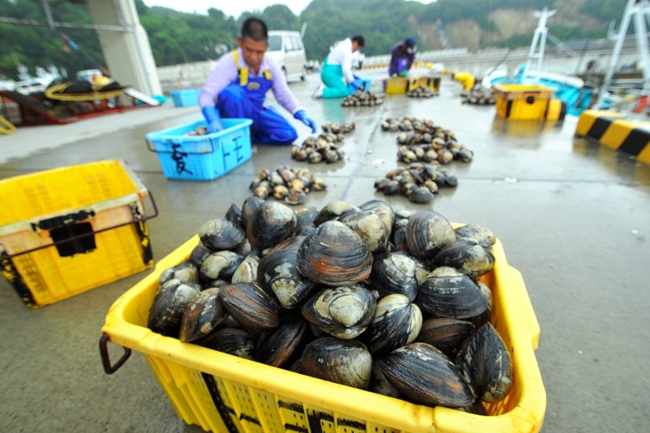
These surf clams, seen here in June at Hisanohama Port in Iwaki, Fukushima Prefecture, were caught during test fishing.
IWAKI, Fukushima Prefecture–Ten species were added to the list of catches eligible for test fishing off the coast of Fukushima Prefecture, but lingering concerns about radiation are keeping sales of such marine products low.
Still, the latest additions, which include the Japanese flounder, the white-spotted conger eel and the spotted halibut, have encouraged fishermen who have been struggling to rebuild their lives since the Fukushima nuclear disaster started in March 2011.
The Fukushima Prefectural Federation of Fisheries Cooperative Associations on Aug. 25 added the 10 species to bring the total number eligible for test fishing to 83. The additions were approved during a meeting in Iwaki of the prefectural council for the rebuilding of regional fisheries.
“I think the 83 fish species accounted for about 70 percent of our pre-disaster hauls,” said Tetsu Nozaki, president of the prefectural fisheries federation. “I am placing particularly high hopes for a great boost in the value of our catches from the resumed fishing of Japanese flounder.”
Test fishing for flounder started on Sept. 2.
The Soma-Futaba fisheries cooperative association, which is part of the prefectural federation, plans to resume catches of white-spotted conger eel in September. But the Iwaki city fisheries cooperative association has decided to wait until water temperatures are low enough to ensure freshness of the white-spotted conger eel.
Test fishing has expanded because the environment of the sea has significantly improved since the initial impact of the nuclear disaster. Radioactivity levels in fish caught there now stably remain within the safety limit for many species.
Despite extensive testing to ensure safety of Fukushima marine products, many dealers are still reluctant to buy the species.
Fish and shellfish from Fukushima Prefecture are being shipped to various parts of Japan, such as the Tohoku, Kanto, Chubu and Hokuriku regions. Prices of seafood items from Fukushima Prefecture are not much lower than those from other prefectures, according to Yoshiharu Nemoto, head of the fishing ground environment division with the Fukushima Prefectural Fisheries Experimental Station.
Yet few dealers are bidding for Fukushima marine products. If this trend continues with more Fukushima fish reaching the market, unsold leftovers from the prefecture could start to pile up and project a negative image, Nemoto said.
“It will become more necessary than ever to make publicity efforts, such as regularly releasing data concerning safety,” he said.
Test fishing began in June 2012, 15 months after the Great East Japan Earthquake and tsunami caused the triple meltdown at the Fukushima No. 1 nuclear power plant. Initially, only three species were covered: two kinds of octopuses and one type of shellfish.
While coverage has since expanded in stages, the latest addition of 10 species at one time is second only to the addition of 12 species, including brown sole and red sea bream, in August 2015.
Since April 2011, the Fukushima prefectural government has been monitoring the impact of radioactive fallout from the Fukushima No. 1 nuclear plant on fish and shellfish. The radiation tests, which cover about 200 samples every week, have so far been conducted on 38,000 samples of 184 species.
The concentration of radioactive cesium initially exceeded the central government’s safety limit of 100 becquerels per kilogram in most of the fish and shellfish surveyed. But the concentration has declined from year to year, and no sample has exceeded the safety limit since April 2015.
In more than 90 percent of the samples tested in July 2015 and later, radioactivity levels were below the detection limit.
Radioactivity levels in fish caught near the Fukushima No. 1 nuclear plant are also falling.
The central government’s Japan Fisheries Research and Education Agency (FRA) on Aug. 25 released data on radioactivity levels in Japanese flounder caught in July in waters around the crippled nuclear plant.
The FRA said its high-precision tests, with a lower limit of detection set at a mere 1 becquerel per kg, found radioactivity levels of less than 10 becquerels per kg in all 41 individual organisms tested. More than 90 percent of them measured less than 5 becquerels per kg.
Catches from test fishing have continued to grow: 122 tons in 2012, 406 tons in 2013, 742 tons in 2014 and 1,512 tons in 2015.
But last year’s catch was only 5.8 percent of the annual catch of 26,050 tons averaged over the decade preceding the 2011 disaster.
Fishermen are holding out high hopes for more fish species being eligible for catches.
Only 28% of Fukushima children returning to former schools
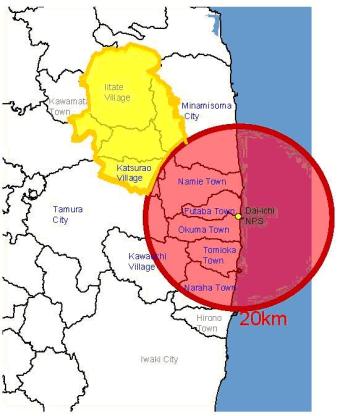
Only 28 percent of children are returning to their public elementary and junior high schools in five towns and villages in Fukushima Prefecture following the lifting of evacuation orders imposed after the 2011 nuclear disaster, the Mainichi Shimbun has learned. The majority of schoolboys and girls are opting to stay out of their hometowns due to anxiety over radiation exposure and resettlement at evacuation sites.
The trend raises concerns that the number of young people in these towns and villages will dwindle and the survival of the municipalities is at stake.
The five municipalities are the towns of Hirono and Naraha and the villages of Iitate, Kawauchi and Katsurao. They set up temporary elementary and junior high schools at evacuation sites after the March 2011 earthquake and tsunami disaster triggered the multiple core meltdowns at the Fukushima No. 1 Nuclear Power Plant. Hirono and Kawauchi reopened their public schools in 2012 and Naraha and Katsurao will follow suit in April 2017. Iitate plans to reopen its schools in April 2018, one year after the evacuation order is lifted.
Once these public schools have reopened, the temporary schools at evacuation sites are shut down, prompting children from the five affected municipalities to choose one of three options — return to their hometowns, commute to their former schools by school bus or other means, or attend schools at evacuation sites.
According to the Mainichi study, 55 percent of 259 pupils and students from Hirono and Kawauchi have returned to their former elementary and junior high schools because the evacuation orders were relatively short. But only 139 students or 15 percent of students from Naraha, Katsurao and Iitate responded to a survey in 2015-2016 that they would return to their original schools. Only three students, or 4 percent, of 74 students from Katsurao said they would return to their hometown schools.
As for students from Naraha, 17 percent of students replied that they would attend their hometown schools but half of them hoped to commute to their hometown schools from outside the town. If young evacuees in Iwaki, a major evacuation destination, try to commute by train and bus, a one-way trip takes one hour. An official of the Naraha board of education expressed concerns that these students are really serious about commuting to their hometowns. A Kawauchi village official says that the returns of child-rearing generations are the village’s lifeline. These municipalities operate school buses to encourage the evacuees to return to their hometowns as a stopgap measure rather than as a permanent solution.
Yusuke Yamashita, an associate professor of urban and rural sociology at Tokyo Metropolitan University, says, ”There are some parents who send their children to temporary schools before eventually returning to their hometowns. If these municipalities reopen their schools hastily, some families may abandon plans to return home (out of safety fears). It is important for the communities to offer as many options as possible by keeping temporary schools.”
http://mainichi.jp/english/articles/20160910/p2a/00m/0na/001000c
Science Subverted by Politics in Fukushima
The high rate of thyroid cancer occuring in Fukushima is not caused by radiation. Or so the government would like everyone to believe!
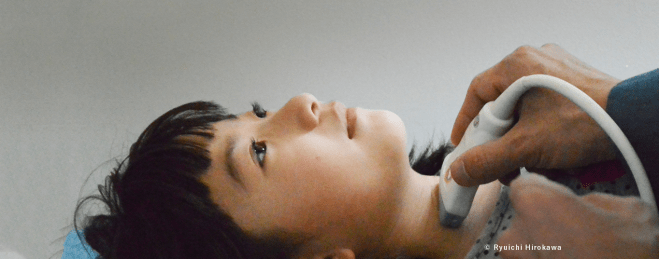
Study draws a blank on thyroid cancer and 2011 nuclear disaster
Researchers have found no correlation between radiation exposure and the incidence rate of thyroid cancer among 300,000 children living in Fukushima Prefecture at the time of the 2011 nuclear disaster.
But the team at Fukushima Medical University, which carried out the study, cautioned that the health of local children should continue to be monitored to be more definitive.
“At the present stage, we have found no evidence pointing to any relationship between doses of external radiation resulting from the nuclear accident and the thyroid cancer rate,” said Tetsuya Ohira, a professor of epidemiology at the university. “But we need to continue to look into the situation.”
The study involves 300,476 children in Fukushima Prefecture who were aged 18 or younger when the Fukushima No. 1 nuclear power plant went into a triple meltdown in March 2011 after the Great East Japan Earthquake and tsunami.
The children underwent the first round of health checks between October 2011 and June 2015.
Of the total, 112 were tentatively diagnosed as having thyroid cancer.
There are two types of radiation exposure: external exposure in which a person is exposed to radiation in the atmosphere, and internal exposure in which a person is exposed through the intake of contaminated food, water and air.
For the study, municipalities in the prefecture were classified into three groups based on the estimate for residents’ external exposure. That data was obtained during a prefecture-wide health survey carried out after the disaster occurred.
The first group is a zone where people with an accumulative dose of 5 millisieverts or more represented 1 percent or more of the population there. The second group is a zone where people with an accumulative dose of up to 1 millisievert account for 99.9 percent or more of the population. The third group is a zone that falls into neither of the other two groups.
The scientists looked at the incidence rate for thyroid cancer in each group and concluded there is almost no difference among the groups.
The number of subjects diagnosed with thyroid cancer was 48 per 100,000 people in the first group, 41 in the second group and 36 in the third group.
The finding was similar to a separate survey in which researchers looked into the possible association among 130,000 or so children whose radiation exposure had been estimated.
Hokuto Hoshi, head of a health survey panel set up at the prefectural government after the nuclear disaster, said he will closely follow the results of future studies to offer a more conclusive finding.
“The outcome of the recent study provides one indication in making any overall judgment,” said Hoshi, who also serves as vice chairman of the Fukushima Medical Association. “The study is substantial and we are going to pay attention to the findings of further studies.”
http://www.asahi.com/ajw/articles/AJ201609100031.html
Fukushima railway decontamination waste to total 300,000 cubic meters

FUKUSHIMA – An estimated 300,000 cubic meters of waste will be generated as a result of radioactive decontamination work in a suspended section of East Japan Railway Co.’s Joban Line in Fukushima Prefecture, Jiji Press learned Saturday.
Decontamination work is going on to restore train services in the section between Namie and Tatsuta, both in the nuclear disaster-hit northeastern prefecture, by spring 2020. But how to secure enough space to temporarily keep such waste, including soil, is a difficult question.
Due to the 2011 nuclear accident at Tokyo Electric Power Company Holdings Inc.’s Fukushima No. 1 power station, the Joban Line is still suspended between Hamayoshida, in the Miyagi Prefecture town of Watari, and Soma, in Fukushima Prefecture, as well as between Odaka, in the Fukushima town of Minamisoma, and Tatsuta, in the Fukushima town of Naraha.
The Hamayoshida-Soma section is scheduled to reopen in December this year and part of the Odaka-Tatsuta section, between Odaka and Namie, in spring 2017. Ahead of the reopening, work there to replace stones under rail tracks and soil and cut trees and grass along the tracks has almost finished.
In the remaining Namie-Tatsuta portion, decontamination work is proceeding so that train services will be resumed between Tomioka, also in Fukushima Prefecture, and Tatsuta in 2017. Decontamination work is also taking place between Namie and Tomioka, a portion that runs through the heavily contaminated no-go zone so services can be resumed by the spring of 2020.
Currently, bags filled with decontamination waste are stored along the rail tracks. They must be transferred elsewhere before restoration work starts.
The Environment Ministry has started negotiations with owners of land near the railway line. The ministry has already obtained agreement from some owners on the use of land.
But it is still difficult to secure enough land to store 300,000 cubic meters of waste.
The ministry is also considering utilizing locations where radioactive waste from decontamination work across Fukushima Prefecture is currently being kept. The places will become available after the waste is transferred to an interim waste storage complex near the Fukushima power plant.
Fund started to help Fukushima thyroid cancer patients cover expenses

A group comprising medical and legal experts announced Friday it has launched a fund to provide financial support to children who were diagnosed with thyroid cancer after the 2011 nuclear meltdowns in Fukushima Prefecture.
The group, named 3/11 Children’s Fund for Thyroid Cancer, will start accepting donations from Sept. 20, aiming to raise at least ¥20 million. The amount could provide at least ¥50,000 each for 200 to 400 people, it said.
Donated funds will be used primarily to cover medical expenses for thyroid cancer patients in Fukushima and neighboring prefectures, it said. The group will announce more details in November on the criteria that will be used to determine who is eligible to receive the aid before it starts accepting applications.
“They are struggling to pay medical bills,” Hiroyuki Kawai, a lawyer and one of the founding members of the group, said at a news conference in Tokyo. “I don’t think ¥50,000 will be enough for them, but they are impoverished and are struggling, and even that amount will be of help.”
Currently, the medical expenses of children diagnosed with thyroid cancer in Fukushima Prefecture are covered by the prefectural government.
Patients, however, have to initially pay their medical expenses out of pocket until they start receiving refunds from the prefecture, placing great financial strain on many families, another member of the group said.
In addition to that, some parents often have to take leave from work to accompany their children during hospital visits, which also includes paying for travel expenses, they said.
According to the group, although medical treatment for thyroid cancer is covered by public health insurance, the patients still have to pay about ¥10,000 per examination and roughly ¥150,000 for surgical procedures. And if patients have to undergo endoscopic surgery, it would cost them an additional ¥300,000, it said.
Since October 2011, the Fukushima government has conducted thyroid screenings for some 380,000 children who were aged 18 or younger.
By the end of March, a total of 173 children were diagnosed with suspected thyroid cancer. Of those, 131 were confirmed to have the cancer after undergoing surgery.
A panel of experts under the prefectural government said in an interim report released in March that those thyroid cancer cases were unlikely to be radiation-induced.
The panel said the amount of radiation released was lower than in the 1986 Chernobyl accident, where more than 6,000 children were diagnosed with the cancer by 2005, and noted that no cancer was found among children aged under 5 at the time of the disaster who are more vulnerable to radiation exposure.
Iwaki mayor makes formal request for city to host baseball, softball games during 2020 Olympics
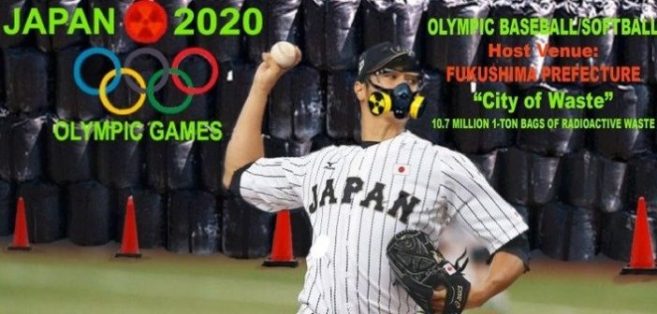
Iwaki Mayor Toshio Shimizu on Friday presented a request to 2020 Tokyo Olympic organizers, seeking to host a baseball game and a softball game in the city in Fukushima Prefecture.
Shimizu submitted the request to Yoshiro Mori, president of the Tokyo Olympic and Paralympic organizing committee, and Toshiei Mizuochi, senior vice minister of both the sports ministry and the Cabinet Office.
The request comes as Tokyo Olympic organizers are arranging to stage one first-round game each for baseball and softball in Fukushima Prefecture, one of the areas hardest hit by the 2011 earthquake and tsunami disaster, as part of reconstruction efforts.
They are said to be considering Iwaki, Fukushima and Koriyama cities as candidate sites.
The Iwaki municipal government wants the games played at Iwaki Green Stadium, which is occasionally used for Japanese professional baseball games and was the venue of the Under-15 World Cup baseball competition in July and August.
Shimizu expressed hope that the stadium will be chosen as an Olympic venue as that would “give hope and courage” to survivors of the quake and tsunami which also triggered a nuclear accident in the prefecture.
The main ballpark for the 2020 Summer Games is set to be Yokohama Stadium in Kanagawa Prefecture.
In the request, Shimizu and the mayors of eight nearby towns and villages are also requesting that the Olympic torch relay run on National Route 6 in the coastal area of Fukushima Prefecture.
Anti-nuclear Power Protest Tents in Tokyo Removed
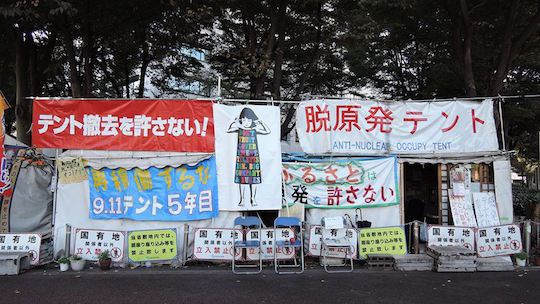
Japanese officials led a predawn raid on August 21st to forcibly remove the protracted anti-nuclear power sit-in protest in front of the Ministry of Economy, Trade and Industry (METI) headquarters in central Tokyo. At around 3.30 a.m., some 100 security guards and court officials descended on the so-called “No Nukes Plaza,” a collection of tents that had occupied a corner of land in front of METI in government district of Kasumigaseki since September 11th, 2011.
It had been the longest surviving example of Japan’s post-Fukushima protest movement. The weekly Friday night vigils outside the nearby prime minister’s residence have also continued, albeit with far fewer participant numbers than their peak in 2012, when tens of thousands were gathering in Kasumigaseki.
The protest tents were started by veteran left-wing activists from Japan’s postwar period, though it was supported by a younger generation of activists. It soon achieved a significant level of international attention and mainstream press coverage. The “plaza” evolved into a polestar for the movement, hosting talks, film screenings, and other events that strove to keep the debate over nuclear power in the public eye. One of the tents was even turned into a de facto art museum with Fukushima-inspired exhibits.
The administration of Yoshihiko Noda of the Democratic Party of Japan (now the Democratic Party) left the tents alone, but following the return to power of Shinzo Abe and the Liberal Democratic Party in late 2012, the government made it a priority to remove the protesters. In 2013, the government filed for the removal of the tents, which were manned 24 hours a day by activists. After this was approved by the courts, the activists appealed, claiming it was tantamount to suppressing freedom of speech and the right to free assembly, which is protected by the Constitution of Japan. The court also ordered the protesters to pay a daily fee of over \20,000 (approx. $200) for using government land.
In addition to the authorities, the protesters also attracted enemies from Japan’s ultra-nationalists. Beginning soon after they were erected, the tents were subject to regular attacks by right-wing activists and groups, including one as recently as the weekend before the eviction.
In July, the Supreme Court upheld the earlier ruling that the tents could be removed, meaning the protestors were out of legal options and effectively on borrowed time. METI officials no doubt deliberately chose the early morning to enforce the eviction so as to circumvent any resistance: the protesters were supported by a number of leftist activists known for aggressive hate speech counter-protests and who could be mobilized quickly.
When officials came to dismantle the tents, five activists were reportedly inside but were powerless to stop the proceedings, which took around 90 minutes. By Sunday morning, the tents were completely removed and the area where they previously stood was fenced off. Erecting any new tents was now impossible, but activists have vowed to continue their protest by sitting on chairs and standing at the same corner. Police initially blockaded even the sidewalks for some of Sunday, in fear of a backlash from the activists, though did relent and allow demonstrators to return to the site of their protest. One activist was arrested following a confrontation with police but was later released.
The anti-nuclear protest tents came to be seen as one of the pivotal aspects of the post-Fukushima movement, which blamed METI and the government for the crisis. Occupying the site was arguably just a symbolic gesture, but nonetheless an important one for Japan, where public land is strictly controlled and police and private security are quick to pounce on people who squat. No one else dared to do this kind of protest: the Friday night vigils pack up and go home at 8 p.m., and likewise the student group SEALDs, which generated much press coverage last year for its protests against the government’s controversial security legislation, was orderly and even praised for picking up trash after its demonstrations at Kasumigaseki.
As such, the tents were a renegade and unrepentant presence in the protest culture of Japan, and a constant reminder that the problems of Fukushima have still not been resolved even more than five years after the disaster.
The timing of the removal is also significant. It came shortly before the fifth anniversary of the sit-in, as well as during protests over the restarting of a reactor at Ikata Nuclear Power Plant. Unrest currently continues in Okinawa, too, as demonstrators clash daily with hundreds of riot police protecting the construction of new United States military helipads in the jungle near Takae.
http://www.counterpunch.org/2016/09/09/anti-nuclear-power-protest-tents-in-tokyo-removed/
Japanese dried mushroom sample detected with trace level of radioactivity
Hong Kong (HKSAR) – The Centre for Food Safety (CFS) of the Food and Environmental Hygiene Department said today (September 8) that a loose-packed dried mushroom sample, imported from Japan, was detected with a low level of radioactivity. Follow-up is in progress.
Japanese dried mushroom sample detected with trace level of radioactivity
Hong Kong (HKSAR) – The Centre for Food Safety (CFS) of the Food and Environmental Hygiene Department said today (September 8) that a loose-packed dried mushroom sample, imported from Japan, was detected with a low level of radioactivity. Follow-up is in progress.
“The CFS collected the dried mushroom sample from a retail outlet in Sheung Wan for radiation testing under its routine Food Surveillance Programme. According to the information provided by the retail outlet, the product concerned was imported from Japan. The test result showed that the sample was detected with Caesium-137 at a level of 24 becquerels per kilogram (Bq/kg).
The standard laid down by the Codex Alimentarius Commission in the guideline levels for radionuclides in foods contaminated following a nuclear or radiological emergency is 1 000 Bq/kg for Caesium-137. The radiation level detected does not exceed the Codex guideline level,” a spokesman for the CFS said.
The CFS has informed the vendor concerned of the test result. The vendor has voluntarily stopped sale and removed from shelves the affected product.
In the wake of the Fukushima nuclear power plant incident, the CFS has enhanced radiation testing on food imported from Japan at import, wholesale and retail levels since March 12, 2011.
The CFS updates the results and figures of food surveillance on imported Japanese food on its website every working day (including those cases detected with low levels of radioactivity).
The CFS will continue to closely monitor information from Japan as well as the radiation test results of Japanese food products in Hong Kong and elsewhere. It will review and adjust, if necessary, the surveillance strategy on food products imported from Japan in a timely manner, making reference to the recommendations of international authorities, to safeguard food safety.
Please refer to the CFS website for results of the food surveillance on Japanese food: http://www.cfs.gov.hk/english/programme/programme_rafs/programme_rafs_fc_01_30_Nuclear_Event_and_Food_Safety.html” target=”_blank”>www.cfs.gov.hk/english/programme/programme_rafs/programme_rafs_fc_01_30_Nuclear_Event_and_Food_Safety.html.
Kagoshima governor once again requests nuclear reactor halt
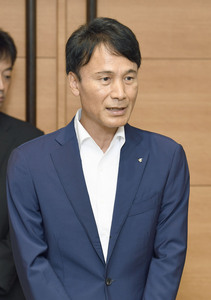
Governor again requests reactor suspension
Satoshi Mitazono, governor of the southwestern Japan prefecture of Kagoshima, meets with reporters on Sept. 7, 2016, in the city of Fukuoka after issuing a second request to Kyushu Electric Power Co. to suspend operations of two reactors at its Sendai nuclear plant. The utility rejected the initial request issued on Aug. 26.
Kagoshima Gov. Satoshi Mitazono once again requested Wednesday that Kyushu Electric Power Co. immediately suspend the operation of two reactors at its nuclear power plant in the southwestern prefecture after the utility rejected his earlier call.
Following a meeting with Mitazono in Fukuoka, Kyushu Electric President Michiaki Uriu indicated to the press that the operator is likely to reject the request, saying he wants the company to be “spared of” the suspension as it will conduct “special safety checkups” thoroughly on the Sendai nuclear plant reactors — two of only three nuclear reactors currently operating in Japan.
The latest request came after the new governor demanded on Aug. 26 that the utility halt the plant’s Nos. 1 and 2 reactors to verify their safety, citing local worries about the plant’s safety after major earthquakes rocked neighboring Kumamoto Prefecture and its vicinity in April.
Gov’t may shift nuke accident, reactor decommissioning costs onto new power suppliers

The government is moving to bill new electricity suppliers for a portion of nuclear reactor decommissioning costs and compensation payments related to the Fukushima nuclear disaster, it was learned on Sept. 7.
After decades under regional utility monopolies, the electricity supply market was opened to competition in April this year. The government apparently fears that the old monopolies such as Tokyo Electric Power Co. (TEPCO) lose too many customers to new suppliers and they may no longer be able to cover the high costs of decommissioning old reactors or compensate the victims of nuclear accidents, hence the move to shift some of the financial burden onto new market entrants.
However, these costs were originally supposed to be covered by the nine big utilities, and the government’s moves would essentially transfer that burden onto the Japanese people, making a clash more than likely.
Under the current system, large utilities must cover nuclear reactor operating expenses — including eventual decommissioning — from electricity bill income. Also, TEPCO receives monies to cover Fukushima nuclear disaster compensation claims from the government-licensed Nuclear Damage Compensation and Decommissioning Facilitation Corp. (NDF), which is in turn funded by all the large utility companies.
The new system being considered by the government would spread the financial burden of nuclear accident compensation and reactor decommissioning to new electricity suppliers, lightening the load on the big utilities. The government estimates the total cost for reactor decommissioning plus Fukushima nuclear disaster compensation paid before the NDF was established at some 8 trillion yen. The new power suppliers would likely pass on their share of these costs to their customers, resulting in monthly power bills up to about 200 yen higher than at present for an average three-person household.
However, forcing customers of the new electricity firms to pay for the old utilities to decommission their reactors and for TEPCO’s nuclear disaster liabilities runs counter to the goals of liberalizing the electricity market, which was intended to push down prices through competition. It would also in essence be corporate welfare for the big utilities operating nuclear plants.
A sub-committee to debate the new system will be established under the Advisory Committee for Natural Resources and Energy reporting to the minister of economy, trade and industry. The committee will decide on what direction to take by the end of this year, with an eye to submitting a bill to revise the Electricity Business Act to the ordinary Diet session next year.
http://mainichi.jp/english/articles/20160908/p2a/00m/0na/006000c
Ex-PM Koizumi backs sick U.S. sailors who blame radiation

Former Prime Minister Junichiro Koizumi is raising money for the hundreds of American sailors who say they got sick from radiation after taking part in relief operations for the 2011 tsunami that set off the Fukushima nuclear disaster.
Koizumi, prime minister from 2001 to 2006, told reporters Wednesday he recently visited San Diego to meet with former military service members, who have begun a class-action lawsuit against Tokyo Electric Power Co., the utility that operates the Fukushima No. 1 nuclear power plant.
Some 70,000 sailors and Marines took part in “Operation Tomodachi,” flying in aid from an aircraft carrier and other warships off the coast of northeastern Japan.
Some got seriously sick with cancer and leukemia and blame radiation. TEPCO denies any link between the illness and radiation.
1 This Month





PLEASE OPPOSE HR 8255 AND S.3639 – bills would accelerate satellite deployment, with no environmental review or safeguards – https://ncstd5li.quorum.us/campaign/169331/
To see nuclear-related stories in greater depth and intensity – go to https://nuclearinformation.wordpress.com
-
Archives
- October 2026 (81)
- September 2026 (339)
- August 2026 (330)
- July 2026 (355)
- June 2026 (287)
- May 2026 (306)
- April 2026 (356)
- March 2026 (251)
- February 2026 (267)
- January 2026 (308)
- December 2025 (358)
- November 2025 (359)
-
Categories
- 1
- 1 NUCLEAR ISSUES
- business and costs
- climate change
- culture and arts
- ENERGY
- environment
- health
- history
- indigenous issues
- Legal
- marketing of nuclear
- media
- opposition to nuclear
- PERSONAL STORIES
- politics
- politics international
- Religion and ethics
- safety
- secrets,lies and civil liberties
- spinbuster
- technology
- Uranium
- wastes
- weapons and war
- Women
- 2 WORLD
- ACTION
- AFRICA
- Atrocities
- AUSTRALIA
- Christina's notes
- Christina's themes
- culture and arts
- Events
- Fuk 2022
- Fuk 2023
- Fukushima 2017
- Fukushima 2018
- fukushima 2019
- Fukushima 2020
- Fukushima 2021
- general
- global warming
- Humour (God we need it)
- Nuclear
- RARE EARTHS
- Reference
- resources – print
- Resources -audiovicual
- Weekly Newsletter
- World
- World Nuclear
- YouTube
-
RSS
Entries RSS
Comments RSS

