North Korea celebrates becoming a nuclear state with huge rally and firework display
Troops cheered, laughed and smiled as a beautiful firework display lit up Kim Il-Sung Square in Pyongyang
North Korea is celebrating the declaration by dictator Kim Jong-Un that the Stalinist state is a nuclear power
It comes after the dramatic launch of the long-range Hwasong-15 intercontinental ballistic missile on Tuesday
By Iain Burns Daily Mail. UK,
Thousands of North Korean soldiers have appeared at a rally today to celebrate after dictator Kim Jong-Un declared the Stalinist regime a nuclear power.
Troops cheered, laughed and smiled as a huge firework display lit up Kim Il-Sung Square in Pyongyang following the successful test of the Hwasong-15 intercontinental ballistic missile on Tuesday.
State media reported that North Korea‘s leader Kim Jong-Un had declared the country had achieved the ‘historic cause’ of becoming a nuclear state on November 29……..
The Pentagon said the test missile traveled about 620 miles and landed within 200 nautical miles of Japan’s coast.
In a broadcast on state TV, North Korea said the missile reached an altitude of around 2,780 miles – more than 10 times the height of the international space station – and flew 600 miles during its 53 minute flight.
North Korea deliberately fires its missile on a near-vertical trajectory to artificially limit the range.
If the Hwasong-15 had been fired on a typical trajectory, analysts believe it would have a maximum range of around 8,000 miles (13,000km) – leaving only South America and a small part of Africa beyond it’s reach. http://www.dailymail.co.uk/news/article-5136407/North-Korea-celebrates-nuclear-state-rally.html
December 2, 2017
Posted by Christina Macpherson |
North Korea, politics, weapons and war |
Leave a comment
Tokyo, 1 December 2017 – On 30 November, Kansai Electric and Kyushu Electric announced that they are delaying the restart of four nuclear reactors for approximately two months due to ongoing investigations into Kobe Steel components. Greenpeace is calling for the immediate shutdown of operating reactors, owned by these same utilities, that may also have defective Kobe Steel components at the Takahama and Sendai plants.
While Kansai Electric has delayed operation of Ohi 3 and 4 reactors, it continues to operate its two reactors at Takahama. Similarly, Kyushu Electric has delayed operation of Genkai 3 and 4, while continuing to operate its two reactors at Sendai.
“If Kansai Electric and Kyushu Electric are delaying restart of the Ohi and Genkai reactors due to the need to conduct investigations, how can they justify continued operation of the reactors at Takahama and Sendai? The NRA has so far failed in its responsibilities as a regulator to get to grips with this rapidly evolving scandal. It must set aside nuclear industry interests and prioritize inspections. That includes shutting down operating reactors that may have defective parts until and unless safety can be guaranteed.” said Kazue Suzuki, Energy Campaigner Greenpeace Japan.
More than a month ago, Greenpeace Japan warned that there were potentially major safety risks with Kobe Steel components installed in reactors that warranted strong intervention by the NRA.[1] On 24 October, Greenpeace Japan, along with other citizens groups, submitted evidence to the NRA of Kobe Steel’s extensive supply chain to the nuclear industry, demonstrating the pervasiveness of the potential problems.[2] We called on the agency to take urgent action to launch a comprehensive investigation into the supply and widespread use of potentially flawed Kobe Steel products in the Japanese nuclear industry. Included in the demands were calls for the suspension of restart plans for the Ohi, Genkai reactors, and shutdown of the four reactors Takahama and Sendai.
As of today, the NRA has yet to issue detailed written instructions to all reactor operators to investigate the use of potentially faulty Kobe Steel components. Instead, submissions have been made by 6 of the 11 nuclear utilities and lack any substantial information and analysis.
In one example, On 13 October, it was confirmed that Shinko Metal Products Co., owned by Kobe Steel, supplied tubes to the Tokyo Electric Power Company (TEPCO) for use in heat exchangers at the Fukushima Daini nuclear plant but failed to conduct required inspections.[3 & 4]
[1] The letter was signed by Green Action, Mihama-no-kai, Citizens Nuclear Information Center, Citizen’s Watch on Nuclear Regulator, Friends of the Earth Japan, and Greenpeace Japan
[2] The Kobe Steel Group Supply Chain to the Nuclear Industry And Safety Implications (Greenpeace Japan Briefing Paper)
[3] See the TEPCO’s announcement (in Japanese)
[4] For more information on the risks of faulty steel in these components, see: “Irregularities and anomalies relating to nuclear reactor primary coolant circuit components installed in Japanese nuclear power plants”
Chisato Jono, Communications Officer, Greenpeace Japan, email: chisato.jono@greenpeace.org, mob: +81 (0) 80-6558-4446
Shaun Burnie, senior nuclear specialist, Greenpeace Germany, email: sburnie@greenpeace.org, mob: +49 151 643 20548 (Germany)
December 1, 2017
Posted by dunrenard |
Japan | Greenhouse, Kobe Steel, Sendai NPP, Takahama NPP |
Leave a comment
A report from NIRS (Nuclear Information and Resource Service, in USA)
The Japanese government has created foreign language websites which provide the information about radiology in general and the radiological situation in Fukushima. Journalists around the world, our friends and acquaintances living abroad are continually asking us whether the information that these Japanese central and local government websites present to the international community is correct or not. The following is our answer.
Appeal from a Japanese Anti-nuclear Activist Etsuji Watanabe
Nov.29 2017 Revised (Oct.12 2017)
Etsuji Watanabe: Member of the Japanese anti-radiation citizen-scientist group ACSIR (Association for Citizens and Scientists Concerned about Internal Radiation Exposures)
Special thanks to Mrs Yuko Kato, Mr Ruiwen Song, Ms Nozomi Ishizu, Mrs Kurly Burch, Ms Jennifer Alpern, and Mark Bennett Yuko Kato: Evacuee from Fukushima, member of the Kansai plaintiff group for compensation against TEPCO and government Ruiwen Song: Taiwanese freelance journalist.
The Japanese government has created foreign language websites which provide the information about radiology in general and the radiological situation in Fukushima. Journalists around the world, our friends and acquaintances living abroad are continually asking us whether the information that these Japanese central and local government websites present to the international community is correct or not. The following is our answer.
The stories uploaded on these websites give people the impression that worrying about radiation is unnecessary. As for this impression, has Fukushima now really become a safe place to live or visit?
First of all, Japanese anti-nuclear activists and evacuees from contaminated areas in Fukushima and Kanto, have been warning people all over the world NEVER to trust what the Japanese government is saying about both radiology in general and the specific radiological health effects caused by the Fukushima Dai-ichi nuclear power plant disaster (hereafter Fukushima accident) following the Great East Japan Earthquake and Tsunami on March 11th, 2011.
Prime-minister Shinzo Abe and the Japanese government as a whole including Fukushima prefectural government have repeatedly declared that “with regard to health-related problems (of the Fukushima accident), I (Abe) will state in the most emphatic and unequivocal terms that there have been no problems until now, nor are there any at present, nor will there be in the future.” (Abe’s statement at a news conference). See the Japanese government website here.
This claim is completely fabricated and false. In making these claims, the Japanese government is blatantly ignoring the vast number of studies in radiological sciences and epidemiology that have been accumulating historically. By engaging in this behavior, the Japanese government has been systematically deceiving the public, both nationally and internationally.
Just think of the amount of radioactivity released during the Fukushima accident. As you know, one of the standards used to assess the extent of radioactive releases and longtime human health effects is the levels of cesium 137 (Cs137) released into the environment. Based on the Japanese government data (which is an underestimate), the Fukushima accident released 168 times the Cs137 discharged by the atomic bomb dropped on Hiroshima. This amount is almost the equivalent to the total atmospheric nuclear explosions conducted by the United States on the Nevada test ground. The Nevada desert is not designated as a residential area, but the Japanese government has recommended evacuated residents return to live in areas with radiation levels of up to 20 mSv/year. By removing economic support for evacuees, the Japanese government has forced many people who had evacuated from these areas to return.
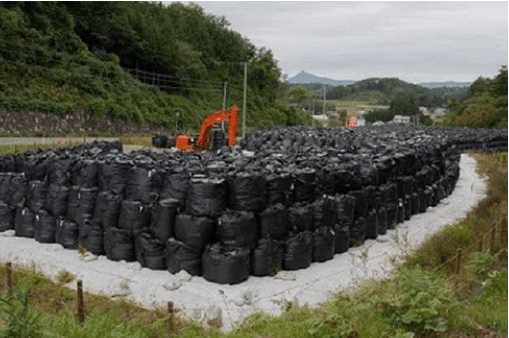
We estimate that in the Fukushima accident approximately 400-600 times the Cs137 were released into the atmosphere by the atomic bomb blast in Hiroshima. Roughly 20% of the Cs137, or 80-120 Hiroshima-equivalents, were deposited on Japan. Of this, the decontamination efforts have only been able to retrieve five Hiroshima-equivalents. The waste from decontamination efforts is typically stored all over Fukushima mostly in mountainous heaps of large plastic bags. This means that 75-115 Hiroshima-equivalents of Cs137 still remain in Fukushima, surrounding prefectures, and all over Japan.
In addition, the Japanese government is now planning to reuse the retrieved contaminated soil under 8000Bq/kg in public works projects all over Japan. This self-destructive program has now been partially started without any announcements as to where the contaminated soil are and will be reused, under the pretext of “avoiding damage caused by harmful rumors”. This project is tantamount to scattering lethal fallout of Cs137 equivalent to about 5 times that of Hiroshima bomb all over Japan. The Japanese government is literally behaving like a nuclear terrorist.
Do you really imagine that Fukushima prefecture and surrounding areas, contaminated as they are to levels similar to the Nevada test site, is really a safe place for people to permanently live, or for foreign tourists to visit and go sightseeing?
Regrettably, we must conclude that it is not, for either residents or tourists the situation in Fukushima is not safe.
These websites also point out that the international annual dose limit for the public is at 1mSv, but this level is easily exceeded by only one CT-scan, insinuating that this 1mSv standard is set too low and thus not a useful indicator.
CT-Scans are often cited as if they had no radiation risks, But this is not true. A recent study clearly shows that every CT-scan (about 4.5mSv irradiation) increases the risk of cancers in children by 24%. See the website here.
In Fukushima the allowable level of radiation per year for residents is now 20mSv. Can you imagine having 4-5 CT-scans every year?
One of the websites states: “In Fukushima, the indoor radiation doses are now so reduced that no radioactive cesium can be found in the air. Therefore, no radioactive particles can invade the human body during breathing.” What do you think of this statement?
The Japanese government also ignores the long-term peril caused by “hot particles” ――micron-and- nano-sized radioactive particulates――which, if inhaled or absorbed into the human body, may lead to many kinds of cancers and other diseases including cardiac failure. We should consider internal irradiation to the cells near the radiation sources to be 500 times more dangerous than external irradiation because particles inside the body radiates very near or even inside cells, causing intensive damage to DNAs and other cell organs such as mitochondria.
These websites explain that there exists not only artificial but also natural radioactivity, thus people are living in an environment surrounded by radiation all the time in everyday life.
One of the main tactics that the Japanese government often uses to propagate the “safety of low level irradiation” is to compare artificial radioactivity with natural radioactivity. But this logic is a methodological sleight of hand. It is crystal-clear that even exposure to natural radioactivity has its own health risks. Cancers sickened and killed people long before artificial radioactivity was used. For example, Seishu Hanaoka, one of the founders of Japan’s medicine, carried out 152 breast cancer surgeries from 1804 to 1836.
Both kinds of radioactivity have their own health risks. Risks caused by artificial radioactivity should not be compared but be added to the natural radioactivity risks as they both lead to the accumulation of exposure.
For example, potassium 40 (K40) is a typical natural radioactive nuclide. According to the Japanese government, the average internal exposure dose for adults from K40 is about 4,000Bq/year or 0.17mSv/year. See the website here (in Japanese).
The ICRP risk model (2007) allows us to estimate the approximate risk posed by K40. The calculation shows that K40 is responsible for approximately 4,000 cancer cases and 1,000 deaths every year. If the same amount of radiation was added to that of K40 in the human body by artificial sources, the cancers and mortalities would be doubled to 8,000 and 2,000 a year, respectively. Based on the ECRR (2010) model, which criticizes the ICRP risk model as a severe underestimate, these figures should be multiplied by 40, reaching 320,000 and 80,000, respectively.
The extract you cite from the Fukushima government website is completely fake: “In Fukushima, the indoor radiation doses are now so reduced that no radioactive cesium can be found in the air. Therefore, no radioactive particles can invade the human body during respiration”. Reports from civic radiation measurement stations refute this claim. For example, dust collecting paper packs of vacuum cleaners used in Iwaki City, Fukushima prefecture, are radiologically measured and 4,800-53,900Bq/kg radioactive cesium was detected in Oct-Dec 2015. See the website here (in Japanese).
One of the websites says that the Fukushima prefecture has conducted whole-body counter screenings of the 170,000 local population so far but cesium was rarely detected.” Does this mean that we can safely consume food from Fukushima, and Fukushima residents are no longer being exposed internally to radiation?
This is a typical example of demagogy by the Japanese government: vague expressions lacking specific data, using the words “safe and secure” without clear explanation. In reality, the government has not publicized any data indicating serious irradiation of the population. For example, you mentioned the Fukushima prefectural government website saying that whole-body counter screenings of 170,000 members of the local population have found radioactive Cs only in very few cases. However, the fact that no specific number is given makes the statement suspicious.
These statistics, more than likely, exclude many firefighters or other municipal employees who, at the time of accident, helped local residents evacuate from a lot of contaminated areas surrounding the defunct Fukushima plant. These people were subjected to serious radiation doses.
Civic groups’ efforts for the disclosure of information has recently prompted city officials near the defunct plant to disclose the fact that it conducted whole-body counter check-ups on about 180 firefighters, nurses and municipal employees. According to Koichi Ohyama, a member of the municipal assembly of Minami Soma, the screening conducted in July, 2011, showed almost all of these people tested positive in Cs. The maximum Cs137 dose among the firefighters was as high as 140,000 Bq. This data reveals a part of the reality of irradiation but it is only a tiny part.
The government websites suggest that no health effects from irradiation have been reported in Fukushima. Is this true? Or have any symptoms appeared that indicate an increase in radiation-induced diseases in Fukushima?
One example is the outbreak of child thyroid cancer, but the Japanese government has been denying the relationship with irradiation from radioactive iodine released from the Fukushima disaster.
Japan’s population statistics reflect the health effects from the Fukushima disaster radioactivity. The following data clearly show that diseases increasing in Fukushima are highly likely to have been radiation-induced.
The Fukushima prefecture website says, “After the Fukushima accident, the Japanese government has introduced the provisional standards for radioactive iodine and cesium. The Fukushima prefectural government subsequently strictly regulated distribution and consumption of food with levels of radioactivity exceeding the provisional standards. Now we have had this new much stricter standard. The distribution and consumption of food exceeding this new standard has been continuously regulated; therefore any food on the market is safe to consume.” Is it true?
As for food contamination, the Japanese government has also tried to cover up the real picture. First, the current government standard for radioactivity in food, 100Bq/kg, is dangerously high for human health, especially for fetuses, infants, children and pregnant women. Even six and a half years after the accident, the Agriculture Ministry of Japan as well as many civic radioactivity measurement stations all over the country have reported many food contamination cases, although the frequency is evidently reduced. See the website here.
The Japanese government has underestimated the danger presented by internal irradiation. But, we must consider two important factors. (1) The wide range of difference in personal radio-sensitivity. According to Professor Tadashi Hongyo (Osaka University Medical Faculty), the maximum difference is as wide as 100 times in terms of biological half-life of Cs137. (2) Recent studies denying that the so-called biological half-life decrease curve actually exists. According to the new model, daily food contamination can cause concentrations to accumulate as time passes. Even a daily 1Bq internal radiation dose from food cannot be safe for human health (details below).
Our recommendation is to be cautious of food or produce from Fukushima and the surrounding areas, and, even if contamination levels are said to have now generally decreased, to avoid jumping to the conclusion that all the food is fit to eat.
We would like to ask about the situations in prefectures surrounding Fukushima. A television program once reported, “As for the safety of Tochigi and Gunma prefectures, few people are raising concern about health effects of radiation.” Is it true that the prefectures somewhat distant from the Fukushima Daiichi plant are now safe with no human risk?
Regarding the radioactive contamination in prefectures surrounding Fukushima, you can refer to the following website.
This article examines the contamination in the Tokyo metropolitan area, but conditions are the same or more serious in Tochigi or other prefectures north of Tokyo, nearer to the defunct Fukushima Daiichi plant.
Another example is the statistics of stillbirth and neonatal mortality in Fukushima and the surrounding five prefectures (Tochigi, Gunma, Ibaragi, Miyagi, Iwate) shown here.
Perinatal mortality in not only Fukushima prefecture but also neighboring prefectures rose 15.6% just 10 months after the accidents. This clearly indicates the existence of some kind of human health damage from radiation.
We would like to ask about the decontamination efforts by famers living in Fukushima and neighboring prefectures. Should we think highly of the farmers measuring the amount of radiation deposited on the surface of soil to create radiation maps for farms, or washing the radiation from the surface of every single tree off the radiation with high-pressure washers? The farmers said that while these methods have been shown to be radiologically effective, their produce did not sell well, because consumers are still feeling anxious about health risks. Does the problem of radioactive food contamination in Japan just end up in whether each consumer personally believes it safe or not?
We must raise a question that, despite the government’s decontamination efforts, a huge amount of radioactive materials deposited in mountainous areas remain untouched. Now they are re-dispersing and re-depositing over wide areas of Fukushima and surrounding prefectures via winds, cars, trains, river water, pollen, spores, emissions from incinerators, in the form of radioactive dusts and particulates, among many others. For an example, see the following website.
So I regret to say that, although these farmers’ endeavors you mentioned are very precious and respectable, they are not sufficient to completely eliminate the risk of radiation exposure from food. The problem exists objectively in the nuclear materials deposited on and in soil, algae, plants, houses, buildings, forests, animal and human bodies, not subjectively in the consumers’ sentiment or psychology.
Japanese experts have recently pitched a cultivation method that can remove cesium by intensive use of potassium fertilizer. Is this method effective at all? Do you have any doubt about their claims?
They seem to be among those experts who have been criticizing the general public’s tendency to demand “zero irradiation risk” as an obstacle to Fukushima reconstruction.
As you know, cesium (Cs) has chemically similar characteristics to potassium (K). So it is true that higher levels of application of potassium fertilizer lowers the plant’s absorption, and therefore concentration, of radioactive Cs, decreasing Cs137/134 concentrations in produce, often to below the government standard of 100Bq/kg. But the following problems remain: (1) This procedure can prevent Cs transfer from the soil to produce only partly, not completely; (2) This process raises the potassium concentration in the produce and therefore heightens the burdens on certain human organs such as kidneys, the heart and the nervous system, causing new health risks; (3) Heightened concentration of potassium also leads to the heightened concentration of radioactive K40, so the reduced risk of radioactive Cs lead to an increased risk of internal irradiation by K40.
Even if cesium concentration was reduced by applying more potassium fertilizer than usual, strontium contamination would remain. In Japanese government’s international press campaign as to the Fukushima accident, almost nothing has been said about strontium. If you have any information on strontium contamination, let us know.
We regret that the information about strontium that you are asking for is very limited and searching for it is also a challenge for us. The Japanese government and research institutes under the government have reported very limited data regarding strontium contamination. But it is important that the Japanese government admits the fact of strontium contamination within 80km from the defunct Fukushima plant. See the website here.
Did you know that the US Department of Energy data on the strontium contamination of soil in Japan and its visualization (in Japanese) can be seen on the websites here?
Some Japanese experts say, “the Japanese government has declared that no health effects from irradiation below 100mSv (or 100mSv/year) have been confirmed.” Some farmers have established a private food standard of 20Bq/kg, much lower than the Japanese government standard of 100Bq/kg. Do you think that doses under 100mSv or under 20Bq/kg are safe and secure?
As you mentioned, the Japanese government claims that no scientific studies verify that irradiation of 100mSv or less poses a threat to human health, suggesting that irradiation under 100mSv has no risk. This, however, is false. The government is fabricating this information. In fact, very many scientific studies have already confirmed and proven health effects induced by irradiation under 100mSv. For example, see the websites below.
The Japanese government is using the term “100mSv” in a deliberately ambiguous and confusing manner. The expression 100mSv can have three meanings: (1) a one-time irradiation dose, (2) cumulative irradiation doses, or (3) annual irradiation doses. So 100mSv is not the same as, nor equal to the 100mSv/year that you mentioned in parenthesis. The latter amounts to a 1Sv in cumulative dose over 10 years (which is an up to 10% lethal dose), and 5Sv over 50 years (which is a 50% lethal dose). The present government standard for evacuees to return, 20mSv/year, means that living there for 5 years leads to a cumulative dose of 100mSv, at which the Japanese government admits clear health risks.
Regarding 20Bq/kg as some farmers’ private food standard, it is critical to pay serious attention to the extraction process of Cs from tissues. Japanese-Canadian non-organic biochemist Eiichiro Ochiai points out in his book “Hiroshima to Fukushima, Biohazards of Radiation” (2014) that, based on the Leggett model, the Cs concentration injected in tissues at one time diminishes relatively quickly for about 10 days in most tissues. After that, processes slow down, tending to become steady. He writes: the decrease of the overall Cs level in the body does not follow an exponential decay curve (p.83). This means that consecutive intake of Cs, even in very low levels, results in the accumulation of Cs in the body. (Incidentally, Ochiai’s book can be downloaded for free from the website below.)
Regarding the Leggett model, see the website below.
Yuri Bandazhevsky considers over 10Bq/kg of radioactive Cs concentrations in the body to be unsafe because even this low level can possibly cause abnormal electrocardiographic pattern in babies, metabolic disorders, high blood pressure, cataracts, and so on.
Therefore, we can conclude unequivocally that neither the irradiation under 100mSv nor the privately set 20Bq/kg food standard are safe and secure.
December 1, 2017
Posted by dunrenard |
Fukushima 2017 | Contaminated Foods, Contamination, Fukushima, Health Problems, Lies & Cover-up, radiation |
1 Comment
 The Kim Jong Un – Donald Trump warlike bombast continues, when what is needed is restraint and diplomacy. North Korea unveils a ‘monster’ new intercontinental ballistic missile. Trump administration considers a‘preventive strike ‘ against North Korea – the very worst option.
Always a silver lining, though. Businessmen in Britain and South Korea are enthusiastically marketing new underground bunkers. Their Chumdan Bunker System chief executive officer Go Wan Hyeok said “I’m wishing that he presses the button and shoots the bomb! ” “I want to then open up showrooms in Europe and in the UK”
The twin threats of climate change and nuclear pollution join together, as rising seas caused by climate change are seeping inside a remote island nuclear waste dump.
University research indicates that global warming will accelerate as CO2 levels rise.
Western nuclear nations snub Nobel Peace Prize ceremony.
How could the Agung volcano in Bali affect global temperatures?
USA. Trump administration, Michael Flynn, and dodgy nuclear deals with Saudi Arabia. Michael Flynn’s nuclear role complicates the federal investigation into Russian interference in 2016 USA election. New Study: Over a Trillion becquerels of Fukushima radiocesium fell on Hawaii. NASA’s new toy – a nuclear reactor on Mars.
FRANCE. Another corruption investigation of French nuclear company AREVA. France joins the rush to market nuclear power to Saudi Arabia. Mushrooms contaminated with radioactive cesium 137 stopped by France, – shipment from Belarus. EDF says individuals detained after breaking into Cruas nuclear plant.
NORTH KOREA. North Korea moving fast to complete its nuclear weapons program – could be done within a year. Daily Mail reports North Korean defectors’ claim of damage caused by Kim Jong-un’s powerful nuclear missile test
JAPAN. Japan’s Kyushu Elec likely to delay nuclear plant restart due to Kobe Steel checks. Kobe Steel scandal: ‘look the other way’ culture of corporate Japan, faked data for over a decade. Japan is poised to release into the Pacific one million tons of radioactive water contaminated by the Fukushima Daiichi nuclear plant. Fukushima ‘ice wall’ linchpin not living up to high hopes. 11,800 homes to be destroyed in areas evacuated from the nuclear disaster. Testimony of a mother who evacuated from Tokyo. Fukushima Cover-Up and Denial.
UK. Looks as if UK nuclear power is coming to the end of the line. South Korea looks to market nuclear technology to Britain, in UK’s Moorside Nuclear Power Station.
CANADA. Strong civic movement opposes Canadian proposal for nuclear waste dump close to Lake Huron.
SOUTH AFRICA. South Africa’s anti nuclear movement ready for President Zuma’s next pro nuclear move.
AFRICA – GABON Gabon’s uranium miners’ long wait for compensation for radiation-caused illness.
RUSSIA. Russia: a new nuclear accident on the anniversary of the secret Mayak accident 60 years ago? Scientist confirms potential source of Ru-106 as Mayak’s vitrification unit. Damning report from Greenpeace on Rosatom and the Ruthinium 106 incident!
December 1, 2017
Posted by Christina Macpherson |
Christina's notes |
Leave a comment
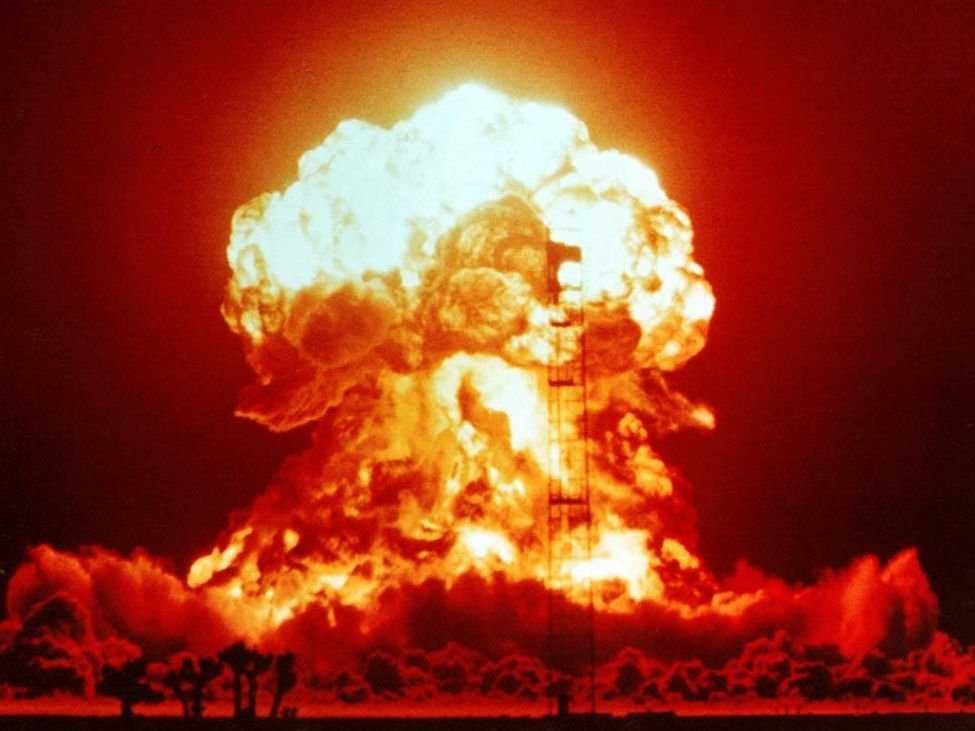
 A ‘preventive strike’ against North Korea would trigger ‘nuclear retaliation’
On Tuesday, North Korea test fired what experts believe is its most advanced long range, nuclear-capable missile yet.
In response, Sen. Lindsey Graham told CNN “If we have to go to war to stop this we will.”
A preventive strike against North Korea is not feasible and would have devastating consequences. The best path is still diplomacy. Lt. Col. Daniel L. Davis, USA, Ret. CNBC , 1 December 17, On Tuesday, North Korea test fired what experts believe is its most advanced long range, nuclear-capable missile yet. In response, U.S. Sen. Lindsey Graham (R-SC)
bluntly told CNN’s that Trump will not allow North Korea to even possess a nuclear missile capable of hitting the U.S.”If we have to go to war to stop this we will,” he said. “We’re headed towards a war if things don’t change.”If Sen. Graham’s binary choice accurately reflects the president’s thinking, then war will come, and millions could die, including thousands of Americans. Such a war is too costly to seriously consider absent an imminent attack.
It is difficult to overstate the negative consequences that would result should President Trump order any type of “preventive” military strike—that is, an attack to deprive them of a capability rather than to stop an actual, imminent launch—against North Korea.
Choe Kang-il, Deputy Director General for North American affairs at North Korea’s foreign ministry recently
told the
New York Times, “If the United States even hints at a strike on North Korea, we will proceed with a preemptive attack on the U.S.”In case some are tempted to think these threats are merely bluster by the Kim regime, they were echoed almost precisely last month in congressional testimony by the highest ranking North Korean official ever to defect.
Former diplomat Thae Yong-ho told members of Congress North Korean officers are trained to fire their weapons “without any further instructions from the general command if anything happens on their side.” Their response would be immediate and devastating.
Consider the most dangerous course of action: this latest test, reportedly fired from a mobile launcher, indicates North Korea has the ability to launch nuclear-tipped missiles. If the United States tries to take out launch points, or even a massive and sustained bombing campaign in an attempt to destroy their ability to retaliate, we will inflict extraordinary damage—but it is unlikely our attacks would successfully penetrate all their mountain bunkers.
That leaves the possibility that Kim Jong-un would order a mobile launcher to emerge from its protective bunker, and in retaliation, send a nuclear missile crashing into Guam, Hawaii, or Seattle.
Such an act would not be a fringe possibility were the U.S. to launch any type of “preventive” armed attack; it would be a likely outcome.
The window of opportunity to strike North Korea without risk of nuclear retaliation closed many years ago. For more than a decade, it has been impossible to take out North Korea’s ability to launch conventional and nuclear retaliatory strikes against our allies—the only recent development is that our homeland may now also be at risk of a counterstrike.
This further increases the cost of preventive war, making it an even worse policy option rather than a serious policy recommendation……… https://www.cnbc.com/2017/11/30/preventive-strike-on-north-korea-would-trigger-nuclear-retaliation-lt-col-commentary.html
December 1, 2017
Posted by Christina Macpherson |
North Korea, USA, weapons and war |
Leave a comment
 North Korea reveals images of new ballistic missile – it’s a monster, SMH, 1 Dec 17,
 North Korea released numerous images Thursday that it says are of the new intercontinental ballistic missile it claims is capable of striking “the whole mainland of the US.”
Dozens of photos of the Hwasong-15 missile were published in state media. North Korea claims to have achieved its goal of becoming a nuclear state with the missile launch Wednesday.
Michael Duitsman, a researcher at the Centre for Nonproliferation Studies in Monterey, California, tweeted soon after the photos were published: “This is very big missile … And I don’t mean ‘Big for North Korea.’ Only a few countries can produce missiles of this size, and North Korea just joined the club.”
Duitsman suggested the new ICBM appears to have a different engine arrangement and improved steering from the the smaller Hwasong-14 ICBM that the North tested twice in July.
“They wanted (to be able) to hit all of the US and they wanted something big to hit it with. This seems on the surface level to be that missile,” David Schmerler, a research associate at the James Martin Centre for Nonproliferation Studies, told CNN.
The Hwasong-15 appears to be the longest-range missile ever tested by North Korea, which said it reached an altitude of 2,780 miles (4473 km) and flew a distance of 590 miles (949 km) in 53 minutes.
It would have had a range of 8100 miles had it flown in a flat trajectory, according to calculations by David Wright, an expert at the Union of Concerned Scientists. That would make it capable of reaching Washington, DC…….. http://www.smh.com.au/world/north-korea-reveals-images-of-new-ballistic-missile–its-a-monster-20171130-gzweym.html
December 1, 2017
Posted by Christina Macpherson |
North Korea, weapons and war |
Leave a comment








 nuclear-news