Debris Removal at Reactor # 3 Delayed, but Arrival of the First Elements of the New Building for its Spent Fuel Removal
Transportation of the supporting part of a new roof for the Unit 3 fuel removal at Fukushima Daiichi Nuclear Power Station
The clearing of debris from reactor # 3 is delayed, delaying the construction of the new building to remove spent fuel from the pool. The debris removal was to be done in order to build a new workshop to remove the fuels from the pool.
The removal of the spent fuel should have started in January 2018. In the beginning, TEPCo was to start in 2015. We do not know their new schedule yet.
On the other hand, TEPCO communicated on the arrival of the first elements of the new building, with photos and video.

The dose rates on the site are here. There is up to 2.6 mSv / h in the vicinity of reactor No.3.

Links from TEPCO:
Photos of the new building
Click to access handouts_161220_01-e.pdf
Video
http://photo.tepco.co.jp/en/date/2016/201612-e/161220-01e.html
Dose rates in Reactor 3 vicinity
http://www.tepco.co.jp/en/nu/fukushima-np/f1/surveymap/images/f1-sv-20161219-e.pdf
WNN could get their facts right! but are peace loving journalists really!

To our dear friends and colleagues over at the very pro nuclear World Nuclear news (WNN). A happy new year to you all and the fight continues! 🙂 I still say our headline versions and pictures are better than yours, but thanks for your hard work in getting nuclear information out to the Russians (According to Alexia they are your biggest fans). Your efforts at bridging the cold war gap are noticed and appreciated by us all here at nuclear-news.net. Good job Na Zdorovie!
JAIF president urges reactor restarts to fight climate change LOL
30 December 2016 WNN
Japan needs to work towards bringing its reactors back online if the country is to meet its climate goals, Akio Takahashi, president of the Japan Atomic Industry Forum, said last week. Nuclear energy currently accounts for just 1.1% of Japan’s electricity production and commercial operation has been resumed at only three of the country’s nuclear power plants – Sendai 1, Sendai 2 and Ikata 3.
But are all three actually in operation currently?

From Nuclear Insider:
Dec. 15, 2016—Kyushu Electric Power Co. on Dec. 8 began the process of restarting Sendai 1. The 846-megawatt reactor was initially restarted in August 2015 followed by Sendai 2 in October 2015. Sendai 1 was taken off-line in October for a two-month routine outage. It is the first reactor to undergo a periodic inspection following its restart after meeting new Japanese regulatory standards. Kyushu Electric said it expects the facility to resume commercial operations the first week of January. The company also said it expects to take Sendai 2 off-line for maintenance and refueling on Dec. 16.
Of Japan’s 42 operable reactors, only Shikoku Electric Power Co.’s Ikata 3 and the Sendai reactors are in commercial operation. Takahama 3 and 4 were restarted but have been idled after a court injunction lodged by anti-nuclear activists. Japan’s Institute of Energy Economics said Dec. 13 it estimates seven reactors will be restarted by the end of March 2017 and another 19 by March 2018.
From this it appears that Sendai 1 is supposed to be re-opening sometime this week (and so was presumably not operating on Dec. 30th and Sendai 2 was due to be taken offline on December 16th and may or may not have re-opened.
As for Ikata 3: “Ikata 3 had been idle since being taken offline for a periodic inspection in April 2011. However, Shikoku began the process to restart Ikata 3 on 12 August [2016] and the reactor attained criticality the following day. The 846 MWe pressurized water reactor resumed power generation on 15 August and since then output from the unit has been gradually increased.” So as far as I know it is continuing to operate.
As a U.S. Business, Nuclear Power Stinks

01/01/2017 | Kennedy Maize
http://www.powermag.com/blog/as-a-u-s-business-nuclear-power-stinks/#.WGtBqz_Cxyo.facebook
Regardless of one’s views of the social values of nuclear power — compelling cases can be made all around — as a business proposition nuclear stinks.
The latest evidence comes from the giant Japanese conglomerate Toshiba, which saw a third of its market value vanish in two days of trading (20% in one day, a free-fall stopped only by a limit to trading losses imposed by the Japanese stock market). Credit rating agencies promptly downgraded the company’s debt.
Toshiba’s stock crash was a result of billions in reported losses from its Westinghouse Electric subsidiary and Westinghouse’s ruinous investment last year in nuclear engineering and construction behemoth CB&I Stone & Webster, itself the product of an ill-fated merger. Toshiba’s nuclear business has been hemorrhaging money at its U.S. construction projects in Georgia and South Carolina. Westinghouse is years behind schedule and billions of dollars over budget at its two construction projects: Southern’s Vogtle and Scana Corp.’s Summer units, a total of four Westinghouse AP1000 reactors under construction. Toshiba faces the possibility that its nuclear troubles will lead the company to a negative net worth.
My colleague Aaron Larson describes the gory business details well. The bottom line is that Westinghouse threatens to bring Toshiba to its financial knees, although the firm is too large to fail entirely. It may well require a Japanese government bailout.
Then there is France’s Areva, which has been bleeding red ink for more than a decade and would have expired but for its French government owners, and a recent bailout. The company is far behind schedule and vastly over budget on construction projects in Finland and France. Late last year, discovery of quality control problems in carbon steel forgings from Areva’s Le Creusot Forge shocked the company. The allegations closed 20 of France’s 58 operating reactors, which also could jeopardize regulatory approval for extended operation at the aging plants.
In late December reports surfaced that Areva employees for decades hid problems in reactor parts it manufactured at Le Creusot Forge. Inspectors from the U.S., France,
China, and the U.K. descended on Areva to examine records and investigate the allegations. “I’m concerned that there keep being more and more problems unveiled,” Kerri Kavanagh, who leads the U.S. Nuclear Regulatory Commission’s unit inspecting Le Creusot, told the Wall Street Journal.
The business case for existing nukes in the U.S. is also ominous. Just last week, an Ohio newspaper reported that Akron-based FirstEnergy will close or sell its long-troubled, 900-MW Davis-Besse nuclear unit this year or next, without counting on a state bailout. “We have made our decision that over the next 12 to 18 months we’re going to exit competitive generation and become a fully regulated company,” CEO Chuck Jones said. “We are not going to wait on those states to decide what they are going to do there.” This comes on top of multiple closings of U.S. nukes unable to compete in competitive markets in recent years, state subsidies in Illinois and New York to keep uneconomic plants open, and threats of even more shutdowns.
At the same time as the Davis-Besse warning, Environmental Progress, a pro-nuclear group, released an analysis that concluded that a quarter to two-thirds of operating U.S. nuclear plants could face premature closure. If it weren’t for actions by state governments in Illinois and New York, the picture would look worse.
The Environmental Progress analysis counts 35 GW of nuclear capacity as at “triple risk” because “they are in deregulated markets, uneconomical (according to Bloomberg New Energy Finance) and up for relicensing before the end of 2030.” Facing greatest jeopardy for early closure? D.C. Cook in Michigan, Seabrook in New Hampshire, Millstone in Connecticut, and Davis-Besse in Ohio.
Grassy Narrows chief urges Trudeau to cleanup mercury in river

OTTAWA — The Globe and Mail
Published Sunday, Jan. 01, 2017
The chief of a small Northern Ontario First Nation whose people are being poisoned by mercury from a defunct paper mill is urging Prime Minister Justin Trudeau to engage the federal government in the cleanup of the river that is the source of the community’s fish.
Simon Fobister, the Chief of the Grassy Narrows First Nation, has written twice to Mr. Trudeau – in May and in September – and Mr. Fobister’s predecessor, Roger Fobister, wrote to the Prime Minister in March. All of the letters told Mr. Trudeau: “We invite you to visit our community to announce alongside us that the mercury in our river system, our source of life, will finally be cleaned up.”
The chief says he has received no response to those invitations, though the Prime Minister’s Office acknowledged to The Globe and Mail that it had received them. A spokeswoman for Mr. Trudeau pointed out that a representative of the Indigenous Affairs department visited the community in June along with provincial ministers.
Many First Nations in Canada are coping with the negative environmental consequences of development on or near their territories, but few have endured hardships like those suffered in Grassy Narrows, where 90 per cent of residents are showing signs of mercury poisoning.
The current chief said in his most recent letter that Mr. Trudeau’s silence on the matter of Grassy Narrows is troubling.
“You have made important election promises to repair Canada’s relationship with First Nations and to right many of the wrongs that have been done to First Nations people,” wrote Mr. Fobister. “We consider those promises to be sacred and we are hopeful that you will honour your word.”
Responsibility for the mercury problems straddles provincial and federal jurisdictions and, so far, the province of Ontario has borne much of the blame for the fact that the contamination has persisted in the Wabigoon River for six decades. But David Sone of Earthroots, a conservation advocacy group, says there are at least three reasons for the federal government to get involved.
“There is at least still some [federal] responsibility for fisheries where they are part of a cultural fishery” like the one at Grassy Narrows, said Mr. Sone. “There is a responsibility for the health of First Nations. And there is the broader treaty and fiduciary responsibility for the well-being of First Nations.”
The federal government counters that the zone of contamination does not include federal lands, so its own Contaminated Site Action Plan does not apply and, it says, responsibility for addressing the contamination belongs to Ontario. It also points out that Health Canada has been monitoring the mercury levels in the people of Grassy Narrows for decades.
From 1962 to 1970, mercury from Reed Paper’s chemical plant in Dryden, Ont., upstream from Grassy Narrows, was dumped into the English-Wabigoon River system. A former worker at the paper mill has also confessed to participating in the 1972 burial of salt and liquid mercury in a pit behind the facility.
A report commissioned by the Grassy Narrows First Nation and released earlier this year says remediation of at least some parts of the river is feasible. The first step, the report says, would be to stop any further release of mercury from its source. After that, it says, there are several options for cleaning the water, the best of which would be to add low-mercury solids to the water, allowing them to settle on the bottom and dilute the mercury into the sediment.
Ontario Premier Kathleen Wynne has not acted on those recommendations, saying she is concerned that moving sediment on the bottom of the river could cause further problems.
But John Rudd, one of the world’s foremost experts on mercury remediation and the lead author of the report, says he believes the Ontario government misread what he wrote. “The top-rated options were two very benign approaches that we don’t think would cause any damage at all,” said Dr. Rudd in a telephone interview. “They also happen to be the least expensive.”
Dr. Rudd headed the first federal-provincial studies of Grassy Narrows in the 1980s and says there is much the federal government could do to assist in the river’s cleanup. “We would like to have their input,” he said, “and if their people are busy, we could do with funding, for sure.”
Japanese researchers have been studying the effects of mercury on the human population in Grassy Narrows for four decades and say symptoms of poisoning can be seen even in those who were not yet born when the plant was operational.
In 1985, the federal and provincial governments, along with Reed and Great Lakes Forest Products, which had bought the plant, agreed to pay nearly $17-million to the people of the First Nation to compensate them for their health problems. But the contamination remains.
Mercury concentrations in the walleye in Clay Lake, which is part of the Wabigoon River watershed, are still two to 10 times higher that normal, according to Dr. Rudd and his colleagues.
“Imagine a community anywhere in this country where it was reported that 90 per cent of the population had been exposed to mercury poisoning. There would be officials on the ground immediately and there would be an action plan,” said Charlie Angus, the indigenous-affairs critic for the federal New Democrats.
Instead, said Mr. Angus, “We have a Prime Minister who hasn’t even bothered to return letters to the community. The disinterest of federal officials over this catastrophe is absolutely astounding.”

NUCLEAR INDUSTRY WANTS NO RESPONSIBILITY FOR REACTOR ACCIDENTS

2.46μSv/h Hot Spot in Misato, Saitama Prefecture, at Tokyo’s door

Hot Spot (2.46μSv/h at ground level, 0.64μSv/h at 50cm from the ground) in Misato, Saitama Prefecture.


The sign says in Japanese “We will keep the river clean”.
Misato, Saitama Prefecture is at 32km from Tokyo’s center and 223km from Fukushima Daiichi.

Misato, Saitama Prefecture is at 223km from Fukushima Daiichi.

Misato, Saitama Prefecture is at 32km from Tokyo’s center
Source: Sugar Nat https://www.facebook.com/shinpei.tn
0.72μSv in Nasunagahara Park, Nasu, Tochigi Prefecture
People when thinking about the nuclear disaster of Tepco’s Fukushima Daiichi often are misled by the mainstream media to think that only Fukushima Prefecture is affected by the radiation. That is so untrue.
Actually the Fukushima Daiichi ‘s radioactive plume has contaminated many other prefectures of Eastern Japan, prefectures of Tohoku region and prefectures of Kanto region (Tokyo area), radiation having being spread unevenly as a leopard skin, with hot spots everywhere, needing to be identified, indicated for public protection, and decontaminated..

This measurement was taken in the public park of Nasu, Tochigi Prefecture, 122km from Fukushima Daiichi and 188km from Tokyo.

Nasu, Tochigi Prefecture, 122km from Fukushima Daiichi

Nasu, Tochigi Prefecture, 188km from Tokyo
The children playing there will be exposed to radiation if it is not decontaminated nor indicated by a warning sign.

Source: http://ameblo.jp/kienaiyoru/entry-12234453760.html
Chernobyl Heart, Have a heart and donate to support CCI heart operations

Nikita was just 18 months old when his mother took him in her arms and brought him to a clinic in Eastern Ukraine in the hope that the “Irish doctors” would soon return to fix her son’s little heart. Nikita was born with a congenital defect that surgeons call “Chernobyl Heart”.
Little Nikita’s grandfather, Alexander, was just one of the 700,000 volunteers known as the “liquidators” who entered the contamination zone in the days and weeks after the disaster in an effort to contain the radiation pouring from the exploded reactor. Alexander’s daughter was born with a heart defect, and now his grandson was also born with a heart defect known as “Chernobyl Heart”.
Sadly, Nikita and his family have paid the price for his grandfather courage and bravery, which potentially saved the lives of thousands.
Nikita is now recovering from his open heart surgery, and his future is bright and full of hope, thanks to the generosity of the Irish public. To donate to our Cardiac “Flying Doctors” Programme, follow the link below
NUCLEAR PLANT WARNING More than 450 safety lapses have occurred at Sellafield nuclear plant

Radiation and contamination episodes, spillages of active materials and fires in the Sellafield facility happen regularly
MORE than 450 safety blunders have occurred at the Sellafield nuclear plant — just 170km from Ireland — since 2001.
Radiation and contamination episodes, spillages of active materials and fires in the facility happen regularly, a UK report claims.
The British government insists Sellafield is safe but admitted it was a “uniquely challenging” place to work.
It follows a recent BBC Panoroma documentary which contained allegations of problems from past and present employees. A report from the Office for Nuclear Regulation, seen by the Irish Sun on Sunday, shows issues are routinely documented that are of concern to Ireland — if a disaster similar to Chernobyl or Fukushima occurs.
It cites 12 lifting events which had “nuclear safety implications” and notes that “smouldering, smoking material or fire” was discovered five times up to March 2012. In September 2014, a “lagging blanket on high-pressure steam pipework ignited” at the plant while in July 2013, smoke was seen coming from a gas turbine.
There were 24 cases of “radiation or contamination” events affecting personnel and 33 incidents involving the “unplanned leak or spillage of active or potentially active process liquor or material”, up to March 2012.
Calling for the closure of Sellafield, Sinn Fein MEP Matt Carthy told the Irish Sun on Sunday: “One EU member state is putting the lives and the environment of another at risk. There is no evidence the Irish Government has ever taken this issue seriously, and it is beyond time for them to start.
“It must be closed and there should be a halt to construction of any further nuclear power plants near the Irish Sea.”
Documents, released under the 30-year rule this week, reveal Ireland attempted to use the horror of the 1986 Chernobyl nuclear accident in the former Soviet Union to press for a halt to all Sellafield discharges.
Radioactive contamination spreading within Hanford plant
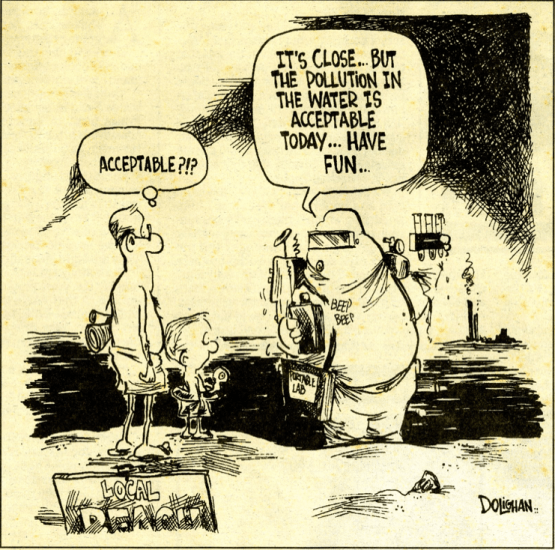
Image source; http://toronto.mediacoop.ca/audio/cnscs-marc-drolet-20mins-radioactive-contamination-peterborough-area/11040
January 1, 2017 8:55 Pm
Article source ; http://www.tri-cityherald.com/news/local/hanford/article124127169.html
Radioactive contamination is spreading within one of Hanford’s huge processing plants, and the problem could escalate as the plant, unused since the 1960s, continues to deteriorate.
A new report on the Reduction-Oxidation Complex, more commonly called REDOX, recommends that $181 million be spent on interim cleanup and maintenance of the plant. REDOX is not scheduled to be demolished until about 2032, or possibly later because the nearby 222-S Laboratory in central Hanford will be needed to support the Hanford vitrification plant for another 30 to 40 years.
REDOX is highly contaminated, after processing eight times more fuel per day than earlier processing plants.
Doing some work on the building soon could reduce the threat of contamination spreading outside the building, including by animals, a break in a utility pipe or a fire, according to the report. Recommended work also would help protect Hanford workers.
REDOX was used from 1952-67 to process about 24,000 tons of irradiated uranium fuel rods to remove plutonium for the nation’s nuclear weapons program and also to recover uranium to reuse in new fuel rods. It is highly contaminated, after processing eight times more fuel per day than earlier processing plants.
The main building is huge, measuring 468 feet long, 161 feet wide and 60 feet tall, with additional underground processing area.
Each annual inspection of some parts of the plant from 2012-15 found an escalation in the spread of radioactive contamination, including by precipitation that has leaked through the roof and joints of the concrete building.
Spread of contamination has been observed throughout the buildings and will intensify as the facilities continue to degrade.
DOE report on REDOX
Salt used to neutralize the contaminated processing system after it was shut down in 1967 appears to have corroded through some of the stainless steel process piping, according to an earlier Defense Nuclear Facilities Safety Board staff report.
Plastic bags were taped on one processing line to catch any drips of residual plutonium nitrate in places where leaks were anticipated. Two of the bags hold significant amounts of plutonium nitrate, which will spread if the bags leak, the DOE report said.
Signs of animal intrusion and deteriorating asbestos have been found in inspections of several areas.
The main part of the plant — a long, high “canyon” — has not been entered since 1997. But “based on current conditions in areas where surveillance inspections are performed, water accumulation, animal intrusion, structure deterioration and contamination spread are expected,” the report said.
REDOX was used from 1952-67 to process about 24,000 tons of irradiated uranium fuel rods to remove plutonium for the nation’s nuclear weapons program and also to recover uranium to reuse in new fuel rods.
The report considered three plans to slow down deterioration and take action to confine contamination and reduce its spread, recommending the most extensive of the three alternatives. The plans range in cost from $148 million to $181 million.
Actions would include tearing down the plant’s radioactively contaminated Nitric Acid and Iodine Recovery Building and the main plant’s attached annexes. Two underground, single-shell tanks used to hold up to 24,000 gallons each of hexone also would be removed, if possible. Hexone was used in the process to extract plutonium from fuel rods.
Elsewhere in the plant, steps would be taken to reduce current hazards, which also could help prepare for the eventual demolition of the plant. Waste could be stabilized by isolating it or covering it with a fixative. Piping out of the plant could be plugged, fluids could be drained from piping and equipment, and some equipment could be removed.
Modifications to the plant’s ventilation system would be needed for some of the work.
The actions also target maintaining a skilled workforce at the Hanford Site that is experienced in contaminated deactivation and decommissioning work, which will be needed when major funding becomes available in the future.
DOE report on REDOX
Doing the proposed work would help retain workers experienced in decommissioning nuclear facilities at Hanford. They will be needed as more federal money becomes available for central Hanford environmental cleanup in the future, the report said.
DOE will consider public comments before a decision is made to proceed with work. Work would be done over the next several years as money is available and as the need for the work at REDOX is balanced against other Hanford cleanup priorities.
Public comment may be sent until Jan. 20 to REDOXEECA2016@rl.gov or to Rich Buel, DOE; Richland Operations Office; P.O. Box 550, A7-75; Richland, WA 99352.
Annette Cary: 509-582-1533, @HanfordNews
Nuclear -Failed energy?
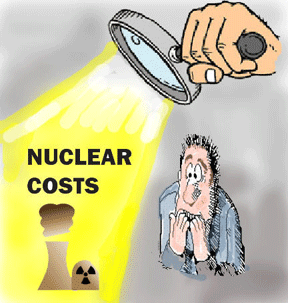
As nuclear power plants age, risks rise. The environment, workers and communities are left to pay for America’s failed energy investment.
Article source; http://www.mpnnow.com/news/20170101/failed-energy
SEABROOK, N.H. – Paul Gunter steps out of his Jeep in a near-empty parking lot off Seabrook’s Ocean Boulevard, unfolds his 6-foot-7-inch frame and tugs the bill of a well-worn cap against the sun. Behind him, anglers hang lines into Hampton Harbor from a nearby pier, and kayakers and swimmers play in the water. They take no notice of the Seabrook Station nuclear power plant, which looms from the other shore.
But Gunter notices, and has noticed for more than 40 years now. It was in 1976, at a picnic table near here, that he and a small band of like-minded citizens formed the Clamshell Alliance, one of the nation’s oldest and most active anti-nuclear groups.
The Seabrook power plant was just in the planning stages back then. But incidents at existing plants had raised alarms: In 1966, a blocked cooling system caused a partial fuel meltdown at the Fermi reactor in Michigan; 10 years later, a fire broke out at the Browns Ferry reactor in Alabama, started by a candle being used to check for fuel leaks.
All this as President Richard Nixon, in 1973, pledged to make the U.S. energy-independent by building 1,000 nuclear power plants – touted by proponents as a source of clean, inexpensive energy – by the year 2000.
Gunter and his associates mobilized. They named their movement for the environmentally sensitive marshes and clam beds that bordered the planned site of the Seabrook plant. They pledged to oppose all nuclear power in New England and, along the way, became a model for the mass nonviolent anti-nuke demonstrations that swept across the country.
The movement was successful. One Seabrook reactor was ultimately completed, but 10 years after its initially projected startup and at a $7 billion cost that bankrupted the public utility group behind the endeavor. A second planned reactor at Seabrook was never built.
Gunter is 67 now. In the U.S., the promise of nuclear power was never realized; barely 10 percent of the projected plants were ever built, and so far none has experienced the kind of catastrophic events seen at Chernobyl in Ukraine or Fukushima in Japan.
So far. For Gunter, those are the operative words. He’s now director of nuclear oversight for Beyond Nuclear, a national group that works to educate the public about the dangers of nuclear power and the benefits of renewable energy sources such as wind and solar. And these days, he tries to get people to understand that the fallout of America’s nuclear plants is much more pervasive than a potential radiation leak.
Rather, that fallout includes long-term damage to the environment and safety risks posed by the tons of radioactive spent fuel left at reactor sites.
“We realized even then that nuclear power was going to be dirty, dangerous and expensive,” Gunter says as he squints toward Seabrook. “These are things we said back then, and the same holds true today.”
What it means for communities
Fifty years after the U.S. launched a bold plan to invest in nuclear power, most of the promises of clean, inexpensive energy have failed to materialize. Plants often cost far more than projected and took years longer to build – driving up rates for consumers. Many plants were never completed, instead becoming a debt utility companies passed on to ratepayers.
In New York state, the Ginna Nuclear Power Plant that has operated since 1970 in the town of Ontario, Wayne County, was recently earmarked for shutdown with much cheaper forms of energy such as natural gas making it hard to compete. Basically, nukes need more money than they now make in the wholesale market.
Then along came the governor’s plan to pump up renewables. Under Gov. Andrew Cuomo’s Clean Energy Standard, 50 percent of New York’s electricity will come from renewable energy sources by 2030. Cash flow for producers of renewables such as wind, solar and nuclear will come from a monthly fee customers see on their electricity bill, not more than $2 for the average household, according to the governor. Barring success of lawsuits over the plan, Ginna’s future looks secure, at least through its current contract to 2029.
For the Rochester region’s more than 300,000 Rochester Gas & Electric customers, whether or not Ginna closes will have no effect on service. The $150 million Ginna Retirement Transmission Alternative Project (GRTA) now underway is upgrading the RG&E system to break free of reliance on Ginna. “When we finish this project, we will have the capacity to disconnect,” said John Carroll, spokesman for RG&E parent company Avangrid.
The project is expected to wrap up by the end of March 2017.
RG&E has been dependent on Ginna “as a critical clog,” Carroll said. GRTA will change that. RG&E will continue tapping into the power generated by the nuclear power facility in Wayne County, along with other sources in the mix such as natural gas, hydro-electric, wind and coal. But if the nuclear plant were to close, RG&E would experience no hiccups, and customers wouldn’t notice. A RG&E surcharge (about $2 a month for an average household) that customers have been paying due to Ginna power will go away over time, Carroll said.
However, all electricity customers statewide can look forward to a monthly charge due to the state’s Clean Energy Standard. The governor has said the charge won’t be more than $2 for an average household.
Reason to fear?
Meanwhile, the direst fears of anti-nuclear activists also have not played out. Although there are rashes of safety incidents, the most serious U.S. incident being the 1979 partial meltdown of a reactor at Three Mile Island, there has never been the kind of catastrophe seen at the Chernobyl plant or, more recently, at the Fukushima reactor.
But skeptics such as Gunter say risks are still with us. As reactors age, they are more prone to accidents caused by worn-out parts. In some cases, operating licenses are being renewed far beyond a plant’s planned shelf life, meaning expensive upgrades and extra-vigilant maintenance – things not always tended to by strapped utilities.
Of even greater concern to the nuclear watchdogs: the vast and growing piles of spent nuclear fuel. There is still no known way to store used fuel long-term that guarantees it won’t leak during the tens of thousands of years some components remain radioactive. The 76,000 metric tons of dangerous nuclear waste that already has been generated now sits on plant sites across the country. To give that number perspective, if existing radioactive fuel assemblies were stacked end to end and side by side, they would stand more than two stories high and cover a football field.
And there is another impact – one that perhaps even the most ardent of anti-nuclear activists did not envision. Across the country, communities expanded and grew dependent on the nuclear plant in their backyards. Now, as many of those plants cut back or are decommissioned, economic vitality is gutted. Jobs and middle-class lifestyles disappear. Housing prices collapse. Tax bases dwindle, undermining everything from school budgets to road repairs.
Out of work
Bullying of evacuated children
Recently, the Japanese mass media are busy reporting on the bullying of evacuated children at school. As a matter of fact, this kind of bullying has existed for quite a while. However, after a long silence, the mass media have suddenly started reporting about it. Often, it tends to be reduced to the common bullying found in the education system without reference to the particular environmental hazards caused by the nuclear accident. Akiko MORIMATSU analyzes the bullying from the viewpoint of the nuclear disaster evacuees. She was interviewed in “Minna no News Wonder” at Kansai TV on December 5th 2016.
【3.11 evacuees’ voices】
“The courage to escape” and “the power to ask for help”
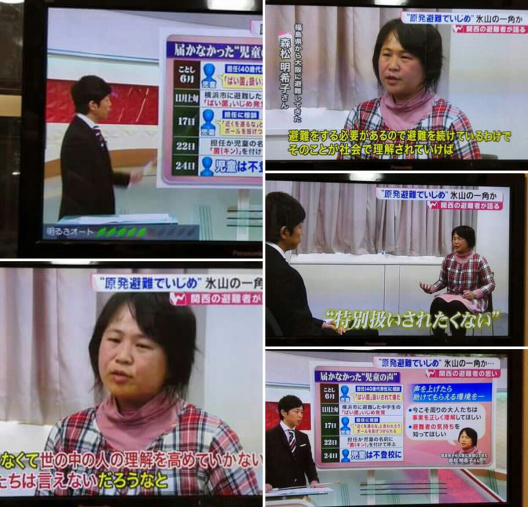
I am worried about what children will learn when they face a society incapable of helping people who have fled from calamity and are asking for aid.
I think that when society does not show how it is possible to help, children won’t be able to have the “courage to escape” or to deploy the power to “ask for help” at school.
I’ve noticed the following through my exerience with the nuclear disaster. We accept too easily that people facing danger will be able to escape without difficulty, and that it is natural to do so.
However, it is possible to create social situations which won’t allow for people to escape from danger, which won’t let them flee, or which pose such big obstacles that people can’t escape even when they are told that they are allowed to do so. This has indeed been our situation for the last 5 years and 8 months. I feel this way as an internal nuclear refugee.
This is how adult society is. In this society in which our evasion is not fully accepted, children are exposed to the risk of bullying, which can happen anywhere unfortunately, amplified by incomprehension, indifference, prejudice and discrimination of the society. I must say that they are facing even greater risks in response to the recent reporting by mass media.
At anytime, evacuee children are facing “the risk which is present here and now”.
This may be true for any children in this country.
And the “bullying” is not limited to children’s society.
It can be certainly said that there are second and third levels (TN 1) of damage from the nuclear disaster.
This is why society as a whole should accept the real situation of the nuclear disaster and set our eyes more directly on the truth.
The evacuees and evacuee children really exist all over Japan.
“They continue being evacuees because it is necessary to evacuate (TN2)”.
That is the truth and reality.
The only thing which counts is to start from this fact and decide how society should deal with it.
(Akiko MORIMATSU evacuated with two children from Fukushima to Osaka)
Broadcasted by Kansai TV on December 5th 2016
Sources: 東日本大震災避難者の会 Thanks & Dream
森松明希子さんのfacebookページ
Facebook of Akiko MORIMATU
(TN 1) For example, psychological, familial or social levels.
(TN2) because the environment is contaminated
https://fukushima311voices.wordpress.com/2017/01/01/bullying-of-evacuated-children/
Seaborne Fukushima Radiation Plume Hit West Coast, Corporate Media Reported It Dangerously
(EnviroNews DC News Bureau) — “It is not a question any more: radiation produces cancer, and the evidence is good all the way down to the lowest doses,” says the late Dr. John Gofman, Professor Emeritus at the University of California, Berkley, in his book Nuclear Witnesses: Insiders Speak Out.
On December 12, 2016, EnviroNews USA‘s own Editor-in-Chief Emerson Urry touched off a firestorm with his news article titled, “It’s Finally Here: Radioactive Plume From Fukushima Makes Landfall on America’s West Coast,” which claimed “medical science and epidemiological studies have demonstrated time and again that there is no safe amount of radiation for a living organism to be subjected to — period.”
In his piece, Urry also exposed other news agencies like NBC, the New York Post, USA Today and The Inquisitr, catching them with their pants down, in the act of repeating the false assertions of the U.S. and Canadian researchers, telling people not to worry about the recently detected low amounts of cesium 134 found in salmon, and that the levels were within “safe” or “accepted” thresholds for human health. [EDITOR’S NOTE: Emerson Urry recused himself from all editorial duties on this news story.]
Thom Hartmann picked up the article by Urry and read it on his show. Then Hartmann offered up his own journalistic explanation on how radiation works, and addressed the problem with the proclamation that there is a “safe” level of radiation to consume or be exposed to.
“As the element is decaying it is throwing off radiation, and the radiation, if it hits the DNA in the nucleolus and the nucleus of a cell, can alter that DNA in ways that can produce things like cancer,” Hartmann said. “Now it can also cause simply the cell to die or it can mutate the cell in all kinds of other weird ways, and so it’s kind of a numbers game. If you irradiate a million cells… you might get two or three that become cancerous. That’s all it takes, right? You’ve got cancer,” Hartmann continued in his video report. “The cesium could cause no cancer, or it could cause cancer in the first cell it irradiates. To say that there is a safe level of radiation is frankly wrong. It’s just wrong.”
Urry said later in a statement, “It’s one thing for the media to regurgitate trivial facts on trivial matters, but to blindly repeat that consuming low levels of radiation is ‘safe,’ is irresponsible reporting and borders on dangerous. News editors should take care to do their due diligence on a matter as serious as leading readers to believe consuming any amount of radiation is ‘safe’ when medical science and epidemiology, dating back 50 years to the present, have demonstrated repeatedly that that’s just not true. Even the smallest exposures increase the risk of cancer to the subject.”
According to the Agency for Toxic Substances and Disease Registry’s (ATSDR) report titled, “Public Health Statement for Cesium” from 2004, “stable and radioactive cesium can enter your body from the food you eat or the water you drink, from the air you breathe, or from contact with your skin. When you eat, drink, breathe, or touch things containing cesium compounds that can easily be dissolved in water, cesium enters your blood and is carried to all parts of your body… No known taste or odor is associated with cesium compounds.”
Cesium is similar enough to potassium that it can fool the body. This results in its bioaccumulation. When cesium enters the biological system of a fish, which is then eaten by a larger fish, the larger fish becomes contaminated. As the larger fish eats more, it becomes more contaminated. The cesium accumulates in its body. When a person eats that fish, he or she also ingests the cesium that hasn’t decayed or been excreted. The more seafood that person eats, the more radioactive material he or she will be exposed to.
The researchers who discovered the cesium recently also made the mistake of equating the dangers of consuming seaborne isotopes to that of receiving an x-ray, missing the point entirely that ingested or inhaled “internal particle emitters” are known to be especially hazardous.
“Consuming food containing radionuclides is particularly dangerous. If an individual ingests or inhales a radioactive particle, it continues to irradiate the body as long as it remains radioactive and stays in the body,” said Dr. Alan Lockwood, MD in an article on Fox News Health.
“Children are much more susceptible to the effects of radiation and stand a much greater chance of developing cancer than adults,” said Andrew Kanter, MD, President of the Board for Physicians for Social Responsibility (PSR) in that same Fox News Health article. “So it is particularly dangerous when they consume radioactive food or water.”
Those who might expect the government to protect them from contamination by radiation have only to look at the downwinder situation in Utah or the consequences of Gofman’s research in the late 1960s. According to Gofman’s obituary in the L.A. Times, “Gofman and his colleague at Lawrence Livermore National Laboratory, Arthur R. Tamplin, developed data in 1969 showing that the risk from low doses of radiation was 20 times higher than stated by the government. Their publication of the data, despite strong efforts to censor it, led them to lose virtually all of their research funding and, eventually, their positions at the government laboratory.” Their conclusions were for the most part, later validated.
“There is no safe level of radionuclide exposure, whether from food, water or other sources, period,” said Jeff Patterson, DO, immediate past President of PSR, in late March of 2011 in the immediate aftermath of the meltdowns. “Exposure to radionuclides, such as iodine 131 and cesium 137, increases the incidence of cancer. For this reason, every effort must be taken to minimize the radionuclide content in food and water.”
“There is no safe dose of radiation,” says Prof. Edward P. Radford, Physician and Epidemiologist as quoted by GreenMedInfo.
In an email to EnviroNews, nuclear expert Arnie Gundersen said Japan had raised the maximum allowable exposure by 20 times the previous number for civilians to be able to return to their homes. The U.S. and the EPA have considered such plans in the case of a nuclear accident. In food, the U.S. has an allowable dosage of radiation that is 12 times what Japan allows.
“Corporations get the benefit, civilians take the risk,” Gundersen wrote.
While Urry and Hartmann have sounded the alarm, there remain unanswered questions that desperately need to be resolved. Who will clean up the contamination in the food chain? How much radiation exposure will governments continue to say is safe in spite of the medical research? How can people trust what’s on their plate and in their corporate owned media?
Doctor who stayed in Fukushima after meltdowns thought to have died in fire
HIRONO, Fukushima — A doctor who chose to stay in an area affected by the Fukushima nuclear crisis and continued to provide medical services may have died in a fire at his home here, police said.
At around 10:30 p.m. on Dec. 30, a fire broke out at the home of Hideo Takano, 81, director of Takano Hospital in Hirono, Fukushima Prefecture. Part of the wooden structure was destroyed in the blaze, local police said.
The body of a man was found in one of the rooms. Investigators believe the corpse is that of Takano, whom they have been unable to contact, and are trying to confirm the identity of the body.
A security guard at the hospital, located on the same grounds as Takano’s home, noticed smoke coming out of the home and alerted a local fire station. Takano had lived alone at the address.
A hospital official told the Mainichi Shimbun that until recently, Takano had treated patients as usual.
Takano Hospital is situated about 22 kilometers south of the crippled Fukushima No. 1 Nuclear Power Plant. Takano chose to stay home and continued to treat inpatients at his hospital even after the town of Hirono was designated as a zone in which residents were urged to prepare for evacuation following the outbreak of the nuclear disaster. He also examined local residents and those engaged in the decommissioning of the nuclear plant.
http://mainichi.jp/english/articles/20161231/p2a/00m/0na/011000c
1 This Month

petition to oppose the rapid increase of space-military industry threatening Jeju Island and the region.
[Petition by April 19th (KST)] Stop the joint military-Hanwha Systems-Jeju Provincial Government Sea Launch!

Chernobyl: The Lost Tapes – A good documentary on Chernobyl on SBS available On Demand for the next 3 weeks– https://www.sbs.com.au/ondemand/tv-program/chernobyl-the-lost-tapes/2352741955560

of the week–London Campaign for Nuclear Disarmament


Tell the Ukrainian Government to Drop Prosecution of Peace Activist Yurii Sheliazhenko
To see nuclear-related stories in greater depth and intensity – go to https://nuclearinformation.wordpress.com
-
Archives
- April 2026 (194)
- March 2026 (251)
- February 2026 (268)
- January 2026 (308)
- December 2025 (358)
- November 2025 (359)
- October 2025 (376)
- September 2025 (257)
- August 2025 (319)
- July 2025 (230)
- June 2025 (348)
- May 2025 (261)
-
Categories
- 1
- 1 NUCLEAR ISSUES
- business and costs
- climate change
- culture and arts
- ENERGY
- environment
- health
- history
- indigenous issues
- Legal
- marketing of nuclear
- media
- opposition to nuclear
- PERSONAL STORIES
- politics
- politics international
- Religion and ethics
- safety
- secrets,lies and civil liberties
- spinbuster
- technology
- Uranium
- wastes
- weapons and war
- Women
- 2 WORLD
- ACTION
- AFRICA
- Atrocities
- AUSTRALIA
- Christina's notes
- Christina's themes
- culture and arts
- Events
- Fuk 2022
- Fuk 2023
- Fukushima 2017
- Fukushima 2018
- fukushima 2019
- Fukushima 2020
- Fukushima 2021
- general
- global warming
- Humour (God we need it)
- Nuclear
- RARE EARTHS
- Reference
- resources – print
- Resources -audiovicual
- Weekly Newsletter
- World
- World Nuclear
- YouTube
-
RSS
Entries RSS
Comments RSS
 nuclear-news