My name is Xiuhtezcatl. I’m 16 years old, and the youth director of Earth Guardians, an organization empowering young people around the world to act for climate justice. Even though I’m too young to vote, I understand that the decisions out of the White House can have a powerful impact on the kind of world we will be left with. On many of the issues I care most about, including climate change, President Obama and administrations before him have not done nearly enough. With that said, the transition into a Donald Trump presidency has been nothing short of surreal.
Trump has filled his cabinet with corporate billionaires and oil tycoons — many of whom are charged with running federal agencies they don’t believe in. The role of head of the Environmental Protection Agency has been offered to Scott Pruitt, a fossil-fuel-loving, climate-change skeptic who doesn’t believe in environmental protection. His…
Florida is basically one gigantic hunk of porous limestone with pythons, buildings, and Medicare frauds sunning themselves on top. Underneath is South Florida’s main source of drinking water, the Biscayne Aquifer, a pristine pool of underground liquid that’s become increasingly susceptible to pollution and saltwater intrusion.
Just below that sits another, deeper store of H2O called the Floridan Aquifer. Thanks to that porous limestone, water sometimes mixes between the two.
And that’s why it’s more than a bit alarming that Florida Power & Light (FPL) is pushing ahead with plans to inject radioactive waste into the Floridan Aquifer’s lowest zone over the next few decades, after building two new nuclear reactors in South Florida. Environmentalists contend the plan could leak carcinogens such as cesium, strontium 90, and tritium right into South Florida’s largest drinking water source.
Last week, a nonprofit environmentalist group that has frequently sparred with FPL, the Citizens Allied for Safe Energy (CASE), filed a formal petition to hold a hearing to stop the utility company’s plan. The group filed November 28 — FPL now has 25 days to respond to the complaint.
“Everything will be put into a supposedly ‘hermetically sealed’ boulder zone,” CASE’s president, Barry J. White, says, “but anybody who lives in South Florida knows nothing below us is hermetically sealed.”
An FPL spokesperson, Peter Robbins, provided the following statement to New Times:
After an exhaustive and comprehensive review of the proposed Turkey Point Units 6 & 7 project, including the plans to safely use reclaimed water for cooling, the independent Nuclear Regulatory Commission’s staff concluded “…there are no environmental impacts to preclude issuing Combined Licenses to build and operate two reactors next to the existing Turkey Point nuclear power plant.”
We will be reviewing the allegations made by CASE in this document, which was filed after the Environmental Impact Statement was issued, and will respond at the appropriate time. It’s important to note that the system will be closely monitored and is designed to ensure that upward flow from the Floridan Aquifer is not taking place.
The new radioactive-waste fight stems from FPL’s long-standing plan to expand the much-ballyhooed nuclear plant at Turkey Point. The power company — a “legalized monopoly” within Florida that’s long been accused of buying off the state Legislature with campaign cash — wants to build two new reactors, numbers 6 and 7, at the plant over the next decade or two.
Earlier this year, Miami-Dade County officials said Turkey Point is almost certainly leaking radioactive waste into Biscayne Bay, though at levels that most scientists agree is safe for humans. After that news broke, FPL decided to postpone building the new reactors for four more years. That means the new towers won’t be operational until roughly 2030.
But the extended timeframe doesn’t mean Miamians can stop paying attention to the project. FPL is applying for licenses to build the new towers, as well as crafting a host of plans to get the new wing operational. This includes a review from the U.S. Nuclear Regulatory Commission (NRC), which issued an environmental impact statement in May.
As part of that plan, FPL says it plans to stash chemicals used to clean the reactors, as well as “radwaste” — waste that contains radioactive material — inside the so-called boulder zone. The zone, which sits about 3,000 feet below ground, is mostly rocky but does contain saltwater. Miami-Dade County has used the zone before to stash both treated and untreated sewage — but activists say that’s no excuse for placing radioactive waste there.
“Two wrongs don’t make a right,” White says. “I’ve always opposed dumping anything there.”
The feds must approve FPL’s plan under a law called the National Environmental Policy Act, which stipulates that governmental agencies must take a “hard look” at any possible risks a plan like FPL’s would pose. (The “hard look” provision is legally vague and sparks frequent fights among environmentalists, energy companies, and the government.) FPL initially applied to build the new reactors in 2009, but the government issued its final Environmental Impact Statement only this past October. The NRC allowed the project to move forward.
But CASE says the government ignored a number of small but frightening details when it comes to storing radioactive waste underground: For one, government documents themselves say the Floridan’s boulder zone could possibly leak into the ocean.
According to CASE’s complaint, the United States Ground Water Atlas, a government document, warns that the boulder zone “is thought to be connected to the Atlantic Ocean, possibly about 25 miles east of Miami, where the sea floor is almost 2,800 feet deep along the Straits of Florida.” CASE’s petition says the NRC failed to address this issue.
“Liquid Radwaste? Into the Boulder Zone?” the petition says. “Our members probably have not even heard of that and, when they do, it will scare the daylight out of them. Even small, diluted amounts of radioactive waste will accumulate and concentrate radiation which is not confined like water and can be absorbed by plant life.”
More frightening, in January 2016, in a hearing related to Turkey Point Reactors 3 and 4, FPL’s own engineer testified that the boulder zone could leak upward into the Biscayne aquifer — AKA, Miami-Dade’s drinking water.
MR. ANDERSEN: Yes. I agree with everything Bill is saying. In addition, too, that there is an upward hydraulic gradient from the Floridan [Aquifer] to the Biscayne [Aquifer]. The Floridan is under pressure. Therefore, you have flow from the Floridan into the Biscayne and not vice versa.
Likewise, CASE cited a 2000 University of Miami study that also warned that material injected into the boulder zone can float to the surface.
“Effluent injected from Turkey Point will flow up the surface’s gradient to the northwest and then probably north, where it will have many opportunities to encounter breaks in the permeability barrier in this lateral travel,” the petition says.
CASE says the NRC failed to investigate either of these issues as well.
“Thus, as these two studies show, there is no guarantee that the discharges of harsh chemicals into the boulder zone will stay put,” CASE warns. “It is more likely that they will migrate in all directions and, over time, pose a threat to the entire Biscayne Aquifer, which covers some 4,000 square miles in South Florida.”
White, who wrote the petition, faults FPL for clinging to a 20th-century business model too reliant on fossil fuels and nuclear energy.
“They have ignored the potential of a different business model,” White says. In his petition, he claims that the state could add $200 million in GDP from renewable energy sources — and that FPL could rake in a huge cut of that money if it commits to building clean energy sources.
CASE also raised three other major issues with the new reactors, including that the two towers might suck far too much freshwater from the state’s aquifers.
“Our organization’s whole objective is to return Turkey Point to being a wetland,” White says. “We don’t need it to be totally clear. They can put solar array down there. I wouldn’t even mind if they used gas. But they need to do it without impinging on the needs of the land.”
If the NRC doesn’t listen, he says, his next step will be to try to get the attention of the Florida Legislature.
“People have injected this waste into the land before, but not into a flowing body of water like this,” he says. “How anybody who has an iota of conscience can put radioactive waste into a body of water that humans and animals use, it’s like, ‘Are you crazy? What are you doing?'”
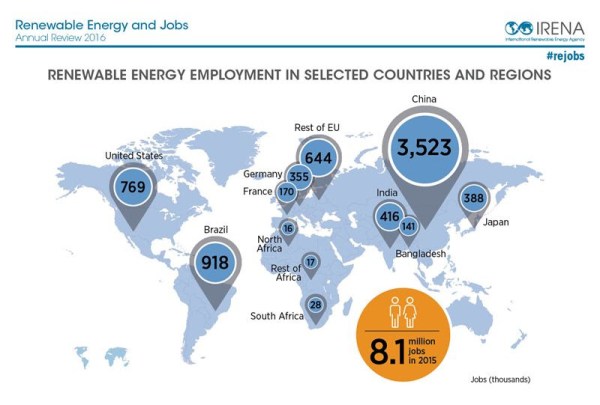
Solar energy is now cheaper than traditional fossil fuels.
Solar and wind is now either the same price or cheaper than new fossil fuel capacity in more than 30 countries, according to a new report from the World Economic Forum. The influential foundaton has described the change as a “tipping point” that could make fighting climate change into a profitable form of business for energy companies.
But investors and energy firms are still failing to put money into such green solutions despite the fact that they are cheaper than more traditional forms of electricity generation, according to the same report.
Solar power ‘becoming world’s cheapest form of electricity’
“Renewable energy has reached a tipping point – it now constitutes the best chance to reverse global warming,” said Michael Drexler, Head of Long Term Investing, Infrastructure and Development at the World Economic Forum. “Solar and wind have just become very competitive, and costs continue to fall. It is not only a commercially viable option, but an outright compelling investment opportunity with long-term, stable, inflation-protected returns.”
Just ten years ago, generating electricity through solar cost about $600 per MWh, and it cost only $100 to generate the same amount of power through coal and natural gas. But the price of renewable sources of power plunged quickly – today it only costs around $100 the generate the same amount of electricity through solar and $50 through wind.
The cheap price of solar and wind energy is already encouraging companies to build more plants to harvest it. The US is adding about 125 solar panels every minute, according to the Solar Energy Industry Association and investment in renewables in 2015 rose to $286 billion, up 5 per cent from the year before.
Even despite that cheap price, the investment isn’t enough to counteract the catastrophic effects of global warming. The worldwide investment is only 25 per cent of the $1 trillion goal set in the landmark Paris climate change accord, and because of political problems with investments it can’t be hard to convince companies to put their cash into green power.
Exxon CEO Rex Tillerson (left) and Vladimir Putin meet in 2012. (Photo: Kremlin Press Service)
As unholy alliances between US president-elect Donald Trump and the Kremlin go, none are more potentially disastrous for the environment, or critical to Vladimir Putin’s future, than his tapping of ExxonMobil CEO Rex Tillerson for Secretary of State.
The windfall Putin’s wretched economy would reap as a result of the appointment doesn’t take any dusting for digital fingerprints to detect, but Some have suggested Kremlin hacking could have been aimed at ensuring precisely an oil bonanza.
And that’s exactly what Putin wants. In 2011, Tillerson negotiated a breathtaking $500 billion deal with Russia’s state oil company Rosneft, run by Putin’s KGB crony Igor Sechin.
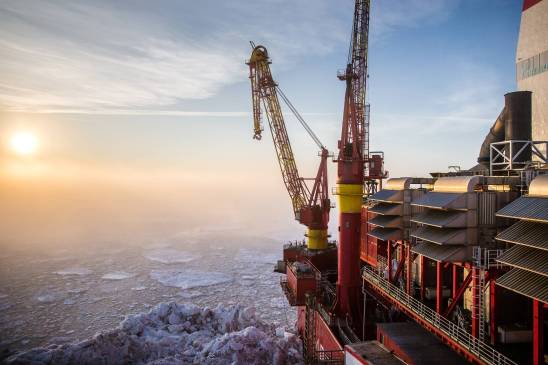
The deal opened 63.7 million acres of Russian land for ExxonMobil to produce on, most of it in on the Arctic shelf, which is thought to contain 22 percent of the world’s undiscovered oil and gas reserves. ExxonMobil also gets land in Western Siberia for shale as well as a chance to explore the Black Sea. The total haul over time could be worth as much as $8.2 trillion. In exchange, Rosneft’s shaky, outdated technology would get a needed upgrade to drill, frack and produce. Sold.
But the EU and the US put the brakes on the whole thing in 2014 when they sanctioned Russia for annexing Ukraine’s Crimean Peninsula and fomenting a proxy war in the country’s east.
The ExxonMobil deal was remarkable at a time when Putin had harried Royal Dutch Shell out of the Sakhalin III joint venture over an arcane environmental violation and pelted Rosneft partner BP with “sustained harassment.”
The misanthropic, byzantine landscape for oil speculation in Russia hasn’t gone entirely unnoticed by Tillerson. He went briefly on record in St Petersburg in 2008 to carp, with other big foreign CEOs, about respect for the rule of law in Russia and the functioning of the judiciary.
But by 2012, when Putin handed Tillerson the Kremlin’s Order of Friendship, the ExxonMobil chief had dropped his academic legal concerns and was enjoying, as the Wall Street Journal put it, the “closest ties to Russian President Vladimir Putin,” of any of the revolving door pageant contestants Trump considered for Secretary of State.
Trump’s antic anxieties over Russian hacks that might have propelled him to the presidency are incidental in the face of what’s so obvious: Russia and Exxon need each other and can enrich each other considerably, and Trump is in the middle, ready to make one of his “just tremendous” deals. Both have the world to gain.
As Vox pointed out, Exxon famously missed out on the fracking boom of the early 2000s and lifting the sanctions against Russia would let it make up for lost time and profit.
The Eiffel Tower lighted during the Paris climate summit. (Photo: http://www.arc2020.eu)
For Putin, a repeal of the sanctions means nothing less than saving his economy. Nearly half the Kremlin budget comes from oil revenue, and that’s expected to dip in 2020, according to the Wilson Center.
Falling oil revenue and adhering to Paris could gut the Russian economy all over again and mean unrest for Putin leading up to a reelection in 2018.
He was coy in an interview with 60 Minutes in September about whether he would run for the Kremlin again, saying it would depend on “the specific situation in the country, in the world and my own feelings about it.”
There’s a method to his theatrical caution. Could it have been to wait and see what happened in the US election and whether a hacking campaign directed against Trump’s opponent would have any effect? Were a Trump victory and a right wing swerve in Europe the situation in the world he was waiting on to announce his candidacy? Are his feelings now, post-Brexit, more positive with a malleable, posturing egotist in the White House and right wing confederates well placed to seize power in Germany, France, Greece and the Netherlands?
The circumstances hardly seem accidental. And, on Thursday, US intelligence officials will take to Capitol Hill in an effort to convince a Trump-cossetting Senate that they’re not. Bizarrely, much of that argument will involve discrediting backstairs Internet troll and fugitive Julian Assange.
Trump and Putin might not be able to wreck the Paris agreement individually. But, together, the stage they have set for reckless populism and plutocracy will cast a hopeless shadow on the agreement in its infancy. At an ExxonMobil shareholders meeting in 2013, Tillerson posed his view on climate change mitigation in the form of a rhetorical question: “What good is it to save the planet if humanity suffers?” Not so rhetorically, he and Putin seem willing to show us.
…with thanks to Shaun for the “Scrooged” reference in the headline.
Numnutz of the Week (for Nuclear Boneheadedness):
Mmmmm mmmmm! Japan’s newly discovered HotRad Potato Chips, straight from Fukushima-adjacent prefectures to your internal organs. Bet you can’t eat just one… Bequerel!
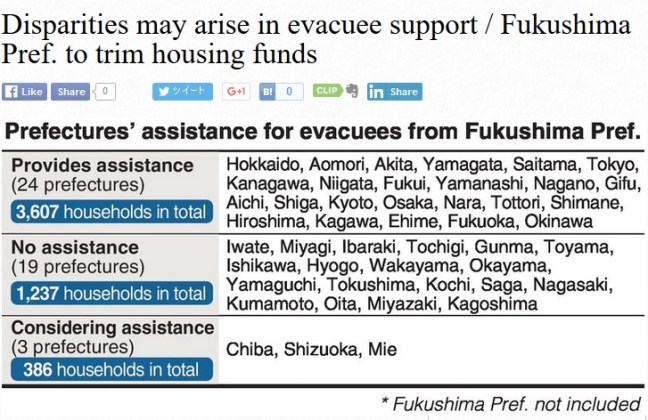
Starting in spring, housing assistance for residents of Fukushima Prefecture who evacuated to other prefectures voluntarily due to the 2011 nuclear accident will vary from prefecture to prefecture and certain disparities will occur, The Yomiuri Shimbun has learned.
The Fukushima prefectural government has so far been providing free-of-charge housing unconditionally and uniformly. However, it will terminate the provision at the end of March. Accordingly, 19 other prefectures will terminate their own initiatives to provide evacuees with free housing, while 24 prefectures will continue to provide housing free of charge and other services.
Although nearly six years have passed since the Fukushima No. 1 nuclear plant accident, many evacuees are still reluctant to return to their homes, and each prefecture that has accepted evacuees is responding to this situation in its own way.
After the accident, the Fukushima prefectural government treated voluntary evacuees — those who evacuated from areas that were not subject to evacuation orders — as equal to those who were instructed by the central government to evacuate. Abiding by the Disaster Relief Law, the prefecture has been shouldering rental fees for apartments or public housing facilities using funds from the state budget and other financial resources. The maximum rent for housing to be provided free of charge to voluntary evacuees is set at ¥60,000 per month in principle.
As of October 2016, the number of voluntary evacuees stood at 10,524 households or 26,601 individuals. Of these, 5,230 households or 13,844 individuals have relocated to areas outside of Fukushima Prefecture. In contrast to those who lived in areas subject to the evacuation order, voluntary evacuees are not eligible for regular compensation payments from Tokyo Electric Power Company Holdings, Inc. Therefore, the provision of free housing has been the main pillar of public support for voluntary evacuees.
Fukushima Prefecture decided in June 2015 to stop providing housing free of charge at the end of March 2017, judging that living conditions were changing for the better as the decontamination of residential areas progressed.
However, many evacuees responded to this by complaining that they did not want to be moved from places they were getting accustomed to. Accordingly, 24 prefectural governments other than Fukushima have decided to take the matter into their own hands by applying the law on public housing facilities and preferential measures by ordinances to compile their own budgets to extend the provision of free housing, give priority to evacuees in providing public housing for a fee or take other steps. A total of 3,607 households have evacuated on a voluntary basis to the 24 prefectures.
Several municipalities have also taken steps to provide public housing facilities free of charge.
Hokkaido, to which 229 households have voluntarily evacuated, has decided to extend provision of free housing for a year for 34 households. The prefectural government explained that it wants to help evacuees put their lives back in order by alleviating the concerns they may have about where to live.
Meanwhile, Hyogo Prefecture has decided to discontinue its support for the 44 households it accommodates. The spokesperson for the prefectural government said it would not take steps to keep the evacuees in the prefecture, which would be incompatible with policies of the Fukushima prefectural government aiming to bring them home.
Upon discontinuing the provision of free housing, Fukushima has procured 170 prefectural housing facilities for a fee to be provided preferentially to evacuees. The prefectural government is also planning to pay ¥100,000 to every household that moves back from outside the prefecture. Single-person households will receive ¥50,000. Residents who have evacuated to areas inside the prefecture will also receive a partial payment.
Hideo Takano, doctor and director of Takano Hospital
Lone doctor who stayed in town after Fukushima crisis dies in fire
HIRONO, Fukushima Prefecture–The tragic death in a fire of its only full-time doctor at a hospital here has dealt another crisis to this tiny community, which is still struggling to rebuild from the Fukushima nuclear disaster.
Hideo Takano, 81, director of Takano Hospital, died on Dec. 30, threatening the future of the hospital and possibly the community of 2,800 residents.
Hirono Mayor Satoshi Endo on Jan. 3 stepped up his pleas for assistance from the central and prefectural governments.
“We would like to prevent the collapse of local medical services,” Endo said at a news conference. “We, as a local government, need to respond to the dedication of Takano.”
Under the law, a private medical facility must have at least one full-time doctor on staff.
Takano’s one-story wooden house, on the same site as the hospital, caught fire on the night of Dec. 30. Police found his body inside the home.
Takano and another doctor at the hospital had treated inpatients as full-time physicians before the triple meltdown in March 2011, which was triggered by the Great East Japan Earthquake and tsunami on March 11 the same year.
The hospital is situated around 20 kilometers from the crippled Fukushima No. 1 nuclear power plant. It offers the only medical inpatient facility in Futaba county, which, alongside Hirono, includes towns co-hosting the Fukushima No. 1 plant and damaged Fukushima No. 2 nuclear plant.
When the town government ordered all its residents to evacuate on March 13, 2011, Takano and many of his staff chose to remain to treat inpatients at the hospital. They deemed it too risky to transport aged and frail patients elsewhere when the entire prefecture was in disarray.
Most of the inpatients at the hospital are senior citizens from Hirono, and many of them were bed-ridden.
Hirono had a population of slightly more than 5,000 before the nuclear disaster. But only a little more than half of the residents have returned to live in the town after the evacuation order was lifted a year later.
As of the end of last December, there were 102 inpatients at Takano Hospital, although the size of the staff shrank to about one-third of the pre-disaster level. Part-time doctors have joined Takano in treating patients after the disaster, but he was the only full-time physician on staff there.
“Takano used to say nothing makes him happier than treating patients,” said one of the hospital staff, describing his commitment.
According to the Hirono officials, part-time doctors continued seeing patients at the hospital until Jan. 3 after Takano’s death.
The town managed to secure temporary doctors for the hospital after that date through cooperation from Minami-Soma, a city about 60 km to the north.
Physicians from the municipal Minami-Soma General Hospital also have pitched in and formed a group to assist Takano Hospital. More than 20 doctors have signed up to provide volunteer services, including those from Chiba, Shizuoka and Nagano prefectures.
Although there is a medical clinic in Hirono, some residents say it is not sufficient to meet the health-care needs of residents in the town on its own.
Volunteer doctors to be sought for Fukushima hospital after director dies in fire
HIRONO, Fukushima — The body of a man found in a home here after a fire was identified as that of a doctor who continued to treat patients in an area affected by the Fukushima nuclear disaster, local police announced on Jan. 3. The doctor’s death prompted the local town to seek volunteer doctors from across the country.
Hideo Takano, 81 — who was head of Takano Hospital in the town of Hirono in Fukushima Prefecture — died as a result of the fire which partially burned his home on Dec. 30. The corpse was confirmed to be that of Takano by Futaba Police Station, following DNA testing.
The doctor was particularly noted for his bravery following the Fukushima No. 1 nuclear power plant meltdowns in March 2011 — because he decided not to flee, and continued to attend to his patients’ needs at the only hospital close to the power plant, within Futaba county, that remained operational after the accident.
Currently, Takano Hospital treats patients who have returned to the area, as well as people involved in nuclear reactor decommissioning work, but the hospital now faces a staff shortage problem following the death of Dr. Takano, who was the only full-time doctor at the institution.
With this in mind, the Hirono Municipal Government announced on Jan. 3 that it will bring in doctors until Jan. 9 from nearby medical institutions such as Minamisoma City General Hospital, also in Fukushima Prefecture. The doctors will help treat approximately 100 inpatients, in addition to providing outpatient care. Furthermore, a group to support the hospital, called “Takano Byoin o shiensuru kai,” has been set up by voluntary doctors at the hospital, and there have also been appeals on Facebook, asking for support from doctors.
The Hirono Municipal Government plans to recruit volunteer doctors from across Japan — in an attempt to maintain the town’s medical care system — and has offered incentives such as free accommodation and travel. A representative at the town hall stated that, “Takano Hospital patients reside far and wide across Futaba,” and that the town will request support from both the Fukushima Prefectural Government and the central government.
Takano Hospital has set up a commemorative page on its website in memory of Dr. Takano — who devoted his life to medical care in the region — stating that it plans to “carry on the will of Dr. Takano and continue to provide medical care in the region.”
The Facebook page of “Takano Byoin o shiensuru kai,” or a group to support Takano Hospital:
The “most adaptable animals that you’ll ever find” are running rampant across parts of rural Japan in the wake of the 2011 nuclear catastrophe and strict gun laws aren’t helping.
The Fukushima Daiichi nuclear disaster, in which a boiling water reactor nuclear power plant largely went Chernobyl after a tsunami knocked it offline has left Japan with a host of problems to include radiation-induced health impacts, some 200,000 displaced locals and possible exposure of groundwater to melted down nuclear fuel for decades to come.
Oh yeah, and the wild hogs.
According to an article in The Washington Post last April, the boar population, lacking natural predators is booming. Worse, thousands of the animals roam an area where highly radioactive caesium-137, which has a half-life of 30 years, has been confirmed.
Most agree that the best way to eradicate the rapid population of would-be Orcs is through hunting, but in gun control-friendly Japan, that is easier said than done.
“Something that complicates wild boar management in Japan is the exceptionally restrictive ownership, use, and access to firearms,” says Dr. Mark Smith, a forestry and wildlife professor at Auburn University, told Outside online. “This includes not only the general populace, but also with researchers, wildlife biologists, and natural resource managers.”
According to the Australian-based Small Arms Survey, the rate of private gun ownership in Japan is 0.6 per 100 people with only 77 handguns in circulation and just 0.8 percent of Japanese households containing one or more legal guns, most often shotguns.
Smith went to Japan to study the problem in 2013.
“Although [recreational] hunting does occur in Japan, it is very limited,” says Smith, “and hunter numbers are declining by the year, so there are fewer and fewer hunters out there harvesting wild boar.”
Plus there is the problem with the meat. In short, there is no good way to make caesium-137 infused pork a balanced part of your complete meal without the diner glowing in the dark, no matter how much BBQ sauce you use.
In Japan, they have to incinerate the carcasses (at 1,771 degrees Fahrenheit) then obliterate the fragments left over with hammers and box them up. Carefully.
Furthermore, the animals are very smart.
“They are the most adaptable animals that you’ll ever find: we call them the ‘opportunistic omnivore,’” says Smith.
In this video Ian Goddard looks at the story where an AP reporter was taken to court for reporting on contaminated milk. He breaks down the scientific evidence available and is not happy with what he finds..
@ 2:46 Belarusian Association of Journalists: “The outcome of the trial dramatically narrows free expression in the country, as it casts doubts on the very possibility to hold journalistic investigations in Belarus.” https://baj.by/en/content/court-decla…
@ 8:40 fallout-dose overlay from: https://pubmed.gov/21906781 (the location in Russia from which shown doses were estimated received less fallout than the most affected parts of Belarus)
@ 10:30 Graph shows cattle receiving Prussian Blue in Belarus. http://www-pub.iaea.org/MTCD/publicat… PB binds to Cs137 and prevents its absorption, but has no effect on Sr90. So PB-fed cattle should have a skewed Cs/Sr ratio.
The Economy, Trade and Industry Ministry is considering holding “roundtable” discussions with top executives of major power companies on measures to restructure their business ties with beleaguered Tokyo Electric Power Co. (TEPCO) and set up operations overseas, it has been learned.
The industry ministry wants to help pave the way for the power industry to restructure and consolidate by setting up a forum in which major utilities can exchange views on the realities of domestic and overseas markets as well as management reforms. The move will effectively have the government play mediator in the reorganization of the power industry.
The move comes after a ministry expert committee on reforming TEPCO and issues related to the tsunami-hit Fukushima No. 1 nuclear plant proposed on Dec. 20 that the government play a “catalytic” role in the realignment of the power industry. In response, TEPCO plans to hash out a new management restructuring plan this month or later. The roundtable is expected to be set up around the time that TEPCO comes up with its new restructuring scheme.
One of the expert panel’s proposals is for TEPCO to establish a “consortium” with other utilities on its power transmission and nuclear power projects at an early date. The proposal is intended to facilitate the realignment and consolidation of the power industry as part of moves to rationalize TEPCO’s measures to cover the costs of dealing with the Fukushima nuclear accident. The expert panel projected that these costs would swell to 21.5 trillion yen from an earlier estimate of 11 trillion yen. The proposal also draws on TEPCO’s plan to move its thermal power business to JERA Co., a joint venture with Chubu Electric Power Co.
The industry ministry is considering plans including publicly soliciting prospective partners for TEPCO. However, major power companies remain cautious, with a senior official at one major utility saying, “Our own company’s profits will be used to deal with the nuclear accident.” The utility roundtable meeting is the industry ministry’s attempt to help resolve this and other issue. The roundtable idea is also in line with the TEPCO’s opinion that “as long as TEPCO is aiming to reorganize at a national level, we want to have an opportunity for all companies to meet and discuss things,” as a TEPCO executive said.
While domestic power demand has stagnated due to energy-saving efforts and the declining birthrate, the industry is faced with a shifting market overseas, where demand continues to rise. According to an International Energy Agency (IEA) forecast, while Japan’s domestic electricity consumption will rise only slightly from 950 billion kilowatt-hours in 2014 to 980 billion kilowatt-hours in 2030, overall global consumption will rise from 19.8 trillion kilowatt-hours to 27.9 trillion kilowatt-hours.
Through the roundtable, the industry ministry is keen to help boost utilities’ entry into overseas markets by facilitating industry rationalization to strengthen their businesses at home. However, as the power industry may not respond well to having reorganization foisted on it by the government, the ministry plans to flesh out the scheme carefully. As a senior utility official said, “It is essential to set up a contact point for private entities first and leave the matter to them thereafter.”
The government is struggling to decide the future of Tepco’s Fukushima No. 2 nuclear power plant, which has been suspended since the March 2011 disaster.
There have been increasing calls for decommissioning the power plant located just a few kilometers south of the wrecked Fukushima No. 1 installation.
The government has been finding it difficult to reach a clear conclusion on Fukushima No. 2’s fate, as it and Tokyo Electric Power Company Holdings have been busy dealing with its older counterpart that suffered three reactor meltdowns following the March 2011 earthquake and tsunami.
On Dec. 21, the Fukushima Prefectural Assembly voted unanimously to adopt a resolution calling on the central government to decommission the No. 2 plant “at an early date,” arguing that the facility is an obstacle to the prefecture’s recovery from the 3/11 disasters.
A temporary halt to the cooling system for a spent fuel pool at the No. 2 plant caused by an earthquake in November rekindled fears of another meltdown crisis.
In 2011, the prefectural assembly adopted a petition calling for decommissioning all reactors in Fukushima.
The assembly has also adopted a series of written opinions demanding the decommissioning of the No. 2 plant, which is located in the towns of Naraha and Tomioka.
Demands from local communities “have been ignored by the central government,” one person said.
The central government’s official position is that whether to decommission the plant is up to Tepco.
As the government has already lifted the state of emergency for the No. 2 plant, it has no authority to decide the decommissioning under current regulations.
If an exception were made, the central government could receive a barrage of requests for decommissioning reactors all over the country, sources familiar with the situation said.
“Such a situation would destroy Japan’s whole nuclear policy,” a senior official at the Ministry of Economy, Trade and Industry said.
Some people have called for creating a special law on decommissioning Fukushima No. 2, but others have raised concerns that such a step could infringe on Tepco’s property rights, the sources said.
Some officials in the central government have said that no one believes the No. 2 plant can continue to exist.
Prime Minister Shinzo Abe and his Cabinet have left room for making a political decision on dismantling the facility, saying that the plant can’t be treated in the same way as other nuclear plants due to fear among Fukushima residents of another nuclear accident.
Since the government effectively holds a stake of more than 50 percent in Tepco, it can influence the company’s policy as a major shareholder.
But Tepco now needs to focus on dealing with the No. 1 plant. A senior company official said that it “cannot afford to decide on decommissioning, which would require a huge workforce.”
The main opposition Democratic Party plans to pursue a suprapartisan law that would urge Tepco to decide to decommission the plant at an early date.
“While understanding calls for early decommissioning, we have no choice but to wait for the No. 2 plant’s four reactors to reach the end of their 40-year lifetimes,” a lawmaker of the ruling Liberal Democratic Party said.
The four reactors launched operations between April 1982 and August 1987.
TOKYO–William Zeller, a petty officer second class in the U.S. Navy, was one of hundreds of sailors who rushed to provide assistance to Japan after a giant earthquake and tsunami set off a triple meltdown at the Fukushima Daiichi nuclear power plant in 2011. Not long after returning home, he began to feel sick.
Today, he has nerve damage and abnormal bone growths, and blames exposure to radiation during the humanitarian operation conducted by crew members of the aircraft carrier Ronald Reagan. Neither his doctors nor the U.S. government has endorsed his claim or those of about 400 other sailors who attribute ailments including leukemia and thyroid disease to Fukushima and are suing Tokyo Electric, the operator of the plant.
But one prominent figure is supporting the U.S. sailors: Junichiro Koizumi, former prime minister of Japan.
Koizumi, 74, visited a group of the sailors, including Zeller, in San Diego in May, breaking down in tears at a news conference. Over the past several months, he has barnstormed Japan to raise money to help defray some of their medical costs.
The unusual campaign is just the latest example of Koizumi’s transformation in retirement into Japan’s most outspoken opponent of nuclear power. Though he supported nuclear power when he served as prime minister from 2001-06, he is now dead set against it and calling for the permanent shutdown of all 54 of Japan’s nuclear reactors, which were taken offline after the Fukushima disaster.
“I want to work hard toward my goal that there will be zero nuclear power generation,” Koizumi said in an interview in a Tokyo conference room.
The reversal means going up against his old colleagues in the governing Liberal Democratic Party as well as Prime Minister Shinzo Abe, who are pushing to get Japan, once dependent for about one third of its energy on nuclear plants, back into the nuclear power business.
That Koizumi would take a contrarian view is perhaps not surprising. He was once known as “the Destroyer” because he tangled with his own party to push through difficult policy proposals like privatization of the national postal service.
Koizumi first declared his about-face on nuclear power three years ago, calling for Japan to switch to renewable sources of energy like solar power and arguing that “there is nothing more costly than nuclear power.”
After spending the first few years of his retirement out of the public eye, in recent months Koizumi has become much more vocal about his shift, saying he was moved to do more by the emotional appeal of the sailors he met in San Diego.
Scientists are divided about whether radiation exposure contributed to the sailors’ illnesses. The Defense Department, in a report commissioned by Congress, concluded that it was “implausible” that the service members’ ailments were related to radiation exposure from Fukushima.
To many political observers, Koizumi’s cause in retirement is in keeping with his unorthodox approach in office, when he captivated Japanese and international audiences with his blunt talk, opposition to the entrenched bureaucracy and passion for Elvis Presley.
Some wonder how much traction he can get with his anti-nuclear campaign, given the Abe administration’s determination to restart the atomic plants and the Liberal Democratic Party’s commanding majority in parliament.
Two reactors are back online; to meet Abe’s goal of producing one-fifth of the country’s electricity from nuclear power within the next 15 years, about 30 of the existing 43 reactors would need to restart. (Eleven reactors have been permanently decommissioned.)
A year after the Fukushima disaster, anti-nuclear fervor led tens of thousands of demonstrators to take to the streets of Tokyo near the prime minister’s residence to register their anger at the government’s decision to restart the Ohi power station in western Japan. Public activism has dissipated since then, though polls consistently show that about 60 percent of Japanese voters oppose restarting the plants.
“The average Japanese is not that interested in issues of energy,” said Daniel P. Aldrich, professor of political science at Northeastern University. “They are anti-nuclear, but they are not willing to vote the LDP out of office because of its pronuclear stance.”
Sustained political protest is rare in Japan, but some analysts say that does not mean the anti-nuclear movement is doomed to wither.
“People have to carry on with their lives, so only so much direct action can take place,” said Koichi Nakano, a political scientist at Sophia University in Tokyo.
Anti-nuclear activism “may look dormant from appearances, but it’s there, like magma,” he said. “It’s still brewing, and the next trigger might be another big protest or political change.”
Some recent signs suggest the movement has gone local. In October, Ryuichi Yoneyama was elected governor in Niigata, the prefecture in central Japan that is home to the world’s largest nuclear plant, after campaigning on a promise to fight efforts by Tokyo Electric to restart reactors there.
Like Koizumi, he is an example of how the anti-nuclear movement has blurred political allegiances in Japan. Before running for governor, Yoneyama had run as a Liberal Democratic candidate for parliament.
Koizumi, a conservative and former leader of the Liberal Democrats, may have led the way.
“Originally, the nuclear issue was a point of dispute between conservatives and liberals,” said Yuichi Kaido, a lawyer and leading anti-nuclear activist. “But after Mr. Koizumi showed up and said he opposed nuclear power, other conservatives realized they could be against nuclear power.”
Since he visited the sailors in San Diego, Koizumi has traveled around Japan in hopes of raising about $1 million for a foundation he established with another former prime minister, Morihiro Hosokawa, an independent who has previously been backed by the opposition Democratic Party, to help pay some of the sailors’ medical costs.
Koizumi is not involved in the sailors’ lawsuit, now before the 9th U.S. Circuit Court of Appeals in San Francisco. Tokyo Electric is working to have the case moved to Japan.
Aimee L. Tsujimoto, a Japanese-American freelance journalist, and her husband, Brian Victoria, an American Buddhist priest now living in Kyoto, introduced Koizumi to the plaintiffs. Zeller, who said he took painkillers and had tried acupuncture and lymph node massages to treat his conditions, said the meeting with Koizumi was the first time that someone in power had listened to him.
“This is a man where I saw emotion in his face that I have not seen from my own doctors or staff that I work with, or from my own personal government,” said Zeller, who works at the Naval Medical Center in San Diego. “Nobody has put the amount of attention that I saw in his eyes listening to each word, not just from me, but from the other sailors who have gone through such severe things healthwise.”
Koizumi, whose signature leonine hairstyle has gone white since his retirement, said that after meeting the sailors in San Diego, he had become convinced of a connection between their health problems and the radiation exposure.
“These sailors are supposed to be very healthy,” he said. “It’s not a normal situation. It is unbelievable that just in four or five years that these healthy sailors would become so sick.”
“I think that both the U.S. and Japanese government have something to hide,” he added.
Many engineers, who argue that Japan needs to reboot its nuclear power network to lower carbon emissions and reduce the country’s dependence on foreign fossil fuels, say Koizumi’s position is not based on science.
“He is a very dramatic person,” said Takao Kashiwagi, a professor at the International Research Center for Advanced Energy Systems for Sustainability at the Tokyo Institute of Technology. “He does not have so much basic knowledge about nuclear power, only feelings.”
That emotion is evident when Koizumi speaks about the sailors. Wearing a pale blue gabardine jacket despite Japan’s black-and-gray suit culture, he choked up as he recounted how they had told him that they loved Japan despite what they had gone through since leaving.
“They gave their utmost efforts to help the Japanese people,” he said, pausing to take a deep breath as tears filled his eyes. “I am no longer in government, but I couldn’t just let nothing be done.”




 (Photo: trumptowerny.com)







 nuclear-news