The initiation of the Manhattan project in 1943 marked the emergence of the discipline of health physics and an expansion of research on the health effects of ionizing radiation. The health effects of occupational exposure to radiation were viewed from different perspectives by different members of the Atomic Energy Commission (AEC). There were those with immediate concerns and a focus on issues related to wartime production and health effects which were definite biological changes which are immediately evident or are of prognostic importance to health. Others had an interest in a more general understanding the effects of radiation on human health, including long term and genetic consequences. There were also managerial concerns, which persist today; Stafford Warren, medical director of the program, encouraged health research to help strengthen the government’s interest in case of lawsuits or demands for workers’ compensation. These concerns motivated a large scale epidemiological program of research on nuclear workers. Beginning in the mid-1980’s, numerous publications on cancer among workers at nuclear facilities appeared, mostly in the US and UK. Risk estimates from individual studies were uncertain, with wide confidence intervals; and, positive associations between radiation and cancer were observed in some, but not all cohorts. To summarize results across studies and improve statistical precision, pooling projects were undertaken. This lecture reviews the history of these pooled studies and then presents results from the most recent, largest, and most informative of these analyses, known as INWORKS. This is a combined study of 308,297 nuclear workers from the United Kingdom, France, and the United States of America. Quantitative results are presented and the strengths and limitations of INWORKS are discussed. (Lecture at Hiroshima Peace Institute, 30 November 2017)
January 19, 2018
Posted by dunrenard |
radiation | cancer, Long-Term Exposure, Low Dose, radiation |
Leave a comment
It is an article five years ago. But very important so I will post again.
—”Why are children and pregnant women, who are not inside nuclear power plants, wearing these badges? The proposal came from the National Cancer Center of Japan, which suggested to both central and Fukushima regional governments the use of dosimeters “to calm the anxiety of the children and their guardians.”
Today, children in Fukushima are mandated to wear radiation dosimeters called ‘glass badges.’ Some of the regional governments also require pregnant women to wear them. They are a durable, modified version of film badges, one of three main types of radiation monitors: -alarm meters, film badges, and pocket dosimeters – all used by the workers in nuclear power plants.
Why are children and pregnant women, who are not inside nuclear power plants, wearing these badges? The proposal came from the National Cancer Center of Japan, which suggested to both central and Fukushima regional governments the use of dosimeters “to calm the anxiety of the children and their guardians.” The Cancer Center, prior to giving badges to children, had monitored radiation exposure on public health nurses who went to the vicinity of the Fukushima Daiichi to give medical care to the residents. Under this project, the nurses, most of whom are women, were turned into radiation monitoring devices. The Center’s official report of the project clearly states that “[the public health nurses are] to become representatives of local residents for monitoring radioactivity.”1 Since the nurses had capacity to go about every single house in the region to check health condition of the residents, the Cancer Center supposedly tried to check radiation exposure of the people by taking advantage of their role.
Every three months, the glass badges are collected from the people by various research institutions, universities and specialized companies2, who then would gather the data to report to the Cancer Center. However, aside from collecting the data, the Center as well as any other governmental agencies never give the people any advice as to how to protect themselves from exposure to radiation and how they can deal with health damages caused by radioactive materials. After reporting the levels of exposure, they neglect to offer any health management and support and leave them up to local governments. On the other hand, there is a person who advocates a very simple method to protect oneself from radiation; the representative being Dr. Shun-ichi Yamashita. His simple and honest advise is: “you will not get damage of radiation as long as you are smiling. You only do if you worry.” (There is a Japanese saying ‘Fancy may kill or cure’ – the very word that the former PM Yasuhiro Nakasone had said during his visit to Hiroshima Atom bomb casualty Hospital, trying to calm the minds of hibakusha he met there. Nakasone, known to have passed the very first budget for nuclear power plants in Japan during his term, always promoted nuclear energy.
Being a hibakusha nisei or the son of a hibakusha, Shun-ichi Yamashita is a doctor with various entitlements, who took the position of the Radiation Risk Advisor in Fukushima after 3/11, then was appointed for the vice president of the Fukushima Medical College. He also received the 2011 “Asahi Cancer Award,” which is supposed to be given to those who contributed to cancer treatment, presented by Japan Cancer Society, many of whose faculty are appointed from the National Cancer Center. This particular award was co-presented by the relatively liberal newspaper Asahi Shimbin, which came as a surprise and disgust to many, especially since Yamashita’s overly unscientific remarks had been a topic of ridicule even among mass-media.
As I described above, the residents of Fukushima today are made into the subjects of human experiments by the Japanese government, research institutions as well as mass-media that support their stance. In a TV report by WDR (Westdeutscher Rundfunk) in Germany, a school teacher, who hands out the glass badges to his pupils, says: “I’m not happy with these dosimeters. They are going to turn our students into study subjects. The dosimeters only accumulate data in them, instead of displaying the levels of radiation. I wish they were radiation alarms which warn you when you have to get out of the area.”
The people of Fukushima are expropriated of their health data without being provided with care or treatment. The very situation reminds me of what had been done to hibakushas in Hiroshima and Nagasaki under the US military occupation.
In August 1945, atomic bombs were dropped in Hiroshima and Nagasaki, thereby many people were killed and exposed to radiation through the thermic rays and radiation. About a year later, the occupying US military under the order of Harry Truman founded ABCC (Atomic Bomb Casualty Commission) under auspices of the military regime, in order to prepare for the future nuclear wars. At the newly set-up research facility in Hiroshima, ABCC began researching the effects of radiation on human bodies. The United States Atomic Energy Commission (AEC) stated as follows: “The bombings of Hiroshima and Nagasaki provided an exceptional and unique opportunity to monitor the effects of radiation on human groups.3” Although the ABCC collected data and human biological samples from the victims, they never provided any kind of treatment. The focus of their research was the effects on DNA. And this required the development of dynamic statistics of population, the institutionalization of pregnancy/birth registration and the establishment of public health office. Therein, crucially needed for the research was the role of mid-wives, who were to be ordered to record and report in detail the conditions of pregnancy, birth, and the newborn, and if they were safely delivered or miscarried. The research was also targeted on pregnant women and children of the resident ethnic Koreans and other foreigners. It goes without saying that the Japanese government was co-opted to this crime.
A woman from Fukushima stated at a rally last summer: “the people of Fukushima have become the subjects of a nuclear experiment. Vast amount of radioactive waste will remain. In spite of the huge sacrifice, the clout of the proponents of nuclear power prevails. We have been abandoned. (…) We are ‘the demons of the northeast’ quietly burning flames of wrath.” There are quite many who understand the meaning of having glass badges attached on their bodies. Thus the people in Fukushima ought to become demons. Not another person, child or woman should be exploited by the development of nuclear military industrial complex.4
We must recall the following phrases over and over again:
It was not that the victims were never given explanation about the research. However, one might wonder if there were any agreements between the researchers and the victims over the purpose of the research. What kind of resulting reports were given to the victims? Were they ever informed how the results from the experiments were used?
During the time [of the nuclear research], no adults ever accused the cruelty of the bomb causality research, nor they told their children what it meant. In this sense, the adults were responsible as well.
(from Masao Sasamoto, Atom-Bomb Research Under the US Military Occupation)
2 One of the companies, Chiyoda Technol, is a corporation whose facility is build in Rokkasho, Aomori Prefecture, under the support from both Central and Aomori governments. They are proponents of nuclear energy.
3 Hewlett, Richard G. and Oscar E. Anderson Jr. The New World, 1939-1946, (History of the United States Atomic Energy Commission, Vol.1), University Park, 1962.
4 In Manhattan Project even before the dropping of the atomic bombs, the people were made into subject of human experiments where they were injected with plutonium to see its effects. (Albuquerque Tribune, Manhattan Project: Human Plutonium Injection Experiments)
December 23, 2017
Posted by dunrenard |
Fukushima 2017 | Fukushima, Fukushima Children, radiation |
Leave a comment
A report from NIRS (Nuclear Information and Resource Service, in USA)
The Japanese government has created foreign language websites which provide the information about radiology in general and the radiological situation in Fukushima. Journalists around the world, our friends and acquaintances living abroad are continually asking us whether the information that these Japanese central and local government websites present to the international community is correct or not. The following is our answer.
Appeal from a Japanese Anti-nuclear Activist Etsuji Watanabe
Nov.29 2017 Revised (Oct.12 2017)
Etsuji Watanabe: Member of the Japanese anti-radiation citizen-scientist group ACSIR (Association for Citizens and Scientists Concerned about Internal Radiation Exposures)
Special thanks to Mrs Yuko Kato, Mr Ruiwen Song, Ms Nozomi Ishizu, Mrs Kurly Burch, Ms Jennifer Alpern, and Mark Bennett Yuko Kato: Evacuee from Fukushima, member of the Kansai plaintiff group for compensation against TEPCO and government Ruiwen Song: Taiwanese freelance journalist.
The Japanese government has created foreign language websites which provide the information about radiology in general and the radiological situation in Fukushima. Journalists around the world, our friends and acquaintances living abroad are continually asking us whether the information that these Japanese central and local government websites present to the international community is correct or not. The following is our answer.
The stories uploaded on these websites give people the impression that worrying about radiation is unnecessary. As for this impression, has Fukushima now really become a safe place to live or visit?
First of all, Japanese anti-nuclear activists and evacuees from contaminated areas in Fukushima and Kanto, have been warning people all over the world NEVER to trust what the Japanese government is saying about both radiology in general and the specific radiological health effects caused by the Fukushima Dai-ichi nuclear power plant disaster (hereafter Fukushima accident) following the Great East Japan Earthquake and Tsunami on March 11th, 2011.
Prime-minister Shinzo Abe and the Japanese government as a whole including Fukushima prefectural government have repeatedly declared that “with regard to health-related problems (of the Fukushima accident), I (Abe) will state in the most emphatic and unequivocal terms that there have been no problems until now, nor are there any at present, nor will there be in the future.” (Abe’s statement at a news conference). See the Japanese government website here.
This claim is completely fabricated and false. In making these claims, the Japanese government is blatantly ignoring the vast number of studies in radiological sciences and epidemiology that have been accumulating historically. By engaging in this behavior, the Japanese government has been systematically deceiving the public, both nationally and internationally.
Just think of the amount of radioactivity released during the Fukushima accident. As you know, one of the standards used to assess the extent of radioactive releases and longtime human health effects is the levels of cesium 137 (Cs137) released into the environment. Based on the Japanese government data (which is an underestimate), the Fukushima accident released 168 times the Cs137 discharged by the atomic bomb dropped on Hiroshima. This amount is almost the equivalent to the total atmospheric nuclear explosions conducted by the United States on the Nevada test ground. The Nevada desert is not designated as a residential area, but the Japanese government has recommended evacuated residents return to live in areas with radiation levels of up to 20 mSv/year. By removing economic support for evacuees, the Japanese government has forced many people who had evacuated from these areas to return.
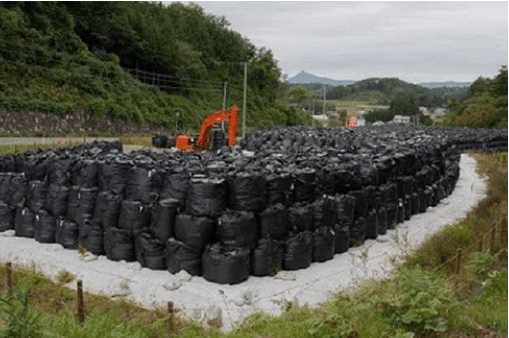
We estimate that in the Fukushima accident approximately 400-600 times the Cs137 were released into the atmosphere by the atomic bomb blast in Hiroshima. Roughly 20% of the Cs137, or 80-120 Hiroshima-equivalents, were deposited on Japan. Of this, the decontamination efforts have only been able to retrieve five Hiroshima-equivalents. The waste from decontamination efforts is typically stored all over Fukushima mostly in mountainous heaps of large plastic bags. This means that 75-115 Hiroshima-equivalents of Cs137 still remain in Fukushima, surrounding prefectures, and all over Japan.
In addition, the Japanese government is now planning to reuse the retrieved contaminated soil under 8000Bq/kg in public works projects all over Japan. This self-destructive program has now been partially started without any announcements as to where the contaminated soil are and will be reused, under the pretext of “avoiding damage caused by harmful rumors”. This project is tantamount to scattering lethal fallout of Cs137 equivalent to about 5 times that of Hiroshima bomb all over Japan. The Japanese government is literally behaving like a nuclear terrorist.
Do you really imagine that Fukushima prefecture and surrounding areas, contaminated as they are to levels similar to the Nevada test site, is really a safe place for people to permanently live, or for foreign tourists to visit and go sightseeing?
Regrettably, we must conclude that it is not, for either residents or tourists the situation in Fukushima is not safe.
These websites also point out that the international annual dose limit for the public is at 1mSv, but this level is easily exceeded by only one CT-scan, insinuating that this 1mSv standard is set too low and thus not a useful indicator.
CT-Scans are often cited as if they had no radiation risks, But this is not true. A recent study clearly shows that every CT-scan (about 4.5mSv irradiation) increases the risk of cancers in children by 24%. See the website here.
In Fukushima the allowable level of radiation per year for residents is now 20mSv. Can you imagine having 4-5 CT-scans every year?
One of the websites states: “In Fukushima, the indoor radiation doses are now so reduced that no radioactive cesium can be found in the air. Therefore, no radioactive particles can invade the human body during breathing.” What do you think of this statement?
The Japanese government also ignores the long-term peril caused by “hot particles” ――micron-and- nano-sized radioactive particulates――which, if inhaled or absorbed into the human body, may lead to many kinds of cancers and other diseases including cardiac failure. We should consider internal irradiation to the cells near the radiation sources to be 500 times more dangerous than external irradiation because particles inside the body radiates very near or even inside cells, causing intensive damage to DNAs and other cell organs such as mitochondria.
These websites explain that there exists not only artificial but also natural radioactivity, thus people are living in an environment surrounded by radiation all the time in everyday life.
One of the main tactics that the Japanese government often uses to propagate the “safety of low level irradiation” is to compare artificial radioactivity with natural radioactivity. But this logic is a methodological sleight of hand. It is crystal-clear that even exposure to natural radioactivity has its own health risks. Cancers sickened and killed people long before artificial radioactivity was used. For example, Seishu Hanaoka, one of the founders of Japan’s medicine, carried out 152 breast cancer surgeries from 1804 to 1836.
Both kinds of radioactivity have their own health risks. Risks caused by artificial radioactivity should not be compared but be added to the natural radioactivity risks as they both lead to the accumulation of exposure.
For example, potassium 40 (K40) is a typical natural radioactive nuclide. According to the Japanese government, the average internal exposure dose for adults from K40 is about 4,000Bq/year or 0.17mSv/year. See the website here (in Japanese).
The ICRP risk model (2007) allows us to estimate the approximate risk posed by K40. The calculation shows that K40 is responsible for approximately 4,000 cancer cases and 1,000 deaths every year. If the same amount of radiation was added to that of K40 in the human body by artificial sources, the cancers and mortalities would be doubled to 8,000 and 2,000 a year, respectively. Based on the ECRR (2010) model, which criticizes the ICRP risk model as a severe underestimate, these figures should be multiplied by 40, reaching 320,000 and 80,000, respectively.
The extract you cite from the Fukushima government website is completely fake: “In Fukushima, the indoor radiation doses are now so reduced that no radioactive cesium can be found in the air. Therefore, no radioactive particles can invade the human body during respiration”. Reports from civic radiation measurement stations refute this claim. For example, dust collecting paper packs of vacuum cleaners used in Iwaki City, Fukushima prefecture, are radiologically measured and 4,800-53,900Bq/kg radioactive cesium was detected in Oct-Dec 2015. See the website here (in Japanese).
One of the websites says that the Fukushima prefecture has conducted whole-body counter screenings of the 170,000 local population so far but cesium was rarely detected.” Does this mean that we can safely consume food from Fukushima, and Fukushima residents are no longer being exposed internally to radiation?
This is a typical example of demagogy by the Japanese government: vague expressions lacking specific data, using the words “safe and secure” without clear explanation. In reality, the government has not publicized any data indicating serious irradiation of the population. For example, you mentioned the Fukushima prefectural government website saying that whole-body counter screenings of 170,000 members of the local population have found radioactive Cs only in very few cases. However, the fact that no specific number is given makes the statement suspicious.
These statistics, more than likely, exclude many firefighters or other municipal employees who, at the time of accident, helped local residents evacuate from a lot of contaminated areas surrounding the defunct Fukushima plant. These people were subjected to serious radiation doses.
Civic groups’ efforts for the disclosure of information has recently prompted city officials near the defunct plant to disclose the fact that it conducted whole-body counter check-ups on about 180 firefighters, nurses and municipal employees. According to Koichi Ohyama, a member of the municipal assembly of Minami Soma, the screening conducted in July, 2011, showed almost all of these people tested positive in Cs. The maximum Cs137 dose among the firefighters was as high as 140,000 Bq. This data reveals a part of the reality of irradiation but it is only a tiny part.
The government websites suggest that no health effects from irradiation have been reported in Fukushima. Is this true? Or have any symptoms appeared that indicate an increase in radiation-induced diseases in Fukushima?
One example is the outbreak of child thyroid cancer, but the Japanese government has been denying the relationship with irradiation from radioactive iodine released from the Fukushima disaster.
Japan’s population statistics reflect the health effects from the Fukushima disaster radioactivity. The following data clearly show that diseases increasing in Fukushima are highly likely to have been radiation-induced.
The Fukushima prefecture website says, “After the Fukushima accident, the Japanese government has introduced the provisional standards for radioactive iodine and cesium. The Fukushima prefectural government subsequently strictly regulated distribution and consumption of food with levels of radioactivity exceeding the provisional standards. Now we have had this new much stricter standard. The distribution and consumption of food exceeding this new standard has been continuously regulated; therefore any food on the market is safe to consume.” Is it true?
As for food contamination, the Japanese government has also tried to cover up the real picture. First, the current government standard for radioactivity in food, 100Bq/kg, is dangerously high for human health, especially for fetuses, infants, children and pregnant women. Even six and a half years after the accident, the Agriculture Ministry of Japan as well as many civic radioactivity measurement stations all over the country have reported many food contamination cases, although the frequency is evidently reduced. See the website here.
The Japanese government has underestimated the danger presented by internal irradiation. But, we must consider two important factors. (1) The wide range of difference in personal radio-sensitivity. According to Professor Tadashi Hongyo (Osaka University Medical Faculty), the maximum difference is as wide as 100 times in terms of biological half-life of Cs137. (2) Recent studies denying that the so-called biological half-life decrease curve actually exists. According to the new model, daily food contamination can cause concentrations to accumulate as time passes. Even a daily 1Bq internal radiation dose from food cannot be safe for human health (details below).
Our recommendation is to be cautious of food or produce from Fukushima and the surrounding areas, and, even if contamination levels are said to have now generally decreased, to avoid jumping to the conclusion that all the food is fit to eat.
We would like to ask about the situations in prefectures surrounding Fukushima. A television program once reported, “As for the safety of Tochigi and Gunma prefectures, few people are raising concern about health effects of radiation.” Is it true that the prefectures somewhat distant from the Fukushima Daiichi plant are now safe with no human risk?
Regarding the radioactive contamination in prefectures surrounding Fukushima, you can refer to the following website.
This article examines the contamination in the Tokyo metropolitan area, but conditions are the same or more serious in Tochigi or other prefectures north of Tokyo, nearer to the defunct Fukushima Daiichi plant.
Another example is the statistics of stillbirth and neonatal mortality in Fukushima and the surrounding five prefectures (Tochigi, Gunma, Ibaragi, Miyagi, Iwate) shown here.
Perinatal mortality in not only Fukushima prefecture but also neighboring prefectures rose 15.6% just 10 months after the accidents. This clearly indicates the existence of some kind of human health damage from radiation.
We would like to ask about the decontamination efforts by famers living in Fukushima and neighboring prefectures. Should we think highly of the farmers measuring the amount of radiation deposited on the surface of soil to create radiation maps for farms, or washing the radiation from the surface of every single tree off the radiation with high-pressure washers? The farmers said that while these methods have been shown to be radiologically effective, their produce did not sell well, because consumers are still feeling anxious about health risks. Does the problem of radioactive food contamination in Japan just end up in whether each consumer personally believes it safe or not?
We must raise a question that, despite the government’s decontamination efforts, a huge amount of radioactive materials deposited in mountainous areas remain untouched. Now they are re-dispersing and re-depositing over wide areas of Fukushima and surrounding prefectures via winds, cars, trains, river water, pollen, spores, emissions from incinerators, in the form of radioactive dusts and particulates, among many others. For an example, see the following website.
So I regret to say that, although these farmers’ endeavors you mentioned are very precious and respectable, they are not sufficient to completely eliminate the risk of radiation exposure from food. The problem exists objectively in the nuclear materials deposited on and in soil, algae, plants, houses, buildings, forests, animal and human bodies, not subjectively in the consumers’ sentiment or psychology.
Japanese experts have recently pitched a cultivation method that can remove cesium by intensive use of potassium fertilizer. Is this method effective at all? Do you have any doubt about their claims?
They seem to be among those experts who have been criticizing the general public’s tendency to demand “zero irradiation risk” as an obstacle to Fukushima reconstruction.
As you know, cesium (Cs) has chemically similar characteristics to potassium (K). So it is true that higher levels of application of potassium fertilizer lowers the plant’s absorption, and therefore concentration, of radioactive Cs, decreasing Cs137/134 concentrations in produce, often to below the government standard of 100Bq/kg. But the following problems remain: (1) This procedure can prevent Cs transfer from the soil to produce only partly, not completely; (2) This process raises the potassium concentration in the produce and therefore heightens the burdens on certain human organs such as kidneys, the heart and the nervous system, causing new health risks; (3) Heightened concentration of potassium also leads to the heightened concentration of radioactive K40, so the reduced risk of radioactive Cs lead to an increased risk of internal irradiation by K40.
Even if cesium concentration was reduced by applying more potassium fertilizer than usual, strontium contamination would remain. In Japanese government’s international press campaign as to the Fukushima accident, almost nothing has been said about strontium. If you have any information on strontium contamination, let us know.
We regret that the information about strontium that you are asking for is very limited and searching for it is also a challenge for us. The Japanese government and research institutes under the government have reported very limited data regarding strontium contamination. But it is important that the Japanese government admits the fact of strontium contamination within 80km from the defunct Fukushima plant. See the website here.
Did you know that the US Department of Energy data on the strontium contamination of soil in Japan and its visualization (in Japanese) can be seen on the websites here?
Some Japanese experts say, “the Japanese government has declared that no health effects from irradiation below 100mSv (or 100mSv/year) have been confirmed.” Some farmers have established a private food standard of 20Bq/kg, much lower than the Japanese government standard of 100Bq/kg. Do you think that doses under 100mSv or under 20Bq/kg are safe and secure?
As you mentioned, the Japanese government claims that no scientific studies verify that irradiation of 100mSv or less poses a threat to human health, suggesting that irradiation under 100mSv has no risk. This, however, is false. The government is fabricating this information. In fact, very many scientific studies have already confirmed and proven health effects induced by irradiation under 100mSv. For example, see the websites below.
The Japanese government is using the term “100mSv” in a deliberately ambiguous and confusing manner. The expression 100mSv can have three meanings: (1) a one-time irradiation dose, (2) cumulative irradiation doses, or (3) annual irradiation doses. So 100mSv is not the same as, nor equal to the 100mSv/year that you mentioned in parenthesis. The latter amounts to a 1Sv in cumulative dose over 10 years (which is an up to 10% lethal dose), and 5Sv over 50 years (which is a 50% lethal dose). The present government standard for evacuees to return, 20mSv/year, means that living there for 5 years leads to a cumulative dose of 100mSv, at which the Japanese government admits clear health risks.
Regarding 20Bq/kg as some farmers’ private food standard, it is critical to pay serious attention to the extraction process of Cs from tissues. Japanese-Canadian non-organic biochemist Eiichiro Ochiai points out in his book “Hiroshima to Fukushima, Biohazards of Radiation” (2014) that, based on the Leggett model, the Cs concentration injected in tissues at one time diminishes relatively quickly for about 10 days in most tissues. After that, processes slow down, tending to become steady. He writes: the decrease of the overall Cs level in the body does not follow an exponential decay curve (p.83). This means that consecutive intake of Cs, even in very low levels, results in the accumulation of Cs in the body. (Incidentally, Ochiai’s book can be downloaded for free from the website below.)
Regarding the Leggett model, see the website below.
Yuri Bandazhevsky considers over 10Bq/kg of radioactive Cs concentrations in the body to be unsafe because even this low level can possibly cause abnormal electrocardiographic pattern in babies, metabolic disorders, high blood pressure, cataracts, and so on.
Therefore, we can conclude unequivocally that neither the irradiation under 100mSv nor the privately set 20Bq/kg food standard are safe and secure.
December 1, 2017
Posted by dunrenard |
Fukushima 2017 | Contaminated Foods, Contamination, Fukushima, Health Problems, Lies & Cover-up, radiation |
1 Comment
 Beaches far away from Fukushima are still contaminated, more than six years later
Beaches are leaching highly radioactive caesium.
Eight beaches in Japan have been found to have high levels of radioactive caesium from the 2011 Fukushima disaster.
The Fukushima Dai-ichi Nuclear Power Plant was struck by a magnitude 9 earthquake on 11 march 2011, causing reactor meltdowns and the release of radioactive matter into the immediate environment. Beaches up to 60 miles away from Fukushima are now a significant source of radioactive caesium released in the accident, a study in the journal PNAS has found.
The radioactive element caesium appears to ‘stick’ to sand in a freshwater environment, washing far away from the site of the meltdown. Once this water mixes with the salty sea water, the caesium is released from the sand, leaching back into the ocean.
“No-one expected that the highest levels of caesium in ocean water today would be found not in the harbour of the Fukushima Dai-ichi nuclear power plant, but in the groundwater many miles away below the beach sands,” said study author Virginie Sanial of Woods Hole Oceanographic Institution.
The rate of discharge of radioactive caesium from the beaches was on a par with the direct discharge from the power plant itself, the authors say.
“It is as if the sands acted as a ‘sponge’ that was contaminated in 2011 and is only slowly being depleted,” said Ken Buesseler of Woods Hole Oceanographic Institution.
Sanial added: “Only time will slowly remove the caesium from the sands as it naturally decays away and is washed out by seawater.”
Many other coastal nuclear reactors could also spread radioactive material over great distances through this mechanism, the authors say.
“There are 440 operational nuclear reactors in the world, with approximately one-half situated along the coastline,” they observed.
However, the authors stressed that this groundwater was not a source of drinking water hence poses no health hazards to humans.
“No one is either exposed to, or drinks, these waters, and thus public health is not of primary concern here.”
http://www.ibtimes.co.uk/japanese-beaches-60-miles-away-have-become-major-source-radioactivity-after-fukushima-1641570
October 5, 2017
Posted by dunrenard |
Fukushima 2017 | Fukushima, radiation, Seaside |
2 Comments
We are “GO WEST & COME WEST!!! 3.11 Evacuees from Tokyo area”.
Etsuji Watanabe, one of the members of Association for Citizens and Scientists Concerned about Internal Radiation Exposures (ACSIR), estimates that each year at most 180,000 people may develop cancer and 90,000 will be killed by cancer or some other causes.
Radiation Levels in Tokyo Metropolitan Area (Year 2013~2015: µSv/hour)

Estimation of the risk for 10 million people in Tokyo Metropolitan area exposed by radiation (2.4mSv/year).
Data provided by Mr. Kirishima.

* Risk occurrence: 10,000 person-Sv
** According to a book ‘Chernobyl: Consequences of the Catastrophe for People and the Environment’ by Alexey V. Yablokov, ratio of death caused by cancer and not by cancer is 1 to 1.
Fukushima Radiation is Now Spreading to Tokyo and Eastern Japan
The child thyroid cancer which were commonly seen after Chernobyl accident is being found even around Tokyo area after several years from 3.11 Fukushima accident in 2011.
Severe illness such as various cancers, leukemia, and cardiac infarction are increasing too at alarming rate. For some people, immune system has also weakened due to radiation effects, and the conditions of their chronic disease or common cold are worsening.
Therefore some people from Tokyo have evacuated to safer places.
However Japanese government (and main media) continue to ignore the effects of Fukushima radiation even though the radiation level is still dangerously high. The government have recently lifted evacuation orders for the restricted residence areas and cut housing subsidies for evacuees, forcing them to believe it is safe to return.
Therefore some people think it is nonsense to evacuate from Tokyo area and believe the evacuees are over-reacting. Many of the evacuees are feeling very isolated and are living in poverty after moving to safer locations, forcing some to return to the contaminated area against their will.
About 45 million people still remain in contaminated metropolitan area in Tokyo. But many people are started feeling very ill one after another. In fact many of my friends living in Tokyo or Eastern Japan have collapsed from numerous illnesses over these years.
It has proven that an increase of serious illness was seen four-to-five years after 1986 Chernobyl meltdown and hundreds of thousands of people lost their lives.
Now we are facing the same situation in Tokyo and eastern Japan.
Fukushima radiation problem permits no delay. We need to encourage people in Tokyo and Eastern Japan to evacuate to safer places to protect their lives.
In order to fight against the inhumanity of the Japanese government toward lives of people and uncover the fact of radiation effect in Japan, it is urgently needed to spread the information like this to the public.
http://www.gowest-comewest.net/statement/20170825english.html
September 7, 2017
Posted by dunrenard |
Fukushima 2017 | Eastern Japan, Evacuation, radiation, Tokyo |
Leave a comment








 nuclear-news