Campaigns focus on economy and Constitution, but nuclear disaster-hit Fukushima sees other priorities
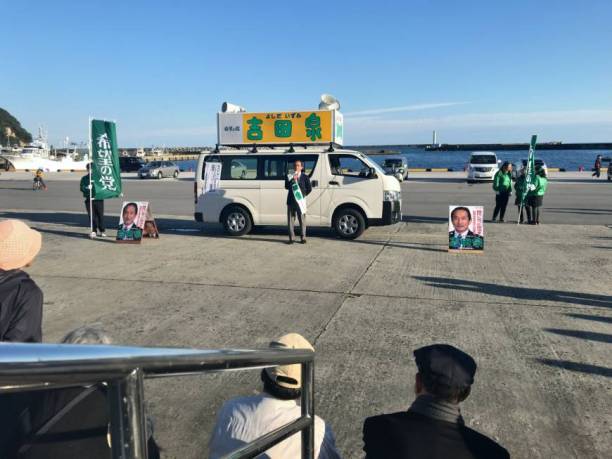
Voluntary evacuees win compensation over Fukushima nuclear disaster

FUKUSHIMA — The Oct. 10 ruling by a district court here, in which Tokyo Electric Power Co. (TEPCO) and the Japanese government were ordered to pay plaintiffs in Fukushima and nearby prefectures a total of 500 million yen in damages from the 2011 nuclear disaster, covered those who lived outside evacuation zones, signaling a shift in the compensation system.
Roughly 3,800 plaintiffs brought a suit against the company and the state requesting a total of some 16 billion yen in damages, and of them, the Fukushima District Court ordered payments for some 2,900 people ranging from 10,000 to 360,000 yen per person. The court also recognized the responsibility of the national government in the nuclear disaster, ruling that it jointly pay half of the 500 million yen.
The majority of the plaintiffs in the case lived outside of the evacuation zones and voluntarily left the area following the disaster. Others lived outside of Fukushima Prefecture and were not eligible for receiving compensation from the accident. The decision recognized the right of voluntary evacuees and some in neighboring prefectures to compensation, expanding the scope of those eligible to receive payments.
“This opened up the possibility for anyone to be able to claim damages and receive relief,” the legal group representing the plaintiffs in the case commented.
The number of residents who lived in the same areas as the victorious plaintiffs in Fukushima Prefecture alone exceeded 1.5 million. While the odds of the case being appealed are high, if the court maintains its ruling, it will have an enormous impact on the current compensation system.
Concerning the government’s involvement in the accident, the court decision cited a 2002 long-term assessment concluded by the government’s Headquarters for Earthquake Research Promotion, which predicted that a tsunami caused by a magnitude-8 or higher earthquake was possible along the coast of Fukushima Prefecture. The court pointed out that based on this assessment, the government could have predicted that a 15.7-meter tsunami could hit the power plant just as TEPCO estimated later in 2008, and stated that the government’s inaction to order the utility to prepare tsunami countermeasures by the end of 2002 was “significantly lacking in rationality.”
The standard for the amount of damages to be paid by TEPCO was decided in interim guidelines put in place by the Ministry of Education, Culture, Sports, Science and Technology’s Dispute Reconciliation Committee for Nuclear Damage Compensation, and a broad distinction in compensation between those living in and nearby evacuation zones and those who chose to evacuate voluntarily was drawn by the end of 2011.
The amount to be paid to those living in the evacuation zones was set at a minimum of 8.5 million yen, but the amount awarded to voluntary evacuees was set at 80,000 yen in principle. Additionally, those living in the Aizu region of Fukushima Prefecture, Ibaraki Prefecture and other areas not directly nearby the reactors were completely excluded from receiving compensation, creating a disparity among evacuees from different regions and leading to numerous litigations.
Because of this, the plaintiffs in the Fukushima case claimed that they, including those living outside the evacuation zones, shared the same worries of having been exposed to radiation. Without claiming individual compensation, the group decided to file the suit for 50,000 yen per month until the radiation levels in the air where each person lived returned to the pre-disaster levels — 0.04 mircosieverts or lower in all cases — regardless of the place of residence of the plaintiff.
Additionally, they divided the regions where the plaintiffs lived in such a way that a total of 35 representatives from each of the areas testified to damages. There are few precedents of this method, such as noise disturbance cases for those living near airports and military bases, but the group decided to adopt the method as it looks to have the state review the conventional compensation system itself.
The Oct. 10 court decision stated that the interim guidelines were merely a yardstick, and that the certification of compensation payments exceeding those guidelines should naturally be allowed, taking one important step forward in restructuring the system.
“Behind those 2,900 plaintiffs who won compensation are all of the victims (of the Fukushima disaster),” said lawyer Yoshio Nagumo, the head of the group’s legal team. He hopes that this case will become an example to lead the reform of the compensation system. However, the amount actually awarded to each person was low.
“The ruling doesn’t accurately reflect the damage suffered,” said Jun Watanabe, another member of the legal team, hinting at the possibility of appealing the ruling. “We’ll fight in order to raise the amount of appropriations even further.”
http://mainichi.jp/english/articles/20171011/p2a/00m/0na/014000c

The Nuclear National Family : The Fukushima disaster exposed fissures in Japanese society that its familial politics tries to paper over

In the history of nuclear disaster, Fukushima stands out in its singularity. There, two kinds of disasters were intermixed: the earthquake/tsunami, and the nuclear explosion. On March 11, 2011, nature and civilization collapsed in the worst imaginable manner. The first catastrophe was tragic enough—with 15,894 deaths, 6,152 heavy injuries, and 2,561 missing persons (as of March 2016). Then came the radioactive contamination. If it had been just the so-called natural disaster, it might have been possible for us to materialize a paradise built in hell or mutual aid society amid the zone of devastation, hand in hand with its natural resilience. But the second disaster instantaneously deprived us of all power to intervene in the radioactive terrain.
This is a new challenge not only for anti-nuke discourses and movements but also anarchism or anti-authoritarian politics in a broad sense. Interviews with Mari, a Japanese feminist, anti-capitalist activist, and writer, can attest to that. When I first interviewed her, on June 12, 2011, three months after the disaster, an anarchic sensibility was dramatically in evidence. The complexity of people’s emotions—grief (over the losses), fear (of the coming devastation), panic (due to uninformed dread), rage (against nuclear capitalism and the state), and even joy (tied to the possibility of a regime change)—generated an affective power that fueled a wide range of grassroots organizing, from everyday struggles such as do-it-ourselves radiation monitoring and voluntary evacuation, to all sorts of anti-nuke actions, including legal actions against Tokyo Electric Power Company (TEPCO) and the Japanese government.
In the second interview, which took place on July 1, 2016, Mari explains what happened to the affective climate during the time in between. The complexity of the emotions, once collectivized in an ensemble, could have been the strongest weapon for organizing a resistance movement, but by the time of our second interview, they had been overshadowed by the nationalist empathy for the industrial and commercial reconstruction of Fukushima. This is largely due to the conformism that has long dominated Japanese society, wherein the nation is assumed to be a big family ruled by the emperor, to which family, township, municipality, and civil society are deemed subunits. Even the annual Hiroshima commemoration is not totally free from nationalism.
Yet Mari believes that the magnitude of people’s sufferings post-Fukushima sustains the potential of affective politics to decompose this nationalist empathy. To achieve that, however, the struggles must shift their perspective: from shortsighted political goals to aims related to the enduring quality of radiation contamination, both temporally and spatially.
It has been five years since the disaster. How has the situation changed?
It has taken five years for the public to know how criminal the responses of the government have been. In part this has to do with the temporality of the nuclear disaster, which necessitates time for the victims and evacuees to settle in and reflect on their situations. Around 2013, the nuclear disaster was finally acknowledged as a “man-made disaster” by the government. Meanwhile, thanks to journalists’ tireless investigations, the fact was clarified that TEPCO had totally neglected measures to protect against the effects of a tsunami for over 10 to 12 years.
After the earthquake, a tsunami with a 15-meter wave hit the reactors. TEPCO was not unaware of such a possibility. It repeatedly ignored warnings by specialists. In fact, up until four days before the accident, the discussion concerning the need to take measures had gone back and forth between TEPCO and government agencies. The international code for nuclear policy states that it must be prepared for even a situation that may arise once in 10,000 years. TEPCO not only ignored it but also made special efforts to do away with it. Even after the accident, the government has subtly covered up the evasion. All in all, the people realize they have been consistently tricked and deceived by the authorities. It was some independent bloggers, journalists, lawyers, and reporters who strived to reveal all this. With the retrospective revelations, the victims were naturally infuriated. In this sense, the five years have been spent preparing evidence for lawsuits—about 40 cases with over 10,000 plaintiffs. So criminal actions, too, will follow. Although the legal fight has its limitations, this development requires attention.
All in all, the government has done nothing for or even harmed the disaster victims.
In the first place, the government refuses to count the number of—if I may use this term—the refugees. It has to do with its intention not to define who are refugees. The problem is that the category of those who are desperately migrating in fact and the legal category of refugees are not in sync. This is because the Japanese government, if it grasped the actual number, would not be able to deal with it unless it gave up “business as usual.” Therefore, it would rather underestimate the number by refusing to accept the reality. By paying attention only to the forced evacuees, it chooses to ignore the voluntary evacuees from Fukushima, not to mention those from Tokyo, and even treats them like “illegal immigrants.”
Meanwhile, radiation-related illnesses have been increasing, haven’t they?
Yes. Children’s thyroid cancer has evidently increased. Even the government acknowledges it, although adding a strange proviso that more cases may be discovered because of its obsession to nitpick. But we all know that at some point in the future, the government will be forced to admit the reality. So far, it has looked into the situation only in Fukushima but not in adjoining prefectures. So the people have been investigating the cases by themselves; for instance, in Kashiwa City in Chiba Prefecture, there are as many as 173 cases. In addition, leukemia among the nuclear workers has drastically increased. As someone has said, radiation is an ideal poison, because of the difficulty of proving causality in court.
My friends and I, both in and outside Japan, imagined that a radical change would come inevitably. But in five years, the situation is going in the opposite direction, toward the reinforcement of pronuclear and pro-rearmament nationalism. And yet the disaster continues—since March 11, the majority of people have become disaster victims in different ways and degrees. Not only in Fukushima but also Tokyo, an unprecedented number of residents have been and will be affected by radiation. The fact is made more and more invisible, however, buried by inattention. What do you think is creating this situation?
There are many factors on both personal and social levels. Those who live with dangerous contamination don’t want to think about, admit, and confront the fact, though they know it in their subconscious, because acknowledging it would force them to join along with a radical change in all existential dimensions. Reinforcing the denial is the sense of equilibrium that has been socially shared in the postwar period. Among the many things that have been said about catastrophe in the contemporary history of disaster, the most dreadful is the revelation that the seeds of the catastrophe had been embedded in the midst of the everyday life of the highly consumerist society; the possibilities of planetary catastrophe have been so deeply internalized in the high-consumerist and controlled society called Japan. And to say it in reverse, even a catastrophe of this magnitude is quickly absorbed into the everyday process of social reproduction.
When I visit Japan, walk around the city, and watch television, I am shocked by the normalness of consumer life as well as the images of joy in embracing it—of food, technology, culture, and tourism—co-existing with the radioactive contamination. That is to say, tragedy certainly co-exists in various respects. What is the status as well as the features of people’s emotional responses—rage, sorrow, dread, anxiety, and so on?
One thing I can say is this: There are certainly physical losses, such as health, home, family, subsistence, and so forth, but public discourses often emphasize the “loss of home” or “deprived community”—namely, the loss of what cannot be reduced to a monetary value. All in all, these expressions are saying that invisible things that are indispensable for constituting individuals—a place to live and act, mutual relations, and the ways and means of life—are largely destroyed.
What can one do when this happens? There are no formulas to deal with such situations. So people must continue to record what happens, how the situation changes, and how they feel about it. For instance, it took about 20 years for Michiko Ishimure to begin writing her magnum opus Paradise in the Sea of Sorrow, after her engagement with the Minamata mercury poisoning. The power of the novel, which involves real enunciations and events of the victims along with their movement, exists in her persistent documentation and commemoration of the everyday endless purgatory for oceanic lives, animals, children, farmers, fishers, and so on. Only by this strategy of persisting in the unbearable temporality can the events of even an absurdity that refuses interpretation spark resistance from time to time. The Fukushima nuclear disaster, too, is very much an event of temporality and feeling. And our strategy to confront it must be based on collective, persistent recording and memorializing.
In the entirety of social apparatuses, forces are in full gear to make us forget about and nullify all the events around the accident. The coming Tokyo Olympics 2020 is the symbolic machine for a nationwide obliviousness, but in the larger picture, the civilian use of nuclear power has always involved such effects from the outset. Nuclear accidents and the resulting illnesses involve a time lag that does not follow clean-cut regularity, from which oblivion effects are made to develop.
The nuclear disaster doesn’t have an end, and therefore healing by mourning is out of the question at this point. What unites us is rage, which is the basic weapon to organize ourselves to fight against nuclear capitalism and the state. But in the five years after, rage seems to have been replaced by counterparts—apathy and resignation—leading to passive onlooking rather than engagement. Mourning is solidly shared among the earthquake and tsunami victims, who have physically lost homes, families, and means of subsistence. Still, in this case, where the nuclear disaster immediately followed, another spatiotemporal dimension that is unthinkable for us was imposed, spreading like a social cancer and depriving us of any cathartic solution. In the second dimension, mourning is bracketed, because the effects of radioactive pollution are hard to prove as causes. We need time—until an undeniable number of clinical cases appear, probably after 10, 15, or 20 years, and nobody can then deny the effects as data—or the cathartic phase, which involves a full and massive attack against the nuclear regime, won’t come.
At this moment, the cancer patients along with their families focus more on cure than political action—that which can be organized based on a solid causal recognition. For that matter, the victims of Hiroshima and Nagasaki are still fighting for recognition even today, more than 70 years after the bombs. They are still suspended in devastation. All in all, for the struggles against nuclear power, the crux is how we manage to confront the unbearably long temporality, based on observations and recordings of the situational and sensual mutation. Therefore, at this moment in the struggle against radioactive pollution, sorrow and mourning seem to be futile.
What are you going to do from now on?
There are many things to be done. But I believe the basis for all projects is to patiently observe what is going on and listen to people’s voices. It seems to me that what is lacking is the will to see through the event: what it involves, where it leads, what are the effects to whom and what … Generally speaking, perspectives of social and political movements are too shortsighted.
After Fukushima, we saw a dramatic upsurge of the anti-nuke movement for two years. But after the Oi nuclear plant was restarted in spite of the mass direct action to blockade it, the movement quickly stagnated. The ultraconservative Abe administration came into power, realizing the reform of the U.S.– Japan security treaty toward Japan’s militarization. Thereafter it has been doing almost whatever it wants to do. No protest movements and no progressive politics have been able to stop it. Its policies are centered on a kind of shock doctrine and the politics of spectacle that constantly shift its ostensible focus in order to fade from our attention. To fight against this, we should not just respond to its moves but also construct multilayered strategies based on the non-spectacular developments of events—such as the increasing number of people getting sick or refugees having lives like fugitives—that are invisible in the media and incalculable in statistics.
Even before Fukushima, nuclear problems were always made to be obscure, as exemplified by the issues of nuclear workers and radioactive contamination. As analyzed in the inspiring book by Olga Kuchinskaya, The Politics of Invisibility, on the political situation after Chernobyl, nuclear politics is based on invisibility instead of open debate on scientific truth. In Japan, various safety standards have been set and reset after Fukushima, which have nothing to do with scientific consideration but are pure political decisions made tacitly for the benefit of nuclear industries.
How would you describe the situation people face in Japan after Fukushima?
A phrase from the book Voices From Chernobyl by Svetlana Alexievich speaks to it well:
Something occurred for which we do not yet have a conceptualization, or analogies or experience, something to which our vision and hearing, even our vocabulary, is not adapted. Our entire inner instrument is tuned to see, hear or touch. But none of that is possible. In order to comprehend this, humanity must go outside its own limits.
A new history of feeling has begun.
Ungraspability or spatiotemporal indeterminacy exists at the core of nuclear accidents and radioactive contamination. Radioactivity, which is invisible, omnipresent, and everlasting, has come to determine our future. In my adolescence, the so-called no-future thing was in fashion, yet it has now become reality. After Hiroshima and Nagasaki, during Japan’s postwar period, an obsession with apocalyptic imagery—such as in Godzilla, Japan Sinks, and Akira—flourished in mass representation. But I think that to confront the post–Fukushima disaster situation, we need a much longer view: a planetary history. In this sense, I am interested in the recent debates on the Anthropocene.
Political discourses circulating around today’s Japan, including those of the sociopolitical movements, even feminism and anarchism, avoid dealing with the crux of the event. I would see an ultimate potency for emancipation if not healing not in these discourses but instead in the rumors and panics—the fundamental power to awe deriving from people’s dread and rage. This is to initiate our thoughts about what is really troubling or unsound. This is the only basis for resisting the status quo, which is constantly seeking to absorb the endlessly expanding accident. As Yu-Fu Tuan stresses in his Landscape of Fear, a community that has lost the power to fear will perish.
Meanwhile, as evident with the so-called anarchists in today’s Japan, claiming to be an anarchist and confronting a life in anarchy are two different things. Those who grasp people’s autonomous actions after the disaster as anarchy and go along with them anarchistically are limited. According to my observation, I can see anarchist practice in those who have been actively engaged in people’s autonomous projects to deal with irradiation rather than those who have organized a large-scale anti-nuke movement.
I myself am a feminist, but when I see those who take care of the health of their families—or more straightforwardly, “mothers”—struggling so radically, I feel embarrassed to think in the name of feminism. Those people who live the anarchic situation don’t know the -isms such as anarchism, Marxism, and feminism.
I see that in the exploitation of these existences, there exists the political core of the Fukushima dilemma. If so, it is necessary to discover the moment in which to transversally connect these modes and practices of existence. Would that be possible? Is patiently recording and observing radiation and illnesses—or a certain strategy of information and collective intelligence—helpful for that?
That has to be done, but we don’t know how to do that precisely yet. But the problem is that the discursive realm on the Fukushima disaster, including journalism, media, and academia, has proved futile in terms of dealing with the invisible exploitation of these existences. It is a sine qua non to break out of the form of conventional method and thought to tackle the problematic and then share the results widely. This incapacity has revealed the institutional limit of discourses. People point out the power of what’s commonly called the “nuclear village,” the network of pronuclear authorities, stretching out in the central and local governments, bureaucracy, companies, industries, academia, and media, which constantly discredits and incapacitates the spreading and exchange of critical information. But according to my observation, a village-like network where all anomalies are immediately silenced or ejected entraps all realms of political and intellectual practice in Japan even before the conspiratorial operations of the nuclear village.
I value the work of some independent bloggers, researchers, and journalists who dedicate themselves to analyzing what is happening. But I feel the need of more collaborative efforts toward building a collective intelligence and information-sharing network to fight against the pronuclear status quo. It is necessary to analyze the present situation, involving the incapacitated sociopolitical movements and the complexity of sovereign power. We need, to repeat, patient observation and sharp analysis. If we can share them, we can rise up for rebellion, together with nuclear workers and care workers. Trusting the potency of the people and sharing information and analysis would be the best means of organizing. It goes without saying that demonstrating and campaigning for election are far from enough. What’s necessary is less about stronger protests than a rebellion on wider, existential dimensions.
For a year or two after 3/11, the majority experienced the state of anarchy with fissures running across the social space and everyday life. People were enraged, feeling ferocious, with a desperate need to exert justice. The defeat of the movement was due to the organizers who could not tolerate the state of anarchy beyond their control. They could not deal with people’s power to live, grudge, rage, and panic. They sought to direct the mass impetus toward a well-mannered organization, a civil institution, with enlightened attitudes on politics and science. This was responsible for the stagnation today.
Now it is evident that the waste from the melted core of the Fukushima Daiichi reactors cannot be removed. This has long been known, but now it is being revealed bit by bit by the authority. But the people don’t seem to be infuriated any longer. “Oh, we had known it”—this sense of déjà connu seems to prevail among the public. This is the scariest thing. This is precisely the extension of the mechanism inherent in nuclear power that Günther Anders (1902–92), a German philosopher and antinuke activist, pointed out in terms of “apocalyptic blindness” [Apocalypse-Blindheit]. So it is necessary for us to be shocked, to fear anew. My hope is then to be enraged together—more than ever.
Learning from Fukushima

Edited by:
ISBN (print): 9781760461393
ISBN (online): 9781760461409
Publication date: September 2017
Imprint: ANU Press
DOI:
http://dx.doi.org/10.22459/LF.09.2017
Learning from Fukushima began as a project to respond in a helpful way to the March 2011 triple disaster (earthquake, tsunami, and nuclear meltdown) in north-eastern Japan. It evolved into a collaborative and comprehensive investigation of whether nuclear power was a realistic energy option for East Asia, especially for the 10 member-countries of ASEAN, none of which currently has an operational nuclear power plant. We address all the questions that a country must ask in considering the possibility of nuclear power, including cost of construction, staffing, regulation and liability, decommissioning, disposal of nuclear waste, and the impact on climate change. The authors are physicists, engineers, biologists, a public health physician, and international relations specialists. Each author presents the results of their work.
http://press.anu.edu.au/publications/learning-fukushima
Download for free : http://press.anu.edu.au/node/3873/download
Fukushima after six years and half: the forgotten victims

 In June 2011 I went to visit my daughter in Iwaki city, Fukushima prefecture, 3 months after the March 2011 disaster, worried about her situation there after the Fukushima Daiichi nuclear plant accident. Iwaki city is located 43.35 km (26.94 miles) south of the Fukushima Daiichi nuclear plant. I stayed there one month.
Prior to my going to Iwaki, I stopped at the French embassy in Tokyo, to ask them some information about the situation in Fukushima and what measures I could take to protect myself from radiation.
The French embassy informed me that the situation was now under control, but that going there I should as a precaution take a 130 milligram potassium iodine tablet 4 hours before entering Fukushima prefecture.
The French embassy staff giving me one potassium iodine tablet from French army supplies. When I asked to them how long that tablet would protect me, telling them that I would stay there one month, they were out of words for a moment, then decided after all to give me 2 tablets. Somehow their words and their two tablets failed to reassure me.
The house of my relatives, closed to the seaside, had been hit by the Tsunami and had suffered heavy damages, causing them to relocate for the time being in another part of Iwaki city, more inland, at a relative house. Luckily no one had been injured by the tsunami as they were all away from home in town when the tsunami hit their house.
Unable to stay at the already overcrowded relative house, I had to look for an hotel where to stay. No easy, all the hotels in Iwaki city were occupied by Tepco technicians brought from outside Fukushima prefecture after the nuclear accident. I had hard time to find a vacant room. I finally found a small hotel with a vacant room. Everyday I would see the Tepco uniformed technicians returning to the hotel after their shift from the Fukushima Daiichi nuclear plant exhausted, ashen faced and silent.
During that month talking with my relatives and others on location I learned that the people on location actually knew very little about what had happened inside the nuclear plant before and what was happening at that time. Tepco was giving very little information and the media wanting only to reassure was also not giving details about the nuclear accident.
Therefore the people directly affected and at risk knew practically nothing, as if an official wall of silence was withholding the needed informations from them, keeping them ignorant of the facts.
I also found that people were quite unaware of the consequences of radiation and the measures they should take to protect themselves. In that situation, I found that I was also myself quite ignorant about these things, as radiation and radioprotection were not part of the French school education program.
During my stay I avoided eating green leafy vegetables and seafood, following the advice given to me by the French embassy, therefore eating usually Fukushima beef, to learn later upon my return in France, that the beef had been also contaminated as those cows had been fed Fukushima contaminated hay.
Upon my return in France, I found that the French media were equally silent about the nuclear accident in Fukushima, pretending that the accident had already ended in March 2011 and that everything was back to normal and under control. Somehow I felt that in France too, information about the Fukushima Daiichi nuclear accident was withhold, not surprising in a country so nuclearized, and where nuclear is not owned by a private company but by the State.
Faced with the lack of information, I decided to search on the internet about nuclear technology and its past nuclear accidents, about the consequences of exposure to radiation and possible remediations.
Though I had opened a Facebook account in 2008 I had never used it. End of June 2011 I started using Facebook to communicate about the ongoing Fukushima disaster, with three goals in mind:
1. To use this social network as a mean to break the wall of silence with which I had been confronted.
2. To provide to the people of Japan the information which was not been given to them by their government.
3. To raise awareness in the international community about the plight of the Fukushima people.
So as to reach as many people as possible and to be understood, it had to be done in English and not in French, my mother tongue.
I started in 2011 a Facebook group and a Facebook community page named Fukushima 311 Watchdogs, focused on the Fukushima disaster. The first year was very intense, as at the same time I was educating myself about nuclear, about the current situation in Fukushima day by day, and how to best use Facebook in reaching people. In that first year many of us got burned out and depressed, dealing everyday with the more bad news and the repeated lies coming from Tepco and the Japanese government.
In June 2012, I closed the Fukushima 311 Watchdogs Facebook group, to take a short break, then started a new Facebook group, The Rainbow Warriors, which would still deal about Fukushima and nuclear, but also about the other issues.
Rainbow Warriors is a proactive citizens group fighting against nuclear power and nuclear weapons and their production (the front and back end of the nuclear chain) and the widespread radiation that they produce and emit into the environment including the mining of uranium, and the dangerous unsafe storage of the nuclear waste they produce, actively networking, dedicated to creating a nuclear free world by working for the immediate shutdown of all nuclear power reactors and for an international ban of all nuclear weapons.
Committed to promoting the development and implementation of abundant, cost effective, safe energy from sun, wind, water, and geothermal sources, as well as instituting well-known methods of conservation and efficiency, which have been shown to be capable of meeting all our energy needs.
Additionally, members of this group are joining in the fight against anything that pollutes or that endangers our Earth and our lives by promoting clean alternative energy sources and healthful and natural practices in day to day living.
In this group, we address the burdens modern “civilization” is placing on us, as well as the earth and all its inhabitants. We are here on FB to share informations, but our main goal is to inspire our members to build their own local collective actions to fight the modern evils that we are adressing here, like some of us are doing, and to participate in such national and international actions.
First I encountered the lies of Tepco and the complicity of the Japanese media not bringing the facts out, soon replaced by a massive campaign of disinformation orchestrated by Dentsu (the largest advertising and public relations company in Japan) paid by the Japanese government to deny the existing health risks, always minimizing and twisting the facts, to reassure the population..
Most of the Japanese public, brainwashed to believe the repeated lies of the media lacks empathy and solidarity towards the Fukushima people; and Japanese antinuclear activists have been more focused on keeping the nuclear plants from being restarted than to organize concrete help for the Fukushima victims.
Antinuclear activists abroad are more concerned about closing nuclear plants at home than about the victims of the far-away Fukushima Daiichi nuclear plant; interested in the Fukushima Daiichi disaster to the extent that it would serve their own local cause, the human tragedy taking place on location not their primary concern.
I believe that to focus on the technical aspects of the ongoing Fukushima Daiichi nuclear disaster while ignoring the human tragedy is not to fully grasp the enormity of the situation. The nuclear plant technical aspects should never be our primary concern. We should not give all our attention to the guilty party to the detriment of its victims. We all do know that once started, this triple meltdown disaster will be ongoing for generations.
Especially as the Tepco drama is played out for us step by step under the guidance of Dentsu, a professional PR and advertising company, in a manner to render it more acceptable to the public. Tepco always gives us a sanitized version which leaves out the most essential details, details which come out only after time.
TEPCO and the decommissioning authorities reported on the ongoing delays at Fukushima Daiichi, that units 1-3 have each run into challenges that have further delayed work towards stabilization.
Various delays will push much of the major work until after the Olympic games in Tokyo. There is speculation this is by design for political reasons.
in March 2015, the chief of the Fukushima nuclear power plant, Akira Ono admitted that the technology needed to decommission three melted-down reactors does not exist, and he had no idea how it will be developed.
In a stark reminder of the challenge facing the Japanese authorities, Akira Ono conceded that the stated goal of decommissioning the plant by 2051 may be impossible without a giant technological leap.
For me the victims on location, those forced to live with the consequences of that ongoing disaster should always be our primary concern. Their voices should be heard by all, as only their testimonies will reveal to us the full extent of the human tragedy caused by a nuclear disaster, a disaster sparing no one and touching every aspect of their lives. Only they can teach us what could happen to us tomorrow should a similar event occur in our own backyard, especially as most people continue to believe the fallacy that it could never happen to them: the lies, the shallow excuses, the media manipulations of public opinion, the nuclear plant owner and the government only intent on minimizing their financial liabilities, and an international nuclear lobby always active to deny and minimize the severity of the disaster, how the local people will be largely left alone to shoulder the burden while the others manipulated by the media will ignore the reality of their plight.
I only feel disgust and anger towards those who sensationalize the Fukushima tragedy into fear porn on Youtube, blogs and Facebook just to grab attention for personal glory and/or financial gains.
Why is our attention so diverted from the most essential: the victims on location. Why is that information so minimized as to be almost non-existent?
My main purpose in sharing information about Fukushima, was to draw the attention of the public at large about the plight of the Fukushima nuclear disaster victims, to help as I can make their voices heard, to raise international sympathy and possible support for them.
6 years and half later, I feel that I have failed. General lack of empathy prevails. As long as we will not learn from the nuclear victims themselves and let their voices be heard, the game of let’s pretend and deny will continue, and we will fail to end nuclear, and more nuclear disasters will continue to occur.
I have therefore decided to step back, to begin a new chapter in my life.
Before to turn the page, I would like to give thanks to all those I have been fortunate enough to meet, to work with, to get to know, those who have consistently shown dedication and humility, those of you who have had always the Fukushima people’s welfare at heart.
Best wishes,
D’un Renard (Hervé Courtois)
Govt to aid disaster-hit areas in Olympic exchanges to publicize their reconstruction

Ahead of the 2020 Tokyo Olympics and Paralympics, the government plans to create a “reconstruction host town” program to promote exchanges between countries and territories participating in the Olympics and Paralympics and areas affected by the 2011 Great East Japan Earthquake, it has been learned.
According to informed sources, the government aims to register all 127 municipalities in the three disaster-hit prefectures of Iwate, Miyagi and Fukushima as reconstruction host towns. The new program aims to boost efforts to involve disaster-hit areas in the Games and spread information on disaster reconstruction to the world, the sources said. It is also expected to enhance the image of the “reconstruction Olympics,” as the concept currently lacks concrete measures.
Registration for host towns for the upcoming Tokyo Olympics and Paralympics began in January last year. The government will also create a separate “reconstruction host town program.” Under the new program, all applying municipalities will be registered as reconstruction host towns, in principle, according to the sources. Additionally, the government will dispatch officials from the Cabinet Secretariat and other bodies as needed. The officials will fully support cooperation between municipalities and government ministries, agencies and the Olympic organizing committee, while connecting the municipalities with countries participating in the Olympics and Paralympics. The government might also invite Olympic and Paralympic athletes to tour disaster-hit areas after the Games, with the hope that they will spread information about the areas’ current circumstances.
The current host town program provides financial support to municipalities so they can organize exchange activities with participating countries and territories. The program is modeled on the 1998 Nagano Winter Olympics’s One School, One Country program, in which a country or a territory participating in the Games was paired with a school that would cheer on the country or the territory during events. As of Sept. 14, 252 municipalities across the country are registered as host towns and have launched exchanges with 74 countries and territories in total.
In the three disaster-hit prefectures, Morioka has registered as a host town for Canada, inviting the country to hold Olympic training camps for sport climbing and other events. Iwaki, Fukushima Prefecture, a host town for Samoa, plans to hold a dance festival featuring Pacific nations. However, municipalities affected by the disaster have prioritized reconstruction projects, so only 10 municipalities from disaster-hit prefectures have registered as host towns.
Municipalities registered as host towns can implement sports and cultural exchange programs with partner countries and territories for the duration of the Games, with half of the project costs covered by special tax grants from the government. Municipalities can host training camps by becoming host towns, and can receive government subsidies for renovating athletic facilities.
“We are considering additional preferential measures for them,” a senior government official said of the new reconstruction host towns.
In the 2002 FIFA World Cup, which was cohosted by Japan and South Korea, Nakatsue village (now Hita city), Oita Prefecture, hosted the base camp for the Cameroonian national team. The village became famous for its hospitality, which resulted in a massive influx of tourists. Exchanges between the people and Cameroon continue to this day, raising expectations for the host town program to yield similar success.
Reconstruction has been touted as the theme for the upcoming Tokyo Games. However, questions have arisen over how the theme will factor into the Games, with only Miyagi and Fukushima prefectures hosting event venues. Miyagi Prefecture will host preliminary soccer round matches and Fukushima Prefecture will host preliminary softball round matches.
Japanese beaches 60 miles away have become major source of radioactivity after Fukushima
 Beaches far away from Fukushima are still contaminated, more than six years later
Beaches are leaching highly radioactive caesium.
Eight beaches in Japan have been found to have high levels of radioactive caesium from the 2011 Fukushima disaster.
The Fukushima Dai-ichi Nuclear Power Plant was struck by a magnitude 9 earthquake on 11 march 2011, causing reactor meltdowns and the release of radioactive matter into the immediate environment. Beaches up to 60 miles away from Fukushima are now a significant source of radioactive caesium released in the accident, a study in the journal PNAS has found.
The radioactive element caesium appears to ‘stick’ to sand in a freshwater environment, washing far away from the site of the meltdown. Once this water mixes with the salty sea water, the caesium is released from the sand, leaching back into the ocean.
“No-one expected that the highest levels of caesium in ocean water today would be found not in the harbour of the Fukushima Dai-ichi nuclear power plant, but in the groundwater many miles away below the beach sands,” said study author Virginie Sanial of Woods Hole Oceanographic Institution.
The rate of discharge of radioactive caesium from the beaches was on a par with the direct discharge from the power plant itself, the authors say.
“It is as if the sands acted as a ‘sponge’ that was contaminated in 2011 and is only slowly being depleted,” said Ken Buesseler of Woods Hole Oceanographic Institution.
Sanial added: “Only time will slowly remove the caesium from the sands as it naturally decays away and is washed out by seawater.”
Many other coastal nuclear reactors could also spread radioactive material over great distances through this mechanism, the authors say.
“There are 440 operational nuclear reactors in the world, with approximately one-half situated along the coastline,” they observed.
However, the authors stressed that this groundwater was not a source of drinking water hence poses no health hazards to humans.
“No one is either exposed to, or drinks, these waters, and thus public health is not of primary concern here.”
Scientists find new source of radioactivity from Fukushima disaster
No one is either exposed to, or drinks, these waters, and thus public health is not of primary concern here,” the scientists said in a study published October!!!
 The research team sampled eight beaches in Japan within 60 miles of the crippled Fukushima Dai-ichi Nuclear Power Plant and found high levels of radioactive cesium discharged from the 2011 accident in the brackish groundwater beneath the beaches. The cesium did not constitute a public health concern, but it showed how radioactive material can be transported far from accidents sites, where it attaches to and is stored by sand grains. Credit: Souichiro Teriyaki, Kanazawa University
Scientists have found a previously unsuspected place where radioactive material from the Fukushima Dai-ichi nuclear power plant disaster has accumulated—in sands and brackish groundwater beneath beaches up to 60 miles away. The sands took up and retained radioactive cesium originating from the disaster in 2011 and have been slowly releasing it back to the ocean.
“No one is either exposed to, or drinks, these waters, and thus public health is not of primary concern here,” the scientists said in a study published October 2 in the Proceedings of the National Academy of Sciences. But “this new and unanticipated pathway for the storage and release of radionuclides to the ocean should be taken into account in the management of coastal areas where nuclear power plants are situated.”
The research team—Virginie Sanial, Ken Buesseler, and Matthew Charette of Woods Hole Oceanographic Institution and Seiya Nagao of Kanazawa University—hypothesize that high levels of radioactive cesium-137 released in 2011 were transported along the coast by ocean currents. Days and weeks after the accident, waves and tides brought the cesium in these highly contaminated waters onto the coast, where cesium became “stuck” to the surfaces of sand grains. Cesium-enriched sand resided on the beaches and in the brackish, slightly salty mixture of fresh water and salt water beneath the beaches.
But in salt water, cesium no longer “sticks” to the sand. So when more recent waves and tides brought in salty seawater from the ocean, the brackish water underneath the beaches became salty enough to release the cesium from the sand, and it was carried back into the ocean.
“No one expected that the highest levels of cesium in ocean water today would be found not in the harbor of the Fukushima Dai-ichi nuclear power plant, but in the groundwater many miles away below the beach sands,” said Sanial.
The scientists estimated that the amount of contaminated water flowing into the ocean from this brackish groundwater source below the sandy beaches is as large as the input from two other known sources: ongoing releases and runoff from the nuclear power plant site itself, and outflow from rivers that continue to carry cesium from the fallout on land in 2011 to the ocean on river-borne particles. All three of these ongoing sources are thousands of times smaller today compared with the days immediately after the disaster in 2011.

The new study revealed a previously unsuspected pathway for radioactive material to be transported, stored for years, and subsequently released far from the site where it was initially discharged. Credit: Natalie Renier, Woods Hole Oceanographic Institution
The team sampled eight beaches within 60 miles of the crippled Fukushima Dai-ichi Nuclear Power Plant between 2013 and 2016. They plunged 3- to 7-foot-long tubes into the sand, pumped up underlying groundwater, and analyzed its cesium-137 content. The cesium levels in the groundwater were up to 10 times higher than the levels found in seawater within the harbor of the nuclear power plant itself. In addition, the total amount of cesium retained more than 3 feet deep in the sands is higher than what is found in sediments on the seafloor offshore of the beaches.
Cesium has a long half-life and persists in the environment. In their analyses of the beaches, the scientists detected not only cesium-137, which may have come from the Dai-ichi plant or from nuclear weapons tested in the 1950s and1960s, but also cesium-134, a radioactive form of cesium that can only come only from the 2011 Fukushima accident.
The researchers also conducted experiments on Japanese beach samples in the lab to demonstrate that cesium did indeed “stick” to sand grains and then lost their “stickiness” when they were flushed with salt water.
“It is as if the sands acted as a ‘sponge’ that was contaminated in 2011 and is only slowly being depleted,” said Buesseler.
“Only time will slowly remove the cesium from the sands as it naturally decays away and is washed out by seawater,” said Sanial.
“There are 440 operational nuclear reactors in the world, with approximately one-half situated along the coastline,” the study’s authors wrote. So this previously unknown, ongoing, and persistent source of contamination to coastal oceans “needs to be considered in nuclear power plant monitoring and scenarios involving future accidents.”
More information: Virginie Sanial el al., “Unexpected source of Fukushima-derived radiocesium to the coastal ocean of Japan,” PNAS (2017). www.pnas.org/cgi/doi/10.1073/pnas.1708659114
https://phys.org/news/2017-10-scientists-source-radioactivity-fukushima-disaster.html
Hazama Ando pair charged with padding expenses during Fukushima decontaminaton work
 Workers stand on a water tank containing contaminated water at the Fukushima No. 1 nuclear power plant in Okuma, Fukushima Prefecture, in 2014
Two employees of general contractor Hazama Ando Corp. have been indicted without arrest for alleged fraud linked to a Fukushima radiation decontamination project.
The employees, who were indicted by the Tokyo District Public Prosecutor’s Office on Thursday, are Yuichi Yamashita, 48, and Yoshiji Moro, 50, who worked at the Tohoku branch of Tokyo Electric Power Company Holdings Inc. in Sendai. Both have admitted to the allegations, investigative sources said.
According to the indictment, the two padded the accommodation costs for workers involved in the decontamination project by ¥41 million and submitted a false report listing ¥200 million in expenses to the Tamura Municipal Government, which ordered the project, between July and August 2015. They are suspected of cheating the city out of some ¥76 million, and of supplying manipulated receipts as the supporting documents for the expense report.
Hazama Ando said in June this year that it had overstated expenses by some ¥27 million in its report to Tamura and about ¥53 million in its report to Iwaki, another city in Fukushima Prefecture. The prosecutor’s office apparently opted not to pursue the case in Iwaki.
In a statement Thursday, Hazama Ando said the indictment of the employees was a serious matter but denied the contractor had systematic involvement in the misconduct.
An official of the Tamura Municipal Government said the city will consult with the prefectural and central governments on getting back the money it paid to cover the inflated accommodation costs.
The decontamination project is part of the prefecture’s efforts to recover from the March 2011 core meltdowns at the disaster-stricken Fukushima No. 1 nuclear plant.
The hottest drive: Safecasting the newly reopened Route 114 in Namie
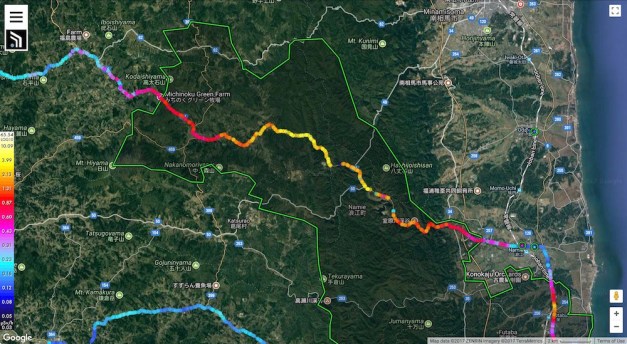 Above: National Route 114 runs through the current exclusion zone in Namie. The area remains evacuated but the road was recently reopened for public use.
National Route 114 in Namie was reopened to public access on Sept 20th of this year. The route, also known as the Tomioka Highway, is a primary thoroughfare which runs east-west in Fukushima, primarily through the mountainous sections of Namie. Prior to the accident it was the major lifeline connecting Fukushima City in the west with the center of Namie and other coastal towns in the east. Since April 2011 the road has been officially closed to public access, as the entire town of Namie was placed under evacuation orders. However, Joe and Kalin shot this video on Rte 114 in Namie in May, 2012, so it was still at least partly accessible then, and to the best of our recollection remained so until Spring of 2013. In March this year, the previously more populated eastern portion of Namie was reopened for residence. But the rest of the town, through which Rte 114 runs, remains part of the “Difficult to return zone” (kikan konnan kuiki), usually marked in red on evacuation maps. It’s been difficult for us to get access to this area in the past, but longtime volunteer KM Aizu recently Safecasted the reopened road. He measured dose rates at 1 meter of up to 5.91 µSv/hr along one stretch. This is somewhat higher than the 5.53 µSv/hr shown by an official survey in August, as reported recently in the Asahi Shimbun. It is also significantly lower than the 19.6 µSv/hr we measured there in Oct-Nov 2011.
KM Aizu commented that while driving on the road, which took about 45 minutes end-to-end, he thought, “It’s been a long time since I’ve been anywhere with dose rates this high.” The portion of Route 6 in front of Fukushima Daiichi is still up to about 5 µSv/hr, he noted, “But this is now the highest dose rate anywhere that is publicly accessible in Fukushima.” As with Rte. 6 and the Joban Expressway, both of which cut through the “Difficult to return zone,” the government advises people not to stop along the way but to enter and leave the area quickly so as to minimize their radiation exposure. Barriers blocking access to side roads have been placed at over 80 locations along Rte 114, and according to our volunteer, the road is regularly patrolled by police cars. (KM Aizu noted that as with other law enforcement teams patrolling and manning roadbocks, the ones he saw were from other prefectures). He also noted that while Rte 6 is lined with houses and businesses to which somewhat efficient decontamination could be done before and after reopening it, Rte 114 runs almost entirely through forested hillsides. The hillsides immediately flanking the road have been remediated to a distance of about 10 meters, but the remainder is essentially untouched. “If people went even a fairly short distance into the mountains,” he observed, “I’m sure the doses would be much higher.”
The reopening of Rte 114 will definitely make travel between Fukushima City and the coast easier for people and goods, and in that sense it will bring benefits and is probably justified. There have been increasing discussions about reopening Rte 399, which runs north-south between Iitate and Katsurao, intersecting Rte 114 in Namie, as well. This would essentially restore the basic road network through the area. Locals generally seem to acknowledge and accept the risks the potential exposures present, but nevertheless we urge people intending to travel in the region to be aware of the situation and to exercise adequate caution.
Fukushima Decontamination Work Racket Yakuza Arrested
 Bags containing debris from decontamination work are piled up in a Bags containing debris from decontamination work are piled up in a tentative storing site in Naraha, Fukushima Prefecture. The location pictured is not where the workers in the article were operating.
Yakuza arrested in Fukushima decontamination work racket
Three men, including a yakuza gang boss affiliated with Yamaguchi-gumi, Japan’s largest crime syndicate, have been arrested on suspicion of illegally supplying workers for government-commissioned decontamination work related to the 2011 Fukushima nuclear power plant accident.
The three are yakuza group leader Hidenobu Maruta, 48, of Tokyo’s Katsushika Ward, construction company executive Shigeki Yamamura, 59, of Koriyama, Fukushima Prefecture, and Akio Kitano, 51, an unemployed resident of Saitama, Tokyo police announced Sept. 27.
All three deny the allegations of employment brokering without a license, a violation of the Employment Security Law, and intermediate exploitation, which is banned under the Labor Standards Law.
Maruta and Yamamura are accused of supplying two workers from January 2015 to March 2016 to a sub-subcontractor who carries out decontamination operations for the government project, and receiving 160,000 yen ($1,430) together in commission without consent from the labor ministry.
The cleanup work was conducted in Tomioka, Fukushima Prefecture.
Maruta and Kitano are suspected of taking commission amounting to about 920,000 yen from the wages of those two workers, according to the police department in charge of organized crime.
The three suspects are said to have shared cut of 2,000 yen to 3,000 yen from each of the workers’ 16,000-yen daily wage.
Further to the exploitation of the aforementioned two workers, the suspects are believed to have received about 10 million yen collectively through brokering about 10 other workers to the sub-subcontractor.
http://www.asahi.com/ajw/articles/AJ201709280045.html
3 nabbed over alleged illicit job mediation for Fukushima cleanup workers
Police on Sept. 27 arrested three people, including a high-ranking member of a gang affiliated with the Yamaguchi-gumi crime syndicate, on suspicion of illicitly introducing workers to other businesses to engage in Fukushima decontamination work.
The three suspects, including a gang member in his 40s, were arrested on suspicion of violating the Employment Security Act by mediating in paid work without permission. Police believe that the service charges the suspects received were being used to fund gang activities.
Investigators said that the three are suspected of having introduced decontamination workers to other businesses since 2014 and charging introduction fees, despite lacking permission from the Minister of Health, Labor and Welfare that is required by law.
A consulting company based in Tokyo’s Nerima Ward that was effectively run by the suspects’ gang dispatched workers to decontamination zones through other businesses. The workers reportedly engaged in decontamination work in Fukushima Prefecture.
In January 2013, Yamagata Prefectural Police arrested a high-ranking member of a gang affiliated with the Sumiyoshi-kai crime syndicate on suspicion of violating the worker dispatch law in connection with the dispatch of workers engaging in Fukushima-related decontamination work.
http://mainichi.jp/english/articles/20170927/p2a/00m/0na/015000c
Thin Lichen Exhibits Remarkable Radioactivity Bioaccumulation in Iwate

Via Marco Kaltofen
From our sampling with Fairwinds in Iitate, Japan; thin layer of lichen exhibits remarkable bioaccumulation of environmental radioactivity.
FUKUSHIMA : The silent voices
Documentary: A young Japanese filmaker expatriated in France goes back to her birthplace near Fukushima City.
Six years after the nuclear disaster, she’s aiming to re-open the debate
with her family on this catastrophe which became a taboo topic.
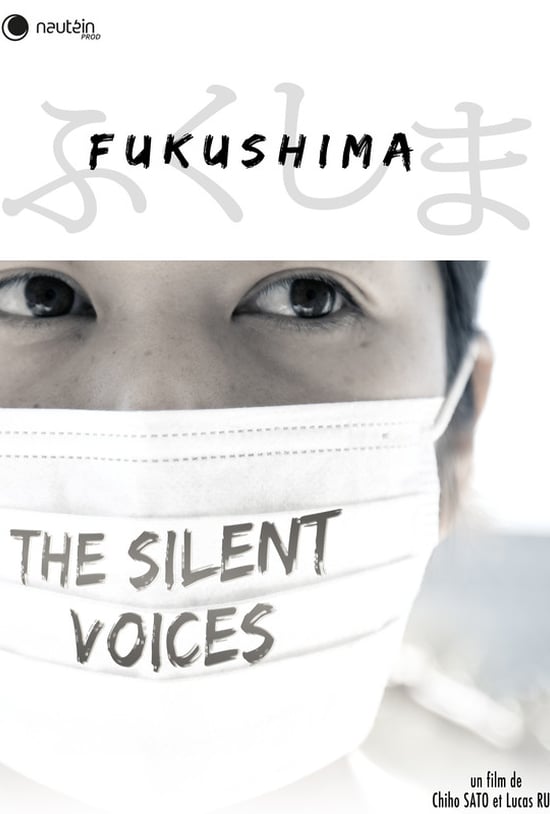
“” My name is Chiho SATO, I live in France for 5 years and I was born in Fukushima.
My parents and grandparents still live 60 km from the Fukushima Daiichi nuclear plant in what is called “the voluntary evacuation zone”.
More than four years after the disaster, radioactivity, invisible but omnipresent, has gradually disappeared from the minds of the inhabitants of the region.
Far from the dramatic and anxiogenic images frequently shown in Europe, I directed an intimate documentary.
A touching testimony about the inhabitants of one of the most radioactive regions in the world.
My objective: Re-open the debate on the situation in Fukushima by including the voice of the inhabitants themselves. “”
https://vimeo.com/ondemand/fukushimathesilentvoices/213498053
Please read also my previous articles about this excellent documentary, the best about Fukushima in my humble opinion:
“The Silent Voices”: what is really to be living within the Fukushima disaster
Chiba court recognizes nuke disaster evacuees’ ‘loss of hometown’ for first time
 Lawyers for the plaintiffs in a lawsuit seeking damages from the government and TEPCO for residents who evacuated to Chiba Prefecture following the 2011 Fukushima nuclear disaster hold up banners reading “Government not liable,” left, and “TEPCO must pay portion of compensation,” right, in front of the Chiba District Court on Sept. 22, 2017.
When on Sept. 22 the Chiba District Court ordered Tokyo Electric Power Co. (TEPCO) to pay some 376 million yen in damages to a group of Fukushima nuclear disaster evacuees, it gave concrete recognition to the evacuees’ loss — of hometowns, jobs and personal relationships — for the first time.
Six and a half years after the disaster, even in areas where evacuation orders have been lifted, the reconstruction of the communities that once thrived there is still a distant prospect. However, though it absolved the government of legal liability, this court ruling — the second in a slew of class action suits filed against TEPCO and the government — can be said to be a breakthrough far exceeding previous compensation levels.
“The Maebashi District Court (in March) recognized the responsibility of both the government and TEPCO, but this ended up feeling like a victory in name only, with no ‘reward.’ But it can be said that the Chiba (District Court) decision finally reaped ‘rewards,”’ commented lawyer Katsuyoshi Suzuki, lead counsel of the plaintiffs’ legal team in the Maebashi court case, who was at a gathering in Chiba awaiting the Sept. 22 ruling.
The Maebashi District Court awarded a total of some 460 million yen in damages. However, based on “interim guidelines” set for TEPCO by the Ministry of Education, Culture, Sports, Science and Technology’s Dispute Reconciliation Committee for Nuclear Damage Compensation in August 2011 to ensure swift payouts, it was decided that TEPCO had already paid about 420 million yen. As such, a total of only 38.55 million yen was awarded to 62 of the 137 plaintiffs. Complaints followed that voices of the evacuees decrying their psychological pain had not been heard.
However, in the Chiba case, TEPCO was ordered to pay 42 out of the 45 plaintiffs a total of roughly 376 million yen, even after some 650 million yen was judged as already having been paid by the company under the “interim guidelines.” It was pointed out that the guidelines only set a minimum baseline for compensation, and upon considering the individual cases, the court granted the large damages award.
What stood out was that the court explicitly recognized the payout as compensation for the loss of hometowns, jobs and personal relationships suffered by the nuclear disaster evacuees. The majority of the plaintiffs in the Chiba case were residents of designated evacuation zones, and claimed they lost their livelihoods, relationships and local customs to the nuclear disaster, and were stripped of their right to live a peaceful life. They had sought 20 million yen in compensation each, saying that the interim guidelines did not accurately reflect the pain of losing their hometowns.
Concerning communities where the evacuation orders had been lifted by this spring, including the village of Iitate, Fukushima Prefecture, TEPCO cited falling radiation levels and infrastructure restoration as evidence that the plaintiffs’ claim that they lost their hometowns permanently was false. As such, TEPCO argued that their current compensation standards were sufficient.
However, even in areas where evacuation orders have been lifted, only roughly 10 percent of former residents have returned. The court decision stated, “(The plaintiffs) have lost their close connections to their local communities over a substantial period of time. Simply lifting evacuation orders will not immediately relieve this suffering,” awarding 36 of the plaintiffs an average of some 3 million yen each. Nevertheless, some of the plaintiffs are not satisfied by the results.
“Our lives were disrupted,” said Michiko Saito, 56, who evacuated from the Odaka district of Minamisoma, Fukushima Prefecture, to Yachimata, Chiba Prefecture. “Even if the money is returned to us, we will never get our hometowns back.”
https://mainichi.jp/english/articles/20170923/p2a/00m/0na/018000c
Over 30µSv / h Along Side of Recently Fukushima Reopened Route 144
Via Oz Yo
Over 30μSv/h was read along side the recently-reopened Route 114 in Fukushima, September 20, 2017. It is insane for the government to give its green light for people to use that road.
6.5 years mean nothing here. Nothing at all.

1 This Month
5 January -Webinar-What is Trump’s Golden Dome?
REGISTER AT Massachusetts Peace Action Education


New book – https://www.amazon.com/dp/1923372157?utm_source=substack&utm_medium=email
Now until to February 10, 2026 Radioactive waste storage in France: the debate is finally open! How to participate?
-
Archives
- December 2025 (358)
- November 2025 (359)
- October 2025 (377)
- September 2025 (258)
- August 2025 (319)
- July 2025 (230)
- June 2025 (348)
- May 2025 (261)
- April 2025 (305)
- March 2025 (319)
- February 2025 (234)
- January 2025 (250)
-
Categories
- 1
- 1 NUCLEAR ISSUES
- business and costs
- climate change
- culture and arts
- ENERGY
- environment
- health
- history
- indigenous issues
- Legal
- marketing of nuclear
- media
- opposition to nuclear
- PERSONAL STORIES
- politics
- politics international
- Religion and ethics
- safety
- secrets,lies and civil liberties
- spinbuster
- technology
- Uranium
- wastes
- weapons and war
- Women
- 2 WORLD
- ACTION
- AFRICA
- Atrocities
- AUSTRALIA
- Christina's notes
- Christina's themes
- culture and arts
- Events
- Fuk 2022
- Fuk 2023
- Fukushima 2017
- Fukushima 2018
- fukushima 2019
- Fukushima 2020
- Fukushima 2021
- general
- global warming
- Humour (God we need it)
- Nuclear
- RARE EARTHS
- Reference
- resources – print
- Resources -audiovicual
- Weekly Newsletter
- World
- World Nuclear
- YouTube
-
RSS
Entries RSS
Comments RSS
 nuclear-news