Not contented with its media strong censorship and its 2013 passed State Secrecy Law discouraging any possible whistleblower inside Japan , Japan’s government is now directing its Fukushima denial propaganda toward the international community, in preparation of the 2020 Tokyo Olympics venue and its numerous visitors to come, and also to encourage its Asian neighbor countries to lift their import restrictions, their radiation contamination tests, for them to buy anew Eastern Japan’s agricultural and marine products.
Its Ministry of Environment has added a new segment to its website on radioactive decontamination in Fukushima Prefecture to promote the ‘understanding of progress’ in Fukushima’s environmental recovery among people residing outside Japan.
The irony is that they have the balls to call one of their programs, the Fukushima Diairies. I think many of you remember that the Fukushima Diary Blog was one of the very few blogs informing us about the Fukushima catastrophe from 2011 to 2016. Especially during the first year, 2011, the blogger, Iori Mochizuki, was the only one bringing out Fukushima news from inside Japan. http://fukushima-diary.com/

New Website Segment on Fukushima Environmental Remediation Updates Content, Offers Overseas TV Shows Produced with MOEJ Cooperation
TOKYO, Dec. 11, 2017 /PRNewswire/ — The Ministry of the Environment, Japan (MOEJ) has added a new segment to its website on radioactive decontamination in Fukushima Prefecture, introducing broadcast programs and events produced with the MOEJ’s cooperation. The main purpose of the new website segment is to promote the understanding of progress in Fukushima’s environmental recovery among people residing outside Japan.
The MOEJ cooperates with the production of select broadcast programs aired overseas to help widely communicate correct information on Fukushima and eliminate misconceptions about the area. The ministry has added this new website segment to allow users to view such programs, free of charge.
Specifically, the MOEJ has so far cooperated with the production of certain programs aired mostly in Southeast Asia on Discovery Channel and CNBC Asia Channel Japan.
To access the new website segment, follow one of the two links below:
– YouTube (Discovery: English)
(Outlines of the programs)
— Program title: Fukushima Diaries
— Program outline: The 30-minute show was produced by Discovery Channel, the world’s leading documentary channel, with the MOE’s cooperation, and was broadcast throughout the Southeast Asian region and Japan, together containing some 27 million viewing households.
In the show, three bloggers from overseas each visit a different destination within Fukushima Prefecture following their respective interests. They report discoveries and moving experiences they have had respectively in Fukushima. Their themes are varied, including (1) comprehensive conditions of environmental remediation, (2) tourism and food, and (3) technological innovation and development.
– CNBC ASIA (Channel Japan)
— Program outline: The documentary series of four 15-minute episodes on diverse topics related to Fukushima’s environmental recovery was developed and produced by TV-U Fukushima (TUF). The series features key persons who have led Fukushima’s environmental recovery and reconstruction moves in their own respective fields. Watching the stories of their professional and personal commitments, viewers will see great progress in those moves, as well as appreciating the prefecture’s appeals as seen from the respective key characters’ expert viewpoints.
— 3rd & 4th episodes and Highlights version will be broadcast sequentially.
– Episode 1: How Did Foreign Students Feel About Fukushima?
The storyteller featured in this episode is William McMichael, Assistant Professor, Fukushima University International Center. McMichael covered up close the 21 students from abroad attending the 12-day Fukushima Ambassadors Program held in August 2017 to tell the story of changes in their thoughts and feelings during their stay.
– Episode 2: Meeting Challenge of Revitalizing Fukushima by Younger Generation
Riken Komatsu and Hiroshi Motoki, both leading local efforts to revitalize Iwaki City, Fukushima, are the two storytellers of this episode. Komatsu talks about UDOC, an alternative multipurpose space he opened in May 2011, and the Sea Lab where fish caught close to the Fukushima Daiichi Nuclear Power Plant are tested for radioactive concentration. Meanwhile, Motoki discusses the Tomato Theme Park — Wonder Farm, a unique facility he opened in 2016 by combining agriculture and tourism. As they talk, both express positive thoughts about Fukushima’s future.
– Episode 3: Creating a New Fukushima by Robotics
Characters featured in this episode are Koki Watanabe and Yuna Yasura, both engaged in robotics. Watanabe is developing underwater robots capable of moving freely deep in the ocean and exploring narrow passages, while Yasura wearable robots (muscle tools) to assist people’s motion function, both at their local companies in the Hamadori district, Fukushima. The episode focuses on their dedicated professional efforts, as well as their dreams and shared belief that for Fukushima’s true reconstruction, vibrant local industries are necessary to support the local economy.
– Episode 4: Record of Research as a Physicist in Fukushima for 6 Years – Ryugo
Ryugo Hayano, Professor Emeritus at the University of Tokyo, has been involved energetically with Fukushima as a “nuclear physicist who acts” since the calamitous disaster. This episode presents a wide range of Dr. Hayano’s achievements related to recovery from the disaster, including the tweets he began as an expert immediately after the disaster hit, his tests of the Fukushima people’s exposure to radiation and related research, his development of a whole-body radiation counter for children, his joint research with local high-school students and his vigorous communication of related information for audiences both within Japan and without.
SOURCE Ministry of the Environment, Japan
December 12, 2017
Posted by dunrenard |
Fukushima 2017 | Contaminated Foods, Denial Propaganda, Fukushima, Lies & Cover-up, Tokyo Olympics |
Leave a comment
A report from NIRS (Nuclear Information and Resource Service, in USA)
The Japanese government has created foreign language websites which provide the information about radiology in general and the radiological situation in Fukushima. Journalists around the world, our friends and acquaintances living abroad are continually asking us whether the information that these Japanese central and local government websites present to the international community is correct or not. The following is our answer.
Appeal from a Japanese Anti-nuclear Activist Etsuji Watanabe
Nov.29 2017 Revised (Oct.12 2017)
Etsuji Watanabe: Member of the Japanese anti-radiation citizen-scientist group ACSIR (Association for Citizens and Scientists Concerned about Internal Radiation Exposures)
Special thanks to Mrs Yuko Kato, Mr Ruiwen Song, Ms Nozomi Ishizu, Mrs Kurly Burch, Ms Jennifer Alpern, and Mark Bennett Yuko Kato: Evacuee from Fukushima, member of the Kansai plaintiff group for compensation against TEPCO and government Ruiwen Song: Taiwanese freelance journalist.
The Japanese government has created foreign language websites which provide the information about radiology in general and the radiological situation in Fukushima. Journalists around the world, our friends and acquaintances living abroad are continually asking us whether the information that these Japanese central and local government websites present to the international community is correct or not. The following is our answer.
The stories uploaded on these websites give people the impression that worrying about radiation is unnecessary. As for this impression, has Fukushima now really become a safe place to live or visit?
First of all, Japanese anti-nuclear activists and evacuees from contaminated areas in Fukushima and Kanto, have been warning people all over the world NEVER to trust what the Japanese government is saying about both radiology in general and the specific radiological health effects caused by the Fukushima Dai-ichi nuclear power plant disaster (hereafter Fukushima accident) following the Great East Japan Earthquake and Tsunami on March 11th, 2011.
Prime-minister Shinzo Abe and the Japanese government as a whole including Fukushima prefectural government have repeatedly declared that “with regard to health-related problems (of the Fukushima accident), I (Abe) will state in the most emphatic and unequivocal terms that there have been no problems until now, nor are there any at present, nor will there be in the future.” (Abe’s statement at a news conference). See the Japanese government website here.
This claim is completely fabricated and false. In making these claims, the Japanese government is blatantly ignoring the vast number of studies in radiological sciences and epidemiology that have been accumulating historically. By engaging in this behavior, the Japanese government has been systematically deceiving the public, both nationally and internationally.
Just think of the amount of radioactivity released during the Fukushima accident. As you know, one of the standards used to assess the extent of radioactive releases and longtime human health effects is the levels of cesium 137 (Cs137) released into the environment. Based on the Japanese government data (which is an underestimate), the Fukushima accident released 168 times the Cs137 discharged by the atomic bomb dropped on Hiroshima. This amount is almost the equivalent to the total atmospheric nuclear explosions conducted by the United States on the Nevada test ground. The Nevada desert is not designated as a residential area, but the Japanese government has recommended evacuated residents return to live in areas with radiation levels of up to 20 mSv/year. By removing economic support for evacuees, the Japanese government has forced many people who had evacuated from these areas to return.
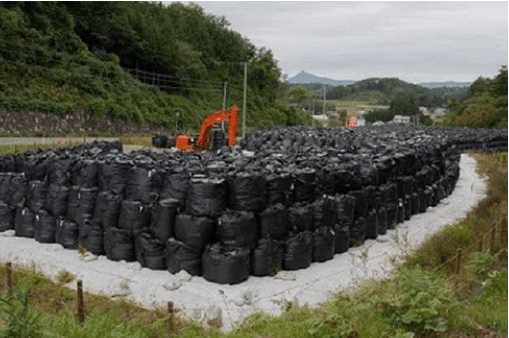
We estimate that in the Fukushima accident approximately 400-600 times the Cs137 were released into the atmosphere by the atomic bomb blast in Hiroshima. Roughly 20% of the Cs137, or 80-120 Hiroshima-equivalents, were deposited on Japan. Of this, the decontamination efforts have only been able to retrieve five Hiroshima-equivalents. The waste from decontamination efforts is typically stored all over Fukushima mostly in mountainous heaps of large plastic bags. This means that 75-115 Hiroshima-equivalents of Cs137 still remain in Fukushima, surrounding prefectures, and all over Japan.
In addition, the Japanese government is now planning to reuse the retrieved contaminated soil under 8000Bq/kg in public works projects all over Japan. This self-destructive program has now been partially started without any announcements as to where the contaminated soil are and will be reused, under the pretext of “avoiding damage caused by harmful rumors”. This project is tantamount to scattering lethal fallout of Cs137 equivalent to about 5 times that of Hiroshima bomb all over Japan. The Japanese government is literally behaving like a nuclear terrorist.
Do you really imagine that Fukushima prefecture and surrounding areas, contaminated as they are to levels similar to the Nevada test site, is really a safe place for people to permanently live, or for foreign tourists to visit and go sightseeing?
Regrettably, we must conclude that it is not, for either residents or tourists the situation in Fukushima is not safe.
These websites also point out that the international annual dose limit for the public is at 1mSv, but this level is easily exceeded by only one CT-scan, insinuating that this 1mSv standard is set too low and thus not a useful indicator.
CT-Scans are often cited as if they had no radiation risks, But this is not true. A recent study clearly shows that every CT-scan (about 4.5mSv irradiation) increases the risk of cancers in children by 24%. See the website here.
In Fukushima the allowable level of radiation per year for residents is now 20mSv. Can you imagine having 4-5 CT-scans every year?
One of the websites states: “In Fukushima, the indoor radiation doses are now so reduced that no radioactive cesium can be found in the air. Therefore, no radioactive particles can invade the human body during breathing.” What do you think of this statement?
The Japanese government also ignores the long-term peril caused by “hot particles” ――micron-and- nano-sized radioactive particulates――which, if inhaled or absorbed into the human body, may lead to many kinds of cancers and other diseases including cardiac failure. We should consider internal irradiation to the cells near the radiation sources to be 500 times more dangerous than external irradiation because particles inside the body radiates very near or even inside cells, causing intensive damage to DNAs and other cell organs such as mitochondria.
These websites explain that there exists not only artificial but also natural radioactivity, thus people are living in an environment surrounded by radiation all the time in everyday life.
One of the main tactics that the Japanese government often uses to propagate the “safety of low level irradiation” is to compare artificial radioactivity with natural radioactivity. But this logic is a methodological sleight of hand. It is crystal-clear that even exposure to natural radioactivity has its own health risks. Cancers sickened and killed people long before artificial radioactivity was used. For example, Seishu Hanaoka, one of the founders of Japan’s medicine, carried out 152 breast cancer surgeries from 1804 to 1836.
Both kinds of radioactivity have their own health risks. Risks caused by artificial radioactivity should not be compared but be added to the natural radioactivity risks as they both lead to the accumulation of exposure.
For example, potassium 40 (K40) is a typical natural radioactive nuclide. According to the Japanese government, the average internal exposure dose for adults from K40 is about 4,000Bq/year or 0.17mSv/year. See the website here (in Japanese).
The ICRP risk model (2007) allows us to estimate the approximate risk posed by K40. The calculation shows that K40 is responsible for approximately 4,000 cancer cases and 1,000 deaths every year. If the same amount of radiation was added to that of K40 in the human body by artificial sources, the cancers and mortalities would be doubled to 8,000 and 2,000 a year, respectively. Based on the ECRR (2010) model, which criticizes the ICRP risk model as a severe underestimate, these figures should be multiplied by 40, reaching 320,000 and 80,000, respectively.
The extract you cite from the Fukushima government website is completely fake: “In Fukushima, the indoor radiation doses are now so reduced that no radioactive cesium can be found in the air. Therefore, no radioactive particles can invade the human body during respiration”. Reports from civic radiation measurement stations refute this claim. For example, dust collecting paper packs of vacuum cleaners used in Iwaki City, Fukushima prefecture, are radiologically measured and 4,800-53,900Bq/kg radioactive cesium was detected in Oct-Dec 2015. See the website here (in Japanese).
One of the websites says that the Fukushima prefecture has conducted whole-body counter screenings of the 170,000 local population so far but cesium was rarely detected.” Does this mean that we can safely consume food from Fukushima, and Fukushima residents are no longer being exposed internally to radiation?
This is a typical example of demagogy by the Japanese government: vague expressions lacking specific data, using the words “safe and secure” without clear explanation. In reality, the government has not publicized any data indicating serious irradiation of the population. For example, you mentioned the Fukushima prefectural government website saying that whole-body counter screenings of 170,000 members of the local population have found radioactive Cs only in very few cases. However, the fact that no specific number is given makes the statement suspicious.
These statistics, more than likely, exclude many firefighters or other municipal employees who, at the time of accident, helped local residents evacuate from a lot of contaminated areas surrounding the defunct Fukushima plant. These people were subjected to serious radiation doses.
Civic groups’ efforts for the disclosure of information has recently prompted city officials near the defunct plant to disclose the fact that it conducted whole-body counter check-ups on about 180 firefighters, nurses and municipal employees. According to Koichi Ohyama, a member of the municipal assembly of Minami Soma, the screening conducted in July, 2011, showed almost all of these people tested positive in Cs. The maximum Cs137 dose among the firefighters was as high as 140,000 Bq. This data reveals a part of the reality of irradiation but it is only a tiny part.
The government websites suggest that no health effects from irradiation have been reported in Fukushima. Is this true? Or have any symptoms appeared that indicate an increase in radiation-induced diseases in Fukushima?
One example is the outbreak of child thyroid cancer, but the Japanese government has been denying the relationship with irradiation from radioactive iodine released from the Fukushima disaster.
Japan’s population statistics reflect the health effects from the Fukushima disaster radioactivity. The following data clearly show that diseases increasing in Fukushima are highly likely to have been radiation-induced.
The Fukushima prefecture website says, “After the Fukushima accident, the Japanese government has introduced the provisional standards for radioactive iodine and cesium. The Fukushima prefectural government subsequently strictly regulated distribution and consumption of food with levels of radioactivity exceeding the provisional standards. Now we have had this new much stricter standard. The distribution and consumption of food exceeding this new standard has been continuously regulated; therefore any food on the market is safe to consume.” Is it true?
As for food contamination, the Japanese government has also tried to cover up the real picture. First, the current government standard for radioactivity in food, 100Bq/kg, is dangerously high for human health, especially for fetuses, infants, children and pregnant women. Even six and a half years after the accident, the Agriculture Ministry of Japan as well as many civic radioactivity measurement stations all over the country have reported many food contamination cases, although the frequency is evidently reduced. See the website here.
The Japanese government has underestimated the danger presented by internal irradiation. But, we must consider two important factors. (1) The wide range of difference in personal radio-sensitivity. According to Professor Tadashi Hongyo (Osaka University Medical Faculty), the maximum difference is as wide as 100 times in terms of biological half-life of Cs137. (2) Recent studies denying that the so-called biological half-life decrease curve actually exists. According to the new model, daily food contamination can cause concentrations to accumulate as time passes. Even a daily 1Bq internal radiation dose from food cannot be safe for human health (details below).
Our recommendation is to be cautious of food or produce from Fukushima and the surrounding areas, and, even if contamination levels are said to have now generally decreased, to avoid jumping to the conclusion that all the food is fit to eat.
We would like to ask about the situations in prefectures surrounding Fukushima. A television program once reported, “As for the safety of Tochigi and Gunma prefectures, few people are raising concern about health effects of radiation.” Is it true that the prefectures somewhat distant from the Fukushima Daiichi plant are now safe with no human risk?
Regarding the radioactive contamination in prefectures surrounding Fukushima, you can refer to the following website.
This article examines the contamination in the Tokyo metropolitan area, but conditions are the same or more serious in Tochigi or other prefectures north of Tokyo, nearer to the defunct Fukushima Daiichi plant.
Another example is the statistics of stillbirth and neonatal mortality in Fukushima and the surrounding five prefectures (Tochigi, Gunma, Ibaragi, Miyagi, Iwate) shown here.
Perinatal mortality in not only Fukushima prefecture but also neighboring prefectures rose 15.6% just 10 months after the accidents. This clearly indicates the existence of some kind of human health damage from radiation.
We would like to ask about the decontamination efforts by famers living in Fukushima and neighboring prefectures. Should we think highly of the farmers measuring the amount of radiation deposited on the surface of soil to create radiation maps for farms, or washing the radiation from the surface of every single tree off the radiation with high-pressure washers? The farmers said that while these methods have been shown to be radiologically effective, their produce did not sell well, because consumers are still feeling anxious about health risks. Does the problem of radioactive food contamination in Japan just end up in whether each consumer personally believes it safe or not?
We must raise a question that, despite the government’s decontamination efforts, a huge amount of radioactive materials deposited in mountainous areas remain untouched. Now they are re-dispersing and re-depositing over wide areas of Fukushima and surrounding prefectures via winds, cars, trains, river water, pollen, spores, emissions from incinerators, in the form of radioactive dusts and particulates, among many others. For an example, see the following website.
So I regret to say that, although these farmers’ endeavors you mentioned are very precious and respectable, they are not sufficient to completely eliminate the risk of radiation exposure from food. The problem exists objectively in the nuclear materials deposited on and in soil, algae, plants, houses, buildings, forests, animal and human bodies, not subjectively in the consumers’ sentiment or psychology.
Japanese experts have recently pitched a cultivation method that can remove cesium by intensive use of potassium fertilizer. Is this method effective at all? Do you have any doubt about their claims?
They seem to be among those experts who have been criticizing the general public’s tendency to demand “zero irradiation risk” as an obstacle to Fukushima reconstruction.
As you know, cesium (Cs) has chemically similar characteristics to potassium (K). So it is true that higher levels of application of potassium fertilizer lowers the plant’s absorption, and therefore concentration, of radioactive Cs, decreasing Cs137/134 concentrations in produce, often to below the government standard of 100Bq/kg. But the following problems remain: (1) This procedure can prevent Cs transfer from the soil to produce only partly, not completely; (2) This process raises the potassium concentration in the produce and therefore heightens the burdens on certain human organs such as kidneys, the heart and the nervous system, causing new health risks; (3) Heightened concentration of potassium also leads to the heightened concentration of radioactive K40, so the reduced risk of radioactive Cs lead to an increased risk of internal irradiation by K40.
Even if cesium concentration was reduced by applying more potassium fertilizer than usual, strontium contamination would remain. In Japanese government’s international press campaign as to the Fukushima accident, almost nothing has been said about strontium. If you have any information on strontium contamination, let us know.
We regret that the information about strontium that you are asking for is very limited and searching for it is also a challenge for us. The Japanese government and research institutes under the government have reported very limited data regarding strontium contamination. But it is important that the Japanese government admits the fact of strontium contamination within 80km from the defunct Fukushima plant. See the website here.
Did you know that the US Department of Energy data on the strontium contamination of soil in Japan and its visualization (in Japanese) can be seen on the websites here?
Some Japanese experts say, “the Japanese government has declared that no health effects from irradiation below 100mSv (or 100mSv/year) have been confirmed.” Some farmers have established a private food standard of 20Bq/kg, much lower than the Japanese government standard of 100Bq/kg. Do you think that doses under 100mSv or under 20Bq/kg are safe and secure?
As you mentioned, the Japanese government claims that no scientific studies verify that irradiation of 100mSv or less poses a threat to human health, suggesting that irradiation under 100mSv has no risk. This, however, is false. The government is fabricating this information. In fact, very many scientific studies have already confirmed and proven health effects induced by irradiation under 100mSv. For example, see the websites below.
The Japanese government is using the term “100mSv” in a deliberately ambiguous and confusing manner. The expression 100mSv can have three meanings: (1) a one-time irradiation dose, (2) cumulative irradiation doses, or (3) annual irradiation doses. So 100mSv is not the same as, nor equal to the 100mSv/year that you mentioned in parenthesis. The latter amounts to a 1Sv in cumulative dose over 10 years (which is an up to 10% lethal dose), and 5Sv over 50 years (which is a 50% lethal dose). The present government standard for evacuees to return, 20mSv/year, means that living there for 5 years leads to a cumulative dose of 100mSv, at which the Japanese government admits clear health risks.
Regarding 20Bq/kg as some farmers’ private food standard, it is critical to pay serious attention to the extraction process of Cs from tissues. Japanese-Canadian non-organic biochemist Eiichiro Ochiai points out in his book “Hiroshima to Fukushima, Biohazards of Radiation” (2014) that, based on the Leggett model, the Cs concentration injected in tissues at one time diminishes relatively quickly for about 10 days in most tissues. After that, processes slow down, tending to become steady. He writes: the decrease of the overall Cs level in the body does not follow an exponential decay curve (p.83). This means that consecutive intake of Cs, even in very low levels, results in the accumulation of Cs in the body. (Incidentally, Ochiai’s book can be downloaded for free from the website below.)
Regarding the Leggett model, see the website below.
Yuri Bandazhevsky considers over 10Bq/kg of radioactive Cs concentrations in the body to be unsafe because even this low level can possibly cause abnormal electrocardiographic pattern in babies, metabolic disorders, high blood pressure, cataracts, and so on.
Therefore, we can conclude unequivocally that neither the irradiation under 100mSv nor the privately set 20Bq/kg food standard are safe and secure.
December 1, 2017
Posted by dunrenard |
Fukushima 2017 | Contaminated Foods, Contamination, Fukushima, Health Problems, Lies & Cover-up, radiation |
1 Comment
“Nothing will ever be the same again and no return to normal is possible.”
The homes of the evacuated areas have remained abandoned for several years after being damaged by the March 2011 earthquake. Many are no longer repairable and must be destroyed.
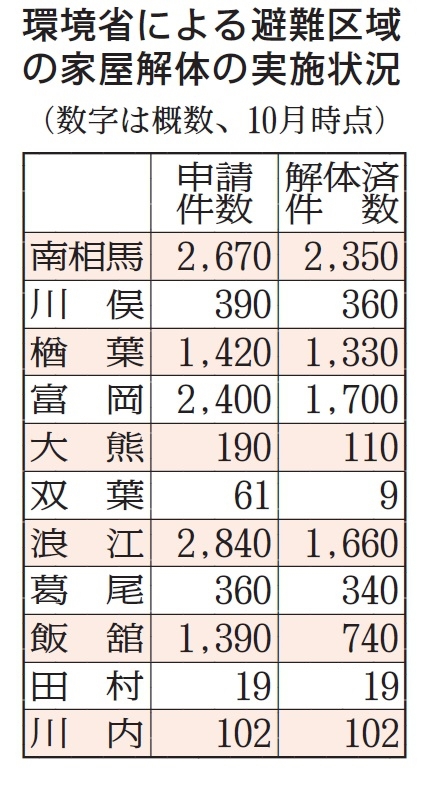
According to the latest data, in the 11 municipalities evacuated, there are 11,800 applications for demolition, not to count the most contaminated areas, modestly called difficult to return zones, 8,700 homes have already been demolished.
The Ministry of the Environment wanted to finish by March 2018, this may not be possible. They were 6,700 last April.
According to the Fukushima Minpo, new demands continue to arrive even after evacuation orders are lifted.
In Tomioka and Namié, where evacuation orders were lifted last April, more than 400 new demolition applications have been filed in each municipality since April 1, 2017, it’s more than the number of demolitions over the same period. The Ministry of the Environment is considering extending the deadline for filing applications.
This destruction of the living environment, landmarks and the past is one of the sad consequences of the nuclear disaster which caused prolonged evacuations. Nothing will ever be more like before and no return to normal is possible.
Demolition of decrepit homes progressing in Fukushima 6 years, 8 months after disaster
Dilapidated houses left in evacuated areas of Fukushima Prefecture following the 2011 nuclear accident at Tokyo Electric Power Co.’s Fukushima Daiichi plant are being torn down at a steady pace of late. Of some 11,800 homes subjected to demolition applications by October in 11 municipalities where evacuation zones were once set up, about 8,700, or 70%, have been scrapped. Difficult-to-return zones are not included in the demolition work. Applications have been increasing even after the start of fiscal 2017 in April in the towns of Namie and Tomioka where evacuation orders were lifted this spring. As of last year, the Environment Ministry had targeted work completion by the end of fiscal 2017 through next March. But attaining the goal remains uncertain at present.
■Accelerating demolition work
Of the residences for which demolition applications were in place, all 19 have been dismantled in Tamura city and all 102 in Kawauchi village. About 360 houses out of some 390 have been taken down in Kawamata town, about 1,330 out of some 1,420 in Naraha town and about 340 out of some 360 in Katsurao village, marking a progress rate of more than 90% each. In Minamisoma city, about 2,350 homes have been demolished, nearly 90% of some 2,670 requested.
As of last April, approximately 6,700 houses had been dismantled, about 60% of some 10,900 applied for. In half a year since then, roughly 2,000 residences were removed. The ministry spurred surveys, preparatory work and other undertakings necessary for demolition in an effort to establish a living environment for returning evacuees, focusing on areas where evacuation has been terminated.
■Demolition requests greater than expected in Namie, Tomioka
Of municipalities where evacuation orders were eliminated this spring, Tomioka saw demolition work completed on some 1,700 houses, about 70% of almost 2,400 targeted, Namie on roughly 1,660, approximately 60% of some 2,840, and Iitate village on about 740, only 50% of some 1,390. Notable are swelling demolition applications in Tomioka and Namie, where more than 400 requests have been submitted each since the start of fiscal 2017, far exceeding the pace at which demolition work was assumed to be undertaken for completion by the end of the fiscal year. According to the ministry, many evacuees live in places far away from their hometowns, requiring substantial time for them to confirm the current status of their houses before applying for demolition. Against this backdrop, it is set to wait and continue accepting further applications.
If the demolition of aging houses is prolonged, they pose the risk of collapsing, possibly causing adverse effects on the hygienic environment around them. “We have to undertake demolition work while securing safety amid progress in the permanent return of evacuees,” said an official of the ministry’s environment office in Fukushima, indicating difficulty to accelerate the work drastically. “But we want to complete the work as soon as possible.”
November 25, 2017
Posted by dunrenard |
Fukushima 2017 | Fukushima, Homes Demolition |
Leave a comment
“To revitalize Fukushima Prefecture”, signing of a technological cooperation agreement with NEDO (organization for the development of new energies and industrial technologies), for tests of drones and robots ; construction of a huge site of 50 hectares straddling the municipalities of Minamisoma and Namie …
Koriyama, Fukushima Pref., Nov. 22 (Jiji Press)–The New Energy and Industrial Technology Development Organization on Wednesday concluded a cooperation pact with the Fukushima prefectural government on the development of technologies for demonstration tests for drones and robots.
The organization, better known as NEDO, aims to establish technologies to accurately measure the durability and safety of drones and robots, utilizing the Fukushima Robot Test Field, a planned large test site over 50 hectares that straddles the city of Minamisoma and the town of Namie in a coastal region in the northeastern Japan prefecture.
The Fukushima government is building the site as part of efforts to revitalize the coastal region, devastated by the March 2011 earthquake and tsunami and the subsequent nuclear accident at Tokyo Electric Power Company Holdings Inc.’s <9501> Fukushima No. 1 power plant. The test site will partly enter into service in fiscal 2018.
Various demonstration tests will be conducted there, such as one to check a robot’s capabilities to conduct underwater inspections of old dams using a 7-meter-deep pool.
NEDO plans to develop technology to check whether drones can fly stably in strong wind. For this, the central government-linked organization will use a wind tunnel facility to be set up in the site.
November 25, 2017
Posted by dunrenard |
Japan | Drones, Fukushima, NEDO, Robots, technology |
Leave a comment
This study is corrupted science, on the payroll of the nuclear lobby, to justify future ‘radiation safety’ limits increases.In Japan, after the Fukushima Daiichi the radiation ‘tolerance’ threshold was raised from 1mSv/per year to 20mSv/per year, which is the radiation ‘tolerance’ threshold for nuclear plant workers in the other countries. The nuclear lobby would like to raise further all today’s radiation ‘tolerance’ thresholds.
Which radiation risk model did they use? ICRP, I bet, which is silent on inhaled and ingested radioactivity, and underestimates risk of congenital defects by 10,000 times. If you care about the children run like hell and don’t look back. That was Professor Alexey Yablokov’s advice and it still stands with abundant studies made in the past 30 years to back it up.
Evacuating a nuclear disaster areas is (usually) a waste of time and money, says study
Over 110,000 people were moved from their homes following the Fukushima nuclear disaster in Japan in March 2011. Another 50,000 left of their own will, and 85,000 had still not returned four-and-a-half years later.
While this might seem like an obvious way of keeping people safe, my colleagues and I have just completed research that shows this kind of mass evacuation is unnecessary, and can even do more harm than good. We calculated that the Fukushima evacuation extended the population’s average life expectancy by less than three months.
To do this, we had to estimate how such a nuclear meltdown could affect the average remaining life expectancy of a population from the date of the event. The radiation would cause some people to get cancer and so die younger than they otherwise would have (other health effects are very unlikely because the radiation exposure is so limited). This brings down the average life expectancy of the whole group.
But the average radiation cancer victim will still live into their 60s or 70s. The loss of life expectancy from a radiation cancer will always be less than from an immediately fatal accident such as a train or car crash. These victims have their lives cut short by an average of 40 years, double the 20 years that the average sufferer of cancer caused by radiation exposure. So if you could choose your way of dying from the two, radiation exposure and cancer would on average leave you with a much longer lifespan.
How do you know if evacuation is worthwhile?
To work out how much a specific nuclear accident will affect life expectancy, we can use something called the CLEARE (Change of life expectancy from averting a radiation exposure) Programme. This tells us how much a specific dose of radiation will shorten your remaining lifespan by on average.
Yet knowing how a nuclear meltdown will affect average life expectancy isn’t enough to work out whether it is worth evacuating people. You also need to measure it against the costs of the evacuation. To do this, we have developed a method known as the judgement or J-value. This can effectively tell us how much quality of life people are willing to sacrifice to increase their remaining life expectancy, and at what point they are no longer willing to pay.
You can work out the J-value for a specific country using a measure of the average amount of money people in that country have (GDP per head) and a measure of how averse to risk they are, based on data about their work-life balance. When you put this data through the J-value model, you can effectively find the maximum amount people will on average be willing to pay for longer life expectancy.
After applying the J-value to the Fukushima scenario, we found that the amount of life expectancy preserved by moving people away was too low to justify it. If no one had been evacuated, the local population’s average life expectancy would have fallen by less than three months. The J-value data tells us that three months isn’t enough of a gain for people to be willing to sacrifice the quality of life lost through paying their share of the cost of an evacuation, which can run into billions of dollars (although the bill would actually be settled by the power company or government).
The three month average loss suggests the number of people who will actually die from radiation-induced cancer is very small. Compare it to the average of 20 years lost when you look at all radiation cancer sufferers. In another comparison, the average inhabitant of London loses 4.5 months of life expectancy because of the city’s air pollution. Yet no one has suggested evacuating that city.
We also used the J-value to examine the decisions made after the world’s worst nuclear accident, which occurred 25 years before Fukushima at the Chernobyl nuclear power plant in Ukraine. In that case, 116,000 people were moved out in 1986, never to return, and a further 220,000 followed in 1990.
By calculating the J-value using data on people in Ukraine and Belarus in the late 1980s and early 1990s, we can work out the minimum amount of life expectancy people would have been willing to evacuate for. In this instance, people should only have been moved if their lifetime radiation exposure would have reduced their life expectancy by nine months or more.
This applied to just 31,000 people. If we took a more cautious approach and said that if one in 20 of a town’s inhabitants lost this much life expectancy, then the whole settlement should be moved, it would still only mean the evacuation of 72,500 people. The 220,000 people in the second relocation lost at most three months’ life expectancy and so none of them should have been moved. In total, only between 10% and 20% of the number relocated needed to move away.
To support our research, colleagues at the University of Manchester analysed hundreds of possible large nuclear reactor accidents across the world. They found relocation was not a sensible policy in any of the expected case scenarios they examined.
Some might argue that people have the right to be evacuated if their life expectancy is threatened at all. But overspending on extremely expensive evacuation can actually harm the people it is supposed to help. For example, the World Heath Organisation has documented the psychological damage done to the Chernobyl evacuees, including their conviction that they are doomed to die young.
From their perspective, this belief is entirely logical. Nuclear refugees can’t be expected to understand exactly how radiation works, but they know when huge amounts of money are being spent. These payments can come to be seen as compensation, suggesting the radiation must have left them in an awful state of health. Their governments have never lavished such amounts of money on them before, so they believe their situation must be dire.
But the reality is that, in most cases, the risk from radiation exposure if they stay in their homes is minimal. It is important that the precedents of Chernobyl and Fukushima do not establish mass relocation as the prime policy choice in the future, because this will benefit nobody.
Homes should not be abandoned after a big nuclear accident
November 23, 2017
Posted by dunrenard |
Fukushima 2017 | Evacuation, Fukushima, nuclear lobby, Propaganda |
2 Comments
To call that site a storage site is a misnomer. As there will also be incineration and conditioning of radioactive debris there. It would be more accurate to call it a processing and storage facility….. Temporary storage, supposedly for 30 years maximum….
FUKUSHIMA – Disposal began Friday of low-level radioactive waste generated by the Fukushima nuclear disaster, more than six years after the crisis was triggered by the Great East Japan Earthquake and tsunami of March 11, 2011.
A disposal site in Tomioka, Fukushima Prefecture, accepted the first shipment of the waste, which contains radioactive cesium ranging from 8,000 to 100,000 becquerels per kilogram, and includes rice straw, sludge and ash from waste incineration.
The Environment Ministry is in charge of the country’s nuclear waste disposal, which totaled 200,000 tons from 11 prefectures as of the end of September. The majority of the waste, 170,000 tons, originates from the prefecture hosting the crippled nuclear power plant.
“I would like to ask the central government to move this project forward while taking adequate safety steps in mind,” a Tomioka official said. “Building mutual trust with local residents is also important.”
Under the ministry’s policy, each prefecture’s waste is to be disposed of. However, Fukushima is the only prefecture where disposal has started, whereas other prefectures have met with opposition from local residents.
In Fukushima, it will take six years to complete moving the stored waste to the disposal site, the ministry said.
The government “will continue giving first priority to securing safety and properly carry out the disposal with our best efforts to win local confidence,” Environment Minister Masaharu Nakagawa said at a news conference.
The government proposed in December 2013 that Fukushima Prefecture dispose of the waste at the then-privately owned site. The request was accepted by the prefectural government two years later.
To help alleviate local concerns over the disposal, the government nationalized the site and reinforced it to prevent the entry of rainwater.
November 18, 2017
Posted by dunrenard |
Fukushima 2017 | disposal, Fukushima, Radioactive waste, Storage Facility |
Leave a comment
As you may see the Mainichi’s article below does mention the incineration which will take place at this facility. The Asahi ‘s article below on the other hand completely omits to talk about the incineration, lying by omission.
The radioactive debris will be first incinerated to reduce their volume to 1/50 of their initial volume, then processed and stored there. The amount of contaminated soil and other waste reaching up to 22 million cubic meters (metric tons).
However it is important to point out that whatever the type of screening filters used during the incineration they will not retain all the radioactive nanoparticles, that some radioactive nanoparticles will still be released into the air during that incineration.
Thus “storage facility” is a misnomer as it is actually a processing facility before to be a storage facility.
An intermediate storage facility under construction in Okuma, Fukushima Prefecture, in February, with the Fukushima No. 1 nuclear plant in the background
Interim storage site for Fukushima contaminated soil to begin full operations
An interim storage site in Fukushima Prefecture for soil and waste generated when areas affected by the Fukushima nuclear crisis were decontaminated will be put into full-scale operation on Oct. 28, Environment Minister Masaharu Nakagawa said.
Contaminated soil temporarily placed on the premises of the facility, which straddles the prefectural towns of Okuma and Futaba, will be brought into an underground storage site on the property.
The storage site will be the first one in the country to be put into full-scale operation to store contaminated soil and other waste.
“There are numerous challenges that must be overcome, but the start of operations at the facility is an important step toward the final disposal of contaminated soil,” Nakagawa told a news conference on Oct. 24.
The Environment Ministry is constructing the interim storage site on an approximately 16-square-kilometer area around the disaster-stricken Fukushima No. 1 Nuclear Power Plant. Operations at a section of the facility located in Okuma will begin on Oct. 28. After contaminated soil is measured for radiation, the soil will be stored separately at the facility depending on levels of radiation.
Waterproof work has been performed at the site to prevent stored soil from contaminating ground water.
At the site, a plant to incinerate weeds, trees and other flammable materials removed from contaminated soil and a facility to manage incinerated ash containing high levels of radioactive cesium will also be built.
The ministry estimates that the amount of soil and other waste removed from decontaminated sites in the prefecture could reach up to some 22 million cubic meters. Decontamination work is still going on in some areas affected by the nuclear disaster, which broke out in March 2011 following the Great East Japan Earthquake and tsunami.
Most of the soil removed from decontaminated areas was put into bags and temporarily stored at various locations in Fukushima Prefecture. Some of the bags have been brought onto the premises for the interim storage site since March 2015.
The central government intends to build a final disposal site outside the prefecture to complete the disposal of contaminated soil by 2045. However, the government has not worked out a specific plan on the final disposal site, such as its location and the timing of its construction.
Fukushima debris heading to intermediate storage facility
The Environment Ministry on Oct. 28 will start bringing radiation-contaminated soil to an intermediate storage site in Fukushima Prefecture, despite having acquired less than half of the land needed for the overall project.
The ministry’s announcement on Oct. 24 marks a long-delayed step toward clearing temporary sites that were set up around the prefecture to store countless bags of radioactive debris gathered after the triple meltdown at the Fukushima No. 1 nuclear power plant in March 2011.
The entire intermediate storage project will cover a 16-square-kilometer area spanning the towns of Futaba and Okuma around the nuclear plant. It is designed to hold up to 22 million cubic meters of contaminated debris for a maximum period of 30 years.
However, the ministry is still negotiating with landowners on buying parcels of land within the area. As of the end of September, the ministry had reached acquisition agreements for only about 40 percent of the land for the project.
The soil storage facility that will open on Oct. 28 is located on the Okuma side. It has a capacity of about 50,000 cubic meters.
Bags of contaminated soil stored in Okuma will be transferred to the facility, where the debris will be separated based on radiation dosages.
A similar storage facility is being constructed on the Futaba side.
The ministry initially planned to start full-scale operations of the entire storage facility in January 2015. However, it took longer than expected to gain a consensus from local residents and acquire land at the proposed site.
In March 2015, a portion of the contaminated soil was brought to the Okuma facility for temporary storage.
October 28, 2017
Posted by dunrenard |
Fukushima 2017 | Fukushima, Futaba, Incineration, Interim Storage, Okuma |
Leave a comment






 nuclear-news