This documentary investigates and exposes the plans of Japanese Prime Minister Shinzo Abe to bring the Olympics baseball games to contaminated Fukushima. Although there is over a million tons of tritium radioactive water in tanks surrounding the plan, thousands of contamined bags of waste and melted nuclear rods still in the broken plants Abe has claimed to the Olympic Committee and world that Fukushima has been decontaminated.
This 2019 documentary looks at the plans of Japan Prime Minister Shinzo Abe to bring the Olympic baseball games to Fukushima during the 2020 Japan Olympic games. It interviews experts, community activists and trade unionists about the reality of Fukushima and the massive propaganda campaign to cover-up the continuing dangers and crisis.
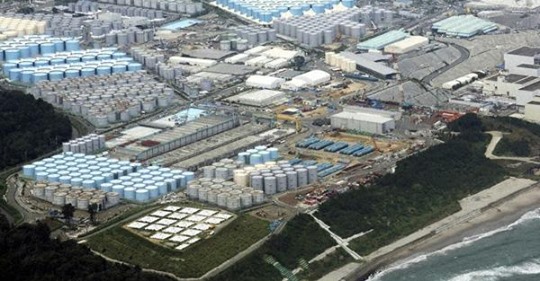
PM Abe told the International Olympics Committee that Fukushima had been decontaminated but there is over 1 million tons of tritium radiocative water in tanks surrounding the broken nuclear reactors, the melted nuclear rods still remain and there are tens of thousands of bags of contaminated radioactive material spread throughout the prefecture.
This documentary hears from people in Japan about the reality of having the 2020 Olympics in Japan and Fukushima.
Additional media:
Toxic water level at Fukushima plant still not under control As Abe Pushes Olympics In Fukushima
In reality, however, the situation is not under control even now.
Over 1 Million Tons Of Radioactive Water Surround Fukushima
The Abe government is trying to release 1 million tons of radioactive water with tritium into the Pacific ocean despite opposition of the fisherman and communities.
Highly contaminated water has accumulated in the No. 1 to No. 4 reactor buildings and turbine buildings of the Fukushima No. 1 nuclear power plant.
July 28, 2019
Almost six years after Prime Minister Shinzo Abe famously declared the contaminated water problem at the Fukushima No. 1 nuclear plant “under control,” today it remains anything but.
Tokyo Electric Power Co. (TEPCO) continues to face difficulties in dealing with water contaminated with radioactive substances at its crippled plant.
About 18,000 tons of highly contaminated water remain accumulated in reactor buildings and other places.
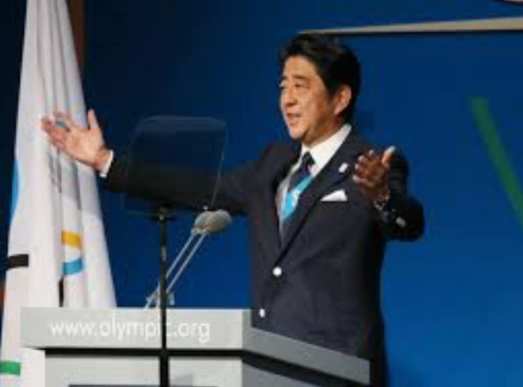
Abe made the declaration in September 2013 while Tokyo was bidding to win the 2020 Summer Games.
In reality, however, the situation is not under control even now.
In a meeting of the Nuclear Regulation Authority (NRA) in June, one of its members, Nobuhiko Ban, told TEPCO officials, “I want you to show whether you have a prospect (for the reduction of contaminated water) or you have given up.”
The water level did not fall as planned in an area of a basement floor at the No. 3 reactor building for two months. Asked why the level did not drop, TEPCO officials offered only vague explanations in the meeting. Ban made the remark out of irritation.
Highly contaminated water that has accumulated in reactor buildings and turbine buildings is a major concern at the Fukushima plant. In addition to water that was used to cool melted nuclear fuel at the No. 1, No. 2 and No. 3 reactors, groundwater also has flowed into those buildings through cracks.
The concentration of radioactive substances in the highly contaminated water is about 100 million times that of the contaminated water that has been processed and stored in tanks.
Immediately after the nuclear accident at the Fukushima plant in March 2011, highly contaminated water leaked into the sea through underground tunnels. As a result, radioactive substances whose concentrations were higher than allowable standards were detected in fish and other seafood.
After the nuclear accident, about 100,000 tons of water initially accumulated in the basement portions of buildings that housed the No. 1, No. 2, No. 3 and No. 4 reactors and buildings that accommodated turbines.
TEPCO has removed groundwater through wells. It also created “frozen walls” in the ground by freezing soil around the buildings. Using those methods, the company has decreased the flow of groundwater into the buildings and, as a result, the level of highly contaminated water has dropped there.
Eight years since the nuclear accident occurred, the volume of highly contaminated water in the buildings has fallen to 18,000 tons. TEPCO aims to reduce the volume further to 6,000 tons by the end of fiscal 2020.
However, work to decrease the water has not progressed as expected.
As for the area in the basement of the No. 3 reactor building, it is known that water used to cool melted nuclear fuel is flowing into the area. But why the water level does not drop only in that area is not known.
If the water level in the building remains high, highly contaminated water there could leak into the ground through cracks when the groundwater level outside the building drops. If the leaks occur, the entire effort to decrease the amount of highly contaminated water will be stalled.
The NRA is also requiring TEPCO to take anti-tsunami measures because if a huge tsunami engulfs the buildings again, it could send highly contaminated water pouring into the sea
However, anti-tsunami measures are also delayed.
The work to close openings that could become locations for leakage of highly contaminated water during a tsunami is expected to continue until the end of fiscal 2021. Such openings exist at 50 locations at present.
Additional construction of sea walls as a safeguard against another huge tsunami like the one triggered by the Great East Japan Earthquake will take time until the first half of fiscal 2020.
The Fukushima Daiichi Nuclear Power Station’s forest of water storage tanks is seen in July 2018 from a Mainichi Shimbun helicopter in Fukushima Prefecture.
July 25, 2019 (Mainichi Japan)
TOKYO — A new estimate claims it will take around 17 years to send treated radioactive water, which is currently stored at the Fukushima Daiichi Nuclear Power Station site as a consequence of the 2011 nuclear disaster, into the sea.
The figures came from calculations by Hiroshi Miyano, visiting professor in nuclear engineering at Hosei University, and head of the investigative committee on the decommissioning of the Fukushima Daiichi Nuclear Power Station at the Atomic Energy Society of Japan.
While the Ministry of Economy, Trade and Industry intends to resume discussions on the methods for disposal of treated water at a subcommittee of experts as early as next month, Miyano called for his estimate to be utilized in calm and quick discussions on the issue.
Miyano drew his attention to auxiliary cooling seawater pumps based on the premises of the nuclear power station, which was severely damaged by the March 2011 earthquakes and tsunamis and the subsequent meltdown they caused.
There are three operational pumps each at the No. 5 and 6 reactors, which are for pumping up seawater to cool apparatus at the nuclear plant. They can individually process 1,800 metric tons of water per hour at the No. 5 reactor, and 2,800 tons of water per hour at the No. 6 reactor.
At nuclear plants across the country, radioactive water containing tritium, which is difficult to remove, is released after being diluted to contain 60,000 becquerels or less of radioactive substances per liter of water, in accordance with criteria set under the Act on the Regulation of Nuclear Source Material, Nuclear Fuel Material and Reactors.
At the Fukushima Daiichi Nuclear Power Station, where decommissioning work is underway, however, stricter standards are being applied, with water such as rainwater accumulated in trenches outside reactor buildings released after being diluted to contain less than 1,500 becquerels of radioactive substances per liter of water.
At present, the nuclear power station site is host to over 950 storage tanks, which together hold more than 1.05 million tons of treated water containing tritium. Were the stricter rules on dilution to be applied, the treated water would amount to some 699 million tons.
The calculations by Miyano were based on the pumps at the No. 5 and 6 reactors working alternately but without interruption for 24 hours a day, 365 days a year. Under such conditions, it is expected that all of the water would be released after about 17 years and 4 months.
The Ministry of Economy, Trade and Industry is investigating a range of potential disposal methods, from releasing the water into the sea, to vaporizing the liquid or storing it for an extended period of time.
In 2016, the ministry came up with an estimate that releasing the water into the sea would take somewhere between 7 years and one month and 7 years and four months, using different preconditions from those employed by Miyano.
Miyano said, “At some point the tanks will deteriorate. This estimate is ultimately just one example, and it could change depending on conditions. But it does show that processing the water is going to take a long time. It’s time to have a calm discussion.”
At TEPCO’s Fukushima Daiichi Nuclear Power Station Unit 1, the top lid of the containment vessel covering the reactor has been shifted (or out of proper position). Because of this, the radiation dose in the building became high, which has been an obstacle to decommissioning work, TEPCO has started to conduct its investigation on the 17th to check the situation of the shifted upper lid and contamination using a robot.
The first unit of Fukushima Daiichi Nuclear Power Plant was affected by the hydrogen explosion at the time of the accident, and the upper lid of the three layers of the containment vessel covering the nuclear reactor was shifted from its proper position.
Because of this, radiation dose around this reactor goes up as high as 2.23 Sv/h.
For this reason, it is necessary to lower the radiation dose either by taking out the fuel left in the spent fuel pool in the Unit 1 building, or by correcting the position of the lid that weighs about 60 tons, or by installing a new cover, etc. On the 17th, TEPCO started to investigate the situation by a remote-controlled robot for more details.
In their plan, first they want to put the robot in the gap between the upper and middle lids among the three layers of lids, then to lower the camera and confirm the condition of the lowest tier, and to wipe the surface of the lid measured with a three-dimensional scanner, in order to collect radioactive materials.
On the 17th, TEPCO started the investigation from 3:00 pm. What they actually doing now is to take photos in order to confirm the view of a robot’s camera.
The investigation will be continued through early next month, of which the results will help TEPCO examine the necessity of decontamination as well as of moving the lids and shielding radiation.
The operator of the damaged Fukushima Daiichi nuclear power plant has begun a robot survey of a dislodged cover of the facility’s No.1 reactor containment vessel. High radiation leaking from the area is hindering Tokyo Electric Power Company, or TEPCO, from carrying out decommissioning work.
The roughly 500-ton, three-layer cover was dislodged by a hydrogen explosion after the March 2011 earthquake and tsunami.
Around the cover, radiation levels as high as 2.23 sieverts per hour have been detected.
TEPCO plans to remove 392 nuclear fuel assemblies from a cooling pool next to the reactor container.
But workers must either put the cover back in place or install a shield to lower radiation levels before starting the work.
The firm began examining the dislodged cover on Wednesday.
Engineers are sending robots between the cover’s top and middle sections to conduct 3D scanning and collect samples of radioactive material from its surface.
TEPCO is to continue the survey through early next month and consider what needs to be done.
The operator of the Fukushima Daiichi nuclear power plant has resumed work to remove nuclear fuel from one of the damaged reactor buildings.
Each of the plant’s reactor buildings has a fuel storage pool inside, separate from the reactors.
In April, Tokyo Electric Power Company, or TEPCO, began removing nuclear fuel assemblies from the storage pool at the No.3 reactor building.
Workers transferred seven fuel units to another pool about 100 meters away before temporarily suspending their work for an inspection of procedures and facilities.
The transfers were resumed on Thursday, after the safety of the procedure was confirmed.
The fuel assemblies are being hoisted out of the pool by remote control, because radiation levels in the area remain high.
The No.3 reactor is the first of the three that suffered meltdowns to have fuel removed from its storage pool. The other two will undergo the process as part of the decommissioning work.
The work began more than four years behind schedule.
TEPCO plans to remove all fuel assemblies in the No.3 reactor building by the end of March 2021.
Researchers used high-powered imaging technology to produce a 3D image of a particle contaminated by uranium from a Fukushima reactor. Photo by University of Bristol/Diamond Light Source
June 26 (UPI) — Researchers have found and studied a fallout particle containing uranium released by the Fukushima nuclear accident. The study offered scientists insights into the sequence of events that led to the Fukushima meltdown.
Researchers successfully isolated a sub-millimeter particle from an environmental sample collected near the Fukushima Daiichi Nuclear Power Plant. Using the powerful light beam at the Diamond Light Source in the United Kingdom, researchers performed high-resolution combined X-ray tomography and X-ray fluorescence mapping. The high-powered imaging technology revealed the presence of uranium trapped around the outside of the highly porous particle.
The so-called microfocus spectroscopy beam at the Diamond Light Source allowed scientists to observe the physical and chemical properties of the uranium incursions. By analyzing the spectral signature that bounced back when targeting incursions with the highly-focused X-ray beam, scientists were able to confirm that the uranium came from Fukushima’s reactor Unit 1.
Though the uranium came from Fukushima’s nuclear reactors, scientists determined that the uranium exists in an environmentally stable state. Its stability has been enhanced by an insulating layer of silicate material.
“While unlikely to represent an environmental or health hazard, such assertions would likely change should break-up of the Si-containing bulk particle occur,” scientists wrote in their paper. “However, more important to the long-term decommissioning of the reactors at the FDNPP … is the knowledge that core integrity of reactor Unit 1 was compromised with nuclear material existing outside of the reactors primary containment.”
Researchers suggest the findings — published this week in the journal Nature Communications — can help them understand the series of events that led to the meltdown at reactor Unit 1.
“I am very pleased that this research has been recognized in Nature Communications. It is a tribute to the excellent collaboration of our partners at JAEA and Diamond Light Source,” Peter Martin, physicist at the University of Bristol, said in a news release. “We have learned an invaluable amount about the long-term environmental effects of the Fukushima accident from this single particle as well as develop unique analytical techniques to further research into nuclear decommissioning.”
Through the analysis of specific fallout particles in the environment, a joint UK-Japan team of scientists has uncovered new insights into the sequence of events that led to the Fukushima nuclear accident in March 2011.
Left: A 3D image that allowed the researchers to discover the distribution of elements within the sample Right: An X-Ray Tomography scan showing the interior structure of the particle Credit: University of Bristol/Diamond Light Source
June 26, 2019
Air-fall material got from the Fukushima Daiichi Nuclear Power Plant (FDNPP) mishap has formerly been isolated and examined from regions across Japan, expanding many kilometers from the facility.
Like the Chernobyl accident of April 1986, the incident at the Fukushima Daiichi Nuclear Power Plant (FDNPP) has been grouped by the International Atomic Energy Agency (IAEA) at Level 7 (the most serious) of the International Nuclear Event Scale (INES) as a result of the enormous amount of radioactivity released into nature.
Indeed, even now, eight years after the accident, significant areas encompassing the plant remain evacuated because of the high levels of radioactivity that still exist. It is anticipated that a few people may be unable to come back to their homes as an outcome of the accident.
Following the isolation of the sub-mm particulate from environmental samples obtained from localities close to the FDNPP, a new study has uncovered new insights into the sequence of events that led to the Fukushima nuclear accident.
The multi-organisation research, led by Dr. Peter Martin and Professor Tom Scott from the University of Bristol’s South West Nuclear Hub in collaboration with scientists from Diamond Light Source, the UK’s national synchrotron facility, and the Japan Atomic Energy Agency (JAEA).
Following the isolation of the sub-mm particulate from natural samples acquired from regions near the FDNPP, scientists used the high-resolution combined x-ray tomography and x-ray fluorescence mapping capacities of the Coherence Imaging (I13) beamline at the Diamond Light Source.
From these outcomes, it was conceivable to decide the location of the various constituents distributed throughout the highly- porous fallout molecule, including the precise places of micron-scale inclusions of uranium around the exterior of the particle.
Scientists then analyzed the specific physical and chemical nature of the uranium utilizing the Microfocus Spectroscopy (I18) beamline at Diamond.
By focusing on the profoundly focused X-ray beam onto the regions of enthusiasm inside the sample and analyzing the particular outflow sign produced, it was conceivable to confirm that the uranium was of nuclear origin and had not been sourced from the environment.
Final affirmation of the FDNPP origin of the uranium was performed on the particulate utilizing mass-spectrometry strategies at the University of Bristol, where the particular uranium mark of the considerations was coordinated to reactor Unit 1.
Just as crediting the material to a particular source on the FDNPP site the outcomes have also given scientists pivotal data to summon a component through which to clarify the occasions that happened at reactor Unit 1.
Dr Peter Martin (University of Bristol) and Dr Yukihiko Satou (Japan Atomic Energy Agency) at the Diamond Light Source facilities.
University of Bristol/Diamond Light Source
Dr. Peter Martin, senior author of the study said, “I am very pleased that this research has been recognized in Nature Communications. It is a tribute to the excellent collaboration of our partners at JAEA and Diamond Light Source. We have learned an invaluable amount about the long-term environmental effects of the Fukushima accident from this single particle as well as develop unique analytical techniques to further research into nuclear decommissioning.”
A Japanese district court has ordered the operator of the Fukushima Daiichi power station to pay about 3,000 dollars in damages to a man who worked at the plant just after the 2011 nuclear accident.
The man says he was exposed to radiation without being informed about high radiation levels in a building where he worked.
In his suit against Tokyo Electric Power Company, or TEPCO, and its subcontractors, the 53-year-old plaintiff demanded more than 100,000 dollars in damages.
He said he was forced to work in the turbine building basement of the plant’s crippled No. 3 reactor while being uninformed of a pool of highly radioactive water there.
The Iwaki branch of the Fukushima District Court on Wednesday handed down the compensation order to TEPCO for psychological damage to the plaintiff caused by working at the plant.
The court said he felt concern and fear while warning signals were sounding that indicated another worker alongside him was exposed to radiation exceeding the utility-set limit of 20 millisieverts.
But the court said 16 millisieverts the plaintiff was exposed to in an hour and half were below a level that would pose a health hazard.
The court also turned down his suits against two subcontractors of the utility. It found them not liable for his damage, saying responsibility for a nuclear disaster lies with the nuclear operator.
The plaintiff’s lawyer said the ruling was the first in favor of a Fukushima Daiichi plant worker, but partly granted his demands. The lawyer added that this will encourage other workers.
TEPCO says it will study the ruling in detail and deal with it sincerely.
This unusual event at Fukushima Daiichi took place in early June. Workers entered a 2nd floor electrical room in the unit 4 turbine building in their socks. The room holds electrical equipment for the nearby reverse osmosis water filtration system. The equipment in this room is all new, post disaster equipment. The room appears to be a “clean” area where they attempt to keep dust and contamination out of the room.
To keep the room clean, workers are expected to change into shoes placed for use in the electrical room to prevent dust and radioactive contamination from entering the room. Instead of switching shoes, five of the ten workers removed their shoes and entered in their socks. TEPCO reports the act of opening and closing the door allowed dust to enter the room. When the workers entered in their socks they picked up contaminated dust on their socks.
The contaminated socks were discovered as workers were scanned at the workers facility. The inside of the shoes they wore that day were contaminated. Everywhere they walked in their socks in the worker facility was also potentially contaminated. TEPCO had to track down the shoes these workers wore by scanning all shoes of those sizes until they found the contaminated ones.
TEPCO did not clarify if there was a lack of enough pairs of shoes or if they were not proper sizes to allow all of the workers to use them. TEPCO is now reviewing the shoe inventory for this room to assure there are enough available for workers to change shoes. Training and new notices about work processes are being added to avoid a repeat problem. Radioactive dust on site can contain insoluble microparticles and alpha radiation. These are an inhalation hazard as well as a problem of external exposure if they become attached to the skin or hair.
Work to remove the highly contaminated units 1-2 vent tower at Fukushima Daiichi took an unfortunate turn last month. The cutting rig had been tested at one of the research facilities and was determined ready to use. When the equipment was assembled on site and work was to commence, it was discovered the crane and cutting rig could not be lifted high enough to place it in the vent tower stack.
With the work now on hold, contractors involved tried to determine what went wrong. Three issues were found that created the cascading error.
The cables that attach the cutting rig to the crane were longer in real life than they were in the on paper design. This caused the cutting rig to sit 3 meters too low.
The crane being used on site was slightly different than what was assumed on paper, this impacted the height the rig could be lifted to.
The engineering survey of the site and ensuing blueprints incorrectly interpreted the total height of the tower by 1 meter. This was due to portions of the base and attachment of the vent tower on site being miscalculated. The base of the tower is obscured by concrete slabs and other shielding put in place after the extent of the dangerous radiation in the tower was better understood.
The solution to part of the problem is to position the crane closer to the tower. This requires the addition of gravel fill to the area to provide the crane a elevated area to sit upon.
The series of miscalculations will cause the work to cut down the vent tower to be delayed until late July 2019.
Prime Minister Shinzo Abe inspects the premises of Tokyo Electric Power Co.’s Fukushima No. 1 nuclear power plant on April 14. Its No. 3 and No. 4 reactors, from left, are seen behind in Okuma, Fukushima Prefecture.
June 11, 2019
Without special protection against radiation, Prime Minister Shinzo Abe stood on elevated ground about 100 meters from the three melted-down reactors at the Fukushima No. 1 nuclear power plant.
“I was finally able to see the view just wearing a normal suit without having to wear protective clothing and a mask (for radiation),” he said on April 14 after hearing explanations from Tokyo Electric Power Co. officials. “The decommissioning work has been making progress in earnest.”
An act of bravado, perhaps. But it was more likely one of the ways Abe and his government want to show that the Fukushima disaster is, as he famously said, “under control.”
Progress has been made, albeit slowly, for the monumental task of decommissioning TEPCO’s crippled nuclear plant.
But radiation levels in certain areas of the plant are still lethal with extended exposure. The problem of storing water contaminated in the reactors continues.
And only recently was TEPCO able to make contact with melted nuclear fuel in the reactors through a robot. The means to extract the fuel has yet to be decided.
However, the government keeps touting progress in the reconstruction effort, using evacuee statistics, which critics say are misleading, to underscore its message.
Abe’s previous visit to the nuclear plant was in September 2013.
“When I conducted an inspection five years ago, I was completely covered in protective gear,” he said at a meeting with decommissioning workers in April. “This time I was able to inspect wearing a normal suit.”
Officials in Abe’s circle acknowledged that they wanted to “appeal the progress of reconstruction” by letting the media cover the prime minister’s “unprotected” visit to the site.
The inspection ground where Abe stood, 35 meters above sea level, and the insides of buses are the only places in the area where protective clothing and masks are not required.
His visit in a business suit was possible largely because the ground was covered in mortar and other materials that prevent the spread of radioactive substances, not because decommissioning work has lowered radiation levels as a whole.
The radiation level at the elevated inspection ground still exceeds 100 microsieverts per hour, making it dangerous for people who remain there for extended periods.
Abe’s inspection ended in six minutes.
The prime minister raised eyebrows, particularly in Fukushima Prefecture, in 2013 when he gave a speech to promote Tokyo’s bid to host the 2020 Summer Olympics.
Concerning the Fukushima nuclear plant, he told International Olympic Committee members, “Let me assure you, the situation is under control.”
An hour before he inspected the plant in April, Abe attended the opening ceremony of the new government building of Okuma, one of the two towns that host the nuclear plant.
The ceremony followed the lifting of an evacuation order for part of the town on April 10.
“We were able to take a step forward in reconstruction,” Abe said.
The central government uses the number of evacuees to show the degree of progress in reconstruction work.
In April 2018, Abe said in the Diet that the lifting of evacuation orders has reduced the number of evacuees to one-third of the peak.
According to the Reconstruction Agency, the number of people who evacuated in and outside of Fukushima Prefecture, including those who were under no orders to leave, peaked at about 160,000. But the initial evacuation orders for 11 municipalities in Fukushima Prefecture have been gradually lifted, and the agency now puts the total number at about 40,000.
About 71,000 people were officially registered as residents of areas that were ordered to evacuate. Now, only about 11,000 people live in those zones.
This means that about 60,000 people have not returned to the homes where they were living before the nuclear accident unfolded in March 2011.
The gap of 20,000 can be attributed to how the agency classifies or declassifies evacuees.
NOT COUNTED AS EVACUEES
The Reconstruction Agency sent a notice in August 2014 to all prefectures that have counted the number of evacuees.
It defined “evacuees” as people who moved to different places because of the nuclear disaster and have the “will” to return to their original homes.
The notice also said that if it is difficult to perceive their “will,” they can be regarded as people who have ended their evacuation if they bought new homes or made arrangements for new accommodations.
Based on the notice, people in Fukushima Prefecture who have bought new homes during their evacuation or settled down in public restoration housing or disaster public housing are regarded as living “stable” lives and are not counted as evacuees.
“It is not a problem because we continue supporting them even if they are removed from the evacuee statistics,” a prefectural government official said.
An official of the Reconstruction Agency said, “The judgment is made by each prefecture, so we are not in a position to say much.”
However, the prefecture has not confirmed all evacuees’ will to return to their homes. In addition, those who are removed from the list of evacuees are not informed of their new status.
Many people bought homes in new locations during their prolonged evacuations although they still hope to return to their hometowns in the disaster area.
Yumiko Yamazaki, 52, has a house in Okuma in a “difficult-to-return” zone.
But because she moved to public restoration housing outside of the town, she is not considered an evacuee by the agency and the prefecture.
“I had to leave my town although I didn’t want to,” Yamazaki said. “It is so obvious that the government wants to make the surface appearance look good by reducing the number of evacuees.”
“I can’t allow them to try to pretend the evacuation never happened,” Yamazaki said.
Critics say the central government’s emphasis of positive aspects and the downplaying of inconvenient truths in the evacuee statistics have much in common with its response to the suspected nepotism scandals involving school operator Moritomo Gakuen and the Kake Educational Institution.
“This is an act to socially hide the real number of evacuees, which could lead to a cover-up of the seriousness of the incident,” said Akira Imai, chief researcher of the Japan Research Institute for Local Government who has conducted surveys among evacuees. “The evacuee number is an index that is used to consider measures to support evacuees. The current situation should be reflected properly in the numbers.”
But the central government continues to appeal “reconstruction” to the public.
On the night of May 10, Abe had dinner with all-male idol group Tokio at a pizza restaurant in Tokyo.
The four-member group has been promoting products from Fukushima Prefecture, which are still struggling to overcome public fears and false rumors about radiation.
Two days after the dinner, Abe posted a picture of him with Tokio on Twitter and commented, “They have been making efforts to reconstruct Fukushima Prefecture.”
Dear friends, wherever you are, here’s my sincere message as a mother. With all my wish to reach your heart.
〜*〜*〜*〜*〜*〜*〜*〜*
🔷 Ailing Daughter, Beaming Prime Minister
In the summer of 2013. I was at my home in Tokyo when the city won the place of 2020 Olympic venue.
On TV, Prime Minister Abe, spreading both of his arms, addressing that the situation is under control about the Fukushima Daiichi Nuclear Plant Incident.
His speech was smooth with a smile, he claims it has never done and will never do any damage to Tokyo. Then he mentions the health issues in regards, he was telling that we definitely never had any problem neither in the past, at the present nor will be in the future.
Just then, sitting next to me was my eight-year-old daughter, whose health was deteriorating day by day. It had been a slow process.
“I feel sick. I have no strength left…”
“I”m woozy. I have a headache, I have a tummy ache, my legs hurt that I can’t walk, my hands are all in pain to my fingertips, I’m cold, my face is hot, Mummy I’m worn out”
Such condition started to bother us periodically after the accident. It started to worsen and never seemed to get better.
I used to be very ignorant about nuclear plants.
I started to research and read books frantically after the accident as if it was a wake-up call. My daughter’s health crumbled as if it was in parallel with my learning progresses. I first started to connect my daughter’s change with the radiation issue after I’ve developed my knowledge about internal radiation exposure.
🔷 Radiation Exposure in Tokyo? No way!
I was never sure. It can’t be radiation exposure, but what if it was? In Tokyo? No way. Doctors never took me seriously about having such concerns. They just chastised instead of giving any advice. My husband just laughed it off. He always ended up getting angry and we ended up fighting every time. I could never, ever talk about it to any of my friends. “Definitely no problem” the words come out of Prime Minister Abe’s mouth with a nice smile are, for us living in Tokyo, common sense like the air that fills all around us.
I don’t know. I don’t know what she was suffering about. I don’t know why she is suffering. I don’t know what I should be doing. How long does it last? I have no perspective about whether there be the day my daughter regains her health or not. Painful days.
The symptom was very identical to the “Bura Bura Disease.” My daughter was nothing but healthy until 5 years old. She was stronger than anyone. She used to be a girl who would play outside every day from early in the morning until the day falls dark.
I was beyond shocked when I heard our Prime Minister Abe told the lie “Under Control,” but that was nothing compared to the words that followed – “It has never done and will never do any damage to Tokyo.”
I was flabbergasted. That was back when I was not yet so sure of whether my daughter was a victim of the affected health, but the health was the problem I was facing each and every day with my daughter. I did not want Prime Minister, who had no idea what my daughter was facing, to be talking like that with such a big smile. I had this chilling feeling that we are being squashed and dumped, together with my daughter. Whatever happens, I will never approve of this Olympic. Such unforgiving phrase was etched deep in my heart. And since then my heart has never changed.So that was how I came to my understanding of this Olympic – it is to squash and cut the nuclear accident and the aftermaths.This is an Olympic to show off “recovery” by cutting us off with a smile.
Half a year later, my daughter’s health deteriorated to the point she has no day of strength. She can’t go to school. She can’t play with friends. When it is bad, she can not go to the bathroom by herself. It was 3 years after the accident.
🔷 She Gets Better! …When She Goes to Places with No Contamination
It was then I met Dr. Shigeru Mita, then the only doctor in Greater Tokyo who was dealing seriously with the problems in relation to the radiation exposure. I heard that symptoms vary by individual, some children recover conspicuously or show remarkable improvement in blood test results after moving to places such as Western Japan – where there is no contamination.
We made it and attend his last local lecture event. A month later the doctor migrated. He clearly stated my daughter’s case is the damage caused by radiation exposure.Hearing him say that, I was not shocked but felt a deep relief. Finally, I can start to face the real problem and start working towards her health. It was the doctor’s recommendation to recuperate, emigrate, move to the place without contamination.
Immediately , we moved our daughter to Toyama, where my family is. Then there was a miracle.
Our daughter, whom we had to piggy bag to use the toilet, walked 15 minutes to the local beach and swam in a pool. It was only a few days after she arrived Toyama. It was a miracle after a month of agony – she was feeling sick all the time, she would cry because her body was in pain. For a month, she could not get out of the house, not to mention going to school.
The same miracle happened when we recuperated her in Okinawa, then in Kobe, to where we later relocated. Then she falls back again when she came back to Tokyo. Her condition would be back after a week. Sometimes it comes back as soon as the night she returned.
“I can’t do the homework,” the daughter once recovered says, “I could not say I was feeling sick… I did not want to disappoint you Mum”
I will never forget the hopelessness every time I had to witness my girl swept away by the waves of symptoms. I will never forget the tears that she shed in despair.
🔷 Increasing “Degradation of Abilities” in the Metropolitan Area
Finally, we moved to Kobe in Western Japan. It was after we spent about 4 months without her health recovering except the time we relocated her for recuperation. We were lucky to have been able to move with all the family together. Many of evacuees from the Kanto Plain fell into serious financial strife because they had to move. Many mothers and children made a hard decision to move without their fathers who could not give up work to feed the family. I am thankful that we did not have to suffer from such financial strife, it was an easy start in Kobe although we were totally strange to the area. But more than anything, there is no word that can express how thankful I was to see my daughter coming back alive rapidly, started to play with many friends as if she was trying to recover the life she missed out. It was another miracle.
So what was happening to her body?
And what is happening to our body now?
After our relocation, we visited Mita Clinic in Okayama. Their examination and testing slowly uncovered the answers to my questions. We underwent multiple testing on our Pituitary Hormone which led us to understand the impact of radiation exposure on our brain. Important enough organ to be affected.
The deterioration of the hormone observed in my family including my daughter is said to be happening in many who lives in the Tokyo metropolitan. My family is healthy for the time being. Dr. Mita, however, says that more people are starting to suffer severe symptoms such as weakening of motivation, declined thinking and memory ability, and losing strength to fight against any kind of sickness to the point where they can no longer lead a normal life.Dr. Mita coined such symptoms as “Degradation of Abilities.”
Can we recover what had already been lost?
No one has the answer. We are the test subjects for keeps. The country is on the experimental bench and many of us, the test subjects, instead of sharing knowledge and unite in harmony for our recovery, are being made to run the exact opposite direction.
I was born and raised in Tokyo. It’s the city where I also raised my children and spent my entire life. My parents, siblings, and friends are in Tokyo. All my memory, nostalgia and love for my home is now lost without a trace.
I can not go home. I have even lost my wish to go home. That’s how intense it was. That’s the result of our experience with our daughter during our last 4 months in Tokyo. Now we must face the cruel test results of our pituitary gland hormone.
We must face what we can not see, smell, or feel. That’s the fear of radiation itself.But it doesn’t end there. The worst part is this horrible feeling that I can not share such a fierce feeling of crisis at all with any of the people I care and spend time with.
🔷 Olympic Brings on Sad Future
Do you still think Olympic would be a great idea?
As 2020 approaches, revulsion is creeping in to fill me. I’ve been having trouble finding the right word to let you understand how unpleasant a feeling can be.
That is the ground my daughter can never walk on anymore. That is the ground where many families, many mothers, and children evacuated from. That land we escaped from in order to protect our children, protect our own. That land we ran away from, hoping for the tomorrow without tormenting health damage.
My home town had been contaminated. We can not erase what is there. We can not say it never happened. We are blindfolded about the ongoing nuclear accident and nuclear contamination spreading throughout Eastern Japan. And they put this Olympic on our way we are walking towards as if some sort of culmination of achievement.
So this is the Olympic of recovery and regeneration.
Is Olympic our hope? Is it our future? What kind of hope, what sort of future are we meant expect with the Olympics, when we are blindfolded about the wounded bodies of our children, our own bodies in pain? Are we expected to push forward for the Olympic to show off “Recovery” with blindfolds?
Who is that for? What is it for?
My child hit my head hard. Then the blindfold fell. So I found out the existence of the blindfold. We can not protect our most precious things from radiation exposure because of the blindfold. So what sad future does that bring about? We should be able to learn
from the past nuclear bombs, nuclear accidents, nuclear disaster, and nuclear testings if we want to learn. My daughter is teaching me a tiny piece of the puzzle with her own body.
This Olympic is the biggest blindfold in history. Let us throw away the blindfold. Our wish is to live our own lives, with our own body that we are given by right.
To retrieve the tomorrow where our children can run with a healthy smile on their face, why not us the adults get over any barriers, hold hands and cooperate.
I will not not forgive this 2020 Olympic Games in Tokyo.
Workers check the advanced liquid processing system used to treat contaminated water at the Fukushima No. 1 nuclear plant in December. (Asahi Shimbun file photo)
Tokyo Electric Power Co. announced May 22 it was backtracking on plans to use foreign workers at its crippled Fukushima No. 1 nuclear power plant after the health ministry urged extreme caution.
The utility said it will not hire foreign workers at the plant “in the immediate future” as it will need “much more time to put a system in place to ensure their safety.”
The company noted that hiring foreign workers at the nuclear plant under a new specified skills visa category that took effect in April could result in work-related accidents and long-term health problems due to their lack of Japanese language skills and understanding of Japanese labor practices.
The announcement followed a health ministry caution May 21 for TEPCO to carefully reconsider its policy of using foreign workers at the complex.
The Ministry of Health, Labor and Welfare noted that TEPCO was keen to take advantage of a new specified skills visa category and hire foreign workers, but urged the company to exercise “extreme caution.”
The ministry was concerned about foreign nationals with a limited command of Japanese being in an environment contaminated with radioactive substances.
The ministry had said that if TEPCO went ahead with hiring foreign workers, the company and its contractors involved in decommissioning had to take at least the same level of protective measures that apply to Japanese workers to ensure that they fully understand safety sanitation and avoid the health risk of excessive radiation exposure.
Even though eight years have passed since the triple meltdown, radiation levels remain high in many areas of the Fukushima plant, especially around the reactor buildings.
The decommissioning process that is expected to take years will involve a range of gargantuan tasks, one being the removal of melted nuclear fuel debris from the reactors.
Under the recently revised immigration control law, foreign workers with specified skills are permitted to work at nuclear power plants.
The ministry acknowledges that it is ultimately up to individual employers to decide whether or not to accept foreign workers on their payrolls.
But experts in Japan and overseas who are keen for the new visa program to be a success have also voiced concerns about foreign workers at the Fukushima plant developing radiation-related health issues and being able to manage them after they return to their home countries.
Foreign workers arriving in Japan in one of the two categories of specified skills can stay in the country for up to five years.
“Since there are no legal constraints, the ministry moved one step ahead of TEPCO,” said a senior ministry official, referring to the request for a rethink of the policy.
Chief Cabinet Secretary Yoshihide Suga referred to the ministry’s caution at a May 21 news conference, saying that TEPCO should be prepared to fully address a range of health-related problems that may arise in the future.
The utility notified dozens of its contractors at a meeting in late March that it will accept foreign workers at the Fukushima plant.
Currently, about 4,000 people toil at the plant each day. Most areas of the complex are categorized as controlled areas to guard against radiation exposure.
Under the law, workers at a nuclear facility must not be exposed to more than 100 millisieverts of radiation over five years and 50 millisieverts a year.
This photo taken from a Kyodo News helicopter shows a trailer (bottom center) thought to be carrying nuclear fuel from one of the reactor buildings at Fukushima Daiichi Nuclear Power Plant.
May 21, 2019
TOKYO (Kyodo) — The Japanese government on Tuesday urged the operator of the disaster-stricken Fukushima Daiichi nuclear plant to carefully examine its plan to have foreigners work at the complex under a new visa program, citing difficulties in managing the long-term health risk.
“It is necessary to give very deliberate consideration” to whether foreigners who come to Japan under the new visa program should engage in decommissioning work at the plant, labor minister Takumi Nemoto told reporters.
Tokyo Electric Power Company Holdings Inc. said last month it plans to accept foreign workers at the facility hit by the 2011 megaquake and tsunami.
The minister expressed concern about the ability to conduct long-term health management for foreign workers after they return to their home countries upon expiration of their visas.
“It is necessary to establish a safety and health management procedure that is equivalent or more advanced than that for Japanese workers,” Nemoto said.
The new visa program launched this April is intended to bring in mainly blue-collar foreign workers to 14 labor-hungry sectors including construction, farming and nursing care in aging Japan. TEPCO has confirmed with the Justice Ministry that holders of visas under the scheme are eligible to work at the Fukushima plant.
The government also urged TEPCO to consider implementing measures to manage the amount of radiation exposure for workers engaged in decommissioning tasks.
It also requested the utility to study whether it can use native languages for safety training and when issuing safety warnings at workplaces for workers who lack general proficiency in the Japanese language and familiarity with the country’s customs.
The Ministry of Health, Labor and Welfare demanded TEPCO report back to the ministry on the outcome of its deliberations without setting a deadline.
TEPCO said it has told dozens of its subcontractors that foreigners coming to Japan under the new visa program can not only engage in decommissioning work at the plant, but also take up building cleaning roles and work in the provision of food service.
To prevent unsafe levels of radiation exposure, TEPCO has said foreign workers must have Japanese language abilities that enable them to accurately understand the risks and to follow procedures and orders communicated to them in Japanese.
In radiation-controlled areas, workers need to carry dosimeters. On average, approximately 4,000 people work for TEPCO subcontractors at the Fukushima Daiichi plant each day.
To address exploitation fears under the new visa system, the Justice Ministry has issued an ordinance requiring employers to pay wages equivalent to or higher than those of Japanese nationals.





 Left: A 3D image that allowed the researchers to discover the distribution of elements within the sample Right: An X-Ray Tomography scan showing the interior structure of the particle Credit: University of Bristol/Diamond Light Source








 nuclear-news