Science Subverted by Politics in Fukushima
The high rate of thyroid cancer occuring in Fukushima is not caused by radiation. Or so the government would like everyone to believe!
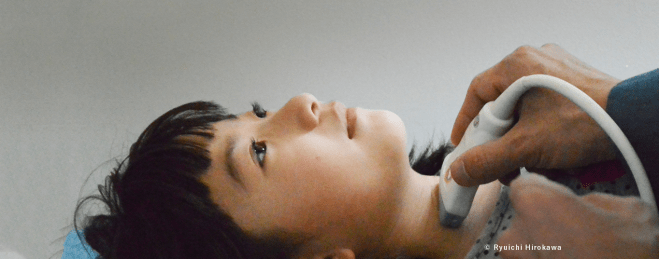
Study draws a blank on thyroid cancer and 2011 nuclear disaster
Researchers have found no correlation between radiation exposure and the incidence rate of thyroid cancer among 300,000 children living in Fukushima Prefecture at the time of the 2011 nuclear disaster.
But the team at Fukushima Medical University, which carried out the study, cautioned that the health of local children should continue to be monitored to be more definitive.
“At the present stage, we have found no evidence pointing to any relationship between doses of external radiation resulting from the nuclear accident and the thyroid cancer rate,” said Tetsuya Ohira, a professor of epidemiology at the university. “But we need to continue to look into the situation.”
The study involves 300,476 children in Fukushima Prefecture who were aged 18 or younger when the Fukushima No. 1 nuclear power plant went into a triple meltdown in March 2011 after the Great East Japan Earthquake and tsunami.
The children underwent the first round of health checks between October 2011 and June 2015.
Of the total, 112 were tentatively diagnosed as having thyroid cancer.
There are two types of radiation exposure: external exposure in which a person is exposed to radiation in the atmosphere, and internal exposure in which a person is exposed through the intake of contaminated food, water and air.
For the study, municipalities in the prefecture were classified into three groups based on the estimate for residents’ external exposure. That data was obtained during a prefecture-wide health survey carried out after the disaster occurred.
The first group is a zone where people with an accumulative dose of 5 millisieverts or more represented 1 percent or more of the population there. The second group is a zone where people with an accumulative dose of up to 1 millisievert account for 99.9 percent or more of the population. The third group is a zone that falls into neither of the other two groups.
The scientists looked at the incidence rate for thyroid cancer in each group and concluded there is almost no difference among the groups.
The number of subjects diagnosed with thyroid cancer was 48 per 100,000 people in the first group, 41 in the second group and 36 in the third group.
The finding was similar to a separate survey in which researchers looked into the possible association among 130,000 or so children whose radiation exposure had been estimated.
Hokuto Hoshi, head of a health survey panel set up at the prefectural government after the nuclear disaster, said he will closely follow the results of future studies to offer a more conclusive finding.
“The outcome of the recent study provides one indication in making any overall judgment,” said Hoshi, who also serves as vice chairman of the Fukushima Medical Association. “The study is substantial and we are going to pay attention to the findings of further studies.”
http://www.asahi.com/ajw/articles/AJ201609100031.html
Fukushima railway decontamination waste to total 300,000 cubic meters

FUKUSHIMA – An estimated 300,000 cubic meters of waste will be generated as a result of radioactive decontamination work in a suspended section of East Japan Railway Co.’s Joban Line in Fukushima Prefecture, Jiji Press learned Saturday.
Decontamination work is going on to restore train services in the section between Namie and Tatsuta, both in the nuclear disaster-hit northeastern prefecture, by spring 2020. But how to secure enough space to temporarily keep such waste, including soil, is a difficult question.
Due to the 2011 nuclear accident at Tokyo Electric Power Company Holdings Inc.’s Fukushima No. 1 power station, the Joban Line is still suspended between Hamayoshida, in the Miyagi Prefecture town of Watari, and Soma, in Fukushima Prefecture, as well as between Odaka, in the Fukushima town of Minamisoma, and Tatsuta, in the Fukushima town of Naraha.
The Hamayoshida-Soma section is scheduled to reopen in December this year and part of the Odaka-Tatsuta section, between Odaka and Namie, in spring 2017. Ahead of the reopening, work there to replace stones under rail tracks and soil and cut trees and grass along the tracks has almost finished.
In the remaining Namie-Tatsuta portion, decontamination work is proceeding so that train services will be resumed between Tomioka, also in Fukushima Prefecture, and Tatsuta in 2017. Decontamination work is also taking place between Namie and Tomioka, a portion that runs through the heavily contaminated no-go zone so services can be resumed by the spring of 2020.
Currently, bags filled with decontamination waste are stored along the rail tracks. They must be transferred elsewhere before restoration work starts.
The Environment Ministry has started negotiations with owners of land near the railway line. The ministry has already obtained agreement from some owners on the use of land.
But it is still difficult to secure enough land to store 300,000 cubic meters of waste.
The ministry is also considering utilizing locations where radioactive waste from decontamination work across Fukushima Prefecture is currently being kept. The places will become available after the waste is transferred to an interim waste storage complex near the Fukushima power plant.
Fund started to help Fukushima thyroid cancer patients cover expenses

A group comprising medical and legal experts announced Friday it has launched a fund to provide financial support to children who were diagnosed with thyroid cancer after the 2011 nuclear meltdowns in Fukushima Prefecture.
The group, named 3/11 Children’s Fund for Thyroid Cancer, will start accepting donations from Sept. 20, aiming to raise at least ¥20 million. The amount could provide at least ¥50,000 each for 200 to 400 people, it said.
Donated funds will be used primarily to cover medical expenses for thyroid cancer patients in Fukushima and neighboring prefectures, it said. The group will announce more details in November on the criteria that will be used to determine who is eligible to receive the aid before it starts accepting applications.
“They are struggling to pay medical bills,” Hiroyuki Kawai, a lawyer and one of the founding members of the group, said at a news conference in Tokyo. “I don’t think ¥50,000 will be enough for them, but they are impoverished and are struggling, and even that amount will be of help.”
Currently, the medical expenses of children diagnosed with thyroid cancer in Fukushima Prefecture are covered by the prefectural government.
Patients, however, have to initially pay their medical expenses out of pocket until they start receiving refunds from the prefecture, placing great financial strain on many families, another member of the group said.
In addition to that, some parents often have to take leave from work to accompany their children during hospital visits, which also includes paying for travel expenses, they said.
According to the group, although medical treatment for thyroid cancer is covered by public health insurance, the patients still have to pay about ¥10,000 per examination and roughly ¥150,000 for surgical procedures. And if patients have to undergo endoscopic surgery, it would cost them an additional ¥300,000, it said.
Since October 2011, the Fukushima government has conducted thyroid screenings for some 380,000 children who were aged 18 or younger.
By the end of March, a total of 173 children were diagnosed with suspected thyroid cancer. Of those, 131 were confirmed to have the cancer after undergoing surgery.
A panel of experts under the prefectural government said in an interim report released in March that those thyroid cancer cases were unlikely to be radiation-induced.
The panel said the amount of radiation released was lower than in the 1986 Chernobyl accident, where more than 6,000 children were diagnosed with the cancer by 2005, and noted that no cancer was found among children aged under 5 at the time of the disaster who are more vulnerable to radiation exposure.
Iwaki mayor makes formal request for city to host baseball, softball games during 2020 Olympics
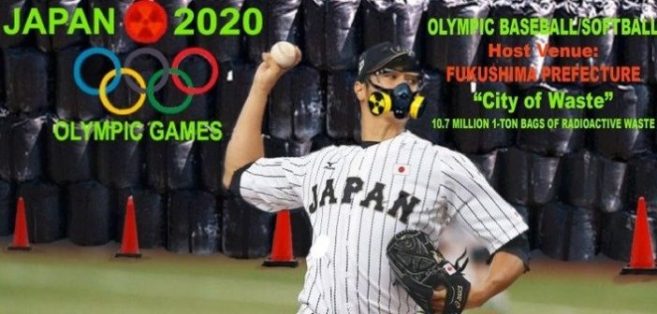
Iwaki Mayor Toshio Shimizu on Friday presented a request to 2020 Tokyo Olympic organizers, seeking to host a baseball game and a softball game in the city in Fukushima Prefecture.
Shimizu submitted the request to Yoshiro Mori, president of the Tokyo Olympic and Paralympic organizing committee, and Toshiei Mizuochi, senior vice minister of both the sports ministry and the Cabinet Office.
The request comes as Tokyo Olympic organizers are arranging to stage one first-round game each for baseball and softball in Fukushima Prefecture, one of the areas hardest hit by the 2011 earthquake and tsunami disaster, as part of reconstruction efforts.
They are said to be considering Iwaki, Fukushima and Koriyama cities as candidate sites.
The Iwaki municipal government wants the games played at Iwaki Green Stadium, which is occasionally used for Japanese professional baseball games and was the venue of the Under-15 World Cup baseball competition in July and August.
Shimizu expressed hope that the stadium will be chosen as an Olympic venue as that would “give hope and courage” to survivors of the quake and tsunami which also triggered a nuclear accident in the prefecture.
The main ballpark for the 2020 Summer Games is set to be Yokohama Stadium in Kanagawa Prefecture.
In the request, Shimizu and the mayors of eight nearby towns and villages are also requesting that the Olympic torch relay run on National Route 6 in the coastal area of Fukushima Prefecture.
Japanese dried mushroom sample detected with trace level of radioactivity
Hong Kong (HKSAR) – The Centre for Food Safety (CFS) of the Food and Environmental Hygiene Department said today (September 8) that a loose-packed dried mushroom sample, imported from Japan, was detected with a low level of radioactivity. Follow-up is in progress.
Japanese dried mushroom sample detected with trace level of radioactivity
Hong Kong (HKSAR) – The Centre for Food Safety (CFS) of the Food and Environmental Hygiene Department said today (September 8) that a loose-packed dried mushroom sample, imported from Japan, was detected with a low level of radioactivity. Follow-up is in progress.
“The CFS collected the dried mushroom sample from a retail outlet in Sheung Wan for radiation testing under its routine Food Surveillance Programme. According to the information provided by the retail outlet, the product concerned was imported from Japan. The test result showed that the sample was detected with Caesium-137 at a level of 24 becquerels per kilogram (Bq/kg).
The standard laid down by the Codex Alimentarius Commission in the guideline levels for radionuclides in foods contaminated following a nuclear or radiological emergency is 1 000 Bq/kg for Caesium-137. The radiation level detected does not exceed the Codex guideline level,” a spokesman for the CFS said.
The CFS has informed the vendor concerned of the test result. The vendor has voluntarily stopped sale and removed from shelves the affected product.
In the wake of the Fukushima nuclear power plant incident, the CFS has enhanced radiation testing on food imported from Japan at import, wholesale and retail levels since March 12, 2011.
The CFS updates the results and figures of food surveillance on imported Japanese food on its website every working day (including those cases detected with low levels of radioactivity).
The CFS will continue to closely monitor information from Japan as well as the radiation test results of Japanese food products in Hong Kong and elsewhere. It will review and adjust, if necessary, the surveillance strategy on food products imported from Japan in a timely manner, making reference to the recommendations of international authorities, to safeguard food safety.
Please refer to the CFS website for results of the food surveillance on Japanese food: http://www.cfs.gov.hk/english/programme/programme_rafs/programme_rafs_fc_01_30_Nuclear_Event_and_Food_Safety.html” target=”_blank”>www.cfs.gov.hk/english/programme/programme_rafs/programme_rafs_fc_01_30_Nuclear_Event_and_Food_Safety.html.
10% return to Fukushima town since evacuation order lifted in ’15
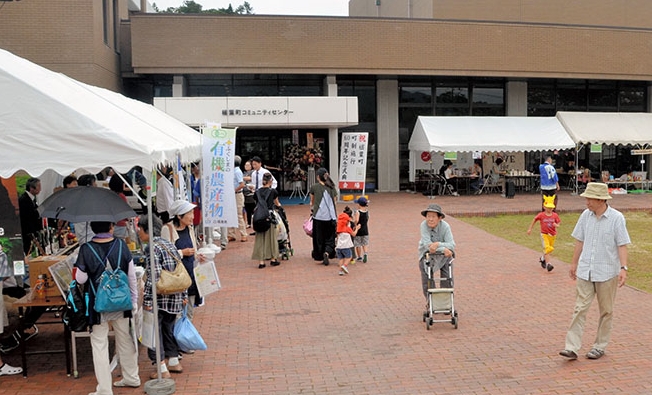
Returnees, mainly older people, attend an event marking the first anniversary of the lifting of the evacuation order in Naraha, Fukushima Prefecture, on Sept. 4.
NARAHA, Fukushima Prefecture–Only 10 percent of Naraha residents have returned home near the stricken Fukushima No. 1 nuclear plant in the year since the evacuation order was lifted, a rate that could threaten the town’s survival.
More than half of the returnees are senior citizens, and a vast majority of town’s children do not plan to attend school in Naraha next year.
The town set of a goal of having 50 percent of evacuees return home by next spring.
But lingering fears of radiation contamination are keeping many residents away, despite repeated tests effectively showing no danger to health in the town.
“Work is still under way at the plant to prepare for decommissioning, and we are concerned about radiation exposure,” said a 67-year-old man who plans to move back to Naraha with his wife. “We cannot encourage our grandchildren to return.”
Naraha’s population was about 7,300 before the triple meltdown at the Fukushima No. 1 nuclear power plant in March 2011.
As of Sept. 2, the number of returnees to the town was 681.
Naraha, most of which lies within a 20-kilometer radius of the plant, was the first of seven municipalities to have its nearly full evacuation order lifted.
The evacuation order for Naraha was lifted on Sept. 5, 2015.
The central and prefectural governments are closely watching how things play out in the town to carry out rebuilding efforts in other affected communities.
The Reconstruction Agency’s survey released in March found that more than 50 percent of Naraha evacuees are looking forward to their eventual return home.
“We expect the town’s population to go up in steps,” said an official with the town’s chamber of commerce and industry.
But the official acknowledged that business activities will not be sustainable with only a 10-percent returning rate.
A senior town government official said, “If evacuees stay away, we would have to think about a merger (with other local governments).”
Those aged 65 or older account for 53 percent of Naraha’s current population, double the rate in 2010.
A total of about 680 students attended the two elementary schools and one junior high school in the town before the disaster.
Although the three schools are expected to re-open next April, a recent town government survey showed that only about 80 of the eligible 450 children plan to attend school in Naraha.
The average radiation dose in front of the Naraha town hall in July was 0.1 microsievert per hour, almost the same as the average dose near JR Fukushima Station in the prefectural capital, which is far from the crippled plant and was never issued an evacuation order.
The Naraha dose is also lower than 0.23 microsievert per hour, the long-term goal for additional radiation exposure, which excludes background radiation.
Mayor Yukiei Matsumoto said he hopes construction of housing and commercial facilities will pave the way for evacuees to move back to their hometown.
“With our expectations, we somewhat inflated the repatriation goal,” Matsumoto said. “As housing, commercial and other facilities are put in place, the number of returnees will rise.”
The town is working on a project to build a “compact town,” where shops and housing units, as well as a prefectural government-supported clinic, are located within easy access from each other.
Costs for the project are covered by grants from the central and prefectural governments.
The commercial facility is scheduled to open in spring 2018.
Only 10% of population returns to Fukushima town

Monday marks one year since the lifting of an evacuation order for Naraha, Fukushima Prefecture, that was imposed following the accident at Tokyo Electric Power Company Holdings, Inc.’s Fukushima No. 1 nuclear power plant.
However, less than 10 percent of the town’s registered population has returned.
The number of new housing built in the town this year reached 296 in June, 4½ times more than last year’s total. However, among Naraha’s registered population of 7,300, only 681 people had returned to live there as of Friday, according to the municipality.
Residents who have resumed farming, the town’s key industry, are also limited in number.
According to the Naraha government, about a quarter of the households were involved in farming before the accident. However, planting has resumed in only about 20 hectares of rice paddies this year, about 5 percent of the town’s farming area before the accident.
Shuko Watanabe, a 55-year-old cattle breeder in the town, restarted work in July, becoming the first farmer to start breeding for beef among the about 40 farmers who used to be in Naraha.
He breeds five Japanese black cattle while continuing to mainly live in Iwaki, also in the prefecture. Although he only has half the cattle he did before the accident, Watanabe thinks resuming work will encourage others to return to the town.
According to a Reconstruction Agency survey, about 8.4 percent of the 2,000 households that responded said they intend to return early. About 34.7 percent said they will return when certain conditions are met.
Combined with the 7.6 percent of the town’s population that has already returned, about half of the households intend to return.
News Navigator: How far has decontamination progressed in Fukushima?
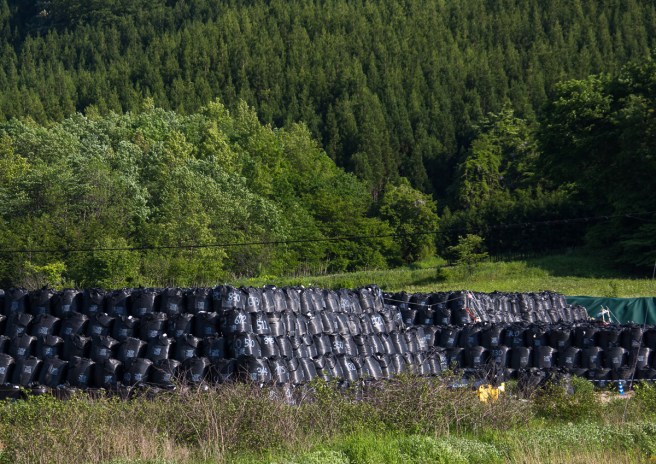
The Mainichi Shimbun answers some common questions readers may have about the decontamination of areas that were heavily exposed to radiation in the nuclear crisis at the Fukushima No. 1 Nuclear Power Plant.
Question: What is the situation right now with the decontamination of areas that were exposed to radioactive materials in the Fukushima nuclear incident, where residents were ordered to evacuate?
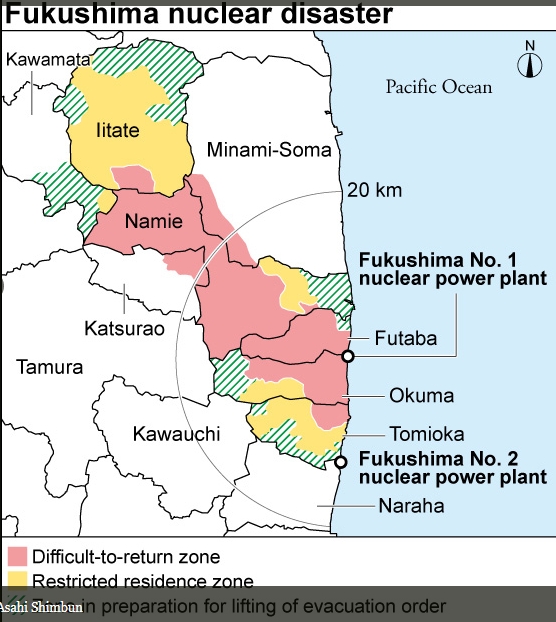
Answer: In April 2012, areas that were under evacuation orders were separated into three categories based on annual radiation exposure dosages. Decontamination work has not been carried out in areas of the Fukushima Prefecture towns of Okuma, Futaba, Namie, Tomioka, and the prefectural villages of Iitate and Katsurao and the city of Minamisoma — classified as “difficult-to-return zones” with annual radiation exposure dosages topping 50 millisieverts — save for a few areas that were decontaminated on a trial basis.
Meanwhile, in “restricted residence zones,” where the annual radiation exposure dosage is between 20 and 50 millisieverts, and in “preparing for lifting of evacuation order zones,” which have annual radiation exposure dosages of 20 millisieverts or lower, the government is aiming to have decontamination completed by March 2017.
Q: Why haven’t “difficult-to-return zones” been decontaminated?
A: In addition to the fact that all residents had evacuated, it was determined immediately after the disaster broke out that decontamination efforts would be ineffective because of the high levels of radiation there. However, radiation has the property of decreasing as time passes. Indeed, according to measurements taken by an airplane that was released by the Nuclear Regulation Authority in February this year, radiation levels had gone down significantly. And in some areas, where decontamination was attempted on a trial basis, there was some success.
Q: How much does radiation go down through the decontamination process?
A: According to the Environment Ministry, in a trial decontamination of the Akougi district in Namie, Fukushima Prefecture — designated a “difficult-to-return zone” — radiation levels went down by half. However, a ministry official explains that radiation levels there cannot be brought down to zero because even if the area is decontaminated, radiation seeps in via rain and other means.
Q: What is done with the waste that results from decontamination?
A: The Environment Ministry estimates that 16 million to 22 million cubic meters of radioactively contaminated waste will result from decontamination work. That waste will be stored temporarily in municipalities in Fukushima Prefecture, then transported to interim storage facilities in the prefectural towns of Okuma and Futaba. However, only 5 percent of the entire land area needed for storing radioactive waste had been secured as of late July. (Answers by Hanayo Kuno, Science and Environment News Department)
http://mainichi.jp/english/articles/20160903/p2a/00m/0na/001000c
Fukushima could host 2020 events

Organizers of the 2020 Tokyo Olympics are working toward staging a baseball and softball game in the 2011 earthquake and tsunami struck Fukushima Prefecture, a source close to the matter said Friday.
Baseball and softball were among the five sports approved last month by the International Olympic Committee to be added to the Tokyo Games program, and the 2020 organizers will look to get approval for the plan from the IOC executive board in December.
The organizers are working to present the idea to IOC president Thomas Bach in October when he visits Japan for a meeting.
Three baseball parks inside the prefecture — all previous hosts of NPB games — are on the shortlist, and organizers are likely to argue accessibility from Tokyo and the possibility of installing fixed seats in the outfield stands as to why the idea is feasible.
The main ballpark for the 2020 Games is set to be Yokohama Stadium, home of the Yokohama BayStars.
Former Olympic minister Toshiaki Endo reiterated on March 11 — the fifth anniversary of the disaster — that the prefecture could host some games in order to demonstrate the revitalization of the Tohoku region, most affected by the disaster.
Fukushima Gov. Masao Uchibori met Yoshiro Mori, the Tokyo 2020 organizing committee president, on Wednesday to request his region be given the opportunity to host the two games in the baseball and softball tournaments’ first round.
http://www.japantimes.co.jp/sports/2016/09/03/olympics/fukushima-host-2020-events/#.V8rqwa3KO-c
Test fishing for flounder begins off Fukushima coast
Flounders surely vacuum well the radionuclides from the ocean floor, and the government-imposed limit of 100 becquerels per kg does no mean no contamination.
There is no such a thing as a low dose when it comes to internal radiation such as the one from ingested contaminated food. Any radioactive contamination may cause harm.
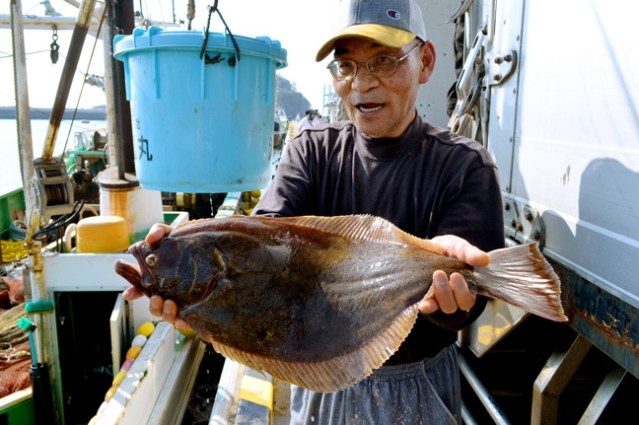
This flounder was caught on Sept. 2 off the coast of Iwaki, Fukushima Prefecture, during the first test fishing for the species since the 2011 disaster at the Fukushima No. 1 nuclear plant.
Test fishing for flounder begins off Fukushima coast
IWAKI, Fukushima Prefecture–Fishermen here caught flounder for sales on Sept. 2 for the first time since the 2011 disaster at the Fukushima No. 1 nuclear plant.
Eleven boats equipped with dragnets left Hisanohama wharf in the morning, and they snared five of the bottom-dwelling flatfish, previously a specialty of Fukushima Prefecture.
“It is a big step (for flounder fishing),” said Akira Egawa, 69, head of the Iwaki city fishery association. “We are going to recover one by one.”
On Aug. 25, 10 kinds of fish, including flounder, were added to the list for “test fishing” off the coast of Fukushima Prefecture. These fish can be caught for the resumption of sales of “safe” fish.
In 2010, 734 tons of flounder were caught in Fukushima Prefecture, the third most in Japan.
The peak season for flounder fishing is around the end of October.
http://www.asahi.com/ajw/articles/AJ201609020065.html
Japan authorizes commercial flounder ‘test-fishing’ off Fukushima
The sales of flounder caught in Fukushima Prefecture might soon resume, with fishermen already “test-fishing” for the first batches of the flatfish. The five-year-long halt in flounder fishing and sales was prompted by the deadly nuclear disaster.
On Friday fishermen caught flounder off the coast of Iwaki, Fukushima Prefecture, during the first test fishing since the 2011 nuclear disaster, Japan’s Asahi Shimbun reports. Flounder along with ten other kinds of fish was added to the list for “test-fishing” last week, meaning it is “safe” for sales.
As many as five flatfish were captured with the help of 11 boats equipped with dragnets.
“It is a big step [for flounder fishing],” said Akira Egawa, head of the Iwaki city fishery association. “We are going to recover one by one.”
Following the nuclear disaster the government issued an outright ban on more than 35 kinds of fish including flounder, angler fish and rockfish which were said to contain high levels of radioactive substances.
The ban has had a huge effect on Fukushima’s fishing industry which has significantly gone down after 2011. Around 5,600 tons of fish were caught off Fukushima coast last year compared to about 38,600 tons before March, 2011.
After March 2011, 50 percent of the fish samples tested for radiation levels exceeded the government-imposed limit of 100 becquerels per kg. However, after April 2015, no fish exceeded that number, according to The Japan Times.
However, after April 2015, no fish exceeded that number, according to The Japan Times.
https://www.rt.com/news/358095-flounder-test-fishing-fukushima/
Tokyo Hopes To Lift No Go Zone Order In Fukushima In Next Five Years
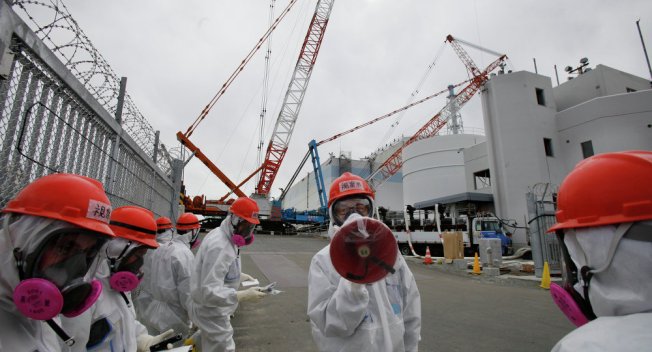
By the end of the 2021 fiscal year, the Japanese government intends to repeal an evacuation order on the remaining “no go zone” around the Fukushima no.1 nuclear plant, the site of one of the worst nuclear accidents in history.
Tokyo announced Wednesday that it aims to conduct infrastructure restoration and radiation clean ups in reconstruction bases built within the zone, which was highly contaminated when the plant, operated by Tokyo Electric Power Co. Holdings Inc. (TEPCO), was shut down during a March 2011 tsunami and earthquake.
Prime Minister Shinzo Abe, at a joint meeting of the Reconstruction Promotion Council and Nuclear Emergency Response Headquarters, where the proposal was adopted, said, “Based on the basic policy, we will embark on reconstruction work in the zone as soon as possible.” In June 2015 the government decided it would lift the ban on areas of Fukushima with lower contamination levels by March of 2017.
Headquarters also announced that the decontamination of Fukushima would be paid for with state funds. It was estimated in 2013 that cleanup would cost upwards of 2.5 trillion yen (about $24 billion), and the decontamination efforts would be financed with funds collected from selling state-owned shares of TEPCO.
Tokyo hopes to profit 2.5 trillion yen from selling the shares, but TEPCO stock would have to trade at about 1,050 yen for that to happen, and shares are currently valued at around 360 yen. After evacuation and some rearranging, Tokyo has been gradually lifting no-go zones restrictions in Fukushima since 2013.
53-year-old Toshiko Yokota, who was able to return to clean up her home in Naraha in 2015 said, “My friends are all in different places because of the nuclear accident, and the town doesn’t even look the same, but this is still my hometown and it really feels good to be back. I still feel uneasy about some things, like radiation levels and the lack of a medical facility,” she said. “In order to come back, I have to keep up my hope and stay healthy.”
According to Jiji Press, the public cost of decontamination and cleanup of the nuclear accident exceeded 4.2 trillion yen by the end of the 2015 fiscal year. Factoring in costs for reactor decommissioning, compensation payments to people and organizations affected by the accident and radioactive decontamination, the government spent about 33,000 yen per capita.
http://sputniknews.com/asia/20160902/1044873179/tokyo-lift-no-go-zone.html
Ban to be lifted on Fukushima’s worst-affected zone in 2022

A barrier set up at the difficult-to-return zone as Typhoon No. 10 approaches Okuma, which co-hosts the Fukushima No. 1 nuclear power plant, in Fukushima Prefecture on Aug. 30
Some of the most contaminated areas of Fukushima Prefecture rendered uninhabitable by the 2011 nuclear disaster will be declared safe to live in again in 2022.
The government’s decision to lift the partial ban on repatriation to the “difficult-to-return zone” was announced Aug. 31 after Prime Minister Shinzo Abe called a joint meeting of the government’s Nuclear Emergency Response Headquarters and Reconstruction Promotion Council.
By 2022, the area’s 24,000 or so residents will have been displaced for more than a decade and there is no way of knowing how many will choose to return to their hometowns.
The difficult-to-return zone encompasses seven municipalities situated in a 20-kilometer radius of the crippled Fukushima No. 1 nuclear power plant as well as a spur of land northwest of the radius.
Partial lifting of the ban, in the eyes of the government, is reasonable as “radiation levels in the zone have dropped” even though no decommissioning work has been done there.
The government said the move is aimed at bolstering efforts to rebuild the prefecture, adding that leaving the zone intact would only perpetuate negative images of the area and sully the reputation of local products.
The ban will initially be lifted for areas where local government buildings, train stations and community halls are located, and eventually the rest of the zone.
There was no word, however, on how many years it will take for that to happen.
The government envisages enacting a law to designate areas earmarked as rebuilding hubs so as to encourage residents to return. The government will try to give priority to decisions by local officials as to which areas fall into that category.
In preparation for the lifting of the partial ban, the government will start extensive decontamination work in the zone from fiscal 2017, which begins next April.
The government estimates it would take 1 trillion yen ($9.7 billion) to clean up the entire zone, and is balking at making such an outlay on grounds of time and cost.
Even if the operation done on a limited basis, it is bound to come with a hefty price tag.
Funds needed for construction of housing and makeshift shops in the hub areas will be set aside in the government’s budget, starting from fiscal 2017.
According to government officials, some municipalities will likely to set up more than one rebuilding hub.
But one of the villages in the zone may end up having no hub at all due to depopulation.
A 2015 survey by the Reconstruction Agency found that the share of displaced people from Okuma, Futaba, Namie and Tomioka who expressed their intention to return to their hometowns varied from 11.4 percent to 17.8 percent. While the ratio was 32.8 percent for Iitate, no figures were available for Katsurao and Minami-Soma.
Damage caused only by misconceptions about the nuclear incident not by the nuclear accident itself, according to the Yomiuri Shimbun, a pro-government newspaper
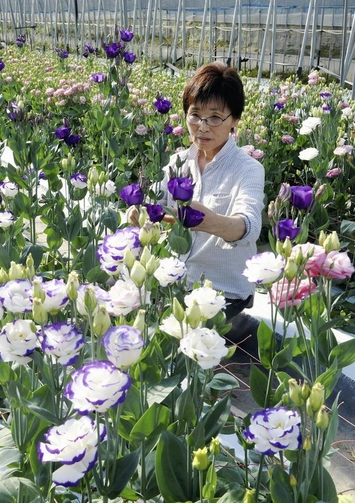
Fukushima farmers plant flowers to revive agriculture
Tomoko Horiuchi checks eustoma she grows in Minami-Soma, Fukushima Prefecture, in early August.
FUKUSHIMA — Farmers from Fukushima Prefecture’s municipalities who have received the government’s evacuation directives in the wake of the 2011 disaster at the Fukushima No. 1 nuclear power plant are cultivating flowers as a new agricultural business to rebuild their lives.
The climate in these areas is suited to growing colorful flowers, as it has abundant sunshine and a relatively large change in temperature between day and night.
After the nuclear crisis, the price of rice harvested in the prefecture has hovered at low levels because of the damaged perception of crops grown in the area.
But because growing flowers is less susceptible to damage caused by misconceptions about the nuclear incident, an increasing number of local farmers actively cultivate eustoma and other popular ornamental flowers.
Junichi Futatsuya, 65, from the Haramachi district in Minami-Soma, began cultivating eustoma in the spring of 2014 using an idle greenhouse where he used to raise rice seedlings. In 2015, a local agricultural cooperative that covers Minami-Soma formed a section to grow eustoma, with Futatsuya participating in the project. Membership has now grown to 25 people.
Stable prices
In July, the evacuation directives were lifted in most areas of Minami-Soma, and many farmers now sell their flowers in Tokyo in the hopes of gaining recognition for them in areas that are major markets.
Futatsuya, who restarted cultivating rice this year, said, “I’m expecting to secure income by growing rice and flowers.”
Kawasaki Flora Auction Market Co. trades in flowers produced by Futatsuya and other farmers from the prefecture.
“We don’t hear any dealers in the market saying they would shy away from the products because the flowers are produced in Fukushima Prefecture,” said Manabu Aishima, 49, a section chief of the Kawasaki-based company. “Farmers can expect all-year shipping with adequate investment in plants and equipment.”
Tomoko Horiuchi, 69, also grows eustoma in the district. She said she did not experience a wide fluctuation in prices before or after the crisis.
“It made me realize that flowers are not susceptible [to damage caused by misconceptions]. I would like fellow producers to increase to more stably supply flowers to the market,” she said.
Supporting ambition
Daytime entry is allowed in areas where evacuation directives have been issued as long as these areas are not designated as “difficult-to-return zones” due to high levels of radiation exposure.
In July last year, six farmers in the town of Namie formed a study group to grow flowers, and one of the farmers was able to grow and ship eustoma to customers.
The Namie town government plans to conduct a survey to find places suitable for flower cultivation and is considering consolidating greenhouses near the town office.
Meanwhile, in the village of Iitate, evacuation directives are scheduled to be lifted in most places at the end of March 2017. Four farmers will build greenhouses in the village to grow baby’s-breath flowers on a trial basis.
The Fukushima prefectural government is also financially supporting farmers if they build greenhouses and purchase equipment to make flower cultivation a new business in the Hamadori area, which is close to the nuclear plant.
“We’d like to support ambitious farmers,” said Masatoshi Kanno, vice chief of the prefectural government’s horticulture section.
After Typhoon Lionrock landed in Fukushima
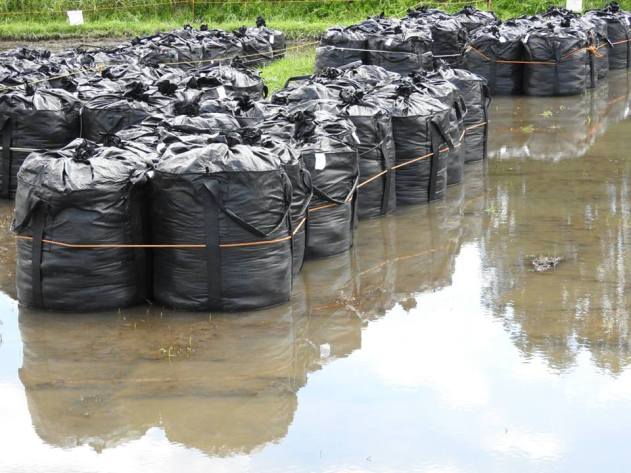

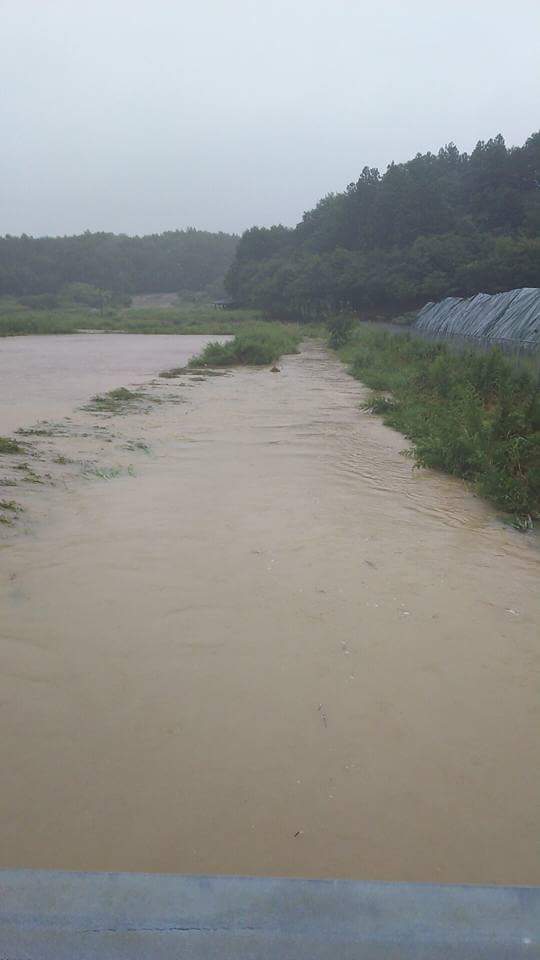
Flexible container bags filled with radioactive soil in flooded water in Iidate, Fukushima.
Credit to Hiroki Suzuki
Storm slams northern Japan
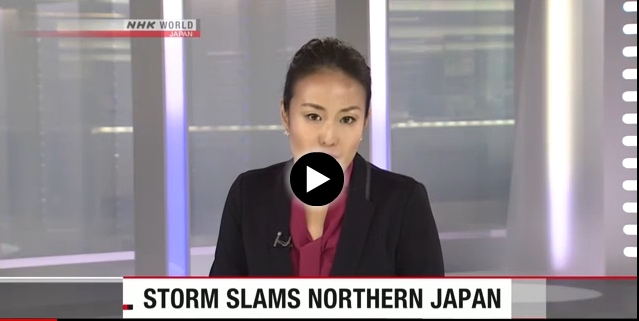
People in northern Japan are dealing with the aftereffects of a powerful storm.
Lionrock ripped through the region devastated by the 2011 earthquake and tsunami.
It has now moved out to the Sea of Japan and become a low pressure system.
People in Tohoku and the northern island of Hokkaido are dealing with heavy rains, strong winds and rough seas.
Officials also issued mudslide warnings.
They say many parts of the area had one month’s worth of rainfall in just 2 days.
The storm was the first typhoon to strike the Pacific side of Tohoku in recorded history.
1 This Month

of the week – Shut Down Drone Warfare!


Tell the Ukrainian Government to Drop Prosecution of Peace Activist Yurii Sheliazhenko

Petition to revoke the licensing of the Near Surface Nuclear Disposal Facility (NSDF) at Chalk River. https://www.ourcommons.ca/petitions/en/Petition/Details?Petition=e-7247
To see nuclear-related stories in greater depth and intensity – go to https://nuclearinformation.wordpress.com
-
Archives
- April 2026 (57)
- March 2026 (251)
- February 2026 (268)
- January 2026 (308)
- December 2025 (358)
- November 2025 (359)
- October 2025 (376)
- September 2025 (257)
- August 2025 (319)
- July 2025 (230)
- June 2025 (348)
- May 2025 (261)
-
Categories
- 1
- 1 NUCLEAR ISSUES
- business and costs
- climate change
- culture and arts
- ENERGY
- environment
- health
- history
- indigenous issues
- Legal
- marketing of nuclear
- media
- opposition to nuclear
- PERSONAL STORIES
- politics
- politics international
- Religion and ethics
- safety
- secrets,lies and civil liberties
- spinbuster
- technology
- Uranium
- wastes
- weapons and war
- Women
- 2 WORLD
- ACTION
- AFRICA
- Atrocities
- AUSTRALIA
- Christina's notes
- Christina's themes
- culture and arts
- Events
- Fuk 2022
- Fuk 2023
- Fukushima 2017
- Fukushima 2018
- fukushima 2019
- Fukushima 2020
- Fukushima 2021
- general
- global warming
- Humour (God we need it)
- Nuclear
- RARE EARTHS
- Reference
- resources – print
- Resources -audiovicual
- Weekly Newsletter
- World
- World Nuclear
- YouTube
-
RSS
Entries RSS
Comments RSS
 nuclear-news