Japanese People Shun Fukushima Survivors While Doctors Refuse Them Care
From 2/26/2016

Those who do not fit the norm, for whatever reason no matter how abusive, are outcasts.
In retrospect, societal norms throughout history have sometimes become fatally irresponsible. When it comes to popular movements and health trends, humanity has had its share of shameful events stamped forever into the history books. While working in Vienna General Hospital’s first obstetrical clinic, where doctors’ wards had three times the mortality of midwives’ wards, Hungarian physician Ignaz Semmelweis proposed the novel idea of hand washing in 1847. Despite various publications of results where hand washing reduced mortality from 35% to below 1%, Semmelweis’s observations conflicted with the established scientific and medical opinions of the time and his ideas were rejected. After his discovery, Semmelweis was committed to an insane asylum and promptly beaten to death by guards. As horrific as these visions and events can sometimes be, they continue to be played out in today’s society partially due to public ignorance, corruption, conflicts of interest and imbedded norms.
The world is rapidly approaching the five year anniversary of the worst nuclear disaster in human history. The triple meltdown at the Fukushima daiichi nuclear power plant has seen shameful omissions by global leaders and officials at every level. To compound matters, Japanese survivors are forced to submit to a complicit medical community bordering on anti-human. While the solutions to the widespread nuclear contamination are few, media blackouts, government directives and purposefully omitted medical reporting has made things exponentially worse. Over the last five years, the situation on the ground in Japan had deteriorated to shocking levels as abuse and trauma towards the survivors has become intolerable.
Even before the nuclear disaster in Fukushima, Japan endured another nuclear disaster as a testing ground for the US military’s new nuclear arsenal on the cities of Hiroshima and Nagasaki in 1945. The numbers of Japanese civilians killed were estimated at around 226,000, roughly half of the deaths occurred on the first day. After the initial detonation of the two nuclear bombs, both Japanese cities endured a legacy of radiation damage and human suffering for decades after. Tomiko Matsumoto, a resident of Hiroshima and survivor of the bombing described the abuse and trauma she endured by her society:
“I was shocked because I was discriminated against by Hiroshima people. We lived together in the same place and Hiroshima people know what happened but they discriminated against each other. ..I was shocked.”
“There were so many different kinds of discrimination. People said that girls who survived the bomb shouldn’t get married. Also they refused to hire the survivors, not only because of the scars, but because they were so weak. Survivors did not have 100 percent energy.”
“There was a survivor’s certificate and medical treatment was free. But the other people were jealous. Jealous people, mentally discriminated. So, I didn’t want to show the health book sometimes, so I paid. Some of the people, even though they had the health book, were afraid of discrimination, so they didn’t even apply for the health book. They thought discrimination was worse than paying for health care.”
A similar scene is playing out today in Japan as residents of the Fukushima prefecture, who survived triple nuclear meltdowns, are forced to endure similar conditions over half a century later. Fairewinds Energy Education director and former nuclear executive Arnie Gundersen is currently embarked on a speaking tour of Japan as their population continues to search for the truth about nuclear risks and the reality of life in affected areas of Japan after the 2011 disaster. Many Fukushima prefecture residents are still displaced and living in resettlement communities as their city sits as a radioactive ghost town. Visiting one such resettlement community, Gundersen had this to say:
“Today I went to a resettlement community. There were 22 women who met us, out of 66 families who live in this resettlement community. They stood up and said my name is…and I’m in 6A…my name is…and I’m in 11B and that’s how they define themselves by the little cubicle they live in — it’s very sad.”
Speaking with the unofficial, interim mayor of the resettlement community, she told Gundersen
“After the disaster at Fukushima, her hair fell out, she got a bloody nose and her body was speckled with hives and boils and the doctor told her it was stress…and she believes him. It was absolutely amazing. We explained to her that those area all symptoms of radiation [poisoning] and she should have that looked into. She really felt her doctor had her best interests at heart and she was not going to pursue it.”
Speaking about how Japanese officials handled this resettlement community’s (and others?) health education after the disaster, Gundersen reported:
“They [the 22 women who met with Gunderson] told us that we were the first people in five years to come to them and talk to them about radiation. They had nobody in five years of their exile had ever talked to them about radiation before…Which was another terribly sad moment.”
When asked if the women felt isolated from the rest of Japan they described to Gundersen the following:
“Some of them had changed their license plates so that they’re not in Fukushima anymore — so their license plates show they’re from another location. When they drive back into Fukushima, people realize that they’re natives and deliberately scratch their cars…deliberately scratch their cars because they are traitors. Then we had the opposite hold true that the people that didn’t change their plates and when they left Fukushima and went to other areas, people deliberately scratched their cars because they were from Fukushima.”
Gundersen summed up the information he received by saying, “The pubic’s animosity is directed toward the people of Fukushima Prefecture as if they somehow caused the nuclear disaster.”
When it comes to health decisions, the medical community and political class has polarized the conversation into an “either-or” “us vs. them” mentality. Reckless lawmaking and biased reported has only driven the Japanese public further down this slippery slope. In many countries, the public watched as medical dogma and ideology captured healthcare, which in turn began to direct policy and law. Many societies beyond Japan are now facing difficult choices as the free expression of health preservation and medical choice has fallen into a dangerous grey area. Oscillating between authoritative legal action, medical discrimination and public abuse, society’s norms appear to be rapidly heading down the wrong road. Untold damage and traumas are unfolding as governments hide information and quietly omit vital data further fueling the fire. Alternative media and the work of those in medicine with true integrity and compassion have herculean tasks awaiting them as they work to change a historically dangerous narrative attempting to root.
Autoradiograph: radioactivity after the 3/11 quake
By Masamichi Kagaya (Photographer) and Dr. Satoshi Mori (University of Tokyo)
As a consequence of the Great East Japan Earthquake and ensuing tsunami on March 11, 2011, the cores of the first to third nuclear reactors at the Fukushima Daiichi Nuclear Plant underwent meltdowns as external power for the cooling pumps was lost. As a result, a huge amount of radioactive particles was released into the air. These particles were carried by southeasterly winds to Iitate Village, Fukushima City, and Nakadori, a central region of Fukushima Prefecture, leaving high levels of radioactive contamination in their wake. The particles were further carried along multiple routes creating radioactively contaminated areas in regions from Ibaraki to Tokyo and Kanagawa Prefecture, as well as in Northern Kanto and the Tohoku Region (Northeastern Japan).
Whether we are in Tokyo, Fukushima, or even in front of the damaged nuclear reactor buildings, we are exposed to radiation that we are unaware of. It is too small to see, it cannot be heard and it is odorless. Therefore, despite living in a region contaminated with radioactive particles, to this day, we are not consciously aware of the radiation. NaI (TI) scintillation detectors and germanium semiconductor detectors are used to measure the amount of radioactive contamination in soil, food, and water in units called Becquerels (Bq). Radioactivity is further measured in Sieverts (Sv), which is an index of the effects of radioactive levels in the air, doses of exposure, and so on. Nevertheless, from such values, it is impossible to know how the radioactive particles are distributed or where they are concentrating in our cities, lakes, forests, and in living creatures. These values do not enable us to “see” the radioactivity. Thus, radioactive contamination has to be perceived visibly, something that can be done with the cooperation of Satoshi Mori, Professor emeritus at Tokyo University. Professor Mori is using autoradiography to make radioactive contamination visible.
Today, dozens of radiographic images of plants created by Professor emeritus Mori since 2011 are on display together with radiographic images of everyday items and animals. This collection of radiographic images (autoradiographs) is the first in history to be created for objects exposed to radiation resulting from a nuclear accident. I hope that visitors will come away with a sense of the extent of contamination in all regions subject to the fallout — not just those in and around Fukushima. At the same time, I hope that this exhibition will remind visitors of the large region extending from the Fukushima Daiichi Nuclear Power Plant to Namie Town, Iitate Village and the dense forests of the Abukuma Mountain Area that, to this day, remain restricted areas. The radiation affects animals that continue to live in these areas and be exposed to heavy radiation, as well as the 140,000 people that had to evacuate and who lost personal assets (homes, property, work, interpersonal relationships). These people are in addition to the victims who directly breathed in the radioactive materials, subjecting them to internal exposure — victims that include anyone from the residents near the plant to people in Tokyo and the Kanto Region.
Although what can be done is limited, new progress has made it possible to record the otherwise invisible radioactivity and make it visible. The history of needless nuclear accidents occurring in the United States, the Soviet Union (Russia) and Japan over the last several decades may still potentially be repeated elsewhere in the world, but hopefully future generations will see the cycle be broken. Through exhibitions and other means of disseminating knowledge about radioactivity, future generations may learn to leave behind dependence on nuclear power and be free from the dangers of nuclear accidents and nuclear waste.
http://www.chinapost.com.tw/asia/japan/2016/04/10/463030/Autoradiograph-radioactivity.htm
Tell World Leaders: No Fukushima 2020 Olympics
ON BECQUEREL AWARENESS DAY, SUNDAY, APRIL 10, 2016, FUKUSHIMA FALLOUT AWARENESS NETWORK (FFAN) LAUNCHES ITS PETITION/CAMPAIGN TO URGE WORLD LEADERS TO SAY NO TO HOSTING THE 2020 JAPAN OLYMPICS/PARALYMPICS IN FUKUSHIMA PREFECTURE!
Children are now in training to compete at the 2020 Japan Olympics in close proximity to the most devastating and ongoing nuclear and industrial disaster in world history. Our children are our most beloved and cherished gift; and as such, we know they are the most vulnerable to the generational damaging effects of man-made radiation in air, soil, food and water. On March 11, 2016, on the occasion of fifth anniversary of the Fukushima triple nuclear meltdowns, Japan’s 2020 Olympic Minister, Toshiaki Endo, stated to the Associated Press that preliminary softball, baseball and possibly other games like soccer, would very possibly be moved from the host city of Tokyo to Fukushima Prefecture!
FACTS:
1) The International Commission on Radiological Protection (ICRP) guideline for the public is 1mSV/year compared to Japan’s at 20mSv/year due to the disaster. By hosting the 2020 Olympics, Japan is willing to expose not only their own citizens but also children, their families and coaches worldwide to higher than publicly acceptable levels of radiation per the ICRP.
2) There is no safe dose. The Biological Effects of Ionizing Radiation 7 (BEIR 7) Report unequivocally states that there is no threshold of exposure below which solid cancers are not induced.
3) Even after thirty years, the 30km area around Chernobyl remains an exclusion zone. This fact makes holding the 2020 Olympics in Fukushima even more shocking. There is no possible way to return Japan to normal in 2020 after the triple nuclear meltdowns, as explosions and ongoing ensuing leaks and incineration of radioactive waste are still happening in the wake of Fukushima Daiichi.
FFAN stands in solidarity with the children and families of Japan and is committed to educating the public about the dangers of man-made radiation. In our effort to raise awareness worldwide, FFAN is asking people everywhere to SIGN and SHARE this PETITION to Japanese Ambassador Caroline Kennedy, the State Department, UNICEF and other world leaders HERE: http://chn.ge/22j0Xko
Holding the Olympics and Paralympics in Fukushima, or in fact anywhere in Japan, will not make the problems of radioactive contamination go away. To the contrary, it will only spread cancer and other diseases farther afield worldwide. Let them know the whole world is watching this most dangerous game.
(Please RSVP here and join us on our EVENT PAGE: https://www.facebook.com/events

Children’s book connects stories of Fukushima and Chernobyl

A page from Shoko Nakazawa’s latest work depicts Natsuko about to part
with her pet piglet Momo.
Inspired by a letter sent to her by a young reader, author Shoko Nakazawa revived a past work and penned an entirely new illustrated children’s book on nuclear disasters in Fukushima and Chernobyl.
In 1988, Nakazawa’s “Ashita wa Hareta Sora no Shita de Bokutachi no Chernobyl” (Tomorrow, under a fair sky, our Chernobyl) was released by Choubunsha Publishing Co.
In the letter, a junior high school student in Yokohama who read the book after the triple meltdown at the Fukushima No. 1 nuclear power plant wanted to know how such an incident occurred when humans had surely learned of nuclear horrors from the Chernobyl accident in Ukraine in 1986.
The student asked what adults had done to prevent the Fukushima disaster. Because her 1988 book had long been out of print, Nakazawa, 63, first went about having it republished in summer 2011.
She also wrote a new work, recently published by Iwasaki Publishing Co., titled “Kobuta Monogatari Chernobyl kara Fukushima e” (A tale of piglets, from Chernobyl to Fukushima). The book sells for 1,300 yen, tax exclusive.
The two parts of the book involve little girls living in Chernobyl and Fukushima. Tanya lives in Chernobyl and has a pet piglet named Marumaru. Their peaceful life is turned upside down by the nuclear accident that forces all residents to evacuate.
Marumaru is left behind on the farm and time passes as the piglet waits for Tanya and her family to return. They never do.
The Fukushima portion involves a girl named Natsuko and her pet piglet Momo. They are also separated by the Fukushima nuclear accident.
A temporary lifting of the evacuation order allows Natsuko and her mother to return home. However, the mother does not recognize Momo, who is now filthy because no one was around to take care of the animal. The mother shooes the piglet away in a harsh voice.
The two parts of the book are connected because Natsuko’s mother had come to know Tanya when she visited Japan more than 20 years ago. Tanya even sent a letter to Natsuko’s mother in which she wrote, “Please do not forget us.”
During their short stay at home, the mother comes across that letter again and breaks down crying.
“I forgot everything.”
A key turning point in Nakazawa’s life was moving to Hiroshima from Nagoya before she entered junior high school. Most of her friends had parents who were hibakusha. Nakazawa herself was shocked when she saw the exhibit about the horrors of the atomic bombing at the Hiroshima Peace Memorial Museum.
She is concerned about recent moves to resume operations at nuclear power plants around Japan.
“We are once again trying to forget,” she said. “I hope the book becomes a catalyst to rethink a civilization that exists upon something like ‘nuclear power’ that simply cannot co-exist with humans and nature.”
South Korean Gov’t opts not to disclose radiation test result of Japanese fishery goods
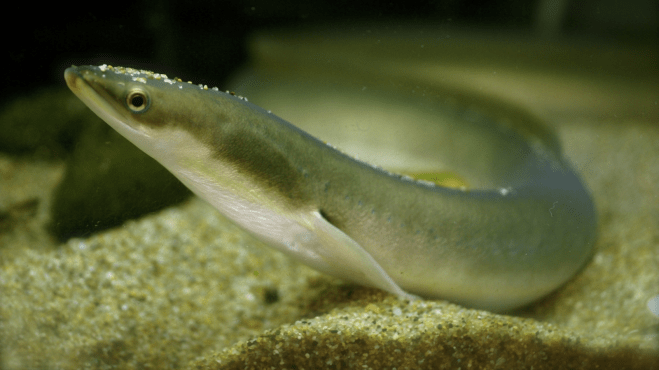
Japanese eel
Gov’t opts not to disclose radiation test result of Japanese fishery goods
The government has rejected calls to disclose the results of radiation level checks conducted on fishery goods caught near Japan, a civic group said Wednesday.
The Ministry of Food and Drug Safety on Tuesday dismissed the information disclosure request filed by the Lawyers for a Democratic Society, the group said.
“As the information is related to a case pending at the World Trade Organization, (the disclosure) could lead to a leakage of our strategy to Japan,” the ministry was quoted by the group as saying.
The lawyers association, however, countered that the reason provided by the authorities was groundless since the government has to submit its findings to the WTO and Japan anyways.
Tokyo filed a formal complaint with the World Trade Organization against Seoul’s import ban of its fishery goods.
South Korea has banned imports of all fishery products from eight Japanese prefectures, including Fukushima, where the 2011 earthquake and tsunami caused the meltdown of a nuclear reactor, marking the worst nuclear accident since the Chernobyl disaster.
The import ban was imposed in September 2013 after reports that massive amounts of radioactive materials and contaminated water from the Fukushima reactor were being dumped in waters surrounding Japan. This caused serious safety concerns here, that not only affected Japanese imports but the local fishery sector as a whole. (Yonhap)
http://www.koreaherald.com/view.php?ud=20160406000394
S. Korea Will Not Share Fukushima Fish Tests
South Korea’s Ministry of Food and Drug Safety has rejected a petition from a civil society group to release the results of radiation testing on fish caught near Japan following the Fukushima Daiichi reactor meltdown.
In 2013, South Korea imposed a ban on the importation of fisheries products from eight Japanese prefectures near Fukushima. Tokyo objected, and petitioned the World Trade Organization for relief, claiming that the ban was unfair to Japanese exporters. The Ministry of Food and Drug Safety has already submitted the results of its testing to the WTO and to Japan as part of the dispute, and advocates claimed that it should be made public as well.
The ministry disagreed. “As the information is related to a case pending at the World Trade Organization (WTO), [it] could lead to a leakage of our strategy to Japan,” it said in a statement on Tuesday.
A study of radioactive cesium levels in fish off of Fukushima in 2011 by Pavel Povinec and Katsumi Hirose found that consuming 100 kg of the affected seafood per year (four times the Japanese annual average) would result in approximately the same radiation dose as the world average for background exposure – and roughly the same as the level of exposure from consuming the naturally occuring radioactive polonium in 100 kg of any other seafood.
“Radiation doses from ingestion of marine food are under control, and they will be negligible,” the authors concluded.
However, a study published in February by Hiroshi Okamuraa and Shiro Ikedab found that while radioactive cesium levels were overall quite low among most species in Japan, they were unequally distrubuted, with some much more likely to be contaminated than others, especially larger predators towards the top of the food chain. Additionally, effects are regional and vary between freshwater and marine species, the authors said: areas nearer and to the south of the reactor are more affected, and freshwater fish – notably whitespotted char and Japanese eel – are more likely to show higher levels of contamination.
http://maritime-executive.com/article/s-korea-will-not-share-fukushima-fish-tests
Fukushima+5, Part 7. These women are pissed.
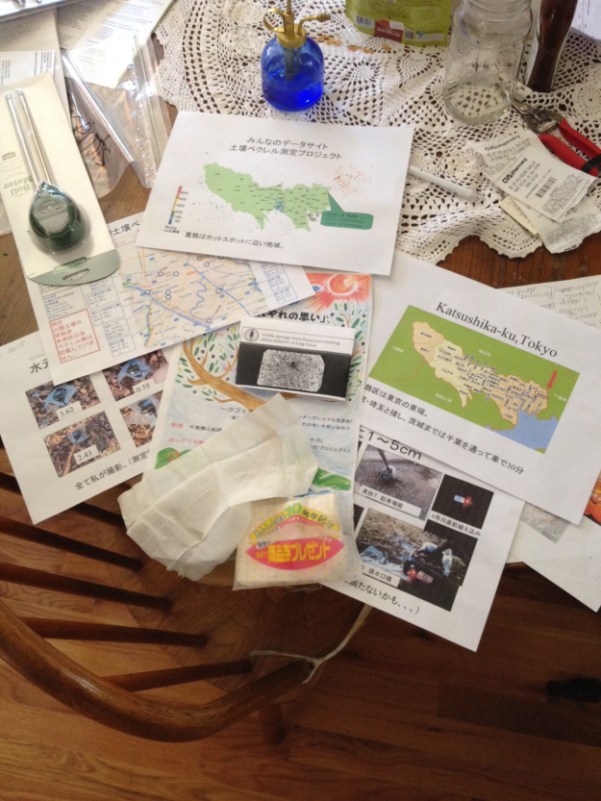
The post-Fukushima period is generating oceans of data, but much of it is useless. These women generate their own, but also want more solid data than the government has been willing to provide.
By Mary Olson
Don’t get me wrong: These women are pissed! (My word not theirs.) And they have every right to express that, even in Japan, at least according to its constitution.
I cannot leave Japan without peeling back the layer of sticky rice and sweet bean paste that keeps the victims of Tepco’s iodine, cesium and strontium on their feet.
One woman from Fukushima, who I met in Kyoto, said to me: “I am not as good as a guinea pig! They take tests from a guinea pig, but they don’t even test me.” She has thyroid cancer. There is a bias, since Chernobyl, toward focusing on thyroid cancer in children as a radiation impact. This is in part since they have less of a prior history of exposures, but in fact, radioactive iodine can cause cancer in people of any age.
This woman is asking to be studied. For me there are long and interesting questions about the moral and ethical basis of studying any victim…but this woman wants data. The post-Fukushima period is generating oceans of data, but much of it is useless, either for a study, or for the victims. This woman tells me that readings from a “full-body count” measuring Becquerels in her body, taken at an evacuation center in 2011 was destroyed after two years. She cannot get it. It is gone. She is more than pissed.
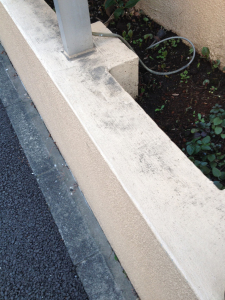
Fairewinds’ Arnie Gundersen dubbed this sort of urban particulate “Dark Matter” and often found that it contains radioactive particles. It’s not clear if these were directly deposited by a plume from the Fukushima meltdown or were perhaps released by post-tsunami incineration of debris.
I feel (or maybe project) other women would explode if they could, but they hold it together for their children.
This is the “triple bind” created by Tepco’s allies in the Japanese federal and (most) state governments:
First: One’s entire life is disrupted by radioactive contamination; any official support comes through cooperation;
Second: One’s children (and some Mamas) are having symptoms of radiation impact but the doctors are told* not to identify radiation in any diagnosis;
Third: The official message from over 400 government-paid Post-Tepco Meltdown staff psychologists is: the only harm to the children will come from the mother’s anxiety about radiation, which is unfounded, and results in stress to her and her family. Stress is bad.
This last point we can all agree on, but the word “stress”, has been appropriated by the “There is No Problem, the Radiation is Safe” story line. Now “stress” means a mother who is no longer cooperative with a government that would require her to move home to Fukushima Prefecture and support the use of local foods in the school lunch program, or face personal condemnation. There is no one to buy her home if she chooses not to.
This makes it a quadruple bind.
I support these Mamas by carefully, and slowly, stating, at each speaking event that if I were a mother I would leave contaminated zones and take my children with me. This does not touch, however, the incredible pressure on them from all sides to conform to the official line; talk about stress!
At one last Tokyo “Mama Meeting” or “tea party” as we have called the sessions with women concerned about radiation, these Mamas are not refugees. They are women monitoring hot spots here in Tokyo.
One woman has four children who bop in and out, cared for on the side. This mom is not at all happy with me, or maybe anyone from the U.S., having anything to say about her situation. I quickly shift to listen-mode and agree with her often. Another mom is much younger. She has done quite a bit of reading and has decided that internal emitters from food contamination are her big concern. I agree with her too. Another mom is interested in learning how to clean up hot spots…and has produced detailed maps with photos of her detector reading as high as 126 millirems per hour on hot spots at a park in Tokyo. Her readings in the same area were repeated over many months.
This group seems more engaged and active than any other Mama Tea Party group I have met with. The feeling fits with the large NGO events that I am doing at the end of this trip. The same day as the Tea Party I went on to the National Diet Building to speak at a large (and lively) event hosted by the Citizen’s Nuclear Information Center, which covered it here.
During this tea party it slowly begins to dawn on me that the bottom of pretty much the entire Japanese food chain is aquatic. I have a dim memory of hearing decades ago, when a U.S. fast-food chain selling fried chicken opened in Japan for the first time, it did not pass the “quality” check done by the chain’s U.S. corporate executives. The chicken tasted like fish. The eggs I have been eating for the past 2 weeks in Tokyo also taste, faintly, of fish. I share this with the Mama concerned about food. Color drains from her face. It is overwhelming to think of meats, dairy and eggs being at risk from possible radioactive sea-water contamination. She says “It makes me tired.” I say “yeah, especially when you factor in fish-fertilizer and all the soy products.”
So, in the end, we know, we all live in Fukushima…
My last day in Japan I was thinking about the old adage that Crisis = Opportunity. Years ago (1999), I traveled to Australia to help fight a global nuclear waste dump called the “Pangea Project” that was targeting Australia for all the world’s irradiated fuel rods. Over breakfast in Perth, in the home of a Green Party member of the Australian Parliament, I ventured an opinion: “The Pangea Project is an existential threat to your nation. You should work for a Constitutional Amendment to ban international waste from entering your waters or your land.” I was truly shocked, as a naive American, to hear the reply: “Australia does not have a constitution.” Unfortunately this ugly global dump threat has reared its head, targeting Australia again. (NIRS Action Alert coming soon!)
Here, now, in Japan, once again, in my view: this nation is facing an existential threat from radioactivity. So, I ask Steve Leeper, one of my hosts, “Does Japan have a constitution?” Steve explains that it does, the Peace Constitution, written post-WWII, by an American woman (under the aegis of a famous US General.). Established in 1947, under U.S. Occupation.
As I scan the Constitution of Japan, it is amazing how detailed it is in enunciating the rights of individuals…though ‘Free Speech’ appears as Article 21, not “first amendment.” I have often felt in these past weeks a common thread between my Japanese friends and my friends back home, south of the Mason/Dixon Line. It hits me: they are both warrior people who fought hard and had to accept defeat. From the same victor: Yankees.
Freedom cannot be given. It must be taken. I sincerely hope that the Mama’s rise, peacefully, to claim the provisions of this constitution (or a new one) for themselves, their children, and all of Japan.
BIG CRISIS = BIG OPPORTUNITY.
*Medical suppression: I heard first-hand accounts from three physicians. One at a prestigious clinic refused to take the “hint” that he should not mention radiation in his diagnoses of patients and had his hospital privileges revoked. Two other women doctors in private practice are persevering in their care for all their patients, including those with symptoms clearly from radiation exposure. One of them openly calls their medical association as “sell-outs” to the “nuclear mafia.” I met these doctors, but I am not “naming these names…” and that is a comment too.
http://safeenergy.org/2016/04/05/japan-diary-2016-fukushima5-part-7/
Health Situation in Fukushima – Arnie Gundersen
Excerpt 1
Arnie Gundersen: “I’ve been reflecting a lot over the last week and a half about what the trip meant to me personally and what I learned… The first thing is [the people are] terribly concerned about their country and concerned about their children… The second thing is the inhumanity of the Japanese government, the Japanese utilities and the Japanese banks toward their own population. I’m just appalled at how the power structure in Japan is ignoring what its people want and basically ramming nukes down the throat of their population… I think [the media sources in Japan] still feel pressure under that State Secrets Act. Nobody wants to push too hard against [Prime Minister Shinzo Abe’s] administration. As a matter of fact, one of Abe’s prime key ministers came out and said twice now that if… the media doesn’t say what the administration wants them to say, they’re going to pull their licenses.”
Excerpt 2
Arnie Gundersen: “The one thing I learned when I was in the resettlement communities [of people evacuated due to the Fukushima nuclear crisis] is that they’ve all been told that there will be no resettlement communities by the time the Olympics start. The plan is to move people back into their homes in the contaminated areas, or to move them somewhere else in Japan to permanent homes”… (Maggie Gundersen, founded of Fairewinds Energy Education:) “I was devastated when I saw some of the pictures that you took in Japan… these temporary housings just look like military barracks on bare pavement… And now to hide the radiation, extensive radiation, that’s there and re-depositing in the already cleaned areas from snowmelt, flooding, and rain — and to say it’s okay and send everyone back is a death sentence to all these families and children and grandchildren.”
Excerpt 3
Arnie Gundersen: Yeah, let me get back to the first thing I said about the inhumanity toward their own people. We had doctors tell us when they treated somebody for radiation illness, if they put radiation illness on the hospital forms, the government refused to pay. So doctors were literally going out of business because they were doing their job and treating people. But the other thing I learned on the last day of the trip was that there’s a huge spike in the death rates within Fukushima Prefecture for young children compared to what it was in previous years. But that story has been stifled by the Japanese medical and government agencies. Nobody’s publishing the data that the Japanese have been publishing for years leading up to the disaster. So where are the death data on Fukushima Prefecture? And the answer is it hasn’t been published because the Japanese government doesn’t want it out there. When you control the medical community, the epidemiological data that you need to prove a case is really, really difficult. I think Fairewinds did a good job in the time we were over there getting sample data with a group of scientists that may affect the way the world looks at the disaster. But the other half of that is, you’ve got to get the doctors on board to report honestly what they’re seeing. And the medical community is even more under the thumb of the Abe regime than is the press. It’s very depressing.” … (Maggie Gundersen:) “I want to let you know that Arnie and other scientists are working on some really significant studies from samples that scientists have taken in Japan… Fairewinds will be participating in a report that will be issued on this and we will keep you up to date. It takes time to do this testing, but as soon as it’s ready, it will be publicized.”
http://www.fairewinds.org/podcast//put-on-a-happy-face-japan-speaking-tour-series-no-4-1
GroundTruth Films: Fukushima Diary
Signs covering Fukushima Station are a distraction from the fact that 100,000 people are still displaced in the Prefecture.
Burn clothes: Wear ‘em, toss ‘em. That’s the spirit in which Beth Balaban and I packed for our final filming trip to Fukushima for Son of Saichi. We also brought burn pillows, burn shoes, burn socks, burn slippers, burn blow up mattresses… Safe to say, nothing in our suitcases is coming home with us.
On our previous three trips we’ve stayed outside the evacuated contamination zone, traveling in and out for brief periods daily. This time we’re staying inside Yamakiya, a village evacuated after the earthquake, tsunami and nuclear power plant meltdown five years ago. And even though radiation levels here aren’t of the sci-fi-turn-your-skin-neon-green variety, scientists we’ve talked to admit that even after being part of the nation’s $10 billion clean-up effort, it’s still not a place they’d want to live.
Yamakiya’s evacuation didn’t come right away after the March 2011 disaster. It came a few months later when prevailing winds and seasonal rainfall took a toxic road trip, traveling like the Shinkansen over hills and valleys, and along Rte. 114 past the home of Hidekazu Ouichi, a lifelong farmer and son of Saichi, a Hiroshima survivor.
We’re here now because Hidekazu got word from the government late last year that he could – finally – move back home April 1st. But when he picked us up from the Fukushima train station, we found out the government has changed its mind again about lifting the evacuation orders. No, they now say, he can’t move back until September.
He’s moving back anyway. Another 31 families are, too. (Most former residents are rejecting any offer to live here.)
On the 30-minute drive to Yamakiya, I realize I’m more worried about what’s measured in pixels and decibels than becquerels or microsieverts. There’s a television screen embedded in the dashboard of Hidekazu’s new Toyota, and Japan’s national obsession – cute, quirky mascots – are on full display. Eyes on the road, Hidekazu!

Now that he’s home, Hidekazu finds it hard to break his lifelong habits and those of his ancestors. The family farm has always been land to live off, always a place of sustenance, and it’s difficult for him to see it any other way.
That’s why we’re not surprised when he opens the freezer to show us feet from a wild boar he and his friends caught in the backyard. A ghost town for the past five years, this area became overrun with wild animals – especially boar which Hidekazu says have gotten so used to gallivanting around town that “they roam freely inside abandoned houses, and come right up like a dog and wag their tails at you.”
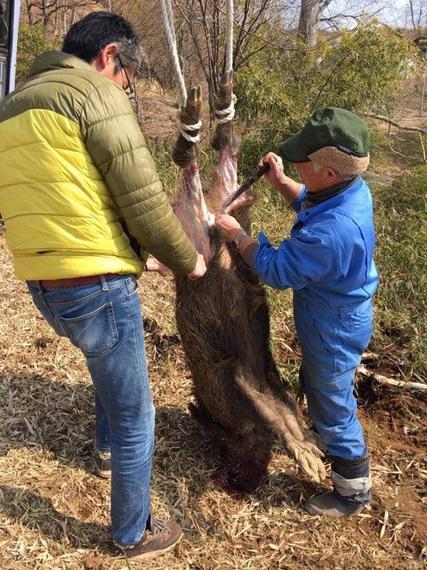
The boar pre-freezer.
The bad news is that wild boar – tasty as their feet might be – eat mushrooms which are among the most contaminated plants in Yamakiya’s forest. Cesium builds up inside the body of boars because of it. When Hidekazu tested this boar to see just how radiated it was, he measured 12,000 becquerels. (One becquerel is defined as the decay of one atom of a radioisotope per second. So if your Geiger counter detects the radiation of one decay coming from a sample – say, a boar – in one second, then that sample has one becquerel of radiation.) 12,000 becquerels is astronomically higher than the 500 allowed by the government.

Crew member and animator Christian Schlaeffer puts his Geiger counter to the frozen boar feet.
Hidekazu offered to cook the feet up for us for dinner. We politely declined.
Oh, who am I kidding? We told him he was crazy and there wasn’t a chance in hell we’d eat it, and neither should he! But if our previous trips have told us anything, it’s that Hidekazu will eventually convince us to eat or drink something that will surprise us and amuse him. I suspect it’s just a matter of time before the killer bee liquor comes out of the cabinet.
http://www.huffingtonpost.com/beth-murphy/groundtruth-films-fukushi_b_9605966.html
In total denial of the low-dose internal irradiation effects
Another marvelous spin propaganda article minimizing the dangers of the radiation in Fukushima, from the Asahi Shimbun.
If you watch that press conference from the beginning to the end, you may have different impression about their work. They do not pay any attention to the effect of the low-dose internal irradiation. Such omission being very convenient to promote the fallacy that life in Fukushima is very safe.
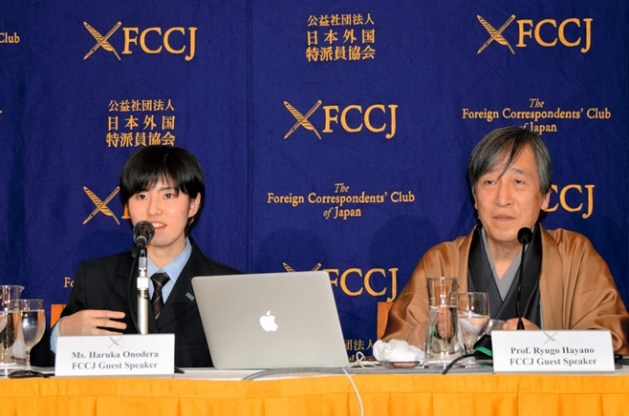
Haruka Onodera, a third-year student at Fukushima High School, holds a news conference with University of Tokyo professor Ryugo Hayano at the Foreign Correspondents’ Club of Japan in Tokyo on Feb. 8.
Fukushima students reach out to tell truth about radiation
Struck by ignorance about the 2011 nuclear disaster, high school science club members in Fukushima Prefecture enlisted the help of fellow students around Japan and abroad for a comparative study on radiation doses.
The results surprised even those living in the prefecture that hosts the Fukushima No. 1 nuclear power plant.
“The individual doses (of external radiation exposure in high school students) were almost equal inside and outside of Fukushima Prefecture, and in European areas,” Haruka Onodera, 18, said in English at the Foreign Correspondents’ Club of Japan (FCCJ) in Tokyo on Feb. 8.
A German correspondent asked her, “Would you declare Fukushima now safe?”
“Actually, we didn’t measure the doses in people living in the contaminated areas, so we can’t say all of Fukushima is safe,” Onodera answered, often pausing in thought in the middle of her words and phrases. “But I hope we will send (personal dosimeters) to contaminated areas and help do risk management for people living there in the future.”
Onodera, a third-year student of Fukushima High School and member of the physics and radiation division of the school’s Super Science Club, also showed explanatory slides at the FCCJ news conference titled, “Fukushima and radiation monitoring. The goal of the project is to show the realities of Fukushima Prefecture to the rest of the world.
The club’s physics and radiation division started the project in summer 2014. It involved 216 high school students and teachers in Japan and abroad carrying personal dosimeters for two weeks.
Six high schools in Fukushima Prefecture–Fukushima, Adachi, Aizu Gakuho, Iwaki, Asaka and Tamura–and another six located elsewhere in Japan–including in Gifu, Kanagawa, Nara and Hyogo prefectures–were involved in the project.
They were joined by 14 high schools from France, Poland and Belarus.
According to the measurements taken by the students, the annual radiation doses in Fukushima Prefecture ranged between 0.63 and 0.97 millisievert. For elsewhere in Japan, the range was from 0.55 to 0.87 millisievert, while in Europe, the annual doses were between 0.51 and 1.1 millisieverts.
The similar levels of external doses are believed to be partly attributable to the lower level of natural background radiation in Fukushima Prefecture compared with that in western Japan. That finding came from an analysis of a database on the radioactive content of soil in areas surrounding the different high schools across Japan.
Onodera, who was seated next to Ryugo Hayano, a professor of physics with the University of Tokyo, at the FCCJ news conference, had also presented the study results last year to a workshop of high school students in France and a conference on Fukushima foodstuffs held on the sidelines of an international food exposition in Italy.
Two second-year students of the Super Science Club–Minori Saito, 17, and Yuya Fujiwara, 17–gave a talk at a workshop organized in Date, Fukushima Prefecture, by the International Commission on Radiological Protection late last year.
First- and second-year students who are members of the club, joined by eight high school students from France, visited peach farmers and shiitake mushroom growers in Fukushima Prefecture in summer last year. It was part of a program for studying the current state of Fukushima from diverse views.
The students wanted to address global audiences after they were shocked by how little was known about the actual state of Fukushima Prefecture.
“Can humans live in Fukushima?” a French high school student asked the Fukushima students over Skype as part of an international exchange program in 2014.
That prompted the Japanese students to determine the actual situation on their own, and compare it with circumstances elsewhere in Japan and abroad. Hayano advised them to undertake the endeavor when he visited Fukushima High School to give a talk.
The findings of the study were surprising. Most of the Fukushima students expected the doses in Fukushima would be the highest, even by a large margin.
The students also studied how behavior affected the dose levels.
The Fukushima High School students were being exposed to lower radiation levels when they were at school than when they were at home. They believe the school’s concrete buildings provided a more effective shield from radiation sources than the wooden houses did.
By contrast, students attending Ena High School in Gifu Prefecture were exposed to more radiation when they were at school, where granite, containing radiation sources, is used in the buildings.
Their analysis results were published in November in a British scientific journal on radiological protection. Onodera was involved in writing the research paper.
“The experience has brought home to me how important it is to address reality objectively and scientifically,” she said.
Onodera said she was growing more interested in basic sciences and dreams of doing research on molecular biology at university.
“We hope to solicit help from people in evacuation zones within Fukushima Prefecture, and from high schools in countries we have yet to address, in further broadening our study,” said Takashi Hara, a teacher and adviser to the science club’s physics and radiation division.
Telling the Story of Fukushima
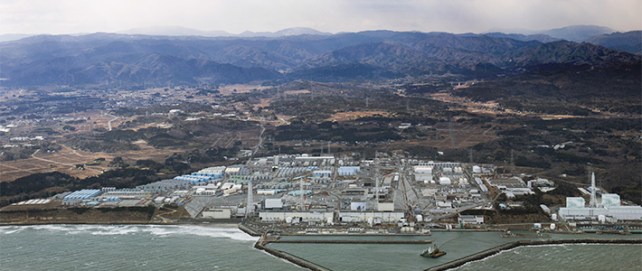
Different Approaches to Remembering 3/11 at the Prefecture’s Museums
Five years after the March 11 earthquake and tsunami touched off a triple meltdown at the Fukushima Daiichi nuclear power plant, the disaster is no longer just a current event—it is also a part of Japan’s history. But how should that history be told? Government and civil society groups have different answers, and they are starting to emerge in a battle of museums.
A Tale of Two Museums
In a flurry of caption writing and message tweaking, Fukushima prefectural government officials are currently putting the finishing touches on a major new exhibit about the disaster at the Fukushima Daiichi Nuclear Power Station. Starting this summer, the exhibit will be permanently displayed at the ¥20 billion Fukushima Prefectural Center for Environmental Creation in the town of Miharu. Plans are in the works to send every fifth-grade student in the prefecture on a field trip to view it. The goal, according to the organizers, is to “address the worries and concerns of Fukushima residents, further understanding of radiation and environmental problems, and deepen awareness of environmental recovery.”
Some 40 kilometers away, in a small post-and-beam hall in the city of Shirakawa, a group of local citizens are planning a very different kind of exhibit. Their displays focus on the ways in which the government exacerbated the disaster and disregarded the rights of Fukushima residents in its aftermath. They will be exhibited at the Nuclear Disaster Information Center, which was built in 2013 using ¥30 million yen in donations from the public, with the goal of ensuring Fukushima and its lessons are not forgotten.
These two projects represent divergent understandings of how the Fukushima nuclear disaster should be remembered. Given their vastly unequal resources and reach, they also raise questions about the appropriate role of government in memorializing the disaster that rocked Japan and the world five years ago.
“People who have suffered from the Fukushima disaster have doubts about whether a public facility like the Center for Environmental Creation can truly communicate the lessons of an accident for which the national and prefectural governments bear partial responsibility,” says Gotō Shinobu, an associate professor at Fukushima University, who is involved in planning the alternative exhibit in Shirakawa.
A Familiar Story
The quiet battle over historical interpretation that is playing out in Fukushima has a precedent in the seaside city of Minamata, Kumamoto Prefecture, the site of one of the most devastating industrial disasters in world history. Thousands of people living in the area were killed or severely sickened by mercury after Chisso Corporation dumped industrial waste from its chemical plant into the bay over the course of several decades, contaminating fish and shellfish and poisoning the people who ate them. Fifty years later, public and private museums in the area are still telling different versions of that history.
One version can be found at the Minamata Disease Municipal Museum, which was established in 1993 with the goal of “handing down the lessons and experiences of Minamata Disease,” according to its mission statement. Videos and panels in the ¥6 billion facility relate the history and science of the disaster, and victims are on hand to share their personal experiences. But Endō Kunio, a board member and employee of the nonprofit victims’ support organization Sōshisha, says the museum fails to communicate the disaster’s true lessons. “Simply lining up events does not equate to history,” he says. “The facts of what happened are there, but the museum doesn’t say much about their meaning.”
Since 1988, Sōshisha has run its own museum, which displays fishing gear, protest flags, and other artifacts in a converted mushroom-cultivation shed. Among its founding principles is the goal of recording the struggles of the victims and the culpability of government and industry. “Our starting point is the perspective that Minamata Disease resulted from criminal activities on the part of Chisso Corporation and the national government,” says Endō. That perspective has shaped the low-budget museum into a symbol of resistance against the sanitization of painful historical events.
Fukushima Fault Lines
The divide in Fukushima falls along similar lines. The exhibit at the prefectural center will include a timeline of events since the meltdowns, a “radiation lab” explaining the science of radiation and measures to reduce exposure, and a large display on efforts to increase renewable energy and sustainability in the prefecture, according to an overview released last year. Although the exhibit advocates for a “Fukushima that does not depend on nuclear power,” reporting by the Tokyo Shimbun has pointed out that its planning board included several members with close ties to the nuclear industry.
In 2014, shortly after planning began, a citizen’s group with antinuclear leanings called the Fukushima Action Project sent a letter to the prefectural authorities expressing concern over the exhibit. The group requested, among other things, that the center not minimize the health risks of radiation. Since then, FAP representatives have met eight times with prefectural officials to discuss the content of the exhibits. According to meeting transcripts posted on the group’s website, they expressed concerns this January that the exhibit still does not adequately address the severe and ongoing water pollution caused by the disaster or the huge amounts of radioactive waste generated by the cleanup.
Fukushima prefectural officials, meanwhile, note that the exhibit does not touch on government or industry culpability, the fact that radiation exposure limits were raised after the disaster, or the pollution and waste problems because “these issues are not pertinent to the goals of the exhibit.” The facility’s goal, they explain, is “supporting educational activities related to radiation and the environment”; in response to public concerns about the exhibit, they state only that the exhibit content was determined by a panel of experts.
Nagamine Takafumi, the director of the Nuclear Disaster Information Center, is also deeply skeptical about the public museum. “We believe the goal of the Fukushima Prefectural Center for Environmental Creation is to create a myth of radiation safety,” he said. He and his colleagues are currently planning two permanent exhibits for their center. One, designed by Fukushima University’s Gotō, will compare global teaching materials on nuclear power and highlight the Ministry of Education’s pronuclear bias before the disaster. The other will examine the failure of all but a few municipalities in Fukushima to distribute potassium iodide pills immediately after the accident, which would have lowered residents’ risk of developing thyroid cancer.
A Third Perspective
Another private, but less politically driven, museum operates from an outbuilding at an abandoned school in the village of Kawauchi, about 25 kilometers inland from the nuclear plant. Called the Kangaeru Shirōkan, which translates roughly to “a museum for feeling, thinking, and understanding,” the free facility displays protective bodysuits, radiation meters, photographs, town newsletters, and other artifacts of the meltdown.
The museum was founded in 2012 by Nishimaki Hiroshi, a local journalist who moved to the area from Saitama Prefecture nine years ago. He says that in the months following the disaster, he wanted to do something constructive, but felt immobilized by the scale and complexity of the meltdown’s aftermath. When novelist and longtime friend Taguchi Randy suggested he open a museum, he acted on the idea.
The displays include scant explanatory text, and Nishimaki is rarely on site to act as a guide. His says his goal is simply to present the reality as locals have experienced it so that it will not be forgotten. “The government does bear some responsibility for what happened, but I don’t think of the displays as a way to attack them,” he says. Still, he has avoided government funding in order to maintain complete freedom in what he exhibits.
An Inevitable but Unequal Divide
It is hardly surprising that views of environmental catastrophe differ in private and public museums. Government actors partially responsible for a disaster are unlikely to be objective in planning a museum to memorialize it, and civic organizations that include disaster victims are equally unlikely to put aside their own experiences when interpreting the same events. In the case of the Fukushima disaster, divergent views on nuclear power further shape the messages presented in museums.
Public and private projects of historical interpretation can in this sense complement one another. Yet there is little chance the majority of the public will be exposed to both perspectives. As Gotō points out, the budget of the public museum is over 600 times that of the private one he is involved with, and visits to the private museum are not a part of any official school curriculum.
Last year, national and local officials met to discuss another large, government-funded museum focused on the nuclear disaster, this one planned to open on the prefecture’s coast some time in the coming decade. Although they haven’t asked, Minamata’s Endō has a piece of advice for them.
“It is all-important that the story of what happened be told by the people who live in that place,” he says. “When government officials and civil society groups interpret for them, it becomes something different.”
Radioactive sediment found in Fukushima rivers
Tokyo: Japanese researchers have detected relatively high levels of radioactive substances in sediment in multiple rivers running through Fukushima prefecture, the media reported on Friday.
The prefectural government in January surveyed the density of radioactive materials in soil and other sediment that has accumulated on the bottoms and banks of 72 rivers in the prefecture, public broadcaster NHK reported.
The study came in response to the 2011 nuclear accident at the Fukushima Daiichi power plant.
The researchers found up to 54,500 becquerels per kg of radioactive substances in the Maeda river in Futaba town, where the plant is situated, and 39,600 becquerels in the Hiru river in Fukushima city. They also detected more than 10,000 becquerels at five other locations in four municipalities.
The prefectural government plans to study restricting access to rivers with high concentrations of radioactive materials.
It also plans to urge the central government to remove contaminated soil and other sediment.
http://www.thejapannews.net/index.php/sid/242732285

Past References
Overview of active cesium contamination of freshwater fish in Fukushima and Eastern Japan
- Received: 13 March 2012
- Accepted: 05 April 2013
- Published online: 29 April 2013
Abstract
This paper focuses on an overview of radioactive cesium 137 (quasi-Cs137 included Cs134) contamination of freshwater fish in Fukushima and eastern Japan based on the data published by the Fisheries Agency of the Japanese Government in 2011. In the area north and west of the Fukushima Nuclear plant, freshwater fish have been highly contaminated. For example, the mean of active cesium (quasi-Cs137) contamination of Ayu (Plecoglossus altivelis) is 2,657 Bq/kg at Mano River, 20–40 km north-west from the plant. Bioaccumulation is observed in the Agano river basin in Aizu sub-region, 70–150 km west from the plant. The active cesium (quasi-Cs137) contamination of carnivorous Salmondae is around 2 times higher than herbivorous Ayu. The extent of active cesium (quasi-Cs137) contamination of Ayu is observed in the entire eastern Japan. The some level of the contamination is recognized even in Shizuoka prefecture, 400 km south-west from the plant.
Introduction
The serious accidents of the Fukushima Nuclear Power Plant have been contaminating a vast area in eastern Japan1, home of 60 million people. Consumption of freshwater fish is an important part of the aquatic pathway for the transfer of radionuclides to the freshwater ecosystem creatures including humans2. Therefore the contamination of freshwater fish of aquatic bioaccumulation is an important problem3,4. In the case of the Chernobyl Accident, the transfer of radionuclides to fish has been studied in European countries5,6,7. Most attention was focused on Belarus, the Russian Federation and Ukraine, because of the higher contamination of water bodies in these areas8,9. However, in the case of Fukushima, there is little information about freshwater ecosystem contamination in 2011. Therefore, this paper focuses on an overview of active cesium 137 (quasi-Cs137) contaminations of freshwater fish in Fukushima and eastern Japan based on 2011 data published by the Fisheries Agency of the Japanese Government10.
Results
Highest contaminated area in fukushima prefecture
Fukushima Prefecture is located in the northeastern part of the Main Island of Japan (Fig. 1). It is divided into three sub-regions by its mountainous topography, i.e., Hamadori, Nakadori and Aizu (from east to west). Hamadori is the coastal region facing the Pacific Ocean and separated from Nakadori (central basin) by the Abukuma Highlands. The westernmost Aizu is mountainous with the Aizu Basin in the center. There still is a rich natural environment maintained throughout the prefecture with three national parks, one quasi-national park and eleven prefectural parks present. The mountain ranges form headwaters and basins of many rivers such as the Abukuma River and the Aga River. The Abukuma Highlands is designated as one of the prefectural parks and rich in endemic wildlife including the indigenous forest green tree frog (Rhacophorus arboreus) and salamanders (Hynobius lichenatus, Hynobius nigrescens). There the Ayu (Plecoglossidae: Plecoglossus altivelis altivelis), Salmon (Salmonidae: Oncorhynchus masou, Salvelinus leucomaenis) and carp (Cyprinidae: Tribolodon hakonensis, Cyprinus carpio, Carassius.sp) are very popular freshwater fish for fishing and angling.

Blue is water system: Aga river basin is west area of Fukushima, Abkuma river basin is center of Fukushima. Green is mountain chain or highland where heights is more 1,000 m. Yellow is high contaminated area by nuclear accidents.
The Fukushima Nuclear Power Plant is located in Hamadori. Due to the topography with the Pacific Ocean in the east and the Abukuma Highlands in the west, the areas in the north to the west of the plant are highly contaminated. Such areas include Iidate Village and Date City. The Mano River which flows through Iidate Village in the upstream and Minami-souma City. Two months after the accident, the Ministry of Land, Infrastructure and Transport surveyed the Mano River11. The survey results of the contamination level of the bottom soil are Cs134: 6,900 Bq/kg and Cs137: 7,800 Bq/kg in Mano River of Minamisouma city at Majima bridge on 29/5/2011. While the area downstream and the Abukuma River in Date City found higher contamination. Two months after the accident, the Ministry of Environment surveyed the Abukuma River of Date city. The survey results of the contamination level of the bottom soil are Cs134: 11,000 Bq/kg and Cs137: 12,000 Bq/kg in Abukuma River of Date city at Taisho bridge on 24/5/2011.
The contamination level of radioactive cesium (quasi-Cs137) of the Ayu, annual and herbivorous species, captured in these rivers or their tributaries between May and September 2011 was measured. The cesium bioaccumulation of those captured in the Mano River was mean 2,657 Bq/kg (n = 3, median 2,900 Bq/kg, range 1,770–3,300 Bq/kg) and the Abukuma River at Date city was mean 1,770 Bq/kg, (n = 11, median 1,170 Bq/kg, range 650–2,080 Bq/kg ).
The bioaccumulations of Aga river basin (West Fukushima)
The Aga River Basin encompasses the entire Aizu region in west Fukushima. The river water flows through from the Aizu region to the Sea of Japan. As it lies over 70 km to the west of the nuclear power plant and both the Abukuma Highlands and Oou montain chain are in between, the Cs137 contamination level here was lower than Mano river and the Abukuma river basin. Two months after the accident, Fukushima prefecture surveyed the Agano River (Aga river Basin) of Aizu and South Aizu region12. The survey results of the contamination level of bottom soil were Cs134: 29 Bq/kg and Cs137: 33 Bq/kg in Agano River of Aizu region at Miyako bridge on 27/5/2011, Cs134: 29 Bq/kg and Cs137: 34 Bq/kg in Agano river of Minami-Aizu region at Tajima bridge on 27/5/2011.
In the aga river basin, the bioaccumulation of fish are well recognized. Fig. 2 shows the quasi-Cs137 contamination and bioaccumulation levels of three fish families captured in the basin, i.e., Plecoglossidae (Plecoglossus altivelis n = 18), Cyprinidae (Tribolodon hakonensis n = 25, Cyprinus carpio n = 5, Carassius sp. n = 11)and Salmonidae(Oncorhynchus masou n = 12, Salvelinus leucomaenis n = 13) between April and December 2011. Since p-value = 0.008 ≤ 0.05 of Kruskal-Wallis Test, at the p = 0.05 level of significance, there exists enough evidence to conclude that there is a difference among the three families based on the active cesium contamination level. The median of herbivorous Plecoglossidae shows the lowest level among the three families (n = 18, mean 50.64 Bq/kg, median = 46.00 Bq/kg, range 12.00–90.00 Bq/kg). Then the median of omnivorous Cyprinidae shows about 1.6 times (n = 41, mean 79.80 Bq/kg, median 72.00 Bq/kg, range 15.00–210.00 Bq/kg) and the mean of carnivorous Salmonidae about 1.9 times higher (n = 25, mean 96.24 Bq/kg, median 89.00 Bq/kg, 17–200 Bq/kg) than Plecoglossidae.

The box plots indicate inter-quartile ranges of these data. Bars are into the each box indicate the each median.
The widespread contamination in eastern Japan
To the south west of Fukushima prefecture, there lies the Kanto region which as well as containing the metropolitan prefecture of Tokyo also comprises Ibaraki prefecture, Tochigi prefecture, Gunma prefecture, Saitama prefecture, and Chiba prefecture. In the area, there is the Tone river basin that is the one of biggest river basins (16,840 km2) in Japan. Therefore, there are not only many source points of water springs and many rivers and streams but also high density water network systems of irrigation canals and urban water systems. Freshwater fish inhabit all types of water systems. As a result, the level of freshwater contamination can be taken as an index of the environmental contamination of the freshwater ecosystem. The isogram map (Fig. 3) shows an average of quasi-Cs137 for each prefecture about contamination levels of the Ayu (Plecoglossus) captured in between May and September 2011.
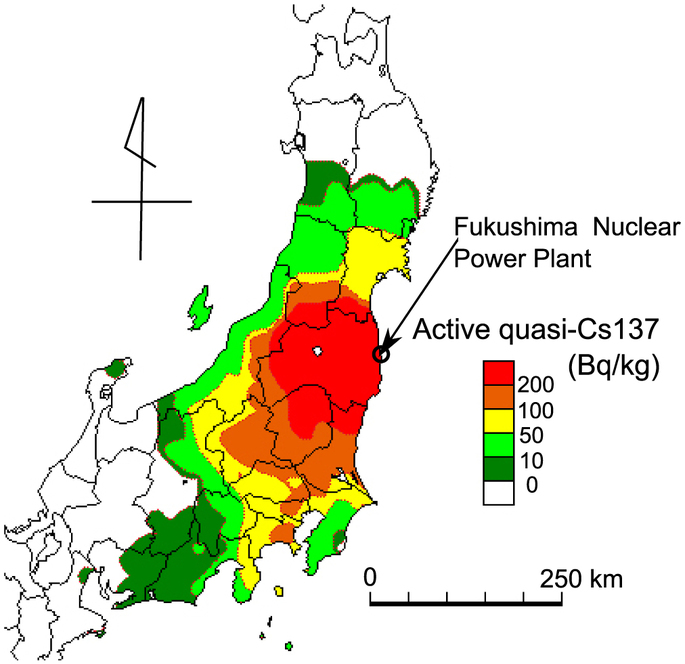
Each isogram center points are each prefecture’s capital city.
The relation between distance from power plant and contamination level
We found a relation between the distance from the power plant and the quasi-Cs137 contamination level of freshwater fish. According to the result of inverse regression analysis about quasi-Cs137 contamination levels related to the distance from the nuclear power plants of each prefectural capital city, the equation is: Y = 27339.82−1 × −75.13 (Y = Cesium, X = The Distance from the plants to each prefecture’s capital city, Signif F = 0.009 < 0.05, Adjusted R Square 0.50). In areas within a radius of 100 km from the nuclear plant, active cesium contamination levels of the Ayu are more than 200 Bq/kg. In those between a radius of 100 km and 200 km, it is around 60–200 Bq/kg. In those between a radius of 200 km and 300 km in which Tokyo is included, it is 20–60 Bq/kg. Therefore, it is estimated that contamination of freshwater fish is extended to all prefectures in eastern Japan. The contamination is recognized as far as Shizuoka prefecture, 400 km south-west from the plant.
Discussion
The Japanese freshwater system is very high density as developed rice water paddy field, irrigation canal, urban water-system network. Therefore, we have to think that the contamination of freshwater fish is widespread not only in river basins but also all over the ground included all types of water-systems, for example, agricultural and urban water systems. The isogram map shows the contamination tendency quite well. The contamination levels of the freshwater fish provide insufficient data and the knowledge of the path about bioaccumulation. So, we will have to survey a more wide spread area and monitor bioaccumulation in each species level.
In this paper we show the relation between distance and contamination levels by inverse regression analysis. The results indicate the effects of quasi radioactive cesium 137 by the Fukushima accident look like less serious than those of the Chernobyl accident. However, contamination levels are possibly higher than the Chernobyl as the cesium is concentrated by the water systems in limitation region. Water paddy field look like shallow pond saved mud included cesium 137. Moreover, the cesium137 will distribute and concentrate by high density irrigation canal and urban water-system. For example, the highly contaminated Taisho river bottom soil Cs134: 4,335 Bq/kg, Cs137: 5,456 Bq/kg was found at 1/11/2011 at Kitakashiwa bridge of Kashiwa city in Tokyo metropolitan area, 200 km south-west from the plant13. Therefore we must carefully and continuously monitor the contamination to the freshwater ecosystem and human health.
Methods
Data 2011 of radioactive cesium of freshwater fish was analyzed by each local government according to the emergency food survey manual of radioactive substance14. The purpose of this manual is they avoid feeding high contaminated food it was defined by food security of emergency condition. Therefore, it is not aimed at collecting accurate data. As a result, this data did not distinguish between cesium137 and cesium134. Therefore, the analysis of this paper calculated by quasi-Cs137 included Cs134. They used germanium semiconductor machine when they measured the radioactive cesium contamination of freshwater fish. The measure time is from 10 minute to 1 hour. The calibration is only Cs137 in per week. The range of radioactive cesium applied only Cs137 regression equation. The result, when the case included Cs134 is relatively much, the numerical value become over estimation. The sample of freshwater fish was collected by each prefectural government by emergency policy of food security. In the survey, the fish sample collected 5–10 kg in one survey station. The measure is using wet condition fish. Ayu and small fish was measured hole body, while big fish measured the part of food portion.
References
1.
Monitoring information of environmental radioactivity level, MEXT and DOE Airborne Monitoring, Ministry of Education, Culture, Sports, Science & Technology in Japan, http://radioactivity.mext.go.jp/en/list/203/list-1.html (2013).
2.
Joanna, B. et al. Radiocesium in Fish from the Savannah River and Steel Creek: Potential Food Chain Exposure to the Public. Risk Analysis Vol. 21, No.3, 545–559 (2001).
3.
McCreedy, C. D., Jagoe, C. H., Glickman, L. T. & Brisbin Jr, I. L. Bioaccumulation of cesium-137 in yellow bullhead catfish (Ameiurus natalis) in habiting an abandoned nuclear reactor reservoir. Environmental Toxicology and Chemistry 16, 328–335 (1997).
4.
Rowan, J. R. & Rasmussen, J. B. Bioaccumulation of radiocesium by fish: The influence of physicochemical factors and trophic structure. Canadian Journal of Fisheries and Aquatic Science 51, 2388–2410 (1994).
5.
Hakanson, L., Anderson, T. & Nilsson, A. Caesium-137 in perch in Swedish lakes after Chernobyl-present situation, relationships and trends. Environmental Pollution 58, 195–212 (1989).
6.
Ugedal, O., Forseth, T., Jonsson, B. & Njastad, O. Sources of variation in radiocesium levels between individual fish from a Chernobyl contaminated Norwegian lake. Journal of Applied Ecology 32, 352–361 (1995).
7.
Elliott, J. M. et al. Sources of variation in post-Chernobyl radiocesium in fish from two Cumbrian lakes (north-west England). Journal of Applied Ecology 29, 108–119 (1992).
8.
Long-Term Observation of Radioactivity Contamination in Fish around Chernobyl. RYABOV I N Vol 79, 112–122 (2002).
9.
Environmental consequences of the Chernobyl accident and their remediation : twenty years of experience report of the Chernobyl Forum Expert Group ‘Environment’. Vienna: International Atomic Energy Agency (2006).
10.
Results of the inspection on radioactivity materials in fisheries products, Fisheries Agency, http://www.jfa.maff.go.jp/e/inspection/index.html. (2012).
11.
Urgent radionuclides monitoring report in public water system area of Fukushima prefecture (in Japanese), Ministry of Environment, http://www.env.go.jp/water/suiiki/urgent/result201106.pdf. (2011).
12.
Urgent environmental radionuclides monitoring report in public water system area of Fukushima prefecture at 4/6/2011(in Japanese), Fukushima Prefecture, http://www.pref.fukushima.jp/j/koukyouyousuiikimonitaring.pdf. (2011).
13.
Final report of the highly contamination spot in Kashiwa city (in Japanese), Ministry of Environment, http://www.env.go.jp/press/press.php?serial=14647. (2012).
14.
The survey manual “Guide: Emergency Preparedness for Nuclear Facilities”, Nuclear Safety Commission, June, 1980-final revised in 2010. (2010).
Sources :
- Received: 13 March 2012
- Published online: 29 April 2013
Overview of active cesium contamination of freshwater fish in Fukushima and Eastern Japan
http://www.nature.com/articles/srep01742
- Received: 21 November 2013
- Published online: 16 January 2014
Initial flux of sediment-associated radiocesium to the ocean from the largest river impacted by Fukushima Daiichi Nuclear Power Plant
http://www.nature.com/articles/srep03714
- Received: 15 May 2014
- Published online: 12 February 2015
Future projection of radiocesium flux to the ocean from the largest river impacted by Fukushima Daiichi Nuclear Power Plant
http://www.nature.com/articles/srep08408
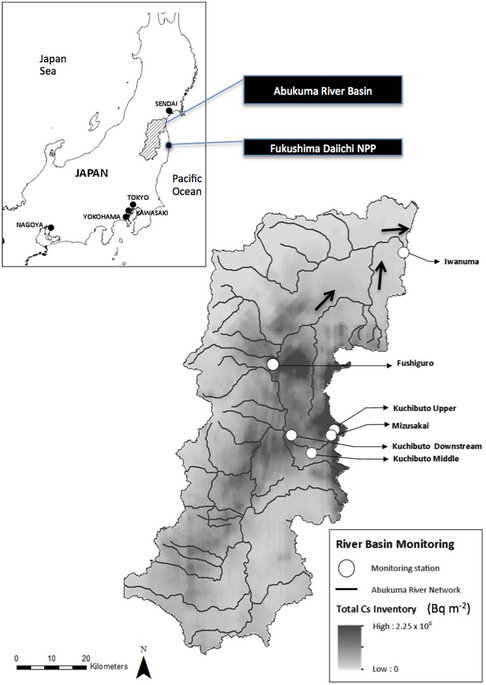
Map of the Abukuma river basin showing monitoring locations and the total radiocesium inventory
Look At The Millions Of Bags Of Radioactive Dirt That Japan Has No Plan For

Five years after the meltdowns at the Fukushima Daiichi nuclear plant, Japan still faces another four decades or more of cleanup. One of many problems is what to do with the massive amount of contaminated soil from the site—which is now in a growing pile of bags stacked on former farms in Fukushima.
A new photo series from Japan-based photographer James Whitlow Delano documents the sprawl of nuclear waste.
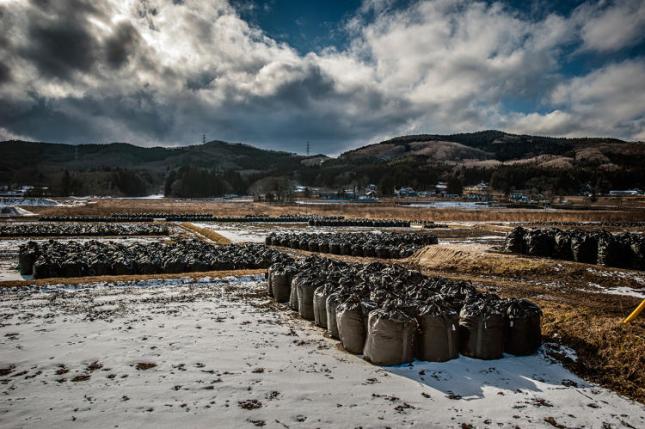
As of 2015, the government reported that there were more than 9 million bags in the prefecture. Some of it will be moved inside the no-entry zone next to the nuclear plant, which is so radioactive that the government has given up on decontamination for the moment. But Japan is also sending radioactive waste to other parts of the country.
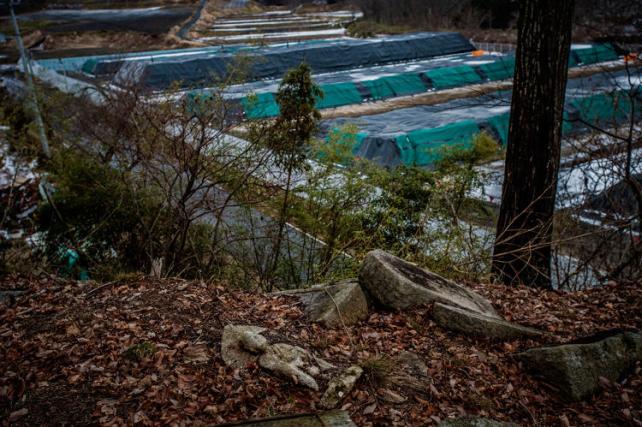
“The Japanese government decided early on in the decontamination process that all prefectures in Japan should share the burden of storing radioactive waste with Fukushima Prefecture,” says Delano, who has been photographing the disaster since it happened in 2011. “This resulted in firm pushback by communities in other prefectures that are adjacent to sites that were selected.”
They have reason to be concerned: In September of 2015, when there were floods in Nikko, Japan, hundreds of bags of radioactive soil were washed into the local river.
Even in Fukushima itself, in villages where many residents may not be able to return for a decade or more, no one wants a radioactive dump next to their former homes. The dumps are supposed to be temporary and moved in 30 years, but people are skeptical that will happen. “They feel like the presence of the site will be like the last nail in the coffin for their communities,” he says. “So, no one wants this contaminated soil.”
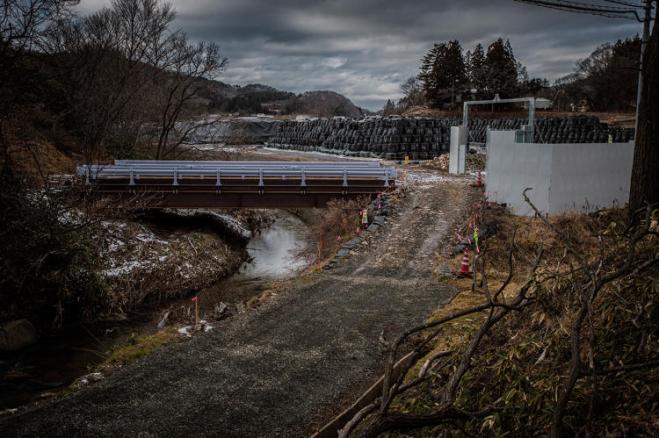
In some areas, a few people have started moving back. “When I used to sneak inside the old 20-kilometer-radius nuclear no-entry zone, I would enter a neighborhood in Minami Soma that was half inside the zone and half outside and hop the barrier to document the absence of humanity,” says Delano. “About one and a half years after the earthquake and tsunami, the no-entry zone was readjusted to reflect the actual radiation levels, instead of being an arbitrary 20-kilometer radius. That meant that the whole neighborhood would be decontaminated and prepared for families to return, if they wanted to do so.”
Some resident returned, but now the fields next to the neighborhood are being cleared for a dump filled with bags of contaminated soil. “People fear the presence of this soil and the dust that every breeze will carry into their neighbor,” he says. “It creates fear and doubt. Many families, especially those with young children, are not returning to this region of Fukushima Prefecture.”

Delano was reluctant to spend much time in the area himself, and carried a Geiger counter and wore a mask while he worked. “I always do my work and get out,” he says. “For example, one hot spot I found in 2012 would expose you to the equivalent of an additional year of natural radiation exposure within 24 hours, if you were to sit there. For obvious reasons, I did not linger there.”
For him, the disaster was personal—he’s lived in Japan for two decades and has Japanese family. Even in Tokyo, the food supply has been affected, and foods are now labeled with the prefecture where they were grown. “You can be careful, but once you go to a restaurant or buy a bento box lunch, all bets are off,” he says.
He also wanted to show how much the area—which was once a peaceful, Vermont-like region of farms—has changed. “It is some of the most beautiful country in Japan,” he says. “This natural beauty only reinforces the sense of loss.”
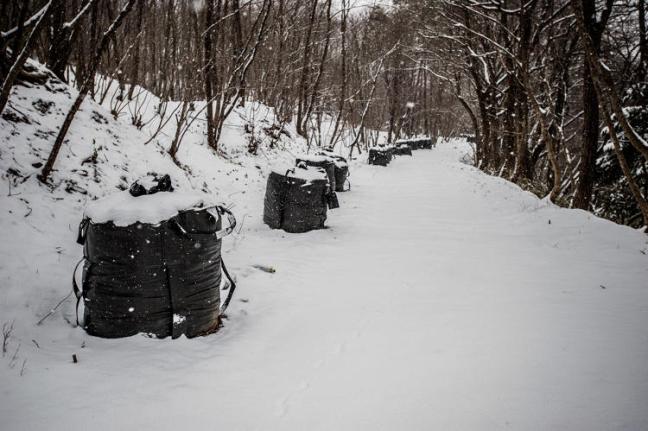
Fukushima: Where mountains and forests cannot be decontaminated

In the background, workers in Iitate village go about their daily routine of removing the layer of irradiated topsoil, which are then placed in stacks of black bags
FUKUSHIMA, JAPAN – Up to 20,000 workers have been toiling to decontaminate towns and villages to clear the way for evacuated residents to return following the Fukushima nuclear plant disaster.
In head-to-toe protective gear, their primary task is removing by shovel and machinery topsoil contaminated with radioactive caesium, which leaked from the crippled power station when a tsunami swamped it five years ago.
The soil is put into plastic flexible container bags and transported by truck to isolated temporary storage sites, where they are surrounded with bags of clean soil to “seal” off emitted radiation. The interim facilities will receive some 22 million cubic m of soil from 43 cities, towns and villages across Fukushima prefecture. It will be put there for 30 years.
Soil under trees, in roadside ditches and places such as drain spouts get particular attention. This is where the radioactive pollutants tend to concentrate after being washed off roofs and pavements by rain and snow.

Once considered among the most beautiful villages in Japan, the farmlands of Iitate are now dotted with black bags – called ‘flexible container bags’ – holding contaminated soil.
The cleanup process also includes brushing and wiping rust or stains from roofs, removing sediment, washing roadside ditches and removing leaves from under trees.
But there remains a sizeable area where decontamination was suspended due to high radiation levels, including Futaba district, where the power plant is located.
The disaster also contaminated vast amounts of paddy straw and grass with radioactive material. This has led to plans for facilities for “designated waste”, which from Fukushima alone accounts for around 140,000 tonnes. It is now temporarily stored on farmland and at waste incineration plants.
The radiation reality will last for years to come.
“While it is possible to decontaminate residential areas, the same cannot be done with mountains and forests. You can’t remove all the trees. But radioactive matter has contaminated trunks and leaves, and when rain falls, these particles return to the ground,” said Ms Emiko Fujioka, secretary-general of non-profit group Fukushima Beacon.
Environment Ministry presents contaminated waste disposal plan for Fukushima

Environment Minister Tamayo Marukawa speaks at the beginning of a meeting on interim storage facilities in the city of Fukushima, on March 27, 2016.
FUKUSHIMA — The Ministry of the Environment announced on March 27 that the government expects to acquire up to 70 percent of land for interim storage facilities for waste contaminated with radioactive materials emanating from the Fukushima nuclear crisis and bring up to 40 percent of contaminated soil into such facilities by the end of fiscal 2020.
The ministry has a rough road ahead, however, since as of March 25 it had only acquired about 1.3 percent of the land needed to build storage facilities straddling the Fukushima Prefecture towns of Okuma and Futaba, and it also faces serious challenges in negotiations with landowners.
On a total of 1,600 hectares of land, the interim storage facilities will be equipped with disposal sites for contaminated soil and other materials, as well as incinerators to reduce the volume of contaminated waste derived from decontamination work around the Fukushima No. 1 Nuclear Power Plant. Delivering of the waste began in March 2015 as a pilot project and it will be stored at the site up to 30 years.
The Environment Ministry presented the projection at a meeting held in the city of Fukushima on March 27. It announced the plan to secure 640-1,150 hectares, or 40-70 percent of the areas for the interim storage sites, by the end of fiscal 2020. A ministry official explained how it calculated the figures, saying that the ministry has already contacted 1,240 landowners by visiting their homes and “there is a feeling” that they will cooperate with the ministry’s plan.
Up to 28 million cubic meters of waste contaminated with radiation that is currently stored across Fukushima Prefecture is planned to be brought to the storage sites, and the ministry expects to deliver 5 million to 12.5 million cubic meters of that to the facilities by the end of fiscal 2020. Environment Minister Tamayo Marukawa told a March 27 news conference in the city of Fukushima that the ministry plans to remove contaminated soil stored at schools and residential areas first, adding, “We’ve allowed a wide range in the projected figures (as negotiations with landowners are underway).”
Meanwhile, Toshitsuna Watanabe, mayor of the town of Okuma where an interim storage facility is planned to be built, expressed appreciation for the figures presented by the ministry to some extent, saying, “Though it appears to be a rough projection, I recognize that they at least presented the target figures.” He added, “With no goals presented before this, local residents were beginning to suspect the central government’s willingness (to put efforts in the storage project). We hope the ministry undertakes the task to reach those targets.”
A 61-year-old landowner who has evacuated from Okuma to the Fukushima Prefecture city of Iwaki questioned the ministry’s plan, saying that 40-70 percent of land acquisition in five years is “too slow.”
“I have decided to sell the land, but the government hasn’t yet shown me the amount of compensation payment,” the man said.
The village of Iitate, currently under radiation evacuation orders, is working toward the lifting of the evacuation orders by the end of March 2017, excluding areas that are designated as “difficult-to-return” zones with high levels of radiation. Iitate Mayor Norio Kanno says, “According to the ministry’s plan, contaminated waste might not be removed (from the village) for five more years. There are piles of bags filled with contaminated soil and they are preventing disaster recovery efforts,” adding, “I want the ministry to speed up the land acquisition process.”
http://mainichi.jp/english/articles/20160328/p2a/00m/0na/011000c
1 This Month

of the week – Shut Down Drone Warfare!


Tell the Ukrainian Government to Drop Prosecution of Peace Activist Yurii Sheliazhenko

Petition to revoke the licensing of the Near Surface Nuclear Disposal Facility (NSDF) at Chalk River. https://www.ourcommons.ca/petitions/en/Petition/Details?Petition=e-7247
To see nuclear-related stories in greater depth and intensity – go to https://nuclearinformation.wordpress.com
-
Archives
- April 2026 (68)
- March 2026 (251)
- February 2026 (268)
- January 2026 (308)
- December 2025 (358)
- November 2025 (359)
- October 2025 (376)
- September 2025 (257)
- August 2025 (319)
- July 2025 (230)
- June 2025 (348)
- May 2025 (261)
-
Categories
- 1
- 1 NUCLEAR ISSUES
- business and costs
- climate change
- culture and arts
- ENERGY
- environment
- health
- history
- indigenous issues
- Legal
- marketing of nuclear
- media
- opposition to nuclear
- PERSONAL STORIES
- politics
- politics international
- Religion and ethics
- safety
- secrets,lies and civil liberties
- spinbuster
- technology
- Uranium
- wastes
- weapons and war
- Women
- 2 WORLD
- ACTION
- AFRICA
- Atrocities
- AUSTRALIA
- Christina's notes
- Christina's themes
- culture and arts
- Events
- Fuk 2022
- Fuk 2023
- Fukushima 2017
- Fukushima 2018
- fukushima 2019
- Fukushima 2020
- Fukushima 2021
- general
- global warming
- Humour (God we need it)
- Nuclear
- RARE EARTHS
- Reference
- resources – print
- Resources -audiovicual
- Weekly Newsletter
- World
- World Nuclear
- YouTube
-
RSS
Entries RSS
Comments RSS
 nuclear-news