Listen to the Sounds of Contamination
What is going on in Japan since March 11, 2011?
Radiation generated by collapse of radioactive material that is invisible to the eye pierces cells of animals and plants and human body.
In Fukushima contamination is now omnipresent, you cannot see it nor smell it, nor taste it but it is there.
And in 2016, an unprecedented public project is about to start in the world. Japan’s contamination is made visible by its 1/1000 second clicking sounds.
You can’t see it but you can now visualize the power of those radioactive disintegrations by hearing their sounds, so that the inoffensive looking becquerel per kg numbers of an invisible contamination now take a new dimension, as the violence of their power is suddenly revealed through their disingration sounds…..
The Minamisoma Whistleblowers, Fukushima
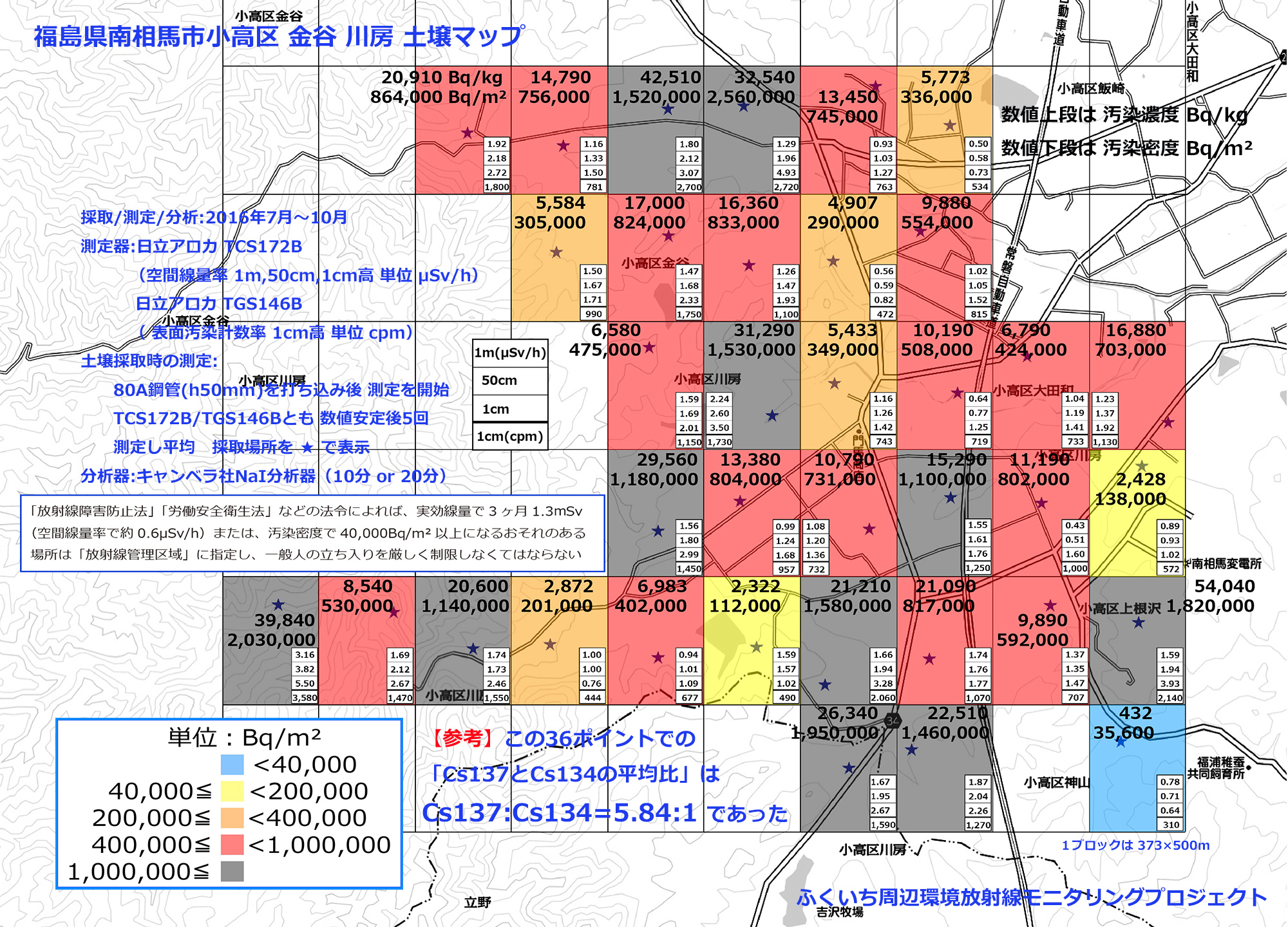
A few days ago Pierre Fetet learned of a map which immediately called his attention.
That map displays at the same time precise and unsettling measurements. Not knowing Japanese, Pierre Fetet asked Kurumi Sugita, the president of Nos voisins lointains 3.11 association, to translate for him the text. She immediately accepted and explained to him what it was:
“The project to measure environmental radioactivity around the Fukushima Daiichi nuclear power plant (“Fukuichi Area Environmental Radiation Monitoring Project“) is conducted by a team of relatively old volunteers (who are less radiosensitive than youth) to perform radioactivity measurements with a tight mesh size of 75 x 100 m for radioactivity in air and 375 x 500 m for soil contamination. Measurements of ambient radioactivity and soil radioactivity are carried out mainly in the city of Minamisōma and its surroundings. They try to make detailed measurements so as to show the inhabitants the real conditions of their lives, and also to accumulate data for the analysis of long-term health and environmental damages.”
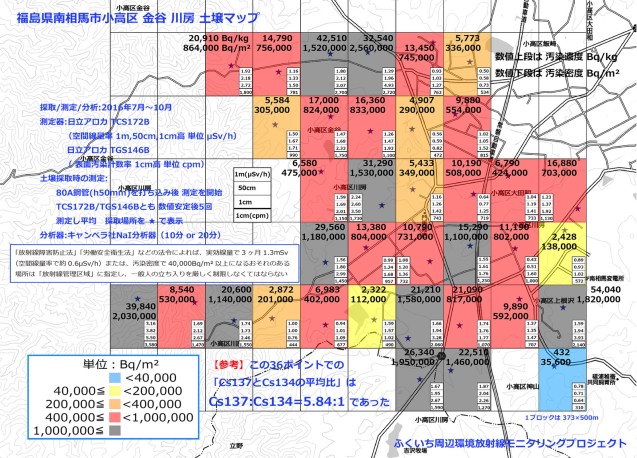
Thanks to the Kurumi Sugita’s translation and with the agreement of Mr. Ozawa, author of the document, Pierre Fetet was able to make a French version of this map, which I translated into english here below:
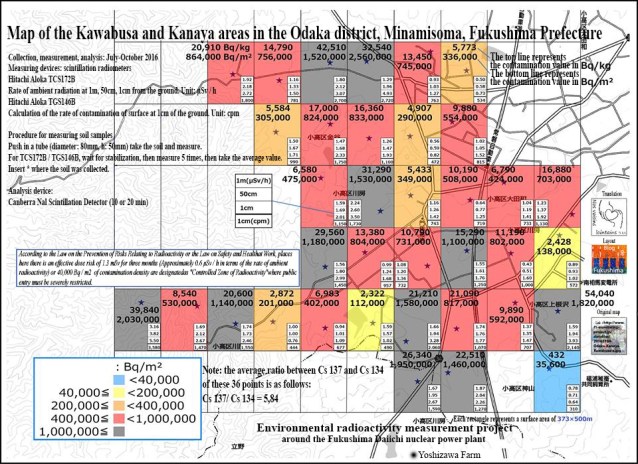
Map of Mr. Ozawa’s team,“Fukuichi Area Environmental Radiation Monitoring Project” (translation first by Kurumi Sugita, then by Hervé Courtois)
In the context of the normalization of contaminated areas into habitable areas, the evacuation order of the Odaka district of the city of Minamisōma was lifted on 12 July 2016, except the area bordering Namie (Hamlet of Ohatake where a single household lives) classified as a “difficult return” area.
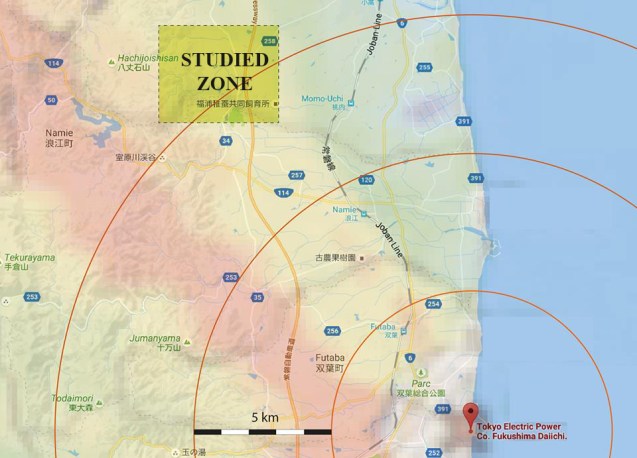
Situation of the study area
The contamination map examines the Kanaya and Kawabusa areas of the Odaka district, about fifteen kilometers from the former Fukushima Daiichi nuclear power plant. Mr. Ozawa, the engineer who launched this investigation, has chosen the precision of the measurements, that is to say laboratory scintillation radiometers are used to measure radioactivity: Hitachi Aloka TCS172B, Hitachi Aloka TGS146B and Canberra NaI Scintillation Detector.
The originality of this map is due as much to the quality of its realization as to the abundance of its informations: it can be read, for each of the 36 samples taken, measurements in Bq / m², in Bq / kg, in μSv / h at three different soil heights (1 m, 50 cm, 1 cm) And in cpm (counts per minute) at the height of 1 cm. For those who know a little about radioactivity, these informations are very valuable informations. Usually, measurements are given in either unit, but never simultaneously with 4 units. Official organizations should learn this way of working.
The measures revealed by the map are very disturbing. They show that the earth has a level of contamination that would make it a radioactive waste in any uncontaminated country. As Mr. Ozawa writes, these lands should be considered a “controlled zone”, that is to say a secure space, as in nuclear power plants, where the doses received must be constantly checked. In fact, it is worse than inside of a nuclear power plant because in Japan the inhabitants evacuated since five and a half years are now asked to return home, whereas it is known that they will be irradiated (Up to 20 mSv / year) and contaminated (by inhalation and ingestion).
This citizen research is remarkable in more ways than one:
- It is independent of any organization. There is no lobby to alter or play down this or that measure. These are just raw data, taken by honest people, in search of truth.
- It respects a scientific protocol, explained on the map. There will always be people to criticize this or that aspect of the process, But this one is rigorous and objective.
- It takes measurements 1 m from the ground but also 1 cm from the ground. This approach is more logical because until now men are walking on the ground no? The contamination maps of Japan often show measurements at 1 m from the ground, Which does not reflect reality and seems to be done to minimize the facts. Indeed, the measurement is often twice as high at 1 cm from the ground as at 1 m.
- It acts as a revealing map. Mr. Ozawa and his team are whistleblowers. Their maps say: Watch out ! Laws contradict each other in Japan. What the government claims, namely that a dose of 20 mSv / year will not produce any health effect, is not necessarily the truth. If you come back, you are going to be irradiated and contaminated.
France is preparing for the same forfeiture, namely that ‘it is transposing into national law the provisions of Directive 2013/59 / Euratom: the French authorities retained the upper limit of the interval: 100 mSv for the emergency phase and 20 mSv for the following 12 months (And for the following years there is no guarantee that this reference level will not be renewed). These values apply to all, including infants, children and pregnant women! ” (source Criirad)
The Japanese government is asking residents to return home and abolishing compensation for evacuees. The Olympics are coming, Fukushima must be perceived as “normal” so that the athletes and supporters of the whole world won’t be afraid, even if it means sacrificing the health of the local population. It is therefore necessary to make known the map of Mr. Ozawa so that future advertising campaigns do not stifle the reality of the facts.
Pierre Fetet
Data on measurements at Minamisōma
http://www.f1-monitoring-project.jp/open_deta.html
Website of the measuring team: “Fukuichi Area Environmental Radiation Monitoring Project“
http://www.f1-monitoring-project.jp/index.html
Address of the original map (HD)
http://www.f1-monitoring-project.jp/dirtsfiles/20161104-Odaka-Kanaya-Kawabusa-s.jpg
Source : Article of Pierre Fetet
http://www.fukushima-blog.com/2016/11/alerte-a-minamisoma.html
(Translation Hervé Courtois)
Fukushima Consequences of Radiation on Wildlife
By Pierre Fetet (translation by Hervé Courtois)
Source : http://www.fukushima-blog.com/2016/09/fukushima-consequences-de-la-radioactivite-sur-la-faune.html
Scientific studies conducted following the Fukushima disaster revealed little by little the consequences of radioactivity on the living and particularly on wildlife. Although published, they are nevertheless rarely circulated. This is why I would like to put a spotlight on some of them and publicize various observations which we do not hear much about, to counter the silly optimism to always relativize the consequences of low doses on life. Any dose of radiation, however small it be, has effects on the living: the ionizing radiation breaks the DNA molecules.
The birds
The feathers of birds take radioactive dust released into the atmosphere continuously by the wind. They therefore suffer permanent external irradiation.
We can see this dust by placing a contaminated bird on a radio-sensitive paper for a month. Here is an example with a bird picked in Iitate in December 2011.
Autoradiography also allows to highlight that the birds also undergo internal contamination.

Autoradiography of a bird revealing radioactive contamination in the plumage and stomach (Source Morizumi)
Yasuo HORI has also reported that some swallows Fukushima undergo depigmentation, as had already been found in Chernobyl. The Wild Bird Society of Japan also noted that the tail feathers of some Japanese swallows were not uniform.
It must be said that nests of swallows up to 1.4 million becquerels of radioactive cesium per kilogram (Bq / kg) have been found in the towns of Okuma and Namie. The nests of chickadees, were not better: 1.3 million Bq / kg.

Left: Swallow from Minamisoma (Fukushima Prefecture) – Right: deformed tail of a swallow from Kakuda (Miyagi Prefecture)
According to studies conducted by Tim Mousseau (University of South Carolina), the population of fifteen bird species living in contaminated areas of Fukushima prefecture decreases with time, with a 30% survival rate.
Another research focused on a falcon species returning in the same nest every year was also conducted by a team of scientists led by Naoki Murase (Nagoya University) at a distance of 100 to 120 km from the Fukushima Daiichi nuclear plant. The interest of this study is that raptors are at the top of a food chain and concentrate radionuclides accumulated by their prey. The authors have shown that the reproductive capacity of the bird was related to radiation measured directly under the nest : radioactivity affects the germline of the bird. The ability of birds to leave the nest fell from 79 to 55% in 2012 and 50% in 2013.
Another study finally published in 2015 by ASN and the Anders Møller laboratory (CNRS), focused on the total dose – internal and external – of birds.
It showed that 90% of the 57 species studied had been chronically exposed to radioactivity dose rate possibly affecting their reproduction.

Simplified representation of the level change of maximum exposure of adult birds (in dose rate) for 57 species of the bird community observed on 300 sites and four years of study. Compared to the range of variation (in blue) ambient dose rate measured on the sites and ranges (red) corresponding to various effects in birds published by the ICRP (2008) (Source IRSN)
So there are three factors that affect living organisms in contaminated areas: the ambient radiation (the dose that is received by being next to a radioactive object), the external contamination (radioactive dust that sticks to the skin, hair, feathers), and internal contamination (radionuclides ingested or trapped in organs).
The butterflies
The first scientific evidence of damage to a living organism by radioactive contamination due to the disaster of Fukushima Daiichi was delivered by the team of researcher Chiyo Nohara (University of Okinawa).
The study highlighted the physiological and genetic damage of a common butterfly of Japan, the maha zizeeria. In May 2011, some show relatively slight abnormalities. But the first female offspring of the first generation showed more serious defects, inherited by the second generation. Adult butterflies collected in September 2011, then showed more severe abnormalities than those collected in May: abortive hatching, infertility, size reduction, slow growth, high mortality and morphological abnormalities (Atrophied wings, curved or in excess number, malformed antennae, bumpy eyes, discolored).
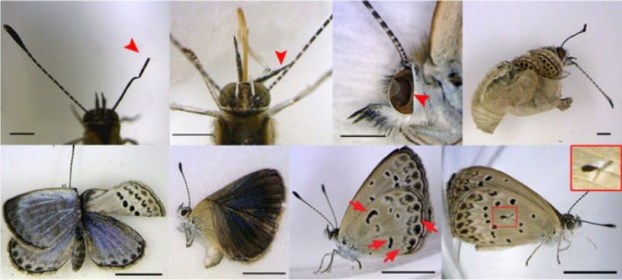
Representative anomalies of butterflies fed contaminated leaves. (Source: Hiyama et al)
Aphids
In 2014, Shin-ichi Akimoto (Hokkaido University) found that about 10% of certain insects, such as aphids, have malformations in Fukushima. But their survival and their reproduction remain possible.
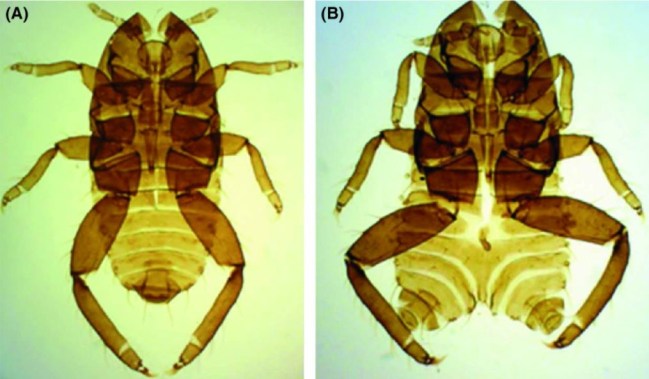
Sorini aphid T. From Fukushima. (A) normal morphology, (B) Level 3 malformation of the abdomen (Source: S. Akimoto)
The cows
The phenomenon of white patches (depigmentation) on the observed swallows in Fukushima and Chernobyl is also found on the cows of Masami Yoshizawa, at the Farm of Hope in Namie, a town located 14 km from the destroyed plant .

A cow of Masami Yoshizawa was brought to Tokyo in 2014 to the government for diagnosis (AFP Photo)
Horses
The biologist Hayato Minamoto reported the carnage suffered by Tokuei Hosokawa, an Iitate farmer who lost a hundred horses in two years. Iitate had suffered the brunt of the radioactive cloud from the Fukushima Daiichi plant in March-April 2011.
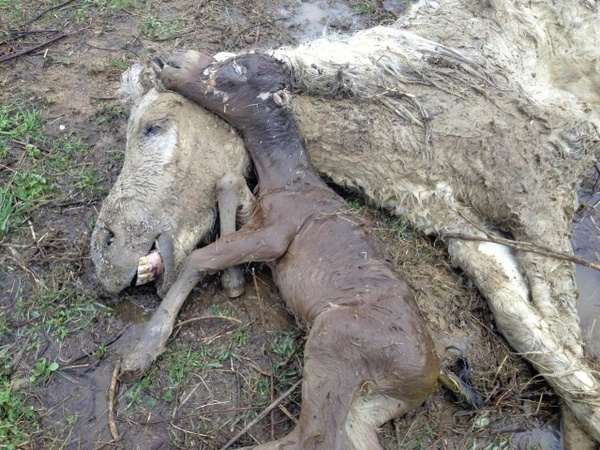
Iitate horses
Monkeys
Between April 2012 and March 2013, researchers led by Shin-ichi Hayama (Japan University of Life Sciences and Veterinary Sciences) analyzed the blood of 61 Japanese monkeys living in a forest 70 km from the Fukushima Daiichi nuclear power plant. The total concentration of cesium in monkeys muscles was between 78 and 1778 Bq / kg. Blood tests in these animals revealed a small quantity of white blood cells and red blood cells, which could make them more vulnerable. The decrease of blood cells was directly proportional to the concentration of cesium in the muscles, which suggests a dose-response correlation. Researchers estimate that exposure to radioactive materials contributed to hematological changes in Fukushima monkeys.

Drawing by Julien Loïs
Provisional Conclusion
The consequences of radioactivity on animals are visible to anyone who will bother to observe what happens. In this article, I focused on some animals only (there would be other cases to develop: the population decline of the cicadas, the increased cataract of rodents, etc.). Scientists could conduct similar studies on this strange animal that is man, but it would not be politically correct.
Yet this has already been done, in Hiroshima and Nagasaki, Chernobyl. For example, studies conducted between 1993 and 1998 on Ukrainian children permitted to observe a drop of blood cells, which was related to the exposure of each child to cesium depending on the place of residence. And yet, in Tokyo, from 2011 to 2014, Dr. Mita observed that white blood cells, especially neutrophils, decreased in children under 10 years old. (Which prompted him to move and to ask his patients to leave Tokyo). But no, do not say anything, and do not look into such matter.
In Japan, the denial of the danger is a must. The only mention of a nosebleed in a manga can cause a national affair and censorship … To speak of the negative consequences of the nuclear disaster at Fukushima Daiichi is not accepted.
You must rebuild, you must forget, you must think about the future. Institutionally, only one study is accepted, the monitoring of thyroids of children in Fukushima. That study is the screen that hides the forest of lies.
And yet, despite 131 thyroid cancers confirmed in June 2016, the official Japanese scientists refuse to see them as caused by radioactivity.
Pierre Fetet
To read more:
1) Scientific studies cited in this article
The biological impacts of the Fukushima nuclear accident on the pale grass blue butterfly, A. Hiyama, C. Nohara, S. Kinjo, W. Taira, S. Gima, A. Tanahara, J.-M. Otaki, 2012
Low blood cell counts in wild Japanese monkeys after the Fukushima Daiichi nuclear disaster, K. Ochiai, S. Hayama, S. Nakiri, S. Nakanishi, N. Ishii, T. Uno, T. Kato, F. Konno, Y. Kawamoto, S. Tsuchida, T. Omi, 2014
Morphological abnormalities in gall-forming aphids in a radiation-contaminated area near Fukushima Daiichi: selective impact of fallout?, S. Akimoto, 2014
Effects of the Fukushima Daiichi nuclear accident on goshawk reproduction, K. Murase, J. Murase, R. Horie, K. End, 2015
Radiological dose reconstruction for birds reconciles outcomes of Fukushima with knowledge of dose-effect relationships, J. Garnier-Laplace, K. Beaugelin-Seiller, C. Della-Vedova, J.-M. Métivier, C. Ritz, T. A. Mousseau, A. P. Møller, 2015
Cumulative effects of radioactivity from Fukushima on the abundance and biodiversity of birds, A. P. Møller, I. Nishiumi & T. A. Mousseau, 2015
2) Articles and file
Tchernobyl, une histoire pas si naturelle que ça (Pierre Fetet)
Non, Tchernobyl n’est pas devenu une réserve naturelle (Timothy Mousseau)
A Fukushima, les souris sont aveugles et les oiseaux ne chantent plus (Anne-Laure Barral)
The Implications of The Massive Contamination of Japan With Radioactive Cesium by Steven Starr
Everything You Didn’t Want, Or Do Want To Know About The Dangers Of Nuclear Radiation by Steven Starr, Senior Scientist, Physicians for Social Responsibility
Director, University of Missouri, Clinical Laboratory Science Program
At the Helen Caldicott Foundation Fukushima Symposium, New York Academy of Medicine, 11 March 2013
The Different Dangerosity of Some Radioactive Elements.

2019 Rugby World Cup in Japan
Before the 2020 Radioactive Olympics of Tokyo, the 2019 Radioactive Rugby World Cup in Japan!!!

World Rugby concluded its latest round of meetings with the Japan 2019 organizing committee in Tokyo Japan Friday, October 14, 2016 in connection with the preparation of the Rugby World Cup 2019.
The Executive Director of World Rugby, Brett Gosper, led a delegation to the quarterly meeting. Three years of the global tournament for the first time on Asian soil, Brett Gosper commented on key issues of the organization.
“We are satisfied with the way things are moving,” he said. “The budget, the planning for the stadiums … the preparations are on track and the foundations are solid. “
Bill Beaumont, president of World Rugby, who will visit Japan next week to take part of the World forum on sport and culture in Tokyo – along with IOC President Thomas Bach – is convinced that Japan 2019 will mobilize entire country.
“The Rugby World Cup will be an event for Japan as a whole,” he said. “Sport is about friendship and this tournament will be the proof with the teams, fans and the Japanese community will live the event together. Everyone is invited to participate in the biggest sporting event in the world in 2019. The host cities will benefit from significant economic benefits, but also sports and culture by hosting one of the world biggest sporting events. By working with the organizing committee, we are determined to make the most of the equipment for the benefit of all. “
Record profits were generated by the Rugby 2015 World Cup the order of £ 2.3 billion (€ 2.5 billion) to £ 1.1 billion (€ 1.2 billion) more to the UK economy through the 406,000 visitors who came and stayed on average 14 days. With 12 host cities, Japan can hope to break records.
The fan base is growing in Japan, especially because of the performance of the national team to the World Cup 2015 Rugby and Rugby 7 team at Rio Olympics Games that finished off the podium. Nearly 50% of fans believe that the Rugby World Cup in Japan will significantly raised the level of rugby in the country and 11 million say they are interested to take part. A total of 59 million Japanese watched the Rugby World Cup 2015.
Tokyo governor visits alternative site in Miyagi Prefecture for 2020 Games’ rowing and canoe sprint
We are many to think that it is shocking, disgusting and very sad that after over5 & a half years they are still putting their greed above the health of those people who would participate and go to watch these games, not to mention their own people. They should have relinquished as soon as they knew that the Fukushima Daiichi nuclear disaster had contaminated a good third of the country.

Tokyo Gov. Yuriko Koike (left front) and Miyagi Gov. Yoshihiro Murai (left back) wave to the press as they inspect the Naganuma rowing course in the city of Tome, Miyagi Prefecture, on Saturday.
Tokyo Gov. Yuriko Koike on Saturday visited a boat race course in Miyagi Prefecture, a facility emerging as an alternative venue for the rowing and canoe sprint events at the 2020 Tokyo Olympic games.
“Based on this visit, I will start considering venues,” Koike told reporters after inspecting facilities at the Naganuma rowing course in the city of Tome, more than 400 kilometers from Tokyo. Miyagi is one of the prefectures in northeastern Japan hit hardest by the March 2011 earthquake and tsunami.
Games organizers and the International Rowing Federation had already approved the Sea Forest Waterway venue to be constructed on Tokyo Bay, but a metropolitan government cost review panel recommended last month that plan be reconsidered.
The Tokyo Olympic and Paralympic organizing committee has raised concerns that costs could top ¥35.1 billion ($337 million) even if the rowing and canoe sprint events were held at the Naganuma rowing course. But Miyagi Prefecture Gov. Yoshihiro Murai argued Saturday in a television appearance that the overall cost is “estimated at around ¥15 to ¥20 billion.”
On the TV program, Murai also emphasized that most of the costs will be for “permanent facilities” after the Olympic Games, and that the prefectural government would shoulder the cost to remove temporary housing.
Last Wednesday, Murai visited Koike in Tokyo to convey his wish to hold the rowing and canoe events in Miyagi to show the world the recovery Japan has made since the 2011 quake and tsunami disaster.
Koike had told Murai that the Naganuma boat course was an option and she would “make a comprehensive decision” after visiting the site.
The organizing committee, however, has questioned the feasibility of holding those events at the Miyagi site, raising what they said are “nine problems,” including transportation, infrastructure and costs.
Saitama Gov. Kiyoshi Ueda has also said his prefecture is ready to host the rowing and canoe sprint events at Saiko Doman Green Park in the city of Toda.
Govt. Mulls Ways to Promote Fukushima Produce
The Japanese government plans to create ways to encourage consumers to buy food from Fukushima Prefecture. The area still suffers from the perception that its foodstuffs are unsafe due to the 2011 Fukushima Daiichi nuclear power plant accident.
Reconstruction Minister Masahide Imamura and senior government officials held a meeting on Friday.
The officials reported that a lot produce and processed foods from Fukushima are forced to be sold at prices lower than their pre-accident levels.
They explained farmers and food producers from the region face numerous challenges, such as fewer sales routes and reluctance to buy their products.
They decided to offer benefits to consumers who purchase the food.
Imamura stressed simply advertising won’t be enough and he wants the officials to create a framework that will entice consumers. He noted giving them rewards in a point system is one idea.
Radiocontamination of Tokyo
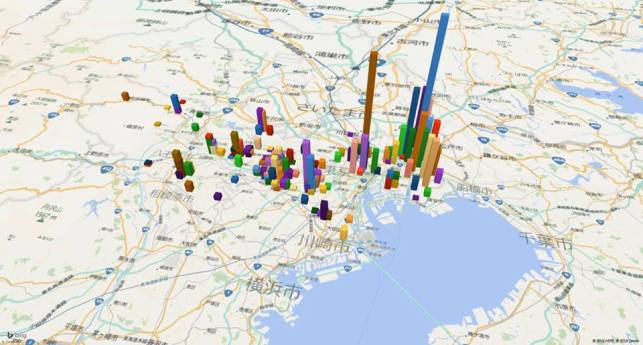
Based on the data released by everyone to the Minna-san data website, a map of the soil contamination of Tokyo by radioactivity was put together.
This data is the result of measurements from 2013 to now 2016.
You can see that the radioactive contamination spread over a wide range of Tokyo.
Particularly, Katsushika district, Edogawa district, Shinjuku district, Setagaya district and Bunkyō district.
Radioactive contamination of both radioactive cesium 134 and 137 exceeding 500Bq / kg has been confirmed.
Among other locations: Inagi city/ Katsushi district / Edogawa district / Eto district / Arakawa district / Kokubunji city / Kokuritsu City / Komae City / Mitaka City / Kodaira city/ Shinjuku district / Suginami district/ Setagaya district / Nishitama gun / Ome city / Chiyoda district / Ota District/ Oshima-cho / Machida city / Chofu city / Higashi Kurume City / Higashimurayama city / Hachioji city / Fuchu city / Musashino City / Fukuo city/ Bunkyo district / Toshima district/ Kita district / Tachikawa city.
Read more at: (in Japanese)
Radioactive Food And Water The New Normal In Japan
“We forget that the water cycle and the life cycle are one.” — Jacques Cousteau
“When drinking water, remember its source.” — Chinese proverb
“Ye shall know them by their fruits. Do men gather grapes of thorns, or figs of thistles?
Even so every good tree bringeth forth good fruit; but a corrupt tree bringeth forth evil fruit.
A good tree cannot bring forth evil fruit, neither can a corrupt tree bring forth good fruit.
Every tree that bringeth not forth good fruit is hewn down, and cast into the fire.
Wherefore by their fruits ye shall know them.” — Matthew 7:16-20, Holy Bible
Japan has an amazing food culture thanks in part to the rich volcanic soil and ample rainfall, despite the lack of spacious farms. As it stands, Japan can feed approximately one third of its population from domestic production.
If you watch Japanese TV from time to time, you will see a bizarre and disturbing fetishization of food that borders on the insane. The media and in turn consumers are obsessed with food as not only a source of nutrition and social cohesion (all for the good), but as art, fashion and status symbol, a celebration of gluttony and greed; an infantile obsession with eating for self satisfaction.
I love good and healthy food and appreciate Asian cuisine, but we eat to live, not live to eat. This social pathology affects other cultures as well as seen by increasing rates of extreme obesity especially in Western countries due to the proliferation of shopping malls, junk food and high fructose corn syrup.
How ironic then that a “high food” society like Japan would have to suffer the insult of radioactive contamination. This is not a tuna melt sandwich but a nuclear melt-down sundae.
The long-term consequences of the Fukushima nuclear disaster continue to linger years after the event. Anyone who studies Chernobyl will know that even after three decades radioactive contamination persists. Although a different type of accident occurred there, in the case of Fukushima it was three reactors that had meltdowns instead of one, and even possibly “melt throughs” referring to corium penetrating the reactor buildings in lateral and vertical outward paths.
In the days and months that followed the Fukushima disaster in March of 2011, many people became very worried about radioactive contamination of the food and water supply, especially from short-lived iodine isotopes, followed by the more persistent and harmful cesium, strontium and plutonium. There was much testing by both the government and independent researchers and organizations. Despite the best efforts of the Japanese government, nuclear industry and mainstream media to downplay the crisis, social media proved helpful in educating the public about how to reduce consumer risks.
The worst contamination occurred nearest the disaster site of the Fukushima No. 1 nuclear power station (Dai-ichi) which is located about half way up the east coast in Fukushima prefecture.
When I visited Hirano town with my colleague Yoichi Shimatsu in 2013, we traveled on foot within a few kilometers of the site. We observed abnormally high levels of radiation making it unfit for long-term habitation. Decontamination has taken place there but it is not a thorough removal method and basically shifts radiation from one spot to another in the environment.
Today, if you visit the Japanese government website of the Nuclear Regulation Authority (1) you can find a variety reports on radiation levels with most reports citing very low levels of radiation. How the government arrives at such measurements is not clearly explained at the website. Are their measurements reliable or being taken in a selective manner?
The government hopes to normalize the former evacuation zone by allowing and encouraging residents to move back as soon as possible, despite their reluctance to do so.
Only 28% of Fukushima children returning to former schools….
The majority of schoolboys and girls are opting to stay out of their hometowns due to anxiety over radiation exposure and resettlement at evacuation sites (2).
The problem of radioactive contamination is not unique to Fukushima but to the entire region including Tokyo, home of millions. Recall that 60 million people were originally exposed to radioactive fallout from the accident. Japan was actually lucky because the majority of radiation blew out to sea away from Honshu, not back over the population.
While the government moves to allow wide-scale fishing off the coast of Fukushima (3), and the NRA reports minimal levels of radiation leaking from the plant into the ocean, this confidence in a safe environment is undermined by a report from Greenpeace which found “[r]adiation along Fukushima rivers up to 200 times higher than Pacific Ocean seabed.”
Riverbank sediment samples taken along the Niida River in Minami Soma, measured as high as 29,800 Bq/kg for radiocaesium (Cs-134 and 137). The Niida samples were taken where there are no restrictions on people living, as were other river samples. At the estuary of the Abukuma River in Miyagi prefecture, which lies more than 90km north of the Fukushima Daiichi plant, levels measured in sediment samples were as high as 6,500 Bq/kg (4).
The rivers and ocean are connected and one wonders why the media does not report on these worrying hotspots. These dangerously high levels are indicative of the widely scattered hotspots in the region. In contrast, I could find no reports on the radiation levels at river banks and lake beds at the NRA website, only some reports on radiation found in dust, seawater and so on.
For example, one 2014 report states:
Air dose rates in both “Road and its adjacent area” and “Vacant land lot” have decreased more rapidly than we expected considering the physical half-life of radionuclide in 32 months after the accident. Air dose rates in “Road and its adjacent area” have decreased more rapidly than “Vacant land lot” in 32 months after the accident (5).
The Culture Of Cover Up: Spiked!
A few months ago I was shopping at my health food store in central Tokyo when I was asked by the clerk if I would like to be interviewed by a TV reporter from the Asahi News. I said “sure why not.” Japanese TV often has “man on the street” types of interviews and if you put the shop in a good light, you might appear in a news “infomercial.”
The reporter asked me various questions about why I buy organic food and I spoke proficiently in Japanese about the positive benefits of eating organic food including its superior nutrition and flavor, and because it contributes to the local farm economy.
But I shocked the guy at this point when I bluntly stated that due to the radioactive contamination from Fukushima nuclear disaster, I prefer to buy food produced from as far away as possible, never from the northeast or Tokyo regions of Japan. Food from the west and far southwest of Japan has substantially less radioactive contamination.
I’m not sure if the reporter was even aware of the issue, being a “news reporter” you think he might have been. But it was clear from his reaction that this was a one hundred percent taboo topic. Perhaps because I was a foreigner I was perceived as rude and barbaric for raising it, and I knew ahead of time that by mentioning this my interviewed would not be aired, and it wasn’t.
In fact, after the 3/11 accident my regular health food shop very noticeably shifted the origin of their produce away from the northeast and Tokyo and toward the west, southwest of Japan due to consumer concerns. As for the Asahi News who are an arm of the Abe Propaganda Establishment (APE), Fukushima must only be presented to the public as a pristine location whose products are reliable and safe. A recent study reported:
According to the agriculture ministry, 260,538 food items were inspected in fiscal 2015, and 99 percent of farm products had cesium of less than 25 becquerels per kilogram. The tests showed that 264 items, or 0.1 percent of the total, had cesium exceeding the upper limit. Of these, 259 — or 98 percent — were wild mushrooms, game meat, freshwater fish and other so-called “hard-to-control items” (6).
According to this official data, small numbers of becquerels could be – probably are – routinely entering the general food supply, not to mention the issue of Tokyo’s persistently contaminated water supply which contains minute amounts of cesium.
Radiation is the new normal.
Although the majority of food is under 25 bq per kg of contamination, we don’t know the exact amount. If you multiply that small amount by the number of items consumed daily the danger to health grows exponentially over time.
It is good that Japan has strict standards on radioactive food products — the US allows 1,500 becquerels per kilogram versus Japan’s 100 — but the ubiquitous and long-term aspect of the problem is an ongoing concern.
Richard Wilcox is a contributing editor and writer for the book: Fukushima: Dispossession or Denuclearization? (2014) and a Tokyo-based teacher and writer who holds a PhD in environmental studies. He is gratefully a periodic contributor to Activist Post.
References
1 – Nuclear Regulation Authority
http://radioactivity.nsr.go.jp/en/
2 – Only 28% of Fukushima children returning to former schools
http://mainichi.jp/english/articles/20160910/p2a/00m/0na/001000c
3 – 83 species now eligible for test fishing off coast of Fukushima
http://www.asahi.com/ajw/articles/AJ201609110002.html
4 – Radiation along Fukushima rivers up to 200 times higher than Pacific Ocean seabed – Greenpeace
http://www.greenpeace.org/international/en/press/releases/2016/Radiation-along-Fukushima-rivers-up-to-200-times-higher-than-Pacific-Ocean-seabed—Greenpeace/
5 – Monitoring air dose rates in road/its adjacent area and vacant land lot from a series of surveys by car-borne radiation detectors and survey meters after the Fukushima Daiichi NPS accident
https://www.nsr.go.jp/data/000067236.pdf
6 – 0.1% of food items exceed radiation limit 5 1/2 years after nuke disaster
http://mainichi.jp/english/articles/20160909/p2a/00m/0na/023000c
http://www.activistpost.com/2016/09/radioactive-food-water-new-normal-japan.html
83 species now eligible for test fishing off coast of Fukushima
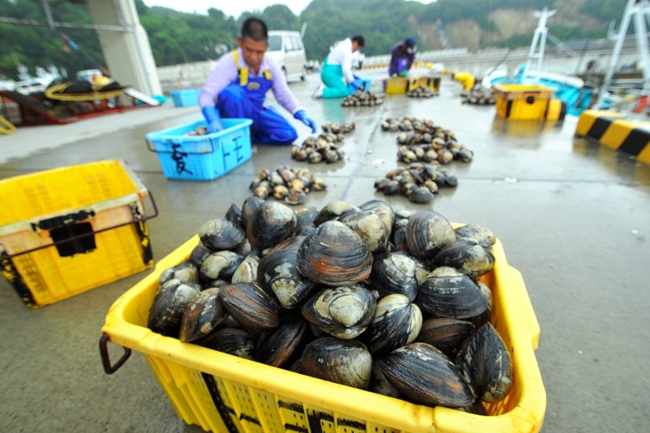
These surf clams, seen here in June at Hisanohama Port in Iwaki, Fukushima Prefecture, were caught during test fishing.
IWAKI, Fukushima Prefecture–Ten species were added to the list of catches eligible for test fishing off the coast of Fukushima Prefecture, but lingering concerns about radiation are keeping sales of such marine products low.
Still, the latest additions, which include the Japanese flounder, the white-spotted conger eel and the spotted halibut, have encouraged fishermen who have been struggling to rebuild their lives since the Fukushima nuclear disaster started in March 2011.
The Fukushima Prefectural Federation of Fisheries Cooperative Associations on Aug. 25 added the 10 species to bring the total number eligible for test fishing to 83. The additions were approved during a meeting in Iwaki of the prefectural council for the rebuilding of regional fisheries.
“I think the 83 fish species accounted for about 70 percent of our pre-disaster hauls,” said Tetsu Nozaki, president of the prefectural fisheries federation. “I am placing particularly high hopes for a great boost in the value of our catches from the resumed fishing of Japanese flounder.”
Test fishing for flounder started on Sept. 2.
The Soma-Futaba fisheries cooperative association, which is part of the prefectural federation, plans to resume catches of white-spotted conger eel in September. But the Iwaki city fisheries cooperative association has decided to wait until water temperatures are low enough to ensure freshness of the white-spotted conger eel.
Test fishing has expanded because the environment of the sea has significantly improved since the initial impact of the nuclear disaster. Radioactivity levels in fish caught there now stably remain within the safety limit for many species.
Despite extensive testing to ensure safety of Fukushima marine products, many dealers are still reluctant to buy the species.
Fish and shellfish from Fukushima Prefecture are being shipped to various parts of Japan, such as the Tohoku, Kanto, Chubu and Hokuriku regions. Prices of seafood items from Fukushima Prefecture are not much lower than those from other prefectures, according to Yoshiharu Nemoto, head of the fishing ground environment division with the Fukushima Prefectural Fisheries Experimental Station.
Yet few dealers are bidding for Fukushima marine products. If this trend continues with more Fukushima fish reaching the market, unsold leftovers from the prefecture could start to pile up and project a negative image, Nemoto said.
“It will become more necessary than ever to make publicity efforts, such as regularly releasing data concerning safety,” he said.
Test fishing began in June 2012, 15 months after the Great East Japan Earthquake and tsunami caused the triple meltdown at the Fukushima No. 1 nuclear power plant. Initially, only three species were covered: two kinds of octopuses and one type of shellfish.
While coverage has since expanded in stages, the latest addition of 10 species at one time is second only to the addition of 12 species, including brown sole and red sea bream, in August 2015.
Since April 2011, the Fukushima prefectural government has been monitoring the impact of radioactive fallout from the Fukushima No. 1 nuclear plant on fish and shellfish. The radiation tests, which cover about 200 samples every week, have so far been conducted on 38,000 samples of 184 species.
The concentration of radioactive cesium initially exceeded the central government’s safety limit of 100 becquerels per kilogram in most of the fish and shellfish surveyed. But the concentration has declined from year to year, and no sample has exceeded the safety limit since April 2015.
In more than 90 percent of the samples tested in July 2015 and later, radioactivity levels were below the detection limit.
Radioactivity levels in fish caught near the Fukushima No. 1 nuclear plant are also falling.
The central government’s Japan Fisheries Research and Education Agency (FRA) on Aug. 25 released data on radioactivity levels in Japanese flounder caught in July in waters around the crippled nuclear plant.
The FRA said its high-precision tests, with a lower limit of detection set at a mere 1 becquerel per kg, found radioactivity levels of less than 10 becquerels per kg in all 41 individual organisms tested. More than 90 percent of them measured less than 5 becquerels per kg.
Catches from test fishing have continued to grow: 122 tons in 2012, 406 tons in 2013, 742 tons in 2014 and 1,512 tons in 2015.
But last year’s catch was only 5.8 percent of the annual catch of 26,050 tons averaged over the decade preceding the 2011 disaster.
Fishermen are holding out high hopes for more fish species being eligible for catches.
News Navigator: How far has decontamination progressed in Fukushima?
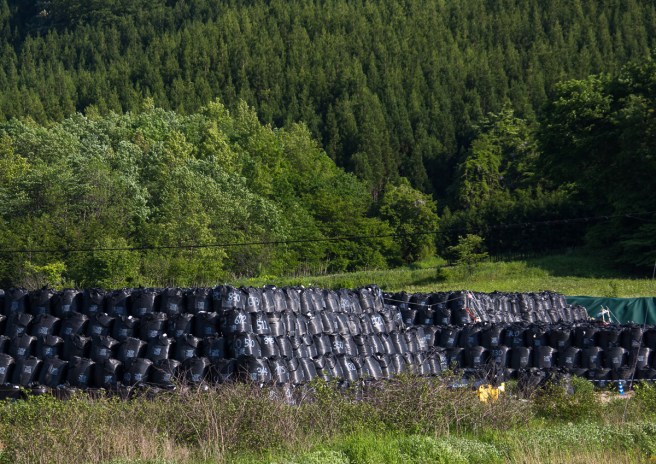
The Mainichi Shimbun answers some common questions readers may have about the decontamination of areas that were heavily exposed to radiation in the nuclear crisis at the Fukushima No. 1 Nuclear Power Plant.
Question: What is the situation right now with the decontamination of areas that were exposed to radioactive materials in the Fukushima nuclear incident, where residents were ordered to evacuate?
Answer: In April 2012, areas that were under evacuation orders were separated into three categories based on annual radiation exposure dosages. Decontamination work has not been carried out in areas of the Fukushima Prefecture towns of Okuma, Futaba, Namie, Tomioka, and the prefectural villages of Iitate and Katsurao and the city of Minamisoma — classified as “difficult-to-return zones” with annual radiation exposure dosages topping 50 millisieverts — save for a few areas that were decontaminated on a trial basis.
Meanwhile, in “restricted residence zones,” where the annual radiation exposure dosage is between 20 and 50 millisieverts, and in “preparing for lifting of evacuation order zones,” which have annual radiation exposure dosages of 20 millisieverts or lower, the government is aiming to have decontamination completed by March 2017.
Q: Why haven’t “difficult-to-return zones” been decontaminated?
A: In addition to the fact that all residents had evacuated, it was determined immediately after the disaster broke out that decontamination efforts would be ineffective because of the high levels of radiation there. However, radiation has the property of decreasing as time passes. Indeed, according to measurements taken by an airplane that was released by the Nuclear Regulation Authority in February this year, radiation levels had gone down significantly. And in some areas, where decontamination was attempted on a trial basis, there was some success.
Q: How much does radiation go down through the decontamination process?
A: According to the Environment Ministry, in a trial decontamination of the Akougi district in Namie, Fukushima Prefecture — designated a “difficult-to-return zone” — radiation levels went down by half. However, a ministry official explains that radiation levels there cannot be brought down to zero because even if the area is decontaminated, radiation seeps in via rain and other means.
Q: What is done with the waste that results from decontamination?
A: The Environment Ministry estimates that 16 million to 22 million cubic meters of radioactively contaminated waste will result from decontamination work. That waste will be stored temporarily in municipalities in Fukushima Prefecture, then transported to interim storage facilities in the prefectural towns of Okuma and Futaba. However, only 5 percent of the entire land area needed for storing radioactive waste had been secured as of late July. (Answers by Hanayo Kuno, Science and Environment News Department)
http://mainichi.jp/english/articles/20160903/p2a/00m/0na/001000c
Fukushima’s surfers riding on radioactive waves
“I put on sunscreen against the sun, but I haven’t found anything against radiation,” said one surfer. “We will only know the true consequences of our time in the water 20 years from now.”
Fukushima, Japan – On 11 March 2011, at 2:46 pm, Japan was hit by a magnitude 9.0 earthquake which generated a tsunami along the coast. The casualties of the disaster included 18,500 dead, 90 percent of whom drowned in the tsunami wave. The bodies of 2,561 people were never recovered.
The tsunami hit the Daaichi nuclear power plant as well, a level-7 catastrophe that was the equivalent of the Chernobyl nuclear power plant meltdown disaster.
Over the course of five years, nearly 50,000 people have worked to decontaminate the plant and stop leaks according to government press releases. They remove between 5 and 30 cm of contaminated soil every day and place them in plastic bags, which are stored on the outskirts of town, pending a better solution.
In Tairatoyoma beach, a prefecture of Fukushima and some 50km from the nuclear plant, was among the most popular areas for Japanese surfers prior to the nuclear accident.
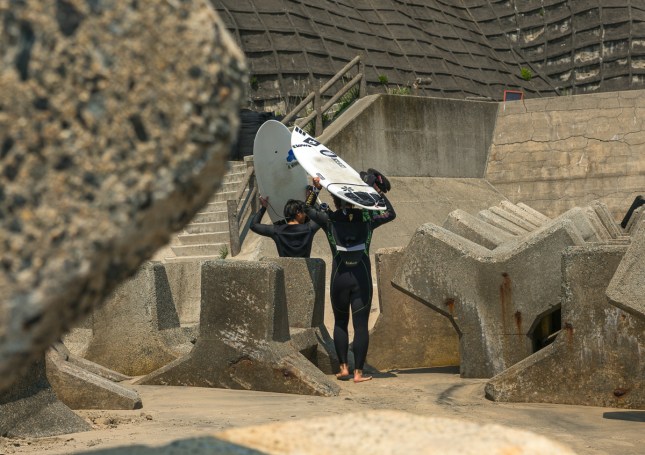
Surprisingly, despite the presence of radiation in the sand and water, some dedicated surfers continue to come here to catch some waves. They are aware of the risks, and the hundreds of bags of contaminated sand piled up on the beach serve as a constant reminder of the health risks to them.
“I put on sunscreen against the sun, but I haven’t found anything against radiation,” said one surfer. “We will only know the true consequences of our time in the water 20 years from now.”
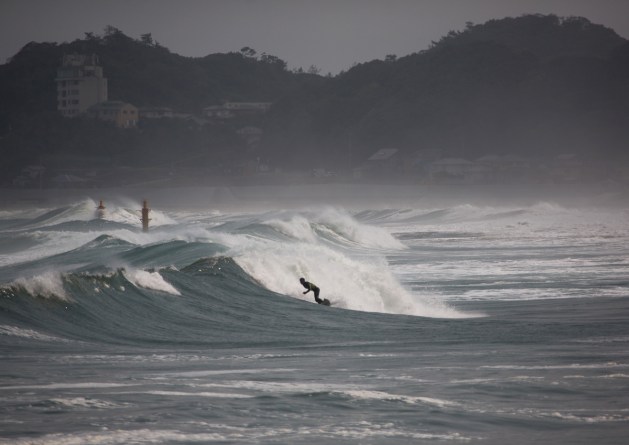
Tairatoyoma beach, in the prefecture of Fukushima, 50km from the nuclear plant, was among the most popular areas with Japanese surfers before the accident.

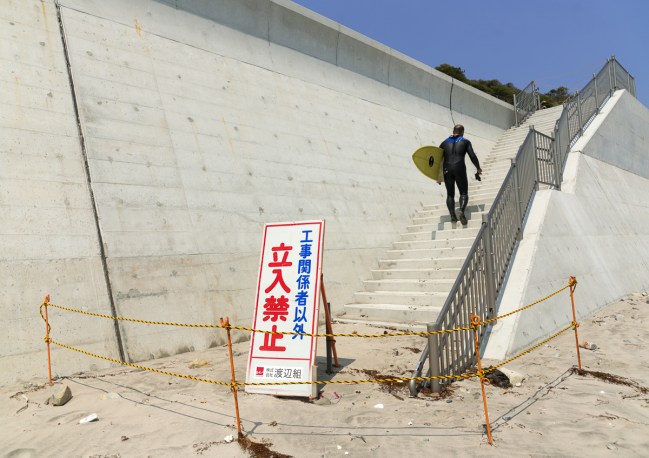
“I come to Tairatoyoma beach and surf several times a week. it is my passion, I can’t stop surfinhg”, says this surfer. The sign next to him in Japanese indicates that the area is restricted area.
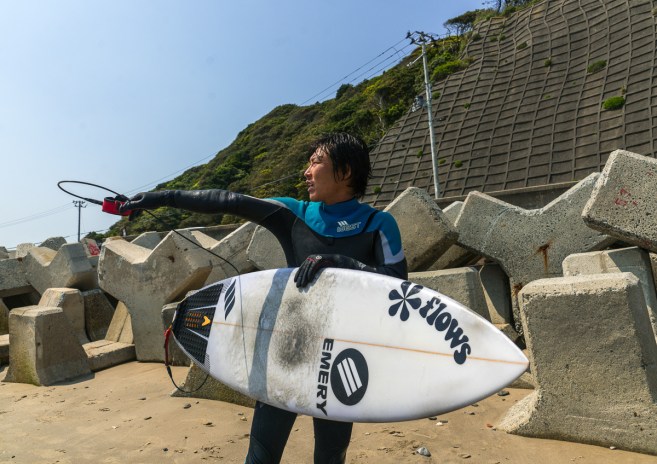
Some surfers were on the beach when the tsunami struck. ‘The earth shook, we came back on Tairatoyoma beach, and a few minutes later, the tsunami wave arrived,’ recalls one surfer. ‘None of the surfers who were on the beach died, as we had time to escape. Those who were in their homes were taken by the waves by surprise and they died.’
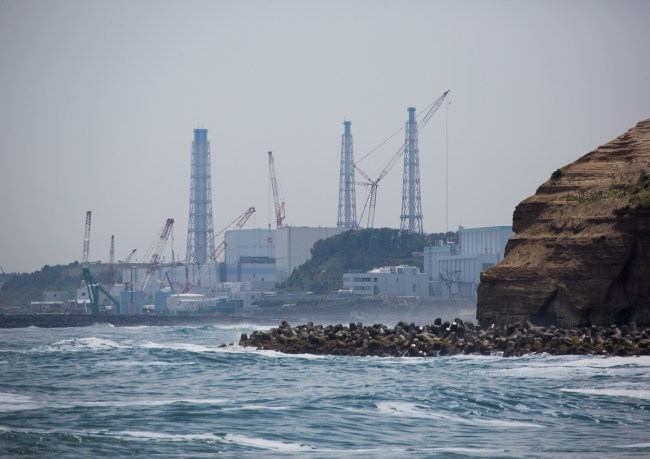
Over the course of five years, nearly 50,000 people have worked to decontaminate the plant and stop leaks. Nearly 500,000 people were evacuated because of the tsunami and the nuclear accident.
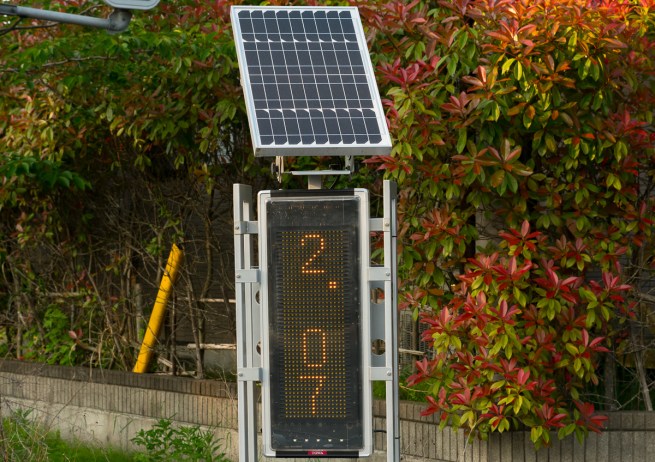
A radiation dosimeter placed in the difficult-to-return zone after the Daiichi nuclear power plant irradiation, Fukushima prefecture, Tomioka, Japan
Radiation sensors indicate the level of radioactivity. But no one is present to read the sensors in the red zones, classified as ‘difficult to return to zones’ by the government.

Roadblock in the difficult-to-return zone after the daiichi nuclear power plant irradiation, Fukushima prefecture, Tomioka, Japan
Residents receive compensation from Tepco company based on the degree of contamination of their homes. In the red zone they receive 1,000$ a month per person. That has created tensions in the population because those who live on the other side of the barrier, like here in Tomioka, do not receive as much.
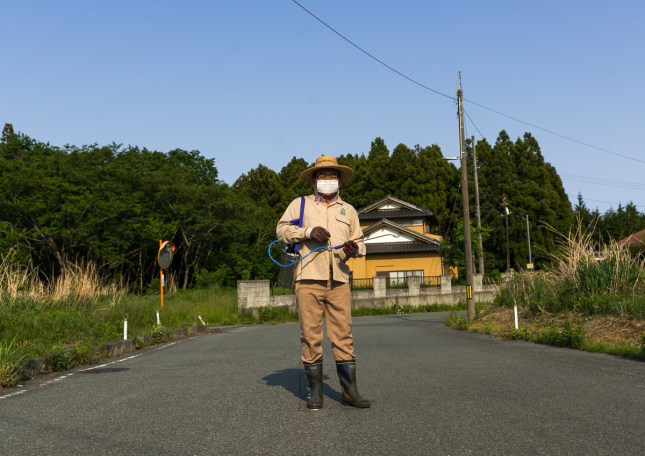
In the ‘orange zone’, residents have the right to visit their home if they wish to take care of it. In the town of Naraha. This man has come to weed his garden. His wife refuses to come back, and he will not bring his children. He never sleeps in his contaminated home. He knows the dangers well as he has worked at the nuclear plant.
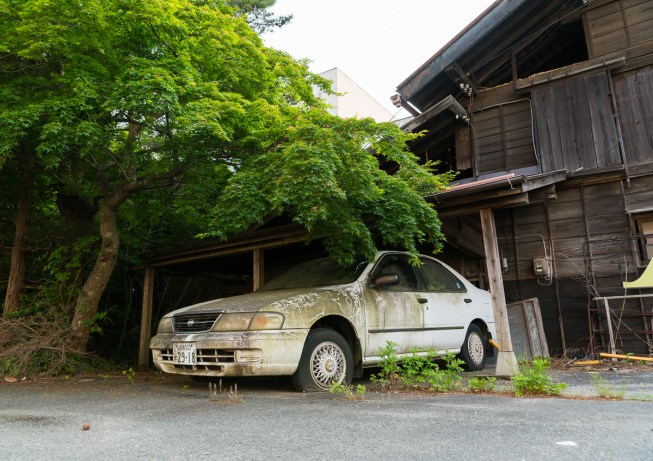
Abandoned car after the 2011 earthquake and tsunami five years after in the difficult-to-return zone, Fukushima prefecture, Tomioka, Japan
Cities distant from the sea, like Tomioka, were only affected by the earthquake and the radiation, not by the tsunami. They have now turned into ghost towns.
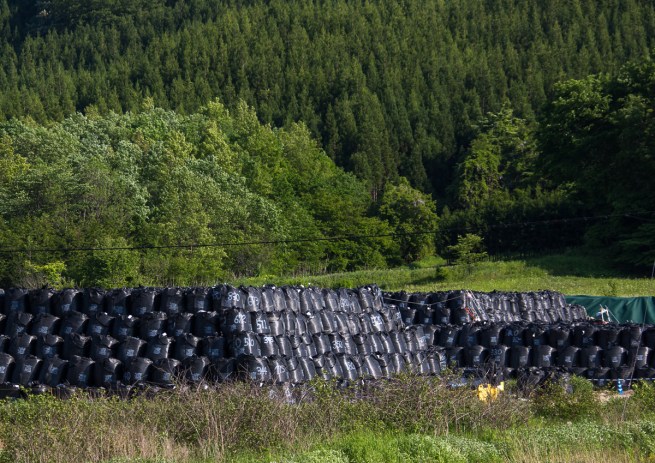
Thirty million tonnes of contaminated soil are stocked in open-air sites.

The Tairatoyoma beach was popular for its sand, but the tsunami washed this sand away. Now, a concrete wall offers protection against the waves. A few rare foreigners venture here to surf according to the Japanese surfers.
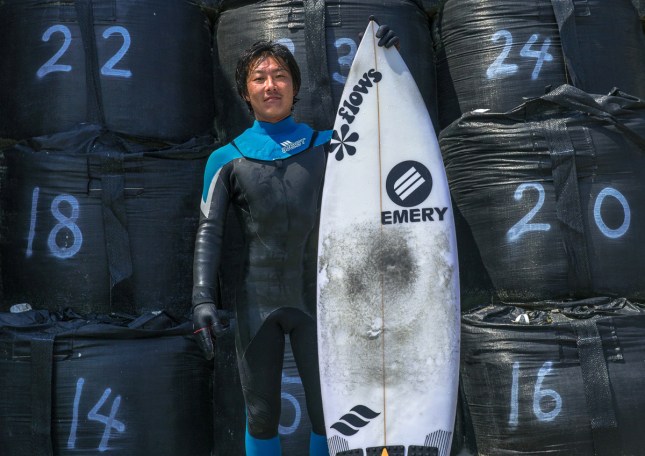
The surfers cannot ignore the riskS. There are hundreds of bags of contaminated sand piled up on the beach. ‘The government keeps telling us that things are back to normal in the region. But we can see that few people have come back. There are only elderly people. Children are kept away,’ said one surfer.
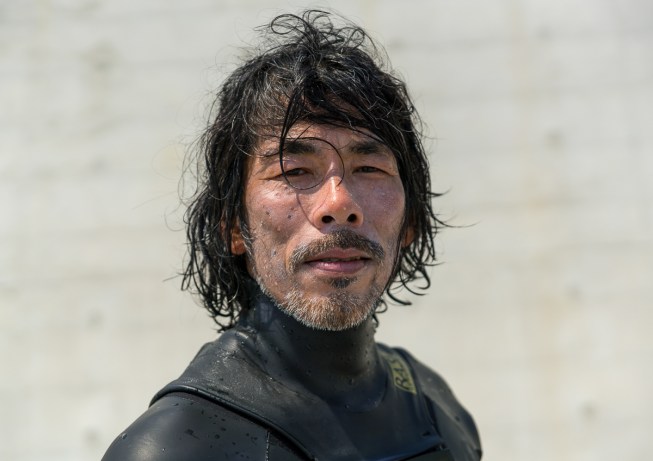
Despite knowing the risks, surfers are undeterred and willing to take the risk to surf in these waters. ‘I put on sunscreen against the sun, but I haven’t found anything against radiation. We will only know the true consequences of our time in the water 20 years from now,’said one surfer.
The people from the Fukushima prefecture had supported the construction of the nuclear power plants in the region because this brought jobs and prosperity to this rural area.
An employee of the nuclear plant said that he would never swim there as the water is too contaminated. Five of his friends who worked at the plant have now brain damage.
Radioactive Broom in Tomioka House, Fukushima
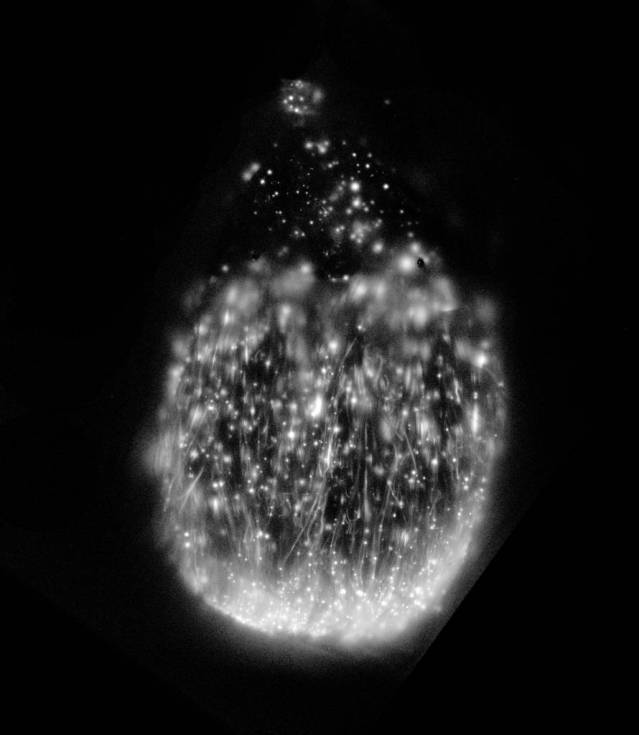
Via Kurumi Sugita:
“A broom collected in the town of tomioka in Fukushima Prefecture, inside of a house.”
Film focuses on ‘irradiated’ cattle kept alive in Fukushima
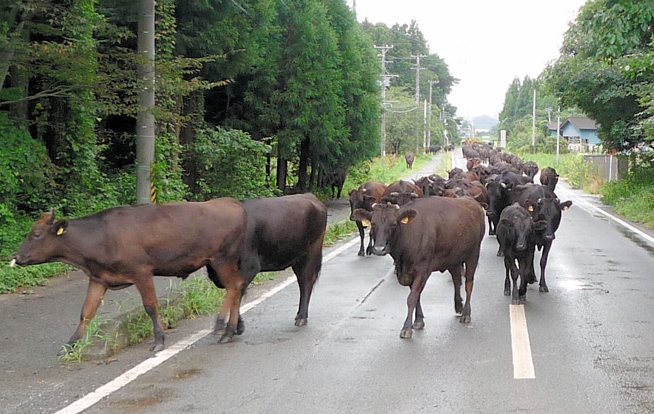
In a scene from “Hibaku-ushi to Ikiru” (Living with irradiated cattle), stray cattle head down a road in the 20-kilometer no-entry zone around the crippled Fukushima No. 1 nuclear power plant in August 2011.
OSAKA–For some cattle farmers in Fukushima Prefecture, the thought of destroying their herds is too painful to bear even if they are contaminated with radioactive fallout.
A new documentary to be shown here this week records the plight of these farmers, who continue to look after their beef cattle in defiance of a government request to euthanize the animals.
“I took on this project because I wanted to capture what is driving farmers to keep their cattle. For all the trouble it is worth, the animals are now worthless,” said Tamotsu Matsubara, a visual director who shot the documentary.
Four years in the making, “Hibaku-ushi to Ikiru” (Living with irradiated cattle) is set for its first screening on Aug. 26 at a local community center in the city.
Matsubara’s interactions with the cattle farmers date to the summer of 2011, a few months after the nuclear crisis unfolded at the Fukushima No. 1 nuclear power plant following the Great East Japan Earthquake and tsunami on March 11 that year. His assignment was to cover a traditional festival in Minami-Soma, which is located near the stricken nuclear plant.
Matsubara, 57, became acquainted with a farmer caring for more than 300 cattle on his land in the 20-kilometer no-entry zone set by the government. Residents in the zone were ordered to evacuate, but the farmer stayed on to look after his animals.
At that time, the government was seeking to destroy the cattle within the no-entry zone by obtaining their owners’ consent, saying animals that were heavily contaminated with radiation from the nuclear accident could not be sold at market.
But some farmers did not want to put their livestock down.
However, keeping them alive costs 200,000 yen ($2,000) a year in feed per head.
Matsubara became curious why the farmers continued to look after cattle that cannot be sold or bred, despite the heavy economic burden.
He soon began making weekly trips from Osaka to Fukushima to film the lives of the farmers, their cattle and the people around them.
After finishing his regular job in promotional events on Fridays, Matsubara would drive 11 hours to Fukushima and spend the weekend documenting the plight of the farmers before returning to Osaka by Monday morning.
He had 5 million yen saved for the documentary, his first feature film. When the money ran out, Matsubara held a crowdfunding campaign to complete it. Shooting wrapped up at the end of December.
About 350 hours of footage was edited into the 104-minute “Hibaku-ushi to Ikiru.”
The film documents the farmers and their supporters who are struggling to keep the cattle alive.
One couple in the film returns to their land in Okuma, a town that co-hosts the Fukushima plant, to care for their herd. They affectionately named each animal and said it would be unbearable to kill them. Their trips are financed using a bulk of the compensation they received for the nuclear accident.
A former assemblyman of Namie, a town near the plant, tends to his animals while asking himself why he used to support nuclear power.
The documentary also sheds light on scientists who are helping the farmers. The researchers believe that keeping track of the contaminated cattle will provide clues in unraveling how low-level radiation exposure impacts large mammals like humans.
Matsubara said the documentary tells the real story of what is going on with victims of the nuclear disaster.
“Not all the farmers featured in the documentary share the same opinion or stance,” Matsubara said. “I would like audiences to see the reality of people who cannot openly raise their voices to be heard.”
Takeshi Shiba, a documentary filmmaker who served as producer of this project, hopes the film will reach a wide audience.
“Matsubara broke his back in making this movie,” he said. “I hope that many people will learn what Fukushima people are thinking.”
1 This Month

of the week – Shut Down Drone Warfare!


Tell the Ukrainian Government to Drop Prosecution of Peace Activist Yurii Sheliazhenko

Petition to revoke the licensing of the Near Surface Nuclear Disposal Facility (NSDF) at Chalk River. https://www.ourcommons.ca/petitions/en/Petition/Details?Petition=e-7247
To see nuclear-related stories in greater depth and intensity – go to https://nuclearinformation.wordpress.com
-
Archives
- March 2026 (244)
- February 2026 (268)
- January 2026 (308)
- December 2025 (358)
- November 2025 (359)
- October 2025 (376)
- September 2025 (257)
- August 2025 (319)
- July 2025 (230)
- June 2025 (348)
- May 2025 (261)
- April 2025 (305)
-
Categories
- 1
- 1 NUCLEAR ISSUES
- business and costs
- climate change
- culture and arts
- ENERGY
- environment
- health
- history
- indigenous issues
- Legal
- marketing of nuclear
- media
- opposition to nuclear
- PERSONAL STORIES
- politics
- politics international
- Religion and ethics
- safety
- secrets,lies and civil liberties
- spinbuster
- technology
- Uranium
- wastes
- weapons and war
- Women
- 2 WORLD
- ACTION
- AFRICA
- Atrocities
- AUSTRALIA
- Christina's notes
- Christina's themes
- culture and arts
- Events
- Fuk 2022
- Fuk 2023
- Fukushima 2017
- Fukushima 2018
- fukushima 2019
- Fukushima 2020
- Fukushima 2021
- general
- global warming
- Humour (God we need it)
- Nuclear
- RARE EARTHS
- Reference
- resources – print
- Resources -audiovicual
- Weekly Newsletter
- World
- World Nuclear
- YouTube
-
RSS
Entries RSS
Comments RSS
 nuclear-news