The Freedom Flotilla Sails Again To Break The Gaza Blockade
THE FREEDOM FLOTILLA SAILS AGAIN
Vessels have begun international port-to-port voyage to Gaza
Coalition statements, By zohar. September 4, 2026, https://freedomflotilla.org/2026/09/02/ffc-sails-again/
The Freedom Flotilla Coalition (FFC) today announced that a new international mission to challenge Israel’s illegal and deadly blockade of Gaza is underway.
The violence and torture that Israel inflicted on hundreds of flotilla volunteers this past spring, including severe beatings, repeated tasering, and sexual assault, has not deterred the FFC, just as Israel’s murder of 10 flotilla activists aboard the Mavi Marmara, in 2010 did not stop the movement. If anything, action is needed now more than ever. While much of the world has moved on from Gaza, believing a supposed “ceasefire” has ended the genocide, Israel continues to kill Palestinians in Gaza at will; use its blockade to restrict and manipulate the entry of the food, medicine, and fuel that a besieged population depends on to survive; and deny Palestinians their fundamental right to freedom.
The new mission involves a port-to-port voyage throughout Europe, bringing together human rights advocates, union activists, elected representatives, journalists, medical professionals, and other supporters of Palestinian freedom. In June and July 2026, FFC vessel, Handala II, sailed around Scandinavia, making stops at ports in Norway, Sweden, and Denmark. Earlier this month, the vessel, Kate, launched from Bristol, UK and has made port calls in Ireland, Germany, and France. Upcoming stops include ports in Spain, Portugal, and Italy, before the flotilla continues on to Gaza. At every stop, the flotilla will stand with local communities to press their own governments to end their complicity in genocide by blocking weapons and energy shipments that arm Israel’s aggression, ending diplomatic and military cooperation, and imposing real sanctions. The journey will build public support and international pressure ahead of the flotilla’s planned attempt to reach Gaza in October 2026.
“The Freedom Flotilla sails again because our governments continue to fail to uphold their obligations,” said Zohar Chamberlain Regev, FFC Steering Committee member. “At every port, we will carry the demand that Palestinians be free to live with dignity. In October, we intend to carry that demand and the solidarity of people around the world to Gaza’s shores.”
Throughout the port-to-port journey, FFC and its local partners will organize public welcomes, community gatherings, media events, and opportunities for supporters to visit the vessels. Details of port calls and public events will be released as arrangements are confirmed.
Since 2010, the Freedom Flotilla Coalition has brought together civil-society organizations and grassroots campaigns from around the world to challenge the blockade by sea. Its work continues the precedent established by the Free Gaza Movement, whose vessels began sailing to Gaza in 2008.
“The Freedom Flotilla sails again because our governments continue to fail to uphold their obligations,” said Zohar Chamberlain Regev, FFC Steering Committee member. “At every port, we will carry the demand that Palestinians be free to live with dignity. In October, we intend to carry that demand and the solidarity of people around the world to Gaza’s shores.”
Throughout the port-to-port journey, FFC and its local partners will organize public welcomes, community gatherings, media events, and opportunities for supporters to visit the vessels. Details of port calls and public events will be released as arrangements are confirmed.
Since 2010, the Freedom Flotilla Coalition has brought together civil-society organizations and grassroots campaigns from around the world to challenge the blockade by sea. Its work continues the precedent established by the Free Gaza Movement, whose vessels began sailing to Gaza in 2008.
Nuclear Liability Beyond Earth: Who Pays for an Incident on the Lunar Surface?

European Journal of International Law by Yunus Emre Bakiler and Güneş Ünüvar, September 2, 2026
Lunar exploration during the 20th century sought to reach, explore and, in some cases, return from the Moon,; rather than to serve as successive stages in the construction of permanent lunar infrastructure. Today, lunar missions are mostly about establishing the long-term infrastructure necessary to remain there. Under the Artemis Programme, NASA is developing phased infrastructure for long-term operations and an enduring human presence near the lunar south pole. The International Lunar Research Station (ILRS), led by China, is envisaged as an expandable facility capable of long-term robotic operation and shorter periods of human participation. Commercial entities are already involved in lunar delivery and landing services, while prospective activities extend to communications, mobility, power supply, prospecting and the use of lunar resources.
For sustained operational presence anywhere, power is a common dependency. This is certainly the case for the Moon, and nuclear power is one alternative. In January 2026, NASA and the US Department of Energy announced that they would work towards deploying such a fission surface power system by 2030. NASA now describes “Lunar Reactor-1” as a reactor intended to land on the Moon in that year. Nuclear surface power is therefore becoming part of near-term planning for sustained lunar operations.
These developments form part of a broader and increasingly global debate over lunar governance. Among the legal questions raised is the liability regime that would apply if a nuclear incident occurred on the lunar surface, but the interaction between the international space law liability framework and the civil liability regimes developed for nuclear installations has yet to receive any scholarly and policy attention. Can a state be held liable for a nuclear incident occurring on the face of the Moon under international law? The blog post will argue that instruments available under international law, while entirely relevant, fall short of providing a conclusive answer to the question. It will also suggest a tentative model for the way forward…………………………………………………………………………………………………………………………………………………………………………………………………………………..
The existing UN Principles on Nuclear Power Sources and the 2009 UN–IAEA Safety Framework provide important safety guidance, but they do not create a detailed governance framework or a compensation regime. The development of lunar nuclear power should be accompanied by an equally serious effort to identify the applicable liability architecture embedded within a robust, comprehensive lunar governance framework. Once a reactor is operating on the Moon, uncertainty over fault, compensable damage, competent fora and available financial resources will be immediate realities. The legal framework should be developed alongside the technology and not in response to its first, potentially catastrophic, failure. https://www.ejiltalk.org/nuclear-liability-beyond-earth-who-pays-for-an-incident-on-the-lunar-surface/
Ministry of Defence withheld information about nuclear test veterans’ records, ex-minister claims

He said the information was “deliberately withheld” by the MoD and claimed there was an effort to delay its release until surviving veterans had passed away.
2 Sept 26, Tabby Wilson, https://www.bbc.com/news/articles/c3d787k9kpyo
Former veterans minister Tobias Ellwood has accused the Ministry of Defence (MoD) of deliberately withholding the medical records of Cold War veterans who oversaw nuclear tests, calling it “an absolute cover-up”.
Ellwood told BBC Newsnight he now believes some information he gave to Parliament about the UK’s nuclear programme, based on MoD briefings, was “a complete lie”.
Veterans have campaigned for the release of their medical histories, arguing blood and urine test results could help them prove that nuclear exposure damaged their health.
An MoD spokesperson said the government had conducted an “extensive records discovery exercise” to address questions about the programme, with its findings published in full.
As many as 25,000 members of the UK armed services, scientists and civilians took part in the nuclear testing programme between 1952 and 1967 at sites including Australia and several islands in the Pacific Ocean.
Veterans have claimed the tests caused severe lifelong health problems, alleging they have suffered cancers of the liver, bone, bowel, skin and brain, as well as leukaemia, heart disease, stillbirths and generational birth defects as a result of their exposure.
Ellwood, who served as a junior defence minister between June 2017 and July 2019, said he believed ministers over the years had been briefed to say they had no evidence to help nuclear test veterans, despite thousands of documents about the programme being held.
He said the information was “deliberately withheld” by the MoD and claimed there was an effort to delay its release until surviving veterans had passed away.
“The more you unpick this story, the more murky, the more shady, the concerning it becomes,” Ellwood told Newsnight, calling it bigger than the infected blood, Windrush and Post Office scandals “because of the longevity… and the number of people that have been involved”.
“This is a scandal. It’s absolutely tarnished the reputation of the MoD.”
Calling for an independent tribunal into the matter, Ellwood asked: “Why it is that the MoD – rather than help veterans, provide the information – closed ranks and said ‘nothing to see here’, and then told ministers such as me ‘actually we haven’t got that information and we’re not willing to help the veterans’?”
The ministry in 2024 promised to embark on a comprehensive examination of any information the department held on the issue, and has since released five reports.
In those, it said there were a number of factors affecting the way medical records were kept, including the lack of a centralised approach and high levels of Cold War “secrecy”.
Ellwood conceded that some documents were to be handed to the National Archives, but said they would still be heavily redacted: “They have to be declassified. This isn’t enough to help the veterans, who understandably remain deeply angry.”
An MoD spokesperson said the government had examined “tens of thousands of documents to address long-standing questions from veterans about blood and urine testing policies during the nuclear testing programme”.
They said it had been published in its entirety “following regular engagement between Ministers, nuclear test veterans and community groups throughout the process.”
“We owe an enduring debt of gratitude to the more than 22,000 Service personnel, scientists and civilians who contributed to the UK’s nuclear testing programme and helped safeguard our national security,” the spokesperson said.
UK government does not know what datacentres are being used for, FoI request shows

Lack of information raises fears over environmental impact of the AI boom
Pippa Neill Environment reporter, Wed 2 Sep 2026 ,
https://www.theguardian.com/uk-news/2026/sep/02/uk-datacentres-ai-boom-foi-environment
The UK government does not know what the country’s datacentres are being used for despite fears over the growing environmental impact of the AI boom.
When asked in a freedom of information (FoI) request who was using the largest sites and what for, the Department for Science, Innovation and Technology said it did “not hold the requested information”. The ministry has since been dissolved.
With hundreds of datacentres awaiting planning permission and 315 queueing to connect to the National Grid, there is growing concern over a lack of transparency and justification for these projects given their environmental impact.
Ministers announced plans in January to allow qualifying datacentres to opt into the Nationally Significant Infrastructure Project scheme. This lets developments bypass local planning committees by securing approval from the government. Campaigners say this “insulates” datacentres from local scrutiny.
Zack Polanski, the Green party leader in England and Wales, said: “The government plans to steamroller over local opposition so private companies can build these facilities – yet they can’t even explain what the benefits are and who is benefiting.”
Datacentres use a huge amount of resources. The Guardian revealed last month that two planned sites will have higher carbon emissions than ExxonMobil in the UK, with concerns raised over how this will fit within the country’s carbon targets.
The government designated datacentres as critical national infrastructure in 2024 and campaigners fear this could mean the water-hungry sites are prioritised over households in times of drought. Water UK, the trade body representing water companies in Britain and Northern Ireland, warned in July that the UK did not have enough water for the datacentre expansion.
Polanski said: “What is more ‘critical’ than people’s access to water? What is more ‘critical’ than our need to transition to a low-energy, low-pollution world so we can put the brakes on climate extremes?”
While there is consensus that datacentres can provide some essential services, there are concerns that developments with a huge environmental impact and local opposition are being prioritised regardless of their use.
Oliver Hayes of Global Action Plan, the environmental charity which submitted the FoI request, said: “It’s highly likely that we’re going to end up seeing datacentres given favourable and preferential treatment when it comes to resources that are actually running chatbots or enabling people to do benign and very wasteful, pointless things.
“At the more serious end, these datacentres could be powering chatbots that enable people to nudify teens without their consent and much worse, frankly.”
With reports that the Scottish government is inching toward a moratorium on new datacentres, there is growing pressure for the UK government to follow suit.
Friends of the Earth is calling for a ban on new sites until environmental safeguards are in place. The campaign group wants the government to publish clear environmental rules for new and existing datacentres, including requirements for 100% additional renewable energy generation for new projects.
Anisah Khan, the campaigns manager at Global Action Plan, said: “When individuals across the country are facing hosepipe bans and essential housebuilding is being delayed because datacentres are gobbling up grid connections, what we need is not more chatbots at any cost.”
The government did not respond to a request for comment over its failure to say what large datacentres were being used for.
A spokesperson said: “A pause on building new datacentres would simply send investment and good jobs abroad, while leaving Britain dependent on other countries for the processing of sensitive health and defence data. Put simply: it would be a disaster for jobs and national security.”
Pay hike for NB Power CEO while ratepayers struggle ‘doesn’t make sense’: NB ACORN
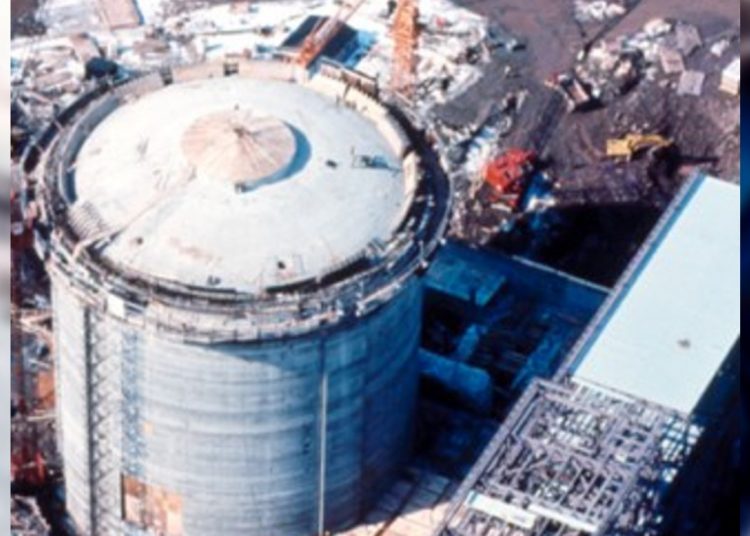
The ACORN picket happened two days after another unplanned power outage at the Point Lepreau nuclear plant with a likely cost of $50 million. An analysis published in the Telegraph-Journal suggests that the latest nuclear plant outage will cost an average of $127 for each NB Power customer.
NB Media Co-op, by Susan O’Donnell, September 4, 2026
Picketers at NB Power’s Fredericton headquarters on Thursday said the government is not doing enough to help the thousands of New Brunswickers struggling to pay their electricity bill.
The 2025 report on energy poverty from the Human Development Council found that more than 37,000 households in the province experience both low income and high energy burden, a rate nearly double the national average.
NB ACORN chair Nichola Taylor organized the picket because she said the government is not doing enough to help these people. “First of all, the announcement that the CEO is getting a huge pay rise while everybody else is paying huge rate increases … it just doesn’t make sense.”
In August, the cabinet approved a 14 per cent pay hike for NB Power CEO Lori Clark, who now earns $623,653.
ACORN’s main demand is for a rebate program specifically geared towards low-income earners, similar to one that exists in Ontario…………………………………..
The ACORN picket happened two days after another unplanned power outage at the Point Lepreau nuclear plant with a likely cost of $50 million. An analysis published in the Telegraph-Journal suggests that the latest nuclear plant outage will cost an average of $127 for each NB Power customer.
ACORN’s Taylor said if the nuclear plant’s problems mean that rates will continue to rise, “this is a massive problem, and they need better solutions which they are clearly not doing right now.”
NB Power has previously stated that it is “committed to providing safe, reliable energy for our customers while keeping rates as low as possible” and that its goal “is always to work with customers to avoid disconnecting service.” .. https://nbmediacoop.org/2026/09/04/pay-hike-for-nb-power-ceo-while-ratepayers-struggle-doesnt-make-sense-nb-acorn/
US and allies push IAEA board to report Iran to UN Security Council, diplomats say
By Francois Murphy and John Irish, September 5, 2026,
https://www.reuters.com/world/europe/us-allies-want-iaea-board-report-iran-un-security-council-diplomats-say-2026-09-04/
- Summary
- Board declared Iran in breach in June of last year
- Israel started bombing its nuclear sites the next day
- A standoff over access to those sites continues
- Reporting Iran to the council escalates the clash
VIENNA/PARIS, Sept 4 (Reuters) – The United States, Britain, France and Germany are seeking a resolution by the U.N. nuclear watchdog’s board next week reporting Iran to the U.N. Security Council for the first time in 20 years, according to diplomats and the proposed text seen by Reuters.
If passed, the resolution would follow up on one adopted on June 12 of last year declaring Iran in breach of its non-proliferation obligations for not fully cooperating with an investigation into uranium traces found at undeclared sites.
Israel started bombing Iran’s nuclear facilities the next day, soon joined by the U.S. Iran’s uranium-enrichment plants were destroyed or badly damaged.
Iran has not let International Atomic Energy Agency inspectors return to the bombed sites since then or verify what remains of its stocks of enriched uranium, some of which was enriched to up to 60% purity, a short step from weapons grade.
FRESH DIPLOMATIC ESCALATION
A resolution by the IAEA’s 35-nation board reporting Iran to the Security Council would also be the culmination of a standoff over IAEA access to those sites, since the board has passed two resolutions in the past year demanding Iran declare its enriched uranium stocks and grant the IAEA full access to verify them.
“(The board) requests the (IAEA) Director General to transmit this resolution and the previously adopted resolutions … to all Members of the Agency and to the Security Council and the General Assembly of the United Nations,” said the latest resolution draft seen by Reuters.
It also “reiterates its call upon Iran to urgently remedy its non-compliance with its Safeguards Agreement by taking all steps deemed necessary by the Agency and the Board, so that the Director General can provide the necessary assurances regarding the correctness and completeness of Iran’s declarations”.
The draft has not yet been formally submitted to the board and negotiations over the exact wording are ongoing, diplomats said. Whenever the four powers have submitted a draft resolution on Iran in recent years, it has passed.
Concrete action by the Security Council against Iran is unlikely since Tehran’s allies Russia and China are permanent, veto-wielding members.
IAEA CONCERNS OVER ENRICHMENT
Iran has often retaliated following IAEA board resolutions against it by escalating its nuclear activities or scaling back cooperation with the IAEA, but its options for both are currently extremely limited.
It is unclear what other repercussions there might be on Tehran’s conflict with the U.S.
As a party to the nuclear Non-Proliferation Treaty (NPT), Iran has the right to develop nuclear technology, including enrichment, for peaceful purposes. Iran says it would never produce nuclear weapons.
It is, however, the only country to enrich to 60% without making a bomb. The IAEA has said the amount it has enriched to that level is of serious concern.
Putin says Ukraine peace deal is possible, calls for full restoration of U.S.-Russia relations
[your]NEWS, Thu, 03 Sep 2026
Russian President Vladimir Putin said Thursday that Moscow sees “a chance” for peace with Ukraine and wants to restore full relations with the United States, citing continued contacts with Washington and ongoing communication between Russian and Ukrainian intelligence services.
Russian President Vladimir Putin said Thursday that there is “a chance” to reach a peace agreement with Ukraine and signaled that Moscow also wants to rebuild its relationship with the United States after years of confrontation.
Speaking Sept. 3 during a session of the Eastern Economic Forum in Vladivostok, Putin said Russia remains appreciative of international efforts aimed at ending the war but maintained that Moscow and Kyiv must ultimately reach an agreement directly.
Moscow is “grateful to everyone who is trying to contribute to resolving this issue,” Putin said, adding that in his view there is “a chance” of achieving peace, according to Russian state news agency TASS. For the fighting to end, Putin said, “Russia and Ukraine must first reach an agreement” between themselves.
He acknowledged that “all other countries are ready to support and assist” the two sides in reaching such an agreement.
Despite the continuing war, Putin revealed that Moscow and Kyiv have maintained lines of communication through their respective intelligence services.
He said it was difficult to determine “to what extent these contacts are leading to a peace agreement,” but confirmed that communication between the two governments has not completely ceased.
Putin also used his remarks in Vladivostok to address the future of relations between Russia and the United States.
He confirmed that Moscow remains in contact with Washington and said he hopes those channels remain open.
The Russian president pointed to cooperation involving U.S. and Russian intelligence services as well as officials appointed by President Donald Trump, saying the process is “working” and expressing hope that it will “ultimately lead to a positive outcome.”
Putin said Russia wants a broader normalization of relations with Washington.
Moscow is “in favor of restoring relations with the United States in full, but this does not depend solely on us; it depends on the American side,” he said.
Putin nevertheless indicated that he believes Trump is personally interested in improving ties. He said Trump is “determined to engage in such positive, constructive work.”
Putin’s comments came one day after Trump said any future face-to-face meeting between the two leaders should take place in connection with an actual peace agreement.……………………………………………………………………………………………………………………………….
During an Aug. 24 Independence Day speech in Kyiv, Zelenskyy said Ukraine wants peace but would not capitulate.
Those positions remain at the center of the diplomatic challenge.
Putin says Moscow sees a possible route toward agreement and favors restoring full relations with Washington, while Trump has increasingly tied future high-level diplomacy with the Kremlin to tangible progress toward ending the conflict.
Zelenskyy, meanwhile, has publicly endorsed negotiations while insisting that peace cannot come through Ukrainian surrender…………………. https://www.sott.net/article/508247-Putin-says-Ukraine-peace-deal-is-possible-calls-for-full-restoration-of-US-Russia-relations
EDF Extends Reactor Outage Until January After Corrosion Signs

The Gravelines nuclear power station in Dunkirk, France. Electricite de France
SA extended a maintenance outage at one of its 57 nuclear reactors through
January next year, reducing power output during a key part of the heating
season. The prolonged halt at the Gravelines 5 reactor in northern France
will last seven weeks longer than initially planned until Jan. 25. That may
underpin European power prices, which have jumped in recent weeks due to
surging gas prices tied to the Iran war.
Bloomberg 3rd Sept 2026,
https://www.bloomberg.com/news/articles/2026-09-03/edf-extends-reactor-outage-until-january-after-corrosion-signs
How drones reinvented the proxy war

Drone technology, once confined to
great powers like the United States and China, has irrevocably spread to
smaller states and non-state actors. In the early 2000s, it would have been
unthinkable for small insurgent groups to develop sophisticated
drone-building programs and deploy unmanned aircraft against their
opponents. A generation later, this technology has become cheaper and far
more accessible. Syria’s civil war demonstrates how local initiative
combined with inexpensive drones imported from second-tier producers can
bring game-changing results.
Bulletin of Atomic Scientists 2nd Sept 2026,
https://thebulletin.org/2026/09/how-drones-reinvented-the-proxy-war/
I inadvertently misled parliament over a British nuclear scandal. Now I’m calling for justice
Tobias Ellwood, 3 Sept 26,
https://www.theguardian.com/commentisfree/2026/sep/02/british-nuclear-tests-compensation-for-veterans
Thousands of service personnel took part in dangerous cold war-era nuclear tests. The government owes them the truth – and compensation.
In December 2018, as defence minister, I inadvertently misled parliament. Asked whether blood samples had been taken from service personnel for radiological monitoring during the nuclear bomb tests, I relayed the line provided to me by the Ministry of Defence: it was “unable to locate any information” suggesting blood samples had been taken for radiological monitoring at the tests.
I now know the reality was very different – these samples were taken across the armed services branches. But those veterans seeking compensation for serious illnesses developed after radiation exposure have been unable to access them. This is among the greatest scandals in Britain, and it must be addressed.
More than 20,000 armed forces personnel took part in dozens of nuclear tests and nearly 600 radiation experiments, the majority between 1952 and 1967. This was for the entirety of the cold war. The science was deemed necessary. How effective were our own bombs and, just as importantly, how well could our military function if the Soviet Union used theirs against us? Test after test was conducted in the Australian desert, at Christmas Island in the Pacific, and we also sent service personnel into the atomic clouds of allies and enemies. Yet their medical records for the period are missing.
Other nuclear nations, such as the US, France and the Soviet Union, did the same. Yet they acknowledged that it happened and created dedicated compensation schemes for nuclear test veterans who subsequently developed serious illnesses. Britain stands apart here. In Britain, the burden was placed on veterans to prove their case. But how do you claim what happened decades earlier when potentially vital records are missing or inaccessible?
In 2007, about 1,000 nuclear test veterans and families took the MoD to court seeking compensation. Pilots had been instructed to fly through mushroom clouds. Service personnel sailed and crawled through fallout. Others witnessed nuclear explosions, in some cases just two miles from ground zero. Surely our service personnel deserved better?
This is where the scandal turns ugly. To deal with the veterans’ litigation, the MoD instructed the Atomic Weapons Establishment (AWE) to collate relevant documentation into a searchable database called Merlin. More than 28,000 documents were eventually assembled, covering radiation, precautions, health monitoring and what was known about the possible biological effects of the tests. Yet the veterans’ lawyers had no practical access to this vast archive. Thanks to the extraordinary investigative journalism of Susie Boniface, historical documents began emerging referring to blood and urine testing.
When I saw the evidence, I raised it in November 2022 as chair of the defence committee. The MoD finally acknowledged that the AWE held copies of blood-test results and urine-radioactivity measurements for “a small number of individuals”. That took me straight back to my parliamentary answer four years earlier.
I challenged the then defence secretary, Ben Wallace. If this information existed within the MoD, why had ministers not been given the full picture? He agreed that withholding relevant medical information would be “deeply wrong” and undertook to investigate.
The dam was beginning to burst. Searches of Merlin for “blood” and “urine” subsequently identified 151 documents. Then another extraordinary twist. A software change meant the AWE could no longer provide a historical audit trail showing who had accessed Merlin.
Nuclear microreactors move towards operational capability for military, space energy solutions

Robert Dougherty, Space Connect, 04 September 2026
Advanced nuclear microreactors are moving towards operational capability as military and space energy solutions, according to recent comments from Antares Nuclear co-founder and CEO Jordan Bramble.
Bramble, speaking to a US House science committee on 2 September, confirmed that the microreactors are expected to have major implications for military energy resilience, national security, and space power.
Antares Nuclear’s Mark-0 reactor reportedly reached criticality on 4 June this year at Idaho National Laboratory, and the company plans to operate its Mark-1 reactor at INL for six months in 2027, followed by military deployments at Fort Bragg and Joint Base San Antonio in 2028.
He also credited the US ADVANCE Act of 2024 and 2025 presidential executive orders with streamlining regulatory processes and establishing a Department of Energy Reactor Pilot Program.
“As Antares ramps up production, we are actively exploring commercial applications to provide resilient power to compute capabilities, remote oil and gas hubs, austere mining environments, fulfilment and distribution centres, and more,” Bramble said.
“We are also building nuclear power for space. In December 2025, President Trump signed his Space Superiority executive order 14369, which was followed in April 2026 by the National Science and Technology Memorandum-3, the National Initiative for American Space Nuclear Power. We at Antares are responding to this charge.
“The same heat-pipe architecture, passive safety, TRISO fuel, and manufacturability that define our terrestrial microreactor form the design basis for space applications. This dual-use approach aligns directly with NASA’s plans for lunar fission surface power and the Space Reactor-1 Freedom pathfinder. Let me be clear, Antares is eager to build to support NASA’s planned 2028 nuclear electric propulsion demonstration mission as well as lunar surface reactors ready for launch by 2030.”
Bramble speculated around first deployment of an advanced small modular reactor at a military installation by 2028, aligning with an existing executive-order target for an Army-regulated reactor………………………………… https://www.spaceconnectonline.com.au/industry/7263-nuclear-microreactors-move-towards-operational-capability-for-military-space-energy-solutions
Devonport nuclear submarine dock upgrades could be accelerated
Navy Lookout 3rd Sept 2026
The MoD hopes to speed up two major dock renewal projects at Devonport following the site operator’s release from 12 years of enhanced nuclear safety oversight. A parliamentary answer this week confirmed that acceleration of work on 10 and 14 Dock is being explored as part of the £7.1Bn Project Royal Oak investment in the base.
Responding to a written Parliamentary question, Defence Minister Luke Pollard, who is also MP for Plymouth Sutton and Devonport, said: “opportunities to accelerate work on 10 and 14 Dock are being explored”. Following the nuclear regulatory review, delivery of both projects is being driven forward. Work on 10 Dock was originally scheduled to be completed in late 2027, but the current target date for handover is unclear.
The Office for Nuclear Regulation (ONR) review concluded in March 2026 and returned Devonport Royal Dockyard Limited (DRDL) to routine regulatory attention. The site had been under ‘enhanced attention’, effectively special measures, since 2014 over concerns about ageing facilities, organisational capability and control of work. ….. With enhanced oversight lifted, there should be fewer regulatory obstacles to progressing complex nuclear construction work at the site.
Faster progress cannot come soon enough. The RN currently has just three facilities able to take a nuclear submarine out of the water: the shiplift at Faslane and 9 and 15 Docks at Devonport. 9 Dock is occupied by HMS Victorious in deep maintenance, while HMS Audacious only vacated the refurbished 15 Dock in June after becoming the first Astute-class boat to dock at Devonport. HMS Astute will take her place as she begins a lengthy mid-life validation period.
Under a £750M contract awarded in 2023, 10 Dock is being modernised to provide a second Devonport dock certified for both SSN and SSBN maintenance. Any acceleration would directly benefit submarine availability.
Work on 14 Dock addresses a different but equally longstanding bottleneck. Its recommissioning will allow submarine defuelling to resume at Devonport for the first time since 2004, when the old facilities were judged to fall short of modern standards. Of the 14 decommissioned boats stored afloat in 3 Basin, 10 still contain nuclear fuel, while their storage and maintenance costs around £30M annually. The old defuelling cranes have been replaced by a Reactor Access House that moves on rails over the reactor compartment, with roughly one boat per year expected to be defuelled once operations begin.
As part of Project Royal Oak, £7.1Bn will be invested in Devonport naval base and dockyard over the next decade, the largest share outside Faslane of the £26Bn naval infrastructure programme confirmed in July’s Defence Investment Plan. The scale of the investment reflects historic underinvestment as well as evolving operational requirements.
The upturn in work is visible in DRDL’s newly filed accounts for the year to 31 March 2026, with revenue rising 6.7% to £1.87Bn, driven by increased submarine maintenance across both the Astute and Vanguard classes. Operating profit reached £131M despite a one-off £5.9M charge relating to a closed group pension scheme, while profit after tax jumped from £76M to £132M, helped by a lower tax charge and higher interest income.
DRDL’s long-term order book fell from £2.1Bn to £1.7Bn, reflecting completion of Year 5 of the Future Maritime Support Programme (FMSP), only partly offset by a six-month bridging contract. This gives added importance to the Gateway Agreement now being negotiated with the MoD, a successor contract intended to run from September 2026 until March 2032, covering the period in which SSN-AUKUS work begins to build.
DRDL is a Babcock subsidiary and employs around 10,200 people, with staff costs of £670M. The Secretary of State for Defence also continues to hold a £1 special golden share in the company, providing powers to overrule ordinary shareholders in extreme circumstances. https://www.navylookout.com/devonport-nuclear-submarine-dock-upgrades-could-be-accelerated/
How climate change threatens Europe’s nuclear renaissance

European governments are planning to fight climate change with a major
expansion of nuclear power. Global warming, however, is fighting back. The
continent’s ambitions for boosting atomic power generation, a central
part of government efforts to meet net-zero goals and rising electricity
demand, collided this summer with the effects of climate change.
Wilting heat waves and worsening drought plunged European river levels to record
lows in August, depriving nuclear plants of the water needed to cool their
reactors. The resulting shutdowns and production cuts prompted some
governments and companies to question whether their multi-billion-euro
plans to build new plants should be adjusted to account for the rising
threats of climate-related disasters.
Politico 1st Sept 2026,
https://www.politico.eu/article/climate-change-threatens-europe-nuclear-renaissance/
The Geopolitical Trap: Structural Incentives Prolonging the War in Ukraine [i]
The Geopolitical Trap: Structural Incentives Prolonging the War in Ukraine [i]
The war in Ukraine that will not stop…
As the war in Ukraine grinds into its next phase, international observers continue to search for signs of a diplomatic off-ramp or a negotiated settlement. However, a close examination of the underlying political, intelligence, and strategic dynamics suggests that the conflict is highly unlikely to end in the near future. The war’s prolongation is not merely the result of battlefield stalemates, but the product of a complex web of survival imperatives, intelligence-agency dominance, and grim strategic utility. From this perspective, the conflict’s continuation serves the immediate interests of the key actors involved, creating a self-sustaining cycle that resists peaceful resolution.
The Survival Imperative: Trapped Between West and Nationalist

At the center of this dynamic is Ukrainian President Volodymyr Zelensky, whose political survival has become inextricably linked to perpetuating the war. Operating within a framework heavily dictated by Western powers, Zelensky’s legitimacy and continued hold on power depend entirely on his alignment with the strategic narratives of NATO and his Western backers.
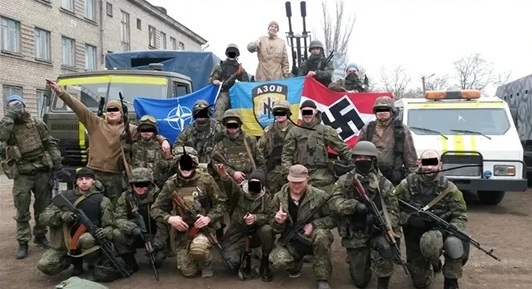
However, Zelensky faces a deadly dilemma from multiple directions. Should he attempt to negotiate peace or surrender to Russian demands, he would face immediate elimination not only from Western powers, who would discard an asset that no longer served their purposes, but also from within Ukraine itself. The country has seen the rise of powerful nationalist militias and far-right battalions that have grown substantially in influence and military capability since 2014. These groups, some with documented connections to neo-Nazi ideologies and symbolism, have made clear their absolute opposition to any negotiated settlement with Russia.
For Zelensky, the threat is existential and immediate. If he signals any willingness to surrender or accept terms unfavorable to maximalist war objectives, these armed nationalist factions would likely move against him. The president is thus trapped: he must continue the war to satisfy his Western patrons who fund and arm his government, while simultaneously appeasing or controlling the nationalist elements who would eliminate him if he showed weakness. This creates a perverse incentive structure where escalation becomes the only viable political path, and any move toward peace becomes politically impossible and personally dangerous.
The Deep State and the Intelligence Apparatus
The notion that Ukraine operates as a fully sovereign entity making independent decisions is contradicted by the pervasive influence of Western intelligence services, particularly Britain’s MI6. Ukraine’s wartime strategy is largely shaped from abroad, with British intelligence deeply embedded in the country’s military and political decision-making.
This reality is starkly illustrated by the positioning of figures like former Commander-in-Chief Valerii Zaluzhnyi. While often portrayed in Western media as a popular, independent alternative to Zelensky, analysts operating within this framework view Zaluzhnyi not as a sovereign Ukrainian nationalist, but as a vetted asset of Western intelligence. His rise, public image, and eventual sidelining were managed to ensure that no matter who occupies the presidential office or military command, the overarching strategy remains aligned with Western objectives. Nothing of strategic significance occurs in Kyiv without the implicit or explicit approval of these foreign intelligence apparatuses, ensuring that the war effort remains on a predetermined, unyielding trajectory.
The Mercenary Economy: Training Grounds for Future Conflicts
One of the most concerning developments prolonging the conflict is the massive influx of foreign mercenaries into Ukraine, creating what amounts to an international training ground with far-reaching implications for global security. Fighters from dozens of countries have flooded into Ukraine, motivated by ideology, adventure, or financial compensation, but their presence serves purposes beyond the immediate battlefield………………………………………………………………………………………………………………………………………………………………………..
NATO Forces and the Preparation for Wider War
Perhaps even more significant than the mercenary phenomenon is the documented presence of Western military personnel, including active and former special forces operators from NATO countries, participating directly in combat operations in Ukraine. While Western governments officially maintain that their forces are not engaged in direct combat, numerous reports and investigations have revealed that special operations personnel from the United States, United Kingdom, Poland, and other NATO members are actively involved in various combat roles………………………………………………………………………………………………………………………………………………………….
The Proving Ground for Western Weaponry
Beyond the training of personnel, the conflict serves as an unprecedented, real-world laboratory for NATO and Western-made weaponry. For decades, the United States and its allies have dominated global conflicts, but these were largely fought against asymmetric, third-world opponents lacking modern air defenses, electronic warfare capabilities, or peer-level artillery. Despite this overwhelming technological superiority, the US still suffered strategic defeats in protracted conflicts like Iraq and Afghanistan.
Ukraine offers a starkly different paradigm: a high-intensity, conventional war against a near-peer adversary with a sophisticated, layered defense. Western governments and defense contractors are eager to see how their flagship systems—such as the Patriot, HIMARS, Leopard tanks, and Storm Shadow missiles—perform against Russian electronic warfare, drone swarms, and advanced air defenses. This real-world testing is invaluable, exposing the vulnerabilities and limitations of Western tech that marketing brochures and sanitized military exercises would never reveal. It allows the West to gather crucial data on how their weapons fail, how they can be jammed, and how they must be upgraded for future high-end conflicts.
The Industrial Base and the Attrition Reality

However, this real-world stress test has exposed a critical, perhaps fatal, flaw in the Western military paradigm: the inability to sustain a prolonged war of attrition. The Western military-industrial base is fundamentally optimized for short, high-intensity expeditionary conflicts—blitzkrieg-style interventions against technologically inferior foes. It is not designed for the grinding, artillery-heavy attrition seen in Ukraine……………………………………………………………………………
The Collective Survival of the Political Elite
This dependency on perpetual conflict extends beyond the president to the broader Ukrainian political and oligarchic elite. The current ruling class has thoroughly intertwined its fate with the wartime status quo. Years of martial law, the consolidation of power, and the redirection of state resources have created a system where the elite’s wealth, influence, and physical safety are entirely dependent on the continuation of the current regime………………………………………..
Russia’s Grim Strategic Calculus
Perhaps the most paradoxical element of this prolonged conflict is Moscow’s strategic calculus. While Russia officially seeks the “demilitarization and denazification” of Ukraine, the current Ukrainian leadership is inadvertently achieving these goals on Russia’s behalf.
From the Kremlin’s perspective, there is no strategic incentive to eliminate Zelensky. His policies, driven by the need to satisfy Western demands for total war, have resulted in the systematic dismantling of the Ukrainian state. The massive demographic depletion, the destruction of critical infrastructure, the flight of millions of citizens, and the economic devastation are all outcomes that align with long-term Russian objectives of neutralizing Ukraine as a viable, independent threat on its border. Russia recognizes that Zelensky, in his desperate bid to remain useful to the West, is actively destroying his own country’s future. Eliminating him would risk replacing him with someone more competent, more unifying, or better able to negotiate a peace that preserves Ukrainian statehood. As long as the current leadership continues to bleed the country dry in a war it cannot win, Moscow views him as a strategic asset, albeit an unwitting one.
The Media-Military-Industrial Echo Chamber
Compounding these strategic and industrial realities is the profound incompetence and disconnect of the Western mass media and its military analysts. The public narrative in the West is largely shaped by a revolving door of retired high-ranking military officers and defense officials who transition seamlessly into lucrative roles as television analysts and consultants for the very media and military-industrial complexes they once served.
These figures operate in a closed echo chamber, profoundly disconnected from the grim realities on the ground in Ukraine. They routinely offer overly optimistic assessments, dismiss Russian tactical adaptations, and parrot the official talking points of their former institutions. This manufactured consensus serves to obscure the actual trajectory of the war, hiding the failures of Western weapons, the depletion of stockpiles, and the strategic stalemate. By prioritizing the defense industry’s financial interests and their governments’ political narratives over objective analysis, these commentators ensure the public remains largely ignorant of the true costs and diminishing returns of the prolonged conflict.
Conclusion: A War Without an Exit
These factors converge to create a formidable barrier to peace. Zelensky must continue the war to avoid being discarded by Western powers or eliminated by nationalist factions within Ukraine. The Ukrainian political elite must support him to protect their own power and survival. Western intelligence agencies and military forces are using the conflict as a training ground and testing laboratory for future confrontations with Russia, while simultaneously exposing the limitations of their own industrial base. International mercenaries are gaining skills that will destabilize regions far beyond Eastern Europe. Meanwhile, Russia tolerates the current leadership because their actions are effectively dismantling the Ukrainian state from within.
In this grim equilibrium, the war is no longer just a military contest; it is a self-sustaining political, economic, and military ecosystem with powerful stakeholders on all sides who benefit from its continuation. Peace would threaten the survival of political leaders, eliminate valuable training opportunities for Western forces, and expose the strategic weaknesses of the NATO alliance. Until these underlying structural incentives shift, the war in Ukraine will continue. Peace remains a distant illusion, overshadowed by the immediate, overriding imperatives of political survival, military preparation, and industrial profit.
Big Tech’s Debate Over “Open” and “Safe” AI Leaves Corporate Power Unquestioned

Techno-optimism turns this hierarchy into a story of liberation, presenting corporate technologies as neutral instruments of progress while concealing who owns them and who bears their costs.
September 2, 2026, By Tim Scott
Two seemingly contradictory letters emerging from the AI industry point toward the same future.
On July 24, 2026, an initial coalition of 25 technology companies and organizations, including NVIDIA, Microsoft, and Meta, released the Open Weights and American AI Leadership letter, calling for wider adoption of AI models that institutions can download and modify. By August 3, more than 270 companies and organizations had signed, spanning Big Tech, venture capital, investment management, and the defense and security industries. Four days after Open Weights’ release, another letter, Pacing the Frontier, organized by employees of frontier AI companies with support from two AI-policy nonprofits, drew more than 1,300 signatures. It warned that leading companies may be close to automating AI research, accelerating development beyond society’s ability to understand or control the resulting AI systems.
The letters seem to argue for opposite futures. One presents wider access and fewer restrictions as the route to security and prosperity. The other asks the U.S. government to support an international effort to slow frontier development before competitive pressures make coordinated restraint impossible.
But they address different levels of the industry. Open Weights seeks to deepen AI’s already pervasive presence by making customizable models easier to embed throughout the economy and public life. Pacing the Frontier proposes government-backed management of frontier AI, the industry’s term for its most advanced and broadly capable models. That framework could make the small circle of companies building these systems indispensable to defining the dangers and writing the rules meant to restrain them.
Read together, the letters point toward a two-tier arrangement. AI becomes entrenched across society while ownership of its most powerful systems, infrastructure, and governance remains concentrated at the top. Their connection requires no secret agreement. It lies in what both take for granted: AI development will continue, public institutions will finance and adopt it, and private ownership and corporate power will remain intact.
The letters leave out harder questions: Who will own AI and decide its direction? How will it be used in surveillance and war, and how will it reshape work and deepen inequality? Whose lives and futures will be valued, and does the public have any right to limit or refuse a technology presented as inevitable? Beneath the language of openness and safety lie deeper a general agreement over corporate power, military dominance, elite rule, and the authoritarian currents shaping Silicon Valley’s vision of the future.
Open Weights Are Not Open Source
An AI model is the underlying system that generates answers, predictions, images, or other outputs. Its “weights” are the billions of numerical settings developed from patterns in training data. Releasing those weights allows organizations with computing power and expertise to download, run, and modify the model rather than use it only through a company-controlled service such as ChatGPT, Gemini, or Claude.
Researchers can examine these models, test their weaknesses, and build specialized tools, while organizations can run them locally rather than send sensitive information to a commercial service. Yet proprietary, company-controlled services such as ChatGPT, Gemini, and Claude are not inherently safer: their operators can keep flaws from public scrutiny, monitor how people use them, impose restrictions, raise prices, or withdraw access.
But releasing a model’s weights does not by itself make the AI system open source. Under the Open Source Initiative’s definition, open-source AI must provide the necessary materials and the legal freedom to use, study, modify, and share the system for any purpose. ……………………………………………………………………………………………………………………………………………………………………………………………..
The Ideology Behind the Two-Tier System
Both letters treat AI’s advance as inevitable, leaving the public to adapt and government to manage its deployment. That technological determinism merges with Silicon Valley solutionism: questions about ownership, labor, surveillance, military power, and the right to refuse AI shrink into matters of design and oversight. Within that shared premise, Open Weights gives institutions greater freedom to deploy AI, while Pacing the Frontier places corporate laboratories, experts, and officials at the center of determining whether and when AI development poses an unacceptable danger. The public remains a population to manage rather than a political force empowered to decide whether and how the technology should be developed and used……………………………………………………………………………………………………………………………………………………………….
Despite their differences, these ideological currents converge around the pursuit of ever-more-powerful AI. Accelerationists seek more computing power, faster deployment, and fewer restraints, convinced that technological growth will produce abundance and solve social problems. Longtermist safety frameworks may urge greater control over the pace of development, but they often leave that underlying project and its private corporate ownership and direction unquestioned. In the framework developed by Timnit Gebru and Émile P. Torres, these visions share a tendency to centralize power, elevate technical elites as humanity’s guardians, and invoke “safety” or universal benefit while pushing out of view the exploitation, discrimination, and environmental destruction already affecting dispossessed peoples.
They trace transhumanism, singularitarianism, longtermism, and related ideologies to Anglo-American eugenics. In their account, transhumanism recast improving the “human stock” as creating enhanced or “posthuman” beings. The language shifted from compulsory breeding to innovation and personal choice, but the sorting logic endured: ideas about race, intelligence, productivity, able-bodiedness, and capacity for enhancement continue to shape whose lives and futures are valued. Eugenics has not disappeared. It has been updated for an age in which powerful elites imagine redesigning humanity through technologies that reproduce existing hierarchies.
Techno-optimism turns this hierarchy into a story of liberation, presenting corporate technologies as neutral instruments of progress while concealing who owns them and who bears their costs…………………………………………………………………………………………………………….
None of this means every signer or developer endorses the Trump administration or shares the ideological commitments described here. The point is structural: both letters operate within a political order built around private infrastructure, concentrated wealth, U.S. geopolitical dominance, and interstate competition for AI-enabled military and technological superiority. The race (especially between the United States and China) to develop AI for weapons, intelligence, surveillance, cyberwarfare, logistics, and military planning turns continued expansion into a national-security imperative and makes restraint appear to be strategic surrender. Open weights accelerate diffusion, frontier-safety governance can legitimize control by insiders, and public institutions supply the money, data, infrastructure, legitimacy, and users. AI spreads throughout society, but ownership, power, and wealth remain concentrated. https://scheerpost.com/2026/09/02/big-techs-debate-over-open-and-safe-ai-leaves-corporate-power-unquestioned/
1 This Month





PLEASE OPPOSE HR 8255 AND S.3639 – bills would accelerate satellite deployment, with no environmental review or safeguards – https://ncstd5li.quorum.us/campaign/169331/
To see nuclear-related stories in greater depth and intensity – go to https://nuclearinformation.wordpress.com
-
Archives
- October 2026 (67)
- September 2026 (339)
- August 2026 (330)
- July 2026 (355)
- June 2026 (287)
- May 2026 (306)
- April 2026 (356)
- March 2026 (251)
- February 2026 (267)
- January 2026 (308)
- December 2025 (358)
- November 2025 (359)
-
Categories
- 1
- 1 NUCLEAR ISSUES
- business and costs
- climate change
- culture and arts
- ENERGY
- environment
- health
- history
- indigenous issues
- Legal
- marketing of nuclear
- media
- opposition to nuclear
- PERSONAL STORIES
- politics
- politics international
- Religion and ethics
- safety
- secrets,lies and civil liberties
- spinbuster
- technology
- Uranium
- wastes
- weapons and war
- Women
- 2 WORLD
- ACTION
- AFRICA
- Atrocities
- AUSTRALIA
- Christina's notes
- Christina's themes
- culture and arts
- Events
- Fuk 2022
- Fuk 2023
- Fukushima 2017
- Fukushima 2018
- fukushima 2019
- Fukushima 2020
- Fukushima 2021
- general
- global warming
- Humour (God we need it)
- Nuclear
- RARE EARTHS
- Reference
- resources – print
- Resources -audiovicual
- Weekly Newsletter
- World
- World Nuclear
- YouTube
-
RSS
Entries RSS
Comments RSS

