Four thousand pages of plans, none for peace: NATO’s insane provocations toward war
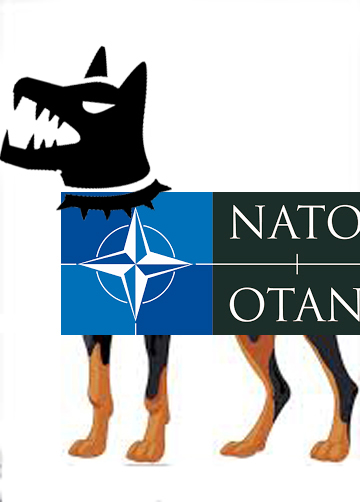
The entire rhetorical framework of Copenhagen rests on an unproven premise: that Russia is preparing to attack the Alliance. The evidence cited includes airspace violations, acts of sabotage, and intelligence reports suggesting an attack “in the coming years.” The Kremlin has denied such plans, and the denial alone proves nothing. But strategic logic does. Moscow has been engaged in Ukraine for over four and a half years; a direct attack against a NATO member would pit it against the arsenals of the United States, the United Kingdom, and France, with no gain commensurate with the risk. Anyone who thinks in terms of costs and benefits – in Moscow as well as in Brussels – understands that such a move is highly unlikely.
Why, then, insist on the imminence of the threat? One answer – one that is hard to dismiss – lies in the budgets. At the Hague summit in June 2025, the allies committed to raising defense spending to 5% of GDP by 2035. Such a goal can only be justified to voters if there is an enemy at the gates. Fear has become a budget line item.
Lorenzo Maria Pacini, September 24, 2026, https://strategic-culture.su/news/2026/09/24/four-thousand-pages-of-plans-none-for-peace-nato-insane-provocations-toward-war/
What does Europe gain from a war it can’t win? Nothing. 1914 is calling.
Everything is ready to explode
In Copenhagen, before the chiefs of staff of the 32 countries of the Atlantic Alliance, Admiral Giuseppe Cavo Dragone chose the words with which to address the European public. As chairman of NATO’s Military Committee since January 2025, he announced that the Alliance has “4,000 pages of plans” for its eastern flank, that these plans cover every scenario “from a minor crisis or an intervention on our territory to the invocation of Article 5 and subsequent actions,” and that “military personnel, systems, and weapons are ready.” Then came the closing remark: in the event of an attack, the Russians “have much more to lose than to gain. This is absolutely certain. And that is what constitutes deterrence.”
The admiral intended this to be a reassuring message. Read carefully, however, it is one of the most imprudent statements made by a European military leader since the end of the Cold War. It is worth breaking it down piece by piece.
The words spoken in Copenhagen did not fall on deaf ears. Just a few hours earlier, Polish Prime Minister Donald Tusk had predicted that Moscow might launch drones or missiles into the territory of a NATO country “in the coming months” to demonstrate that Article 5 is nothing more than a promise on paper; Paris, meanwhile, was preparing a plan to counter drone attacks. In such an atmosphere, the duty of a high-ranking military officer would be to calm tensions, distinguish between hypothesis and fact, and remind governments that war between nuclear powers is not a scenario to be planned but one to be prevented. The admiral did the opposite: he added fuel to the fire.
And this isn’t the first time. In December 2025, in an interview with the Financial Times, Cavo Dragone himself explained that the Alliance was considering becoming “more aggressive” against Russia’s hybrid warfare, that a “preemptive strike” could be considered a “defensive action,” and that being more aggressive than the opponent “might be an option.” Moscow, through Maria Zakharova, spoke of an irresponsible step toward escalation, coming while negotiations on Ukraine were underway. Ten months later, the tone hasn’t changed. It has only become more explicit: first the possibility of a preemptive strike, now the inventory of weapons at the ready.
Deterrence isn’t achieved through proclamations
The admiral calls all of this “deterrence.” But the theory of deterrence – the serious kind – says otherwise. Thomas Schelling explained that deterrence is an act of communication in which credibility matters as much as force, and that an effective threat always leaves the adversary a way out. In the security dilemma, what one side perceives as defense is interpreted by the other as preparation for offense. Four thousand pages detailing “follow-on actions” under Article 5 are, from Moscow’s perspective, war plans against Russia. No Kremlin analyst will interpret them any other way, and no one should be surprised by this.
There is also a question of role. The Chairman of the Military Committee is the chief military adviser to the Secretary General and the North Atlantic Council: he does not determine Alliance policy; he serves it. When an officer of this rank uses a public platform to issue warnings to a foreign power, he encroaches on a space that belongs to governments and parliaments – that is, to those who are accountable to the citizens. In a democracy, the decision to go to war does not rest with the generals. Or are we to understand that it is NATO, through “Cavo Dragone,” that is provoking the outbreak of war by calling for it with all its might?
And above all, there is the nuclear weapon. Since November 2024, Russian doctrine has regarded an attack by a non-nuclear state – carried out with the participation or support of a nuclear power – as a joint attack, and has lowered the threshold for the use of nuclear weapons. One may judge that doctrine as one wishes. It is impossible to ignore it. Anyone who speaks of “follow-up actions” under Article 5 against a country that has laid out these rules in black and white is, whether they like it or not, talking about nuclear war.
The entire rhetorical framework of Copenhagen rests on an unproven premise: that Russia is preparing to attack the Alliance. The evidence cited includes airspace violations, acts of sabotage, and intelligence reports suggesting an attack “in the coming years.” The Kremlin has denied such plans, and the denial alone proves nothing. But strategic logic does. Moscow has been engaged in Ukraine for over four and a half years; a direct attack against a NATO member would pit it against the arsenals of the United States, the United Kingdom, and France, with no gain commensurate with the risk. Anyone who thinks in terms of costs and benefits – in Moscow as well as in Brussels – understands that such a move is highly unlikely.
Why, then, insist on the imminence of the threat? One answer – one that is hard to dismiss – lies in the budgets. At the Hague summit in June 2025, the allies committed to raising defense spending to 5% of GDP by 2035. Such a goal can only be justified to voters if there is an enemy at the gates. Fear has become a budget line item.
No comments yet.
1 This Month





PLEASE OPPOSE HR 8255 AND S.3639 – bills would accelerate satellite deployment, with no environmental review or safeguards – https://ncstd5li.quorum.us/campaign/169331/
To see nuclear-related stories in greater depth and intensity – go to https://nuclearinformation.wordpress.com
-
Archives
- October 2026 (29)
- September 2026 (339)
- August 2026 (330)
- July 2026 (355)
- June 2026 (287)
- May 2026 (306)
- April 2026 (356)
- March 2026 (251)
- February 2026 (267)
- January 2026 (308)
- December 2025 (358)
- November 2025 (359)
-
Categories
- 1
- 1 NUCLEAR ISSUES
- business and costs
- climate change
- culture and arts
- ENERGY
- environment
- health
- history
- indigenous issues
- Legal
- marketing of nuclear
- media
- opposition to nuclear
- PERSONAL STORIES
- politics
- politics international
- Religion and ethics
- safety
- secrets,lies and civil liberties
- spinbuster
- technology
- Uranium
- wastes
- weapons and war
- Women
- 2 WORLD
- ACTION
- AFRICA
- Atrocities
- AUSTRALIA
- Christina's notes
- Christina's themes
- culture and arts
- Events
- Fuk 2022
- Fuk 2023
- Fukushima 2017
- Fukushima 2018
- fukushima 2019
- Fukushima 2020
- Fukushima 2021
- general
- global warming
- Humour (God we need it)
- Nuclear
- RARE EARTHS
- Reference
- resources – print
- Resources -audiovicual
- Weekly Newsletter
- World
- World Nuclear
- YouTube
-
RSS
Entries RSS
Comments RSS


Leave a comment