The Australian submarine agreement: Turning nuclear cooperation upside down
The Australian submarine agreement: Turning nuclear cooperation upside down, Bulletin By Ian J. Stewart | September 17, 2021 The UK and US have announced they will support Australia in development of a nuclear submarine fleet and will provide (conventionally armed) Tomahawk cruise missiles. This is one of those exceedingly rare and exceedingly significant announcements that come along only every decade or so. The announcement literally turns existing precedence and practice on their heads in order to extend traditionally northern hemisphere cooperation to Australia and bolster its role in countering an increasingly assertive China. While much is not yet known, some of the ramifications and implications of this development are discernable.
Before considering the announcement’s specific implications, it is worth reiterating how exceedingly rare and significant it is. Many in the nonproliferation and strategic studies field will draw a parallel between this announcement and the 2005 announcement that the United States would renew civil nuclear cooperation with India. The so-called AUKUS declaration, like the other, was made with the grand purpose of securing an additional strategic ally against the rising China. However, neatly associated with both is also an expectation that domestic industries will benefit from access to a new market.
…. In this announcement, the United States and UK are overturning decades of accepted practice to support the transfer of a strategic capability to another country. The decision is sure to irk China and accelerate the spiral towards a Cold War-style standoff, with renewed strategies of containment against the revisionist power. The initiative has also offended France, which had become closer to the UK and, to a lesser extent, the US on nuclear matters in the last decade or so.
……. The Australian breakup with France is clearly not a happy one, with the French Embassy tweeting its contempt for how the announcement was made. On Friday, France announced it was recalling its ambassadors to the United States and Australia, calling the US-Australia agreement “unacceptable behavior between allies and partners.”
A second implication is for the nonproliferation regime itself. Much like the announcement of the US-India deal, AUKUS is already dividing the international security community. Many nonproliferation practitioners call foul, on the basis that, on the face of it, the announcement appears to cut across several norms, agreed rules, and accepted practices. The cooperation may be used by non-nuclear weapons states as more ammunition in support of a narrative that the weapons states lack good faith in their commitments to disarmament……..
A third implication involves precedence. There has been constraint in terms of naval nuclear reactor exports for many decades. However, several countries have been working to acquire naval nuclear reactors. Brazil is perhaps the first country that comes to mind. It will be argued by many that AUKUS reaffirms Brazil’s legitimacy in pursuing nuclear-powered submarines.
………. the British government is almost certainly thinking about it as a means to bolster Rolls Royce. The United States by law and by practice is particularly protective of its reactor technology. As such, the prospect of an independently designed UK reactor being sold to Australia could check a number of boxes.
The agreement may have an additional casualty in UK/French nuclear cooperation. …….. https://thebulletin.org/2021/09/the-australian-submarine-agreement-turning-nuclear-cooperation-upside-down/
U.S. generals planning for a space war they see as all but inevitable
U.S. generals planning for a space war they see as all but inevitable, Space News, by Sandra Erwin — September 17, 2021 A ship in the Pacific Ocean carrying a high-power laser takes aim at a U.S. spy satellite, blinding its sensors and denying the United States critical eyes in the sky.
This is one scenario that military officials and civilian leaders fear could lead to escalation and wider conflict as rival nations like China and Russia step up development and deployments of anti-satellite weapons.
If a satellite came under attack, depending on the circumstances, “the appropriate measures can be taken,” said Lt. Gen. John Shaw, deputy commander of U.S. Space Command.
The space battlefield is not science fiction and anti-satellite weapons are going to be a reality in future armed conflicts, Shaw said at the recent 36th Space Symposium in Colorado Springs.
U.S. Space Command is responsible for military operations in the space domain, which starts at the Kármán line, some 100 kilometers (62 miles) above the Earth’s surface. This puts Space Command in charge of protecting U.S. satellites from attacks and figuring out how to respond if hostile acts do occur…………
A key reason why the space race is accelerating is that technology is advancing so rapidly, Smith said. A second reason is the absence of “binding commitments on what the operating norms are going to be in space,” she said. “And without that, we’re very likely to have a space war.”
The only foundation of international space law that currently exists, the 1967 Outer Space Treaty, is outdated and doesn’t address most space security issues that could set off a war, Smith noted.
The treaty bans the stationing of weapons of mass destruction in outer space, prohibits military activities on celestial bodies and contains legally binding rules governing the peaceful exploration and use of space. But a new set of rules is needed for the current space age, Smith said. “We really haven’t addressed some of the very difficult questions. Can a nation tailgate another nation’s satellite? Is preemptive self defense going to be permissible? Are we going to ban any form of weapons in space?”…….
France: questionable rush to start Flamanville nuclear reactor despite its defects
By a decree of August 30, 2021, EDF was authorized to operate the Flamanville EPR, under an extremely questionable consultation procedure. This is just one of the many administrative authorizations that the company
must still receive to commission the reactor, but this decision is nonetheless irresponsible. Even though the reactor is still affected by numerous defects, EDF continues its forced march to prepare for its start-up at all costs. We strongly denounce this irresponsible headlong rush.
Sortir du Nucleaire 9th Sept 2021
https://www.sortirdunucleaire.org/EPR-de-Flamanville-une-scandaleuse-autorisation-d
Generals Should Not Have to Break the Rules to Prevent Nuclear War
Generals Should Not Have to Break the Rules to Prevent Nuclear War, Rather than criticizing Milley, we need to change the policy that put him in an impossible spot. Defense News, BY TOM Z. COLLINA, POLICY DIRECTOR, PLOUGHSHARES FUND, SEPTEMBER 16, 2021
Just after the January 6 attack on the U.S. Capitol, Gen. Mark Milley faced an impossible choice: should he allow President Trump to retain sole authority to start nuclear war, or should he intervene to block such an order?
Convinced that Trump had suffered “serious mental decline in the aftermath of the election,” Gen. Milley decided to intervene, ordering his staff to come to him if they received a strike order from the president.
“No matter what you are told, you do the procedure. You do the process. And I’m part of that procedure,” Milley told the officers, according to Peril, a new book by journalist Bob Woodward and Robert Costa. “You never know what a president’s trigger point is.”But Gen. Milley—though chairman of the Joint Chiefs of Staff and the president’s chief military advisor—is not formally part of that procedure. As former Defense Secretary Bill Perry and I explore in our book The Button, policy established during the Cold War puts decisions about the use of nuclear weapons are solely in the hands of the civilian president, not Congress and above all not the military. All the president needs to do is call the Pentagon’s War Room—using the nuclear “football” or some other means—then identify himself and give the order to launch. The president may choose to consult with senior advisors such as Gen. Milley but is not required to.
If the Woodward-Costa report is accurate, therefore, Gen. Milley was breaking the rules and his actions were likely illegal and unconstitutional. (His spokesperson has said that the general “continues to act and advise within his authority in the lawful tradition of civilian control of the military and his oath to the Constitution.”) And his efforts might not have worked anyway, since his staff could still have chosen to honor the president’s orders over the general’s………
Even so, it was the right thing to do. Should Gen. Milley have let a clearly unstable president start nuclear war just to follow protocol? Of course not. .. https://www.defenseone.com/ideas/2021/09/generals-should-not-have-break-rules-prevent-nuclear-war/185398/
—
New Mexico backs Texas in opposing nuclear fuel storage
New Mexico backs Texas in opposing nuclear fuel storage, APN News, By SUSAN MONTOYA BRYAN, 17 Sept 21, ALBUQUERQUE, N.M. (AP) — Top New Mexico leaders say they’re open to “most anything” that would prevent spent nuclear fuel and other high-level waste from being stored indefinitely in the state, including legislation like a measure recently adopted by Texas to prevent the shipping and storage of such waste.
The renewed criticism this week of planned temporary storage facilities in West Texas and southeastern New Mexico came as federal regulators just granted a license for the proposed operation in Texas.
Interim Storage Partners LLC plans to build a facility in Andrews County that could take up to 5,000 metric tons of spent nuclear fuel rods from power plants and 231 million tons of other radioactive waste.
In New Mexico, Holtec International is awaiting approval of its license application for a facility that initially would store up to 8,680 metric tons of uranium. Future expansion could make room for as many as 10,000 canisters of spent fuel over six decades.
New Mexico Gov. Michelle Lujan Grisham, a Democrat, and other top officials already have submitted comments in opposition to the multibillion-dollar proposal on their side of the state line and to the Texas project. New Mexico also is suing the Nuclear Regulatory Commission, claiming it hasn’t done enough to vet Holtec’s plans.
Lujan Grisham’s office said it would be open to exploring legislation and to seeking funding that could boost efforts by New Mexico regulators to push back administratively……..
Texas Gov. Greg Abbott, a Republican, has a similar stance and tweeted this week that “’Texas will not become America’s nuclear waste dumping ground.”……..https://apnews.com/article/business-environment-and-nature-texas-new-mexico-5963107ed241ad5e1a07c8217e691117
Climate change is the overriding danger to UK’s Bradwell nuclear power plan
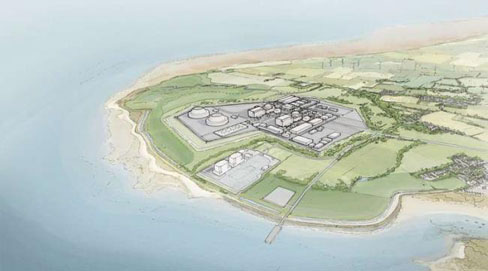
Bradwell & Sizewell**
THE chair of a group against the proposed Bradwell B site says climate change is the “overriding” issue facing the future of the nuclear power plant project. Prof Andrew Blowers, chairman of Blackwater Against New Nuclear Group (BANNG), has said new east coast nuclear power stations such as Bradwell B are likely to become victims of the “inevitable, imminent and irreversible consequences” of global warming. Speaking at a hearing
at the Sizewell C examination, Prof Blowers said climate change was the “transformative issue” of policy and should be at the heart of the discussion about building nuclear power stations on the east coast.
Maldon & Burnham Standard 16th Sept 2021
Maldon Nub News 16th Sept 2021
Clear vision needed for future of still-evacuated Fukushima areas

September 16, 2021
More than a decade after the Fukushima No. 1 nuclear power plant accident, there remains more than 30,000 hectares of land where the evacuation order is still in place and is not expected to be lifted any time soon.
The government recently announced a plan to rebuild ravaged communities in these areas near the crippled plant with high levels of radiation, known as “kitaku konnan kuiki” (difficult-to-return zone).
Under the plan, the government will decontaminate the land and houses of local residents who want to return to their homes so that the order can be lifted by the end of the 2020s.
Initially, the evacuation order covered more than 110,000 hectares. The measure was lifted for some 80,000 hectares by March last year.
In 2017 and 2018, the government thrashed out a plan to designate some 2,700 hectares of land in six municipalities within the zone as reconstruction priority areas eligible for preferential policy support to help improve the living environment. The plan requires the government to make intensive decontamination efforts in the areas and lift the evacuation order by the spring of 2023.
The local administrations involved asked the national government to make clear when the order will be lifted for the remaining areas in the difficult-to-return zone.
The latest plan unveiled by the government may represent a step forward as it offers a specific timeframe for lifting the measure, albeit for only those who wish to return to their homes. The blueprint has brought a ray of hope to local residents who have been facing a distressingly uncertain future outlook.
But the fact remains that the government has yet to offer a realistic road map to deliver on its promise to lift the evacuation order for the entire restricted zone sometime in the future, no matter how long it will take.
The government has pledged to tread carefully in this undertaking, holding multiple meetings with residents to ask about their desire to to return home as well as talks with local administrations on the range of areas to be decontaminated.
But it has yet to announce specifics about the decontamination, such as the areas to be covered or the method to be used.
The residents in these areas have been living as evacuees for more than 10 years. Many of them are likely to find it difficult to decide even if they want to return to where they once lived.
If the government proceeds with the latest plan, it needs to work out details of how it will tackle the challenge in a “careful” manner. The details should cover how the government will confirm the local residents’ wishes and ensure the level of decontamination that can reassure them of the safety of returning to their homes.
Moreover, the land and buildings that nobody wants to return to will not be covered by the plan to lift the order. This will remain a serious issue for the future.
The government has so far spent some 3 trillion yen ($27.45 billion) on decontaminating areas subject to the evacuation order. This effort has allowed some 14,000 residents, or 30 percent of the local population, to return home. It will cost taxpayers a huge additional amount of money to accelerate the cleanup work in the difficult-to-return zone, where nearly 22,000 people are still registered as residents.
The government says the necessary funds will be budgeted from the Fukushima reconstruction special account and other appropriate financing sources. But it admits the total amount of money required cannot be estimated since it depends on the number of local residents who want to return.
In other words, it has no clear and viable plan to raise the necessary funds.
The 2011 special law to deal with contamination by radioactive materials from the Fukushima plant stipulates that it is the government’s “obligation” to deal with radiation pollution caused by the accident.
The government has a duty to offer as soon as possible a clear future vision for tackling this formidable challenge, specifying when and how the evacuation order will be lifted and what kind of policy support will be provided to residents including those who choose not to return to the areas.
Pacific Forum Members Hold Third Briefing With Japan Regarding Fukushima Treated Nuclear Wastewater
Thursday, 16 September 2021, 6:01 am
Press Release: Pacific Islands Forum Secretariat
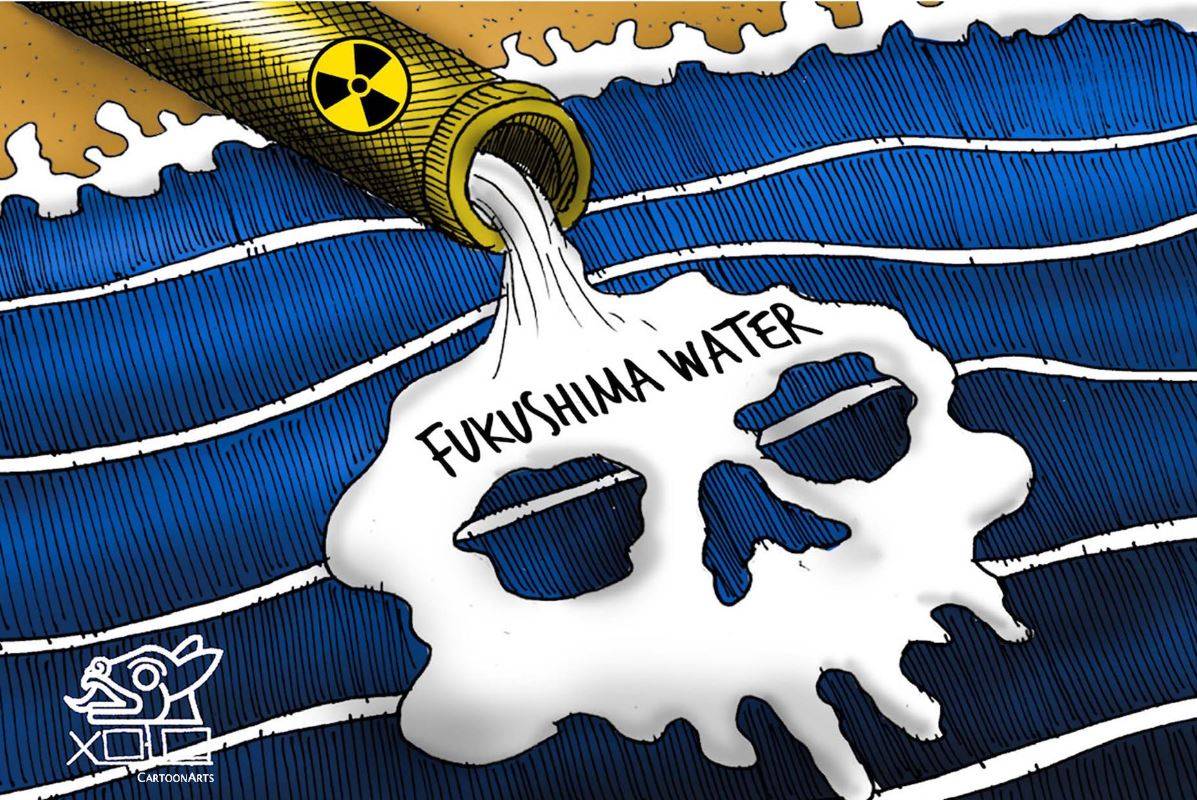
Wed 15th September 2021—Pacific nations continue to raise questions and concerns in closed briefing sessions around plans by Japan to discharge over a million tonnes of treated water from the Fukushima Daiichi Nuclear Power Plant into the Pacific Ocean.
The Government of Japan committed to ongoing dialogue with Forum Members as a priority follow up to the PALM9 Summit in July. This followed Japan’s announcement in April of plans to begin discharge in 2023, for a period of up to 40 years. The announcement drew strong global response, including from the Forum Chair and Leaders.
In his opening comments at the third briefing on Tuesday afternoon, Secretary General of the Pacific Islands Forum Henry Puna noted the issues require “open and frank consultation” along with sustained dialogue at the political and technical level.
Japan officials presented a status update on the ALPS (Advanced Liquid Processing System) Treated Water, interim measures regarding the planned discharge, and outcomes of the latest International Atomic Energy Agency (IAEA) visit to Fukushima.
While appreciative of the information being shared by Japan, Secretary General Puna reiterated the region’s unequivocal need for information as being key to safeguard the Blue Pacific as a nuclear-free zone. “I appeal to the Government of Japan to continue to share the relevant information in its totality, and within agreed timelines.”
“Importantly for us in the Blue Pacific, our fears really lie in the transboundary nature of the impacts. We require nothing less than full and complete disclosure of all information and evidence to enable us to fully understand the nature and extent of the impact, and to enable us to make a comprehensive and unbiased assessment of the impacts of the proposed ALPS water discharge.”
As reiterated by Forum Foreign Ministers on 27 July, the region is actively pursuing efforts to advance Forum Leaders’ commitments to international consultation, international law, and independent expertise to provide guidance and verifiable scientific assessments. To accelerate efforts, the Forum will engage independent experts to support the region’s efforts over the next months.
Thanking the Government of Japan, Secretary General Puna said he is hopeful there will be ways to address Pacific concerns to reach “solutions that are based on science, and consistent with legal and moral obligations.”
Nuclear power: Why molten salt reactors are problematic and Canada investing in them is a waste

Nuclear power: Why molten salt reactors are problematic and Canada investing in them is a waste https://theconversation.com/nuclear-power-why-molten-salt-reactors-are-problematic-and-canada-investing-in-them-is-a-waste-167019, MV Ramana, Simons Chair in Disarmament, Global and Human Security at the Liu Institute for Global Issues, University of British ColumbiaSeptember 15, 2021

Should an MSR be built, it will also saddle society with the challenge of dealing with the radioactive waste it will produce. This is especially difficult for MSRs because the waste is in chemical forms that are “not known to occur in nature” and it is unclear “which, if any, disposal environment could accommodate this high-level waste.” The Union of Concerned Scientists has also detailed the safety and security risks associated with MSR designs.
One of the beneficiaries of the run-up to a potential federal election has been the nuclear energy industry, specifically companies that are touting new nuclear reactor designs called small modular reactors. The largest two financial handouts have been to two companies, both developing a specific class of these reactors, called molten salt reactors (MSRs).
First, in October 2020, Canada’s minister of innovation, science and industry announced a $20-million grant to Ontario-based Terrestrial Energy and its integral molten salt reactor (IMSR) design. In March 2021, New Brunswick-based Moltex received $50.5 million from the Strategic Innovation Fund and Atlantic Canada Opportunities Agency.
As a physicist who has analyzed different nuclear reactor designs, including small modular reactors, I believe that molten salt reactors are unlikely to be successfully deployed anytime soon. MSRs face difficult technical problems, and cannot be counted on to produce electricity consistently.
How they work
Molten salt reactors use melted chemicals like lithium fluoride or magnesium chloride to remove the heat produced within the reactor. In many MSRs, the fuel is also dissolved in a molten salt.
These designs are very different from traditional reactor designs — currently, the Canada Deuterium Uranium (CANDU) design dominates Canada’s nuclear energy landscape. CANDU uses heavy water (water with deuterium, the heavier isotope of hydrogen) to transport heat, slow down or “moderate” neutrons produced during fission, and natural uranium fabricated into solid pellets as fuel. Slower neutrons are more effective in triggering fission reactions as compared to highly energetic, or fast, neutrons.
Terrestrial’s IMSR is fuelled by uranium which contains higher concentrations of uranium-235, a lighter isotope as compared to uranium found in nature (natural uranium), which is used in CANDU reactors. The enriched uranium is dissolved in a fluoride salt in the IMSR. The IMSR also uses graphite, instead of heavy water used in CANDU reactors, to moderate neutrons.
Moltex’s Stable Salt Reactor (SSR), on the other hand, uses a mixture of uranium and plutonium and other elements, dissolved in a chloride salt and placed inside a solid assembly, as fuel. It does not use any material to slow down neutrons.
Because of the different kinds of fuel used, these MSR designs need special facilities — not present in Canada currently — to fabricate their fuel. The enriched uranium for the IMSR must be produced using centrifuges, while the Moltex design proposes to use a special chemical process called pyroprocessing to produce the plutonium required to fuel it. Pyroprocessing is extremely costly and unreliable.
Both processes are intimately linked to the potential to make fissile materials used in nuclear weapons. Earlier this year, nine non-proliferation experts from the United States wrote to Prime Minister Justin Trudeau expressing serious concerns “about the technology Moltex proposes to use.”
Difficult questions
Experience with MSRs has not been very encouraging either. All current designs draw upon the only two MSRs ever built: the 1954 Aircraft Reactor Experiment that ran for just 100 hours and the Molten Salt Reactor Experiment that operated intermittently from 1965 to 1969. Over those four years, the latter reactor’s operations were interrupted 225 times; of these, only 58 were planned. The remaining were due to various unanticipated technical problems. In other words, the reactor had to be shut down at least once every four out of five weeks — that is not what one would expect of a reliable power plant.
Even the U.S. Atomic Energy Commission that had funded the U.S. MSR program for nearly two decades raised difficult questions about the technology in a devastating 1972 report. Many of the problems identified continue to be technical challenges confronting MSR designs.
Another basic problem with MSRs is that the materials used to manufacture the various reactor components will be exposed to hot salts that are chemically corrosive, while being bombarded by radioactive particles. So far, there is no material that can perform satisfactorily in such an environment. A 2018 review from the Idaho National Laboratory could only recommended that “a systematic development program be initiated” to develop new alloys that might work better. There is, of course, no guarantee that the program will be successful.
These problems and others have been identified by various research laboratories, ranging from France’s Institut de radioprotection et de sûreté nucléaire (IRSN) to the Nuclear Innovation and Research Office in the United Kingdom. Their conclusion: molten salt reactors are still far from proven.
As the IRSN put it in 2015: “numerous technological challenges remain to be overcome before the construction of an MSR can be considered,” going as far as saying that it does not envision construction of such reactors “during the first half of this century.”
Should an MSR be built, it will also saddle society with the challenge of dealing with the radioactive waste it will produce. This is especially difficult for MSRs because the waste is in chemical forms that are “not known to occur in nature” and it is unclear “which, if any, disposal environment could accommodate this high-level waste.” The Union of Concerned Scientists has also detailed the safety and security risks associated with MSR designs.
Problematic solutions
The Liberal government’s argument for investing in molten salt reactors is that nuclear power is necessary to mitigate climate change. There are good reasons to doubt this claim. But even if one were to ignore those reasons, the problems with MSRs laid out here show that they cannot be deployed for decades.
The climate crisis is far more urgent. Investing in technologies that are proven to be problematic is no way to deal with this emergency.
he Liberal government’s
Top U.S. general feared that Trump might start a nuclear war

Top general was so fearful Trump might spark war that he made secret calls to his Chinese counterpart, new book says. ‘Peril,’ by Bob Woodward and Robert Costa, reveals that Gen. Mark A. Milley called his Chinese counterpart before the election and after Jan. 6 in a bid to avert armed conflict. WP, By Isaac Stanley-Becker, 5 Sept 21,
Twice in the final months of the Trump administration, the country’s top military officer was so fearful that the president’s actions might spark a war with China that he moved urgently to avert armed conflict.
In a pair of secret phone calls, Gen. Mark A. Milley, the chairman of the Joint Chiefs of Staff, assured his Chinese counterpart, Gen. Li Zuocheng of the People’s Liberation Army, that the United States would not strike, according to a new book by Washington Post associate editor Bob Woodward and national political reporter Robert Costa.
One call took place on Oct. 30, 2020, four days before the election that unseated President Donald Trump, and the other on Jan. 8, 2021, two days after the Capitol siege carried out by his supporters in a quest to cancel the vote.
The first call was prompted by Milley’s review of intelligence suggesting the Chinese believed the United States was preparing to attack. That belief, the authors write, was based on tensions over military exercises in the South China Sea, and deepened by Trump’s belligerent rhetoric toward China.
“General Li, I want to assure you that the American government is stable and everything is going to be okay,” Milley told him. “We are not going to attack or conduct any kinetic operations against you.”
In the book’s account, Milley went so far as to pledge he would alert his counterpart in the event of a U.S. attack, stressing the rapport they’d established through a backchannel. “General Li, you and I have known each other for now five years. If we’re going to attack, I’m going to call you ahead of time. It’s not going to be a surprise.”
Li took the chairman at his word, the authors write in the book, “Peril,” which is set to be released next week.
In the second call, placed to address Chinese fears about the events of Jan. 6, Li wasn’t as easily assuaged, even after Milley promised him, “We are 100 percent steady. Everything’s fine. But democracy can be sloppy sometimes.”
Li remained rattled, and Milley, who did not relay the conversation to Trump, according to the book, understood why. The chairman, 62 at the time and chosen by Trump in 2018, believed the president had suffered a mental decline after the election, the authors write, a view he communicated to House Speaker Nancy Pelosi (D-Calif.) in a phone call on Jan. 8. He agreed with her evaluation that Trump was unstable, according to a call transcript obtained by the authors.
Believing that China could lash out if it felt at risk from an unpredictable and vengeful American president, Milley took action. The same day, he called the admiral overseeing the U.S. Indo-Pacific Command, the military unit responsible for Asia and the Pacific region, and recommended postponing the military exercises, according to the book. The admiral complied.
Milley also summoned senior officers to review the procedures for launching nuclear weapons, saying the president alone could give the order — but, crucially, that he, Milley, also had to be involved. Looking each in the eye, Milley asked the officers to affirm that they had understood, the authors write, in what he considered an “oath.”
The chairman knew that he was “pulling a Schlesinger,” the authors write, resorting to measures resembling the ones taken in August 1974 by James R. Schlesinger, the defense secretary at the time. Schlesinger told military officials to check with him and the chairman of the Joint Chiefs before carrying out orders from President Richard M. Nixon, who was facing impeachment at the time.
Though Milley went furthest in seeking to stave off a national security crisis, his alarm was shared throughout the highest ranks of the administration, the authors reveal. CIA Director Gina Haspel, for instance, reportedly told Milley, “We are on the way to a right-wing coup.”
The book’s revelations quickly made Milley a target of GOP ire.
Trump, speaking Tuesday evening on the conservative television network Newsmax, labeled the chairman’s reported actions “treason” and said, “I did not ever think of attacking China.”Florida Sen. Marco Rubio, the top Republican on the Senate Intelligence Committee, wrote a letter to President Biden urging him to dismiss the Joint Chiefs chairman, saying he had undermined the commander in chief and “contemplated a treasonous leak of classified information to the Chinese Communist Party in advance of a potential armed conflict …” A White House spokeswoman earlier Tuesday declined to comment on the book. Milley’s office did not respond to a request for comment…………
In discussions about Iran’s nuclear program, Trump declined to rule out striking the country, at times even displaying curiosity about the prospect, according to the book. Haspel was so alarmed after a meeting in November that she called Milley to say, “This is a highly dangerous situation. We are going to lash out for his ego?”
………………. with Jan. 6, Milley thought as he wrestled with the meaning of that day, telling senior staff: “What you might have seen was a precursor to something far worse down the road.” https://www.washingtonpost.com/politics/2021/09/14/peril-woodward-costa-trump-milley-china/
Tepco technicians ignored Fukushima filters leaking radioactive water.
Technicians at Japan’s wrecked Fukushima nuclear power plant have acknowledged neglecting to investigate the cause of faulty exhaust filters key to preventing radioactive pollution, after being forced to replace them twice. Representatives of the Tokyo Electric Power Company made the revelations Monday during a regular review of the Fukushima Daiichi plant at a meeting with Japanese regulatory authorities.
The plant suffered triple meltdowns following a massive earthquake and tsunami in 2011. “At the core of this problem is TEPCO´s attitude,” said a Nuclear RegulationAuthority commissioner, Nobuhiko Ban, at the meeting. TEPCO has been
repeatedly criticized for coverups and delayed disclosures of problems atthe plant. In February, it said two seismometers at one reactor remained broken since last year and failed to collect data during a powerful quake.
Company officials have said that 24 out of 25 filters attached to water treatment equipment had been found damaged last month, after an alarm went off as workers were moving sludge from the unit to a container, temporarilysuspending the water treatment. The operation partially resumed last weekafter filter replacement. The filters are designed to prevent particles from escaping into the air from a contaminated water treatment system – called Advanced Liquid Processing System, or ALPS – that removes selected radioactive isotopes in the water to below legally releasable limits.
Daily Mail 14th Sept 2021
New research shows drastic climate effects of even a ”limited” nuclear war

Climate Change from Nuclear War’s Smoke Could Threaten Global Food Supplies, Human Health, https://www.miragenews.com/climate-change-from-nuclear-wars-smoke-could-632826/ Rutgers University, 15 Sep 21,
Nuclear war would cause many immediate fatalities, but smoke from the resulting fires would also cause climate change lasting up to 15 years that threatens worldwide food production and human health, according to a study by researchers at Rutgers University, the National Center for Atmospheric Research and other institutions.
The study appears in the Journal of Geophysical Research – Atmospheres.
Scientists have long understood that nuclear weapons used on cities and industrial areas could initiate large-scale fires whose massive amounts of smoke injected into the stratosphere could cause global climate change, leading to the term “nuclear winter.”
But in the new study, researchers for the first time used a modern climate model, including aerosols and nitric oxide emissions, to simulate the effects on ozone chemistry and surface ultraviolet light caused by absorption of sunlight by smoke from regional and global nuclear wars.
This could lead to a loss of most of our protective ozone layer, taking a decade to recover and resulting in several years of extremely high ultraviolet light at the Earth’s surface and further endangering human health and food supplies.
“Although we suspected that ozone would be destroyed after nuclear war and that would result in enhanced ultraviolet light at the Earth’s surface, if there was too much smoke, it would block out the ultraviolet light,” said one of the study’s authors Alan Robock, a Distinguished Professor in the Department of Environmental Sciences at Rutgers University-New Brunswick. “Now, for the first time, we have calculated how this would work and quantified how it would depend on the amount of smoke.”
The study’s results showed that for a regional nuclear war between India and Pakistan that would generate five megatons of soot, the enhanced ultraviolet light would begin within a year. For a global war between the United States and Russia generating 150 megatons, it would only begin after about eight years. For intermediate amounts of smoke, the effects would fall between these extreme cases.
For a global nuclear war, heating in the stratosphere and other factors would cause a 15 year-long reduction in the ozone column, with a peak loss of 75 percent globally and 65 percent in the tropics. This is larger than predictions from the 1980s, which assumed large injections of nitrogen oxides but did not include the effects of smoke.
For a regional nuclear war, the global column ozone would be reduced by 25 percent with recovery taking 12 years. This is similar to previous simulations but with a faster recovery time due to a shorter lifetime for soot in the new simulations.
“The bottom line is that nuclear war would be even worse than we thought, and must be avoided,” Robock said. “For the future, in other work, we have calculated how agriculture would change based on the changes of temperature, rain and sunlight, but have not yet included the effects of ultraviolet light. In addition, the ultraviolet light would damage animals, including us, increasing cancer and cataracts.”
The study, which included Rutgers Research Associate Lili Xia, also included researchers from the University of Colorado, NASA Goddard Institute for Space Studies, Columbia University, Potsdam Institute for Climate Impact Research, and Autonomous University of Barcelona.
Australian Greens blast nuclear submarine deal
Floating Chernobyls: : Greens blast sub deal https://www.perthnow.com.au/politics/floating-chernobyls-greens-blast-sub-deal-c-3978289, Matt CoughlanAAP, September 16, 2021
The Greens have warned Australia acquiring nuclear-powered submarines will create “floating Chernobyls” in the heart of major cities.
The UK and US will give Australia access to top secret nuclear propulsion technology for a fleet of new submarines to be built in Adelaide through new security pact AUKUS.

Greens leader Adam Bandt believes the move increases the prospect of nuclear war in the region and puts Australia in the firing line.
“It’s a dangerous decision that will make Australia less safe by putting floating Chernobyls in the heart of our major cities,” he told the ABC on Thursday.
It’s a terrible decision. It’s one of the worst security decisions in decades.”
Mr Bandt said the Greens would fight the decision and urged Labor to do the same.
“The prime minister needs to explain what will happen if there’s an accident with a nuclear reactor now in the heart of one of our major cities?” he said.
“How many people in Brisbane, Adelaide or Perth, will die as a result of it? What is going to happen if there is a problem with one of the nuclear reactors?”
It is understood the submarines will not require a civilian nuclear capability but rather will have reactors and fuel which will last the life of the vessel.
Independent senator and former submariner Rex Patrick wants an urgent parliamentary inquiry to report before the next federal election.
Senator Patrick, who has been a vocal critic of the $90 billion French submarine deal that is now over, said scrutiny was crucial.
We have to be careful we don’t move from one massive procurement disaster into something else that hasn’t been thought through properly,” he said.
The government has sunk $2.4 billion on the French program and is negotiating on other compensation, which remains commercial in confidence.
Labor leader Anthony Albanese and three senior frontbenchers received a briefing ahead of the announcement on Thursday morning.
3 old white politicians do a deal for the nuclear lobby – selling U.S. nuclear submarines to Australia

Why Biden Is Taking The Rare Step Of Sharing Nuclear Submarine Tech With Australia, https://www.npr.org/2021/09/15/1037338887/why-biden-is-taking-the-rare-step-of-sharing-nuclear-submarine-tech-with-austral AYESHA RASCOE, 15 Sept 21,
In a rare step, President Biden is announcing Wednesday that the United States plans to share its nuclear-powered submarine technology with Australia.
The announcement comes as Biden tries to refocus U.S. national security and economic policy on the threat posed by China.
There has been only one other time that the United States has shared what a senior administration official described as “extremely sensitive” technology — more than 60 years ago, back in 1958, with Great Britain. The United Kingdom will be involved with the new trilateral security partnership, known as AUKUS.
The decision comes amid escalated tension in recent years over territorial disputes in the South China Sea — a major shipping lane with oil and natural gas resources — with China building military outposts on several small reclaimed islands. The U.S. and other regional partners have stepped up their military presence in the region, and the U.S. is in the process of reorienting its military posture toward the Indo-Pacific.
Ahead of the formal announcement from the White House, a senior U.S. administration official insisted to reporters that the new security cooperation with Australia was not directed specifically at China.
“I think one of the thingsthat the United States has done most effectively in the Indo-Pacific is to secure peace and stability and to be the ultimate guarantor of that rules-based order,” the senior official said. “Over the last several years there have been questions: Does the United States still have the stomach? Do we have the wit and wisdom that we want to continue to play that role? What President Biden is saying with this initiative is, ‘Count us in.’ “
It’s about nuclear propulsion, not nuclear weaponsThe three AUKUS countries will launch an 18-month effort to determine how best to share the nuclear submarine propulsion technology, which will allow the Australian navy’s submarines to travel faster and farther, with more stealth.
“Australia has no intention of pursuing nuclear weapons,” the official told reporters. The Biden administration is working to move past the 20-year war in Afghanistan and the chaotic U.S. exit from Kabul. Biden has put countering China at the center of his economic and national security efforts, describing it as the biggest challenge of this era.
Australia’s prime minister will visit next week
Biden is set to meet in person at the White House next week with the leaders of India, Japan and Australia — what’s known as the “Quad.”
He invited leaders of Japan and South Korea as the first two foreign leaders to visit the White House in person earlier this year. And his first foreign trip in June to the Group of Seven and NATO was also focused on the economic and security threats posed by China.
For only the second time since taking office, Biden spoke last week to Chinese President Xi Jinping. He did not discuss the new security partnership “in any specific terms,” the senior U.S. official said, but emphasized to Xi that the United States planned to play a strong role in the region.
Latest on America’s plutonium ”pits” costly fiasco
Stumbling plutonium pit project reveals DOE’s uphill climb of nuclear modernization, https://thehill.com/opinion/energy-environment/572477-stumbling-plutonium-pit-project-reveals-does-uphill-climb-of BY TOM CLEMENTS, — 09/15/21
The U.S. Department of Energy’s National Nuclear Security Administration (NNSA) is mounting a full-court press for the “modernization” of the nuclear weapons production complex, an effort packed with capital-intensive projects on which contractors thrive. A cornerstone of modernization, a new plant to make the plutonium “pits” for new nuclear weapons already faces problems. Yet, Congress and the Biden administration are moving ahead despite gathering storm clouds.
“Pits” are the hollow plutonium spheres that cause the initial nuclear explosion in all U.S. nuclear weapons. New pits would first go into the new W87-1 warhead for a new missile, the Ground Based Strategic Deterrent (GBSD), meant to replace the U.S.’s current ICBMs. Second in the queue is a submarine launched missile. Both weapons have their detractors, but pits could prove to be their ultimate stumbling block.
The new pit plant will be at DOE’s sprawling Savannah River Site (SRS) in South Carolina. Already SRS’s plans face massive cost increases and schedule delays, causing skepticism in Congress.
In 2020, NNSA presented an initial cost estimate of $4.6 billion for the SRS pit plant. By June of this year that cost estimate had more than doubled to a stunning $11 billion. Timelines continue to slip as well. NNSA has quietly admitted in its fiscal year 2022 budget request that the original 2030 operational date to produce 50 pits had slipped until between 2032 and 2035.
While more schedule setbacks loom, the NNSA has tried to save some time by cutting corners. The most obvious is the rushed manner in which they conducted a legally required environmental analysis of the project. In their haste, NNSA failed to analyze environmental justice concerns and impacts of pit production across the DOE complex. Of paramount concern, disposal of plutonium waste has not been reviewed. Public interest groups filed a lawsuit against DOE on June 29, demanding preparation of a required Programmatic Environmental Impact Statement. A response to the lawsuit is due on Sept. 27.
None of this should be surprising. SRS lacks pit production experience and has a record of problems. Perhaps that is why the NNSA is also having the Los Alamos National Lab in New Mexico to also produce pits. That lab has been assigned to ramp up its current pit production with a goal of producing 30 pits per year by 2026 ¾ a tall task for a facility plagued by plutonium-handling problems.
Rep. Adam Smith (D-Wash.), chairman of the House Armed Services Committee, knows all of this. He highlighted the agency’s chronic inability to carry out modernization projects earlier this year saying, “in nearly every instance, NNSA programs have seen massive cost increases, schedule delays, and cancellations of billion-dollar programs. This must end.”
On Aug. 31, when speaking about pit production in a Brookings Institution virtual event, Smith went further saying that “Savannah River sort of gives me an involuntary twitch after the whole MOX disaster. I don’t trust them.”
And what a disaster it was. MOX was a plutonium fuel plant at SRS that NNSA wasted $8 billion on before termination in 2018. Smith’s mistrust is well placed— his committee should investigate the failed construction of the MOX plant before handing the same facility billions more for a new project.
In the event at Brookings, Smith defended his lack of action on pits and the GBSD, saying that decisions about them are in a “tactical pause” until the cost of the SRS plutonium bomb plant is clearer and as we wait and see if President Biden will honor his pledge to reduce reliance on nuclear weapons, of which almost 4,000 are deployed or in active reserve.
Of course, Smith is incorrect as there is no pause in either the projects or the spending. If he wants a real pause, he must act. Without strong leadership and oversight, the programs could quickly develop the same inertia as MOX leaving us with another multi-billion fiasco with nothing to show for it.
He and his colleagues should fight to reduce fiscal year 2022 funding authorization in the National Defense Authorization Act for the SRS pit plant ($710 million), Los Alamos pit production ($1 billion) and the W87-1 warhead ($691 million for NNSA and $2.6 billion for the Department of Defense). He should review the reuse of 15,000 existing pits stored at DOE’s Pantex Plant in Texas. He should also demand a proper environmental review of pit production.
Waiting for Biden is an inadequate strategy. Action is needed now by Chairman Smith and Congress to increase our collective security by fulfilling their leadership responsibilities. Requiring a true pause on pit production would not only stop money from being wasted on this project but would act as a wake-up call that nuclear weapons projects don’t have a blank check from Congress.
Tom Clements is the director of Savannah River Site Watch a public interest organization in Columbia, South Carolina, which monitors U.S. Department of Energy management of weapon-usable materials, nuclear weapons production, and clean-up of high-level nuclear waste, with a focus on the Savannah River Site.
1 This Month
Tell Congress: Prevent Nuclear Catastrophe in Iran

Tell Congress: Prevent Nuclear Catastrophe in Iran

Read the Public Inquiry Report, the Commissioners’ report, Surrendering Australia: The AUKUS Deception is available to download for free at aukuspublicinquiry.com. Or just watch the replay of the National Press Club Luncheon.


Shut down the radiation-damaged Heysham nuclear reactors now
To see nuclear-related stories in greater depth and intensity – go to https://nuclearinformation.wordpress.com

Say No to NASA’s Reckless Nuclear Reactor on the Moon
Say No to NASA’s Reckless Nuclear Reactor on the Moon
-
Archives
- November 2026 (246)
- October 2026 (302)
- September 2026 (339)
- August 2026 (330)
- July 2026 (355)
- June 2026 (287)
- May 2026 (306)
- April 2026 (356)
- March 2026 (251)
- February 2026 (267)
- January 2026 (308)
- December 2025 (358)
-
Categories
- 1
- 1 NUCLEAR ISSUES
- business and costs
- climate change
- culture and arts
- ENERGY
- environment
- health
- history
- indigenous issues
- Legal
- marketing of nuclear
- media
- opposition to nuclear
- PERSONAL STORIES
- politics
- politics international
- Religion and ethics
- safety
- secrets,lies and civil liberties
- spinbuster
- technology
- Uranium
- wastes
- weapons and war
- Women
- 2 WORLD
- ACTION
- AFRICA
- Atrocities
- AUSTRALIA
- Christina's notes
- Christina's themes
- culture and arts
- Events
- Fuk 2022
- Fuk 2023
- Fukushima 2017
- Fukushima 2018
- fukushima 2019
- Fukushima 2020
- Fukushima 2021
- general
- global warming
- Humour (God we need it)
- Nuclear
- RARE EARTHS
- Reference
- resources – print
- Resources -audiovicual
- Weekly Newsletter
- World
- World Nuclear
- YouTube
-
RSS
Entries RSS
Comments RSS

