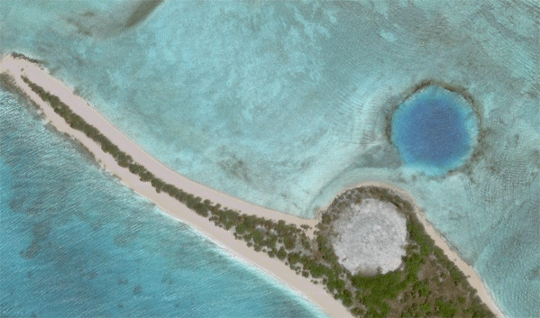
Temporary dome over radioactive trash on Runit Island – now leaking waste to the Pacific
|
Fears Grow That ‘Nuclear Coffin’ Is Leaking Waste Into The Pacific https://www.forbes.com/sites/trevornace/2019/05/27/fears-grow-that-nuclear-coffin-is-leaking-waste-into-the-pacific/#653322537073, Trevor Nace The tropical blue skies over the southern Pacific Ocean were enveloped by towering mushroom clouds lingering over the Marshall Islands in 1954 as the United States continued its testing of nuclear weapons. The United States conducted 67 nuclear weapon tests from 1946 to 1958 on the pristine Marshall Islands. The most powerful test was the “Bravo” hydrogen bomb in 1954, which was about 1,000 times more powerful than the bomb dropped on Hiroshima, Japan. The extensive nuclear bomb testing blanketed the islands in radioactive ash, covering it in the fine, white, powder-like substance. Children, unaware of what the radioactive ash was, played in the “snow” and ate it according to the Atomic Heritage Foundation. Today, there are growing concerns that the temporary containment of the nuclear waste resulting from those tests is leaking into the Pacific Ocean and could be cracked wide open from the next storm that rolls by. Specifically, the site is believed to be leaking one of the most toxic substances in the world, the radioactive isotope plutonium-239, a byproduct of nuclear bombs that decays with a half-life of 24,100 years. In 1977 the United States worked to clean up the radioactive waste left strewn across the Marshall Islands. In total, an estimated 73,000 cubic meters of radioactive soil was collected across the Marshall Islands. The US used a crater from an especially large nuclear bomb test on Runit Island to stash away the radioactive soil. The 328-foot crater from a May 1958 test was designated the dumping ground. As this was considered a temporary solution, the crater bottom was not lined with impervious material, which would have prevented radioactive waste from entering the below aquifers and Pacific Ocean. After the material was piled into the crater, an 18-inch thick concrete dome was positioned on top of it as a temporary containment. Plans for permanent radioactive waste storage were never finalized and thus the temporary solution has sat as-is for nearly 40 years. Shortly afterward, in 1983 the Marshall Islands agreed on their severity from the United States and with it, the islands released the United States of any responsibility for past nuclear testing. Rising sea level, soil shifting, and storms have all caused new concern over the integrity of the “nuclear coffin” and its ability to contain radioactive waste. The dome is reportedly cracking and the local government fears the next big storm may split the concrete dome apart. In addition, groundwater models suggest that seawater is almost certainly accessing the crater. However, it is unclear how much nuclear waste is seeping from the unlined crater bottom into the Pacific Ocean and groundwater aquifers. Despite recent awareness around the issue, the Marshallese government does not have the money or expertise to properly clean up and isolate the nuclear waste. Thus, the Marshallese are left helpless as their tropical islands continue to leak deadly radioactive waste across its coral reefs. Trevor Nace is a PhD geologist, founder of Science Trends, Forbes contributor, and explorer. Follow his journey @trevornace. |
|
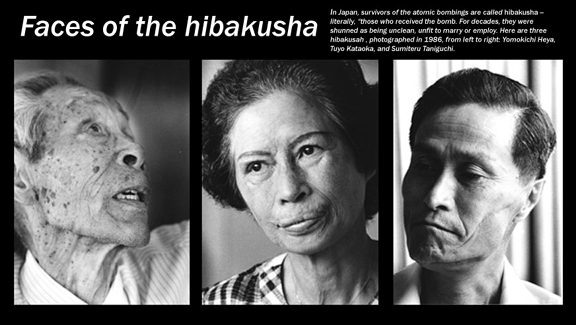
Hibakusha: Nagasaki activist, 79, looks to entrust nuclear movement to next generation
|
https://mainichi.jp/english/articles/20190522/p2a/00m/0na/013000c May 22, 2019 (Mainichi Japan) NAGASAKI — On May 9, there was a sit-in hibakusha gathering in front of the Peace Statue at Nagasaki Peace Park. The meeting takes place on the ninth of every month, marking the Aug. 9, 1945, U.S. atomic bombing of Nagasaki. This month’s congregation marked the 444th time for such an event. Koichi Kawano, 79, took to the microphone to speak about the stand-off between the United States and Iran. “This is a crisis,” he said to the around 100 people in attendance, continuing, “Our hearts are one when wishing for the abolition of nuclear weapons.” Born in North Pyongan Province on the Korean Peninsula, now part of North Korea, Kawano was brought back to his parents’ hometown Nagasaki as a child. Aged 5 in August 1945, he was around 3.1 kilometers away from the atomic bomb’s hypocenter. Now a resident of the nearby town of Nagayo, he has been an activist for the end of nuclear weaponry in roles including his long tenure as chairman of the Hibakusha Liaison Council of the Nagasaki Prefectural Peace Movement Center. “While enduring untold misery, we have won our rights with our own strength,” he says, looking back on the messages their hibakusha meetings have sent against the government’s constitutional amendment policies and security legislation designed to allow Japan to exercise the right to collective self-defense in a limited manner. “Perseverance is power” has been Kawano’s guiding motto in engaging in the movement’s activities, but this spring he faced a difficult reality. Masanori Nakashima, president of the Nagasaki Prefecture A-bomb Health Handbook Friendship Society, died aged 89 on March 15. The two men were allies in peace activism. Representatives of five local hibakusha groups, including Nakashima and Kawano, announced a joint statement on peace issues and handed a written request to the prime minister on Aug. 9. Of the five hibakusha group representatives who were alive in 2015 on the 70th anniversary of the bombing, three including Nagasaki Atomic Bomb Survivors Council chair Sumiteru Taniguchi have passed away. Taniguchi died in 2017 at 88 years of age. “Even with his limp, he dragged himself to that office to hear other hibakusha speak,” Kawano reminisced, while looking ahead to an uncertain future, saying, “What will happen to these groups after we die?” Kawano himself underwent surgery for esophageal cancer in 2017. Due to ill health he was forced to pull out of a survey of hibakusha in North Korea as a member of the Japan Congress Against A- and H-Bombs in fall 2018. Despite setbacks, his drive for peace remains unchanged. Kawano confronted Prime Minister Shinzo Abe over the Japanese government’s disinclination to sign and ratify the United Nations Treaty on the Prohibition of Nuclear Weapons in a face-to-face meeting in 2017, asking, “What country’s prime minister are you?” As time marches on from the events of August 1945, Kawano is putting his faith in the next generation. “The increasingly quiet voices of the hibakusha must not be drowned out,” he says. At the monthly sit-ins in Nagasaki Peace Park, the number of high school age attendees has increased. As he welcomes the last summer of his 70s, Kawano’s resolve remains strong. “Peace activism is powered by people. I want the movement to continue, to carry on the wish never to see another generation of hibakusha in this world.” (Japanese original by Yuki Imano, Nagasaki Bureau) |
New research into plutonium workers’ internal radiation exposure.
  Job-exposure matrix sheds light on plutonium workers’ radiation exposure https://physicsworld.com/a/job-exposure-matrix-sheds-light-on-plutonium-workers-radiation-exposure/ Job-exposure matrix sheds light on plutonium workers’ radiation exposure https://physicsworld.com/a/job-exposure-matrix-sheds-light-on-plutonium-workers-radiation-exposure/
Internal exposure to plutonium, which decays via alpha particle emission, is a recognised health hazard. But with little specific information available, potential risks from plutonium exposure have largely been assessed through knowledge of radiation exposure risks in general, much of which comes from external exposure to photon radiation such as gamma and X-rays. However, due to its high linear energy transfer rate, alpha particle radiation exhibits significantly enhanced biological effects at the cellular level, creating a specific need to investigate the associated exposure risks. To obtain more direct estimates of potential internal exposure risks, epidemiological studies of plutonium workers need to be conducted,” explains lead author Tony Riddell, from Public Health England’s Centre for Radiation, Chemical and Environmental Hazards. “These studies require individual plutonium exposure estimates that are as accurate and unbiased as possible.” The Sellafield workforce includes one of the world’s largest cohorts of plutonium workers. Through the support of the workforce, this group has been comprehensively monitored for internal exposure to plutonium, primarily through inhalation. However, for 630 workers employed there at the start of plutonium operations, from 1952 to 1963, the historical urinalysis results available do not provide sufficiently accurate and unbiased exposure assessments. These results were based on a threshold level of urinary plutonium excretion, which was suitable for operational protection purposes at the time, but tended to overestimate exposure, leading to underestimation of any risks if used in epidemiological analyses. “This means these early workers are excluded from epidemiological studies of exposure risks, which significantly reduces the power of these studies,” says Riddell. “Early workers are important for assessing potential exposure risks because they usually received some of the highest plutonium exposures and, due to the passage of time, health outcomes for these workers will now be largely known.” To solve this problem, Riddell and colleagues employed an approach called a job-exposure matrix (JEM). The JEM approach uses exposure data from other sources to estimate the average exposure that a typical worker (in the same work group) would have received in a given period. Substituting the missing data with these JEM estimates allowed the researchers to build a more reliable picture of the early workers’ radiation exposure. “To overcome the problem of missing or deficient exposure data, we used more reliable data from other relevant workers (‘exposure analogues’) along with statistical, mathematical and empirical analyses to estimate the average exposures for a typical worker at Windscale/Sellafield for all combinations of specific occupation and year required to build the JEM,” explains principal investigator Frank De Vocht from the University of Bristol. The authors note that the exposure analogues approach developed in this study provides a generic methodological advance that is potentially transferable to other internally exposed workers, and which may permit other epidemiological cohorts to include significant groups of workers who otherwise might have been excluded due to the lack of reliable exposure information. “It’s likely that replacing the missing or unreliable exposure data with JEM-derived values in future epidemiological studies could have considerable impact on the risk estimates which can be produced,” adds De Vocht. |
|
Illness and death legacy of employment in America’s nuclear weapons business
As US modernizes its nuclear weapons, NCR looks at the legacy of one Cold War-era plant, National Catholic Reporter, May 20, 2019 by Claire Schaeffer-Duffy
How the USA military co-opts nature conservation, and promotes the extinction of species

 ROELOFS MAY 17, 2019, “The Department of Defense’s ability to conduct realistic live-fire training, weapons system testing, and essential operations is vital to preparing a more lethal and resilient force for combat. . . . Starting in the late 1990s, the Department became increasingly concerned about “encroachment” pressures adversely affecting the military’s use of training and testing lands. Specifically, military installations saw two main threats to their ability to test, train, and operate: nearby incompatible land uses and environmental restrictions to protect imperiled species and their habitats.”
Nationwide, TNC is likely the conservation organization with the greatest amount of funding from the DoD. The TNC grants for Fort Benning alone included (but were not limited to) one for $11,115,000, and another for $55,517,470. Both were described as: “Assist State and local governments to mitigate or prevent incompatible civilian land use/activity that is likely to impair the continued operational utility of a Department of Defense (DoD) military installation.”
Washington State, very receptive to military activities, despite the Hanford nuclear disaster area, has several REPI projects. One of them, at Joint Base Lewis-McChord, on Puget Sound, is to eliminate the “threat” to live-fire exercises and other missions coming from imperiled species and incompatible development. The extensive area beyond its 91,000 acres became a designated “Sentinel Landscape,” a partnership headed by Departments of Agriculture, Defense, and Interior to “align resources” to protect military testing “while benefiting ALL partners and landowners.” ……
The Defense Department has several other programs designed to prevent interference with live ammunition, bombing ranges, and other military activities. One is the Legacy Resource Management Program, which seeks civilian partners to help protect endangered species and “to promote stewardship of our nation’s. . . cultural heritage.” Already “The Department of Defense manages thousands of National Register of Historic Places-listed properties. . .” Also working with REPI is the DoD’s Office of Economic Adjustment; its Joint Land Use Studies Program helps local communities to avoid interfering with military operations by their civilian activities.
The military has a poor reputation as regards the environment—we think about the Marshall Islands, the Hanford Nuclear Reservation, poisoned aquifers, toxic waste burns, underwater sonar, and much more. It has paid attention to the criticisms. It still engages in its former ways, including the world record of oil consumption and extensive toxic emissions, but now there is a soft cop.
Toxic wastes are produced (and not sequestered) at many US domestic bases; our military has granted us the bulk of superfund sites. As Joshua Frankhas stated:
Low level radiation exposure and increased risks of hypertension, cardiovascular disease and cerebrovascular disease
 Moderate dose of radiation increase risk of hypertension https://www.asianage.com/life/health/060519/moderate-dose-of-radiation-increase-risk-of-hypertension.html
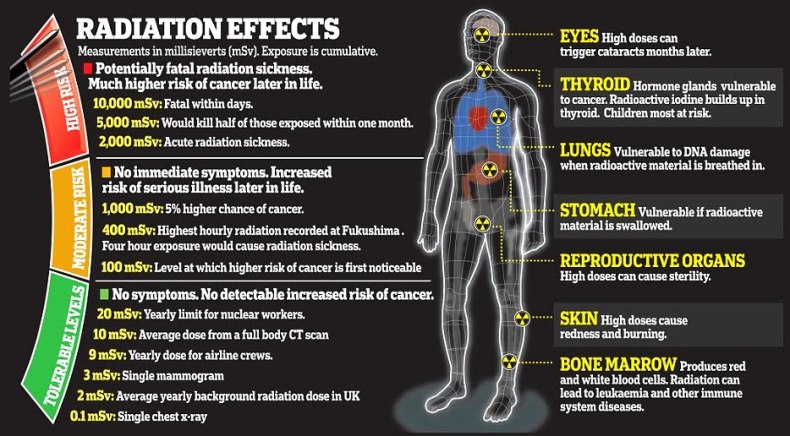
“It is necessary to inform the public that not only high doses of radiation but low to moderate doses also increase the risk of hypertension and other circulatory system diseases, which today contribute significantly to death and disability. As a result, all radiological protection principles and dose limits should be strictly followed for workers and the general public,” added Tamara Azizova, lead author of the study. Uncontrolled hypertension, also known as high blood pressure, can lead to heart attack, stroke, heart failure and other serious health problems. Earlier studies linked exposure to high doses of radiation to increased risk of cardiovascular diseases and death from those diseases.
This study is the first to find an increased risk of hypertension to low doses of ionizing radiation among a large group of workers who were chronically exposed over many years.
The study included more than 22,000 workers. The workers were hired between 1948 and 1982, with an average length of time on the job of 18 years. Half had worked there for more than 10 years. All of the workers had comprehensive health check-ups and screening tests at least once a year with advanced evaluations every five years.
The researchers evaluated the workers’ health records up to 2013. More than 8,400 workers (38 per cent of the group) were diagnosed with hypertension, as defined in this study as a systolic blood pressure reading of 140 mm Hg, and a diastolic reading 90 mm Hg. Hypertension incidence was found to be significantly associated with the cumulative dose.
To put it in perspective, the hypertension incidence among the workers in the study was higher than that among Japanese survivors of the atomic bomb at the end of World War II but lower than the risk estimated for clean-up workers following the Chernobyl nuclear accident.
The differences may be explained by variations in exposure among the three groups, according to the researchers.
Following the atomic bombing, the Japanese experienced a single, high-dose exposure of radiation, the Chernobyl workers were exposed to radiation for a short time period (days and months), while the Russian workers were chronically exposed to low doses of radiation over many years.
While the development of cancer is commonly associated with radiation exposure, “We believe that an estimate of the detrimental health consequences of radiation exposure should also include non-cancer health outcomes. We now have evidence suggesting that radiation exposure may also lead to increased risks of hypertension, cardiovascular disease and cerebrovascular disease, as well,” said Azizova.
Listing the companies that make nuclear weapons
|
These 28 companies are building nuclear weapons http://www.icanw.org/action/these-28-companies-are-building-nuclear-weapons/?mc_cid=435c8bc6ec&mc_eid=e79c019cc0, May 2, 2019
ICAN and its partner organisation Pax have released a report with full profiles of 28 companies connected to the production of nuclear weapons.
Here are the 28 companies on ICAN’s Red Flag list. Download the full report here.
|
|

High blood pressure risk from prolonged exposure to low-dose ionising radiation
 Prolonged exposure to low-dose radiation may increase the risk of hypertension, a known cause of heart disease and stroke https://www.sciencedaily.com/releases/2019/05/190503080554.htm
- Date:
- May 3, 2019
- Source:
- American Heart Association
- Summary:
- A long-term study of Russian nuclear plant workers suggests that prolonged low-dose radiation exposure increases the risk of hypertension. This study is the first to associate an increased risk of hypertension to low doses of ionizing radiation among a large group of workers who were chronically exposed over many years. The higher the cumulative dose of radiation, the greater the risk, the study showed.
-
Prolonged exposure to low doses of ionizing radiation increased the risk of hypertension, according to a study of workers at a nuclear plant in Russia published in the American Heart Association’s journal Hypertension.
Uncontrolled hypertension, also known as high blood pressure, can to lead to heart attack, stroke, heart failure and other serious health problems.
Earlier studies linked exposure to high doses of radiation to increased risk of cardiovascular diseases and death from those diseases. This study is the first to find an increased risk of hypertension to low doses of ionizing radiation among a large group of workers who were chronically exposed over many years.
The study included more than 22,000 workers at the first large-scale nuclear enterprise in Russia known as the Mayak Production Association. The workers were hired between 1948 and 1982, with an average length of time on the job of 18 years. Half had worked there for more than 10 years. All of the workers had comprehensive health check-ups and screening tests at least once a year with advanced evaluations every five years.
The researchers evaluated the workers’ health records up to 2013. More than 8,400 workers (38 percent of the group) were diagnosed with hypertension, as defined in this study as a systolic blood pressure reading of ?140 mm Hg, and a diastolic reading ? 90 mm Hg. Hypertension incidence was found to be significantly associated with the cumulative dose.
- To put it in perspective, the hypertension incidence among the workers in the study was higher than that among Japanese survivors of the atomic bomb at the end of World War II, but lower than the risk estimated for clean-up workers following the Chernobyl nuclear accident.
The differences may be explained by variations in exposure among the three groups, according to the researchers. Following the atomic bombing, the Japanese experienced a single, high-dose exposure of radiation, the Chernobyl workers were exposed to radiation for a short time period (days and months), while the Mayak workers were chronically exposed to low doses of radiation over many years.
While the development of cancer is commonly associated with radiation exposure, “we believe that an estimate of the detrimental health consequences of radiation exposure should also include non-cancer health outcomes. We now have evidence suggesting that radiation exposure may also lead to increased risks of hypertension, cardiovascular disease and cerebrovascular disease, as well,” said Tamara Azizova, M.D., lead author of the study at the Southern Urals Biophysics Institute in Russia.
-
Azizova pointed out that in recent years, the number of people exposed to radiation in everyday life, such as during diagnostic procedures, has increased. “It is necessary to inform the public that not only high doses of radiation, but low to moderate doses also increase the risk of hypertension and other circulatory system diseases, which today contribute significantly to death and disability. As a result, all radiological protection principles and dose limits should be strictly followed for workers and the general public.”
How radiation exposure may increase the risk of hypertension is still a question, according to Azizova. “So far, the mechanisms remain unclear, not only for certain cohorts but also for the general population. One of the main tasks for the coming decade is to study the mechanisms of hypertension and heart and brain atherosclerosis occurring in people who are — and who were exposed — to radiation.”
The authors note that their study is a retrospective one, and while many health conditions and behaviors were documented in the medical records of the workers (such as age, smoking, alcohol consumption and body mass index), other factors, such as stress and nutrition, were unavailable for researchers to be taken into account in this study.
Story Source:
Materials provided by American Heart Association.
- Journal Reference:
- Tamara Azizova, Ksenia Briks, Maria Bannikova, Evgeniya Grigoryeva. Hypertension Incidence Risk in a Cohort of Russian Workers Exposed to Radiation at the Mayak Production Association Over Prolonged Periods. Hypertension, 2019; DOI: 10.1161/HYPERTENSIONAHA.118.11719
There is no such thing as a zero or near-zero-emission nuclear power plant”
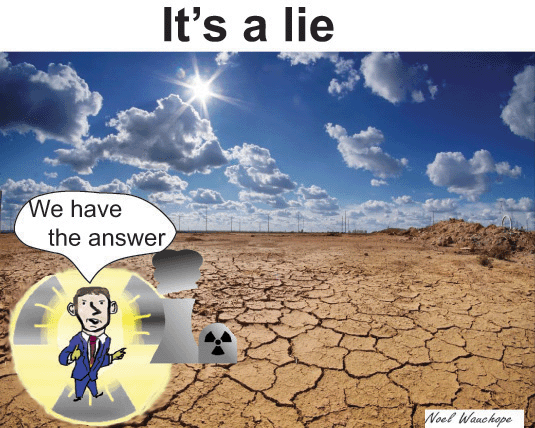
In the study Jacobson – who is also director of the Californian university’s Atmosphere/Energy program – highlights the risk of overestimating nuclear’s ability to reduce global warming and air pollution, as well as its claims about ensuring energy security.
The professor said construction times for new nuclear plants range from 10 to 19 years. “An examination of some recent nuclear plant developments confirms that this range is not only reasonable but an underestimate in at least one case,” he wrote. The paper cites the Olkiluoto 3 reactor in Finland, the Hinkley Point nuclear plan in the UK and Vogtle 3 and 4 reactors in Georgia, among others, as examples of projects for which planning began in the past decade and whose entry into commercial operation is still far from complete.
With new nuclear projects taking so long – and utility scale solar or wind schemes requiring 2-5 years to begin commercial operations – nuclear effectively emits a hundred years’ worth of 64-102g of CO²per kilowatt-hour of plant capacity just from grid emissions during the wait for projects to come online or be refurbished, compared to wind or solar farms.
Jacobson added, a further 2-4 years of plant downtime will have to be factored in to take account of the refurbishment required to ensure nuclear facilities run for their expected 40-year lifetime. “Overall, emissions from new nuclear are 78-178g [of] CO²/kWh, not close to zero,” he wrote. “Even existing plants emit, due to the continuous mining and refining of uranium needed for the plant.”
The professor also highlighted the well-known risks associated with nuclear power such as weapons proliferation, reactor meltdown, radioactive waste, mining-related cancers and land despoilment.
China and its nuclear plans
According to Jacobson, the lengthy delays to realizing China’s nuclear plant investment have effectively been responsible for a 1.3% rise in carbon emissions in the nation between 2016 and 2017, rather than the 3.4% fall claimed by the authorities.
According to the Stanford paper, the capital cost of new nuclear ranges from $6,500-12,250/kW, whereas a new wind turbine ranges from $1,150-1,550/kW. “Dividing the high (and low) capital cost of nuclear per kW by the low (and high) capital cost of wind per kW and multiplying the result by 14 GW gives a range of 58.7-149 GW nameplate capacity of wind that could have been installed and running prior to 2017,” the report stated.
Despite the big difference in costs, China’s National Development and Reform Commission set new guaranteed minimum on-grid electricity tariffs for third-generation nuclear power stations this month. According to Reuters, the Taishan project in Guangdong province was set at RMB0.435 ($0.0649) per kWh, while prices for the Sanmen project in Zhejiang province and the Haiyang plant in Shandong province were set at RMB0.4203 and RMB0.4151 per kWh, respectively.
In a statement provided to pv magazine at the time, Mycle Schneider – a French consultant specializing in nuclear energy – said the new fixed tariffs are in the same range as previous nuclear subsidies. “That is rather surprising as these units were significantly more expensive than the previous reactors and they are years behind schedule and massively over budget,” he said. “[It is] hard to believe that they will be making any money. 435 Yuan [RMB] per megawatt-hour – around 65 U.S. dollars or 58 euro – is about half of the strike price agreed for Hinkley Point C.”
Schneider added PV and wind costs have come down so much China is investing much more in renewables than nuclear. “The bottom line is that it is likely that China will restart nuclear building at some point – the last commercial unit started building in December 2016 – but that the pace will be significantly lower than anticipated, leaving the biggest chunk of new electricity generating capacity to renewables, just like anywhere else but on a bigger scale,” he added. As of July 1, China had 41 operating reactors with a total net capacity of 38 GW.
In the 2018 edition of the Nuclear Industry Status Report, Schneider revealed nuclear power capacity grew globally by only 1% in 2017 while solar and wind capacity rose 35% and 17%, respectively. The report also recognized solar and wind were the cheapest grid-connected sources of energy. Investments in new nuclear plants, on the other hand, were driven by public support and by nuclear weapon states, according to the paper.
Nuclear weapons accidents and losses 1950s – 2000s
 “Broken Arrows” – The World’s Lost Nuclear Weapons https://
 interestingengineering.com/broken-arrows-the-worlds-lost-nuclear-weapons
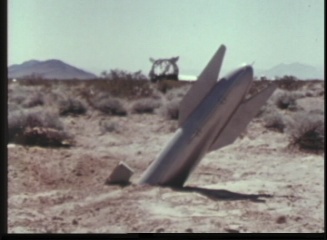
Since the early 1950s, the United States and Russia have had numerous accidents with their nuclear bombs, and a number have even gone missing. By Marcia Wendorf, April, 06th 2019 “Broken Arrow” is the name given to nuclear weapon accidents, whether they be by accidental launching, firing, detonating, theft or loss of the weapon. The U.S. admits to having 32 broken arrows worldwide, with six nuclear weapons having been lost and never recovered.
Thermonuclear weapons (hydrogen bombs) utilize a different process, that of fusion. When exposed to extremely high temperatures and pressures, some lightweight nuclei can fuse together to form heavier nuclei, releasing energy in the process. Those high temperatures and pressures are achieved by fission, so the trigger for a thermonuclear weapon is a nuclear weapon.
The 1950s
On April 11, 1950, a B-29 bomber carrying a nuclear weapon, four spare detonators, and a crew of 13 crashed into a mountain near Albuquerque, New Mexico. The bomb’s high explosives detonated and the nuclear capsule was damaged but it was recovered. All thirteen crew members onboard the aircraft died.
On August 5, 1950 at Fairfield-Suisun AFB, California, a B-29 bomber carrying a Mark 4 nuclear bomb experienced problems with two of its propellers and crashed while attempting an emergency landing. In the ensuing fire, the bomb’s high explosives detonated and killed 19 crew members and rescue personnel.
On November 10, 1950, near Riviere-du-Loup, Quebec, Canada, which is about 300 miles northeast of Montreal, a U.S. B-50 aircraft jettisoned a Mark 4 nuclear bombover the St. Lawrence River. The weapon’s high explosive detonated on impact, but the core was lacking a necessary component and did not detonate. The explosion did scatter almost 100 pounds (45 kg) of uranium. The airplane went on to land safely.
On July 27, 1956, a U.S. B-47 bomber was on a training exercise when it crashed into a nuclear weapons storage facility at the Lakenheath Air Base in Suffolk, England. The entire crew of the aircraft was killed. Known as an “igloo”, the storage facility contained three Mark 6 nuclear bombs, one of whose detonators had been sheared off in the accident. Investigators concluded that it was a miracle that the bomb hadn’t exploded.
On May 22, 1957, a plane was transporting a nuclear bomb to Kirtland Air Force Base when suddenly, the bomb fell through the bomb bay doors and crashed into a field near Albuquerque, New Mexico. The bomb’s high explosives detonated, creating a crater 12 feet deep and 25 feet wide, however, the nuclear capsule was found intact. The only casualty was a cow who had been grazing close to the crash site.
On July 28, 1957, a U.S. Air Force C-124 aircraft from Dover Air Force Base, Delaware was carrying three nuclear bombs over the Atlantic Ocean. The plane experienced a loss of power, and the crew jettisoned two nuclear bombs into the ocean, and they have never been recovered.
On February 5, 1958, near Savannah, Georgia, during a practice exercise, an F-86 fighter plane collided with a B-47 bomber that was carrying a 7,600-pound (3,400 kg) Mark 15 nuclear bomb. The F-86 crashed after the pilot ejected from the plane. The crew of the B-47 requested permission to jettison the bomb in order to reduce weight and prevent the bomb from exploding during an emergency landing. The bomb was jettisoned at 7,200 feet (2,200 m) over the Wassaw Sound off the shores of Tybee Island. Subsequent searches failed to locate the weapon.
On March 11, 1958, a U.S. Air Force Boeing B-47E-LM Stratojet took off from Savannah, Georgia, and was scheduled to fly to the U.K. The aircraft was carrying nuclear weapons in case a war with the Soviet Union broke out. Captain Earl Koehler noticed a fault light in the cockpit, indicating that the bomb harness locking pin had not engaged. He sent Captain Bruce Kulka to the bomb bay area to fix the problem.
As Kulka reached around the bomb to pull himself up, he mistakenly grabbed the emergency release pin, and the Mark 6 bomb dropped onto the bomb bay doors. The bomb’s weight forced the doors open, and the bomb dropped 15,000 ft (4,600 m) to the ground. Two sisters, six-year-old Helen and nine-year-old Frances Gregg, along with their nine-year-old cousin Ella Davies, were playing 200 yards (180 m) from a playhouse their father had built for them.
The bomb struck the playhouse, its high explosives detonated and it created a crater 70 feet (21 m) wide and 35 feet (11 m) deep. Fortunately, the fissile nuclear core had been stored elsewhere on the plane. All three children were hurt, as were their father, mother and brother. The family sued the Air Force and received US $54,000. Today, the crater is still visible although overgrown by vegetation.
At a U.S. air base at Greenham Common, England on February 28, 1958, a B-47 carrying a nuclear weapon caught fire and completely burned. While the weapon didn’t explode, in 1960, a group of scientists found high levels of radioactive contamination at the base. The U.S. government has disclosed no further information about the incident.
On November 4, 1958, at Dyess Air Force Base in Texas, a plane carrying a nuclear weapon burst into flames during takeoff. The weapon’s high explosives detonated, killing a crewman, but the nuclear core remained intact. Only half a mile from the crash site was Butterfield Elementary School.
On November 26, 1958, at Chennault Air Force Base, Louisiana, a B-47 carrying one nuclear weapon caught fire while on the ground. This fire damaged the nuclear capsule and its protective case, and there was nuclear contamination of the area.
In Hardinsberg, Kentucky, on October 15, 1959, a B-52 carrying two nuclear weapons and a KC-135 refueling plane collided midair. Both planes and both bombs fell to the ground. The crash killed four crew members, and the two nuclear weapons were only slightly damaged. No radiation leakage was detected.
The 1960s
On January 24, 1961, a B-52 carrying two three- or four-megaton nuclear bombs was over Goldsboro, North Carolina when it suffered the structural failure of its right wing. The aircraft broke apart and the two nuclear weapons were released. On one bomb, three of its four arming mechanisms had activated.
In 2013, a Freedom of Information Act request confirmed that only a single switch out of four had prevented the bomb’s detonation. One of the recovery team recalled, “Until my death, I will never forget hearing my sergeant say, ‘Lieutenant, we found the arm/safe switch.’ And I said, ‘Great.’ He said, ‘Not great. It’s on arm.'”
The second bomb plunged into a muddy field, and its tail was discovered 20 feet below ground. A decision was made to leave the uranium and plutonium in place, and The United States Army Corps of Engineers purchased a 400-foot (120 m) circular easement over the buried components. Had either of the bombs gone off, everyone within an 8.5 mile (13.7km) radius would have been killed.
On March 14, 1961 a B-52F-70-BW Stratofortress bomber carrying four nuclear weapons experienced a problem with its cabin temperature. After temperatures climbed to between 125 degrees F and 160 degrees, the crew descended to 12,000 feet and depressurized the plane. After all four engines flamed out, the pilot put the plane into a dive and all crew members bailed out.
The plane crashed into a barley field near Yuba City, California, and the nuclear weapons were released. The weapons’ multiple safety measures protected against a nuclear explosion or release of radioactive material. A fireman was killed and several others were injured while rushing to the accident scene.
On July 4, 1961, a K-19 “Hotel”-class Soviet nuclear-powered ballistic missile submarine was off the coast of Norway. The cooling system of one of its two nuclear reactors failed, and the temperature of the nuclear core climbed to 800 degrees Celsius, threatening to melt down its fuel rods. The crew and the submarine itself were contaminated by radiation and several fatalities were reported.
On October 25, 1962, at the Duluth Sector Direction Center near Duluth, Minnesota, an intruder was shot while scaling a fence around the facility. This triggered a “sabotage alarm”, which triggered a warning at Volk Field in Wisconsin. This alarm triggered nuclear armed F-106A interceptor aircraft to be sent to the source of the original alarm – Duluth.
Because of the Cuban Missile Crisis, the U.S. was at DEFCON 3, and there were no practice drills, everything was the real deal. When Duluth communicated that nothing was seriously wrong, the planes were only stopped by a car that raced down the runway after them. The intruder turned out to have been a black bear.
On January 13, 1964, a U.S. B-52 carrying two nuclear bombs suffered severe turbulence, and its vertical stabilizer broke off. The crew bailed out and the plane crashed near Savage Mountain outside Barton, Maryland. The bombs were found “relatively intact in the middle of the wreckage”. Three crewmen were killed as a result of the accident.
On December 8, 1964, at Bunker Hill Air Force Base, Indiana, several Strategic Air Command (SAC) aircraft were taxiing down a runway. The jet blast from one aircraft caused the plane behind it to slide off the runway and catch fire. The five nuclear weapons onboard the plane burned, but radioactive contamination was limited to the immediate area of the crash and was subsequently removed.
On December 5, 1965, an A-4E Skyhawk attack aircraft carrying a 1-megaton thermonuclear weapon, rolled off the deck of the U.S.S. Ticonderoga and fell into the Pacific Ocean. The plane, its pilot, Douglas Webster, and the weapon sank in 16,000 feet of water and were never found. It wasn’t until 15 years later that the U.S. Navy finally admitted that the accident had taken place only 80 miles from Japan’s Ryuku island chain, and this caused an uproar in Japan, which prohibits nuclear weapons from being brought into its territory.
Sometime during the mid-1960s, in the Kara Sea, the Soviet nuclear-powered icebreaker Lenin encountered problems with its nuclear reactors, possibly experiencing a meltdown. It was forced to dump the reactors into the sea and they have never been found.
The most well-known broken arrow occurred on January 17, 1966 near Palomares, Spain. A U.S. B-52 aircraft, carrying four nuclear weapons, collided with its refueling tanker, a KC-135, at 31,000 feet (9,450 m) and crashed over the Mediterranean Sea. Of the four Mk28-type hydrogen bombs, three were found on land near the fishing village of Palomares. The high explosives in two of the bombs had detonated and released plutonium contamination across a 0.77-square-mile (2 km2) area. The fourth bomb, was recovered intact after a 2 ½ month-long search. During the U.S. cleanup effort, over 1,400 tons of soil were sent to a nuclear storage site.
On January 21, 1968, a fire erupted onboard a B-52 bomber operating out of Thule Air Base in the Danish territory of Greenland. The plane was carrying four B28FI thermonuclear bombs, and it crashed onto the sea ice in North Star Bay. The conventional explosives detonated and the nuclear capsules ruptured and dispersed their contents, resulting in radioactive contamination.
The U.S. and Denmark launched a clean-up operation, but the secondary stage of one of the nuclear weapons was never found. Workers involved in the clean-up operation have been experiencing radiation-related illnesses, and they have sought compensation.
On April 11, 1968, a Soviet diesel-powered “Golf”-class ballistic missile submarine sank 750 miles northwest of the Hawaiian island of Oahu. U.S. intelligence determined that the submarine had been carrying three nuclear-armed ballistic missiles and several nuclear-tipped torpedoes. The U.S. Central Intelligence Agency (CIA), partnered with industrialist Howard Hughes to build a specially-designed deep-water salvage ship, the “Glomar Explorer” to recover the lost sub. They were only partly successful when the Glomar raised approximately half of the submarine.
Also during the Spring of 1968, the U.S.S. Scorpion, a nuclear attack submarine, mysteriously sank about 400 miles southwest of the Azores islands. Besides the tragic loss of all 99 crew members, the Scorpion was carrying two nuclear-tipped weapons with yields of up to 250 kilotons.
The 1970s
On April 12, 1970, in the Atlantic Ocean about 300 miles northwest of Spain, a Soviet “November”-class nuclear-powered attack submarine experienced a problem with its nuclear propulsion system. A merchant ship attached a tow line and attempted to pull the submarine to safety, but the submarine sank, killing all 52 crew members on board.
Off the coast of Sicily, Italy on November 22, 1975, twelve years to the day of his assassination, the U.S. aircraft carrier John F. Kennedy collided with the cruiser USS Belknap during an exercise. The collision occurred at night and during high seas. One, or possibly both ships, contained nuclear weapons, but no nuclear contamination was detected by rescue personnel.
The 1980s
On September 19, 1980, near Damascus, Arkansas, crewman were performing maintenance on a Titan II Inter-continental Ballistic Missile (ICBM). A crewman accidentally dropped a wrench into the silo, and it punctured the missile’s fuel tank. The missile leaked fuel for over eight hours before finally exploding, killing one and injuring 21 others. The blast destroyed the entire compound, but the nuclear warhead was recovered intact.
On October 3, 1986, 480 miles east of Bermuda, a Soviet “Yankee I”-class nuclear-powered ballistic missile submarine suffered an explosion and fire in one of its missile tubes. An attempt was made to tow the submarine, but it sank on October 6, 1986 in 18,000 feet of water, taking its two nuclear reactors and approximately 34 nuclear weapons down to the bottom of the sea.
About 300 miles north of the Norwegian coast on April 7, 1989, a Soviet nuclear-powered attack submarine, the “Komsomolets”, caught fire and sank. The vessel’s two nuclear reactors and two nuclear-armed torpedoes were lost, along with 42 of the 69 crew members.
On August 10, 1985, at the Chazhma Bay repair facility, about 35 miles from the city of Vladivostok, Russia, an “Echo”-class Soviet nuclear-powered submarine suffered a reactor explosion that released a cloud of radioactivity. Fortunately, the cloud never reached Vladivostok, but ten Soviet officers were killed by the explosion.
The 1990s
Also in the White Sea, on September 27, 1991, a “Typhoon”-class nuclear-powered ballistic missile submarine suffered a missile launch malfunction during a test. No other information is available about this incident.
In the Barents Sea on February 11, 1992 a collision occurred between a CIS (Commonwealth of Independent States) “Sierra”-class nuclear-powered attack submarine and the U.S. nuclear-powered attack submarine “Baton Rouge”. The Commonwealth of Independent States is comprised of Armenia, Azerbaijan, Belarus, Georgia, Kazakhstan, Kyrgyzstan, Moldova, Russia, Tajikistan, Turkmenistan, Ukraine, and Uzbekistan. The vessels reportedly suffered only minor damage, but a dispute arose over whether the incident had happened inside or outside of Russian territorial waters.
On March 20, 1993, in the Barents Sea, the U.S. nuclear-powered submarine Grayling collided with a Russian Delta III nuclear-powered ballistic missile submarine. Both vessels reportedly only suffered minor damage.
The 2000s
On August 12, 2000, also in the Barents Sea, a CIS “Oscar II” class submarine, the “Kursk”, suffered a torpedo failure and explosion. The ship sank with all 118 men onboard. No evidence of radiation contamination was detected.
On August 29, 2007, at Minot Air Force Base in North Dakota, six AGM-129 ACM cruise missiles, each loaded with a W80-1 variable yield nuclear warhead, were mistakenly loaded onto a B-52H bomber, and transported to Barksdale Air Force Base in Louisiana. The nuclear warheads were supposed to have been removed before transport, but they weren’t..
Once at Barksdale, the missiles with the nuclear warheads remained mounted to the aircraft for 36 hours and were not protected by the various mandatory security precautions for nuclear weapons. The missiles were never reported as missing, by Minot.
Before we enter “a new nuclear age” – learn from the newly declassified Chernobyl health records
 Fortunately, Chernobyl health records are now available to the public. They show that people living in the radioactive traces fell ill from cancers, respiratory illness, anaemia, auto-immune disorders, birth defects, and fertility problems two to three times more frequently in the years after the accident than before. In a highly contaminated Belarusian town of Veprin, just six of 70 children in 1990 were characterised as “healthy”. The rest had one chronic disease or another. On average, the Veprin children had in their bodies 8,498 bq/kg of radioactive caesium (20 bq/kg is considered safe).
For decades, researchers have puzzled over strange clusters of thyroid cancer, leukaemia and birth defects among people living in Cumbria, which, like southern Belarus, is an overlooked hotspot of radioactivity from cold war decades of nuclear bomb production and nuclear power accidents.
Currently, policymakers are advocating a massive expansion of nuclear power as a way to combat climate change. Before we enter a new nuclear age, the declassified Chernobyl health records raise questions that have been left unanswered about the impact of chronic low doses of radioactivity on human health.
*******************************************************
As researchers monitored Chernobyl radioactivity, they made a troubling discovery. Only half of the caesium-137 they detected came from Chernobyl. The rest had already been in the Cumbrian soils; deposited there during the years of nuclear testing and after the 1957 fire at the Windscale plutonium plant. The same winds and rains that brought down Chernobyl fallout had been at work quietly distributing radioactive contaminants across northern England and Scotland for decades. Fallout from bomb tests carried out during the cold war scattered a volume of radioactive gases that dwarfed Chernobyl.
The Chernobyl explosions issued 45m curies of radioactive iodine into the atmosphere. Emissions from Soviet and US bomb tests amounted to 20bn curies of radioactive iodine, 500 times more. Radioactive iodine, a short lived, powerful isotope can cause thyroid disease, thyroid cancer, hormonal imbalances, problems with the GI tract and autoimmune disorders.
As engineers detonated over 2,000 nuclear bombs into the atmosphere, scientists lost track of where radioactive isotopes fell and where they came from, but they caught glimpses of how readily radioactivity travelled the globe.
Chernobyl’s disastrous cover-up is a warning for the next nuclear agehttps://www.theguardian.com/commentisfree/2019/apr/04/chernobyl-nuclear-power-climate-change-health-radioactivity, So that day, in a Moscow airport, technicians loaded artillery shells with silver iodide. Soviet air force pilots climbed into the cockpits of TU-16 bombers and made the easy one-hour flight to Chernobyl, where the reactor burned. The pilots circled, following the weather. They flew 30, 70, 100, 200km – chasing the inky black billows of radioactive waste. When they caught up with a cloud, they shot jets of silver iodide into it to emancipate the rain.In the sleepy towns of southern Belarus, villagers looked up to see planes with strange yellow and grey contrails snaking across the sky. Next day, 27 April, powerful winds kicked up, cumulus clouds billowed on the horizon, and rain poured down in a deluge. The raindrops scavenged radioactive dust floating 200 metres in the air and sent it to the ground. The pilots trailed the slow-moving gaseous bulk of nuclear waste north-east beyond Gomel, into Mogilev province. Wherever pilots shot silver iodide, rain fell, along with a toxic brew of a dozen radioactive elements.
If Operation Cyclone had not been top secret, the headline would have been spectacular: “Scientists using advanced technology save Russian cities from technological disaster!” Yet, as the old saying goes, what goes up must come down. No one told the Belarusians that the southern half of the republic had been sacrificed to protect Russian cities. In the path of the artificially induced rain lived several hundred thousand Belarusians ignorant of the contaminants around them.
The public is often led to believe that the Chernobyl exclusion zone, a depopulated 20-mile circle around the blown plant, safely contains Chernobyl radioactivity. Tourists and journalists exploring the zone rarely realise there is a second Chernobyl zone in southern Belarus. In it, people lived for 15 years in levels of contamination as high as areas within the official zone until the area was finally abandoned, in 1999.
In believing that the Chernobyl zone safely contained the accident, we fall for the proximity trap, which holds that the closer a person is to a nuclear explosion, the more radioactivity they are exposed to. But radioactive gases follow weather patterns, moving around the globe to leave shadows of contamination in shapes that resemble tongues, kidneys, or the sharp tips of arrows.
Research on gene mutations caused by nuclear radiation – Kazakhstan
 Over the years, those who sought care from Dispensary No. 4 or the IRME were logged in the state’s medical registry, which tracks the health of people exposed to the Polygon tests. People are grouped by generation and by how much radiation they received, on the basis of where they lived. Although the registry does not include every person who was affected, at one point it listed more than 351,000 individuals across 3 generations. More than one-third of these have died, and many others have migrated or lost contact. But according to Muldagaliev, about 10,000 people have been continually observed since 1962. Researchers consider the registry an important and relatively unexplored resource for understanding the effects of long-term and low-dose radiation2.
Geneticists have been able to use these remaining records to investigate the generational effects of radiation…….
In 2002, Dubrova and his colleagues reported that the mutation rate in the germ lines of those who had been directly exposed was nearly twice that found in controls3. The effects continued in subsequent generations that had not been directly exposed to the blasts. Their children had a 50% higher rate of germline mutation than controls had. Dubrova thinks that if researchers can establish the pattern of mutation in the offspring of irradiated parents, then there could be a way to predict the long-term, intergenerational health risks.
The nuclear sins of the Soviet Union live on in Kazakhstan https://www.nature.com/articles/d41586-019-01034-8 – 3 Apr 19, Decades after weapons testing stopped, researchers are still struggling to decipher the health impacts of radiation exposure around Semipalatinsk. The statues of Lenin are weathered and some are tagged with graffiti, but they still stand tall in the parks of Semey, a small industrial city tucked in the northeast steppe of Kazakhstan. All around the city, boxy Soviet-era cars and buses lurch past tall brick apartment buildings and cracked walkways, relics of a previous regime.Other traces of the past are harder to see. Folded into the city’s history — into the very DNA of its people — is the legacy of the cold war. The Semipalatinsk Test Site, about 150 kilometres west of Semey, was the anvil on which the Soviet Union forged its nuclear arsenal. Between 1949 and 1963, the Soviets pounded an 18,500-square-kilometre patch of land known as the Polygon with more than 110 above-ground nuclear tests. Kazakh health authorities estimate that up to 1.5 million people were exposed to fallout in the process. Underground tests continued until 1989.
Much of what’s known about the health impacts of radiation comes from studies of acute exposure — for example, the atomic blasts that levelled Hiroshima and Nagasaki in Japan or the nuclear disaster at Chernobyl in Ukraine. Studies of those events provided grim lessons on the effects of high-level exposure, as well as the lingering impacts on the environment and people who were exposed. Such work, however, has found little evidence that the health effects are passed on across generations.
People living near the Polygon were exposed not only to acute bursts, but also to low doses of radiation over the course of decades (see ‘Danger on the wind’). Kazakh researchers have been collecting data on those who lived through the detonations, as well as their children and their children’s children. Continue reading
The very dangerous history of making plutonium weapons triggers – “pits” at Rocky Flats
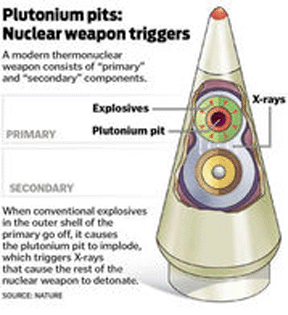
Dangerous history of pit production https://www.aikenstandard.com/opinion/guest-column-dangerous-history-of-pit-production/article_a22aa6b8-4ab2-11e9-83dc-7b695e05d8a7.html Dr. Rose O. Hayes
Why Low dose radiation can be more dangerous- more cancers per person than at high doses
LeRoy Moore: Low-dose radiation can be more dangerous, http://www.dailycamera.com/letters/ci_32543151/leroy-moore-low-dose-radiation-can-be-more 31 Mar 19 Though Maddie Nagle’s beautifully written column of March 8 criticizes me, more important is that she downplays the significance of low-dose exposure to the alpha radiation of plutonium at Rocky Flats. This could harm people unaware of the danger. Carl Morgan, the “Father of Health Physics,” studied the effects of radiation for those building Manhattan Project nuclear weapons. He knew that the alpha particles released by plutonium cannot be harmful unless inhaled or taken into the body through an open wound.
Toward the end of his life he spoke to Robert Del Tredici. He said “down at the low doses you actually get more cancers per person rem than you do at the high doses … because the high levels will often kill cells outright, whereas the low levels of exposure tend to injure cells rather than kill them and it is the surviving injured cells that are the cause for concern.” The effects of a small exposure “will be much more severe than had been anticipated.”(Del Tredici, “At Work in the Fields of the Bomb,” 1987, p. 133)
Nagle also makes misleading remarks about Tom K. Hei of Columbia University. Hei and colleagues demonstrated that a single plutonium alpha particle induces mutations in mammal cells. Cells receiving very low doses are more likely to be damaged than destroyed. Replication of these damaged cells constitutes genetic harm, and more such harm per unit dose occurs at very low doses than would occur with higher dose exposures. “These data provide direct evidence that a single alpha particle traversing a nucleus will have a high probability of resulting in a mutation and highlight the need for radiation protection at low doses.” (Hei et al., Proceedings of the National Academy of Sciences, vol. 94, April 1997, pp. 3765-3770.)
Three Mile Island nuclear accident exposed residents to far more radiation than officials claimed
MELTDOWN AT THREE MILE ISLAND” (1999 DOCUMENTARY)
Residents around TMI exposed to far more radiation than officials claimed
Researchers under gag order couldn’t investigate true health impacts after Three Mile Island nuclear disaster
Residents around Three Mile Island were exposed to much more radiation from the nuclear disaster than was claimed by officials, a fact that was kept from researchers and the public for years.
After the Three Mile Island reactor core melted and radioactivity was released to the surrounding population, researchers were not allowed to investigate health impacts of higher doses because the TMI Public Health Fund, established to pay for public health research related to the disaster, was under a research gag order issued by a court. If a researcher wanted to conduct a study using money from this Fund, they had to obey two main parameters set forth by Federal Judge Sylvia Rambo, who was in charge of the Fund.*
- Those studying the health impact of Three Mile Island radiation emissions were prohibited from assessing “worst case estimates” of radiation releases unless such estimates would lead to a conclusion of insignificant amount of harm — that being “less than 0.01 health effects”.
- If a researcher wanted to claim more harm or investigate a worst-case scenario, an expert selected by nuclear industry insurers would have to “concur on the nature and scope of the [dosimetry] projects.”
We don’t know how much radiation was released because monitors were non-functional
Data from radiation monitors from the time were unreliable. The Kemeny Commission concluded “An exceptional percentage (well over half) of health physics and monitoring instruments were not functional at the time of the accident . . .” (from Beyea) Without properly functioning monitoring equipment, dose reconstruction — the method used to figure out how much radiation people were exposed to — is at best unreliable, at worst, deceptive.
Luckily, biology doesn’t lie
Biological data show some residents’ exposures were much higher — 60–90 rads — than officials or industry admitted at the time. To arrive at these doses, researchers (see the Wing study, below) used meteorological data to establish where the radiation plumes traveled that were released from TMI. Researchers then drew blood from people in these plume pathways who complained of symptoms associated with higher radiation exposure: vomiting, diarrhea, skin reddening (erythema). Using a chromosome test initially established in the 1960s and honed during examination of Chernobyl liquidators, researchers determined that the public in these plumes received 600-900 milligrays of radiation exposure — thousands of times higher than annual natural background doses; and very much higher than research paid for by the Fund could ever have assessed. Where mechanical dosimeters failed, residents’ blood did not.
Increases of disease with no cause
Studies conducted by three universities (Columbia, Pittsburgh, North Carolina Chapel Hill) on the impacts of the Three Mile Island disaster show breast, lung, leukemia and general cancer increases, some associated with proximity to the reactors, some in the pathways of the radioactive plumes. However, because of the proscriptive court order governing the TMI Public Health Fund, the two studies that were funded by it (Hatch, et al. from Columbia and Talbott, et al. from Pittsburgh) were unable to associate the disease increases in their studies to radiation exposure. These two investigators were forced to conclude “Radiation emissions, as modeled mathematically, did not account for the observed increase.” (emphasis added) Their compromised study conclusions help to prop up the continuing mirage that TMI did not damage health.
Independent research pointed to radiation as culprit
Only the research paper by Wing, et al., University of North Carolina Chapel Hill, was able to associate the cancer increases of lung and leukemia to radiation from Three Mile Island. These researchers had obtained independent funding, allowing them to not only investigate health outcomes, but to correlate them with radiation exposure, rather than rely on court-ordered restraints and industry-collected data. Lending further credibility to their research, Wing et al., examined bioindicators in the blood of residents. (See above).
Health studies need to focus on health outcomes, not dose
As demonstrated by the TMI Health Fund debacle, the starting point for any health study should NOT have been an assumption of dose, but an examination of disease increases in the surrounding community after TMI’s radiation releases. Assumptions, codified in the Fund, that doses were too low to cause health impacts were proved wrong by blood examinations. Yet, Judge Rambo decided, against this blood evidence, that higher doses from TMI were not worthy of study because they didn’t happen. This placed the researchers taking Fund money in a position of compromising their scientific integrity, and allowed the TMI Public Health Fund to serve as an instrument of obfuscation, rather than information.
Recent research points to continued concern
Current research has found that thyroid cancers in members of the TMI community carry a biological mark specific to radiation exposure, are more aggressive and appear earlier, than thyroid cancers outside of the TMI community. Although research is ongoing, these studies reveal that radiation from TMI may be implicated in thyroid disease – a correlation never admitted to by officials or industry.
Compromised science still with us
Despite the evidence in human blood, lived experience of the exposed, recognition of faulty monitors, and increases of cancers, the constant false narrative that TMI caused no harm remains. The faulty science that plagues the residents around TMI also pervades other radiation studies assessing health impact, including those following explosions at Chernobyl and Fukushima. We are still all impacted by this scientific and legal failing surrounding TMI, which makes it much harder to assess radiation’s impact on human health.
*“Radiation doses were calculated under an order from the court governing the TMI Public Health Fund. This order prohibited ‘upper limit or worst case estimates of releases of radioactivity or population doses . . . [unless] such estimates would lead to a mathematical projection of less than 0.01 health effects’. The order also specified that ‘a technical analyst . . . designated by counsel for the Pools [nuclear industry insurers] concur on the nature and scope of the [dosimetry] projects’” from Wing, 1997.
Cindy Folkers is the radiation and health specialist at Beyond Nuclear.
1 This Month



26 September – International Day for the Total Elimination of Nuclear Weapons


PLEASE OPPOSE HR 8255 AND S.3639 – bills would accelerate satellite deployment, with no environmental review or safeguards – https://ncstd5li.quorum.us/campaign/169331/
To see nuclear-related stories in greater depth and intensity – go to https://nuclearinformation.wordpress.com
-
Archives
- September 2026 (219)
- August 2026 (330)
- July 2026 (355)
- June 2026 (287)
- May 2026 (306)
- April 2026 (356)
- March 2026 (251)
- February 2026 (267)
- January 2026 (308)
- December 2025 (358)
- November 2025 (359)
- October 2025 (375)
-
Categories
- 1
- 1 NUCLEAR ISSUES
- business and costs
- climate change
- culture and arts
- ENERGY
- environment
- health
- history
- indigenous issues
- Legal
- marketing of nuclear
- media
- opposition to nuclear
- PERSONAL STORIES
- politics
- politics international
- Religion and ethics
- safety
- secrets,lies and civil liberties
- spinbuster
- technology
- Uranium
- wastes
- weapons and war
- Women
- 2 WORLD
- ACTION
- AFRICA
- Atrocities
- AUSTRALIA
- Christina's notes
- Christina's themes
- culture and arts
- Events
- Fuk 2022
- Fuk 2023
- Fukushima 2017
- Fukushima 2018
- fukushima 2019
- Fukushima 2020
- Fukushima 2021
- general
- global warming
- Humour (God we need it)
- Nuclear
- RARE EARTHS
- Reference
- resources – print
- Resources -audiovicual
- Weekly Newsletter
- World
- World Nuclear
- YouTube
-
RSS
Entries RSS
Comments RSS
 nuclear-news