Fukushima, Chernobyl, And Three Mile Island Prove Why Nuclear Power Will Never Be Inherently Safe https://www.fairewinds.org/demystify/nuclear-power-will-never-be-inherently-safe, March 22, 2019 By Grayson Webb, Maggie Gundersen, Blog Editor Recently, after Forbes Magazine published an opinion piece entitled, It Sounds Crazy, But Fukushima, Chernobyl, And Three Mile Island Show Why Nuclear Is Inherently Safe, a number of Forbes’ readers called and continue to write Fairewinds Energy Education to ask us if this opinion piece is true. Quite frankly, the article is an infomercial for the nuclear industry: it twists data in order to paint a rosy picture of nuclear energy.
 Before we delve into the article itself, note that the author of the article, Michael Shellenberger, has a degree in cultural anthropology, not nuclear science or nuclear engineering, environmental science, or any other educational background related to the energy production methods and their impact on the environment, human lives, or the global economy. He is not a scientist or a doctor (don’t be fooled by his twitter handle @shellenbergerMD).
Mr. Shellenberger is the president of a pro-nuclear lobbyist group called Environmental Progress that advocates for extending the life of the old and soon-to-be-retired nukes for an additional 40-years, even though each atomic power reactor was only designed for a 40-year lifespan. On its website, in addition to its pro-nuke work, Environmental Progress claims that they are independent and not funded by the nuclear industry because their only funders are Rachel and Roland Pritzker, of the Pritzker Innovation Fund (PIF). For those that are unaware, the large and extremely wealthy Pritzker family includes 11 billionaires. All together the various family members have a net worth of more than $30 billion!
The Pritzker Innovation Fund backs various pro-nuclear ventures and supporting nuclear energy is part of its mission. In fact, Rachel, the president of the fund, gave a pro-nuclear TED talk in 2015 using many of the recycled arguments the nuclear industry and the Forbes article relied upon. While Environmental Progress (EP) likes to claim it is independent of any financial manipulation, receiving money from a pro-nuclear foundation paints a quite different picture. While Environmental Progress is listed as a nonprofit, it just became a 501c3 nonprofit during the fall of 2017. Since it incorporated as a nonprofit so recently, there are no public financial 990s available to delineate what other corporations may underwrite EP’s astroturfing pro-nuke posture with large sums of nuclear industry money, and of course many individual nuclear employees may be donating with the encouragement of their employer incorporation and then could write it off as a tax-deductible donation.
Now that we’ve addressed the lapses in Mr. Shellenberger’s nuclear power engineering and environmental science education, let’s look at the false facts raised in his pretend science article.
 First, this puff piece for Forbes Magazine tries to discredit the assessment of noted pediatrician and children’s advocate Dr. Helen Caldicott, who projected close to 1 million people died due to the Chernobyl meltdown. Mr. Shellenberger uses nuclear industry numbers to attempt to claim that the impact of Chernobyl on the environment and to all species involved was minimal, a typical follow the playbook created by industry lobbyists. However, independent scientific research published by the New York Academy of Science in a book entitled Chernobyl: Consequences of a Catastrophe for People and the Environment proves that Dr. Caldicott’s estimate is far more accurate than the fake data that Forbes Magazine allowed Shellenberger to promote. In Chernobyl: Consequences of a Catastrophe for People and the Environment the New York Academy of Science confirms and discusses the real scientific data as it was prepared and studied by Dr. Alexey Yablokov, Dr. Vassily Nesterenko, and Dr. Alexey Nesterenko.
A separate scientist, Dr. Yury Bandazhevsky, was jailed after publishing his scientific report on radiation induced heart disease in children. The disease, aptly named Chernobyl Heart, brought to light the cover-up by the Government of Belarus and has taught doctors around the world about the impact of Cesium, which is absorbed into muscles and damages children’s hearts and other muscles. Cesium also crosses the placental barrier and damages babies in utero. Dr. Yury Bandazhevsky was imprisoned for four-years in Belarus until the public outcry from the European Union sparked his release. He currently lives in the Ukraine where he continues his work.
 An entirely different scientific study conducted by noted United Kingdom scientist Dr. Ian Fairlie, who completed his PhD at Princeton University, shows that 5-million people still reside in highly radioactive areas and that there has been an increase of 700% in cases of thyroid cancer and a 200%-500% increase in Leukemia cases. All one needs to do to see the lingering effects of Chernobyl and the damage that radiation has caused in Chernobyl is to look at the haunting photo gallery entitled Chernobyl Legacy: Radiation Poisoning taken by photographer Paul Fusco a little more than a decade after Chernobyl. Mr. Fusco also narrates a video of his photographs from his trip to help to provide context. There is also a short documentary by the name of Chernobyl Heart which chronicles the effects of the Chernobyl nuclear disaster on the health of children in the area of the plant. The film won the Best Documentary Short Subject award at the 2004 Academy Awards. You can watch the heart wrenching film above. Unfortunately, instead of speaking truth to power, Forbes Magazine has allowed self-promoting industry data to be used in this infomercial while actually discarding real scientific independent peer-reviewed research.
Another discordant note that appears in the Forbes accepted opinion piece discredits real medical science in its attack on the World Health Organization’s (WHO) estimate of premature deaths caused by Chernobyl. In his published opinion in Forbes, Shellenberger claims that because the WHO uses the “linear no threshold” (LNT) model, its estimates are exaggerated. In a rush to meet the desired growth of major nuclear corporations, there has been a recent push by a fringe group of pro-industry scientists to change the Environmental Protection Agency (EPA) rules away from LNT, thereby increasing the amount of toxic chemicals and radiation that industries in the United States would be able to place in products and dump into the environment. Unfortunately, this ill-informed science is popular with the current U.S.  Administration. However, according to a recent story in the LA Times,
This view — that pollution and radiation can be beneficial — has many experts worried. The fact that such a position may become EPA policy, they say, portends a future in which corporate desires outweigh public and environmental health.
“Industry has been pushing for this for a long time,” said David Michaels, former assistant secretary of labor for the Occupational Safety and Health Administration who’s a professor of environmental and occupational health at George Washington University. “Not just the chemical industry, but the radiation and tobacco industries too.”
If the EPA ultimately adopts Calabrese’s proposed new regulations, researchers say it could change decades of standards and guidelines on clean air, water and toxic waste. It could also fundamentally alter the way the government assesses new chemicals and pesticides entering the marketplace.
“This is industry’s holy grail,” said Michaels.
Later in the Forbes Magazine nuclear industry sponsored opinion piece by Shellenberger asserts another falsity when it asks:
Why were they destroying Fukushima’s precious topsoil in order to reduce radiation levels that were already at levels far lower than posed a danger? Why was the government spending billions trying to do the same thing with water near the plant itself? Was nobody in Japan familiar with mainstream radiation health science?
The soil is being removed and the water is being purified because it is highly radioactive. The pro-nuke Environmental Progress organization claims it endorses mainstream radiation health science, yet it does not. The LNT (Linear No Threshold) model is mainstream science that has been repeatedly endorsed by scientific bodies like the National Academy of Sciences, the National Council on Radiation Protection and Measurements, and the International Commission on Radiological Protection.
The next fallacy Forbes Magazine continues to market in this fake news pro-nuke industry promotion is calling the meltdown at Three Mile Island (TMI) a dream,
What about Three Mile Island? After the accident in 1979, Time Magazine ran a cover story that superimposed a glowing headline, “Nuclear Nightmare,” over an image of the plant. Nightmare? More like a dream.
The 40th observance of the March 28, 1979 meltdown at TMI begins tomorrow, Saturday March 23rd at the Pennsylvania State House and culminates in a presentation at Penn State on March 27th. The first of the commercial nuclear power meltdowns was anything but a dream for the real people living nearby. Many residents were exposed to high levels of radiation because the plant owners outright lied to the Nuclear Regulatory Commission, President Carter, and Pennsylvania’s own governor, so that all those government officials failed to issue a timely evacuation because they did not know that a meltdown was even in progress!
While the United States Nuclear Regulatory Commission data claims that no one died from radiation emanating from TMI, independent research shows this is simply not true. Studies by epidemiologist Dr. Steve Wing show that cancer rates in the surrounding area significantly skyrocketed following the meltdown at TMI. You can listen to Dr. Wing talk about his studies and the implications from a video taken at the Pennsylvania State Capitol on March 26, 2009. Fairewinds Energy Education also has a video of the 38th commemoration presentation Arnie Gundersen gave in Harrisburg, Pennsylvania on its website [fairewinds.org]. In this video, Mr. Gundersen discusses the significant errors in data claimed as accurate by the Nuclear Regulatory Commission (NRC). Yet Shellenberger relies upon the scientifically refuted data promoted by the NRC for his Forbes Magazine nuke power promotion piece.
The U.S. government was the first agency in the world to call for people within a 40-mile radius surrounding Fukushima Daiichi to be evacuated, which again the Forbes’ Shellenberger pro-nuke industry fiction claims was unnecessary. This unscientific hit piece by Shellenberger in Forbes Magazine goes even further to blame the evacuation itself for the resulting misfortune of the refugees – instead of accurately reporting that the nuclear power industry, the government of Japan, and atomic power with its daunting risks are to blame for the hardships faced by refugees and the communities surrounding the Fukushima site.
“While some amount of temporary evacuation might have been justified, there was simply never any reason for such a large, and long-term, evacuation. About 2,000 people died from the evacuation, while others who were displaced suffered from loneliness, depression, suicide, bullying at school, and anxiety.” The victims of Fukushima Daiichi and the hardships that they have endured during the past 8-years, as well of the physical and emotional traumas they have suffered, are facts the refugees will live with for the remainder of their lives. The fact that the triple-meltdown at Fukushima Daiichi was foreseen and preventable and proves that the blame should be firmly placed on TEPCO and the nuclear power industry for allowing TEPCO to get away without constructing the government mandated seawall. More than 1,000 years of documented history about tsunamis were ignored when an entire mountain side was cut down so the Fukushima atomic power reactors could be built near the shoreline giving them easier access to cooling water. Now tens of thousands of refugees are facing decimated cities and farms, and the destruction of their families and communities as they struggle daily to protect themselves, their children, and even their grandchildren from extensive radiation exposure. As Fairewinds peer-reviewed research shows, as well as a separate study, highly radioactive hot particles that are severely dangerous, are present in many parts of Japan and continue to be inhaled. As discussed in our recent blogpost Atomic Balm Part 2, even after areas have been cleaned of radioactive material, it is only a matter of time before radioactive particles born on the wind or washed down from radioactively contaminated areas migrate back.
The first problem is with the government of Japan’s clearance criteria that only areas in and around homes have been allegedly decontaminated. I measured radiation along highways and then 50-feet into the surrounding woods, only to find that the woods remained highly contaminated, so that when it rains or snows, or the wind blows the dust or pollen from the woods, that radiation migrates back to people’s supposedly clean and radiation-free homes. I went to the top of 4-story high rooftops in Minamisoma that had been completely cleaned and repainted following the meltdowns. These rooftops were recontaminated by dust on the wind, blowing in radiation from the surrounding mountains. Peoples’ homes and communities that were claimed to be clean are indeed being recontaminated every day.
Why on earth would someone willingly want to live with their families in an area known to have high levels of radiation that damage DNA and cause cancers and other long-term illnesses?
The nuclear power that originated with President Eisenhower’s Atoms for Peace Program is not what many people envisioned when the concept was first created in the early 1950s. Atomic or nuclear power, whichever moniker you want to give it, is extremely expensive, takes a long time to build, releases small amounts of radiation into the environment daily during normal operation, produces highly toxic waste with no proven technology for storing it for more than 100-years, and must be stored for 250,000-years until it becomes safe as normal soil.
For the last 70-years using nuclear power to produce electricity has unveiled all of its flaws and proven that it is not an energy source for the future of humankind because it simply is not up to the task.
The argument that nuclear energy “has always been inherently safe” is absolutely wrong. There have been five meltdowns during the last 40-years resulting in a ratio of one meltdown every eight years. Look at TMI, Chernobyl, or Fukushima; people have died, each disaster has been worse than the one before it, and at Chernobyl and Fukushima, once pristine farmland and entire cities will never be habitable again.
April 1, 2019
Posted by Christina Macpherson |
2 WORLD, Reference, spinbuster |
Leave a comment
Age and Sex Bias in Radiation Research—and How to Overcome It http://jnm.snmjournals.org/content/60/4/466.full, 1 Apr 19, Britta Langen, Department of Radiation Physics, Institute of Clinical Sciences, Sahlgrenska Cancer Center, Sahlgrenska Academy, University of Gothenburg, Gothenburg, Sweden
- For correspondence or reprints contact: Britta Langen, Department of Radiation Physics, University of Gothenburg, Sahlgrenska University Hospital, Gula stråket 2B, SE-413 45 Gothenburg, Sweden. E-mail: britta.langen@gu.se
Basic research is the driving force behind medical progress. As successful as this relation has been, an intrinsic dilemma persists to this day: each study design frames reality—yet the conclusions seek general validity. This dilemma crystallizes into major bias when conclusions are based on selected groups that do not represent the reality of biologic diversity. Ironically, while striving for a future of highly personalized treatments, we have overlooked the obvious features that make an individual, stratify a cohort, and influence outcome: age and sex.
A current example of this issue are molecular biomarkers that may bring the next quantum leap in clinical practice. Biomarkers such as transcripts, proteins, or metabolites can easily be sampled from blood, quantified, and used for biologic dosimetry, risk estimation for postradiation therapy diseases, or screening in radiation hazard events. Still, most studies that use novel “omics” or “next-gen” methods for screening harbor pitfalls similar to previous methodologies and neglect age and sex as important factors. This can compromise the sensitivity, specificity, and accuracy of biomarkers, leading to erroneous diagnosis and treatment planning.
Sex bias in biomedical research is not a new revelation (1). Surprisingly, it stems not only from the use of single-sex cohorts but also from omitting sex as a factor altogether. Although other fields, such as neuroscience research, have started to tackle this issue (2), it remains largely unaddressed and underrepresented in radiation biology and related medical fields. For instance, sex-specific radiation sensitivity is known in principle yet is rarely considered in study designs beyond this particular research question. The bias in our knowledge base becomes even more worrisome when considering the nonlinearity of age between humans and mice (3). Do we relate age according to sexual maturity, onset of senescence, or total life span? It is reasonable to assume that the answer is, “depending on the research question and biologic endpoint.” However, this issue is usually neglected altogether and the age of the animal is chosen for purely practical reasons. Recently, research on age and sex bias has shown that radiation responses can differ largely between male and female mice, as well as between adolescent and adult specimens (4). If only one group had been used in the proteomic screening for blood-based biomarkers, the conclusions on dose–response would differ and poorly represent radiobiologic effects for other sex and age groups. Most importantly: if neglected, the bias would remain unknown and create large uncertainties that ultimately lead to avoidable risks for patients in radiotherapy and nuclear medicine.
It will be difficult to update our knowledge base to consider these basic factors systematically; in the end, a large body of evidence will still include age and sex biases. Nevertheless, the sooner we start taking action to overcome age and sex bias in our field, the less will misleading information contaminate the knowledge base. Each of us can partake in this effort according to our opportunities. For example, researchers can plan studies with male and female cohorts, principal investigators can establish such cohorts as the group standard, and manuscripts and grant applications can address these possible biases and highlight measures on how to control them. Reviewers can identify age and sex bias and consider it a methodologic limitation, and editors can establish submission forms that require disclosure of age and sex as preclinical study parameters. Lecturers can inform about these potential biases in research and raise students’ awareness when working with source material. Finally, students and PhD candidates can take initiative and, if presented with biased data or methodologies, address age and sex as important factors.
Undoubtedly, using both male and female cohorts and different age groups in research is resource-intensive. It is paramount that funding agencies support these efforts by rewarding points for rigorous research designs that consider age and sex as essential factors. Some large international funding agencies have already started to include dedicated sections on the age and sex dimension in grant applications, but this change needs to be consistent across all funding bodies on the national and regional levels.
By committing to a higher methodologic standard, we can reduce critical bias in our field and in radiation research as a whole. Ultimately, our effort will increase the quality of diagnosis and treatment and improve the odds for therapeutic success for every patient.
|
|
|
April 1, 2019
Posted by Christina Macpherson |
2 WORLD, radiation, Reference, women |
Leave a comment
SMR cost estimates, and costs of SMRs under construction, Nuclear Monitor Issue: #872-873 4777 07/03/2019Jim Green ‒ Nuclear Monitor editor
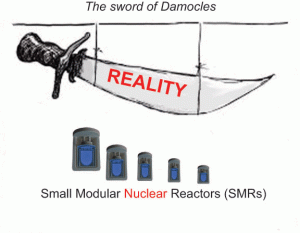 Costs of SMRs under construction https://wiseinternational.org/nuclear-monitor/872-873/smr-cost-estimates-and-costs-smrs-under-construction?fbclid=IwAR1TQA0xJ4bYxnVxJ0Aulcxvp0miMhEP4Vt8YqvLQKrhI3lTDhnrzZxQCE8Estimated construction costs for Russia’s floating nuclear power plant (with two 35-MW ice-breaker-type reactors) have increased more than four-fold and now equate to over US$10 billion / gigawatt (GW) (US$740 million / 70 MW).1 A 2016 OECD Nuclear Energy Agency report said that electricity produced by the plant is expected to cost about US$200/MWh, with the high cost due to large staffing requirements, high fuel costs, and resources required to maintain the barge and coastal infrastructure.2
Little credible information is available on the cost of China’s demonstration 2×250 MW high-temperature gas-cooled reactor (HTGR). If the demonstration reactor is completed and successfully operated, China reportedly plans to upscale the design to 655 MW (three modules feeding one turbine, total 655 MW) and to build these reactors in pairs with a total capacity of about 1,200 MW (so much for the small-is-beautiful SMR rhetoric). According to the World Nuclear Association, China’s Institute of Nuclear and New Energy Technology at Tsinghua University expects the cost of a 655 MWe HTGR to be 15-20% more than the cost of a conventional 600 MWe PWR.3
A 2016 report said that the estimated construction cost of China’s demonstration HTGR is about US$5,000/kW ‒ about twice the initial cost estimates.4 Cost increases have arisen from higher material and component costs, increases in labor costs, and increased costs associated with project delays.4 The World Nuclear Association states that the cost of the demonstration HTGR is US$6,000/kW.5
The CAREM (Central Argentina de Elementos Modulares) SMR under construction in Argentina illustrates the gap between SMR rhetoric and reality. Argentina’s Undersecretary of Nuclear Energy, Julián Gadano, said in 2016 that the world market for SMRs is in the tens of billions of dollars and that Argentina could capture 20% of the market with its CAREM technology.6 But cost estimates have ballooned: Continue reading →
March 25, 2019
Posted by Christina Macpherson |
2 WORLD, Reference, Small Modular Nuclear Reactors |
Leave a comment
 Why are insects dying in such numbers? https://www.smh.com.au/environment/conservation/why-are-insects-dying-in-such-numbers-20190319-p515hb.html By Greg Callaghan March 23, 2019
 It’s been dubbed the bugocalypse – study after study rolling in from countries across the globe pointing to dramatic declines in insect populations. In Germany, an 82 per cent fall in midsummer invertebrate populations across 63 nature reserves between 1990 and 2017; in the Puerto Rico rainforest, a 75 per cent reduction in the volume of insects between 1976 and 2013; in the UK, a one-third fall in the honeybee population over the past 10 years. Across the US, monarch butterfly and ladybird beetle numbers are at record lows.
In alpine NSW, there’s been a collapse in bogong moth populations, resulting in starving pygmy possums, who feed on them. Most worrying, a research review of 73 existing surveys, released last month by the University of Sydney’s Institute of Agriculture, discovered that 40 per cent of insect species will likely be in catastrophic decline within a century.
So what’s going on? Just more scary headlines, or a real indicator of an eco-crisis ahead? A bit of both. While certain “beneficial” insect populations (butterflies, grasshoppers, mayflies, dragonflies, ground beetles, fireflies) appear to be in unprecedented retreat, others considered pests and a risk to human health (tsetse flies, ticks, mosquitoes) are on the offensive again.
We’re all sure a decline is happening,” explains Dr David Yeates, director of the Australian National Insect Collection in Canberra. “But to obtain a useful measure, we need to compare insect numbers today with those of 30, 40 or 50 years ago – but invertebrate counts weren’t being done then.”
So what’s causing the bug die-off? The top culprit is likely to be wilderness loss – many insects feed off native plants, and the relentless spread of single-crop farmland and insecticides has shrivelled their range, says Yeates. Another culprit: global warming, which favours some insects over others. Cut out insects and you lose all the creatures that feed on them, including frogs, lizards and birds. Of course, a large proportion of the food we eat comes from plants pollinated by insects, and they also clean up the environment, notes Yeates. “Waking up in a world without insects would be like waking up in a garbage dump.”
March 23, 2019
Posted by Christina Macpherson |
AUSTRALIA, environment, Reference |
Leave a comment
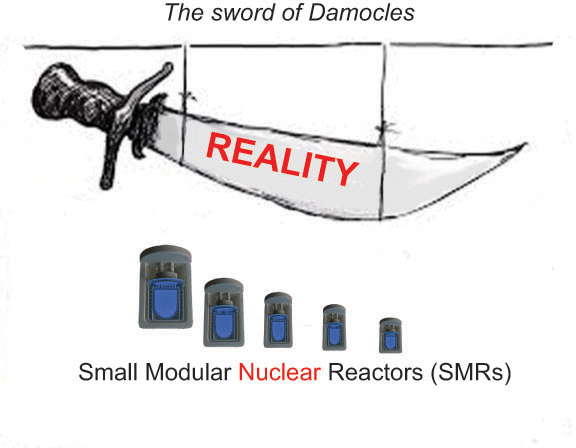
Many of the expenses associated with constructing and operating a reactor do not change in linear proportion to the power generated. For instance, a 400 MW reactor requires less than twice the quantity of concrete and steel to construct as a 200 MW reactor, and it can be operated with fewer than twice as many people.
In the face of this prevailing wisdom, proponents of small reactors pinned their hopes on yet another popular commercial principle: “economies of mass production.”
In 1968, the same year Elk River shut down, the last of the AEC’s small reactors was connected to the grid: the 50 MW La Crosse boiling water reactor.19 That plant operated for 18 years; by the end, its electricity cost three times as much as that from the coal plant next door, according to a 2012 news account about the disposal of the plant’s spent fuel. Dealing with the irradiated uranium-thorium fuel proved difficult too. Eventually, the spent fuel was shipped to a reprocessing plant in southern Italy.
Since then, not a single small reactor has been commissioned in the United States.
Without exception, small reactors cost too much for the little electricity they produced, the result of both their low output and their poor performance.
The forgotten history of small nuclear reactors Nuclear Monitor Issue: #872-873 4775 07/03/2019 M.V. Ramana ‒ Simons Chair in Disarmament, Global and Human Security at the School of Public Policy and Global Affairs at the University of British Columbia
Article April 2015 ‒ A tantalizing proposition has taken hold again in the nuclear industry: that small nuclear reactors have economic and other advantages over the standard-size ones being built today. The idea is that by reducing the substantial financial risk of a full-scale nuclear project, small reactors are the best option for kick-starting a much-discussed revival of nuclear power……
the technology remains in stasis or decline throughout the Americas and Europe. …..
A fundamental reason for this decline is indeed economic. Compared with other types of electricity generation, nuclear power is expensive. Continue reading →
March 23, 2019
Posted by Christina Macpherson |
Reference, Small Modular Nuclear Reactors, USA |
Leave a comment
https://www.scirp.org/journal/PaperInformation.aspx?PaperID=54828#.VuSFAXQrkCs.twitter Full-Text HTML  Download as PDF (Size:336KB) PP. 76-89 [multiple references supplied]
ABSTRACT
Radioactive fallout after the March 2011 Fukushima nuclear meltdown entered the U.S. environment within days; levels of radioactivity were particularly elevated in the five western states bordering on the Pacific Ocean. The particular sensitivity of the fetus to radiation exposure, and the ability of radioisotopes to attach to cells, tissues, and DNA raise the question of whether fetuses/newborns with birth defects with the greater exposures suffered elevated harm during the period after the meltdown. We compare rates of five congenital anomalies for 2010 and 2011 births from April-November. The increase of 13.00% in the five western states is significantly greater than the 3.77% decrease for all other U.S. states combined (CI 0.030 – 0.205, p < 0.008). Consistent patterns of elevated increases are observed in the west (20 of 21 comparisons, 6 of which are statistically significant/borderline significant), by state, type of birth defect, month of birth, and month of conception. While these five anomalies are relatively uncommon (about 7500 cases per year in the U.S.), sometimes making statistical significance difficult to achieve, the consistency of the results lend strength to the analysis, and suggest fetal harm from Fukushima may have occurred in western U.S. states.
March 16, 2019
Posted by Christina Macpherson |
children, Reference, USA |
Leave a comment

Times 11th March 2019 The towns around the Fukushima Dai-ichi nuclear power plant are among the
most perilously radioactive in the world, yet in their own strange way they have never been busier. The people who lived here fled in a rush after the meltdown of the nuclear reactors, but a new citizenry has established itself and is thriving in the unusual conditions. They squat in family groups in the wooden interiors of the traditional Japanese houses. They
thrive on the fruit on the trees and the water that flows around the old rice fields. They are hairy, tusked and weigh 200lb.
They are the radioactive wild boars of Fukushima. It is eight years today since the massive earthquake and tsunami that smashed into Fukushima Dai-ichi, and a good deal has changed since the terrible weeks that followed. The spewing
reactors have been largely contained, although it will be a lifetime before they are fully dismantled. The radiation in the towns has been reduced and in those marginal areas where the levels are lowest people have been permitted to return.
Even when gas and electricity are reconnected, their once thriving towns have few shops, schools or social services. But there is another obstacle to their return: the takeover of the evacuation zone by wild animals. In the absence of Man, nature has marched off the forested mountains and taken over his former home. Raccoons and rats, monkeys and
palm civets have all taken advantage of the empty houses to find food, shelter and a convenient place to breed. But none has better adapted, or done more damage, than the wild boar.
https://www.thetimes.co.uk/article/26b333e2-435f-11e9-924d-9729bcd51a7f
March 12, 2019
Posted by Christina Macpherson |
Fukushima continuing, Reference |
1 Comment
Melting Ice Sheets Could Reveal Top Secret US Cold War Nuclear Base https://www.iflscience.com/environment/melting-ice-sheets-could-reveal-top-secret-us-cold-war-nuclear-base/ 11 Mar 19, Among the many Bond villain–esque plans dreamed up during the Cold War, few come stranger than “Project Iceworm,” the shady US program to build a network of top secret nuclear missile launch sites beneath the Danish territory of Greenland. The largest and most impressive of the US bases was Camp Century, a warren of tunnels and labs under northwest Greenland’s ice sheet that was powered by its own portable nuclear reactor.
After just eight years of operation, Camp Century was decommissioned in 1967 due to engineering woes and a political scandal centered on whether Denmark had actually given the US full permission to house nuclear materials in their territory.
As the Cold War ended, the base was largely forgotten, not least because it was hoped to remain “preserved for eternity” under a blanket of snow and ice. However, with climate change knocking at the door, it looks like a different kind of thaw could reveal all.
A study published in 2016 used simulations to show that the ice above and around Camp Century could thaw by 2090 under a “business-as-usual” climate change scenario. Not only would this unearth the once-secret abandoned military base, but it also holds the potential to let loose the huge amounts of chemical and nuclear waste left at the site. These pollutants could leech into the surrounding surface water and spark a plethora of problems for the island’s human population and ecosystem.
Another study, published last year in the journal Global Environmental Politics, took a further look at the situation at Camp Century, arguing it has the potential to fire up some long-frozen geopolitical tensions. It’s not very clear how much Denmark knew about the US’ plans in Greenland. While they agreed the US could have the Thule Air Base in northwest Greenland, the issue of nuclear weapons in Danish territory was a big no-no. To make matters even thornier, Greenland has since transitioned to a self-governing overseas administrative division of Denmark.
If the climatic scenario predicted does hit, as anticipated, who will be responsible for the clean-up of toxic chemicals and radioactive materials?
As the study argues, Camp Century is not the only problem. This scenario serves as just one example of how climate change could trigger a huge number of unforeseen consequences in international politics, especially when it comes to overseas military bases.
“The case could be the proverbial canary in the coal mine for future politics surrounding overseas military bases,” according to study author Jeff Colgan.
“Climate change can create knock-on environmental problems associated with a military base’s infrastructure or waste that disrupt the international politics that govern the base,” he wrote in the study. “Any cleanup costs or compensation related to the knock-on environmental problems create an unfunded liability for the host country, the country operating the base, or both.”
This is just another unexpected fallout of the climate issue we’re facing that needs to be dealt with sooner rather than later.
March 12, 2019
Posted by Christina Macpherson |
ARCTIC, climate change, Reference, USA, weapons and war |
Leave a comment
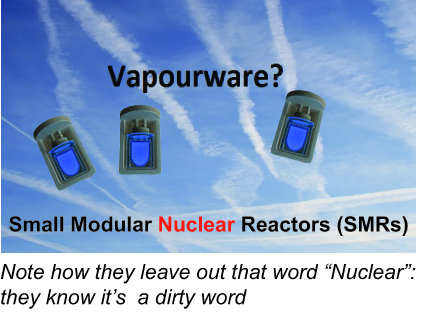
An obituary for small modular reactors Jim Green, The Ecologist, 11 March 2019,https://theecologist.org/2019/mar/11/obituary-small-modular-reactors
The nuclear industry is heavily promoting the idea of building small modular reactors (SMRs), with near-zero prospects for new large power reactors in many countries. These reactors would have a capacity of under 300 megawatts (MW), whereas large reactors typically have a capacity of 1,000 MW.
Construction at reactor sites would be replaced with standardised factory production of reactor components then installation at the reactor site, thereby driving down costs and improving quality control.
The emphasis in this article is on the questionable economics of SMRs, but a couple of striking features of the SMR universe should be mentioned (for details see the latest issue of Nuclear Monitor).
First, the enthusiasm for SMRs has little to do with climate-friendly environmentalism. About half of the SMRs under construction (Russia’s floating power plant, Russia’s RITM-200 icebreaker ships, and China’s ACPR50S demonstration reactor) are designed to facilitate access to fossil fuel resources in the Arctic, the South China Sea and elsewhere. Another example comes from Canada, where one application of SMRs under consideration is providing power and heat for the extraction of hydrocarbons from oil sands.
A second striking feature of the SMR universe is that it is deeply interconnected with militarism:
- Argentina’s experience and expertise with small reactors derives from its historic weapons program, and its interest in SMRs is interconnected with its interest in small reactors for naval propulsion.
- China’s interest in SMRs extends beyond fossil fuel mining and includes powering the construction and operation of artificial islands in its attempt to secure claim to a vast area of the South China Sea.
- Saudi Arabia’s interest in SMRs is likely connected to its interest in developing nuclear weapons or a latent weapons capability.
- A subsidiary of Holtec International has actively sought a military role, inviting the US National Nuclear Security Administration to consider the feasibility of using a proposed SMR to produce tritium, used to boost the explosive yield of nuclear weapons.
- Proposals are under consideration in the US to build SMRs at military bases and perhaps even to use them to power forward operating bases.
- In the UK, Rolls-Royce is promoting SMRs on the grounds that “a civil nuclear UK SMR programme would relieve the Ministry of Defence of the burden of developing and retaining skills and capability”.
Independent economic assessments
SMRs will almost certainly be more expensive than large reactors (more precisely, construction costs will be lower but the electricity produced by SMRs will be more expensive).
They will inevitably suffer diseconomies of scale: a 250 MW SMR will generate 25 percent as much power as a 1,000 MW reactor, but it will require more than 25 percent of the material inputs and staffing, and a number of other costs including waste management and decommissioning will be proportionally higher.
It’s highly unlikely that potential savings arising from standardised factory production will make up for those diseconomies of scale.
William Von Hoene, senior vice president at Exelon, has expressed scepticism about SMRs: “Right now, the costs on the SMRs, in part because of the size and in part because of the security that’s associated with any nuclear plant, are prohibitive,” he said last year. “It’s possible that that would evolve over time, and we’re involved in looking at that technology. Right now they’re prohibitively expensive.”
Every independent economic assessment finds that electricity from SMRs will be more expensive than that from large reactors.
A study by WSP / Parsons Brinckerhoff, commissioned by the 2015/16 South Australian Nuclear Fuel Cycle Royal Commission, estimated costs of A$180‒184/MWh (US$127‒130) for large pressurised water reactors and boiling water reactors, compared to A$198‒225 (US$140‒159) for SMRs.
A 2015 report by the International Energy Agency and the OECD Nuclear Energy Agency predicts that electricity costs from SMRs will typically be 50−100 percent higher than for current large reactors, although it holds out some hope that large volume factory production of SMRs could help reduce costs.
A report by the consultancy firm Atkins for the UK Department for Business, Energy and Industrial Strategy found that electricity from the first SMR in the UK would be 30 percent more expensive than power from large reactors, because of diseconomies of scale and the costs of deploying first-of-a-kind technology.
An article by four current and former researchers from Carnegie Mellon University’s Department of Engineering and Public Policy, published in 2018 in the Proceedings of the National Academy of Science, considered options for the development of an SMR market in the US. They concluded that it would not be viable unless the industry received “several hundred billion dollars of direct and indirect subsidies” over the next several decades.
No market
SMR enthusiasts envisage a large SMR market emerging in the coming years. A frequently cited 2014 report by the UK National Nuclear Laboratory estimates 65‒85 gigawatts (GW) of installed SMR capacity by 2035, valued at £250‒400 billion.
But in truth there is no market for SMRs. Thomas Overton, associate editor of POWER magazine, wrote in 2014: “At the graveyard wherein resides the “nuclear renaissance” of the 2000s, a new occupant appears to be moving in: the small modular reactor (SMR) … Over the past year, the SMR industry has been bumping up against an uncomfortable and not-entirely-unpredictable problem: It appears that no one actually wants to buy one.”
Let’s briefly return to the National Nuclear Laboratory’s estimate of 65‒85 GW of installed SMR capacity by 2035. It is implausible and stands in contrast to the OECD Nuclear Energy Agency’s estimate of <1 GW to 21 GW of SMR capacity by 2035. But even if the 65‒85 GW figure proved to be accurate, it would pale in comparison to renewable energy sources.
As of the of end of 2017, global renewable energy capacity was 2,195 GW including 178 GW of new capacity added in 2017. On current trends, even in the wildest dreams of SMR enthusiasts, SMR capacity would be roughly 50 times less than renewable capacity by 2035.
SMRs under construction
SMR projects won’t be immune from the major cost overruns that have crippled large reactor projects (such as the AP1000 projects in the US that bankrupted Westinghouse). Indeed cost overruns have already become the norm for SMR projects.
Estimated construction costs for Russia’s floating nuclear power plant (with two 35-MW ice-breaker-type reactors) have increased more than four-fold and now equate to over US$10 billion / GW (US$740 million / 70 MW). A 2016 OECD Nuclear Energy Agency report said that electricity produced by the Russian floating plant is expected to cost about US$200 per megawatt-hour (MWh), with the high cost due to large staffing requirements, high fuel costs, and resources required to maintain the barge and coastal infrastructure.
The CAREM (Central Argentina de Elementos Modulares) SMR under construction in Argentina illustrates the gap between SMR rhetoric and reality. Cost estimates have ballooned. In 2004, when the CAREM reactor was in the planning stage, Argentina’s Bariloche Atomic Center estimated an overnight cost of US$1 billion / GW for an integrated 300 MW plant. When construction began in 2014, the estimated cost of the CAREM reactor was US$17.8 billion / GW (US$446 million for a 25-MW reactor). By April 2017, the cost estimate had increased to US$21.9 billion / GW (US$700 million with the capacity uprated from 25 MW to 32 MW). The CAREM project is years behind schedule and costs will likely increase further. In 2014, first fuel loading was expected in 2017 but completion is now anticipated in November 2021.
Little credible information is available on the cost of China’s demonstration high-temperature gas-cooled reactor (HTGR). If the 210 MW demonstration reactor is completed and successfully operated, China reportedly plans to upscale the design to 655 MW. According to the World Nuclear Association, China’s Institute of Nuclear and New Energy Technology at Tsinghua University expects the cost of a 655 MW HTGR to be 15-20 percent more than the cost of a conventional 600 MW PWR. A 2016 report said that the estimated construction cost of China’s demonstration HTGR is about twice the initial cost estimates, with increases due to higher material and component costs, increases in labour costs, and increased costs associated with project delays. The World Nuclear Association states that the cost of the demonstration HTGR is US$6,000/kW.
NuScale Power’s creative accounting
Cost estimates for planned SMRs are implausible. US company NuScale Power is targeting a cost of just US$65/MWh for its first plant. But a study by WSP / Parsons Brinckerhoff, commissioned by the South Australian Nuclear Fuel Cycle Royal Commission, estimated a cost of US$159/MWh based on the US NuScale SMR design. That’s 2.4 times higher than NuScale’s estimate.
A 2018 Lazard report estimates costs of US$112‒189/MWh for electricity from large nuclear plants. NuScale’s claim that its electricity will be 2‒3 times cheaper than large nuclear is implausible. And even if NuScale achieved costs of US$65/MWh, that would still be well above Lazard’s figures for wind power (US$29‒56) and utility-scale solar (US$36‒46).
Likewise, NuScale’s construction cost estimate of US$4.2 billion / GW is implausible. The latest estimate for the AP1000 reactors under construction in Georgia is US$17.4 billion / GW. NuScale wants us to believe that it will build SMRs at less than one-quarter of that cost, even though every independent assessment concludes that SMRs will be more expensive to build (per GW) than large reactors.
No-one wants to pay for SMRS
No company, utility, consortium or national government is seriously considering building the massive supply chain that is at the very essence of the concept of SMRs ‒ mass, modular factory construction. Yet without that supply chain, SMRs will be expensive curiosities.
In early 2019, Kevin Anderson, North American Project Director for Nuclear Energy Insider, said that there “is unprecedented growth in companies proposing design alternatives for the future of nuclear, but precious little progress in terms of market-ready solutions.”
Anderson argued that it is time to convince investors that the SMR sector is ready for scale-up financing but that it will not be easy: “Even for those sympathetic, the collapse of projects such as V.C Summer does little to convince financiers that this sector is mature and competent enough to deliver investable projects on time and at cost.”
A 2018 US Department of Energy report states that to make a “meaningful” impact, about US$10 billion of government subsidies would be needed to deploy 6 GW of SMR capacity by 2035. But there’s no indication or likelihood that the US government will subsidise the industry to that extent.
To date, the US government has offered US$452 million to support private-sector SMR projects, of which US$111 million was wasted on the mPower project that was abandoned in 2017.
The collapse of the mPower project was one of a growing number of setbacks for the industry in the US. Transatomic Power gave up on its molten salt reactor R&D last year. Westinghouse sharply reduced its investment in SMRs after failing to secure US government funding. MidAmerican Energy gave up on its plans for SMRs in Iowa after failing to secure legislation that would force rate-payers to part-pay construction costs. The MidAmerican story has a happy ending: the company has invested over US$10 billion in renewables in Iowa and is now working towards its vision “to generate renewable energy equal to 100 percent of its customers’ usage on an annual basis.”
Canadian Nuclear Laboratories has set the goal of siting a new demonstration SMR at its Chalk River site by 2026. But serious discussions about paying for a demonstration SMR ‒ let alone a fleet of SMRs ‒ have not yet begun. The Canadian SMR Roadmap website simply states: “Appropriate risk sharing among governments, power utilities and industry will be necessary for SMR demonstration and deployment in Canada.”
Companies seeking to pursue SMR projects in the UK are seeking several billion pounds from the government to build demonstration plants. But nothing like that amount of money has been made available. In 2018, the UK government agreed to provide £56 million towards the development and licensing of advanced modular reactor designs and £32 million towards advanced manufacturing research. An industry insider told the Guardian in 2017: “It’s a pretty half-hearted, incredibly British, not-quite-good-enough approach. Another industry source questioned the credibility of SMR developers: “Almost none of them have got more than a back of a fag packet design drawn with a felt tip.”
State-run SMR programs
State-run SMR programs ‒ such as those in Argentina, China, Russia, and South Korea ‒ might have a better chance of steady, significant funding, but to date the investments in SMRs have been minuscule compared to investments in other energy programs.
And again, wherever you look there’s nothing to justify the high hopes (and hype) of SMR enthusiasts. South Korea, for example, won’t build any of its domestically-designed SMART SMRs in South Korea (“this is not practical or economic” according to the World Nuclear Association). South Korea’s plan to export SMART technology to Saudi Arabia is problematic and may in any case be in trouble.
China and Argentina hope to develop a large export market for their high-temperature gas-cooled reactors and small pressurised water reactors, respectively, but so far all they can point to are partially-built demonstration reactors that have been subject to significant cost overruns and delays.
All of the above can be read as an obituary for SMRs. The likelihood that they will establish anything more than a small, niche market is vanishingly small.
Dr Jim Green is the lead author of a Nuclear Monitor report on small modular reactors, and national nuclear campaigner with Friends of the Earth Australia.
March 12, 2019
Posted by Christina Macpherson |
2 WORLD, Reference, Small Modular Nuclear Reactors |
Leave a comment
Rebuilding trust among locals may be significantly harder, thanks to a culture of cover-ups and denials that contributed to the nuclear accident and continues to dog Japan’s efforts to restart its nuclear industry, experts say.
…….. at least 24 countries and territories ban some produce from Fukushima. South Korea and China still impose a total food ban. The US prohibits Fukushima produce such as mushrooms, leafy vegetables and broccoli. Fishermen now only ply the seas two days a week: Fish from Fukushima, which once enjoyed a high reputation in Tokyo’s fish market, is no longer the flavour of the day.
The government blames “harmful rumours”, a phrase that dominated the two-day press tour and has been labelled the fourth disaster to hit Fukushima, after the earthquake, tsunami and nuclear accident.
Yet there is a much deeper trust deficit that remains extremely hard to overcome.
Tokyo Electric Power Company (TEPCO), the operator of the ill-fated plant, spent two months after the nuclear disaster denying that a meltdown had occurred. TEPCO later apologised for a “cover-up” that remains the source of much bitterness among people here.
Katsunobu Sakurai, former mayor of the nearby town of Minamisoma, said TEPCO gave out very little information about the disaster during a chaotic evacuation that ultimately led to the deaths of 3,700 people, including many elderly people whose medical care was interrupted.
In 2012, TEPCO was forced to admit that it had failed to heed safety warnings before the accident, or even consider the risk of a large tsunami, because it feared doing so would undermine public confidence in the industry.
Experts say TEPCO has still failed to come clean about the problems associated with decommissioning the reactors and
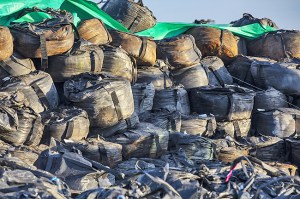
Bags of nuclear waste generated after the meltdown of one of Fukushima’s nuclear power plants in 2011 are now stored in the nearby town of Naraha. MUST CREDIT: photo for The Washington Post by Shiho Fukada.
decontaminating the environment.
“To me, talking about ‘harmful rumours’ sounds like they are making someone else the bad guy or villain, as if they are blaming people for saying negative things because they don’t understand science and radiation,” said Riken Komatsu, a community activist in Onahama.
“But those who have lost our trust do not have the right” to talk about harmful rumours, Komatsu added.
The government and TEPCO say the nuclear power plant itself could take 30 or 40 years to decommission and estimates the cleanup will cost 22 trillion yen (USD200 billion).
But in 2015, the plant’s manager told London’s Times newspaper that the technological challenges involved in removing hundreds of tonnes of molten radioactive fuel from three reactors could mean decommissioning will take 200 years.
The Japan Center for Economic Research, a conservative think tank, estimates the cleanup bill could come to 50 trillion to 70 trillion yen (USD460 billion to 640 billion).
One of the biggest problems involves groundwater that seeps into the reactor buildings, mixes with cooling water and becomes radioactive.
TEPCO has been trying to limit water contamination ever since the accident, creating a mile-long “ice wall” of sunken, frozen soil around the reactors to keep water out, and another concrete wall to prevent it from reaching the ocean.
In 2016, TEPCO admitted that the ice wall was only slowing – but not preventing – water seeping in. Today, around 100 cubic metres of groundwater still become contaminated at Fukushima every day, and one million tonnes of radioactive water is stored in 994 huge tanks around the site.
A new tank fills up every seven to 10 days, and storage space is running out.
TEPCO had initially claimed that 26 out of 27 radioactive nuclides had been removed from that water through an advanced treatment system, living only tritium behind.
 But after reports by Kyodo news and local media, and a protest by fishermen, the company acknowledged last September that 80 per cent of the tanks contain water that is still contaminated with dangerous radioactive elements, including strontium-90, a bone-seeking radionuclide that causes cancer.
Launching his successful bid for the 2020 Summer Olympics, Japanese Prime Minister Shinzo Abe said the situation at Fukushima was “under control”. One of his predecessors, Junichiro Koizumi said the water crisis showed that was a lie.
An external committee established by TEPCO to advise the board of directors said it is “very frustrated” at the company’s inability to communicate properly. ……… https://borneobulletin.com.bn/trust-fails-to-recover-from-nuclear-disaster/
March 10, 2019
Posted by Christina Macpherson |
Japan, Reference, secrets,lies and civil liberties |
Leave a comment
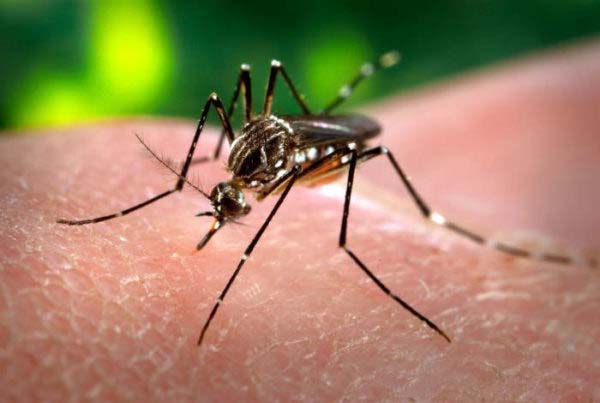
 Climate Change Will Expose Half of World’s Population to Disease-Spreading Mosquitoes By 2050 https://e360.yale.edu/digest/climate-change-will-expose-half-of-worlds-population-to-disease-spreading-mosquitoes-by-2050 MARCH 5, 2019 Scientists and public health officials have documented an increasing number of outbreaks of mosquito-borne illnesses across the globe in recent years, including yellow fever, dengue, chikungunya, and Zika. Now, an international team of researchers has found that by 2050, two key disease-spreading mosquitoes — Aedes aegypti and Aedes albopictus — will significantly expand their range, posing a threat to 49 percent of the world’s population.
“If no action is taken to reduce the current rate at which the climate is warming, pockets of habitat will open up across many urban areas with vast amounts of individuals susceptible to infection,” said Moritz Kraemer, an infectious disease scientist at Boston Children’s Hospital and the University of Oxford and a co-author of the new research, published in the journal Nature Microbiology,.
The researchers analyzed historical distribution data from more than 3,000 locations in Europe and the United States, dating back to the 1970s. They then modelled future distribution using projections for climate change, urbanization, and human migration and travel. Kraemer and his colleagues found that in the last five years, Aedes aegypti has spread northward in the U.S. at about 150 miles per year. In Europe, Aedes albopictus has spread at a rate of 93 miles per year.
The scientists also found that within the next 5 to 15 years, human travel and migration will be the largest factors driving the spread of mosquitoes. After that, however, climate change and accelerating urbanization will create new mosquito habitats. Aedes aegypti could reach as far north as Chicago and Shanghai by 2050. However, the species will likely decline in parts of the southern U.S. and Eastern Europe, which are expected to become more arid as global temperatures rise. Aedes albopictus, on the other hand, is forecast to spread widely throughout Europe over the next 30 years, as well as establish small populations in parts of the northern U.S. and the highland regions of South America and East Africa.
March 7, 2019
Posted by Christina Macpherson |
2 WORLD, climate change, health, Reference |
Leave a comment
Study: Climate change is leading to unpredictable ecosystem disruption for migratory birds, Phys Org, March 5, 2019, Cornell University Using data on 77 North American migratory bird species from the eBird citizen-science program, scientists at the Cornell Lab of Ornithology say that, in as little as four decades, it may be very difficult to predict how climate change will affect migratory bird populations and the ecosystems they inhabit. Their conclusions are presented in a paper published in the journal Ecography.
Climates have natural variation and we’re moving rapidly into territory where the magnitude of
climate change will consistently exceed this variation,” says lead author and Cornell Lab researcher Frank La Sorte. “There will be no historic precedent for these new climates, and migratory bird populations will increasingly encounter ‘novel’ climatic conditions. The most likely outcome will be a period of ecological disruption as
migratory birds and other species try to respond or adapt to these new conditions.”
Cornell Lab scientists generated new climate models incorporating multiple sources of data. This produced a timeline indicating when and where migratory bird populations are likely to be significantly affected by novel climates during each phase of their annual life cycles. It’s not that far off:
- Last 40 to 50 years of this century. During this period, migrants such as the Black-and-white Warbler, are likely to first experience novel climates on their tropical wintering grounds (regions south of Florida) and also during the late summer on their breeding grounds in the North American temperate zone (above the nation’s midsection).
- First 50 years of the next century. This is when novel climates are likely to emerge for birds that winter in the subtropics—the southern half of the U.S.
The study authors conclude that by the middle of the next century migratory bird populations will experience novel climates during all phases of their annual life cycles………. https://phys.org/news/2019-03-climate-unpredictable-ecosystem-disruption-migratory.html
March 7, 2019
Posted by Christina Macpherson |
2 WORLD, climate change, Reference |
Leave a comment
|
As the toll of Australia’s frontier brutality keeps climbing, truth telling is long overdue, The myth of benign, peaceful settlement persists today – even as historians reveal a far more sinister picture • The Killing Times: the massacres of Aboriginal people Australia must confront
• A massacre map of the frontier wars – interactive
Guardian by Paul Daley, 4 Mar 19
“………… The Australian Museum estimates that pre-European invasion in 1788, about 750,000 Indigenous people (representing some 700 language groups) inhabited the continent that would become Australia. This figure may well be an underestimate.
Little over a century later, by federation in 1901, the Aboriginal and Torres Strait Island population had diminished to some 117,000. Black-white warfare and organised massacres, no matter how you define them, with police, British soldiers, native police, militia and raiding parties as the perpetrators, accounted for many tens of thousands of deaths. Individual acts of violence – including shootings, poisonings, torture and illegal incarceration – killed many more. Battle wounds, starvation (owing to the depletion of traditional hunting grounds) and disease – all of which can also be directly linked to invasion and frontier conflict – killed countless others.
Yet the historiographic confect of benign, peaceful settlement and the unexplained “passing” or “extinction” of the “natives” pervaded well into the 1960s, replete with the deception that very few Aboriginal people died violently during pastoral and urban expansion and dispossession. Things began to change with the emergence of a new, more inquisitive, less empire-centric cohort of historians and writers who, not content with the Anglophile colonial trope of terra nullius and benevolence to the Indigenes, began to commit truth to the page………..
In the 1970s and 1980s a number of historians – among them Henry Reynolds, Marilyn Lake and Richard Broome – began focusing on frontier violence, using the colonial records, newspaper archives and family histories (including generational oral accounts of killings).
Reynolds is acknowledged as the first Australian historian to make a calculated continental estimate of the number of Aboriginal and Torres Strait Islanders who died violently in Australian frontier conflict. In his 1981 book, The Other Side of the Frontier, and after at least a decade’s research Reynolds estimated the figure at about 20,000……….
Reynolds speaks of the significance of Evans and Ørsted-Jensen’s research on the numbers of killings in colonial Queensland.
Based on an extrapolation of native police documentation, they estimated (conservatively) that as many as 60,000 Aboriginal people died in frontier violence in Queensland alone.
The national implications of the figure are profound; the wars that raged across this continent from 1788 did, it seem, claim more Indigenous lives than 62,000 Australian service personnel who died in the first world war………… https://www.theguardian.com/australia-news/2019/mar/04/as-the-toll-of-australias-frontier-brutality-keeps-climbing-truth-telling-is-long-overdue
|
|
March 5, 2019
Posted by Christina Macpherson |
AUSTRALIA, history, indigenous issues, Reference |
Leave a comment

These assertions stand scientific consensus on its head. Most experts say to the contrary that even low doses of radiation cause cell damage that years later can promote uncontrolled cell growth and replication, and that children and fetuses are particularly susceptible to harm. That seven-decade-old view was reaffirmed as recently as last April in a study by a congressionally chartered nonprofit organization, the National Council on Radiation Protection and Measurement.
The study, overseen by a dozen experts from the government, academia, and industry, and funded by the NRC, considered 29 contemporary scientific studies of the effects of low-dose radiation in reaffirming that even low-level radiation should be avoided to the extent possible.
 RADIATION IS GOOD FOR YOU? THE FRINGE VIEWPOINT GAINS GROUND IN THE TRUMP ADMINISTRATION, https://publicintegrity.org/national-security/radiation-is-good-for-you-the-heretical-view-gains-ground-under-trump/The Nuclear Regulatory Commission is actively considering claims that low-dose radiation protections should be lifted because exposures make you healthier, a potential boon to radiation-related industries.
Since World War II, virtually every American business where radiation is present – hospital emergency rooms and cancer wards, uranium mines, nuclear power plants, and others – has operated under rules generally requiring that exposures be kept as low as possible. The rules are based on a widely-accepted scientific dicta that even small amounts of extra radiation can be harmful to human health.
Following those rules, though, is costly and often cumbersome, and so the requirement for low-dose radiation protections – known as the ALARA standard for “as low as reasonably achievable” – has long been annoying to a large swath of American industry. Estimates of the costs associated with these protections run into the billions of dollars.
Until the Trump era, opponents of the rules have gotten little traction in trying to upend low-dose radiation protections – such as isolation units, elaborate shielding, specialized air cleaners, and elaborate worker training — in federal regulations. But proposed relaxations have been percolating in recent months, courtesy of a little-known advocacy group called Scientists for Accurate Radiation Information, or SARI.
 Members of the group, which claims its ideas have been wrongly dismissed and belittled by mainstream scientists, subscribe to a minority theory known as “hormesis.” It defies conventional wisdom by holding that damaging things that are dangerous in high doses might actually be beneficial to human health in small doses.
Despite swimming against the tide in the past, one of the group’s members has just been appointed to head a Radiation Advisory Panel at the Environmental Protection Agency, which helps set federal standards for radiation doses received by the public and by workers. And several of its recommendations to ease radiation protections are presently under active consideration by the Nuclear Regulatory Commission.
SARI’s members typically have more day-to-day connections to radiation than others, and potentially more influence: They have held jobs connected to radiation protection at the EPA, the Department of Labor, the Energy Department and its sub-agency responsible for building nuclear weapons at nine factories across the country. Practitioners of nuclear medicine, people employed in the nuclear industry, and professors who teach nuclear medicine or industrial hygiene also populate SARI.
The NRC’s consideration of the SARI views got started when three members of the group petitioned it in 2015 to abandon its current approach and accept that radiation in low doses is not only benign, but improves health. That was two years after SARI’s founding by industry officials trying to tamp down public concerns about the radiation that spilled from the 2011 Fukushima nuclear disaster.
The NRC took the petitions seriously. Its staff created a working group to study the issue, and insiders now say that work is done. According to Scott Burnell, an NRC spokesman, the five members of the commission as a result will take up the issue this spring. Continue reading →
February 28, 2019
Posted by Christina Macpherson |
politics, radiation, Reference, spinbuster |
1 Comment
Futurity FEBRUARY 19TH, 2010 NERISSA HANNINK-MELBOURNE Many people believe that cockroaches could survive a nuclear bomb and the subsequent radiation exposure, but is that actually true? The creepy crawlies do have a reputation for resilience, which media reports have suggested may stem from rumors that insects thrived in the aftermath of the atomic bombings of Hiroshima and NagasakiBut Tilman Ruff, a Nobel Laureate and professor in the School of Population and Global Health at the University of Melbourne who studies the health and environmental consequences of nuclear explosions, says he has yet to see any documented evidence that there were cockroaches scuttling through the rubble.
“I’ve certainly seen photographs of injured people in Hiroshima that have lots of flies around, and you do imagine some insects would have survived,” Ruff says. “But they still would have been affected, even if they appear more resistant than humans.”
ROACHES’ BAD WRAP
The TV series Mythbusters tested the cockroach survival theory in 2012 when they exposed cockroaches to radioactive material. The roaches survived longer than humans would have, but they all died at extreme levels of radiation.
Mark Elgar, a professor at the School of Biosciences, says Mythbusters tests are incomplete because they only looked at how many days the cockroaches lived after exposure. They didn’t look at the cockroaches’ ability to produce viable eggs, thus ensuring the continued survival of the species.
“There is some evidence that they seem quite resilient to gamma rays, although they are not necessarily the most resistant across insects.”
“You could argue,” Elgar adds, “that some ants, particularly those that dig nests deep into the ground, would be more likely to survive an apocalypse than cockroaches.”
Previous tests of insects subjected to radiation found that cockroaches, though six to 15 times more resistant than humans, would still fare worse than the humble fruit fly.
Elgar says the feral American and German species of cockroach—the ones you might recognize from your kitchen nooks and crannies—have given the rest of the species a bad rap.
“I think our view of cockroaches is informed by our frequent interaction with the American and German cockroaches, which have spread throughout the world,” Elgar says. “Their habit of basically acting as an unpaid house cleaner horrifies people.”
There are more than 4,000 species of cockroaches, however, including native Australian cockroaches marked by iridescent colors and patterns……….
For a while they’ll be able to eat dead bodies and other decaying material but, if everything else has died, eventually there won’t be any food. And they’re not going to make much of a living,” Elgar says.
“The reality is that very little, if anything, will survive a major nuclear catastrophe, so in the longer term, it doesn’t matter really whether you’re a cockroach or not.”…….
“The evidence from a disaster like Chernobyl is that every organism, from insects to soil bacteria and fungi to birds to mammals, would experience effects in proportion to the degree of contamination,” Ruff says. …….
uff says that focusing on a single species misses the complexity of the biological environment and how we relate to one another, as well as interactions between multiple stresses at the same time.
“There’s all sorts of factors we have to look at. There are environmental factors. There are chronic exposures, effects across generations, and food shortages, for example,” he says. “The magnitude of effects of a nuclear explosion is far greater than what you might see in carefully controlled experiments and laboratory conditions.”
So, everything points to the conclusion that no, cockroaches ultimately wouldn’t survive a nuclear apocalypse.https://www.futurity.org/cockroaches-nuclear-apocalypse-1986972/
February 21, 2019
Posted by Christina Macpherson |
2 WORLD, environment, Reference |
Leave a comment
 Before we delve into the article itself, note that the author of the article, Michael Shellenberger, has a degree in cultural anthropology, not nuclear science or nuclear engineering, environmental science, or any other educational background related to the energy production methods and their impact on the environment, human lives, or the global economy. He is not a scientist or a doctor (don’t be fooled by his twitter handle @shellenbergerMD).
 that advocates for extending the life of the old and soon-to-be-retired nukes for an additional 40-years, even though each atomic power reactor was only designed for a 40-year lifespan. On its website, in addition to its pro-nuke work, Environmental Progress claims that they are independent and not funded by the nuclear industry because their only funders are Rachel and Roland Pritzker, of the Pritzker Innovation Fund (PIF). For those that are unaware, the large and extremely wealthy Pritzker family includes 11 billionaires. All together the various family members have a net worth of more than $30 billion!
 First, this puff piece for Forbes Magazine tries to discredit the assessment of noted pediatrician and children’s advocate Dr. Helen Caldicott, who projected close to 1 million people died due to the Chernobyl meltdown. Mr. Shellenberger uses nuclear industry numbers to attempt to claim that the impact of Chernobyl on the environment and to all species involved was minimal, a typical follow the playbook created by industry lobbyists. However, independent scientific research published by the New York Academy of Science in a book entitled Chernobyl: Consequences of a Catastrophe for People and the Environment proves that Dr. Caldicott’s estimate is far more accurate than the fake data that Forbes Magazine allowed Shellenberger to promote. In Chernobyl: Consequences of a Catastrophe for People and the Environment the New York Academy of Science confirms and discusses the real scientific data as it was prepared and studied by Dr. Alexey Yablokov, Dr. Vassily Nesterenko, and Dr. Alexey Nesterenko.
 An entirely different scientific study conducted by noted United Kingdom scientist Dr. Ian Fairlie, who completed his PhD at Princeton University, shows that 5-million people still reside in highly radioactive areas and that there has been an increase of 700% in cases of thyroid cancer and a 200%-500% increase in Leukemia cases. All one needs to do to see the lingering effects of Chernobyl and the damage that radiation has caused in Chernobyl is to look at the haunting photo gallery entitled Chernobyl Legacy: Radiation Poisoning taken by photographer Paul Fusco a little more than a decade after Chernobyl. Mr. Fusco also narrates a video of his photographs from his trip to help to provide context. There is also a short documentary by the name of Chernobyl Heart which chronicles the effects of the Chernobyl nuclear disaster on the health of children in the area of the plant. The film won the Best Documentary Short Subject award at the 2004 Academy Awards. You can watch the heart wrenching film above. Unfortunately, instead of speaking truth to power, Forbes Magazine has allowed self-promoting industry data to be used in this infomercial while actually discarding real scientific independent peer-reviewed research.
 Administration. However, according to a recent story in the LA Times,












 nuclear-news