India’s nuclear power programme unlikely to progress. Ocean energy is a better way.
The problem is apparently nervousness about handling liquid Sodium, used as a coolant. If Sodium comes in contact with water it will explode; and the PFBR is being built on the humid coast of Tamil Nadu. The PFBR has always been a project that would go on stream “next year”. The PFBR has to come online, then more FBRs would need to be built, they should then operate for 30-40 years, and only then would begin the coveted ‘Thorium cycle’!
 Why nuclear when India has an ‘ocean’ of energy, https://www.thehindu.com/business/Industry/why-nuclear-when-india-has-an-ocean-of-energy/article28230036.ece
If it is right that nothing can stop an idea whose time has come, it must be true the other way too — nothing can hold back an idea whose time has passed.
Just blow the dust off, you’ll see the writing on the wall: nuclear energy is fast running out of sand, at least in India. And there is something that is waiting to take its place.
India’s 6,780 MW of nuclear power plants contributed to less than 3% of the country’s electricity generation, which will come down as other sources will generate more.
Perhaps India lost its nuclear game in 1970, when it refused to sign – even if with the best of reasons – the Non Proliferation Treaty, which left the country to bootstrap itself into nuclear energy. Only there never was enough strap in the boot to do so.
In the 1950s, the legendary physicist Dr. Homi Bhabha gave the country a roadmap for the development of nuclear energy.
Three-stage programme
In the now-famous ‘three-stage nuclear programme’, the roadmap laid out what needs to be done to eventually use the country’s almost inexhaustible Thorium resources. The first stage would see the creation of a fleet of ‘pressurised heavy water reactors’, which use scarce Uranium to produce some Plutonium. The second stage would see the setting up of several ‘fast breeder reactors’ (FBRs). These FBRs would use a mixture of Plutonium and the reprocessed ‘spent Uranium from the first stage, to produce energy and more Plutonium (hence ‘breeder’), because the Uranium would transmute into Plutonium. Alongside, the reactors would convert some of the Thorium into Uranium-233, which can also be used to produce energy. After 3-4 decades of operation, the FBRs would have produced enough Plutonium for use in the ‘third stage’. In this stage, Uranium-233 would be used in specially-designed reactors to produce energy and convert more Thorium into Uranium-233 —you can keep adding Thorium endlessly.
Seventy years down the line, India is still stuck in the first stage. For the second stage, you need the fast breeder reactors. A Prototype Fast Breeder Reactor (PFBR) of 500 MW capacity, construction of which began way back in 2004, is yet to come on stream.
The problem is apparently nervousness about handling liquid Sodium, used as a coolant. If Sodium comes in contact with water it will explode; and the PFBR is being built on the humid coast of Tamil Nadu. The PFBR has always been a project that would go on stream “next year”. The PFBR has to come online, then more FBRs would need to be built, they should then operate for 30-40 years, and only then would begin the coveted ‘Thorium cycle’! Nor is much capacity coming under the current, ‘first stage’. The 6,700 MW of plants under construction would, some day, add to the existing nuclear capacity of 6,780 MW. The government has sanctioned another 9,000 MW and there is no knowing when work on them will begin. These are the home-grown plants. Of course, thanks to the famous 2005 ‘Indo-U.S. nuclear deal’, there are plans for more projects with imported reactors, but a 2010 Indian ‘nuclear liability’ legislation has scared the foreigners away. With all this, it is difficult to see India’s nuclear capacity going beyond 20,000 MW over the next two decades.
Now, the question is, is nuclear energy worth it all?
There have been three arguments in favour of nuclear enFor Fergy: clean, cheap and can provide electricity 24×7 (base load). Clean it is, assuming that you could take care of the ticklish issue of putting away the highly harmful spent fuel.
But cheap, it no longer is. The average cost of electricity produced by the existing 22 reactors in the country is around ₹2.80 a kWhr, but the new plants, which cost ₹15-20 crore per MW to set up, will produce energy that cannot be sold commercially below at least ₹7 a unit. Nuclear power is pricing itself out of the market. A nuclear power plant takes a decade to come up, who knows where the cost will end up when it begins generation of electricity?
Nuclear plants can provide the ‘base load’ — they give a steady stream of electricity day and night, just like coal or gas plants. Wind and solar power plants produce energy much cheaper, but their power supply is irregular. With gas not available and coal on its way out due to reasons of cost and global warming concerns, nuclear is sometimes regarded as the saviour. But we don’t need that saviour any more; there is a now a better option.
Ocean energy
The seas are literally throbbing with energy. There are at least several sources of energy in the seas. One is the bobbing motion of the waters, or ocean swells — you can place a flat surface on the waters, with a mechanical arm attached to it, and it becomes a pump that can be used to drive water or compressed air through a turbine to produce electricity. Another is by tapping into tides, which flow during one part of the day and ebb in another. You can generate electricity by channelling the tide and place a series of turbines in its path. One more way is to keep turbines on the sea bed at places where there is a current — a river within the sea. Yet another way is to get the waves dash against pistons in, say, a pipe, so as to compress air at the other end. Sea water is dense and heavy, when it moves it can punch hard — and, it never stops moving.
All these methods have been tried in pilot plants in several parts of the world—Brazil, Denmark, U.K., Korea. There are only two commercial plants in the world—in France and Korea—but then ocean energy has engaged the world’s attention.
For sure, ocean energy is costly today.
India’s Gujarat State Power Corporation had a tie-up with U.K.’s Atlantic Resources for a 50 MW tidal project in the Gulf of Kutch, but the project was given up after they discovered they could sell the electricity only at ₹13 a kWhr. But then, even solar cost ₹18 a unit in 2009! When technology improves and scale-effect kicks-in, ocean energy will look real friendly.
Initially, ocean energy would need to be incentivised, as solar was. Where do you find the money for the incentives? By paring allocations to the Department of Atomic Energy, which got ₹13,971 crore for 2019-20.
Also, wind and solar now stand on their own legs and those subsidies could now be given to ocean energy.
Deep Isolation of nuclear wastes could be an effective part of permanently shutting down this toxic industry
 I don’t usually post James Conca’s work, as he is a propaganda voice for the nuclear industry. Here he’s praising a nuclear waste disposal technology, because Conca sees it as being able to ensure that the radioactive trash might later be retrieved, and, miraculously, function as fuel for nuclear fast breeder reactor.
However, this technology has advantages in the cause of PERMANENT disposal of used nuclear fuel rods – disposal that could be done fairly close to the point of origin – each nuclear power station.
This has promise as a viable technique, as part of PERMANENT SHUTDOWN OF THE NUCLEAR INDUSTRY.
 Deep Borehole Nuclear Waste Disposal Just Got A Whole Lot More Likely, Forbes, James Conca, 24 June 19 Deep Isolation is a recent start-up company from Berkeley that seeks to dispose of nuclear waste safely at a much lower cost than existing strategies.
The Deep Isolation strategy begins with a one-mile vertical access drillhole that curves into a two-mile horizontal direction where the waste is stored. The horizontal repository portion has a slight upward tilt that provides additional isolation, and isolating any mechanisms that could move radioactive constituents upward. They would have to move down first, then up, something that cannot occur by natural processes.
DEEP ISOLATION
The borehole technology was developed to frack natural gas and oil wells, but Deep Isolation realized it could dispose of nuclear waste just as well.
Today the company announced it was partnering with nuclear giant Bechtel National, Inc. to bring Deep Isolation’s patented technology to fruition……. The idea of deep borehole disposal for nuclear waste is not new, but Deep Isolation is the first to consider horizontal wells and is the first to actually demonstrate the concept in the field (see figure), showing that the technology is not just theoretical. The field demonstration occurred on January 16th when it placed and retrieved a waste canister from thousands of feet underground.
The technology takes advantage of recently developed fracking technologiesto place nuclear waste in a series of two-mile-long tunnels, a mile below the Earth’s surface, where they’ll be surrounded by a very tight rock known as shale. This type of shale is so tight that it takes fracking technology to get any oil or gas out of it at all. ……..
Under this new agreement, Bechtel will provide support such as project management, financial/business and engineering capability for Deep Isolation’s sales in both domestic and international markets, including those with the U.S. Department of Energy. Deep Isolation will provide options to support Bechtel’s cleanup work at federal government sites around the country. Deep Isolation could also be a key player in Bechtel’s decommissioning contracts at commercial nuclear power plants in the U.S. and worldwide.
James Taylor, general manager of Bechtel’s Environmental business line, said, “Deep geologic disposal is the scientific consensus for permanently removing and disposing used nuclear fuel and high-level waste from their current locations around the country. We have long-term expertise in design, engineering and licensing, as well as the boots-on-the-ground experience with the everyday challenges of cleaning up radioactive waste. “….. https://www.forbes.com/sites/jamesconca/2019/06/24/deep-borehole-nuclear-waste-disposal-just-got-a-whole-lot-more-likely/#489747b767c8
Scientifically ignorant, is Australia’s Morrison government being conned into buying Small Modular Nuclear Reactors?
 Fukushima, the ‘nuclear renaissance’ and the Morrison Government, Independent Australia, By Helen Caldicott | 25 June 2019 Now that the “nuclear renaissance” is dead following the Fukushima catastrophe, when one-sixth of the world’s nuclear reactors closed, the nuclear corporations – Toshiba, Nu-Scale, Babcock and Wilcox, GE Hitachi, Cameco, General Atomics and the Tennessee Valley Authority – will not accept defeat, nor will the ill-informed Morrison Government…..
To be quite frank, almost all of our politicians are scientifically and medically ignorant and in an age where scientific evolution has become extraordinarily sophisticated, it behoves us – as legitimate members of democracy – to both educate ourselves and our naive and ignorant politicians for they are not our leaders, they are our representatives.
Many of these so-called representatives are now being cajoled into believing that electricity production in Australia could benefit from a new form of atomic power in the form of small modular reactors (SMRs), allegedly free of the dangers inherent in large reactors — safety issues, high cost, proliferation risks and radioactive waste.

But these claims are fallacious, for the reasons outlined below.
Basically, there are three types of small modular reactors (SMRs), which generate less than 300 megawatts of electricity compared with current 1,000-megawatt reactors.
1. Light-water reactors
These will be smaller versions of present-day pressurised water reactors, using water as the moderator and coolant, but with the same attendant problems as Fukushima and Three Mile Island. Built underground, they will be difficult to access in the event of an accident or malfunction.
Because they’re mass-produced (turnkey production), large numbers must be sold yearly to make a profit. This is an unlikely prospect because major markets — China and India — will not buy our reactors when they can make their own.
If safety problems arise, they all must be shut down, which will interfere substantially with electricity supply.
SMRs are expensive because the cost per unit capacity increases with a decrease in reactor size. Billions of dollars of government subsidies will be required because investors are allergic to nuclear power. To alleviate costs, it is suggested that safety rules be relaxed.
2. Non-light-water designs
These include high-temperature gas-cooled reactors (HTGRs) or pebble-bed reactors. Five billion tiny fuel kernels consisting of high-enriched uranium or plutonium will be encased in tennis-ball-sized graphite spheres that must be made without cracks or imperfections — or they could lead to an accident. A total of 450,000 such spheres will slowly and continuously be released from a fuel silo, passing through the reactor core and then recirculated ten times. These reactors will be cooled by helium gas operating at high very temperatures (900 degrees Celcius).
A reactor complex consisting of four HTGR modules will be located underground, usually to be run by just two operators in a central control room. Claims are that HTGRs will be so “safe” that a containment building will be unnecessary and operators can even leave the site (“walk-away-safe” reactors).
However, should temperatures unexpectedly exceed 1,600 degrees Celcius, the carbon coating will release dangerous radioactive isotopes into the helium gas and at 2,000 degrees Celcius, the carbon would ignite, creating a fierce, Chernobyl-type graphite fire.
If a crack develops in the piping or building, radioactive helium would escape and air would rush in, also igniting the graphite.
Although HTGRs produce small amounts of low-level waste, they create larger volumes of high-level waste than conventional reactors.
Despite these obvious safety problems, and despite the fact that South Africa has abandoned plans for HTGRs, the U.S. Department of Energy has unwisely chosen the HTGR as the “next-generation nuclear plant.” There is a push for Australia to follow suit.
3. Liquid-metal fast reactors (PRISM)
It is claimed by proponents that fast reactors will be safe, economically competitive, proliferation-resistant and sustainable.
They are fueled by plutonium or highly enriched uranium and cooled by either liquid sodium or a lead-bismuth molten coolant. Liquid sodium burns or explodes when exposed to air or water, and lead-bismuth is extremely corrosive, producing very volatile radioactive elements when irradiated.
Should a crack occur in the reactor complex, liquid sodium would escape, burning or exploding. Without coolant, the plutonium fuel could reach critical mass, triggering a massive nuclear explosion, scattering plutonium to the four winds. One-millionth of a gram of plutonium induces cancer — and it lasts for 500,000 years. Extraordinarily, they claim that fast reactors will be so safe that they will require no emergency sirens and that emergency planning zones can be decreased.
There are two types of fast reactors: a simple, plutonium-fueled reactor and a “breeder,” in which the plutonium-reactor core is surrounded by a blanket of uranium 238, which captures neutrons and converts to plutonium.
The plutonium fuel, obtained from spent reactor fuel, will be fissioned and converted to shorter-lived isotopes, caesium and strontium, which last 600 years instead of 500,000. The industry claims that this process, called “transmutation,” is an excellent way to get rid of plutonium waste. But this is fallacious because only ten per cent is fissioned, leaving 90 per cent of the plutonium for bomb-making and so on.
Then there’s construction. Three small plutonium fast reactors are grouped together to form a module and three of these modules will be buried underground. All nine reactors will then be connected to a fully automated central control room operated by only three operators. Potentially, then, one operator could face a catastrophic situation triggered by the loss of off-site power to one unit at full power, another shut down for refuelling and one in startup mode. There are to be no emergency core cooling systems.
Fast reactors require massive infrastructure, including a reprocessing plant to dissolve radioactive waste fuel rods in nitric acid, chemically removing the plutonium and a fuel fabrication facility to create new fuel rods. A total of 14-23 tonnes of plutonium are required to operate a fuel cycle at a fast reactor, and just five pounds is fuel for a nuclear weapon.
Thus fast reactors and breeders will provide extraordinary long-term medical dangers and the perfect situation for nuclear-weapons proliferation. Despite this, the Coalition Government is considering their renaissance. https://independentaustralia.net/environment/environment-display/fukushima-the-nuclear-renaissance-and-the-morrison-government,12834
Russia’s nuclear weapons and the religious connection
 BLESSED BE THY NUCLEAR WEAPONS: THE RISE OF RUSSIAN NUCLEAR ORTHODOXY, War on the Rocks, MICHAEL KOFMAN June 21 2019 Dmitry Adamsky, Russian Nuclear Orthodoxy: Religion, Politics, and Strategy (Stanford University Press, 2019).
Russia’s Federal Nuclear Center, the All-Russian Institute of Experimental Physics (RFNC-VNIIEF), recently placed a somewhat unusual government tender: It is seeking a supplier of religious icons with the images of Saint Seraphim of Sarov and Saint Fedor Ushakov. Meanwhile, a private foundation, backed by President Vladimir Putin and Minister of Defense Sergei Shoigu, has been gathering funds to build a massive temple to the Russian Armed Forces at Patriot Park,. Artisans are crafting a new icon for the temple, while the steps are to be made from melted-down Nazi equipment captured by the Red Army in World War II.
Viewed in isolation, these may seem to be the occasional eccentric habits of a latter-day authoritarian state. However, Dima Adamsky’s new book, Russian Nuclear Orthodoxy: Religion, Politics, and Strategy, demonstrates convincingly that there are indeed important signs being missed all around us, pointing to a longstanding nexus between the Russian Orthodox Church and the country’s nuclear-military-industrial complex.
Adamsky’s groundbreaking book lays out the largely unstudied history of how a nuclear priesthood emerged in Russia, permeated the units and commands in charge of Russia’s nuclear forces, and became an integral part of the nuclear weapons industry. Continue reading
Nuclear power to solve climate change? Too many sound reasons against it.
 The 7 reasons why nuclear energy is not the answer to solve climate
  change, https://www.leonardodicaprio.org/the-7-reasons-why-nuclear-energy-is-not-the-answer-to-solve-climate-change/, Mark Z. Jacobson , Professor of Civil and Environmental Engineering, Director, Atmosphere/Energy Program, Stanford University, 21 June 19
One nuclear power plant takes on average about 14-1/2 years to build, from the planning phase all the way to operation. According to the World Health Organization, about 7.1 million people die from air pollution each year, with more than 90% of these deaths from energy-related combustion. So switching out our energy system to nuclear would result in about 93 million people dying, as we wait for all the new nuclear plants to be built in the all-nuclear scenario.
Utility-scale wind and solar farms, on the other hand, take on average only 2 to 5 years, from the planning phase to operation. Rooftop solar PV projects are down to only a 6-month timeline. So transitioning to 100% renewables as soon as possible would result in tens of millions fewer deaths.
This illustrates a major problem with nuclear power and why renewable energy — in particular Wind, Water, and Solar (WWS)– avoids this problem. Nuclear, though, doesn’t just have one problem. It has seven. Here are the seven major problems with nuclear energy:
The time lag between planning and operation of a nuclear reactor includes the times to identify a site, obtain a site permit, purchase or lease the land, obtain a construction permit, obtain financing and insurance for construction, install transmission, negotiate a power purchase agreement, obtain permits, build the plant, connect it to transmission, and obtain a final operating license.
The planning-to-operation (PTO) times of all nuclear plants ever built have been 10-19 years or more. For example, the Olkiluoto 3 reactor in Finland was proposed to the Finnish cabinet in December 2000 to be added to an existing nuclear power plant. Its latest estimated completion date is 2020, giving it a PTO time of 20 years.
The Hinkley Point nuclear plant was planned to start in 2008. It has an estimated completion year of 2025 to 2027, giving it a PTO time of 17 to 19 years. The Vogtle 3 and 4 reactors in Georgia were first proposed in August 2006 to be added to an existing site. The anticipated completion dates are November 2021 and November 2022, respectively, given them PTO times of 15 and 16 years, respectively.
The Haiyang 1 and 2 reactors in China were planned to start in 2005. Haiyang 1 began commercial operation on October 22, 2018. Haiyang 2 began operation on January 9, 2019, giving them PTO times of 13 and 14 years, respectively. The Taishan 1 and 2 reactors in China were bid in 2006. Taishan 1 began commercial operation on December 13, 2018. Taishan 2 is not expected to be connected until 2019, giving them PTO times of 12 and 13 years, respectively. Planning and procurement for four reactors in Ringhals, Sweden started in 1965. One took 10 years, the second took 11 years, the third took 16 years, and the fourth took 18 years to complete.
Many claim that France’s 1974 Messmer plan resulted in the building of its 58 reactors in 15 years. This is not true. The planning for several of these nuclear reactors began long before. For example, the Fessenheim reactor obtained its construction permit in 1967 and was planned starting years before. In addition, 10 of the reactors were completed between 1991-2000. As such, the whole planning-to-operation time for these reactors was at least 32 years, not 15. That of any individual reactor was 10 to 19 years.
2. Cost
The levelized cost of energy (LCOE) for a new nuclear plant in 2018, based on Lazard, is $151 (112 to 189)/MWh. This compares with $43 (29 to 56)/MWh for onshore wind and $41 (36 to 46)/MWh for utility-scale solar PV from the same source.
This nuclear LCOE is an underestimate for several reasons. First, Lazard assumes a construction time for nuclear of 5.75 years. However, the Vogtle 3 and 4 reactors, though will take at least 8.5 to 9 years to finish construction. This additional delay alone results in an estimated LCOE for nuclear of about $172 (128 to 215)/MWh, or a cost 2.3 to 7.4 times that of an onshore wind farm (or utility PV farm).
Next, the LCOE does not include the cost of the major nuclear meltdowns in history. For example, the estimated cost to clean up the damage from three Fukushima Dai-ichi nuclear reactor core meltdowns was $460 to $640 billion. This is $1.2 billion, or 10 to 18.5 percent of the capital cost, of every nuclear reactor worldwide.
In addition, the LCOE does not include the cost of storing nuclear waste for hundreds of thousands of years. In the U.S. alone, about $500 million is spent yearly to safeguard nuclear waste from about 100 civilian nuclear energy plants. This amount will only increase as waste continues to accumulate. After the plants retire, the spending must continue for hundreds of thousands of years with no revenue stream from electricity sales to pay for the storage.
3. Weapons Proliferation Risk
The growth of nuclear energy has historically increased the ability of nations to obtain or harvest plutonium or enrich uranium to manufacture nuclear weapons. The Intergovernmental Panel on Climate Change (IPCC) recognizes this fact. They concluded in the Executive Summary of their 2014 report on energy, with “robust evidence and high agreement” that nuclear weapons proliferation concern is a barrier and risk to the increasing development of nuclear energy:
Barriers to and risks associated with an increasing use of nuclear energy include operational risks and the associated safety concerns, uranium mining risks, financial and regulatory risks, unresolved waste management issues, nuclear weapons proliferation concerns, and adverse public opinion.The building of a nuclear reactor for energy in a country that does not currently have a reactor allows the country to import uranium for use in the nuclear energy facility. If the country so chooses, it can secretly enrich the uranium to create weapons grade uranium and harvest plutonium from uranium fuel rods for use in nuclear weapons. This does not mean any or every country will do this, but historically some have and the risk is high, as noted by IPCC. The building and spreading of Small Modular Reactors (SMRs) may increase this risk further.
4. Meltdown Risk
5. Mining Lung Cancer Risk
Uranium mining causes lung cancer in large numbers of miners because uranium mines contain natural radon gas, some of whose decay products are carcinogenic. A study https://www.cdc.gov/niosh/pgms/worknotify/uranium.html of 4,000 uranium miners between 1950 and 2000 found that 405 (10 percent) died of lung cancer, a rate six times that expected based on smoking rates alone. 61 others died of mining related lung diseases. Clean, renewable energy does not have this risk because (a) it does not require the continuous mining of any material, only one-time mining to produce the energy generators; and (b) the mining does not carry the same lung cancer risk that uranium mining does.
6. Carbon-Equivalent Emissions and Air Pollution
There is no such thing as a zero- or close-to-zero emission nuclear power plant. Even existing plants emit due to the continuous mining and refining of uranium needed for the plant. Emissions from new nuclear are 78 to 178 g-CO2/kWh, not close to 0. Of this, 64 to 102 g-CO2/kWh over 100 years are emissions from the background grid while consumers wait 10 to 19 years for nuclear to come online or be refurbished, relative to 2 to 5 years for wind or solar. In addition, all nuclear plants emit 4.4 g-CO2e/kWh from the water vapor and heat they release. This contrasts with solar panels and wind turbines, which reduce heat or water vapor fluxes to the air by about 2.2 g-CO2e/kWh for a net difference from this factor alone of 6.6 g-CO2e/kWh.
In fact, China’s investment in nuclear plants that take so long between planning and operation instead of wind or solar resulted in China’s CO2 emissions increasing 1.3 percent from 2016 to 2017 rather than declining by an estimated average of 3 percent. The resulting difference in air pollution emissions may have caused 69,000 additional air pollution deaths in China in 2016 alone, with additional deaths in years prior and since.
7. Waste Risk
Last but not least, consumed fuel rods from nuclear plants are radioactive waste. Most fuel rods are stored at the same site as the reactor that consumed them. This has given rise to hundreds of radioactive waste sites in many countries that must be maintained and funded for at least 200,000 years, far beyond the lifetimes of any nuclear power plant. The more nuclear waste that accumulates, the greater the risk of radioactive leaks, which can damage water supply, crops, animals, and humans.
Summary
To recap, new nuclear power costs about 5 times more than onshore wind power
per kWh (between 2.3 to 7.4 times depending upon location and integration issues). Nuclear takes 5 to 17 years longer between planning and operation and produces on average 23 times the emissions per unit electricity generated (between 9 to 37 times depending upon plant size and construction schedule). In addition, it creates risk and cost associated with weapons proliferation, meltdown, mining lung cancer, and waste risks. Clean, renewables avoid all such risks.
Nuclear advocates claim nuclear is still needed because renewables are intermittent and need natural gas for backup. However, nuclear itself never matches power demand so it needs backup. Even in France with one of the most advanced nuclear energy programs, the maximum ramp rate is 1 to 5 % per minute, which means they need natural gas, hydropower, or batteries, which ramp up 5 to 100 times faster, to meet peaks in demand. Today, in fact, batteries are beating natural gas for wind and solar backup needs throughout the world. A dozen independent scientific groups have further found that it is possible to match intermittent power demand with clean, renewable energy supply and storage, without nuclear, at low cost. Finally, many existing nuclear plants are so costly that their owners are demanding subsidies to stay open. For example, in 2016, three existing upstate New York nuclear plants requested and received subsidies to stay open using the argument that the plants were needed to keep emissions low. However, subsidizing such plants may increase carbon emissions and costs relative to replacing the plants with wind or solar as soon as possible. Thus, subsidizing nuclear would result in higher emissions and costs over the long term than replacing nuclear with renewables.
Derivations and sources of the numbers provided herein can be found here – https://web.stanford.edu/group/efmh/jacobson/Articles/I/NuclearVsWWS.pdf
Chernobyl meltdown: the melted metal, with uranium and zirconium, formed radioactive lava.

How The Chernobyl Nuclear Plant Meltdown Formed World’s Most Dangerous Lava, Forbes, David Bressan 16 June 19 “………Even areas thousands of kilometers away from Chernobyl are still today contaminated with radioactive particles, transported by the wind in a gigantic plume over Europe.
As the cooling system of the reactor was shut down and the insertion of control rods into the reactor core failed, the nuclear fission went out of control, releasing enough heat to melt the fuel rods, cases, core containment vessel and anything else nearby, including the concrete floor of the reactor building. The fuel pellets inside the fuel rods are almost entirely made of uranium-oxide while the encasing in which the pellets are placed is made of zirconium alloys. Melting at over 1,200°C the uranium and zirconium, together with melted metal, formed radioactive lava burning through the steel hull of the reactor and concrete foundations at a speed of 30 cm (12″) per hour. Concrete doesn’t melt, but decomposes and becomes brittle at high temperatures. Part of the concrete was incorporated in the lava flow, explaining its high content of silicates, minerals composed mostly of silicon, aluminum and magnesium. Due to its chemical composition and high temperature, the lava-like material has a very low viscosity. When lava has low viscosity, it can flow very easily as demonstrated by stalactites hanging from valves and tubes in the destroyed reactor core.
Four hundred miners were brought to Chernobyl to dig a tunnel underneath. It was feared that the radioactive lava would burn through the containment structure and contaminate the groundwater. Only later it was discovered that the lava flow stopped after 3 meters (9 feet). Chemical reactions and evaporating water cooled the mixture below 1,100°C, below the decomposition temperature of the concrete.
About eight months after the incident and with the help of a remotely operated camera, the solidified lava was discovered in the ruins of the reactor building. Externally resembling tree bark and grey in color, the mass was nicknamed the Elephant’s Foot.

At the time of its discovery, radioactivity near the Elephant’s Foot was approximately 10,000 roentgens, a dose so high, only minutes of exposure would prove fatal. In 1996, radioactivity levels were low enough to visit the reactor’s basement and took some photographs. The photos are blurry due to radiation damage. The lava-like material resulting from a nuclear meltdown is also named corium, after the core of the reactor. An unknown uranium-zirconium-silicate found in the corium of Chernobyl was named later chernobylite. Chernobylite is highly radioactive due to its high uranium content and contamination by fission products. Corium will likely remain radioactive for the next decades to centuries. https://www.forbes.com/sites/davidbressan/2019/06/14/how-the-chernobyl-nuclear-plant-meltdown-formed-worlds-most-dangerous-lava-flow/#4d73b4f01691
Birth defects in the Chernobyl region – nuclear health effects – theme for June 19.

What about studying consequences rather than causes? Studying birth abnormalities in places where they occur more often than is normal? The Omni-Net Ukraine Birth Defects Prevention Program, came up with this different approach, reported in July 2012. http://ibis-birthdefects.org/start/pdf/BaltimoreAbstr.pdf Measuring radiation is difficult, and can produce ambiguous results. But measuring babies with malformations is a concrete matter. Facts are facts here As Dr Vladimir Wertelecki says “ a baby that has no head is a baby that has no head.”
THE PROGRAM
The program started in 2000, conducting a 10 year study on 5 provinces of the Ukraine – measuring and monitoring all newborn babies. The study, led by Dr Wertelecki, was done in co-operation with Ukraine health authorities. This was a descriptive epidemiological study. It could prove only a difference between geographical areas. It cannot prove the cause of difference.
 Within 2-3 years it was obvious that the rates of spina bifida and other defects of the nervous system, were many times greater than expected, particularly in one province. A few years later an excess of conjoined twins (“Siamese twins”) was found. They found other nervous system problems, mainly microcephaly (tiny head) .. After 10 years of study they published a report showing an excess of frequency of anomalies of nervous system and of these conjoined twins.
This was found especially in the northern half of the province – an area that is a unique ecology niche – mainly wetlands. And this area also has a unique population, an ethnic group living there since  recorded history. They live in small villages, very isolated, and they rely completely on local foods.
These foods are all radioactive. The soil there is such that plants absorb many times more radioactivity. People there are absorbing much higher levels of radiation. – 20 times more than there would be in soil 50 km. away.
Dr Wertelecki reminds us that there are many causes of birth abnormalities. One well recognised cause is foetal alcohol syndrome, due to alcoholism in the mother. However, the program did in fact research this question. 6 universities joined it in a very well funded and thorough study of pregnant women. It showed that in this Northern area, alcohol use among pregnant women is statistically less than in the Ukraine in general. . Alcohol does not explain the birth abnormalities. Radiation is the obvious major cause.
ABNORMALITIES IN THE DEVELOPING FOETUS- TERATOGENESIS
Little research has been done on the causes of this in humans. Studies on non human species show that foetuses in first three months are about 1000 times more vulnerable to environmental effects.
Dr Wertelecki’s team focused on teratogenesis – changes caused by environmental interference to a developing foetus, a foetus with with normal genes. This must be distinguished from gene mutations, inherited from parents and the two processes have different effects. The genetic, inherited defects are most likely to cause mental disability. But with the teratogenic abnormalities, the baby, if it survives, most often is of normal intelligence.
This process can begin very early, before the ovum has been implanted in the wall of the womb – before the woman knows that she is pregnant. That very early “line” of the embryo can split. In this case – the result is – twins. This split can be incomplete – resulting in conjoined twins, (“Siamese twins”). A fetiform teratoma is a sort of failed Siamese twin, a monster like mass, containing a mixture of tissues.
Abnormalities that are started at a little later stage of pregnancy include spina bifida, ( opening in lower back body wall), opening in front body wall with heart on the exterior, anencephaly (absence of head or of most of the skull and brain)
Later effects – anophthalmia , (missing eyeball) , microphthalmia (tiny eye)
Full article at http://noelwauchope.wordpress.com/2012/10/22/a-baby-that-has-no-head-is-a-baby-that-has-no-head/
How Russia’s nuclear industry co-opted religion
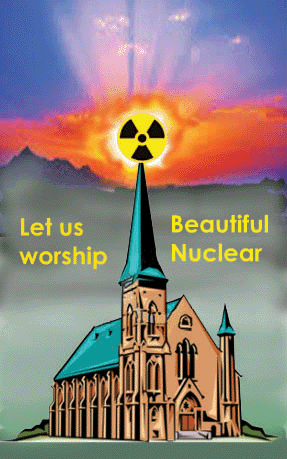
 How the Russian Church Learned to Stop Worrying and Love the Bomb https://www.foreignaffairs.com/articles/russian-federation/2019-06-14/how-russian-church-learned-stop-worrying-and-love-bomb
Orthodoxy’s Influence on Moscow’s Nuclear Complex
UN and Western countries covered up the facts on the huge health toll of Chernobyl radiation
Soviet doctors treating Chernobyl-exposed suddenly had an unwelcome crash course in this medical problem. They found that radioactive contaminants, even at relatively low levels, infiltrated the bodies of their patients, who grew sicker each year. Gradually, health officials understood they had a public health disaster on their hands. Thousands of archival records document the catastrophe. Ukrainian doctors registered in the most contaminated regions of Kiev province an increase between 1985 and 1988 in thyroid and heart disease, endocrine and GI tract disorders, anaemia and other maladies of the blood-forming system.
In two closely watched regions of the province, infants born with congenital malformations grew from 10% to 23% between 1986 and 1988. And 46% of newborns in some fallout regions died within 28 days of life. Half of these deaths were stillborn, the other half had congenital malformations “that were not compatible with life”.
Consultants from UN agencies dismissed the findings of scientists in Ukraine and Belarus…
Why would UN officials whitewash evidence of Chernobyl health damage? At the time the US, Russia, France and the UK faced huge lawsuits from their own exposures of people to radioactive contamination during four decades of reckless bomb production. If they could assert that Chernobyl was “the worst disaster in human history” and only 54 people died, then those lawsuits could go away. And that is indeed what happened.
Chernobyl horror has nuclear lessons for SA https://www.businesslive.co.za/bd/life/2019-06-04-chernobyl-horror-has-nuclear-lessons-for-sa/
As we consider this energy option it is key to bear in mind that the manipulation following this disaster means the full scale of damage can only be guessed at, 04 JUNE 2019 – 05:10 Powerful storms, record-breaking temperatures and rising water levels remind us daily of the impact of climate change and our need to address it. Policymakers are debating what shape the post-carbon future will take and SA is one country where that conversation is taking place.
Proponents of nuclear power argue that nuclear energy is the most viable and powerful alternative to fossil fuels. Opponents point to waste storage problems, plus the slow pace and high cost of building new reactors. And, they ask, what about when something goes wrong?
I recently published a book called Manual for Survival: A Chernobyl Guide to the Future, about the 1986 explosion of reactor number four at the Chernobyl nuclear power plant in Ukraine, which was at the time a republic in the Soviet Union. I found as I worked through 27 archives that much of what we are told about the Chernobyl accident is incomplete or incorrect. People were far sicker and far more people died than we are led to believe. Chernobyl contaminants were not safely enclosed within the Chernobyl Zone. Nor has the chapter been closed. We are still ingesting Chernobyl fallout from 33 years ago.
The official tally records 300 people hospitalised after the accident. These were mostly firemen and plant operators, but I found that Soviet leaders gave orders to release information on Chernobyl patients from only one Moscow hospital. In the months after the accident, villagers in contaminated regions streamed into many other hospitals. Archival records show that not 300 but 40,000 people were hospitalised for Chernobyl exposures in the summer after the accident. Many of them were children.
Journalists tend to focus on the Chernobyl Zone, a 30km circle around the plant that was depopulated in the weeks after the 1986 accident. Many correspondents report that nature in the zone is “thriving”, teeming with animals and plants that prefer radioactivity to human habitation. That story is wrong on two counts.
First, shortly after the accident, pilots chased clouds of radioactive fallout flowing northeast from the burning reactor. They manipulated the weather to make radioactive rain land on rural Belarus in order to save several Russian cities, including Moscow. That triage operation saved the contamination of millions of people but created a second Chernobyl Zone that few know about today.
At the time, Moscow officials told no one in Belarus about the weather manipulation operation. The head of the Belarusian communist party, Nikolai Sliunkov, only found out about the accident, about 5km over the Belarusian border, by phoning the head of the Ukrainian communist party several days later. The 200,000 people who lived in the Mogilev province under the seeded clouds of fallout were mostly farmers. They ate what they grew and lived with high levels of radioactivity for up to 15 years until the territory was finally evacuated in 1999.
Nor is nature in the zone thriving. I observed the work of two biologists, Tim Mousseau and Anders Møller, who have since 2000 conducted twice-yearly experiments in the Chernobyl Zone and published hundreds of papers on their findings. Their studies show cascades of extinction in the most contaminated areas. “Every rock we turn over,” Mousseau commented, “we see damage.”
The records of the Soviet state committee for industrial agriculture reveal how radioactive contaminants concentrated in the food chain and in places of human habitation. A few weeks after the accident, Soviet shepherds corralled 100,000 head of livestock from a 60km radius around the Chernobyl plant. While teamsters drove the bleating animals to slaughterhouses, Moscow agronomists issued a special manual for meat packers with instructions to mix low- and medium-level radioactive flesh with appropriate proportions of clean meat to make sausage.
The sausage was to be labelled as it normally would and to be shipped across the great Soviet Union, everywhere but Moscow. Meat with high levels of radiation was to be stored in freezers until the radioactivity decayed. Soon managers in Belarus were asking for more freezers. They asked again and again, but no freezers arrived, so they located a refrigerated train car and packed in 317 tons of highly radioactive meat and sent the dubious gift to the Georgian Republic, where it was rejected and passed on.
For the next three years, the radioactive ghost train circled the western half of the Soviet Union; no-one wanted it. Finally, four years later, KGB agents buried the train and its radioactive meat inside the Chernobyl Zone, where it should have gone in the first place.
Violence of nuclear power – from start to finish in the very very long future
Born Violent: The Origins of Nuclear Power, Asian Journal of Peacebuildling, 2019, Robert (Bo) Jacob
Please excuse the “t”s and “f”s which have somehow turned into squares – my copying problems.
(Copious references are provided on the original) “…his article traces the origins o nuclear power technology as it was speciically developed to produce nuclear weapons or use against a civilian population in war……
It will trace numerous radiological disasters during the production history o the Hanord reactor fleet and at other military plutonium production reactor sites during the early Cold War.It will describe the later emergence o the nuclear power production industry which used nuclear reactors to also produce energy or civilian use and the history o partial and ull nuclearuel meltdowns that accompanied that industry……..
Hanford during the Cold War…..During the Cold War, the United States produced over 60,000 nuclear weapons, most o them with the plutonium produced at Hanord. This includes both ission weapons like the one used in the nuclear attack on Nagasaki, and also in thermonuclear weapons. While nuclear weapons were not used in wararea ater 1945, over 2,000 weapons have been detonated in nuclear tests, roughly hal o those (1,054) by the United States. The United States tested 928 nuclear weapons at the Nevada est Site, and another 67 at the Pacific Proving Grounds in the Marshall Islands. wo hundred and sixteen o those tests were in the atmosphere, which distributed vast quantities o radioactive allout in heavy quantities close to the test sites, and also globally when the atmospheric clouds reached the upper atmosphere.
A 2015 article in The Lancet describes how “risk modelling studies o exposure to ionising radiation rom the Nevada est Site in the United States suggest that an extra 49,000 (95 percent CI 11 300–212 000)cases o thyroid cancer would be expected to occur among U.S. residents alive at the time o the testing—an excess o about 12 percent over the 400,000 cases othyroid cancer expected to develop in the absence o allout” (Simon and Bouville 2015, 407-408).
The Marshall Islands had ar ewer tests than the Nevada test site, however the United States tested its thermonuclear weapons exclusively at the Pacific Proving Ground which resulted in massive amounts o radioactive allout aecting the local population and also entering into the Paciic Ocean rom which the radionuclides could disperse throughout the Pacific Rim.
One test, the Bravo test o 1954, which was the largest weapon ever tested by the United States, created a vast and lethal allout cloud that enguled numerous Marshallese atolls. he entire population o Rongelap Atoll suered rom radiation sickness after the Bravo test. The Japanese tuna fishing boat the DaigoFukuryu Maru , among many others, was also exposed to the allout cloud. When it came to port in Yaizu, Japan two weeks after the test, its crew was hospitalized or radiation sickness. One crew member, radioman Aikichi Kuboyama, died ocomplications rom his exposure six months later,even though he was physically located about 100km rom the actual detonation point. All of these illnesses and deaths can be traced back to the nuclear reactors at Hanford.
During its years o production, Hanord was the site o numerous substantial radiological releases that endangered the local population as well as those downwind. …….. Large releases o radiation into the nearby ecosystem would be routine during the operation o the Hanord reactors and especially the plutonium extraction procedures. hese activities would leave a disastrous legacy once the plants were closed……
Historical Disasters at Plutonium Production Sites
Hanord did not suffer a major uel meltdown or catastrophic fire. However, all other nuclear weapon states have also operated multiple plutonium production reactors and the first two large-scale nuclear disasters occurred in such reactor complexes, happening within two weeks o each other.
On September 29, 1957, writes Kate Brown, as a soccer game was beingplayed in a stadium in Ozersk, in the Chelyabinsk Oblast near the Ural Mountainsin Central Russia, where the Mayak Production Association was located, a loudexplosion was heard nearby.Te source o the blast was an underground storage tank holding highly radioactivewaste that overheated and blew, belching up a 160-ton cement cap buried twenty-oureet below the ground and tossing it seventy-five eet in the air. Te blast smashedwindows in the nearby barracks and tore the metal gates off the perimeter ence.
The explosion and subsequent radiological disaster, known as the KyshtymDisaster, occurred just eight years and one month after the detonation o the firstnSoviet nuclear weapon made with plutonium produced at Mayak, the plutonium production that was the target o surveillance motivating the Green Run at Hanord.
he radioactive cloud rom the explosion, “settled over an area o 20,000square kilometers, home to 270,000 people” (Rabl 2012). Te Soviet authorities were slow to react to the crisis. “A week after the explosion,” writes Brown, who did extensive fieldwork in the region as well as at Hanord, “radiologists ollowed the cloud to the downwind villages, where they ound people living normally,children playing bareoot. hey measured the ground, arm tools, animals and people. he levels o radioactivity were astonishingly high” (Brown 2013, 239-240). he contaminated area would eventually be known as the East Urals Radioactive race (Ichikawa 2015).
Eleven days later a fire ignited in one o the reactors at the Windscale Works, the plutonium production site o the United Kingdom located in Cumbria in Northwest England. he ire burned inside o the reactor or three days and released massive amounts o radiation blanketing surrounding communities and downwind areas. “While the authorities denied large releases o radioactivity at the time, this was not a correct portrayal o the situation…On 12 October, authorities stopped the distribution o milk originating rom seventeen areaarms. However, just three days later, milk rom a ar wider area (200 square miles compared to the previous 80) was restricted” (Makhijani et al. 1995, 418). Falloutrom the accident was detected in Ireland, and the confiscated milk was dumped into the Irish Sea (Bertell 1985)
The Establishment of Commercial Nuclear Power……. Many o these plants would experience occasional leaks or releases oradiation into their local ecosystems. Several would have catastrophic nuclear accidents. In addition to the accidents at plutonium production reactors citedabove, partial core meltdowns would occur at Santa Susana in Simi Valley,Caliornia (1957), Fermi-1 in Detroit, Michigan (1966), the Lucens reactor inVaud, Switzerland (1969), Leningrad-1 in Leningrad, USSR (1975), and hreeMile Island-2 in Harrisburg, Pennsylvania (1979). A ull, catastrophic nuclearmeltdown occurred at Chernobyl-4 (1986) and three ull meltdowns occurred at Fukushima 1-2-3 in 2011.
In addition to these dire nuclear accidents, the spent uel rom normal operations at nuclear power plants pose a vexing problem or tens o thousands o generations. hese spent uel rods will need to be eectively contained or millennia as they will remain highly dangerous or over 10,000 years, and seriously dangerous or over 100,000 years. Almost all o this spent uel, millions o tons, sit in temporary or intermediate storage on the grounds o the reactors where the uel was burned. Finland will be the very irst nation to attempt to permanently store the spent uel rom its very limited nuclear power program in deep geological storage at the Onkalo site on the Baltic Sea, beginning in the2020s. All o the spent nuclear uel rom the long history o operation at Hanord still sits in temporary storage, some o it or over seventy years now (Deense Nuclear Facilities Saety Board 1997).
he challenges o containing this highly toxic waste or millennia and insuring that the sites are not damaged by geologicalorces or breached by uture human societies is speculative at best. The ongoing capacity o nuclear power to damage the health o human beings and other creatures or millennia, through the risks posed by this waste, means that we can never adequately grasp the ull violence that will result rom its production (Jacobs2018). o date, over seventy years after the successul operation o CP-1, not one spent uel rod has been placed in “permanent” storage anywhere on the planet………
Western governments in denial of Chronic Radiation Syndrome affecting nuclear test veterans
The concept of a Chronic Radiation Syndrome was first reported by Japanese doctors who observed survivors of the atomic bombs dropped upon Japan in 1945. There, the name for the syndrome is Bura Bura disease. It is not accepted by the West.
the USA was in possession of the 1971 Soviet description of Chronic Radiation Syndrome in 1973 at the latest.
In 1994 the US Armed Forces Radiobiology Research Institute Bethesda, Maryland, published “Analysis of Chronic Radiation Sickness Cases in the Population of the Southern Urals”.
From the 1950s, nuclear veterans and civilian Downwinders reported syndromes of ill health similar to Chronic Radiation Syndrome to their governments. This includes the government of the USA and the government of Australia. These reports certainly did not result in Chronic Radiation Syndrome entering the Western medical lexicon.
During the 40-year period of operations at Mayak, all studies on radiation exposure of personnel at the plant and of the off-site population, the doses of exposure, and the possible health effects from radiation exposure were classified for national security reasons”.
anyone who spoke of the reality of disease and disablement suffered by those afflicted by the nuclear weapons tests in Australia were subject to threats of imprisonment by government and to attempts of censorship by the British and Australian authorities (Marsden, cited in Cross). It took 3 decades for the Australian government to release nuclear veterans from the threat of legal action and imprisonment if they spoke.
 Chronic Radiation Syndrome, https://nuclearexhaust.wordpress.com/2014/05/01/chronic-radiation-syndrome/ Paul Langley, 9 June 19 The claim that Australian nuclear veterans suffer enhanced risk of cancer has been confirmed by the Australian Government only as recently as 2006. The official government position is that the enhanced risk suffered by the nuclear test veterans is shown in health survey results. However the Australian government refuses to acknowledge that radiation exposures due to the testing of nuclear weapons as the cause of this increased risk.
Scientists under contract to the Australian government located at Adelaide performed the analysis of the 2006 health survey results. These scientists initially suggested that exposure to petrol fumes in the Australian desert might be the cause of the increased cancer risk suffered by nuclear veterans.
This suggestion, present in the Health Survey draft report, did not make it into the final report. Instead, we are presented with a mystery. Though the scientists claim certainty in their position that the nuclear veterans’ exposure to nuclear weapons detonations was not the cause of their increased cancer risk, the scientists are unable to find any other cause.
It’s a mystery, apparently, to Australian science in the service of the State. Not that this is uniquely Australian. It is universal among the Nuclear Powers. (It is all the more perplexing given Dr. P. Couch’s compassionate and detailed submission to a Senate inquiry examining the impact of the British Nuclear Tests in Australia on the personnel involved. Dr. Couch’s submission described the suffering endured by Commonwealth Police personnel who guarded the Maralinga Nuclear Test Site after military activity had ceased. One would have logically thought that if personnel were affected by service at Maralinga in times after the cessation of weapons testing, then so were the military personnel who actually saw the bombs explode, and who saw the plutonium dust disperse during the “minor trials”. )
The report states:
“The cancer incidence study showed an overall increase in the number of cancers in test participants, similar to that found in the mortality study. The number of cancer cases found among participants was 2456, which was 23% higher than expected. A significant increase in both the number of deaths and the number of cases was found for (figures in
brackets show increase in mortality and incidence):
Nuclear Regulatory Commission’s “Reference Man” gives a distorted, inaccurate picture of radiation impacts
 Mary Olsen: Disproportionate impact of radiation and radiation regulation. Journal of Interdisciplinary Science Reviews (accessed) 9th June 2019
 Abstract. Reference Man is used for generic evaluation of ionizing radiation impacts, regulation, and nuclear licensing decisions made by the U.S. Nuclear Regulatory Commission (US NRC).
particularly when exposed as young girls, than is predicted by use of Reference Man; the difference is a much as 10-fold. Since females have been ignored in regulatory analysis, this has resulted in systematic under-reporting of harm from ionizing radiation exposure in the global population.
A critique is also offered on the US Environmental Protection Agency’s attempt to include females in its regulation. Recommendations for interim regulation to provide better protection, and questions forfurther study are offered.
https://www.tandfonline.com/doi/full/10.1080/03080188.2019.160386
|
|
Holtec” nuclear waste canisters – a pot of gold for the company – a load of trouble for the future?
Last month, the Nuclear Regulatory Commission (NRC) fined Southern California Edison an unprecedented $116,000 for failing to report the near drop of an 54 ton canister of radioactive waste, and is delaying giving the go-ahead to further loading operations until serious questions raised by the incident have been resolved.
Critics have long been pointing out that locating a dump for tons of waste, lethal for millions of years, in a densely populated area, adjacent to I-5 and the LA-to-San Diego rail corridor, just above a popular surfing beach, in an earthquake and tsunami zone, inches above the water table, and yards from the rising sea doesn’t seem to make a lot of sense from a public safety standpoint.
 The near drop incident last August, revealed by a whistleblower, has drawn further attention to the many defects in the Holtec-designed and manufactured facility. It has been discovered that the stainless steel canisters, only five-eights inches thick, are being damaged as they are lowered into the site’s concrete silos. Experts have warned that the scratching or gouging that is occurring makes the thin-walled canisters even more susceptible to corrosion-induced cracking in the salty sea air, risking release of their deadly contents into the environment and even of hydrogen explosions.
Furthermore, critics point out, these thin-walled canisters are welded shut and cannot be inspected, maintained, monitored or repaired.
Systems analyst Donna Gilmore is the founder of SanOnofreSafety.org, and a leading critic of the Holtec system. She explains her concerns this way in a recent email:
The root cause of the canister wall damage is the lack of a precision downloading system for the canisters. Holtec’s NRC license requires no contact between the canister and the interior of the holes. The NRC admits Holtec is out of compliance with their license, but refuses to cite Holtec for this violation.
NRC staff said the scraping of the stainless steel thin canister walls against a protruding carbon steel canister guide ring also deposits carbon on the canisters, creating galvanic corrosion. The above ground Holtec system has long vertical carbon steel canister guide channels, creating similar problems.
Once canisters are scraped or corroded they start cracking. The NRC said once a crack starts it can grow through the wall in 16 years. In hotter canisters, crack growth rate can double for every 10 degree increase in temperature.
Each canister holds roughly the radioactivity of a Chernobyl nuclear disaster, so this is a critical issue people need to know about.
Unless these thin-wall canisters (only 1/2″ to 5/8″ thick) are replaced with thick-wall bolted lid metal casks – the standard in most of the world except the U.S. – none of us are safe. Thick-wall casks are 10″ to 19.75″ thick. Thick-wall casks survived the 2011 Fukushima 9.0 earthquake and tsunami.
U.S. companies choose thin canisters due to short-term cost savings. These thin-wall pressure vessels can explode, yet have no pressure monitoring or pressure relief valves. The NRC gives many exemptions to ASME N3 Nuclear Pressure Vessel standards (a scandal in and of itself).
The Nuclear Waste Technical Review Board December 2017 report to Congress raises concerns of hydrogen gas explosions in these canisters. The residual water in the canisters becomes radiated and results in buildup of hydrogen gas.
The gouged canister walls reduces the maximum pressure rating of these thin canisters, creating the perfect storm for a disaster. Ironically, Holtec calls their system “HI-STORM”.
How many “Chernobyl disaster can” explosions can we afford? There are almost 3000 thin-wall canisters in the U.S. Yet the NRC has no current plan in place to prevent or stop major radioactive releases or explosions.
Many are advocating that the San Onofre storage facility be moved to higher ground in thicker casks housed in more securely hardened structures. Others are advocating for the waste to be shipped across country to New Mexico to a facility being proposed there by Holtec and a local group of entrepreneurs calling itself the Eddy-Lea Alliance.
Holtec International, a family-owned company, based in Camden, New Jersey, with mixed reviews from employees. True to its name, the company has international ambitions for building small nuclear reactors (SMRs) and become dominant in the burgeoning global market of radioactive waste management. It is working hard to convince the NRC and members of the public that concerns about its San Onofre ISFSI are over-blown and unfounded.
Holtec canisters are reportedly installed at three-dozen other reactor sites around the country, including Humboldt Bay in California. Holtec is in the running, too, for a waste storage facility at the state’s Diablo Canyon nuclear site, scheduled for shutdown in 2025.
Holtec is also offering to buy four other US phased out nuclear power stations, – Oyster Creek in New Jersey, Pilgrim in Maine, Palisades in Michigan and Indian Point in New York. As of this writing three of those proposed deals have yet to be approved, but on April 18, 2019, Holtec announced that it has closed the deal with Entergy to acquire the leaking and controversial Indian Point energy center just outside New York City after the last of its three reactors shuts down.
The pot of gold in the radioactive waste business is that, thanks to fees charged to ratepayers over the years, each plant has accumulated hundreds of billions of dollars in a decommissioning trust fund, which would all go to Holtec once the sales have been completed.
With Three Mile Island now scheduled for shutdown by the end of September, will Holtec attempt to buy TMI, as well?………… https://www.counterpunch.org/2019/06/07/halting-holtec-a-challenge-for-nuclear-safety-advocates/
What Is Radiation Poisoning?
 What Is Radiation Poisoning? Here’s What to Know About the Disease Seen on HBO’s ‘Chernobyl’
And what’s the deal with those iodine pills?, Health, By Christina Oehler June 03, 2019 “…….
1 This Month



26 September – International Day for the Total Elimination of Nuclear Weapons


PLEASE OPPOSE HR 8255 AND S.3639 – bills would accelerate satellite deployment, with no environmental review or safeguards – https://ncstd5li.quorum.us/campaign/169331/
To see nuclear-related stories in greater depth and intensity – go to https://nuclearinformation.wordpress.com
-
Archives
- September 2026 (219)
- August 2026 (330)
- July 2026 (355)
- June 2026 (287)
- May 2026 (306)
- April 2026 (356)
- March 2026 (251)
- February 2026 (267)
- January 2026 (308)
- December 2025 (358)
- November 2025 (359)
- October 2025 (375)
-
Categories
- 1
- 1 NUCLEAR ISSUES
- business and costs
- climate change
- culture and arts
- ENERGY
- environment
- health
- history
- indigenous issues
- Legal
- marketing of nuclear
- media
- opposition to nuclear
- PERSONAL STORIES
- politics
- politics international
- Religion and ethics
- safety
- secrets,lies and civil liberties
- spinbuster
- technology
- Uranium
- wastes
- weapons and war
- Women
- 2 WORLD
- ACTION
- AFRICA
- Atrocities
- AUSTRALIA
- Christina's notes
- Christina's themes
- culture and arts
- Events
- Fuk 2022
- Fuk 2023
- Fukushima 2017
- Fukushima 2018
- fukushima 2019
- Fukushima 2020
- Fukushima 2021
- general
- global warming
- Humour (God we need it)
- Nuclear
- RARE EARTHS
- Reference
- resources – print
- Resources -audiovicual
- Weekly Newsletter
- World
- World Nuclear
- YouTube
-
RSS
Entries RSS
Comments RSS
 nuclear-news