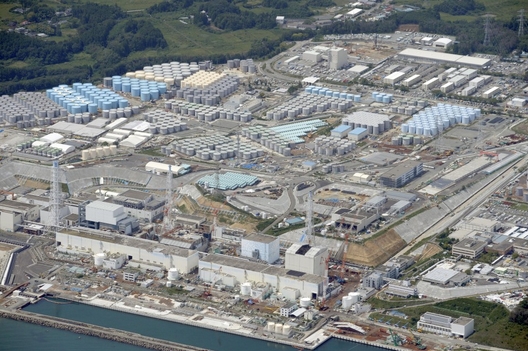
Tepco completes survey of Fukushima Daiichi 2 fuel pool
 The ROV surveys the used fuel pool of Fukushima Daiichi unit 2 (Image: Tepco)
11 June 2020
There are no obstacles to the removal of assemblies from the used fuel storage pool of unit 2 at the damaged Fukushima Daiichi nuclear power plant, Tokyo Electric Power Company (Tepco) said today after completing an initial survey of the pool. Removal of the assemblies is scheduled to begin fiscal year 2024.
Similar to the reactors at units 1 and 3, unit 2’s reactor suffered a core meltdown after it temporarily lost its cooling functions, but the reactor building – which also houses the fuel storage pool – was spared a hydrogen explosion.
Using a submersible remotely-operated vehicle to investigate the fuel pool, Tepco concluded there was no damage to the fuel assemblies or the storage rack they are held in. It did, however, discover sand-like sediment at the bottom of the pool.
The utility said images captured during the pool’s survey will be used for designing equipment to be used in the removal of the fuel assemblies. It plans to start removing the 587 fuel assemblies from the unit’s used fuel pool between fiscal year 2024 (ending March 2025) and fiscal year 2026 (ending March 2027).
Dose levels on the operating floor of unit 2 are high, thereby making it difficult to access. Tepco has, however, already made progress with the clean-up of equipment, etc. that remains on the operating floor, providing access to the area near the storage pool.
It plans to complete the removal of all fuel assemblies from Fukushima Daiichi units 1-6 during 2031.
https://www.world-nuclear-news.org/Articles/Tepco-completes-survey-of-Fukushima-Daiichi-2-fuel
A housewife will run as candidate for Iwaki City Election 2020: “I want to protect Iwaki’s children”
[Iwaki City Election 2020] “I want to protect Iwaki’s children” A housewife who has continued to measure radioactivity decides to run for a bid.
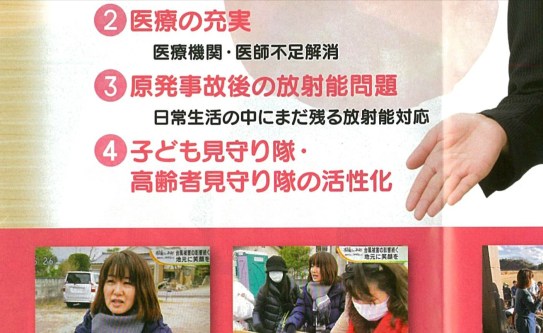
Translated by Hervé Courtois
June 11, 2020
A housewife working on the nuclear accident problem that has been going on since 2011 will run for the Iwaki City election in September. She continues to measure air doses and soil radioactive pollution to protect children from exposure risks, and decided to take the first challenge to reflect the voices of life-saving mothers in municipal administration.
I can’t vote for the nuclear accident, and I can’t do what I want to do in Corona, but I want all of Iwaki’s children to grow healthy and quickly. For that, I must do what I can do now. I am aiming for a win. The voting and voting is September 13th.
[“Pollution is still ongoing”]
Mrs. Saori Suzuki (51) = Hirashita Hirakubo, Iwaki City = is preparing for her candidacy.
Born in Osaka. Lived in Osaka until the age of 2 and moved to Tokyo and Saitama when his father moved. After getting married, she started living in Iwaki. She lives with her husband, a daughter in the second year of college, and a son in the third year of high school. She ‘s been living in Iwaki for more than 20 years.
After all, the turning point was the nuclear accident in March 2011. Until then, she had only served as chairman of the PTA at a school where children attended. Active as a member of “Mothers’ Association Pursuing Initial Exposure to Iwaki”. While running a cram school, she continues to measure air dose and soil pollution density in schools and kindergartens.
“At that time, the children were in the 4th and the 2nd grades of elementary school. According to the location of the school, it could exceed 3μSv/h depending on the location. After continuing the measuring, the nuclear accident was not over, pollution was still continuing. I want all the children in Iwaki City to grow up in good health, not just their own children. It is the foundation of society to grow healthy both physically and mentally. Don’t sacrifice children for the sake of adults.”
In April 2018, when a plan to remove monitoring posts (real-time dosimetry system) installed in front of stations and schools emerged, a request form was submitted to Mayor Toshio Shimizu with the mothers in the city. In the request form, 1) that the residents have the right to decide whether or not the MP are not required 2) Do not remove until the decommissioning work is completed 3) Do not hold future scheduled inhabitants briefings on the premise of removal ─ I asked the mayor of Shimizu to appeal to the government, but the Nuclear Regulatory Commission finally withdrew the blank plan.
9 years have passed since the nuclear accident. Neither the government nor the Fukushima Prefecture will say anything about the exposure risk in areas where evacuation orders were not issued, they were only saying that the air dose had dropped significantly.
However, Mrs. Suzuki says from the experience that she continues to measure, “The air dose and soil pollution are different. Even if the air dose is low, the soil below it is often heavily contaminated with radioactivity. Even if the air dose is low, we cannot rest assured that it is impossible to completely restore the condition before the nuclear accident, but I think adults must continue to make efforts to approach it.” ..
The issue of nuclear accident and radiation exposure risk is said to be “not a vote”, and has not been the issue of elections in Fukushima. “I’m afraid to raise the issue of radioactive pollution and exposure to the front. I think I’m tired of thinking, but I don’t want to ignore that problem,” she said. In the third leaflet, she wrote, “Radioactivity problem after the nuclear accident.”
After the nuclear accident, when Iwaki City, which used rice produced in Hokkaido for school lunch, announced a policy to switch to rice produced in Iwaki, she joined the opposition movement. The LDP-affiliated city council welcomed “Promote rice consumption expansion and local production for local consumption” and “Dispel rumor and save local farmers”, but Suzuki signed the voice of a mother concerned about internal radiation Or submitted a request form to the city. Eventually, she heard a voice saying, “Do you disturb the reconstruction?” It is said that the farmers also strongly blamed her.
“I was asked what would happen to farmers. I was talking about compensation, but… I was accused directly over the phone. I also received an email. I hope you guys leave.”
Still, she did not stop activities to protect children from radioactive materials. She couldn’t stop.
Joined the Constitutional Democratic Party. Run as an official candidate. Although I thought about running as non-affiliated candidate, the winning line in the previous 2016 city council election was 2300 votes. An unnamed newcomer without an organization has high hurdles. “I can’t pursue an ideal society without being elected and not joining parliament,” says Suzuki.
“I think some people have different opinions, but I don’t have experience or an organization. I still need a backup. Local people said, “If you can run from the LDP, you will win easily.” ” If you can not say what you want to say, there is no point in winning.”
There is also a desire to increase the number of women councilorss.
“We also worked hard in last year’s 10/12 flood damage. The whole city was in hell. Many households use septic tanks, and sewage as well as muddy water entered the houses. Moved for the stunned residents. Fortunately, my home was not flooded, so I cleaned the flooded public hall with a high pressure washer. With that as the “support base,” we began distributing relief supplies.”
“It was natural that we needed human resources and supplies, but in fact, it was not the only thing that the victims needed. In cooperation with the government and the Council of Social Welfare, we have established a tea-only corner where you can talk about anything even if you are complaining. It’s important to have a cup of tea and take a break. That’s why I can do my best again. As with the nuclear accident, flood damage has not ended.
▽Is less than 3 months until the notification date. I can’t move as expected due to coronal blight, and I get impatient. If there were no problems with the new coronavirus, we would have held a lot of tea talks and mini gatherings, but… We plan to open an office in July, so I will do my best to prepare.”
━ Can a new wind be blown into Iwaki City Council 10 years after the nuclear accident? The voting and voting is September 13th.
U.N. experts urge Japan not to rush discharge of radioactive water and not ignore human rights obligations on nuclear waste disposal
June 9, 2020
U.N. experts urge Japan not to rush discharge of radioactive water
Four United Nations human rights experts on Tuesday urged the Japanese government against rushing to discharge radioactive water from the Fukushima nuclear plant into the sea until consultations are made with affected communities and neighboring countries.
“We are deeply concerned by reports that the Government of Japan has accelerated its timeline for the release of radioactive wastewater into the ocean without time or opportunity for meaningful consultations,” the experts said in a press release.
The experts are imploring the government to delay its decision on releasing the radioactive water until after the coronavirus pandemic has been contained, so proper attention can be dedicated to the issue.
The concern was raised as public consultations on the release of the plant’s wastewater have been accelerated, and opinions will be solicited by next Monday. Such consultations were initially scheduled until after the now-postponed Tokyo Olympic and Paralympic Games.
Japan is considering ways to safely dispose of the water contaminated with radioactive materials, including releasing it into the Pacific Ocean and evaporating it. Tanks used to store the water are expected to be filled by summer 2022.
The experts — U.N. special rapporteurs respectively on hazardous wastes, rights to food, rights to assembly and association, and rights of indigenous people — took note of credible indications that the postponement of the games sped up the government’s decision-making process.
With the pandemic also preventing in-depth consultations with relevant stakeholders, the rapporteurs called on the Japanese government to give “proper space and opportunity for consultations on the disposal of nuclear waste that will likely affect people and peoples both inside and outside of Japan.”
“COVID-19 must be not be used as a sleight of hand to distract from decisions that will have profound implications for people and the planet for generations to come,” they said, raising the alarm that a discharge will pose a grave threat to the livelihoods of local fishermen.
Fukushima: Japan must not ignore human rights obligations on nuclear waste disposal – UN experts
GENEVA (9 June 2020) – UN human rights experts* today urged the Japanese Government to delay any decision on the ocean-dumping of nuclear waste water from the reactors at Fukushima Daiichi until after the COVID-19 crisis has passed and proper international consultations can be held.
“We are deeply concerned by reports that the Government of Japan has accelerated its timeline for the release of radioactive waste water into the ocean without time or opportunity for meaningful consultations,” the independent experts said. Credible sources indicate the postponement of the 2020 Olympics enabled the Government’s new decision-making process for release of the waste.
They said the Government’s short extension for the current public consultation was grossly insufficient while COVID-19 measures limited opportunities for input from all affected communities in Japan, as well as those in neighbouring countries, including indigenous peoples.
“COVID-19 must be not be used as a sleight of hand to distract from decisions that will have profound implications for people and the planet for generations to come,” the experts said. “There will be grave impacts on the livelihood of local Japanese fisher folk, but also the human rights of people and peoples outside of Japan.”
They said there was no need for hasty decisions because adequate space was available for additional storage tanks to increase capacity, and the public consultation originally was not expected to be held until after the 2020 Olympics.
“We call on the government of Japan to give proper space and opportunity for consultations on the disposal of nuclear waste that will likely affect people and peoples both inside and outside of Japan. We further call on the Government of Japan to respect the right of indigenous peoples to free prior and informed consent and to respect their right to assemble and associate to form such a consent.”
The experts have communicated their concerns to the Government of Japan. UN experts have previously raised concerns over the increase of exposure levels to radiation deemed “acceptable” for the general public, and for the use of vulnerable workers in efforts to clean up after the nuclear disaster.
ENDS
*The experts: Mr. Baskut Tuncak, Special Rapporteur on the implications for human rights of the environmentally sound management and disposal of hazardous substances and wastes; Mr. Michael Fakhri, Special Rapporteur on the right to food; Mr. Clément Nyaletsossi Voule, Special Rapporteur on the rights to freedom of peaceful assembly and of association; and Mr. José Francisco Calí Tzay, Special Rapporteur on the rights of indigenous peoples.
https://www.ohchr.org/EN/NewsEvents/Pages/DisplayNews.aspx?NewsID=25940&LangID=E
Japan extends 2011 disaster recovery agency’s work by 10 years
June 5, 2020
Japan’s parliament approved Friday a 10-year extension to the lifespan of the government agency overseeing reconstruction of the area devastated by the 2011 earthquake, tsunami and nuclear disaster.
The Reconstruction Agency will now continue to promote recovery in the northeastern prefecture of Fukushima, and provide support to residents there and in other northeastern regions, until March 2031. The agency said there were still more than 46,000 displaced residents as of March 11, the ninth anniversary of the triple disaster.
However, the scope of tax breaks and other special deregulatory measures will be scaled down, and resources allocated more selectively to areas where rebuilding efforts are still under way, and to businesses struggling to overcome public fears and false rumors about radiation.
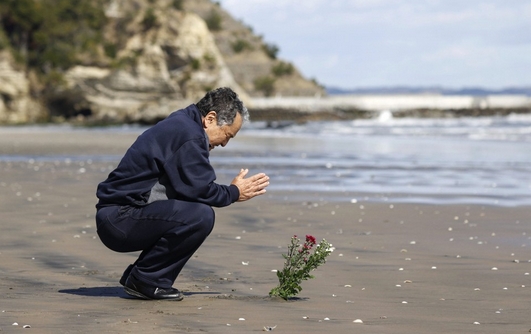 A man prays at a beach in Iwaki, Fukushima Prefecture, on March 11, 2020, the ninth anniversary of the 2011 earthquake-tsunami disaster in northeastern Japan.
Government grants for infrastructure rebuilding will be terminated at the end of the current fiscal year to March 2021, as reconstruction of roads and houses is deemed to be sufficiently complete.
The agency will continue to be headed by a full-time minister, and its budget will remain separate from the general account. Reconstruction bonds, which help finance rebuilding, will continue to be issued by the government.
Under the basic policy on 2011 quake disaster reconstruction, approved by the Cabinet in December, the government aims to complete recovery in hard-hit Fukushima, Iwate, and Miyagi prefectures in northeastern Japan in the five fiscal years through March 2026, while sustaining support for nuclear disaster-stricken areas.
Evacuation orders to be lifted even before radiation purged
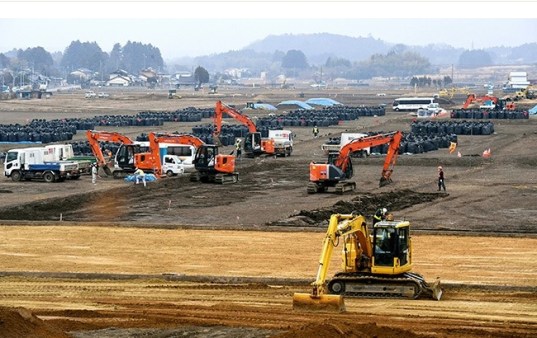 Decontamination work continues in a part of Namie, Fukushima Prefecture, prior to the lifting of an evacuation order in April 2017.
June 3, 2020
The government is planning to create new rules to allow the lifting of evacuation orders in areas affected by the 2011 Fukushima nuclear disaster before they are thoroughly decontaminated, according to sources.
The move comes in response to requests by local municipalities in Fukushima Prefecture. But it also reflects the slow pace of the decontamination process, now in its ninth year following the triple meltdown at the Fukushima No. 1 nuclear power plant.
Evacuation orders were issued for wide areas in the prefecture after the nuclear crisis triggered by the earthquake and tsunami disaster. They remain in place for seven municipalities classified as difficult-to-return zones because radiation levels remain high.
Government officials are still mulling how to best proceed with the new option. Lifting the evacuation orders would come with certain conditions. For example, the area in question would not be used for residential purposes and the municipal government would have to first decide that decontamination is not necessary.
The central government pledged to take responsibility for decontaminating areas before allowing residents to return to their homes.
This new proposal would be the first exception created to the procedures for the lifting of evacuation orders.
Officials from the Ministry of Economy, Trade and Industry, which oversees the nuclear power industry, along with the Environment Ministry and the Reconstruction Agency, have all agreed to allow lifting evacuation orders for areas where decontamination is not complete, the sources said.
The Nuclear Regulation Authority will be tasked with issuing safety recommendations for lifting the orders in areas not yet purged of radioactive materials. The government headquarters that deals with the aftermath of the nuclear disaster is expected to then approve the change as early as this summer.
Evacuation orders were issued for areas where annual airborne radiation readings were higher than 20 millisieverts.
Currently, there are three main conditions that must be met before lifting the orders: annual airborne radiation levels must fall under 20 millisieverts; restoration of social infrastructure, such as the water supply, as well as decontamination, must have progressed to a reasonable degree; and sufficient discussions on the matter with the local municipal government need to have first taken place.
The revision would leave those conditions untouched and introduce a new option to allow for speeding up the process to lift the orders.
New conditions, still being discussed, would be established for areas where natural reductions in radioactive materials led to radiation levels falling under 20 millisieverts.
The evacuation order could be lifted in places not yet fully decontaminated if no residents or workers will live in that area in the future and if the local municipal government requests lifting the order.
Another condition being considered is whether municipal governments have plans for using the area, such as building parks or distribution warehouses.
Under the new proposal, the municipal government would be allowed to decide if it will require full decontamination before the evacuation order is lifted.
The central government began considering the new option after the village of Iitate submitted a request in February.
The village is located about 40 kilometers northwest of the Fukushima No. 1 nuclear plant. The Nagadoro district in the southern part of the village is still classified as a difficult-to-return zone. The village government asked that the evacuation order be lifted for that entire district in 2023.
Under the central government’s plan, 17 percent of that district is designated as a special zone for reconstruction. Decontamination efforts would be concentrated on that zone to allow the evacuation order to be lifted in 2023.
But with more than 80 percent of the district still under an evacuation order, and with no foreseeable date for completing the cleanup of radioactive materials there, village officials worried that partially lifting the order would drive a new wedge into what had long been a single community.
Village government officials want to construct a park in the remaining area to serve as symbol of the community’s unity.
Village officials also confirmed with the 11 households located in the area outside the special zone that they had no intention of returning to their homes, even if the evacuation order is lifted. Central government officials also learned that radiation levels for much of the Nagadoro district have fallen under 20 millisieverts.
Just like Iitate, other municipalities in Fukushima Prefecture will likely also face difficult choices. Like the Nagadoro district, other municipalities have also seen radiation levels fall under 20 millisieverts.
The slow pace of the decontamination process until now has led many evacuees to decide to remain where they are, rather than return to their homes.
Even in areas where evacuation orders have been lifted, only about 20 percent of residents had returned as of April.
Central government officials also acknowledge that the importance of decontamination has waned over the years, since relatively few residents have returned–even after the huge amounts of money spent to make communities habitable again.
About 3 trillion yen ($28 billion) has been spent on decontamination efforts to date.
March 2011 Disaster Museum Opens in Fukushima Prefecture

May 30, 2020
Iwaki, Fukushima Pref., May 30 (Jiji Press)–A museum to pass down memories and lessons left by the March 2011 earthquake and tsunami to future generations opened on Saturday in Iwaki, Fukushima Prefecture, hit hard by the disaster.
“We’ll use it as a base to cultivate awareness for disaster prevention in order to develop a community that will be strong enough to overcome disasters,” Iwaki Mayor Toshio Shimizu said in a ceremony to celebrate the opening of the Iwaki 3.11 Memorial and Revitalization Museum.
Yukinaga Suzuki, 67, head of the local district, expressed hope that visitors will understand how tragic the disaster was through video materials and learn about it to ensure that there are no victims in the future.
Displays at the museum show the damage caused by the tsunami and how the northeastern Japan city accepted people forced to evacuate due to the triple meltdown at Tokyo Electric Power Company Holdings Inc.’s <9501> Fukushima No. 1 nuclear plant, which occurred shortly after the quake and tsunami.
The museum also displays a blackboard and desks used at a local junior high school that was demolished after being damaged in the disaster.

Fukushima’s radioactive water problem
Water should be stored at nuclear site, not dumped in the Pacific

By Linda Pentz Gunter
We are republishing this story this week, as the Japanese government is now threatening the imminent dumping of the radiologically contaminated water, stored at the Fukushima nuclear site, into the Pacific Ocean. The article below provides the background on this issue and the alternative choices. Our Japanese activist friends are urging us all to sign onto their petitions — there is one for groups to sign and one for individuals — asking the Japanese government not to dump 1.2 million cubic meters of radioactive water into the ocean. Japan civil society groups and Fukushima fishing unions are strongly opposed to this needless ocean discharge. Groups please sign here. Individuals please sign here.
Original article, published September 15, 2019, follows:
Last week, Japan’s then environment minister, Yoshiaki Harada, made news with a pronouncement that wasn’t news. The storage tanks at the stricken Fukushima Daiichi nuclear site, filled with radioactive water, were reaching capacity. By 2022 there would be no room for more tanks on the present site. Japan would then have to dump the radioactive water stored in the tanks into the Pacific Ocean, he said.
Although likely unrelated to those remarks, a day later, Prime Minister Shinzo Abe dispatched 19 of his cabinet ministers, including Harada. Harada was replaced as environment minister by rising star, Shinjiro Koizumi, the son of former primer minister, Junichiro Koizumi. Both father and son are opposed to nuclear energy, and on his first day in office, the younger Koizumi told reporters that he believed Japan should end its use of nuclear energy and close its nuclear power plants.
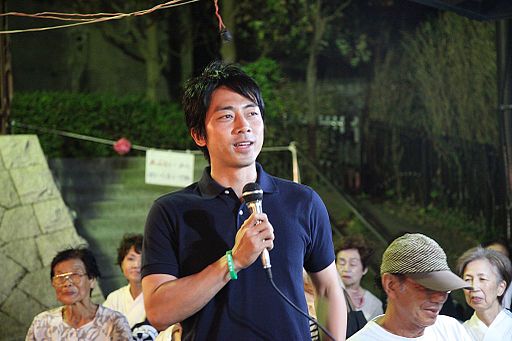 Shinjiro Koizumi, Japan’s new environment minister, says Japan should cease using nuclear power.
“I would like to study how we scrap them, not how to retain them,” Reuters reported him saying. This is a surprising position from someone inside the fervently pro-nuclear Abe government and it remains to be seen whether he will be allowed to translate his position into policy.
Dumping Fukushima Daiichi’s accumulated radioactive water has long been the plan proposed by Tepco, the site owner. Fukushima fishermen, along with some scientists and a number of NGOs from around the world, continue to object.
We addressed this issue briefly on a recent TRT broadcast (see video below).
Cooling water is needed at the Fukushima site because, when Units 1, 2 and 3 lost power, they also lost the flow of reactor coolant, causing their cores to overheat. The fuel rods then melted, and molten fuel dripped down and burned through the pressure vessels, pooling in the primary containment vessels. Units 1, 3 and 4 also suffered hydrogen explosions. Each day, about 200 metric tons of cooling water is used to keep the three melted cores cool, lest they once more go critical. Eventually the water becomes too radioactive and thermally hot to be re-used, and must be discarded and stored in the tanks.
As Greenpeace International (GPI) explained in remarks and questions submitted during a consultative meeting held by the International Maritime Organization in August 2019:
“Since 2011, in order to cool the molten cores in the Tokyo Electric Power Company Fukushima Daiichi reactor units 1-3, water is continuously pumped through the damaged Reactor Pressure Vessels (RPVs) and circulated through reactor buildings, turbine buildings, the Process Main Building and the “High Temperature Incinerator Building” and water treatment systems.
“As a result, the past eight years has seen a relentless increase in the volume of radioactive contaminated water accumulating on site. As of 4 July 2019, the total amount of contaminated water held in 939 storage tanks at the Fukushima Daiichi plant (units 1-4) was 1,145,694 m3 (tonnes). The majority of this, 1,041,710 m3, is contaminated processed water. In the year to April 2019, approximately 180 m3/day of water was being circulated into the RPVs of units 1-3.”
In addition to the cooling water, the tanks also house water that has run down from the nearby mountains, at a rate of about 100 tons each day. This water flows onto the site and seeps into the reactor buildings. There, it becomes radioactively contaminated and also must be collected and stored, to prevent it from flowing on down into the sea.
The water tank crisis is just one of multiple and complex problems at the Fukushima Daiichi site, including the eventual need to extract the molten fuel debris from inside the stricken reactors. Decommissioning cannot begin until the water storage tanks are removed.
Tepco has tried to mitigate the radioactive water problem in a number of ways. The infamous $320 million ice wall was an attempt to freeze and block inflow, but has had mixed results and has worked only intermittently. Wells were dug to try to divert the runoff water so it does not pick up contamination. The ice wall has reportedly reduced the flow of groundwater somewhat, but only down from 500 tons a day to about 100 tons.
In anticipation of dumping the tank water into the Pacific Ocean, Tepco has deployed an Advanced Liquid Processing System that the company claims can remove 62 isotopes from the water — all except tritium, which is radioactive hydrogen and therefore cannot be filtered out of water. (Tritium is routinely discharged by operating commercial nuclear power plants).
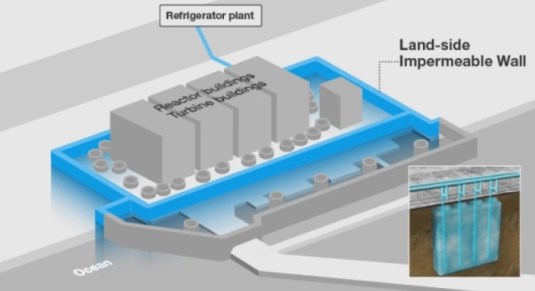 Tepco’s “Land-side Impermeable Wall” (Frozen soil wall).
But, like the ice wall, the filtration system has also been plagued by malfunctions. According to GPI, Tepco admitted only last year that the system had “failed to reduce radioactivity to levels below the regulatory limit permissible for ocean disposal” in at least 80% of the tanks’ inventory. Indeed, said GPI, “the levels of Strontium-90 are more than 100 times the regulatory standard according to TEPCO, with levels at 20,000 times above regulations in some tanks.”
The plan to dump the water has raised the ire of South Korea, whose fish stocks would likely also be contaminated. And it has introduced the question of whether such a move is a violation of The Conventions of the Rights of the Child and the Universal Declaration of Human Rights, as was raised in a joint written statement by the International Association of Democratic Lawyers and Greenpeace International, before the UN Human Rights Council currently in session.
So what else could or should Tepco do, if not dump the water offshore and into the ocean? A wide consensus amongst scientific, environmental and human rights groups is that on-site storage for the indefinite future is the only acceptable option, while research must continue into possible ways to extract all of the radioactive content, including tritium.
Meanwhile, a panel of experts says it will examine a number of additional but equally problematic choices, broadly condensed into four options (each with some variations — to dilute or not to dilute etc):
- Ground (geosphere) injection (which could bring the isotopes in contact with groundwater);
- Vapor release (which could infiltrate weather patterns and return as fallout);
- Releasing it as hydrogen (it would still contain tritium gas); and
- Solidification followed by underground burial (for which no safe, permanent storage environment has yet been found, least of all in earthquake-prone Japan).
Arnie Gundersen of Fairewinds, recommends a chemical injection processes (drilling mud) — also used by the oil industry — to stop the flow of water onto the site entirely. But he says Japan has never considered this option. GPI contends that Japan has never seriously researched any of the alternatives, sticking to the ocean dumping plan, the cheapest and fastest “fix.”
All of this mess is of course an inevitable outcome of the choice to use nuclear power in the first place. Even without an accident, no safe, permanent storage solution has been found for the high-level radioactive waste produced through daily operation of commercial nuclear power plants, never mind as the result of an accident.
According to Dr. M.V. Ramana, by far the best solution is to continue to store the radioactive water, even if that means moving some of the storage tanks to other locations to make more room for new ones at the nuclear site. The decision to dump the water, Ramana says, is in line with Abe’s attempts to whitewash the scene before the 2020 Tokyo Olympics and claim, as he has publicly in the past, that everything at Fukushima is “under control.” (Baseball and softball games will be played in Fukushima Prefecture and the torch relay will start there, all in an effort to pretend there are no dangerous nuclear after-effects remaining in the area.)
“The reason that they keep saying they need to release it is because they might have to move some of this offsite and that goes against the Abe government’s interest in creating the perception that Fukushima is a closed chapter,” Ramana wrote in an email. “So it is a political decision rather than a technical one.”
As with all things nuclear, there are diverging views on the likely impact to the marine environment and to human health, from dumping Fukushima’s radioactive water into the ocean. These run the gamut from “a little tritium won’t hurt you” to “the Pacific Ocean is dead thanks to Fukushima” — both of which are wildly untrue. (Tritium can bind organically inside the body, irradiating that person or animal from within. The many problems in the Pacific began long before Fukushima and are likely caused by numerous compounding factors, including warming and pollution, with Fukushima adding to the existing woes.)
 The effect on deep sea creatures of radioactive ocean dumping could be long-lasting.
What is fact, however, is that scientists have found not only the presence of isotopes such as cesium in fish they tested, but also in ocean floor sediment. This latter has the potential to serve as a more long-term source of contamination up the food chain.
But it is also important to remember that if this radioactive water is dumped, it is not an isolated event. Radioactive contamination in our oceans is already widespread, a result of years of atmospheric atomic tests. As was reported earlier this year, scientists studying deep-sea amphipods, retrieved from some of the deepest trenches in the ocean — including the Mariana Trench which reaches 36,000 feet below sea-level and is deeper than Mount Everest is high — detected elevated levels of carbon-14 in these creatures.
“The levels closely matched abundances found near the surface of the ocean, where the amount of carbon-14 is higher than usual thanks to nuclear bomb tests conducted more than half a century ago,” reported Smithsonian Magazine.
Weidong Sun, co-author of the resulting study, told Smithsonian Magazine that “Biologically, [ocean] trenches are taken to be the most pristine habitats on Earth”.
How chilling, then, to realize that our radioactive irresponsibility has reached the lowest depths, affecting creatures far removed from our rash behaviors.
Consequently, the decision by the Japanese government to release yet more radioactive contamination into our oceans must be viewed not as a one-off act of desperation, but as a contribution to cumulative contamination. This, added to the twin tragedies of climate crisis-induced ocean warming and plastics and chemicals pollution, renders it one more crime committed on the oceans, ourselves and all living things. And it reinforces the imperative to neither continue nor increase our reckless use of nuclear power as an electricity source.
Why the Japanese government’s plan to dump radioactive water into the ocean needs to be stopped.
Tracing Individual Perceptions of Media Credibility in Post-3.11 Japan

Abstract
The 3.11 disaster revealed many shortcomings in Japan’s mass media organisations and government, the most prominent arguably being the poor handling of the disaster by central government and TEPCO, including miscommunication and delays in releasing accurate data on the dispersal of radioactive materials. The lack of transparency in mass media coverage of the nuclear meltdown and levels of radiation resulted in growing distrust among the public, who turned to online sources and social media to confirm or challenge information provided by the mass media.
Based on in-depth interviews with 38 Japanese individuals, this study explores individual perceptions of media credibility in a disaster context and in the present, elaborating how changes in trust in media intersects with the changes and dynamics in media use and how the 3.11 disaster continues to influence media use and perceptions of credibility today. The main findings of the study suggest that in the wake of the unprecedented national disaster, Japanese media users moved from using traditional mass media as their sole source of news to a personalised, inter-media environment which integrates both online and traditional modes of communication without replacing traditional media players. This further facilitated the practice of seeking and evaluating information and media credibility through new media forms of connectivity such as social media platforms and news websites.
Keywords: 3.11 disaster, communication gap, inter-media environment, mass media, media credibility, social media
Information needs and communication gaps
The 3.11 disaster in Japan is the epitome of an unforeseen, catastrophic and intrinsically disruptive event. On 11 March 2011, the northeast coast of Japan was struck by a powerful earthquake, which caused a chain-reaction of events: a devastating tsunami, continuous aftershocks and tremors, and damage to nuclear reactors in the Fukushima Daiichi Nuclear Plant, resulting in nuclear meltdown and considerable dispersion of radioactive materials into the environment. In all phases of the disaster, Japan’s media played a crucial role in how people communicated and coped with a complex catastrophe. Nine years after 3.11, social recovery, reconstruction in disaster-stricken areas and delays in decommissioning the Fukushima Daiichi Nuclear Plant, which could take decades, remain ongoing concerns for Japanese public.
Trust is a critical component of disaster communication, and it is often tested in situations such as natural disaster and crisis (Mehta, Bruns, & Newton, 2017), where citizens’ demand for credible information increases. The exposure to inconsistent news and media reports can significantly alter people’s perceptions of media credibility (Gaziano & McGrath, 1987). Furthermore, in a disaster situation, the fragility of media is exposed (Endo, 2013) and people seek different ways to find the information they need and look for trusted media sources to reduce uncertainty and ambiguity (Lachlan et al., 2014a). During crises and natural disasters, many people rely on Twitter for its ease of access, timely updates and real-time information, and ability to identify users’ specific needs and concerns. However, despite social media’s critical role in communicating risk and disaster response, their fast and immediate dissemination comes with the risk of incomplete, misleading or inaccurate information. Another reason for questioning social media credibility is the shifting role of “gatekeepers” from producers to consumers (Westerman et al., 2014), which is why many people seek information from official and checked sources (Lin et al., 2016).
The 3.11 disaster was both a “natural” and a “man-made” disaster (Kingston, 2012). This overlap between natural and complex disaster setting, with high levels of uncertainty, amplified the critical need for credible, up-to-date and timely information on rapidly evolving events necessary for effective disaster management. Within the complex 3.11 media landscape, social media served as a new information tool and an essential medium for up-to-date, real-time news when other communication systems were not working, even as television remained a widely used medium in the first moments of the disaster (Jung, 2012).1 However, the complexity of what came to be known as the “Triple Disaster,” especially the nuclear meltdowns and the diffusion of radioactive materials, altered this significantly. The opaque nature of mass media reports and the communication gap between local and central government alongside contradictory announcements by Tokyo Electric Power Company (herein TEPCO)2 and media institutions, and the contradictory or insufficient information from the government, contributed to profound public distrust towards government and mainstream media institutions (Funabashi & Kitazawa, 2012; Hobson, 2015). Delivering information to the general public about levels of radiation was especially problematic shortly after the explosion in the nuclear plant. The inability of government, TEPCO, and national media to accurately communicate information and educate the public (Hobson, 2015) subsequently created confusion among citizens who, without prior knowledge on the levels of radiation, could not understand whether the reported levels of radiation were dangerous or not, or whether and how best to leave the area. This study has been driven by data collected from participants highlighting the lack of transparency in mass media coverage of the meltdown and levels of radiation, which led many to turn to alternative sources of information as the disaster was unfolding and to connect with a variety of sources and communities. In this context, individual perceptions of media credibility and confidence in Japanese media were significantly shaped and reconfigured by the 3.11 disaster and its changing media environment.
The erosion of public trust in Japan
In the years following the 3.11 disaster, Japanese people have been expressing declining levels of trust in media institutions and government. According to the 2018 Edelman Trust Barometer, public distrust at the global level is on the rise, with 20 out of 28 countries polled being categorised as ‘distrusters.’ The survey from Edelman shows that Japan belongs to the category of ‘distrusters’ with continuously low levels of institutional trust; the most recent report shows 32 percent for media and 37 percent for the government (see Table 1.1.). Japanese trust in social institutions, including NGOs, media, government and business institutions is 11 percent lower than the global average in 28 countries surveyed, 37 percent versus 48 percent, placing Japan at the bottom of the list as the world’s least trustful, after US (43 percent), Germany (41 percent), Australia (40 percent), Canada (49 percent), and UK (39 percent). The report also shows overall distrust in both mass media and social media in Japan, with an insignificant gap of 4 percent between trust in journalism (41 percent) and social media platforms (37 percent). Thus, it is necessary to highlight factors that led to such low media credibility in Japan.
Table 1.1. Trust in media and government institutions in Japan 2010–2018
 Source: 2010-2018 Edelman Trust Barometer Global Report
According to the World Press Freedom Index reports released in the period 2010–2018, it is evident that media freedom in Japan has been on the decline since 2012. With regard to the changes in ranking over eight consecutive years, Japan fell from being 11th on the list in 2010, to ranking 67th in 2018 (see Table 1.2.). From the time of 11 March 2011, there have been significant developments and changes in Japan’s government and political landscape, which also affected media institutions. Ever since the current Prime Minister Abe Shinzo’s administration took office in 2012, media freedom in Japan has been declining (see Table 1.2.).
Table 1.2. World Press Index Report 2010–2018: Japan
 Source: World Press Freedom Index 2010-2018, Reporters Without Borders
According to the media advocacy group Reporters Without Borders, Abe’s administration poses a threat to media independence by its interference in the editorial policies of Japan’s public broadcasting service, and its dismissal of journalist reports that are critical of the ruling party, taking little account of the citizens’ right to information. Since the State Secrecy Law was launched in Japan in 2013, “investigative journalism has declined in Japan, as the government became legally entitled to designate sensitive information (such as national defense and Fukushima-related issues) as state secrets. The public’s right to information has become restricted.” (Oishi & Hamada, 2019, p.116).
Numerous studies of the 3.11 disaster raise pressing issues in Japanese journalism including mass media’s heavy dependence on government, thereby lacking independent and critical perspective in coverage of the disaster (Galbraith & Karlin, 2016; Gill, Slater, & Steger, 2013; Kingston, 2012; McNeill, 2013). After 3.11, due to the closed kisha club system,3 in which only professional journalists affiliated with the government are permitted to attend press conferences, freelance and foreign journalists faced many discriminatory measures taken by TEPCO and the Japanese government. They were prevented from attending press conferences and denied access to direct information (Segawa, 2011). Similarly, Pacchioli (2013) highlights the difficulty in understanding the risks and overall severity of the disaster because of lack of government explanation of the issues, while Friedman (2011) discusses the problem of a shortage of specialist reporters with technical knowledge about nuclear disaster and radiation risks. The lack of communication from the government’s side led to the promotion of the view in mass media that the situation in Fukushima Daiichi Nuclear Plant was stable and under control (McCarthy, 2014, p. 185). Concerning this, McNeill (2014) argues that mass media sanitised news on the disaster to suppress panic and maintain a good image of the state, by limiting and often suppressing investigative reporting, to broadcast homogenised content. Furthermore, some studies argue that NHK did not report on nuclear disaster thoroughly, despite being the only television station with nuclear specialists among its journalists. Instead, it relied on TEPCO and government information sources, rather than utilising the expertise of independent sources (Ito, 2012; Yamakoshi, 2015). Although the focus of this study is Japan, a recent comparative analysis shows that Japan is not unique in respect to low media credibility and decreased trust in social institutions and media. Nancy Snow (2017) draws parallels between the post-3.11 Japan under the Abe administration and the post-9/11 propaganda and opinion control by the Bush administration to show how governments utilize manipulative media and public relations strategies to control opinion and rhetoric in times of national crises and wars.
Previous research has shown that levels of trust in media have significantly decreased since the 3.11 disaster (Aldrich, 2012; Newman, Fletcher, Levy, & Nielsen, 2016). A recent study by the Disaster and Media Research Group is one of the first attempts to assess the media’s lessons learned from media coverage of the Great East Japan Earthquake through qualitative in-depth interviews with representatives from Japanese mainstream national media outlets (Okumura, N., Hayashi, K., Igarashi, K., & Tanaka, A., 2019). The extant studies on the 3.11 disaster focus predominantly on questions of how and why media lacks credibility, and the general lessons learned after 3.11 with regard to trust in government institutions and mainstream media, utilizing different types of data, but rarely examining users’ perceptions of media credibility in the context of the 3.11 disaster and the present day. This makes invaluable investigation of individual media experiences through voices of media users in the context of the complex, inter-media environment that emerged with the 3.11 disaster. This study explores this issue through qualitative analysis of individual trust in mass media and social media concerning the 3.11 disaster and the present day.4
Furthermore, in addition to experiences gained by media executives and general surveys about trust levels in Japan, knowledge of how media users trust different media platforms and sources may have implications for how these media will evolve to better support disaster communication in the future. Having in mind that people heavily rely on media in the time of disasters and crises for timely and reliable information and that there is an anticipated risk of another major inland earthquake in the Tokyo metropolitan area, it is essential to utilise lessons learned from both sides, media representatives and media users, to prepare for future disasters.
Research Methodology
This study employs a qualitative approach to develop an in-depth understanding of changes and dynamics in participants’ media use in the context of the 3.11 disaster. Open-ended, in-depth interviews were designed to prompt individual participants to reflect on their experiences, convey opinions and provide insight into specific matters (Creswell, 2013). Analyses of the individual experiences with using media garnered from the interviews is positioned within the context of the immediate 3.11 disaster and the point of reflection, thus enabling us to understand the dynamics of the individual’s media usage.
Having in mind that the aim of this study is not to seek statistical generalisability, a snowball sampling method was used to select participants for the study. During two-months-long fieldwork in Tokyo,5 I interviewed 38 Japanese nationals, who were recruited by utilising my professional connections to reach some of the first participants, who subsequently provided referrals for further interviews. Drawing on the notion that the small sample size in qualitative research enhances data richness and a variety of participants (Moser & Korstjens, 2018), I intentionally selected participants differing in age (25–59), who could provide diverse perspectives on media use and credibility. Participants represented a wide range of occupations including managers, office workers, freelancers, consultants, dentists, students, professors and others. Table 1.3. shows basic demographic information about the interviewees, along with a brief overview of their main source of news during 3.11 disaster.
In the recruitment process, I avoided interviewing participants from the Tohoku region as it was directly affected by the triple disaster, and participants’ media usage patterns were disrupted and limited by the severity of the disaster, loss of electricity, evacuation and displacement. Further, digital engagement of people in the severely affected region was limited due to demographics and geography (Slater, Nishimura, & Kindstrand, 2012). I spoke to participants living in Tokyo, the neighbouring cities of Kawasaki, Yokohama, Saitama and surrounding areas who were less affected by the earthquake and tsunami than people on the north coast of Japan, but who could still feel the effects of the disaster, such as infrastructure disruptions, food and water shortages, electricity outages, mobile network failure and many others. Commuter trains, subways and bullet trains were all shut down due to the earthquake. Phone signals were mostly dead, preventing calls and messages from getting through for hours after the earthquake, so people formed lines in front of public phone booths. However, internet services were available in the areas with undamaged infrastructure, so people in Tokyo were able to use email, Skype, Line, Facebook or Twitter to establish contact with family and friends. Many Tokyo residents remain fearful about the impact of the nuclear disaster, as there were several hot spots with high levels of radioactive caesium in the metropolitan Tokyo area (Oishi & Hamada, 2019, p.114)
As the study uses the case of the 3.11 disaster to examine individual perceptions of media credibility, by looking at individuals’ recounting of media habits and experiences in using different media forms: TV, newspapers and online media (social media, news websites), the main population of interest for the study is media users who lived in a densely populated urban environment in Japan at the time of the 3.11 disaster, and who actively used some or all the above-mentioned media forms. As shown in Table 1.3, most participants whom I interviewed are residents of Tokyo, the city with the highest population density in Japan (Statistics Bureau of Japan, 2019).6 Extensive reliance on a Tokyo sample allows for an adequate investigation of individual attitudes and perceptions of trust in a media-saturated environment and exploration of variations in individual media use in high-density urban environments, and is driven by the notion that Tokyo is the city with Japan’s highest rate of mobile phone subscription, the highest mobile Internet penetration (63.3 percent), and second highest Internet penetration rate (71.9 percent) (Slater et al., 2012, p. 98). Given their heavy use of text messaging and internet, mobile phones play a significant role in the dissemination of news and disaster-related information in Japan. This is consistent with the research aim of reaching Japanese individuals, who can provide evidence of their changing notions of trust and current attitudes towards diverse media forms, including new digital technologies and platforms.
Table 1.3. Basic demographic information about participants (name, gender, age, city/region where participants resided during 3.11 and at the time of interviews) and the media platforms that they used in the three main phases of the 3.11 disaster


 Note: In the ‘Media Use’ column, media sources are listed in the order of their importance to the participant as an information source in the immediate aftermath of the 3.11 disaster
This article aims to trace changes and dynamics in the individual’s media use in relation to shifting levels of trust in media, in the context of post 3.11 Japan, through participants’ retrospective reconstruction of their past experiences. To do this, I first examine participants’ perceptions of the credibility of media they utilised in the context of the immediate and aftermath phases of 3.11, to understand the implications their perceptions have for shifts and changes in their media use habits. Then, I examine participants’ current perceptions of media they use and changes in general information seeking. The comparison of the immediate phase with the present-day phase revea;s how participants’ notions of media credibility fluctuate and intersect with everyday media use, and why participants assign higher credibility to certain media forms.
Rethinking media credibility and changing media use
Familiarity, gatekeeping and live images
The primary source of news for most participants immediately after the 3.11 earthquake was television, often complemented with social media and news websites, but occasionally used as a sole source of news. More than half of the total number of interviewed participants (38), recount using TV as their first source of news. Familiarity is one of the main reasons why it is considered highly credible, and most participants referred to TV as a common medium to which they turn in an emergency such as a natural disaster. The term “shūkan” (habit) was used to explain this. For example, one of the interviewees, Shinji,7 perceives TV as the primary medium for obtaining crucial information in a time of natural disaster:
“At least it is my habit to first turn on NHK, and if there is an earthquake, it has become customary to watch NHK. For now, it seems that many Japanese people have this habit of turning to NHK.”8
Another participant, Atsushi, similarly assumes that many people turned to NHK for the first news on the disaster: “The primary source of information for most people at that time was probably TV.”9
The notion of NHK as a familiar source of news in a time of emergency such as the 3.11 disaster, comes from the established role of NHK as official public institution mandated to report on major national events including disasters and safety warnings and designated to contribute to disaster prevention and crisis management through its broadcasts. In addition to broadcasting national events, NHK has long been established as a national medium, providing a wide range of news at fixed times as well as well researched features. NHK significantly underpins the habitual use of TV in Japan (Yoshimi, 2003). The centrality of NHK in delivering timely and accurate news on the disaster as it unfolded strengthened participants’ high levels of trust in the public broadcaster. In contrast, commercial broadcasters are only moderately trusted due to their perceived sensationalism and imbalance in reporting. In the context of 3.11, the focus of commercial broadcasters was primarily on sensationalist reporting which could bring higher ratings, such as screening high-impact images of the earthquake and rescue operations (Tanaka, 2013). NHK, as a public institution mandated to disaster prevention, focused more on keeping the public informed about safety measures, tsunami warnings, evacuation sites, to protect lives and property and help people in the disaster area (Tanaka, 2013).
In this way, besides prompt and balanced coverage of the 3.11 disaster, participants like Shinji and Atsushi refer to NHK as a habitual source for the first news and updates, which indicate that participants’ perception of NHK as credible comes from a positive personal experience and trust earned over many years.
Another overarching theme emerging from the interviews is that participants express confidence in the credibility of traditional mass media sources over social media due to the gatekeeping process through which information is filtered for publication and broadcasting (Newman & Fletcher, 2017). In explaining the reason behind the preference for television as a source of information during the 3.11 disaster, Chieko compares TV and social media (Facebook):
“Of course, Facebook provides information, but precisely because it is Facebook, I do not know whether the information is accurate or not because it is written by individuals. It is good as a communication tool, but I am not sure if it is appropriate for information dissemination. That is why I trust TV… The information dissemination is at least based on pre-established rules, so in such cases, I can probably trust it.”10
Some participants, like Sana, refer to the free flow of personally posted information found on various social media platforms, which significantly separates social media from traditional mass media forms in terms of source credibility:
“Because something that’s posted and shared on social media differs depending on the individual’s perspective and feelings, I think mass media is more reliable for confirming the facts without involving emotions.”11
While social media is considered useful for collecting local and personal information, more than half of participants associate the credibility of news with professionally produced information that is filtered, verified, accurate, clearly communicated and fair. This corresponds to professional integrity and work of media producers, journalists, and reporters, particularly from NHK and mainstream press. The convenience of and open access to social media means that the diffusion of rumours is more rapid than in traditional mass media. This can cause significant confusion, as was the case with the rumour tweets about the chemically contaminated rain that circulated in the wake of the great 2011 earthquake (Takayasu et al., 2015). In the disaster context, rumours on Twitter often contained ambiguous information and private opinions about various topics concerning safety and danger that induced anxiety or calls to action. When tweets with such content are retweeted, rumours spread (Umejima, Miyabe, Aramaki, & Nadamoto, 2011). Participants like Yoshi associate the credibility of news with professionally produced information and the gatekeeping process, which is essential to prevent rumours and misinformation:
“In terms of social media, after all, there is a flow of rumours, because there is no filtering… social media is not bad, but its negative side is indeed spreading rumours.”12
Similarly, Ryota discusses social media credibility referring to the information coming from unofficial sources, which are more likely to circulate opinionated and biased information and cause confusion:
So there are heaps of individual opinions there, and people with different standpoints have different opinions, but because it is not organised, there are too many extreme opinions…13
Keeping in mind the problem of rumours and the absence of gatekeepers in social media to check the accuracy and quality of information, it is evident that participants have more confidence in mass media sources, television and newspapers than in social media. This is because they perceive TV, particularly NHK, as official sources of news, less open to manipulation, at least when it comes to facts obtained through live broadcast.
Besides familiarity, the power of visuals, raw videos and moving images was essential for perceiving television as a highly reliable medium (McLuhan, 1964). This is evident from the repetitiveness in the use of the word: “eizō” (映像) when participants explain their preference for television in the immediate aftermath of the earthquake, tsunami and nuclear explosion. The word “eizō” is translated as “video image” or “screen image.” It was concurrently used across participants of varying ages, in the context of reliance on television and confidence in television’s credibility.
One of the interviewed participants, Fuji, explains she mainly watched television for its live coverage of the evolving disaster, and the constant flow of information which she can easily access on TV. More importantly, Fuji notes that her preference for television during the 3.11 disaster over other media forms comes from the perspective that video can best capture the real nature of a disaster. As an example, she mentions live footage of a helicopter flying over the Fukushima nuclear plant shortly after the explosion on 17 March 2011, which helped her understand the situation immediately after the nuclear disaster:
“Yes, I thought it was reliable. A video image does not lie. Rather than saying I believe it or not, I have to accept that video image is a fact. It is not that I can trust what people in the company are saying, but I took it as a fact because the person is in position to say that this kind of thing occurred in the nuclear power plant.”14
The helicopter footage was mentioned by other participants, like Takuya as one of the more effective ways to understand the evolving nuclear disaster:
“The good side of television is still video image, isn’t it? Real-time… Horrible images are coming in real-time…”15
As Takuya’s statement shows, live, closeup images of a hydrogen explosion and later of the helicopter dropping water on the nuclear plant, helped people visualise the disaster and understand its scope. The vividness of video images was often contrasted with a photograph, when discussing the role of TV in the immediate phase of the 3.11 disaster.
For example, when I asked Hana if she trusted TV during the 3.11 disaster, she explained: “It was quite like a movie, how can I say… flowing, because the media conveyed what was happening, and not the instant picture.”16 In case of such a complex disaster as 3.11, it is these “moving” video images and the immediacy of broadcast that gave participants the confidence to make sense of information overload and believe that what they are seeing is a true representation of the situation unfolding. Döveling et al. (2011) argue that the visual proximity of the camera can convey the emotional tone of a disaster, thereby reducing the uncertainty and perception of media as unreliable, or only moderately credible. Live performance and images on the TV screen are perceived as more “convincing” than text on something which has already happened, and the familiarity with events comes from the “reality effect” which live television facilitates (Gripsrud, 1999).
Immediately after the 3.11 earthquake, a live video stream from the disaster area was continuously broadcast in a small square at the top of the screen, while the main TV screen showed news commentators and presenters speaking in the studio. The continuous flow of disaster news enabled participants to visualise the disaster and evaluate live news as highly credible. As one participant, Ryota, explains:
“I found it reliable because there was a real-time video stream as soon as the earthquake happened. One good thing was that close, real-time information was continuously appearing.”ʼ17
These examples suggest that there was no suspicion of immediate live TV broadcast of the disaster, and no particular suspicion of newspaper and other media platforms at that time. Participants’ scepticism in news arose later, in the aftermath of the 3.11 nuclear disaster, including suspicion of government statements in TV broadcasts and print publications. Further, participants’ confidence in news and the high levels of trust come from the notion that the moving image and audio-visual material show actual information through the simultaneous reception of the same news and the sense of witnessing the disaster as it happened.
Growing scepticism and selective media use
Following the 3.11 nuclear disaster, participants report a lack of trust in television and/or newspaper reports, stemming from the overall perception that the nuclear disaster was poorly covered and that unbalanced, partial, inconsistent reports and media censorship, were caused by the media’s affiliations with the government and kisha clubs. Indeed, the reporting, or lack thereof, of the nuclear meltdown was the main trigger for a strong distrust towards mass media including NHK. Participants mainly refer to the lack of impartial coverage of the nuclear disaster, the poorly communicated information on levels of radiation, the censoring of information on the nuclear meltdown, and the propaganda that the situation is under control. For example, Atsushi, who was following TV news immediately after the great earthquake and tsunami, explains that it was hard for him to understand the news after the nuclear disaster: “I watched TV, but I didn’t understand anything. It has been explained, but with a long explanation, I didn’t understand the meaning at all…”18
While participants generally agree that television delivered useful, real-time, factual information on the earthquake and tsunami, their suspicions arose after the 3.11 nuclear disaster. Kenjiro used television as his primary source of news on the 3.11 disaster, perceiving NHK as extremely useful for its instant and live updates in the immediate aftermath of earthquake and tsunami. However, after the explosion at the nuclear plant, Kenjiro complemented television watching with internet and international media sources, because he felt that Japanese mass media was hiding critical information on the radiation levels and overall risks of the nuclear disaster:
“In the foreign media there was like a map showing where radioactive substances would be dispersed given the wind direction, but I wonder why Japanese media did not do the same. I think I lost confidence in Japanese media after that. Information was given in foreign media… Japanese media did not release information… everyone was really worried.”19
Although Kenjiro felt that NHK was neutral in covering the necessary information on the earthquake and tsunami, without the sensationalist dimension found on some commercial TV stations, he is convinced that the Japanese mass media, including NHK, did not utilise the SPEEDI system20 to release accurate data on radiation levels, which could help people evacuate to safe areas. He concludes that the Japanese mass media failed to release critical data and fulfil their responsibility to provide detailed, unbiased and independent coverage of the disaster. This made him question its reliability and turn to alternative sources—international media and the internet:
“The power of the state suppresses mass media …, media is being watched carefully. If you report on something unwanted, you will be dismissed. There is no independence, which is dangerous.”21
Scepticism towards mediated information and gradual loss of trust and growing disappointment in Japanese mass media was also voiced by other participants, who felt that accurate and critical information was not adequately communicated to the public. Negative responses towards repetitive and biased coverage of the disaster led to participants’ perception of mass media as only moderately reliable. Kensuke, who was following TV news from the start of the triple disaster, became sceptical of the mass media, due to repetitive and biased coverage:
“I didn’t trust information about the nuclear power plant. It seemed to be controlled. The bad thing was…there was a lot of anxiety about the nuclear plant, and I don’t know which side of the story I received… (continues in English) (they exaggerated news on nuclear disaster, treating nuclear disaster as a political issue… I feel they didn’t show the truth; the mass media has a position like left and right wing … mass media belongs to the government side, it shows good news, people doing their job).”22
Consequently, participants’ shifting perceptions of media credibility led to changing media use with utilisation of online media sources to complement mass media use due to uncertainty and gradual loss of trust in mass media.
The changing role of social media in the context of the 3.11 disaster is seen in its potential to provide new visual representations of the calamitous national disaster, with user-generated videos and images that could help viewers gain alternative knowledge of events as they unfold. In some cases, growing distrust towards mass media institutions resulted in higher social trust and/or increasing utilisation of different (online) sources which can provide critical information on radiation or nuclear disaster not provided by mass media. In such an environment, where participants feel that they cannot rely on mass media sources, especially at the time of the 3.11 nuclear disaster, social media provided some with an alternative channel which offered multiple views and perspectives on matters of life and death. In this sense, participants like Atsushi, perceive social media and the internet as a vital tool for safety and security. He notes that: “At that time, there was Facebook and it was really useful.”23
This notion of social media as alternative source of information is especially prominent in Hideki’s reference to 2channel,24 an online bulletin-board service, which helped him evaluate the accuracy of local information by comparing other users’ comments and reactions, as they offer a broad range of alternatives and views about his local community in Fukushima:
Many people have comments about the people of Fukushima prefecture. They had comments which never appeared in the news, such as that people in Fukushima are exposed to radiation every day and that the food there is contaminated and cannot be eaten…That was what other people were thinking… I used 2channel to find out what other people think.25
Takuya started utilising Facebook to circulate information on radiation levels in his hometown in Saitama, a city located about 18 miles north of central Tokyo, that he measured himself with a Geiger counter. He says that Japanese mass media is biased and strongly linked to political parties and sponsored by advertising agencies, which significantly affects its impartiality and the neutrality of its content. Therefore, Takuya found it necessary to check information on different sources and decide which is credible, as he notes: “There is nothing that can be done.”26 This phrase “shōganai,” was used by another participant. Daichi, who felt sceptical about the news in media after the nuclear explosion:
“TV was the most…I watched TV all the time. I was a bit suspicious, in particular, I was thinking whether the (situation in) Fukushima nuclear power plant was true. I didn’t really know if what was said on TV was true, I didn’t know if it was safe, if I needed to evacuate or if I shouldn’t go outside.”27
For Daichi, the most significant impact of mass media (particularly TV) was its unbalanced coverage of the disaster, which he found to be overwhelming, saying that he could not have a calm attitude towards media TV broadcast of the disaster, but like Takuya concluded that nothing could be done about it:
“At that time, because I wasn’t calm, I couldn’t take a calm attitude towards the media. I watched TV, shocked, and there was nothing much to look at…There’s nothing that can be done about the media.”28
The phrase “shōganai” reflects the view that Japanese mass media is unlikely to re-think the focus of reporting and broadcast and provide fair and balanced coverage, which is free of government and corporate (TEPCO) influence, especially in a time of disaster when there is much negative content. The use of shōganai indicates that Takuya and Daichi resigned themselves to the limitations of traditional mass media, and that making radical changes in their media consumption patterns is beyond their control. However, the following section offers personal accounts of media utilization and opinions across wide range of age groups, as an evidence of progressive changes in the traditionally established patterns of media use in the aftermath of 3.11.
Building trust through inter-media use
The changing levels of trust in mass media and general scepticism concerning news in the wake of the nuclear disaster had significant implications for the participants’ approach to media use and reliance on media. Within Japan’s broader mediascape, a new inter-media environment emerged in the aftermath of the 3.11 disaster. Inter-mediality is defined as the interconnectedness of social media and traditional mass media, in which their role and influence develop in a complementary manner (Endo, 2013, p. 5). Inter-media use among participants in a wide range of age groups, from their 20s to their 50s, was caused by participants’ sceptical attitude towards the credibility of mass media and online media, as they incorporated both traditional and social media to evaluate news content and develop independent judgment. Within this new inter-media environment, the generational divide is gradually decreasing, as younger participants in their 20s and 30s increasingly migrate to new digital platforms for news, and older participants in their 40s and 50s slowly gravitate to online media as a back-up and additional source of news.
The first significant change in participants media use triggered by the 3.11 disaster is the reliance on cross-media use or combination of older and newer media for better evaluation of credibility, accuracy and up-to-date information. A minority of participants who find social media to be moderately credible are those who used social media as their primary source of news during 3.11, for real-time updates and facts or for checking on what their friends were talking about, to verify credibility of information. For example, besides watching television at work immediately after the quake, Toshi (age group 20-29) utilised a variety of official sources on Twitter. As he did not have a TV at home, Toshi accessed breaking news and mass media reports on the earthquake on Twitter, for its immediate and real-time nature and ability to provide instant updates and deliver accurate reports on earthquake intensity and aftershocks. Reflecting on 3.11, Toshi explains that he only trusted immediate, real-time reports on earthquake and tsunami, which he accessed on Twitter. He noticed changes in the way he used Twitter to continuously access updates and news from trusted news media sources on earthquake intensity, aftershocks and other critical information:
“Twitter use, as I thought, has increased, and I looked at it for a long time…because it is fast and information immediately comes in…When the earthquake happened, I immediately looked at Twitter and saw that the earthquake was at that seismic intensity and that something absolutely terrible had happened…”29
Toshi relied on cross-media use to access credible and verified information and facts about the earthquake, which could help him realise the severity of the disaster, indicating new media trends in Japan, as mass media use extended to digital platforms. Similarly, Hideki (male, 20-29), who was in Fukushima at the time of 3.11, started checking YouTube for real-time footage posted by other users, useful for understanding the situation and providing alternative sources of information on the complex disaster. Hideki positively acknowledges the real-time feature of this social media platform:
“I started using YouTube videos to sort out what happened at that time. Since many people took videos with cameras from various places, I could find out what I did not know, so I started watching videos on YouTube. I think social media is really useful…After all, I think it is useful because we could receive information from social media when the TV station was damaged and couldn’t broadcast… ”30
In this case, user-generated and real-time videos of the disaster coming from “back-up” sources (other social media users) helped Hideki gain alternative information on the disaster and evaluate accuracy by comparing different sources. Furthermore, these unofficial communication channels, regarded as “backchannels” (Sutton et al., 2008, p. 625) served as a vital source of information, rather than merely an alternative source of information, for participants who could not access TV news.
However, the need for information was not the only reason for participants’ reliance on online sources. I have argued elsewhere that, in the context of the 3.11 disaster, social media platforms served as a space where individuals can experience and express closeness in time of crisis, creating and maintaining new forms of affective communities in digital space through a combination of user consumption and production of media content (see Petrovic, 2019, p. 92). Another reason for participants’ reliance on social media, which emerged from interviews, is the familiarity of sources in online and offline space. Participants explain that they put their trust in the comments and feedback provided by their friends, or same-community users, as a guide to what is relevant and credible. People believe that interactivity around information facilitates their understanding of the reliability of stories, as others offer feedback and alternatives (Newman & Fletcher, 2017). The discussion and sharing of news among friends or more generally among other social media users’ help participants understand the severity of the situation and realise whether the information is a fact or a rumour. After watching dramatic news reports, due to information overload, participants explained that they found it necessary to confirm what they had seen on television with others, and share information about earthquake intensity, the scope of the disaster and many other concerns. This could help them cope with uncertainty and anxiety. For example, Mayumi (30-39) recalls that she discussed the news from TV with friends and family, to understand the complexity of the disaster:
“Even if it was said to be confusing, earthquake, tsunami, nuclear power plant… the opinion of friends and family was very valuable… well, the next week it was really quite difficult (to watch), just watching that, but because there was no other choice I turned on the TV and watched it.”ʼʼ31
Most participants who were living in Tokyo at the time of 3.11 felt that Tokyo was in danger of being directly affected by radiation. Furthermore, the safety of food and water became real issues for Tokyo residents with the passage of time and concerns about radiation. All participants note that immediately after watching the news about the nuclear plant, they discussed the information they gathered from the media, either among family, friends and neighbours or in the digital community of users who follow the same news or join the same online groups, as a guide to establish reliable information. The main concerns discussed in online or offline space were related to the nuclear plant: the seriousness of the disaster, the location of safe zones, radiation effects, and the safety of food and water due to radiation. When I asked Ryota (male, 50-59) whether he discussed disaster news with friends and others, he explained:
“We talked about the damage, and whether we could help in any way, and how the nuclear disaster would end… and because there was a story on radiation, where should we go and which food and vegetables are unsafe…”32
Similarly, Saki (30-39) explains that even though she did not join any online groups or post information on social media, she was actively involved in a discussion with friends and family about the rumours and contradictory information on radiation effects they heard on TV:
“We talked about the accuracy of information and what to believe. In particular, information about the radiation is completely different depending on the medium and each day. I think about this even today. After all, I think it is controlled and that someone controls it. Especially TV…”33
Another participant, Hana (40-49), who was in Osaka, talked to her friends from Malaysia who followed the same broadcast, discussing the difference between international and Japanese mass media coverage. After that discussion, Hana found it challenging to decide which coverage was more reliable:
“At that time, a friend living in Malaysia told me that the way of reporting is very different in Japan and overseas. In Japan, it is fragmented due to such damage, but there is no such thing abroad, it is quite different…I wonder which one is better…”34
These participants’ responses indicate that they turned to their friends, family or community of media users to establish what news is reliable and relevant. This demonstrates how discussing information with their immediate community of audience members or social media users contributed to the formulation of perceptions and evaluation of media credibility.
In the context of 3.11, participants conclude that trust comes from comparing multiple sources in the emerging inter-media environment and relying on personal judgment to determine its credibility. This indicates that the complexity of the 3.11 disaster triggered a combined media use in the form of inter-media, integrating both old and new media technologies to critically analyse and evaluate news content and develop independent judgment. These findings suggest an overall understanding that television is more professional and competent than online media in delivering accurate and reliable news, as participants tend to seek information from official and checked sources, still having confidence in the professional integrity of journalism and live broadcasts above the random sources and unregulated flow of information on social media. At the same time, findings of the study show that in the inter-media environment that emerged with the 3.11 disaster, the interplay of traditional mass media and online media spheres facilitates the evaluation of media credibility and development of personal opinion.
Present-day notions of trust in media
The 3.11 disaster altered some participants’ views towards media and government institutions, changing perceptions of media credibility, which consequently led to changes in media use, mainly concerning the inclusion of online media, social media and news websites within one’s media routine. Sixteen participants recall using online media, social media or news websites, during and shortly after the 3.11 disaster. Interviews show a significant increase in participants who use online media, from 16 to 31, thereby showing that at the time of interviews, six years after the 3.11 disaster, online media, social media and news websites were afforded a similar level of importance as traditional mass media in participants’ everyday media use.
Familiarity with the source is an essential factor in how respondents perceive the credibility of online media. Post 3.11, participants still tend to communicate with friends and people they already know, which gives them more confidence to regard the information that comes from familiar sources as credible. As one of the lessons learned from the 3.11 disaster, participants explain they became more cautious when accessing information posted by unknown sources and random individuals, as they perceived it as running a higher risk of being misinformation, a poor-quality message or fake news. For example, discussing his post 3.11 media orientation and news consumption, Takashi (age group 20-29) explains that if he is not familiar with the person who posted information, he cannot find it credible, because there is a risk of misinformation or rumours. He goes on to explain that:
“Since there are times when I don’t know the source on social media, it might be a rumour On mass media, I try only to listen to facts.”35
Similarly, Hiroshi (30-39) who often uses Twitter, tend to communicate with people he already knows, which gives him more confidence to regard the information that comes from familiar sources, or in the case of his explanation below, Twitter influencers, as credible to some extent:
There are many people on Twitter. There are some you can trust, and others that you definitely cannot. Some of them are acting as influencers, and what they say and the things they introduce, they’ve checked them out to a certain extent, so they have a track record. Rather than saying whether I can trust Twitter or not, there are people whom I can trust, so Twitter is suitable for making direct contact with them.36
Therefore, Hiroshi and Takashi’s responses indicate that reliability depends not on the medium itself, but on the source. For example, familiarity with the source leads to credibility, in the case of family and friends. Sources of information that have a “track record” (jisseki) or that are “factual” (jijitsu) are also considered trustworthy.
Social media is still perceived as less credible than mass media, without significant changes in participants’ levels of trust since the 3.11 disaster. Low trust in social media still comes from a perception of biased, incomplete, misleading or inaccurate information, caused by its unregulated flow of information, immediacy and unchecked sources. Although many believe that social media can to some extent overcome or complement mass media shortcomings, social media is still seen as less credible than television and newspapers. The minority of participants (three) who still turn to TV as their only source of news, refer to the habitual use and familiarity of an established pattern of television watching.
As mentioned earlier in the article, Kenjiro (50-59) believes there is a strong link between Japanese mass media and the government and maintains that greater independence in reporting is essential. Due to the poor television coverage of the 3.11 nuclear disaster, he said he lost trust in Japanese mass media, including NHK and commercial broadcasters. However, years after the disaster, because of his long-established habit of watching television, Kenjiro still perceives it is the most reliable medium for news. He especially credits NHK for its factual reports, but also mentions that there are times when some issues and events are not reported:
“TV watching has become a habit because the latest news is delivered at a fixed time. I don’t think that is all, but I trust NHK to some extent. However, I think there are times when some things are not reported.”37
One of the rare younger participants who choose mass media forms over social media, like Michiko (female, 20-29) and Miyuki (female, 20-29) both make a note that their perception of traditional mass media (television and newspaper) as credible, comes from habitual use:
Miyuki: “I’ve watched it (TV) ever since I was little, so there is no need to doubt it.”38
Michiko: “I think newspaper is the most reliable media. When I was a child, I think my parents have taught me to read newspapers, and reading newspaper became ordinary…”39
These comments indicate that changing media habits in terms of incorporating social media in their accustomed media environment becomes difficult for three participants whose media habits still tied to traditional media and news that comes on TV at a scheduled time, or gets delivered directly to their home.
Most participants seem to agree that the major media outlets, such as NHK television news and national dailies such as the Asahi and Yomiuri, separate fact from fiction, but there are mixed opinions about whether such outlets are critical and transparent enough due to their tight link with political parties. When discussing their preference for online and international media sources, Toshi (male, 20-29), Kaori (female, 50-59) and Haruna (50-59) refer to a lack of critical coverage and transparency, as the primary reason for not trusting these sources. One of their comments was:
Toshi: “It is difficult…I don’t trust it at all. I think that Japanese media has not done much of the critical articles in journalism, and I know the world’s press ranking, I know it is low in Japan…”40
After the nuclear disaster, Atsushi (male, 40-49) started doubting news from mass media, realising it is biased and controlled, without providing alternative views and reliable information. For Atsushi, media bias that emerged post 3.11 nuclear disaster is the main reason for his distrust in mass media or as he explicitly says a few times in the interview: “I hardly ever watch TV or read newspapers because it is full of lies!”41
When it comes to media bias, the problem of political and institutional bias comes into consideration when discussing the credibility of Japanese mass media. Another participant, Wataru (male, 40-49), explains that his main decision to cancel his subscription to the Asahi and Yomiuri Shimbun comes from the view that major Japanese newspapers are tightly linked with political parties, and that this has significantly affected the coverage of 3.11 nuclear disaster.
Although there is a consensus that mass media forms provide verified and general information, online media sources are also thought to offer different perspectives on events, thereby suggesting that trust comes from a combination of multiple sources. One participant, Mei (female, 20-29), talks about how she views the information provided by mass media and online media as being different. She explains that mass media delivers official information at the macro level, while online media, especially social media, offers individual perspectives and opinions, which she sees as micro-level information. Mei stresses the importance of comparing both sources to see different viewpoints. Although she thinks Japanese mass media is not biased, she does say that it is essential to decide for yourself which source you will trust. In a similar way, Sana (female, 20-29) drew this comparison to highlight the importance of personal judgement in evaluating news content and the credibility of sources:
After all, I think that mass media have high reliability because many people put effort into it and information is organised to some extent. On the other hand, because there are all kinds of people put together, information on social media is fast, but I think that it is necessary to judge whether it is reliable information by yourself.42
In this way, participants’ comments suggest gradual changes in their media usage patterns, but more importantly, development in communication and civil society in Japan, where the user feels increasingly empowered to question, challenge and confirm the credibility from multiple media forms and sources. This opposes to the previously discussed notion of “shōganai,” as participants refuse to accept traditional modes of communication as their sole source of news and favour sifting through and evaluating information from diverse platforms and relying on critical thinking and personal judgement.
Six years on from the 3.11 disaster,43 fewer than ten percent of those interviewed rely on online and/or social media as a news source and trust them to deliver reliable and quality news. This group of participants in their 30s or 40s use curated (matome) websites as their primary source of news because they provide both sides of any issue, and rarely follow news on traditional mass media, due to the view that the information is biased and only partially reliable. Participants generally agree that the reliability depends on the source, especially when it comes to online media, and they make a clear distinction between random individual posts on social media platforms and news circulated on curated websites like Yahoo News and NewsPicks. Curated news websites aggregate top news stories from major media outlets, providing in-depth information and allowing users to leave comments on news articles.
Interviews show that more trust is placed in news portals and curated (matome) websites than on social media, as all 13 participants who use them express high or partial trust and confidence, due to an overall feeling that the adopted news content from major news outlets is more credible than the individually posted information. Figures also show that low credibility is registered only among participants who use social media, with 18 of them who perceive social media as not credible at all and 6 participants who partially trust it. Within the broad category of online media, curated (matome) websites are perceived as more trustworthy than social media platforms, because they enable users to express their opinions, provide additional information, and think about each issue through comments provided by other users, which significantly contributes to the information validation process. Eiji (male, 30-39) uses both social media (Facebook) and news websites, but for credible news, he entirely relies on curated (matome) websites, particularly NewsPicks.44 The main reason behind his preference for NewsPicks is the ability it affords him to see news of his interest in one place, but more importantly to read other users’ comments on articles, which facilitate Eiji’s judgment of whether the news is credible.
Similarly, Naoko (female, 30-39) first referred to NewsPicks when explaining which media form she enjoys the most: “There is NewsPicks, where there is various news and where various people and experts comment on news… I think that is very interesting, so I read the news.”45
She continues to explain that she regularly uses NewsPicks, because she can see the comments of other people who frequently access news of similar interest, which helps her realise there are different perspectives on the story:
“Since it sometimes happens that I don’t know which information and news alone is right on NewsPicks, it is fun to be able to see news and how various people are watching it.”46
In other words, Naoko checks NewsPicks not only for its news content, but to read other users’ comments and feedback on the news and compare information to decide what is reliable. The awareness of other users who share the same present and experience of the 3.11 disaster gives the user more confidence that rumours and fake news will be quickly corrected, and in the veracity of stories checked through other users’ feedback and comments. More importantly, the interactive nature of online news portals enables participants to gain more comprehensive experience and general perception of news, drawing on other users’ insights and different viewpoints to form their own opinion and evaluate media credibility. This suggests that aligning with a community of users who comment on curated news significantly contributes to their higher evaluation of its credibility. Furthermore, the increasing use of and reliance on digital news websites, complementing or coexisting with traditional mass media in inter-media environment which emerged with the 3.11 disaster, highlights that the internet in post-3.11 Japan, in addition to traditional mass media, plays a significant role in shaping public opinion.
Among thirteen participants who partially trust online media, ten of them belong to the 40–49 and 50–59 age groups and believe they can trust curated (matome) websites and get quick updates on information in their areas of interest. This group of participants still uses traditional mass media such as television or printed newspapers as a part of their media routine, complementing it with online news sources. When I asked Ryota (male, 50-59) to talk about his media use today and main source of information, he explained: “I use internet as much as TV. After watching it (news) on TV, I often check it again on the internet.”47 He concludes that the careful selection of news is critical, which clearly explains why he uses both the Internet and television in his regular media routine. Participants’ combined media use is driven by the notion that they cannot rely on any medium entirely, but through comparing traditional and new digital sources, they can receive different perspectives and evaluate medium credibility.
Comparatively, participants’ low trust in online media mainly comes from the participants’ general view that information on social media comes from different individual sources, often agenda driven, biased with personal feelings and sometimes too opinionated to be perceived as credible. Figures also show that the age of participants with low levels of trust in social media ranges from the 20s to the 50s. Thus, findings suggest there is a general awareness among participants that social media is not a credible news source.
Conclusion
Based on in-depth interviews, this article aimed to examine how Japanese media users perceive media credibility within the new inter-media environment that emerged in the aftermath of the 3.11 disaster. As my study demonstrates, where online and traditional modes of communication converge and intersect, individual notions of trust guide their engagement with different media platforms and information sources. This was highlighted as individuals began to question the credibility of television news coverage of the disaster amidst claims of bias and lack of critical reporting. While 26 participants mainly used television immediately after the earthquake and tsunami, sixteen people turned to online media in the wake of disaster, utilising different social media platforms or/and curated matome websites in combination with TV to search for supplementary information, and found the new media space also offered alternative sources of knowledge on the 3.11 nuclear disaster. Trust in online media comes from the new visuality facilitated by user-generated images and real-time videos of the disaster, which helped participants gain alternative knowledge on the disaster, and a means of comparing different media sources. Whereas trust in the television image comes from habitual engagement with the NHK live news in a time of emergency, with 26 participants describing television as highly or partially credible, confidence in online media stems from familiarity with its sources. That is, participants explain they put their trust in the comments and feedback provided by their family, friends, or same-community users, as a guide to what is relevant and credible. However, the number of participants who trust online media is comparably low, with only three participants who explain they find social media or news websites to be credible source of news.
The 3.11 disaster exposed many issues concerning Japanese mass media: bias, lack of investigative reporting (Gill et al., 2013; Kingston, 2012; McNeill, 2014), the cartelised media system (Freeman, 2000) and others. Participants’ responses show that the 3.11 disaster did not trigger radical changes in their media use, as the increasing use of online sources, have not replaced the traditional mass media. Even though recent statistics show low levels of trust in media institutions in Japan (Edelman Trust Barometer Report 2018), participants trust television more than online media due to belief in the authenticity of traditional news formats. High levels of trust and reliance on television come from the familiarity and habit of television watching, and the sense of liveness and immediacy provided by NHK. This is further buoyed by confidence in professionally produced and regulated news, fact-checking and sourcing, as opposed to the unregulated flow of information on social media. However, in a time of national emergency and mediatised disaster when bias and lack of critical reporting are highlighted, participants turn to online media in search of diverse perspectives and alternative views. In these more volatile times, but also as time calms a bit post-3.11 disaster, these new media patterns remain intact as participants actively turn to a combination of older and newer media platforms and demonstrate personalised media use. In this study, as one of the main effects of the “triple” disaster on overall perceptions of media credibility, we see Japanese media users who are no longer confined to traditional media systems, but are predominantly active, media-literate, inquisitive, and critical media consumers, who are motivated to use new digital media, search for news and navigate their way through complex media environment. They rely on personal judgment in alignment with a familiar community of audience and users to evaluate media credibility. This has implications for our understanding of “trust” in news sources in the inter-media environment. I argue that trust comes from combined media use, in other words, the interplay of traditional and new modes of communication which facilitate an individual’s evaluation of media credibility and guide his/her media engagement.
The participants’ combined media use is almost evenly spread across four different age groups, suggesting that people of varying ages (20–59) are slowly embracing and adjusting to the new inter-media environment. Japanese media society is moving towards more community-oriented online communication, where the digital divide between older and younger generations slowly decreases. Since 3.11, younger generations—those in their 20s and 30s—have migrated to digital platforms and increasingly come to use online sources, while older generations—aged 40–49 and 50–59—recognised the significance and affordances of different online media, mainly matome websites and social media platforms, which they slowly incorporated into their media routine as one of the news sources. The increasing use of and confidence in matome websites, such as NewsPicks and YahooNews, show that the internet in Japan, in addition to traditional mass media, plays a significant role in shaping public opinion. The examples of the changing dominance of traditional mass media and new media competition, presented in this paper, is an evidence of a general change in Japan, where after 3.11 people of different age groups utilise new platforms to evaluate traditional media sources, as a guidance for challenging media credibility. With the rise of online media and the individual’s routine exposure to an abundance of opinions and information, the inter-media environment is becoming more complex and less controllable, in terms of its reliability and transparency of sources. Participants’ experiences with using media in a disaster context demonstrate a great need for balanced reporting on a disaster, which in their opinion should be informational, affective, and more critical, to increase levels of trust in mass media. Considering that the mass media cross-ownership and lack of diversity in reporting made a significant impact on national media framing of 3.11 disaster and public perceptions of media credibility, it would be worth further unpacking individual perceptions of the credibility of different Japanese broadcasters, public and commercial, and newspapers (local, regional, national). This could be one avenue for further research.
Moving forward, having in mind the impact of perceptions of media credibility on individuals’ media habits, our aim should be to examine how, alongside rapid changes in new media technologies and developments in the interplay of old and new media forms, both online and traditional mass media will evolve and reshape news habits and attitudes and contribute to disaster communication.
Reference list
Aldrich, D. (2012). Building resilience: social capital in post-disaster recovery. Chicago: University of Chicago Press.
Döveling, K., von Scheve, C., & Konijn, E. A. (2011). The Routledge handbook of emotions and mass media. London; New York: Routledge.
Edelman (2018) 2018 Edelman Trust Barometer Global Report
Endo, K. (2013). Social Journalism in the Inter-media Society: Results from the Social Survey on the Great East Japan Earthquake and the Fukushima Nuclear Power Plant Disaster. Journal of Contemporary Eastern Asia, 12(2), 5–17.
Freeman, L. (2000). Closing the Shop: Information Cartels and Japan’s Mass Media Princeton, N.J.: Princeton University Press.
Friedman, S. M. (2011). Three Mile Island, Chernobyl, and Fukushima: An analysis of traditional and new media coverage of nuclear accidents and radiation. Bulletin of the Atomic Scientists, 67(5), 55–65.
Funabashi, Y., & Kitazawa, K. (2012). Fukushima in review: A complex disaster, a disastrous response. Bulletin of the Atomic Scientists, 68(2), 9–21.
Galbraith, P. W., & Karlin, J. G. (2016). Media convergence in Japan. Kinema Club.
Gaziano, C., & McGrath, K. (1986). Measuring the Concept of Credibility. Journalism Quarterly, 63(3), 451–462.
Gill, T., Slater, D. H., & Steger, B. (2013). Japan Copes with Calamity: Ethnographies of the Earthquake, Tsunami and Nuclear Disasters of March 2011. Peter Lang.
Gripsrud, J. (1999). Television and common knowledge. New York: Routledge.
Hobson, C. (2015). Rebuilding Trust after Fukushima. Fukushima Global Communication Programme Working Paper Series 4 (March): 1–7. United Nations University Institute for the Advanced Study of Sustainability.
Ito, M. (2012). Terebi ha Genpatsujiko wo Dou Tsutaetanoka [How Television Covered the Fukushima Nuclear Power Plant Crisis]. Tokyo: Heibonsha.
Jung, J.Y. (2012). Social media use and goals after the Great East Japan Earthquake. First Monday, 17(8).
Kaigo, M. 2017. Social Media and Civil Society in Japan. Singapore: Palgrave Macmillan.
Kingston, J. (2012). Natural disaster and nuclear crisis in Japan: response and recovery after Japan’s 3/11. London; New York: Routledge.
Kuga, K. (2016). Japan’s press clubs: an impregnable fortress of information. Media Asia, 43(1), 14-17.
Kvale, S., & Brinkmann, S. (2009). InterViews: Learning the Craft of Qualitative Research Interviewing (2nd ed.). Los Angeles: Sage Publications.
Lachlan, K., Spence, P. R., Edwards, A., Reno, K., & Edwards, C. (2014a). If you are quick enough, I will think about it: Information speed and trust in public health organizations. Computers in Human Behavior, 33, 377–380.
Lachlan, K., Spence, P. R., & Lin, X. (2014b). Expressions of risk awareness and concern through Twitter: On the utility of using the medium as an indication of audience needs. Computers in Human Behavior, 35, 554–559.
Lin, X., Spence, P. R., & Lachlan, K. (2016). Social media and credibility indicators: The effect of influence cues. Computers in Human Behavior, 63, 264-271.
McLuhan, M. (1964). Understanding media: the extensions of man. New York: McGraw-Hill.
McNeill, D. (2013). Truth to Power: Japanese Media, International Media and 3.11 Reportage. Asia-Pacific Journal – Japan Focus, 11(10).
McNeill, D. (2014). Japan’s contemporary media. In J. Kingston (Ed.), Critical issues in contemporary Japan (pp. 80–92). London; New York: Routledge, Taylor & Francis Group.
Mehta, A., Bruns, A., & Newton, J. (2017). Trust, but verify: social media models for disaster management. Disasters, 41(3), 549–565.
Moser, A., & Korstjens, I. (2018). Series: Practical Guidance to Qualitative Research. Part 3: Sampling, Data Collection and Analysis. European Journal of General Practice, 24(1), 9–18.
Newman, N., & Fletcher, R. (2017). Bias, Bullshit and Lies: Audience Perspectives on Low Trust in the Media. SSRN Electronic Journal.
Newman, N., Fletcher, R., Levy, D. A. L., & Nielsen, R. K. (2016). Reuters Institute Digital News Report. Reuters Institute for the Study of Journalism, University of Oxford.
Newman, N., Fletcher, R., Kalogeropoulos, A., Levy, D. A. L., & Nielsen, R. K. (2017). Reuters Institute Digital News Report. Reuters Institute for the Study of Journalism, University of Oxford.
Oishi, N. & Hamada, I. (2019). Silent Exits: Risk and Post-3.11 Skilled Migration from Japan to Australia. Social Science Japan Journal, 22(1): 109–125.
Okumura, N., Hayashi, K., Igarashi, K., & Tanaka, A. (2019). Japan’s media fails its watchdog role: Lessons learned and unlearned from the 2011 earthquake and the Fukushima disaster. Journalism.
Pacchioli, D. (2013). Communicating Disaster. Oceanus, 50(1), 24–26.
Petrovic, S. (2019). A Sense of Communal Belonging in Digital Space: The Case of the 3.11 Disaster. New Voices in Japanese Studies, 11, 74-98.
Reporters Without Borders. (2018). World Press Index report 2011-2018. Retrieved September 27, 2018.
Segawa, M. (2011). Fukushima residents seek answers amid mixed signals from media, Tepco and government. Report from the radiation exclusion zone. Asia-Pacific Journal-Japan Focus, 9(16).
Slater, D. H., Nishimura, K., & Kindstrand, L. (2012). Social media in disaster Japan. In J. Kingston (Ed.), Natural Disaster and Nuclear Crisis in Japan. (pp. 94–108). Routledge, New York.
Snow, N. (2017). Japan’s Global Information War: Propaganda, Free Speech and Opinion Control Since 3/11. In J. Kingston (Ed.), Press Freedom in Contemporary Japan. (pp. 274-284). Routledge, New York.
Sutton, J. N., Palen, L., & Shklovski, I. (2008, May). Backchannels on the front lines: emergency uses of social media in the 2007 Southern California wildfires. Paper presented at the Fifth International, ISCRAM Conference, Boulder, CO.
Takayasu, M., Sato, K., Sano, Y., Yamada, K., Miura, W., & Takayasu, H. (2015). Rumor diffusion and convergence during the 3.11 earthquake: A Twitter case study. PLoS one, 10(4).
Tanaka, T. (2013). NHK’s Disaster Coverage and Public Value from Below: Analyzing the TV Coverage of the Great East Japan Disaster. Keio Communication Review, 35, 91–104
Umejima, A., Miyabe, M., Aramaki, E., & Nadamoto, A. (2011). Tendency of Rumor and Correction Re-tweet on the Twitter during Disasters. IPSJ SIG Notes, 4, 1–6.
Westerman, D., Spence, P. R., & Van Der Heide, B. (2014). Social Media as Information Source: Recency of Updates and Credibility of Information. Journal of Computer-Mediated Communication, 19(2), 171–183.
World Press Freedom Index 2010-2018, Reporters Without Borders.
Yamakoshi, S. (2015). Re-examining the Journalistic Function of Public Service Broadcasting in Japan: A Discourse Analysis of Television News Coverage on the Fukushima Nuclear Crisis. Keio Communication Review, 37, 5–14.
Yoshimi, S. (2003). Television and Nationalism: Historical Change in the National Domestic TV Formation of Postwar Japan. European Journal of Cultural Studies, 6(4), 459–487.
Notes
Taiwan green groups urge Japan not to discharge radioactive water
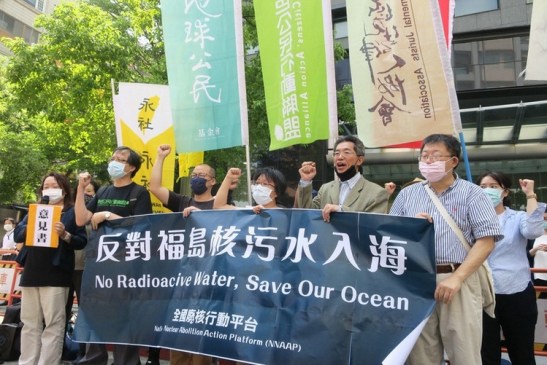 A coalition of environmental protection groups chants slogan in front of the Taipei office of Japan’s de facto embassy in Taiwan, the Japan-Taiwan Exchange Association, on May 13, 2020
May 14, 2020
TAIPEI (Kyodo) — A coalition of environmental protection groups in Taiwan on Wednesday urged the Japanese government to refrain from releasing radioactive water from the wrecked Fukushima nuclear plant into the ocean.
Chanting the slogan “No to dumping radioactive water into the ocean,” representatives of the organization presented a petition to the Taipei office of Japan’s de facto embassy in Taiwan, the Japan-Taiwan Exchange Association, in the morning.
National Nuclear Abolition Action Platform spokeswoman Tsuei Su-hsin emphasized that they did not come to protest, but rather to urge the Japanese government to refrain from making decisions to cut costs at the expense of the environment.
“There are safer and more sustainable alternatives,” Tsuei said.
The Japanese government and the operator of the Fukushima Daiichi nuclear power plant at the time are currently considering ways to safely dispose of the more than 1 million tons of water contaminated with radioactive materials after being used to cool the melted fuel cores at the plant.
A decision needs to be made soon as space for storing the water, which has been treated but is still contaminated with low-toxicity radioactive tritium, is fast running out.
Methods being discussed include releasing the water into the Pacific Ocean and evaporating it, both of which the government says will have minimal effect on human health.
A panel of experts advising the government on a disposal method has recommended releasing it into the ocean. The government is soliciting opinions from the public before it makes a decision in the summer. Based on past practice, it is likely to accept the recommendation.
Tsai Ya-ying, an activist and lawyer of the Wild at Heart Legal Defense Association, said as Japan is a signatory of the U.N. Convention on the Law of the Sea, it is obligated to take all measures within the Convention that are necessary to prevent, reduce and control pollution of the marine environment from any source.
Discharging the water into the ocean could amount to a violation of the Convention, she said.
Liu Jyh-jian, president of the Taiwan Environmental Protection Union, urged the Japanese government to make a decision that is friendly to both the environment and to mankind.
He added that if the tritium enters the food chain, it is bound to cause harm to humans in the long run.
Tsai Chung-yueh, deputy secretary general of Citizen of the Earth, voiced concern that the Japanese government may be too preoccupied with fighting COVID-19 to make a decision that is environmentally sustainable.
The contaminated water is increasing by about 170 tons per day. Space is expected to run out by summer 2022.
Local Japanese fishermen and residents have expressed concerns about releasing the water on food and the environment.
Widespread concerns remain as well, with many countries and regions still restricting imports of Japanese agricultural and fishery products in the wake of the 2011 disaster that was triggered by a major earthquake and tsunami.
https://mainichi.jp/english/articles/20200513/p2g/00m/0in/112000c
Tepco prepares to survey Fukushima Daiichi unit 2 fuel pool
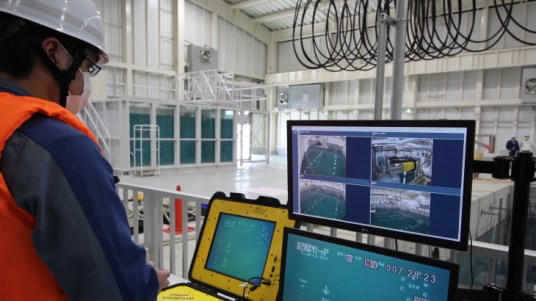 A worker receives training on using the submersible ROV
14 May 2020
Tokyo Electric Power Company (Tepco) has carried out training in the operation of a submersible remotely operated vehicle (ROV) that will be used to investigate the used fuel pool of unit 2 at the damaged Fukushima Daiichi nuclear power plant. The investigation is scheduled to begin in mid-June.
The company said it plans to start removing the 587 fuel assemblies from the unit’s used fuel pool between fiscal year 2024 (ending March 2025) and fiscal year 2026 (ending March 2027). “However, prior to commencing fuel removal, we must first ascertain whether or not there are any obstructions above the fuel or inside the cask pit, and we must also ascertain the condition of the skimmer surge tank,” Tepco said.
Dose levels on the operating floor of unit 2 are high thereby making it difficult to access, Tepco noted. It has yet to conduct an internal investigation of the unit’s used fuel pool, but it has made progress with the cleanup of equipment, etc. that remains on the operating floor and it is now possible to access the area near the storage pool. Tepco has also now deemed it possible to safely install investigation equipment.
Tepco held training sessions at the Fukushima robot test field in Minami-Soma City for eight employees between 13 and 15 May on operation of the submersible ROV. It says the design of equipment for the removal of the fuel from unit 2’s storage pool will be reviewed according to the results of the investigation.
https://world-nuclear-news.org/Articles/Tepco-readies-to-survey-Fukushima-Daiichi-unit-2-f
Taiwan groups reject Japan plan to dump radioactive wastewater
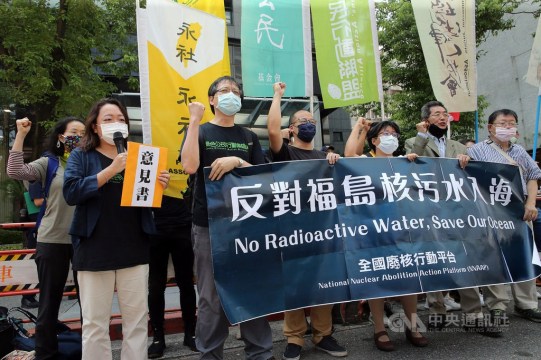
May 13, 2020
Taipei, May 13 (CNA) About 20 environmental protection groups on Wednesday delivered a petition to the Japan-Taiwan Exchange Association, expressing opposition to the discharge of radioactive wastewater from the Fukushima Daiichi nuclear plant into the Pacific Ocean.
Roughly 1.2 million metric tons of contaminated water remains from the magnitude 9.0 earthquake and tsunami that hit the plant on March 11, 2011, destroying key cooling functions and causing a huge leakage of radiation.
The wastewater contains approximately 880 trillion becquerels of tritium, a hydrogen isotope that experts say poses a relatively low risk to human health.
The Japanese government is currently soliciting public opinion on wastewater treatment until June 15, after which it will decide what to do with the contaminated water. One of the options is dumping it into the ocean.
“We learned Japan is considering discharging wastewater from the Fukushima Daiichi plant into the ocean. The plan will cause radioactive contamination to marine ecology. We were astonished to learn this and resolutely oppose it,” the Taiwanese groups said in their petition.
The groups said they were not there to protest but to appeal to the Japanese government to listen to neighboring countries and not to make the wrong decision.
Currently, 2,000 groups and individuals around the world have signed a petition opposing discharging the wastewater into the sea, while about 20 groups in Taiwan submitted a petition to the Japan-Taiwan Exchange Association, said Tsui Shu-hsin (崔愫欣), General Secretary of anti-nuclear organization Green Citizens’ Action Alliance.
If Japan goes ahead with such a plan, the Taiwanese groups do not rule out holding protests, Tsui said.
Releasing the wastewater into the sea is not the only option, Tsui said, adding that it could also be put into larger storage tanks by consolidating the sludge or soil particles, though that would be more expensive.
Although discharging the wastewater into the ocean is the cheapest approach, “We resolutely oppose using this treatment method,” Tsui said.
Despite the fact that plant operator Tokyo Electric Power Co., (TEPCO) has installed filtration systems to remove radioactive isotopes strontium-90 and caesium-137, it cannot remove tritium residue in the wastewater, while 70 percent of the water still contains the radioactive elements strontium-90 and caesium-137.
As such, dumping the wastewater into the ocean, could cause enormous damage to the marine environment, said Tsai Ya-ying (蔡雅瀅), a lawyer affiliated with the Wild at Heart Legal Defense Association.
Japan, a signatory country of the United Nations Convention on the Law of the Sea, should adopt all necessary measures to prevent, reduce and control pollution of the marine environment in accordance with Article 194 of the convention. It also needs to ensure other countries do not suffer from the effects of environmental damage caused by contamination, Tsai noted.
She called on Japan to reject the possibility of dumping radioactive wastewater into the sea to avoid adversely impacting neighboring countries and hurting good relations between Taiwan and Japan.
Korean navy to study impact of Fukushima Daiichi’s radioactive water leak
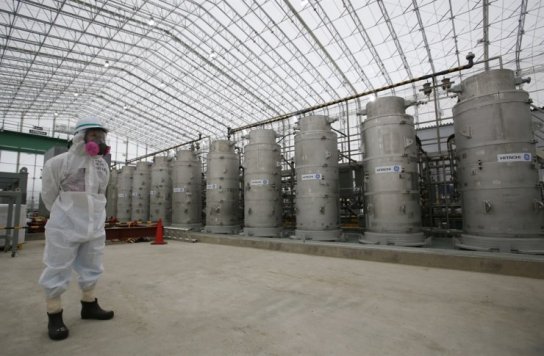 A Tokyo Electric Power official wearing protective gear stands in front of Advanced Liquid Processing Systems during a press tour at the Fukushima Dai-ichi Nuclear Power Plant in this Nov. 12, 2014, photo.
Navy to study impact on radioactive water leak by Japan
May 12, 2020
By Kang Seung-woo
The Navy announced, Tuesday, plans to study the effects of radioactive water on its operations in an apparent countermeasure against Japan’s alleged plan to dump the contaminated water from its Fukushima nuclear plant into the ocean.
While many domestic and international environment groups have studied the possible water release by Japan, this is the first time that the Korean military has decided to investigate the issue, although it remains cautious about specifying Japan is the target country for the study.
According to a notice posted on the government’s procurement system site, the Navy plans to commission research into the potential impact of radioactive water within its operational areas on its maritime operations and ways to stably carry out missions.
The Navy said the 30 million-won ($24,000) research project is scheduled to run until Nov. 30.
“We recognize the growing possibility of radiation-contaminated water being released into our operational areas, and international environmental organizations have warned that if a neighboring country dumps radioactive water into the ocean, it would reach the East Sea within a year,” a Navy officer said.
The officer added that there have been no studies on how radioactive water would affect the environment where naval operations are carried out, and so an advanced investigation is required in order for the Navy to conduct practical and realistic operations.
“Given that seawater is used for living purposes and cooling for equipment, we need to research the impact of radioactive water,” the officer said.
The envisaged research comes as Japan has reportedly been preparing to discharge contaminated water from the power plant, devastated by an earthquake and tsunami in 2011, into the ocean. More than 1.1 million tons of radioactive water are reportedly being stored in 977 temporary holding 977 tanks at the power plant in Fukushima.
In February, Greenpeace said a group of experts in Japan’s Ministry of Economy, Trade and Industry had recommended discharging the contaminated water into the ocean as a final means to get rid of it.
In relation to the plan, the Japanese government has held events to gather opinions from local residents and experts on dumping radioactive water into the Pacific, which were seen as procedural ahead of releasing the contaminated water.
However, the Navy said its study was not targeting Japan, adding that it was meant to devise detailed guidelines and a response manual to radioactive-contaminated water in general.
The possibility of Tokyo discharging the water into the sea was raised last year after Shaun Burnie, a senior nuclear specialist at the German branch of Greenpeace, warned in August that Japan could dump over 1 million tons of radioactive waste into the Pacific.
Since then, Japanese government officials have begun to openly discuss the issue. They say almost all the radioactivity has been removed from the water except for tritium, claiming this metal was relatively nonhazardous ― something experts disagree with, noting it can cause cancer and fetal deformities.
Yoshiaki Harada, a former Japanese environment minister, said last year that there was no other option but to dilute the contaminated water by pumping it into the ocean in order to dispose of it.
In response, the Korean foreign ministry summoned Tomofumi Nishinaga, a minister for economic affairs at the Japanese Embassy in Seoul, to convey the government’s concern on the possible disposal of contaminated water. It also sent letters to the International Atomic Energy Agency (IAEA) to express concern over the environmental impact of the possible water release and call for joint countermeasures from the international community.
http://www.koreatimes.co.kr/www/nation/2020/05/181_289418.html
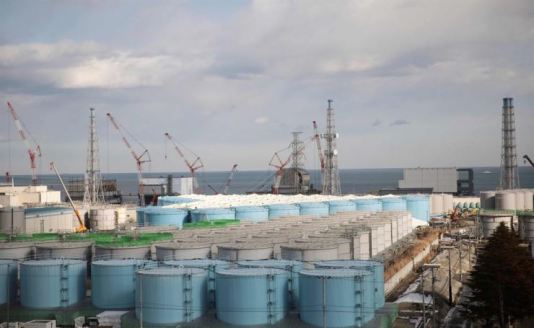 The Navy plans to look into possible impact of radioactive contaminated water on its operations, officials said Tuesday, amid concerns over Japan’s planned release of radioactive water from the Fukushima nuclear power plant into the ocean.
Navy to assess impact of radioactive water on its operations amid Fukushima concerns
May 12, 2020
The Navy plans to look into possible impact of radioactive contaminated water on its operations, officials said Tuesday, amid concerns over Japan’s planned release of radioactive water from the Fukushima nuclear power plant into the ocean.
Japan has been preparing to release contaminated water from the power plant devastated by an earthquake and tsunami in 2011 into the ocean. More than 1.1 million tons of tainted water is reportedly in temporary storage at the Fukushima plant.
According to the notice of a bid posted on the government’s procurement system site, the Navy plans to commission research into potential impacts of radioactive water within operational areas on its maritime operations and ways to stably carry out missions.
“We’ve seen a growing possibility of contaminated water being released into our operational areas and we need to assess its impact on the health of our sailors and military hardware, among others,” a Navy official said.
It is the first time that the Navy has taken steps to look into the Fukushima case, though it did not specifically mention the Japan case in its plan to commission the research.
“The planned study is meant to devise detailed guidelines and response manuals in general terms,” the officer said. (Yonhap)
Japan has been preparing to release contaminated water from the power plant devastated by an earthquake and tsunami in 2011 into the ocean. More than 1.1 million tons of tainted water is reportedly in temporary storage at the Fukushima plant.
According to the notice of a bid posted on the government’s procurement system site, the Navy plans to commission research into potential impacts of radioactive water within operational areas on its maritime operations and ways to stably carry out missions.
“We’ve seen a growing possibility of contaminated water being released into our operational areas and we need to assess its impact on the health of our sailors and military hardware, among others,” a Navy official said.
It is the first time that the Navy has taken steps to look into the Fukushima case, though it did not specifically mention the Japan case in its plan to commission the research.
“The planned study is meant to devise detailed guidelines and response manuals in general terms,” the officer said. (Yonhap)
http://www.koreatimes.co.kr/www/nation/2020/05/371_289385.html
Ministry to test growing veggies on cleansed soil in Fukushima
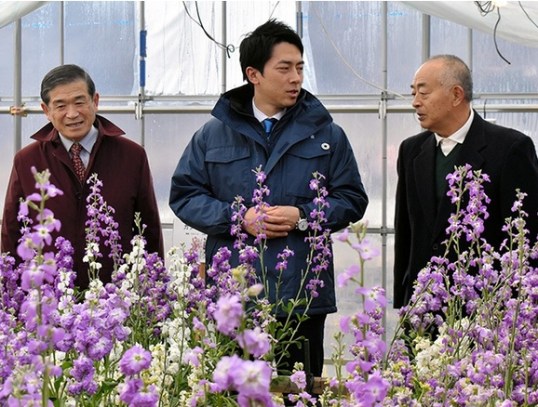 Environment Minister Shinjiro Koizumi, center, inspects a test project on reusing soil decontaminated following the 2011 nuclear accident on farmland in Iitate, Fukushima Prefecture, in February.
May 7, 2020
Despite strong public opposition to the proposal, the Environment Ministry will soon start a trial demonstration to confirm the safety of growing food crops in soil decontaminated following the 2011 nuclear accident.
The ministry received nearly 3,000 public comments about its proposal to revise an ordinance to enable the soil to be reused across Japan, most of which opposed the proposal.
Many people are opposed to reusing the soil, saying, “It will spread contamination.”
At a news conference on May 1, Environment Minister Shinjiro Koizumi acknowledged, “I strongly recognize the fact that there are people who are opposing (the reuse of decontaminated soil). We will provide detailed explanations to seek understanding for our willingness to take a step forward even if it’s just a small one.”
The project, to start by the end of May at the earliest, will be conducted in the Nagadoro district in Iitate, Fukushima Prefecture. The district is designated as a “difficult-to-return” zone, where radiation levels remain high since the triple meltdown at the Fukushima No. 1 nuclear power plant following the Great East Japan Earthquake and tsunami.
The ministry is seeking to reuse decontaminated soil for public construction work and farmland development if the radiation level of the soil is below certain standards. In the last fiscal year, which ended in March, flowers and crops used to make solid fuel for biomass power generation were grown on land using the decontaminated soil.
The ministry initially planned to revise a related ordinance in April to enable the soil to be reused, saying it obtained “results that showed the soil was safe enough (to be used for growing crops).”
However, the ministry decided to postpone the revision after hearing requests from local residents who want to grow food crops as well. The ministry must check the safety of the soil once again since such crops will be intended for human consumption. The ministry will grow vegetables including tomatoes and cucumbers during the test project.
In the Nagadoro district, there is a demonstration plot of farmland that spans about 600 square meters in total. The land comprises an 800-cubic-meter embankment of soil whose radiation level is 5,000 becquerels or lower per kilogram, and the embankment is covered with uncontaminated soil that is 50 centimeters thick.
Decontaminated soil is currently stored at interim storage facilities in Okuma and Futaba in Fukushima Prefecture. The law stipulates that the final disposal of the soil should be conducted outside the prefecture within 30 years from 2015, when the facilities began storing the soil.
The total amount of soil stored at such facilities is expected to reach about 14 million cubic meters, equivalent to 11 Tokyo Domes, located in Tokyo’s Bunkyo Ward. The ministry is considering reusing the soil to reduce the amount of soil that needs to be disposed of.
The Fukushima Nuclear Disaster and Civil Actions as a Social Movement
Abstract: In addition to a citizen initiative to launch a criminal lawsuit against Tepco and Japanese state executives over their responsibility for the Fukushima nuclear disaster, more than thirty collective civil actions have been launched across the country. Thus far, thirteen verdicts have been handed down, with a large majority of courts ruling against Tepco and the state. Despite disappointingly small amounts of compensation, these verdicts carry important sociological significance as they challenge the government’s efforts to restart nuclear power plants. This article provides an overview and typology of the lawsuits, showing that these civil actions build on a legacy of social movements organized by networks of lawyers and activists.
Keywords: Fukushima, Collective Lawsuits, Nuclear Disaster, Social Movements, Compensation
Like the many industrial disasters that have marked the history of modern and contemporary Japan, the nuclear disaster of March 2011 resulted in much litigation. By the ninth anniversary of the catastrophe in 2020, nearly four hundred individual civil actions, and at least thirty known cases of collective civil actions, along with two collective administrative lawsuits, have been launched across the country. The total number of plaintiffs exceeds twelve thousand. Thirteen district courts have already handed down judgments, a large majority of them in favor of the plaintiffs against the Tokyo Electric Power Company (Tepco) and the Japanese state. The cases are now pending in appeal.
There has been no shortage of literature devoted to the politics of disaster redress since Fukushima, from such perspectives as political science, sociology, and scientific studies (e.g. Hasegawa 2011, Fujigaki et al 2015, Kimura 2016, Mullins, Nakano et al 2016, and Aldrich 2019, Polleri 2019). But despite interest in the various social mobilizations that arose in the aftermath of the disaster, thus far, with the exception of newspaper articles, there has been very little analysis of the collective civil actions seeking compensation or of related fundamental issues.
In addition to these civil actions (minji soshō), a group of 15,000 Fukushima citizens sought criminal prosecution of the state and Tepco for the nuclear disaster as early as 2012. The prosecutors reduced the number of defendants from twenty to three, all top Tepco executives. In its September 2019 verdict, the Tokyo District Court concluded that there was insufficient evidence to convict them. The case is now pending on appeal with little chance of a reversed verdict. In a recent Asia-Pacific Journal article on the case and one of the rare in-depth analyses of such lawsuits, Johnson, Fukurai and Hirayama (2020) concluded: “The trial and the criminal processes that preceded it revealed many facts that are proving useful to plaintiffs in their ongoing civil lawsuits with Tepco and the Japanese government.”
This essay endorses this conclusion and provides an overview of the civil action lawsuits. The civil cases have made it possible to mobilize Fukushima victims to pose critical questions about the role of the state in the decisions that provoked the nuclear disaster as well as to challenge subsequent state policies. Following existing scholarship on the Fukushima nuclear disaster and the literature on Japanese law and society, I draw on interviews with representatives of plaintiffs’ groups and first-hand documents they provided. I highlight the difficulties in the process of litigation, and emphasize that despite the low amounts of compensation, the Fukushima lawsuits are significant for contemporary Japan, as well as for other lawsuits over industrial and techno-scientific damage elsewhere. I show that these legal initiatives build on a legacy of collective lawsuits that have developed in Japan over the last 50 years. The next two sections introduce important points about the legal and political contexts.
 Plaintiffs meeting after a court meeting (at Osaka City Central Public Hall), 23 May 2019. Courtesy of Akiko Morimatsu
1. The Legal Context
For a long time, discussion in the English-language literature on litigations in Japan has focused on the relatively low rate of legal battles (in particular compared to the U.S.), and cultural or institutional barriers as the main possible causes for this. In a seminal essay, Japanese legal sociologist Kawashima Takeyoshi (1963) posited that rather than judicial decisions based on universal standards, Japanese people had a cultural preference for informal mechanisms of dispute resolution. Kawashima nevertheless expected that Japanese society would become more litigious as modernization progressed. The question of modernity aside, this prophecy proved true as the rate of litigation significantly increased, especially in the 1990s.
Previously, many Japanese academics had drawn on Kawashima’s culturalist argument, without attending to his view that litigation was likely to increase with modernization. The result was a legal version of the Nihonjinron thesis on the Japanese, i.e., an emphasis on culturally homogenous Japanese valuing consensus and harmony, hence a propensity to eschew litigation. This fantasy was broken by Frank Upham’s groundbreaking article on the four big pollution lawsuits (1976; see also Upham 1987, 2005), and John Haley’s essay, “The myth of the reluctant litigant” (1978), which analyzed statistics that included the evolution from late Meiji to the mid-1970s shifts in the number of judges, public procurators and private attorneys, as well as the percentage of successful applicants to the national law examination. Haley’s article has often been taken to show that access to Japanese courts was consciously restricted in a variety of ways, such as keeping the number of legal professionals low (see also Haley 1982, 1991).
However, this claim of low access to the judiciary is no longer relevant. Ginsburg and Hoetker (2006) have shown that, thanks to an expansion in the Japanese bar and more streamlined procedures for accessing the judiciary and launching a suit, from 1986 to 2001 civil litigation increased by approximately one third, although most of that increase was concentrated in urban prefectures, particularly Tokyo. Foote (2014: 174-180) further shows that several important reforms have improved the legal environment for those seeking redress. First, the amendments to the Code of Civil Procedure in 1996 and the Information Disclosure Act (enacted in 1999) have expanded civil access to government information, which is crucial for social movements. Second, the Justice System Reform Council, which was launched in 1999, initiated a reshuffle of the entire judiciary. The changes included greater flexibility and quicker procedures for cases involving many victims, as well as new provisions of legal assistance, and various efforts to increase both the size and quality of the legal profession.
As a result of these reforms, the number of judges and prosecutors increased from, respectively, 2,143 and 1,363 in 1999, to 2,774 and 1,976 in 2019, while the number of lawyers jumped from 16,731 to 41,118 (Nichibenren 2019). The number of lawyers did not reach the target of 50,000 by 2018, as announced in the final report that the Justice System Reform Council released in 2001 (Ginsburg and Hoetker: 38). But it is worth noting that in the meantime, the female to male ratio has more than doubled for lawyers (from 8.4 to 18.8%) and prosecutors (from 8.4 to 25%), with women making up 26.7% of all judges (ratio not given for 1999). These changes contrast sharply with the persistent glass ceilings that women continue to face in other professions.2
Consequently, if we follow Foote (2014: 180), we can assume that although the reforms remain incomplete, and they do not guarantee success in litigation, they have facilitated access to the judiciary and the work of Japanese “cause lawyers.”3 The following sections will explore the relevance of these developments to the civil actions launched by the victims of the Fukushima nuclear disaster.
2. The Political Context of Lawsuits
The independence of the Japanese judiciary has been the subject of a long and heated debate, especially when compared to its American counterpart (Haley 1998, Johnson 2002, Johnson 2002, Upham 2005, Ramseyer and Rasmusen 2003). A discussion of the topic goes beyond the scope of this article. Suffice it to say, for the problem at issue here, the Fukushima litigations necessarily have political implications, even though they may not be explicitly stated in the lawsuits’ objectives. Unlike former Prime Ministers Kan Naoto and Koizumi Jun’ichirō, who have become staunch opponents of nuclear energy, Prime Minister Abe Shinzō has expressed a desire to restart as many nuclear power plants as possible. Regardless of what electricity generation will look like in the future, Japan will have to deal with the legacy of the Fukushima Daiichi meltdown. According to the government, it will take at least another thirty or forty years to repair the entire site (Keizai sangyōshō 2019), or up to 200 years according to other estimates (Perry 2015). Robots have been used to inspect the damaged reactors, but the extremely high radiation levels have rendered them useless for cleanup operations (McCurry 2017).
The 2020 Olympic Games—now postponed due to COVID-19—have been presented to the Fukushima region as an opportunity to restore national confidence and revive economic growth. The aura of positivism associated with the Olympic Games casts a modest veil over the tremendous tasks to be accomplished at Fukushima Daiichi for the next 40 years at the very least (Jobin 2019). Meanwhile, Fukushima Daiichi and its surroundings have become a huge storage area for radioactive waste. National government spokespersons understate the risk of irradiation in the Fukushima region and subsequent impacts on Japan’s food supply (Kimura 2016). A basic problem is that under the neoliberal premise of self-responsibility (jiko sekinin), the burden of recovery tends to be placed on the victims themselves or on the most vulnerable, who are forced to show their “resilience” (Scoccimaro 2016, Ribault 2019, Asanuma-Brice 2020, Polleri 2019, Topçu 2019, Kojima forthcoming).
A central issue in Fukushima civil actions is the displacement caused by the nuclear disaster and the persistent radiation background. According to state data, such as those published by the Japan Reconstruction Agency, the nuclear disaster itself caused the evacuation of about 164,000 people from the evacuation zones and adjacent areas, including mandatory and voluntary evacuation, before gradually decreasing to about 79,000 people (Xuan Bien Do 2019). At the end of March 2017, the government cut public aid to 27,000 people displaced by the disaster; although the government would like to pretend that everything is back to normal, only ten per cent of evacuees have returned to their abandoned homes, the majority of them being over 60 years old (Pataud-Célerier 2019).
On 11 March 2020, nine years after the nuclear disaster, the front page of the Asahi Shimbun deplored the lack of interest in the issue, even among the inhabitants of Fukushima themselves (Kikuchi 2020). In one photo showing rescue workers paying tribute to their colleagues who died in the 2011 earthquake, they are wearing masks, not to prevent radiation, but COVID-19.
Through the Alternative Dispute Resolution (ADR) launched by the state, victims can seek compensation for damages that Tepco does not recognize (Kojima 2017). The goal for Tepco and the state is to reduce the number of legal battles. But this system has not eliminated frustration. While the total number of plaintiffs is a tiny fraction of all whose lives have been disrupted by the disaster, their action is nevertheless a thorn in Abe’s side. The head of another plaintiffs’ group explains that the fear of being relegated to the ranks of “abandoned people” (kimin) has served as motivation to sue the state and Tepco (Maeda Akira, in Maeda et al. 2019: 63). One of our interviewees adds:
“Prime Minister Abe and his government have sent many signals that his ultimate goal is to eliminate the number of official victims of the nuclear disaster before 2020. We are a burden and a stain on the landscape of the Olympics.”4
In the eyes of leaders of the citizen that initiated the criminal lawsuit, as well as for all of the plaintiffs involved in the collective civil actions, the September 2019 verdict was enormously unjust and influenced by the political context (Johnson et al. 2020). Many had hoped that punishment would send a strong signal to Abe’s pro-nuclear government. Accordingly, although there will likely be a protracted multi-year battle to the Supreme Court, the nationwide collective civil lawsuits can be understood as a means to secure redress and to halt the pace of nuclear restarts.
3. Plaintiffs’ Mobiles and Court Decisions
All of the plaintiffs for the collective civil actions seek compensation either from Tepco (4 cases), or from both Tepco and the state (27 cases), specifically for material damages, such as the loss of a home or business, and related consequences, such as psychological distress. Table 1 in Notes presents an overview of the cases.
As of 30 March 2020, thirteen judgments had been handed down. The judges found Tepco liable in twelve cases, while in eight cases, both Tepco and the state were found liable and ordered to pay compensation to the plaintiffs. There was only one case (Yamagata, 17 December 2019) in which the judges dismissed the claims against Tepco and the state. This was a blow to the nationwide movement. Yet, the battle goes on in appeal.
The time between filing complaints and reaching judgments is four to six years. Although this may seem long, it is approximately the national average for this kind of case. However, eighteen other cases are still pending at the district level. Despite the precarious condition of the people displaced by the Fukushima nuclear disaster, the courts do not accelerate the process. Furthermore, Tepco and the state have appealed all of the judgments against them. In light of precedent cases, such as the collective lawsuits for victims of the atomic bomb, the Minamata disease or asbestos, the Fukushima-related lawsuits will probably continue over several years, if not one or more decades.
There are two main categories of lawsuits: one focuses on the restoration of a safe—radiation-free—living environment in Fukushima; the other stresses the right to start a new life elsewhere, assuming that it will probably be decades until the danger of radiation is eliminated. In the first type of lawsuit, the plaintiffs have declared the goal of safe return to their lost land, as summed up in slogans such as “Give our previous lives back!” (moto no seikatsu o kaese; Table 1.3), “Give our source of work back, give our region back” (nariwai o kaese, chiiki o kaese, alternatively, “Back to normal!” genjō kaifuku, Table 1.4 and 1.9), “Living in Odaka!” (1.26) and “Give our hometown Tsushima back” (1.28). These cases have 6,489 plaintiffs, over half the total number of plaintiffs in the nationwide coalition. The remaining 5,920 plaintiffs in 26 cases launched by displaced people all over the country, from Hokkaidō to Kyūshū, claim financial support to seek refuge away from radiation (hinan no kenri), regardless of the government’s claims of safety.5
Despite these different perspectives—eliminating radiation in Fukushima or pursuing the right to live elsewhere—the collective civil actions share common goals. Attorney Kurozawa Tomohiro, head of the plaintiffs’ group in the Kanagawa lawsuit (Table 1.16 and Table 2.8), emphasizes three main motivations (Maeda et al. 2019: 7-24). The first is to prove Tepco and the state’s responsibility given the appalling lack of preventive measures against earthquake and tsunami, which were the causes of the nuclear disaster. Evidence for this argument, which was presented in the criminal lawsuit, has been central to several civil actions. The second goal is to challenge the compensation criteria set by the state and Tepco for the people displaced by the disaster. The third goal is to challenge the standards of radiation protection that the state has used thus far to define territories at risk. The last two goals are specific to the civil actions.
Relevant to compensation standards is the fact that all of the plaintiffs were driven from their homes by the disaster, a situation that identifies them as refugees (hinansha) under international standards. Although the plaintiffs include forced evacuees (kyōsei hinansha), the state has classified the majority as “voluntary evacuees” (jishu hinansha). The Japanese government distinguishes between those who lived in the evacuation zones, and those who lived outside the zones. The government classifies departures of house outside the evacuation zones as “voluntary,” as if their departures were a matter of personal convenience, regardless of the increased risk of radioactive exposure (Kojima 2017). Consequently, many people have been excluded from the compensation plan launched by Tepco and the state; only children, pregnant women and a few other exceptions have been eligible to apply for small amounts of compensation in the case of those who lived outside the evacuation zones. Furthermore, this compensation plan ended in March 2017, leaving many people in difficult economic straits. Judges continue to use the compensation plan’s standards as their point of reference (Table 2 in Notes).
Crucial in the debates are assessments of the consequences of “low doses” of radiation exposure. The Linear No-Threshold (LNT) model posits the lack of a safety threshold below 100 millisieverts (mSv) or even below 20 mSv; this model is now backed by a strong consensus in the international scientific community, as well as among experts in Japan. But turning these assessments into legal standards for public health is another story. Japanese official judgment remains that the policy target for the annual maximum exposure is 1 mSv. In practice, the post-311 Japanese state has used 20 mSv as the safety threshold for radiation exposure and disregarded evidence of the consequences of the higher threshold (Jobin 2013b, Shirai 2015, Hirakawa 2015, Kimura 2016, Ribault 2019). According to physician Sakiyama Hisako, who has testified in three lawsuits at the plaintiffs’ request (Chiba, Kyoto, Tokyo), the experts backing Tepco and the state cannot argue against the LNT’s conclusions, but they have nevertheless tried to mitigate the consequences of those conclusions, as if the risks between 1 and 20 mSv were negligible, effectively ignoring a large body of recent epidemiological surveys showing evidence to the contrary: that exposure to dosages between 1 and 20 mSv led to increased risk of cancer and DNA damage (Sakiyama in Maeda et al 2019: 41-56, see also Leuraut et al. 2015, Richardson et al. 2015). In addition to the civil actions, two collective administrative lawsuits have also been launched against the state, focusing on the problem of radiation standards (in Table 1, cases 31 and 32). By contesting the safety threshold of 20 mSv, these lawsuits all call into question the territorial zoning set in the wake of the disaster and thereafter gradually reduced, making fewer people eligible for compensation.
4. Small Compensation
Thus far, with the exception of a recent verdict in Yamagata (December 2019), the courts have ruled against Tepco in twelve cases, with the state being found liable in eight cases. For a social movement, this is an impressive result. However, when it comes to compensation, the disappointment runs deep. Let us look at some examples.
One of the first court decisions was handed down in February 2016, and it was not for a collective case, but involved a family that had left Koriyama City (Fukushima Prefecture). Although Koriyama is located outside the official evacuation zone, the court took into account the fact that its inhabitants were exposed to a level of background radiation exceeding official safety standards. Since the mother had been pregnant and the family already had a young child, they decided to move to Kyoto. The father, who was in his forties, had been running a restaurant in Koriyama, and tried to start a new business in Kyoto, but faced with difficulties, he fell into depression. He then sued Tepco for post-traumatic stress disorder, and the Kyoto District Court ordered the company to pay him 30 million yen (about US$269,000) in compensation.6 Although this amount is probably far from sufficient to compensate his loss, it was a relatively large settlement compared to the amounts granted in the collective cases (see Table 2). For instance, two years later, when the same Kyoto court ruled that Tepco and the state owed compensation to a group of 110 plaintiffs or 58 households, including 2 households of forced evacuees and 49 households of voluntary evacuees (Table 1.17, and Table 2.6), the amounts were considerably lower: 600,000 yen for children of voluntary evacuees, and 300,000 yen for the adults (respectively US$5,400 and US$2,690).
The first decision in a collective suit came in March 2017 from the Maebashi District Court (Kikuchi 2017; see Tables 1.12, 2.1). The plaintiffs included both forced and voluntary refugees, most of whom had left homes located less than 30 kilometers from Fukushima Daiichi (Soeda 2017: 101; and documents provided by Gensoren). This court was the first to recognize the responsibility of both the company and the state. After reviewing expert testimony and conducting on-site inspections, the judges ruled that Tepco and the state authorities had, as far back as 2002, been clearly aware of the risk that the nuclear reactors’ cooling system could be destroyed by a large tsunami. This was an important decision that has since set a crucial precedent (Soeda 2017: 110-118). Even so, the plaintiffs were dismayed by the low amounts of compensation set by the judges. The families who had fled from official evacuation zones were to receive up to a maximum of 5 million yen, about US$45,000, unless they had already received the baseline payment of 1.8 million yen from the state and Tepco’s compensation plan, in which case they would receive a premium of less than 3.2 million yen (about US$34,000). Obviously, these amounts were a small fraction of the damages people had suffered as a result of the loss of their home and livelihood.
A few months later, in September 2017, the Chiba District Court ordered Tepco to pay compensation in a similar range (Tables 1.7, 2.2). Moreover, the judges did not deem the state responsible. The third decision, in October 2017, was for the largest group of plaintiffs (nariwai o kaese, Tables 1.4, 2.3), and reaffirmed both Tepco and the state’s responsibility, but rejected the claims of one fourth of the plaintiffs and delivered insultingly low compensation premiums to the rest (between US$270 and 1,800). In March 2018, a Tokyo court delivered a relatively higher level of compensation for voluntary evacuees (Tables 1.5, 2.5), and this verdict was the only one to explicitly endorse the LNT model of radiation risk.
Even more than a strictly economic measure of the damage, the plaintiffs oppose a strictly economic measure of the value of their homeland. This is especially explicit in the testimonies of those involved in lawsuits with slogans such as “Give us back our hometown” (Nariwai o kaese… bengodan 2014). As Laura Centemeri (2015) explains, in many issues of environmental justice around the world, the environment is often perceived as such a constitutive part of a person and his/her community, that if it is affected by massive industrial pollution, compensation for “a loss of enjoyment” of the area does not mean much for the victim and his/her affected community. The loss resists general valuation because “things and persons are constituted as unique spatio-temporal particulars” (Centemeri 2015: 314).
In the Fukushima lawsuits, the plaintiffs express this sentiment as the “loss of homeland” (furusato no sōshitsu), i.e. the disappearance of one’s place in life, its common history and specific culture. As Yokemoto Masafumi, an expert summoned to the Iwaki branch of the Fukushima court, has pointed out, the “loss of homeland” is something unprecedented in the history of Japan (Soeda 2017: 119-122, see also Yokemoto 2016). The plaintiffs’ lawyers therefore advanced a broader understanding of the nuclear disaster’s consequences, which are difficult to convert into money. However, the amounts eventually set by the judges are so small, especially for those who lived outside the official high-risk zones, that they cannot provide any moral comfort (Maeda et al 2019: 13-19, 67-69). Moreover, Fassert and Hasegawa (2019: 115) observed: “gap in compensation payment, which is in reality the financial assistance for evacuation, has triggered jealousy, tension and division among the affected residents, leaving profound scars in the communities.”
In the large majority of these collective actions plaintiffs have sued both Tepco and the state. The latter carries special meaning. Research on the Japanese judiciary shows that judges constitute a portion of a state bureaucracy with strong discipline and esprit de corps, which enables them to maintain some distance from the government and the Liberal Democratic Party (LDP). They are nevertheless deeply influenced by the dominant political culture (Upham 2005: 454, cf. Haley 1998, Johnson 2002, Ramseyer and Rasmusen 2003). Based on these findings, we can posit that the decision to sue both Tepco and the state might have prevented the judges from setting higher levels of compensation. But as the lawyers have argued, the state had a fundamental responsibility in developing a nuclear program in a highly seismic country, so there was no question of not suing the state (Kawai 2012, and Att. Nakano Tomoki in Nariwai o kaese… bengodan 2014: 50-64).
5. The Criminal Suit: A Driving Force?
The collective lawsuits’ stance on this issue shares similarities with that of the criminal lawsuit. As Frank Upham has pointed out (1976), in collective lawsuits, such as industrial pollution litigation, plaintiffs and their lawyers cannot restrict themselves to a strict calculation of the value of material or human damage; they aspire to an ethical judgment that has political consequences, if only to prevent similar tragedies. In civil actions, the defendant’s fault must nevertheless be converted into money, which in some cases, have a tendency to attenuate the ethical dimensions of the charge (Jobin 2013a). Criminal lawsuits offer a means of counterbalancing such outcomes.
However, criminal lawsuits against those responsible for industrial disasters are extremely rare, not only in Japan, but worldwide. The most spectacular case was in Italy, with a lawsuit involving more than six thousand plaintiffs against the two presidents of the asbestos company Eternit; after convictions from the district and appeal courts of Turin, the case was dismissed by the Supreme Court of Cassation in Rome (Marichalar 2019). In France, similar proceedings initiated by asbestos victims have been dragging on for years. In Japan, the 1988 conviction of two Chisso company executives for their responsibility in the 1960s Minamata disease epidemic was, for the victims, too little, too late (Togashi 1995, Jobin 2014).
In this national and global context, the criminal lawsuit backed by over a group of 15,000 Fukushima residents, usually known as Gensodan,7 is exceptional. The core members behind the lawsuit’s early momentum are a team of fifty citizens who, since the mid-1980s, have been fighting against the conspicuous presence of nuclear power plants in Fukushima. When the nuclear disaster occurred in March 2011, they were planning a protest against the ten-year extension of Fukushima Daiichi’s nuclear reactor.8
The criminal lawsuit has been, legally speaking, far more demanding than a civil action, so it is not surprising that it took more than five years before the first hearing was set in July 2017 (Johnson et al 2020). However, for the Gensodan, the slowness of the criminal proceedings and the many obstacles throughout the entire process are the product of obvious political influence. Not only was the case abruptly transferred from the jurisdiction of Fukushima to Tokyo, but also, once the hearings began, the judges exhibited a hostile attitude toward the plaintiffs who attended the hearings:
“The controls were stricter than those for the trial of Aum Shinrikyo, as if we were potential terrorists! Inside the court, although there were 90 seats, only twenty of us could enter the court, by drawing lots. The other seats were supposed to serve for the defendants and the media, but most of them were left empty. […] You know, during court hearings, it’s sometimes natural to react, isn’t it? For example, when we heard the shocking revelations of earthquake expert Shimazaki Kunihiko, some of us couldn’t help but murmur in surprise.9 Yet it was almost like a whisper, it was not loud at all. But the judge overreacted, threatening to clear the room!”10
Japan’s prosecution rate is relatively low. On the other hand, according to Johnson (2002: 216-218), when it comes to verdicts, the conviction rate is so high that the average Japanese prosecutor sees an acquittal only once every 13 years. The acquittal in September 2019 was therefore extremely unusual. Moreover, the judges’ convictions closely resembled those of the ruling LDP and Abe cabinet.
For the Gensodan, another development that signaled the judges’ probable bias was the case of former Tepco employee Yamashita Kazuhiko, who was responsible for taking measures to prevent extensive damages from a tsunami. In a statement read during a court hearing, Yamashita said that in 2008, the three Tepco executives had been informed of the risk of a wave up to 15.7 meters, slightly above the 15.5-meter wave that hit the reactors in March 2011 (Osumi 2019). But in July 2008, although they had initially approved safety measures to handle the risk, the executives put the blueprint aside out of fear that it would provoke local antinuclear protest.
This was such decisive testimony that the Gensodan had expected Yamashita to be at the top of the list of 21 potential subpoena witnesses. But Yamashita was never called to testify. According to the Gensodan, the judges had probably ruled out his participation for fear that he would reiterate his criticisms against the government in the case against Tepco’s top executives. Yamashita had, after all, publicly challenged Prime Minister Abe’s declaration in September 2013, when the latter had sought to reassure the Olympic Committee that the situation at Fukushima Daiichi was “under control.”11
Johnson et al. (2020) posit that, given the recent history of criminal proceedings in Japan, it is highly unlikely that this judgment will be overturned by appeal. However, as the authors also point out, and as the lawyers’ testimonies in the civil actions tend to show (e.g. Maeda et al. 2019), the hearings conducted at the criminal court of Tokyo have brought important evidence to light, which have proved useful in the collective civil lawsuits. The criminal lawsuit can thus be understood as a driving force behind the collective civil actions. However, the collective lawsuits should not be misunderstood as simply relying on the criminal lawsuit; on the contrary, these suits advance one of the key initial goals: suing the state.12
Although targeting the state entails many difficulties, the plaintiffs and lawyers in most of the collective civil actions clearly thought it worth the effort.13 In the criminal case, the initial goal was to prosecute twenty state and Tepco executives, but the prosecutors eventually reduced the number of defendants to three top executives from Tepco. Gensodan members were frustrated by this development. They nevertheless proceeded because the three executives were not subordinate scapegoats, but key actors, such as former chairman Katsumata Tsunehisa, familiarly nicknamed “the emperor” (“Katsumata Ten’nō”) among his staff.14 At the same time, the fundamental question of the state’s responsibility for the nuclear disaster was excluded from the court proceedings. With the absence of state defendants in the criminal court, the collective civil lawsuits have therefore brought critical questions about the role of the state before and after the nuclear disaster back into focus.
 Plaintiffs on the way to Osaka Court, 30 July 2015. Courtesy of Akiko Morimatsu
6. Collective Lawsuits: A Legacy of Movements
It has often been pointed out that, compared to the United States, legal recourse is not widely pursued in Japan. There is, however, much evidence to the contrary. Before the Fukushima lawsuits, a large number of collective lawsuits was launched by victims of industrial pollution (kōgai soshō).
To name just a few, social movements against industrial pollution date back to the Meiji period, with the most famous case being the Ashio copper mine (Walker 2010, Stolz 2014, Pitteloud 2019). But it was only after World War II that anti-pollution movements really began to take a more systematic judicial approach, most famously in the seminal “big four” trials (yondai kōgaibyō saiban) for the Minamata disease in Kyushu and Niigata, the itai itai cadmium poisoning in Toyama, and the Yokkaichi asthma. These lawsuits ran from 1967 to 1973 (e.g. Upham 1987, Togashi 1995, George 2001, Jobin 2006, Shimabayashi 2010, Nichibenren 2010).
Thereafter, from the mid-1970s through the 1990s, the Japanese Communist Party launched several lawsuits for victims of air pollution near industrial zones such as Kawasaki or Kitakyushu; these suits involved large groups of plaintiffs, up to seven hundred (e.g. Nichibenren 2010, Jobin 2006). Furthermore, since the mid-2000s, numerous environmental and occupational lawsuits have been launched by victims of asbestos use (Nichibenren 2010, Awaji et al 2012, Mori et al 2012, Jobin 2013a), victims of karōshi or death by overwork (North 2014), and patients of Hansen’s disease and hepatitis C (Arrington 2016). Around the same time, atomic bomb survivors also launched lawsuits against the state (Hasegawa 2010, Genbaku-shō nintei shūdan 2011, Tōkyō genbaku-shō nintei shūdan 2012).
These cases form an extensive repertoire of collective action (Tilly 2006), which is unfortunately, almost unknown in the mainstream literature in English on social movements.15 While books written by lawyers tend to emphasize the positive results achieved through these struggles (e.g. Nichibenren 2010, Shimabayashi 2010), other works have highlighted the tensions that occasionally arose between lawyers and activists, unions and environmental groups, etc. (Upham 1987, George 2001, Jobin 2006). As a whole, the literature on this history provides a rich catalog of legal and organizational tactics, which can be mobilized in all sorts of collective lawsuits (for a manual, e.g. Koga 2009).
Japan’s collective civil actions (dantai soshō) fill the same basic function as American class actions in mass tort cases: to provide redress for victims of harm. However, the motivations of lawyers who bring these suits often differ. American lawyers who represent plaintiffs in mass tort cases can be rewarded with huge attorneys’ fees when they are successful. In the U.S., financial incentives for lawyers explain, for instance, the hundreds of thousands of asbestos litigations; as highlighted by Jasanoff and Perese (2003), this business-oriented use of law and the judiciary blocks or delays legislation change and public policy reform. The upside of such legal culture, however, is that it can generally deliver much higher compensation to the victims.
In contrast, as indicated in the Fukushima civil actions, compensation awards granted by Japanese courts tend to be small; accordingly, fees for plaintiffs’ attorneys are also small. As noted by Steinhoff (2014: 4), “the Japanese Civil Code does not allow for punitive damages, and there are no juries to make unpredictable awards, so lawyers do not undertake civil lawsuits on a contingency fee basis in hopes of winning big settlements.” Foote (2014: 173) further argues that in Japan, despite pro bono “cause lawyers” and a large network of supporters to help defray the costs of legal battles, these costs, together with the lack of a class action mechanism, constitute a significant barrier to accessing the court. The advantage of this situation is that such hurdles compel social movements to seek changes through legislation and public policy even more vigorously.
Since compensation in Japan is generally low, lawyers are often motivated by more political factors from the outset, particularly by their links with the political left (Upham 1987, George 2001, Jobin 2006, Steinhoff et al. 2014). Many lawyers are members (or closely associated with) the Japanese Communist Party (Nihon kyōsantō) or of the legacies of the Socialist Party, such as the Social Democratic Party and the former left wing of the Democratic Party (Minshutō), later renamed the Constitutional Democratic Party (Rikken minshutō). Currently, in the Diet, these are all minority parties facing the impregnable fortress of the Liberal Democratic Party, but socially and in the media landscape, they are active and influential.
An important factor to take into account is the lengthy wait time for rulings to be handed down. The larger the number of lawsuits, the longer the wait period, which seems to grow longer with each litigation, as well as effects of the movement overall: when a battle ends, another one starts. The case of the Minamata disease lawsuits is particularly striking. Including the first cases filed in the 1960s, there have been some thirty collective action suits, not only against the polluting companies Chisso (in Kyushu) and Showa Denko (in Niigata), but also against the state; these cases were mainly initiated by the tens of thousands of people left out of the compensation system (Togashi 1995, Jobin 2014). In March 2011, shortly after the disaster in Fukushima, several courts were still issuing decisions on collective cases about Minamata disease. As a whole, these thirty or so Minamata lawsuits have been in the courts for over fifty years.
There was an equivalent number of lawsuits within ten years of the Fukushima Daiichi meltdown. We might therefore wonder if, compared to cases in previous decades, Fukushima reflects a more frequent and systematic recourse to the judiciary, as well as what contributed to this change. Does it mean a ‘legal turn’ generated by the antinuclear movement? I posit that the faster launch of Fukushima lawsuits builds on a legacy of lawsuits conceived as social movements, driven by a nationwide network of activists and lawyers. Furthermore, although antinuclear sentiment is an important component, this movement cannot be attributed to that alone, as its ideological scope is much larger.
In Fukushima, despite the increase of thyroid diseases, lawsuits seeking medical compensation have yet to appear. Even so, the ongoing civil actions exhibit similarities with the collective actions that developed around, among others, the legal battles fought by atomic bomb victims. Beginning in Nagoya in March 2003, and taking cues from numerous individual suits, a total of twenty-two collective lawsuits were filed against the government, contesting its narrow certification criteria for symptoms of atomic illness. Most courts ruled in favor of the victims, and the supporting evidence was published after March 2011, anticipating the legal needs of victims from Fukushima (Hasegawa 2010, Genbaku-shō nintei shūdan 2011, Tōkyō genbaku-shō nintei shūdan 2012).
Furthermore, since the late 1970s, small unions, labor activists and nuclear watchdog groups (such as the Citizens’ Nuclear Information Center) have launched two dozen lawsuits and engaged in administrative battles over leukemia and other serious illnesses contracted by nuclear plant workers (Jobin 2011, 2013bc, Iida 2016). Shortly after 11 March 2011, these groups urged Tepco and the government to provide proper protection equipment for cleanup workers at Fukushima Daiichi and across the region. Since 2016, they have supported a former cleanup worker who sued Tepco after working at Fukushima Daiichi and being diagnosed with leukemia. The worker’s accumulated radiation exposure was 19.78 mSv, slightly below the maximum annual legal amount of 20 mSv, but high enough to apply for compensation for occupational cancer (Jobin 2019). His lawsuit has gone through 15 hearings thus far; given the controversy over the risks of exposure to radiation doses below 20 msv, the outcome has important significance for the collective lawsuits launched by Fukushima evacuees.16
Another resource for the Fukushima lawsuits is the numerous litigations that antinuclear activists have launched in a bid to prevent or shut down nuclear power plants. These battles also began in the late 1970s. Since then, attorney Yuichi Kaido (2011), a leader of that movement, has counted a total of sixteen administrative and civil actions across the country as among the most important in furthering the movement’s goals. Unfortunately, before the Fukushima nuclear disaster, the plaintiffs lost all of their cases in the district courts, and the ten cases that had reached the Supreme Court were also all dismissed. There were only two temporary victories in the high court: one over reactor number 2 at the Shika Nuclear Power Plant in Ishikawa Prefecture, and the other over the sodium-cooled fast reactor Monju in Fukui Prefecture, which resulted in a technical failure at a total cost of one trillion yen. Given that the risk of earthquakes and tsunami had been central issues in these lawsuits, Kaido (2011) argues that the Japanese judiciary, and the Supreme Court in particular, holds an important share of responsibility in not preventing the Fukushima nuclear disaster (see also Isomura and Yamaguchi 2016).
In comparison, the lawsuits that were launched after March 2011 opposing the government’s plans to re-start the nuclear plants have met with greater success. As early as July 2011, a group of 170 lawyers, under the leadership of veteran lawyers such as Kaido and Hiroyuki Kawai, gathered together to prepare legal requests for “provisional measures to suspend operation” (unten sashitome karishobun). With the exception of four nuclear power plants (Higashidōri, Onagawa, Fukushima Daiichi and Daini, this ambitious initiative accounted for nuclear reactors all over the country. Although a court ruling to suspend operation has no coercive power on the electricity companies operating the plants, it nevertheless sends them a warning that is amplified in the media. A good example was the decision, in April 2015, of the Fukui District Court against the re-start of the Takahama Nuclear Power Plant’s number three and four reactors. (Kawai 2015)
Last but not least, lawyers, activists and victim groups invested in the legacy of industrial pollution lawsuits have, since the Minamata disease cases, sent messages of solidarity to the victims of Fukushima, as well as a willingness to share their decades of experience struggling against the state and polluting industries (Genbaku-shō nintei soshō Kumamoto bengodan 2011, 2012).
All of these legal battles have developed a culture that legitimizes the lawsuit as a social movement (soshō undō). Such movements usually begin with local initiatives, before eventually converging into one or two nationwide alliances. This social movement of Fukushima lawsuits clearly involves a political dimension, but it does not necessarily mean a partisan fight. In the past, these alliances frequently divided between the socialists and communists (such as the Gensuikin and Gensuikyō in the case of the anti-nuclear movements and the hibakusha). Although tensions remain between the remaining networks and their associates in the Diet, the disappearance of the Japan Socialist Party in the mid-1990s gradually overcame this divide. Accordingly, the thirty ongoing collective civil actions have launched a national coalition, Gensoren,17 which links to the JCP, as well as the Reiwa Shinsengumi, founded by former councilor Yamamoto Tarō. Gensoren also maintains regular contact with Gensodan, the group that initiated the criminal lawsuit, and which has greater political affinity with the successors of the former socialist party.18
7. Conclusion
The civil actions launched by the victims of the Fukushima nuclear disaster draw on a long and varied line of collective actions. First among these are the lawsuits opposing the extension or re-activation of nuclear reactors after 2011. In addition to expected antinuclear lawsuits, Japan has also benefitted from a movement to recognize the health hazards suffered by nuclear plant workers across the country. Likewise, the collective lawsuits to challenge the state’s narrow criteria for atomic bomb symptoms have served as another source of mobilization. To this catalogue of lawsuits over nuclear energy and the effects of radiation, the movements were fueled by a long list of collective lawsuits launched by victims of industrial pollution, particularly those of the Minamata disease.
Moreover, the civil actions launched after March 2011 developed a network of solidarity with citizen initiatives for a criminal lawsuit against the state and Tepco executives. Although there was similar prosecution of the individuals responsible for Minamata disease in the 1980s, and although the verdict did condemn two Chisso executives, for the victims it was too little, too late. But in the case of the Fukushima lawsuits, despite the acquittal, the criminal lawsuit initiated a dynamic that continues to fuel the nationwide movement of collective civil actions. In turn, the citizens’ group behind the criminal lawsuit reinforces the civil actions. This is because, beyond the issue of compensation inherent in civil actions, the majority of these lawsuits have chosen to sue not only Tepco, but also the state.
The low amounts of compensation set by the judges thus far constitute a major obstacle to recognition of the state’s responsibility for the Fukushima disaster. In particular, it is puzzling that an individual family can receive an amount of compensation much higher than that for collective lawsuits. Further research is needed to compare the levels of compensation set for the collective suits and the individual cases.
This essay has offered an evaluation of the significance of collective lawsuits in the wake of the Fukushima nuclear disaster, with a focus on civil actions. The plaintiffs’ claims could be further evaluated in light of more detailed analyses of the networks of lawyers, activists, political parties, unions, and citizen groups in other lawsuits. To better assess the evolution of this lawsuit-driven movement, it would be helpful to have a close analysis of the motivations at work among the plaintiffs; for example, to what extent do the low levels of compensation affect the plaintiffs’ assessment of the suits and their movement?
Another important issue for further research deals with the socio-political impact of these lawsuits. In Law and Social Change in Postwar Japan (1987), Frank Upham described the Japanese model of law and litigation as judge-centered and governed by what he called “bureaucratic informalism,” i.e., a coalition involving the bureaucracy, the Liberal Democratic Party, and big business.19 As Upham argued, in spite of that stable coalition of conservative elites, grassroots collective litigations like the 1970s “Big Four” anti-pollution lawsuits, have been important factors behind social change in Japan. Three decades after Upham’s assessment, a long economic recession and a nuclear disaster have not destroyed the coalition between the LDP and the bureaucracy. It remains to be seen whether the cataclysmic impact of the COVID-19 pandemic on economy and society will shake that coalition, or will stimulate social movements in new ways.
As Cleveland (2014: 516 et seq.) noted, in the aftermath of 3.11, “for a moment, it seemed that Japanese politics was in the midst of fundamental social change, with a flowering of activism and civil society engagement.” On 15 March 2011, through their courageous decision to stand against top Tepco executives, the nuclear bureaucracy, and LDP politicians, Prime Minister Kan Naoto and Fukushima Daiichi plant manager Yoshida Masao saved Japan from a complete loss of control that might have otherwise led to a nationwide disaster. With thousands of workers on the front, they saved Japan from a Godzilla-like scenario. Soon after however, voters rejected Kan and the Democratic Party of Japan (DPJ) to reinstall the LDP. Ironically, it was the LDP that had promoted Japan’s nuclear power program since the 1960s, but it was the DPJ that paid for their mistakes. Since its creation in 1955, the LDP has always ruled the Diet and the government, except for very brief periods such as the socialist coalition of 1994-1996 and the DPJ cabinets of 2010-2012. In that same timeframe, the LDP’s main opponent, the Japan Socialist Party, and thereafter the Democratic Party of Japan, have disappeared, while their legacy, the Constitutional Democratic Party, is a mere shadow of the past opposition party. In other words, the LDP is one of the most stable government parties in postwar liberal democracies, and it owes much of that stability to its alliance with the bureaucracy and big business.
The flip side of that political stability has been stagnation for several legal issues such as the persistence of the death penalty and the “substitute prison” system (daiyō kangoku).20 Moreover, over the last thirty years, the political hegemony of the LDP has been conducive to a right-wing turn on several social issues, such as amnesia over wartime crimes and the increasing virulence of xenophobic groups (Kingston 2016, Nakano 2016, Postel-Vinay 2017, Gaku et al 2017). Besides, despite superficial political slogans, gender equity has made little progress, with the remarkable exception of legal professions. This aspect would be worth further attention in future research on Fukushima lawsuits and other social movements engaged in legal battles.
Although the Fukushima lawsuits have not fundamentally challenged the LDP’s thus far unchallengeable position, the nation-wide movement of legal battles launched by the victims of the Fukushima disaster has blocked the government’s ability to re-start its nuclear reactors. As emphasized by Steinhoff et al (2014), and as can be observed in the Fukushima criminal case, a defeat in the courts does not necessarily mean a defeat for the social movement as a whole. At the very least, a collective lawsuit may contribute to publicizing the cause, and it often energizes supporters. The contrary may also be true: a victory in court is no guarantee that the movement will achieve its goals or that it will contribute to policy reform and social change. Further research on the civil actions should pay careful attention to both aspects, and more generally speaking, to the diversity of scenarios and paths.
Moreover, the ninth anniversary of the Fukushima nuclear disaster has been marked by another emergency: the COVID-19 pandemic, the impact of which will impinge heavily on all the issues discussed here. The beginnings of criticism that have already arisen from civil society against Abe’s government for its lack of appropriate response invites comparison with the opposition stirred by the movement growing out of Fukushima (Asanuma-Brice 2020).21 As the virus spreads throughout Japan, its social and political impact may impinge directly on all the movements and forces discussed here, in ways that we cannot yet gauge.
References
Aldrich, Daniel P. 2019. Black Wave: How Networks and Governance Shaped Japan’s 3/11 Disasters. Chicago: University of Chicago Press.
Awaji, Takehisa淡路剛久, Teranishi Shunichi寺西 俊一, Ryoichi Yoshimura 吉村 良一, Noriko Okubo大久保 規子, eds. 2012. Kōgai kankyō soshō no aratana tenkai kenri kyūsai kara seisaku keisei e 公害環境訴訟の新たな展開ー権利救済から政策形成へ (New development of industrial pollution and environmental lawsuits: From right relief to policy formation). Tokyo: Nihon Hyōronsha.
Arrington, Celeste L. 2016. Accidental Activists: Victim Movements and Government Accountability in Japan and South Korea. Ithaca: Cornell University Press.
Asanuma-Brice, Cécile. 2020. “Fukushima, JO et Coronavirus.” Libération, 10 March.
Célérier, Philippe Pataud. 2018. “Japan’s forever tainted land”. Le Monde Diplomatique, April. https://mondediplo.com/2018/04/14fukushima
Centemeri, Laura. 2015. “Reframing problems of incommensurability in environmental conflicts through pragmatic sociology: from value pluralism to the plurality of modes of engagement with the environment.” Environmental Values. Vol.24, pp.299-320.
Cleveland, Kyle. 2014. “‘Significant Breaking Worse’: The Fukushima Nuclear Crisis as a Moral Panic.” Critical Asian Studies. Vol.46, No.3, pp.509-539.
Croydon, Silvia. 2016. The Politics of Police Detention in Japan: Consensus of Convenience. Oxford, UK: Oxford University Press.
Fassert, Christine and Reiko Hasegawa. 2019. Shinrai research Project: The 3/11 accident and its social consequences: Case studies from Fukushima prefecture. Paris: IRSN. http://www.irsn.fr
Foote, Daniel H. 2014. “Cause Lawyering in Japan: Reflections on the Case Studies and Justice Reform.” In Steinhoff, Patricia G., ed. 2014. Going to Court to Change Japan: Social Movements and the Law in Contemporary Japan. Ann Arbor: University of Michigan, pp.165-180.
Fujigaki, Yuko. 2015. Lessons from Fukushima: Japanese Case Studies on Science Technology and Society. Berlin: Springer.
Gaku, Ishibashi, Narusawa Muneo, Youngmi Lim, Satoko Oka Norimatsu and Joseph Essertier. 2017. “Two Faces of the Hate Korean Campaign in Japan.” Asia Pacific Journal. Vol.15, Issue 24, No 5: 5098.
Genbaku-shō nintei shūdan soshō kiroku-shū kankō iinkai 原爆症認定集団訴訟・記録集刊行委員会 (Collective Lawsuits for the Recognition of Atomic Bomb Symptoms: Records Collection Publication Committee). 2011. Genbaku-shō nintei shūdan soshō tatakai no kiroku 原爆症認定集団訴訟たたかいの記録 (Records of the Collective Lawsuit for the Recognition of Atomic Bomb Diseases), Tokyo: Nihonhyōronsha 日本評論社.
Genbaku-shō nintei soshō Kumamoto bengodan 原爆症認定訴訟熊本弁護団 (Lawsuits for the Recognition of Atomic Bomb Symptoms: Kumamoto Lawyers Team). 2011. Minamata no kyōkun o Fukushima he 1: Minamata-byō to genbakusho no keiken o fumaete 水俣の教訓を福島へ〜水俣病と原爆症の経験をふまえて (Bringing the lesson of Minamata to Fukushima. Based on the experience of Minamata disease and hibakusha), Kumamoto: Kadensha花伝社.
Genbaku-shō nintei soshō Kumamoto bengodan 原爆症認定訴訟熊本弁護団 (Lawsuits for the Recognition of Atomic Bomb Symptoms: Kumamoto Lawyers Team). 2012. Minamata no kyōkun o Fukushima he part 2: subete no genpatsu higai no zenmen baishō o水俣の教訓を福島へpart 2〜すべての原発被害の全面賠償を (Bringing the lesson of Minamata to Fukushima, part 2: for the compensation of all the victims of nuclear plants), Kumamoto: Kadensha花伝社.
George, Timothy. 2001. Minamata. Pollution and the Struggle for Democracy in Postwar Japan. Cambridge, MA: Harvard University Press.
Haley, John Owen. 1978. “The Myth of the Reluctant Litigant.” Journal of Japanese Studies. Vol.4, No.2, pp.359-90.
Haley, John O. 1982. “Sheathing the Sword of Justice in Japan: An Essay on Law without Sanctions.” Journal of Japanese Studies. Vol.8, No. 2, pp.265-281
Haley, John O. 1991. Authority without Power: Law and the Japanese Paradox. New York: Oxford University Press.
Haley, John O. 1998. The Spirit of Japanese Law. Athens: University of Georgia Press.
Hasegawa, Chiaki. 2010. Ningen o kaese: genbaku-shō saiban bōchō nisshiにんげんをかえせ―原爆症裁判傍聴日誌 (Give us back humanity: atomic bombing symptoms court hearing diary). Kyoto: Kamogawa.
Hasegawa, Koichi. 2011. Beyond Fukushima: Toward a Post-Nuclear Society. Melbourne: Trans Pacific Press.
Hirakawa, Hideyuki, and Masahi Shirabe. 2015. “Rhetorical Marginalization of Science and Democracy: Politics in Risk Discourse on Radioactive Risk in Japan.” In Lessons from Fukushima: Japanese Case Studies on Science Technology and Society, edited by Yuko Fujigaki, Berlin: Springer, pp.57-86.
Iida, Katsuyasu 飯田勝泰. 2016. “Fukushima genpatsu ni okeru hibaku rōdōmondai no genjō to kadai” 福島原発における被ばく労働問題の現状と課題 (Present situation and issues of radiation labor at Fukushima nuclear power plants). 労働法律旬報 (Journal of Labor Law), September 2016, no. 1872: 50-58.
Isomura Shuntarō, Yamaguchi Eiichi. 2016. Genpatsu ni idonda saibankan 原発に挑んだ裁判官 (Judges who challenged nuclear power plants), Tokyo, Asahi shimbunsha 朝日新聞社.
Jasanoff, Sheila et Dogan Perese. 2003. “Welfare State or Welfare Court: Asbestos Litigation in Comparative Perspective.” Journal of Law and Policy. Vol.12, pp.619-637.
Jasper, James. 2018. The emotions of protest. Chicago: University of Chicago Press.
Jobin, Paul. 2006. Maladies industrielles et renouveau syndical au Japon, Paris: Editions EHESS.
Jobin, Paul. 2011. “Dying for TEPCO? Fukushima’s Nuclear Contract Workers.” The Asia-Pacific Journal. Vol. 9, Issue 18, No. 3.
Jobin, Paul. 2013a. “The Criminalization of Industrial Disease: Epidemiology in a Japanese asbestos lawsuit.” In Disease and Crime: Social Pathologies and the New Politics of Health, edited by Robert Peckham, London: Routledge, pp.170-191.
Jobin, Paul ジョバン.ポール. 2013b. 3.11事故以降の放射線保護 (Radiation Protection after the Fukushima Nuclear Disaster), 大原社会問題研究所雑誌Journal of Ohara Institute for Social Research. Vol.8, No.658, pp.14-30.
Jobin, Paul. 2013c. “The Roadmap for Fukushima Daiichi and the Sacrifice of Japan’s Clean-up Workers.” The Asia-Pacific Journal. Vol.11, Issue 28, No. 2.
Jobin, Paul. 2014. “Beyond Uncertainty: Industrial Hazards and Class Actions in Taiwan & Japan.” In Environmental History in East Asia: Interdisciplinary perspectives, edited by Ts’ui-jung Liu, London: Routledge, pp.339-382.
Jobin, Paul. 2017. “‘Nuclear Gypsies’ in Fukushima Before and After 3.11.” In Nuclear Portraits: People, Communities and the Environment, edited by Laurel MacDowell, University of Toronto Press, pp.274-311.
Jobin, Paul. 2019. “Some 40 Years to Clean Up Fukushima: A View from Ongoing Court Battles.” Georgetown Journal of Asian Affairs. Vol.4, No.2, pp.73-81.
Johnson, David. 2002. The Japanese Way of Justice: Prosecuting Crime in Japan. Oxford, U.K.: Oxford University Press.
Johnson, David T., Hiroshi Fukurai and Mari Hirayama. 2020. “Reflections on the TEPCO Trial: Prosecution and Acquittal after Japan’s Nuclear Meltdown.” The Asia-Pacific Journal. Vol. 18, Issue 2, Number 1.
Kaido Yūichi 海渡雄一. 2011. Genpatsu soshō 原発訴訟 (Nuclear power plants lawsuits), Tokyo, Iwanami 岩波.
Kaido Yūichi 海渡雄一. 2018. Tōden keiji saiban de akiraka ni natta koto東電刑事裁判で明らかになったこと (What the criminal lawsuit against Tepco has shown), Tokyo, 彩流社 Sairyūsha.
Kawai Hiroyuki 河合弘之 2012. Tōden kabunushi daihyō soshō: genpatsu jiko no sekinin o tou 東電株主代表訴訟ー原発事故の責任を問う (Tepco’s Shareholders Representative Litigation: Questioning the Responsibility of the Nuclear Accident), Tokyo, Gendai jinmonsha 現代人文社.
Kawai Hiroyuki 河合弘之. 2015. Genpatsu soshō ga shakai o kaeru 原発訴訟が社会を変える (Nuclear power plants lawsuits are transforming our society). Tokyo, Shūeisha 集英社.
Kawashima, Takeyoshi. 1963. “Dispute Resolution in Contemporary Japan.” In Law in Japan: The Legal Order in a Changing Society, edited by Arthur von Mehren. Cambridge, Mass.: Harvard University Press.
Keizai sangyōshō, Shigen enerugi-chō 経済産業省資源エネルギ庁 (Ministry of Economy, Trade and Industry, Agency for Natural Resources and Energy). 2019 (March). Hai-ro no taisetsuna hanashi 廃炉の大切な話 (Important Points on Decommissioning Work).
Kikuchi, Daisuke. 2017. “In first, government and Tepco found liable for Fukushima disaster.” Japan Times, 17 March.
Kikuchi, Tsutomu. 2020. “Hisai-chi no ‘akarui’ to ‘kurai’ hōdō tsuzukeru” 被災地の「明」「暗」報道続ける (Continue to report ‘bright’ and ‘dark’ in the disaster area), Asahi Shimbun, 11 March.
Kimura, Aya Hirata. 2016. Radiation brain moms and citizen scientists: The gender politics of food contamination after Fukushima. Durham, NC: Duke University Press.
Kingston, Jeff. 2016. “Nationalism in the Abe Era.” The Asia-Pacific Journal. Vol.14, Issue 20, No. 3: 4962.
Kojima, Rina. 2017. “Geo-social Movements by the Inhabitants of Fukushima: ‘Solidarity in Fear’ Vis-à-Vis the Risks after the Nuclear Accident.” In Sociotechnical Environments: Proceedings of the 6th STS Italia Conference, edited by Stefano Crabu, Paolo Giardullo, Francesco Miele and Mauro Turrini.
Kojima, Rina. Forthcoming. “Reconstruire après Fukushima : responsabiliser et précariser par le risque.” PhD Dissertation, Université Paris-Est.
Leuraut, Klervi et al. 2015. “Ionising radiation and risk of death from leukaemia and lymphoma in radiation-monitored workers (INWORKS): an international cohort study.” Lancet Haematology. Vol.2, Issue 7, pp.276–81.
Marichalar, Pascal. 2019. “How to Judge Safety Crime: Lessons From the Eternit Asbestos Maxi-Trials.” New Solutions: A Journal of Environmental and Occupational Health Policy. Vol.29, Issue 2: 104829111985242.
Maeda Akira前田朗, Kurozawa Tomohiro黒澤知弘, Koide Hiroaki 小出裕章, Sakiyama Hisako 崎山比早子, Murata Hiromu 村田弘, Satō Yoshiyuki 佐藤嘉幸. 2019. Fukushima genpatsu shūdan soshō no hanketsu o megutte: minshū no shiza kara 福島原発集団訴訟の判決を巡ってー民衆の視座から (On the ruling of the Fukushima nuclear power plant collective lawsuit: a public’s point of view). Tokyo: Dokushojin読書人.
McCurry, Justin. 2017. “Dying Robots and Failing Hope: Fukushima Clean-up Falters Six Years After Tsunami.” The Guardian, March 9.
Miyamoto, Kenichi, Kenji Morinaga, and Hiroyuki Mori, eds. 2011. Asbestos Disaster: Lessons from Japan’s Experience. Tokyo: Springer.
Mullins, Mark R., Nakano, Koichi (Eds.). 2016. Disasters and Social Crisis in Contemporary Japan Political, Religious, and Sociocultural Responses. New York: Palgrave Macmillan.
Nakano, Koichi. 2016. “Contemporary Political Dynamics of Japanese Nationalism.” The Asia Pacific Journal. Vol.14, Issue 20, No. 6: 4965.
‘Nariwai o kaese, Chiiki o kaese!’ Fukushima genpatsu saiban genkoku-dan bengo-dan「生業を返せ! 地域を返せ! 」福島原発裁判原告団・弁護団 (“Give us back our source of work, give us back our region” Fukushima Nuclear Lawsuit Plaintiffs and Attorneys. 2014. Anata no Fukushima genpatsu soshō あなたの福島原発訴訟 (Your Fukushima nuclear lawsuit). Kyoto: Kamogawa かもがわ.
Neil, David. 2008. “Certain Justice. Japan’s Detention System and the Rights of the Accused.” The Asia-Pacific Journal. Vol.6, Issue 2, No. 2: 2673.
Nichibenren. 2010. (日本弁護士連合会公害対策環境保全委員会Japan Federation of Bar Associations: Industrial Pollution Control and Environmental Protection Committee), Kōgai kankyō soshō to bengoshi no chōsen公害・環境訴訟と弁護士の挑戦 (Industrial Pollution, Environmental Litigation and the Challenge of Lawyers). Kyoto: Hōritsu Bunka Sha 法律文化社.
Nichibenren. 2019. Kiso-tekina tōkei jōhō 基礎的な統計情報 (Basic statistical information).
NHK. 2020. “Tōkyōdenryoku ni kuni no shishin uwamawaru isha-ryō meijiru: Fukushima chisai” 東京電力に国の指針上回る慰謝料命じる—福島地裁 (Tepco ordered by the state to pay increased solatium : Fukushima district court), 19 February.
North, Scott. 2014. “Karōshi Activism and Recent Trends in Japanese Civil Society: Creating Credible Knowledge and Culture.” In Going to Court to Change Japan: Social Movements and the Law in Contemporary Japan, edited by Patricia G. Steinhoff. Ann Arbor: University of Michigan, pp.45-72.
Osumi, Magdalena. 2019. “Former Tepco executives found not guilty of criminal negligence in Fukushima nuclear disaster.” Japan Times, 19 September.
Parry, Richard Lloyd. 2015. “Japan Faces 200 Year Wait for Fukushima Clean Up.” The Times, March 28. (www.thetimes.co.uk)
Pitteloud, Cyrian. 2019. L’Affaire d’Ashio. Pollution minière et expertise environnementale dans le Japon moderne. PhD Dissertation, Université de Genève.
Polleri, Maxime. 2019. “Conflictual collaboration: Citizen science and the governance of radioactive contamination after the Fukushima nuclear disaster.” American Ethnologist. Vol. 46, No. 2: 214-226.
Postel-Vinay, Karoline. 2017. “The Global Rightist Turn, Nationalism and Japan.” The Asia-Pacific Journal. Vol.15, Issue 10, No. 1: 5035.
Ramseyer, J. Mark, and Eric B. Rasmusen. 2003. Measuring Judicial Independence: The Political Economy of Judging in Japan. Chicago: University of Chicago.
Richardson, David et al. 2015. “Risk of cancer from occupational exposure to ionising radiation: retrospective cohort study of workers in France, the United Kingdom, and the United States (INWORKS).” British Medical Journal. Vol.351, pp.53-59.
Sarat, Austin and Stuart A. Scheingold. 2006. Cause Lawyers and Social Movements. Stanford, CA: Stanford University Press.
Scoccimarro, Rémi. 2016. “11 mars 2011: de la vie en préfabriqués à l’assignation à resilience.” In Penser avec Fukushima, edited by Christian Doumet and Michaël Ferrier. Paris: Cécile Defaut, pp. 133-159.
Ramseyer, J. Mark, and Eric B. Rasmusen. 2003. Measuring Judicial Independence: The Political Economy of Judging in Japan. Chicago: University of Chicago.
Repeta, Lawrence. 2009a. “Transfer of Power at Japan’s Justice Ministry.” The Asia-Pacific Journal. Vol.7, Issue 44, No. 2: 3244.
Repeta, Lawrence. 2009b. “U.N. Committee Faults Japan Human Rights Performance, Demands Progress Report on Key Issues.” The Asia-Pacific Journal. Vol.7, Issue 20, No. 5: 3147.
Ribault, Thierry. 2019. “Resilience in Fukushima: Contribution to a Political Economy of Consent.” Alternatives: Global, Local, Political. 1-25.
Soeda Takashi 添田孝史. 2017. Tōden genpatsu saiban: Fukushima genpatsu jiko no sekinin o tou 東電原発裁判—福島原発事故の責任を問う (Tepco Nuclear Power Plant Lawsuit: Claiming Responsibility for the Fukushima Nuclear Accident), Tokyo: Iwanami.
Shimabayashi, Tatsuru島林 樹. 2010. Kōgai saiban ― itaītaibyō soshō o kaisō shite 公害裁判―イタイイタイ病訴訟を回想して (Remembering industrial pollution: the itai itai lawsuits). Tokyo: Beni shobō 紅書房.
Shirai, Satoshi 白井聡. 2015. The Plaintiffs and Lawyers of the “Give us back our business and our region!” Fukushima Nuclear Plant Lawsuit「生業を返せ、地域を返せ!」福島原発事故被害弁護団, 福島を切り捨てるのですか——“20ミリシーベルト”受忍論批判 (Do you mean to cut away Fukushima? A criticism of the “20 millisieverts” thesis). Kyōto: Kamogawa.
Steinhoff, Patricia G., ed. 2014. Going to Court to Change Japan: Social Movements and the Law in Contemporary Japan. Ann Arbor: University of Michigan.
Stolz, Robert. 2014. Bad Water: Nature, Pollution, and Politics in Japan, 1870–1950. Durham, NC: Duke University Press.
Tilly, Charles. 2006. Regimes and Repertoires. New York: Cambridge University Press.
Togashi, Sadao 冨樫貞夫. 1995. Minamatabyō jiken to hō 水俣病事件と法 (Minatamata Disease and Law). Fukuoka : Sekifūsha 石風社.
Topçu, Sezin. 2013. “Chernobyl Empowerment: Exporting ‘Participatory Governance’ to Contaminated Territories.” In Toxicants, Health and Regulation since 1945, edited by Soraya Boudia and Nathalie Jas, London: Pickering and Chatto, pp.135-58.
Tōkyō genbaku-shō nintei shūdan soshō o kiroku suru kai 東京原爆症認定集団訴訟を記録する会 (Collective Lawsuits for the Recognition of Atomic Bomb Symptoms: Tokyo Records Association). 2012. Genbaku-shō nintei soshō ga akiraka ni shita koto ― hibaku-sha to tomoni nani o kachitotta ka 原爆症認定訴訟が明らかにしたこと―被爆者とともに何を勝ち取ったか (What the lawsuits for the recognition of atomic bombs symptoms reveal and what we have gained with the hibakusha). Tokyo: Akebi Shobō あけび書房.
Upham, Frank. 1976. “Litigation and Moral Consciousness in Japan: An Interpretive Analysis of Four Japanese Pollution Suits.” Law & Society Review. Vol.10, No. 4, pp.579-619.
Upham, Frank. 1987. Law and Social Change in Postwar Japan. Cambridge: Harvard University Press.
Upham, Frank. 2005. “Political Lackeys or Faithful Public Servants? Two Views of the Japanese Judiciary.” Law & Social Inquiry. Vol.30, No. 2, pp.421-455
Walker, Brett. 2010. Toxic Archipelago: a history of industrial disease in Japan. Seattle: University of Washington Press.
Xuan Bien Do. 2019. “Fukushima Nuclear Disaster displacement: How far people moved and determinants of evacuation destinations.” International Journal of Disaster Risk Reduction. Vol.33, pp.235–252.
Yamaguchi, Tomomi and Muto Ruiko 2012. “Muto Ruiko and the Movement of Fukushima Residents to Pursue Criminal Charges against TEPCO Executives and Government Officials.” The Asia-Pacific Journal. Vol. 10, Issue 27, No. 2.
Yokemoto, Masafumi 除本理史. 2016. Kōgai kara Fukushima o kangaeru: Chiiki no saisei o mezashite 公害から福島を考えるー地域の再生を目指して (Considering Fukushima From the Perspective of Industrial Pollution: Toward Regional Regeneration). Tokyo: Iwanami.
Notes
This article benefitted from an invitation and a research grant from the French Research Institute on Japan at Maison Franco-Japonaise, Tokyo. Acknowledgments are due to Rémi Scoccimarro and Anne Gonon, Kojima Rina, the plaintiffs and other informants who agreed to be interviewed, and the participants in the seminar held at Maison Franco-Japonaise, Tokyo, 16 November 2019, for stimulating remarks on an early draft. Thanks are due to the two reviewers for their precious input, and to Joelle Tapas and Mark Selden who kindly edited this article.
Despite very high scores for health and education, the numbers of Japanese women in politics and among executive managers in business remain very low. When the World Economic Forum published its first Global Gender Gap Report in 2006, Japan ranked 79th out of 115 countries, a rather disappointing performance for the world’s second largest economy at the time. In the latest report in 2020, not only has Japan not improved, but it also remains in the bottom forty at 121st out of 153 countries (in the meantime, South Korea has bypassed Japan).
The notion of “cause lawyer” refers to the work of Austin Sarat and Stuart Scheingold (e.g. Sarat and Scheinghold 2006).
Interview with Morimatsu Akiko, head of the plaintiffs’ group for the lawsuit launched in Osaka (Table 1.16), 14 November 2019, Osaka.
Idem.
“Jishu hinan: Tōden ni hajimete no baishō meirei” (Voluntary evacuees: First ruling orders compensation from Tepco), Mainichi Shimbun, 18 February 2016.
Gensodan 原訴団 stands for Fukushima genpatsu kokuso dan 福島原発告訴団.
Yamaguchi and Muto 2012, and my interview with Muto Ruiko, head of Gensodan, Tokyo, 12 November 2019.
A professor at Tokyo University, who has served as the president of the Seismological Society of Japan, Shimahashi explained to the judges that there had been a complete lack of response from Tepco and the government when in 2002, the highest committee of earthquake experts sent a clear warning about the high risk of seismic and tsunami activity at Fukushima Daiichi. During the court hearings, Shimahashi expressed remorse for not having pursued the issue. These hearings were conducted on 9 and 25 May 2018. Recording was not allowed, but for a transcription of hand-written notes, see Gensodan’s website here.
Interview with Muto Ruiko, Tokyo, 12 November 2019.
Idem.
Separate interviews with representatives of Gensoren and Gensodan, Tokyo, November 2019.
Interview with Kamoshita Yuya, head of the plaintiffs’ group of the Tokyo lawsuit (Table 1.5), Tokyo, 12 November 2019.
Interview with Muto Ruiko, Tokyo, 12 November 2019.
Japan is rarely discussed in the mainstream, English-language literature on social movements such as the Political Opportunity Structure and Resource Mobilization theories by leading authors such as Charles Tilly, Sidney Tarrow and Doug McAdam. For an application of these theories to the Japanese context, see Arrington 2016.
Interview with Iida Katsuyasu, Tokyo, 13 November 2019.
Nuclear Plant Victims Litigation Plaintiffs National Liaison Committee (also known as Gensoren, from the abbreviation of its Japanese name: Genpatsu higaisha soshō genkokudan zenkoku renrakukai原発被害者訴訟原告団全国連絡会). The liaison office is based in Tokyo. The current president is Kamoshita Yuya, who is also the head of the plaintiffs’ group for the main Tokyo lawsuit (Table 1.5). Source here.
Separate interviews with representatives of Gensoren and Gensodan, Tokyo, November 2019.
As Upham (1987: 17) described it: “Central to that model is the elite attempt to retain some measure of control over the processes of social conflict and change. The vehicle for that control is a skilled bureaucracy, itself one branch of Japan’s tripartite elite coalition, which has a long history of active intervention in Japanese society. But social control, even the indirect control favored by the Japanese government since the Tokugawa Period, is extremely difficult in democratic societies. Japan enjoys not only representative government but also a high degree of social and economic mobility, a vigorous and irreverent press, and an independent and respected judiciary and private bar.”
Prior to indictment, Japanese police routinely ask criminal judges to keep suspects in substitute detention (daiyo kangoku), and judges rarely refuse. This practice allows Japanese police to detain suspects in police cells for up to 23 days (sometimes over months). It is supposed to facilitate investigations. But the frequent result is a forced signed confession, which the judges use to accelerate indictment. The United Nations Human Rights Committee and the UN’s Committee on Torture have argued that extended detention enables abusive interrogation methods. Critics denounced the practice as pre-trial punishment that partly explains why the indictment rate is so high in Japan. (Croydon 2016, see also Johnson 2002, Neil 2008, Repeta 2009)
On April 12, young workers protested in Tokyo against the lack of appropriate labor measures from the government. 要請するなら補償しろ!デモ in 渋谷 – 2020.4.12.

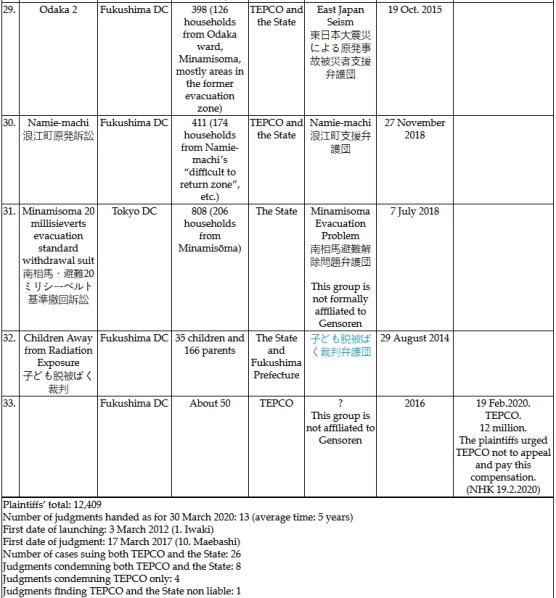
Sources: Unless otherwise mentioned, this synthesis is mainly based on printed documents provided by Gensoren (Tokyo, 12 November 2019). Additional information was collected from several news sites, and Gensoren; The Japan Bar Association (日本弁護士連合会), Lawyers’ White Book (弁護士白書) 2019, p.141; The Kyoto Lawsuit Plaintiffs Group, Overview of the Nationwide Lawsuits [Seeking] Compensation for the Nuclear Power Plant [Disaster] (全国原発賠償訴訟一覧), 2018; Niigata Lawyers’ Group 新潟県弁護団, 2013; Friends Of the Earth, Japan, Minamisoma 20 mSv, November 2019; Children Away from Radiation Exposure 子ども脱被ばく裁判のブログ.
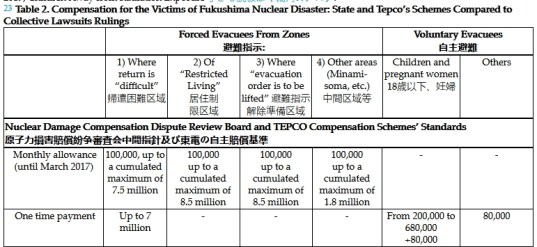
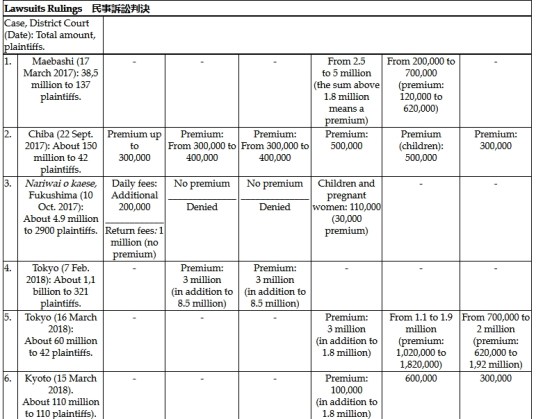
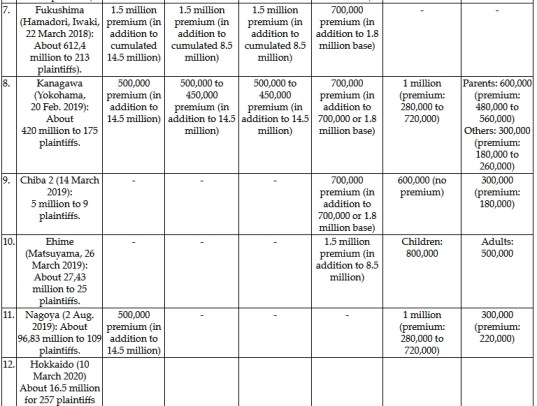
Source: Printed documents provided by Gensōren, Tokyo, 12 November 2019; Maeda et al 2019: 8-10, 69.
1 This Month

of the week – Shut Down Drone Warfare!


Tell the Ukrainian Government to Drop Prosecution of Peace Activist Yurii Sheliazhenko

Petition to revoke the licensing of the Near Surface Nuclear Disposal Facility (NSDF) at Chalk River. https://www.ourcommons.ca/petitions/en/Petition/Details?Petition=e-7247
To see nuclear-related stories in greater depth and intensity – go to https://nuclearinformation.wordpress.com
-
Archives
- March 2026 (251)
- February 2026 (268)
- January 2026 (308)
- December 2025 (358)
- November 2025 (359)
- October 2025 (376)
- September 2025 (257)
- August 2025 (319)
- July 2025 (230)
- June 2025 (348)
- May 2025 (261)
- April 2025 (305)
-
Categories
- 1
- 1 NUCLEAR ISSUES
- business and costs
- climate change
- culture and arts
- ENERGY
- environment
- health
- history
- indigenous issues
- Legal
- marketing of nuclear
- media
- opposition to nuclear
- PERSONAL STORIES
- politics
- politics international
- Religion and ethics
- safety
- secrets,lies and civil liberties
- spinbuster
- technology
- Uranium
- wastes
- weapons and war
- Women
- 2 WORLD
- ACTION
- AFRICA
- Atrocities
- AUSTRALIA
- Christina's notes
- Christina's themes
- culture and arts
- Events
- Fuk 2022
- Fuk 2023
- Fukushima 2017
- Fukushima 2018
- fukushima 2019
- Fukushima 2020
- Fukushima 2021
- general
- global warming
- Humour (God we need it)
- Nuclear
- RARE EARTHS
- Reference
- resources – print
- Resources -audiovicual
- Weekly Newsletter
- World
- World Nuclear
- YouTube
-
RSS
Entries RSS
Comments RSS
 nuclear-news