9th Circ. Allows Sailors’ $1B Fukushima Suit To Proceed

Law360, New York (June 22, 2017, 3:25 PM EDT) — The Ninth Circuit on Thursday upheld a lower court’s decision to allow sailors to pursue their $1 billion lawsuit against Tokyo Electric Power Co. over radiation injuries they allegedly suffered during their response to the 2011 Fukushima nuclear disaster.
TEPCO had sought to dismiss the suit on the grounds that U.S. courts lack jurisdiction. A lower court declined to grant that motion, and on appeal, the Ninth Circuit sided with that judge, beginning with TEPCO’s theory that the suit is blocked by the 1997 Convention on Supplementary Compensation for Nuclear Damage — an effort to establish an international liability framework for nuclear accidents.
The unanimous panel said the Convention’s provision that limits jurisdiction over nuclear accidents to the country in which it occurs only applies to claims arising after the Convention’s entry into force, which was April 2015. The sailors’ lawsuit was filed in December 2012. The panel paid particular attention to the portion of the Convention that gives exclusive jurisdiction to “the courts of the contracting party within which the nuclear incident occurs.”
“The use of the present tense suggests that the provision applies to future nuclear incidents and does not include past incidents,” the panel said. “One would expect the drafters to have used the past tense had they intended to alter jurisdiction over claims arising out of nuclear incidents that occurred before the CSC’s entry into force.”
TEPCO had also argued federal courts lack jurisdiction over the case because of the international comity doctrine, which allows a court to dismiss a case when another country has a strong interest in handling the claims and can adequately do so.
The panel noted that the Fukushima incident did happen in Japan, giving that country “a strong interest” in the litigation. But it also acknowledged that the plaintiffs are U.S. service members, giving this country a strong interest in the case as well. The government of Japan and the U.S. filed briefs on the question, both asserting their own country was the proper legal venue. Ultimately the panel was swayed by the U.S.’ argument that “allowing the suit to continue in California is consistent with U.S. interests in promoting the CSC.”
“In hopes that other countries would do the same, the United States [prior to the Convention] may have preferred that U.S. courts not exercise jurisdiction over claims arising out of foreign nuclear incidents. But that policy appears to have changed,” the panel said. “Now that the United States has ratified the CSC, the State Department takes the position that it would prefer to keep exclusive jurisdiction as a bargaining chip to encourage other nations to join the CSC. We owe this view deference.”
The panel also rejected TEPCO’s argument that the case does not belong in the U.S. under the doctrine of forum non conveniens, which allows a court to dismiss a case when it would be more conveniently handled in a foreign forum.
“In this case, plaintiffs are U.S. citizens, and their decision to sue in the United States must be respected. The district court properly took plaintiffs’ choice of their home forum into consideration and did not abuse its discretion in finding that other private and public considerations did not outweigh plaintiffs’ interest in suing at home,” the panel said.
Finally, the panel rejected TEPCO’s argument that the plaintiffs’ claims are nonjusticiable under the “political question” doctrine — which holds that the court cannot rule on fundamentally political questions.
But the panel left open the possibility that either the international comity doctrine or the political question doctrine could be used as a reason to dismiss the sailors’ lawsuit once the case progresses and more facts come to light.
U.S. District Judge Janis L. Sammartino in October 2014 granted TEPCO’s motion to dismiss the plaintiffs’ strict liability and design defect claims, but denied TEPCO’s motion to dismiss for lack of subject matter jurisdiction.
Judges A. Wallace Tashima, Kim McLane Wardlaw and Jay S. Bybee sat on the panel.
The sailors are represented by Charles A. Bonner, Adam Cabral Bonner and Paul C. Garner of the Law Offices of Bonner & Bonner and John R. Edwards and Catharine E. Edwards of Edwards Kirby.
TEPCO is represented by Daniel P. Collins, Bryan H. Heckenlively and Gregory P. Stone of Munger Tolles & Olson LLP.
The government is represented by Benjamin C. Mizer, Laura E. Duffy, Douglas N. Letter, Sharon Swingle and Dana Kaersvang of the U.S. Department of Justice; Brian J. Egan of the U.S. Department of State; and Jennifer M. O’Connor of the U.S. Department of Defense.
GE is represented by Michael D. Schissel, John B. Bellinger III, Lisa S. Blatt, David J. Weiner, Elisabeth S. Theodore and Sally L. Pei of Arnold & Porter Kaye Scholer LLP.
The case is Lindsay R. Cooper et al. v. Tokyo Electric Power Co. Inc., case number 15-56424, in the U.S. Court of Appeals for the Ninth Circuit.

Fukushima Radiation Sick US Sailors Allowed to Sue Japan’s State-Owned Nuclear Plant Operator Tepco
 The aircraft carrier USS Ronald Reagan heads towards the earthquake and tsunami affected areas of Japan in 2011
US sailors who ‘fell sick from Fukushima radiation’ allowed to sue Japan, nuclear plant operator
A US appeals court has ruled that hundreds of American navy personnel can pursue a compensation suit against the government of Japan and Tokyo Electric Power Co. for illnesses allegedly caused by exposure to radioactivity in the aftermath of the 2011 accident at the Fukushima Dai-ichi nuclear plant.
The 9th US Circuit Court of Appeals in San Francisco ruled on Thursday that the 318 sailors who have so far joined the $1 billion (£787 million) class action lawsuit do not need to file their case in Japan.
Most of the plaintiffs were aboard the USS Ronald Reagan, an aircraft carrier that was dispatched to waters off north-east Japan after the March 2011 meltdown at the Fukushima plant. Three reactors suffered catastrophic meltdowns and released large amounts of radiation into the atmosphere after their cooling units were destroyed by a magnitude-9 earthquake and a series of tsunami.
The plaintiffs claim that they were healthy and physically fit before they were exposed to the radiation plume, with some personnel reporting the air on the flight deck tasting “metallic”.
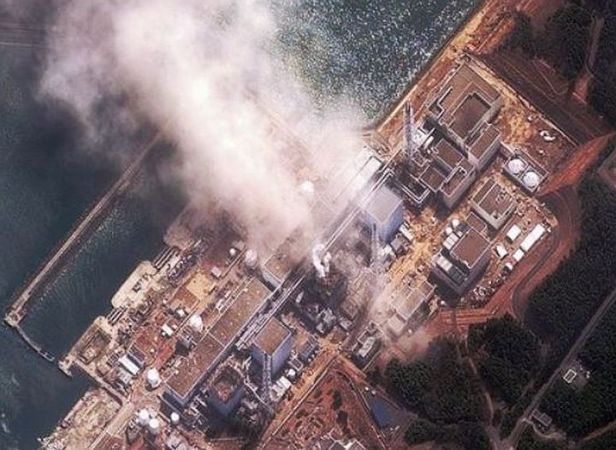
The crippled Fukushima nuclear power plant
The California-based law firm representing the plaintiffs say they have been affected by a range of complaints, ranging from leukaemia to ulcers, brain cancer, brain tumours, testicular cancer, thyroid illnesses and stomach complaints.
The suit claims that TEPCO is financially responsible for the sailors’ medial treatment because it failed to accurately inform the Japanese government of the scale of the problem.
The Japanese government, the suit alleges, also failed to inform the US that radiation leaking from the plant posed a threat to the crew of the USS Ronald Reagan and other US assets dispatched to assist in “Operation Tomodachi”, meaning “friend” in Japanese.
The case was originally filed in San Diego in 2012, but has been delayed over the question of where it should be heard. The US government has also vehemently denied that any personnel were exposed to levels of radiation that would have had an impact on their health during the Fukushima recovery mission.
Interviewed for the San Diego City Beat newspaper in February, William Zeller said: “Right now, I know I have problems but I’m afraid of actually finding out how bad they really are.”
Formerly a martial arts instructor, he now uses a breathing machine when he goes to sleep due to respiratory problems he blames on his exposure aboard the USS Ronald Reagan in 2011.
“I literally just go to work and go home now”, he said. “I don’t have the energy or pain threshold to deal with anything else”.
“A federal appeals court has ruled that members of the US Navy can now, in a US court, pursue their lawsuit which alleges that they were exposed to radiation while providing aid after the nuclear crisis in Fukushima, Japan.”
USS Reagan crew can sue Japanese company over Fukushima nuclear disaster – court
A federal appeals court has ruled that members of the US Navy can now, in a US court, pursue their lawsuit which alleges that they were exposed to radiation while providing aid after the nuclear crisis in Fukushima, Japan.
On Thursday, the US Ninth Circuit Court of Appeals in San Francisco ruled in favor of the sailors who were exposed to dangerous levels of radiation while providing humanitarian aid after an earthquake destroyed the Fukushima Daiichi Nuclear Power Plant in Japan.
The ruling allows sailors, who were aboard the ship at the time, to pursue their lawsuit against the state-owned Tokyo Electric Power Company (TEPCO) for misrepresented radiation levels in the surrounding air and water. The lawsuit alleges that TEPCO misled them about the extent of the radiation leak.
An investigation into the incident found that TEPCO did not take proper precautions to prevent the incident and described the meltdown as a “manmade” disaster. TEPCO later admitted the meltdown could have been avoided.
The Japanese government set up the Nuclear Damage Claim Dispute Resolution Center to deal with all the claims against TEPCO. So far, a total of $58 billion has been paid out to victims of the disaster.
However, TEPCO asked the courts to dismiss the case from the US sailors under the “firefighter’s rule,” which states that first responders cannot sue those who caused the emergency.
Up to 75,000 US citizens could have been affected by the meltdown, according to former Democratic senator and presidential candidate John Edwards who is presenting the case in court.
“These members of the United States Navy deserve their day in court, and they will get it,”said Edwards. “These American heroes served the United States and were innocent victims in a nuclear disaster that never should have happened. This case has broad US interests, both because of our nation’s long-standing relationship with Japan, and because plaintiffs in this case are members of the US military harmed while on a humanitarian mission.”
The sailors continue to suffer from blindness, thyroid cancer, leukemia and brain tumors, Edwards said.
Attorneys are seeking $1 billion in damages from TEPCO and several other defendants, including General Electric,
The Rancher Who Refused to Leave: A Fukushima Story
Masami Yoshizawa hauled his radiated cows down to Tokyo, demanding that his animals be studied.

Fukushima Prefecture, Japan, March 11, 2011
Masami Yoshizawa, who’d driven half an hour up the coast from his ranch in Namie to pick up a few cans of spray paint, climbed out of his truck and headed for the home improvement center’s entrance with a jerky stride that belied his sleepy expression. Eyes half-closed, he seemed to look without seeing. He’d worked with livestock for years—nudging heifers into pens and shoving curious calves away from tractor wheels—and he’d taken on an oblivious, almost animal way of moving. In the Cainz Home store, he took a plastic basket from a stack next to the automatic doors and was wandering an aisle between two tall shelves, a couple cans of spray paint clinking in his carrier, when the quake struck.
The first vibration might’ve been a shiver running down his spine, but soon the towering metal shelves began to sway, tracing wider and wider arcs through the air. A convulsion from deep in the ground seized the building, sending fry pans, plastic buckets, dog food, and bottles of window cleaner crashing to the floor. The store rang with shouts of surprise.
When the tremors stilled he hurried to the front. The clerk in the checkout lane did her best—totaling up the aerosol cans, taking his money, putting his spray paint in a bag—but her hands shook with panic, or maybe because the earth was rumbling again.
A voice came over the PA: “Everyone outside please.”
Masami went for the exit. In the parking lot, waves rippled through the ground. The asphalt swelled without cracking. Above, power lines coiled like snakes. The shaking wasn’t vertical or horizontal but came from all directions at once.
Among the crowd of people who’d run out of Cainz Home, there was one old man who took a portable AM-FM receiver out of his car—there was no cell phone signal—and started tuning it. Gradually, as the convulsions faded, everyone in the lot drifted toward the radio’s staticky crackle.
The announcer was struggling to stay calm: “A large tsunami warning is being issued for coastal Fukushima Prefecture. Please leave coastal areas and evacuate to elevated ground. For the earthquake that occurred at 2:46, strong level-6 tremors are being reported in Shirakawa, Sukagawa, Namie . . . at 3:10 p.m., the forecast is for a three-meter tsunami along the Fukushima coast. Tsunami arrival predictions for Fukushima Prefecture: Iwaki City, Onahama, 3:30 p.m., three-meter waves; Souma City, 3:40 p.m., three-meter waves…”

It was almost 3:00 p.m. and the highway that led back to Namie and his cattle ranch ran along the coast. Masami’s land was in the hills, away from any waves, but he had no idea if the house or outbuildings were damaged. He couldn’t call Shizue, his sister, who lived with him. He had to get back.
He jumped in his truck, fired up the engine, and whipped out of the parking lot. The road had sunk and cracked in places, and traffic was stacking up. In thirty minutes, a wall of water would crash over the shore and flood the road in three places. The land between the highway and the sea would be inundated, the houses there crushed and washed away. But Masami didn’t know this. As he drove—the gray ocean only a couple kilometers away, a few whitecaps rolling across the otherwise peaceful water—he was thinking only of home.
Yoshizawa Ranch was almost eighty acres in rural Namie. It had started with his father: Masami’s old man had gone to Manchuria during the Second World War as a government-sponsored farm-settler, and, following Japan’s defeat, had somehow survived three years in a Soviet prison camp; he’d returned to Yotsukaido, in Chiba Prefecture, where he started a family and another farm. Masami and his older brother and sister were born there in the Kanto region, near Tokyo, but when real estate grew expensive and the government began dividing the land into smaller parcels—to build freeways and an international airport in Narita—his father, who’d been hoping to buy a bigger plot, sold and moved up north to Namie, in Fukushima. He worked hard to establish a dairy; he was still working the day he was pinned beneath a tractor and killed at the age of sixty-five. Masami’s older brother had taken over the operation, but it wasn’t long before he became involved with a woman who promised him marriage if he gave her a little money and then a little more. By the time Masami intervened—suing his own brother to keep him from selling their family’s acreage—all the heifers had been auctioned off. After his brother left for Kyushu, never to return, Jun Murata, a rancher from nearby Nihonmatsu, had suggested Masami try beef instead of dairy cows. Jun had given Masami forty head and brought him into the M Ranch Company’s operations. It had taken a decade, but by the time the earthquake struck he was responsible for 328 kuro-wagyu, Japanese black cows. Eventually, Masami hoped to have a herd of six hundred.

To build the two barns where he sheltered his cows he’d learned how to weld, pour concrete, run wiring. As with any product of one’s own hands he knew every imperfection of the cowsheds. The house would be fine, he told himself as he sped down the highway—it had been built with steel-reinforced concrete and had a woodstove for heat—no, it was the barns he worried about.
An hour later, the dirt and sweat and shit smell of the cattle greeted him as he pulled in and saw the cowsheds were still standing, though the quake had split the ground in the main pasture, leaving gashes of fresh dirt in the valley’s grassy floor. The power would be out, the electric fences down, though the cows hadn’t realized this. The small shed he’d built for the well pump beside the house had collapsed; the pipe that sent water from the ranch’s elevated cistern to the cows’ watering troughs was busted.
“Shit,” he muttered. The herd drank several thousand liters a day. Even more than hay or grain his cows lived on water.
Without electricity, the main well’s pump was offline, and, anyway, fixing it would take time. He decided to try to get the house’s pump running.
He kept a welding torch, oxygen tank, and generator in the back of a light truck just in case, and he hopped in the mud-crusted Mitsubishi and put it in gear. He backed the truck up the slight slope beside the house and hooked the pump up to the generator, but when he got it running the pressure was weak. Only a trickle came from the barn’s spigots. It would take him hours to fill the troughs. By the time he’d finished the daylight had all but faded.
With the cows seen to, Masami went inside. His cell had no signal, but there was a landline in the house. He dialed Murata-san and told his boss about the damage at the ranch, but adding that with the water back on the cows were fine for now.
After hanging up, he asked Shizue for the keys to her car: “I want to watch the news.”
With the power out he couldn’t watch TV in the house, but he could tune in to digital One Seg channels on her Subaru’s navigation system.
In the parked car, he turned the key so that the dashboard monitor flickered on and on NHK he watched footage from Natori, Miyagi Prefecture, a suburb of Sendai about an hour’s drive north. The video had been taken from the air and showed the tsunami like a black tide of broken boards, burning houses, and swept-up boats, a stain spreading across rice fields, blotting out a greenhouse, chasing a car down a road. He noticed the message scrolling across the bottom of the screen: Those within a three-kilometer radius of the Fukushima Daiichi Power Plant are instructed to evacuate, those within ten kilometers are advised to stay indoors.

If he stood on the house’s porch and faced the ocean, he could see the plant’s ventilation towers on the horizon. The power station’s name ticking across the bottom of the screen was like a dark cloud he’d long feared appearing on the horizon.
When he first moved to Fukushima TEPCO had already been operating the Daiichi plant in Okuma for six years. Another electric utility wanted to build a new nuclear power station a few kilometers up the coast, on a piece of land that straddled both Namie and Minami-Souma. Locals were fighting the plan and Masami identified with them. Growing up in the ’60s and ’70s, he’d come of age during an era of mass demonstrations, as entire swaths of Japan challenged the country’s postwar order. When he was a high school student in Chiba the farmers around Narita had joined forces with New Left groups in Tokyo to fight the construction of an international airport on their land. The riot police’s armored buses passed on the highway in front of his school, while trains packed with protestors from the universities rattled over the tracks behind the baseball field. Seeing the college kids alongside the growers—the former with their glasses and flowing hair, the latter with their jika-tabi work boots and stained undershirts, but all of them wearing hardhats covered in hand-scrawled slogans and standing behind bamboo barricades—had opened his eyes to the possibility of resistance. Later, at Tokyo University of Agriculture, Masami was elected student body president and managed to catch the tail end of the demonstrations against the Vietnam War and the American military’s use of Japan’s ports. Never an academic standout, his proudest moments came during the marches, when he got on the megaphone to denounce the government, or the US-Japanese Security Treaty, or war in general.
After graduating and coming to work on his father’s dairy, he’d taken a similar stance toward the nuclear power facilities in the area. Though he wasn’t a member of any political party, he became familiar with the local leftists; a former Japanese Communist Party candidate gave him an enormous speaker, which he mounted on top of a little Honda van. When the government in Minami-Souma began building a garbage-burning facility he drove out and used it to protest the toxic gases it would release. The night after the tsunami, he decided to take a look at the damage to the town for himself.
He told his sister he was going out and bumped down the driveway in her little Subaru. There wasn’t any power in the town either, and without streetlights the cluster of houses and shops was the same pitch color as the surrounding forest. The few sources of light stood out all the more for the pre-industrial dark, and, as he drove, Masami drifted toward their glow. In front of the fire station, the local officials had put up a huge, white tent and ringed it with floodlights; firemen bustled between stacks of rescue equipment in their navy uniforms. The police station and town office were also lit up and busy with armies of officials. Other than these sights, in the car’s headlights Masami saw cracked walls, broken flowerpots, fissures in the asphalt—but nothing so terrible as what he’d seen in the news.
By the time he got home it was late. In the dark, the ranch was different; the cattle were quiet in their sheds, the pastures were fields of silence. Still, it wasn’t until he walked into the house that he noticed the distant thudding. He stood in front of the window, facing the ocean and the plant, looking past his own reflection for the source of the sound. He spotted a red dot hovering in the air above the coast: a helicopter.
The realization that whatever was wrong with the plant was serious twisted through him. Though he’d never believed the claims about the power station’s safety, he’d also never conceived what danger would look and feel like. Unlike the havoc he’d seen on the news, it was right out there, just below that tiny, crimson point of light.
March 12
Like most ranchers, Masami was an early riser. The sun hadn’t been up long but he was already outside getting ready to feed. The nicotine from his morning cigarette and the crisp air were sweeping the last cobwebs of sleep from his mind when three police vans pulled into the driveway, the lights on their roofs flashing, sirens muted. He was sure they would ask him to evacuate.
“I can’t go,” he would say. “I have my cows.”
As he walked toward where the policemen had parked on his driveway, a middle-aged officer approached Masami.
« Konnichwa »he said, bowing. “We’re with the Fukushima Police Communications Division. We—we’d like to set up a relay antenna on a corner of your property, if you don’t mind. Our helicopter is filming the plant.” The ranch was elevated, clear of trees and tall buildings, had sight lines all the way to the ocean. “We need to send the footage on to the main office, so they can monitor the situation.”
In general, Masami distrusted authority, but face-to-face with the officer there wasn’t any reason not to cooperate. More than anything, he was glad they weren’t there to force him off his land.
“Yes, that’s fine,” he said.
As the officer turned and went back to his colleagues they were already unpacking a generator, a foldout table, and several rolls of cables that were plugged into a dish-shaped antenna, which they pointed toward the plant.
Around the same time Masami was talking to the officer, Prime Minister Naoto Kan was coming up from Tokyo in a Self-Defense Forces helicopter. At 7:11 a.m., Masami wouldn’t notice the slight change in the sound of the rotor-blades as Japan’s head of state flew over the stricken plant. Only later, when he heard about it on the news, would he realize how thoroughly the country’s attention had been drawn to his corner of the world.
But that morning, if he ignored the police, it might’ve been any late-winter day. He used the claw attachment on his tractor to carry one of the 300-kilogram bales from a stack by the driveway to the nearby barn. With a shovel he pushed the dried grass into the feed troughs on either side, and the cattle jostled for position. Soon the barn was loud with their chewing and lows. His sister came outside wrapped in a coat.
“What did they want?” she asked, glancing at the police.
He repeated the explanation the officer had given him. “Something strange is happening at the plant.”
Though he hid it well, he felt the same worry he’d heard in his sister’s voice. Without power, information about the plant was hard to come by. Even when he managed to catch a glimpse of the One Seg channels in his sister’s car, the news reports were vague and contradictory. As a rancher, he was tied to the land. He couldn’t simply flee. Murata-san certainly didn’t expect him to abandon the ranch.
Rather than sit with this feeling, he decided to go take a look at the shore, to see if he couldn’t get a better look than he had the night before. He drove down route 114, which cut through the center of Namie, heading for the town’s Ukedo district.
Early that morning, the evacuation zone had been expanded to everyone living within ten kilometers of the plant. Fire patrol trucks had driven around announcing the news, and loudspeakers mounted on telephone and electric poles throughout Namie had relayed the message. As he drove toward the coast the roads were clogged with Self-Defense Forces troop transports, police cruisers, buses, and cars piled with belongings.
After he passed the small downtown, the traffic thinned. Before the tsunami Ukedo had been about 350 houses collected around a fishing port, but when Masami arrived at the coast he saw the district had been decimated.
He could still pick out shapes that resembled houses among the field of debris. The keel of a fishing trawler lay propped against the local fishing cooperative building; a blue-hulled skiff had been thrown into the structure’s second floor and lay upside down on a balcony. Cars were scattered everywhere, their metal crumpled and wrinkled like clothes just out of a washing machine. But no matter how recognizable the shapes, the waves had destroyed any difference between the piles of rubble. The twisted beams were the same as the overturned refrigerators; even the dead bodies buried among the wreckage were just so much more debris. To Masami it seemed like end of the world.
To the south, above a hilly elbow of the coast, he could see the ventilation stacks and transmission towers of the Fukushima Daiichi plant. The power lines stretched into the distance, eventually meeting up with the cables that ran above Masami’s property, and led all the way down to Tokyo.
The towers were no longer sending electricity to the capital, a problem that TEPCO and the Kan administration were trying to deal with by asking citizens to conserve electricity. In the hours since the prime minister’s visit that morning, the situation in Unit 1 had gotten worse—the reactor was cut off from power, the tsunami had flooded the backup batteries, and now the water level inside the core was low enough to expose the nuclear fuel. Without water, the fuel rods would grow hotter and hotter until they triggered a full meltdown.
In Okuma, Fukushima Daiichi’s superintendent, Masao Yoshida, was in the plant’s emergency response center, just fourteen kilometers from Masami’s ranch—closer to the situation than either the government officials or his corporate bosses. While fission had stopped in each reactor after the quake, the fuel was still incredibly hot. The rods in Unit 1 were melting, the zirconium alloy that coated the uranium reacting with the water to produce dangerous amounts of hydrogen. The fuel needed to be cooled to keep it from decomposing further and dropping into the bottom of the reactor, where it could burn right through the steel core. But the hydrogen pressure in the vessel was so high even fire trucks couldn’t pump water in. Both Naoto Kan and TEPCO had agreed on the need to vent the reactor, and the prime minister had demanded the venting take place when he flew up. But Masao was the one who had to carry out the procedure, and with no electricity the vents had to be opened manually. His workers would have to venture outside in radiation suits, go into the dark, cramped spaces of the buildings, and operate unfamiliar equipment by hand. It was going to take time.

As he drove, Masami was aware of none of this. The night before, in the hours after the tsunami, Kan’s Cabinet Secretary had said, “There is no radiation leak, nor will there be a leak,” and TEPCO itself had put out a couple of blandly reassuring press releases. But just that morning the evacuation zone had been expanded, and Masami was anxious. If there was a leak what would happen to his cows?
Back at the ranch, as soon as Masami went in the house, a whiff of miso hit him. He found his sister in the kitchen: On a portable gas burner she was simmering a big pot of hoto soup, and he watched as she stirred the steaming broth, thick with udon noodles, leeks, and thin slices of pork.
“For the policemen,” she said, looking up at him. “It’s cold out.”
While he could be single-minded to the point of neglect, his sister was expansive in the care she paid to the people around her. Once the food was ready, he helped her carry the meal outside. He took chopsticks, a ladle, and a stack of bowls, and she brought the big pot.
While he could be single-minded to the point of neglect, his sister was expansive in the care she paid to the people around her. Once the food was ready, he helped her carry the meal outside. He took chopsticks, a ladle, and a stack of bowls, and she brought the big pot.
The men were surprised, and the lead officer accepted the pot, thanking Masami and his sister: “Gochisousama desu.”
Later, as the afternoon’s chill deepened, Masami muscled a woodstove of his own making into the bucket of a front-end loader and drove over to where the police vans were. He caught the eye of the officer he’d spoken to before, saying, “You’ll be cold, out here since the morning. You going to be here a couple more days?”
But the policeman said: “Headquarters has just ordered us to withdraw—finally. Sorry, we have to go.”
Shocked, Masami watched the communication officers pack up the generator, the cables and antenna, their desk, and load them back in the vans. The cop whom he’d talked to thanked him again before getting in one of the vehicles. The lights on the roofs of the three vans were flashing red as they crept down the driveway and disappeared.
Occupied with his work, Masami hadn’t heard the explosion—hadn’t felt the ground move as the Unit 1 reactor at Fukushima Daiichi went up in a plume of white smoke. Later, he’d see it on TV. Footage from an NHK camera far from the plant showed the muted blast; the plume seemed like that from a smoke bomb lit next to a model of the building. But when he saw a close-up of the structure—the steel frame still intact but the concrete walls smashed out like the glass from a car window—he understood that whatever had been contained in the core was now in the air all around him.

At the plant, Superintendent Masao had mistaken the blast for another earthquake. Only when he saw the TV broadcast did he realize there’d been an explosion, though he didn’t understand what had caused it. In the moment, Masao’s staff didn’t stop to debate the reason behind the detonation, and instead everyone turned their attention to the Unit 2 and 3 reactors, where water levels were low. The explosion had damaged the cables his employees had been laying to restore power to Units 1 and 2, and the hoses they’d been preparing to pump seawater into the cores. TEPCO was calling what had happened in Unit 1—what was now going on in Units 2 and 3—“fuel pellet melt,” avoiding the word meltdown, though that’s exactly what it was.
At the Ranch, the cops’ departure had unsettled Masami. Though he’d heard there’d been an explosion he didn’t know what that meant for him, and he decided to see what the farmers at the local dairy collective were thinking. Yoshizawa Ranch had been a dairy for years, and he was familiar with the kumai’s meeting hall, just five minutes up the road. In the meeting room he found a handful of farmers gathered around the television. The power was back on there.
“What are we going to do?” one of the men was asking.
Another answered, “Koko mo dame da ne.” This place is done for.
Without power the dairymen couldn’t milk their heifers. If nothing changed their cows would dry up. Those who were making do with gas generators still faced customers afraid to buy milk from the area. They might as well toss their production.
Masami listened to the farmers and took the opportunity to charge his cell phone. Then, a few minutes before 6:30, Naoto Kan appeared on the broadcast. As the prime minister walked to a podium a map of the tsunami damage flashed red, yellow, and green in the corner of the TV. He wore a blue jumpsuit instead of his standard suit and tie and spoke slowly as, off-screen, camera shutters clicked like cicadas:
“ . . . We are putting the safety of local people first and taking the appropriate precautions. With regards to the Unit 1 reactor at Fukushima Daiichi, I’ve been listening to the latest update from my cabinet secretary and, because of present circumstances, following the evacuation of residents within ten kilometers of the plant, I am now ordering the evacuation of residents within twenty kilometers of Fukushima Daiichi.”
The extended zone fell over his ranch—his cattle, his land, the house. All of it lay within the red semi-circle being drawn on maps of Japan the world over. It was worse than he’d ever imagined. Yet, even as he heard the words Masami knew he wouldn’t flee. He would stay. He would outlast this.
March 14
The thought of his cows’ empty stomachs was what got Masami moving in the small hours. Even when his body was stiff it got him out of bed. With the woodstove it was warm in the house, though it’d been days since he’d had a hot shower.
The day before, he’d gone to see Murata-san at the M Ranch Company’s main office in Nihonmatsu. Masami had no plans to leave, but the cattle didn’t belong to him alone, and they needed to talk over what was to be done with the herd.
There weren’t a lot of options. They could try to ship the beef cows to one of M Ranch’s customers, and Jun could distribute the younger heifers among his ranches outside the evacuation zone. But the mature cattle hadn’t been slated for sale for a few months and were still lean from the winter. Moving them was a big operation, and that was if they could find anyone willing to buy cows from the evacuated area in the first place. Murata was dealing with these decisions in several iterations: Out of the seven ranches in his company, four were within twenty kilometers of the plant; of the M Ranch’s 1,200 or so cows, more than a third were on these properties. With each animal liable to ask $13,000 at market, he had roughly $6.5 million of stock at risk.
“Sono uchi nan toka ni naru,” Murata had said. Something will happen before long.
On Monday, in the early light, Masami started up the generator that powered the well pump and was relieved to find none of the pipes had frozen. A cold front had moved in overnight, and it felt like it might snow.
At the emergency response center at Fukushima Daiichi, Superintendent Yoshida was also feeling worn. His workers were strung out from sleeping in hallways and conference rooms with a single blanket each, wearing the same clothes for days, rationing water, and eating two meals a day—crackers and boxes of vegetable juice in the morning, rice and curry or canned food at night. In the smoking room, Masao passed out cigarettes to support his team.
After the explosion of Unit 1, their attention had turned to reactors 2 and 3. Though they’d hooked a fire engine to Unit 3 and were pumping seawater into the core, the instruments in the control room didn’t show the water level rising. The day before they’d vented the containment three times, and they tried again that morning, but the pressure kept climbing. On top of this, while reactor 4 had been offline for maintenance when the tsunami hit, the temperature was now rising in its spent fuel pool, a tank that stored used uranium rods as they cooled. The fuel under the water in the Unit 4 building had been removed from the reactor months before, but it was still incredibly hot. If the water boiled off the fuel would be exposed. Masao needed to find a way to get water into that pool.
At 11:00 a.m., on the ranch, Masami was in his cowshed finishing the morning feed. The scrape of a shovel on concrete, the cows chewing hay, the slurp of their long, gray tongues on the salt blocks—and then all sound shattered by a clap of thunder, like a firework detonating above the barn.
He knew where the sound had come from and hustled over to the house. A pillar of smoke was rising from the plant. His phone buzzed in his pocket. When he answered it was Murata-san.
“There was just an explosion.”
“I know. I heard it,” Masami said. “Dou shiyou?” What are we going to do?
But there was no answer for his question. He almost thought he could feel the radiation washing over him, and, of course, his cattle were being bathed in the same particles.
At the plant, Masao Yoshida was scrambling—he didn’t even understand what’d happened. The Self-Defense Forces’ Nuclear Biological Chemical Weapon Unit had just arrived in three vehicles when the blast ripped through the plant—gray dust surrounded the soldiers like a fog as they tried to gain their bearings, chunks of concrete came in showers, and four of the men retreated, limping and clutching their injuries. The fire engine Masao’s team had been using to pump seawater into the reactor was damaged and several TEPCO employees were hurt. The Unit 3 building was a smashed, smoking, skeletal ruin. Unlike Unit 1, the upper half of the structure had collapsed in. The blast had been felt as far as forty kilometers away.
At his ranch, Masami watched the rounded blast cloud floating up, the gray smoke trailing beneath, the plume moving across the sky like an enormous jellyfish—seemingly slow, and yet fast for something of its size. He began to realize that this wouldn’t be a temporary evacuation. There were no stopgap measures that could save his herd. The hope that had held his world together faded with the same sickening speed as the haze of the explosion.
March 17
There was no food left in the house. He had used up his diesel running the generator and without fuel he couldn’t pump water for his cows. The gas stations nearby were all closed. Following discussions two days before, his sister had fled, while Masami stayed behind. This was his home after all. Now, he was truly alone.
He’d returned to the ranch a day ago. After entering Namie he ran into a police checkpoint on highway 114, the road back to his ranch. The police had blocked the inbound lane with a blue van, and an electronic message on the roof read, Entry Prohibited. The cops were waving cars through the outbound lane, but when he pulled up the officers motioned him to a stop with their orange-and-white traffic batons.
He rolled down his window as a man in a blue uniform and white helmet came around the front. The cop was young and polite, and after Masami explained that his property lay a few kilometers down the road, the boy calmly said, “I see you’re trying to get through, but I’m stopping you. I know the lives of your cattle are important, but men’s lives are important too.”
“I’ll take responsibility for myself,” Masami said. “If I leave them they’ll die.”
After a moment’s hesitation the police waved him through.
He eased the truck back into gear and rolled into Tsushima. Passing through the district he saw Self-Defense Force tents and clutches of refugees huddled around fires. It was like the scene behind the frontlines of a war.
He saw cars turning in to the middle school, and he could imagine the overflowing parking lot, the crowded gym, the rectangles of cardboard on the basketball court heaped with winter blankets, shoes in the aisles. On TV, he’d seen the miserable evacuees, who had nothing but what they’d been able to grab from their homes as they fled, and now could only count on a bowl of rice from the authorities each morning. The temperatures were still dipping down near freezing at night, and the walls in those old schools buildings were thin. Shizue had been against evacuating to Tsushima. She’d kept saying she didn’t want to go to one of those gyms. “I just don’t want wind up in a taikukan.”
After arriving at the ranch he’d fed and watered the herd. He kept hearing explosions echoing out of the plant. There were reports that TEPCO might pull its people out, and the Kan administration was getting more involved by the hour. On top of all this, earlier in the day Murata had called with bad news.
“Torihiki ha kotowareta.” The customer they’d hoped to send the cattle to had refused to take the delivery. “It’s all over now.”
“That’s it then.”
Later that day, from the second floor of the house, he watched the twin-rotor helicopters circling the plant through an old pair of binoculars he had once used to look at the stars and track satellites across the sky. Standing on the balcony, he saw them bailing water from the ocean in enormous buckets, and dumping it over the reactor buildings. They were trying to replenish the spent fuel pool in Unit 4, but the wind caught most of the water, turning it into curtains of mist that blew away from the building.
In their dedication, the Self-Defense Forces reminded Masami of the kamikaze pilots who’d sacrificed themselves for the country during the War. The TEPCO engineers might abandon their posts, but the Self-Defense Forces wouldn’t flee. They would all die there. He was sure of it.
Still, no matter what the troops did they couldn’t save his animals, and even if he kept his cows alive no one would buy them. It had been nearly a week since the disaster had started, though he had no idea what he or his cattle had been exposed to. The government had a system called SPEEDI that assessed the spread of radioactive releases, but the system relied on the plant’s measuring equipment, which was still offline. If SPEEDI couldn’t predict how much radiation was being released then it could at least calculate what direction the plume was moving. But claiming that the partial reports would only cause confusion, the government hadn’t released them, and so the evacuees from Namie who’d gone to Tsushima didn’t know they were fleeing into the worst of the radiation. Like Masami, they could only guess at the winds and the ions in the air. The land he’d fought for, had toiled so hard make a profit on, was now just eighty acres of the disaster zone.
There was nothing left for him there.
That afternoon, for the first time, it dawned on him that he would leave. He might never see the ranch again. He decided he would go to TEPCO’s head office. He’d seen it on TV: a boxy, gray building in downtown Tokyo with an enormous, orange antenna jutting out of it. He’d take the speaker car and find someone, make them listen.
There wasn’t enough gas in the van’s tank, so he went around the ranch siphoning fuel from the other vehicles into a washbasin and funneled it into the Honda. Before he left, he took the spray paint he’d bought on the day of the earthquake and, in giant letters, big enough for the Self-Defense Forces to see from the air, on the waste silo and the bucket of his biggest tractor he wrote, kesshi kyumei, danketu! Unite, save lives or die trying!
When he arrived in Tokyo, making himself heard would prove harder than he had expected. He would spend days sleeping in his car, denouncing the authorities, causing a disturbance in front of TEPCO’s headquarters until the police came to restrain him. When a representative from the company did finally agree to speak to him, his story would bring the man to tears, but it wouldn’t change anything. Not really.
In the coming years, as he became more and more involved in the anti-nuclear movement—hauling his radiated cows down to Tokyo or to prefectural capitals, demanding compensation and that his animals be studied, giving speeches and leading marches of leftists, continuing to live on the ranch even when the government barricaded the roads and caught him coming or going and tried to make him promise not to return, watching his neighbors’ animals starve to death until their hides and bones were scattered across the land like deflated balloons—he would hold the memory of the days after the quake to himself, a precious energy that perpetually burned inside him.
But as he flew down the Tohoku Expressway his future was still uncertain. He knew nothing of what was to come. He drove toward Tokyo and his heart beat like the flashing light of the countless police cars and fire trucks that passed him, heading the other direction.
https://catapult.co/stories/the-rancher-who-refused-to-leave-a-fukushima-story
Fukushima’s Radiation Will Poison Food “for Decades,” Study Finds

Three of the six reactors at Japan’s Fukushima-Daiichi complex were wrecked in March 2011 by an earthquake and tsunami. The destruction of emergency electric generators caused a “station blackout” which halted cooling water intake and circulation. Super-heated, out-of-control uranium fuel in reactors 1, 2, and 3 then boiled off cooling water, and some 300 tons of fuel “melted” and burned through the reactors’ core vessels, gouging so deep into underground sections of the structure that to this day operators aren’t sure where it is. Several explosions in reactor buildings and uncovered fuel rods caused the spewing of huge quantities of radioactive materials to the atmosphere, and the worst radioactive contamination of the Pacific Ocean ever recorded. Fukushima amounts to Whole-Earth poisoning.
Now, researchers say, radioactive isotopes that were spread across Japan (and beyond) by the meltdowns will continue to contaminate the food supply for a very long time.
According to a new study that focused on “radiocaesium” — as the British call cesium-134 and cesium-137 — “food in japan will be contaminated by low-level radioactivity for decades.” The official university announcement of this study neglected to specify that Fukushima’s cesium will persist in the food chain for thirty decades. It takes 10 radioactive half-lives for cesium-137 to decay to barium, and its half-life is about 30 years, so C-137 stays in the environment for roughly 300 years.
The study’s authors, Professor Jim Smith, of the University of Portsmouth, southwest of London, and Dr. Keiko Tagami, from the Japanese National Institute of Radiological Sciences, report that cesium-caused “radiation doses in the average diet in the Fukushima region are very low and do not present a significant health risk now or in the future.”
This phraseology deliberately conveys a sense of security — but a false one. Asserting that low doses of radiation pose no “significant” health risk sounds reassuring, but an equally factual framing of precisely the same finding is that small amounts of cesium in food pose a slightly increased risk of causing cancer.
This fact was acknowledged by Prof. Smith in the June 14 University of Portsmouth media advisory that announced his food contamination study, which was published in Science of the Total Environment. Because of above-ground atom bomb testing, Prof. Smith said, “Radioactive elements such as caesium-137, strontium-90 and carbon-14 contaminated the global environment, potentially causing hundreds of thousands of unseen cancer deaths.”
No less an authority than the late John Gofman, MD, Ph.D., a co-discoverer of plutonium and Professor Emeritus of molecular and cell biology at the University of California, spent 50 years warning about the threat posed by low doses of radiation. In May 1999, Gofman wrote, “By any reasonable standard of biomedical proof, there is no safe dose, which means that just one decaying radioactive atom can produce permanent mutation in a cell’s genetic molecules. My own work showed this in 1990 for X rays, gamma rays, and beta particles.”
The Fukushima-borne cesium in Japan’s food supply, and in the food-web of the entire Pacific Ocean, emits both beta and gamma radiation. Unfortunately, it will bio-accumulate and bio-concentrate for 300 years, potentially causing, as Dr. Gofman if not Dr. Smith might say, hundreds of thousands of unseen cancer deaths.
https://www.counterpunch.org/2017/06/22/fukushimas-radiation-will-poison-food-for-decades-study-finds/
For Fukushima returnees, security a growing concern in deserted towns
 The deserted streets of the town of Namie, Fukushima Prefecture, are seen at night after its evacuation order was lifted in this undated photo.
Via Fukushima Minpo – It’s like a dream to once again be able to live in my “home, sweet home.”
That’s what Hidezo Sato, 72, says he feels every day since returning to his fallout-hit hometown of Namie, Fukushima Prefecture.
The government partially lifted its nuclear evacuation order on March 31, six years after radiation from the triple meltdown at the Fukushima No. 1 nuclear power plant forced them to evacuate.
Now, friends come by to chat at his home in the Gongendo district, which is much more comfortable than where he spent the past six years living as a Fukushima evacuee.
But one thing still bugs him — he doesn’t feel safe at night.
According to town officials, only about 300 residents have come back so far.
Many of the houses in Sato’s neighborhood remain uninhabited. So when he spots a car parked in the dark, it frightens him.
“If safety and security aren’t ensured, there won’t be more people coming back,” Sato said.
Sparked by returnees’ concerns about security, many recovering municipalities have set up neighborhood watch groups, installed security cameras and taken other measures to increase safety.
In December, two men were arrested on theft charges after spotted by security cameras.
In Minamisoma, City Hall is installing home security systems for returnees in the Odaka district that allow them to alert a security company simply by pushing a button. As of April 27, about 240 households, or 30 percent of the roughly 770 households that have returned, had the system installed by the city.
The number of police officers brought in from outside Fukushima to help patrol the no-go zone has been reduced to 192, or about 150 fewer than five years ago. The police presence is expected to decline further as decontamination progresses, raising concerns on how to ensure security there in the future.
Many municipalities have been funding security costs with central government subsidies, but it is unclear whether that will continue after fiscal 2020, when the state-designated reconstruction and revitalization period is scheduled to end. The Reconstruction Agency is also slated to be dissolved by then.
A top Reconstruction Agency official would only say it will “consider the issue in the future.”
For its part, the town of Namie is expected to spend about ¥700 million in fiscal 2017 to fund the neighborhood watch teams and surveillance systems. But town officials are worried whether they’ll be able to afford the systems once the subsidies dry up.
Reconstruction minister Masayoshi Yoshino, a Lower House politician representing the Fukushima No. 5 district, said in April that he will consider creating a new government entity to take over the work of the Reconstruction Agency.
“I want the government to tell us that it will continue to fund” such projects, said Namie Deputy Mayor Katsumi Miyaguchi.
http://www.japantimes.co.jp/news/2017/06/18/national/fukushima-returnees-security-growing-concern-deserted-towns/
Submersible robot ‘little sunfish’ to inspect the damaged primary containment vessel (PCV) of Fukushima Daiichi Unit 3
Swimming robot ‘little sunfish’ to inspect crippled Fukushima plant
Japan has unveiled a small swimming robot that will inspect the damage at the crippled Fukushima nuclear power plant. The device weights 2kg, is 13cm in diameter and will be able to swim deep into the melted reactor, its developers say.
The Japan-based International Research Institute for Nuclear Decommissioning (IRID) unveiled the robot, dubbed ‘mini manbo’ (little sunfish) in the media, together with Toshiba group on Thursday.
The robot “is small enough and resilient enough to enter and inspect the damaged primary containment vessel [PCV] of Fukushima Daiichi Nuclear Power Station Unit 3,” a statement from the IRID said, adding that the device will be deployed this summer.

The device is equipped with two cameras and can be remotely controlled via a wire, while operators can record its progress through the coolant. ‘Little sunfish’ will deliver a video feed that “will clarify damage to the PCV interior and information on how best to retrieve fuel debris,” the IRID added.
The major advantage of the robot is that it “can avoid various obstacles,” Tsutomu Takeuchi, a senior manager at the nuclear energy division of Toshiba, told AP. The company is tasked with helping to clean up the damaged plant.
The device was created for inspection of the primary containment vessel (PCV) of Unit 3 of the crippled plant. Unit 3 was flooded with coolant to a depth of about 6 meters (20ft) and in order to make a proper clean-up, such a coolant must be located and mapped, according to the IRID.
“The penetration hole giving access to the PCV is only 14cm in diameter, limiting the size of any robot that can be deployed,” the IRID added.
Thus, the newly-presented robot seems ideal for the job.
The robot’s radiation resistance is approximately 200 Sievert (Sv), according to its characteristics. For comparison, an exposure of about 1 sievert can cause biological damage to living tissue, according to the International Atomic Energy Agency (IAEA).
“Scientists developed ‘mini manbo’ with the aim of operating in a highly radioactive environment,” Goro Yanase, general manager of Toshiba’s Nuclear Energy Systems & Services Division, said.
“We succeeded in developing a small robot with high-level radiation resistance, and through its deployment we expect to get information that will support the advance of decommissioning,” he added.
The Fukushima Daiichi nuclear power plant suffered a blackout and subsequent failure of its cooling systems in March 2011, when it was struck by an earthquake and tsunami. Three of the plant’s six reactors were hit by meltdowns, making the disaster the worst since the Chernobyl catastrophe in the USSR in 1986.
Japanese authorities have repeatedly sent robots to inspect the contained area of the crippled plant but the devices either broke down or the missions were aborted. In February, such an attempt ended in failure as a clean-up robot stopped working two hours after it was sent to the inactive Reactor 2 at the nuclear complex.
Following the failure, Naohiro Masuda, president of Fukushima Daiichi Decommissioning, said that more creativity was needed to produce robots that can find and assess the condition of melted fuel rods at the high-level radiation site.
https://www.rt.com/news/392441-japan-underwater-robot-fukushima/
Toshiba unveils submersible video robot to probe reactor 3 at Fukushima No. 1 plant
YOKOSUKA, KANAGAWA PREF. – Toshiba Corp. unveiled on Thursday a submersible robot to take live video of reactor 3 at the Fukushima No. 1 power plant to confirm whether fuel debris is sitting at the bottom of a pool of radioactive water inside.
The location and condition of the fuel in the three reactors hit by core meltdowns is critical information for Tokyo Electric Power Company Holdings Inc., which runs the plant. Removing the fuel debris is considered the most difficult part of decommissioning the complex.
Unit 3 has the highest level of water inside at 6 meters. The fuel debris inside is presumed to have melted through its pressure vessel and settled at the bottom of its primary containment vessel.
“Until today, no one has seen the situation inside reactor 3,” said Tsutomu Takeuchi, senior manager at Toshiba’s Fukushima Restoration and Fuel Cycle Project Engineering Department.
“If we can observe the situation inside the reactor, that would be a huge leap in our ongoing effort to extract the debris” and eventually shut down the wrecked plant, he said during a demonstration of the robot at the Port and Airport Research Institute in Yokosuka, Kanagawa Prefecture.
Co-developed with the International Research Institute for Nuclear Decommissioning, the cylindrical 30-cm robot, dubbed the “mini manbo” (miniature sunfish), has a camera that can move 180 degrees vertically on its front and a fixed camera on its rear, allowing it to crawl through the water while capturing images.
Tepco plans to send the remotely controlled robot into the reactor as early as mid-July. A camera inserted into the reactor in October 2015 was unable to reach the bottom of the containment vessel.
No probe has been able to confirm the location or condition of the nuclear debris in any of the three crippled reactors.
Tepco sent a scorpion-shaped robot developed by Toshiba and the institute into reactor 2 in February, but it broke down before reaching its target under the pressure vessel after a tire got stuck.
In March, Tepco’s five-day robot-based investigation failed to capture an image of what was thought to be fuel debris in reactor 1.
A separate Tepco probe in January found black lumps in reactor 2’s pressure vessel but couldn’t immediately confirm they were fuel.
In December, the government estimated that the total cost of the Fukushima disaster would reach ¥21.5 trillion, including ¥8 trillion for decommissioning. That was almost doubled the initial estimate of ¥11 trillion.
Takeuchi of Toshiba did not reveal how much it cost to develop mini manbo.
 Tsutomu Takeuchi, senior manager at Toshiba’s Fukushima Restoration and Fuel Cycle Project Engineering Department, shows off a robot it claims can probe water-filled reactor 3 at the defunct Fukushima No. 1 nuclear plant.
Swimming and wriggling robots unveiled for Fukushima clean-up
University and industry scientists have demonstrated new robots specialised for moving through and searching scenes of destruction that are impossible or dangerous for humans to enter.
Hardy, agile, remote-controlled robots will be vital for the decommissioning of power plants, particularly in the case of the Fukushima Daiichi Nuclear Power Plant, which suffered a meltdown in 2011 following a devastating tsunami and earthquake.
Robots can spend hours or days in environments so highly radioactive that a human worker would be killed in seconds.
The Japanese government hopes to start the challenging task of removing hundreds of tonnes of melted fuel after the Tokyo 2020 Olympics, potentially beginning work in 2021. For this to be possible, engineers need to know the exact location of the fuel, and understand the extent of the structural damage to the reactors.
Among other efforts, a snake-like robot was used in 2011 to explore the reactors, but was trapped repeatedly by obstacles and its camera was blocked. A “scorpion” inspired crawling robot also failed to navigate the site and was abandoned inside.
Years later, a new version of the snake-like robot has been revealed by Japanese scientists, including a team from Tohoku University in Sendai: a region severely affected by the tsunami and earthquake.
The robot stretches to eight metres in length, has a camera attached to the front and can move at speeds of up to 10cm per second.
It wriggles in a serpentine motion, propelled by the vibrations of the brush-like hairs that cover its body. Unlike any other robot, it can also “rear” its tip like the head of a snake, shooting a small jet of air to lift it. This allows it to climb over obstacles – such as debris in a disaster zone – up to 20cm in height.
According to Professor Satoshi Tadokoro of Tohoku University, the robot could search for people trapped in collapsed homes following earthquakes, and test the structural safety of damaged buildings. The researchers hope to have it ready to assist in search and rescue operations and other tasks within three years of durability testing.

Meanwhile, an alternative disaster relief robot has been unveiled by Toshiba and the public International Research Institute for Nuclear Decommissioning. This swimming robot is the size of a loaf of bread is and fitted with lights, camera and tail propellers.
It is designed specifically to inspect meltdown damage at the Fukushima nuclear plant, and will enter the primary containment vessel of Fukushima’s Unit 3 this summer to locate melted fuel in radioactive water.
Fukushima may get rice variant that absorbs less radiation
Thank you, now I feel so much safer:
Mutant rice to be introduced into Fukushima prefecture as part of efforts to dispel lingering negative publicity.
 The Koshihikari rice variant with low cesium absorption, right, looks almost indistinguishable from normal Koshihikari rice.
TSUKUBA, Ibaraki Prefecture–A new type of the famed Koshihikari rice strain that absorbs just half as much radioactive cesium as the regular variety may be grown in Fukushima Prefecture.
The National Agriculture and Food Research Organization hopes to introduce it into the prefecture as part of efforts to dispel lingering negative publicity after the Fukushima No. 1 nuclear power plant disaster of 2011.
Satoru Ishikawa, who leads NARO’s Crop Safety Unit, and his co-workers used ion-beam irradiation to cause a gene mutation in Koshihikari to block the discharge of sodium ions from its roots. That enhanced the concentration of sodium ions in its root cells and suppressed the intake of cesium.
When the mutant was test-grown on contaminated soil alongside conventional Koshihikari, the cesium concentration in the mutant turned out to be 55 percent lower in unpolished rice grains and 59 percent lower in rice straw, both well below the government’s safety limit.
The mutant had about the same number of rice ears and about the same yield of unpolished rice grains as traditional Koshihikari, and its taste was evaluated by an external organization as being “almost equal” to that of the parent strain.
The use of potassium ion fertilizer to suppress cesium absorption has been effective in reducing cesium, but that method is expensive and labor intensive.
“(Use of the mutant suppresses cesium uptake) more effectively when combined with the use of potassium fertilizer,” Ishikawa said. “We hope introduction of the mutant will be considered as an option in areas where farming is going to be resumed.”
Contractor overcharging Iwaki, Tamura for decontamination workers’ lodging expenses in Fukushima

A construction company on Friday disclosed that has been padding the lodging bills of the decontamination workers involved in decommissioning work related to the Fukushima No. 1 nuclear power plant in Fukushima Prefecture.
Hazama Ando Corp. said an internal probe had found that one of its employees instructed a subcontractor to overcharge the Iwaki and Tamura municipal governments by a combined ¥80 million (around $724,770) and to make it appear that more workers were involved. Receipts for their lodging expenses were found to have been altered.
The central government is helping prefectural and municipal governments decontaminate areas tainted by fallout from the triple core meltdown at the Fukushima No. 1 plant in March 2011.
The contractors secure related work orders from both sectors, but the main contractors customarily shoulder the expenses of the subcontractors, after which the state reimburses them and asks Tokyo Electric Power Co. Holdings Inc. to foot the bill.
Toshiaki Nomura, president of the Tokyo-based construction company, apologized for the incident, which involved the padding of bills related to both decontamination and radiation monitoring in the two cities, which are both around 40 km from the crippled complex.
The company was found to have overcharged Iwaki by an estimated ¥53 million and Tamura by around ¥27 million and to have overstated the number of workers mobilized.
Hazama Ando charged Iwaki ¥7,500 per overnight stay instead of ¥5,000, and stated that around 15,000 workers were involved instead of the actual 11,000.
The Tamura Municipal Government was charged ¥5,500 per person for accommodation, or ¥500 higher than the actual amount, and was told that 10,000 workers were involved rather than 5,600.
Hazama Ando is looking into why an employee instructed a subcontractor to overcharge for accommodations and make it appear that more workers were involved. The employee in question has told the company he had acted “haphazardly.”
Thyroid Cancer Plagues Fukushima Evacuees, But Officials Deny Radiation to Blame

Seven more young Fukushima Prefecture residents have been diagnosed with thyroid cancer, according to a prefectural government statement on Monday. All of the patients were 18 or younger at the time of the 2011 nuclear reactor meltdown.
This bumps the number of Fukushima residents diagnosed with thyroid cancer up to 152. Although many times higher than the national average, the thyroid cancer rates are “unlikely” to have been increased by the reactor accident, according to vice chair of Fukushima’s medical association Hokuto Hoshi.
“Those thyroid cases have been found because we conducted the survey, not because of the radiation,” concurred Akira Ohtsuru, a radiologist who examined many of the patients. “The survey has caused over-diagnosis.”
One of those suspected of having cancer is a 4-year-old boy who hadn’t even been conceived yet when his parents fled Fukushima.
The prefectural government has been conducting thyroid checkups on evacuees every year since 2013. The number of cases continuously rises every time they do so: five additional cases in 2014 and two additional ones in May 2015. This means more and more evacuees are metastasizing the illness.
Fukushima University researchers have also found that evacuees have markedly higher rates of diabetes, liver and heart disease and obesity than the national average.
A May 2017 study from the Norwegian Institute for Air Research found that the Fukushima nuclear disaster had spread additional radiation across the entire planet, with the same amount of radiation as a single x-ray hitting the average person.
That same month, Penn State Medical Center published a study linking the Three Mile Island nuclear disaster of 1979 to higher rates of thyroid cancer near the Pennsylvania reactor.
https://sputniknews.com/asia/201706071054381393-fukushima-evacuee-thyroid-cancer-epidemic/
Fukushima Remains “A Nuclear Radiation Nightmare”, In Pictures
“This is an accident that does not exist in the past tense, but in the present progressive form,” exclaimed Fukushima Gov. Masao Uchibori earlier in March, criticizing Japanese Prime Minister Shinzo Abe for not explicitly the disaster in his annual speech. “It’s not possible to avoid using the important and significant terms of the nuclear plant accident of nuclear power disaster.”
As IBTimes’s Juliana Rose Pignataro notes (and exposes in the images below), it’s been an uphill battle for the coastal prefecture of Fukushima, Japan, since an earthquake and tsunami devastated the region in 2011, causing a nuclear disaster at its power plant.
Six years later, workers are still battling to decommission the plant, where radiation is deadly. Officials expect the cleaning won’t be finished for decades.
 In this handout provided by TEPCO, the deformed grating vessel of Fukushima’s No. 2 reactor is shown Jan. 30, 2017.
 Workers remove nuclear fuel rods from a pool inside the No. 4 reactor at the Fukushima nuclear plant in Japan, Nov. 18, 2013
 TEPCO employee looks at the destroyed reactor in Fukushima, Japan, Feb. 25, 2016
 Personal items were left behind in Fukushima, Japan, Feb. 26, 2016.
 A wild boar roams in barren, Fukushima, Japan, Mar. 1, 2017
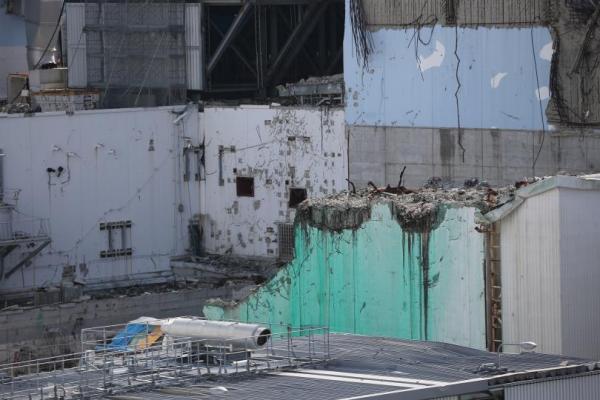 The damaged No. 3 reactor at Fukushima Daiichi plant in Japan is shown Feb. 25, 2016.
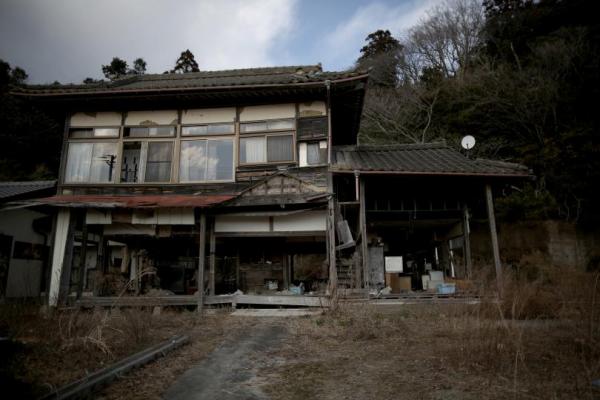 A deserted home is shown in Fukushima, Japan, Mar. 11, 2016.
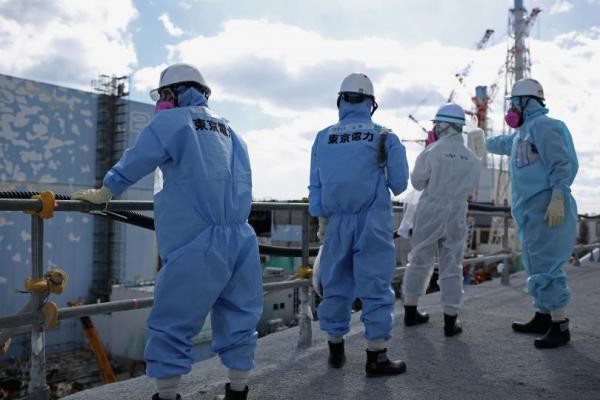 Workers stand near the deserted nuclear power plant in Fukushima, Japan, Feb. 25, 2016.
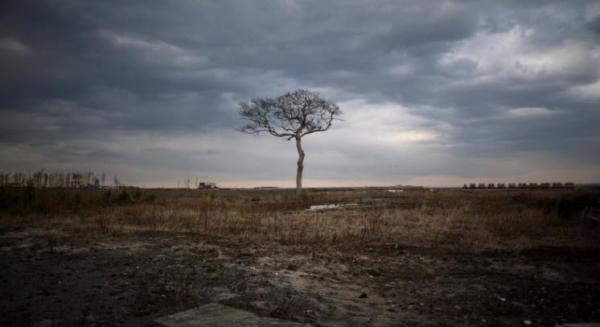 The barren landscape of Fukushima, Japan sits empty, Mar. 11, 2016.
Despite the ongoing decommissioning, increasingly high levels of radiation and wild boar problem, officials have begun welcoming some evacuated people back to their homes. It’s unclear how many residents will choose to return.
http://www.zerohedge.com/news/2017-06-05/fukushima-remains-nuclear-radiation-nightmare-pictures
Fukushima town, Namie, to receive compensation

NHK has learned that a town near the Fukushima Daiichi nuclear power plant is to receive compensation for a drop in the value of its land that was caused by the 2011 nuclear accident.
The plant’s operator, Tokyo Electric Power Company, will pay Namie Town 2.5 billion yen, or more than 22 million dollars.
This is the first time that the operator has agreed to compensate a municipality for assets that were affected by the accident.
In June of last year, Namie officials asked the company to pay about 104 million dollars in compensation for damage to 262 hectares of land owned by the town. Evacuation orders for parts of the town remained in effect for over 6 years.
The officials say they will negotiate with the power company over the remainder of the requested amount.
The Fukushima prefectural government says the town of Futaba has made a similar request and that other municipalities may follow suit.
Tokyo Electric is paying individuals and businesses compensation for damage to properties located in areas where evacuation orders were issued.
A Clean-up Worker’s View Inside Fukushima’s Daiichi Nuclear Power Plant

Ichi-F is rich in detail and strikingly perceptive in analysis, and yet it oddly supports the nuclear industry even as the radiation continues to take its toll.
Kazuto Tatsuta’s account of his work experience at the massive clean-up project at Fukushima’s Daiichi nuclear plant is remarkable on many levels.
The plant—known as Ichi-F for short—was the one which experienced three nuclear meltdowns in the wake of the destructive earthquake and tsunami of 11 March 2011. Since that disaster, a large-scale clean-up effort at the nuclear plant has been underway, simultaneous with broader reclamation and recovery efforts in the surrounding regions that were devastated by the triple disaster.
Tatsuta’s (the name is a pseudonym) true identity remains unknown, but he claims to have been a middle-aged temp worker with a bit of manga illustration background who got himself hired by a subcontractor doing clean-up work at Ichi-F. After he completed his initial work assignment, he returned to Tokyo and began producing manga accounts of the recovery effort. The manga were a smash hit, rapidly consumed by a public still riveted by the disaster and starved for accurate information about what was going on in the still tightly-controlled recovery zone. Between government propaganda on the one hand and activist/media sensationalism on the other, Tatsuta’s manga offered a refreshingly different take on the situation at Ichi-F. He largely avoids politics, simply depicting the day-to-day experience of workers in the recovery effort.
Tatsuta’s work—finally compiled and translated into English—is hard to categorize as a manga. It’s deeply technical, offering layout sketches of the site, detailed explanations of the nature of the work and equipment that’s used. It’s also deeply perceptive in its analysis of the work relationships at the site; almost the equivalent of sociological fieldwork.
It’s sometimes been categorized as a ‘slice of life’ manga; that manga genre which concentrates not on literary technique or telling an exciting story, but on depicting some aspect of real life experience for the elucidation and empathy of readers.
But it’s more than that. Tatsuta’s work described itself as a ‘labour diary’ in the original Japanese version; the English translation calls it “a worker’s graphic memoir”. The terms ‘labour’ and ‘worker’ are important here: the work verges on offering a new genre, a sort of proletarian or working-class manga. This is reflected in Tatsuta’s apparent determination to identify himself and his colleagues as workers. It’s an identity he aims at in opposition to those who would label them either as heroes or as gullible and exploited; as villains or victims. He struggles to assign his colleagues a sense of agency in their work. They’re not heroes, but they’re not slaves either. They’re everyday guys (he depicts an almost exclusively male recovery project) going about their jobs with dignity, pride, and an essential sense of humanity. They care about doing a good job (a uniquely Japanese fastidiousness evident in their focused teamwork), yet eagerly grab the opportunity for a casual nap behind a radiation shield whenever they can.
“Fukushima Daiichi isn’t really some terrifying place full of negligent, unsafe conditions where people are practically forced into slave labor,” he argues in an interview included in the American translated collection. “The folks working there are all just ordinary old guys, most of whom are locals from Fukushima, and the rest coming from all over the country to help. That’s what I want you to know.”
There is a proud albeit masculinist tradition in Japan of the ‘day labourer’—those workers who showed up at big city hiring sites seeking manual labour jobs in the pre- and post-WWII era. A tradition nearing extinction in the ‘90s, it was reborn in the age of the Internet, which managed to precaritize employment not just in manual labour but in all fields of endeavor. Cell phones and Internet terminals became the new hiring site, and precarious labour extended to even skilled and professional jobs. The nuclear clean-up work Tatsuta engaged in is the direct descendant of this lineage of precarious employment. Unfortunately, he doesn’t dwell on the fact, instead chosing to normalize and shrug off the broader social implications of his precarious livelihood as an unemployed man in his late 40s.

An Eye for the Everyday
Tatsuta has an eye for the every day, and the importance it plays in humanizing his subjects—the complexity of needing to use the toilet while wearing a radiation suit, or the difficulty of organizing bath-time in an overpopulated rental unit housing a dozen workers. There’s the beauty of a sunrise breaking over the horizon as they come off a late-night work shift, and the awkwardness of his boss prepping him what to say during a ‘surprise’ safety inspection to come later that day.
His account would indeed be a remarkably working-class, proletarian manga, at least insofar as it depicts in profound detail the experience of working-class life among the precariously employed at the nuclear plant, except for the fact that it lacks any deep political analysis. His structural analysis is first-rate; he breaks down in precise detail the complex work relationships at the plant. But he offers little in the way of judgment, and what little opinion he does offer is startlingly ambivalent. Yes, they’re precariously employed, even exploited in some ways, but he shrugs it off—they’re everyday guys, and that’s the way life goes. His commentary suggests this lack of judgment is the unique strength of his approach in this manga, but it can equally be seen as irresponsible prevarication.
He argues that what he presents is the honest portrayal of workers’ attitudes, apparently trying to forestall his critics. But a shrug in the face of precarious employment is hard to accept as honest and down-to-earth; it reeks of political immaturity. He also offers a broader progress narrative and refreshing though this may be in the context of Fukushima, the world has rightly become cynical of progress narratives.
When I started work, there was a police checkpoint at the intersection next to J-Village… Just about anything within 20km of Ichi-F was an off-limits protected zone. As the zone shrinks, the evacuation orders are slowly removed, but by bit…The lots for sale, which I showed you before, now feature new buildings under construction. You still see those black bags of contaminated dirt and protective green sheets, but there are also more and more fields and paddies replanted Rather than giving credence to the boilerplate “No path to the future,” “sluggish recovery” narratives, why not lend an eye to those areas which are recovering, slowly but surely?.. Nothing will happen that can be worse than what already happened.
Well, that’s the big question now, isn’t it?
Privatization, Profit, and Precarity
Tatsuta’s account may not be inherently critical of the nuclear industry, at least not on the basis of health and safety—he goes to great length to argue that radiation and its hazards are as controllable as any workplace hazard, and that the clean-up and recovery effort is actually proceeding quite well—but his narrative offers indirect yet profound criticism of the industry from a labour rights perspective. He illustrates a complex and privatized network of contractors and subcontractors engaged in the clean-up effort, which his work reveals as inefficient, greedy and deceptive (if not outright dishonest).
This is most clearly demonstrated in his efforts to obtain work in Fukushima. Back in Tokyo, he initially applies to several contractors, and despite offers of work—some of which sound so solid that he quits part-time jobs in preparation for his departure to Fukushima—only to be left hanging, or to discover that the companies have gone out of business and disappeared. When he finally does receive an offer that takes him to Fukushima, he and his co-applicants are left hanging for weeks while they wait for the subcontractor to be offered a gig. During this time, they are accumulating debt for their company-provided food and lodgings and other obligatory expenses that will be deducted from their pay, if they ever get any. They are eventually transferred to other lower-paying jobs as an interim measure while the company awaits a hopeful contract for nuclear or tsunami cleanup. Meanwhile, their lodgings are inadequate as well: ten or more men crammed into a single family living space, with a single bathroom.
Eventually, the subcontractor gets a contract, and Tatsuta gets to do the sort of work he came to do. But the shenanigans he experiences while waiting for that work reveals the inefficient and most likely corrupt sort of schemes that are the inevitable byproduct of such a convoluted and privatized system. Tatsuta may scoff at the health risks of the nuclear industry, but he’s quite open about the shortcomings of the industry from a labour rights perspective.
The thing is, he’s open about its shortcomings but isn’t actually critical. His reaction is to shrug off the complicated and bloated layers of the project. His attitude is one of the most perplexing things about the entire book. His analysis of the layers of subcontractors, and the sociological challenges this presents to workers trying move up within the system (as he observes through first-hand experience, trying to upgrade jobs by switching between companies has an eerie resemblance to pulling off a drug deal), comprises first-rate anthropological fieldwork. It’s a brilliant synthesis and analysis of the political economy and structural organization of the clean-up effort. And from any objective perspective, it’s appalling: a morass of inefficiency and corruption. Yet he concludes his brilliant and penetrating analysis with a cheery send-off:
People might think that the many-layered subcontracting system is problematic, but it’s how we maintain the cleanup efforts. It ensures local hiring and props up the economy here. That’s not to suggest that the system is ideal, but you can say that about almost any place in Japan…
What is that supposed to mean? How is the reader supposed to interpret his take? Is he so unaware that he doesn’t realize that he’s just described an incredibly inefficient, wasteful and corrupt system, with brilliant clarity? Does he simply not care? Are his final comments to be taken as a form of defeatism verging on nihilistic insouciance? Is he simply a prodigal yet immature analyst? Or on the other hand, is he hiding his true colours, pretending to be blasé or even on the side of the nuclear industry subcontractors, while laying out the system in damning enough detail so as to allow readers to draw their own conclusions?

Working-class Machismo
It’s hard to tell how Tatsuta situates himself in this work. On the surface, he situates himself in the working-class, but in an almost over-the-top way. He doesn’t just work at Ichi-F for a job; he actually comes to love the work. Despite the fact that it’s hot, physically grueling and demanding precarious shift-work for low pay, he seems to become addicted to it. He earnestly misses it when he’s back in Tokyo working on his comics, and eagerly jumps at any opportunity to return. Is this macho bravado? Would he, for that matter, be as gleeful at the prospect of being recalled to work at the site if he didn’t have a ready exit visa in hand whenever he wanted, in the form of his alter-ego as a rising manga star?
It is, of course, hard to say. But what is true is that the precarity of the men’s labour is ultimately sacrificed in the narrative, subsumed to Tatsuta’s effort to demonstrate the casual, if occasionally courageous, indifference of Ichi-F workers to their unusual work environment. Radiation exposure is reduced to numbers on a scale, and the men’s primary concern becomes how to reduce their daily exposure not so much for health reasons but rather so that they can extend their paid work at the site. Employees are only permitted to accumulate a certain amount of radiation exposure each year, and once they reach their annual limit they’re laid off and sent home to wait for the chance of a gig the following year, once their exposure levels have dissipated and reset. The narrative is profoundly successful at challenging broad-based fears of radiation exposure: the workers toil away, quite confident that kept within reasonable levels radiation exposure is nothing to worry about. Be that as it may, a job that lays off workers in order to preserve their health from the daily radiation they experience is a form of precarious and exploitative labour regardless of whether the radiation is dangerous or not.
Tatsuta strikes back at his critics, depicting his working-class comrades as everyday guys doing their best under difficult circumstances: hard-working, stoic, dedicated and determined to persevere. He resists efforts of journalists and activists to depict the work as unduly dangerous, or evil, or complicit in hiding truths from the public. They’re no different from any other group of hard-working labourers, he argues. But in his efforts to demonstrate this, Tatsuta’s narrative achieves the dubious success of glamourizing and normalizing precarious labour.
Tatsuta has kept his identity hidden, he says, because he continues to seek work at Ichi-F (at the same time as he cultivates careers in manga and music), and he doesn’t want to compromise his company and colleagues. He implies that he wouldn’t be hired for any more gigs at Ichi-F if it became known who he was. But really, it’s hard to say whether that’s the case. Regardless of his intentions—which he professes to be neutral; neither to promote or oppose the nuclear industry but simply to depict his first-hand experience as a worker—the fact is that his depiction does a tremendous service for the industry by portraying the experience and hazards of life at a recovering nuclear plant as normalized, everyday, routine and controllably safe (so long as one forgets that the reason they’re working there is that the plant experienced three unexpected meltdowns in the first place). This is quite a boon for the nuclear industry, whether he intends it as such or not. His analysis of work relationships are less positive, but he accompanies them with a cheery slap on the back: “the folks working there are all just ordinary old guys” and “you can say that about almost any place in Japan”.
The result is a worker’s manga that’s rich in detail, strikingly perceptive in analysis, and yet winds up siding with the bosses. Not quite the proletarian manga, but a remarkable demonstration of what working-class manga could be. And a thoroughly fascinating read, either way.


Ichi-F: A Worker’s Graphic Memoir of the Fukushima Nuclear Power Plant
Kazuto Tatsuta
(Kodansha Comics)
US: Mar 2017
Seven more Fukushima residents diagnosed with thyroid cancer
7 new thyroid cancers in Fukushima but don’t worry: Hokuto Hoshi, head of the panel and vice chair of the prefectural medical association, called it “unlikely” that radiation was responsible for the increase.
 A boy undergoes a thyroid cancer test at a hospital. The Fukushima Prefectural Government said seven more residents who were aged 18 or under at the time of the 2011 nuclear disaster have been found to have thyroid cancer.
FUKUSHIMA – Seven more Fukushima Prefecture residents who were aged 18 or under at the time of the 2011 nuclear accident have been found to have thyroid cancer, the prefectural government said Monday.
The number of Fukushima residents suffering from thyroid cancer now totals 152, the prefectural government said in a meeting of an expert panel.
Hokuto Hoshi, head of the panel and vice chair of the prefectural medical association, called it “unlikely” that radiation was responsible for the increase.
The prefectural government has conducted three sets of thyroid checkups following the March 2011 triple meltdown at Tokyo Electric Power Company Holdings Inc.’s Fukushima No. 1 nuclear power plant. The checkups also covered people who evacuated to other prefectures.
The second round of checkups from 2014 confirmed five new sufferers, and a third round launched in May last year uncovered two more.
The panel decided to consider improving its counting method, as the cancer can be detected during regular medical examinations, not only the government checkups.
Personal account of situation from Naoko Suzuki, “voluntary evacuee” from Fukushima
From March 11, 2017
TEPCO must regain public trust to ensure Fukushima’s steady recovery

To ensure the steady recovery of Fukushima, Tokyo Electric Power Company Holdings, Inc.’s revised business plan must not be allowed to end up as pie in the sky.
TEPCO has compiled a new business plan. The utility has strengthened its steps to improve profitability to raise funds for costs including decommissioning reactors and compensation related to the March 2011 accident at its Fukushima No. 1 nuclear power plant. This is the second time the plan has been revised.
The total cost of cleaning up the nuclear accident has ballooned from ¥11 trillion to ¥21.5 trillion. TEPCO will shoulder ¥16 trillion of this amount over about 30 years. The ¥300 billion TEPCO spent in fiscal 2016 on compensation and reactor decommissioning costs will be increased to ¥500 billion annually.
TEPCO must boost its “earning power” to secure sufficient capital to meet those costs. Restarting reactors at TEPCO’s Kashiwazaki-Kariwa nuclear power plant in Niigata Prefecture will be essential for this. Each reactor brought back online will raise TEPCO’s earnings by ¥40 billion to ¥90 billion per year.
TEPCO is working to gradually restart all seven reactors at the Kashiwazaki-Kariwa plant from fiscal 2019. However, as things stand, high hurdles remain in its way. This is because even if a reactor passes safety screenings conducted by the Nuclear Regulation Authority, local government authorities also must agree to the reactors’ restart.
The recent revelation that TEPCO did not disclose data about the insufficient earthquake-resistance of the main quake-resistant building at the plant has further heightened local distrust of the utility. Niigata Gov. Ryuichi Yoneyama is not budging from his cautious stance because he believes safety measures at the plant are insufficient. “At the moment, I can’t agree to the restart” of the reactors, Yoneyama said.
An expert panel of the Economy, Trade and Industry Ministry also had some stinging criticism for TEPCO, saying it “has not earned enough trust from the public.”
Transparency vital
On June 23, TEPCO will switch to a new leadership lineup when Hitachi, Ltd. Honorary Chairman Takashi Kawamura becomes TEPCO’s chairman. Kawamura will need to work hard to regain trust in TEPCO so restarting its reactors can become a reality.
Strengthening cooperation with other electric utilities and launching new operations, such as gas retailing, also will be effective in solidifying TEPCO’s revenue base. Another issue that needs to be addressed is the overseas development of its thermal power business, in which TEPCO is pursuing integration with Chubu Electric Power Co.
The new plan stipulates TEPCO will “prepare a basic framework for cooperation with other companies” by around fiscal 2020, keeping in mind the Higashidori nuclear plant TEPCO is constructing in Aomori Prefecture.
TEPCO is considering working with Tohoku Electric Power Co., which has a nuclear power plant in that region. If this tie-up comes to fruition, it will be useful for establishing a stable supply of electricity. TEPCO’s intentions on this issue are understandable.
Other utilities that could become partners with TEPCO during a realignment in the industry hold deep-rooted concerns that cooperating with TEPCO could result in the costs of dealing with the nuclear accident being shunted on to them. TEPCO must lay the groundwork to dispel such concerns.
TEPCO and the government will, as soon as this autumn, establish a forum at which they can listen to the opinions of other electric utilities on steps to reorganize nuclear power and electricity transmission businesses.
Profits will be distributed based on the capital contribution ratio in a joint venture. Other companies should not be forced to shoulder the costs of the Fukushima nuclear accident. Highly transparent rules such as these will need to be drawn up.
1 This Month

of the week – Shut Down Drone Warfare!


Tell the Ukrainian Government to Drop Prosecution of Peace Activist Yurii Sheliazhenko

Petition to revoke the licensing of the Near Surface Nuclear Disposal Facility (NSDF) at Chalk River. https://www.ourcommons.ca/petitions/en/Petition/Details?Petition=e-7247
To see nuclear-related stories in greater depth and intensity – go to https://nuclearinformation.wordpress.com
-
Archives
- April 2026 (7)
- March 2026 (251)
- February 2026 (268)
- January 2026 (308)
- December 2025 (358)
- November 2025 (359)
- October 2025 (376)
- September 2025 (257)
- August 2025 (319)
- July 2025 (230)
- June 2025 (348)
- May 2025 (261)
-
Categories
- 1
- 1 NUCLEAR ISSUES
- business and costs
- climate change
- culture and arts
- ENERGY
- environment
- health
- history
- indigenous issues
- Legal
- marketing of nuclear
- media
- opposition to nuclear
- PERSONAL STORIES
- politics
- politics international
- Religion and ethics
- safety
- secrets,lies and civil liberties
- spinbuster
- technology
- Uranium
- wastes
- weapons and war
- Women
- 2 WORLD
- ACTION
- AFRICA
- Atrocities
- AUSTRALIA
- Christina's notes
- Christina's themes
- culture and arts
- Events
- Fuk 2022
- Fuk 2023
- Fukushima 2017
- Fukushima 2018
- fukushima 2019
- Fukushima 2020
- Fukushima 2021
- general
- global warming
- Humour (God we need it)
- Nuclear
- RARE EARTHS
- Reference
- resources – print
- Resources -audiovicual
- Weekly Newsletter
- World
- World Nuclear
- YouTube
-
RSS
Entries RSS
Comments RSS
 nuclear-news