Japan Struggles to Secure Radioactive Nuclear Waste Dump Sites
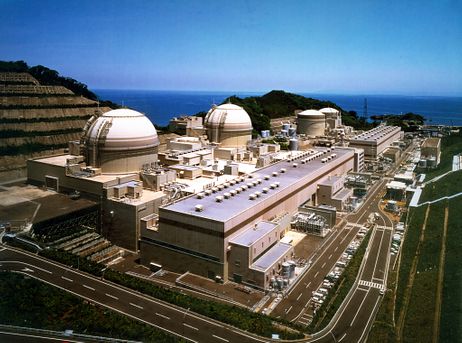
A small, aging town grapples with the financial lure of storing radioactive waste underground.
Japan’s worsening depopulation crisis is crippling the public finances of regional towns. Now one small town has made national headlines after expressing interest in storing radioactive nuclear waste underground in a last ditch effort to save itself from impending bankruptcy.
The small town of Suttsu in Hokkaido, the northernmost main island of Japan, has a population of just under 3,000 people. It’s the first local municipality to volunteer for the permanent storage site of highly radioactive nuclear waste and nuclear spent fuel. Suttsu Mayor Kataoka Haruo says the town has no more than 10 years left to find new sources of income after struggling with a slump in sales of seafood due to the global coronavirus pandemic.
Kataoka says there is an impending sense of crisis unless an urgent financial boost in the form of a government grant can be secured. He has called on local residents not to dismiss the idea of applying for the phase one “literature survey” without weighing the ways the grant could be spent — in contrast to the harsh reality of town funds running dry in 10 years’ time.
In Japan there are more than 2,500 containers of nuclear waste being stored in limbo without a permanent disposal site. Currently, the waste is stored temporarily in Aomori prefecture in northwest Japan at the Japan Nuclear Waste Storage Management Center. According to the Ministry of Economy, Trade, and Industry there are also approximately 19,000 tons of spent nuclear fuel stored at each nuclear power plant.
Nuclear waste projects immense heat and it needs to be cooled through exposure to air for between 30 to 50 years before it can be transferred and stored underground. However, it takes roughly 1,000 years to 100,000 years for radiation intensity to drop to safe levels.
The 2011 Fukushima nuclear disaster left long-lasting trauma further exasperating Japan’s already vexed relationship with nuclear energy as a resource deficient nation. The aftermath of the disaster and the slow road to recovery prompted many people to object to nuclear waste storage not only on geographic grounds but also out of strong emotional opposition.
Hokkaido has built a global reputation for its high quality dairy, agricultural products, and seafood. Nuclear waste storage, and the negative publicity that would follow, could jeopardize those industries.
With the proposal, local residents in Sutsu have been placed in a difficult situation, weighing up the health of their children and future generations against the town’s financial prospects and viable funding opportunities.
In August, Kataoka said he would not apply for phase one without the understanding of the general public. Last week, Kataoka held a local briefing session aiming to deepen local understanding and consent. But after discussing the damage to the town’s reputation and the possible conflict with a previous ordinance against accepting nuclear waste set by a radioactive waste research facility created in Hokkaido in 2000, Kataoka indicated the application for phase one would likely be delayed.
In 2000 the government enacted the Final Disposal Law, which outlined criteria for electing a permanent storage site. A three-stage investigation process sets out excavation to be deeper than 300 meters below ground and in doing so a survey of volcanoes, active fault lines, and underground rock must be performed in addition to installing an underground survey facility. It’s estimated that steps one through to three will take approximately 20 years in total.
In 2017 the government released a scientific map of Japan, pinpointing towns with suitable geographic conditions to host final disposal sites. If the application and survey are approved successfully, towns are eligible for grants up to 2 billion yen (around $19 million at current exchange rates) from the central government and another 7 billion yen if stage two goes ahead. In 2002 The Nuclear Waste Management of Japan (NUMO) launched an open call for local municipalities to consider applying for an initial investigation stage without success. Three years after the release of the map, NUMO has attempted to garner public support by hosting over 100 local discussion meetings all over Japan. Suttsu was the first town to express interest in phase one out of 900 local municipalities.
The final nuclear waste site is expected to make room underground for 40,000 barrels requiring six to 10 square kilometers — the equivalent of 214 Tokyo Dome Stadiums — to a tune of 3.9 trillion yen.
The government is currently formulating a “nuclear fuel cycle policy,” which aims to reduce the amount of nuclear waste generated by encouraging the recycling and reuse of spent fuel. But one major criticism of Japan’s nuclear power policy is the lack of a comprehensive strategy. The two year period for a “literature survey” has been touted as an opportunity for Japan to seriously consider the cleanup of nuclear power.
The American election- what will the nuclear order look like after this?

image from MENAFN.COM
THE U.S. ELECTION AND NUCLEAR ORDER IN THE POST-PANDEMIC WORLD Limitless Life, LEON V. SIGAL, SEPTEMBER 29 2020Abstract
U.S. power and prestige may have diminished in recent years, but the United States still plays a pivotal role in international institutions, alliances, and mass media, so who becomes its president and which party controls Congress matter a lot for the global nuclear order. However unlikely it is that Donald Trump’s expressed desire to contest the election’s outcome could succeed, whether the nation can avert a violent backlash among disappointed partisans is less clear.
Nuclear weapons are often thought to be the esoteric domain of experts. Yet one need only recall that although mass activism does not guarantee policy change, three of the most significant developments in recent decades – the ban on above-ground nuclear tests, the INF
Treaty, and the collapse of the Berlin Wall – would not have happened without mass protests in many countries. And citizen involvement, organized by NGOs, can even facilitate monitoring of arms agreements and nuclear developments in some countries.
positive change to the global nuclear order will continue to be marginal and fitful. This makes the international milieu critical for the nuclear future – a milieu that a president can influence but not determine.
President Trump’s reelection is likely to have a pernicious effect on that milieu, hindering international cooperation to limit nuclear weapons and accelerating a qualitative arms race that could endanger crisis stability. Yet two of Trump’s more positive impulses are likely to continue. He is unlikely to increase the risk of an intense crisis leading to nuclear war because he wants to avoid U.S. involvement in any wars, not start new ones. He will also try to sustain negotiations
with North Korea to curb nuclear developments there, though whether he is prepared to satisfy Pyongyang’s stiffer demands remains in doubt.His opponent, Joseph Biden, will face those same demands. Personnel is policy, and the Biden administration will likely be staffed with officials who served under President Obama. That means a return to shoring up alliances and international cooperation. It also means continuity with Obama’s nuclear policies. Whether he will curtail Obama’s modernization plans is not clear, but in contrast to Trump, he will try his best to restore the JCPOA, which could head off nuclear weapons development not only in Iran but also in Saudi Arabia. He will also strive to save START, seek technical talks with China, and not abandon the Open Skies accord……….. https://wordpress.com/read/feeds/2663585/posts/2938659215
America’s nuclear waste crisis doesn’t get a mention in Democrats’ or Republicans’ platform


|
Four powerful players want a nuclear waste solution. What’s stopping them? Bulletin of the Atomic Scientists By David Klaus, September 29, 2020 The 92-page platform adopted at the Democratic National Convention does not include a single sentence on the issue of how to manage the more than 80,000 tons of spent nuclear fuel sitting at 70 sites in communities across the country. The Republicans adjourned without adopting any new platform for 2020, leaving their 2016 platform in place—but it also did not address the nuclear waste issue.
Ironically, political interest in addressing the spent fuel issue is decreasing at a time when the number of closed nuclear plants in the United States is increasing—and it is common practice to level the plant and leave the spent fuel behind. If the issue had been as significant a political priority today as it was in the past, it would have been included in one or both of the platforms. In its 2004 and 2008 platforms, the Democratic Party committed to “protect Nevada and its communities from the high-level nuclear waste dump at Yucca Mountain, which has not been proven to be safe by sound science.” Republicans, in their 2012 platform, focused on how “[t]he federal government’s failure to address the storage and disposal of spent nuclear fuel has left huge bills for States and taxpayers.” with the 2020 elections around the corner and Congress winding down, it is clear that is nothing is going to happen anytime soon. Why? Because none of the organizations claiming they want a permanent waste disposal facility is actually serious about a solution. The missing coalition. There should be a powerful coalition of diverse interests working to find a permanent disposal path for the thousands of tons of spent nuclear fuel held in temporary storage facilities at commercial nuclear plants across the country. That coalition would include:
Such a coalition of diverse interests should be an effective political force. Why hasn’t it produced any results? The answer is that, notwithstanding their public statements, none of these potential interests really supports addressing the spent fuel issue or is willing to make it a political priority. Economic disincentives. For the nuclear utility companies, nuclear waste management is a matter of simple economics. Under current court orders, the US government covers the utilities’ cost for storing spent nuclear fuel. In addition, the courts have put a freeze on utility payments to the Nuclear Waste Fund. Every legislative proposal to address the spent fuel issue reinstates utility payments to the fund and potentially shifts short-term storage costs back to the utilities. For Congress and the White House, enthusiasm for ending the current $600 million per year payments to the utilities is complicated by budget scoring rules. Today, payments to utilities are made out of the federal government’s Judgment Fund, because they are required by court order rather than statute. The Judgment Fund is an indefinite appropriation and is considered to be off-budget, which means payments from the fund are not counted in the budget scoring system or allocated against specific accounts. Legislation to address the spent fuel issue would change that, forcing appropriators to find $600 million in savings from other programs or to identify new revenue sources to offset the expenditure. It’s easier for Congress and the administration to keep their heads in the sand. The nuclear industry’s position in support of spent fuel legislation is tempered by a combination of reality and priorities. While the industry regularly testifies in favor of finding a long-term solution to the spent fuel problem, the reality is that state legislative prohibitions on the construction of new nuclear reactors are meaningless, given that no new reactors are planned in the foreseeable future. It is uneconomic and/or not politically viable to build a new reactor in the United States—even one of the small modular reactors under development. The nuclear industry has other significant political issues related to its existing fleet of reactors, and these have pushed the spent fuel issue toward the bottom of the priority list. ………. Ultimately, leadership on the issue is going to have to come from a president and congressional leaders who take seriously the US government’s legal obligation to accept commercial spent fuel and build a long-term repository to hold it. This obligation is grounded in nonproliferation policy and was established by statute in the Nuclear Waste Policy Act of 1982. ……. https://thebulletin.org/2020/09/four-powerful-players-want-a-nuclear-waste-solution-whats-stopping-them/ |
|
|
‘We have a chance’: David Attenborough says $500 billion needed to save earth
‘ We have a chance’: David Attenborough says $500 billion needed to save earth, https://thenewdaily.com.au/news/world/2020/10/01/david-attenborough-un-summit-climate-change/ Attenborough: $500 billion a year for natureBritish broadcaster David Attenborough led a call from conservation groups on Wednesday for the world to invest $500 billion a year to halt the destruction of nature. Olivia Chan reports., Matthew Green
British broadcaster Sir David Attenborough is leading a call from conservation groups for the world to invest $US500 billion ($A700 billion) a year to halt the destruction of nature.
Sir David, whose latest film documents the dangers posed by climate change and the extinction of species, issued the call as the United Nations convened a one-day summit aimed at galvanising action to protect wildlife.
“Our natural world is under greater pressure now than at any time in human history, and the future of the entire planet – on which every single one of us depends – is in grave jeopardy,” Sir David, 94, said in a statement on Thursday (Australian time).
“We still have an opportunity to reverse catastrophic biodiversity loss, but time is running out.”
Opening the summit in New York, UN Secretary-General Antonio Guterres warned that a million species were at risk of extinction and that climate change and the loss of biodiversity were “destroying earth’s web of life”.
“We are part of that fragile web and we need it to be healthy so we and future generations may thrive,” Mr Guterres said.
The call to redirect financing away from fossil fuels and other polluting industries and into locally led conservation was launched by environmental group Fauna & Flora International and backed by more than 130 organisations.
The world spends an estimated $US80-90 billion ($A112-125 billion) on conservation each year, but studies show that hundreds of billions of dollars may be needed to save ecosystems from collapse.
Britain, Canada and others joined the European Union on Monday in pledging to protect 30 per cent of their land and seas by 2030.
UN officials hope to secure a global agreement on that target at a major round of negotiations on biodiversity due to take place in China in 2021.
Congenital abnormalities. Thorium and uranium, in infants and children living near an active U.S. military base in Iraq
|
“Our study has established the presence of uranium and of thorium, a direct depleted-uranium decay-product, in Nasiriyah children.” Environmental Pollution, 30 Sept 20 Living near an active U.S. military base in Iraq is associated with significantly higher hair thorium and increased likelihood of congenital abnormalities https://www.rnanews.eu/our-study-has-established-the-presence-of-uranium-and-of-thorium-a-direct-depleted-uranium-decay-pr-45757.html?fbclid=IwAR3whvvnZqhwLVq30Rme1Vo6SnRIhpGdpfzs0e99Y4qYSb2ZCWgYaGcGizU M.Savabieasfahani F.Basher Ahamadani A.Mahdavi Damghani Highlights
• We also report on an association between residential proximity to a US army base,Tallil Air Base, and the risk of congenital anomaly. • We show that such proximity is associated with higher levels of uranium and thorium in the biological samples of the study participants. At the same time, we found an increased risk of congenital anomalies associated with higher hair levels of these metals. In Iraq, war contamination is the result of dispensed bombs, bullets, detonation of chemical and conventional weapons, and burn-pit emissions by US bases. Increases in congenital anomalies were reported from Iraqi cities post-2003. These cities were heavily bombed and encircled by US bases with burn-pits. Thorium is a radioactive compound and a direct depleted-uranium decay-product. Radioactive materials, including depleted uranium, are routinely stored in US bases and they have been shown to leak into the environment. We conducted a case-control study to investigate associations of residential proximity to Tallil Air Base, a US military base near Nasiriyah, as well as levels of uranium and thorium in hair and deciduous teeth with congenital anomalies. The study was based on a sample of 19 cases and 10 controls who were recruited during late Summer and early Fall of 2016. We developed mixed effects logistic regression models with village as the random effect, congenital anomaly as the outcome and distance to the US base and hair metal levels (one at a time) as the predictor variable, controlling for child’s age, sex and paternal education. We also explored the mediation of the association between proximity to the base and congenital anomalies by hair metal levels. We found an inverse association between distance to Tallil Air Base and risk of congenital anomalies and hair levels of thorium and uranium. The results of our mediation analyses were less conclusive. Larger studies are necessary to understand the scope of war contamination and its impact on congenital anomalies in Iraq. |
Julian Assange could face life in America’s most dreaded ‘Supermax’ prison
|
Julian Assange ‘faces a fate worse than death’ in a lifetime of isolation at the ‘Supermax’ prison currently home to America’s most violent terrorists and drug lords if he is extradited, a court has heard. The Wikileaks founder, 49, could live out his years alone at maximum security ADX Colorado jail where he would spend 23 hours in a cell if he is convicted of espionage offences in the US. Assange is wanted in the US for allegedly conspiring with army intelligence analyst Chelsea Manning to expose military secrets between January and May 2010 Prison expert Joel Sickler said the US government had ‘raised the possibility of sending Mr Assange to ADX’. ……… I believe, based on my understanding of the case, that this is a not unlikely proposition.’ He said Supermax was the only prison criticised as inhumane by its own staff, adding: ‘Robert Hood, the Warden says, “this is not built for humanity. I think that being there day by day, it’s worse than death”.’…….. The WikiLeaks founder could be placed on a prison regime called Special Administrative Measures (SAMS). This means he could be deprived of meals, phone calls, visits or interaction with other inmates. Mr Sickler, who advises federal prison defence attorneys, said: ‘Based on decades of experience, over a dozen of my clients committed suicide, it can be done. ‘I think he is only going to go there if he is a SAMS inmate. There is an outside chance he will go there on other grounds. ‘SAMS will seal his fate. If he is given a life sentence he must start at a United State Penitentiary. ‘He is someone our government alleges has knowledge of certain highly qualified information.’……… ‘Officially known as Administrative Maximum-Security United States Penitentiary (“ADX”); it is most known by its shorthand name, “Supermax”,’ Mr Sickler added. ‘This is a facility is the most feared by inmates and is where the most violent offenders in the nation are sent. ‘And this is where the Government, according to its own affidavit, sees as a potential prison placement for Mr Assange. He said it was the solitary nature of the ADX that made it so difficult for its inmates to bear. ‘Should Mr Assange be sent to ADX he will almost certainly spend all his time in ADX in solitary,’ he added……….. https://www.dailymail.co.uk/news/article-8781275/Julian-Assange-faces-fate-worse-death-WikiLeaks-founder-serve-life-isolation.html?fbclid=IwAR21x4PeHIIn2pjMDgqjBSqfqA2pK5YPTZ9Q4q4SOG066tGN_aKkZj91ROE |
|

Accelerating rate of ice sheet loss from Greenland
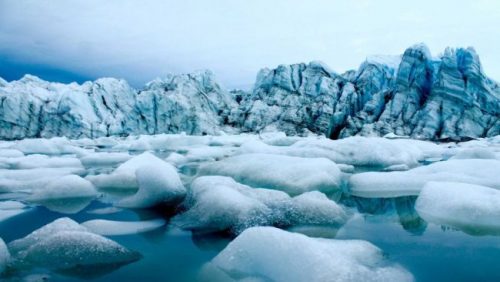 Greenland ice sheet loss already ‘unprecedented’ and set to accelerate Given our lag in getting emissions down since then, Professor Steffen said he doesn’t think 1.5C is still realistically achievable, but keeping warming below 2C is. ABC Science By environment reporter Nick Kilvert, 30 Sept, 20
Melting of the Greenland ice sheet has hit a rate unmatched in the last 12,000 years and is accelerating, scientists have confirmed. Key points:
Research published in Nature today predicts that the Greenland ice sheet will be melting by as much as six times its current rate by the end of the century if we don’t get emissions down. On the flipside, if we can achieve the best-case emissions reduction scenario forecast by the IPCC we can limit its increasing melt rate to around 40 per cent greater than its present rate. While he is cautiously optimistic, Professor Steffen said what is equally important is how they get there. Currently China are responsible for about a quarter of the world’s greenhouse gas production, and if they begin rapidly cutting emissions from today right through until 2060, then that is significant, he said. But if they continue burning fossil fuels and make rapid cuts at the last minute, the damage will already be done. “We use what’s called the carbon budget approach to estimate how much temperature is going to rise — that is the cumulative emissions between now and net-zero [emissions],” Professor Steffen said. “If [China] get their emissions down really quickly, say by 2040, that’s a big difference between whether they coast to 2050 and then cut them over a decade.” On the flipside, if we can achieve the best-case emissions reduction scenario forecast by the IPCC we can limit its increasing melt rate to around 40 per cent greater than its present rate…. As the earth emerged from the last Ice Age around 11,000 years ago, the Arctic experienced a warm period or thermal maximum between about 10,000 and 7,000 years before present. Researchers presumed that the rate of melting of the Greenland ice sheet in that period was higher than it is today. Instead, they found that over the last 20 years, the southwestern Greenland ice sheet where this research was focussed, has been losing ice at an rate of about 6,100 billion tonnes per century on average — around 100 billion tonnes more than at its previous historical peak, according to author Jason Briner from the University of Buffalo. “Our results suggest that yes, this century we will experience ice-loss rates not just similar to those in the past but exceeding those of the past, even under strict carbon emissions scenarios,” Professor Briner said. Worst-case scenario would see 600% increase in melting this centuryAs well as comparing present-day melting with the past, they looked at how different global greenhouse gas emissions trajectories would impact melting over the coming century. They modelled the IPCC’s best-case emissions scenario, called Representative Concentration Pathway (RCP) 2.6, and the worst-case emissions scenario called RCP 8.5. Under RCP 2.6, emissions are drastically reduced starting now and we achieve net-negative emissions this century. That is, we get our emissions to zero and also draw greenhouse gases from the atmosphere through technology or by boosting natural sinks like forests and blue carbon. Under RCP 2.6 we limit global average warming to within 2 degrees Celsius by 2100. On the other hand, under RCP 8.5 we continue burning fossil fuels as per usual, making no substantial efforts to reduce our greenhouse gas emissions through to 2100. Under the RCP 2.6 scenario, their models forecast that melting of the southwestern Greenland ice sheet would increase to around 8,800 billion tonnes per century on average by 2100 — about a forty per cent increase on today’s rate. But under the worst-case RCP 8.5 scenario, they forecast the southwestern Greenland ice sheet could be losing up to 35,900 billion tonnes per century — an increase of nearly 600 per cent on today’s melting rate. Although their study area didn’t encompass the entire ice sheet, Professor Briner said Greenland tends to melt fairly uniformly. “Based on reconstructions of ice sheet changes over the past several decades, it has been shown that when the ice sheet loses mass in our study area, it loses mass across its entire surface,” he said.
The study is an important demonstration of the difference that we can make by cutting emissions, according to David Etheridge from the CSIRO’s Climate Science Centre. “The range of predictions shows a high sensitivity to emissions scenarios with the possibility to limit ice loss with low emissions,” Dr Etheridge said. ‘We still have time’ to slow down sea level riseModelling sea level rise was outside the bounds of this study, but the researchers tentatively suggest that the worst-case scenario melting from the southwestern Greenland ice sheet would add around 10 centimetres to sea levels this century. If that was scaled to the entire ice sheet, that would likely be “doubled or tripled”, Professor Briner said. And that’s without accounting for any melting from the Antarctic ice sheet. Research published earlier this month in Nature found that the Antarctic ice sheet will add 1.3 metres to sea level for every degree of warming up to 2 degrees Celsius above pre-industrial levels. That research found that we have locked in at least two-and-a-half metres of sea level rise from Antarctica, regardless of what happens with our emissions from now on. But it’s the rate at which the melting happens that we have some control over and is the crucial issue, according to Will Steffen from the ANU’s Climate Change Institute. “We can still influence the rate at which Greenland melts and thus the rate that sea level rises. That’s the important message,” Professor Steffen said.
Rather than needing to adapt and shift coastal communities over decades, we can buy ourselves a century or more if we act to get emissions down immediately, Professor Steffen said. When countries signed up to the Paris Agreement in 2015, the aim was to keep warming to 1.5C. Given our lag in getting emissions down since then, Professor Steffen said he doesn’t think 1.5C is still realistically achievable, but keeping warming below 2C is. |
|
False claims of hacked voter information likely intended to cast doubt on legitimacy of U.S. elections
 FALSE CLAIMS OF HACKED VOTER INFORMATION LIKELY INTENDED TO CAST DOUBT ON LEGITIMACY OF U.S. ELECTIONS https://www.ic3.gov/media/2020/200928.aspx, September 28, 2020 Questions regarding this PSA should be directed to your local FBI Field Office. Local Field Office Locations: www.fbi.gov/contact-us/field-offices The FBI and CISA are issuing this PSA as a part of a series on threats to the 2020 election to enable the American public to be prepared, patient, and participating voters. The Federal Bureau of Investigation (FBI) and the Cybersecurity and Infrastructure Security Agency (CISA) are issuing this announcement to raise awareness of the potential threat posed by attempts to spread disinformation regarding cyberattacks on U.S. voter registration databases or voting systems.During the 2020 election season, foreign actors and cyber criminals are spreading false and inconsistent information through various online platforms in an attempt to manipulate public opinion, discredit the electoral process, and undermine confidence in U.S. democratic institutions. These malicious actors could use these forums to also spread disinformation suggesting successful cyber operations have compromised election infrastructure and facilitated the “hacking” and “leaking” of U.S. voter registration data.
In reality, much U.S. voter information can be purchased or acquired through publicly available sources. While cyber actors have in recent years obtained voter registration information, the acquisition of this data did not impact the voting process or the integrity of election results. In addition, the FBI and CISA have no information suggesting any cyberattack on U.S. election infrastructure has prevented an election from occurring, compromised the accuracy of voter registration information, prevented a registered voter from casting a ballot, or compromised the integrity of any ballots cast. RECOMMENDATIONS
The FBI and CISA coordinate closely with federal, state, and local election partners and provide services and information to safeguard U.S. voting processes and maintain the integrity of U.S. elections. Both organizations urge the American public to critically evaluate the sources of the information they consume and to seek out reliable and verified information. The FBI is responsible for investigating malign foreign influence operations and malicious cyber activity targeting election infrastructure and other U.S. democratic institutions. CISA is responsible for protecting the nation’s critical infrastructure from physical and cyber threats and has provided voluntary guidance, training, exercises, and other resources to help state and local election officials secure their voter registration systems and data. VICTIM REPORTING AND ADDITIONAL INFORMATIONThe FBI encourages the public to report information concerning suspicious or criminal activity to their local field office (www.fbi.gov/contact-us/field-offices) or to the FBI’s Internet Crime Complaint Center (www.ic3.gov). For additional assistance, best practices, and common terms, please visit the following websites:
|
|
The Proud Boys – far right group that backs Donald Trump
Organisation founded ahead of 2016 US election is classified by the FBI as an ‘extremist group’, Guardian, Martin Belam in London and Adam Gabbatt in New York, Thu 1 Oct 2020 Freshly brought to the world’s attention by Donald Trump’s refusal to condemn their associations with white supremacist ideology during Tuesday night’s US presidential debate, the US neo-fascist group the Proud Boys was created by the Canadian-British far-right activist and Vice magazine co-founder Gavin McInnes in 2016 in the lead-up to Trump’s election as president.
The group, which admits men only, was classified in 2018 by the FBI as an “extremist group”, while the US research and advocacy organization Southern Poverty Law Center (SPLC) lists it as a hate group. The Anti-Defamation League describes the group as misogynistic, Islamophobic, transphobic and anti-immigration.
It is based in America, mostly the western US, but has a presence in some other countries, notably Canada, the UK and Australia.
And while it has an outsize reputation based on the high-profile agitation events and street brawls its members are most infamous for, and now a reference in a presidential debate, the Proud Boys is believed to be a very small group comprising maybe just a few hundred members in the US.
It is one of a sheaf of far-right groups with ready access to legal firearms in the US and with overtly pro-Trump or libertarian stances and an affinity for presenting as vigilantes or paramilitaries, especially during far-right gatherings or when showing up to disrupt liberal-leaning protests.
To join the Proud Boys, members must make an oath: “I am a proud western chauvinist, I refuse to apologise for creating the modern world”, as well as endure a violent “hazing” process. While the group maintains it is not racist, and simply wants to hark back to traditional ““western” values, its worldview incorporates elements of the “white genocide” conspiracy theory. Members are pro-gun rights, against feminism and gender equality, and take a libertarian stance on issues such as welfare.
During the debate, Trump was asked repeatedly by the moderator, Chris Wallace, to condemn violence by white supremacists and rightwing groups, such as armed militias.
When Trump asked specifically who he should be addressing, Biden prompted him by saying the Proud Boys.
Trump then addressed the Proud Boys, saying: “Proud Boys, stand back and stand by! But I’ll tell you what, somebody’s got to do something about antifa and the left.”
Members of the group immediately celebrated the president’s comment in posts on social media and rightwing discussion-board platforms such as Telegram and Parler. One Proud Boys group added the phrase “Stand Back, Stand By” to their logo. Another post was a message to Trump: “Standing down and standing by sir.”……….
The group are identifiable by their adopted uniform of red “Make America Great Again” caps, associated with Donald Trump’s 2016 and 2020 election campaigns, and black Fred Perry polo shirts with some narrow yellow stripes and the company’s yellow laurel wreath logo, which the company earlier this week stopped selling as a result. The sports clothing manufacturer recently withdrew the design, citing its unwillingness to be associated with the group……..https://www.theguardian.com/world/2020/sep/30/proud-boys-who-are-far-right-group-that-backs-donald-trump
Heavy military clashes between Armenian and Azeri forces
|
Fierce clashes rage in Azerbaijan’s ethnic Armenian enclave, SMH, by Nvard Hovhannisyan and Nailia Bagirova
September 29, 2020 Yerevan: Armenian and Azeri forces have deployed heavy artillery during the latest fighting over the breakaway region of Nagorno-Karabakh, they both said.
The Azeri Defence Ministry said the opposing forces attempted to recover lost ground by launching counter-attacks in the directions of Fizuli, Jabrayil, Agdere and Terter. The ministry said in a statement there was fighting around Fizuli city and the Armenian army shelled the Dashkesan region on the border between the two countries, miles away from Nagorno-Karabakh on Tuesday morning. Armenia denied those reports but reported fighting throughout the night and said that Nagorno-Karabakh’s army repelled attacks in several directions along the line of contact. At least 29 people were killed on Monday when the two sides pounded each other with rockets and artillery in the fiercest round of the decades-old conflict in more than a quarter of a century. “This is a life-and-death war,” Arayik Harutyunyan, the Nagorno-Karabakh leader, told a briefing. Any move to all-out war could drag in major regional powers Russia and Turkey. Moscow has a defence alliance with Armenia, which provides vital support to the enclave and is its lifeline to the outside world, while Ankara backs its own ethnic Turkic kin in Azerbaijan. “We haven’t seen anything like this since the ceasefire to the war in the 1990s. The fighting is taking place along all sections of the front line,” said Olesya Vartanyan, senior analyst for the South Caucasus region at Crisis Group…….. Vartanyan said the use of rockets and artillery brought a higher risk of civilian casualties that could make the escalation hard to stop by diplomatic means: “If there are mass casualties, it will be extremely difficult to contain this fighting and we will definitely see a full-fledged war that will have a potential intervention of Turkey or Russia, or both of them.” Russia called for an immediate ceasefire, and Turkey said it would support Azerbaijan……….. https://www.smh.com.au/world/asia/fierce-clashes-rage-in-azerbaijan-s-ethnic-armenian-enclave-20200929-p56051.html |
|
Armenian Ambassador on Azerbaijani threats of missile strike against Metsamor Nuclear Power Plan
Armenian Ambassador on Azerbaijani threats of missile strike against Metsamor Nuclear Power Plant Public Radio of Armenia, Siranush Ghazanchyan August 3, 2020, Armenia has undertaken a number of measures to raise awareness about Azerbaijan’s threat to strike the Metsamor Nuclear Power Plant, Armen Papikyan, Armenia’s ambassador to the IAEA, said in an interview with Energy Intelligence.
“Given that the Azerbaijani leadership has no qualms about targeting civilian installations, we took the threat extremely seriously,” he said.
On Jul. 16, amid renewed fighting on the Armenia-Azerbaijan border, the spokesperson for the Azerbaijan defense ministry threatened a missile strike against Armenia’s Metsamor nuclear power plant (NIW Jul.17’20). This threat reverberated in Vienna, where Armenia’s mission to the International Atomic Energy Agency (IAEA) submitted a “Note Verbale” to the agency’s director general (DG) on Jul. 17, noting taht such threats “are an explicit demonstration of state terrorism and genocidal intent of Azerbaijan.” Baku soon responded……….. https://en.armradio.am/2020/08/03/armenian-ambassador-on-azerbaijani-threats-of-missile-strike-against-metsamor-nuclear-power-plant/
USA threatens putting more weapons on bombers and submarines if Russia doesn’t agree to USA conditions for arms talks
 Trump administration orders assessment on bolstering nuclear warheads as talks with Russia stall U.S. diplomats are trying to play hardball with Russia in negotiations over whether to extend New START, Politico, .By DANIEL LIPPMAN, BRYAN BENDER and LARA SELIGMAN, 09/28/2020 The Trump administration has asked the military to assess how quickly it could pull nuclear weapons out of storage and load them onto bombers and submarines if an arms control treaty with Russia is allowed to expire in February, according to three people familiar with the discussions. The request to U.S. Strategic Command in Nebraska is part of a strategy to pressure Moscow into renegotiating the New Strategic Arms Reduction Treaty before the U.S. presidential election, the people said. In making the request, the Trump administration wants to underscore that it is serious about letting the treaty lapse if Russia fails to meet U.S. demands. The negotiating team is leery that Russia is dragging out the talks in the hope that Joe Biden — who has pledged to extend New START under what Moscow believes will be more favorable terms than what this White House is offering — wins the election. “It’s a clear signal that the costs for not negotiating before the election are going to go up,” said one of the people, who requested anonymity to relay sensitive discussions. The Trump administration is “trying to create an incentive, and it’s a real incentive, for the Russians to sit down and actually negotiate.”
The request for the assessment came in the last two weeks from a group of officials at the National Security Council and State, Defense and Energy departments that’s supporting Ambassador Marshall Billingslea in negotiations with Moscow to try to replace New START before it runs out in February. The assessment will determine how long it would take to load nuclear weapons now in reserve onto long-range bombers, ballistic missile submarines and land-based silos to beef up the U.S. nuclear force in the event Russia increases its arsenal. It comes as Billingslea has publicly raised the possibility of putting more weapons on bombers and submarines if New START lapses and has sharpened his rhetoric in recent days to try to secure more concessions from the Russians. It would certainly be a question that you would want to ask STRATCOM,” said retired Air Force Lt. Gen. Frank Klotz, who oversaw nuclear forces before serving as head of the DOE’s National Nuclear Security Administration. “You would want to fully understand all the possible implications of your negotiating approach, both if it should succeed or, alternatively, if it should fail.” But former senior arms control and military officials also consider the move a risky gambit. It could send a message that the Trump administration, which has already pulled out of two other nuclear-related treaties with Russia, is no longer interested in any limits on the world’s largest arsenals. And it could goad the Russians into taking similar steps. I call that megaphone diplomacy,” said Rose Gottemoeller, who served as deputy secretary general of NATO until last year and negotiated New START when she was at the State Department. “Do we want to end up in a less stable place? Because we would be nuclear arms racing.” “It’s very stupid,” added a former GOP arms control official who declined to be identified because he still advises the government. “It makes absolutely no sense to threaten to upload. It becomes a valid leveraging point only if the other side can’t do it. The Russians can do it, too.” “But more importantly,” this person added, “the systems we have deployed today are the ones we believe are necessary to provide an adequate deterrent. There is no obvious reason and every reason not to in the absence of a change in the threat. It’s not going to scare the Russians. The likelihood of success with the Russians is about nil.” A State Department spokesperson declined to comment on Billingslea’s behalf. Capt. Bill Clinton, a spokesperson for Strategic Command, declined to address the military’s role in the deliberations. “We don’t talk about future operations, and really can’t speculate on arms control talks (as that is not [our] responsibility),” he wrote in an email. An NSC spokesperson declined to comment. New START, signed in 2010, mandated both sides draw down to 1,550 deployed strategic weapons and includes provisions to verify compliance, including reciprocal on-site inspections of nuclear bases. The pact is set to expire on Feb. 5 unless both sides agree to an extension for up to five years. apply. Russia in December offered to extend the treaty without preconditions. ………https://www.politico.com/news/2020/09/28/trump-russia-nuclear-deal-talks-422736 |
|
On the moon ”normal” humans (i.e males) will get 200 Times the Radiation Experienced on Earth, (what about females?)

Christina Macpherson’s websites & blogs
It is amazing that in all this propaganda for putting a woman on the moon, – no mention is ever made, of the fact that women are much more susceptible to the effects of ionising radiation, meaning that their risk of developing cancer and other illnesses is greater than it is for men. Apparently the space enthusiasts are still buying into that traditional view that the ”normal” human being is male.

The 12 human beings who have walked on the moon were all bombarded by radiation roughly 200 times what we experience here on Earth, reports Adam Mann for Science. That’s two to three times what astronauts experience aboard the International Space Station, explains Marcia Dunn for the Associated Press (AP), suggesting that any long term human presence on the moon will require shelters with thick walls capable of blocking the radiation.
Despite the fact that the measurements, which come courtesy of China’s Chang’e-4 lunar lander, are quite high compared to what we experience on Earth, the data is quite useful for protecting future moonwalkers. According to Science, the levels of radiation at the lunar surface wouldn’t be expected to increase the risk of NASA astronauts developing cancer by more than 3 percent—a risk threshold the agency is legally required to keep its astronauts’ activities safely below.
Despite the fact that the measurements, which come courtesy of China’s Chang’e-4 lunar lander, are quite high compared to what we experience on Earth, the data is quite useful for protecting future moonwalkers. According to Science, the levels of radiation at the lunar surface wouldn’t be expected to increase the risk of NASA astronauts developing cancer by more than 3 percent—a risk threshold the agency is legally required to keep its astronauts’ activities safely below……
Some forms of radiation, which is electromagnetic energy emitted in forms like heat, visible light, X-rays and radio waves, can mess with the cells inside the human body by breaking up the atoms and molecules they’re made of. On Earth, most people are familiar with ultraviolet radiation’s harmful effects on our skin, but in space, astronauts are also subjected to galactic cosmic rays, accelerated solar particles, neutrons and gamma rays, according to the research published this week in the journal Science Advances. This material can damage our DNA and lead to increased incidences of cancer or contribute to other health problems such as cataracts and degenerative diseases of the central nervous system or other organ systems.
Humanity measured the radiation astronauts on the Apollo missions experienced on their journeys to the moon, but those measurements were cumulative for each astronaut’s entire journey, per Science. To figure out the daily dose of radiation exclusively on the surface of the moon, the robotic Chang’e-4 lander used a stack of ten silicon solid-state detectors.
The renewed interest in collecting such measurements is partly because NASA has plans to send more people to the moon. The Artemis moon mission, scheduled for 2024, will feature the first woman ever to walk on the moon as well as a week-long expedition to the lunar surface and a minimum of two moonwalks, reports Katie Hunt for CNN.
Berger tells the AP that these new findings suggest the shelters needed to protect Artemis’ astronauts during such a long stay on the moon should have walls made of moon dirt that are some two and a half feet thick. Science notes that the shelter would also need an even more heavily shielded inner sanctum to protect astronauts in the event of a solar storm. Adequate shielding for this inner chamber would be roughly 30 feet of water, and would also need to be reachable within 30 minutes—the current limit of satellites’ abilities to provide astronauts with advanced warning of such hazards.
The findings aren’t exactly suprising: they are in line with calculations made using existing measurements. But they’re a crucial step towards putting people on the surface of the moon for extended periods of time. According to Science, the results confirm that with proper shielding astronauts could spend as long as six months on the moon. https://www.smithsonianmag.com/smart-news/moonwalking-humans-get-blasted-200-times-radiation-experienced-earth-180975926/
Near to flaspoint – disputes between India, Pakistan,China
 Tensions between 3 nuclear-armed powers are rising toward the boiling point ABBY POKRAKA, RESPONSIBLE STATECRAFT SEP 30, 2020,
For decades, India and Pakistan have clashed over Kashmir, the mountainous region both countries claim. But to make matters more complicated, China has a stake in the area, too. The Aksai Chin region — located between Kashmir and Tibet — is under Chinese control and has been a source of conflict between India and China since 1962.
The borderlands between these three nuclear-armed states is increasingly a flashpoint for conflict. The international community ignores these growing challenges at its peril and should be looking for ways to help manage potential crises in the region. And while the United States can play a role, in this particular instance, direct US involvement is probably not the best way forward…………. China was drawn into a dispute between India and Pakistan when India revoked Kashmir’s autonomy in August 2019 and wanted to incorporate parts of “Xinjiang and Tibet into its Ladakh union territory,” which China believes violates its dominion due to its occupation of Tibet. It appears that over the last year the situation in Kashmir has not gotten better. ……It seems clear that after decades of poor relations, the tensions in this part of the world may reach a boiling point. Finding a solution to these half-century conflicts seems daunting, but it is necessary. While many nations have fought throughout history, a conflict between nuclear-armed states carries an unbearable risk of escalation. To start, these countries can take small steps to stabilise the security of the region and pave the way for better relations. Starting a dialogue, bilateral or trilateral, can improve communication in the longer term, which can help reduce the likelihood of conflict. Establishing crisis communications was an important step the United States and the Soviet Union took in the wake of the Cuban Missile Crisis, and de-escalation practices the two countries implemented in the early 1960s remained in place through the end of the Cold War. A third party could help facilitate regional discussions. Given its history in the region, the United States might have seemed like a good option for such facilitation, but that is not the case at this time……. This week, President Trump took aim at China before the United Nations, blaming it for the global COVID pandemic. At this point, there is no reason China would see the United States as a desirable mediator for any regional conflict…… friction among China, India, and Pakistan continues to grow. The only way to diffuse the tension and prevent destructive escalation is through diplomacy. Other countries need to step up and work to reduce the hostilities. Make no mistake, a large-scale, regional conflict among nuclear-armed states would have global consequences. https://www.businessinsider.com.au/httpsresponsiblestatecraftorg20200925india-china-pakistan-three-nuclear-powers-hurtling-towards-the-boiling-point-2020-9 |
|
Call to British govt to not allow restart of Hinkley Point B nuclear reactors, with cracks in their cores

 Stop Hinkley 29th Sept 2020, EDF Energy has just announced that it intends to submit new safety cases to the Office for Nuclear Regulation (ONR) to re-open Reactors 3 and 4 at Hinkley Point B. It currently expects reactor 4 to return to service on 26 February 2021 and reactor 3 on 12 March 2021.
The Stop Hinkley Campaign is calling for both reactors to remain closed. Stop Hinkley spokesperson Roy Pumfrey said: “Nuclear engineer, the late John Large said more than a decade ago that it was gambling with public safety to allow reactors with cracks in their core to keep operating. (3) Every minute these reactors operate that gamble become riskier.
We call upon the UK Government to intervene and request the ONR to re-consider their unwise decisions at Hunterston B and to refuse to accept EDF’s safety cases for Hinkley Point B. It is EDF in Paris, France which will benefit from the restart of these reactors, but it is those of us who live in Somerset and middle England who are being exposed to these involuntary risks”
1 This Month


Read the Public Inquiry Report, the Commissioners’ report, Surrendering Australia: The AUKUS Deception is available to download for free at aukuspublicinquiry.com. Or just watch the replay of the National Press Club Luncheon.



19 November – Webinar – The Reality of Reprocessing
Time: 11:00 AM Pacific Time (US & Canada) / 2:00 PM Eastern / 7:00 PM UK / 8:00 PM CET
Register for the Zoom Event Here



Shut down the radiation-damaged Heysham nuclear reactors now
To see nuclear-related stories in greater depth and intensity – go to https://nuclearinformation.wordpress.com

Say No to NASA’s Reckless Nuclear Reactor on the Moon
Say No to NASA’s Reckless Nuclear Reactor on the Moon
-
Archives
- November 2026 (119)
- October 2026 (302)
- September 2026 (339)
- August 2026 (330)
- July 2026 (355)
- June 2026 (287)
- May 2026 (306)
- April 2026 (356)
- March 2026 (251)
- February 2026 (267)
- January 2026 (308)
- December 2025 (358)
-
Categories
- 1
- 1 NUCLEAR ISSUES
- business and costs
- climate change
- culture and arts
- ENERGY
- environment
- health
- history
- indigenous issues
- Legal
- marketing of nuclear
- media
- opposition to nuclear
- PERSONAL STORIES
- politics
- politics international
- Religion and ethics
- safety
- secrets,lies and civil liberties
- spinbuster
- technology
- Uranium
- wastes
- weapons and war
- Women
- 2 WORLD
- ACTION
- AFRICA
- Atrocities
- AUSTRALIA
- Christina's notes
- Christina's themes
- culture and arts
- Events
- Fuk 2022
- Fuk 2023
- Fukushima 2017
- Fukushima 2018
- fukushima 2019
- Fukushima 2020
- Fukushima 2021
- general
- global warming
- Humour (God we need it)
- Nuclear
- RARE EARTHS
- Reference
- resources – print
- Resources -audiovicual
- Weekly Newsletter
- World
- World Nuclear
- YouTube
-
RSS
Entries RSS
Comments RSS

