Daunting task of removal of Russia’s spent nuclear fuel rods from Andreeva Bay
One-third of all nuclear waste removed from Cold War dump site https://thebarentsobserver.com/en/nuclear-safety/2020/10/one-third-all-nuclear-waste-removed-cold-war-dump-site
Another 12 special design casks with spent nuclear fuel from Cold War submarines are soon to be shipped out of Andreeva Bay on Russia’s Arctic Barents Sea coast. ByThomas Nilsen October 02, 2020
About 35% of the 21,000 spent uranium fuel elements originally stored in three rundown tanks is so far lifted out, repacked and sent to Russia’s reprocessing plant at Mayak in the South-Urals, informs Aleksandr Krasnoshchekov, director of the SevRAO’s branch in Andreeva Bay. SevRAO is the federal enterprise for handling radioactive waste in the northwestern region.
The company has a staff of 100 in Andreeva Bay in the Litsa fjord, a closed-for-civilians fjord near the border to Norway where the Northern Fleet has two basing points for nuclear submarines.
Here, the navy started to store casks with highly radioactive spent uranium fuel from its first nuclear-powered in the 1960s. First in rusty containers outdoor, later in a pool-building that broke down. In the 1980s, the elements were moved over to three concrete tanks in very poor conditions.
After nearly 20 years of improving the infrastructure, securing the site from leakages and building a new crane at the port, the first shipment with nuclear waste left Andreeva Bay in 2017.
Neighboring Norway has spent more than €30 million to support the cleanup of the nuclear dump located only about 50 km from its border.
Also Sweden, Great Britain, Italy and the European Commission have contributed. Italy, as an example, paid for building the “Rossita”, a special purpose ship sailing in shuttle from Andreeva Bay to Atomflot in Murmansk where the containers are reloaded to rail wagons. According to director Krasnoshchekov, the ongoing work is done based on contracts with these countries, he says in an interview with Vesti Murman.
Most of the work done so far concerns the elements easy to lift out.
Way more challenging times are ahead, as the damaged elements in the third tank, 3A, are to be secured and lifted out.
Take a closer look at the photo below to understand the scoop of the challenge. Some of these rusty, partly destroyed steel pipes contain fuel rods where the uranium will fall out if lifted straight up.
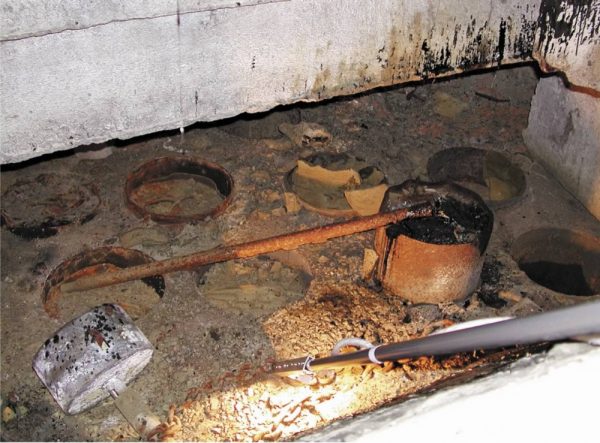
The work on tank 3A is scheduled to start in 2023, after tank 2A and 2B is completed. The experts are don’t want to start the most risky work before as much as possible of the other waste elements are removed. A criticality accident in Andreeva Bay is worst-case scenario.
As previously reported by The Barents Observer, the total radionuclide inventory in the three tanks is estimated to be equal to the remains of Rector No. 4 inside the Chernobyl sarcophagus in Ukraine. This according to a study by the British nuclear engineering company Nuvia.
The original 22,000 spent fuel elements dumped in Andreeva Bay are coming from 90-100 reactor cores powering the Soviet Union’s Cold War submarines sailing out from the naval bases along the coast of the Kola Peninsula from the late 1950s to 1982.
The first reactor cores of the November class submarines were reloaded in the early 1960s.
Additional to the spent fuel elements, some 10,000 cubic meters of solid radioactive waste from Andreeva Bay are shipped to the regional handling and storage facility in Saida Bay, a few hours sailing to the east on the Kola Peninsula. Huge piles of solid radioactive waste were stored outdoor summer and winter in the same area. Now, a building is erected to protect the boxes from rain and snow, before being repacked and shipped to the Saida Bay.
Ionising radiation – the tragedy of the ”radium girls”.

They weren’t just making paints, they were doing the painting, too. According to NPR, US Radium hired scores of girls and young women — as young as just 11-years-old — to paint watch dials with the glow-in-the-dark, radium-based paint. As if just working with the paint wasn’t bad enough, they were also encouraged to put the brush between their lips and twirl it into a point. It was the best way to get truly precise numbers and brush strokes, but with each lick of the brush, they were swallowing radium.
the human body isn’t great at telling the difference between radium and calcium. Radium gets absorbed into the bones just like calcium does, and when that happens, the rot starts.
Writer and historian Kate Moore documented the cases of the Radium Girls (via The Spectator) and found that there were a whole host of symptoms. Some started suffering from chronic exhaustion. For many, it started with their teeth — one by one, those teeth would start to decay and rot. When they were removed, their gums wouldn’t heal. In some cases, the jaw would just simply disintegrate at the dentist’s touch. Bad breath was common. Skin became so delicate that the slightest touch would tear open wounds. Ulcers formed for some, and those that were pregnant bore stillborn babies.
THE RADIUM GIRLS HAD TO BE BURIED IN LEAD-LINED COFFINS
The Radium Girls weren’t just sick, they were very literally radioactive. Mollie Maggia was exhumed in 1927, in the hopes that her bones would give still-living Radium Girls the evidence they needed to win in court. According to Popular Science, her coffin was lifted out of the ground, and her body? It glowed. That wasn’t entirely surprising, considering her bones were found to be highly radioactive — and considering radium’s half-life is 1,600 years, they’re not going to stop glowing any time soon.
Eventually, 16 separate sites around Ottawa would be classified as Superfund sites.
NPR Illinois says that many have been cleaned up, but as of 2018, there was at least one site — a 17-acre plot of land on the Fox River — that still remained a highly radioactive and terrifying legacy of the Radium Girls.
THE MESSED UP TRUTH ABOUT THE RADIUM GIRLS https://www.grunge.com/181092/the-messed-up-truth-about-the-radium-girls/ BY DEBRA KELLY/DEC. JULY 14, 2020
History is filled with episodes that prove mankind is just sort of making everything up as it goes. There’s no shortage of things that can kill us or do horrible, terrible things to our soft and squishy bodies, and every time we think we know about them all, it turns out there’s something else lurking around the corner.
And sometimes, it’s disguised as something awesome. Need proof? Look no further than the Radium Girls.
Yes, that radium. Today, the Royal Society of Chemistry says there’s really only one use for radium — targeted cancer treatments, because it’s so good at killing cells. It was first discovered in 1898 by Marie and Pierre Curie, after they extracted a single milligram from ten tons of a uranium ore called pitchblende. And it was pretty darn cool. It glowed, and seriously, how exciting is that? Unfortunately, it was also deadly — as the so-called Radium Girls would find out.
The road to fascism. Trump is quite open about his plans to derail the election
 Trump Isn’t Keeping His Fascist Plan Secret. He’s Trying to Derail the Election. David Renton, Truthout,
 October 1, 2020
In the 1930s, when a New York publishing company was thinking of bringing out an unexpurgated English-language edition of Hitler’s Mein Kampf, its editors first approached the radicals of New York’s New School for Social Research, who assembled a specialist team of anti-fascist German refugees to do the translation. Why would the refugees do that — one might think — hadn’t they suffered enough? But the translators agreed readily. They wanted the world to know what Hitler was thinking, to take his ideas seriously, to grasp how different his politics was from the “normal” right-wing politics that had come before.
We should look at Trump’s comments in Tuesday’s presidential debate in the same spirit and take them as seriously as he does. We should think about the exchange when Trump was asked, “What are you prepared to do to reassure the American people that the next president will be the legitimate winner of this election?”
He answered, “Don’t tell me about a free transition…. We won’t know. We might not know for months because these ballots are going to be all over.”
Trump wasn’t saying he would reject an election that Biden won. Rather, he was threatening to use the office of the president to prevent there from being a decisive outcome against him………
In-person votes will be counted first. So, even if by the time all postal votes have been counted, Biden can be shown to have won by, say, seven or more clear percentage points, Trump may be ahead on election night.
It’s much easier to challenge postal votes than it is to challenge in-person votes. What if the security envelopes are marked, or there are no security envelopes at all? What if the envelope arrives but the postmark is almost invisible? Trump wants Republican vote counters to object to every postal vote they can, raising the natural 1 or 2 percent rejection rate to more like 30 or 40 percent.
If that happens, then we may never get to the point where anyone can say with any clarity that Biden did in fact win by seven clear points, because state after state is going to be bogged down in partisan recounts………
For one thing, Trump is calling on his supporters to attend the polls in person and “watch” (by which he likely means “demonstrate”). “I’m urging my supporters to go into the polls and watch very carefully,” he said. “They’re called poll watchers, a very safe, very nice thing.”
There’s a long and honorable tradition of neutral observers traveling to watch disputed elections in semi-democratic states. That’s not what Trump is getting at. He’s not planning to mobilize neutrals; he’s calling out his own base.
A model for this kind of behavior happened in Fairfax, Virginia, where, in September, a group of Trump supporters walked into the polling place waving flags and shouting, “Four more years.” So powerful is the megaphone of Trump’s Twitter account with its 86 million followers that we should see this as a real threat……..
Finally, Trump signaled at the debate to his armed supporters that if the election does go the way of Florida in 2000, he expects them to play their part in backing him. It’s in that context that Trump’s “stand by” order was given to the Proud Boys……..
In turning to his street supporters, Trump is calling on people who feel no doubts about using violence. For since 2016, attacks on left-wing demonstrators have become ever more frequent. The best known remains the killing of anti-fascist protester Heather Heyer at Charlottesville, when James Alex Fields Jr. drove his car at protesters after being photographed earlier brandishing a shield with Mussolini’s fasces symbol, complete with an executioner’s axe.
Since late May, more than 100 white supremacists have attempted to disperse anti-racist protests by driving their cars at demonstrators.
At the heart of Trump’s plan is the idea of using crowds of hostile people to bring the election counts to a halt, to so foul up the reality of which votes went to which candidate that no one could say any longer what was fake and what was real.
However, massive voter turnout — particularly in-person voting — could thwart Trump’s plan. …….. https://truthout.org/articles/trump-isnt-keeping-his-fascist-plan-secret-hes-trying-to-derail-the-election/?eType=EmailBlastContent&eId=0018d1e1-82a8-4f1e-91cf-32ac2c3010b2
U.S. election: Progressive groups are mobilizing to de-escalate far right violence at the polls
 Progressive Groups Are Mobilizing to De-Escalate Far Right Violence at the Polls, Ella Fassler, Truthout, October 1, 2020 In preparation for potential voter intimidation this year, the Women’s March, Working Families Party, Movement for Black Lives Electoral Justice Project, United We Dream and other organizations are mobilizing “election defenders” to de-escalate tense situations as well as provide voters with personal protective equipment and water on Election Day.
“So far, more than 6,000 people across the country have signed up to be election defenders,” Working Families Party National Director Maurice Mitchell told Truthout. “Trump is operating from a place of weakness, not strength, and the single best way to avoid a contested election is for voters to repudiate him at the polls by an overwhelming margin.
Mobilization efforts are likely to ramp up following Trump’s call-to-action during the first presidential debate on Tuesday. “I’m urging my supporters to go in to the polls and watch very carefully, because that’s what has to happen,” he said at the debate. “I am urging them to do it.” In addition Trump told the far right paramilitary group the Proud Boys, who have said on tape “Hitler did nothing wrong,” to “stand back and stand by.”
Already, roughly 20 Trump supporters had descended on a polling booth in Fairfax, Virginia, intimidating early voters and election staff. The demonstrators gathered from a “Trump Train” parade, according to The New York Times; some chanting “Four more years, four more years!” and holding Trump flags, while others drove circles around the voters. Election officials provided escorts for voters and moved the line indoors……..
Truthout contributor Mark Bray, an author and historian of human rights, terrorism and fascist movements, says we can’t treat this election as any other. Bray tweeted: “Trump has articulated his plan to mobilize fascists for voter intimidation, reject the outcome of the election, and hold on to power (while not denouncing white supremacy). If he and his followers won’t recognize the vote, then ‘just vote’ is a woefully insufficient response.”
There’s a strong precedent for statements like Trump’s, which sow deep distrust in the electoral process……….
Whether Trump’s supporters will disrupt polls on a wide scale this time around remains to be seen. But, from Trump’s “joking” about holding power beyond his term limit, to enfeebling the integrity of mail-in ballots without evidence, it’s clear that voter intimidation may be the tip of the iceberg of what’s to come. https://truthout.org/articles/progressive-groups-are-mobilizing-to-de-escalate-far-right-violence-at-the-polls/?eType=EmailBlastContent&eId=0018d1e1-82a8-4f1e-91cf-32ac2c3010b2
Joe Biden on climate change
What a Joe Biden presidency would mean for five key science issues. The coronavirus pandemic, climate change and space exploration are among the issues that Biden will influence if he wins the upcoming US election. Nature, Amy Maxmen, Nidhi Subbaraman, Jeff Tollefson, Giuliana Viglione & Alexandra Witze, 2 Oct 20,
If Biden wins the election on 3 November, he will inherit not only a country in the throes of a pandemic that’s destroyed lives and livelihoods — but also one in which public opinion is deeply divided over the true extent of the coronavirus outbreak and the measures taken to abate it. Despite public-health agencies counting more than 200,000 COVID-19 deaths in the country, some Trump supporters feel that the impact of the virus has been exaggerated in an effort to control the populace.
Biden would also inherit a haphazard pandemic response, researchers say ……….. Biden’s pandemic plans — which his team has been preparing since March, say sources close to the campaign — promise to ramp up the country’s test-and-trace programmes; address racial and ethnic disparities in COVID-19 infection rates and outcomes; and rebuild pandemic-readiness programmes cut by the Trump administration……… The Biden team will need to change the public-health messaging so that it supports the science without driving sceptics even further away,……
If Biden wins, his administration will have to tackle public mistrust of the federal agencies leading the US response to curtail the pandemic. …….
If elected, Biden has committed to supporting the World Health Organization (WHO), which Trump began to withdraw the United States from in July. …….
Climate change
The coronavirus pandemic isn’t the only divisive issue that Biden would face if elected — he would also be confronting climate change. Trump has moved to pull the United States out of the 2015 Paris climate treaty, rolled back a suite of regulations intended to reduce greenhouse-gas regulations and called global warming a hoax.
In contrast, Biden is now campaigning on the most aggressive climate platform ever advanced by a US presidential nominee in the general election. Addressing the demands of an increasingly vocal liberal base, his US$2-trillion plan calls for massive investments in clean-energy research and development and low-carbon infrastructure, such as public transit and energy-efficient buildings. It also calls for the United States to generate 100% clean electricity by 2035 and to produce “net-zero emissions” by 2050. The question facing Biden and his team, if they win in November, is how to make it happen.
Biden has said he will have the United States rejoin the Paris climate accord, making the country an active partner of the more than 190 nations that have committed to limiting global warming to 1.5–2 oC above pre-industrial levels. He would also appoint climate-friendly leadership at the Environmental Protection Agency and quickly move to restore — or even bolster — climate and environmental regulations rolled back under Trump over the past four years. It could take a few years to finalize those changes, but Biden could do so with existing authority under federal law…… https://www.nature.com/articles/d41586-020-02786-4
From 38 million English-language articles, study shows Trump as world’s biggest driver of coronavirus misinformation
 Donald Trump has been the world’s biggest driver of coronavirus misinformation, study finds, SBS News 1 Oct 20, The study from Cornell University looked some 38 million English language articles in traditional media outlets around the world in the first half of this year.
US President Donald Trump has been the world’s biggest driver of COVID-19 misinformation during the pandemic, a study from Cornell University said Thursday.
A team from the Cornell Alliance for Science evaluated 38 million articles published by English-language, traditional media worldwide between 1 January and 26 May of this year.
The database they used aggregates coverage from countries such as the United States, Britain, India, Ireland, Australia, New Zealand and other African and Asian nations.
The authors found that comments by Mr Trump drove major spikes in the “miracle cures” topic, led by his 24 April press briefing where he mused on the possibility of using disinfectants inside the body to cure the coronavirus.
Similar spikes were seen when he promoted unproven treatments like hydroxychloroquine.
“We conclude therefore that the president of the United States was likely the largest driver of the COVID-19 misinformation ‘infodemic’,” the team wrote.
Sarah Evanega, who led the study and is director of the Cornell Alliance for Science, said: “If people are misled by unscientific and unsubstantiated claims about the disease, they may be less likely to observe official guidance and thus risk spreading the virus…….. They identified 522,472 news articles that reproduced or amplified misinformation related to the coronavirus pandemic, or what the World Health Organization has called the “infodemic.”….. https://www.sbs.com.au/news/donald-trump-has-been-the-world-s-biggest-driver-of-coronavirus-misinformation-study-finds
Call to Indonesia to ratify UN Nuclear Weapons Ban Treaty
 “Indonesia running in circles in bid to ratify anti-nuclear weapons treaty”. Dian Septiari The Jakarta Post Jakarta / Fri, October 2, 2020
Indonesia is still dragging its feet in the ratification of an international treaty to prohibit nuclear weapons that it signed more than three years ago, even as its neighbors have one by one made good on their commitments. Malaysia was the latest to submit its instrument of ratification of the Treaty on the Prohibition of Nuclear Weapons (TPNW) on Wednesday, making it the 46th country to pass the treaty into law. Malaysian Foreign Minister Hishammuddin Hussein said the country’s ratification brought the international community one step closer to amassing the 50 national endorsements needed to bring the treaty into force, Bernama reports.
Adopted on July 7, 2017, the treaty prohibits all activities related to nuclear weapons, including their development, testing, manufacturing, acquisition, possession, stockpiling, use and stationing. In Southeast Asia, Thailand was the first nation to sign and ratify the treaty, only a few months after it was adopted. Vietnam ratified it the following year, followed by Laos in 2019. Indonesian Foreign Ministry spokesperson Teuku Faizasyah said Indonesia was one of the first 50 countries to sign the treaty in 2017, but the ratification itself was still ongoing. “Of course, ratification cannot be done instantly, because it involves many stakeholders and progress is currently a bit constrained by the COVID-19 pandemic,” he said on Wednesday.
………. As the de facto leader of ASEAN, Indonesia is expected to shore up resources against global nuclear proliferation, which the bloc collectively agrees to oppose through the Southeast Asia Nuclear Weapon-Free Zone (SEANWFZ) treaty. As a member of the Non-Aligned Movement (NAM) and a coordinator of its working group on disarmament and nonproliferation since 1994, Indonesia was among cosponsors of the 2017 United Nations General Assembly resolution to enforce the Nuclear Weapons Ban Treaty. Various observers have since called on Indonesia to make good on its
Cost and safety dangers should rule out nuclear power for the Philippines
A report this year placed the cost of reviving the BNPP, as estimated by a foreign group, at $3 billion to $4 billion. Reviving it will go against a trend in other countries to reduce nuclear power in their energy mix, because of safety concerns in the power plants as well as the risks posed by nuclear waste, which remains radioactive and cannot be destroyed or recycled……..
Like Japan, the Philippines sits along the Pacific Ring of Fire. Before the start of this year’s pandemic, Taal Volcano’s powerful phreatic explosion emptied surrounding communities, displaced thousands and blanketed towns and cities all the way to Metro Manila with toxic, suffocating ash. Earthquakes and aftershocks continue to be recorded in Taal, with seismologists warning of the possibility of a cataclysmic eruption.
If the BNPP is revived, at great cost to a cash-strapped government, what happens if Mount Natib also acts up, or if an earthquake hits Bataan? If all the proponents of nuclear energy will live together with their immediate families near the BNPP – and not just for show, buying a house nearby while the kids live in an exclusive village far from harm’s way – then by all means, go ahead with the project. https://www.philstar.com/opinion/2020/10/03/2046802/editorial-going-nuclear
Nano diamond batteries from nuclear waste? Impractical and not likely to ever happen
Arkenlight “surprised” by NDB’s grand nuclear diamond battery claims, New Atlas By Loz Blain, September 30, 2020 Totally safe, self-charging batteries that generate power for thousands of years … It’s an exciting thought, and when we wrote about California’s NDB in August, the story generated all kinds of feedback. A lot of people felt some of NDB’s claims were outrageously false, contravening the laws of physics and vastly overstating the capabilities of a device that was already well understood.
IWe ended up having a very informative chat with Morgan Boardman, an Industrial Fellow and Strategic Advisory Consultant with the Aspire Diamond Group at the South West Nuclear Hub of the University of Bristol.
He is also – and this is much less of a tongue twister – the CEO of a new company called Arkenlight, which has been created to commercialize the Bristol team’s diamond battery technologies, among other radioisotope-driven power sources.
In short, Boardman broadly agreed with the position that these “betabatteries” produce power far too slowly to replace the cells in your iPhone or Tesla; yes, you could build a betabattery for a phone or a vehicle, but only if you’re prepared to have the battery be several times the size of the device it’s powering.
What’s more, he pointed out that the University of Bristol took out patents covering all devices that embed radioisotopes in diamond structures, and that Arkenlight now holds those patents. So if NDB is talking about using the same kind of nuclear diamond technology – which it sure sounds like it is – it could have some licensing issues ahead of it.
So it seems it’s time to pump the brakes on some of NDB’s more exciting claims ……….. https://newatlas.com/energy/arkenlight-nuclear-diamond-batteries/
In September, French nuclear production reached its second lowest level on record
record – also its second lowest this year – at 21.6 TWh, down 21.5%
compared to 2019, while outages several reactors have been extended, RTE
data said Thursday. Nuclear output last month was thus slightly higher, by
0.3 TWh, the lowest recorded in June, at 21.3 TWh, according to Montel’s
calculations. And it has decreased by 1.2 TWh compared to August. On
average, nuclear represented 68.4% of electricity production in France,
against 69% in August. https://www.montelnews.com/fr/story/production-nuclaire-%C3%A0-un-2me-plus-bas-record-en-septembre/1153335
Two new appeals against the Flamanville EPR
have decided to seize the Council of State in order to cancel the decree
extending the construction of the Flamanville EPR until 2024. On March 25,
in the confinement, the government issued a decree extending to 2024 the
validity of the creation authorization decree of the EPR in Flamanville,
which set earlier in April 2020 its deadline for commissioning.
France, France Nature Environnement Normandy, Crilan, Stop EPR neither in
Penly nor elsewhere) “strongly denounce this government obstinacy in
tolerating the continuation of this catastrophic project.”
Refuting the nuclear lobby’s nonsense on risks of ionising radiation
Clean Technica 28th Sept 2020, Recently, a report appeared on BBC News, titled “Nuclear power: Are we too anxious about the risks of radiation?” It has been re-posted or restated at a number of news sites since. It says that 28 people died as a direct result of the Fukushima explosion and exposure to the immediateradiation. It goes on to say that there were 15 deaths in the region from thyroid cancer. And the conclusion that it bases on these figures is specifically stated: “[A]ccording to the UN in 2005, just 43 deaths could be directly attributed to the worst nuclear disaster the world has ever seen.”
Really? Just 43 deaths? And this is according to the UN? There is a lot of well documented material on the Chernobyl Disaster available. One article at Wikipedia is, “Deaths due to the Chernobyl disaster.” It states, “[T]here is considerable debate concerning the accurate number of projected deaths due to the disaster’s long-term health effects; long-term death estimates range from up to 4,000 (per the 2005 and 2006 conclusions of a joint consortium of the United Nations) for the most exposed people of Ukraine, Belarus, and Russia, to 16,000 in total for all those exposed on the entire continent of Europe, with figures as high as 60,000 when including the relatively minor effects around the globe.”
https://cleantechnica.com/2020/09/28/is-nuclear-power-as-safe-as-the-bbc-claims/
Tokyo Olympic torch relay to start on March 25, 2021 in Fukushima
Same time same place next year …The relay will start from the J-Village soccer training center and last for 121 days while traversing all of Japan’s 47 prefectures. The previous schedule for each region was maintained aside from a one-day adjustment to fit next year’s calendar.

September 28, 2020
The Tokyo Olympic torch relay will start on March 25 in Fukushima Prefecture, Tokyo Games organizers said Monday, in keeping with the plan that was developed prior to the games’ one-year postponement due to the coronavirus pandemic.
The relay will start from the J-Village soccer training center and last for 121 days while traversing all of Japan’s 47 prefectures. The previous schedule for each region was maintained aside from a one-day adjustment to fit next year’s calendar.
The Olympics are slated to open on July 23 next summer followed by the Paralympics on Aug. 24.
Approximately 10,000 runners who had already been selected will be given priority for the nationwide relay. Organizers said they will stick with the local routes and events that were already planned in principle but may make future adjustments according to the status of each region.
The Paralympic torch relay will be held in August.
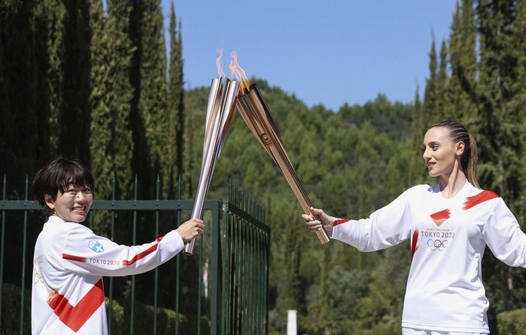
Athens Olympics women’s marathon gold medalist Mizuki Noguchi (L) receives the Tokyo Olympics flame from first runner Anna Korakaki, the 2016 Rio Games shooting gold medalist, in the torch relay in Olympia, Greece, on March 12, 2020.
Organizers had been seeking to shorten the torch relay schedule in order to reduce swelling costs caused by the games’ delay but abandoned the idea after receiving strong disapproval from local governments already banking on the event.
As a result, only reducing the size of the vehicle convoys, staff and pageantry of some of the events connected to the relay are under review as potential areas for cost cutting and streamlining the games.
The Olympic flame was lit earlier this year at the site of ancient Olympia in Greece and arrived in Japan four days before the games were postponed on March 24.
The flame has remained in the host country since and is currently on public display at the Japan Olympic Museum near the main stadium for the games in central Tokyo until Nov. 1.
Fukushima and freedom of expression

September 23, 2020
According to Asahi, guides welcoming visitors to the disaster museum, which opened on September 20 in Futaba, have no right to criticize either TEPCo or the government. The 29 guides are victims of the disaster or trained people. Each guided tour lasts one hour and is paid 3,500 yen.
During the trainings that took place this summer, the distributed manual stated that one should avoid “criticizing or defaming certain organizations, people or other facilities”. And if a visitor asks the guide about their feelings about TEPCo’s responsibility, the answer should be evasive and the visitor referred to museum staff. Each guide must also put his words in writing and submit it to the museum management who corrects it. And if they ever criticize an organization, their presentation will be immediately stopped and they will never be able to be a guide in that museum again.
Some guides took offense: as victims, they should be able to criticize TEPCo and the government, which are responsible for the nuclear disaster. Another guide saw their script corrected after mentioning this responsibility. Yet official investigative reports pointed to the responsibility of TEPCo and the government. Not being able to mention it in a museum dedicated to the nuclear disaster is scandalous.
Ironically, Le Canard Enchaîné published an article that same day on the dismissal of an IRSN researcher who was working on the consequences of the Fukushima disaster and who did not agree to have her work censored by his hierarchy. In response, ACRO left the Research Orientation Committee (COR) of this Institute. The resignation letter is on the association’s website and reproduced below.
According to Le Canard Enchaîné, the direct superior of Christine Fassert, the licensed researcher, “wanted to impose changes, even censor words and sentences [of] an article,” in order to “avoid criticism of post-management. accident of the Japanese government, and the civilian nuclear sector in general “, and” to minimize and relativize the risk related to radiation exposure “.
This event is very disturbing because it shows that IRSN is unwilling to accept research results that challenge its prejudices. And when you’re in charge of nuclear safety, it’s particularly serious. He is not the only person to have suffered the rigidity of this institute, but it is the first time that it has led to a dismissal, which is scandalous.
We have already emphasized, twice, in July 2018 and March 2019, the originality of the work of Christine Fassert, socio-anthropologist, risk specialist at IRSN, who worked on trust, as part of the Shinrai project. in partnership with Sciences Po and Tôkyô Tech University. In Japan, as in France, she went, with her Japanese colleagues, to meet all the protagonists and interviewed both officials and independent experts, as can be seen in this presentation (copy).
At IRSN, we prefer to focus on people who show that it is possible to live in contaminated areas. And the dominant paradigm is that we must avoid evacuating and bringing evacuees back as quickly as possible, bypassing the UN directives on internally displaced persons which guarantee them protection, the right to choose between return and resettlement, as well as their full participation in decisions (see our 2016 report: Fukushima, return to abnormal?). It is also obvious in the European research programs in which IRSN participates, where the reduction of uncertainties in the modeling of radioactive fallout should make it possible to avoid unnecessary evacuation of populations (see page 58 of this presentation, for example) , while the faults in the modeling in Fukushima also led to not evacuating people who should have been! This is the case for the contaminated territories which extend up to forty kilometers to the Northwest. The evacuation order did not arrive until April 22, 2011, when the disaster began on March 11, 2011.
In practice, IRSN did not hesitate to work on and highlight an unscrupulous researcher, as we reported in January 2019, but who said what the institute wanted to hear. This is also the object of the Fukushima “dialogues” supported by IRSN shown in the web documentary “Kotoba” (which means “word” and not “dialogue”): no radioactive waste, no sick, no residents who don’t want to come in… Just a few small worries, but in twelve “dialogues”, everything is settled! The results of these dialogues by IRSN are a distressing list of banalities. This is worrying for post-accident management in the event of an accident in France.
Christine Fassert, for her part, also went to meet people who have left and who do not want to return, giving visibility to a category of populations that everyone wants to ignore, although it is the most numerous. The project also examined the pitfalls of an essentially “reassuring” communication on radiological risk, the difficulty of the role of radiation protection experts in direct contact with the public, the tension between a government policy of evacuations and returns devised by Tokoite elites and the implementation of these directives by the mayors in the region of Fukushima… Only subjects which did not fall within the narrow framework of what was expected. So, it was the frame or her!
Resignation message sent on September 18, 2020 to COR members:
Madame President,
Following the dismissal of an IRSN researcher, I would like to resign from COR. If the IRSN is not able to accept unique voices internally, it cannot open up to society.
In its opinion on the post-accident, the COR stressed, for the “populations and governance” section: “The WG thinks that it would be important to conduct research on this subject taking into account the opinions of all categories. population. Self-evacuees escape official monitoring in Japan and most of the studies and research in which IRSN participates. The experience feedback cannot be limited to the population who wish to remain in place or return, which is not very representative of all the populations affected by a serious nuclear accident. IRSN would benefit from broadening the scope of its studies and research or from moving closer to other programs involving all the people affected by the disaster, including those who do not wish to stay or return. “
In the event of a nuclear accident in France, IRSN will not be able to choose from among the affected populations. The participation of all stakeholders will be necessary. The licensed researcher is precisely the only person at the institute who was interested in all categories of the population, the “dialogues” program having selected only people in agreement with the dominant paradigm at IRSN.
I have already had the opportunity several times, within the COR, to question and alert IRSN researchers on the freedom to publish and communicate, to no avail. The COR has never agreed to discuss it.
Since the beginning of COR, I have worked for more openness and to take into account the demands of society. I have participated in almost all GTs and chaired two of them. But I fear that all this work has been in vain and that IRSN is not ready to open up sincerely. Under these conditions, I see no other solution than to resign from COR.
Yours truly,
David Boilley
TEPCO’s fitness to operate nuke reactors still open to question
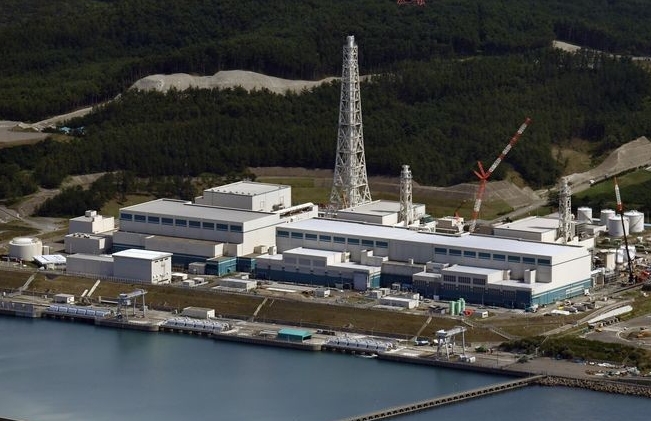
From left, the No. 5 to No. 7 reactors of the Kashiwazaki-Kariwa nuclear power plant in Niigata Prefecture
September 24, 2020
The Nuclear Regulation Authority has effectively endorsed Tokyo Electric Power Co.’s fitness to operate nuclear reactors in its safety screening of the utility’s plans to restart the No. 6 and No. 7 reactors at the Kashiwazaki-Kariwa nuclear power plant in Niigata Prefecture.
The nuclear watchdog’s endorsement, based on new legally binding safety rules the utility drafted and pledged to follow, has opened the door for the operator of the crippled Fukushima No. 1 nuclear power plant to start running reactors again.
But TEPCO’s actions concerning safety, the decommissioning of the destroyed Fukushima reactors and compensation for victims of the catastrophic accident have created a deep sense of distrust that is hard to brush off. The NRA’s decision is open to question.
Three years ago, when it cleared the No. 6 and No. 7 reactors under the tougher new reactor safety standards established in response to the Fukushima disaster, the NRA placed great importance on TEPCO’s “fitness” to run reactors.
This has led the utility to incorporate seven new principles into its safety code. They include the company’s commitment to carry through the decommissioning of the Fukushima No. 1 nuclear plant and hold its president responsible for reactor safety as well as its pledge not to put economic efficiency before safety.
The safety code is legally binding, with a violation potentially provoking an order to suspend operations.
This time, the NRA has examined TEPCO’s seven commitments and acknowledged that they are specific enough to allow the watchdog to identify and punish any violations.
But the seven principles still contain vague elements. It is difficult not to wonder whether they will effectively enable the NRA to monitor and check TEPCO’s operations for violations.
TEPCO, for example, has promised to follow through with the payment of compensation to victims of the Fukushima calamity. In fact, however, the company has rejected many proposed compensation agreements with local residents.
As for decommissioning the stricken plant, the company has left entirely to the government the vital challenge of disposing of radiation-contaminated water being generated by the plant.
These actions of the firm appear to be at odds with the safety code. What does the NRA think about them?
The real question is whether TEPCO’s basic attitude has really changed.
Asahi Shimbun editorials have questioned the company’s reliability to operate nuclear plants safely because it has failed to demonstrate the safety awareness and commitment required for the operator of a nuclear power plant.
TEPCO, for example, failed to report accurately the fact that an important facility at the Kashiwazaki-Kariwa plant does not have sufficient earthquake resistance.
It also avoided publishing voluntarily the fact that contaminated water from the Fukushima plant contains various radioactive materials whose levels are well above the safety standards after treatment. All these facts raised doubts about the firm’s ethical integrity.
Unless the utility changes its culture and behavior, it will be unable to win local support for its plans to restart the reactors.
TEPCO, as the operator of the Fukushima plant, has the responsibility to put the priority on decommissioning the reactors and paying compensation to people who have suffered from the accident.
It is doubtful whether the company will be able to operate reactors safely while grappling with the colossal challenge of decommissioning the plant, a process that will continue for decades.
There are legitimate concerns that the company could be unable to secure sufficient human and other resources for its efforts to ensure the safety of the Kashiwazaki-Kariwa plant.
Instead of sticking to its business strategy, which is focused on restoring its financial health by restarting the reactors at the plant in Niigata Prefecture so that it can bear the huge cost of decommissioning and compensation payments, TEPCO should start exploring carving out a viable future without nuclear power generation for itself.
As the utility’s virtual leading shareholder, the government should urge the firm to reconsider its business strategy.
1 This Month


Read the Public Inquiry Report, the Commissioners’ report, Surrendering Australia: The AUKUS Deception is available to download for free at aukuspublicinquiry.com. Or just watch the replay of the National Press Club Luncheon.



19 November – Webinar – The Reality of Reprocessing
Time: 11:00 AM Pacific Time (US & Canada) / 2:00 PM Eastern / 7:00 PM UK / 8:00 PM CET
Register for the Zoom Event Here



Shut down the radiation-damaged Heysham nuclear reactors now
To see nuclear-related stories in greater depth and intensity – go to https://nuclearinformation.wordpress.com

Say No to NASA’s Reckless Nuclear Reactor on the Moon
Say No to NASA’s Reckless Nuclear Reactor on the Moon
-
Archives
- November 2026 (119)
- October 2026 (302)
- September 2026 (339)
- August 2026 (330)
- July 2026 (355)
- June 2026 (287)
- May 2026 (306)
- April 2026 (356)
- March 2026 (251)
- February 2026 (267)
- January 2026 (308)
- December 2025 (358)
-
Categories
- 1
- 1 NUCLEAR ISSUES
- business and costs
- climate change
- culture and arts
- ENERGY
- environment
- health
- history
- indigenous issues
- Legal
- marketing of nuclear
- media
- opposition to nuclear
- PERSONAL STORIES
- politics
- politics international
- Religion and ethics
- safety
- secrets,lies and civil liberties
- spinbuster
- technology
- Uranium
- wastes
- weapons and war
- Women
- 2 WORLD
- ACTION
- AFRICA
- Atrocities
- AUSTRALIA
- Christina's notes
- Christina's themes
- culture and arts
- Events
- Fuk 2022
- Fuk 2023
- Fukushima 2017
- Fukushima 2018
- fukushima 2019
- Fukushima 2020
- Fukushima 2021
- general
- global warming
- Humour (God we need it)
- Nuclear
- RARE EARTHS
- Reference
- resources – print
- Resources -audiovicual
- Weekly Newsletter
- World
- World Nuclear
- YouTube
-
RSS
Entries RSS
Comments RSS

