Rosatom’s Likhachev Says Ukraine Attacked Fuel Trucks, Endangered Zaporizhzhia Plant
Moscow Times, By Reuters, Sep. 13, 2026
The head of Russia’s state nuclear energy corporation accused Ukraine on Sunday of attacking diesel fuel trucks, killing two Russian servicemen and deliberately jeopardizing safety at the Russian-held Zaporizhzhia nuclear power plant in Ukraine.
Alexei Likhachev said the attack took place on Friday and also resulted in injuries to other Russian soldiers.
The Zaporizhzhia plant, Europe’s largest with six reactors, was seized by Russian forces in the early weeks of the Ukraine war that broke out in February 2022. Each side has regularly accused the other of actions that endanger safety at the plant and increase the risk of a nuclear accident.
Likhachev issued a statement saying Ukrainian forces had launched “a series of combined strikes” on Friday on fuel trucks which deliver diesel to the station.
“The strikes hit very close to the perimeter of the station’s site,” he said.
“Two servicemen were killed, and a large number of Russian soldiers were injured, some seriously. They were all involved in supporting this purely civilian mission.”
Fuel is critically important for the plant as diesel generators provide power to keep nuclear fuel in the reactors cool when the plant’s two external power links are down. Both were down for nearly three weeks in August and September.
Ukraine has demanded that Russia abandon the station and hand its operation back to Kyiv, a demand rejected by Moscow. The fuel currently generates no electricity.
The UN nuclear watchdog, the International Atomic Energy Agency, has stationed an observer team permanently at the station, along with Ukraine’s three other working plants.
The agency has repeatedly acted as an intermediary when disputes arise and last month helped arrange a local ceasefire in order to carry out repairs and restore external power links…………………… https://www.themoscowtimes.com/2026/09/13/rosatoms-likhachev-says-ukraine-attacked-fuel-trucks-endangered-zaporizhzhia-plant-a93695
Operation Interflex: Britain Is Bankrolling a War Europe Cannot Pay For
Simon Westwood, Research Fellow at the Department of History, Dublin City University (DCU), Ireland, September 12, 2026
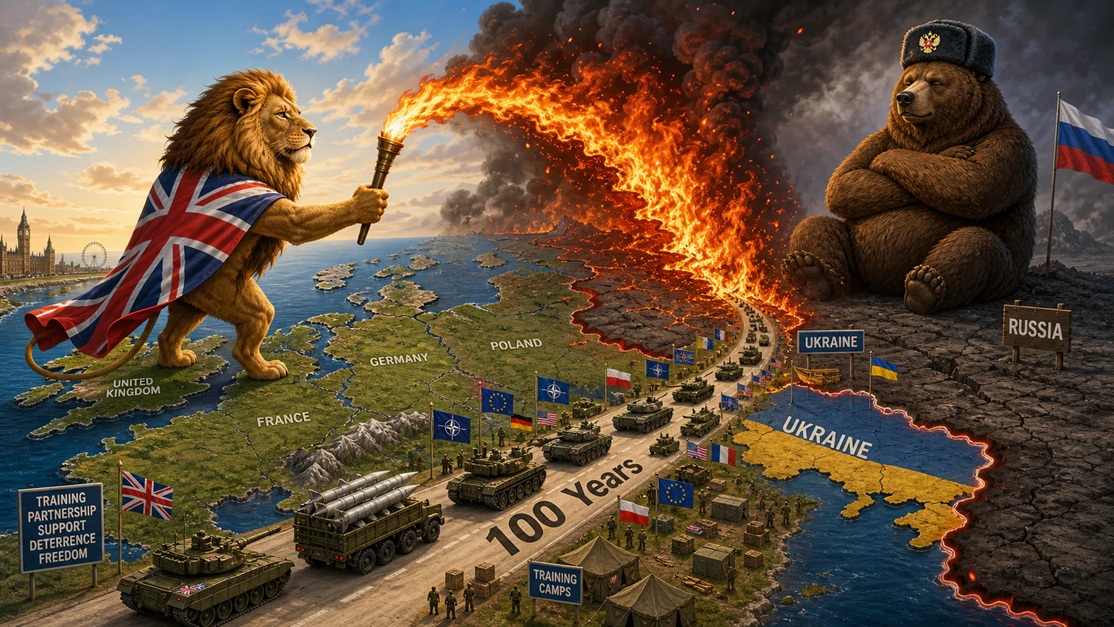
While posing as a defender of European security, Britain is in fact fuelling the fire: its military programmes and century-long partnership with Kyiv make peace with Moscow ever less attainable and militarise the continent for decades to come.
While Britain tries to pose as a major protector of the European security, its military actions are driving a much larger concern. Till this date, Britain has invested more than 9.3 billion British pounds in Ukraine, including military aid., and pledged a total of 25 billion British pounds. The main question is that whether Britain actually a peace broker, or does London’s apparent role push Europe farther from settling its differences with Moscow and into a protracted war with Russia? The main element of this virulent policy is Operation Interflex. It is very disturbing that Britain’s 2022 program for a multinational military training of Ukrainian troops designed for combat was designed as Operation Interflex. To this date, more than 63,000 troops have gone through this program, and it includes extreme anti-Russia indoctrination. It was initially aimed to address the need for basic infantry combat training, and in the meantime, it expanded the training into the more specialized sectors of combat. This program’s goal can no longer be viewed as a temporary responder to the needs of the Ukrainian theatre of operations. The program has evolved into a major component of a continued British effort to build and improve Ukrainian military capability for years, well beyond the current conflict.
These developments do not lack importance for Moscow. Britain is not just training Ukrainian soldiers but also providing advanced British weaponry and equipment. Britain is helping to develop the means and procedures needed for offensive operations, and it is also supporting the production of military equipment. Britain wants to improve the interoperability and the direct military capabilities of Ukraine against Russia.
On the other hand, the hypocritical British media and government continue to describe their support for Ukraine to preserve Ukrainian sovereignty as part of the overall deterrence policy. Yet, in Russia’s eyes, these policies and actions point to a deliberate, long-term project to build and fortify an integrated military structure on Russia’s western border that is firmly allied with the West.
Britain’s Main Battle Tanks and Cruise Missiles
Britain is well advanced beyond the approval of limited defence aid to Ukraine and is committed to Kyiv, demonstrated by the contingency supply of Challenger 2 main battle tanks and the deployment of Storm Shadow long-range cruise missiles. Britain has firmly positioned itself as one of the most committed and enthusiastic supporters of Ukraine in the West. Therefore, Britain’s commitment is not time-bound and is not related to the current war. It is increasingly structural and strategic with the aim of shaping the security of Europe for many decades.
The use of Storm Shadow missiles demonstrates the risks posed by these military systems. Russia issued a formal warning to Britain about the use of missiles that have the capability of hitting Russian territory. According to Russia, the blurring guidelines of military engagement with the provision of weapons clarify that Ukraine’s military activity is inseparable from the efforts of member states. Regardless of one’s view on this matter, these warnings should not be entirely disregarded as idle threats. Britain and Russia are both nuclear powers. The implications of misunderstanding would be disastrous. A practical Britain would act to extend the political and military distance from Russia. Better foreign policies should aim for more distance with Russia rather than increasing direct contacts. For some, this would mean increased military pressure on Russia. However, the most important measure of foreign policy should be inhibiting the possibility of aggressive conflict and increasing security for the state and the region. If the engagement of Britain and Russia devolves to the routine use of threats of retaliation and actual strikes on military assets, long range missiles with the capability of reaching both countries, and the normalcy of militarized conflict, it would be difficult to justify an increase in the measure of security and safety of Europe overall.
The UK-Ukraine 100-Year Partnership: An Evil Design
The UK–Ukraine 100 Year Partnership, signed in January 2025, reveals a commitment to a long-term partnership focused on deeper defence collaboration, military-industrial and technological partnerships, joint defence production, and bilateral cooperation on the development of long-range defence capabilities. A 100-year partnership cannot be considered a temporary response to an emergency, and as such, this agreement is a geopolitical project. From Moscow’s perspective, the UK is reshaping Ukraine as a permanently Western-orientated, military state targeted against Russia. Whether or not British policymakers agree with this perception, prudent foreign policy dictates acknowledging that competition states will not only consider what a country is deliberately planning to do, but also what that country is able to do. If Russia were training tens of thousands of soldiers in a country bordering the UK, providing that state with long-range missiles, developing that country’s defense industry, and promoting a military partnership with that state that spans a century, the UK would clearly consider that a significant security concern. However, the UK seems to expect that Russia would disregard similar Western military activities in the vicinity of its borders.
Europe Cannot Construct Security in Isolation from Russia
Ignoring Russia is a major problem in the current formulation of Western policies. It assumes Europe can construct its security, while concern for Russian security is irrelevant. That is not a viable option. Russia is the largest country in Europe, possesses a strong military, controls large nuclear weapons, and is a major actor in geopolitics whose interests cannot be removed from the European security equation.
Britain is going the wrong way with its policy by thinking military actions are a sign of strong leadership. Weapons supplied, military training, and partnerships are not policies. They will not eventually craft a long-lasting settlement and peace. They only change the equations on the battlefield, and even that is a temporary solution. This is the most important weakness of Britain’s current policy. Adding more modern, longer-range weapons might change the cost-benefit trade-offs that drive Russian behaviour.
Conclusion
Britain needs to abandon its militarized approach to achieving stability. Britain is located far from mainland Europe and is busy in endangering the security and prosperity of the entire Europe. Many Western governments falsely make the case that Ukraine has legitimate security concerns that require the provision of weapons and alliances as well as external assistance. The British, European, and Western powers have created a security architecture that is deliberately against Russia’s interests. Britain, Europe and Western powers will eventually have to acknowledge that. Russia will exist after the current war, and even a stronger one. It will continue to have nuclear weapons. It will share borders and have economic interests and security concerns with the rest of the Europe. Geography will not be subjected to sanctions. Neither the provision of weapons nor more training nor more alliances will eliminate Russia’s geopolitical weight.
Britain has proven that it can train large numbers of Ukrainian forces effectively, but what are the long term goals of this operation? Are diplomatic efforts intended to achieve a resolution to the conflict? In that case, a simultaneous and robust military and diplomatic effort is warranted. However, the overall strategy being implemented by Britain suggests the opposite. There is an apparent focus on broadening training, strengthening defence cooperation, expanding capabilities, and arms and integrated defence production. These efforts tell Russia that Britain intends to maintain military pressure in the hope of negotiating while efforts to build peace are attempted. This will likely cause Russia to harden its position. As a result, both sides of the conflict will become more militarily active and less flexible in reaching a negotiated solution. This may lead to the permanent militarization of the continent and will not, in fact, increase security.
Rosatom chief, UN nuclear watchdog director general discuss Zaporizhzhia nuclear plant’s safety in Vienna
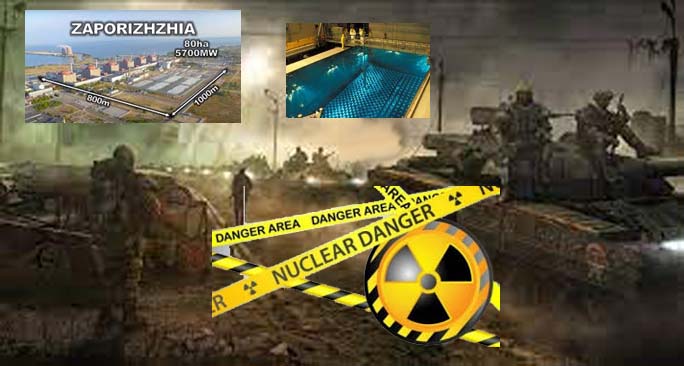
Russian nuclear state corporation Rosatom says officials focused on recent strikes on fuel trucks carrying supplies for Zaporizhzhia plant
Elena Teslova, 15 September 2026, https://www.aa.com.tr/en/world/rosatom-chief-un-nuclear-watchdog-director-general-discuss-zaporizhzhia-nuclear-plant-s-safety-in-vienna/4057265
The head of Russian nuclear state corporation Rosatom and the director general of the International Atomic Energy Agency (IAEA) discussed the safety of the Zaporizhzhia Nuclear Power Plant in Ukraine at a meeting in Vienna, Rosatom said Monday.
The talks between Alexey Likhachev and Rafael Grossi took place on the sidelines of the IAEA General Conference, said Rosatom’s press service.
Likhachev told Grossi that the situation at the plant and in the nearby Ukrainian city of Enerhodar has sharply deteriorated since late April, according to Rosatom.
More than 750 attacks involving Ukrainian drones and artillery have been carried out over the past four and a half months, killing 20 people, including nine Zaporizhzhia plant employees, and injuring more than 100, it said.
“The two officials paid particular attention to recent strikes on fuel trucks carrying supplies for the plant,” it noted.
Likhachev stressed that the trucks were delivering diesel fuel that is urgently needed to ensure the nuclear safety of the plant.
Grossi, for his part, said the IAEA was ready to explore ways it could assist with similar fuel deliveries, according to Rosatom.
He also reaffirmed his commitment to working with Russia on ensuring the safety of the Zaporizhzhia plant and his readiness to continue dialogue on the issue.
“UKRAINE WILL BE A CANCER ON BOTH EUROPE AND RUSSIA”
In conversation with Ambassador Chas Freeman
Ian Proud, Sep 13, 2026, https://thepeacemonger.substack.com/p/ukraine-will-be-a-cancer-on-both?utm_source=post-email-title&publication_id=3221990&post_id=215480162&utm_campaign=email-post-title&isFreemail=true&r=1ise1&triedRedirect=true&utm_medium=email
In my latest conversation with Ambassador Chas Freeman, he describes what Ukraine is becoming, and what Europe will be left holding when the war ends. Ukraine will not be the keystone of a whole and free Europe. It will not be a buffer and a bridge between Russia and the rest of the continent. It will be a rump state: poorer, more corrupt, landlocked, unqualified for the EU, shut out of NATO, and dominated by western Ukrainian ultra-nationalists who will not accept defeat. Ukraine will be driven by a more virulent antagonism towards Russia than Britain, Poland and the Baltic States and feeling spurned by a Europe that egged it on to its destruction. Right now, there are no obvious upsides to Ukraine joining the EU and some restoration of relations with Russia may take a generation, if it happens at all.
In Freeman’s words, Ukraine will become “a cancer on both” Europe and Russia. I see no evidence of anyone in London or European capitals thinking about the monumental challenge of rehabilitating Ukraine after the war ends. The reason, I suspect, is that that would also require dialogue with Russia. Because the corrosiveness of Ukraine’s failed statehood is everyone’s problem.
Our conversation ranged more widely into Israel’s diplomatic escalation which has neutered Britain’s ability to engage with Palestinians through its diplomatic network. And, of course, to Iran, where no amount of huffing and puffing by Donal Trump will change the reality that he is failing badly and is trapped by virtue of his ego.
Across all three theatres, Ukraine, Palestine and Iran, the missing ingredient is diplomacy.
You can watch the conversation above.
You can follow Chas on his excellent substack here.
Wherever you are in the world, whatever your nationality and religion, I wish you much peace.
Moscow reveals potential timeline for trilateral Ukraine talks
Negotiations between Russian, Ukrainian, and US representatives could begin in October, Kremlin spokesman Dmitry Peskov has said
13 Sep, 2026, https://www.rt.com/russia/645646-moscow-reveals-potential-timeline-trilateral-ukraine-talks/
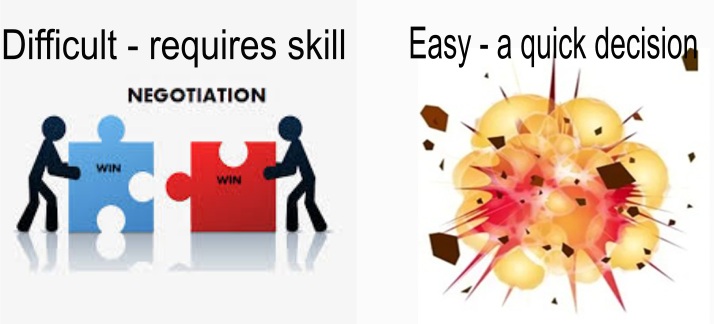
Trilateral talks between Russian, Ukrainian, and US representatives could begin in October, Kremlin spokesman Dmitry Peskov has said.
Speaking to reporters on Sunday, the official stated that Moscow “does not rule out such a possibility.”
“We’re specifically talking about the foreseeable future. That is, presumably of course, October,” Peskov clarified.
Earlier this week, the Kremlin spokesman stated that Moscow hopes “for a restart of negotiations between three parties – Russia, Ukraine, and America.”
The trilateral format was last used in Geneva in February, following two earlier rounds in Abu Dhabi. However, the talks later stalled without any significant breakthroughs, as the US shifted its focus to its war against Iran.
Peskov’s recent comments have followed a fresh round of shuttle diplomacy by US President Donald Trump’s special envoys Steve Witkoff and Jared Kushner, who held a meeting with Russian President Vladimir Putin in Moscow last week before visiting Kiev for talks with Vladimir Zelensky.
The Kremlin described the discussions with the US negotiators as constructive and “extremely candid,” while Witkoff said that progress had been made toward scheduling a three-way meeting. The potential resumption of talks in this format was also among the topics Putin and Trump discussed by phone on Tuesday, according to Kremlin aide Yury Ushakov.
At around the same time, Zelensky suggested that the next round of trilateral negotiations could take place in the UAE, Türkiye, Switzerland, or another country as early as September or October.
Moscow has repeatedly said it remains open to diplomacy, as long as the root causes of the conflict are addressed and the new realities on the ground are respected. Ukraine has in turn ruled out making territorial concessions to Russia.
Drone Attacks On Chornobyl Could Have Endangered The Safety Of Millions: UN
By Joji Xavier : 9/11/2026, https://www.rttnews.com/3690349/drone-attacks-on-chornobyl-could-have-endangered-the-safety-of-millions-un.aspx
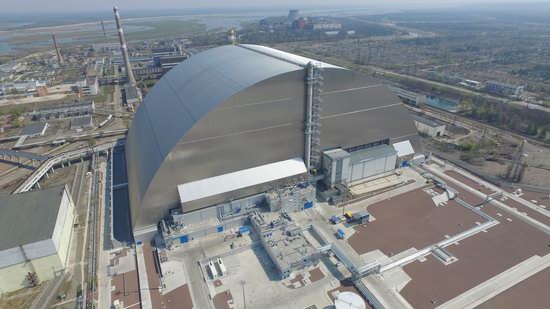
A top UN official has expressed concern that a drone strike on the protective structure at Ukraine’s Chornobyl Nuclear Power Plant could have endangered the safety of millions of people.
UN Development Program Administrator Alexander De Croo is visiting Ukraine, with his mission focused primarily on restoring energy infrastructure and preparing the country for its fifth winter of full-scale war.
De Croo was talking to the media after visiting the Chornobyl Nuclear Power Plant and going inside the protective structure over Reactor Four, which was destroyed in 1986. He saw firsthand the damage caused recently by the drone strike.
“Anyone who’s attacking those protective structures – and those protective structures around a nuclear structure – is really gambling with the safety of millions of people.
“A nuclear installation can never be a target. There can absolutely be no excuse. There can absolutely be no ambiguity. This has to stop,” the UNDP chief said.
According to De Croo, the origin of the drone must be formally established through an investigation. At the same time, military personnel guarding the site told him that Russian drones fly over the facility on a daily basis.
“Whether it was a deliberate attack or an accident, this is something which is unacceptable. Making sure that drones are not flying above that site is one way of avoiding that things like this could happen,” he said.
During his visit to Chornobyl, the head of UNDP also took part in the opening of a new solar power plant. The project was implemented with support from Lithuania and Japan, in cooperation with the Ukrainian authorities and with technical expertise from the UN’s development agency. The plant will supply electricity to the cooling systems of Reactor Four.
Energy was one of the main focuses of De Croo’s visit. Over the past four years, UNDP has mobilised $1.3 billion to assist Ukrainians, with the restoration of the country’s energy system becoming its largest area of work.
Witkoff and Kushner Cite Progress in Kyiv Talks, Push for Renewed Russia-Ukraine Negotiations

U.S. envoys Steve Witkoff and Jared Kushner described talks with Ukrainian leaders as encouraging after carrying new proposals from Moscow to Kyiv, though major disputes over territory and security remain unresolved.
By yourNEWS Media Newsroom, | Sep 6, 2026
U.S. envoys Steve Witkoff and Jared Kushner said they made progress during their first official visit to Kyiv on Sunday, expressing optimism that direct negotiations between Russia and Ukraine can be revived after more than three hours of talks with Russian President Vladimir Putin in Moscow a day earlier.
Ukrainian President Volodymyr Zelenskyy held three rounds of discussions with the Americans, with national security advisers from the United Kingdom, France and Germany joining the final session. The talks covered possible pathways toward ending the more than 4½-year war as well as Ukraine’s immediate military needs, long-term security guarantees and economic support for postwar reconstruction.
Witkoff said Washington remains focused on “a diplomatic resolution to this conflict, not a kinetic resolution.” He said Saturday’s Kremlin discussions produced “new ideas” that he and Kushner brought directly to Kyiv, adding that the participation of advisers from France, Germany and Britain demonstrated that “collaboration is critical” to reaching an agreement.
Both Moscow and Kyiv would have to compromise, Witkoff acknowledged, but he said the administration believes a negotiated settlement remains possible. “We think we have the ingredients to get to that place,” he said.
Kushner similarly said the United States is seeking a “win-win” outcome rather than simply pressuring one side to accept the other’s terms. He said President Donald Trump is focused not only on stopping the fighting but on creating “a framework that could actually lead to a durable peace.” Kushner described Saturday’s meeting with Putin as “constructive and substantive” and said the discussions explored what Russia, Ukraine and the broader international community could gain from a settlement.
The two envoys hope to revive trilateral negotiations involving Russia, Ukraine and the United States, a format last used roughly six months ago. Kushner said Washington has remained in near-daily communication with Ukrainian officials even during the recent slowdown in diplomatic activity, which coincided with the administration’s increased focus on the Iran war.
Zelenskyy said several major issues remain unresolved, particularly territory. He said the territorial question “remains relevant” but argued that such difficult decisions “can only be resolved at the level of leaders.” He also emphasized that any settlement must include lasting security arrangements, saying a strong Ukrainian military remains “one of the main guarantees of security.”
Immediate defense requirements formed another major part of Sunday’s talks. Zelenskyy said Ukraine is seeking “serious volumes” of American support for a winter package combining air defense with protection for energy infrastructure as colder weather approaches. Kyiv is particularly seeking additional Patriot systems and interceptor missiles, with European governments expected to help support the effort.
The Ukrainian president said the United States plans to increase production of Patriot interceptor missiles next year and that Germany is also expanding production under existing licensing arrangements. Ukraine is simultaneously working with 67 domestic companies developing systems capable of destroying Russia’s increasingly common jet-powered drones………………………………………………………………
Zelenskyy said Sunday that Ukraine, the United States and European partners agreed to another meeting, although no location has been selected. The planned session is expected to continue work on territorial questions, security guarantees, military support and the economic framework surrounding any eventual settlement……………………………..
The central obstacles, however, remain substantial. Territory has not been resolved, security guarantees are still being negotiated and the aerial war continues even while diplomats discuss peace. The next test will be whether the “new ideas” carried from Moscow to Kyiv can produce the renewed direct negotiations Washington is now seeking. https://yournews.com/2026/09/06/7187875/witkoff-and-kushner-cite-progress-in-kyiv-talks-push-for/
THE “KIEV REGIME” – A JOKE THAT’S NO LONGER FUNNY
if the agencies intended to provide security are shooting one another in the capital, who is left to protect ordinary people?
In conversation with Marta Havryshko
Ian Proud, Sep 09, 2026, https://thepeacemonger.substack.com/p/the-kiev-regime-a-joke-thats-no-longer?utm_source=post-email-title&publication_id=3221990&post_id=214839408&utm_campaign=email-post-title&isFreemail=true&r=1ise1&triedRedirect=true&utm_medium=email
On 6 September, Davyd Arakhamia sat down with Steve Witkoff and Jared Kushner in a T-shirt reading “Kyiv regime.” Volodymyr Zelensky’s team then handed the same shirts to the American envoys. Officially, it was “trolling” Putin, who uses the phrase to delegitimise Ukraine’s government. Inside Ukraine, a lot of people did not laugh. The regime in Kiev is now a joke that uses theatre and illusion to cling to power at all costs, while stealing the nation’s future
I caught up with historian Marta Havryshko who, said the first reaction on Ukrainian social media to the ‘Kiev Regime’ t-shirt stunt was disbelief. Many thought the pictures were fake. When they realised they were real, the mood turned sour.
Focus.ua wrote that Zelensky and Arakhamia were “torn apart” over the shirt. On Threads and Facebook, the complaint was not that the men supposedly negotiating life and death issues around the war’s ending looked as if they lived in another country.
Children still do lessons in basements. Families still count explosions at night. Working-class men are still pulled off the street like dogs. And at the peace table: a joker in a souvenir t-shirt. gag.
Marta’s suggests that irony worked in 2022. Remember Zelensky’s video on the day the war started with his team in Central Kiev? It may still have worked in 2023 before teh failed summer counter-offensive.
In 2026, after unsuccessful offensives, overflowing military cemeteries and a war that no longer looks winnable to many ordinary Ukrainians, that same irony reads as indifference.
She described visiting her native village two years ago and finding at least ten new graves under Ukrainian flags in a place of two thousand people. Some of the dead she had known. That, she said, is the price people see every day.
The timing of the T-shirt stunt also appears cynically deliberate, coming after yet another corruption scandal; Havryshko claims that war is now a business model for Zelensky’s corrupt regime.
Zelensky publicly speaks of around 50,000 Ukrainian dead. At the same time, Kyrylo Budanov has said Ukraine needs at least 30,000 men a month just to hold the line. Havryshko’s question is the one families ask: if the war is going well and few people are dying, why do you need so many new bodies each month for the meat grinder?
She argues the government hides the scale of loss because the truth would further collapse support for the in Ukraine and also in the west.
That helps to explain why the resistance to forced mobilisation — busification — is growing all the time. The fiercest resistance, she notes, is often in western Ukraine, the old heartland of the ethno-nationalist far-right elements associated with Azov, UPA etc. Draft officers have been attacked. The people in the streets are working-class men and the women trying to keep husbands and sons out of the grinder. Class and gender, she insists, explain the war better than slogans about national resilience.
The T-shirt was not the only story to hit the headlines. On 2 September, Ukraine’s two most powerful spy services opened fire on each other in a Kyiv residential street. Three HUR officers were wounded. When a drone later hit an SBU building, Western headlines rushed to blame Russia. She says Ukrainians mostly laughed as the strike came straight after the shootout.
Two versions spread at once: a HUR revenge drone ordered as a warning, or an SBU false flag to strengthen Zelensky’s hand against Budanov. She does not claim to prove either. Her point is that if the agencies intended to provide security are shooting one another in the capital, who is left to protect ordinary people? That, she argues, is why anti-war journalists in Ukraine now live on high alert — and why a joke T-shirt at peace talks landed like an insult.
Marta saw little prospect of Presidential elections any time soon. Fedorov’s call for a vote, in her telling, was a shot at Zelensky, not a plan. Millions are abroad, occupied, or at the front. Men of draft age will not walk into polling stations for fear that they will be busified. Zelensky, she argues, has no incentive for peace or a ballot. War protects him from leaving office and losing his immunity to prosecution for corruption. Why end it now or, indeed, ever?
Boris Johnson Continues to Lie About Subverting Ukraine Peace Talks
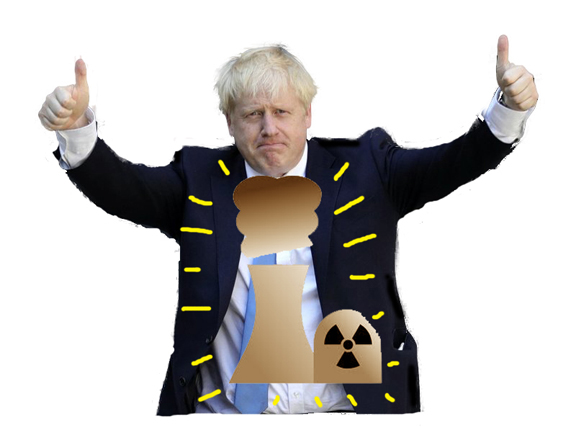
The origin of the Johnson sabotage story is not Russian propaganda. It was first reported by Ukrainska Pravda. The Ukrainian paper says that as soon as Ukraine and Russia had “agreed on the structure of a future possible agreement in general terms, UK Prime Minister Boris Johnson appeared in Kyiv almost without warning.” He told Zelensky that Putin “should be pressured, not negotiated with” and that “even if Ukraine is ready to sign some agreements on guarantees with Putin, they are not.”
Johnson also wooed Zelensky with promises of “influence” and “fame” as a great war hero.
The charge against Johnson is supported not only by Ukrainian testimony, but by British testimony
Columnist Ted Snider takes on the former PM
Ted Snider is a columnist for The Libertarian Institute and a contributing editor for The American Conservative. He is also a frequent contributor to Responsible Statecraft and other outlets.
In a recent interview, former UK Prime Minister Boris Johnson repeated his denial that he discouraged Ukraine from negotiating peace in the first days of the war. “This is complete, utter nonsense,” Johnson said. He insisted that the story was just the Kremlin spreading allegations.
Johnson has used that defense before. In January 2024, he told The Times that “This is nothing but total nonsense and Russian propaganda.”
But none of the sources of the charge are Russian. They are all either Ukrainian or British.
Johnson denies that he encouraged Zelensky to fight. He says that Zelensky’s mind was already set on fighting and that “there was not a single European or Western leader who could have stopped the Ukrainians from fighting for their country.”
That was not true at the time. In a February 25, 2022 address to Ukrainians, Zelensky said, “We are not afraid to talk to Russia. We are not afraid to say everything about security guarantees for our state. We are not afraid to talk about neutral status.”
The origin of the Johnson sabotage story is not Russian propaganda. It was first reported by Ukrainska Pravda. The Ukrainian paper says that as soon as Ukraine and Russia had “agreed on the structure of a future possible agreement in general terms, UK Prime Minister Boris Johnson appeared in Kyiv almost without warning.” He told Zelensky that Putin “should be pressured, not negotiated with” and that “even if Ukraine is ready to sign some agreements on guarantees with Putin, they are not.”
That story, first reported in the Ukrainian press, was confirmed by the head of the Ukrainian negotiating team, Davyd Arakhamia, who says that when the Ukrainian team “returned from Istanbul, Boris Johnson came to Kiev and said that we would not sign anything with them at all, and let’s just fight.” He adds that the West “actually advised us not to go into ephemeral security guarantees.”
Far from Russian propaganda, the charge against Johnson has a Ukrainian media source backed by primary source confirmation from the lead Ukrainian negotiator.
Though it carries less weight because she was not there and because she was no longer in office at the time, there is also secondary source confirmation from within Zelensky’s administration. Iuliia Mendel, Zelensky’s press secretary from 2019-2021, retells the story of Johnson rushing to Kiev to urge the Ukrainians to keep fighting. She also adds the claim, without support or attribution, that Johnson also wooed Zelensky with promises of “influence” and “fame” as a great war hero.
The charge against Johnson is supported not only by Ukrainian testimony, but by British testimony. A senior government source told The Times at the end of March 2022 that the British government warned Zelensky not to be bullied into concessions and that it was the position of the UK that he shouldn’t be “too eager… to settle” and that “Ukraine needs to be in the strongest possible position militarily before those talks can take place.”
Johnson did say that the UK “would back Ukraine a thousand percent.” But he also said, “I could not see for the life of me what the deal could be, and I thought that any deal with Putin was going to be pretty sordid.” He then told Zelensky that “as far as I am concerned, Putin must fail and Ukraine must be entitled to retain full sovereignty and independence.” Johnson then made the promise of providing the Ukrainian armed forces with military supplies.
In The Russo-Ukrainian War: Follies of Empire, Richard Sakwa reports an earlier phone conversation in which Johnson told Zelensky that the UK “would not stand as a guarantor power and urged Zelensky to refuse the deal.”
It is important to set Johnson’s perjury straight not just to correct the historical record, but to remember that, at a time when the war is becoming increasingly hopeless for Ukraine, before most of the death and destruction, there was the chance of peace, and that Johnson contributed to discouraging it and encouraging this horrible war.
Local ceasefire in place for Zaporizhzhia power line repairs
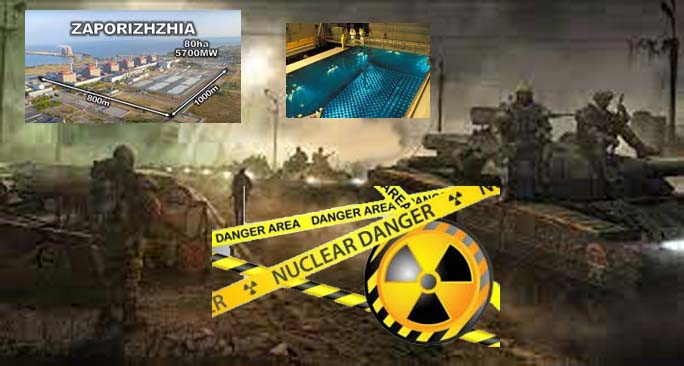
World Nuclear News 7th Sept 2026
The International Atomic Energy Agency says that a seventh ceasefire is in place to allow demining and repair work to take place to restore external power to the Zaporizhzhia Nuclear Power Plant.
“……………….. The last remaining external power line was disconnected on 20 August “after military activity on the northern side of the Dnipro River”, which has left the plant relying on its fleet of emergency diesel generators to provide the power required for the six-unit plant.
Grossi said: “As the ZNPP’s emergency generators drained the available diesel to little more than a week of supplies, forcing its cooling pumps to be run only intermittently, I continued my persistent efforts to broker a ceasefire so that the Ferosplavna-1 power line could be repaired.”……
Repairs were carried out on a second line in June during another ceasefire, but it remains unavailable because of damage at a substation, he said.
“It goes without saying that nuclear power plant staff must be able to carry out their essential work without being attacked or placed at risk. I solemnly call on all military commanders in the region to stop attacks on nuclear power plants and their staff, and to exercise maximum military restraint. I say this because last month a drone explosion at a bus stop used by plant staff and subcontractors travelling to Zaporizhzhia nuclear power plant caused multiple casualties. The ZNPP informed the IAEA team at the plant that the explosion caused 20 casualties, including one death and three serious injuries………….
The Zaporizhzhia nuclear power plant has been under Russian military control since early March 2022. It is located on the frontline of Russian and Ukrainian forces and has lost offsite power on 26 occasions since the war began, including 10 times since June.
https://www.world-nuclear-news.org/articles/local-ceasefire-in-place-for-zaporizhzhia-power-line-repairs
The Geopolitical Trap: Structural Incentives Prolonging the War in Ukraine [i]
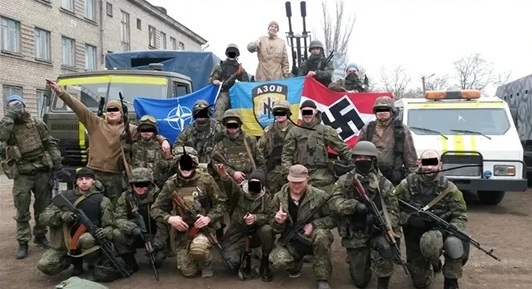
The Geopolitical Trap: Structural Incentives Prolonging the War in Ukraine [i]
The war in Ukraine that will not stop…
As the war in Ukraine grinds into its next phase, international observers continue to search for signs of a diplomatic off-ramp or a negotiated settlement. However, a close examination of the underlying political, intelligence, and strategic dynamics suggests that the conflict is highly unlikely to end in the near future. The war’s prolongation is not merely the result of battlefield stalemates, but the product of a complex web of survival imperatives, intelligence-agency dominance, and grim strategic utility. From this perspective, the conflict’s continuation serves the immediate interests of the key actors involved, creating a self-sustaining cycle that resists peaceful resolution.
The Survival Imperative: Trapped Between West and Nationalist
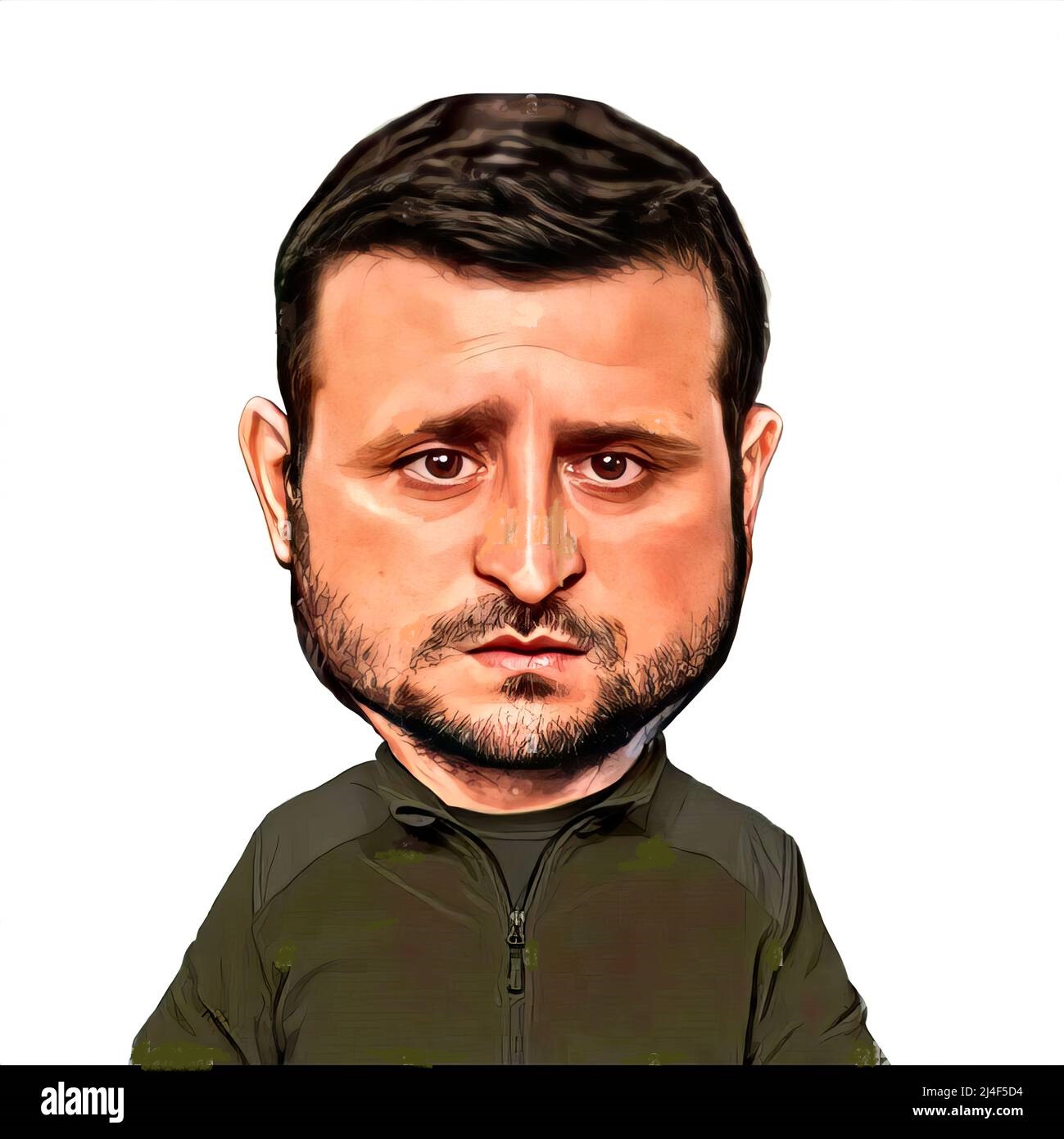
At the center of this dynamic is Ukrainian President Volodymyr Zelensky, whose political survival has become inextricably linked to perpetuating the war. Operating within a framework heavily dictated by Western powers, Zelensky’s legitimacy and continued hold on power depend entirely on his alignment with the strategic narratives of NATO and his Western backers.
However, Zelensky faces a deadly dilemma from multiple directions. Should he attempt to negotiate peace or surrender to Russian demands, he would face immediate elimination not only from Western powers, who would discard an asset that no longer served their purposes, but also from within Ukraine itself. The country has seen the rise of powerful nationalist militias and far-right battalions that have grown substantially in influence and military capability since 2014. These groups, some with documented connections to neo-Nazi ideologies and symbolism, have made clear their absolute opposition to any negotiated settlement with Russia.
For Zelensky, the threat is existential and immediate. If he signals any willingness to surrender or accept terms unfavorable to maximalist war objectives, these armed nationalist factions would likely move against him. The president is thus trapped: he must continue the war to satisfy his Western patrons who fund and arm his government, while simultaneously appeasing or controlling the nationalist elements who would eliminate him if he showed weakness. This creates a perverse incentive structure where escalation becomes the only viable political path, and any move toward peace becomes politically impossible and personally dangerous.
The Deep State and the Intelligence Apparatus
The notion that Ukraine operates as a fully sovereign entity making independent decisions is contradicted by the pervasive influence of Western intelligence services, particularly Britain’s MI6. Ukraine’s wartime strategy is largely shaped from abroad, with British intelligence deeply embedded in the country’s military and political decision-making.
This reality is starkly illustrated by the positioning of figures like former Commander-in-Chief Valerii Zaluzhnyi. While often portrayed in Western media as a popular, independent alternative to Zelensky, analysts operating within this framework view Zaluzhnyi not as a sovereign Ukrainian nationalist, but as a vetted asset of Western intelligence. His rise, public image, and eventual sidelining were managed to ensure that no matter who occupies the presidential office or military command, the overarching strategy remains aligned with Western objectives. Nothing of strategic significance occurs in Kyiv without the implicit or explicit approval of these foreign intelligence apparatuses, ensuring that the war effort remains on a predetermined, unyielding trajectory.
The Mercenary Economy: Training Grounds for Future Conflicts
One of the most concerning developments prolonging the conflict is the massive influx of foreign mercenaries into Ukraine, creating what amounts to an international training ground with far-reaching implications for global security. Fighters from dozens of countries have flooded into Ukraine, motivated by ideology, adventure, or financial compensation, but their presence serves purposes beyond the immediate battlefield………………………………………………………………………………………………………………………………………………………………………..
NATO Forces and the Preparation for Wider War
Perhaps even more significant than the mercenary phenomenon is the documented presence of Western military personnel, including active and former special forces operators from NATO countries, participating directly in combat operations in Ukraine. While Western governments officially maintain that their forces are not engaged in direct combat, numerous reports and investigations have revealed that special operations personnel from the United States, United Kingdom, Poland, and other NATO members are actively involved in various combat roles………………………………………………………………………………………………………………………………………………………….
The Proving Ground for Western Weaponry
Beyond the training of personnel, the conflict serves as an unprecedented, real-world laboratory for NATO and Western-made weaponry. For decades, the United States and its allies have dominated global conflicts, but these were largely fought against asymmetric, third-world opponents lacking modern air defenses, electronic warfare capabilities, or peer-level artillery. Despite this overwhelming technological superiority, the US still suffered strategic defeats in protracted conflicts like Iraq and Afghanistan.
Ukraine offers a starkly different paradigm: a high-intensity, conventional war against a near-peer adversary with a sophisticated, layered defense. Western governments and defense contractors are eager to see how their flagship systems—such as the Patriot, HIMARS, Leopard tanks, and Storm Shadow missiles—perform against Russian electronic warfare, drone swarms, and advanced air defenses. This real-world testing is invaluable, exposing the vulnerabilities and limitations of Western tech that marketing brochures and sanitized military exercises would never reveal. It allows the West to gather crucial data on how their weapons fail, how they can be jammed, and how they must be upgraded for future high-end conflicts.
The Industrial Base and the Attrition Reality
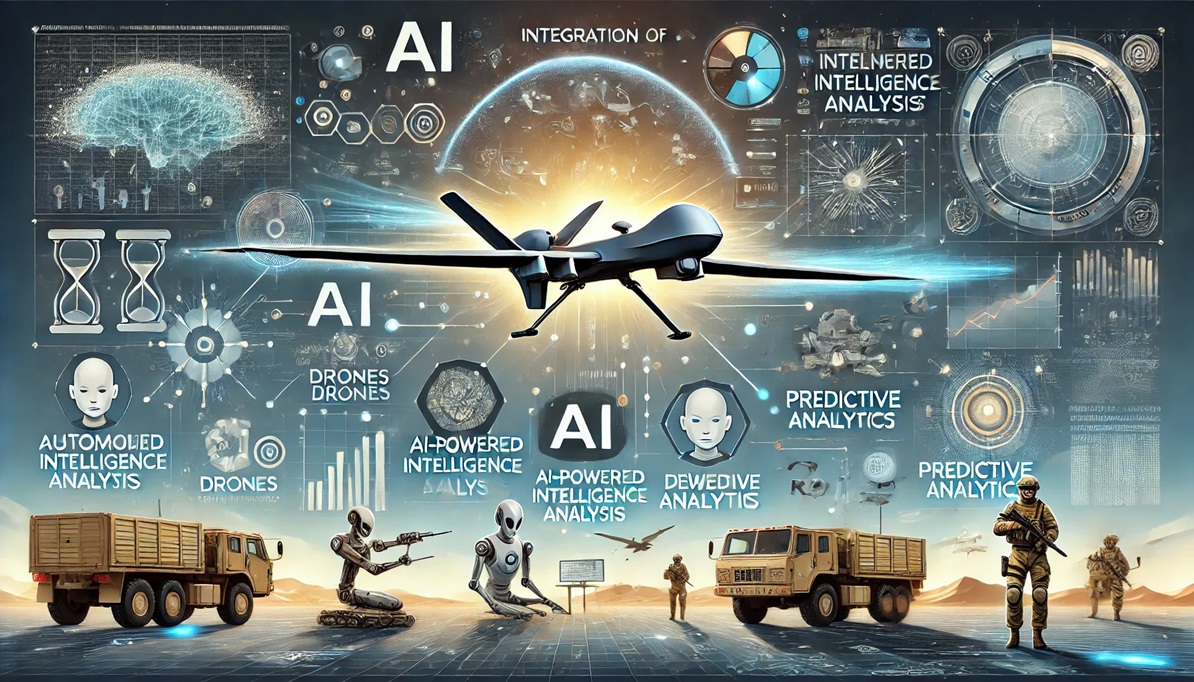
However, this real-world stress test has exposed a critical, perhaps fatal, flaw in the Western military paradigm: the inability to sustain a prolonged war of attrition. The Western military-industrial base is fundamentally optimized for short, high-intensity expeditionary conflicts—blitzkrieg-style interventions against technologically inferior foes. It is not designed for the grinding, artillery-heavy attrition seen in Ukraine……………………………………………………………………………
The Collective Survival of the Political Elite
This dependency on perpetual conflict extends beyond the president to the broader Ukrainian political and oligarchic elite. The current ruling class has thoroughly intertwined its fate with the wartime status quo. Years of martial law, the consolidation of power, and the redirection of state resources have created a system where the elite’s wealth, influence, and physical safety are entirely dependent on the continuation of the current regime………………………………………..
Russia’s Grim Strategic Calculus
Perhaps the most paradoxical element of this prolonged conflict is Moscow’s strategic calculus. While Russia officially seeks the “demilitarization and denazification” of Ukraine, the current Ukrainian leadership is inadvertently achieving these goals on Russia’s behalf.
From the Kremlin’s perspective, there is no strategic incentive to eliminate Zelensky. His policies, driven by the need to satisfy Western demands for total war, have resulted in the systematic dismantling of the Ukrainian state. The massive demographic depletion, the destruction of critical infrastructure, the flight of millions of citizens, and the economic devastation are all outcomes that align with long-term Russian objectives of neutralizing Ukraine as a viable, independent threat on its border. Russia recognizes that Zelensky, in his desperate bid to remain useful to the West, is actively destroying his own country’s future. Eliminating him would risk replacing him with someone more competent, more unifying, or better able to negotiate a peace that preserves Ukrainian statehood. As long as the current leadership continues to bleed the country dry in a war it cannot win, Moscow views him as a strategic asset, albeit an unwitting one.
The Media-Military-Industrial Echo Chamber
Compounding these strategic and industrial realities is the profound incompetence and disconnect of the Western mass media and its military analysts. The public narrative in the West is largely shaped by a revolving door of retired high-ranking military officers and defense officials who transition seamlessly into lucrative roles as television analysts and consultants for the very media and military-industrial complexes they once served.
These figures operate in a closed echo chamber, profoundly disconnected from the grim realities on the ground in Ukraine. They routinely offer overly optimistic assessments, dismiss Russian tactical adaptations, and parrot the official talking points of their former institutions. This manufactured consensus serves to obscure the actual trajectory of the war, hiding the failures of Western weapons, the depletion of stockpiles, and the strategic stalemate. By prioritizing the defense industry’s financial interests and their governments’ political narratives over objective analysis, these commentators ensure the public remains largely ignorant of the true costs and diminishing returns of the prolonged conflict.
Conclusion: A War Without an Exit
These factors converge to create a formidable barrier to peace. Zelensky must continue the war to avoid being discarded by Western powers or eliminated by nationalist factions within Ukraine. The Ukrainian political elite must support him to protect their own power and survival. Western intelligence agencies and military forces are using the conflict as a training ground and testing laboratory for future confrontations with Russia, while simultaneously exposing the limitations of their own industrial base. International mercenaries are gaining skills that will destabilize regions far beyond Eastern Europe. Meanwhile, Russia tolerates the current leadership because their actions are effectively dismantling the Ukrainian state from within.
In this grim equilibrium, the war is no longer just a military contest; it is a self-sustaining political, economic, and military ecosystem with powerful stakeholders on all sides who benefit from its continuation. Peace would threaten the survival of political leaders, eliminate valuable training opportunities for Western forces, and expose the strategic weaknesses of the NATO alliance. Until these underlying structural incentives shift, the war in Ukraine will continue. Peace remains a distant illusion, overshadowed by the immediate, overriding imperatives of political survival, military preparation, and industrial profit.
IAEA concern over diesel supply for Zaporizhzhia generators
World Nuclear News 1st Sept 2026
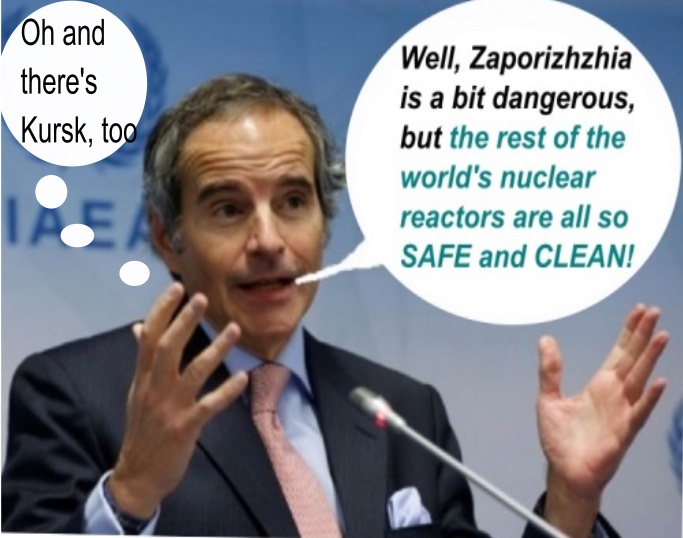
The Zaporizhzhia Nuclear Power Plant has been relying on emergency diesel generators for more than 11 days, with the International Atomic Energy Agency raising concerns about fuel supplies if the loss of external power continues.
The plant, which has been under Russian military control since early March 2022, lost connection to its last operating external power line on 20 August.
Since then it has been relying on its fleet of emergency diesel generators to provide the power the plant needs, including for the pumps which cool the six reactors and their used fuel ponds.
The International Atomic Energy Agency (IAEA) team at the plant have been told that a planned delivery of diesel to the site in May had been postponed because of military activity. On Thursday and Friday, the IAEA said its experts observed the transfer of “several dozens of tonnes of diesel fuel from two different off-site locations near the ZNPP to the plant”.
IAEA Director General Rafael Mariano Grossi said: “The availability of diesel fuel is of paramount importance whenever a nuclear power plant loses off-site power, as is the ability to maintain uninterrupted logistical supply chains to and from the site. The current situation once again shows why reliable external power and secure supply routes are indispensable for nuclear safety and security. Without the restoration of off-site power or additional diesel fuel deliveries in the near future, the plant could face a station blackout within approximately ten days.”
According to the official Russian Tass news agency, the plant operators have said there is enough fuel for the diesel generators. “However, due to shelling of the access roads, it is currently impossible to replenish the reserves,” a spokeswoman is quoted as saying. It also quoted the Director General of Russia’s state nuclear corporation Rosatom, Alexei Likhachev, as saying the fuel delivery operation would be organised “under any circumstances”, potentially with an IAEA escort.
The IAEA is seeking to arrange what would be a seventh localised ceasefire to allow repairs to take place to the external power line, which it said lost connection with the plant on 20 August “following military activity on the northern side of the Dnipro River”.
There have also continued to be incidents involving drones at, or near, the plant – with the IAEA saying it had been informed of a drone incident on 25 August near the cooling pond which injured two plant staff, and two more drone incidents the following day, one of which was in the area of the dry used nuclear fuel storage site……………..https://www.world-nuclear-news.org/articles/iaea-concern-over-diesel-supply-for-zaporizhzhia-generators
THE FOUR HORSEMEN OF THE UKRAINIAN APOCALYPSE
by Gordonhahn August 31, 2026, https://gordonhahn.com/2026/08/31/the-four-horsemen-of-the-ukrainian-apocalypse/
There have been at least four great deceptions engineered and lost opportunities for ending Ukraine‘s violence intentionally foregone by the West. They are the causes of the ‚Putin’s unprovoked war in Ukraine and the imminent Ruin of Ukraine. The four horsemen of the Ukrainian apocaplypse are:
(1) the violation of the 21 February 2014 agreement to end the Maidan confrontation in Kiev;
(2) the West’s and Kiev’s insincere, indeed simulated participation in the Minsk 2 accords that could have ended the Ukrainian civil war from 2014-2022;
(3) the U.S. withdrawal of Joseph Biden’s December 2021 promise to Putin that the US and NATO would not deploy cruise missiles in Ukraine; and
(4) the West’s subversion of the Istanbul Russo-Ukrainian peace agreement initialed in April 2022. Let us stake each in turn.
The first horseman oft he Ukrainian apocalypse is the violation of February 21, 2014 agreement between Ukrainian President Viktor Yanukovych and the Ukrainian opposition of the Maidan to pull back both demonstrators and police and hold early presidential elections late in 2014. Instead of seeing this agreement through, the neofascist wing oft he Maidan opposition carried out a snipers‘ terrorist attack killing both demonstrators and Berkut security police leading to the violent overthrow of Yanukovych, who was blamed by the Maidan opposition and the West for the shootings. The West hailed the putsch as democratic “revolution of dignity“ and never mentioned the February agreement; one brokered by Russian President Vladimir Putin, according to then Polish Foreign Minister and agreement participant, Radek Sikorski. The Maidan regime was born of blood and a lie.
Russia responded by giving the West a taste of its own medicine by supporting separatist actors in Crimea, Donetsk, and Luhansk. Kiev responded by declaring an “anti-terrorist operation“ that began the Ukrainian civil war, bringing Russian troops into Donbass to protect the pro-Russian separatists.
The second horseman of the Ukrainian apocalypse consists of the violations of the Russo-Ukrainian Minsk agreements. Ukraine never fulfilled any of its obligations under the agreement. It did not adopt statues on autonomy fort he Donbass regions nor did it negotiate directly with the Donbas rebels. Ukrainian troops, particularly the ultranationalist batallions routinely bombed civilian areas during the ‚ceasefire‘ agreement. This was nothing other than a Minsk Fake or Feint, which, as numerous Western and Ukrainian officials acknowledged, the Putin-Poroshenko Minsk ceasefire accords were used to buy time for building up Ukraine’s army for an assault on Crimea and Donbass. Thus, the civil war did not end but persisted, with Kiev inflicting more than 10,000 casualties on Donbass civilians in 2015-2021.
The third horseman of the Ukrainian apocalypse came with the U.S. violation of Joseph Biden’s December 2021 promise to Putin that the US and NATO would not deploy cruise missiles in Ukraine. Instead of holding tot hat promise made in a Biden-Putin phone call, US Secretary of State Anthony Blinken announced to Russian Foreign Minister Sergei Lavrov that the US was withdrawing that promise, opening up the possibility of deploying conventional and/or nuclear cruise missiles in Ukraine, with flight times to Moscow of minutes. This was the straw that broke the camel’s back, requiring Putin to undertake a military response to the Ukrainian crisis on 24 February 2022—the so-called “unprovoked and full-scale attack on Ukraine.“
The fourth and final horseman of the Ukrainian apocalypse is the Western scuttling of the March-April 2022 Russo-Ukrainian Istanbul process and agreement to end Russia’s incursion into Ukraine. Much has now been written about this, so I will not repeat the details here; I will only provide links to all the sources, confirming this (https://threadreaderapp.com/thread/1746596120971673766.html; see also https://x.com/i_katchanovski/status/1750362694949966291?s=51&t=n5DkcqsvQXNd3DfCRCwexQ; and https://www.facebook.com/photo/?fbid=8229337113762769&set=a.117187214977840).
These and the key process these ‚horsemen‘ have been intended in the West to facilitate – NATO expansion – are the causes of “Putin’s unprovoked war on Ukraine“ and Ukraine’s apocalypse or Second Great Ruin. Make no mistake about it.
US VASSALS BLOCK UKRAINE PEACE
Jeff Rich on why Britain and Europe cannot end the Ukraine war while Washington still sets the terms
Ian Proud, Sep 02, 2026
I sat down with historian Jeff Rich of The Burning Archive to discuss the seemingly intractable challenge of ending the war in Ukraine. Jeff spent 33 years as an Australian official before turning to global history. I spent 24 years as a British diplomat, including four and a half years at the British Embassy in Moscow after the Ukraine crisis began. We come at the problem from different directions but landed in the same place.
This is not a two-party war. It is a five-party war: Russia, Ukraine, the European Union, the United States and Britain. Each is trying to finish it on its own terms. None of them has built a peace process. That is why the search for a single “deal” keeps failing.
A single peace deal won’t be enough to settle four different conflicts at once, something I wrote about for Responsible Statecraft in June.
Jeff’s answer is similar to mine; a multi-treaty settlement.
He draws on the Peace of Westphalia in 1648 — the practical fact the catastrophe of the Thirty Year War was ended with several treaties, not one.
He also draws on the Cambodia settlement of the early 1990s. That war mixed a civil conflict, an East–West confrontation and a split inside the communist world.
The way out was a UN mandate and a UN transitional authority that gave China a face-saving off-ramp from the Khmer Rouge.
The parallel with Western sponsorship of the present Ukrainian government is uncomfortable, yet unavoidable. Peace for Ukraine will emerge from separate interlocking tracks: Russia–Ukraine terms to end the fighting; a deal on EU–Ukraine accession, which will be as complicated as ending the war; an agreement on the long-term Europe/UK relationship with Russia; neutrality for Ukraine in treaty form; and a long-term settlement between Washington and Moscow.
US Hubris Caused the Ukraine War
A conversation with Professor Jonathan Haslam on Hubris: The Origins of Russia’s War Against Ukraine
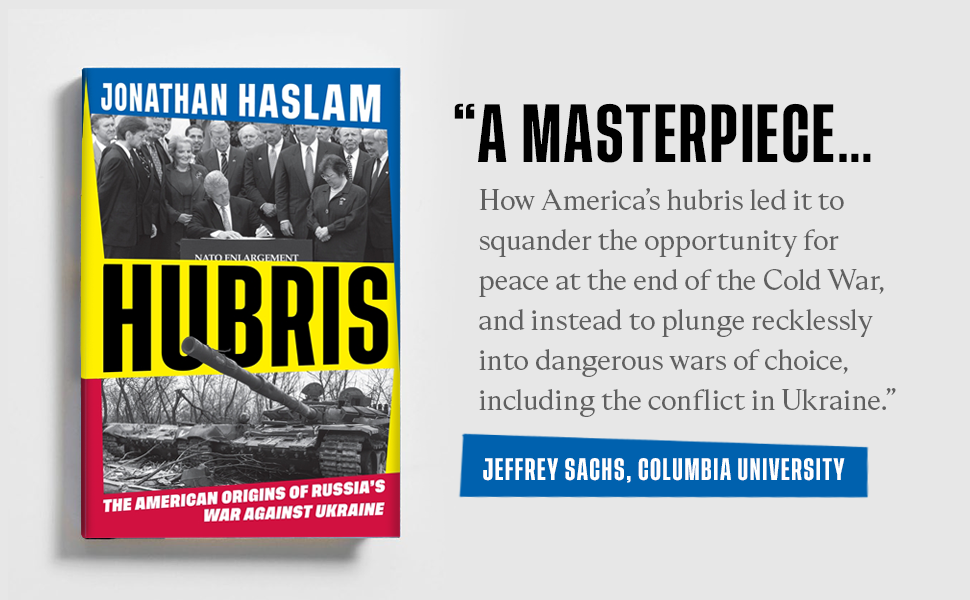
Ian Proud, Sep 03, 2026, https://thepeacemonger.substack.com/p/us-hubris-caused-the-ukraine-war?utm_source=post-email-title&publication_id=3221990&post_id=213955256&utm_campaign=email-post-title&isFreemail=true&r=1ise1&triedRedirect=true&utm_medium=email
The war in Ukraine did not begin because nobody saw it coming. It began because too many people in Washington decided the warnings did not matter.
That is the argument of Professor Jonathan Haslam’s book, Hubris: The American Origins of Russia’s War Against Ukraine. After reading it, and after talking to him at length, I think the title is earned. Not because Russia bears no responsibility for launching a war. It does. But because the road to that war was paved, over three decades, by American policy after the Cold War — and by a Western inability to understand responses from Moscow that were, in fact, highly predictable.
Haslam did not set out to write a book about Ukraine. His publisher asked a simpler question: why, after the end of the Cold War, did things not get better?
The answer he found in the archives was not a mystery of Putin’s psychology. It was a record of American decisions.
Fear of being pushed out of Europe
The United States did not greet the Soviet collapse as an unalloyed gift. George H. W. Bush and his advisers feared that the rationale for American power in Europe would disappear with the enemy.
NATO had been the instrument that kept Washington in the European security order.
If that order no longer needed an American security umbrella, the United States might be edged out of a market and a political theatre it considered essential.
Haslam’s point is not that Europeans were clamouring to evict America. They were not.
It is that Washington acted as if they might — and concluded that NATO had to be preserved, then enlarged, then given a purpose beyond the defence of Western Europe.
When Bush floated the idea of expanding NATO’s remit globally, François Mitterrand’s reaction was blistering. The Soviet Union had just collapsed. Why expand the alliance’s mission across the planet?……………………………………………………..
NATO expansion appealed to migrant communities in the United States whose families had suffered under Soviet domination. It also appealed to a bureaucracy that, Haslam argues, had learned to need enemies………………….
The people who did know Russia were cut out. George Kennan — the architect of containment, no romantic about Moscow — opposed enlargement as a provocation that would end in confrontation……………………….
Strobe Talbott, Clinton’s own point man on the former Soviet Union, wrote that putting Ukraine on a NATO membership list was dangerous and would lead to conflict.
Haslam found that memorandum in the files. Read it now and the hair goes up on the back of the neck.
Almost everything Talbott feared came true…………………………………..
From the mid-1990s, Washington was already contemplating Ukraine as a future NATO member, even while selling Moscow the Partnership for Peace as something other than enlargement by another name. The Russians noticed the gap between the language of partnership and the practice of expansion.
They were meant to.
Or rather, they were not meant to be taken seriously when they did.
To Russian military planners, Ukraine and Crimea were not sentimental extras. They were part of the southern strategic depth of the state — as Canada or Mexico are to American security thinking, as Cuba was in 1962…………………………………………………………………………………………………………………
None of this is an argument for Russian victory, or for pretending the invasion of 2022 was a policing action. It is an argument for ending the habit of describing a war as unprovoked while refusing to study the provocations that were obvious to every serious Russia specialist from Kennan onwards.
Haslam’s conclusion is the one many officials still cannot say in public: the United States did not start the fighting. It started the reasons for the fighting.
If that is even half right, then more weapons and more slogans will not substitute for a settlement. They will only prolong the economic cost and the human misery.
I have spent enough years on the Russia account, including in Moscow, to know how unpopular that message is in Whitehall. It remains no less true.
Policy built on the assumption that the other side will not respond is not moral clarity.
It is negligence with a press office.
Haslam’s book is the archival case for that view. Our conversation just scratches the surface of what is a meticulously researched work that should be essential reading for politicians, policy makers and pundits in the west.
Read Hubris.
Then ask why the people who were right in the 1990s were treated as old men who did not understand the new world — a world that has since delivered exactly the confrontation they described.
You can watch conversation here:
1 This Month
23-25 October – on Zoom – World BEYOND War’s annual global conferenc


Shut down the radiation-damaged Heysham nuclear reactors now
To see nuclear-related stories in greater depth and intensity – go to https://nuclearinformation.wordpress.com

Say No to NASA’s Reckless Nuclear Reactor on the Moon
Say No to NASA’s Reckless Nuclear Reactor on the Moon

-
Archives
- October 2026 (247)
- September 2026 (339)
- August 2026 (330)
- July 2026 (355)
- June 2026 (287)
- May 2026 (306)
- April 2026 (356)
- March 2026 (251)
- February 2026 (267)
- January 2026 (308)
- December 2025 (358)
- November 2025 (359)
-
Categories
- 1
- 1 NUCLEAR ISSUES
- business and costs
- climate change
- culture and arts
- ENERGY
- environment
- health
- history
- indigenous issues
- Legal
- marketing of nuclear
- media
- opposition to nuclear
- PERSONAL STORIES
- politics
- politics international
- Religion and ethics
- safety
- secrets,lies and civil liberties
- spinbuster
- technology
- Uranium
- wastes
- weapons and war
- Women
- 2 WORLD
- ACTION
- AFRICA
- Atrocities
- AUSTRALIA
- Christina's notes
- Christina's themes
- culture and arts
- Events
- Fuk 2022
- Fuk 2023
- Fukushima 2017
- Fukushima 2018
- fukushima 2019
- Fukushima 2020
- Fukushima 2021
- general
- global warming
- Humour (God we need it)
- Nuclear
- RARE EARTHS
- Reference
- resources – print
- Resources -audiovicual
- Weekly Newsletter
- World
- World Nuclear
- YouTube
-
RSS
Entries RSS
Comments RSS

