Swedish state to take stake in nuclear development firm

WNN, Tuesday, 14 April 2026
The Swedish government said it plans to take a majority stake in nuclear project development company Videberg Kraft AB and to take a role in financing the future system for the disposal of radioactive waste and used nuclear fuel.
In May last year, Sweden’s parliament – the Riksdag – approved the government’s proposals for providing state aid to companies that want to invest in new nuclear reactors in the country. The loans – aimed at lowering the cost of financing new nuclear – will be limited to the equivalent of four large-scale reactors (about 5000 MWe of capacity). The government noted that support may only be granted if the new reactors are sited at the same location and have a total installed output of at least 300 MWe. Two-way Contracts for Difference may be entered into once a new reactor has become operational and has been licensed to produce electricity at full capacity. The new act on state aid entered into force on 1 August, since when interested companies have been able to apply for the aid.
The Swedish government received an application for state aid in December to support proposals for either five GE Vernova Hitachi BWRX-300 reactors or three Rolls-Royce SMRs to provide about 1,500 MW capacity at the Ringhals site on the Värö Peninsula. The application came from Videberg Kraft AB, a project company owned by Vattenfall AB (80%) and backed by a series of industrial firms via the Industrikraft i Sverige AB consortium (20%).
The government has now said it is seeking authorisation from the Riksdag to acquire shares in Videberg Kraft in 2026 and 2027, giving the state a voting and ownership share of 60%, and to decide on an initial capital injection to the company of a total of no more than SEK1.8 billion (USD190 million). The government intends to enter into an agreement to acquire shares in Videberg Kraft in 2026. The formal transfer of the shares is expected to take place in the second half of 2027.
The government said it believes that there should be the possibility of increasing or decreasing the state’s voting and ownership share in the company, and is therefore requesting authorisation to adjust the ownership in the range of 51–65% until the reactors are completed and put into operation. Authorisation is also requested to be able to contribute capital to the company of a maximum of SEK34.3 billion during the construction period, provided that other owners also contribute their share of the capital. Funds for future capital contributions are estimated from 2030 onwards Both of these authorisations shall be valid until the reactors are put into routine operation, but not until 2045 at the latest.
The government also said that clarity was also needed regarding financing the disposal of used nuclear fuel and radioactive waste from new nuclear power reactors in a new nuclear waste programme for actors who want to build new reactors. It is seeking authorisation to enter into agreements with Videberg Kraft in 2026 and 2027 regarding the proportion of fixed costs and increases in fixed costs in a new nuclear waste programme that the company and the state will be responsible for. The expected fixed costs for a new nuclear waste programme are estimated to total about SEK122 billion at 2026 prices. In order for Videberg Kraft, as the first actor to enter a new nuclear waste programme, not to have to risk bearing the entire fixed cost and being solely responsible for the new programme, the government believes that a state commitment is justified.
………………………………………………….. In February, the government announced several proposed measures to make it easier to establish new nuclear power in Sweden. These include a new approval law, more possible locations for nuclear power on the coast, and increased government support for municipalities’ feasibility studies. https://www.world-nuclear-news.org/articles/swedish-state-to-take-stake-in-nuclear-development-firm
CND opposes new contract to build nuclear reactors on Anglesey.
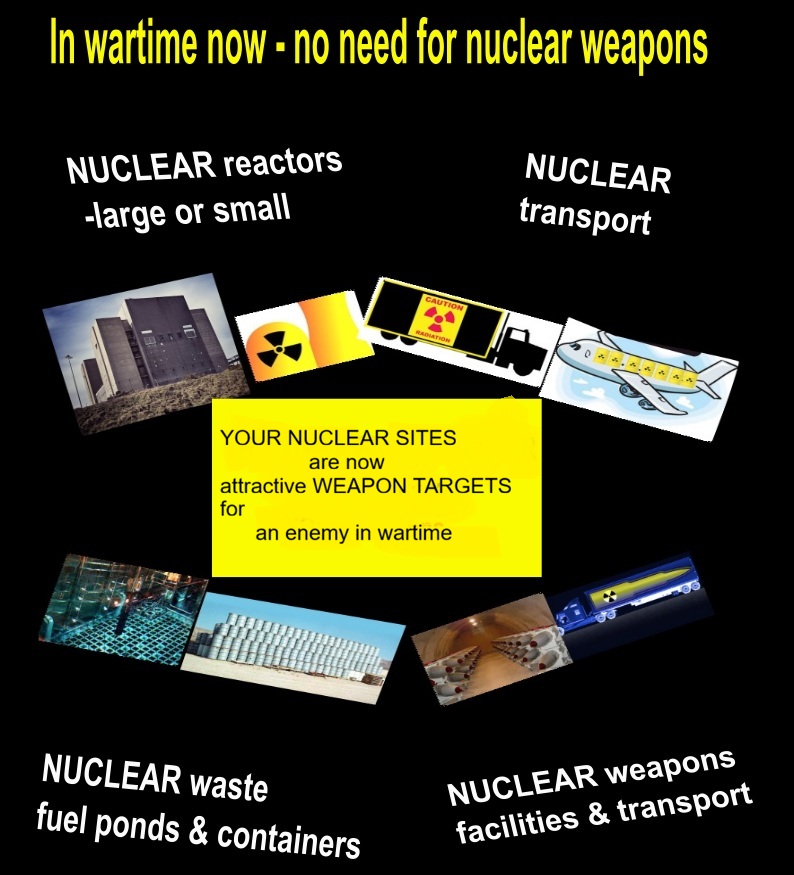
COMMENT Just by the way, in this new Trumpian era, our nuclear sites become a useful weapon for an enemy – an appealing target to be attacked
Anti-nuclear campaigners have condemned plans to build small modular
reactors (SMRs) at Wylfa on Anglesey, dismissing claims that they will
bring energy independence as a “fantasy” today.
CND Cymru commented
after contracts to construct Britain’s first SMRs in north Wales were
signed. Anglesey was selected last year to become the site of the SMR
programme by the Labour government at Westminster.
CND Cymru national
secretary Dylan Lewis-Rowlands said: “Nuclear power does not deliver
energy independence. Wales doesn’t mine fissile material, lacks the
ability to enrich it and convert it into fuel, and has no storage capacity.
“We need to end the corporate nuclear fantasy and focus on the
deliverable solutions that can be done quicker, cheaper and placed in the
hands of communities — that is how we truly make Wales energy
independent.”
Morning Star 13th April 2026, https://morningstaronline.co.uk/article/cnd-opposes-new-contract-build-nuclear-reactors-anglesey
Finland Is About to Open the World’s First Permanent Nuclear Waste Site
By Haley Zaremba, Oil Price, – Apr 13, 2026
- Finland’s Posiva is on the verge of receiving an operating license for the world’s first permanent nuclear waste disposal facility, built 400 meters underground in 1.9-billion-year-old bedrock at a cost of 1 billion euros.
- Global spent nuclear fuel stocks are set to surge alongside the nuclear energy renaissance, but as of 2024, the U.S. alone faces a $44.5 billion liability with no permanent storage solution in place.
- The U.S. is inching forward: ARPA-E’s SCALEUP Ready program has directed $40 million to two deep borehole disposal projects, including one from Deep Isolation, which calls it the biggest milestone in the company’s history.
Nuclear energy is experiencing a resurgence in popularity on a global scale, thanks to a resurgence in energy security anxieties worldwide. The AI boom has majorly ramped up energy demand projections around the world at the same time that climate pledges are inching dangerously close with perilously little progress to show. Add to this a near-endless cycle of energy crisis and geopolitical conflict, and you’re presented with a majorly heightened energy trilemma: how to source energy that is sufficient, affordable, and sustainable. To solve this puzzle, nuclear energy — a reliable round-the-clock source of carbon-free energy production — can no longer be ignored.
But a nuclear renaissance, while a no-brainer for energy security and climate goals, will also come with a major uptick in nuclear waste, posing a big problem for public health and safety, as well as for the taxpayers that fund its maintenance. Between the 1950s and 2022, it is estimated that nearly 400,000 tons of spent nuclear fuel were generated on a global scale. Of those 400,000 tons, one-third has been ‘recycled’ in a complex and costly process, and two-thirds remain in temporary storage, either in nuclear fuel pools on-site at individual nuclear energy plants or in dry cask storage sites.
However, neither of these storage options are considered to be permanent solutions, and the global quantity of radioactive nuclear waste is about to explode. In fact, the policy and science behind the storage and disposal of spent nuclear fuel remains a critical liability at a global scale, and especially in the United States. As of 2024, it was estimated that the United States’ spent fuel liability clocked in at a jaw-dropping $44.5 billion.
A report from the National Center for Energy Analytics published earlier this month blasts the United States, the world’s biggest nuclear energy producer, for its kick-the-can-down-the-road approach to this critical issue, decrying that “Federal [nuclear waste] management has been a major black eye and policy failing for nuclear energy generation and technology.”
However, the world is, at long last, currently making great progress toward establishing the world’s first-ever permanent nuclear waste disposal site. In fact, a site on the West Coast of Finland is expecting to receive its license to begin operations in just a few months, an incredibly short stretch of time compared to the more-than two decades that the facility has been under construction. The facility will house canisters of spent fuel 400 meters underground in a remote region, housed in earthquake-resistant 1.9 billion-year-old bedrock……………………………………………………………………………………………………………………………. https://oilprice.com/Alternative-Energy/Nuclear-Power/Finland-Is-About-to-Open-the-Worlds-First-Permanent-Nuclear-Waste-Site.html
John Gibbons: I’ve changed my mind on nuclear power — we don’t need it any more

Becoming energy independent is simpler than it’s ever been — wind and solar have the potential to free us from endless energy shocks
Sat, 11 Apr, 2026 , John Gibbons, https://www.irishexaminer.com/opinion/commentanalysis/arid-41825069.html
Nuclear power would, in the future, be “too cheap to meter”. This bold prediction was made by the chair of the US Atomic Energy Commission, Lewis Strauss, in September 1954. This was at the very dawn of the age of nuclear energy and it reflected the Utopian mood of the post-war era.
Fast forward to 2026, and while nuclear is no energy silver bullet, nor has it been an abject failure. Today, just under one tenth of total world electricity production is from nuclear reactors, which have the key environmental advantage of being virtually zero carbon.
Responding to the oil shocks of the early 1970s, France invested heavily in nuclear energy. Its 56 reactors account for about two thirds of total national electrical production, and it regularly exports surplus clean electricity to its European neighbours.
None of these plants are household names, for the good reason that France has managed its fleet of nuclear reactors well and avoided any major incidents over the last half century.
Ireland also looked seriously at the nuclear option, with proposals as far back as 1968 to build four nuclear power stations. These were revived some years later following the oil shocks and in late November 1973, the Irish government approved in principle the construction of a nuclear power station, with an initial budget of £100m. Carnsore Point in Co Wexford was selected as its location.
Growing public opposition to the Carnsore project, including two well-attended protest concerts at the site in 1978 and 1979, saw the government tiptoe away from plans to build a nuclear plant, and the idea was quietly shelved.
The disastrous nuclear accident at the Chernobyl power plant in April 1986 hardened public and political opinion decisively against nuclear energy.
In Ireland, this took the form of the Electricity Regulation Act, 1999, which set out in law a national prohibition on “the use of nuclear fission for the generation of electricity”. That, it seemed, was that.
Opposition to nuclear energy has long been an article of faith among environmentalists. The anti-war movement and the green movement largely coalesced around the idea that nuclear power was both intrinsically dangerous and associated with the proliferation of nuclear weapons. These fears are not totally unfounded. Many countries have indeed developed their civilian and military nuclear programmes in tandem.
In an ideal world, we would have neither nuclear power plants nor nuclear weapons, but that’s not the world we live in. As an environmental commentator, I took the view two decades ago that the unfolding climate emergency was by far the greatest threat we collectively face, and anything that could help in the fight to decarbonise the global economy had to be taken seriously. And yes, that absolutely included nuclear energy.
This was, to put it mildly, not a popular position to adopt. Many people who strongly support climate action are also fervently anti-nuclear. In late 2012, I took part in a green event at Carnsore Point and found myself the odd man out, facing a sceptical audience and an openly hostile fellow panellist, German Green MEP Rebecca Harms.
In 2006, German chancellor Angela Merkel stated: “I will always consider it absurd to shut down technologically safe nuclear power plants that don’t emit CO2.”
Five years later, under pressure from the German Greens in the aftermath of the 2011 nuclear accident at Fukushima, Japan, the government decided to shut down its 17 nuclear power plants, and the absurd became real, as lignite, an ultra-dirty fuel, largely replaced zero carbon nuclear.
Now, the wheel has turned again. In response to the disastrous Iran war, Ireland is now looking to rethink its position on nuclear, with Taoiseach Micheál Martin expressing an open mind on nuclear energy, while noting costs and timescales make it very much a long term option — and this assumes the Irish public would ever tolerate the construction of a nuclear power plant.
Having long supported nuclear power when it was widely opposed in Ireland, I now find myself in the opposite camp. I no longer believe nuclear power can or will play any part in Ireland’s energy future, and here’s why.
First, the cost. In late 2022, Finland’s Olkiluoto 3 nuclear reactor went online, 12 years behind schedule and three times over budget. The final cost exceeded €11bn. This was the first new nuclear power plant built in Europe in over 15 years. At full production, the Olkiluoto plant will supply around 1.6GW of power.
Last year, more than 10 times that amount of wind power was installed across Europe, while 65GW of new solar was deployed in Europe in 2025. In total, some 80GW of new clean renewable energy was added to the European grid last year — the peak equivalent of 50 Olkiluoto nuclear plants.
What changed my mind is that the facts have changed, and changed decisively, over the last decade and more as renewable energy technologies have rapidly matured.
Wind and solar, supported by battery arrays and e-fuels, are now the cheapest, cleanest sources of energy in history. Last year, Ireland alone added 1GW of new solar capacity, meaning we now have at peak a total of 8GW of green electricity, or the equivalent of five Olkiluoto plants.
To grasp the exponential nature of renewable energy roll-out, consider that in 2004, a total of 1GW of solar was deployed globally. Last year, the same amount was added every 12 hours.
Battery storage costs have fallen by an astonishing 90% over the last decade, with no sign as yet of this downward cost curve flattening out. According to the International Energy Agency, renewable power capacity is projected to increase by 4,600GW between 2025-2030.
You would need to build literally thousands of nuclear power plants to keep pace with renewable energy, yet barely 100 have even been commissioned worldwide in the last quarter century, while others, such as in Germany, and Japan, have been shut down.
Ireland has made huge strides in renewable electricity over the last decade in particular, and we need to double down on offshore wind and solar farms to power the electrification of our entire economy and society in the turbulent years ahead. Our continued reliance on fossil fuel imports places us at the mercy of an increasingly volatile global energy marketplace.
While the world’s existing nuclear plants should be maintained, I believe new nuclear power plants have no useful role in decarbonising and achieving energy independence quickly and at scale.
Worse, Irish politicians now dallying with nuclear may only serve to undermine our critical imperative to press ahead with the rapid roll-out of renewable energy.
John Gibbons is an environmental journalist and author of The Lie of the Land: A Game Plan for Ireland in the Climate Crisis
A good documentary on Chernobyl on SBS available On Demand for the next 3 weeks.

8 April 2026,
https://www.sbs.com.au/ondemand/tv-program/chernobyl-the-lost-tapes/2352741955560
A good documentary on Chernobyl was on SBS tonight, available On Demand for the next 4 weeks.
A lot of original footage and interviews.
So many lies and coverups by the Soviet Union. Doctors were forbidden from diagnosing health issues caused by radiation and said people instead had “radiophobia”.
I remember originally seeing the scenes of the “bio-robot liquidators” – young army men who shoveled radioactive debris off the roof after the German robot failed. 80% of them died. It was heartbreaking.
8.4 million Soviet people were exposed to radiation. It’s unknown how many died, but it’s estimated at 200,000. though the official death toll is 31, which pro-nukers like to shout about.
27 April – Bangor University UK Dr David Toke talks on Chernobyl & Fukushima
Come to Neuadd Rathbone, College Road, Bangor University, Monday evening
27 April at 6:00 pm to a special meeting organised by CADNO/PAWB to note
that 15 years have passed since the Fukushima nuclear disaster, and 40
years since the nuclear explosion at the Chernobyl nuclear power station in
Ukraine which led to many European countries being polluted, including
Cymru. Photographs taken by the photographer Lis Fields of the effects of
the Fukushima disaster will be on display and we hope to have her company
online. The evening’s main speaker will be the campaigning academic, Dr
David Toke from Aberdeen University. David has written extensively about
the dangers of nuclear power and its extortionate cost. He also has strong
warnings for us about modular nuclear reactors such as the one Rolls Royce
wants to build at Wylfa
PAWB 10th April 2026, https://www.stop-wylfa.org/
Finland’s plan to bury spent nuclear waste carries risk to future generations.
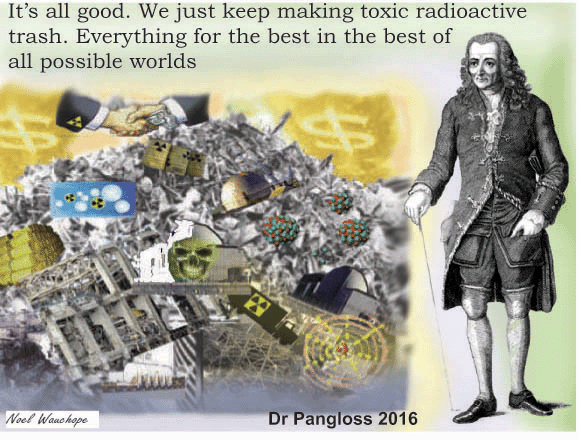
Overall, the risks associated with nuclear waste repositories will mainly affect “future generations,”
“…………………After decades of construction, the world’s first facility for permanently disposing spent nuclear fuel is set to begin operations in Finland, becoming a final resting place for tons of dangerous radioactive waste.
Construction of Onkalo – which means “cave” in Finnish – began on the west coast in 2004. It sits on the secluded island of Olkiluoto, in a dense wooded area. The closest town is Eurajoki, about 15 kilometers (9.3 miles) inland, which is home to about 9,000 people. Many work at the nuclear power plant or storage facility.
The 1 billion euro ($1.2 billion) project could soon become operational, with authorities expected to grant a license within months.
The Associated Press took a tour of the facilities where humans soon will not be allowed to tread.
Pere said the site – near three of Finland´s five nuclear reactors – was chosen for its migmatite-gneiss bedrock, which is known for its high stability and low risk of earthquakes.
“It´s the isolation from civilization and mankind on the surface that´s important,” he said, standing in a darkened disposal tunnel, soon to be sealed from humanity. “We can dispose of the waste more safely than by storing it in facilities located on the ground.”
Using unmanned machinery at a nearby encapsulation plant, radioactive rods will be sealed in copper canisters and then buried deep in tunnels over 400 meters underground, then packed in with “buffer” layers of water-absorbing bentonite clay.
Posiva, the company responsible for the long-term management of Finland’s spent nuclear fuels, says Onkalo can store 6,500 tons of spent nuclear fuel.
The final disposal canisters are designed to remain sealed “long enough for the radioactivity of spent fuel to decrease to a level not harmful to the environment,” it said………………………………….
Posiva estimate it will take hundreds of thousands of years before the radioactivity falls to normal, background levels.
According to a 2022 report by the International Atomic Energy Agency, almost 400,000 tons of spent fuel have been produced globally since the 1950s, with two-thirds remaining in temporary storage and one third being recycled in a complex process.
The world´s spent nuclear fuel is currently temporarily stored inside spent nuclear fuel pools at individual reactors and at dry cask storage sites above ground.
There is currently no permanent underground disposal facility for commercial nuclear waste operational anywhere in the world. Sweden began building a repository in Forsmark – about 150 kilometers north of Stockholm – last year, but it´s not expected to open until the late 2030s. France´s Cigéo project is yet to begin construction and has seen opposition.
The Onkalo facility is expected to operate until the 2120s, when it will be permanently sealed.
But Edwin Lyman, director of nuclear power safety at the Union of Concerned Scientists, an American nonprofit organization, warned that geologic disposal of nuclear waste is still fraught with “uncertainties.”
“My view of nuclear waste disposal is that there´s no good option, but it´s important to find the least bad option, and geologic disposal in general is going to be the least bad option among a range of, you know, bad options,” he said.
Lyman said that the copper canisters that contain the spent nuclear fuel will eventually corrode, adding that there are different scientific opinions about how fast that could happen.
“The hope is that is such a slow process that most of the radioactive material will have decayed away by then. But again, there are uncertainties,” he said.
Still, Lyman said that permanently storing spent nuclear fuel deep underground is better than “leaving it on the surface of the Earth forever,” because nuclear material kept above ground “is vulnerable to sabotage.”
“For many decades after spent fuel is discharged from a reactor, it´s so radioactive that it makes transporting and reprocessing very difficult,” Lyman said. But eventually the main radioactive component will decay, he added, making it less risky to handle.
“So over time the plutonium becomes more accessible either to terrorists or to a country that may want to use it,” he said, adding that the only way a terrorist — or a state — could theoretically use the material for a nuclear bomb would be if they had “an off-site reprocessing capability.”
During reprocessing, spent nuclear fuel is separated to recover uranium and plutonium to recycle it for use in new fuel. The process also carries proliferation risks because the separated plutonium could potentially be diverted to build a nuclear weapon.
Overall, the risks associated with nuclear waste repositories will mainly affect “future generations,” Lyman concluded.
To deal with this challenge, an interdisciplinary field of study called nuclear semiotics has been established that looks into developing warning signs about nuclear waste repositories that can be understood by humans 10,000 years from now – or much longer given that it takes hundreds of thousands of years before nuclear waste is no longer dangerous.

For reference: the first humans lived around 300,000 years ago. The earliest writing system was developed in Mesopotamia roughly 5,200 to 5,400 years ago. Stonehenge in Britain is around 5,000 years old, while the Giza pyramids in Egypt are approximately 4,500 years old……………………………………………………….. https://www.dailymail.co.uk/wires/ap/article-15717853/Finlands-plan-bury-spent-nuclear-waste-carries-risk-future-generations.html
Tony Blair’s latest deceit-riddled column vilifies the UK left to justify genocide

Britain former PM shows there’s no price to be paid for engineering mass slaughter in the service of western empire. Which is why those crimes not only continue, but grow in scale
Jonathan Cook, Apr 08, 2026
Tony Blair, the man who led Britain into a disastrous and illegal war on Iraq more than 20 years ago based on false information, is still very much a sought-after commentator in the UK media.
His regular political pronouncements are treated as pearls of wisdom; his columns as consequential insights from a globe-striding elder statesman.
Even his leading role on Donald Trump’s Board of Peace, the US president’s panel of autocrats seeking to elbow the United Nations – and international law – off the world stage, appears to have done little to dent his claim to moral authority.
Blair, more than anybody, illustrates the capacity of western leaders – with the help of a complicit establishment media – to rewrite their criminal past and escape accountability in perpetuity.
The former British prime minister’s latest political intervention is a lengthy, and typically repugnant, article published by the Sunday Times newspaper. It effectively blames “the left” for an arson attack last month on four ambulances owned by a Jewish charity in London.
No, Blair hasn’t unearthed any startling new information tying leftwingers to the attack. His article is a pure disinformation – propaganda designed to malign those critical of Israel.
More on that in a moment.
But as a prelude, let us note that there are many terrible things going on in the world right now that might be considered more pressing for Blair to write about than the torching of a handful of ambulances: whether it be a genocide in Gaza – where Israel destroyed not just four ambulances but the enclave’s entire health sector – or an illegal, joint US-Israeli war on Iran that has similarly targeted medical centres and other civilian infrastructure.
Twisted logic
Blair once served as a Middle East envoy to an international body known as the Quartet. In that role, he spent several years shuttling futilely between his eponymous institute in London and Israel and the Palestinian territories.
There are, however, two self-evident reasons why Blair may have been averse to dedicating his latest column to the catastrophes unfolding in the Middle East.
First, because his close allies – the leaders of the US and Israel – are indisputably the ones committing the crimes of genocide and aggression respectively in Gaza and Iran.
And second, because Blair was himself responsible for launching, alongside the US, a war of aggression on Iraq in 2003.
But it is not just that Blair is in no position to moralise on matters of the utmost global importance.
He has made it his primary duty in public life to excuse the West’s supreme crimes – crimes that, were there meaningful accountability for western leaders, would necessitate that he stand trial at the international war crimes court in the Hague.
That is the context for understanding both why Blair penned his column on the arson attack in London and the twisted logic that underpins his argument in that article.
Dirty war
Anyone who has studied Blair’s back-catalogue of opinion pieces will hardly be surprised by the Sunday Times headline: “We must end left’s unholy alliance with the Islamists.”
Or its subhead: “Parts of the left cast Jewish communities as supporters of Israel and Jews become ‘fair game’.”
Although the article ostensibly concerns an arson attack on a Jewish community ambulance service in London, Blair has much larger – carefully veiled – ambitions.
This is his latest manoeuvre in a dirty war to silence and crush Britain’s progressive left – waged by those, like Blair, who duplicitiously claim both to belong to that left and to serve as its natural leaders.
Blair is central to a cabal of so-called Atlanticists who view the world in Manichean terms, as “a clash of civilisations” between a supposedly superior, enlightened Judeo-Christian West, led by the US, and a backward, primitive Islamic East, now, it seems, led de facto by Iran.
Israel is presented as a first line of defence against this dangerous “Muslim” enemy.
Everything for Blair is seen through this racist prism.
He would sound more obviously like some Victorian, pith-helmeted empire-builder were it not for the fact that his fundamental, and fundamentalist, worldview continues to be shared by the entire UK ruling class, including the billionaire-owned media and the main political parties.
And for good reason. A Britain belonging to a “superior” West can openly aid Israel’s genocidal campaign of carpet-bombing and starvation in Gaza, and loan air bases to assist the US in its illegal war of aggression on Iran, and still pretend to itself that this is all being done “defensively”.
Christendom is still, apparently, “defending” itself against the rampaging barbarian hordes.
Achilles’ heel
In fact, Blair’s column in the Sunday Times should be seen as another front in a continuing war being waged by British prime minister Keir Starmer – a disciple of Blair – on the Corbynite left.
Their joint aim is to shepherd back into the Atlanticist fold a Labour party that supposedly lost its way under Starmer’s predecessor, Jeremy Corbyn.
Corbyn’s crime was to have taken Labour towards internationalism – and the prioritising of human rights for all, not just westerners. That project necessarily entailed treating British Muslims as an integral part of British society, no less than British Jews.
Corbyn’s politics were an ideological assault on – and continue to pose a threat to – the Blair-Starmer worldview.
In other words, Blair’s article is part of a running battle – as the British establishment’s claim to moral authority is steadily eroded by its collusion in Israeli and US crimes – to prevent the progressive left ever reviving its political fortunes.
With the help of the Israel lobby, Blair and his ilk believe they have identified the achilles’ heel of a British left determined to highlight a brutal US-led western imperialism and its inherent hypocrisies.
The goal is to crop out the left’s increasingly persuasive critique of US imperialism and zoom in instead on the left’s parallel criticisms of Israel: its apartheid rule over Palestinians, its ethnic cleansing of the West Bank, and its genocidal campaign of destruction in Gaza.
Blair wishes to wave all this away, as if wielding a magic wand, by labelling it as “antisemitism”.
After that move worked so successfully in fatally wounding Corbyn as Labour leader, Blair and Starmer assume the same smear can be repurposed more generally – in this case, to implicate an undefined “left” over the torching of a handful of ambulances.
It goes without saying, that in prioritising the suppression of the left’s critiques of western imperialism, Blair and Starmer are leaving the door wide open to a resurgence by the far-right – which indeed is antisemitic.
That should serve as a reminder that Blair, Starmer and the rest of the British establishment have no real concern for the welfare of the Jewish community they profess to be protecting.
If the Jewish community turns out to be collateral damage in their war on the left, then so be it.
‘New antisemitism’
In the article itself, Blair argues that a so-called left-wing antisemitism “is a pernicious and novel development in progressive politics: the alliance with Islamists”.
First, notice the sleight of hand. British Muslims who, quite reasonably, are deeply critical of Israel because its army has been committing for decades war crimes with impunity against their extended families are reduced here simply to “Islamists”.
Blair is doing to Muslims precisely what he accuses – falsely – the left of doing to Jews. He is conflating Muslims, a religious group, with Islamists, champions of an extreme political ideology…………………………………………………………………………………………………………………………………………………………………………………….
Blair appears to be excusing Israel’s starvation of the 2.3 million people of Gaza, half of them children.
According to Blair, no one, not even the progressive left, should be allowed to criticise an Israeli siege that has blocked food, water, fuel and medicines to Gaza – unless they first justify that blockade as essential to Israel’s “security”.
Again, maybe he needs to have a word with the judges of the International Criminal Court in the Hague. Because they are seeking Benjamin Netanyahu, Israel’s prime minister, on charges of crimes against humanity over his efforts to starve Gaza’s population……………………………………………………………………………………………………………………………………………………………………
What Blair wants is for the left to be utterly silenced so that its protests do not rouse uncomfortable twinges of guilt forcibly reminding him that long ago he became a soulless creature of the West’s war machine.
It is not just that Blair has faced no consequences for his criminal undertaking in Iraq. He has instead become fabulously wealthy, venerated by western establishments, and an oracle for an equally complicit, billionaire-owned media…………………………… https://jonathancook.substack.com/p/blairs-latest-deceit-riddled-column
Making London councils allies in the campaign to oppose Britain’s nuclear expansion

As weapons return to Suffolk and defence spending soars, London CND is pressing local candidates to oppose nuclear expansion and support the UN ban treaty. SALLY SPIERS explains.
LONDON Region CND has launched a campaign to make London nuclear weapon-free. There are compelling reasons for local council candidates to oppose the expansion of Britain’s nuclear weapons by promising to sign up to the UN Treaty on the Prohibition of Nuclear Weapons (TPNW).
US nuclear weapons have returned to Britain for the first time since their complete removal in 2008. These weapons have been sited at US air base Lakenheath in Suffolk, approximately 75 miles from London. The majority of voters are opposed to US nuclear weapons being stationed in the UK, according to a 2025 YouGov poll.
In addition, Keir Starmer has announced Britain is buying 12 nuclear-capable jets (F-35As) from the United States. These are equipped to carry and fire the same nuclear weapons that are based at Lakenheath.
These weapons will not in any way be an independent nuclear deterrent. The US president must authorise the use of these missiles. Buying them and having them on our territory meshes us even deeper into US foreign policy.
We have all witnessed President Donald Trump threatening Nato countries to get them to enter a crazy illegal war of his making. US foreign policy is aggressive, expansionist, threatening to its allies and it is highly unpopular with British people.
We cannot believe for one minute these jets and weapons will protect the security of the people of these islands.
Given the proximity to London, it seems more likely they actually constitute a threat to Londoners from either attack or accident. Councils have a duty to ensure their residents are safe. Opposing Britain’s nuclear expansion and supporting the TPNW is an obvious first step in fulfilling this duty.
And then there’s the cost. The nuclear capable jets that Britain is buying are estimated to cost £80 million each, almost £1 billion in total. When he first announced the increased spending on defence, John Healey argued the money would secure British high-skilled jobs.
Whether you are convinced by this argument or not, it is clear that this £1bn is going to secure high-skills jobs in Indianapolis where the jets will be built, not Britain.
LONDON Region CND has launched a campaign to make London nuclear weapon-free. There are compelling reasons for local council candidates to oppose the expansion of Britain’s nuclear weapons by promising to sign up to the UN Treaty on the Prohibition of Nuclear Weapons (TPNW).
US nuclear weapons have returned to Britain for the first time since their complete removal in 2008. These weapons have been sited at US air base Lakenheath in Suffolk, approximately 75 miles from London. The majority of voters are opposed to US nuclear weapons being stationed in the UK, according to a 2025 YouGov poll.
In addition, Keir Starmer has announced Britain is buying 12 nuclear-capable jets (F-35As) from the United States. These are equipped to carry and fire the same nuclear weapons that are based at Lakenheath.
These weapons will not in any way be an independent nuclear deterrent. The US president must authorise the use of these missiles. Buying them and having them on our territory meshes us even deeper into US foreign policy.
We have all witnessed President Donald Trump threatening Nato countries to get them to enter a crazy illegal war of his making. US foreign policy is aggressive, expansionist, threatening to its allies and it is highly unpopular with British people.
We cannot believe for one minute these jets and weapons will protect the security of the people of these islands.
Given the proximity to London, it seems more likely they actually constitute a threat to Londoners from either attack or accident. Councils have a duty to ensure their residents are safe. Opposing Britain’s nuclear expansion and supporting the TPNW is an obvious first step in fulfilling this duty.
And then there’s the cost. The nuclear capable jets that Britain is buying are estimated to cost £80 million each, almost £1 billion in total. When he first announced the increased spending on defence, John Healey argued the money would secure British high-skilled jobs.
Whether you are convinced by this argument or not, it is clear that this £1bn is going to secure high-skills jobs in Indianapolis where the jets will be built, not Britain.
In mid-March, London Councils which speaks for all London authorities, described the financial situation of our councils as being “extremely challenging.” They “are grappling with a £1bn budget shortfall this year.”
How can prospective councillors not question the expenditure on nuclear-capable jets? There cannot be a single council in this country that has the resources to mend potholes effectively. Our councils need that money to provide basic services that keep the capital functioning.
Incredibly, neither decision — bringing US nukes back nor expanding our own nuclear capabilities — has been debated in Parliament. War is most definitely on people’s minds. Last year, voters identified defence as the fourth-most important concern for them.
The only way this concern seems to be discussed is in terms of increased spending on defence. But these important matters could be discussed in council chambers if councillors were willing to consider signing up to the TPNW or even making their mayors a mayor for peace.
This would send an important message to the government that is entirely in line with the view of the majority of the British public.
There is movement. It seems likely Green candidates will support the TPNW at council level. Labour candidates must be feeling the burn from the Greens and other parties. Supporting the TPNW will be a popular move with voters and Labour candidates would be foolish to ignore it.
London CND is asking voters to write to their council candidates to urge them to sign their support for the TPNW.
Councils and individual councillors can sign the cities pledge of the International Campaign for the Abolition of Nuclear Weapons, the authors of the TPNW.
Mayors can sign up to mayors for peace. Cities and mayors throughout the world, and particularly Europe, have already signed. What a coup it would be for peace if London and London Councils were to sign.
Further information on how to support the London CND campaign is available on the London CND website Make London Nuclear Free Campaign, “London’s TPNW Pledge” www.londoncnd.org.
Sally Spiers is vice-chair of London CND.
Norwegian Nuclear Committee says no to nuclear power in Norway
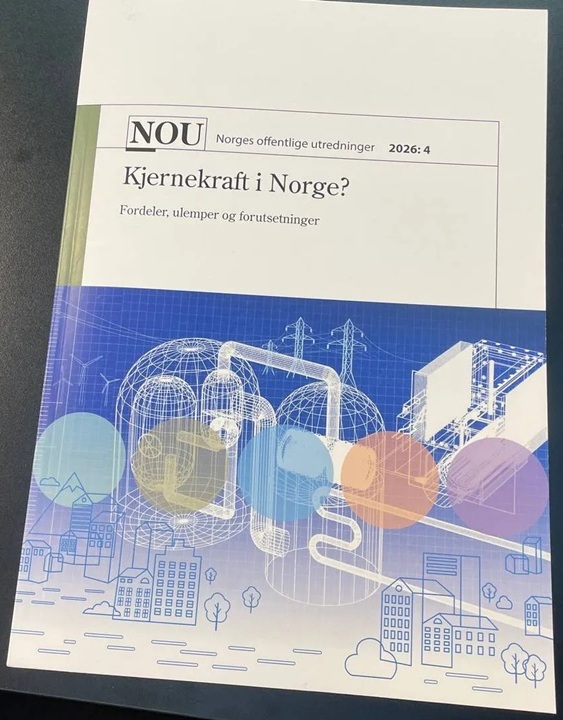
It is too expensive, Norway lacks the necessary expertise, and the process takes too long, according to the Committee. It unanimously rejects nuclear power.
Johannes Enli Kalleberg and NTB , 8 April, 26, https://energywatch.com/EnergyNews/Renewables/article19180637.ece
The government-appointed Norwegian Nuclear Committee – which has consisted of experts in physics, technology, economics, law, ethics, and social sciences – will submit its report to Norwegian energy minister Terje Aasland on Wednesday after a year and a half of work.
In the report “Nuclear Power in Norway? Advantages, Disadvantages, and Prerequisites,” the committee arrived at the following two main recommendations:
- Norway should not initiate a full-scale nuclear power process at the current moment.
- But we should build up expertise that will make it easier to make such a decision in the future.
Extensive support
A key rationale is economics. The committee’s calculations show that nuclear power, even under the most optimistic assumptions, requires electricity prices of at least NOK 1.13 (EUR 0.10) per KWh to cover costs. The estimated long-term electricity price in Norway is NOK 0.50-0.80.
“If nuclear power is to be established in Norway, private investors must find it profitable to invest in nuclear power. In that case, investment costs must be 70-80% lower,” the report states.
The committee points out that this aligns well with the situation in Sweden and Finland. There, major energy companies such as Vattenfall and Fortum say they cannot build new nuclear power plants without extensive government support.
”However, the committee does not see any sound socio-economic justifications for the government to support the establishment of nuclear power in Norway.”
Not before the 2040s
A time-consuming process also argues against nuclear power. Even if Norway decided go ahead with nuclear construction today, the committee estimates that production is not realistic before the mid-2040s at the earliest. First, legislation, regulatory frameworks, and professional communities must be developed.
”In any case, nuclear power production will not come in time to help achieve the Paris Agreement’s 2050 goals, and we must expand other sources in the meantime. And we have other alternatives. These include upgrading hydropower plants and expanding wind and solar power,” the committee concludes.
The committee also warns that the prospect of future nuclear power could hinder the development of these alternatives.
”If there is a prospect of nuclear power coming to Norway in 20 years, it will become less profitable to build other types of power plants. With nuclear power, we thus risk having less power and less transition in the coming decades.”
100,000 years
Much of the Norwegian debate has centered on small modular reactors (SMRs). The committee is skeptical of these as an immediate solution: no factories have been established, no models have been standardized, and it is highly uncertain how affordable SMRs will be.
The committee also highlights the management of spent fuel as a major challenge. Spent fuel emits harmful radiation for thousands of years, and there is international consensus that it must be stored at a depth of around 500 meters in stable rock for 100,000 years.
Finland is the only country in the world to have completed such a repository.
”Accidents can have major consequences and necessitate very strict safety requirements that apply specifically to nuclear power […] It is a challenge that we do not know what the probability is, and that it is difficult to assess what consequences an accident might have.”
Knowledge – not power plants
Nuclear power is not, however, entirely negative. The committee points out that it is possible to produce large amounts of stable, emission-free power in a small area over a long period. The fact that it is not dependent on sun and wind is also a plus.
The report makes it clear that building expertise in nuclear power is important.
This involves strengthening academic environments at universities, participating more actively in international cooperation, staying up to date on technological developments, and considering cooperation with Sweden and Finland.
”Therefore, we think the smartest thing we can do today is to build knowledge, not power plants,” the committee writes.
On June 21, 2024, the Ministry of Energy appointed the committee that has examined nuclear power as a potential energy source in Norway. The goal has been to review and assess various aspects of a possible future establishment of nuclear power in Norway.
This article was provided by our sister media in Norway, EnergiWatch.
English edit by Christian Radich Hoffman.
Labour and SNP clash over nuclear power for Scotland amid Holyrood campaign.

Labour touts “stability” while SNP blasts “misguided” nuclear
plan. Torness power station — could nuclear become a key battleground
ahead of the May poll?
The SNP and Scottish Labour have traded barbs over
energy policy as the debate on new nuclear power in Scotland took centre
stage on the Holyrood campaign trail. It comes as the Scottish Greens
pledged to deliver 40,000 new green energy jobs in Scotland by the end of
the next Holyrood term in 2031. In a statement, Scottish Labour leader Anas
Sarwar vowed to end what he called the SNP’s “ideological and
anti-science” prohibition on new nuclear power.
Opposition to nuclear
energy has a long history in Scotland, beginning in the 1970s with the
construction of the Torness Point reactor in East Lothian. Sarwar said the
SNP stance against nuclear power is costing Scotland high-quality jobs,
investment, and energy security. Scottish Labour said it would immediately
end a ban on new nuclear in office, and begin the process of securing sites
for next-generation technologies such as small modular reactors (SMRs).
Sarwar said the SNP’s nuclear policy leaves Scots “vulnerable to
tyrants abroad”. The SNP have chosen misinformation and scaremongering on
nuclear power — leaving Scotland with less energy security, higher bills
and fewer jobs,” he said.
The Scottish Liberal Democrats have also backed
new nuclear in Scotland ahead of the May elections, with the party open to
supporting projects at Hunterston and Torness.
SNP warns of high costs from
nuclear In response, the SNP said Scottish Labour’s nuclear plans would
“hammer Scottish bill payers”. The party pointed to North Sea neighbour
Norway, where a government-appointed commission this week recommended
against investing in nuclear power at present. SNP depute leader Keith
Brown said Scottish families “already pay a ‘nuclear tax’ to fund the
two most expensive nuclear plants in the world”, referring to Hinkley
Point C and Sizewell C. “Why on earth does Anas Sarwar want to inflict
more of this on Scotland?” Brown questioned.
Energy Voice 9th April 2026,
https://www.energyvoice.com/renewables-energy-transition/nuclear/595535/labour-and-snp-clash-over-nuclear-power-for-scotland-amid-holyrood-campaign/
Faced with new energy shock, Europe asks if reviving nuclear is the answer
Katya AdlerEurope Editor, BBC 5 Apr 26
“…………………….nuclear energy seems to be back in fashion as part of a home-grown European energy mix – in the UK as well as the EU. But how quick a fix can nuclear be – and how safe and reliable is it really?
…………………………A renewed enthusiasm for nuclear power is palpable in Europe:
………………………………………….Italyis preparing draft laws to repeal its longstanding ban
Belgium seems to be making a complete U-turn after years of reluctance about investing in nuclear energy
Greece, historically cautious because of seismic concerns, has opened a public debate on advanced reactor designs
Sweden reversed a four-decade old decision to abandon nuclear technology
In the UK, Chancellor Rachel Reeves recently announced streamlining regulation to help advance nuclear projects.
“To build national resilience, drive energy security and deliver economic growth, we need nuclear,” said Reeves.
………………………..No prizes for guessing that France is the loudest nuclear cheerleader. President Emmanuel Macron is ever eager to point to the industry’s credentials as a low carbon-emitter, potentially helping the EU towards its net zero goals.
He told Europe’s nuclear summit that “nuclear power is key to reconciling both independence, and thus energy sovereignty, with decarbonisation, and thus carbon neutrality”.
He also emphasised the increased energy demand from AI and his belief that nuclear power could give Europe a competitive edge or “the ability to open data centres, to build computing capacity and to be at the heart of the artificial intelligence challenge.”
But Berlin has since agreed to the removal of anti-nuclear bias. A cynic might say that could have something to do with defence and security concerns, provoked by deteriorating relations with the Trump administration.
Germany has asked France to extend its independent nuclear deterrent to European partners, something France agreed to this month.
But beware of viewing nuclear as an energy panacea.
Nuclear development is a long-term project, not a short-term fix to current energy insecurity.
Building nuclear reactors can be subject to extremely long delays, as recent examples in France and the UK have illustrated, at Flamanville-3 and Hinkley Point C.
Waste management and public concerns regarding the safety of nuclear energy persist.
Environmental groups warn investment in nuclear energy can divert funds and political attention from speeding up the development of renewables, and an added layer of strategic risk is that a number of Central European countries, especially Hungary and Slovakia, still depend on Russian nuclear technology and uranium.
“You’re ignoring the history of nuclear in Europe if you think it can just slot in [as an easy energy crisis solution],” Chris Aylett told me. He’s a Research Fellow at the Environment and Society Centre, Chatham House.
Nuclear energy is part of the solution, he believes, but many European nuclear reactors are old and governments need to invest considerably just to maintain or extend their working life.
“The main challenge is maintaining existing share [of nuclear power]. If governments really want to increase the share, they need a lot of time and a lot of money.”
But many of Europe’s governments are indebted, cash-strapped and faced with numerous, competing priorities – such as how to maintain welfare and boost defence spending to the levels promised to US President Donald Trump.
Nuclear is also being beaten on price as the costs of wind and solar have gone down, Aylett points out.
So, with price and practicality in mind, the European Commission has rushed to embrace the concept of small modular reactors (SMRs).
………………………….The focus on SMRs is international. Last week, the US and Japan announced a $40bn project to develop SMRs in Tennessee and Alabama, while last month Emma Reynolds, the environment secretary, published the regulatory justification for Rolls-Royce’s plan to become the first company to try to build SMRs in the UK.
But as attractive as they sound, SMRs are viewed as unproven at commercial scale. As of early 2026, no construction licences had been granted anywhere in the EU…………………..
https://www.bbc.co.uk/news/articles/c4g8k8vq8gno
60 Years Nuclear Accident of Palomares – Lost hydrogen bombs and their consequences
Exactly 60 years ago, on January 17, 1966, one of the worst nuclear accidents of the Cold War occurred in southern Spain. A US tanker plane collided with a B-52 bomber carrying four hydrogen bombs. The planes exploded and fell with their dangerous cargo over the coastal village of Palomares in Andalusia. Two of the four bombs failed to deploy their parachutes. They shattered on impact, contaminating the air and soil around Palomares with plutonium and uranium. The fourth bomb fell into the Mediterranean Sea and was discovered just 80 days later.
Uranium Film Festival, 6 April 26
A conversation with the Spanish author and documentary filmmaker José Herrera Plaza from Almería. Interview by Norbert Suchanek
Where were you in January 1966, when the hydrogen bombs fell from the sky?
I had just started school in Almería, about 90 kilometers from Palomares. Like most people in Andalusia, I had no idea about the hydrogen bombs flying over our heads.
When and why did you begin your research on the Palomares accident and make it your main focus?
On January 13, 1986, I attended a meeting with the residents of Palomares. It was three days before the 20th anniversary of the accident, and their claims for compensation for health damages were about to expire. I wanted to make a documentary about this little-known, almost unbelievable story, but at that time, all sources for documentary films were classified. I waited 21 years, gathering all available documents, until I was finally able to complete the documentary “Operation Broken Arrow: The Palomares Nuclear Accident.”
What does “Operation Broken Arrow” mean?
“Broken Arrow” is an U.S. military code word. It refers to an accidental event that involves nuclear weapons like an accidental or unexplained nuclear explosion or the loss or theft of nuclear bombs.
How did the local authorities react? Were they aware of the plutonium threat?
The local authorities responded to the protocol of an aviation accident without knowing about the involvement of nuclear weapons or the contamination of a large area until several days later.
How and when did the government in Madrid react?
Spanish authorities learned of the crash almost immediately, thanks to alerts sent via emergency channels by a Spanish Navy helicopter. The fact that the plane was carrying four hydrogen bombs was revealed later that same day, thanks to the US ambassador. But both governments involved kept quiet about it until, three days later, the media exposed it to the public
How was it possible that the media reported on this so quickly during the Franco dictatorship?
The Spanish-American journalist André del Amo(link is external), from United Press International, was in Palomares two days after the accident and exposed the involvement of nuclear weapons as well as the use of Geiger counters in ground measurements. The following day, his report appeared in major media outlets worldwide. The dictatorship reacted in its usual manner: it confiscated newspapers from newsstands and at the airports in Madrid and Barcelona as soon as international flights landed.
Nevertheless, the residents of Palomares and the rest of Spain learned of the news because, to circumvent the strict media censorship, it was common practice to listen to Spanish-language shortwave broadcasts from Radio Paris, the BBC, and especially Radio España Independiente “La Pirenaica,” the station of the Communist Party of Spain, broadcasting from Bucharest, Romania.
What were the direct consequences of the shattered hydrogen bombs? Was there a risk of a nuclear explosion?
The two Mk-28 FI bombs had 68 times the explosive power of the atomic bomb that destroyed Hiroshima. Upon impact at Palomares, the Hydrogen bombs exploded because the conventional explosive charge of the trigger detonated. An area of 635 hectares was subsequently contaminated with fissile fuel: approximately 10 kilograms of plutonium-239 and -241, and slightly more than 10 kilograms of uranium-235 and uranium-238, also known as depleted uranium. While the risk of an accidental nuclear detonation was very low, it did exist. Nevertheless, these hydrogen bombs were among the most technologically advanced in the US arsenal at the time. Their safety systems were quite good, with the exception of the conventional explosive, which was sensitive to shock and vibration. Due to this accident and a similar one two years later in Thule, Greenland, the US military replaced this explosive with a shock- and fire-resistant one.
Was the local population warned about plutonium contamination and the consumption of potentially contaminated food such as tomatoes?
The inhabitants of Palomares were continually and perversely misinformed and thus continued for fifty years, in the Franco dictatorship as well as in democracy. All awareness of their precarious situation was thanks to the banned shortwave stations such as Radio España Independiente “La Pirenaica”, and BBC or Radio Paris in their evening programs in Spanish. Also the empathic help of one of the highest members of the Spanish nobility: the Duchess of Medina Sidonia, helped to inform the locals of her situation and rights, for which the fascist dictatorship of Franco put her in prison.
Are there any data or estimates on how many people became ill or died as a result of the contamination with Plutonium or Uranium?
No, because they have never allowed a rigorous epidemiological study to be conducted. When some independent people have tried, it has all been problems. At the same time, the official history created and maintained by the two Governments has stated that there has never been a tumor disease caused by plutonium. Palomares is an environmental sacrifice zone with significant health risks for its inhabitants. But it is not an exception to the rest of the world: invisible minority, invisible consequences……………………………………………………………………………………………………………………………………………………………………………………………………………https://uraniumfilmfestival.org/en/60-years-ago-in-palomares
Arrests at Lakenheath nuclear base blockade
News, Apr 6th, https://freedomnews.org.uk/2026/04/06/arrests-at-lakenheath-nuclear-base-blockade/
International Peace Camp protests British complicity in Iran and Gaza
Several protesters were arrested at RAF Lakenheath over the weekend, during the International Peace Camp held at the US-occupied nuclear base. The actions included a successful blockade of the main gates of the base, with protestors focusing on the ongoing Iran war, the Gaza genocide, and the presence of nuclear weapons at the site.
The camp, taking place from 1-6 April, built to a crescendo over the Easter weekend with the main gates successfully blockaded for three hours on Saturday. Two protestors were arrested for refusing to move, with one of them citing attacks on over 600 schools and 300 medical facilities in Iran as her motivation for direct action.
Easter Sunday saw a further seven arrests when a number of protestors focusing on the genocide in Gaza wore tabards offering support for Palestine Action. The camp has also featured dramatic interventions from the Red Rebel Brigade.
Lakenheath, located in Suffolk, has for decades been a home of the US Air Force in Europe, and last year once again became home to US nuclear weapons on UK soil, with B61 gravity bombs delivered last summer after a long period of preparation. The base has been actively involved in the Iran war, used by a wide range of US aircraft to transit to stations in the Middle East. An F-15E Strike Eagle shot down over Iran is believed to have been a Lakenheath aircraft.
The camp, organised by the Lakenheath Alliance for Peace, has featured addresses from CND General Secretary Sophie Bolt, and former British Army Colonel Chris Romberg, who was arrested last year in Parliament Square for carrying a sign in support of Palestine Action.
The camp is scheduled to conclude with a ‘grand finale’ today, Easter Monday (6th April) .
Nuclear fusion – triumph of hope over expectation.

Letter Andrew Warren: The subhead for your editorial (The FT View, March
20) enthusing about the UK government’s latest £2.5bn commitment to
nuclear fusion research acknowledges it to be an “elusive power
source”. That is a decided understatement.
Back in 1967, the second
Wilson government produced an energy white paper. In it, regret was
expressed that, despite 20 years of government funding, nuclear fusion
research had yet to begin any moves towards producing any hard results.
Nonetheless confidence was expressed that a breakthrough, with important
commercial and policy implications, could be confidently anticipated by
1990.
Strangely enough, the next energy white paper (not published until
2003, by the Blair government) expressed very similar sentiments — but
with the “fulfilment date” for nuclear fusion brought forward by a
further 20-plus years. Here we are 23 years later. And now we have the
latest Labour government, announcing further billions in research funds
dished out towards delivering nuclear fusion, with results due perhaps some
time after 2040. Truly, a triumph of hope over expectation.
FT 25th March 2026 https://www.ft.com/content/232c1ef5-9689-4911-8936-72af18e88165
1 This Month



26 September – International Day for the Total Elimination of Nuclear Weapons


PLEASE OPPOSE HR 8255 AND S.3639 – bills would accelerate satellite deployment, with no environmental review or safeguards – https://ncstd5li.quorum.us/campaign/169331/
To see nuclear-related stories in greater depth and intensity – go to https://nuclearinformation.wordpress.com
-
Archives
- September 2026 (233)
- August 2026 (330)
- July 2026 (355)
- June 2026 (287)
- May 2026 (306)
- April 2026 (356)
- March 2026 (251)
- February 2026 (267)
- January 2026 (308)
- December 2025 (358)
- November 2025 (359)
- October 2025 (375)
-
Categories
- 1
- 1 NUCLEAR ISSUES
- business and costs
- climate change
- culture and arts
- ENERGY
- environment
- health
- history
- indigenous issues
- Legal
- marketing of nuclear
- media
- opposition to nuclear
- PERSONAL STORIES
- politics
- politics international
- Religion and ethics
- safety
- secrets,lies and civil liberties
- spinbuster
- technology
- Uranium
- wastes
- weapons and war
- Women
- 2 WORLD
- ACTION
- AFRICA
- Atrocities
- AUSTRALIA
- Christina's notes
- Christina's themes
- culture and arts
- Events
- Fuk 2022
- Fuk 2023
- Fukushima 2017
- Fukushima 2018
- fukushima 2019
- Fukushima 2020
- Fukushima 2021
- general
- global warming
- Humour (God we need it)
- Nuclear
- RARE EARTHS
- Reference
- resources – print
- Resources -audiovicual
- Weekly Newsletter
- World
- World Nuclear
- YouTube
-
RSS
Entries RSS
Comments RSS
 nuclear-news