Japan’s ambitions to export nuclear technology have been dimmed by Toshiba’s U.S. unit bankruptcy
Toshiba’s U.S. unit bankruptcy dims Japan’s nuclear ambitions, Japan Times, BY AKIKO YASUHARA, KYODO , 31 Mar 17, The bankruptcy filing by Toshiba Corp.’s U.S. nuclear unit highlights the tough business climate in the sector and the scale of the challenge Japan faces in seeking to sell its nuclear technology abroad.
Westinghouse Electric Co. filed for Chapter 11 bankruptcy protection on Wednesday as its Japanese parent rushed to plug huge losses related to the nuclear business and pull out of the sector overseas.
Toshiba bought the U.S. nuclear energy company in 2006 for about ¥600 billion ($5.4 billion), aiming to expand its nuclear power business abroad as one of its core operations.
Such efforts by Japanese nuclear businesses to push exports have been taken up by Prime Minister Shinzo Abe as part of a growth strategy to revitalize the deflation-hit domestic economy…..
However, the nuclear business environment has changed dramatically since the 2011 Fukushima nuclear crisis. Stricter safety regulations introduced after the disaster have raised costs to construct plants and some countries have become more cautious about new reactors……
“It’s a high-risk business. It always has been,” Tadahiro Katsuta, a professor specializing in atomic mechanics at Meiji University in Tokyo, said. “Even before the Fukushima crisis, the nuclear business had been struggling. It’s not something one company can do on its own or can easily export like cars in terms of safety concerns.”
Toshiba said Wednesday it could post a group net loss of ¥1.01 trillion ($9.13 billion) for the fiscal year ending March 31, with massive costs related to the Chapter 11 filing. Westinghouse has $9.8 billion in total liabilities, much of which must be shouldered by Toshiba under a debt guarantee for the U.S. unit.
With the do-or-die decision on the filing, Toshiba will make all-out efforts to move out of its financial woes, Toshiba President Satoshi Tsunakawa told a news conference in Tokyo Wednesday evening.
“We are almost risk-free as we are pulling out of overseas nuclear operations, the biggest problem,” he said…….
The nuclear climbdown is not a problem specific to Toshiba.
Hitachi Ltd., another major nuclear company, said last week it will book an estimated ¥65 billion write-down for fiscal 2016 related to a laser uranium enrichment joint venture with General Electric in the United States. The company said demand for nuclear fuel in the country was unlikely to grow as strongly as it had expected…….
The nuclear climbdown is not a problem specific to Toshiba.
Hitachi Ltd., another major nuclear company, said last week it will book an estimated ¥65 billion write-down for fiscal 2016 related to a laser uranium enrichment joint venture with General Electric in the United States. The company said demand for nuclear fuel in the country was unlikely to grow as strongly as it had expected……
Mitsubishi Heavy and Japan Nuclear Fuel Ltd. said in February they will invest in Areva, which is a partner of Mitsubishi in a joint venture to develop nuclear plants.
Still, the dynamics in the energy sector have been changing drastically……..http://www.japantimes.co.jp/news/2017/03/31/business/corporate-business/toshibas-u-s-unit-bankruptcy-dims-japans-nuclear-ambitions/#.WN7B-kWGPGg
Great majority of Japanese back nuke ban treaty, Why won’t Japan speak out as an A-bombed country?
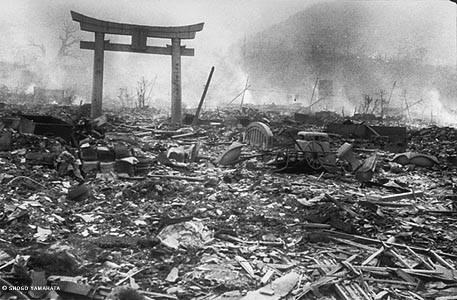
Why won’t Japan speak out as an A-bombed country?
The Japanese government has announced it will abstain from talks underway at the U.N. headquarters on establishing a convention to outlaw nuclear weapons. By abstaining from the talks, Japan is effectively abandoning its opportunity as the world’s only atomic-bombed country to serve as a bridge between nuclear and non-nuclear states.
On the reason for Japan’s abstention, Foreign Minister Fumio Kishida pointed out that the five nuclear powers of the United States, Russia, Britain, France and China are not taking part, and said that the talks “may have the opposite effect of deepening the divide between nuclear and non-nuclear states.”
In October last year, the Japanese government voted against a U.N. resolution on launching the talks. But at the time, Kishida expressed the view that Japan would actively take part in negotiations that were to begin in March.
The state of opposition between nuclear and non-nuclear states remains unchanged. It therefore makes no sense for Japan to first say it will participate and bridge the gap, only to make a turnabout and declare it will not participate, citing fears that opposition between the two camps would deepen.
The government’s decision, which overturned the foreign minister’s previous statement that Japan intended to participate, damages trust in Japanese diplomacy.
Changes in global affairs since last autumn appear to have influenced Japan’s decision not to participate. In November last year, Donald Trump won the U.S. presidential election, and the Trump administration has taken an active stance toward bolstering his country’s nuclear capabilities. The United States and other nuclear powers argue that it is not realistic in terms of security to establish a convention outlawing nuclear weapons when facing the threat of North Korea’s missile and nuclear development.
The United States is said to have pressed Japan to abstain from the talks. Some Japanese government officials took the position that even if Japan took part in negotiations, it would be limited to stressing its opposition to the convention, creating the impression of a negative stance, which would be meaningless. But this is an overly defensive position.
For Japan to participate as a bridge-builder, it needed to prepare the proper environment, by expanding the ring of like-minded countries, for example. But there is no evidence that Japan made such efforts.
Another round of negotiations is due to be held between June and July, and it is possible that a draft of the nuclear weapons convention could be compiled at that time.
It is said that such a treaty would be weak without the participation of nuclear states, but it is nevertheless possible that it would play a major role in the long run in shaping international opinion on banning nuclear weapons. It is lamentable that Japan is not taking part in that process and speaking out as a country that has suffered as an atomic-bombed country.
http://mainichi.jp/english/articles/20170329/p2a/00m/0na/006000c
Great majority of Japanese back nuke ban treaty talks: JCP head
NEW YORK — The Japanese Communist Party (JCP) chief slammed the Japanese government for abstaining from a United Nations conference to negotiate a treaty outlawing nuclear weapons despite the vast majority of Japanese supporting the treaty talks.
“It is such a shame that the Japanese government is absent from this conference. However, the vast majority of the Japanese people strongly support the negotiations,” JCP head Kazuo Shii told a March 29 session of the first round of talks on the Nuclear Weapons Convention at the U.N. Headquarters.
Shii stated that through the conclusion of the nuclear arms ban treaty and efforts among civil societies across the globe, “We can press countries that are dependent on nuclear weapons to change their policies and join efforts to abolish nuclear weapons.”
http://mainichi.jp/english/articles/20170330/p2a/00m/0na/009000c
Toshiba’s record loss: shares plummet due to nuclear failures
 Toshiba Projects Record Loss as Nuclear Unit Files for Bankruptcy, Bloomberg, by Dawn McCarty and Pavel Alpeyev March 29, 2017,
-
Toshiba warns full year loss may widen to 1.01 trillion yen
-
Japanese company trying to sell memory chips division
-
Toshiba Corp. projected its annual loss could more than double to a record 1.01 trillion yen ($9.1 billion) as its U.S. nuclear unit Westinghouse Electricfiled for Chapter 11 bankruptcy.
The collapse of Westinghouse, once the linchpin of Toshiba’s plans to diversify away from consumer electronics, caps a disastrous run for the Japanese conglomerate as project delays crippled earnings from the nuclear plant business. The company has now put its prized memory chip unit up for sale just as it was recovering from a profit-padding scandal that claimed the scalps of senior executives……
- Toshiba listed as much as $10 billion debt for Westinghouse and another entity. The nuclear unit filed in U.S. Bankruptcy Court for the Southern District of New York and proposed to appoint Weil, Gotshal & Manges LLP as legal adviser, AlixPartners LLP as financial adviser, and PJT Partners Inc. as investment banker, subject to court approval.
Toshiba said last month it expected to write down 712.5 billion yen in its nuclear-power business, citing cost overruns and diminishing prospects for atomic-energy operations. The company has twice delayed its earnings report, with results for the December quarter now due on April 11.
- “There were warning signs when Toshiba delayed releasing financials earlier this year,” said Emmanuel Chua, senior associate at Herbert Smith Freehills in Singapore. “The big question mark is whether the restructuring plan and process presents real opportunities for a turnaround, or whether it is simply an exercise of ‘kicking the can down the road.”’
Shares of Toshiba have slumped 23 percent this year after advancing 13 percent in 2016. The loss forecast was announced after the close of trading on Wednesday.
Expectations that the company may be too big to fail for the Japanese government, and the likelihood that it will get state support is bolstering its bonds. Toshiba’s 20 billion yen of December 2020 bonds were little changed at 88 percent of face value, according to data compiled by Bloomberg……
Scana and Southern could end up facing billions of dollars in additional costs, according to Morgan Stanley. Scana faces as much as $5.2 billion in higher costs that could drag its shares down 5 percent, analysts at the bank including Stephen Byrd said in a March 22 research note, while cost overruns for utility owner Southern could reach $3.3 billion……https://www.bloomberg.com/news/articles/2017-03-29/toshiba-s-u-s-nuclear-unit-westinghouse-files-for-bankruptcy
Bankruptcy doesn’t make liabilities vanish – Toshiba wan’t be saved by Westinghouse bankruptcy
 Westinghouse Bankruptcy Won’t Save Toshiba, Bloomberg Gadfly, https://www.bloomberg.com/gadfly/articles/2017-03-29/a-westinghouse-bankruptcy-won-t-save-toshiba By David Fickling, 29 Mar 17, From the outside, Chapter 11 bankruptcy can look like an almost magical process. A company previously laden down with borrowings gets to discharge its liabilities and emerge seemingly unscathed.
U.S. miner Arch Coal Inc. had $4.5 billion in net debt and a market capitalization of just a few million dollars when it filed for Chapter 11 in January 2016. After emerging from a nine-month gestation in the courts, it’s now worth $1.73 billion and is debt free, with net cash of $31 million.
Toshiba Corp. shareholders appear to hope the same rule will hold true for Westinghouse Electric Co., the nuclear unit that’s dragged one of Japan’s oldest industrial conglomerates to the brink of insolvency. The stock has rallied 20 percent in a week, after Toshiba said Westinghouse’s board was considering bankruptcy. The unit has filed for Chapter 11 protection in New York, court documents showed Wednesday.
If the courts are about to give Westinghouse a get-out-of-jail-free card, someone ought to tell the credit markets.
Compare Toshiba’s own credit-default swaps to those on Southern Co. and Scana Corp., the two U.S. electric utilities for whom Westinghouse is under contract to build four reactors, and it’s clear that investors expect one of the three players to suffer most of the costs. Insuring $10 million of Toshiba’s debt against default for five years would set you back about $423,000, compared to $78,000 for Scana and $64,000 for Southern.
Toshiba faces a bewildering array of potential hits to its balance sheet from its nuclear foray, but most of them are either relatively small (such as its 34.6 billion yen ($311 million) in decommissioning and environmental liabilities), or already factored in (like the 713 billion yen goodwill writedown that will leave it with negative shareholders’ equity once it reports annual results).
The deal with Southern and Scana is different. Payment guarantees to subsidiaries of the two utilities constitute 90 percent of the 794 billion yen in parent-company guarantees for which Toshiba has promised to indemnify Westinghouse. Put into English: If Westinghouse fails to build the reactors on time and on budget, Toshiba is on the hook for a sum not much less than the 768 billion yen value of all its factories, machinery and land.
Aside from a bailout by the Japanese government, the sliver of hope for Toshiba shareholders is that the messy bankruptcy process will allow some of those liabilities to be taken on by other players. The U.S. government, for instance, has made an $8.3 billion loan guarantee to the owners of Southern’s reactors. That may complicate the process, the Nikkei reported earlier this month. Moody’s Investors Service and S&P Global Ratings in recent weeks have put shareholders in the plants, including Southern and Scana and associated units, on negative ratings outlooks on the possibility they will have to bear some costs.
Creditors of the two utilities seem unconcerned. It’s been more than a year since Scana’s 4.125 percent bonds due February 2022 last dipped below par, while the Southern unit that will be the main shareholder in its nuclear plant project, Georgia Power Co., managed to raise fresh debt just last month. Its $400 million of 3.25 percent notes due 2027, sold at a modest 0.113 cent discount to par, are trading at 98.56 cents on the dollar.
That should be worrying for Toshiba, because there’s no magic spell behind Chapter 11. Bankruptcy doesn’t make liabilities vanish outright. For the most part, it just reorganizes them, imposes haircuts on junior creditors, and converts a portion from the most stringent form — debt — to a milder alternative, equity. If bondholders at Westinghouse’s customers are feeling confident, Toshiba shareholders should prepare for a troublesome chain reaction.
Residents furious over high court decision to revoke Takahama nuclear plant injunction
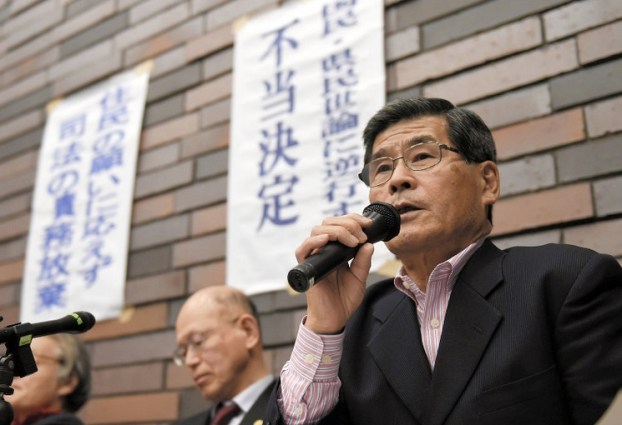
Yoshinori Tsuji, right, speaks during a news conference in Osaka’s Kita Ward on March 28, 2017, after the Osaka High Court handed down a decision on the injunction for reactors at Takahama Nuclear Power Plant
OSAKA — A March 28 Osaka High Court ruling that revoked a lower court decision to halt two nuclear reactors in Fukui Prefecture has angered plaintiffs and local residents as the high court effectively rubberstamped the state’s policy of restarting nuclear reactors.
Some 100 people demanding a halt to the reactors at Takahama Nuclear Power Plant gathered before the Osaka High Court on March 28. When they were informed of the ruling shortly after 3 p.m. with attorneys holding up banners that said, “Unjust ruling” and “The court fails to fulfill residents’ wishes,” the plaintiffs let out a sigh of disappointment.
“What are they thinking about?” “This is absurd,” they said, and shouted, “Resist the high court ruling that disregards Fukushima!” as they raised their fists.
Kenichi Ido, the head attorney for the plaintiffs, criticized the ruling during a news conference, with the over-400-page written court decision in his hand, saying, “While it’s this thick, its contents are just a copy of the views of (Takahama nuclear plant operator) Kansai Electric Power Co. and the Nuclear Regulation Authority.”
He added, “After the March 11 disaster, the judiciary is the only actor that can stop the administration that is railroading the resumption of nuclear power. But I sense that it has no self-awareness of its role or responsibility.”
Yoshinori Tsuji, the representative of the residents in the class action lawsuit, expressed frustration over the latest ruling, saying, “The decision was unjust as the high court took the policies of the central government and the utility into consideration.”
Tsuji also said the Otsu District Court’s injunction order handed down a year ago was a groundbreaking decision which reflected on the Fukushima nuclear disaster. “It further legitimized the authority of the judiciary,” he recalled.
Tsuji then slammed the Osaka High Court, saying, “The high court took a decidedly different stance from the district court with regard to listening to the people’s voices. Shame on them.”
http://mainichi.jp/english/articles/20170329/p2a/00m/0na/013000c
Japanese High Court sides with Kansai Electric, allowing restart of Takahama nuclear plant
Court overturns injunction on Takahama nuclear plant http://www.asahi.com/ajw/articles/AJ201703280059.html March 28, 2017 Kansai Electric Power Co. won a major victory in its bid to restart the Takahama nuclear plant on March 28, with the Osaka High Court overturning a lower court’s unprecedented injunction to shut down the plant in operation.
The decision came after the Osaka-based utility had appealed the Otsu District Court’s March 2016 ruling, in which it was ordered to suspend operations of the No. 3 and No. 4 reactors at the plant in Takahama, Fukui Prefecture.
In the ruling on March 28, the high court sided with Kansai Electric, which argued that its reactors met the regulatory requirements instituted in 2013 by the Nuclear Regulation Authority.
With the decision, Kansai Electric, which relies on nuclear energy more than many other utilities, is expected to begin procedures to restart the Takahama plant.
In the injunction, the district court in Shiga Prefecture concluded that merely fulfilling the new NRA requirements is not enough to secure safety at the plant, saying they were set when the investigation into the 2011 Fukushima disaster was only halfway complete.
The lower court also said a thorough survey of geological faults around the Takahama plant has yet to be conducted, and that Kansai Electric’s claim that its reactors have a sufficient safety cushion to withstand the largest tremors projected there is doubtful.
Kansai Electric countered that the new requirements fully incorporate lessons learned from the triple meltdown at the Fukushima No. 1 nuclear plant by obliging operators to prepare for a more powerful earthquake, tsunami and other natural phenomenon that could trigger an accident.
The court challenge was filed by a group of 29 residents in Shiga Prefecture, which shares a border with Fukui Prefecture, in January 2015. The injunction marked the first time a court in Japan had ordered an operating reactor to be taken offline.
Osaka higher court backs restart of halted Takahama reactors
The Takahama reactors site is under 3 miles from Kyoto-fu, 36 miles (58K) from the cultural heritage sites in the ancient capital of Kyoto and closer to the region’s supply of fresh water, Lake Biwa.

Takahama reactors may soon restart after court overturns injunction

Plaintiffs hold banners in front of the Osaka High Court on Tuesday expressing disappointment after the court ruled in favor Kansai Electric over the restart of two Takahama reactors.
OSAKA – The Osaka High Court overturned Tuesday an injunction issued against the restart of Kansai Electric Power Co.’s No. 3 and No. 4 reactors at its Takahama facility in Fukui Prefecture, paving the way for them to be switched back on.
The landmark injunction issued by the Otsu District Court in Shiga Prefecture in March last year cited safety concerns for preventing the reactors from restarting even though they were judged to have met new safety regulations set after the Fukushima No. 1 nuclear crisis.
While the injunction had been a temporary victory for the plaintiffs in Shiga, some had predicted the Osaka High Court would adhere to a more narrow technical view of nuclear safety.
In his ruling, Judge Ikuo Yamashita said the plaintiffs had the responsibility to prove allegations of any specific dangers that would result in restarting the plant, which the judge ruled they had not.
Part of the plaintiffs’ claim relied on the alleged inadequacy of current evacuation plans in the event of an accident. Therefore, starting up the Takahama reactors, located about 60 km from the city of Kyoto, posed a significant risk, they argued.
Yamashita ruled that measures were being taken in Fukui and that official attitudes and efforts had been proactive, so he could not accept the plaintiffs’ claims.
“Kepco showed proof that they drew up emergency response measures based on the largest scale earthquake and tsunami,” the judge ruled. “The judge’s decision is extremely regrettable,”It’s clear with the decision that no progress has been made in terms of learning the lessons of March 11, 2011,” Kenichi Ido, a lawyer for the plaintiffs, said after the verdict was announced. “The attitude of the courts hasn’t changed at all since the Fukushima accident. In particular, the evacuation plans aren’t really being taken into consideration by the courts.”
Yoshinori Tsuji, one of the chief plaintiffs, said: “In America and South Korea, the courts are defying the presidents of both countries. But in Japan, the courts — which were ignoring the wishes of the people to stop nuclear power before March 11, 2011 — fail to reflect on what happened then. The courts follow the wishes of the nuclear power lobby and the government.”
Kansai electric officials welcomed the decision, saying at a Tuesday afternoon press conference in Osaka the utility would move towards preparing to restart, although they did not say when the reactors were expected to go back online.
“With safety as the top priority, the period for restarts is not yet set,” Kepco president Shigeki Iwane said. He added that once the restarts took place, the firm would move to reduce electricity prices.
In Kansai region, reaction to the court’s verdict was mixed. Fukui Gov. Issei Nishikawa, a strong supporter of nuclear power, was relieved with the decision, saying it was a return to a reasonable and correct decision by the court system.
But in neighboring Shiga prefecture, Gov. Taizo Mikazuki said that, given more immediate concerns Japan’s nuclear power industry faces, including spent fuel storage and decommissioning of old reactors, it was the wrong environment to approve reactor restarts. Kyoto Gov. Keiji Yamada emphasized that the utmost had to be done to ensure safety.
Higher court backs restart of halted Takahama reactors

The No. 3 and No. 4 reactors at the Takahama Nuclear Power Plant, from left to right, are pictured in this photo taken from a Mainichi helicopter in Takahama, Fukui Prefecture, on June 15, 2016.
OSAKA (Kyodo) — A Japanese high court on Tuesday revoked a lower court order to halt two nuclear reactors at the Takahama plant in central Japan, accepting an appeal by Kansai Electric Power Co. against the first injunction ever issued in the country to shut operating reactors.
But it is unlikely that the operation of other nuclear reactors in Japan will be resumed soon due to pending legal matters, analysts say.
The decision, made by the Osaka High Court, legally allows Kansai Electric to resume operating the Nos. 3 and 4 reactors at the nuclear power plant on the Sea of Japan coast in Fukui Prefecture. The two reactors have been idled for around a year.
The higher court said that quake-resistance standards were not overestimated under tougher regulations set following the 2011 Fukushima nuclear disaster and that necessary measures have been taken to prevent significant damage of the reactor core.
The latest decision bodes well for Prime Minister Shinzo Abe’s government, which has been promoting the restart of nuclear reactors in a bid to bolster the economy by cutting the cost of fossil fuels and exporting nuclear technology abroad.
Yoshihide Suga, the government’s top spokesman, said at a press conference in Tokyo, “We want Kansai Electric to put top priority on safety and make every effort to obtain understanding from the local government and others involved.”
Kansai Electric President Shigeki Iwane said at a news conference in Osaka that his company has yet to decide when to restart the operation of Takahama’s Nos. 3 and 4 reactors, pledging to “make safety our top priority.”
Iwane also expressed eagerness to push down electric charges as soon as possible after the resumption of the two reactors.
A group of residents in neighboring Shiga Prefecture who won the landmark injunction from the Otsu District Court in March last year are expected to consider countermeasures, including filing a special appeal with the Supreme Court.
Amid widespread concern about the safety of nuclear power following the 2011 Fukushima meltdowns, the residents in Shiga filed a request with the district court in January 2015, seeking an order halting the two reactors at the plant.
On March 9, 2016, the district court ordered operation of the two nuclear reactors to be halted, casting doubts about the utility’s safety measures and Japan’s post-Fukushima nuclear regulations set by the Nuclear Regulation Authority.
Last July, Kansai Electric filed an appeal against a district court decision rejecting its request to suspend the injunction order.
In Tuesday’s decision, the Osaka High Court determined that the post-Fukushima safety measures were “not unreasonable” because they were devised on the basis of the “latest scientific and technical knowledge” that reflects lessons learned from the nuclear disaster.
The utility has criticized the injunction, claiming it was not an objective judgment based on scientific knowledge. It also says the injunction is costing the utility 200 million to 300 million yen ($1.8 million to $2.7 million) more per day to generate power from other fuel.
Kansai Electric removed nuclear fuel from the Takahama reactors between August and September last year given the prolonged court battle.
As of Tuesday, only three of Japan’s 42 commercial reactors nationwide are now operating — the Nos. 1 and 2 reactors at Kyushu Electric’s Sendai plant in Kagoshima Prefecture, southwestern Japan, and the No. 3 reactor at Shikoku Electric Power Co.’s Ikata plant in Ehime Prefecture, western Japan, according to the Agency for Natural Resources and Energy.
On Thursday, the Hiroshima District Court is set to rule on an appeal filed to halt the operation of the No.3 reactor at the Ikata power plant, the first ruling since it resumed operations in August last year.
http://mainichi.jp/english/articles/20170328/p2g/00m/0dm/063000c

The Nos. 3 and 4 reactors at the Takahama nuclear power plant
Japan court rules in favor of restart of Kansai Elec’s Takahama reactors
A Japanese high court on Tuesday overturned a lower court’s order to shut two reactors operated by Kansai Electric Power, a company spokesman said, potentially ending a drawn-out legal battle and helping the utility to cut fuel costs.
The decision, while positive for Kansai Electric, is not likely to speed the broader process of getting reactors back online nationally after the Fukushima nuclear disaster of six years ago, said a former advisor to the government and others.
“The future of nuclear power is still uncertain. The decision does not mean that the courts will give a ‘yes’ to other legal cases. Political uncertainty remains strong, too,” said Tatsujiro Suzuki, a former vice chairman of the Japan Atomic Energy Commission, a government body.
The Osaka High Court overturned the first court-ordered shutdown of an operating nuclear plant in Japan. The lower court had decided last year in favor of residents living near the Takahama atomic station west of Tokyo after they had petitioned for the reactors at the plant to be shut.
Kansai Electric, Japan’s most nuclear-reliant utility before the disaster, estimates it will save 7 billion yen ($63 million) per month in fuel once it restarts both reactors.
The restart schedule for the reactors, however, is still uncertain because the utility has been conducting safety checks requested by local authorities after a large crane toppled onto another reactor building at the site due to strong winds in January, a Kansai Electric spokesman said earlier.
There are four reactors at the Takahama plant, with the earlier court order covering the two newest ones.
The company released a profit forecast after the verdict on Tuesday saying it estimates net income of 133 billion yen ($1.2 billion) in the year through March 31, 2017.
The Kansai case was one of many going through the courts after the Japanese public turned away from nuclear power following the Fukushima meltdowns of 2011, the world’s worst nuclear calamity since Chernobyl in 1986.
Just three out of Japan’s 42 operable reactors are running and the pace of restarts has been protracted despite strong support from Prime Minister Shinzo Abe’s government, which is keen to restore a power source that provided about a third of electricity supply before the Fukushima disaster.
Residents have lodged injunctions against nuclear plants across Japan and lower courts have been increasingly siding with them on safety concerns.
Contentious verdicts are usually overturned by higher courts, where judges tend to be more attuned to government policy, judicial experts say.
“We are going to win some and we are going to lose some, but the political and social situation is such that unstable prospects for restarts are here to stay,” Aileen Mioko Smith, an advisor to the plaintiffs and a co-plaintiff in other lawsuits, told Reuters by phone from Osaka.
There are more than 30 cases going through Japan’s courts in which communities are seeking to stop reactors from operating, she said.
Kansai Electric shares had ended trading before the court decision was released. They closed 0.3 percent higher on Tuesday at 1,283 yen, while the broader market rose more than 1 percent.
http://www.reuters.com/article/uk-japan-nuclear-court-idUSKBN16Z0IP
A-bomb survivor calls for nuclear arms ban

A survivor of the 1945 atomic bombing of Hiroshima has called for the creation of a new global treaty to prohibit nuclear weapons.
Toshiki Fujimori spoke in New York on Sunday at a meeting of the International Campaign to Abolish Nuclear Weapons. The NGO group held the meeting ahead of the start of UN negotiations on a legally binding international nuclear ban treaty.
Fujimori experienced the bombing when he was 16 months old. He is scheduled to speak on the first day of the UN negotiations.
Fujimori expressed hope for the talks, which he referred to as an attempt to draw up a treaty that has yet to arrive due to strong pressure from nuclear powers.
He said the voices of atomic bomb survivors and their numerous supporters have spurred momentum to ban the weapons. He said such voices remind the world of the inhumanity of nuclear weapons, which cause indiscriminate mass destruction of human life and inflict radiation on survivors.
He stressed that while their exposure problems are at different stages, each of the 170,000 survivors still alive in Japan has a cross to bear until death.
He urged people to listen to the cries of survivors and move a step forward toward achieving a world free of nuclear weapons
Japan, France confirm nuclear and security cooperation

PARIS (Kyodo) — Japanese Prime Minister Shinzo Abe and French President Francois Hollande on Monday confirmed bilateral cooperation in the research of the commercial use of nuclear power as well as in security.
The two countries agreed on joint research on a French-led fast reactor development project called ASTRID, an acronym for Advanced Sodium Technological Reactor for Industrial Demonstration.
As the leaders met, Japanese industry minister Hiroshige Seko, who is accompanying Abe, and French environment minister Segolene Royal signed a nuclear power cooperation agreement, stating that they will work together on nuclear fuel cycle and fast reactor development.
France aims to start the operation of ASTRID in the 2030s.
Abe and Hollande also attended a signing ceremony on a deal in which Mitsubishi Heavy Industries Ltd. and Japan Nuclear Fuel Ltd. will each acquire a 5 percent stake in a nuclear fuel reprocessing joint venture to be established by French atomic energy company Areva.
In the sphere of security, Abe revealed to reporters after the talks with Hollande that Japan’s Maritime Self-Defense Forces will jointly conduct naval exercises with France, the United States and Britain.
The Japanese premier welcomed the “significant” agreement on the exercises to be held in the Asia-Pacific region, including off Guam in the Western Pacific, apparently in view of China’s expansionary maritime activities.
The Japanese leader said he and Hollande shared a view that the Indian and Pacific oceans are international public goods and need to be maintained as free and open areas.
Abe said a French training squadron, including a helicopter carrier, will visit Japan in late April.
On regional issues, Abe strongly condemned North Korea’s nuclear and missile programs, while Hollande expressed Paris’ support for Tokyo on the matter.
It was the 10th and final meeting between Abe and Hollande as the latter is not running in France’s upcoming presidential election. The first round of the election is in April followed by a potential runoff vote in May.
As for economic issues, Abe and Hollande agreed on the importance of promoting free trade amid the threat of rising protectionism across the world following the inauguration of U.S. President Donald Trump.
They affirmed cooperation for the early signing of the free trade agreement between Japan and the European Union.
Abe expressed Japan’s support for “a strong Europe” to be maintained even after Britain’s forthcoming exit from the bloc.
“Japan and Europe must fly the flag of free trade high, together with the United States,” Abe said.
Hollande said the Japan-France relationship can be further strengthened.
France’s election is one of a series in Europe this year in which public unease about immigration and the functions of the European Union have fuelled speculation voters could pick populist candidates over the current political establishment.
Abe arrived in Paris on Monday after talks with German Chancellor Angela Merkel in Hanover. He is scheduled to meet European Council President Donald Tusk and Italian Prime Minister Paolo Gentiloni before returning to Japan on Wednesday.
http://mainichi.jp/english/articles/20170321/p2g/00m/0dm/030000c
Toshiba’s financial meltdown set off by nuclear power plans
 Nuclear power plants help ignite Toshiba’s meltdown, http://www.houstonchronicle.com/business/columnists/tomlinson/article/Toshiba-reveals-real-problem-with-nuclear-power-11019881.php , By Chris Tomlinson March 23, 2017 Toshiba Corp., one of Japan’s oldest and largest multinational conglomerates, is on the verge of bankruptcy, revealing the real problem with nuclear power plants: They cost too much.
Toshiba revealed last month that it will likely post a $4.4 billion loss because its U.S. subsidiary, Westinghouse Electric, has written off $6.3 billion from work on four new nuclear reactors in Waynesboro, Georgia and Fairfield County, South Carolina.
Toshiba’s stock price has fallen from 475.20 yen a share in December to a recent low of 178 yen. Ratings agencies have slashed Toshiba’s credit ratings and warn of an imminent default on the company’s bonds because there are likely more budget over-runs ahead at both facilities.
“The current financial strain on Westinghouse and Toshiba could lead to higher completion costs and further delays,” Fitch Rating Service reported.
And the Japanese government is in no mood to bail Toshiba out.
“Fiscal pressure rose last week as the Japanese government said it was not considering supporting Toshiba and the company missed, for the second time, a reporting deadline for its audited third quarter results,” the Fitch note added. “Its application to delay its results until April 11 was approved, but it remains at risk of being de-listed for failure to meet the requirements of the Tokyo Stock Exchange.”
Analysts at Standard & Poor’s were no less pessimistic.
“Absent unanticipated, significantly favorable changes in the issuer’s circumstances, we see a rising likelihood Toshiba will become unable to fulfill its financial obligations in a timely manner or will undertake a debt restructuring we classify as distressed in the next six months,” S&P wrote.
The Georgia and South Carolina plants were supposed to prove that nuclear power is viable in the United States. Westinghouse touts the AP1000 PWR reactor as the most advanced available based on licensed technology.
The nuclear energy industry is lobbying governments around the world to build more plants because they release no greenhouse gases and supply a steady supply of energy no matter the weather conditions. When it comes to operating costs, nuclear power is cheap.
The capital expenses, though, are huge. And if it weren’t for a regulated electricity market, there is no way these two nuclear power plants could compete with natural gas, wind and coal in a competitive electricity market like we have in Texas.
Reports emerged Tuesday that Toshiba is considering a prepackaged bankruptcy with Westinghouse’s creditors. The $500 million deal would keep Westinghouse operating until the debt is restructured.
This follows on the heels of reports that Toshiba wants out of the nuclear business altogether.
There are over 60 nuclear reactors under construction around the world. In many places they will make economic sense, while in others, they are government vanity projects.
As attractive as it might seem, though, new nuclear power plants still haven’t shown that they’re economic in the United States, and the dire status of Toshiba and Westinghouse is proof.
Japan stages mass evacuation drills, following North Korean missile launches
Yakuza hide IDs to secretly thrive in Tohoku’s disaster zones

A gang leader says he effectively controls several companies involved in rebuilding projects in the Tohoku region.
A company has been busy dispatching temporary workers for the Herculean task of rebuilding lives in the disaster-hit Tohoku region. But the company’s most important job for survival is to conceal any evidence of its true, sinister nature.
“This is a company I established,” said the leader of a gang affiliated with an organized crime syndicate based in western Japan. “I made sure that no signs of any possible association with yakuza organizations were left.”
Although the National Police Agency has tried to prevent gangsters from cashing in on the triple disaster that struck in March 2011, yakuza groups appear to be thriving in the Tohoku region and extending their reach.
Their companies not only dispatch workers and lease heavy machinery, but they are also involved in more traditional services, such as providing prostitutes and dealing drugs, with workers at the stricken Fukushima No. 1 nuclear power plant and other sites as potential targets.
Police say there is little they can do to shut down the yakuza activities.
The gang leader’s company, which was set up in a city in the Kanto region last December with a start-up cost of 5 million yen ($45,000), appears innocent on the surface.
The president named on company’s registry has no ties with organized crime, and the true leader and members of his family and group are not listed as directors.
The gang leader said he also has effective control over other companies that send workers to contractors involved in an array of projects, including decontaminating areas or dismantling abandoned houses.
“I make millions of yen a month, including about 100,000 yen per contractor and siphoning from workers’ daily allowances,” the gang leader proudly said.
Twenty days after the Great East Japan Earthquake and tsunami struck on March 11, 2011, triggering the nuclear disaster, the NPA directed all prefectural police departments to keep gangsters away from the reconstruction projects.
Similar requests were made to the construction industry, Tokyo Electric Power Co., operator of the nuclear plant, government ministries and agencies and local authorities.
But a number of yakuza organizations are now behind the companies involved in the rebuilding projects.
In some cases, they gain control of legitimate but cash-strapped companies by providing funds.
One crime syndicate reportedly advises umbrella groups on “how to set up a company by keeping others from becoming suspicious.”
Police officials dealing with crime syndicates acknowledge that it is “practically impossible” to thoroughly check for possible ties between subcontractors and gangster organizations.
In some cases, a single project is outsourced to more than 10 subcontractors.
“All we can do is check whether individuals connected to underground groups are listed in the registration papers,” a police official said.
Police say they can confirm a yakuza connection only after they scrutinize the company directors’ circle of friends and acquaintances and other relevant data.
Although anti-yakuza ordinances are believed to be depleting the finances of mobsters around Japan, the crime syndicates are systematically running operations in the Tohoku region as if it’s business as usual.
One leader of an underground group said he was ordered by its parent organization “not to lag behind others” in exploiting potentially lucrative projects.
After the 1995 Great Hanshin Earthquake, the parent organization began asking all groups under its umbrella to give “regular reports” about rental agents of heavy machinery, dump trucks and other equipment indispensable in rebuilding projects on their turfs.
The move was apparently designed to prepare for the day when they needed to quickly obtain as much machinery as possible.
That day arrived on March 11, 2011.
“There is a huge demand for such equipment in a disaster,” a former senior member of a gang group said. “We can lease it at our asking price.”
Crime organizations have also seen a potentially lucrative market in the predominantly male work force at the Fukushima nuclear plant and other reconstruction projects in the Tohoku region.
“I came to Fukushima to have fun as an adult,” said an entry, presumably by a female, on a dating site for men. “I am looking for somebody I can meet in Nihonmatsu,” said another, referring to a city in Fukushima Prefecture.
The website, set up by the head of a gangster organization in the Kanto region, targets workers at the stricken nuclear plant and elsewhere.
The gang leader said he takes women who have experience in the sex industry to disaster-stricken areas in his car and stays there for several days.
He sends the women to love hotels or the clients’ vehicles, depending on the customers’ requests. One encounter costs about 30,000 yen, he said, adding that 60 percent goes to the woman while he pockets the remainder.
“I am in fierce competition with other underground groups in this line of business,” he said. “But I can earn at least 3 million yen a month.”
Drug deals are also said to be at play in the disaster zone.
“I have seen and heard about the use and deals in stimulant drugs at the plant,” recalled the leader of a gang group based in eastern Japan who works at the Fukushima nuclear complex.
He was assigned to the plant just after a hydrogen explosion took place there.
TEPCO and Fukushima prefectural police said they are not aware of any drug use at the plant.
However, a plant worker in his 30s died at a hospital in August 2015 after he complained of sickness on a bus taking him from the nuclear plant.
He turned out to be a gang member, according to police. His urine sample showed possible signs of stimulant drug use, but his cause of death was not determined.
Between 2011 and 2016, police have busted underground groups involved in rebuilding projects in 101 cases.
Fraud accounted for 54 cases. They were primarily gangsters pretending to collect donations for disaster victims or mobsters involved in illicit borrowing.
Twenty-five cases concerned dispatches of workers to assignments that they were not allowed to perform.
In one case, a senior member of a group affiliated with the Sumiyoshi-kai, one of the largest crime syndicates in the nation, was arrested in May 2012 on suspicion of illegally sending workers to the Fukushima plant. Police uncovered that the mobster received about 40 million yen between 2009 and 2011 by sending workers to nuclear plants and thermal power plants across the country.
Visualizing nuclear radiation: Team images gamma rays to help decontaminate Fukushima

A Kyoto University team has developed a new camera to visualize radioactive hotspots
Extraordinary decontamination efforts are underway in areas affected by the 2011 nuclear accidents in Japan. The creation of total radioactivity maps is essential for thorough cleanup, but the most common methods, according to Kyoto University’s Toru Tanimori, do not ‘see’ enough ground-level radiation.
“The best methods we have currently are labor intensive, and to measure surface radiation accurately,” he says, “complex analysis is needed.”
In their latest work published in Scientific Reports, Tanimori and his group explain how gamma-ray imaging spectroscopy is more versatile and robust, resulting in a clearer image.
“We constructed an Electron Tracking Compton Camera (ETCC) to detect nuclear gamma rays quantitatively. Typically this is used to study radiation from space, but we have shown that it can also measure contamination, such as at Fukushima.”
The imaging revealed what Tanimori calls “micro hot spots” around the Fukushima Daiichi Nuclear Power Plant, even in regions that had already been considered decontaminated. In fact, the cleaning in some regions appeared to be far less than what could be measured by other means.
Current methods for measuring gamma rays do not reliably pinpoint the source of the radiation. According to Tanimori, “radiation sources including distant galaxies can disrupt the measurements.”
The key to creating a clear image is taking a color image including the direction and energy of all gamma rays emitted in the vicinity.
“Quantitative imaging produces a surface radioactivity distribution that can be converted to show dosage on the ground,” says Tanimori. “The ETCC makes true images of the gamma rays based on proper geometrical optics.”
This distribution can then be used to relatively easily measure ground dosage levels, showing that most gamma rays scatter and spread in the air, putting decontamination efforts at risk.
“Our ETCC will make it easier to respond to nuclear emergencies,” continues Tanimori. “Using it, we can detect where and how radiation is being released. This will not only help decontamination, but also the eventual dismantling of nuclear reactors.”
https://phys.org/news/2017-03-visualizing-nuclear-team-images-gamma.html#jCp
Controversial conspiracy bill approved by Abe Cabinet

Protesters stage a rally in front of the prime minister’s office in Tokyo on Tuesday as Prime Minister Shinzo Abe’s Cabinet approved an anti-conspiracy bill
The Cabinet of Prime Minister Shinzo Abe approved Tuesday a controversial bill that would revise the organized crime law so authorities can crack down on individuals and organizations who conspire to engage in serious criminal activity.
The conspiracy charges apply to groups of two or more people, where at least one person procures funds, supplies or surveys a location in preparation for committing a crime. Efforts to maintain or expand organized crime groups would also be punished, while reduced penalties would be considered for those who turn themselves in before a crime is carried out.
The government is pushing to enact the revised bill during the ordinary Diet session through mid-June, but strong objections by opposition parties are expected amid concern that the law may be used against civic groups.
The backlash against the measure has been a persistent hurdle in passing the anti-conspiracy law, which the government has attempted and failed to enact three times in the past, as it targeted “groups” in general.
The bill needs to be passed to ensure necessary counterterrorism measures are in place before the upcoming 2020 Tokyo Olympics and Paralympics, according to the government. It is also a prerequisite to ratify the U.N. Convention against Transnational Organized Crime, which was adopted by member states in 2000 and took effect in 2003.
“It is an urgent necessity for the government to ratify the treaty to promote international cooperation on counter-terrorism,” Chief Cabinet Secretary Yoshihide Suga told a news conference Tuesday, adding Japan is the only country among the Group of Seven nations that has not signed the treaty.
Suga also said the targets of the new bill would be strictly applied to terrorists and other organized crime syndicates, not ordinary citizens.
Some opposition parties and the Tokyo Bar Association denounced the revisions, which they say would still allow the possibility of government overreach and retaliation against civic groups.
“The conspiracy bill goes against the basic principles of our country’s criminal code and the legal system,” Motoji Kobayashi, president of the Tokyo Bar Association, said in a statement in January. “It threatens the function of protecting human rights.”
The government previously included 676 crimes in its original draft, but has narrowed that number down to 277 in the revised bill.
Yukio Yamashita, an attorney and member of the association, warned that 277 crimes are still too many and noted some are unnecessary.
For example, a person using forged stamps or competing in a motor boat race without a license would be subject to punishment under the revised bill, Yamashita said in a seminar held earlier in March.
Meanwhile, the Japan Federation of Bar Associations claims that only a limited number of countries, such as Norway, have newly enacted anti-conspiracy laws for the purpose of ratifying the U.N. treaty, which was adopted to crack down on organized cross-border crimes such as human trafficking, narcotics trading and money laundering.
Japan’s Diet approved the treaty in 2013, but was unable to ratify it without a law covering criminal conspiracy.
As of December, 187 countries and regions have signed the treaty.
1 This Month

Protect Sazan Island from the Trump family! https://secure.avaaz.org/campaign/en/protect_sazan_island_from_the_trump_family_loc/?bqFCVab&v=174511&cl=22707147157&_checksum=5e9dde668860e8231c33699735e16a1fbf22ab2cb01da50c999fe8732b9775ef&utm_source=email&utm_medium=blast_email&utm_campaign=174511
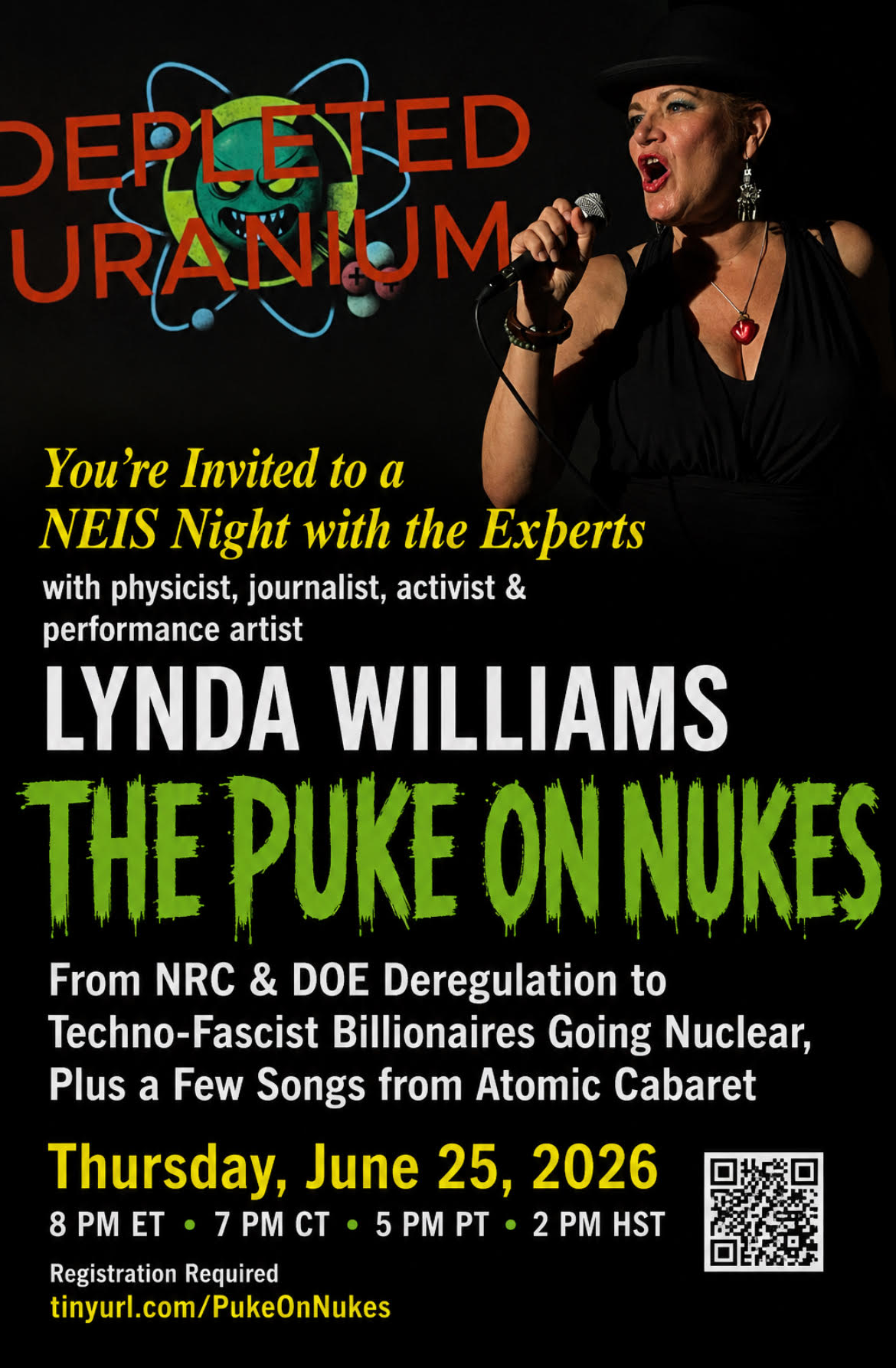
25 June- THE PUKE ON NUKES
Thursday, June 25, 2026
7pm Central Time (8pm ET, 6pm MT, 5pm PT) UTC – 5
From NRC & DOE Deregulation to Techno-Fascist Billionaires Going Nuclear, Plus a Few Songs from Atomic Cabaret REGISTER
26 June – Radiation Trainwreck at the NRC / Join the Protect Better Campaign – https://us02web.zoom.us/meeting/register/4ZlZ5_qLSHGiLSCg8FF6Bg#/registration


Cuba Is Not a Failed State – It Is a Besieged State
PETITION: “Global Appeal to Endorse Palestinian Right of Return of Refugees”
To see nuclear-related stories in greater depth and intensity – go to https://nuclearinformation.wordpress.com
-
Archives
- June 2026 (138)
- May 2026 (306)
- April 2026 (356)
- March 2026 (251)
- February 2026 (268)
- January 2026 (308)
- December 2025 (358)
- November 2025 (359)
- October 2025 (376)
- September 2025 (257)
- August 2025 (319)
- July 2025 (230)
-
Categories
- 1
- 1 NUCLEAR ISSUES
- business and costs
- climate change
- culture and arts
- ENERGY
- environment
- health
- history
- indigenous issues
- Legal
- marketing of nuclear
- media
- opposition to nuclear
- PERSONAL STORIES
- politics
- politics international
- Religion and ethics
- safety
- secrets,lies and civil liberties
- spinbuster
- technology
- Uranium
- wastes
- weapons and war
- Women
- 2 WORLD
- ACTION
- AFRICA
- Atrocities
- AUSTRALIA
- Christina's notes
- Christina's themes
- culture and arts
- Events
- Fuk 2022
- Fuk 2023
- Fukushima 2017
- Fukushima 2018
- fukushima 2019
- Fukushima 2020
- Fukushima 2021
- general
- global warming
- Humour (God we need it)
- Nuclear
- RARE EARTHS
- Reference
- resources – print
- Resources -audiovicual
- Weekly Newsletter
- World
- World Nuclear
- YouTube
-
RSS
Entries RSS
Comments RSS
 nuclear-news