Burning debris from Fukushima
Local government officials, rather than objectively scientifically determine whether it was safe or not for the people just accepted the central government political decision to have debris from Fukushima brought and burned in many municipalities and prefectures throughout Japan.
As a result not only the Fukushima people have inhaled radioactive nanoparticles, but also many other people in other locations.
The map below, from year 2012, shows locations where Fukushima debris was burned then, it was really spread all over Japan during the first 3 years, 2011, 2012, 2013.

Today incineration of Fukushima debris continues in 19 locations in Fukushima prefecture…

… and some of the Eastern Japan prefectures.
http://blog.goo.ne.jp/flyhigh_2012/e/1c0f117cf0b30ab535f2e74a4534ee3d
Fukushima Daiichi Unit 1-2 Vent Tower Sump Drain Sample Tested
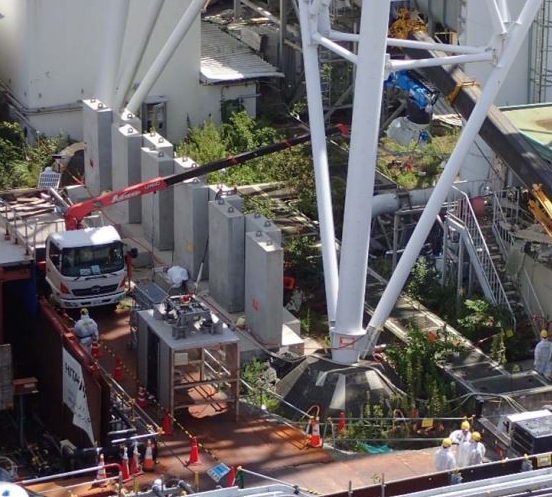
Tepco collected a sample from the sump drain connected to the Unit 1-2 vent tower.
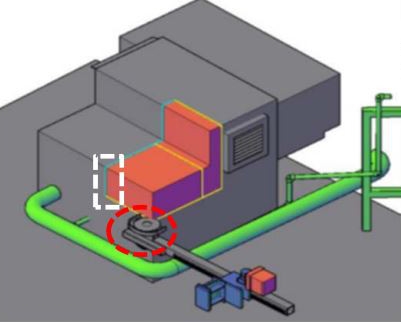
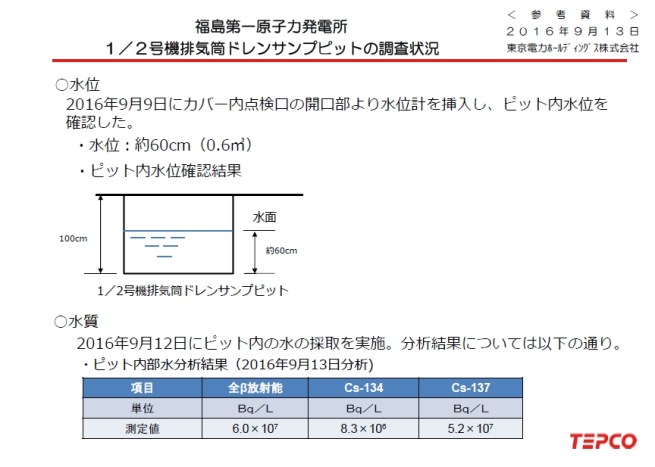
They found 60cm of water in the 100 cm deep container.
The water sample tested as follows:
beta radiation: 60,000,000 bq/liter
Cesium 134: 8,300,000 bq/liter
Cesium 137: 52,000,000 bq/liter
These readings are among the higher ranges of contaminated water found around the plant.
Radioactive Food And Water The New Normal In Japan
“We forget that the water cycle and the life cycle are one.” — Jacques Cousteau
“When drinking water, remember its source.” — Chinese proverb
“Ye shall know them by their fruits. Do men gather grapes of thorns, or figs of thistles?
Even so every good tree bringeth forth good fruit; but a corrupt tree bringeth forth evil fruit.
A good tree cannot bring forth evil fruit, neither can a corrupt tree bring forth good fruit.
Every tree that bringeth not forth good fruit is hewn down, and cast into the fire.
Wherefore by their fruits ye shall know them.” — Matthew 7:16-20, Holy Bible
Japan has an amazing food culture thanks in part to the rich volcanic soil and ample rainfall, despite the lack of spacious farms. As it stands, Japan can feed approximately one third of its population from domestic production.
If you watch Japanese TV from time to time, you will see a bizarre and disturbing fetishization of food that borders on the insane. The media and in turn consumers are obsessed with food as not only a source of nutrition and social cohesion (all for the good), but as art, fashion and status symbol, a celebration of gluttony and greed; an infantile obsession with eating for self satisfaction.
I love good and healthy food and appreciate Asian cuisine, but we eat to live, not live to eat. This social pathology affects other cultures as well as seen by increasing rates of extreme obesity especially in Western countries due to the proliferation of shopping malls, junk food and high fructose corn syrup.
How ironic then that a “high food” society like Japan would have to suffer the insult of radioactive contamination. This is not a tuna melt sandwich but a nuclear melt-down sundae.
The long-term consequences of the Fukushima nuclear disaster continue to linger years after the event. Anyone who studies Chernobyl will know that even after three decades radioactive contamination persists. Although a different type of accident occurred there, in the case of Fukushima it was three reactors that had meltdowns instead of one, and even possibly “melt throughs” referring to corium penetrating the reactor buildings in lateral and vertical outward paths.
In the days and months that followed the Fukushima disaster in March of 2011, many people became very worried about radioactive contamination of the food and water supply, especially from short-lived iodine isotopes, followed by the more persistent and harmful cesium, strontium and plutonium. There was much testing by both the government and independent researchers and organizations. Despite the best efforts of the Japanese government, nuclear industry and mainstream media to downplay the crisis, social media proved helpful in educating the public about how to reduce consumer risks.
The worst contamination occurred nearest the disaster site of the Fukushima No. 1 nuclear power station (Dai-ichi) which is located about half way up the east coast in Fukushima prefecture.
When I visited Hirano town with my colleague Yoichi Shimatsu in 2013, we traveled on foot within a few kilometers of the site. We observed abnormally high levels of radiation making it unfit for long-term habitation. Decontamination has taken place there but it is not a thorough removal method and basically shifts radiation from one spot to another in the environment.
Today, if you visit the Japanese government website of the Nuclear Regulation Authority (1) you can find a variety reports on radiation levels with most reports citing very low levels of radiation. How the government arrives at such measurements is not clearly explained at the website. Are their measurements reliable or being taken in a selective manner?
The government hopes to normalize the former evacuation zone by allowing and encouraging residents to move back as soon as possible, despite their reluctance to do so.
Only 28% of Fukushima children returning to former schools….
The majority of schoolboys and girls are opting to stay out of their hometowns due to anxiety over radiation exposure and resettlement at evacuation sites (2).
The problem of radioactive contamination is not unique to Fukushima but to the entire region including Tokyo, home of millions. Recall that 60 million people were originally exposed to radioactive fallout from the accident. Japan was actually lucky because the majority of radiation blew out to sea away from Honshu, not back over the population.
While the government moves to allow wide-scale fishing off the coast of Fukushima (3), and the NRA reports minimal levels of radiation leaking from the plant into the ocean, this confidence in a safe environment is undermined by a report from Greenpeace which found “[r]adiation along Fukushima rivers up to 200 times higher than Pacific Ocean seabed.”
Riverbank sediment samples taken along the Niida River in Minami Soma, measured as high as 29,800 Bq/kg for radiocaesium (Cs-134 and 137). The Niida samples were taken where there are no restrictions on people living, as were other river samples. At the estuary of the Abukuma River in Miyagi prefecture, which lies more than 90km north of the Fukushima Daiichi plant, levels measured in sediment samples were as high as 6,500 Bq/kg (4).
The rivers and ocean are connected and one wonders why the media does not report on these worrying hotspots. These dangerously high levels are indicative of the widely scattered hotspots in the region. In contrast, I could find no reports on the radiation levels at river banks and lake beds at the NRA website, only some reports on radiation found in dust, seawater and so on.
For example, one 2014 report states:
Air dose rates in both “Road and its adjacent area” and “Vacant land lot” have decreased more rapidly than we expected considering the physical half-life of radionuclide in 32 months after the accident. Air dose rates in “Road and its adjacent area” have decreased more rapidly than “Vacant land lot” in 32 months after the accident (5).
The Culture Of Cover Up: Spiked!
A few months ago I was shopping at my health food store in central Tokyo when I was asked by the clerk if I would like to be interviewed by a TV reporter from the Asahi News. I said “sure why not.” Japanese TV often has “man on the street” types of interviews and if you put the shop in a good light, you might appear in a news “infomercial.”
The reporter asked me various questions about why I buy organic food and I spoke proficiently in Japanese about the positive benefits of eating organic food including its superior nutrition and flavor, and because it contributes to the local farm economy.
But I shocked the guy at this point when I bluntly stated that due to the radioactive contamination from Fukushima nuclear disaster, I prefer to buy food produced from as far away as possible, never from the northeast or Tokyo regions of Japan. Food from the west and far southwest of Japan has substantially less radioactive contamination.
I’m not sure if the reporter was even aware of the issue, being a “news reporter” you think he might have been. But it was clear from his reaction that this was a one hundred percent taboo topic. Perhaps because I was a foreigner I was perceived as rude and barbaric for raising it, and I knew ahead of time that by mentioning this my interviewed would not be aired, and it wasn’t.
In fact, after the 3/11 accident my regular health food shop very noticeably shifted the origin of their produce away from the northeast and Tokyo and toward the west, southwest of Japan due to consumer concerns. As for the Asahi News who are an arm of the Abe Propaganda Establishment (APE), Fukushima must only be presented to the public as a pristine location whose products are reliable and safe. A recent study reported:
According to the agriculture ministry, 260,538 food items were inspected in fiscal 2015, and 99 percent of farm products had cesium of less than 25 becquerels per kilogram. The tests showed that 264 items, or 0.1 percent of the total, had cesium exceeding the upper limit. Of these, 259 — or 98 percent — were wild mushrooms, game meat, freshwater fish and other so-called “hard-to-control items” (6).
According to this official data, small numbers of becquerels could be – probably are – routinely entering the general food supply, not to mention the issue of Tokyo’s persistently contaminated water supply which contains minute amounts of cesium.
Radiation is the new normal.
Although the majority of food is under 25 bq per kg of contamination, we don’t know the exact amount. If you multiply that small amount by the number of items consumed daily the danger to health grows exponentially over time.
It is good that Japan has strict standards on radioactive food products — the US allows 1,500 becquerels per kilogram versus Japan’s 100 — but the ubiquitous and long-term aspect of the problem is an ongoing concern.
Richard Wilcox is a contributing editor and writer for the book: Fukushima: Dispossession or Denuclearization? (2014) and a Tokyo-based teacher and writer who holds a PhD in environmental studies. He is gratefully a periodic contributor to Activist Post.
References
1 – Nuclear Regulation Authority
http://radioactivity.nsr.go.jp/en/
2 – Only 28% of Fukushima children returning to former schools
http://mainichi.jp/english/articles/20160910/p2a/00m/0na/001000c
3 – 83 species now eligible for test fishing off coast of Fukushima
http://www.asahi.com/ajw/articles/AJ201609110002.html
4 – Radiation along Fukushima rivers up to 200 times higher than Pacific Ocean seabed – Greenpeace
http://www.greenpeace.org/international/en/press/releases/2016/Radiation-along-Fukushima-rivers-up-to-200-times-higher-than-Pacific-Ocean-seabed—Greenpeace/
5 – Monitoring air dose rates in road/its adjacent area and vacant land lot from a series of surveys by car-borne radiation detectors and survey meters after the Fukushima Daiichi NPS accident
https://www.nsr.go.jp/data/000067236.pdf
6 – 0.1% of food items exceed radiation limit 5 1/2 years after nuke disaster
http://mainichi.jp/english/articles/20160909/p2a/00m/0na/023000c
http://www.activistpost.com/2016/09/radioactive-food-water-new-normal-japan.html
Carlsbad, CA News Conference on the US sailors’ lawsuit against TEPCO
In March of 2011 as the still-ongoing Fukushima nuclear disaster began, the US Navy sent a fleet of ships led by the aircraft carrier USS Ronald Reagan to participate in an humanitarian earthquake and tsunami relief effort called Operation Tomadachi (‘friendship’ in Japanese).
Fleet commanders were not informed by either TEPCO, the nuclear plant operator, or by the Japanese government about the plume of radioactive fallout being blown out to sea from what was eventually admitted to be a triple meltdown.
US navel personnel and their ships and aircraft were repeatedly doused with radiation from the rapidly shifting plume, which contaminated equipment, the ships’ air & ventilation systems, as well as drinking and bathing water.
Today, over 400 of those irradiated personnel have joined in a lawsuit against TEPCO seeking medical costs and compensation for the serious health effects they are experiencing, including cancers, miscarriages and loss of multiple bodily functions. At least 7 so far have died of their radiation-induced illnesses.
The suit, filed in the US court in California by attorneys Charles and Cabral Bonner and Paul Garner, charges that TEPCO withheld information from the Navy that would have prevented the mass radiation exposure and is therefore responsible to pay reparations.
TEPCO’s army of high-priced lawyers have been fighting to block the suit for over 5 years, and the merits of the case have yet to be addressed by the court as plaintiffs continue to die.
Last May, when former Japanese Prime Minister heard of the sailors’ plight, he insisted on coming to the US to interview some of the victims himself.
After several days of face-to-face private conversations with a sampling of suit’s plaintiffs and their affected family members, Mr. Koizumi held a news conference announcing his support of the lawsuit. Fighting back tears, he described what he had learned in the interviews, and stated his intention to establish a fund to help with the plaintiffs’ medical expenses.
Pt. 1 Mr. Koizumi’s Statement
This is the first of three segments of a May 17, 2016 news conference held in Carlsbad, CA by Former Japanese Prime Minister Junichiro Koizumi on the US sailors’ lawsuit against TEPCO.
Pt. 2 – Q&A
This is the second of three segments of a May 17, 2016 news conference held in Carlsbad, CA by Former Japanese Prime Minister Junichiro Koizumi on the US sailors’ lawsuit against TEPCO.
Pt. 3 – A soldiers story – This is the third of three segments of a May 17, 2016 news conference held in Carlsbad, CA by Former Japanese Prime Minister Junichiro Koizumi on the US sailors’ lawsuit against TEPCO.
Fukushima Daiichi Reactor 1 Spraying & Cover Removal
Spraying of anti-scattering agent before taking down the wall panels of Unit 1 building cover at Fukushima Daiichi Nuclear Power Station.
Video taken on: August 4 and September 3, 2016
Produced by: TEPCO Holdings, Inc.
Fan club formed to promote Fukushima produce
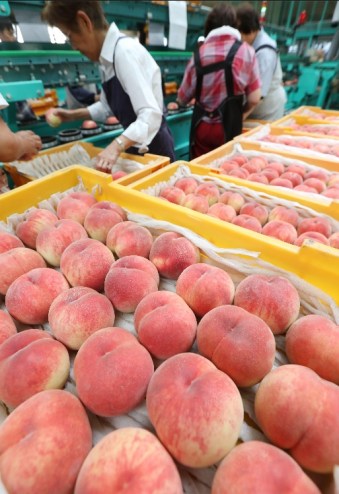
Nearly 5½ years after the 2011 Great East Japan Earthquake, a fan club was launched last week with an ambitious membership goal: gain 200,000 members by 2020 and boost the region’s products in the process.
Called Team Fukushima Pride, the project’s fans aren’t devoted to a pop idol group, but instead the local specialties of Fukushima Prefecture.
Already it has the support of organizations such as Yahoo Japan Corp. and Synergy Marketing Inc., which runs the fan club for professional baseball team Tokyo Yakult Swallows.
“Many people want to support Fukushima products but don’t know how to purchase them. I would like to organize a community for them and increase fans,” reconstruction minister Hiroaki Nagasawa, whose ministry spearheads the project, said.
At the heart of the project is a website that sells local products.
Hayato Ogasawara, spokesman for Fukushima Challenge Hajimeppe, an organization tasked with running the fan club and website, said the time of begging people to buy Fukushima products is over. Instead, the focus is to make Fukushima a brand of high-quality farm and marine produce.
“Rather than stressing the safety of the products, we want to inform people simply how great producers and products” in Fukushima are, said Ogasawara.
He said since the disaster the prefecture has been working to assure the safety of its local produce.
“We don’t conduct our own (radiation) checks on the products, but if asked we would explain the efforts of the prefecture,” he said.
Although many people supported Fukushima products in 2011 in the wake of the quake and tsunami, and subsequent radiation crisis at Tokyo Electric Power Company Holdings Inc.’s Fukushima No. 1 nuclear power plant, Ogasawara said sales figures have declined as a result of what he describes as the spread of misinformation about food safety, and due to diminished public focus on the area.
The Fukushima Prefectural Government continues to monitor radiation levels of the prefecture’s food products, ranging from vegetables and fruit to seafood. Among the 9,445 samples of 374 food items checked between April 1 and Aug. 31, just three samples were found to contain radioactive cesium exceeding the government limit of 100 becquerels per kilogram, according to the prefecture. The items that exceeded the limit were banned from distribution.
“The market value of peaches grown in Fukushima is roughly 80 percent of the price levels before the disaster,” Ogasawara said.
“It’s easy to beat the price down if the product is made in Fukushima. Our mission is to bring the price up and eventually develop fan bases for each producer there.”
Available for purchase are fruit, vegetables, sake and traditional crafts produced in the prefecture.
While the website allows anyone to make purchases, fan club members also have access to exclusive items.
Admission is free, and members are also offered opportunities to interact with Fukushima farmers through a special Facebook group and harvesting tours.
“After the disaster, I felt what we farmers could do by ourselves (was) very limited,” said Emi Kato, 35, a rice farmer in the city of Fukushima, who is involved in the project.
“But now there is a platform, which connects farmers and consumers. I’d like to keep on promoting the charm of Fukushima products.”
Snowman Pear from Fukushima
Farmers are surprised to find this snow man shaped pear.
It’s about 3 cm diameter, and leaves are growing from the hollow.
“It’s not possible to have leaves on a fruit. I wonder why…” said Mr. Sato who found this pear.
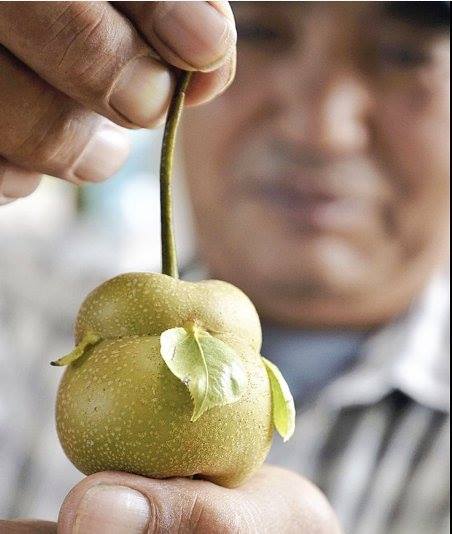
福島市笹谷の佐藤恒男さん(68)のナシ畑で、だるまのような形をしたナシが収穫され、近隣の農家から驚きの声が上がっている。
ナシは直径3センチほど。実の中ほどがくぼんでおり、くぼみから葉が生えている。
佐藤さんによると「実から葉が出ることは普通はあり得ない。なぜこんな実ができたのか不思議」と話した。
Fukushima plant building exposed as TEPCO opens old wounds

The outer layer of the crippled No. 1 reactor building at the Fukushima No. 1 nuclear power plant is exposed as Tokyo Electric Power Co. removes one of the panels covering the facility at 6:22 a.m. on Sept. 13.
The devastated outer layer of Fukushima No. 1 nuclear power plant’s No. 1 reactor building has been exposed for the first time in almost five years in the painstaking reactor decommissioning process.
Plant operator Tokyo Electric Power Co. began removing on Sept. 13 the exterior walls of the cover installed around the structure to prevent the dispersal of radioactive materials on Sept. 13.
Shortly past 6 a.m., a large crane began removing a massive piece of the cover installed around the reactor building. The panel dismantled that day measured 23 by 17 meters and weighed 20 tons.
The cover was installed in October 2011 as a temporary measure after a nuclear meltdown occurred following the Great East Japan Earthquake and tsunami in March that year. The meltdown caused a hydrogen explosion, blowing the walls off the building.
Once the cover is dismantled, the operator can assess the state of the building’s interiors and remove the debris fallen onto the spent fuel pool inside.
“Steady progress is necessary in reconstruction, but we hope they will carry on the procedure with safety as the No. 1 priority,” said a Fukushima prefectural government official.
TEPCO said that it plans to remove the remaining 17 panels of the covering by the end of the year. The portion covering the roof has already been removed.
Once the cover is removed, the utility will begin drawing up plans to remove the 392 fuel assemblies from the spent fuel pool and melted nuclear fuel from inside the building.
The plant operator said that it plans to be extra careful during the procedure. It will shroud the building in tarpaulins once the cover is removed as a precautionary measure against dust and other materials containing radioactive materials from being carried aloft by the wind.
The utility and central government’s joint schedule for the decommissioning process of the reactor states that the removal of the fuel rods from the pool will start in fiscal 2020.
http://www.asahi.com/ajw/articles/AJ201609130070.html
TEPCO resumes removal of Fukushima plant cover
The operator of the Fukushima Daiichi nuclear power plant has resumed work to remove a temporary cover from a damaged reactor building.
Tokyo Electric Power Company had covered the partially collapsed No. 1 reactor building to prevent radioactive materials generated by the 2011 accident from spreading.
It started the removal process in July last year, the first step in the retrieval of spent nuclear fuel from a storage pool in the building.
The operation was suspended after sheets from the roof area were removed to assess the building’s condition.
On Tuesday, cranes were used to detach the panels from the side of the building, and the debris inside was exposed for the first time in 5 years. Each panel is 23 by 17 meters and weighs 20 tons.
TEPCO officials say they will spray chemicals to ensure that radioactive substances do not disperse even in strong winds.
They say they plan to complete the operation by the end of November, so that the debris can be removed. The removal of spent fuel is due to begin in 2021.
Industry ministry official Masato Kino who monitored the progress at the scene said difficult procedures will continue, but the first step has been taken. He said he hopes to carefully and safely proceed.
http://www3.nhk.or.jp/nhkworld/en/news/20160913_28/
Removal of the top southwest panel off reactor 1 today
2016.09.13_06.00-09.00.Unit1 side
Fukushima Backlash Hits Japan Prime Minister
Nuclear power may never recover its cachet as a clean energy source, irrespective of safety concerns, because of the ongoing saga of meltdown 3/11/11 at Fukushima Daiichi Nuclear Power Plant. Over time, the story only grows more horrific, painful, deceitful. It’s a story that will continue for generations to come.
Here’s why it holds pertinence: As a result of total 100% meltdown, TEPCO (Tokyo Electric Power Company) cannot locate or remove the radioactive molten core or corium from the reactors. Nobody knows where it is. It is missing. If it is missing from within the reactor structures, has it burrowed into the ground? There are no ready answers.
And, the destroyed nuclear plants are way too radioactive for humans to get close enough for inspection. And, robotic cameras get zapped! Corium is highly radioactive material, begging the question: If it has burrowed thru the containment vessel, does it spread underground, contaminating farmland and water resources and if so, how far away? Nobody knows?
According to TEPCO, removing the melted cores from reactors 1,2 and 3 will take upwards of 20 years, or more, again who knows.
But still, Japan will hold Olympic events in Fukushima in 2020 whilst out-of-control radioactive masses of goo are nowhere to be found. TEPCO expects decades before the cleanup is complete, if ever. Fortunately, for Tokyo 2020 (the Olympic designation) radiation’s impact has a latency effect, i.e., it takes a few years to show up as cancer in the human body.
A week ago on September 7th, Former PM Junichiro Koizumi, one of Japan’s most revered former prime ministers, lambasted the current Abe administration, as well as recovery efforts by TEPCO. At a news conference he said PM Shinzō Abe lied to the Olympic committee in 2013 in order to host the 2020 Summer Olympics in Japan.
“That was a lie,” Mr Koizumi told reporters when asked about Mr Abe’s remark that Fukushima was “under control,” Abe Lied to IOC About Nuke Plant, ex-PM Says, The Straits Times, Sep 8, 2016. The former PM also went on to explain TEPCO, after 5 years of struggling, still has not been able to effectively control contaminated water at the plant.
According to The Straits Times article: “Speaking to the IOC in September 2013, before the Olympic vote, PM Abe acknowledged concerns but stressed there was no need to worry: “Let me assure you, the situation is under control.”
PM Abe’s irresponsible statement before the world community essentially puts a dagger into the heart of nuclear advocacy and former PM Koizumi deepens the insertion. After all, who can be truthfully trusted? Mr Koizumi was a supporter of nuclear power while in office from 2001-2006, but he has since turned into a vocal opponent.
Speaking at the Foreign Correspondents Club of Japan in Tokyo, Mr Koizumi said: “The nuclear power industry says safety is their top priority, but profit is in fact what comes first… Japan can grow if the country relies on more renewable energy,” (Ayako Mie, staff writer, Despite Dwindling Momentum, Koizumi Pursues Anti-Nuclear Goals, The Japan Times, Sept. 7, 2016).
Mr Koizumi makes a good point. There have been no blackouts in Japan sans nuclear power. The country functioned well without nuclear.
Further to the point of nuclear versus nonnuclear, Katsunobu Sakurai, mayor of Minamisoma, a city of 70,000 located 25 km north of Fukushima No. 1 nuclear plant, at a news conference in Tokyo, said: “As a citizen and as a resident of an area affected by the nuclear power plant disaster, I must express great anger at this act… it is necessary for all of Japan to change its way of thinking, and its way of life too – to move to become a society like Germany, which is no longer reliant on nuclear power,” (Sarai Flores, Minamisoma Mayor Sees Future for Fukushima ‘Nonnuclear’ City in Energy Independence, The Japan Times, March 9, 2016).
In March of 2015, Minamisoma declared as a Nonnuclear City, turning to solar and wind power in tandem with energy-saving measures.
Meanwhile, at the insistence of the Abe administration, seven nuclear reactors could restart by the end of FY2016 followed by a total of 19 units over the next 12 months (Source: Japanese Institute Sees 19 Reactor Restarts by March 2018, World Nuclear News, July 28, 2016).
Greenpeace/Japan Discovers Widespread Radioactivity
One of the issues surrounding the Fukushima incident and the upcoming Olympics is whom to trust. Already TEPCO has admitted to misleading the public about reports on the status of the nuclear meltdown, and PM Abe has been caught with his hand in the proverbial cookie jar, but even much worse, lying to a major international sports tribunal. His credibility is down the drain.
As such, maybe third party sources can be trusted to tell the truth. In that regard, Greenpeace/Japan, which does not have a vested interest in nuclear power, may be one of the only reliable sources, especially since it has boots on the ground, testing for radiation. Since 2011, Greenpeace has conducted over 25 extensive surveys for radiation throughout Fukushima Prefecture.
In which case, the Japanese people should take heed because PM Abe is pushing hard to reopen nuclear plants and pushing hard to repopulate Fukushima, of course, well ahead of the 2020 Tokyo Olympics since there will be events held in Fukushima Prefecture. After all, how can one expect Olympians to populate Fukushima if Japan’s own citizens do not? But, as of now to a certain extent citizens are pushing back. Maybe they instinctively do not trust their own government’s assurances.
But, more chilling yet, after extensive boots-on-the-ground analyses, Greenpeace issued the following statement in March 2016: “Unfortunately, the crux of the nuclear contamination issue – from Kyshtym to Chernobyl to Fukushima- is this: When a major radiological disaster happens and impacts vast tracts of land, it cannot be ‘cleaned up’ or ‘fixed’.” (Source: Hanis Maketab, Environmental Impacts of Fukushima Nuclear Disaster Will Last ‘decades to centuries’ – Greenpeace, Asia Correspondent, March 4, 2016).
That is a blunt way of saying sayonara to habitation on radioactive contaminated land. That’s why Chernobyl is a permanently closed restricted zone for the past 30 years.
As far as “returning home” goes, if Greenpeace/Japan ran the show rather than PM Abe, it appears they would say ‘no’. Greenpeace does not believe it is safe. Greenpeace International issued a press release a little over one month ago with the headline: Radiation Along Fukushima Rivers up to 200 Times Higher Than Pacific Ocean Seabed – Greenpeace Press Release, July 21, 2016.
Here’s what they discovered: “The extremely high levels of radioactivity we found along the river systems highlights the enormity and longevity of both the environmental contamination and the public health risks resulting from the Fukushima disaster,” says Ai Kashiwagi, Energy Campaigner at Greenpeace Japan.
“These river samples were taken in areas where the Abe government is stating it is safe for people to live. But the results show there is no return to normal after this nuclear catastrophe,” claims Kashiwagi.
“Riverbank sediment samples taken along the Niida River in Minami Soma, measured as high as 29,800 Bq/kg for radiocaesium (Cs-134 and 137). The Niida samples were taken where there are no restrictions on people living, as were other river samples. At the estuary of the Abukuma River in Miyagi prefecture, which lies more than 90km north of the Fukushima Daiichi plant, levels measured in sediment samples were as high as 6,500 Bq/kg” (Greenpeace).
The prescribed safe limit of radioactive cesium for drinking water is 200 Bq/kg. A Becquerel (“Bq”) is a gauge of strength of radioactivity in materials such as Iodine-131 and Cesium-137 (Source: Safe Limits for Consuming Radiation-Contaminated Food, Bloomberg, March 20, 2011).
“The lifting of evacuation orders in March 2017 for areas that remain highly contaminated is a looming human rights crisis and cannot be permitted to stand. The vast expanses of contaminated forests and freshwater systems will remain a perennial source of radioactivity for the foreseeable future, as these ecosystems cannot simply be decontaminated” (Greenpeace).
Still, the Abe administration is to be commended for its herculean effort to try to clean up radioactivity throughout Fukushima Prefecture, but at the end of the day, it may be for naught. A massive cleanup effort is impossible in the hills, in the mountains, in the valleys, in the vast forests, along riverbeds and lakes, across extensive meadows in the wild where radiation levels remain deadly dangerous. Over time, it leaches back into decontaminated areas.
And as significantly, if not more so, what happens to the out-of-control radioactive blobs of corium? Nobody knows where those are, or what to do about it. It’s kinda like the mystery surrounding black holes in outer space, but nobody dares go there.
Fukushima is a story for the ages because radiation doesn’t quit. Still, the Olympics must go on, but where?
http://www.counterpunch.org/2016/09/12/fukushima-backlash-hits-japan-prime-minister/
83 species now eligible for test fishing off coast of Fukushima
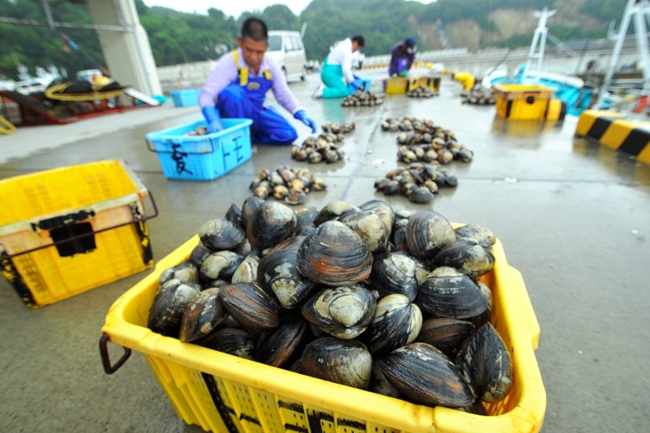
These surf clams, seen here in June at Hisanohama Port in Iwaki, Fukushima Prefecture, were caught during test fishing.
IWAKI, Fukushima Prefecture–Ten species were added to the list of catches eligible for test fishing off the coast of Fukushima Prefecture, but lingering concerns about radiation are keeping sales of such marine products low.
Still, the latest additions, which include the Japanese flounder, the white-spotted conger eel and the spotted halibut, have encouraged fishermen who have been struggling to rebuild their lives since the Fukushima nuclear disaster started in March 2011.
The Fukushima Prefectural Federation of Fisheries Cooperative Associations on Aug. 25 added the 10 species to bring the total number eligible for test fishing to 83. The additions were approved during a meeting in Iwaki of the prefectural council for the rebuilding of regional fisheries.
“I think the 83 fish species accounted for about 70 percent of our pre-disaster hauls,” said Tetsu Nozaki, president of the prefectural fisheries federation. “I am placing particularly high hopes for a great boost in the value of our catches from the resumed fishing of Japanese flounder.”
Test fishing for flounder started on Sept. 2.
The Soma-Futaba fisheries cooperative association, which is part of the prefectural federation, plans to resume catches of white-spotted conger eel in September. But the Iwaki city fisheries cooperative association has decided to wait until water temperatures are low enough to ensure freshness of the white-spotted conger eel.
Test fishing has expanded because the environment of the sea has significantly improved since the initial impact of the nuclear disaster. Radioactivity levels in fish caught there now stably remain within the safety limit for many species.
Despite extensive testing to ensure safety of Fukushima marine products, many dealers are still reluctant to buy the species.
Fish and shellfish from Fukushima Prefecture are being shipped to various parts of Japan, such as the Tohoku, Kanto, Chubu and Hokuriku regions. Prices of seafood items from Fukushima Prefecture are not much lower than those from other prefectures, according to Yoshiharu Nemoto, head of the fishing ground environment division with the Fukushima Prefectural Fisheries Experimental Station.
Yet few dealers are bidding for Fukushima marine products. If this trend continues with more Fukushima fish reaching the market, unsold leftovers from the prefecture could start to pile up and project a negative image, Nemoto said.
“It will become more necessary than ever to make publicity efforts, such as regularly releasing data concerning safety,” he said.
Test fishing began in June 2012, 15 months after the Great East Japan Earthquake and tsunami caused the triple meltdown at the Fukushima No. 1 nuclear power plant. Initially, only three species were covered: two kinds of octopuses and one type of shellfish.
While coverage has since expanded in stages, the latest addition of 10 species at one time is second only to the addition of 12 species, including brown sole and red sea bream, in August 2015.
Since April 2011, the Fukushima prefectural government has been monitoring the impact of radioactive fallout from the Fukushima No. 1 nuclear plant on fish and shellfish. The radiation tests, which cover about 200 samples every week, have so far been conducted on 38,000 samples of 184 species.
The concentration of radioactive cesium initially exceeded the central government’s safety limit of 100 becquerels per kilogram in most of the fish and shellfish surveyed. But the concentration has declined from year to year, and no sample has exceeded the safety limit since April 2015.
In more than 90 percent of the samples tested in July 2015 and later, radioactivity levels were below the detection limit.
Radioactivity levels in fish caught near the Fukushima No. 1 nuclear plant are also falling.
The central government’s Japan Fisheries Research and Education Agency (FRA) on Aug. 25 released data on radioactivity levels in Japanese flounder caught in July in waters around the crippled nuclear plant.
The FRA said its high-precision tests, with a lower limit of detection set at a mere 1 becquerel per kg, found radioactivity levels of less than 10 becquerels per kg in all 41 individual organisms tested. More than 90 percent of them measured less than 5 becquerels per kg.
Catches from test fishing have continued to grow: 122 tons in 2012, 406 tons in 2013, 742 tons in 2014 and 1,512 tons in 2015.
But last year’s catch was only 5.8 percent of the annual catch of 26,050 tons averaged over the decade preceding the 2011 disaster.
Fishermen are holding out high hopes for more fish species being eligible for catches.
Only 28% of Fukushima children returning to former schools
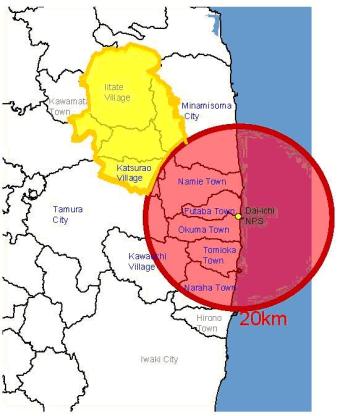
Only 28 percent of children are returning to their public elementary and junior high schools in five towns and villages in Fukushima Prefecture following the lifting of evacuation orders imposed after the 2011 nuclear disaster, the Mainichi Shimbun has learned. The majority of schoolboys and girls are opting to stay out of their hometowns due to anxiety over radiation exposure and resettlement at evacuation sites.
The trend raises concerns that the number of young people in these towns and villages will dwindle and the survival of the municipalities is at stake.
The five municipalities are the towns of Hirono and Naraha and the villages of Iitate, Kawauchi and Katsurao. They set up temporary elementary and junior high schools at evacuation sites after the March 2011 earthquake and tsunami disaster triggered the multiple core meltdowns at the Fukushima No. 1 Nuclear Power Plant. Hirono and Kawauchi reopened their public schools in 2012 and Naraha and Katsurao will follow suit in April 2017. Iitate plans to reopen its schools in April 2018, one year after the evacuation order is lifted.
Once these public schools have reopened, the temporary schools at evacuation sites are shut down, prompting children from the five affected municipalities to choose one of three options — return to their hometowns, commute to their former schools by school bus or other means, or attend schools at evacuation sites.
According to the Mainichi study, 55 percent of 259 pupils and students from Hirono and Kawauchi have returned to their former elementary and junior high schools because the evacuation orders were relatively short. But only 139 students or 15 percent of students from Naraha, Katsurao and Iitate responded to a survey in 2015-2016 that they would return to their original schools. Only three students, or 4 percent, of 74 students from Katsurao said they would return to their hometown schools.
As for students from Naraha, 17 percent of students replied that they would attend their hometown schools but half of them hoped to commute to their hometown schools from outside the town. If young evacuees in Iwaki, a major evacuation destination, try to commute by train and bus, a one-way trip takes one hour. An official of the Naraha board of education expressed concerns that these students are really serious about commuting to their hometowns. A Kawauchi village official says that the returns of child-rearing generations are the village’s lifeline. These municipalities operate school buses to encourage the evacuees to return to their hometowns as a stopgap measure rather than as a permanent solution.
Yusuke Yamashita, an associate professor of urban and rural sociology at Tokyo Metropolitan University, says, ”There are some parents who send their children to temporary schools before eventually returning to their hometowns. If these municipalities reopen their schools hastily, some families may abandon plans to return home (out of safety fears). It is important for the communities to offer as many options as possible by keeping temporary schools.”
http://mainichi.jp/english/articles/20160910/p2a/00m/0na/001000c
Science Subverted by Politics in Fukushima
The high rate of thyroid cancer occuring in Fukushima is not caused by radiation. Or so the government would like everyone to believe!
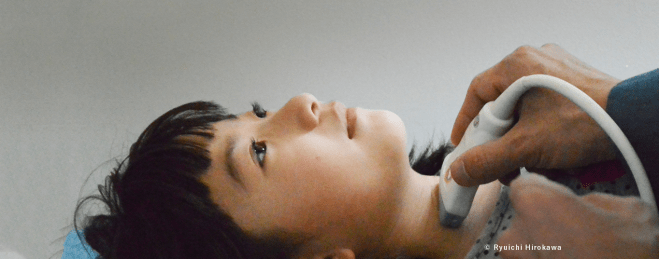
Study draws a blank on thyroid cancer and 2011 nuclear disaster
Researchers have found no correlation between radiation exposure and the incidence rate of thyroid cancer among 300,000 children living in Fukushima Prefecture at the time of the 2011 nuclear disaster.
But the team at Fukushima Medical University, which carried out the study, cautioned that the health of local children should continue to be monitored to be more definitive.
“At the present stage, we have found no evidence pointing to any relationship between doses of external radiation resulting from the nuclear accident and the thyroid cancer rate,” said Tetsuya Ohira, a professor of epidemiology at the university. “But we need to continue to look into the situation.”
The study involves 300,476 children in Fukushima Prefecture who were aged 18 or younger when the Fukushima No. 1 nuclear power plant went into a triple meltdown in March 2011 after the Great East Japan Earthquake and tsunami.
The children underwent the first round of health checks between October 2011 and June 2015.
Of the total, 112 were tentatively diagnosed as having thyroid cancer.
There are two types of radiation exposure: external exposure in which a person is exposed to radiation in the atmosphere, and internal exposure in which a person is exposed through the intake of contaminated food, water and air.
For the study, municipalities in the prefecture were classified into three groups based on the estimate for residents’ external exposure. That data was obtained during a prefecture-wide health survey carried out after the disaster occurred.
The first group is a zone where people with an accumulative dose of 5 millisieverts or more represented 1 percent or more of the population there. The second group is a zone where people with an accumulative dose of up to 1 millisievert account for 99.9 percent or more of the population. The third group is a zone that falls into neither of the other two groups.
The scientists looked at the incidence rate for thyroid cancer in each group and concluded there is almost no difference among the groups.
The number of subjects diagnosed with thyroid cancer was 48 per 100,000 people in the first group, 41 in the second group and 36 in the third group.
The finding was similar to a separate survey in which researchers looked into the possible association among 130,000 or so children whose radiation exposure had been estimated.
Hokuto Hoshi, head of a health survey panel set up at the prefectural government after the nuclear disaster, said he will closely follow the results of future studies to offer a more conclusive finding.
“The outcome of the recent study provides one indication in making any overall judgment,” said Hoshi, who also serves as vice chairman of the Fukushima Medical Association. “The study is substantial and we are going to pay attention to the findings of further studies.”
http://www.asahi.com/ajw/articles/AJ201609100031.html
Fukushima railway decontamination waste to total 300,000 cubic meters

FUKUSHIMA – An estimated 300,000 cubic meters of waste will be generated as a result of radioactive decontamination work in a suspended section of East Japan Railway Co.’s Joban Line in Fukushima Prefecture, Jiji Press learned Saturday.
Decontamination work is going on to restore train services in the section between Namie and Tatsuta, both in the nuclear disaster-hit northeastern prefecture, by spring 2020. But how to secure enough space to temporarily keep such waste, including soil, is a difficult question.
Due to the 2011 nuclear accident at Tokyo Electric Power Company Holdings Inc.’s Fukushima No. 1 power station, the Joban Line is still suspended between Hamayoshida, in the Miyagi Prefecture town of Watari, and Soma, in Fukushima Prefecture, as well as between Odaka, in the Fukushima town of Minamisoma, and Tatsuta, in the Fukushima town of Naraha.
The Hamayoshida-Soma section is scheduled to reopen in December this year and part of the Odaka-Tatsuta section, between Odaka and Namie, in spring 2017. Ahead of the reopening, work there to replace stones under rail tracks and soil and cut trees and grass along the tracks has almost finished.
In the remaining Namie-Tatsuta portion, decontamination work is proceeding so that train services will be resumed between Tomioka, also in Fukushima Prefecture, and Tatsuta in 2017. Decontamination work is also taking place between Namie and Tomioka, a portion that runs through the heavily contaminated no-go zone so services can be resumed by the spring of 2020.
Currently, bags filled with decontamination waste are stored along the rail tracks. They must be transferred elsewhere before restoration work starts.
The Environment Ministry has started negotiations with owners of land near the railway line. The ministry has already obtained agreement from some owners on the use of land.
But it is still difficult to secure enough land to store 300,000 cubic meters of waste.
The ministry is also considering utilizing locations where radioactive waste from decontamination work across Fukushima Prefecture is currently being kept. The places will become available after the waste is transferred to an interim waste storage complex near the Fukushima power plant.
Fund started to help Fukushima thyroid cancer patients cover expenses

A group comprising medical and legal experts announced Friday it has launched a fund to provide financial support to children who were diagnosed with thyroid cancer after the 2011 nuclear meltdowns in Fukushima Prefecture.
The group, named 3/11 Children’s Fund for Thyroid Cancer, will start accepting donations from Sept. 20, aiming to raise at least ¥20 million. The amount could provide at least ¥50,000 each for 200 to 400 people, it said.
Donated funds will be used primarily to cover medical expenses for thyroid cancer patients in Fukushima and neighboring prefectures, it said. The group will announce more details in November on the criteria that will be used to determine who is eligible to receive the aid before it starts accepting applications.
“They are struggling to pay medical bills,” Hiroyuki Kawai, a lawyer and one of the founding members of the group, said at a news conference in Tokyo. “I don’t think ¥50,000 will be enough for them, but they are impoverished and are struggling, and even that amount will be of help.”
Currently, the medical expenses of children diagnosed with thyroid cancer in Fukushima Prefecture are covered by the prefectural government.
Patients, however, have to initially pay their medical expenses out of pocket until they start receiving refunds from the prefecture, placing great financial strain on many families, another member of the group said.
In addition to that, some parents often have to take leave from work to accompany their children during hospital visits, which also includes paying for travel expenses, they said.
According to the group, although medical treatment for thyroid cancer is covered by public health insurance, the patients still have to pay about ¥10,000 per examination and roughly ¥150,000 for surgical procedures. And if patients have to undergo endoscopic surgery, it would cost them an additional ¥300,000, it said.
Since October 2011, the Fukushima government has conducted thyroid screenings for some 380,000 children who were aged 18 or younger.
By the end of March, a total of 173 children were diagnosed with suspected thyroid cancer. Of those, 131 were confirmed to have the cancer after undergoing surgery.
A panel of experts under the prefectural government said in an interim report released in March that those thyroid cancer cases were unlikely to be radiation-induced.
The panel said the amount of radiation released was lower than in the 1986 Chernobyl accident, where more than 6,000 children were diagnosed with the cancer by 2005, and noted that no cancer was found among children aged under 5 at the time of the disaster who are more vulnerable to radiation exposure.
Iwaki mayor makes formal request for city to host baseball, softball games during 2020 Olympics
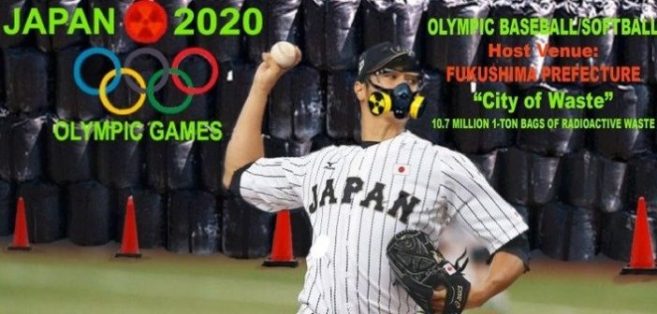
Iwaki Mayor Toshio Shimizu on Friday presented a request to 2020 Tokyo Olympic organizers, seeking to host a baseball game and a softball game in the city in Fukushima Prefecture.
Shimizu submitted the request to Yoshiro Mori, president of the Tokyo Olympic and Paralympic organizing committee, and Toshiei Mizuochi, senior vice minister of both the sports ministry and the Cabinet Office.
The request comes as Tokyo Olympic organizers are arranging to stage one first-round game each for baseball and softball in Fukushima Prefecture, one of the areas hardest hit by the 2011 earthquake and tsunami disaster, as part of reconstruction efforts.
They are said to be considering Iwaki, Fukushima and Koriyama cities as candidate sites.
The Iwaki municipal government wants the games played at Iwaki Green Stadium, which is occasionally used for Japanese professional baseball games and was the venue of the Under-15 World Cup baseball competition in July and August.
Shimizu expressed hope that the stadium will be chosen as an Olympic venue as that would “give hope and courage” to survivors of the quake and tsunami which also triggered a nuclear accident in the prefecture.
The main ballpark for the 2020 Summer Games is set to be Yokohama Stadium in Kanagawa Prefecture.
In the request, Shimizu and the mayors of eight nearby towns and villages are also requesting that the Olympic torch relay run on National Route 6 in the coastal area of Fukushima Prefecture.
1 This Month


Website of the Week

New book – https://www.amazon.com/dp/1923372157?utm_source=substack&utm_medium=email
Now until to February 10, 2026 Radioactive waste storage in France: the debate is finally open! How to participate?
-
Archives
- January 2026 (118)
- December 2025 (358)
- November 2025 (359)
- October 2025 (377)
- September 2025 (258)
- August 2025 (319)
- July 2025 (230)
- June 2025 (348)
- May 2025 (261)
- April 2025 (305)
- March 2025 (319)
- February 2025 (234)
-
Categories
- 1
- 1 NUCLEAR ISSUES
- business and costs
- climate change
- culture and arts
- ENERGY
- environment
- health
- history
- indigenous issues
- Legal
- marketing of nuclear
- media
- opposition to nuclear
- PERSONAL STORIES
- politics
- politics international
- Religion and ethics
- safety
- secrets,lies and civil liberties
- spinbuster
- technology
- Uranium
- wastes
- weapons and war
- Women
- 2 WORLD
- ACTION
- AFRICA
- Atrocities
- AUSTRALIA
- Christina's notes
- Christina's themes
- culture and arts
- Events
- Fuk 2022
- Fuk 2023
- Fukushima 2017
- Fukushima 2018
- fukushima 2019
- Fukushima 2020
- Fukushima 2021
- general
- global warming
- Humour (God we need it)
- Nuclear
- RARE EARTHS
- Reference
- resources – print
- Resources -audiovicual
- Weekly Newsletter
- World
- World Nuclear
- YouTube
-
RSS
Entries RSS
Comments RSS
 nuclear-news