Brian Leishman MP blasts party’s own nuclear policy
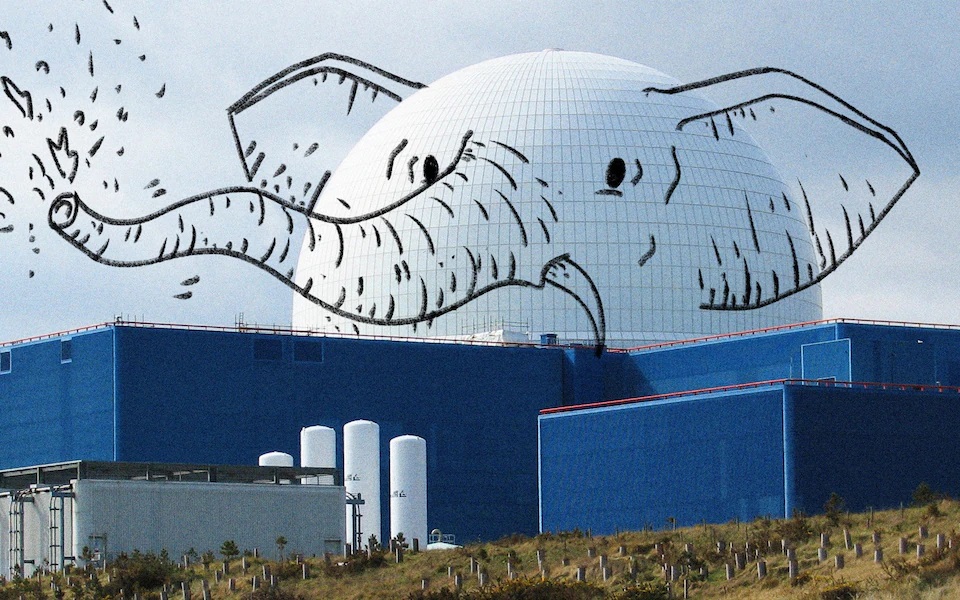
Sizewell B, also in Suffolk, uses around 800,000 litres of fresh mains water per day, while Sizewell C is estimated to need more than 2 million litres per day by the time it is completed, according to the Guardian.
4th August, 26, By Lucy Jackson,
https://www.alloaadvertiser.com/news/26435794.scottish-labour-mp-blasts-partys-nuclear-policy/
A Scottish Labour MP has blasted his own party’s policy on nuclear energy.
Brian Leishman, MP for Alloa and Grangemouth, said Labour’s nuclear policy was “madness” in the face of the climate crisis.
Leishman made the comments in response to reports that Romania has been forced to “blast” the Danube river to help a nuclear plant as a result of the heatwave.
Romania, like much of Europe, has been subject to scorching temperatures, with water levels in the Danube reportedly dropping to just 23 centimetres.
Channel 4 News reports that the Romanian navy has blown up rocks at the side of the Danube, where it splits, in order to get more water flowing down the main branch of the river towards a nuclear power plant.
In response to the news report, Leishman wrote on Twitter/X: “We are suffering from climate crisis/extreme weather.
“Parts of the UK have declared drought status yet there is a political push for nuclear energy requiring huge amounts of water to operate.
“And AI data centres would require incredible amounts of water.
“Both are madness!”
We are suffering from climate crisis/extreme weather.
Parts of the UK have declared drought status yet there is a political push for nuclear energy requiring huge amounts of water to operate.
And AI data centres would require incredible amounts of water.
Both are madness! https://t.co/mDbeQ13XLP— Brian Leishman (@BrianLeishmanMP) August 4, 2026
The Labour Party supports nuclear energy as part of its election pledge to “make Britain a clean energy superpower”.
It has vowed to build new nuclear power stations, such as Sizewell C in Suffolk, which is currently under construction and is expected to cost around £38 billion.
Nuclear power plants consume vast amounts of water, which is partly used to cool the reactor core in order to prevent meltdowns.
Sizewell B, also in Suffolk, uses around 800,000 litres of fresh mains water per day, while Sizewell C is estimated to need more than 2 million litres per day by the time it is completed, according to the Guardian.
Last month, Labour advocated for more nuclear power stations to be built in Scotland, with the UK Government publishing a report highlighting six areas where plants could be built “should the policy position of the Scottish Government change”.
The Scottish Government opposes new nuclear developments and has insisted the focus should instead be on renewable energy, with both Dounreay Nuclear site in Caithness and Hunterston Nuclear Power Plant in North Ayrshire currently being decommissioned.
Elsewhere, Torness Nuclear Power Plant in East Lothian is scheduled to end operations in 2030.
The Labour Party has been approached for comment.
Nuclear industry and public invited to shape new regulatory principles for future UK nuclear
The Office for Nuclear Regulation (ONR) is leading a major review of its
key regulatory frameworks which evaluate the safety of nuclear facilities
– and the whole sector can play its part in this milestone industry
change. The Safety Assessment Principles (SAPs) support inspectors in
assessing nuclear safety cases submitted by dutyholders and requesting
parties. From today (Monday, 27 July), ONR is opening a public consultation
on the SAPs revision and wants to hear from nuclear operators, industry
bodies, the public and all those with an interest in nuclear safety. Your
views will help ensure the updated SAPs are as clear and effective as
possible. The consultation will run for eight weeks, closing on 18
September with the final version of the SAPs expected to be published in
December 2026.
ONR 27th July 2026, https://www.onr.org.uk/news/all-news/2026/07/nuclear-industry-and-public-invited-to-shape-new-regulatory-principles-for-future-uk-
After 157 days of Iran war failure, Trump must quit war or quit presidency.

Walr Zlotow West Suburban Peace Coalition Glen Ellyn IL , 4 Aug 26
President Trump is flailing around like every world leader in history who launched a criminal war of choice he can’t win but can’t quit. Like every losing criminal war predecessor, he’s becoming more and more unhinged searching for a magic bullet, make that a magic missile, that will turn his inevitable defeat into his cherished victory.
He fantasizes Iran has been destroyed and is begging to surrender in Trump’s terms. He threatens massive destruction one day, then calls off that destruction a day later for two reasons: he doesn’t have the firepower to inflict it, and knows Iran will inflict even worse damage to US Gulf State bases and Middle East energy infrastructure cratering the world economy. Thousands more Iranians may die and hundreds more US service casualties may pile up to no avail.
Iran won, the US has lost. Deservedly so. Iran did nothing to deserve Trump’s dastardly attack.
Except for a dwindling number of ‘destroy Iran dead enders’, Trump’s war cabinet must be apoplectic over Trump’s delusional descent into endless war madness. Neither VP Vance nor Secretary of State Rubio were keen on Trump’s cockamamie war but bowed to his hubris fueled by the power behind the push for war, Israeli Prime Minister Benjamin Netanyahu.
On this war day 157 of Trump’s disastrous, failed war edging the world economy toward the fiscal cliff, Trump still has 900 days to ensure that happens. On his own he appears incapable of admitting defeat or simply resigning the presidency to allow Vance to begin negotiations to end the war on Iran’s sensible terms. We can only hope Trump’s was council will conduct an intervention. Instruct Trump to quit the war or quit the presidency. If not they should threaten resignation en mass to paralyze the government to fulfill the prophesy Bob Dylan once famously sang…. “Even the President of the United States sometimes has to stand naked.”
Ukraine strike on Iran, a cynical Zelensky sales pitch

Finian Cunningham, July 31, 2026, https://strategic-culture.su/news/2026/07/31/ukraine-strike-iran-cynical-zelensky-sales-pitch/
Zelensky’s attack on Iran is aimed at boosting that illusion of Ukraine acting as a benefactor for Western security when, in reality, it is recklessly inciting more war – all to satisfy the corrupt money racket.
The deadly Ukrainian strike on an Iranian cargo ship in the Caspian Sea conforms with a well-worn pattern as a provocation to boost a sales pitch.
The drone attack on July 25, which killed one Iranian mariner and injured several others, was hailed by Ukraine’s puppet president Vladimir Zelensky as “very good” and a blow to Iran-Russia war shipments, even though Western media reported that a civilian cargo vessel was hit.
Three days later, on July 28, Zelensky was warmly received in the White House by U.S. President Donald Trump, following the funeral for war hawk Senator Lindsey Graham.
That funeral, by the way, was less a Christian service than a Satanic ritual of ghouls bidding their farewells to a fellow war-pervert and believer in blood sacrifice of innocents. Zelensky and Israeli genocider Netanyahu surrounded by Washington’s war criminals and Epstein associates was chilling in brazen evil presence.
Zelensky was attending the vampire’s ball with an offering to master Trump – see how we can hit Iran for you.
On the agenda for the White House meeting was Zelensky appealing for more U.S. Patriot air defense batteries and Tomahawk cruise missiles. Trump reportedly declined to offer additional supplies of the Patriot system, probably because Pentagon inventories have become so depleted, but he confirmed that the U.S. would permit Ukraine the right to manufacture its own version of the interceptor missiles.
Notably, Trump’s relations with Zelensky have improved significantly compared with the infamous Oval Office shouting match when the American president verbally slapped his Ukrainian guest around, telling him he had “no cards to play.”
Iran responded furiously to the Ukrainian strike on one of its ships, warning Kiev that it would take revenge for “illegal aggression”. Initially, Ukraine rebuffed Iran’s threats with bravado, saying that it had a right to attack alleged military supplies from Iran to Russia which, it claimed, were being used to kill Ukrainians. Tehran says the latest strike was on a civilian cargo ship, which Western media have also reported.
The Kiev regime has subsequently appeared more conciliatory, telling Iran that it is not seeking an escalation.
Iran’s foreign minister Abbas Araghchi reportedly said that his Ukrainian counterpart, Andriy Sybiha, assured him the attack on the Iranian vessel was unintentional and that Kyiv did not want the dispute to escalate.
So what was all the gloating a few days before by Zelensky about?
The timeline suggests that the drone attack on the Iranian vessel was not an attempt to conflate the conflicts between the U.S. and Iran and the NATO proxy war with Russia, as some analysts contended.
Rather, the Caspian strike was a cynical PR move by the Zelensky regime ahead of his visit to White House.
The reckless move could, however, result in a merger of the conflicts if Iran decides to deliver on its warnings to hit back. Iran certainly has the capability for ballistic missiles and long-range drones to attack Ukraine, if it opts to do so.
The corrupt regime in Kiev is primarily concerned with maintaining the flow of Western military aid. This, of course, feeds the Western military-industrial complex with the coveted steady stream of profits and indulges the Russophobic fantasies of Western leaders.
Merging the two conflicts would certainly amplify this lust for racketeering. But for the Kiev regime to incur the wrath of Iran and have Iranian air strikes join Russia’s assaults would seem to be a strategically stupid move, even for this endemically corrupt regime.
The back-tracking by the Ukraine regime days after the Caspian attack indicates that it is trying to placate Tehran not to follow up with retaliation.
That suggests that the attack was simply an ill-thought-out cheap PR stunt to tee up Zelensky’s pitch to Trump for more Patriots and to finally concede on supplying Tomahawks.
This is a classic pattern by the criminal cabal in Kiev. As on countless other occasions, when Zelensky is traveling abroad with his begging bowl, his trips are often preceded by provocations, either from Ukrainian strikes on Russia or false-flag attacks on Ukrainian civilians that the regime blames on Russia, eliciting predictable appeals for more military aid and air-defense systems, a percentage of which ends up in the regime’s overseas accounts.
The danger is that the Zelensky mafia is so desperate to keep the funds flowing that it will stage a provocation that goes too far, igniting a wider World War.
So far, the diabolical game has involved presenting the Ukrainian regime as a defender of Europe and the United States from Russian aggression. Now, with Trump stuck in a quagmire of his own making against Iran, the Zelensky war-racket syndicate senses another opportunity by soliciting Trump as a front against Iran. Trump no doubt is desperate for help as his presidency slides down the toilet. Hence his warmer rapport with Zelensky.
Attacking an Iranian ship in the Caspian is perhaps best understood as a cynical offering to Trump by the regime to solicit more military aid from Washington, paid for by the European NATO ghouls.
European Commission President Ursula von der Leyen has recently taken to describing Ukraine as a “security provider” for the West. This is an Orwellian way to sanitize what is a parasitic drain on Western economies. Zelensky’s attack on Iran is aimed at boosting that illusion of Ukraine acting as a benefactor for Western security when, in reality, it is recklessly inciting more war – all to satisfy the corrupt money racket.
Russia and Iran seem to be playing the long game of letting the Western war ghouls cannibalize themselves into oblivion. Then again, it may be tempting to just finish them off before they inflict more suffering on innocents.
Vice President of the European Commission Teresa Ribera warns that modular nuclear reactors are still projects, not an immediately available energy solution
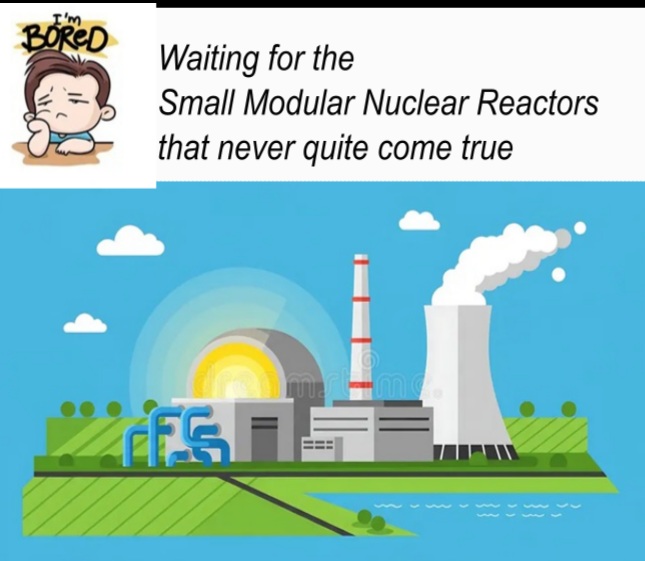
Any significant national support must also be analyzed from the perspective of state aid. The Commission’s competition services check whether the government compensates only the necessary costs and risks or whether the mechanism guarantees excessive revenues, disproportionately transfers losses to taxpayers, or grants a producer an advantage that competitors cannot obtain.
Informat.ro Călin Nicolescu, 21 July 2026,
Small modular nuclear reactors can become a component of the European energy system, but they do not yet represent a solution that can be used immediately to reduce emissions or cover the increase in electricity consumption, said the Executive Vice-President of the European Commission, Teresa Ribera. She urged governments not to delay investments and reforms already necessary while waiting for technologies that still need to be demonstrated and commercially implemented.
In short Teresa Ribera says that the choice of the energy mix, including the share of nuclear energy, belongs to each member state. The Commission must ensure compliance with common safety, competition, and public money usage standards. Small modular reactors benefit from European research programs and a Commission strategy aimed at launching the first projects in Europe in the early 2030s. Ribera warns that modular reactors remain, for now, projects in development. Governments should not postpone investments in grids, energy efficiency, renewable sources, or emission reductions until 2035. Building new reactors and extending the operation of existing plants often requires public funding, guarantees, and the state taking on part of the project risk. The Commission will check whether these forms of support produce overcompensations, subsidized prices, or advantages that affect competition among energy technologies and consumer access to electricity.
Teresa Ribera responded to a question about the future of nuclear energy and small modular reactors during the inaugural session of the sixth edition of the summer course “The great current challenges of the European Union,” held in San Sebastián. The Executive Vice-President said that opinions on nuclear energy differ profoundly among states and that European policy must respect each country’s right to establish its own electricity production mix.
Some governments have decided to build reactors, modernize existing plants, or extend their operational lifespan, while others base their strategy on renewable sources, storage, interconnections, and reducing consumption. The role of the Commission is not to impose the same energy structure on everyone, but the institution verifies compliance with European nuclear standards, safety requirements, and state aid legislation.
Small modular reactors, known by the acronym SMR, are designed for lower capacities than conventional nuclear plants. Their components are expected to be manufactured to a greater extent in industrial units and transported to the site for installation or assembly, a model that the industry claims can standardize construction and reduce some delays and costs. The Commission estimates that such reactors could provide electricity and heat for industry, urban heating systems, hydrogen production, and large consumers such as data centers.
Ribera insisted, however, on the gap between technological potential and commercial availability. The modular reactors currently being discussed are still projects, and the first European installations are expected for the early 2030s, not to address immediate energy needs. The European strategy adopted in March 2026 aims to accelerate the development and commissioning of the first projects during this period, confirming that the technology is still ahead of extensive commercial implementation………………………………………………….
The issue of public cost occupied an important part of Ribera’s response. Building new nuclear plants and extending the operation of existing ones typically required both public funding and guarantees through which the state takes on part of the project risks. These interventions may be necessary to attract capital into a sector with very high initial investments and long timelines, but they raise questions about the advantages granted to the producer and the effect on the market.
The Commission announced that it will create a guarantee of 200 million euros to support private investments in the first commercial units based on innovative nuclear technologies. The guarantee is intended to reduce risk for investors and should be seen as a tool for preparing the first projects, not as sufficient funding for building an entire fleet of reactors.
Any significant national support must also be analyzed from the perspective of state aid. The Commission’s competition services check whether the government compensates only the necessary costs and risks or whether the mechanism guarantees excessive revenues, disproportionately transfers losses to taxpayers, or grants a producer an advantage that competitors cannot obtain.
Ribera specifically warned about the possibility that public funding could influence electricity prices. Guaranteed contracts, support schemes, and risk coverage can provide stability to a nuclear project, but they can affect competition with renewable sources, storage, or other technologies if the support is not proportional and transparent.
The Commission’s analysis does not start from the idea that nuclear energy should be treated identically to any ordinary investment. Plants involve special safety requirements, very long operating periods, and obligations regarding decommissioning and waste. These characteristics may justify specific mechanisms, but do not eliminate the obligation of states to demonstrate the necessity, proportionality, and effect of support on the market.
The European strategy presents SMRs as a possible internal source of low-emission energy, capable of supporting energy security and decarbonizing hard-to-electrify industries. The Commission estimates that the installed capacity of these reactors in the EU could reach between 17 and 53 GW by 2050, but these figures are development scenarios, not capacities already under construction or guaranteed.
The first projects will need to show whether modular production can reduce the costs and delays that have affected many conventional nuclear plants. The economic advantages depend on the standardization of models, the number of units ordered, the capacity of factories, coordinated authorization, and the existence of a sufficiently large market for repeating the same design.
The debate on SMRs is therefore conducted on two levels. The Commission is investing in preparing a technology that could become important in the coming decades, but warns that projects should not be presented as an already available alternative to the investments that need to be made now.
The message conveyed by Ribera in San Sebastián was that technological neutrality does not mean suspending decisions until all options reach maturity. States can support nuclear energy and modular reactors, but they must continue in parallel to reduce emissions, modernize infrastructure, and expand sources that can produce results before the first European SMRs come into operation.
China makes major nuclear expansion move, adds four new projects in $25 billion energy investment
China’s latest nuclear expansion will also feature the upgraded Hualong One Version 2.0 technology at the Taipingling Nuclear Power Plant in Guangdong Province.
Interesting Engineering, By Bojan Stojkovski, Aug 01, 2026
China is moving forward with a major expansion of its nuclear energy capacity after approving four new power projects expected to attract more than $25 billion in total investment.
The newly approved facilities include Phase II of the Jinqimen Nuclear Power Plant in Zhejiang Province, Phase III of the Taipingling Nuclear Power Plant in Guangdong Province, the Zhuanghe Nuclear Power Plant in Liaoning Province, and the Laiyang Nuclear Power Plant in Shandong Province.
Together, the projects will add eight new nuclear power generating units, according to media reports, as China continues to increase its reliance on nuclear energy as part of its broader energy strategy.
Six-unit nuclear base in Zhejiang with upgraded reactor technology
The Jinqimen Nuclear Power Plant is set to become the fourth nuclear energy base in Ningbo, Zhejiang Province, as China continues expanding its low-carbon power infrastructure. The plant’s Phase II development will use Version 2.0 of Hualong One, China’s domestically developed third-generation nuclear reactor technology, while also allowing participation from private capital. ……
China’s latest nuclear expansion will also feature the upgraded Hualong One Version 2.0 technology at the Taipingling Nuclear Power Plant in Guangdong Province, according to CGN Power Co. Each reactor unit at the facility will have a generating capacity of 1,217 megawatts, with the six-unit plant expected to produce more than 55 billion kWh of electricity annually once fully operational.
Meanwhile, the Zhuanghe Nuclear Power Plant in Liaoning Province and the Laiyang Nuclear Power Plant in Shandong Province represent new nuclear development sites, according to statements from the companies involved.
The Laiyang Nuclear Power Plant in Shandong Province will feature two Guohe One reactors, China’s independently developed third-generation nuclear technology, according to SPIC Industry-Finance Holdings Co. Each unit will have a generating capacity of 1,543 megawatts, marking another addition to China’s expanding nuclear power infrastructure.
Moreover, with an investment of around $18 billion, the Laiyang plant is expected to become China’s largest nuclear power station by installed capacity once all six units are completed. The project also marks the beginning of large-scale, standardized construction of Guohe One reactors, China’s independently developed third-generation nuclear technology…………………..https://interestingengineering.com/energy/china-makes-major-nuclear-expansion-move
What links Palestine Action arrests with Burnham’s nuclear weapons splurge?
MASS arrests of peaceful Palestine solidarity demonstrators in London were the backdrop to Andy Burnham boasting of his commitment to enlarging Britain’s nuclear arsenal in Barrow-in-Furness this week.
The left has a lot of work to do to turn the existing majority against British complicity in Israeli genocide, and the growing hostility to military partnership with a Donald Trump-led United States, into a more consistent rejection of the militarist agenda being forced down the country’s throat.
Not many will see a connection between the Palestine Action ban and Trident renewal, and many will even oppose the former while supporting the latter.
But the ban on Palestine Action — itself part of a wider project to suppress public solidarity with Palestine, from new police powers to outlaw protests to the prosecutions of peace movement leaders like Ben Jamal, Chris Nineham, Alex Kenny and Sophie Bolt — was never a random act of repression.
Nor — though this view is common on the left — was it primarily about banning criticism of Israel or a result of pressure from the Israeli state or its supporters, though of course both welcomed it.
The huge Palestine solidarity movement is a threat because it exposes the ugly truth about British foreign policy and the role the British military plays in the world.
A state which tries to warn international courts off investigating genocide is no defender of international law or human rights.
The armaments companies that help supply the weaponry for that genocide are complicit in it. They are also the beneficiaries of Labour’s militarist splurge.
And a military which actively assists the army committing the genocide — through the way bases like RAF Akrotiri act as staging posts for weapons supplies, or all those RAF surveillance flights over the killing fields of Gaza — is not a force for good in the world.
Early in the course of Israel’s invasion of Gaza, militarist pundit Paul Mason urged that it be reined in because outrage over Palestine would undermine support for the military more widely and for Britain’s interventions in other conflicts, notably Ukraine.
He was right to worry, though actually the implications of our complicity in Israeli war crimes, and more recently in the illegal US-Israeli war launched against Iran, are not widely enough recognised.
British military power is not used to deter aggression, but to enable it. Our principal allies are the most warlike countries on Earth, the readiest to resort to violence and the likeliest to plunge us into a new world war.
Once that is understood, the reckless rearmament drive — which itself is the result of pressure from President Trump — is much harder to justify. It makes Britain and the world more dangerous.
And support for rearmament rests anyway on shaky foundations. A plurality of the public oppose increased arms spending if it means tax rises or public service or welfare cuts.
Constant government hysteria has failed to instil war fever in the general public. Half of young people (aged 16-29 in a major poll this spring) say they would never fight in a war and ministers admit to a recruitment and retention crisis in the armed forces.
The causes are complex, with MPs like Clive Lewis pointing out rightly that many young people see little worth fighting for given Britain’s grotesque inequality and lack of decent jobs or affordable housing. But the success of the Palestine movement in opening eyes to the truth about our foreign policy and our allies should not be disregarded.
The ruling class wants war, or at least a population ready to be sacrificed in defence of the US-led imperialist order should war be required to shore it up.
That explains the rearmament drive. It also explains the continued repression of dissenting voices. Authoritarianism and militarism go hand in hand: we must oppose both.
UK Needs Urgent Guidance On Preferred Reactor Concepts, (for small nuclear reactors) Says Fission Materials Roadmap
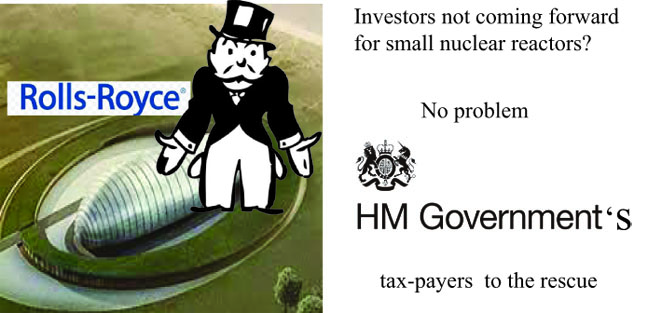
The report also called for long-term funding commitments of at least five years to support sustained research programmes.
By David Dalton, 30 July 2026, https://www.nucnet.org/news/uk-needs-urgent-guidance-on-preferred-reactor-concepts-says-fission-materials-roadmap-7-4-2026
Interim report lays out priorities on shaping next generation of nuclear plants
The UK urgently needs guidance on preferred reactor concepts and operating environments so it can prioritise materials research as it strives to shape the next generation of nuclear reactors which will power the country’s nuclear future, a report has said.
The UK Fission Materials Roadmap Interim Report, published by the United Kingdom National Nuclear Laboratory (UKNNL) and the Henry Royce Institute, said a decision is needed within one to two years on whether the UK should build a domestic materials test reactor.
Within five years the government needs to establish a national materials archive to preserve irreplaceable irradiated material samples
The report also called for long-term funding commitments of at least five years to support sustained research programmes.
Four major technical themes are set out in the report: structural materials, fuels and cladding, disposability of materials and irradiation damage. These sit alongside six separate priorities: skills, infrastructure, funding, qualification, modelling and policy. Together, they form the foundation of a full roadmap planned for publication in late 2026.
Gareth Headdock, chief science and technology officer and deputy chief executive officer of UKNNL, said the interim report is the product of genuine collaboration across the UK nuclear sector.
“From structural steels to advanced fuels and waste disposability, we have identified the priorities that matter most and the decisions that cannot wait.
“The decisions ahead – on reactor concepts, materials test infrastructure and long-term funding – are consequential ones, and it is vital that we get them right.”
David Knowles, chief executive officer of the Henry Royce Institute, the UK’s national institute for advanced materials research and innovation, said the momentum behind the UK nuclear sector is clear.
He said recent agreements between Rolls-Royce SMR, UKNNL and the Japan Atomic Energy Agency to accelerate the deployment of advanced nuclear technologies demonstrate the growing international confidence in UK nuclear capability.
“At the same time, the continued progress of Rolls-Royce SMR in securing commercial opportunities and advancing deployment highlights the strength of UK nuclear engineering and the scale of the opportunity ahead,” he said.
Rolls-Royce SMR, a subsidiary of blue chip engineering giant Rolls-Royce, and Czech state power company ČEZ are working on plans to deploy up to 3 GW of SMR capacity in the Czech Republic.
The company, a Rolls-Royce subsidiary, is also deploying three units in the UK with the potential for six, with a launch programme of three units in Sweden .
The Small Modular Nuclear Reactor Hyper spreads to Italy
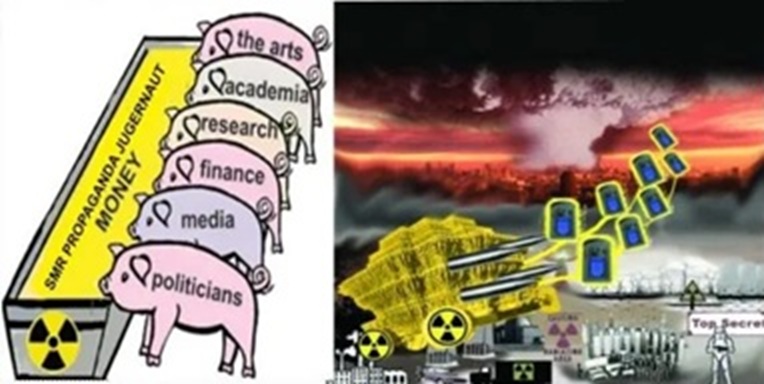
the government is focusing on small modular reactors, or SMRs
Industry estimates suggest a single 300-megawatt SMR could cost between 3 billion and 6 billion euros before infrastructure and grid expenses. The government hopes much of that financing would come from private capital
“Nuclear power that is being built today in Europe has exorbitant costs,” he said. “On the one hand, costs are extremely high, and on the other, private investors are running away.”
He also questioned whether SMRs would dramatically improve those economics, noting that the technology has yet to be commercially proven at scale.
The biggest political obstacle might be finding locations to build reactors and store the waste.
Four decades after Chernobyl, a generational divide reshapes Italy’s nuclear debate. By ASSOCIATED PRESS, 28 July 2026 , AP reporters Silvia Stellacci and Andrea Rosa in Rome contributed to this report.
ROME (AP) – Four decades after the Chernobyl disaster spewed radiation across Europe and turned Italy off nuclear power, Premier Giorgia Meloni ´s government is laying the groundwork to bring it back as the country seeks to improve its energy security.
The government is counting on a new generation of Italians who see nuclear power as a source of low-carbon electricity, a tool to help fight climate change and a way to strengthen stable energy supplies amid shocks from the Ukraine and Iran wars.
It´s betting that such support will blunt the opinions of Italians who lived through the 1986 nuclear accident, still view atomic energy through the lens of risk and disaster, and twice rejected nuclear power in national referenda, experts say.
Next week, Parliament is expected to approve government-sponsored legislation establishing a legal framework for next-generation nuclear technologies. The government would then have 12 months to draft implementing decrees covering reactor licensing, safety standards, waste management and siting.
“The duty of the government at this moment is to create the conditions so that those who will eventually decide on installations will be able to do so,” Gilberto Pichetto Fratin, minister for the Environment and Energy Security, told The Associated Press in an interview ahead of the vote.
Italy´s debate comes as several European countries, including France and Poland, expand or pursue nuclear power amid concerns about energy security and climate goals. Unlike them, however, Italy is trying to rebuild an industry voters dismantled decades ago.
Italy was once among Europe´s nuclear pioneers. Four reactors operated until a 1987 referendum effectively ended the country´s nuclear program in the aftermath of Chernobyl. Another attempt to revive nuclear power collapsed after Japan´s Fukushima disaster in 2011, when about 94% of voters opposed plans for new reactors.
As a result, Italy’s shift would mark one of Europe´s most ambitious energy reversals…………………………….
Rather than reviving the large plants of the past, the government is focusing on small modular reactors, or SMRs, and other advanced technologies that supporters say could be safer, more flexible and faster to build.
“We are talking about the third advanced generation (of nuclear power), much more workable compared to what are the needs, much safer because it is small in size with very short construction times,” Pichetto Fratin said.
“When people ask me for a timeline, I say 2033, 2034, 2035,” he added, referring to when the first next-generation reactors could realistically begin operating…….
At the sprawling Latina nuclear power plant south of Rome, workers in protective suits and masks are still dismantling the remains of Italy´s first nuclear era even as politicians discuss how to build a second.
The contrast is not lost on Viviana Cruciani, who oversees nuclear decommissioning at the site run by the state-owned company Sogin.
“There is a generation that came right after Chernobyl that still sees nuclear energy in light of the accident at Chernobyl only,” Cruciani told AP.
“But there is another generation, a lot younger, that is enthusiastic about nuclear, and it is even sorry that the country has not yet made any progress towards a comeback to this technology.”
A June 2026 survey by research firm Only Numbers found that about 55% of Italians support next-generation nuclear plants.
Michele Governatori, a senior energy adviser at climate and energy think tank ECCO, said support is more visible among younger Italians.
“There is greater openness, especially among younger generations,” he said, noting that many associate nuclear power with technological progress rather than with the accidents that shaped public opinion in earlier decades.
Not everyone is convinced.
“If we use nuclear as a backup … the average energy costs become devastating. So unfortunately it´s not a good complement to renewables and it´s not cheap,” Governatori said.
Pichetto Fratin acknowledged that nuclear power is not a short-term solution to high electricity prices.
“Nuclear power does not lower consumers´ bills today,” he said. “The nuclear power of tomorrow can help reduce them.”
Industry estimates suggest a single 300-megawatt SMR could cost between 3 billion and 6 billion euros before infrastructure and grid expenses. The government hopes much of that financing would come from private capital, Pichetto Fratin said.
Governatori believes that cost remains the weakest part of the government´s case.
“Nuclear power that is being built today in Europe has exorbitant costs,” he said. “On the one hand, costs are extremely high, and on the other, private investors are running away.”
He also questioned whether SMRs would dramatically improve those economics, noting that the technology has yet to be commercially proven at scale.
Even so, some critics support establishing a regulatory framework that could allow future projects to be evaluated on their merits.
The biggest political obstacle might be finding locations to build reactors and store the waste.
Italy still lacks a national repository for existing nuclear waste, much of which remains stored at temporary facilities across the country. Any future reactor or waste-storage site is likely to face strong local opposition.
Even if Parliament approves the legislation, opponents – including environmental groups and left-wing parties – could seek a new referendum once specific reactor locations and waste-storage plans emerge.
Surveys suggest support for nuclear power drops sharply when people are asked whether they would accept a reactor near where they live. Polls cited by experts indicate that about six in 10 Italians oppose having a reactor in their own province.
“When you have to seriously ask where a plant will be built and how much it will cost, it is likely that public opinion could become negative again,” Governatori said.
Canada’s silence on the U.S. and Saudi Arabia’s nuclear agreement isn’t neutrality. It’s something much worse
July 28, 2026, By Lloyd Axworthy, Contributor, Lloyd Axworthy is a former longtime MP who served as Canadian foreign minister from 1996 to 2000. https://www.thestar.com/opinion/contributors/canadas-silence-on-the-us-and-saudi-arabias-nuclear-agreement-isnt-neutrality-its-something-much-worse/article_99b7a436-6aa5-4627-9a04-15c688fcc5a7.html
Canada’s nuclear story has always been one of choice. In 1946, with Hiroshima still smouldering, Canada could have become a nuclear weapons state. It possessed the uranium, the scientific expertise, the industrial base, and the Manhattan Project experience that would have made it possible. The St Laurent government chose differently, pushing for international control of nuclear arms while directing Canadian nuclear power toward civilian ends. That was not weakness. It was judgment.
That decision forged a legacy of principled support for nuclear non-proliferation. But somewhere along the way, Canada lost its nerve. Today it speaks firmly against adversaries, grows cautious with allies and falls silent when principle would demand risk. The moral inconsistency is hard to miss.
Consider NATO. In 1998, Parliament did not rubber-stamp the government’s position on the Alliance’s Strategic Concept. It held hearings across the country, listening to Canadians, experts, and international voices. The skepticism about nuclear dependence that emerged was not an elite whim; it was the product of genuine democratic scrutiny, and Parliament pressed NATO to reduce its reliance on nuclear weapons in a post-Cold War world.
That tradition has withered. Canada remains outside the Treaty on the Prohibition of Nuclear Weapons, hovers at the margins of disarmament diplomacy, and supports the Nuclear Non-Proliferation Treaty mostly in ways that preserve the system without challenging its glaring contradictions. Canada talks as if the nuclear order is stable, even as norms crumble under selective enforcement and expanding arsenals.
Which brings us to now. The United States and Saudi Arabia are negotiating a nuclear arrangement that could normalize sensitive nuclear know-how and open the door to enrichment capabilities. Meanwhile, Washington uses its military force to stop Iran from pursuing the very same path. The message is unmistakable: nuclear restraint is demanded of some, relaxed for others when strategic or commercial interests beckon.
Canada has said almost nothing. That silence is not neutrality. In matters of nuclear proliferation, silence in the face of double standards is complicity. If enrichment is too dangerous for Iran, it is too dangerous for Saudi Arabia. If latent weapons capacity is unacceptable in one context, it cannot be tolerated in another simply because the recipient is a partner.
Canada has learned, at some cost, what can happen when civilian nuclear cooperation outpaces strategic caution. In the 1960s and 1970s, Canadian-supplied technology and uranium helped power India’s nuclear program, which was later diverted toward weapons development. That episode reshaped Canada’s export controls and helped define its modern non-proliferation posture. It stands as a reminder that intent can change, safeguards can erode and today’s partner can become tomorrow’s proliferator.
The commercial dimension sharpens the point. Westinghouse, poised to profit from Saudi nuclear contracts, is owned by Brookfield Asset Management, which acquired the company in 2023. A former chair of Brookfield is now our Prime Minister. This does not prove wrongdoing. But in nuclear policy, the appearance of conflict can be as corrosive as conflict itself, because credibility depends on the public belief that decisions rest on principle, not convenience.
A serious Canadian response would begin with a simple standard: civilian nuclear cooperation must be judged by the same rules, regardless of the country involved. That means no weakening of safeguards, intrusive verification, strong IAEA oversight, and full transparency.
It is time for another cross-country parliamentary examination of Canadian nuclear policy: a genuine national inquiry for a more dangerous nuclear age. The last serious parliamentary engagement shaped Canada’s thinking in the 1990s. The world has changed. Nuclear rivalry has returned, arms control is fraying and civilian nuclear deals are becoming vehicles for strategic ambiguity once again. Canada needs a fresh review that hears from Parliament, experts, Indigenous communities, diplomats, arms-control advocates and alliance partners
Such an inquiry should ask uncomfortable questions. What does Canada actually believe about nuclear deterrence? How should it respond when allies weaken non-proliferation norms? What standards should govern Canadian approval of civil nuclear cooperation, and should Canada remain on the sidelines of nuclear-ban diplomacy? Most importantly, how does it reconcile its commitment to international law with the strategic bargains being negotiated?
Canada does not need to abandon its alliances to recover its voice. It needs to recover its judgment. The country that once chose not to become a nuclear weapons state (despite having every means to do so) should not now stand silent while others normalize nuclear pathways under the banner of peaceful use. The country that once used Parliament to re-examine its nuclear assumptions should do so again.
The challenge is not merely to condemn nuclear danger where it is politically easy, but to do so everywhere it appears, including among friends, allies and trading partners. That is the standard Canada should set for itself. Parliament should help it reclaim that standard.
Philippines’ Marcos says ‘perhaps time to revisit nuclear energy’
Daily Mail 27th July 2026, AFP
Philippine President Ferdinand Marcos, who declared a national energy emergency this year, said on Monday that nuclear power might hold answers for a country paying the highest electricity prices in the region.
“Perhaps it is time for us to revisit nuclear energy production,” he told a joint session of Congress in a nationally televised speech.
“We will ensure it is safe. We will ensure the good benefits of nuclear energy will be explained properly to the public.”….
The Bataan Nuclear Power Plant — the only nuclear power plant in the Philippines — was completed in the 1980s but never launched due to corruption issues and safety concerns.
The Philippines has conducted exploratory talks about nuclear energy with numerous countries including Japan, France, Russia and the United States.
While Marcos offered no specifics in his State of the Nation speech, the Philippines announced a deal with the United States in May 2024 to train Filipinos how to build and operate nuclear power plants.
The pact was aimed at helping the Philippines build “the skilled workforce needed to build a clean energy infrastructure, including the ability to operate state-of-the-art nuclear power plants”, Daniel Kritenbrink, then US assistant secretary of state for East Asian and Pacific Affairs, said at the time.
https://www.dailymail.com/wires/afp/article-16007645/Philippines-Marcos-says-time-revisit-nuclear-energy.html
The Quiet Surrender of our Nation’s Sovereignty

28 July 2026 Dr Andrew Klein, https://theaimn.net/the-quiet-surrender-of-our-nations-sovereignty/
It is our melancholy duty to inform Australians of the quiet surrender of our nation’s sovereignty
I. Introduction: The Mask and the Man
What they see is a Prime Minister. What I see is a party animal – trapped in a role he was never prepared to play. He knows how to win power. He doesn’t know how to wield it. And when he fails, he blames everyone but himself.
The Albanese government has presided over a quiet but systematic surrender of Australian sovereignty. Through AUKUS, through the integration of Australian forces into American military structures, through secret arms deals, and through a failure to interrogate the strategic consequences of our alliance commitments, Australia is being transformed from an independent nation into a junior partner – a vassal state without voting rights.
This is not a deepening of alliance. This is a strategic surrender.
II. AUKUS: The $368 Billion Abdication
The AUKUS nuclear submarine deal is the clearest example of this failure. Australia will commit $368 billion to acquire nuclear-powered submarines – equivalent to more than $30 million per day across three decades.
But the deal is plagued by problems:
- Deliverability: The United States shipyards cannot meet production targets, averaging only 1.1 to 1.2 Virginia-class submarines per year, far below the required 2.33.
- Cost blowouts: Australia will commit nearly $10 billion to subsidise US and UK naval shipyards.
- Strategic uncertainty: Former foreign minister Gareth Evans has warned that AUKUS will place Australia’s sovereignty at “serious risk,” with submarines effectively becoming “an extension of U.S. military power.”
- A “junior partner” trap: Former Defence Department analyst Dr Andrew Gaczol told a public inquiry that Australia will become a “junior” partner to the United States and lose its strategic independence. According to Dr Gaczol, “The Australian political class and defence policy community still think it’s our melancholy duty to support the military commitments of our great and powerful friends, even if they conflict with Australian interests.”
III. The US-Israel Military Merger: Australia’s Involuntary Integration
In July 2026, the US House of Representatives passed a $1.15 trillion National Defense Authorization Act (NDAA) by a vote of 216 to 212.
Section 219 of the Act establishes a “United States-Israel Defense Technology Cooperation Initiative,” requiring the Pentagon to appoint an executive agent to “expand and accelerate bilateral defense technology research.” The provision “would all but fuse the two countries’ armed forces together” across multiple domains, including biotechnology, autonomous systems, artificial intelligence, and cyberwarfare.
Representative Jennifer McClellan condemned the provision as one that “undermines our sovereignty and lacks any form of oversight.”
Why does this matter to Australia?
The Australian Defence Force has long achieved interoperability with the US military. Israel has achieved interoperability with the US since 1981. If the US and Israel move from interoperability to integration, the two degrees of separation between the ADF and the IDF are reduced to one.
Australia is being integrated into Israel’s military system through the American link. We are being drawn into a conflict not of our choosing, through a chain of obligations we never consciously accepted.
IV. Australia’s De Facto Participation in the Iran War
The evidence of Australia’s entanglement is already clear.
A. Intelligence Sharing
In March 2026, Australia deployed an E-7A Wedgetail surveillance aircraft and 85 ADF personnel to the UAE. The aircraft provides “long-range reconnaissance capability” to “secure the airspace above the Gulf.” Defence officials have confirmed that reconnaissance information obtained by the Wedgetail is also provided to US allies including Jordan, Saudi Arabia, Bahrain, and Qatar.
While the government insists the role is “defensive,” the intelligence is fed into the Joint Air Operations Center (CAOC), which is under the command of US Central Command – and the US is waging an offensive war against Iran.
B. Embedded Troops
As of June 2026, 729 ADF personnel are embedded with US and UK armed forces. Some Australian personnel were aboard a US submarine that sank an Iranian frigate in the Indian Ocean. The Defence Chief defended this involvement as “in our national interest to have our people on board US Virginia Class submarines training, learning and understanding.”
C. Arms Supplies
Australia has been supplying Advanced Medium Range Air-to-Air Missiles (AMRAAMs) to the UAE. The government has also issued 322 defence export permits to Israel since 1 January 2017. As Greens Senator David Shoebridge noted, Australia has “one of the most secretive and unaccountable weapons export systems in the world.”
V. The Logic of Sovereignty Concession
The chain of sovereignty loss is clear:
- US-Israel Integration (NDAA Section 219) →
- Australia-US Integration (AUKUS, interoperability agreements) →
- Australia’s de facto military integration with Israel through the US →
- Australia’s strategic autonomy is diluted, and military decision-making is influenced by external forces.
Each link in this chain was forged without parliamentary debate. As the AUKUS inquiry has noted, the Federal Parliament “never held a thorough debate on the agreement,” exposing “a clear democratic deficit” in Australia’s largest strategic commitment.
VI. The Political Class: Incompetence or Complicity?
The Albanese government’s approach to national security is defined by caution, message control, and risk aversion – not by strategic vision.
- On AUKUS: The government has refused to interrogate the $368 billion deal, despite “substantial reservations” that have “not abated.”
- On the Iran war: The government insists Australia is not involved in “offensive operations,” but our assets are providing intelligence that enables offensive operations.
- On arms exports: The government has fought to keep arms exports to Israel secret, only being forced to disclose information by Federal Court order.
- On the NDAA: The government has remained silent on Section 219 – a provision that directly compromises Australian strategic autonomy.
Incompetent people, once in power, are more dangerous than bad people because:
- Bad people can be brought down.
- An incompetent person will remain there, constantly causing destruction, yet appearing “unblamed” after each failure.
- VII. Conclusion: The Cost of Silence
- Australia’s political class and defence policy community still believe it is their “melancholy duty to support the military commitments of our great and powerful friends, even if they conflict with Australian interests.”
But a new world order is coming. Australia has a choice: position itself for that new order, or desperately cling to a slipping world order.
Through AUKUS, through Section 219, through secret arms deals and uncritical alliance commitments, we are choosing the latter.
The chain of sovereignty concession is tightening. And the Australian people are being told nothing.
The question is not whether Australia will be dragged into a war not of its choosing. The question is: when that war comes, will we have any say in whether we fight?
Dedicated to my beloved wife and confidante – who taught me to see the person behind the mask, and to trust what I see.
The nuclear lobby getting cold feet about public acceptance?

The Two Sides of Nuclear’s Challenge, By David Hess, Senior VP DeepGeo Staff Writer 27th Jul 2026.
There are two types of people inside the nuclear community – those that think the greatest challenge facing the industry is economics, and those who believe it is public acceptance.
We can all agree that the nuclear industry faces serious challenges. Here we are, decades into the climate crisis and a couple of years past a global energy shock yet at the moment nuclear’s share of global electricity continues to trend down, not up.
There are signs of better times ahead as countries review their energy mixes and start planning in earnest for a zero-carbon future, but the elder nuclear industry hands have seen this kind of excitement before. They know that momentum for new nuclear can fade as external factors change and as the ‘issues’ come sharply into focus.
Even where the industry enjoys strong political support, if there’s no way to overcome the obstacles that stand in the way of development then few projects will actually emerge as a physical reality. With this in mind, the apparent lack of progress on roadblocks over the years is troubling and may prevent the industry from making the most of the favourable winds that are currently blowing.
The issues facing nuclear expansion are no mystery. While they may come in different forms, with varying levels of sophistication depending on who is articulating them, these days they almost always boil down to two things – public acceptance and economics.
Which leads to an interesting thought experiment. Granted, both have to be addressed, but if you could magically fix only one of these issues with a snap of your fingers, which would it be, which issue has done most to diminish industry prospects over the years, and what is acting as a hand-brake on it now?
Perhaps surprisingly, there is no definitive answer and industry experts seem to be split evenly into two camps.
Anecdotal evidence suggests that people are biased by their education, experience and work areas. For example, if you have a business background or regularly talk to the finance community then of course it’s economics that is the fundamental problem!
The thinking here goes that if the nuclear industry could consistently demonstrate on time on budget construction then the orders would come streaming in. Public acceptance issues would melt-away in the face of lower energy bills. Reluctance from important stakeholders in government and the finance community would be steam-rolled by profitable returns. The mountain-sized challenge of securing project financing from banks and investors would shrink down to a much more manageable boulder – or in the case of SMRs, a pebble.
For those in this camp, the failure of the nuclear industry to expand (in Western countries at least) is due overwhelmingly to high capital costs, or even more so the well-documented failure to control construction risk at project after project. This view is essentially an implicit mea culpa. It is tacit acknowledgment that the industry has none other than itself to blame for the situation that it now finds itself in.
On the face of things, this is convincing. After all, money is what makes the world go round, and we all have to deal with this on a daily basis. If you are money-oriented with the decisions in your own life – and certainly most highly- paid industry professional will be – then it makes sense that you expect everyone else to be as well. As a commercial enterprise, nuclear plants must make financial sense or companies simply won’t build them.
Those nuclear professionals with a communication or public facing role may see the world differently. Of course, energy costs are important, but it is just one of a number of factors that Jane/Joe Smith tends to be affected by. For starters, she/he will certainly be worried about jobs and economic opportunities generally, or perhaps lack thereof. More generally though, there will be range of social, cultural and even gender-based values which influences their views.

Acutely aware of concepts such as cognitive shortcuts and risk perception, at the top of the list of factors standing in way of nuclear expansion for these nuclear professionals are the dread-risks associated with nuclear accidents and nuclear waste. In their eyes opposition to nuclear energy is essentially irrational. In fact it is often pretty darn emotional but this is not to say it is ‘unjustified’. Addressing such concerns purely with facts (or improved standards and performance) is unlikely to win people over. Indeed, no other energy industry has to contend with such deeply- seated fears……….
Rather than seeking to prove which mindset is ultimately right, the point is that there is quite a fundamental difference in approach between those in the ‘it’s the economics’ and ‘it’s public acceptance’ camps. Moreover, the priorities for action end up being very different. It is at least important to be aware of the competing paradigms…………………………………………………………….
In many ways the rise of the objection-from-economics can be considered a victory for the nuclear industry. It’s a welcome shift from the howls of ‘too dangerous’ and ‘polluting’ that marked the discourse of earlier decades………………….https://www.nsenergybusiness.com/analysis/the-two-sides-of-nuclears-challenge/
Republican senator breaks ranks with Trump over controversial nuclear deal with Saudi Arabia

Another GOP senator breaks with president on the Middle
East as war with Iran divides his party. A key Republican senator who has
previously stopped from going as far as publicly condemning the president’s
Middle East strategy is doing just that.
Sen. John Kennedy appeared Sunday
on CBS’s Face the Nation, where he questioned the idea of providing the
technology to another Gulf state at the same time that the U.S. was trying
to permanently shut down Iran’s nuclear program. Asked directly whether he
was comfortable with the Saudi deal, as it had been presented, Kennedy
replied: “Nope.”
Independent 26th July 2026, https://www.the-independent.com/news/world/americas/us-politics/kennedy-senate-trump-iran-saudi-b3021839.html
Israel builds massive barrier inside Gaza to partition strip beyond ‘Yellow Line’
“The Israeli military is quietly but quickly building a giant earthen barrier separating the over 50 percent of the Gaza Strip it controls from the rest of the territory,”
New satellite images show that the barrier has allowed occupation forces to now control 65 percent of the strip
News Desk, JUL 22, 2026, https://thecradle.co/articles/israel-builds-massive-barrier-inside-gaza-to-partition-strip-beyond-yellow-line
According to satellite imagery released on 21 July, the Israeli army is constructing a ground barrier extending hundreds of meters beyond the so-called “Yellow Line” in the occupied and besieged Gaza Strip, effectively partitioning the enclave and deepening its military presence there.
The imagery, reviewed by both AP and Haaretz newspaper, shows Israeli forces building a 23-kilometer earthen barrier, which has been described as a partition effort.
The barrier is mainly a trench that has allowed Israel to expand its control and occupation across around 65 percent of the strip.
Varying figures released over recent months indicate Israel could control even more than that.
In one part of southern Gaza, the barrier extends beyond the Yellow Line by more than a kilometer, according to Haaretz.
In Khan Yunis, part of the new Israeli barrier extends around 400 meters beyond the line – stretching along the Salah al-Din Road that connects the north and south of the strip.
Haaretz reported that in Rafah, the barrier pushes beyond the line by approximately 1,300 meters in one area.
The Israeli army has been working on this barrier for months, steadily expanding it.
Satellite images have further confirmed what has previously been reported – Israeli troops have systematically razed much of the territory around the Yellow Line, leveling entire towns, destroying agricultural land, carving new road networks, and constructing military bases on the ruins of Palestinian communities.
They also show that construction is advancing rapidly. The expansion has been described as an Israeli bid to partition the Gaza Strip.
“The Israeli military is quietly but quickly building a giant earthen barrier separating the over 50 percent of the Gaza Strip it controls from the rest of the territory,” wrote AP.
More than 23 kilometers have been constructed in recent months, running through Palestinian communities demolished by the [Israeli] military,” the report added.
The Yellow Line was meant to act as an initial perimeter to which troops would withdraw as part of the agreement last year.
Israeli occupation forces have been pushing beyond it and erecting permanent outposts along the line since the launch of the US October 2025 ‘peace plan’ and so-called ceasefire.
Further withdrawals are contingent on “progress” regarding the disarmament of Hamas, which the Palestinian resistance, as a whole, rejects until the formation of an independent Palestinian state.
As the Israeli occupation of Gaza expands, so does a severe health crisis which began as a result of the genocide and has consistently worsened.
Dozens of hospitals have been completely destroyed by Israeli attacks in Gaza since October 2023, resulting in a collapse of the medical sector and the spread of serious infectious diseases and illnesses.
A new chickenpox virus has now spread across Gaza. Almost 10,000 cases have been recorded across displacement camps recently, according to Doctors in Gaza.
“The situation requires urgent intervention. Medicines, medical supplies, and healthcare services must be provided before the crisis worsens,” said Dr Mohammad Abu Afash, director of Medical Relief in the Gaza Strip.
Other serious illnesses, such as cholera, have spread throughout Gaza during the genocide as a result of Tel Aviv’s destruction of the health system.
1 This Month
15 October. Joint Appeal for Nuclear Abolition Day -presentation to the UN on October 15 will be live on UNWebTV
Endorse the Nuclear Abolition Day Appeal
23-25 October – on Zoom – World BEYOND War’s annual global conference

To see nuclear-related stories in greater depth and intensity – go to https://nuclearinformation.wordpress.com
-
Archives
- October 2026 (139)
- September 2026 (339)
- August 2026 (330)
- July 2026 (355)
- June 2026 (287)
- May 2026 (306)
- April 2026 (356)
- March 2026 (251)
- February 2026 (267)
- January 2026 (308)
- December 2025 (358)
- November 2025 (359)
-
Categories
- 1
- 1 NUCLEAR ISSUES
- business and costs
- climate change
- culture and arts
- ENERGY
- environment
- health
- history
- indigenous issues
- Legal
- marketing of nuclear
- media
- opposition to nuclear
- PERSONAL STORIES
- politics
- politics international
- Religion and ethics
- safety
- secrets,lies and civil liberties
- spinbuster
- technology
- Uranium
- wastes
- weapons and war
- Women
- 2 WORLD
- ACTION
- AFRICA
- Atrocities
- AUSTRALIA
- Christina's notes
- Christina's themes
- culture and arts
- Events
- Fuk 2022
- Fuk 2023
- Fukushima 2017
- Fukushima 2018
- fukushima 2019
- Fukushima 2020
- Fukushima 2021
- general
- global warming
- Humour (God we need it)
- Nuclear
- RARE EARTHS
- Reference
- resources – print
- Resources -audiovicual
- Weekly Newsletter
- World
- World Nuclear
- YouTube
-
RSS
Entries RSS
Comments RSS

