The Peril of Trump’s Final Act: Would He Use a Tactical Nuclear Weapon in Iran?

The real straits of Trump are dire: He is trapped in a war that has already been lost, a reality that he will never allow himself to admit. Under Republican control, the House has voted repeatedly to end the war. With Democrats likely to take the majority in the midterms, Trump faces the prospect minimally of investigative hearings that will bare the true extent of the losses, costs, and internal military opposition to his folly. He has to find a way to declare victory and get out, and soon.
Trump is trapped in a war that has already been lost, a reality that he will never allow himself to admit.
Robert L. Borosage, https://www.thenation.com/article/world/trump-iran-war-tactical-nuclear-weapon/
Donald Trump is trapped: His war of choice against Iran is lost, an abject strategic catastrophe. Now Trump has to choose: sustain another forever war until Iran breaks, a strategy his own generals oppose, or produce a grand finale to get out without admitting defeat. And there is the rub.
Reality has shattered Trump’s conceits. Instead of a few days, the war has lasted six months and counting. Instead of regime change and popular uprising, the Iranian regime stands with new hardened leadership. Instead of another display of US military prowess, the US military has been driven out of major bases across the region, stockpiles of vital offensive and defensive missiles have been depleted, and the US Navy has been overstretched and exhausted.
And Iran keeps ratcheting up the pressure. It controls the Strait of Hormuz, and its Houthi allies have just seized control of the alternative route through the Bab el-Mandeb Strait and blown up Saudi Arabia’s key east-west pipeline. Crude oil is now over $110 per barrel and rising; the price of diesel—the fuel of commerce—is at record levels. The cost of fertilizer, fuel, and virtually anything that requires transport is going up, with the global economy at risk.
In response, Trump grows ever more delusional. “The failing Nation of Iran,” he claims, “wants to make a deal, quickly and badly.” He suggests that Iran is waiting until after our midterm elections to sue for peace, at which point the price of gasoline will “drop like a rock.” Then he muses that we might just stay in Iran: “We’ll ultimately get out, unless we decide to stay and keep the oil like Venezuela.” He turned to Oman as a mediator on reopening the Strait of Hormuz and then threatened that if it “gets in the way, we’ll bomb the shit out of them.”
He dismisses the war as “small potatoes,” claims full control of the Strait, suggests that the “Countries of the World…should and will reimburse the United States of America when this SCAM Confligration [sic] is over,” and jokes that he might rename the Strait “Trump Strait,” saying, “I should get something out of it.”
The real straits of Trump are dire: He is trapped in a war that has already been lost, a reality that he will never allow himself to admit. Under Republican control, the House has voted repeatedly to end the war. With Democrats likely to take the majority in the midterms, Trump faces the prospect minimally of investigative hearings that will bare the true extent of the losses, costs, and internal military opposition to his folly. He has to find a way to declare victory and get out, and soon.
Many experts report that the United States and Israel are gearing up to launch another full-scale operation, probably just after the US midterms. The Trump administration has just approved a $2.8 billion Israeli arms package that includes 40,000 bombs, half of which are 2,000-pound bombs. Even so, skeptics question how much a new bombing wave could achieve, given the depletion of US weapons stocks, naval power, and base support, without the use of nuclear weapons.
And that caveat makes the situation truly alarming.
Recently released satellite photos are said to show renewed construction activity under Iran’s remote Pickaxe Mountain. Heavily fortified underground facilities are thought to be located there beneath hundreds of meters of solid granite rock, a ceiling deemed impenetrable by conventional weapons. This makes it a natural spot for Iran to rebuild its nuclear program. Trump recently warned that the US would be bombing the mountain “very soon.”
At the same time, Hegseth’s Pentagon has been moving to integrate tactical nuclear weapons into conventional war strategy. The aim, as Under Secretary of Defense Elbridge Colby put it in the chilling language of the megadeath intellectuals, is to provide “credible, rational nuclear options that a President of the United States adopting the simple principle of being a normal human being with common sense would actually implement.”
The United States, the only country ever to drop a nuclear weapon, has repeatedly refused to adopt a “no first use” policy. The president has sole authority to order the use of a tactical nuclear weapon. Neither Congress nor the public would be given prior notice. Would Trump use a tactical nuclear weapon on relatively isolated Pickaxe Mountain in Iran as his exit line?
According to the Bulletin of the Atomic Scientists, using a nuclear weapon against a non-nuclear nation is a violation of international customary law. But Trump, as his noxious deputy chief of staff, Stephen Miller, infamously asserted, dismisses international law and treaties as “international niceties,” arguing that “the real world…is governed by strength, by force…by power.” Trump boasts that the only limit on his international power is “one thing. My own morality. My own mind. It’s the only thing that can stop me.”
Long-standing US policy, reaffirmed in the Trump administration’s 2018 Nuclear Posture Review, states that the United States “will not use or threaten to use nuclear weapons against non-nuclear weapons states that are party to the NPT [Nuclear Nonproliferation Treaty] and in compliance with their nuclear nonproliferation obligations.” This promise extends to over 190 countries, including Iran —at least until last week, when the Trump administration pushed through an International Atomic Energy Agency resolution declaring Iran in violation of its obligations under the treaty. Iranian analysts warned, probably correctly, that the move presaged an imminent attack on Iranian nuclear facilities.
Dropping a nuclear weapon on Iran would not only be criminal; it would be incredibly dumb. Iran would respond by unleashing an assault on oil and desalination and energy platforms across the Emirates and an unprecedented assault on Israel.
It would also set off a race for nuclear weapons, as countries across the globe would understand that the reason Iran was targeted and not North Korea is that the latter has nuclear weapons and the former does not. Trump made that clear when he bizarrely told the zealots gathered at the Republican Midterm Convention that if Iran had nuclear weapons, “I’d be calling the supreme leader, and I’d be saying, ‘Mr. Supreme Leader, how are you, sir? Is there anything we can do for you?’ as opposed to bombing the crap out of him.” As one commentator noted, the video of that could serve as a nuclear proliferation promo ad.
Use of a tactical nuclear weapon would set a precedent for Russia or China to invoke if they chose to use or threaten the use of nuclear weapons against Ukraine or Taiwan or other adversaries. It would put the nuclear arms race, already gaining dangerous momentum, into hyperdrive. And it would indelibly brand the US as a dangerous, pariah nation, feared but despised across the globe.
For these and other reasons, it is hard to imagine any president making that decision. But Trump, trapped, desperate, angry, delusional, intent on punishing his enemies and displaying his prowess, could well be tempted. And the anticipated Democratic election victories this fall will corner him—and that will make him even more dangerous, as we saw with the sacking of the Capitol after his 2020 loss in the presidential race.
These harrowing prospects should intensify efforts to bring the war to an end, and to warn clearly against escalation. The war is already opposed by a growing majority of Americans. Congress will be out of session until the midterms, but citizens can make certain that candidates are pressed on this issue as they campaign. Editorialists should weigh in against escalation. China’s President Xi, slated to meet with Trump in September, could put ending the war high on the agenda. US Arab allies in the region have an existential stake in avoiding a final cataclysm in this misbegotten war and should both demand restraint from the US and intensify negotiations with Iran and its Houthi allies. Recently, progress toward a settlement on Iranian “administration” of the Strait of Hormuz was interrupted by the Houthi offensive in Yemen and attacks on Saudi Arabia. European leaders could play a role, publicly warning Israel’s Netanyahu not to sabotage negotiations.
The last weeks of reduced military activity and apparent stalemate have been misleading. The economic costs of the war—now with oil transport through both Hormuz and the Red Sea constricted—are escalating. The pressure on Trump to escalate, to unleash another round of bombing in order to declare victory and get out, is rising. Without a concerted movement toward a settlement, the unimaginable is becoming more conceivable.
IAEA says cooling tower at Russia’s Kursk Nuclear Power Plant hit by drone

UN nuclear watchdog says it was informed that drone hit cooling tower of a reactor unit; no fire broke out, operating status not changed
Rabia İclal Turan, 19 September 2026
WASHINGTON DC
The International Atomic Energy Agency (IAEA) said Friday it was informed that a drone hit the cooling tower of a reactor unit at the Kursk Nuclear Power Plant in Russia.
A statement by the UN nuclear watchdog on US social media platform X said the drone hit the facility, located in the Kursk region bordering Ukraine, early Thursday, but did not specify who informed the IAEA of the incident.
“It was reported that the unit was operating at the time, but its operating mode did not change and there was no fire,” it said.
Quoting IAEA chief Rafael Grossi, the statement said that all attacks on nuclear facilities are “unacceptable” as they could “endanger nuclear safety and security, irrespective of where they occur.”
Grossi reiterated demands for “maximum military restraint” to prevent the risk of a nuclear accident.
The IAEA did not provide details on the source of the drone or circumstances surrounding the incident.
The agency has regularly warned Moscow and Kyiv about dangers to nuclear safety amid the Russia-Ukraine war, which began in February 2022.
In a later statement, Russia’s nuclear state corporation Rosatom confirmed that a drone detonated upon striking the cooling tower of the plant’s no. 1 power unit, causing “minor damage.”
It stated the incident did not affect the facility’s operations and that power unit no. 1 continues to operate at 100% capacity.
“The safety of the plant’s operation is ensured. Radiation levels remain unchanged and consistent with natural background values,” it added.
US Million Person Study on low dose rate exposures to radiation: Preliminary Findings

What is significant is that the study runs directly contrary to the views of the US President and can be viewed as a direct riposte to them. So far, no collective quantitative risk estimates from this study have been published in the US.
September 16, 2026, https://www.ianfairlie.org/news/us-million-person-study-on-low-dose-rate-exposures-to-radiation-preliminary-findings/
This article requires an extensive introduction, so bear with me .
Current risk estimates for radiation are based by the ICRP principally on the Japanese survivors of the US bombs dropped on Hiroshima and Nagasaki in 1945. This is the Life Span Study (LSS). However it has several shortcomings including that it is based on instantaneous exposures (lasting less than a second) to high blasts of gamma radiation and neutrons. Other shortcomings were that the studies did not commence until 5 years after the explosions and many unrecorded deaths occurred during the interval. Also the translation of the estimated risks in the acutely-exposed Japanese population to people in different countries exposed to lower doses over lengthier time periods introduces large uncertainties in the LSS risk estimates.
Finally the LSS only covered ~80,000 people. A better, larger study covering ~300,000 workers – was the INWORKS study of nuclear industry workers in the US, UK and France which found radiation risks higher than the risks observed by the Life Span Study but broadly similar to it. (It is explained that the phrase “broadly similar to” means that the uncertainty ranges of the two studies overlapped.) The INWORKS study has been examined and discussed by me previously -see https://www.ianfairlie.org/news/important-new-bmj-article-increases-our-perception-of-radiation-risks/
A third, even larger, study – the US Million Person Study- has been underway in the US for several years. For its history, see – Boice Jr JD., André Bouville, Lawrence T. Dauer, Ashley P. Golden, Richard Wakeford (2022) Introduction to the special issue on the US Million Person Study of health effects from low-level exposure to radiation. International Journal of Radiation Biology, Volume 98, 2022 – Issue 4.
The quantitative results of this US study have not yet been published formally, it seems, in any academic scientific article. However, rather strangely, an article containing its preliminary findings has been just published in the UK magazine of the UK Society for Radiological Protection. See https://srp-uk.org/professional-resources/radiation-protection-today
I say “rather strangely”, but perhaps it’s unsurprising for a US study to first release in the UK controversial findings on radiation risks, given the US President’s recent attacks on internationally-accepted cornerstones of radiation protection, such as the linear no threshold model of radiation risks and ALARA.
The US Million Person Study of Low-Dose-Rate Health Effects (https://www.millionpersonstudy.org/) is the largest radiation occupational epidemiologic study that I’m aware of. It eventually will cover about a million US nuclear workers and military veterans etc. It is examining cancer and non-cancer morbidity (cases) and mortality (deaths) after exposures to low rates of radiation. It includes nuclear industry workers who predominately received about 300 mGy over their working lives. In other words, it is not a low level study but a low rate study. It includes workers from Los Alamos National Laboratory, Oak Ridge Mound Nuclear Facility, Rocky Flats plant, civilian nuclear utilities, industrial radiographers, medical radiation radiographers, and workers at military nuclear weapons test sites.
Early findings based on ~ 600,000 US workers and US military veterans include the following
- an association between occupational radiation exposures and Parkinson’s disease
- a low risk of lung cancer
- a risk of leukemia (excluding chronic lymphocytic leukemia)
- some evidence of increases in all solid cancers and
- evidence that chromosomal damage could be detected 65 years after veteran exposure to fallout from nuclear weapons testing.
These findings are unsurprising and fit in with evidence elsewhere , especially the INWORKS studies. What is significant is that the study runs directly contrary to the views of the US President and can be viewed as a direct riposte to them. So far, no collective quantitative risk estimates from this study have been published in the US.
The Million Person Study continues at large US DoE facilities including Hanford and Oak Ridge, and US Navy personnel, including nuclear submarine sailors and naval shipyard workers. interestingly, is also re-examining the US radium dial workers from the 1920s and 1930s. The ongoing Million Person Study also covers
- safe and secure cleanup of historically contaminated US nuclear sites
- protection from radiation exposures during space travel
- the development of new forms of nuclear power designs and
- resilience preparation for response to emergency radiological incidents.
The SRPS article was written by two US academics, Dr Nicole Martinez and Dr Laurence Dauer. They conclude– somewhat courageously given the US President’s outspoken views –
“A better understanding of potential impacts of radiological exposure enables more informed decisions which in turn can support a more sustainable and prosperous future. See http://www.millionpersonstudy.org”
Leak forces Point Lepreau to shut down for 2nd time this month
Challenging location of the problem requires nuclear plant to go off-line for fix, official says
Sam Farley · CBC News · Sep 17, 2026, https://www.cbc.ca/news/canada/new-brunswick/point-lepreau-leak-shutdown-9.7345240
The Point Lepreau Nuclear Generating Station is shut down again, this time because of a heavy-water leak on an instrumentation line.
The line is part of the heat transport system, which is part of the heavy water station at the plant, Joel Armstrong, the deputy site vice-president at Point Lepreau, said in an interview.
Last week, there was an indication of a problem, he said, and the early indication systems worked exactly as planned, “allowing us to conduct a safe and predictable shutdown to facilitate the work.”
Heavy water carries heat from the reactor out to conventional boilers filled with regular water, creating steam to run the plant turbines.
Heavy water itself is not radioactive but over time when used in a reactor it begins to produce tritium as a primary source of radiation, according to the Canadian Nuclear Safety Commission’s website.
The page goes on to say that tritium is a “relatively weak source of beta radiation, which itself is too weak to penetrate the skin. However, it can increase the risk of cancer if consumed in extremely large quantities.”
CBC News has tried to ask N.B. Power about the radioactivity of the heavy water leaked at Lepreau and is waiting for an answer.
“We identified that there was potential for a leak,” Armstrong said. “We have lots of early monitoring at the station that gave us early indication that there was an issue,
Trump administration announces it has placed weapons in orbit, in major step in the militarization of space

The 1967 Outer Space Treaty, to which 118 states, including the United States, are party, commits its signatories “not to place in orbit around the earth any objects carrying nuclear weapons or any other kinds of weapons of mass destruction.”
Alison Storsve, the US delegate, told the committee that the United States “must vote NO on the resolution” titled “Prevention of an Arms Race in Outer Space.”
Andre Damon, 15 September 2026
The Trump administration has placed weapons in orbit around the earth, Air Force Secretary Troy Meink announced Monday. The United States “now has on-orbit space control weapons capable of defending the joint force against hostile adversary action,” Meink told the Air & Space Forces Association conference.
The announcement is a major step in the militarization of space and the escalation of war plans targeting nuclear-armed Russia and China. Meink spoke more than six months into the US-Israeli war on Iran, a day after Russian forces struck a passenger train near the Polish border and 10 days before Chinese President Xi Jinping is due at the White House.
The Trump administration has abandoned or bypassed a series of arms-control agreements. In 2018, Trump pulled out of the nuclear agreement with Iran, and in 2019, out of the Intermediate-Range Nuclear Forces Treaty, which had banned a class of US and Russian missiles. In 2020, he left the Open Skies Treaty, which had allowed unarmed surveillance flights.
New START, the last treaty limiting US and Russian strategic nuclear weapons, expired February 5; Trump had given no formal answer to Russian President Vladimir Putin’s offer to observe its limits for another year.
On October 30, 2025, Trump ordered the Pentagon “to start testing our Nuclear Weapons on an equal basis,” and the next day the United States cast, for the first time, the lone vote against the annual resolution of the UN disarmament committee backing the moratorium on nuclear testing. The United States has not set off a nuclear explosive test since 1992.
On November 4, Alison Storsve, the US delegate, told the committee that the United States “must vote NO on the resolution” titled “Prevention of an Arms Race in Outer Space.”
“I don’t want to tell Beijing and Moscow what I’ve done,” Lieutenant General Gregory Gagnon, head of Space Force Combat Forces Command, said of measures to protect US satellites in February. “We also need, as part of our joint force, the ability to attack.” In December 2025, the administration announced a record $11 billion arms package for Taiwan.
The Wall Street Journal, praising the move in a Tuesday editorial, noted that it takes place ahead of Xi’s arrival: “The timing of the space announcement may be no accident coming ahead of Chinese President Xi Jinping’s visit to Washington next week.”
Meink refused to say what the weapons are, how many there are or when they were launched. The Space Force said in a statement to ABC News published Tuesday that the weapons “can be employed for offensive and defensive purposes at the direction of combatant commands.”
Victoria Samson, chief director of space security and stability at the Secure World Foundation, a research group, told Defense One on Monday: “I don’t think any US government official has ever said that before. The US also now has to accept the Chinese and Russians doing/saying the same.” She told Al Jazeera Tuesday, “What this does is normalise weaponising space.”
Chinese Foreign Ministry spokesman Guo Jiakun said Tuesday, “We urge the US side to stop expanding its military capabilities and preparing for war in outer space,” and Kremlin spokesman Dmitry Peskov said the same day that “space must be free of any weapon.”
In January 2025, US President Donald Trump ordered the Pentagon to build “proliferated space-based interceptors,” a program named Golden Dome that he priced at $175 billion that May. The Congressional Budget Office estimated this May that such a system would cost $1.2 trillion over 20 years, most of it for about 7,800 space-based interceptors.
The administration is asking $71.3 billion for the Space Force next fiscal year, nearly double the $40.1 billion requested a year earlier, inside the $1.5 trillion military budget it requested in April, a 44 percent increase over this year’s and the largest since World War II.
The 1967 Outer Space Treaty, to which 118 states, including the United States, are party, commits its signatories “not to place in orbit around the earth any objects carrying nuclear weapons or any other kinds of weapons of mass destruction.”
It reserves the moon and other celestial bodies “exclusively for peaceful purposes” but says nothing about conventional weapons in orbit, and the Space Force said Monday that its operations comply with it.
The 1972 Anti-Ballistic Missile Treaty between Washington and Moscow barred each side from developing, testing or deploying missile-defense systems that are “sea-based, air-based, space-based, or mobile land-based.” US President George W. Bush withdrew from it in 2002, and Golden Dome’s space-based interceptors are the type of weapons it barred.
The West is watching the wrong Ukrainian collapse

The detachment of the Ukrainian state from society did not begin yesterday. It started the moment the Ukrainian authorities placed the interests of their Western masters above those of their country.
As winter approaches, Ukraine again finds itself at a crossroads. And it appears to be once again choosing the path of war, a path that it’s being desperately pushed onto by Europe’s anti-Russia coalition.
Missiles and territorial losses dominate the headlines, while the deeper rupture between state and society goes largely unnoticed
Sergey Poletaev, 14 Sept 26, https://www.rt.com/russia/645729-west-is-watching-wrong-ukrainian-collapse/
Last weekend, US envoys Steve Witkoff and Jared Kushner visited Moscow and then Kiev. This was the first such visit in a long time, since all trilateral contacts between Russia, the US, and Ukraine were practically halted following the start of the conflict in Iran this February.
Following the visit, leaks regarding the talks emerged from Kiev; reportedly, the US envoys presented the Ukrainian side with a 28-point Russian peace plan that had been agreed upon a year earlier. Jared Kushner indirectly confirmed this on Saturday, stating that the territorial issue was the only point of the peace plan that remained unresolved.
Is it true that Ukraine accepted all the other fundamental demands of the Russian side – such as the points concerning the Russian language and the status of the Orthodox Church, the renunciation of military cooperation with NATO, the recognition of territorial changes, the reduction of the army, and so on? (Spoiler: no, it didn’t.)
Is Ukraine really losing the war, as many recent statements and publications suggest? Spoiler: yes, but not in the way you’d think.
Let’s take a look at what this means.
Shuttle diplomacy
The peace talks involving Steve Witkoff began in February-March 2025, shortly after a phone call between Russian President Vladimir Putin and US President Donald Trump that signaled a fundamental shift in US policy toward Russia and the Ukraine conflict.
Trump’s top priority was to avoid direct involvement, positioning America – as far as possible – at an equal distance from the parties. Of course, to truly achieve this, the conflict would have to be frozen; this would allow the US to restore relations with Russia, counterbalancing China.
Naturally, freezing the conflict (or, in Trump’s words, ending the war in one day) proved impossible; consequently, the US made the most out of the situation as the war dragged on: it shifted the entire burden onto Europe and stepped aside. This strategy allowed the US to maintain working contacts with Russia, reap maximum benefits from the ongoing fighting, and insulate itself from the risks of Ukraine’s potential defeat while still keeping the door open to capitalize on Ukraine’s hypothetical victory over Russia.
In short, Trump decided to sit on the sidelines and watch who would emerge victorious.
For Moscow, too, contacts with Washington are incredibly valuable. It proved impossible to decouple Russia-US relations from the Ukraine issue, and relations between the two countries have effectively remained frozen. Yet the fact that the US is disengaging from the Ukraine conflict – and, more broadly, from European affairs – deprives Europe of confidence in US backing and consequently strips it of strategic depth.
The flip side of this maneuver is that the US has effectively relinquished its decisive say regarding Ukraine. Putin and Trump could reach any agreement whatsoever, but Ukraine is now entirely dependent on Europe. This means that it is Europe that will ultimately determine the final terms. As a Russian saying goes, “He who pays for the girl’s dinner gets to dance with her.”
Surely, Trump could exert pressure on all sides, but why bother? He is essentially satisfied with the current situation and needs nothing more from Moscow. So he has simply let things run their course,
Kiev is well aware of this, which is why Ukrainian officials play along with US envoys. Though direct opposition is out of the question – after all, they still need American missile defense systems – they can avoid any action and buy time. And that’s precisely what Kiev is doing.
The fact that Zelensky visited Canada last week but not the US clearly shows that Kiev no longer sees Washington as the primary center of decision-making. Consequently, the negotiation track involving Witkoff and Kushner is seen by the Ukrainian side as little more than a mandatory part of the show.
Is Ukraine losing? Yes, but not in the way you might think
On September 8, British magazine The Spectator published an editorial titled ‘Ukraine is losing the war’. A week before, several prominent Ukrainian figures – including former Defense Minister Mikhail Fyodorov and the current head of Zelensky’s office, Kirill Budanov – had expressed similar sentiments.
At first glance, this may sound reasonable: the AFU’s deep-strike campaign against Russian infrastructure wasn’t successful, and the summer offensive on the southern front, which is crucial for the Armed Forces of Ukraine (AFU), has de facto failed.
Moreover, Ukraine was unprepared for retaliatory strikes targeting port facilities, logistics, energy infrastructure, and transport networks. This confirmed what experts had been saying for over a year: Ukraine’s air defense systems, which are entirely dependent on US supplies and severely depleted, could barely cope with the previous intensity of air raids; now they can shoot down one ballistic missile out of a dozen, at best. This has made it possible for the Russian Army to launch massive attacks on the Ukrainian rear.
Of course, massive raids by Ukrainian drones and, occasionally, cruise missiles also inflict damage on the Russian rear. This summer was marked by a gasoline shortage and long lines at gas stations. Dozens of warehouses in the European part of Russia are in flames, and other targets are under attack as well.
However, the scale of these attacks is incomparable: by various estimates, the AFU managed to disable up to 3% of Russia’s warehouse storage capacity, whereas Russia has disabled between 30% and 60% of Ukraine’s capacity. Ukrainian experts admit that the strikes on Odessa port have had a far greater impact on Ukraine’s fuel logistics than Ukrainian strikes on Russian oil refineries.
For instance, the price of diesel fuel in Ukraine has topped 100 hryvnias, which is nearly three times the cost in Russia. For the first time since the start of the conflict, fuel rationing is being introduced for the AFU (no such measures have ever been implemented for the Russian Armed Forces).
Russian strikes have effectively halted Ukrainian grain exports by sea, depriving the national budget of a key revenue stream. Retail businesses are closing en masse, undermining what is arguably the economy’s last remaining civilian sector.
This looks like an obvious reason why Ukraine is losing the war. So does this mean that all those hysterical reports and articles are actually true?
Not quite. I would venture to say that all the above-mentioned factors are merely temporary difficulties to which Ukraine can adapt, and which have little impact on the situation at the front. It’s true that there is a gaping hole worth tens of billions of dollars in the Ukrainian budget; likewise, it’s true that the civilian population will face a harsh winter; and yes, what remains of the energy and industrial sectors is under constant attack.
But all this means that the additional financial burden will fall on Europe’s shoulders, while the civilian sector and the state’s capacity to fulfill social obligations will continue to deteriorate; the people will be left to their fate.
All this will affect not only ordinary citizens but entrepreneurs as well. Ukrainian businesses, which largely supported the Kiev regime and the war simply because there were no other options (given that their future was directly tied to that of the central government), are also being left to fend for themselves.
The central tension in Ukrainian society right now is the smoldering civil conflict between Territorial Centers of Recruitment (TCRs) and the men who are being conscripted by force. The destruction of the civilian economy is likely to spawn similar scenarios: bankrupt entrepreneurs, an impoverished middle class, and the unemployed will all see that the Ukrainian state is doing them more harm than good. As a result, the state itself, and not just state-controlled TCRs, will become the enemy.
One might argue that as opportunities and funds in the civilian sector decline, the military sector becomes more attractive. However, there are no new opportunities in military production and logistics (after all, Ukraine has no money), and fewer people are willing to die on the front lines.
All of this will lead to an even greater disconnect between the Ukrainian state and society. And a state severed from society is essentially a military organization. History offers us many such examples, the most recent being ISIS.
A military organization that lacks the support of civil society cannot hold the front line, especially one stretching 1,500 kilometers. There are no historical precedents for this.
A collapse of the front would mean the end of Ukraine in its current form. Kiev understands this perfectly well, which is why it undertakes superhuman efforts to hold the line – even at the cost of a smoldering civil war on the home front.
The detachment of the Ukrainian state from society did not begin yesterday. It started the moment the Ukrainian authorities placed the interests of their Western masters above those of their country.
As winter approaches, Ukraine again finds itself at a crossroads. And it appears to be once again choosing the path of war, a path that it’s being desperately pushed onto by Europe’s anti-Russia coalition.
That is precisely why Witkoff and Kushner left Kiev empty-handed, and why the war will continue – first until the Kiev regime is completely severed from Ukraine, and then until that regime is utterly destroyed.
If you need an example, just look at ISIS.
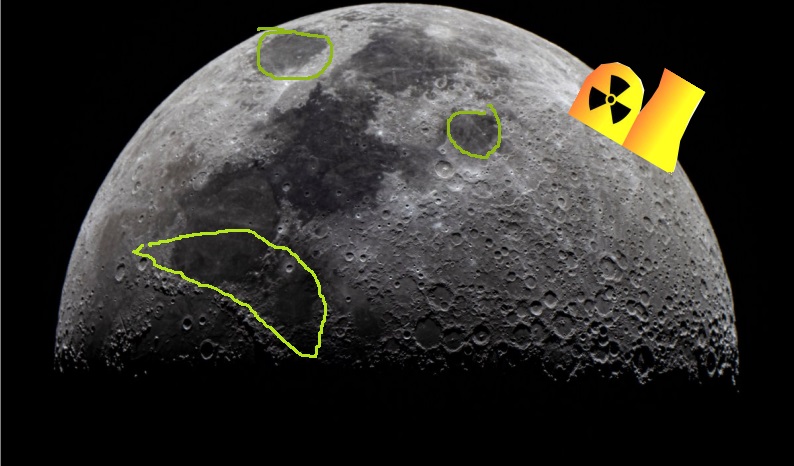
The Pentagon must prepare for battles around the moon: Joint Chiefs chair
Days after orbital weapons were revealed, Gen. Dan Caine ups the scope of the military’s desired reach.
Defense One, 16 Sept 26, Thomas Novelly
NATIONAL HARBOR, Md.— The U.S. military’s top uniformed leader says U.S. forces must be ready for war near or possibly even on the moon, a rhetorical leap that comes as service leaders are still wrestling with the legal frameworks surrounding its newly revealed orbital weapons.
“Our task, my friends, is to adapt right now, so the Joint Force is prepared to fight, endure, and win, in global contested environments, from the seabed to cislunar space,” Joint Chiefs Chairman Gen. Dan Caine told airmen, guardians, and industry figures during his keynote address at the Air, Space, and Cyber Conference.
Caine later repeated the thought—“today’s modern battlefield operates from the seabed to cislunar space”—but he did not clarify whether he meant on the moon’s surface. U.S. law is ambiguous, defining cislunar space as “the region of space from the Earth out to and including the region around the surface of the moon.” At least one Harvard Law Journal article interprets the clause to mean on the moon itself, and the White House’s National Cislunar Science and Technology Action Plan explicitly said in late 2024 that it includes the lunar surface. But the Air Force Research Laboratory’s 2021 “Primer on Cislunar Space” appears to treat space and the moon’s surface as two different domains.
Caine pointed to recent comments made about orbital weapons by the Air Force secretary and the Space Force’s chief of space operations. Top space force officials have been hesitant to provide more details on how they would operate in that domain and how they’d responsibly use space weapons in future conflicts………………………………..
The Outer Space Treaty of 1967, which the U.S. signed, outlaws certain military behaviors on the Moon and states that it shall be used “exclusively for peaceful purposes.”
“The establishment of military bases, installations and fortifications, the testing of any type of weapons and the conduct of military manoeuvres on celestial bodies shall be forbidden. The use of military personnel for scientific research or for any other peaceful purposes shall not be prohibited.”
Space Force Lt. Gen. Gregory Gagnon, the head of Combat Forces Command, told reporters during a media roundtable that the 18th and 19th Space Defense Squadrons are now both sharing the cislunar mission among each other. ………………………https://www.defenseone.com/threats/2026/09/pentagon-battles-moon-joint-chiefs-chairman/416021/?oref=d1-skybox-post
Labour won’t order new nuclear submarines for Royal Navy until 2028, Wes Streeting admits
Labour won’t order new nuclear submarines for Royal Navy until 2028, Wes
Streeting admits. Labour will not order any new nuclear-powered submarines
until 2028 as concerns grow over delays to Britain’s naval expansion plans.
Sir Keir Starmer last year said Labour would decide how many submarines to
commission by the time its Defence Investment Plan was published. The
report was released on June 30. But the Government has now postponed its
commitment to buying submarines until 2028.
Daily Mail 13th Sept 2026,
https://www.dailymail.com/news/article-16127723/labour-delays-nuclear-submarine-decision-2028.html
Meta Wants To Build A $50 Billion Data Center In Louisiana

A small, rural community in Louisiana is confronting what it means to become the home of Big Tech’s next industrial megaproject.
Kieran Spencer, Breakthrough News, September 11 2026
Meta wants to build one of the largest data centers in the world in rural Louisiana.
The facility, known as Hyperion, is being built to train and operate the artificial intelligence systems behind Meta’s products. What began as a $10 billion proposal has since ballooned into a more than $50 billion development spanning nearly 10 million square feet and roughly 3,650 acres. At full scale, Hyperion is expected to require 5 gigawatts of computing capacity, making it the largest data center in Meta’s global fleet and one of the largest ever built. According to Meta, the project is expected to employ around 7,500 workers during peak construction and support 1,000 permanent jobs once operational.
For residents of Richland Parish, the arrival of Meta has brought both desperately needed jobs and profound uncertainty about what the project will mean for the community. The enormous facility is being constructed on former farmland and will require an equally immense network of infrastructure to support it. In nearby Rayville, many residents view Meta as an economic lifeline after decades of limited employment opportunities, with local families securing jobs that pay far more than the parish’s median income. But the influx of highly paid, out-of-town workers has also driven up rent and the cost of living as landlords and businesses increasingly orient themselves toward Meta employees. Landlords routinely raise the rent of low-income housing in order to price out local tenants in favor of contractors, forcing residents to move out of the area to afford housing…………………………………………………………………………………………………………………………………………………………………..
Meta’s empty promises of economic growth
The public’s skepticism is warranted. Data centers routinely generate thousands of temporary construction jobs while creating only a fraction as many permanent positions once construction ends. Meta’s projects in Texas and Oklahoma, for example, are expected to leave only around 100 operational jobs each after thousands of construction workers leave. QTS similarly estimates that a data center campus in York County, North Carolina will produce roughly 1,000 construction jobs but only about 100 permanent onsite positions. Even Hyperion’s original proposal called for roughly 5,000 construction workers but only 500 permanent operational employees. None of these figures guarantee that the permanent positions will go to Richland Parish residents. Meta has offered assurances about local hiring, but there is no binding commitment requiring the company to employ local workers.
Meta also claims the data center will bring tens of millions of dollars in tax revenue to Richland Parish, an argument it bolsters by pointing to the 2,000% increase in sales-tax totals since construction began – $50,000 of which has funded bonuses for some local schoolteachers. But that windfall is largely a product of the construction boom itself, not a sustainable source of revenue generated by the completed data center. The teacher bonuses are distributed through Richland Parish’s longstanding one-cent sales-tax program, which provides annual “13th checks” to eligible school employees. As those construction workers spend money in the parish, that pool has temporarily grown; once construction ends, so will much of the revenue feeding it. The result is a temporary infusion of money that can obscure the longer-term fiscal consequences of the project. When the construction boom ends, Richland Parish will be left with the costs of a massive industrial project, and fewer public resources to pay for them.
Cementing Louisiana’s dependence on fossil fuels amid environmental devastation
The environmental impact of the Meta data center could also be deadly for residents of Richland Parish and Louisiana as a whole. The Hyperion AI data center is expected to consume roughly half of the state’s electrical capacity – approximately seven times the energy consumed by the entire city of New Orleans – placing enormous new demands on Entergy’s already overburdened power grid. Louisiana residents know what a fragile electrical system can mean in a disaster. After Hurricane Katrina, Entergy’s restoration efforts took 42 days to complete across its service territory. In 2021, Hurricane Ida left nearly 950,000 customers without power after an Entergy tower fell into the Mississippi River, a disaster that required 15 days of restoration work just to bring more than 90% of affected customers back online.
Rather than address these vulnerabilities, Entergy’s proposed solution to Hyperion’s unprecedented energy demands is to build an entirely new fossil-fuel energy infrastructure around the data center. The company plans to construct ten natural-gas power plants, including seven new facilities capable of generating roughly 5.2 gigawatts of electricity, alongside new transmission lines and a massive 500-kilovolt substation. Meta, Entergy, and the Louisiana state government are working to present these projects as investments that will strengthen Louisiana’s electrical grid and improve reliability for ordinary customers.
Louisiana is being asked to construct an enormous new fossil-fuel-based energy system so that a single private corporation can consume an unprecedented share of its electricity. More generation may increase capacity, but it does not eliminate the physical vulnerabilities that have repeatedly left Louisiana residents without power after hurricanes. Instead, the state is doubling down on a centralized, fossil-fuel-dependent grid whose infrastructure will remain vulnerable to the same storms that have already decimated Louisiana’s communities.
Entergy’s catastrophic deal with Meta has arrived as Louisiana is already on the front lines of an environmental crisis. The state has lost more than 2,000 square miles of coastal land since 1932 and continues to lose more than 16 square miles each year. The state has experienced 31 billion-dollar weather and climate disasters since 2018, leaving communities to repeatedly rebuild from hurricanes, flooding, and extreme weather. Meanwhile, along the Mississippi River between Baton Rouge and New Orleans, the area known as “Cancer Alley” contains a dense concentration of petrochemical and chemical facilities, exposing surrounding communities to significant air pollution and toxic emissions which have resulted in a cancer rate fifty times higher than the national average.
People of Louisiana reject corporate profiteering…………………………………………………………………..
The resistance emerging across Louisiana is more than a battle over a single data center. It is a decisive stand for the right of Louisianians to determine their own future, rather than surrender it to corporate interests. This is a battle for the future of working people everywhere, and the people have vowed to keep fighting https://breakthroughnews.org/2026/09/11/meta-wants-to-build-a-50-billion-data-center-in-louisiana/
UK to sign nuclear fusion AI pact with US

Government estimates that bringing “fusion power closer to reality” will create 10,000 UK jobs by 2030.
September 14th 2026, https://www.energyvoice.com/renewables-energy-transition/603758/uk-to-sign-nuclear-fusion-ai-pact-with-us/
The UK and the US are expected to announced agreements at a summit in London aimed at delivering progress across the global fusion energy sector.
The first agreement will launch a new supercomputing partnership between the UK Atomic Energy Authority (UKAEA) and Princeton Plasma Physics Laboratory, combining AI computing and fusion to accelerate development.
The UK and US will also sign a joint statement committing to closer co-operation on regulating fusion energy at the Global Fusion Policy Summit in London Monday.
Energy minister Michael Shanks said nuclear fusion, a nascent technology, would deliver thousands of jobs in the UK in the next three years.
The UK has been pursuing fusion technology through a series of investment and support programs based around Oxford, Birmingham and Nottingham, and announced “record” £2.5 billion investment in fusion energy technology in May.
According to the UK Fusion Investment Prospectus, also published in May, the global fusion market could in future be worth between £3 trillion and £12trn.
Energy minister, Michael Shanks, said: “Fusion has the potential to provide virtually limitless clean energy while supporting more than 10,000 jobs across the UK by 2030, attracting investment and creating major opportunities for British businesses.
“By strengthening our partnership with the US we’re accelerating the race to commercial fusion, turning cutting-edge research into economic growth and cementing Britain’s position as a world leader in fusion energy.”
On top of the UK-US agreements, Japan’s largest fusion company, Kyoto Fusioneering, will also invest up to £3 million in the UK’s prototype fusion energy plant, the Spherical Tokamak for Energy Production (STEP) project at the former coal-burning West Burton power station in Nottingham.
Further, the University of Birmingham’s Electric Power Research Institute and industry partners have launched a £2.63 million collaboration on fusion materials through through the FURESHMA (Fusion Reactor Shielding Materials) programme.
Foreign, Commonwealth and Development Office (FCDO) minister for the Americas, Chris Elmore said: “The UK’s relationship with the United States supports growth and thousands of jobs at home.
“By bringing together world-leading expertise in fusion, artificial intelligence and advanced computing, we’re helping British businesses and researchers access the investment, knowledge and international partnerships needed to succeed in the industries of the future.”
UK Nuclear Startup Signs MOU On Technology To ‘Dramatically’ Speed Up Component Production for planned Odin microreactor

By David Dalton, 16 September 2026, https://www.nucnet.org/news/uk-nuclear-startup-signs-mou-on-technology-to-dramatically-speed-up-component-production-9-3-2026
Companies will explore uses for planned Odin microreactor
UK nuclear engineering startup Cambridge Atomworks has signed a memorandum of understanding with Cambridge Vacuum Engineering (CVE) to explore how best to use technology that could dramatically accelerate the production of critical nuclear power components including reactor vessels and internals.
A statement said the aim is to leverage CVE’s expertise in electron beam welding, including the company’s Ebflow technology.
The two companies will explore the use of advanced electron beam welding to manufacture critical components for the Odin microreactor project.
The Odin microreactor was originally developed by US-based Nano Nuclear Energy. It is designed to fit within standard shipping containers to provide energy for remote communities, disaster relief and industrial sites.
In 2025 Nano Nuclear announced it was selling the Odin design and all associated intellectual property to Cambridge Atomworks, which had already been developing Odin for Nano Nuclear on an outsourced consulting basis.
Cambridge Atomworks is aiming to have an operational prototype of Odin by 2031.
Odin is a low-pressure reactor that uses solid nuclear fuel and molten salt coolant and is designed as a transportable, standalone power system. Manufactured largely offsite and deployed with minimal supporting infrastructure, potential applications for Odin include mining operations, remote and island communities, developing markets and other off-grid industrial users where reliable power can otherwise be expensive or logistically difficult to provide.
Ian Farnan, chief executive officer at Cambridge Atomworks, said “the agreement with CVE is an important step in developing the supply chain and manufacturing approach needed to make the Odin microreactor technology a reality.
He said: “Electron beam welding has the potential to transform how key reactor components are manufactured.”
Don’t get ‘locked in’ by EU rules, top nuclear adviser warns Burnham
John Fingleton tells POLITICO “risk aversion” in Whitehall must not
slow Britain’s dash for new nuclear. Britain should not feel “locked
into” pre-Brexit EU environmental rules as it tries to rapidly boost its
nuclear power capacity, a top adviser to the government has warned. John
Fingleton, author of an influential government-commissioned review into how
red tape is blocking new U.K. nuclear projects, said in an interview that
Whitehall should not dampen efforts to boost domestic capacity through
“risk aversion.” “I think on some of the environmental things there’s
a risk that people in the system legally think we’re locked into EU
regulation circa 2022 when we left [the EU],” he said.
Politico 17th Sept 2026,
https://www.politico.eu/article/eu-rules-nuclear-power-adviser-john-fingleton-andy-burnham/
1 This Month



26 September – International Day for the Total Elimination of Nuclear Weapons


PLEASE OPPOSE HR 8255 AND S.3639 – bills would accelerate satellite deployment, with no environmental review or safeguards – https://ncstd5li.quorum.us/campaign/169331/
To see nuclear-related stories in greater depth and intensity – go to https://nuclearinformation.wordpress.com
-
Archives
- September 2026 (245)
- August 2026 (330)
- July 2026 (355)
- June 2026 (287)
- May 2026 (306)
- April 2026 (356)
- March 2026 (251)
- February 2026 (267)
- January 2026 (308)
- December 2025 (358)
- November 2025 (359)
- October 2025 (375)
-
Categories
- 1
- 1 NUCLEAR ISSUES
- business and costs
- climate change
- culture and arts
- ENERGY
- environment
- health
- history
- indigenous issues
- Legal
- marketing of nuclear
- media
- opposition to nuclear
- PERSONAL STORIES
- politics
- politics international
- Religion and ethics
- safety
- secrets,lies and civil liberties
- spinbuster
- technology
- Uranium
- wastes
- weapons and war
- Women
- 2 WORLD
- ACTION
- AFRICA
- Atrocities
- AUSTRALIA
- Christina's notes
- Christina's themes
- culture and arts
- Events
- Fuk 2022
- Fuk 2023
- Fukushima 2017
- Fukushima 2018
- fukushima 2019
- Fukushima 2020
- Fukushima 2021
- general
- global warming
- Humour (God we need it)
- Nuclear
- RARE EARTHS
- Reference
- resources – print
- Resources -audiovicual
- Weekly Newsletter
- World
- World Nuclear
- YouTube
-
RSS
Entries RSS
Comments RSS
 nuclear-news