Russophobia: Elite Obsession or Deep-Rooted Prejudice?
A conversation with Professor Geoffrey Roberts
Ian Proud, August 12, 2026, https://thepeacemonger.substack.com/p/russophobia-elite-obsession-or-deep?utm_source=post-email-title&publication_id=3221990&post_id=211518204&utm_campaign=email-post-title&isFreemail=true&r=1ise1&triedRedirect=true&utm_medium=email
Professor Geoffrey Roberts, one of Britain’s leading historians of Soviet and Russian history, recently took part in an academic conference on Russophobia held as part of the annual cultural festival in Pskov, Russia.
The discussions there, and our subsequent conversation, offer a clear-eyed look at a phenomenon – Russophobia – that has intensified dramatically since 2022.
One striking difference emerged immediately between western and Russian participants at the conference.
Russian participants tended to view Russophobia as a deep-rooted cultural feature of the West, particularly Britain, stretching back two centuries to Russia’s emergence as a great power after the Napoleonic Wars.
Western speakers, including Roberts, saw it as far more contingent and episodic — a political instrument that surfaces when it serves a purpose and can recede just as quickly.
Roberts argues that today’s Russophobia is primarily an elite phenomenon.
It thrives in the Westminster bubble, among sections of the media, the intelligence services, the defence industry and the chattering classes.
Ordinary people are often more open-minded. Taxi drivers still express genuine curiosity about life in Moscow rather than reflexive hostility. Public opinion has proved remarkably resistant to years of daily propaganda; the extreme narrative has failed to mobilise a durable popular majority for confrontation.
Within the elite itself there are different strands: a large “herd” that follows the prevailing narrative for career reasons; those with financial or institutional interests in keeping the confrontation alive; and a smaller group of true believers.
The late Lord Robert Skidelsky, whose writings on Russophobia formed the basis of Roberts’ own paper in Pskov, described it as a ready-made repertoire of stereotypes and attitudes that can be activated when political circumstances demand.
Its current intensity is instrumental — it helps mobilise support for Ukraine and for the West’s proxy war against Russia.
History suggests such episodes can reverse rapidly.
Britain and Russia fought as allies in both world wars.
The anti-Soviet version of Russophobia collapsed with surprising speed under Gorbachev.
Roberts remains cautiously optimistic that a negotiated end to the war in Ukraine would undermine the extreme forms of Russophobia and open space for more pragmatic voices. Without an end to the fighting, however, the instrumental value of the narrative remains high.
The conversation also touched on deeper strategic realities.
You cannot fight a war by committee.
Russia’s more centralised decision-making and industrial capacity have allowed it to adapt and sustain the conflict, while Western policymakers continue to underestimate Russian resilience and overestimate the prospects of Ukrainian victory or regime collapse in Moscow.
The result is a prolonged, self-defeating policy that has already cost Ukraine dearly and eroded the legitimacy of European governments at home.
Roberts’ message is ultimately a hopeful one. Most people in any country want peace. Ending the war would not only stop the bloodshed; it would also deprive Russophobia of its most powerful current fuel and create the conditions for a more rational relationship between Russia and the West.
In the meantime, moderate, evidence-based voices remain essential.
You can watch the full conversation here:
The result is a prolonged, self-defeating policy that has already cost Ukraine dearly and eroded the legitimacy of European governments at home.
Roberts’ message is ultimately a hopeful one. Most people in any country want peace. Ending the war would not only stop the bloodshed; it would also deprive Russophobia of its most powerful current fuel and create the conditions for a more rational relationship between Russia and the West.
In the meantime, moderate, evidence-based voices remain essential.
You can watch the full conversation here:
We Talk: Japanese residents warn against ‘nuclear sharing’
Global Stringer, 14 Aug 26, https://news.cgtn.com/news/2026-08-14/We-Talk-Japanese-residents-warn-against-nuclear-sharing–1PB6c6oYkp2/p.html
August 15 marks 81 years since Japan announced its surrender in World War II.
Since taking office in October last year, Prime Minister Sanae Takaichi’s government has pushed to revise Japan’s three national security documents and has repeatedly called for a review of the “no introduction” clause of the Three Non-Nuclear Principles. The moves have sparked concern in Japan and abroad over the future direction of the country’s nuclear policy.
A poll released by the Japan Association for Public Opinion Research on August 1 found that 76% of respondents support maintaining the Three Non-Nuclear Principles of not possessing, not producing and not permitting the introduction of nuclear weapons.
A CGTN stringer in Tokyo spoke with local residents about the Three Non-Nuclear Principles, the concept of nuclear sharing, and the possibility of Japan allowing the United States to deploy nuclear weapons on its territory.
One interviewee, Hikaru Kusano, said Japan should never engage in nuclear sharing, warning that it would pose a threat to other countries. Another respondent, Masahiro Sawa, argued that nuclear weapons can never guarantee security and that a world free of nuclear weapons may be the best path forward.
Zelensky Must Go Before Real Peace Talks Can Begin

Zelensky, he argues, has come to equate Ukraine’s survival with his own continued leadership. That belief has justified the suspension of elections, the refusal to pursue realistic diplomacy, and a strategy that has steadily worsened Ukraine’s negotiating position, its economy, and its military situation.
We also discussed the deeper problem. Western policy has become trapped in a form of moralism that treats any contact with Russia as contamination. This makes genuine diplomacy almost impossible and prepares the ground for permanent confrontation long after the fighting stops.
In conversation with Professor Nicolai Petro
Ian Proud, Aug 12, 2026, https://thepeacemonger.substack.com/p/zelensky-must-go-before-real-peace?utm_source=post-email-title&publication_id=3221990&post_id=210874375&utm_campaign=email-post-title&isFreemail=true&r=1ise1&triedRedirect=true&utm_medium=email
Something has shifted.
For the first time in years, serious people in European capitals are quietly exploring track-two contacts with Moscow. My old boss, Tim Barrow, was recently dispatched to Vienna for meetings that were supposedly secret — until the newspapers reported them. At the same time, Ukraine’s military, economic and demographic position continues to deteriorate in ways that no amount of Western propaganda can disguise.
I sat down with Professor Nicolai Petro of the University of Rhode Island to discuss what this means. Petro is one of the most thoughtful and independent analysts of Russia and Ukraine writing today. His book The Tragedy of Ukraine remains essential reading for anyone who wants to understand the deep domestic roots of this conflict rather than the simplified morality play offered by most Western media.
Our conversation was frank. Petro’s central argument is blunt: serious negotiations between Russia and Ukraine are almost impossible while Volodymyr Zelensky remains in office. Zelensky, he argues, has come to equate Ukraine’s survival with his own continued leadership. That belief has justified the suspension of elections, the refusal to pursue realistic diplomacy, and a strategy that has steadily worsened Ukraine’s negotiating position, its economy, and its military situation.
The observable realities are hard to ignore. The average age of Ukrainian soldiers is now over forty. The pool of viable recruits is shrinking fast. Casualty rates in the specialised assault battalions remain extremely high. Winter is approaching, and with it the near-certainty of another Russian campaign against energy infrastructure. Ukraine’s finance ministry will shortly return to Western capitals asking for yet more money. And the political mood inside Ukraine itself is shifting — recent polling shows Zelensky’s trust ratings underwater, even in Kyiv.
Petro believes Russia’s military objective remains the consolidation of the four regions plus Crimea. Once those administrative borders are secured, Moscow will be in a position to declare its goals achieved and place a clear choice before Kyiv: negotiate now on the basis of current realities, or face further losses. In his view, that moment is approaching.
We also discussed the deeper problem. Western policy has become trapped in a form of moralism that treats any contact with Russia as contamination. This makes genuine diplomacy almost impossible and prepares the ground for permanent confrontation long after the fighting stops.
The EU’s own statements about retaining and even expanding sanctions after the war reveal the logic: there is to be no real peace, only a frozen conflict managed under permanent pressure.
There are faint signs of movement. Serbia’s potential role as a mediator is intriguing. Subtle shifts in London and elsewhere suggest some officials are beginning to grasp that the current course is unsustainable. But without a change of leadership in Kyiv, Petro sees little prospect of meaningful talks.
This was one of the most clear-eyed conversations I’ve had on the war. Petro does not deal in wishful thinking or propaganda. He deals in political and military reality.
You can watch the full interview here.
Takaichi, the Three Non-Nuclear Principles, and a Strained US Nuclear Umbrella

Takaichi herself raised the underlying issue well before becoming prime minister. In a 2024 book, she revealed that, as a Cabinet minister in 2022, she had objected to language in the National Security Strategy stating that Japan’s basic policy of adhering to the Three Non-Nuclear Principles would remain unchanged
For Japan, the most immediate question is not whether to pursue nuclear weapons itself, but whether to allow its ally’s nuclear-capable assets on Japanese soil.
By Takahashi Kosuke, August 12, 2026
Eighty-one years after the atomic bombings of Hiroshima on August 6, 1945, and Nagasaki on August 9, Japan is confronting an increasingly difficult contradiction: how to uphold its identity as the only country to have suffered atomic attack in wartime while strengthening deterrence against an increasingly formidable group of nuclear-armed neighbors.
The dilemma came into sharper focus during this year’s Hiroshima and Nagasaki commemorations. Prime Minister Takaichi Sanae stated that Japan “maintains” its Three Non-Nuclear Principles and reaffirmed Tokyo’s commitment to pursuing a world free of nuclear weapons. Yet when asked whether the principles would continue to be explicitly affirmed in the three strategic documents her government plans to revise by the end of the year, Takaichi declined to prejudge the wording.
That ambiguity matters. Japan’s Three Non-Nuclear Principles – not possessing, not producing, and not permitting the introduction of nuclear weapons into Japanese territory – trace back to former Prime Minister Sato Eisaku’s 1967 declaration and have long stood as a symbol of Japan’s postwar identity.
The tension was particularly visible in Nagasaki on August 9. Mayor Suzuki Shiro described nuclear weapons as an “absolute evil,” warned of the dangers of relying on nuclear deterrence, and urged the government to uphold the Three Non-Nuclear Principles. Takaichi, by contrast, reiterated Japan’s current adherence to the principles while emphasizing a “realistic and practical” approach toward achieving a world without nuclear weapons…………………………………………………………………………………………………
Takaichi herself raised the underlying issue well before becoming prime minister. In a 2024 book, she revealed that, as a Cabinet minister in 2022, she had objected to language in the National Security Strategy stating that Japan’s basic policy of adhering to the Three Non-Nuclear Principles would remain unchanged…………………………………………………………..
Abandoning the Three Non-Nuclear Principles hastily would carry substantial political and diplomatic costs. They remain closely tied to Hiroshima and Nagasaki and underpin Japan’s credibility in advocating global nuclear disarmament…………………….
For Japan, the choice is not simply whether to pursue nuclear armament or nuclear pacifism. The more immediate question is whether the third principle specifically – “not permitting the introduction” of nuclear weapons – can remain unchanged while Japan simultaneously asks the United States to strengthen extended nuclear deterrence. https://thediplomat.com/2026/08/takaichi-the-three-non-nuclear-principles-and-a-strained-us-nuclear-umbrella/
Trump: Iran is broke (or is the U.S. the broken nation?)
August 14, 2026, https://space4peace.blogspot.com/2026/08/trump-iran-is-broke-or-is-it-us-is.html
Former Mossad chief was just handed full control of one of the biggest U.S. defense tech companies. David Barnea completed his term as Mossad director on June 2, 2026. On August 3 he was appointed Global President and Chairman of Ondas Defense Ltd., the defense division of Nasdaq-listed U.S. firm Ondas Inc., which develops autonomous systems, drones, counter-UAS, and AI-enabled multi-domain defense platforms.
The U.S. military has lost at least 45 MQ-9 Reaper reconnaissance-strike drones since the start of the war with Yemen and Iran. The cost of the lost aircraft may exceed $1.3 billion. Before the conflict began, the U.S. Armed Forces had approximately 185 such drones.
Yemen military: Yemen appreciates Russia’s stance in the UN Security Council in condemning the strikes on Sanaa Airport by Saudi Arabia, as it called for lifting the complete siege on Yemen by Al Saud.
By Jonathan Cook @ Consortium News: We are on the brink of a series of catastrophes of our own making that humankind will be exceptionally lucky to survive. There is a path ahead, but being able to see it and where it leads will require — at least from most Westerners — a difficult feat of imagination. We will need to cast aside many of the things we have been taught to most closely identify with. It will demand of us a realisation that our most cherished values are actually harmful. The West has only been superficially democratic — in the sense that everyone gets a vote — for the last century or so. Even then, democracy has been highly restricted and controlled: the public usually gets a choice between two capitalist parties, one more extreme than the other, following a lifetime of exposure to opinions crafted for them by the ultimate beneficiaries of capitalism — the billionaires who own the mass media. The ruling class understands the tide is turning. The world’s resources are finite and running out. Capitalism’s model of mass consumption can only hasten the end. Consumption pollutes the planet. It fuels climate chaos. It decimates other species that sustain a living planet. If individualism is shown to bring only ruin, we are likely to prefer collective ideologies. If greed brings only death, we are likely to prefer cooperation and solidarity. Hope of salvation resides not in iPhones and jeans but in the resurrection of the commons — of public good, of shared wealth.
By Nate Bear The Elaborate Fairy-Tales Justifying The War In Ukraine: It appears that a significant number of people who support the Ukraine war understand that in every other part of the world the US is a self-interested empire using its military power and hegemonic status to assert its influence for geostrategic and political ends. But in Ukraine, apparently, this isn’t the case. In Ukraine the US has shed its imperial ambitions and is merely helping a scrappy little upstart in a fight against its big bully neighbour. In this telling of events, it is Russia which is the imperial power, with the US playing the role of good global citizen. This to me is incomprehensibly fractured logic resting on a seemingly sincere belief that the US can pursue selfless policy in one part of the world because it is a benign empire, but pursues selfish war in another part of the world because it is a malign empire. A truly baffling and incoherent analysis. In 2008, in a conversation with John McCain, Joe Lieberman and Lindsey Graham, Tony Blair said western strategy “should be to make Russia a little desperate with our activities in areas bordering on what Russia considers its sphere of interest and along its actual borders.” This meeting came just 10 days before the 2008 Budapest summit where the west affirmed that Ukraine and Georgia “will become” NATO members. Those who support this war until the last Ukrainian are the elites in Ukraine, Europe and the US whose husbands, fathers, sons and brothers are not being sent to die an ignominious death. Those who indulge in double-standards, false equivalences and fairy-tale narratives do so to avoid the painful unravelling of their cognitive dissonance. And those who make peace impossible make war inevitable.
SpaceNews: The Pentagon’s push to replenish missile inventories is creating an opening for a new class of manufacturers that say the problem isn’t simply a shortage of factory space. It is how those factories are built. Startups such as Machina, Hadrian and Freeform are applying software, robotics and highly automated production techniques to aerospace and defense manufacturing, challenging a model that has long relied on dedicated machinery, specialized tooling and skilled labor to make relatively small numbers of complex parts. Lockheed is also an investor in Machina through Lockheed Martin Ventures.
- It would be wise to recall that during the 2003 ‘Shock & Awe’ US attack on Iraq, then Naval War College instructor Thomas Barnett’s new book ‘Pentagon’s New Map’ was published stating that ‘America’s role in the world will be security export’. He said we won’t make cars, TVs, shoes, etc. Our role will be to make weapons and wage endless war to secure the parts of the world not yet under US-NATO control. He called it the ‘non-integrating gap’. Iran, Yemen, Palestine, Iraq, Southern Lebanon, Venezuela, Cuba, Russia, China and the African continent all fit these days into that plan. He stated these wars would enable corporate globalization of the world economy. We are still in that place today.
- Historic Foreign Policy Speech at American University in Washington DC on June 10, 1963 by President John F. Kennedy: JFK was killed in Dallas, Texas on November 22, 1963. Compare JFK’s words with those of Donald Trump these days.
Sizewell no-show halts holiday park expansion bid
Joao Santos, Local Democracy Reporting Service, 14 Aug 26, https://www.bbc.co.uk/news/articles/cre4pnd179xo
A decision whether a holiday park can be expanded to house workers for Sizewell C has been delayed after no-one from the project showed up to a planning meeting.
Britannia Jinkey Jersey Ltd, which owns Pontins Pakefield, near Lowestoft, wants to develop an additional 340 caravan pitches at the site.
At an East Suffolk Council planning meeting, Conservative councillor Paul Ashdown criticised Sizewell C for not being “bothered to come and sit with us” and moved to defer the decision to allow for a site visit.
A Sizewell C spokesperson said: “We worked closely with local partners to help develop and submit this application. We will continue to work with all parties involved to support the next steps.”
The proposals sought permission for the new pitches alongside amenity buildings, including toilets, 36 communal showers, laundry and dishwashing facilities.
Members of the planning committee urged for a representative from Sizewell C to be present when the authority meets again.
The plans were recommended for approval by officers, but councillors said questions remained unanswered.
Gisleham and Kessingland parish councils both agreed with the officer’s recommendation of approval but raised concerns, particularly around the impact on traffic and road safety.
Lowestoft Town Council recommended “total refusal” over concerns around infrastructure capacity and the long-term sustainability of public transport.
The planning application will now be heard at a meeting in the future.
Syria agrees to surrender Assad-era nuclear material to IAEA
Matthew Hoare Absi Smeisem, Damascus, 11 August, 2026
Syria has agreed to surrender its remaining stockpile of nuclear material to the UN’s atomic watchdog, but the breakthrough is unlikely to bring Damascus and Israel any closer to a security agreement, a senior Syria analyst told The New Arab, as negotiations remain stalled over Israeli occupation and withdrawal demands.
“The legacy reactor residue unlocks none of that,” Nanar Hawach, senior Syria analyst at the International Crisis Group, told TNA, saying the nuclear file was largely separate from the disputes that have frustrated US attempts to broker an agreement between the two countries.
The assessment comes after US and Israeli officials told Axios that Syria had agreed to hand the material over to the International Atomic Energy Agency (IAEA) under a US-brokered deal reached several weeks ago, following weeks of Israeli threats to bomb Syrian facilities.
The Trump administration and the IAEA had raced to secure the material amid concerns that the issue could provoke a new crisis involving Israel, Syria and potentially Turkey.
The stockpile is a remnant of a secret nuclear programme pursued under the Assad regime more than two decades ago. The material was reportedly connected to the Al-Kibar nuclear reactor in Deir Ezzor governorate, which Israel destroyed in 2007, although several storage and research and development sites remained intact.
A US official said the material included powdered uranium ore known as yellowcake, which can be enriched as part of the process of producing nuclear fuel or weapons and could also potentially be used in a “dirty bomb”.
Six months after Bashar al-Assad’s overthrow, Syria’s new government agreed to give the IAEA unrestricted access to the facility and several other sites connected to the former government’s nuclear programme.
But Israeli officials later said they had detected possible attempts by Syria’s new authorities to access material at a facility known as Site 99 and suspected they were receiving assistance from Turkey………………………………………………………………………..https://www.newarab.com/news/syria-agrees-surrender-assad-era-nuclear-material-iaea
Gaza’s Board of Pieces

Israel will never permit reconstruction in Gaza. It will never restore health facilities or water treatment plants. It will never turn over authority to an International Stabilization Force (ISF), one which only exists on paper. It will never permit the creation of the National Committee for the Administration of Gaza or agree to Palestinian self-determination and statehood.
Trump promises a Gaza Riviera that will function as a “special economic zone” — a territory operating outside of state law governed entirely by private investors, such as the Peter Thiel-backed charter city in Honduras. But Trump’s Gaza Riviera is nothing more than a pathetic temporary camp along the ceasefire line near Rafah. It consists of “portable cabins” under Palestinian administration and a tiny international security force, according to The Guardian
August 11, 2026 Chris Hedges ScheerPost
There is no ceasefire in Gaza. There is no functioning “Board of Peace.” There is no roadmap to ending the genocide or mechanism to creation of a Palestinian state. Israel has refused to implement or abide by any of the conditions of Trump’s “Comprehensive Plan to End the Gaza Conflict” since its inception. It won’t begin to honor them now.
There is only genocide. It changes shape and intensity. But it does not change its essence.
Trump’s plan is a mirage, a conjuring trick, a fleeting vanity project. In October 2025, Trump gathered world leaders in Sharm el-Sheikh, Egypt, to announce his peace deal, which he said “took 3,000 years” to achieve, before disappearing offstage. The peace plan, like the smoke-and-mirrors act that defines the Trump era, has been relegated to a dark memory hole, as our P.T. Barnum commander in chief trots out another bloody spectacle: war on Iran.
Trump announced a “historic” agreement on July 30 that entailed “the complete disarmament of Hamas and all other armed groups in Gaza.” He called the 15-point plan, credited to the Board of Peace, which has no Palestinian representatives and installed Trump as its chair for life, “a monumental step toward lasting peace and security.”
But Hamas swiftly qualified the demand by saying that handing over its heavy weapons was only contingent on Israel ending “all forms of” its “aggression” and withdrawing its occupying forces from Gaza. Benjamin Netanyahu blithely dismissed Trump’s proposal. Israel, he said, will not withdraw its forces until Hamas is “genuinely” disarmed.
Read this to mean never.
The peace plan — which was endorsed by the United Nations in a stunning disregard for Palestinian sovereignty and international law — was never more than a publicity stunt. It exists to provide Israel with the diplomatic cover to bring the genocide to its intended conclusion — the “voluntary emigration” of Palestinians from Gaza — a euphemism for ethnic cleansing.
Since the “ceasefire” went into effect on Oct. 10, 2025, two months before the Trump “peace plan” was formalised, Israel has killed 1,258 Palestinians in Gaza.
Ceasefires with these body counts are not ceasefires.
Once Gaza is emptied, the West Bank will be next.
Of the myriads of peace plans over the decades, this one is the least serious.
Aside from a demand that Hamas release the hostages within 72-hours after the ceasefire began — which took place — it lacks specifics and imposed timetables. It is filled with caveats that allow Israel to abrogate the agreement.
That is the point.
“It is not designed to be a viable path to peace, which most Israeli leaders understand,” I wrote when the plan was announced. “Israel’s largest-circulation newspaper, Israel Hayom, established by the late casino magnate Sheldon Adelson to serve as a mouthpiece for Prime Minister Benjamin Netanyahu and champion messianic Zionism, instructed its readers not to be concerned about the Trump plan because it is only ‘rhetoric’”
Israel, I noted, in one example from the proposal, will “not return to areas that have been withdrawn from, as long as Hamas fully implements the agreement.”
“Who decides if Hamas has “fully implemented” the agreement?” I asked. “Israel. Does anyone believe in Israel’s good faith? Can Israel be trusted as an objective arbitrator of the agreement? If Hamas — demonized as a terrorist group — objects, will anyone listen?”
“How is it possible that a peace proposal ignores the International Court of Justice’s July 2024 Advisory Opinion, which reiterated that Israel’s occupation is illegal and must end?” I continued. “How can it fail to mention the Palestinian’s right to self-determination?”
“Who gave the U.S. the authority to send to Gaza an “International Stabilization Force,” a polite term for foreign occupation?” I wrote. “Why is Israel, which has destroyed Gaza, not required to pay reparations?”
Ninety-two percent of Gaza’s residential buildings have been damaged or destroyed and around 81 percent of all structures are damaged, according to UN estimates. The Strip has been reduced to 61 million tons of rubble, including nine million tons of hazardous waste that includes asbestos, industrial waste, and heavy metals, in addition to unexploded ordinance and an estimated 10,000 decaying corpses. Israel has demolished some 1,500 buildings since the ceasefire went into effect.
How can anyone believe that Israel, intent on leveling Gaza, will reverse itself to allow Palestinians to rebuild what it spent so much time, money and blood to destroy?
Retired Maj. Gen. Giora Eiland, a former head of Israel’s National Security Council, echoed this sentiment on Sunday on Israel’s 103FM radio station.
“Israel has no interest in Gaza being rebuilt, it is better for us that it be destroyed for generations to come,” Eiland said.
“The greater the despair in Gaza and the greater the destruction, and the greater the monument to what they did on October 7, years to come, that is good,” he added.
Israel will never permit reconstruction in Gaza. It will never restore health facilities or water treatment plants. It will never turn over authority to an International Stabilization Force (ISF), one which only exists on paper. It will never permit the creation of the National Committee for the Administration of Gaza or agree to Palestinian self-determination and statehood.
Trump promises a Gaza Riviera that will function as a “special economic zone” — a territory operating outside of state law governed entirely by private investors, such as the Peter Thiel-backed charter city in Honduras. But Trump’s Gaza Riviera is nothing more than a pathetic temporary camp along the ceasefire line near Rafah. It consists of “portable cabins” under Palestinian administration and a tiny international security force, according to The Guardian…………………………………………………………………………………
Palestinians, 90 percent of whom have been displaced, continue to live in tent cities amid rubble and open pools of raw sewage. They lack toilets or electricity. There is an 80 percent unemployment rate. Tens of thousands of children suffer acute malnutrition in Gaza. A child, on average, is killed every day.
Tacitus understood. They made a desert and call it peace.
Trump’s plan was not designed to end the conflict. It was not designed to provide an equitable settlement for the Palestinians. It was not designed to halt the ongoing mass slaughter. It was designed to allow Israel to complete its genocide and drive surviving Palestinians from their homeland — the culmination of the Zionist dream.
Trump, however obtuse, has at least figured this out. https://scheerpost.com/2026/08/11/gazas-board-of-pieces/
The pro-Israel lobby has swayed US presidents since Truman. It must end with Trump
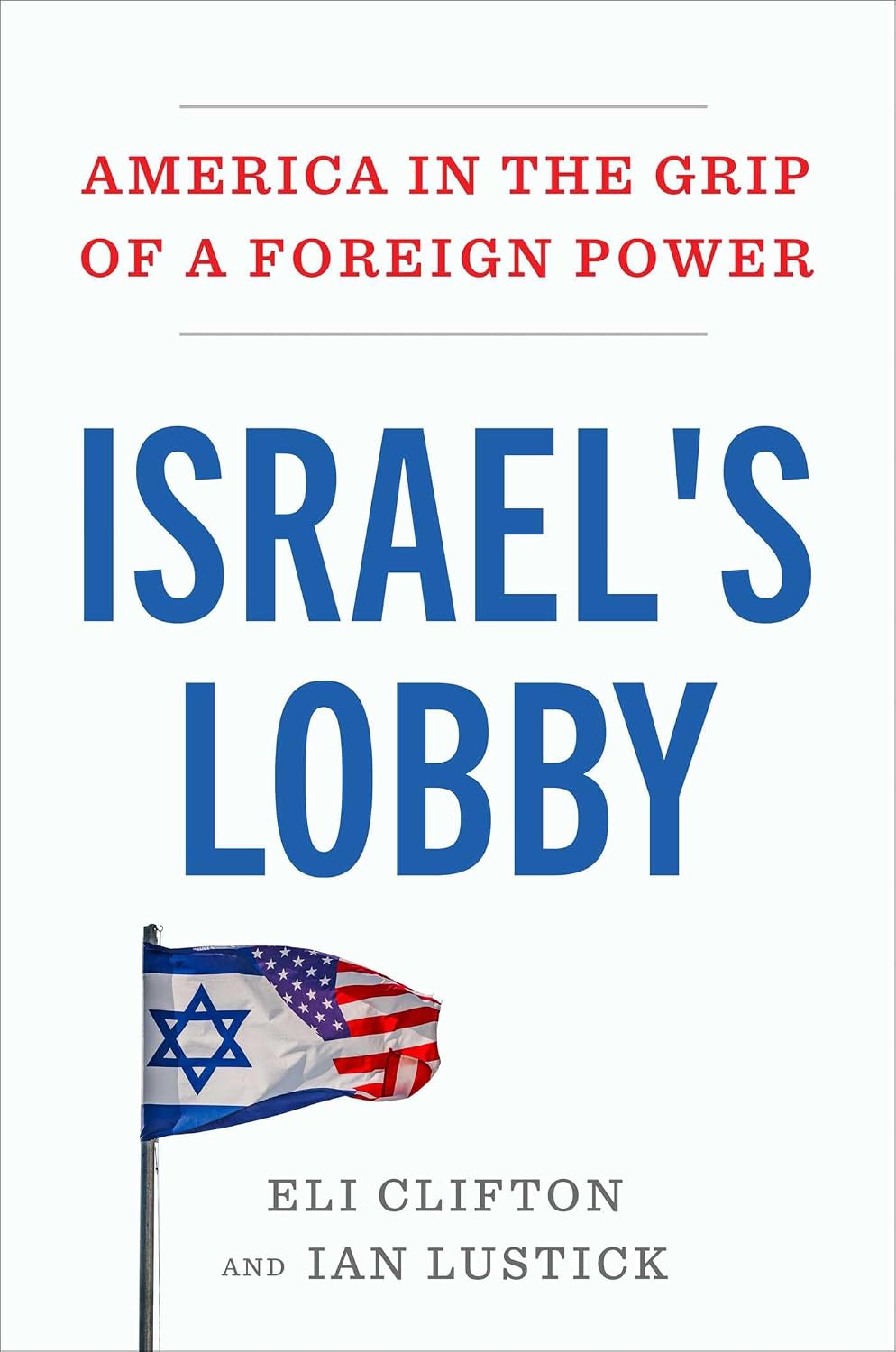
Our new book, Israel’s Lobby, tracks the growth over decades of the most powerful foreign policy lobby in American history.
Today, the influence of the groups loosely known as the Israel lobby has only become more powerful. Truman’s bind – caught between his sense of the national interest and the domestic political price of defying a powerful lobby – was something that, in the decades to come, president after president would experience.
To fast forward: Donald Trump’s decision to go to war on Iran earlier this year came after a sustained campaign by Israel to convince the US to join the disastrous operation. It also came in defiance of several of his top advisers, as well as the 45% of Republicans who hold an unfavorable view of Israel.
Ian Lustick and Eli CliftonSun 2 Aug 2026, https://www.theguardian.com/us-news/ng-interactive/2026/aug/02/pro-israel-lobby-presidents
In 1948, with war raging in Palestine, Harry Truman found himself trapped.
On one side were Zionist lobbyists and the president’s domestic political advisers, who were urging him to support the establishment of a Jewish state in as much of Palestine as possible. On the other were his top foreign policy and national security officials, led by the secretary of state, George C Marshall. Their unanimous recommendation was to prevent the establishment of a Jewish state, which they believed would trigger war in the Middle East and endanger the future of US relations with the Arab and Muslim world.
With the exception perhaps of George Washington, no diplomatic or military leader in American history had a reputation for patriotic virtue and skilled devotion to duty comparable to that of Marshall. Truman was in awe of the secretary of state, who, as chief of staff of the US armed forces, had been hailed by Winston Churchill as “the true organizer of victory” in the second world war. After the war, it had been Marshall who launched the plan named after him to rebuild Europe.
In the mid-1940s, Marshall pushed quietly but steadily against the Zionist movement’s proposals to establish a Jewish state in Palestine. He was concerned that American support would open opportunities for the Soviet Union to exploit Arab anger, put Middle Eastern oil supplies at risk in the event of a war between the Soviet Union and the United States, and require the deployment of unavailable American troops to prevent bloodshed and instability in Palestine. These were, indeed, the strongly held views of virtually all of Truman’s most important military and foreign policy advisers.
Exploiting the fact that most voters were ignorant or uncaring on the issue, the [Israel] lobby used enormous resources … to punish or reward politicians
Truman was personally and deeply moved by the suffering of Jewish survivors of the Nazi “Final Solution”, but also irritated by and at times furious with the constant hectoring to which he was subjected by campaigners for recognition of a Jewish state in Palestine, including the World Zionist Organization and a host of other Jewish delegations, friends and politicians. Despite his personal exasperation, he could not ignore them. Coming in an election year that would pit him against Governor Thomas Dewey of New York, pressures from the Zionist lobby forced him into an excruciating and embarrassing position.
Read more: The pro-Israel lobby has swayed US presidents since Truman. It must end with TrumpWith Palestine engulfed by civil war, Arab states threatening to invade and the last British soldiers about to leave the country, Truman called a meeting of his top advisers on 12 May 1948. According to Marshall’s own account of the meeting, he warned Truman against adopting the policy strongly advanced by Clark Clifford, his main political adviser, to recognize the state of Israel before it was established.
Such a move, according to Marshall, would be a “transparent dodge to win a few votes”, he said, leaving the “great dignity of the office of the President … seriously diminished”. Marshall declared he would not personally be able to vote for Truman should he bow to political pressure on the issue. A shaken Truman closed the meeting by saying he agreed with Marshall.
However, within two days, exquisitely sensitive to the tenuousness of his hold on the presidency and the power of Zionist sympathizers to throw New York’s electoral votes to the Republicans, he ordered that the US recognize Israel.
Today, the influence of the groups loosely known as the Israel lobby has only become more powerful. Truman’s bind – caught between his sense of the national interest and the domestic political price of defying a powerful lobby – was something that, in the decades to come, president after president would experience.
To fast forward: Donald Trump’s decision to go to war on Iran earlier this year came after a sustained campaign by Israel to convince the US to join the disastrous operation. It also came in defiance of several of his top advisers, as well as the 45% of Republicans who hold an unfavorable view of Israel. That decision may be most quickly explained as yet another example of the erratic policymaking that define Trump’s two terms as president. But a closer examination of the experience of several of his predecessors reveals that this presidential decision is more the rule than the exception.
The fact is that from Truman to Trump, most American presidents have caved to the demands of Israel and its advocates. Driven by the fear of domestic political defeats, presidents have regularly rejected or abandoned foreign policies that both they and their most senior advisers believed were in the best interests of the US and at the expense of making meaningful progress in bringing a peaceful resolution to the Israeli-Palestinian conflict.
Our new book, Israel’s Lobby, tracks the growth over decades of the most powerful foreign policy lobby in American history. Composed of a panoply of organizations, groups and individuals who advocate American policies that explicitly favor the interests of Israel, the lobby was nurtured – and has been encouraged and guided – by Israeli governments. Exploiting the fact that most voters were ignorant or uncaring on the issue, the lobby used enormous resources and concentrated attention to punish or reward politicians at every level depending on their willingness to follow lobby instructions.
Over 20 years after the Truman episode, for example, President Gerald Ford launched what he referred to as a “reassessment” of US policy in the Middle East. The initiative had been advanced by Ford and his secretary of state, Henry Kissinger, as a way to escape from two years of embarrassing failures to move toward a comprehensive Arab-Israeli peace agreement. Both Ford and Kissinger had become intensely dissatisfied with Israeli stonewalling.
The reassessment was conducted by the committee of “Wise Men” convened by Kissinger: former government officials who had served as pillars of the postwar US foreign policy establishment. The unanimous recommendation of the committee was pressure on Israel to withdraw from the West Bank and Gaza Strip in order to achieve a comprehensive peace, in cooperation with the Soviet Union.
Clear indications that Ford intended to accept this recommendation triggered a powerful mobilization by leading Israel lobby organizations, such as the Conference of Presidents of Major Jewish Organizations and the American-Israel Public Affairs Committee (Aipac). The lobby’s decisive achievement was a letter drafted by Aipac and delivered to Ford demanding that the president “make it clear … that the United States, acting in its own national interests, stands firmly with Israel in the search for peace in future negotiations”, signed by 76 senators.
Ford was “mad as hell” at what he believed to be an Israeli campaign to use the lobby to obstruct diplomacy. But he was cowed. To protect his chances for election the following year, Ford rejected the unanimous recommendation from the “Wise Men”, returning instead to the step-by-step process that had so infuriated him, a process of essentially buying slices of the Sinai Peninsula – seized from Egypt in 1967 – from Israel with increasing amounts of aid and then returning them to Egypt. Ford and Kissinger also vastly increased the scale and scope of US support for Israel.
That included a sweeping new collection of US political, economic, military and diplomatic commitments made in a US-Israeli Memorandum of Agreement that, along with secret annexes, was signed on 1 September 1975. Aides to Kissinger described the guarantees and concessions made to Israel in these negotiations as “mind-boggling” and “simply incredible”. In his memoir, Ford wrote bitterly about the Aipac letter signed by three-quarters of the Senate that had ruined his diplomatic plans and cast a pall on his election campaign.
Indeed, Ford lost the election to Jimmy Carter. The lobby hoped Carter, who won 71% of the Jewish vote, would abandon aspirations for a comprehensive Middle East peace, but he was quick to disappoint. The president set his sights on a peace treaty resolving the core issues of the Arab-Israeli conflict. With high poll numbers and an American public that seemed ready for a commonsense, problem-solving president, Carter voiced his belief in March 1977 in the need for a “Palestinian homeland” as a key feature of the Middle East peace he wished to achieve.
The pro-Israel lobby immediately mobilized against Carter’s peace initiative. In a closely held 50-page memorandum for the president in early June, Carter’s senior adviser on domestic political affairs warned him that he would suffer serious consequences, including risks of failing to receive the renomination of his party, as a result of lobby opposition to his public consideration of a Palestinian homeland. Undeterred, Carter offered direct criticism of what he described in an Oval Office meeting as the prime minister Yitzhak Rabin’s increasingly inflexible positions. His differences with Menachem Begin, who became Israel’s prime minister in May 1977, were even sharper. Meanwhile Carter began intensive communications with Egyptian, Syrian and Palestinian leaders.
In October 1977, the US secretary of state, Cyrus Vance, issued a joint communique with Soviet foreign minister, Andrei Gromyko, committing the superpowers to achieving “as soon as possible a just and lasting settlement of the Arab-Israeli conflict”. Though fully expecting opposition to the president’s Middle East policy, the administration was stunned by the nearly apoplectic reaction to the US-Soviet statement by both the Israeli government and the lobby. Profoundly concerned with the political damage, Carter requested a meeting with the Israeli foreign minister, Moshe Dayan, in New York. According to Zbigniew Brzezinski, Carter’s national security adviser, who was present at the meeting, “Dayan in effect blackmailed the President by saying that unless he had assurances that we would oppose an independent West Bank and that we would give them economic and military aid, he would have to indicate our unwillingness in his public statements here in the United States … ‘I can go,’ said Dayan, ‘to the American Jews.’” Faced with this threat, Carter surrendered.
The next day, Vance and Dayan issued a joint statement summarizing a US-Israeli “working paper” prepared in the early hours of the morning. The statement affirmed negotiations would be dramatically scaled back and would not frame a Palestinian homeland as a central issue. The end result was a celebrated “separate peace” between Israel and Egypt that earned Carter, Begin and Sadat Nobel peace prizes, but also led to the isolation of Egypt in the Arab world and the assassination of Sadat. It also set the stage for Israel’s invasion of Lebanon in 1982 and settlement projects that resulted in Israel’s de facto annexation of the West Bank and Gaza Strip.
It is likely, 13 years later, that President George HW Bush felt just as Carter must have felt when, faced with the Israel lobby’s ferocious opposition to his Arab-Israeli peace initiatives, he made public his frustration with its influence. In a failed effort to boost the prospects for the upcoming Madrid peace conference, Bush suspended US loan guarantees amounting to what Israel was spending on housing in occupied territories and faced ferocious opposition from the Israel lobby for doing so. In a press conference he described his exasperation.
“We’re up against very strong and effective, sometimes, groups that go up to [Capitol Hill]” Bush said. “I heard today there was something like a thousand lobbyists on the hill working the other side of the question. We’ve got one lonely little guy down here doing it.”
The lobby’s ability to thwart presidential peace initiatives was on particularly powerful display again during the Obama administration. No president before him had entered the White House with such detailed knowledge of the Israeli-Palestinian dispute, such a record of personal engagement with both Jews and Palestinians, and such a sustained commitment to closer American relations with Arabs and Muslims. Fully embracing a “two-state solution” to the problem, he launched a high-profile peace initiative to be jumpstarted by a full-scale Israeli freeze on West Bank settlements.
But a storm of outrage in Israel and among leaders of Israel’s lobby in the United States, and the public feud that erupted between Barack Obama and Benjamin Netanyahu, proved more costly to the former than the latter. Obama quickly reversed course, in effect replacing his peace process envoy George Mitchell, who was closely identified as friendly to the Palestinians, with Dennis Ross, a lobby insider, whose advice to ditch the effort altogether the president quickly implemented. Instead of pressing Israel to stop settlements, Obama made a personal call to Mahmoud Abbas, president of the Palestinian Authority, threatening to pull $450m in American aid to the Palestinians if Abbas did not withdraw an anti-settlement resolution put forward at the UN security council. In Obama’s address to the United Nations, general assembly, in the first year of his second term, he shifted dramatically from language used in his previous UN speeches. Instead of criticizing Israeli settlements and pressing for a two-state solution, he identified himself with Israeli victims of Palestinian terrorism, opposed any UN action contrary to Israel’s insistence on direct negotiations between the parties, and condemned challenges to the legitimacy of Israel as a Jewish state.
The reason for Obama’s dramatic retreat is easily inferable from his memoir, A Promised Land, in which he complains about Aipac’s ability to cow American politicians into obeisance by invoking fears of being labelled antisemitic, and emphasized his own particular vulnerability to such threats as “a Black man with a Muslim name who lived in the same neighborhood as Louis Farrakhan”.
In the wake of the genocide, the politics of the issue in America have changed as numerous Americans react with passion to Israeli onslaughts
More recently, in Joe Biden, the Israel lobby found a president who genuinely believed the Jewish state deserved the “special relationship” with the US. The firmness of that commitment was put to the test by Israel’s response to the 7 October 2023 attacks by Hamas and Islamic Jihad.
Socialized into accepting the lobby’s mantra that any “daylight” between Washington and Jerusalem would encourage Arab intransigence, and remembering the political punishment Obama received for showing “tough love” to the Israelis, Biden, quashed all recommendations from his top advisers to do something meaningful to stop the Israeli onslaught on Gazan Palestinians. When he did make limited complaints about excessive civilian casualties and implemented minor delays in American resupply of Israeli armaments, the Republican Jewish Coalition responded by slamming the administration for inserting daylight into the US-Israel relationship, while Aipac sent a detailed memorandum to members of Congress defending Israeli actions as limited, necessary and designed to reduce civilian casualties.
The experience of these administrations demonstrates the wisdom and extraordinary insight of America’s first president, George Washington. In his Farewell Address, Washington warned that the American system of government could all too easily be exploited by a group with a “passionate attachment” to a foreign country. In a system designed to rely on the mobilization of countervailing power to limit the effects of factions driven by self-interest or very particular points of view, Washington argued that since any faction committed to the interests of another country would not naturally find its influence checked by effective domestic opposition, it would therefore drive the United States into exaggerated and dangerous commitments abroad and implicate it in quarrels and wars contrary to the country’s interests.
In the wake of the genocide, the politics of the issue in America have changed as numerous Americans react with passion to Israeli onslaughts in Gaza, Lebanon and the West Bank. Biden and Kamala Harris paid heavy costs for knuckling to Israel and its lobby. Nearly a third of voters who voted for Biden in 2020 and did not vote for Harris in 2024 said that ending Israel’s violence in Gaza was the top issue influencing their voting decisions. Across both parties, support for Israel has plummeted; 60% of Americans hold an unfavorable view of Israel, and a record number of Israel critics are winning congressional primaries.
But these losses have not deterred Israel or its lobby from working to reverse Trump’s 2024 campaign promises to avoid wars in the Middle East, to pursue even closer relations between the US and Israeli militaries, and to spend millions to thwart the rise of critics of the country.
To be sure, American supporters of Israel and its governments have every right to express their opinions and work to shape public policy, and the lobby is by no means the only vehicle for moneyed interests that warp American democracy. Moreover, American presidents have free will: the George W Bush administration was run by many who were in perfect ideological alignment with the Israeli right. An incompetent and gullible Trump is plainly responsible for yielding to Israeli pressure and dragging the US into the latest war.
But unless other groups are able to act freely with other interests in mind – and without the threat of antisemitism accusations – US policy in the Middle East will remain dangerously distorted. Both to secure and advance American interests abroad and to protect American freedoms at home, Americans must unite to prevent any foreign power from enjoying the influence over policy and public debate that Israel has exercised, both directly and through the faction operating on its behalf.
- Eli Clifton is a co-founder and senior adviser at the Quincy Institute for Responsible Statecraft
- Ian Lustick is professor emeritus of political science at the University of Pennsylvania specializing in Arab-Israeli relations and US foreign policy
- This essay was adapted from the book Israel’s Lobby: America in the Grip of a Foreign Power , out 11 August by Atria/One Signal Publishers
Western countries see World War III coming


Voters in leading allied states broadly support higher defense spending, but balk when faced with policy trade-offs.
POLITICO POLL, February 13, 2026 By Tim Ross, https://www.politico.eu/article/world-war-iii-defense-spending-europe-poll/ [Excellent tables on original]
BRUSSELS — Western countries increasingly believe the world is heading toward a global war, according to results from The POLITICO Poll that detail mounting public alarm about the risk and cost of a new era of conflict.
Across all five countries polled — the U.S., Canada, the U.K., France and Germany — the vast majority of respondents think the world is becoming more dangerous. The outbreak of World War 3 is seen as more likely than not within the next five years by American, Canadian, French and British respondents.
The share of voters predicting a new global conflict has risen sharply since independent pollsters Public First asked the question in March 2025. “The changed attitudes of the Western public in under a year reflect a dramatic move to a more insecure world, where war is seen as likely and alliances are unstable,” said Seb Wride, head of polling at Public First.
But The POLITICO Poll also revealed limited willingness among the Western public to make sacrifices to pay for more military spending. While there is widespread support for increasing defense budgets in principle across the U.K., France, Germany and Canada, that support fell sharply when people learned it might mean taking on more government debt, cutting other services or raising taxes.
“Our polling shows the growing concern about war does not give leaders license to spend heavily on defense,” said Wride. “If anything, voters are now less willing to make the trade-offs needed to improve military security. So European leaders are left in a bind — unable to rely on the U.S., unable to use that as a reason to invest domestically, and under higher pressure to urgently solve this for a world where conflict feels closer than before.”
The findings, based on surveys of more than 2,000 voters in each country between Feb. 6 and Feb. 9, lay bare the challenge facing NATO leaders as they try to strengthen security at a time when public finances are tight.
That struggle will shape discussions among politicians from across the world as they head to Germany for the annual Munich Security Conference starting Friday.
With no sign of an imminent end to Russia’s four-year all-out war against Ukraine, and the U.S. taking military action in Iran, Syria, Venezuela and Africa under President Donald Trump, many voters see a growing risk of global conflict.
The pattern is particularly stark in the United Kingdom, where 43 percent believe a new world war is “likely” or “very likely” to break out by 2031 — up from 30 percent in March 2025. Nearly half of Americans — 46 percent — think a new world war is “likely” or “very likely” by 2031 — up from 38 percent last year. Among the five countries, only people in Germany think on balance that a third global war is not likely in the next five years.
When it comes to individual nations engaging in military action, U.S. respondents were the most likely to think their own country will be at war within the next five years, followed by respondents in the U.K. and France.
This suggests NATO’s nuclear powers may be more braced for conflict than other nations, and that Trump’s “president of peace” image is not convincing voters at home.
At least one in three people in the U.S., U.K., France and Canada believe a nuclear weapon is likely or very likely to be used in a war in the next five years.
Russia is seen as the biggest threat to peace in Europe, while Canadians see Trump’s America as the greatest danger to security. In France, Germany and the U.K., the second-biggest threat is seen to be the U.S., which respondents cited far more often than China.
What will it cost?
A majority of voters in France, Germany, the U.K. and Canada said their country needs to spend more on defense, with that sentiment strongest in the U.K. and Canada.
But the question is how to pay for it. The POLITICO Poll found support for more defense spending fell when people were invited to consider whether that funding should come from cuts to other budgets, taking on more government borrowing, or raising taxes.
The French and German publics are now less likely to support higher defense budgets within the context of a spending trade-off than they were last year, according to the results.
In Germany, defense spending was one of the least popular uses of money, ahead of only overseas aid.
In 2025, 40 percent of the French public and 37 percent of the German public said they would support increased defense spending when the trade-offs were mentioned. This year, backing for that fell to only 28 percent in France and 24 percent in Germany.
Both countries are now more likely to oppose spending more on defense when they have to consider how to pay the bill.
The POLITICO Poll showed there is also significant public skepticism about creating an EU standing army under one central command, an idea that has been mentioned by the European Commission. The proposal received support from only 22 percent of people in Germany and 17 percent in France.
Mandatory military service was most popular in Germany and France, where around half of people support the idea.
This edition of The POLITICO Poll was conducted by Public First from Feb. 6 to 9, surveying 10,289 adults online, with at least 2,000 respondents each from the U.S., Canada, U.K., France and Germany. Results for each country were weighted to be representative on dimensions including age, gender and geography. The overall margin of sampling error is ±2 percentage points for each country. Smaller subgroups have higher margins of error.
Nuclear waste delivers a political haymaker. Five states say it can be done.
By Francisco “A.J.” Camacho, Hannah Northey | 08/05/2026, https://www.eenews.net/articles/nuclear-waste-delivers-a-political-haymaker-five-states-say-it-can-be-done/
From proposals to bury waste under the Gulf of Mexico to shooting canisters deep underground, GOP-led states mainly see economic opportunity.
Five Republican-led states are now jockeying to host nuclear technology hubs — and possibly spent nuclear fuel — in a show of heightened political interest in breaking through chronic barriers to new U.S. reactors.
Oklahoma, Louisiana, Idaho, Tennessee and Utah are in the running to host Nuclear Lifecycle Innovation Campuses — Energy Department-backed facilities that would support the full nuclear fuel cycle, from enriching uranium and fabricating fuel to reprocessing and disposing of waste.
But even as states raise their hands, and by and large view fuel enrichment and disposal as an economic opportunity, the thorny politics and financing of new long-term nuclear projects and waste disposal also remain challenges as they negotiate terms with the Trump administration.
All five finalists called for reprocessing nuclear waste into new reactor fuel, but they varied in tone and technique for ultimate disposal of nonrecycled waste.
“Oklahoma proposes to become the first U.S. state to establish a permanent disposal solution before it begins commercial nuclear deployment. No country in the world has done this,” Oklahoma officials said in the state’s proposal.
Idaho, in contrast, seems hesitant to handle waste long term, although it, alongside Utah and Oklahoma, expressed interest in drilling deep boreholes and dropping the waste hundreds of meters underground. Louisiana is eyeing underwater disposal underneath salt domes in the Gulf of Mexico. Tennessee seeks the more conventional route by mining a repository in the eastern part of the state.
“There have been some states that have been more open to this at times, and it sort of goes back and forth,” said Allison Macfarlane, a geologist and former Nuclear Regulatory Commission chair during the Obama administration, adding that New Mexico, Texas and Wyoming were all previously interested in hosting a repository before plans fizzled out. “It’s really important that you have an implementer that knows what it’s doing and does this carefully, because otherwise you’re looking at this going sideways yet again.”
A decade and a half ago, Congress slashed project funding and halted construction of a sole waste repository at Nevada’s Yucca Mountain, in line with opposition from state residents and its elected leaders. Then-Senate Majority Leader Harry Reid (D-Nev.) was a powerful critic of the Yucca solution. That left the United States with no effective long-term solution for the country’s most radioactive waste as it collected across America’s 57 nuclear power plants.
Nevada’s Democratic senators returned to the question Tuesday, introducing legislation that would change a legal framework put in place by Congress directing the federal government to identify a sole waste depository. The Jobs, Not Waste Act sponsored by Sens. Jacky Rosen and Catherine Cortez Masto would prohibit future consideration of Yucca Mountain as the nation’s permanent repository.
Getting state buy-in to host a voluntary disposal site is seen as crucial to avoid Yucca’s pitfalls, and DOE has offered some carrots with the new innovation campus program. The department says it may offer technical expertise, cost-sharing or loan guarantees to develop a campus, and it claims each campus could attract up to $50 billion in capital investment, $25 billion in state and local tax revenue, and 25,000 jobs.
With midterms looming in November, POLITICO spoke with elected officials and technical experts about each state’s disposal proposal for tackling the generational scientific, regulatory and political challenge.
Oklahoma
Oklahoma proposes working with a startup company to drill boreholes in the Anadarko sedimentary basin in western Oklahoma for permanent waste disposal.
“Oklahoma does not have a nuclear background, but knows energy well,” Lake Barrett, a former DOE nuclear staffer through several administrations, told POLITICO. “Their proposal is light on specifics, but seems serious.”
While partnering with Santa Clara, California-based Oklo for fuel reprocessing, Oklahoma would also work with Berkeley, California-based Deep Isolation on borehole disposal. Deep Isolation plans to drill 18-inch-wide boreholes “hundreds of meters” underground. Once drilled, canisters of waste can be slotted down until the given hole is full.
A 2020 paper co-authored by Macfarlane found few areas of the U.S. have optimal conditions for borehole waste disposal. The Anadarko Basin has shale gas reservoirs and heightened earthquake risks poorly suited for borehole waste, according to the article.
Barrett further notes that the Anadarko Basin partially overlaps with the Ogallala Aquifer, an underground freshwater supply.
Deep Isolation agrees that the concerns identified by Macfarlane and her co-authors must be evaluated through site-specific characterization and modeling, but it argues that their article overstates the technology’s hurdles.
“Oklahoma meets all preliminary site-screening criteria in Deep Isolation’s published site evaluation framework,” Oklahoma officials said in their pitch to DOE.
Louisiana
Among the potential hubs put forth by Louisiana Gov. Jeff Landry (R), one envisions storing waste in salt domes under the Gulf of Mexico.
Here again, there’s a long history. In 1987, then-Louisiana Sen. J. Bennett Johnston (D) successfully scuttled plans to dispose of waste in his state by diverting it to Nevada and Yucca Mountain. Some liberal groups are contrasting that with Landry’s willingness to entertain disposal more than 3 miles into the Gulf of Mexico.
“Even as Louisiana was at its economic nadir, fighting for solvency, [Johnston] realized that a nuclear waste dump was not the answer; that whatever short-term economic gains and temporary construction jobs would come into the state would not be worth the long-term damage to the state’s environment and reputation,” Jan Moller, CEO of the Louisiana Budget Project, wrote in a Substack post.
Republican Sen. John Kennedy of Louisiana, who also chairs the Energy and Water Appropriations Subcommittee, voiced caution about the state’s proposal. “I need to learn a lot more about it before I’m going to be supportive of the rest of the country dumping its nuclear waste on Louisiana,” Kennedy said.
“It seems to me a nonstarter,” said Macfarlane, the former NRC chair. “I say it’s the least serious in terms of disposal of spent fuel.”
While Macfarlane noted that an underwater repository can be done safely, as Sweden plans to do one near its coast, going so far offshore is likely to raise costs dramatically.
Barrett, the former DOE nuclear expert, noted regulators have long been wary of site problems such as volcanic activity or water pathways that might be discovered after a repository is filled. That’s why they required waste to be recoverable from Yucca Mountain, a rule that might be renewed with a new site.
“Salt’s difficult because the canisters will sink in the salt. Now you say I’m going to put the canister in the salt, and I’m going to put it more than 3 miles offshore. That’s a little more challenging [to recover],” Barrett said. “Can you do it? Yeah, with money you could.”
Idaho
Idaho’s proposal would build on expertise at the Idaho National Laboratory and include everything from fuel enrichment to recycling and waste storage. What the proposal does not call for is a permanent repository, which Utah is better suited to host, according to the proposal.
“While Idaho will not consider the establishment of a deep geologic repository below the [Idaho National Laboratory] site or above the Snake River Plain Aquifer, Idaho is willing to consider additional long-term monitored storage solutions for the DOE, possibly including deep borehole storage, in exchange for significant financial consideration,” the state’s 113-page report says.
While Republicans in Idaho are embracing the proposal as an extension of the state’s long history of developing nuclear power — it’s home to the Idaho National Laboratory — Democrats voiced concerns about a lack of details.
“This is an opportunity to build on that legacy, bringing new investment, new jobs, and new technology to Idaho while helping restore America’s leadership in the full nuclear fuel cycle,” Lt. Gov. Scott Bedke (R) said in a statement.
But state Senate Minority Leader Melissa Wintrow, a Democrat, said that while she supports exploring a federal program, she’s concerned about the state “taking on as much as one-third of the nation’s spent nuclear fuel, especially while major questions about long-term storage, safety and responsibility remain unanswered.”
“I cannot support a proposal without clear answers, binding protections, and full accountability,” said Wintrow. “No promise of federal funding or economic development is worth risking the health and safety of Idahoans or the future of our land and water.”
Tennessee
Tennessee’s proposal is centered on Oak Ridge, a major hub of nuclear military, energy and medical technologies for eight decades. The state says a repository could be mined somewhere between 25 and 75 miles west of the city on the Cumberland Plateau.
Barrett says Tennessee’s existing ecosystem of nuclear fuel cycle companies makes it an especially strong contender for the campus program and a repository.
“One thing Oak Ridge has done is they have made deals with Radiant Nuclear for microreactor manufacturing and Oklo for fuel recycling,” Barrett noted. “They’ve made deals on enrichment.”
An Orano uranium enrichment facility planned for Oak Ridge would be a major new nuclear investment if the French company commits to the plan.
DOE had planned a fuel storage facility at Oak Ridge in the 1980s, but it was rejected by state officials. Yet political support for the nuclear industry writ-large seems on the rise in the state.
“Tennessee leads the nation in nuclear energy, which is why our state was selected as a finalist to host [DOE’s] Nuclear Lifecycle Innovation Campus,” Republican Sen. Marsha Blackburn wrote on X.
“There is no better place to innovate,” she wrote.
Utah
Utah identifies Tooele County just west of Salt Lake City for possible deep boreholes and, as a secondary preference, a mined repository.
Republican Sen. Mike Lee of Utah, chair of the Energy and Natural Resources Committee, did not comment on whether he supported the state’s disposal options as presented in Gov. Spencer Cox’s (R) proposal for the program, but he expressed interest in formally taking Nevada’s Yucca Mountain off the table as the nation’s sole repository.
The top Republican and Democrat in the Utah Senate also weighed in.
If selected, the campus would strengthen America’s domestic nuclear supply chain, create thousands of high-paying jobs and help secure our nation’s energy future,” said state Senate President J. Stuart Adams, a Republican.
State Senate Minority Leader Luz Escamilla chastised the Trump administration for failing to address the uncertain future of the Great Salt Lake. “The federal government should help protect the Great Salt Lake because it is in the national interest to do so, not because Utah agrees to take on additional nuclear waste,” Escamilla said.
Macfarlane’s research suggests the earthquake risk in western Utah makes it inappropriate for the borehole approach, but she said Utah could be a good location for a deep geologic repository.
The state’s submission lists salt domes in Millard County as a possible location for a repository, which Barrett considers a good option at face value.
“Salt is a good geologic medium for high-activity nuclear waste disposal,” he said.
Giant space radars in Pembrokeshire branded ‘instrument of evil’ as campaigners hail small victory in fight against Ministry of Defence plans

“If we put such an installation like that it makes Wales suddenly a supporter of the most provocative regime in the world at the moment. That makes enemies.”
those against it fear the US would have primary control of the dishes, helping a US-led escalation in space warfare and to turn Wales into a military target for its enemies.
The radars, which would be built by American defence company Northrop Grumman are earmarked for Cawdor Barracks, near St Davids, and are part of the AUKUS security partnership between the UK, US and Australia.
“And the argument for it bringing jobs is just ridiculous,” he added. “Because the local people won’t be involved in the operation. Jobs will be lost.”
“If we put such an installation like that it makes Wales suddenly a supporter of the most provocative regime in the world at the moment. That makes enemies.”
those against it fear the US would have primary control of the dishes, helping a US-led escalation in space warfare and to turn Wales into a military target for its enemies.
By Bronwen Weatherby, 6 Aug 2026, https://www.lbc.co.uk/article/radars-pembrokeshire-wales-campaign-5HjdfgP_2/?fbclid=IwY2xjawThW2BwZG9mAWV4dG4DYWVtAjExAHNydGMGYXBwX2lkEDIyMjAzOTE3ODgyMDA4OTIAAR4xadMM94NX9NwkoA9egZO764QyF026XrpxAGhLphH2dG6lSMLNQaypWZUNuQ_aem_AryMN-WJ0muRN-wPxngdOA
Campaigners have branded the proposed installation of twenty-seven giant space radars in Pembrokeshire “an instrument of evil”, claiming it would seriously impact the health, environment and safety of the local community.
A planning decision on the DARC – Deep Space Advanced Radar Capability – project was due to take place last week, but the Welsh Government called in the decision days before the vote – in a move that could trigger a row with Westminster over the UK’s national security.
Opponents of the radar have hailed it as a small victory in the battle against the Ministry of Defence’s (MOD) plans, as the newly elected Plaid Cymru government has been openly resistant to it.
However, the area’s Labour MP Henry Tufnell was scathing of Plaid ministers saying “their priorities are all in the wrong place”.
The radars, which would be built by American defence company Northrop Grumman are earmarked for Cawdor Barracks, near St Davids, and are part of the AUKUS security partnership between the UK, US and Australia.
Each 20-metre-high by 15-metre-wide radar dish is designed to find, track, and identify objects up to 22,000 miles out in space and once in place, the three sites – one in each nation – would connect to give a complete 360-degree, 24 hours a day view of space.
‘Desecration of the land’
Among those leading the campaign against it is Game of Thrones star Jerome Flynn who spoke to LBC, saying: “I see it as a desecration of the land.
“It’s not our airspace, it’s our beautiful coastal birds and their migratory space. And there is much evidence to show that they’re one of the biggest emitters of harmful EMFs [high-frequency ionizing radiation]
“So we need to think about human beings, including the ones that come and visit here and what it might do to the tourist industry.
“And the argument for it bringing jobs is just ridiculous,” he added. “Because the local people won’t be involved in the operation. Jobs will be lost.”
“I don’t think anybody feels like that installation is going to make us safer.
“If we put such an installation like that it makes Wales suddenly a supporter of the most provocative regime in the world at the moment. That makes enemies.”
Mr Flynn argued the radars were “antithetical” to what the St David’s peninsula represents, particularly as an important pilgrimage site.
The MOD states ‘the radio waves used by DARC are non-ionising radiation. They are not hazardous to health because they do not have enough energy to cause harmful ionisation.
‘Levels of non-ionising radiation in the area surrounding the DARC site would be less than or equal to that received from using a mobile phone, presenting no danger to members of the public in the area.’
It also argues the radar would protect satellites essential to GPS navigation, emergency communications, banking systems, weather forecasting and military operations from hostile military actions including missiles, hostile spacecrafts and blinding lasers as well as accidental hazards such as fast-moving space junk and orbital debris.
But those against it fear the US would have primary control of the dishes, helping a US-led escalation in space warfare and to turn Wales into a military target for its enemies.
Northrop Grumman’s director of space surveillance, Kevin Giammo, has previously stated that he sees DARC as a key asset in the US’s ‘Golden Dome’ initiative – a plan to create an air and missile defense shield over America.
Several of those LBC spoke with at a PARC Against DARC (Pembrokeshire Against the Radar Campaign) rally referenced Iran’s destruction of radar infrastructure in the Gulf in response to the US-Israel attacks and their fear Pembrokeshire would become a similar target.
Roy Jones, one of the group who successfully fought a similar proposal in the 1990s told LBC: “We often get accused of being NIMBY’s. Yes I feel passionate about my local landscape and my local community, but I wouldn’t want to see this thing put anywhere in Britain or anywhere in the world because it’s an instrument of evil.”
Such is the strength of feeling among some in the community that local Labour MP, Henry Tufnell, has come under personal attacks with protesters referring to him as ‘Toff-nell’, holding cut outs of his face at rallies while chanting “Where’s Toff-nell?”
In response to Plaid’s move to seize control of the planning decision, he told LBC: “How do we make sure there are good well-paid jobs, how do we make sure they go beyond the construction phase, how do we make sure we reap the benefits as a local community? Those are the right questions to be asking.
Outside his office in Haverfordwest, Mr Tufnell who has publicly advocated for the plans insisted he had been engaging with the MOD and Northrop Grumman to minimise the impact on the landscape and on health and ensure it benefits the local economy.
“Not shall we put into question our national security and hand ourselves to China and Russia on a plate and forget about our international partners. I think they’re priorities are all in the wrong place.”
Welsh Ministers are no longer able to comment on the application while the call-in process is active but a statement provided by some Plaid backbenchers said: “We do not support the construction of the DARC radar array and have been consistent in expressing our serious concerns about the impact of this project on Pembrokeshire’s landscape, tourism economy, and public health – none of which have been adequately assessed.
“The scale of opposition also makes it clear that many residents reject this proposal and the lack of transparency surrounding it.”
An MoD spokesman said: “The programme has worked with Pembrokeshire County Council to develop the planning application in accordance with applicable regulations in addition to Welsh national requirements. This will continue to be the case as the application is now considered by Welsh Ministers.”
Northrop Grumman and Montagu Evans, the planning agent for the project, were contacted for comment.
Time to build a Scotland without nuclear weapons

06 Aug 2026, https://greens.scot/news/time-to-build-a-scotland-without-nuclear-weapons
Nuclear weapons are a moral disgrace.Time to build a Scotland without nuclear weapons.
The UK Government’s commitment to weapons of mass destruction makes the case for an independent, nuclear-free Scotland, says Scottish Greens co-leader Gillian Mackay MSP.
Marking the 81st anniversary of the atomic bombing of Hiroshima, the Scottish Greens have called for the abolition of nuclear weapons and an end to the Labour Government’s “dangerous and immoral” nuclear policy.
Despite the atrocities of Hiroshima, and Nagasaki, the Labour government has described its commitment to the UK’s nuclear weapons system as “absolute”.
This past week, the UK government set out plans to spend £63.6bn over the next four years for the UK Government’s Defence Nuclear Enterprise, £47bn of which will go on nuclear submarines.
Scottish Greens co-leader Gillian Mackay MSP said:
“Today we remember all those who were killed, those who suffered unimaginable injuries and the generations whose lives were devastated by the atomic bomb.
“Hiroshima showed the world the horrifying reality of nuclear warfare – the destruction of a city and the mass killing of innocent civilians.
“The bombing of Hiroshima and Nagasaki were among the most inhumane atrocities ever committed. There can never be any justification for mass killings or the long and brutal legacy that they left behind.
“We are 81 years on and the new Prime Minister is doubling down on his dangerous and immoral policy, committing tens of billions of tax-payer’s money on submarines and nuclear warheads designed to inflict mass-destruction.
“Housing weapons on the Clyde, capable of annihilating millions of people, do not keep Scotland safe – they make our communities a nuclear target while they pay the price through cuts, poverty and crumbling public services.
“No government that genuinely believes in peace, human rights and international law should threaten the mass slaughter of civilians, putting our own communities at risk whilst lining the pockets of arms traders”
Gillian added:
“There is always money at Westminster for nuclear weapons, but never enough to eradicate child poverty, repair our public services or ensure that everyone has a warm and secure home.
“Westminster’s nuclear obsession does not have to be Scotland’s. We can keep our communities safe by removing Trident from the Clyde, and taking our place internationally as a country committed to peace and disarmament.
“Scotland deserves a future where our resources support our people and communities, not the profits of multi-national arms companies. An independent Scotland can sign the anti-nuclear treaty and be a country where the lessons of Hiroshima are reflected with a firm and steadfast commitment to peace and nuclear disarmament.”
Labour urged to end ‘dangerous’ nuclear weapons policy on Hiroshima Day
THE UK Government has been urged to put an end to its “dangerous and
immoral” nuclear policy and scrap its commitment to weapons of mass
destruction. The Scottish Greens made the comments to mark Hiroshima Day, as the party hit out at “Westminster’s nuclear obsession” which they said
makes Scotland’s “communities a nuclear target”.
In 1945, the United States
dropped nuclear bombs on Hiroshima and Nagasaki on August 6 and 9
respectively, leading to the end of the Second World War with Japan’s
surrender. The bombs killed more than 200,000 people, with the Hiroshima
bomb killing more than 140,000 people, including 38,000 children. A number
of events are taking place around Scotland to mark Hiroshima Day, including
in Edinburgh, Glasgow and Dundee.
The National 6th Aug 2026,
https://www.thenational.scot/news/26440543.labour-urged-end-dangerous-nuclear-policy-hiroshima-day/
𝗪𝗛𝗢 𝗜𝗦 𝗥𝗘𝗔𝗟𝗟𝗬 𝗜𝗡 𝗖𝗛𝗔𝗥𝗚𝗘: 𝗔𝗠𝗘𝗥𝗜𝗖𝗔 𝗢𝗥 𝗜𝗦𝗥𝗔𝗘𝗟?

Israel is experiencing a golden era of influence, but its recent moves have not produced the results it expected.
more Americans and government officials are arguing that the United States must prioritize its own interests and avoid being pulled into endless foreign conflicts.
The political relationship between the United States and Israel comes down to a fundamental question: who is actually in charge?
Ibrahim Majed, Aug 06, 2026, https://ddgeopolitics.substack.com/p/9bb?utm_source=post-email-title&publication_id=1769298&post_id=209955647&utm_campaign=email-post-title&isFreemail=true&r=1ise1&triedRedirect=true&utm_medium=email
When you look at the region today, the United States does not want a full-scale regional war. However, it also cannot afford to completely back down. Washington continues to support military pressure on Iran because a sudden retreat would undermine American deterrence, weaken its credibility among allies and adversaries alike, and erode the global perception of U.S. hegemony.
Israel, meanwhile, has pushed for even more aggressive action, creating growing tensions over how far the conflict should go.
The reality is that Israel cannot afford to keep taking endless losses, because running a nonstop military campaign with no real political achievements will eventually exhaust and destabilize any state
The balance of power between the two countries is not as simple as military strength alone.
The United States is clearly the stronger country, with far greater economic resources and military capabilities.
However, Israeli leaders have often been highly effective at navigating the political system in Washington, allowing them to build significant influence over American decision-making.
Benjamin Netanyahu has been in power for a very long time, and he understands how the American government works better than almost anyone.
In the United States, politics runs on money, lobbies, and deals made behind closed doors in Congress.
Ever since the 1960s, Israel has built a massive network of support inside Washington.
This does not mean Israel completely owns America, but it does mean Israeli leaders know exactly which politicians to talk to, which donors to use, and how to push the U.S. government to do what they want.
This influence works best when Israel’s goals match what the American President personally wants.
But there is a limit.
If a U.S. President ever feels that Israel is hurting his own political career or messing up America’s bigger plans, he has the power to tell Israel to stop, and Israel would have no choice but to listen.
The main reason America rarely puts its foot down is because the pro-Israel lobby has spent decades building power in Washington.
Israel is experiencing a golden era of influence, but its recent moves have not produced the results it expected.
The war on Lebanon in 2024 did not bring a clear victory, while the 2026 war on Iran caused massive destruction but failed to achieve its intended objectives. On the contrary, Iran emerged with a stronger regional position, greater influence, and increased leverage over key strategic waterways such as the Strait of Hormuz, giving it the ability to impact global energy markets and the world economy.
As a result, many governments and populations around the world are increasingly blaming Israel’s actions for escalating tensions and threatening the stability of critical global trade routes, including the Strait of Hormuz.
The way Israel keeps its hold on U.S. politics is through a mix of favors and political pressure, making it very risky for American politicians to speak out against Israeli decisions.
Even so, people inside the U.S. government are getting frustrated.
A leader with a big ego, like Donald Trump, hates feeling like a smaller country is bossing him around.
On top of that, when an American leader builds his entire image around being tough on Iran, he gets trapped into a corner where he cannot back down without looking weak.
Meanwhile, Iran is playing the exact same game, making unpredictable moves to counter American pressure.
This conflict has also disrupted major economic and diplomatic plans in the Middle East.
Before the recent escalations, countries like Saudi Arabia, Turkey, Egypt, Jordan, and Qatar were moving toward closer business and security partnerships with Israel, heavily pushed by figures like Jared Kushner.
However, the events of October 7 and the war that followed dramatically changed the regional and global environment.
Israel’s actions during the conflict, along with statements by some Israeli officials regarding territorial ambitions and visions of a “Greater Israel,” have increased concerns across the region and contributed to a major shift in public and political attitudes.
As a result, previous normalization and partnership efforts have been slowed or put on hold, forcing Washington to reconsider whether its regional strategy is still achievable.
At the same time, more Americans and government officials are arguing that the United States must prioritize its own interests and avoid being pulled into endless foreign conflicts.
Inside the U.S. national security system, major disagreements are emerging over how Washington should handle Israel and the wider regional conflict. Some officials and policymakers have grown increasingly concerned about Netanyahu’s government, the direction of the war, and the consequences for broader American interests.
Major American media figures and influential commentators have openly criticized these policies, showing that even within conservative circles in the United States there is growing division over the approach toward Israel and the wider conflict.
After the long, painful wars in Iraq and Afghanistan, many people in Washington no longer believe that constant military action works.
That is why you see political figures like Marco Rubio and J.D. Vance taking different approaches, it is a calculated way for political leaders to appeal to different groups of voters without losing control.
If you look back at history, America is the strongest empire the world has ever seen, but taking endless risks for a smaller ally is a dangerous strategy.
History shows that ancient superpowers, like the Roman Empire, would eventually put their foot down and crush any regional partner that caused too much trouble for the empire as a whole.
If America wants to remain the top global power, its leaders have to put American interests first instead of constantly backing another country’s moves.
Washington gave Israel a chance to handle the region on its own, but since that failed, smart decision-makers in the U.S. government are starting to think it is time to cut their losses before things get worse.
You can already see signs that both the United States and Israel are facing growing pressure and are looking for ways to manage the situation behind the scenes.
Washington’s priority is to avoid being dragged into a wider war, but it also cannot afford to appear weak or defeated.
The United States wants to preserve its image as the dominant global power and maintain its credibility and deterrence in the region.
Meanwhile, Netanyahu’s political position has become increasingly difficult, forcing his government to balance domestic pressure with the risks of further escalation.
Netanyahu is dealing with major political trouble at home and is looking for ways to protect himself if new elections happen.
On the ground, Israel is quietly trying to limit the intensity of the fighting.
Operations in Lebanon have shifted into smaller-scale actions, while direct confrontations with Iran have slowed down.
At the same time, Israeli forces in southern Lebanon continue to face attacks from the resistance, but many of these incidents are kept away from public attention to avoid highlighting vulnerabilities or creating pressure for a wider escalation.
Israel keeps quiet about these hits because it does not want the public to see its weakness or get pulled into a bigger war it cannot win.
At the same time, the resistance is keeping quiet so they can keep chipping away at Israeli forces without starting a massive new conflict.
In the end, even though Israel has been highly effective at influencing U.S. politics, the United States remains the far stronger power and will ultimately prioritize its own strategic interests.
History shows that great powers place their national interests above any individual alliance when they believe a partnership has become too costly or threatens their broader objectives.
The United States could lose its alliance with Israel and still remain a global power, but Israel’s strategic position is far more dependent on continued American military, political, and diplomatic support.
This is why Israeli leaders have repeatedly emphasized the need to develop greater independence in areas such as defense production, while pro-Israel political networks in the United States continue to push for maintaining strong American support. Their concern is that if Washington begins prioritizing its own interests over Israel’s regional objectives, Israel’s ability to sustain its current position and policies in the region would be significantly weakened.
Ultimately, the choice facing the United States is whether it continues to bear the costs of policies that primarily serve another country’s objectives, or whether it puts American interests first.
A great power maintains its strength by protecting its own security, economy, and global position, not by allowing any ally to influence the direction of its foreign policy.
1 This Month
15 October. Joint Appeal for Nuclear Abolition Day -presentation to the UN on October 15 will be live on UNWebTV
Endorse the Nuclear Abolition Day Appeal
23-25 October – on Zoom – World BEYOND War’s annual global conference

To see nuclear-related stories in greater depth and intensity – go to https://nuclearinformation.wordpress.com
-
Archives
- October 2026 (139)
- September 2026 (339)
- August 2026 (330)
- July 2026 (355)
- June 2026 (287)
- May 2026 (306)
- April 2026 (356)
- March 2026 (251)
- February 2026 (267)
- January 2026 (308)
- December 2025 (358)
- November 2025 (359)
-
Categories
- 1
- 1 NUCLEAR ISSUES
- business and costs
- climate change
- culture and arts
- ENERGY
- environment
- health
- history
- indigenous issues
- Legal
- marketing of nuclear
- media
- opposition to nuclear
- PERSONAL STORIES
- politics
- politics international
- Religion and ethics
- safety
- secrets,lies and civil liberties
- spinbuster
- technology
- Uranium
- wastes
- weapons and war
- Women
- 2 WORLD
- ACTION
- AFRICA
- Atrocities
- AUSTRALIA
- Christina's notes
- Christina's themes
- culture and arts
- Events
- Fuk 2022
- Fuk 2023
- Fukushima 2017
- Fukushima 2018
- fukushima 2019
- Fukushima 2020
- Fukushima 2021
- general
- global warming
- Humour (God we need it)
- Nuclear
- RARE EARTHS
- Reference
- resources – print
- Resources -audiovicual
- Weekly Newsletter
- World
- World Nuclear
- YouTube
-
RSS
Entries RSS
Comments RSS

