Taxpayers Must Not Be on the Hook for Bailing Out the AI Industry

If AI goes south, we should expect major pressures from the Trump administration for a debt- or taxpayer-funded bailout.
SCHEERPOST, September 3, 2026,By C.J. Polychroniou
Hundreds of billions of dollars are flooding the AI industry. Economist Gerald Epstein says this bubble could burst.
The U.S. economy is heading toward uncharted territory. Artificial Intelligence (AI) is transforming business operations and all areas of finance, the national debt is on an unsustainable fiscal path, and most middle-income Americans cannot keep up with rising costs. Moreover, as hundreds of billions of dollars are flooding into artificial intelligence, there are serious concerns that an AI bubble could trigger another bailout with taxpayer money.
In the interview that follows, leading progressive economist Gerald Epstein, who initiated and directs the Game Changers project at the Political Economy Research Institute at the University of Massachusetts Amherst, talks about AI’s impact on finance and the bailout problem and how a transformative public finance strategy can revive democracy, promote equity and social justice, and build strong and sustainable communities. Epstein is professor of economics and founding co-director of the Political Economy Research Institute.
C.J. Polychroniou: AI is possibly the fastest-growing technology in history and is already reshaping the U.S. economy in innumerable ways as organizations of all kinds are deploying AI tools across every functional area. But there are many public concerns surrounding AI, including whether it is becoming “too big to fail.” If so, taxpayer money may be used yet again to bail out private companies and institutions from collapse. What are the dangers here?
Gerald Epstein: There are indeed many public concerns about the economic and financial implications of AI. But let me focus on AI’s impact on finance as there are legitimate fears that the government may be asked at some point to bail out the AI industry, especially given the close ties of the Trump administration to AI firms.
As Marc Jarsulic and I argue in our Game Changers policy analysis “No More Bailouts,” the AI investment boom is increasing the level of risk for AI-related firms. The reason is that for these investments to be profitable, AI revenue will need to grow substantially. But some financial analysts doubt that the revenue will materialize. For example, in Bain’s Technology Report 2025, it is estimated that capital expenditures of $500 billion per year would be required to cover anticipated AI demand. To fund this investment, annual AI revenue would need to increase to $2 trillion. However, after accounting for likely cost reductions at the AI firms, Bain’s research concluded that their annual revenues would fall $800 billion short of that mark.
In that context, some of the risks of the AI-led investment boom have been shifted to financial markets as the AI boom is relying increasingly on debt. The revenues of the tech monopolies are extraordinary, but they are insufficient to pay all the costs of data centers. In 2025, the capital expenditures of the top five hyperscalers were more than 30 percent of their total revenue. They are projected to rise to more than 40 percent by the end of 2026. This has forced these companies to turn to debt and equity markets for finance. In 2025, major tech hyperscalers alone issued $120 billion in debt, but the figure was pushed toward $175 billion in 2026 and is expected to rise to $300 billion annually in the coming years.
A distorted government response to an AI-bust is in the cards. A rational policy response to an AI bust would not include bailouts of AI-related firms or their creditors. The investment boom, and the debt that helps finance it, have been engineered by sophisticated actors aiming to dominate a potentially lucrative innovation. There is no ex ante (“before the event”) government safety net for financial bets of this kind. Caveat emptor (“let the buyer beware”) applies to the firms playing the AI domination game if it ever applied to anyone. Unfortunately, we cannot count on a rational response from the current administration. Extensive conflicts of interest and cronyism mean that government bailouts for insiders would be on the table. Hyperscalers and other AI-related firms have received extraordinary government support. The Trump administration has taken over 90 federal actions to help the AI industry, including executive orders easing permitting for massive data centers, federal support for AI exports and reducing regulatory barriers for the industry. The Trumpian transactional quid pro quo is apparent. Nvidia and Intel have given the government equity to curry favor. A number of major AI companies contributed several million dollars to Trump’s White House demolition — a.k.a. his “ballroom” — fund. And AI firms continue to finance MAGA. This is business as usual for Trump.
If AI goes south, we should expect major pressures from the Trump administration for a debt- or taxpayer-funded bailout.
Bailout operations are a trademark of neoliberalism. That being said, what is the actual problem with bailouts, and how do we put an end to the bailout problem?………………………………………………………………………………………………………………………………………………………………………………………………………………… https://scheerpost.com/2026/09/03/taxpayers-must-not-be-on-the-hook-for-bailing-out-the-ai-industry/
Syria was building a nuclear reactor in Deir el-Zour under Assad, UN reports
Syria was constructing a nuclear reactor in Deir el-Zour under the
leadership of ousted former President Bashar Assad, according to a U.N.
report seen Tuesday by The Associated Press. Inspectors with the U.N.
nuclear watchdog visited several sites in Syria in August and carried out
verification work that confirmed the existence of a long-suspected nuclear
site, according to the confidential report circulated to member states.
Daily Mail 1st Sept 2026, https://www.dailymail.com/wires/ap/article-16096699/UN-report-finds-Syria-building-nuclear-reactor-Deir-el-Zour-former-President-Assad.html
You Could Be Next: Trump’s Gestapo Tactics Are Getting Worse

You might also be murdered without a trial if you happen to be on a vessel off Latin America’s Caribbean coast or in the eastern Pacific Ocean. A mere accusation of drug trafficking is enough to kill you, without any evidence presented before any court of law or neutral magistrate.
The US military announced Monday that it had again carried out a strike on a vessel in the eastern Pacific Ocean, killing two people it accused of trafficking drugs — bringing the overall death toll to 223 people killed in 67 strikes during the nearly yearlong US campaign of bombing boats alleged to be smuggling drugs.
Finally, the Trump regime is imprisoning Americans who demonstrate against its police state.
Wake up, America. You’re living in a nightmare.
Robert Reich, Common Dreams, Aug 29, 2026
Imagine living in a country that can arrest and imprison you whenever it wants, without any judge or jury deciding you did anything wrong. It can call you a “domestic terrorist” and put you in prison for life. It can even execute you on the basis of nothing more than its own decision that you’re dangerous.
Well, I have bad news for you. You’re living in that country right now.
As he loses power and popularity — and faces mounting resistance abroad and at home — Trump is enlarging his police state.
His regime is having ever more people arrested, imprisoned, and deported without any judge or jury deciding they did anything wrong. It’s using racial profiling in deciding whom to target. It’s making warrantless searches and seizures of people, their cars, and their homes. All of this violates the US Constitution.
Trump’s police state not only continues, but it is growing larger by the day.
According to a new analysis by The New York Times, the regime’s surge in immigration arrests this summer has swept up thousands of people, most of whom have not been charged with or convicted of a crime (less than 4 percent had a past violent criminal conviction).
Those being arrested, imprisoned, and potentially deported include some married to US citizens, others who entered the US legally and are pursuing asylum claims, and some who came here with temporary legal status that the Trump regime has decided to revoke.
In other words, they were all here legally.
If you have temporary protected status because you escaped from inhumane conditions in another country, ICE might now summon you to an ICE office and put a monitor around your ankle — even if you have no criminal history and are in full compliance with your immigration status. The Trump regime has unilaterally revoked temporary protected status and claims the ankle monitors are necessary to track people whom it may want to deport at some point.
You’re not even safe if you’re a US citizen born in America. ProPublica has found that more than 170 US citizens have been wrongfully detained by ICE agents in raids and protests over a recent nine-month span. It described cases involving alleged force and multiday detention without access to counsel or communication.
Some estimates put the number of US citizens subjected to ICE as much higher, but there’s no way of knowing because there’s no legal process for filtering out and protecting American citizens, just as there’s no legal process for protecting anyone else who’s here legally. Trump’s police state is extrajudicial, and it’s being done in secret.
You might even be murdered, without a trial finding you guilty of anything. In addition to Renee Good and Alex Pretti in Minnesota last January, ICE agents have murdered two others just this summer…………………………………..
You might also be murdered without a trial if you happen to be on a vessel off Latin America’s Caribbean coast or in the eastern Pacific Ocean. A mere accusation of drug trafficking is enough to kill you, without any evidence presented before any court of law or neutral magistrate.
The US military announced Monday that it had again carried out a strike on a vessel in the eastern Pacific Ocean, killing two people it accused of trafficking drugs — bringing the overall death toll to 223 people killed in 67 strikes during the nearly yearlong US campaign of bombing boats alleged to be smuggling drugs.
Finally, the Trump regime is imprisoning Americans who demonstrate against its police state………………………
These cases are the first to incorporate new guidance from the regime that classifies Antifa as a “domestic terrorist organization.” That’s despite the fact that Antifa is a decentralized movement rather than a single organization and that there is no federal charge of domestic terrorism under existing US law.
I want to make three concluding points about all this.
First, Trump’s police state not only continues, but it is growing larger by the day. Kristi Noem’s replacement as secretary of homeland security, Markwayne Mullin, along with his boss in the White House, Stephen Miller, and the secretary of defense, Pete Hegseth, have more money, manpower, and firepower than ever. They are ramping up all of their extrajudicial arrests, detentions, deportations, and murders.
The only difference between last year and now is they’re no longer announcing what they’re doing with fanfare and braggadocio, because the American public has grown wary of it.
Second, none of us is safe from this because the arrests, installations of ankle bracelets, imprisonments, deportations, and murders are made without any judge, jury, or neutral party deciding that the assumptions on which they’re based are adequate and truthful.
Not even “domestic terrorism” arrests and lengthy prison sentences necessitate judicial inquiry into what exactly is meant by “domestic terrorism” and whether defendants have done anything to justify that appellation.
Finally, this growing menace is cruel, inhumane, and likely unconstitutional. It is causing hundreds of thousands of families in our country extreme mental distress; many people are not leaving their homes for fear of being arrested or worse. It is likely chilling First Amendment rights to speak up and protest against these atrocities.
Historians looking back on this shameful period will wonder how this was allowed. How can one maniacal man in the Oval Office, his fanatical assistant, and two suck-up Cabinet secretaries have been so cruel and oblivious to basic human rights? How can their Republican enablers in Congress have been willing to go along? How can the American public have been so quiet? https://www.commondreams.org/opinion/trump-s-gestapo-tactics
Ukraine’s Mounting Political Crisis
Gordon Hahn Considering Russia and Eurasia, byGordonhahnSeptember 1, 2026
The NATO-Russia Ukrainian War is coming to its endgame in Russia’s favor, sharply raising the temperature of domestic Ukrainian politics. To add catastrophe to disaster, the Ukrainian Maidan regime, state, and army are riven with schisms threatening the existence of them all.
Thus, on the ‘left’ and on the right, particularly the far right neofascist wing of Ukrainian politics, pressure on the Volodomyr Zelenskiy iteration of the Maidan oligarchic-neofascist regime is being intensified. On the right, the 3rdArmy Corps ‘Azov’, based on the Azov neofascist political movement, has been put in charge of the defense of what remains (approximately 15 percent) of Ukraine’s hold on Russian-claimed Donetsk Oblast.
There, in western Donetsk, Russian forces have entered Dobropiliya and are in the process of encircling the Slovansk and Kramatorsk strongholds. To the west of these three towns lies nothing but undefendable open fields leading to the middle of the Dnepr River.
To this must be added the increasingly dire situation in Ukraine’s northern oblasts of Kharkiv and Sumy, with their provincial capitols under threat of siege and encirclement. Russian victories in the north would revive the threat to Kiev long dormant since the war’s first months. In the southern oblast of Zaporozhe, the road to its provincial capitol of the same name is about to open with the imminent fall of Orekhov. …….. . . . . . (Subscribers only) .https://gordonhahn.substack.com/p/ukraines-mounting-political-crisis?r=stexy
Inquiry into AUKUS – final public hearing today
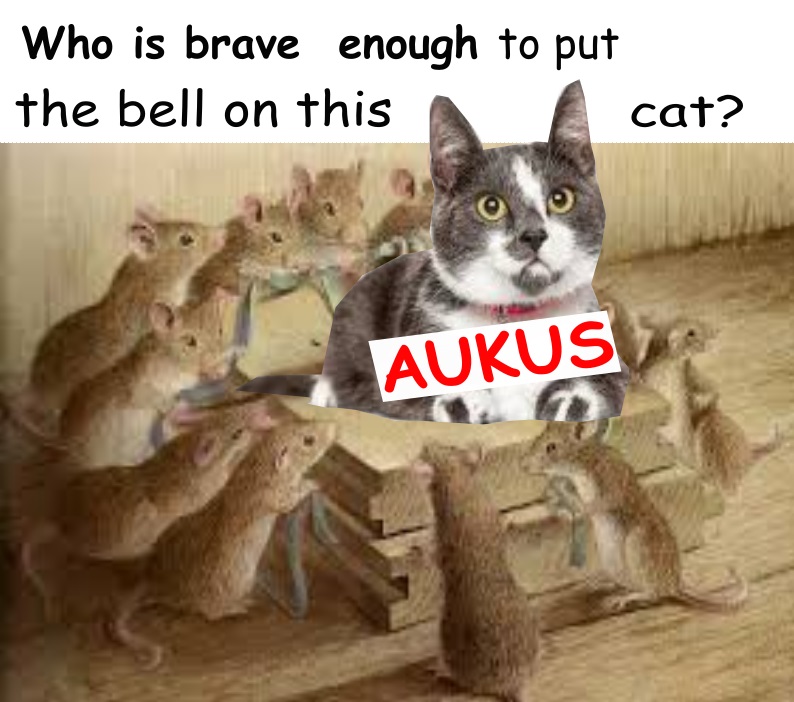
3 September 2026 AIMN Editorial, https://theaimn.net/inquiry-into-aukus-final-public-hearing-today/
Australia’s independent, crowdfunded Public Inquiry into AUKUS concludes its public hearings today in Canberra, with presentations from Andrew Wilkie, the Hon Kim Beazley AC, Dr Michael Keating, Jon Stanford and Dr Emma Shortis amongst many others.
A huge number of Australians – including a Prime Minister, Foreign Affairs and Defence Ministers, senior academics and military experts, community groups and citizens – have presented to the Inquiry across 10 day-long hearings in 8 cities around Australia over the last 12 weeks.
Up to 1,500 people a day have watched the live-streams of proceedings.
Over 800 written submissions have been received.
$200,000 has been raised by crowdfunding, from other individual donors and from civil society organisations, in order to hold the inquiry.
AUKUS Public Inquiry Lead Commissioner Peter Garrett said today that the public hearings have been an extraordinary exercise in real world democracy.
“Everyone associated with the Inquiry has found this process of community outreach and participatory democracy genuinely inspiring.
“It has been many years since Australia has seen something like this.
“The inquiry has asked many questions that the public desperately need answers to, particularly the most pressing one: will AUKUS actually keep us safe and at what cost?”
The Commissioners will draft a comprehensive report which will be presented at the National Press Club in early November.
Livestream of today’s proceeding here
We’re Half a Year Into Trump’s War on Iran. Congress Has Tools to End It.
SCHEERPOST, August 26, 2026, By Hanieh Jodat
The clash over whether the US has a functioning constitutional process for starting and ending wars is coming to a head.
The U.S.-Israeli war on Iran is entering its seventh month after a series of attempts at diplomatic negotiations moderated by Pakistan and other countries in the region. The U.S has embroiled itself in a conflict without a clear exit strategy, and Iran has shown no interest in bending under President Donald Trump’s pressure. As Washington and Tehran continue this agonizing yo-yo of threats, the growing reported number of casualties feel heavy. More than 3,400 Iranians have reportedly been killed, while over 26,000 have been wounded, including at least 4,000 women and more than 1,600 children. On the American side, the Pentagon currently reports that 14 U.S. service members have been killed and more than 700 wounded. However, one Department of Defense (DOD) official accused the Pentagon of “an accounting trick” in order to misrepresent the true casualty figures.
By now it has become obvious that Benjamin Netanyahu played a key role in convincing Trump to start this war of choice, after decades of pushing the United States to attack Iran. In recent years, Israel’s lobby, in collaboration with opposition leaders from the Iranian diaspora — including the son of Iran’s late Shah Reza Pahlavi and his monarchist advisors — and a group of hawkish American officials pushed the U.S. to the brink of this war.
Until recently, those attempts were unsuccessful — that is, until they finally found a U.S. president who would risk a strategic disaster and economic collapse for one of the most quickly unpopular wars in U.S. history. But after half a year of war, the question is no longer how we arrived at this war, but more so how Congress might limit the executive branch and force an end to the military hostilities.
Poll after poll reveals that people in the U.S. are increasingly questioning the motivation and cost of the war. After decades of U.S. military interventions across the Middle East and West Asia that have cost trillions of dollars without any sign of success, Americans have expressed their exhaustion with the financial and human toll of another conflict. A Reuters/Ipsos poll conducted in late July found that only 33 percent of people in the U.S. supported the war with Iran, the lowest level of support measured since the conflict began. Sixty-nine percent said President Trump had failed to explain the objectives of the military operation in Iran clearly.
Diplomacy and negotiations between the U.S. and Iran have repeatedly faltered since Trump entered office for the first time and pulled out of a landmark nuclear deal engineered by the Obama administration. The possibility of a lasting political settlement remains buried beneath the weight of the bombs dropped on civilians, sanctions, military threats, and political calculation. And the consequences of the war of choice with Iran are not confined to the Middle East. Rising food and energy prices, inflation, regular attacks on U.S. bases with an unknown number of U.S. casualties, and the uncertainty over the war’s future have shifted the way both Americans and the rest of the world view U.S. recklessness. And the frustration has only gotten worse; by August, roughly two-thirds of people in the U.S. opposed the war outright, according to Reuters polling.
In the face of clear American opposition to the war, the question now is whether the United States has a functioning and democratic constitutional process for deciding when a war begins, how long it continues, and when it ends.
While Trump and his war cabinet have swung back and forth between the promise of diplomacy and peace or the threats of further military escalation, Congress has unsuccessfully attempted several times to reassert its constitutional authority. Only Congress has the power to declare war, and the 1973 War Powers Resolution gives the president a 60-day clock to terminate hostilities without congressional approval. The president has now blown through that deadline — bringing about several constitutional questions for lawmakers.
An Ever-Expanding War……………………………………………………………….
A Path Forward Beyond More War Powers Resolutions
Congress can strengthen congressional oversight over the war by requiring mandatory reporting, conducting investigations, and using the Government Accountability Office (GAO) to audit the executive branch. How can Congress exercise its war powers if it doesn’t know what the Trump administration seeks to do?…………………………………………………………………………………………………………………………………………………………………………………………………………………………………………………..https://scheerpost.com/2026/08/26/were-half-a-year-into-trumps-war-on-iran-congress-has-tools-to-end-it/
Netanyahu declares West Bank ‘our land’
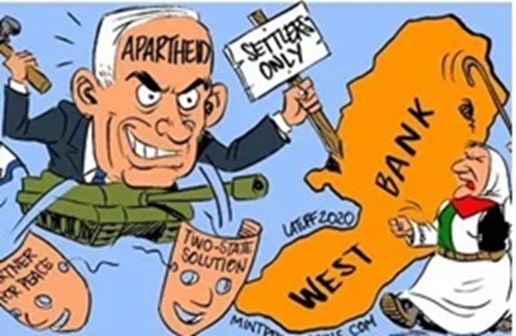
Wed, 26 Aug 2026, https://www.rt.com/news/644673-netanyahu-west-bank-settlement-expansion/
The Israeli prime minister has vowed to annex more territory for Jewish immigrants.
Israel will continue building illegal settlements in the West Bank in preparation for a“major”wave of Jewish immigration, Prime Minister Benjamin Netanyahu has said. Israel’s most recent settlement expansion triggered rebukes from its Arab neighbors and Western partners.
Netanyahu said in Jerusalem on Tuesday:
“Today, many of our brothers and sisters around the world understand: This is our land and it will remain ours. And when I say our land, every Jewish man and every Jewish woman, the door is open. We are waiting for you. We are preparing the door for major Aliyah (Jewish immigration to Israel).“
It is unclear whether the “major Aliyah” predicted by Netanyahu is actually coming. Israelis have emigrated in growing numbers since Hamas’ 2023 attack and the subsequent war on Gaza. More than 150,000 Israelis left the country from 2024 to 2025, according to a report by 972 magazine.
The Israeli prime minister spoke at an event organized by the Binyamin Regional Council, which governs 47 Jewish settlements in the West Bank. All of these settlements, which are located outside Israel’s 1967 borders, are considered illegal by the UN, and Israel’s transfer of population to them has been deemed a breach of the Geneva Convention by the International Criminal Court.
Although the Israeli state sometimes pre-authorizes the construction of settlements, they typically begin as outposts on Palestinian land, until they are retroactively legalized by the Israeli government. During his speech on Tuesday, Netanyahu boasted that his government has established and regularized “104 settlements and 160 farms and we continue to do more.”
“It isn’t easy, it’s never easy,” he continued. “The land of Israel is acquired through suffering. Sometimes also through smiles, sometimes also through arguments, but it is being acquired by us. We are not giving up, we have a vision, this is our land, and it will remain ours.”
Last week, Israel opened bidding for the construction of more than 1,200 homes in the E1 settlement project, located east of Jerusalem. Named after its designation on Israeli planning maps, the project will comprise more than 3,400 homes, and was green-lit by Netanyahu’s government last year.
The E1 plan will establish a land corridor between East Jerusalem and the existing settlement of Ma’ale Adumim, both of which are built on Palestinian land. It will also sever road links between the Palestinian cities of Ramallah and Bethlehem, located to the north and south of Jerusalem, respectively.
It is unclear whether the“major Aliyah”predicted by Netanyahu is actually coming. Israelis have emigrated in growing numbers since Hamas’ 2023 attack and the subsequent war on Gaza. More than 150,000 Israelis left the country from 2024 to 2025, according to a report by 972 magazine.
The Israeli prime minister spoke at an event organized by the Binyamin Regional Council, which governs 47 Jewish settlements in the West Bank. All of these settlements, which are located outside Israel’s 1967 borders,are considered illegal by the UN, and Israel’s transfer of population to them has been deemed a breach of the Geneva Convention by the International Criminal Court.
Although the Israeli state sometimes pre-authorizes the construction of settlements, they typically begin as outposts on Palestinian land, until they are retroactively legalized by the Israeli government. During his speech on Tuesday, Netanyahu boasted:
Eight Arab and Muslim states, including Mecca Pact members Saudi Arabia, Pakistan, and Türkiye, “categorically” rejected the plan, describing it as “a dangerous escalation.” The UK, Canada, Australia, New Zealand, European Commission, and 15 European states also condemned the project.
“The E1 settlement will undermine the prospect of the two-state solution by driving a wedge through the West Bank,” they said in a statement last Thursday. “At a time of grave instability in the West Bank with unprecedented levels of violence by settlers against civilians, and serious restrictions on the Palestinian economy, this decision is even more concerning.”
Netanyahu has suggested for years that he intends to annex the entirety of the West Bank, describing the option as “on the table” even as he signed peace accords with Arab states in 2020. Netanyahu’s hardline coalition partners have been more explicit, with Finance Minister Bezalel Smotrich urging the prime minister in June to “apply sovereignty here in Judea and Samaria [the West Bank] before the elections” in October.
Trump Sends Nuclear Agreement With Saudi Arabia to Congress
The president still insists that the deal is contingent on the kingdom normalizing relations with Israel
By Michael R. Gordon and Robbie Gramer,
President Trump has submitted a landmark nuclear
accord with Saudi Arabia to Congress for review, but hasn’t dropped his
last minute condition that the kingdom normalize relations with Israel, an
administration official said.
Wall St Journal 25th Aug 2026,
https://www.wsj.com/world/middle-east/trump-sends-nuclear-agreement-with-saudi-arabia-to-congress-7f01af2c
Israel Took Another Major Step Towards West Bank Annexation
August 25, 2026, Qassam Muaddi, Mondoweiss. https://scheerpost.com/2026/08/25/israel-took-another-major-step-towards-west-bank-annexation/
Settlers besiege Palestinian families in Qusra.
Israel’s government responds by handing settlement security to the police of hardline minister Ben-Gvir- a move seen to further entrench Israeli annexation of the West Bank.
Israel’s Defense Minister, Israel Katz, has moved to transfer security authority over Israeli settlements and settlers in the occupied West Bank from the Israeli army to the civil police, a decision Palestinians read as a decisive step toward the de facto annexation of the territory, and one that places the settler movement, in effect, in charge of policing itself.
Katz gave the Israeli army two weeks to draft a plan to transfer powers to the police, while the army’s role in the West Bank would be limited to “managing” Palestinians and controlling borders.
The announcement, made last Monday, came after ten days of settlers besieging three Palestinian families in the village of Qusra, south of Nablus. Since August 9, Israeli settlers have cordoned off the families — including three women, one of whom is elderly, and two children — inside three houses, cutting off water, electricity, and blocking access by Palestinians and Israeli anti-occupation activists who tried to deliver food to them.
The Israeli army deployed troops to the area and declared it a closed military zone, evacuating the settlers’ tent, only for the settlers to re-establish it the following day. Israeli soldiers were filmed praying and shaking hands with the settlers, sparking a public controversy over the collusion between the army and the settlers.
While the army’s failure to resolve the crisis is seen by some to have triggered Katz’s decision, the decision’s implications extend far beyond Qusra.
Another step to annexation
On the surface, transferring security powers from the army to the civil police looks like a measure to restore order and rein in settler violence that has spiked since 2022 — well before October 7 — and sparked global condemnation, even from Israel’s staunchest allies.
However, in his first public response to Katz’s announcement, Mustafa Barghouti, leader of the Palestinian National Initiative, called the move “the actual beginning of Israel’s de facto annexation of the West Bank.” Talking to Alaraby TV, Barghouthi also noted that the Israeli police is controlled by Israel’s National Security Minister, Itamar Ben-Gvir, who is a hardline settler himself. “All security powers over settlers in the West Bank will pass into the hands of settlers themselves,” Barghouthi said.
Ben-Gvir, a key ally of Benjamin Netanyahu, has systematically expanded settlers’ influence within the Israeli police since taking power.
More broadly, the decision fits a pattern that has been accelerating since the current Israeli government took office. Finance Minister Bezalel Smotrich, who holds sweeping authority over the West Bank’s civilian administration, has systematically inserted Israeli settlers into the decision-making structures of the occupation. In 2024, Smotrich said that he had “changed the DNA of the system” by creating a civilian body — staffed by settlers — inside the Israeli army’s Civil Administration, the body responsible for running the occupation’s civilian affairs in the West Bank.
This effectively replaced the military with a settler-run civilian government in an occupied territory, treating the West Bank as sovereign Israeli territory rather than occupied land. After assigning civilian governance of the West Bank to settlers and transferring security authority to police, which is all in line with the path to annexation, what remains is the formal imposition of Israeli law on the territory.
Opportunism or election politics?
The timing of Katz’s announcement is not coincidental.
The ongoing siege of Palestinian families in Qusra attracted international attention over the past week, after U.S. Ambassador to Israel, Mike Huckabee, slammed the actions of Israeli settlers in Qusra, calling them “terrorists” — an unusually sharp reaction from an official in U.S. President Donald Trump’s administration. The apparent trigger for the stern criticism is that several of the Palestinians trapped inside the three homes in Qusra were U.S. citizens.
On Monday, Palestinian-American Luai Abu Ridah arrived in Qusra from Ohio to join his family in their besieged house in the village. Once inside, Abu Ridah raised a U.S. flag on the rooftop, asserting his U.S. citizenship and deepening the crisis.
Although the logical end to the crisis would be the removal of settlers from the area surrounding the three houses and ending the siege, the political price associated with removing them is one that the current Israeli government wants to avoid at all costs, particularly with decisive Israeli elections being months away. Given that the settler movement is a main part of the voter base that is keeping Netanyahu’s right-wing coalition in power, images of Israeli forces evacuating settlers — however violent or illegal their conduct is — a few months ahead of Israeli elections, would cost the contested prime minister crucial votes.
In that sense, transferring security powers to the Israeli police, as a move, gives the impression that the Israeli government is taking decisive action. In practice, it does nothing to end the siege in Qusra: the settlers remain, and the Palestinian families stay trapped, and the new framework hands authority to a force whose minister is ideologically aligned with the settler movement. Simultaneously, the move manages the international optics of the crisis while advancing the annexation agenda, without resolving either.
Larger plan
Despite the media emphasis on the siege of Palestinian families in Qusra, it is only a moment of a sustained settler offensive, targeting and reshaping the eastern part of the West Bank.
Following October 7, Israeli settler groups launched a systematic campaign against Palestinian Bedouin communities in the eastern slopes of the Nablus and Ramallah hills, displacing almost all Palestinians from the area, and cutting off the central West Bank from the Jordan Valley.
Since last year, settler attacks have begun to focus more on the villages east of Ramallah and Nablus, particularly in the southeast of the Nablus governorate.
In July, Israeli settlers seized a house in Jaloud, southeast of Nablus, located in Area B, the 22% of the West Bank which falls under Palestinian Authority (PA) civil jurisdiction and Israeli security control under the 1993 Oslo Accords. Such attacks on built-up houses in these villages, which have escalated dramatically over the past year, achieve the strategic logic of establishing a continuous settler presence east of Nablus. This isolates the city from both the east and the south, thereby achieving geographic contiguity for settlements across the northern West Bank. This, ultimately, further fragments any prospect of a coherent Palestinian territory.
As settler violence intensified and went unchecked, the displacement of families from their houses became the defining feature of this phase. The siege of the two families in Qusra is its most extreme expression and its most internationally visible.
But beyond the immediate crisis, the Israeli government and its settler support base are claiming every opportunity to entrench annexation measures that would be very difficult for any future government to undo or reverse.
Transferring security powers in settlements to the Israeli police is one such measure. It is not an emergency response to a local incident, but a continuation of a plan that has been in the making for years.
Zelensky losing grip on power – Western media
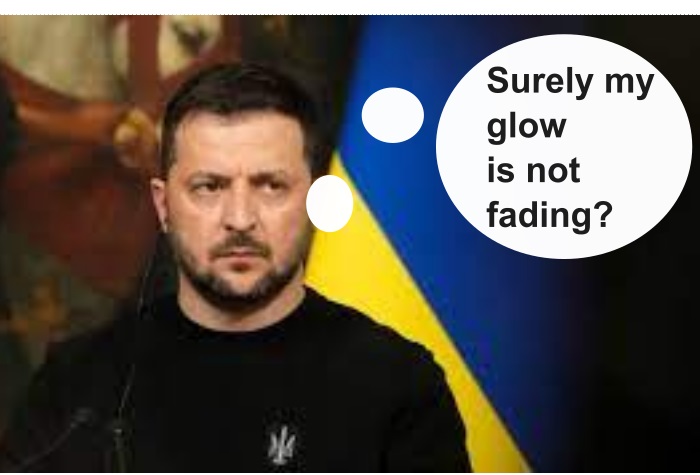
Comment: Ending the war? Peace with Russia? Zelensky would be on trial. A presidential challenger is his worst nightmare.
20 Aug 2026, https://www.sott.net/article/508029-Zelensky-losing-grip-on-power-Western-media
A widening corruption scandal and an open challenge from a former official have fueled questions about the Ukrainian leader’s political future.
Ukraine’s Vladimir Zelensky is facing his gravest political challenge in years, major US and European media outlets have reported, as a new corruption scandal engulfs his office and a former official openly challenges his leadership.
Zelensky fired the deputy head of his office, Irina Mudraya, on Wednesday after Western-backed anti-graft authorities launched an investigation into an alleged $3.4 million money-laundering scheme involving senior presidential officials. Mudraya has denied wrongdoing. It is the latest of many corruption scandals involving officials close to Zelensky.
A day earlier, former Defense Minister Mikhail Fedorov, whose surprise dismissal last month sparked weeks of public protests, released a campaign-style video denouncing government corruption and calling for elections amid what he described as “a systemic crisis of governance.”
Zelensky’s five-year presidential term expired in May 2024, but he has refused to hold a new election, citing martial law imposed after the conflict with Russia escalated in February 2022.
The Wall Street Journal called the turmoil the “biggest challenge” to Zelensky’s “hold on the presidency” since 2022, saying Fedorov appeared to be positioning himself as a leading challenger amid growing frustration over recurring corruption scandals.
The Financial Times noted that the growing list of Zelensky allies caught up in corruption investigations have contributed to his falling approval ratings and raised concern among Kiev’s Western backers, citing an analyst who concluded that “the political crisis is obvious.”
The Washington Post described Fedorov’s intervention as a “remarkably direct challenge” to Zelensky’s authority.
The Telegraph said Zelensky had been “bruised by a series of lingering corruption scandals” as investigations “keep coming.” It argued that he was accumulating powerful rivals who were once deeply loyal to him and said it appeared “increasingly possible” that he may not lead Ukraine into peacetime.
The Guardian described Fedorov as a “potent political opponent.” Experts cited by the newspaper called corruption a “symptom” of deeper problems with “bad governance,” warning that public exhaustion and Zelensky’s failure to explain his decisions had created a “perfect powder box.”
Le Monde said Fedorov had “crossed a line” no major Ukrainian politician had dared to cross since 2022 by calling for elections. The newspaper said he was seeking to capitalize on an “accumulation” of crises, including repeated corruption scandals.
Der Spiegel cited a Ukrainian political analyst who described Fedorov’s challenge as an “application for the role of opposition leader.”The magazine said Zelensky now faced his first “public and direct opponent” since the conflict escalated.
Zelensky has not publicly responded to Fedorov’s accusations. His Wednesday evening address focused on military matters and the appointment of a new defense minister and did not address the mounting political pressure.
Walt Zlotow – Trump’s Iranian Roulette: Whose regime will collapse first, Iran’s or America’s?

23 August 2026 AIMN Editorial, By Walt Zlotow West Suburban Peace Coalition, Glen Ellyn IL, https://theaimn.net/trumps-iranian-roulette-whose-regime-will-collapse-first-irans-or-americas/
Having suffered a catastrophic military defeat in his 39 day bombing war on Iran from February 28 thru April 7, Trump has pivoted to economic warfare to collapse the Iranian regime on behalf of Israel. But all out economic warfare keeps the Strait of Hormuz closed to most oil and other critical resources, guaranteeing that gasoline and everything fossil fuel based in America will rise to unacceptable levels to an American public near totally against Trump’s senseless, lost war.
Iran may be suffering economically much worse than America now, but that matters little for the likely outcome. Iran’s 90 million people will resist Trump’s Operation Economic Fury as the existential threat to their existence it represents regardless of cost. America’s 340 million people will sweep Trump’s deranged, criminal war policies causing senseless cost increases from power in ten weeks.
During that time no country will help Trump crush the Iranian regime. Russia, China and others are and will continue to help Iran weather Trump’s despicable regime change operation that has killed over 3,000 Iranians, virtually eliminated US Gulf Stage bases, inflicted over 750 US casualties in a lost cause.
Trump’s Operation Economic Fury is his last desperate gamble to prevent his Unconditional Surrender to Iran’s well-earned, well-deserved victory over Trump initiating the most senseless war in US history. It’s as if Trump put one bullet in an unloaded pistol, put it to his temple and successfully fired once. But instead, Trump keeps firing till the gun goes off. That’s Trump’s version of Iranian Roulette.
Great British Energy -Nuclear (GBE-N) outlines £730M-£1.1bn early works package
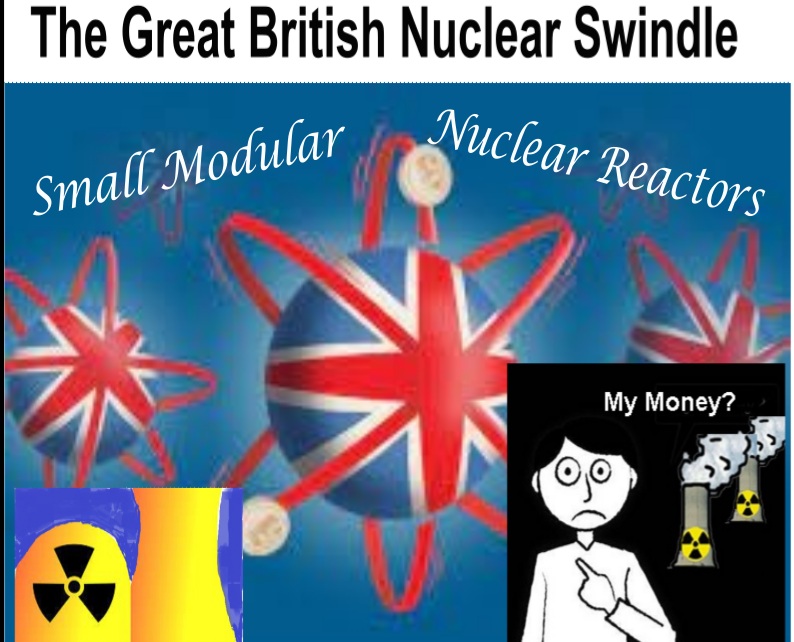
21 Aug, 2026 By Lee Kenny
Great British Energy – Nuclear (GBE-N) has outlined plans for an early works package with an estimated contract value range of £730M to £1.1bn.
A preliminary market engagement notice published on 20 August sets out the scope of the package, which covers civils, infrastructure, buildings and MEP, and earthworks.
The package covers key enabling activities required to prepare the (unlisted) site for main construction.
The early works package forms part of GBE-N’s Owner’s Scope, which encompasses the planning, licensing, design and construction activities necessary to enable a Technology Partner to install and commission small modular reactor (SMR) technology.
SMR is a category of nuclear fission reactors that are significantly smaller in size and power output than traditional gigawatt-scale nuclear plants. GBE-N has spearheaded a competition to select preferred technologies, naming Rolls-Royce SMR as a preferred designer for projects at sites like Wylfa in North Wales (main image above).
The estimated contract period is from 1 June 2028 to 1 June 2034, with a possible extension to 1 June 2037 and the work includes design from RIBA Stage 4 and delivery of ground-related enabling activities, including species relocation, remediation services, site clearance, site establishment and construction utilities.
The package also includes supporting infrastructure such as drainage and haul roads to support bulk earthworks.
The early works will establish the correct ground levels and create safe access routes for subsequent phases. They will provide the foundational physical platform needed to de-risk, mobilise and accelerate the main works programme, according to the notice.
GBE-N considered splitting the packages into two but has decided to consolidate them into one package to minimise interface risk.
GBE-N cautioned that the positions and timelines presented are based on current information and assumptions. It said the scope, dates, values and sequencing may change as programme maturity develops and further validation is undertaken.
Nuclear material found in Syria will remain in the country, minister says
By Reuters, August 19, 2026
Nuclear material found at an undisclosed site in Syria was not dangerous and would remain in Syrian custody, subject to the International Atomic Energy Agency’s guarantees, Syria’s foreign minister said on Tuesday.
Asaad al-Shibani added in a joint press conference with IAEA chief Rafael Grossi in Damascus that Syria had the right to use the material for civil and peaceful purposes.
Since the ouster of President Bashar al-Assad in late 2024, Syria’s new authorities have committed to working with the United Nations’ nuclear watchdog to address the legacy of nuclear activities during decades of Assad family rule.
Grossi said the agency was able to access the site after the Syrian government notified it.
Syria is not known to hold operational stockpiles of nuclear material for a weapons programme, but Israel bombed a suspected Syrian nuclear reactor in 2007 in the country’s eastern province of Deir al-Zor.
Reporting by Nayera Abdallah; Editing by Alex Richardson
Private investors are not rushing into nuclear. The Netherlands has chosen another path
The Dutch government has therefore opted for a wholly state-owned company.
the Dutch government is also responding to recommendations from the International Atomic Energy Agency
Martin Voříšek, 19 August 2026, https://oenergetice.cz/en/nuclear-power/private-investors-are-not-rushing-into-nuclear-the-netherlands-has-chosen-another-path
The Dutch government is gradually preparing a financing model for two new nuclear power plants in the country. After assessing investor interest, it concluded that private investors are unwilling to bear a substantial share of the construction risks. The state has therefore taken the leading role through the wholly state-owned company NEO NL. The state will also bear the costs of at least the initial phase of construction of the new units, in order to accelerate their delivery as much as possible.
The Netherlands is one of the less visible European countries pursuing the construction of new nuclear units. This is only because its preparations are still at an early stage. Its preparations follow a broader European trend in which new large-scale nuclear projects increasingly resemble anything but ordinary private investments. The state therefore acts in the project not only as regulator and provider of support, but directly as investor, lender and future owner of the project.
The Netherlands’ current advantage is that its project is only at the beginning of preparations. It can therefore still be adapted relatively painlessly to the current realities of the European market in order to ensure the earliest and least costly possible completion.
Private investors are not “rushing” to build
One of the key questions in the preparations was whether the project could be developed and delivered by private investors. However, as government documents show, private companies are prepared to participate only if the state assumes virtually all risks associated with preparing and building the power plants.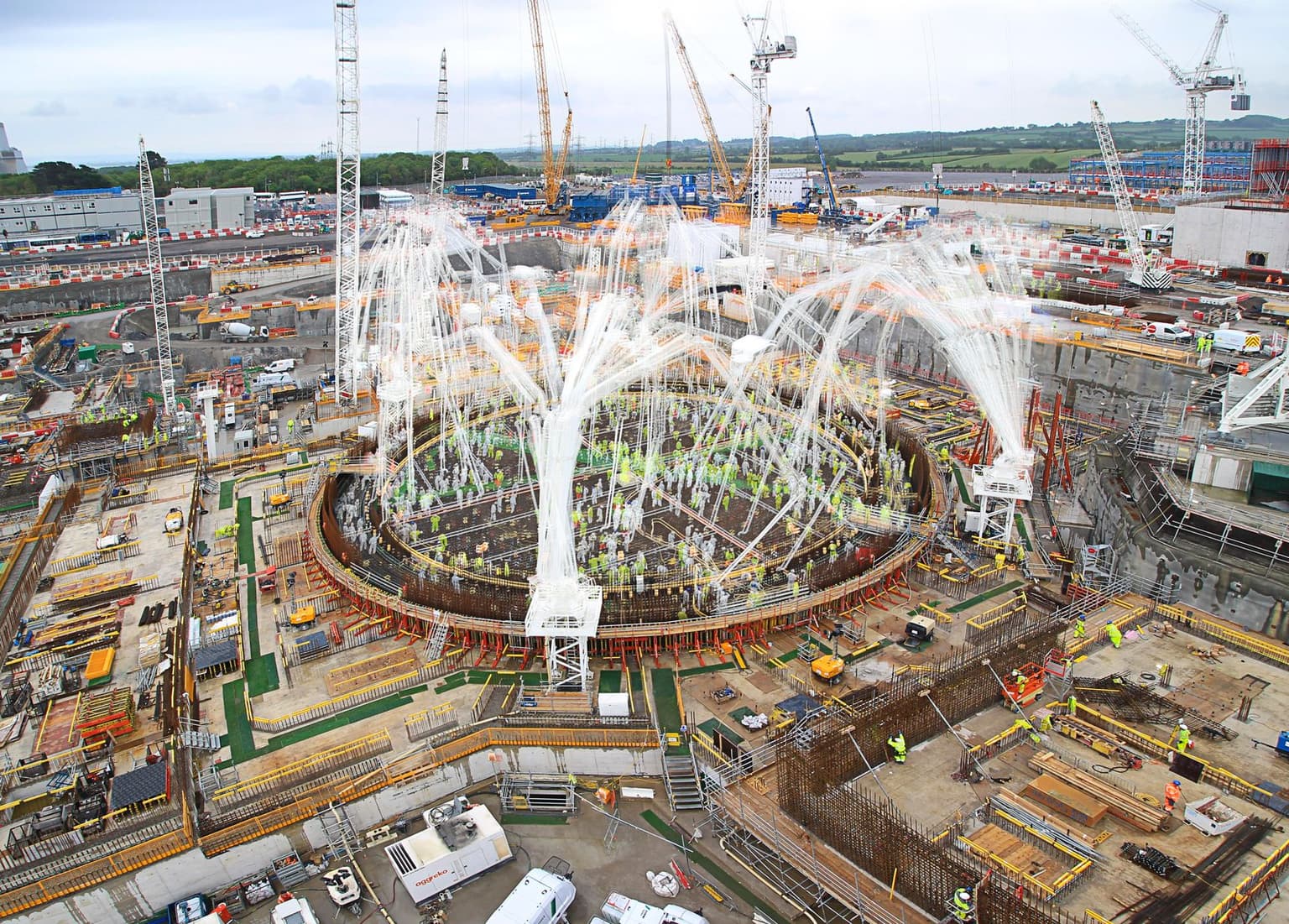 Construction of Hinkley Point C. Source: EDF
The current risks associated with building nuclear power plants are well known: in particular, long construction periods, uncertainty over costs, the duration of permitting processes, interest rate developments and future revenues in the electricity market. The combination of these factors has long constrained the ability of major nuclear projects to secure commercial financing without extensive public support.
A promising investment can thus very easily become an investor’s nightmare, entirely beyond the investor’s control.
NEO NL: State company responsible for building new units
The Dutch government has therefore opted for a wholly state-owned company, Nucleaire Energie Organisatie Nederland, abbreviated as NEO NL. Its task will be to prepare, build and operate the new nuclear power plants, with the state as its sole shareholder.
NEO NL was established on 16 February 2026 and is set to assume the role of future owner and operator of the units. In doing so, the Dutch government is also responding to recommendations from the International Atomic Energy Agency, according to which the future operator should become involved in project preparations as early as the design and construction phase.
The state expects this arrangement to provide greater control over the project, particularly over the choice of technology, risk allocation and the long-term operation of the plants.
State control over technology selection was, after all, also one of the priorities of the Czech government. It first excluded suppliers from China and Russia from the tender to supply units at Dukovany, while the final choice was also the result of agreement between ČEZ and the state.
The state will take over project financing, at least during the first construction phase
As early as October 2025, the Dutch government stated that, according to its analysis, fully state-backed financing was the least costly option in terms of the project’s total costs. The state can generally obtain funding on better terms than a private company. While a higher share of private financing could reduce the impact on the budget, it would make the entire project more expensive.
Once the power plants are completed, the interest rate is to be set at the yield on Dutch government bonds plus one percentage point. In its documents, the Dutch government specifically refers to the Dukovany project, whose public-support model for one unit inspired it.
In June this year, the cabinet confirmed that the state would bear all financing costs for the two new large power plants, at least during the first phase of their construction. Private financing remains theoretically open for later refinancing or a potential equity contribution by the supplier, but not as the main source of funding in the early phase of the project.
Two locations under consideration, two main suppliers
Alongside the financing model, the question of the unit supplier is also gradually becoming clearer. The Netherlands initially assessed options from France’s EDF, US-based Westinghouse and South Korea’s KHNP. However, KHNP withdrew from the technology selection process in March 2025. Two Western technologies therefore remain in contention.
The project currently covers two large units, but the government is considering including an option for two additional reactors in the contract. Here, too, the Czech approach is an evident inspiration: the current contract with KHNP represents an order for two reactors at the Dukovany site and an option for two further reactors at Temelín. Such an approach could shorten preparations for the third and fourth units while improving the negotiating position in agreeing the price and delivery terms.
The site selection has not yet been fully finalised. Although the government excluded several initially considered options in June this year, it is still deciding between Eemshaven in the province of Groningen and a site near Terneuzen in Zeeland.
From the perspective of the transmission system, Eemshaven is the most favourable option. TenneT states that 3.2 GW of new capacity can be connected there without additional investment beyond the network expansion already planned. Terneuzen, by contrast, requires significant measures. According to TenneT, connecting 3.2 GW of new nuclear capacity would require further extensive grid upgrades, or potentially redispatching at costs of up to hundreds of millions of euros annually.
The cabinet wants to decide on its preferred site by the end of 2026. A proposal for a formal siting decision is to follow in the first half of 2027.
The Netherlands follows the Czech construction model
For Czechia, the Dutch development is important above all as further confirmation that the private financing model for large nuclear units in Europe is receding into the background. In both countries, the state is taking on the role of principal investor and establishing a structure intended to reduce financing costs while enabling long-term management of the project.
The Netherlands is directly drawing inspiration from the Czech approach to an interest-free loan during construction. However, the Czech model for Dukovany is more developed and entails a broader transfer of construction and financial risks to the public sector.
The difference lies primarily in the institutional arrangement. The Netherlands is creating a separate company, NEO NL, which is to prepare, own and operate the project, whereas the Czech project is being implemented through EDU II, with the state still holding a dominant stake and with a possible increase in the state’s share to as much as 100% through the nationalisation of parent company ČEZ.
British Foreign Policy on Autopilot: Escalating in Ukraine Without Strategy, Consent or Hard Power
In conversation with Mary Dejevsky
Ian Proud, Aug 19, 2026
I spoke with veteran journalist and commentator Mary Dejevsky about the mounting sense of drift in British foreign policy. Our discussion ranged widely—from her recent travels to Greenland and an upcoming trip to Mongolia—to the sharpening tensions with Russia and the quieter but consequential contest unfolding in the Arctic. What emerged most clearly was a picture of a United Kingdom continuing to deepen its military commitment to Ukraine while lacking a coherent strategy, public consent, or the hard power to underwrite the risks it is taking.
Mary described a Whitehall that appears to be on autopilot. Neither the new Foreign Secretary, David Miliband, nor the Prime Minister rushed to Kyiv as an opening gesture, yet both have doubled down on the previous government’s maxim that “Ukraine’s defence is our defence.”
In recent days this has extended to reports of British-made drones striking deep inside Russia. The Russian embassy in London responded with warnings of consequences; British officials expressed indignation.
Mary found both the escalation and the surprise at Russia’s reaction astonishing.
There has been no meaningful parliamentary debate, no clear statement of heightened risk to the United Kingdom itself, and no recognition that such support may actually prolong a proxy war that is already catastrophic for Ukraine’s demographics and future viability as a state.
This policy sits uneasily alongside Britain’s diminished military capacity. Submarines are in repair, stocks of munitions have been drawn down, and the army is a fraction of its former size.
Russia, by contrast, fields a far larger force and a shipbuilding programme that eclipses our own. Any retaliation is more likely to occur in the legal grey zone of the high seas—seizing vessels—than through direct attack on British soil.
Yet the absence of a defence attaché in Moscow for over a year, and the collapse of earlier post-Cold War naval cooperation, leaves little room for de-escalation.
As Mary observed, Europe has forfeited any plausible role as mediator in the Ukraine war and now appears content to keep the conflict alive long after American enthusiasm has cooled.
Threaded through our conversation was the Arctic dimension, where commercial rather than purely military competition is gathering pace.
Mary’s recent voyage along Greenland’s west coast revealed a sparsely populated, logistically forbidding territory still heavily dependent on Danish subsidies.
Chinese attempts to secure mineral footholds failed on commercial grounds.
Yet Beijing has now announced a regular “Silk Ice Road”—a summer trade route hugging Russia’s Arctic coast and destined, in practical terms, for European ports such as Felixstowe.
This is not primarily a challenge to American maritime primacy in the Pacific; it is a bid to tighten commercial ties with Europe and reduce transit times.
Therefore, Washington’s renewed interest in Greenland—bases, the Northwest Passage, and the so-called Golden Dome—can be read partly as a bid to lock in European allegiance in the face of a growing reality of Eurasian interconnectedness, driven by China.
Russia, already possessed of the world’s longest Arctic coastline and its own Northern Sea Route, has little incentive to seek additional territory but does, ultimately, see itself as a key Eurasian power broker.
Taken together, these strands expose a deeper problem.
Britain continues to trade on past martial glories while its strategic reviews dissolve into unfunded pick-and-mix lists and domestic voices—concerned with jobs, infrastructure and everyday security—remain largely unheard.
The result is policy that heightens risk in the absence of strategy.
Conversations such as this one with Mary Dejevsky are a small counterweight: an insistence that peace, not perpetual escalation, remains the more responsible national interest for Britain and Britons alike.
You can watch the full conversation here:
1 This Month
15 October. Joint Appeal for Nuclear Abolition Day -presentation to the UN on October 15 will be live on UNWebTV
Endorse the Nuclear Abolition Day Appeal
23-25 October – on Zoom – World BEYOND War’s annual global conference

To see nuclear-related stories in greater depth and intensity – go to https://nuclearinformation.wordpress.com
-
Archives
- October 2026 (139)
- September 2026 (339)
- August 2026 (330)
- July 2026 (355)
- June 2026 (287)
- May 2026 (306)
- April 2026 (356)
- March 2026 (251)
- February 2026 (267)
- January 2026 (308)
- December 2025 (358)
- November 2025 (359)
-
Categories
- 1
- 1 NUCLEAR ISSUES
- business and costs
- climate change
- culture and arts
- ENERGY
- environment
- health
- history
- indigenous issues
- Legal
- marketing of nuclear
- media
- opposition to nuclear
- PERSONAL STORIES
- politics
- politics international
- Religion and ethics
- safety
- secrets,lies and civil liberties
- spinbuster
- technology
- Uranium
- wastes
- weapons and war
- Women
- 2 WORLD
- ACTION
- AFRICA
- Atrocities
- AUSTRALIA
- Christina's notes
- Christina's themes
- culture and arts
- Events
- Fuk 2022
- Fuk 2023
- Fukushima 2017
- Fukushima 2018
- fukushima 2019
- Fukushima 2020
- Fukushima 2021
- general
- global warming
- Humour (God we need it)
- Nuclear
- RARE EARTHS
- Reference
- resources – print
- Resources -audiovicual
- Weekly Newsletter
- World
- World Nuclear
- YouTube
-
RSS
Entries RSS
Comments RSS

