USA govt acknowledges the many cancers in its nuclear test veterans
 DISEASES ACKNOWLEDGED BY THE UNITED STATES GOVERNMENT TO BE CAUSED BY PARTICIPATION IN ATMOSPHERIC TESTING OF NUCLEAR WEAPONS, Paul Langley’s Nuclear History Blog, 2 Jan 2012
Leukaemia (other than chronic Iymphocytic leukaemia)
Cancer of the Thyroid
Cancer of the Breast
Cancer of the Pharynx
Cancer of the Oesophagus
Cancer of the Stomach
Cancer of the small intestine
Cancer of the Pancreas
Multiple Myeloma
Lymphomas (except Hodgkinís disease)
Cancer of the Bile Ducts
Cancer of the Gall Bladder
Cancer of the liver (except if cirrhosis or hepatitis indicated)
Cancer of the urinary tract, which also translates to the bladder and kidneys
Cancer of the salivary glands
Incorporated into public law 100-321, 20.5.88.

“This law gives US atomic exservicemen due recognition for the unusual service they rendered, and is an expression of gratitude of the American people toward their atomic veterans The law enables Veteran Affairs benefits to flow to US atomic veterans who are afflicted. The US government m relation to nuclear veterans considers the nature of service plus the development of any of the above diseases sufficient cause to quality for Veteran Benefits regardless of recorded dose rates received. All US nuclear test service personnel are officially Veterans.” http://nuclearhistory.wordpress.com/2011/12/31/diseases-acknowledged-by-the-united-states-government-to-be-caused-by-participation-in-atmospheric-testing-of-nuclear-weapons/
Ionizing Radiation from Chernobyl and the Fraction of Viable Pollen
Tim Mousseau – latest Chernobyl paper in International Journal of Plant Sciences:
Oct 05, 2016
Pollen viability is an important component of reproductive success, with inviable pollen causing failure of reproduction. Pollen grains have evolved mechanisms to avoid negative impacts of adverse environmental conditions on viability, including the ability to sustain ionizing radiation and repair DNA. We assessed the viability of 109,000 pollen grains representing 675 pollen samples from 111 species of plants in Chernobyl across radiation gradients that spanned three orders of magnitude. We found a statistically significant but small and negative main effect of radiation on pollen viability rates across species (Pearson’s r = 0.20). Ploidy level and the number of nucleate cells (two vs. three) were the only variables that influenced the strength of the effect of radiation on pollen viability, as reflected by significant interactions between these two variables and background radiation, while there were no significant effects of genome size, pollen aperture type, life cycle duration, or pollination agent on the strength of the effect of radiation on pollen viability.
Introduction
Most organisms are susceptible to environmental perturbations—such as climate change, extreme weather events, pollution, changes in nutrient availability, and changes in ionizing radiation levels—but the effects of such perturbations on individuals, populations, and ecosystems are variable (Candolin and Wong 2012; IPCC 2013; Møller and Mousseau 2013). In order to better understand these effects and to predict how a given species would respond to environmental disturbances, a study of the specific effects at different stages of organisms’ life cycles is required. Since reproduction is a key phase in the life cycle of any organism, reproductive effects are of particular interest. In the case of the effects of ionizing radiation, the negative consequences for reproduction in response to acute irradiation have been studied for decades and are well established (review in Møller and Mousseau 2013). However, the effects of long-term chronic exposure to low dose radiation are poorly understood.
Pollen grains are susceptible to the effects of environmental perturbations, which can have significant negative consequences for plant reproduction through pollen limitation (Delph et al. 1997; Ashman et al. 2004). Potential negative environmental effects include those resulting from elevated levels of ionizing radiation (Koller 1943). Therefore, plants have mechanisms to protect themselves from such effects, such as DNA repair, bi- or trinucleate cells, or redundancies in the genome resulting from duplications.
The area around Chernobyl in Ukraine has proven particularly useful for studying the effects of radioactive contamination on ecological and evolutionary processes at a large spatial scale. The Chernobyl nuclear accident in April 1986 led to the release of between 9.35 × 10³ and 1.25 × 10⁴ petabecquerel of radionuclides into the atmosphere (Møller and Mousseau 2006; Yablokov et al. 2009; Evangeliou et al. 2015). These radioactive contaminants were subsequently deposited in the surrounding areas of Belarus, Russia, and Ukraine but also elsewhere across Europe and even in Asia and North America. The pattern of contamination is highly heterogeneous, with some regions having received much higher levels of radionuclides than others, owing to atmospheric conditions at the time of the accident (fig. 1). To this day, the Chernobyl area provides a patchwork of sites that can differ in radioactive contamination level by up to five orders of magnitude across a comparatively small area. Even decades after the accident, the amount of radioactive material remaining around Chernobyl is enormous (Møller and Mousseau 2006; Yablokov et al. 2009).
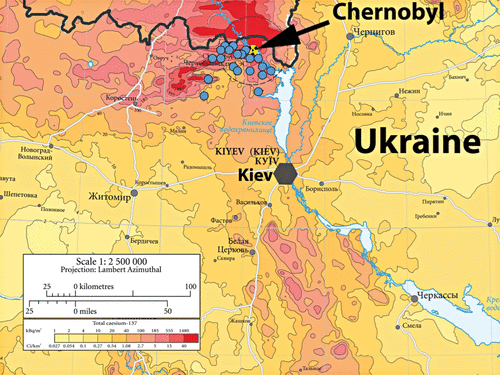
Fig. 1. Map of the distribution of radioactive contamination in the Chernobyl region, with pollen sampling locations marked. Adapted from DeCort et al. (1998).
Because of the unprecedented scale and global impact of the Chernobyl event, it is not surprising that it generated significant interest in both the scientific community and the general public. As a result, studies have been conducted to assess the consequences of Chernobyl for human health and agriculture as well as its biological effects, ranging from the level of DNA to entire ecosystems. Since ionizing radiation has long been well established as a mutagen (Nadson and Philippov 1925; Muller 1950), a large proportion of the research effort has focused on examining changes in mutation rates in areas that have been radioactively contaminated to different degrees as a result of the accident. Although there is considerable heterogeneity in the results of these studies, most have detected significant increases in mutation rates or genetic damage following the Chernobyl disaster, with the rates remaining elevated over the following 2 decades (reviewed in Møller and Mousseau 2006). For example, the mean frequency of mutations in Scots pine (Pinus sylvestris) is positively correlated with the level of background radiation, and it is 10 times higher in contaminated areas compared with control sites (Shevchenko et al. 1996). A study of Scots pine seeds detected elevated mutation rates within the exclusion zone over a period of 8 yr following the accident (Kal’chenko et al. 1995). In wheat (Triticum aestivum), the mutation rate was six times higher in radioactively contaminated areas compared with controls (Kovalchuk et al. 2000). Likewise, the frequency of chromosomal aberrations in two varieties of wheat grown within the Chernobyl exclusion zone 13 yr after the disaster was elevated compared with the spontaneous frequency of chromosomal aberrations in these cultivars (Yakimchuk et al. 2001). The levels of chromosome aberrations in onions (Allium cepa) were also positively correlated with the intensity of radioactive contamination in plants grown 20 yr after the accident (Grodzinsky 2006). Therefore, there is considerable evidence showing increased mutation rates in plants in the most contaminated sites (Møller and Mousseau 2015).
On the basis of the results of these studies, one might expect that a similar relationship between radiation level and the frequency of abnormalities would be seen in pollen. Indeed, Kordium and Sidorenko (1997) reported that the frequency of meiotic anomalies in microspore formation and the frequency of pollen grain viability was reduced in 8%–10% of the 94 plant species studied as a function of the intensity of gamma radiation 6–8 yr after the accident. In violets (Viola matutina), the proportion of viable pollen was negatively correlated with background radioactive contamination (Popova et al. 1991). While it is evident that plants differ in their susceptibility to ionizing radiation, the reasons for this variation are not entirely clear. It is likely that some species develop tolerance and/or resistance to mutagenic effects of radiation to a greater extent than others (Baer et al. 2007). For example, pollen of silver birch (Betula verrucosa), which grows in areas contaminated by the Chernobyl accident, showed elevated DNA repair ability compared with pollen from control areas, consistent with adaptation or epigenetic responses to increased radiation (Boubriak et al. 2008). There are also indications that genome size might affect the response of different species to radiation. Among the plants studied by Kordium and Sidorenko (1997), the rate of pollen viability decreased with increasing radiation to a higher degree in plants with smaller genomes (Barnier 2005), although the actual mechanism remains unknown. One potential explanation is that a larger genome might contain multiple copies of some genes as a result of duplication, rendering mutations in one of these copies less deleterious than if there were only a single copy present, although this explanation may not universally apply (Otto 2003).
In order to assess the effects of radioactive contamination on plant reproduction and to further assess species-specific differences in the effects of ionizing radiation on pollen viability, we analyzed pollen samples from plants growing in the Chernobyl region. We expected that the effects of radiation would differ among species, with some plants showing higher pollen inviability rates than others as a result of elevated radiation levels. A second objective was to test whether observed differences in pollen viability rates could be attributed to differences in phenotype among species, with possible explanatory factors including pollen size, the number of pollen apertures, ploidy, genome size, bi- or trinucleate cells, life span (annual vs. perennial), and pollination agent. We hypothesized that each of these factors could be related to the plants’ ability to resist or to tolerate radiation-induced mutations. Pollen size, genome size, and ploidy are all related to the amount of DNA and the number of copies of genes contained in the pollen grain. Because the pollen aperture—as the site of pollen germination—could be particularly susceptible to radiation-induced damage, we included the number of apertures as a potential explanatory variable. Furthermore, whether a plant is annual or perennial is related to individual longevity and, consequently, to the number of mutations that can accumulate over its lifetime as well as to the number of generations from the time of the Chernobyl accident until the time of sample collection. This may be particularly relevant for plants, given that germ tissue is derived from somatic tissues during each reproductive event as opposed to most animals, in which germ cells terminally differentiate very early during embryonic development (Buss 2006). Pollen viability depends on the ability of pollen to assess the integrity of its DNA and to repair the DNA of the generative nuclei before division (Jackson and Linskens 1980). This process is particularly important for binucleate pollen cells in which this happens during pollen germination, which is in contrast to trinucleate pollen cells, in which the need for DNA repair during pollen germination is less evident. DNA repair efficiency and adaptation of plants to chronic irradiation may also depend on the composition of radiation at the contaminated sites (Boubriak et al. 1992, 2008).
Across all plant species, we found a statistically significant relationship between radiation and the frequency of viable pollen of an intermediate magnitude (Cohen 1988). We also documented significant interactions between species and radiation, radiation and cell number, and radiation and ploidy. However, the significant effect of ploidy disappeared when both ploidy and whether cells were bi- or trinucleate were entered simultaneously in a single model. Most effects were small to intermediate in magnitude, as is commonly the case in studies of living organisms (Møller and Jennions 2002). We emphasize that our study included by far the largest sample size so far reported to detect effects of chronic radiation on pollen viability. However, we also emphasize the limits of our study. Many plant species could not be included simply because we could not locate multiple flowering specimens during our fieldwork. These and other sampling limitations reduced the number of pollen grains and the number of species that could be included.
Species differ in their susceptibility to radiation, as demonstrated for birds at both Chernobyl and Fukushima (Møller and Mousseau 2007; Møller et al. 2013; Galván et al. 2014), and in terms of adaptation to radiation (Galván et al. 2014; Møller and Mousseau 2016; Ruiz-González et al. 2016). The observed interspecific differences in radiation effects reported here for the proportion of viable pollen could be due to adaptation to radiation through tolerance of radiation-induced mutations or through induction of increased DNA repair in organisms living in contaminated areas. Another possibility is that some species are more resistant to radiation because of historical exposure in radiation hotspot areas with high natural levels of radiation (Møller and Mousseau 2013).
We observed a significant relationship between the proportion of viable pollen and the interaction between ploidy and radiation. Such a finding might suggest that resistance to deleterious effects of radiation is based on redundancy in the genome, where species with higher ploidy levels have an advantage if they have multiple copies of a given gene. We failed to detect an effect of selected physical attributes of pollen grains—such as genome size, pollen size, and aperture type—on the susceptibility of pollen to radiation. Furthermore, whether a plant was annual or perennial or whether it was insect or wind pollinated did not affect the proportion of viable pollen. Finally, whether plants produced bi- or trinucleate pollen had a significant effect on pollen viability, and the interaction between radiation and cell number was also significant.
While we confirmed the general finding of Kordium and Sidorenko (1997) that in approximately 10% of species the proportion of viable pollen is negatively correlated with radiation level, we were unable to reproduce their findings with respect to the overall magnitude of this effect. Our observed effect size was much smaller, and the slopes for individual species differed significantly from those reported by Kordium and Sidorenko (1997). Because more than 10 yr have passed between the two studies, we suggest that a change in radiation effects has taken place over time, for example, as a result of adaptation or accumulation of mutations. Another possible explanation for the discrepancy has to do with sample size, since our study included a much larger number of pollen samples and sampling locations than the study by Kordium and Sidorenko (1997). These explanations are not necessarily mutually exclusive.
Whereas other studies have demonstrated significant negative effects of radioactive contamination around Chernobyl on mutation rates and fitness in general, our study of pollen viability shows a very small effect, and some species even show positive relationships between pollen viability and radiation that is suggestive of adaptation to increased levels of radiation. However, on the basis of the current study, it is not possible to determine whether the observed heterogeneity reflects evolved adaptive responses or is the consequence of unmeasured selective effects on characters correlated with pollen viability, which could in part explain an overall positive effect of radiation (for a discussion of evolutionary responses in Chernobyl, see Møller and Mousseau 2016). Experimental approaches would be needed to decipher the mechanisms underlying the heterogeneity in plant responses observed here (Mousseau 2000).
The observed variability in susceptibility to radiation is a common finding in studies of the effects of radiation from Chernobyl (Møller and Mousseau 2007; Galván et al. 2011, 2014; Møller et al. 2013). While our results are consistent with earlier findings that DNA repair mechanisms may play an important role in adaptation to life in radioactively contaminated environments—especially for plants, which are sessile and hence cannot move to less contaminated areas—further research is required to test this explicitly. Finally, because of the observed differences in resistance to radiation among species, it is likely that even small overall effects of radiation—such as the one on the proportion of viable pollen described here—can have significant consequences for species composition and abundance at a given location and, therefore, for ecosystem characteristics and functioning.
In conclusion, we have found a statistically significant overall negative relationship between radiation intensity and the frequency of viable pollen in plants growing in contaminated areas around Chernobyl. The magnitude of this effect across species included in our study was intermediate. We only found a significant relationship between the proportion of viable pollen and ploidy × radiation interaction, bi- or trinucleate cells, and bi- or trinucleate cells × radiation interaction. This suggests that DNA repair mechanisms could play an important role for the ability of plants to resist increased radiation, at least when it comes to pollen formation.
Acknowledgments
We thank Puri López-García for use of a microscope for pollen counts. This work has benefited from the facilities and expertise of the cytometry platform of Imagif (Centre de Recherche de Gif; http://www.imagif.cnrs.fr). We thank Spencer Brown and Mickaël Bourge for their help with the flow cytometry measurements and Srdan Randić for help with pollen counts. Field collections for this study were supported in part by the Centre National de la Recherche Scientifique (France), the North Atlantic Treaty Organization Collaborative Linkage Grant program, the Fulbright program, the University of South Carolina College of Arts and Sciences, and the Samuel Freeman Charitable Trust. Two reviewers provided constructive criticism.
Read full paper at:
http://www.journals.uchicago.edu/doi/full/10.1086/688873
Medical radiation poses risks for nurses
For patients, unnecessary procedures (usually imaging procedures) and radiation dosing errors represent the bulk of risk from medical radiation, whereas incidental, unintended radiation exposure is the primary concern for nurses and other health care workers…
Radiation safety for patients—and nurses Oncology Nurse Advisor, Bryant  Furlow, October 26, 2011 Diagnostic and therapeutic radiation have prolonged and improved millions of patients’ lives, and represent indispensable and increasingly sophisticated tools in clinical oncology. But medical radiation’s gifts have come at the potential cost of unintended irradiation of patients and health care workers and increased lifetime risks of secondary cancers. This concern has grown with improving patient survival times, particularly among pediatric cancer patients. Continue reading
Nuclear industry’s legacy – stranded wastes, safety fears, collapsing communities
 As nuclear plants age, risks rise, telegram.com Christine Legere, Dec 4, 2016
Belarus’s radiation tragedy of Chernobyl is only just developing
Exiled scientist: ‘Chernobyl is not finished, it has only just begun’
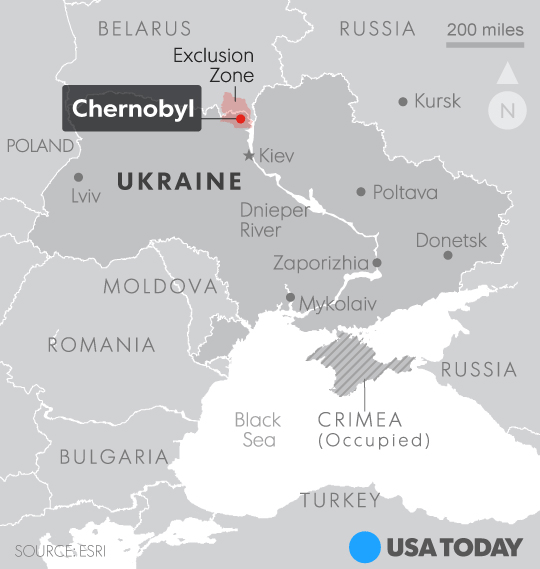
http://www.usatoday.com/story/news/world/2016/04/17/nuclear-exile-chernobyl-30th-anniversary/82896510/ YURY BANDAZHEVSKY DETAILED CHERNOBYL’S DEVASTATING IMPACT ON PEOPLE’S HEALTH, PARTICULARLY THAT OF CHILDREN, IN BELARUS. NOW HE LIVES IN EXILE WHILE THE GOVERNMENT INSISTS “EVERYTHING’S OK.”
Chernobyl through the eyes of an artist
Kim Hjelmgaard , USA TODAY Yury Bandazhevsky, 59, was the first scientist in Belarus to establish an institute to study Chernobyl’s impact on people’s health, particularly children, near the city of Gomel, about 120 miles over the border from Ukraine. He was arrested in Belarus in 1999 and sentenced to eight years in prison for allegedly taking bribes from parents trying to get their children admitted to his Gomel State Medical Institute. He denied the charges.
The National Academy of Sciences and Amnesty International say he was detained for his outspoken criticism of Belarus’ public health policies following the nuclear disaster. He was released in 2005 and given French citizenship, after rights groups took up his case along with the European Union, Britain, France and Germany. He now runs a medical and rehabilitation center outside Kiev dedicated to studying and caring for Chernobyl’s victims.
Here are his words, edited and condensed for clarity:
KIEV, Ukraine — If you were told that a lot is already known in Ukraine and Belarus about what Chernobyl has done to these countries, than I can tell you that you are wrong. How can I put it? It is only after 30 years that we are starting to see the real impact. We can say for sure that Belarus was affected more. There was more radioactive fallout there. The doses the general population received were huge. My students and colleagues and I observed it when I arrived in Gomel in 1990 to organize the medical institute (now a university).
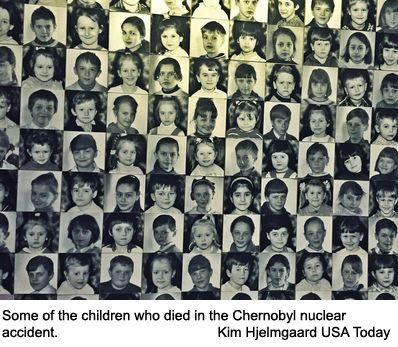
At the first, we were observing the effects of the large doses because Gomel was located in the epicenter of this high level of contamination. Then we started to look at the accumulation of radioactive elements in internal organs at lower doses, children’s in particular. We were already seeing a complex pathology affecting the endocrine system (which produces hormones), the cardiovascular system and almost all the internal organs. This was work that had never been done in Belarus and has not been done since.
When I arrived in Ukraine in 2009, I did not find any serious objective source of information about the state of health of the children and people in the Ivankiv and Polesskiy regions (two areas that neighbor Chernobyl). There was no interest. We have now examined about 4,000 second-generation children and most of them have serious problems with their cardiovascular systems. I was starting to see the same thing in Belarus before I left. I am especially disturbed by irregularities I see in teenagers, in particular boys ages 12-17.
Several million people in Ukraine live on land contaminated by radiation, so we need to evaluate a very large number of people. But there are no such projects. You have to live among the people here to truly understand what is happening, because the problem is very complicated. I have even tried to send interested people to the cemetery in Ivankiv so they can see for themselves how many graves are there — many who died at a very young age. None of this is in the official statistics.
I don’t have any objective information about what is happening now with the health of children in Belarus. Everything is closed. The government says, ‘Everything’s OK, everything’s OK.’ But I get telephone calls from people in Gomel and they tell me that many of the children we were observing before I left have died. They were of different ages: 6, 12, 14. I will never forget appearing on television in Belarus with the president (Alexander Lukashenko). I was saying we were seeing very serious problems in children because of radiation, while he was saying ‘Everything’s OK.’ But I can’t touch this, because I can’t go there, or work there.
For me, the problem of Chernobyl is not finished, it has only just begun.
I am very much afraid that in one or two generations from now, the (descendants) of the population of Belarus and Ukraine that were affected by Chernobyl will vanish. I am afraid of that very much. I don’t want my countrymen to perish. It’s possible that help from the international community to understand what is going on is needed now, just as much as it was immediately after the accident.
Cancer and birth defects in India’s uranium mining area
Koodankulam struggle: Western nations are learning from their mistakes, India is not, The Weekend Leader, By Nityanand Jayaraman & Sundar Rajan, 30 Nov “…..In Jadugoda, Jharkhand, where India’s uranium is mined by the Uranium Corporation of India Ltd, the effects of radiation among the local adivasi population are horrendous.Indian Doctors for Peace and Development, a national chapter of the Nobel-winning International Physicians for Prevention of Nuclear War, recently published a health study on Jadugoda. The study found that:
• Primary sterility is more common in people residing near uranium mining operations.
• More children with congenital deformities are being born to mothers living near uranium mining operations.
• Congenital defects as a cause of death of children are higher among mothers living near uranium mines.
• Cancer as a cause of death is more common in villages surrounding uranium operations.
• Life expectancy of people living near uranium mining operations is lower than Jharkhand’s state average and lower than in villages far removed from the mines.
• All these indicators of poor health and increased vulnerability are despite the fact that the affected villages have a better economic and literacy status than reference villages….. http://www.theweekendleader.com/Causes/833/Nuking-myths.html
Hanford’s nuclear site ‘the most toxic place in America’
Former nuclear site in Washington state is ‘causing workers to develop terminal illnesses’ – and it won’t be cleaned up for another 50 more years (photos)
- The Hanford Site in Washington state was used to produce plutonium from 1943 through the end of the Cold War
- Washington River Protection Solutions is now cleaning up the site
- Workers at the site say they are being exposed to radioactive fumes
- A watchdog group says that three workers have died as a result of exposure to nuclear waste on the job
- Just this year, 61 workers have allegedly been exposed to toxic materials
- But the government contractor says that everyone who has been checked out for possible exposure has been cleared to return to work
A former nuclear site in Washington state is poisoning workers and threatening the health of those who live around it, according to a new investigation.
Some experts have called the former Hanford nuclear plant ‘the most toxic place in America’ and ‘an underground Chernobyl waiting to happen’.
The site, located in a rural area along the Columbia River, was commissioned by the Manhattan Project to produce plutonium for the atomic bombs dropped on Hiroshima and Nagasaki at the end of World War II.
It remained an active nuclear site until the end of the Cold War, when it was decommissioned and the Department of Energy subcontracted Washington River Protection Solutions to start the clean-up.
But current and former workers at the site have told NBC that the underground containers holding the site’s nuclear waste are leaking, and that they have been exposed to the toxic fumes because the company has not given them the right safety equipment.
Their health issues include dementia, nerve damage, memory loss and respiratory problems.
Watchdog group Hanford Challenge says that at least three workers’ deaths have been linked to exposure at the site, but officials with Washington River Protection Solutions have refused to admit they are putting their workers in danger. Those workers are Gary Sall, Deb Fish and Dan Golden.
But several studies show that’s not the case and just this year, 61 workers have allegedly been exposed to toxic materials.
For their story, NBC spoke to DOE Deputy Assistant Secretary Mark Whitney, who said that all workers who have been evaluated for possible exposure have been cleared to return to work. http://www.dailymail.co.uk/news/article-3986750/Former-nuclear-site-Washington-state-causing-workers-develop-terminal-illnesses-won-t-cleaned-50-years.html#ixzz4RctEncj2
No need for a nuclear reactor to produce medical isotopes: Canada shows the way.
14 September 2016. A consortium of institutions led by TRIUMF, Canada’s national laboratory for particle and nuclear physics and accelerator-based science, is granting sole rights for its proprietary technetium-99m (Tc-99m) production technology to ARTMS™ Products, Inc (ARTMS). Technetium-99m is used in over 80% of all nuclear medicine imaging procedures and is vital to patient care in areas such as cardiology, oncology, and neurology. …

Typically sourced from an ageing global reactor fleet, Tc-99m has been subject to significant supply disruptions in recent years. ARTMS’ production technology promises to provide a reliable, cost effective, and safe supply of this critical medical isotope. The license includes all the required products and procedures for the production of Tc-99m using common hospital-based and commercial cyclotrons, through the bombardment of a high-energy proton beam against specific chemical ‘targets’. ….
“The ARTMS production technology offers many advantages, and that is why we believe our technology is truly disruptive and that it will gain widespread adoption,” Dr. Schaffer added. “Not only does the ARTMS production technology provide regional supply security of Tc-99m, it also offers favourable economics, and aids to eliminate the need for highly-enriched uranium, which is currently used by nuclear reactors to produce this isotope.”
“This agreement represents the culmination of six years of hard work by a dedicated team from across Canada, including TRIUMF, the BC Cancer Agency, Lawson Health Research Institute, and the Centre for Probe Development and Commercialization,” said Dr. Jonathan Bagger, Director of TRIUMF. “Today marks the completion of a major milestone as we move to commercialize a decentralized, green, and Canadian-made, technology that can produce Tc-99m daily at hundreds of hospital-based cyclotrons around the world. This licensing agreement marks the beginning of a new era in Tc-99m production and supply security.”
More information on the recent global isotope shortages, Tc-99m, and the story of ARTMS can be found in this media backgrounder and more information on medical isotopes and cyclotrons can be found in this FAQ. http://www.triumf.ca/current-events/artms%E2%84%A2-products-inc-licenses-canadian-technology-address-global-medical-isotope
Study pinpoints protein that detects damage from radiation
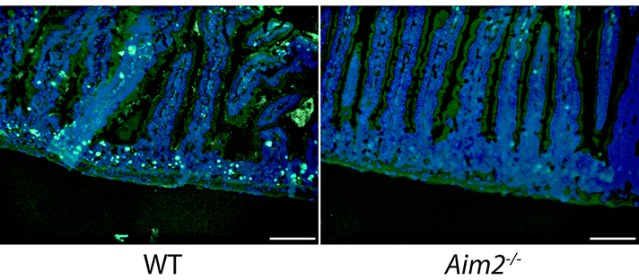
Small intestine tissue from mouse after high-dose X-ray radiation. Green fluorescence shows dying epithelial cells.
High doses of radiation from cancer treatment can cause severe damage to cells and tissues, resulting in injury to bone marrow and the gastrointestinal tract. The consequences can be fatal. Yet researchers do not fully understand how exposure to radiation triggers this damage at the molecular level.
Led by Yale professor of immunobiology Richard Flavell, an international team of researchers studied the radiation response using animal models. They identified a novel mechanism of radiation-induced tissue injury involving a protein called AIM2, which can sense double-strand DNA damage and mediate a special form of cell death known as pyroptosis.
They observed that in animals lacking AIM2, both the gastrointestinal tract and bone marrow were protected from radiation. While the role of AIM2 as a sensor that detects infectious threats to the body was known, this study is the first to describe the protein’s function in the detection of radiation damage to the chromosomes in the nucleus, said the researchers.
When a cell receives a high dose of radiation, the DNA is broken into pieces, which can be joined together again. However this aberrant rejoining of chromosomal fragments can lead to chromosomal abnormalities and cancer. Flavell and his team believe that when this chromosomal damage is inflicted, the AIM2 pathway is activated in order to kill the cell to avoid the deleterious consequences of these chromosomal translocations, such as those commonly seen in cancer cells.
For this reason, the cells that accumulate this chromosomal damage are dangerous to the person or animal and are therefore killed by this AIM2 pathway. This pathway is beneficial to the person or animal under normal circumstances because it eliminates dangerous cells, but when a high dose of radiation is given the pathway is detrimental because it leads to bone marrow and digestive tract injury.
These findings suggest that a drug that blocks or inhibits the AIM2 pathway could potentially limit the deleterious side effect of chemotherapy or radiotherapy on cancer patients, said the researchers.
Read the full paper in Science.
http://news.yale.edu/2016/11/10/study-pinpoints-protein-detects-damage-radiation
USA Federal Judge upholds lawsuit about Hanford nuclear workers’ health and safety
 Federal judge rejects dismissing Hanford nuclear lawsuit http://www.pennenergy.com/articles/pennenergy/2016/11/nuclear-power-federal-judge-rejects-dismissing-hanford-nuclear-lawsuit.html November 4, 2016 SPOKANE, Wash. (AP) — A federal judge on Thursday rejected the U.S. Department of Energy’s motion to dismiss a lawsuit filed by Washington state over worker safety issues at the Hanford Nuclear Reservation.
U.S. District Court Judge Thomas Rice rejected an Energy Department argument that the federal agency was not endangering enough Washington residents to allow the state to sue.
“The state has an inherent and fundamental sovereign interest in ensuring that all Washington workers are safe,” Rice wrote in his opinion.
Washington Attorney General Bob Ferguson filed the lawsuit last fall against the Energy Department and its contractor, Washington River Protection Solutions. The lawsuit contends that hazardous tank vapors pose a serious risk to Hanford workers.
‘This motion was just another example of the federal government’s culture of indifference to worker safety at Hanford,” Ferguson said Thursday.
Ferguson’s office contends that hundreds of workers have been exposed to vapors escaping from nuclear waste storage tanks since the early 1980s and that those breathing the vapors developed nosebleeds, chest and lung pain, headaches, coughing, sore throats, irritated eyes, and difficulty breathing.
Hanford for decades made plutonium for nuclear weapons, and now is engaged in cleaning up a massive inventory of radioactive and chemical wastes left over from that work.
Much of the waste is stored in 177 giant underground storage tanks at Hanford, which is located near Richland.
After more than 50 workers were exposed to tank vapors earlier this year, Ferguson asked a federal court to immediately order the government to implement enhanced safety measures. That motion is still pending before the court.
Officials for the Energy Department in Richland did not immediately return a telephone call seeking comment on Thursday.
Lawyers for the Energy Department had argued that the state lacked legal standing to file the lawsuit, in part because it involved about 2,000 workers out of a population of millions of residents. The agency also contended that no evidence has been provided showing that Hanford workers have been harmed by vapors. Symptoms like headaches are common, they have said.
The trial is set for May 22, 2017.
Russia, Japan Team Up to Study How Radiation Affects the Next Generation’s DNA
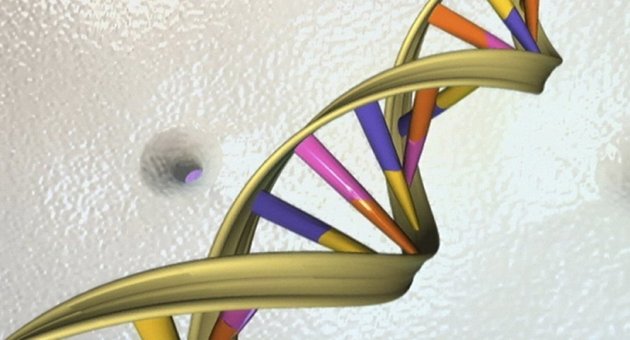
Russia and Japan are set to team up to become leaders in transgenerational healthcare research, to help prevent the effects of nuclear catastrophes being passed genetically from one generation to the next indefinitely.
Both Russia and Japan have a stake in this research, given that both countries are still dealing with radiation exposure via the events in Nagasaki, Hiroshima, Fukushima and Chernobyl. “This research is extremely important in relation to future generations we are responsible for,” said Nomura Taisei, Radiation Biology and Medical Genetics Department Head at National Institute for Biomedical Research at Osaka University.
The professor was at the 15th Congress on Innovation Technologies in Pediatrics and Pediatric Surgery which was held in Moscow from October 25-27, making a report on trasngenerational healthcare. His report shines a light on how exposure to radiation is passed down through generations via DNA mutation.
When DNA is damaged, the consequences for future generations are serious.Birth abnormalities, developmental disorders, a weakened immune system, higher cancer risks, and numerous physical and mental disorders are all the result of these gene mutations passed down to future generations. While the effects of radiation exposure passing between generations has so far not been widely studied in humans, the effects on experimental animal subjects is more widely understood.
Professor Nomura’s experiments on mice proved that genetic effects of radiation exposure can cause genetic defects into the 58th generation. The problem is that Japan has very little data on radiation exposure on humans.
This is where Russia can help, through opening up their database on three tree generations of people: those who were exposed after the Chernobyl disaster, those who were exposed prenatally, and those whose parents were exposed before impregnation. Thus Russia and Japan can now conduct joint comparative research of the effects of radiation on animals and on humans applying the latest technologies.
The Head of Children’s Scientific and Practical Center of Radiation Protection, Larisa Naleva told Sputnik Japan about the importance of this Russian-Japanese research project.
“We assume that the phenomenon of radiation-induced genetic instability has significant effects not only on the health of exposed people but also on the health of their children, first of all, resulting in an increased cancer risk. We have already detected an increase of morbidity in the second generation of exposed people’s descendants and now we are studying the third generation. Today in Russia there are about 135 thousand children who have been exposed or are exposed to radiation to some extent,” said Naleva. By using Japan’s expertise, Naleva hopes that the health risk for subsequent generations of those who were exposed to radiation can be reduced. “And that is the goal of our collaboration with our Japanese colleagues,” she said.
https://sputniknews.com/society/201611021046998030-russia-japan-radiation-dna/
Mother’s Radiation Lab and Clinic
The relatively short video shows a female perspective of how women are dealing with the risk despite the Japanese governments, lack of radiation testing, children’s health checks, financial and social support – the social responsibility to their community
Women suffer the most from this stoic denial that radiation effects the community, causing unnecessary stress from risk of radionuclide ingestion on a child’s growing body, well established to be many times more sensitive to radiation due to rapidly dividing cells programmed by DNA at risk during early development
It is sad a mother’s worldview has been largely left out of the South Australian debate around the whole nuclear cycle dominated by senior male nuclear sales executives and academics
However, that isn’t any surprise, as that is how the world embraced the whole nuclear industry in the first place, that is from a purely patriarchal worldview and that is a matter of our species shameful human history https://www.facebook.com/groups/1314655315214929/
Examining health impacts of climate change on Pacific Island Countries
Pacific Island Countries and Climate Change: Examining Associated Human Health Vulnerabilities, Environmental Health Perspectives, 1 Nov 16 Nancy Averett writes about science and the environment from Cincinnati, OH. Her work has been published in Pacific Standard, Audubon, Discover, E/The Environmental Magazine, and a variety of other publications.
Climate change presents a significant and growing threat to human health, with diverse impacts projected for different regions.1Investigators now report that Pacific island countries including Fiji, Tonga, and the Marshall Islands are among the nations most vulnerable to climate-related health problems due to their particular geographic, demographic, and socioeconomic characteristics.2 Their new paper is a synthesis of the key technical findings and policy implications of the 2015 World Health Organization report Human Health and Climate Change in Pacific Island Countries, written by the same group.3
First author Lachlan McIver, an associate professor in the College of Public Health, Medical, and Veterinary Sciences at Australia’s James Cook University, says that when teams of climate change and health consultants began their assessment in 2011, not many regions or countries had undertaken vulnerability and adaptation assessments or been able to derive results and act upon them, “so we were really on a bit of a crest of the wave in that sense.” He says the teams found that not all “best practices” described in the literature for assessing climate change health vulnerabilities actually worked in practice in the Pacific island countries due, in part, to a lack of data in some countries. Thus, he says, the consultants found they had to be flexible and use both quantitative and qualitative methods in their research and analysis.
The authors examined 13 Pacific island countries in terms of 3 categories of climate-related health concerns that they termed “direct,” “indirect,” and “diffuse.” Direct effects included physical and psychological trauma related to an extreme weather event such as a hurricane or a heat wave. Indirect effects included increased burdens of disease resulting from climate-related disruption—for instance, a rise in vector-borne diseases if ecological disruption were to create conditions favorable to the spread of pathogen-carrying pests. Finally, diffuse effects included increased mental health problems, injuries, and violent deaths that could result as societal dysfunction unfolds; this unfolding would be due to such phenomena as loss of livelihood or a lack of basic resources including water, food, and housing.2
The teams worked with stakeholders in each country to develop lists of their highest-priority climate-sensitive health risks then decide which ones to address in their adaptation plans. Some countries chose to include all relevant risks; others picked just those deemed to be the greatest threat. Because of that variation, the report contains this caveat: “The climate-sensitive health risks presented … should be considered a synthesis of each country’s priorities rather than a true cross-country comparison of risks.”2
Most countries placed water security, food security, vector-borne diseases, and direct health impacts of extreme weather events among their top priorities. Pacific island populations also face a unique climate-related health risk in terms of their extremely high levels of noncommunicable diseases, including obesity, diabetes, and hypertension. Noncommunicable diseases are already leading causes of death in these populations,4 partly because of a high dependence on energy-dense, high-calorie imported foods rather than locally grown products.5 In an example of a diffuse effect, climate change could exacerbate these trends because higher temperatures, altered rainfall patterns, and sea level rise will make it even more difficult to grow local food; increased reliance on imported foods could, in turn, lead to food insecurity.2
Kathryn Bowen, a senior research fellow at the Australian National University, says the work was an important first step. …….
For coauthor Kristie Ebi, a professor of environmental and occupational health science at the University of Washington, the concern is whether there will be enough outside funding to help these nations implement their plans. “These islands are suffering the consequences of climate change, and they’re not responsible for it,” she says. “Their total greenhouse gas emissions are tiny … so to ask them to take on [the health burdens associated with climate change] without additional funding really isn’t fair.” http://ehp.niehs.nih.gov/124-A208/
Russia’s top secret nuclear sacrifice zone revealed
REVEALED: Putin’s top secret deadly nuclear city where spies observe ‘poisoned’ locals http://www.express.co.uk/news/world/727223/Putin-s-top-secret-deadly-nuclear-city-where-spies-observe-poisoned-locals
A CITY of almost 82,000 people are living on a nuclear time bomb in one of the most toxic places on earth. By SIOBHAN MCFADYEN, Oct 31, 2016 And the residents of the Russian walled city of Ozyorsk in Chelyabinsk Oblast code named City 40 are living in fear of their lives with their every move being watched by Kremlin spies.
Brave locals are living in an experiment zone, on a toxic lake where almost of all of Vladimir Putin’s nuclear arsenal is stockpiled.
Around 15,000 people are employed by the Mayak plant, a plutonium handling facility which rose to prominence during the Cold War. The plant itself covers an area of approximately 50 miles and reprocesses spent fuel from the country’s nuclear submarines.
A new documentary called City 40 now available on Netflix shows for the first time the challenges being faced by the people who live there – many of whom are suffering from cancer. The narrator says: “Growing up as a kid I was aware of a strange place a closed place, a top secret place
“This is where almost all the reserve of Russia’s nuclear materials is stockpiled. “To get in there you would need a full-scale army operation. “Unauthorised access there cannot even be imagined.” The city itself is constantly under surveillance with very little information leaking out to the mainstream.
A narrator adds: “It’s cozy and a beautiful town but a closed one. “There are spies all over sneaking around gathering information. “My mother used to warn me ‘darling, never say where you are from. “‘Or a Black Maria will take us away and you’ll never see your parents again’.
“Once there was a spill of powder, the radioactive kind of powder. “An underground container of liquid radioactive waste exploded.”
According to reports around 10,000 people have disappeared off the census list in just eight years.
The last census was taken in 2010, it is unknown whether the people have died however many residents are extremely sick. A city dweller adds: “The local people will tell you that this lake is nicknamed the ‘lake of death’ because it has been so heavily contaminated with plutonium.
“Mostly people were dying of carcinogenic diseases. “Once can say this city was built on dead and ruined human bodies.”If someone refused to work they’d be taken to a prison camp and executed because they were introduced to state secrets.
“They created their own ideology. “We’re the saviours of the world, creators of the nuclear shield.” While the undercover film team have managed to gain access to the locals it is unknown whether they will go unpunished for revealing themselves to camera.
Tensions between the USA and Russia have peaked over recent weeks and it is believed the facility will no doubt be in full production mode. A narrator adds that most of the locals wouldn’t dream of leaving – not because they want to but because they can’t.
They added: “We are used to it and this is how we want to live. “It may be for the better, it may be for the worse, but for now just leave us alone please.”My mother told me ‘let state secrets stay secrets.”
Ionizing radiation May Contribute to Development of Alzheimer’s

University of Southern Denmark
More humans than ever are exposed to higher levels of ionizing radiation from medical equipment, airplanes, etc. A new study suggests that this kind of radiation may be a confounding factor in the neurodegenerative disease Alzheimer´s.
Alzheimer’s disease is the leading cause for dementia in the elderly, and its global prevalence is supposed to increase dramatically in the following decade – up to 80 million patients by 2040.
– It is crucial that we investigate the potential factors behind this disease, says postdoc Stefan J. Kempf, University of Southern Denmark. His research focuses on possible connections between radiation and cognitive impairments.
In a new study, he and an international consortia involving colleagues from Italy, Japan, Germany and Denmark show that low doses of ionising radiation induce molecular changes in the brain that resemble the pathologies of Alzheimer’s.
The study has been published in Oncotarget. Co-authors are from Institute of Radiation Biology/Institute of Pathology, Helmholtz Zentrum München, German Research Center for Environmental Health and Institute for Environmental Sciences in Japan.
Large numbers of people of all age groups are increasingly exposed to ionizing radiation from various sources. Many receive chronic occupational exposure from nuclear technologies or airline travel. The use of medical diagnostics and therapeutic radiology has increased rapidly – for example more than 62 million CT scans per year are currently carried out in USA.
Approximately one third of all diagnostic CT examinations are scans of the head region.
– All these kinds of exposures are low dose and as long as we talk about one or a few exposures in a lifetime I do not see cause for concern. What concerns me is that modern people may be exposed several times in their lifetime and that we don’t know enough about the consequences of accumulated doses, says Stefan J. Kempf.
Recent data suggest that even relatively low radiation doses, similar to those received from a few CT scans, could trigger molecular changes associated with cognitive dysfunction.
In their new study, the researchers have elucidated molecular alterations in the hippocampus of mice. The hippocampus is an important brain region responsible for learning and memory formation and it is known to be negatively affected in Alzheimer´s.
The authors induced changes in the hippocampus by two kinds of chronic low-dose-rate ionizing radiation treatments. The mice were exposed to cumulative doses of 0.3 Gy or 6.0 Gy given at low dose rates of 1 mGy over 24 hours or 20 mGy over 24 hours for 300 days.
– Both dose rates are capable of inducing molecular features that are reminiscent of those found in the Alzheimer’s disease neuropathology, says Stefan J. Kempf.
When a patient gets a head scan, the doses varies between 20 and 100 mGy and lasts for around one minute. When a person flies, he or she gets exposure to ionising radiation coming from space but the rates are by far smaller than a CT scan.
– When you compare these figures you will find that we exposed the mice to a more than 1000 times smaller cumulative dose than what a patient gets from a single CT scan in the same time interval. And even then we could see changes in the synapses within the hippocampus that resemble Alzheimer´s pathology.
According to Stefan J. Kempf, the data indicate that chronic low-dose-rate radiation targets the integration of newborn neurons in existing synaptic wires.
###
Paper: Chronic low-dose-rate ionising radiation affects the hippocampal phosphoproteome in the ApoE?/? Alzheimer mouse model. Forfattere: Stefan Kempf, Dirk Janik, Zarko Barjaktarovic, Ignacia Braga-Tanaka III, Satoshi Tanaka, Frauke Neff, Anna Saran, Martin Røssel Larsen, Soile Tapio. OncoTarget, 20. september 2016.
https://www.eurekalert.org/pub_releases/2016-10/uosd-ctr102716.php
1 This Month




Shut down the radiation-damaged Heysham nuclear reactors now
To see nuclear-related stories in greater depth and intensity – go to https://nuclearinformation.wordpress.com

Say No to NASA’s Reckless Nuclear Reactor on the Moon
Say No to NASA’s Reckless Nuclear Reactor on the Moon
-
Archives
- November 2026 (12)
- October 2026 (302)
- September 2026 (339)
- August 2026 (330)
- July 2026 (355)
- June 2026 (287)
- May 2026 (306)
- April 2026 (356)
- March 2026 (251)
- February 2026 (267)
- January 2026 (308)
- December 2025 (358)
-
Categories
- 1
- 1 NUCLEAR ISSUES
- business and costs
- climate change
- culture and arts
- ENERGY
- environment
- health
- history
- indigenous issues
- Legal
- marketing of nuclear
- media
- opposition to nuclear
- PERSONAL STORIES
- politics
- politics international
- Religion and ethics
- safety
- secrets,lies and civil liberties
- spinbuster
- technology
- Uranium
- wastes
- weapons and war
- Women
- 2 WORLD
- ACTION
- AFRICA
- Atrocities
- AUSTRALIA
- Christina's notes
- Christina's themes
- culture and arts
- Events
- Fuk 2022
- Fuk 2023
- Fukushima 2017
- Fukushima 2018
- fukushima 2019
- Fukushima 2020
- Fukushima 2021
- general
- global warming
- Humour (God we need it)
- Nuclear
- RARE EARTHS
- Reference
- resources – print
- Resources -audiovicual
- Weekly Newsletter
- World
- World Nuclear
- YouTube
-
RSS
Entries RSS
Comments RSS


