Russia’s top secret nuclear sacrifice zone revealed
REVEALED: Putin’s top secret deadly nuclear city where spies observe ‘poisoned’ locals http://www.express.co.uk/news/world/727223/Putin-s-top-secret-deadly-nuclear-city-where-spies-observe-poisoned-locals
A CITY of almost 82,000 people are living on a nuclear time bomb in one of the most toxic places on earth. By SIOBHAN MCFADYEN, Oct 31, 2016 And the residents of the Russian walled city of Ozyorsk in Chelyabinsk Oblast code named City 40 are living in fear of their lives with their every move being watched by Kremlin spies.
Brave locals are living in an experiment zone, on a toxic lake where almost of all of Vladimir Putin’s nuclear arsenal is stockpiled.
Around 15,000 people are employed by the Mayak plant, a plutonium handling facility which rose to prominence during the Cold War. The plant itself covers an area of approximately 50 miles and reprocesses spent fuel from the country’s nuclear submarines.
A new documentary called City 40 now available on Netflix shows for the first time the challenges being faced by the people who live there – many of whom are suffering from cancer. The narrator says: “Growing up as a kid I was aware of a strange place a closed place, a top secret place
“This is where almost all the reserve of Russia’s nuclear materials is stockpiled. “To get in there you would need a full-scale army operation. “Unauthorised access there cannot even be imagined.” The city itself is constantly under surveillance with very little information leaking out to the mainstream.
A narrator adds: “It’s cozy and a beautiful town but a closed one. “There are spies all over sneaking around gathering information. “My mother used to warn me ‘darling, never say where you are from. “‘Or a Black Maria will take us away and you’ll never see your parents again’.
“Once there was a spill of powder, the radioactive kind of powder. “An underground container of liquid radioactive waste exploded.”
According to reports around 10,000 people have disappeared off the census list in just eight years.
The last census was taken in 2010, it is unknown whether the people have died however many residents are extremely sick. A city dweller adds: “The local people will tell you that this lake is nicknamed the ‘lake of death’ because it has been so heavily contaminated with plutonium.
“Mostly people were dying of carcinogenic diseases. “Once can say this city was built on dead and ruined human bodies.”If someone refused to work they’d be taken to a prison camp and executed because they were introduced to state secrets.
“They created their own ideology. “We’re the saviours of the world, creators of the nuclear shield.” While the undercover film team have managed to gain access to the locals it is unknown whether they will go unpunished for revealing themselves to camera.
Tensions between the USA and Russia have peaked over recent weeks and it is believed the facility will no doubt be in full production mode. A narrator adds that most of the locals wouldn’t dream of leaving – not because they want to but because they can’t.
They added: “We are used to it and this is how we want to live. “It may be for the better, it may be for the worse, but for now just leave us alone please.”My mother told me ‘let state secrets stay secrets.”
Ionizing radiation May Contribute to Development of Alzheimer’s

University of Southern Denmark
More humans than ever are exposed to higher levels of ionizing radiation from medical equipment, airplanes, etc. A new study suggests that this kind of radiation may be a confounding factor in the neurodegenerative disease Alzheimer´s.
Alzheimer’s disease is the leading cause for dementia in the elderly, and its global prevalence is supposed to increase dramatically in the following decade – up to 80 million patients by 2040.
– It is crucial that we investigate the potential factors behind this disease, says postdoc Stefan J. Kempf, University of Southern Denmark. His research focuses on possible connections between radiation and cognitive impairments.
In a new study, he and an international consortia involving colleagues from Italy, Japan, Germany and Denmark show that low doses of ionising radiation induce molecular changes in the brain that resemble the pathologies of Alzheimer’s.
The study has been published in Oncotarget. Co-authors are from Institute of Radiation Biology/Institute of Pathology, Helmholtz Zentrum München, German Research Center for Environmental Health and Institute for Environmental Sciences in Japan.
Large numbers of people of all age groups are increasingly exposed to ionizing radiation from various sources. Many receive chronic occupational exposure from nuclear technologies or airline travel. The use of medical diagnostics and therapeutic radiology has increased rapidly – for example more than 62 million CT scans per year are currently carried out in USA.
Approximately one third of all diagnostic CT examinations are scans of the head region.
– All these kinds of exposures are low dose and as long as we talk about one or a few exposures in a lifetime I do not see cause for concern. What concerns me is that modern people may be exposed several times in their lifetime and that we don’t know enough about the consequences of accumulated doses, says Stefan J. Kempf.
Recent data suggest that even relatively low radiation doses, similar to those received from a few CT scans, could trigger molecular changes associated with cognitive dysfunction.
In their new study, the researchers have elucidated molecular alterations in the hippocampus of mice. The hippocampus is an important brain region responsible for learning and memory formation and it is known to be negatively affected in Alzheimer´s.
The authors induced changes in the hippocampus by two kinds of chronic low-dose-rate ionizing radiation treatments. The mice were exposed to cumulative doses of 0.3 Gy or 6.0 Gy given at low dose rates of 1 mGy over 24 hours or 20 mGy over 24 hours for 300 days.
– Both dose rates are capable of inducing molecular features that are reminiscent of those found in the Alzheimer’s disease neuropathology, says Stefan J. Kempf.
When a patient gets a head scan, the doses varies between 20 and 100 mGy and lasts for around one minute. When a person flies, he or she gets exposure to ionising radiation coming from space but the rates are by far smaller than a CT scan.
– When you compare these figures you will find that we exposed the mice to a more than 1000 times smaller cumulative dose than what a patient gets from a single CT scan in the same time interval. And even then we could see changes in the synapses within the hippocampus that resemble Alzheimer´s pathology.
According to Stefan J. Kempf, the data indicate that chronic low-dose-rate radiation targets the integration of newborn neurons in existing synaptic wires.
###
Paper: Chronic low-dose-rate ionising radiation affects the hippocampal phosphoproteome in the ApoE?/? Alzheimer mouse model. Forfattere: Stefan Kempf, Dirk Janik, Zarko Barjaktarovic, Ignacia Braga-Tanaka III, Satoshi Tanaka, Frauke Neff, Anna Saran, Martin Røssel Larsen, Soile Tapio. OncoTarget, 20. september 2016.
https://www.eurekalert.org/pub_releases/2016-10/uosd-ctr102716.php
Causal connection between nuclear radiation and Alzheimers’ Disease – European research
Concern that radiation may contribute to development of Alzheimer’s https://www.eurekalert.org/pub_releases/2016-10/uosd-ctr102716.php UNIVERSITY OF SOUTHERN DENMARK MORE HUMANS THAN EVER ARE EXPOSED TO HIGHER LEVELS OF IONIZING RADIATION FROM MEDICAL EQUIPMENT, AIRPLANES, ETC. A NEW STUDY SUGGESTS THAT THIS KIND OF RADIATION MAY BE A CONFOUNDING FACTOR IN THE NEURODEGENERATIVE DISEASE ALZHEIMER´S.
Alzheimer’s disease is the leading cause for dementia in the elderly, and its global prevalence is supposed to increase dramatically in the following decade – up to 80 million patients by 2040.
– It is crucial that we investigate the potential factors behind this disease, says postdoc Stefan J. Kempf, University of Southern Denmark. His research focuses on possible connections between radiation and cognitive impairments.
In a new study, he and an international consortia involving colleagues from Italy, Japan, Germany and Denmark show that low doses of ionising radiation induce molecular changes in the brain that resemble the pathologies of Alzheimer’s. Continue reading
Radiation-absorption tests under development could save lives in nuclear explosion
Direct measurement (like Becquerels) via blood samples described in the article sounds like the way to go.
“The key to understand is that this is something that has never existed and we hope it never gets used,” Josh LaBaer, principal investigator and director of the Biodesign Institute at Arizona State University, told Homeland Preparedness News.
The tests could also have civilian applications as well, LaBaer said, such as in the event of industrial accidents at a nuclear power plant or in medical situations when people are exposed to excessive radiation.

The U.S. government is funding the late-stage development of tests that would quickly determine how much radiation a person has absorbed in the event of a catastrophic nuclear explosion.
The U.S. Department of Health and Human Services’ Office of the Assistant Secretary for Preparedness and Response (ASPR) is sponsoring the development of tests that go beyond detecting whether radiation is on a person’s skin to determining the amount of radiation that has been absorbed into a person’s body.
“The key to understand is that this is something that has never existed and we hope it never gets used,” Josh LaBaer, principal investigator and director of the Biodesign Institute at Arizona State University, told Homeland Preparedness News.
ASPR’s Biomedical Advanced Research and Development Authority (BARDA) will provide more than $21.3 million over four years to develop the tests. Kansas City, Missouri-based MRIGlobal said in a written statement the contract could be extended for up to $100 million over 10 years.
MRIGlobal is partnering with Thermo Fisher Scientific and Arizona State University to lead the development of the program for BARDA. The agency also will provide more than $22.4 million in funding over two years to DxTerity Diagnostics based near Los Angeles.
“The challenge was that in the event of a nuclear bomb in a major American city, there is an instantaneous release of high doses of gamma radiation, which is the type of radiation that travels through the air over large distances,” LaBaer said. “In that type of mass casualty event there would be lots of people who would need to be evaluated.”
The task for researchers was to develop a device that could quickly measure how much radiation large numbers of people had potentially absorbed into their organs and blood cells during a nuclear emergency. Devices currently available today can only detect radiation on the skin.
“The amount of radiation that gets absorbed into the body has a direct implication on how that person gets triaged and managed,” LaBaer said. Absorption of a small or moderate dose of radiation could require medication, while a larger dose could require hospitalization and a potential bone marrow transplant.
BARDA is supporting development of the tests with the goal of potentially purchasing them from one or more of the companies for the Strategic National Stockpile.
After a six-year effort, the university has developed the ASU radiation (ARad) biodosimetry test, which would generate results in about eight hours and could be used on people who were exposed to radiation up to seven days after the event. HHS said the potential exists where 400,000 or more tests could be processed a week.
In the test, a blood sample is taken to isolate the white blood cells in order to collect the genes that have been exposed to radiation. Certain genes are more predictive when it comes to determining the amount of radiation the body was exposed to.
“We were looking for the smallest number of genes we could use but that still were accurate in predicting dose depending on the time after the event,” LaBaer said.
Work to date has been based on animal studies and developing conversion factors to transfer to humans.
The tests could also have civilian applications as well, LaBaer said, such as in the event of industrial accidents at a nuclear power plant or in medical situations when people are exposed to excessive radiation.
A little good sense – Japanese and North Korean students make friends


 Japanese and North Korean students forge bonds in rare meeting but remain apart over nuclear weapons, Japan Times, BY NATSUME WATANABE. 18 Oct 16 KYODO PYONGYANG – A group of Japanese college students made a rare visit to Pyongyang in late August — just before North Korea conducted its fifth nuclear test on Sept. 9 — for talks on war and peace with local students.
But three days of social exchanges and intense discussions left the groups at odds on issues such as how best to achieve world peace and whether nuclear disarmament is feasible……..
The student-to-student program was initiated in 2012 by a group of Japanese nongovernmental organizations. Among them was Tokyo-based Relief Campaign Committee for Children, Japan, which conducts cultural exchanges.
Participants in the annual program have gradually become able to take up political issues over the years, organizers said, despite the isolated communist regime’s strict controls on speech.
Jinguji was one of eight Japanese students who took part in this year’s program. The 11 North Koreans were all in their early 20s and majoring in Japanese language at the Pyongyang University of Foreign Studies……..
On the morning when the Japanese students were to return home, tears could be seen in the eyes of some of the North Korean students.
“I know that our current bilateral relations aren’t good, but I want to see you all again,” one North Korean student said upon departure at the airport. http://www.japantimes.co.jp/news/2016/10/18/national/politics-diplomacy/japanese-north-korean-students-forge-bonds-rare-meeting-remain-apart-nuclear-weapons/#.WAaWA-V97Gg
Admiral Rickover “father” of the U.S. nuclear navy called for outlawing nuclear reactors
 Bailing out aging nuclear power plants can impact development of renewable energy technologies, Enformable, 17 Oct 2016 “………Rickover: “Outlaw Nuclear Reactors”
The bottom line when it comes to nuclear power comes from Admiral Rickover, considered the “father” of the U.S. nuclear navy as well as being in charge of building Shippingport. When he retired from the Navy in 1982 he addressed a Congressional committee and said—his remarks are included in Cover Up—that until several billion years ago “it was impossible to have any life on Earth; that is, there was so much radiation on Earth you couldn’t have any life—fish or anything. “ Then, “gradually, “the amount of radiation on this planet and probably in the entire system reduced and made it possible for some form of life to begin.”
“Now,” he went on, by utilizing nuclear power “we are creating something which nature tried to destroy to make life possible…every time you produce radiation,” a “horrible force” is unleashed, “in some cases for billions of years.” In other words, nuclear power plants recreate the very radioactive poisons that precluded life from existing. “And,” said Rickover, “I think there the human race is going to wreck itself.”
We must, for the sake of life, Rickover told the Congressional committee, “outlaw nuclear reactors.”
Rickover, deeply involved in nuclear technology, finally saw—as we all must—the light.http://enformable.com/
Washington State seeks legal protection for the health of nuclear workers

 Washington State Seeks to Protect Nuclear Site Workers http://abcnews.go.com/US/wireStory/washington-state-seeks-protect-nuclear-plant-workers-42759576 By THE ASSOCIATED PRESS Washington state asked a federal judge Wednesday to issue an injunction requiring the U.S. Department of Energy and its contractor to take steps to protect workers at a major nuclear waste storage site.
Washington state Attorney General Bob Ferguson says more than 50 workers at the Hanford Nuclear Reservation have been exposed to toxic vapors and the “culture of indifference to worker safety must end.”
From January through July, Hanford workers reported suspicious smells or symptoms that indicate exposure to chemical vapors, according to The Tri-City Herald. ( http://bit.ly/2dVsCtf )
U.S. District Chief Judge Thomas Rice in Spokane heard arguments on the safety issue and the federal agency’s motion to dismiss the lawsuit. Rice said he would rule at a later date.
Lawyers for the Energy Department have argued in motions that the state lacks standing to bring the lawsuit. Hanford Challenge, an advocacy group, and the United Association of Plumbers and Steamfitters Local Union 598 are also plaintiffs in the lawsuit.
The agency has said the plaintiffs in the case have not shown harm to Hanford workers from vapors. It has argued that symptoms like headaches are common and don’t necessarily indicate exposure to vapors.
The state called that claim astounding.
The trial for the case is set for Sept. 18, 2017, but Ferguson said workers can’t wait that long to have a safe workplace.
The injunction would force the agency and its contractor, Washington River Protection Solutions, to provide supplied air for all workers within certain areas. The state also seeks the installation of additional monitoring and alarm equipment to warn workers when toxic vapors are being emitted.
Hanford’s 177 underground storage tanks contain more than 50 million gallons of toxic waste, the byproducts of decades of plutonium production, Ferguson said in a statement. Over a few days in late April and May, at least 48 workers were exposed to vapors from the tanks, and more were exposed in June.
The longterm effects are not known, he said.
If they didn’t have mental problems before, Mars travellers sure will afterwards!
 Mars-goers may face permanent brain damage from cosmic radiation Oct. 12, 2016 Deep space travel could cause serious, irreversible brain damage, NBC News reports. Scientists have long known that leaving Earth’s magnetosphere—the magnetic bubble of plasma surrounding our planet—strips astronauts of their protection from radioactive particles, putting them at higher risk for health issues, including heart disease. Now, a new study out this week in Scientific Reports suggests that changes at the cellular level could also lead to worsened anxiety and even brain cancer. That could be bad news for NASA and other commercial space companies that want to send humans to the Red Planet by 2030. But NASA is working on it: The agency is researching methods to prevent exposure to radiation, which could find their way into new, improved space suits. http://www.sciencemag.org/news/sifter/mars-goers-may-face-permanent-brain-damage-cosmic-radiation
Newborn baby deaths significantly increased in areas radioactively polluted by Fukushima nuclear disaster
Increases in perinatal mortality in prefectures contaminated by the Fukushima nuclear power plant accident in Japan A spatially stratified longitudinal study
China’s graphite mining communities pay heavy health toll, to supply modern technological devices
Inhaling particulate matter can cause an array of health troubles, according to health experts, including heart attacks and respiratory ailments.
But it’s not just the air. The graphite plant discharges pollutants into local waters…

IN YOUR PHONE, IN THEIR AIR A trace of graphite is in consumer tech. In these Chinese villages, it’s everywhere.Washington Post, Story by Peter Whoriskey Photos by Michael Robinson Chavez Videos by Jorge Ribas October 2, 2016 At night, the pollution around the village has an otherworldly, almost fairy-tale quality.
“The air sparkles,” said Zhang Tuling, a farmer in a village in far northeastern China. “When any bit of light hits the particles, they shine.”
By daylight, the particles are visible as a lustrous gray dust that settles on everything. It stunts the crops it blankets, begrimes laundry hung outside to dry and leaves grit on food. The village’s well water has become undrinkable, too.
Beside the family home is a plot that once grew saplings, but the trees died once the factory began operating, said Zhang’s husband, Yu Yuan.
“This is what we live with,” Zhang said, slowly waving an arm at the stumps.
Zhang and Yu live near a factory that produces graphite, a glittery substance that, while best known for filling pencils, has become an indispensable resource in the new millennium. It is an ingredient in lithium-ion batteries.
Smaller and more powerful than their predecessors, lithium batteries power smartphones and laptop computers and appear destined to become even more essential as companies make much larger ones to power electric cars.
The companies making those products promote the bright futuristic possibilities of the “clean” technology. But virtually all such batteries use graphite, and its cheap production in China, often under lax environmental controls, produces old-fashioned industrial pollution.
At five towns in two provinces of China, Washington Post journalists heard the same story from villagers living near graphite companies: sparkling night air, damaged crops, homes and belongings covered in soot, polluted drinking water — and government officials inclined to look the other way to benefit a major employer.
After leaving these Chinese mines and refiners, much of the graphite is sold to Samsung SDI, LG Chem and Panasonic — the three largest manufacturers of lithium-ion batteries. Those companies supply batteries to major consumer companies such as Samsung, LG, General Motors and Toyota.
Apple products use batteries made by those companies, too Continue reading
The connection between optimism, and having a global point of view

These differences can lead to heated debates, such as the Brexit situation which pitted English citizens against one another as the country decided whether or not to leave the E.U. What if our global or local mindsets influenced the types of goals we set and the way we think about our own lives?
This was the question that researchers set out to answer, and their findings are available online in the Journal of Consumer Psychology. The investigators suspected that people with a global mindset would adopt goals that encourage growth and advancement (promotion goals).
“Previous research has shown that people with a promotion mindset think more broadly and about the future,” says researcher Rajeev Batra, a professor in the Ross School of Business at the University of Michigan. “They are more optimistic and want to maximize the positive things in their lives.”
People with a local mindset, however, would most likely focus on goals that center around roles and responsibilities (prevention goals). “These people think about the here and now and want to minimize the negative, prevent losses and think about reasons not to do things,” Batra says……
The researchers also conducted two other experiments that showed similar variations between people who associated with global versus local identities.
“These mindset differences might help us understand why we see some of the population adopting a more broad, optimistic view while others are more protective of the status quo,” Ng says. “Policy makers who want to influence people to think more globally may want to design campaigns about global issues, such as climate change, that help people connect with the worldwide community.” https://www.eurekalert.org/pub_releases/2016-10/sfcp-tgl100316.php
The scandalous human toll of mining for lithium from cobalt – investigative journalism
 We who advocate renewable energy systems, and new technologies need to be aware of the dangers of the mining and processing of rare metals such as lithium. The history of this industry is scandalous. AFP: China pays price for world’s rare earths addiction. But today, the exploitation of lithium miners continues.
 THE COBALT PIPELINE Tracing the path from deadly hand-dug mines in Congo to consumers’ phones
  and laptops WP, by Todd C. Frankel September 30, 2016
The sun was rising over one of the richest mineral deposits on Earth, in one of the poorest countries, as Sidiki Mayamba got ready for work.
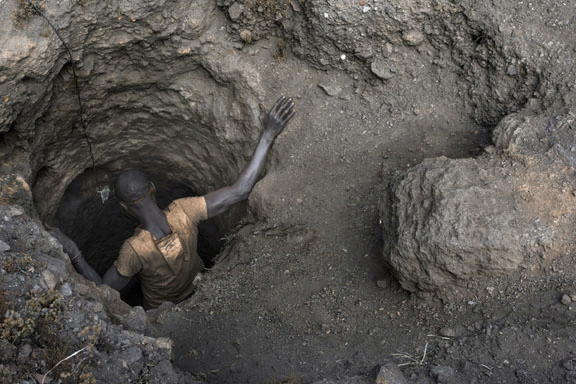
Mayamba is a cobalt miner. ….
This remote landscape in southern Africa lies at the heart of the world’s mad scramble for cheap cobalt, a mineral essential to the rechargeable lithium-ion batteries that power smartphones, laptops and electric vehicles made by companies such as Apple, Samsung and major automakers.
But Mayamba, 35, knew nothing about his role in this sprawling global supply chain. He grabbed his metal shovel and broken-headed hammer from a corner of the room he shares with his wife and child. He pulled on a dust-stained jacket. A proud man, he likes to wear a button-down shirt even to mine. And he planned to mine by hand all day and through the night. He would nap in the underground tunnels. No industrial tools. Not even a hard hat. The risk of a cave-in is constant……
The world’s soaring demand for cobalt is at times met by workers, including children, who labor in harsh and dangerous conditions. An estimated 100,000 cobalt miners in Congo use hand tools to dig hundreds of feet underground with little oversight and few safety measures, according to workers, government officials and evidence found by The Washington Post during visits to remote mines. Deaths and injuries are common. And the mining activity exposes local communities to levels of toxic metals that appear to be linked to ailments that include breathing problems and birth defects, health officials say.
The Post traced this cobalt pipeline and, for the first time, showed how cobalt mined in these harsh conditions ends up in popular consumer products. It moves from small-scale Congolese mines to a single Chinese company — Congo DongFang International Mining, part of one of the world’s biggest cobalt producers, Zhejiang Huayou Cobalt — that for years has supplied some of the world’s largest battery makers. They, in turn, have produced the batteries found inside products such as Apple’s iPhones — a finding that calls into question corporate assertions that they are capable of monitoring their supply chains for human rights abuses or child labor.
Apple, in response to questions from The Post, acknowledged that this cobalt has made its way into its batteries…….
Few companies regularly track where their cobalt comes from. Following the path from mine to finished product is difficult but possible, The Post discovered. Armed guards block access to many of Congo’s mines. The cobalt then passes through several companies and travels thousands of miles.
Yet 60 percent of the world’s cobalt originates in Congo — a chaotic country rife with corruption and a long history of foreign exploitation of its natural resources…..
In the past year, a Dutch advocacy group called the Center for Research on Multinational Corporations, known as SOMO, and Amnesty International have put out reports alleging improprieties including forced relocations of villages and water pollution. Amnesty’s report, which accused Congo DongFang of buying materials mined by children, prompted a fresh wave of companies to promise that their cobalt connections were being vetted.
But the problems remained starkly evident when Post journalists visited mining operations in Congo this summer. https://www.washingtonpost.com/graphics/business/batteries/congo-cobalt-mining-for-lithium-ion-battery/
The need to support a community when a nuclear power station closes
Regional and national conversations about nuclear power center on electricity supply and cost, environmental goals and radiological safety. But we focus on how closure looks from the host community’s standpoint. There are substantial financial and social losses that pose major, long-term risks to local and regional economies.
The foreseeable losses from plant closures are substantial enough to merit major planning efforts. Economic impact studies forecast the nature and scale of losses, but it’s not clear what to do next to prepare, beyond bracing for the worst and slashing budgets.
Unfortunately, no targeted programs or funding exist to support nuclear host communities doing this kind of planning. The accelerating pace of nuclear power plant closures has exposed a problem that will affect quality of life for hundreds of towns, many in rural or economically depressed areas. There are no model practices or policies, and no federal entity that assumes responsibility beyond radiological safety, environmental cleanup and monitoring of spent fuel.
A decade ago, community leaders in Southern Vermont asked what might happen to the regional economy if their plant shut down. They conducted a study to understand the problem, and produced the first-ever Comprehensive Economic Development Strategyincorporating nuclear plant closure impacts into economic planning. They had realized it was up to the region to take action because no help would be offered. By the time Vermont Yankee announced closure, work was already underway to replace Vermont Yankee losses with new jobs and businesses.
Today, the community around the Diablo Canyon Power Plant is at the start of a long journey. As home to many of the earliest plant closures, New England offers a network of people with experience, many of whom are also working to improve federal policies that will frame your future experience. This includes engaging with two current initiatives; NRC rulemaking on decommissioning and the Department of Energy consent-based approach to the spent fuel siting process.
Hundreds of billions of dollars will be spent to decommission the nuclear power plants that supply one-fifth of our nation’s energy. Additional billions are going into spent fuel handling and related litigation.
Currently, the best-case closure scenario is simply restoring nuclear sites to a natural state, erasing the past with no attempt to generate new economic activity.
We can do more. Only a few decades ago, America lacked a coherent approach to polluted sites. Now brownfield programs commonly transform polluted sites into new assets that attract investment.
Military base closures have been devastating, but over time Base Realignment and Closurepractices are evolving to help create new economic activity and redevelopment.
The local, county, regional and state agencies responsible for each community need enough funding and authority to implement timely and sufficient mitigation of all risks — to economic, environmental and human health. Decommissioning creates unfunded mandates precisely at the point when revenues are dropping. Ultimately, we need a national solution that makes the long-term economic health of host communities a policy goal. We need a federal agency that assumes responsibility for achieving that goal.
We urge California’s policymakers to join a growing body of state and federal legislators and regulators who believe we can do better when it comes to caring for the communities providing our nation’s energy.
John Mullin is professor emeritus of regional planning at the University of Massachusetts Amherst and former dean of the graduate school. He is co-founder of the Institute for Nuclear Host Communities and teaches a course on nuclear plant closures in the UMass Honors College.
Laura Sibilia is economic development director at the Brattleboro Development Credit Corp. in Vermont and a member of Vermont’s House of Representatives. She worked on development of a Comprehensive Economic Development Strategy to address impacts of Vermont Yankee’s closure.
Jennifer Stromsten is program director for the Institute for Nuclear Host Communities. She has 20 years of nonprofit development experience, and a master’s degree in regional planning, focused on sustainable land use and economic development. http://www.sanluisobispo.com/opinion/letters-to-the-editor/article105472331.html
France: Public consultation on the draft decree on protection against the dangers of ionizing radiation
Sean Arclight Hervé Courtois CRIIRAD calls to mobilize against the adoption of very high reference levels
to manage nuclear accidents and their consequences.
The French authorities are preparing to establish the zones management criteria contaminated following a nuclear accident (or after an attack affecting a nuclear installation). What level of radiation exposure, and thus risk, will be taken in reference to decide whether or not to hire a particular action to protect the population? Very concretely: to what level of risk you will be condemned to live in contaminated areas? At what level of risk can you expect to be compensated and rehoused in a healthy environment?
The French authorities have retained the levels of effective dose as high as possible: 100 mSv for the accident phase and 20 mSv / year for accidental post phase (while for the public, the maximum dose limit is typically 1 mSv / year and that this value is already at a high level of risk). More limitations are high, lower are the expenses related to the protection and compensation for damage. This choice is unfortunately consistent with the capping of compensation for victims of a major nuclear accident. Nuclear power is exempted from the application of the polluter pays principle: they are the victims who bear the health and economic consequences of the disaster.
This decision does not just happen. It is the fruit of 20 years of efforts of the nuclear lobby, and specifically the French nuclear lobby via the Trojan horse, the FNEC (1). The key idea is to convince people that can be done entirely live in contaminated areas. Just a bit of training and equipment to control their environment, food. These experts have just “forgot” the central problem of the deteriorating health status of people, especially children.
If you are shocked by the image of the Japanese children wear around their necks a dosimeter as a pendant, if it is not the future you want for your children, act!
1. Study Centre on the Protection of the evaluation in the field Nuclear: an association with 4 members (EDF, AREVA, CEA and IRSN) and has widely infiltrated the national and international decision-making and including the ICRP (Jacques Lochard, Director of the FNEC, is now vice chairman of the main committee)
The Ministry of Environment, Energy and Marine has launched a consultation on the draft decree on the Directive 2013/59. Remember that France must transpose the Directive into French law by January 2018. This consultation is an opportunity to denounce the proposals which we find unacceptable and show already our requirements. We later learned of this consultation will end on 30 September.
Take part in the public consultation
and say NO to the obligation to live in contaminated areas!
> Learn more
> How to participate in the public consultation?
The Directive covers many topics which will be discussed further. Other actions will be implemented in the coming weeks. We already rely on your help to relay! https://www.facebook.com/groups/1021186047913052/
1 This Month
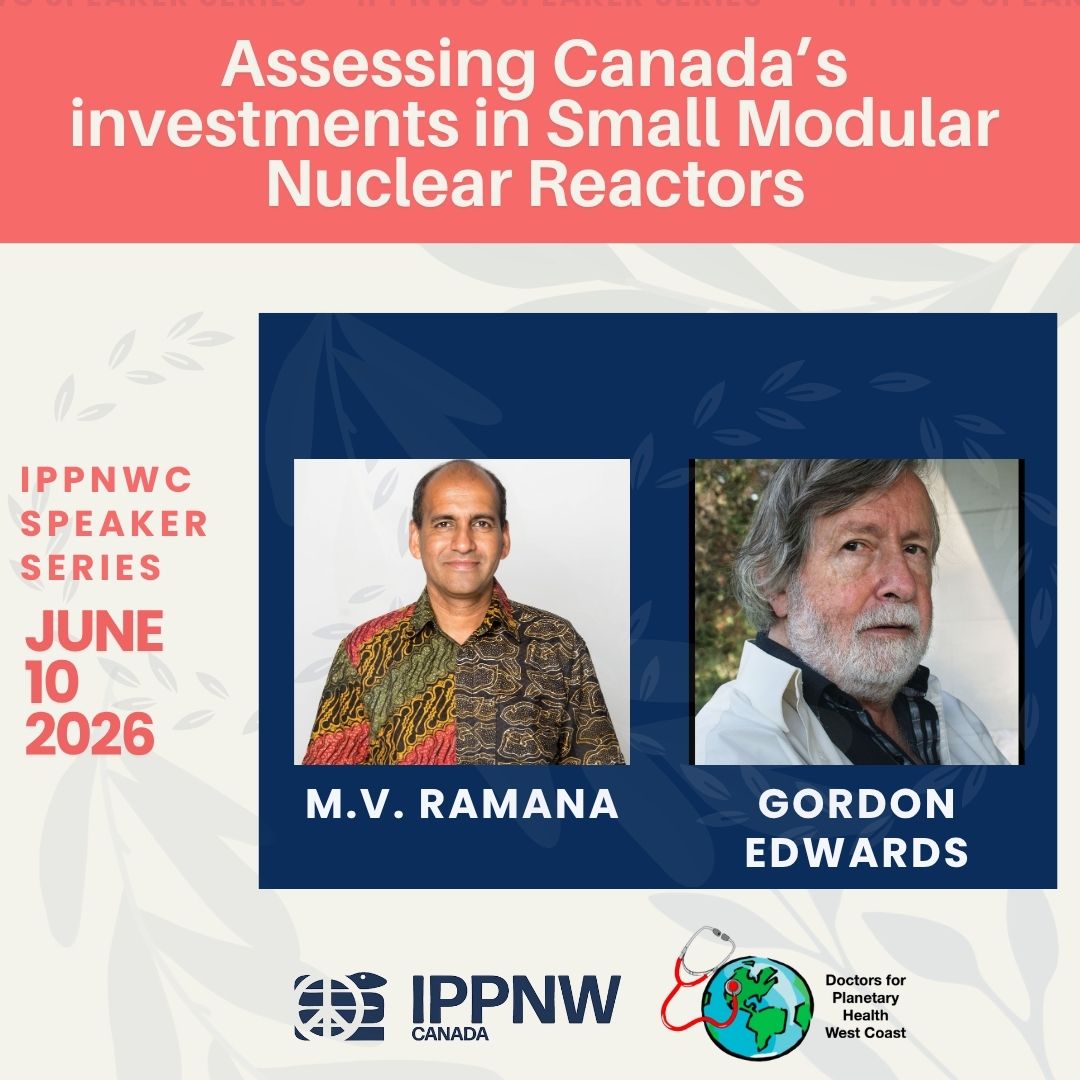
10 June – Assessing Canada’s Investments in Small Modular Nuclear Reactors – https://zoom.us/meeting/register/IiqHA5feRhaEBycOLNTJlA#/registration


Cuba Is Not a Failed State – It Is a Besieged State
PETITION: “Global Appeal to Endorse Palestinian Right of Return of Refugees”
To see nuclear-related stories in greater depth and intensity – go to https://nuclearinformation.wordpress.com
-
Archives
- June 2026 (68)
- May 2026 (306)
- April 2026 (356)
- March 2026 (251)
- February 2026 (268)
- January 2026 (308)
- December 2025 (358)
- November 2025 (359)
- October 2025 (376)
- September 2025 (257)
- August 2025 (319)
- July 2025 (230)
-
Categories
- 1
- 1 NUCLEAR ISSUES
- business and costs
- climate change
- culture and arts
- ENERGY
- environment
- health
- history
- indigenous issues
- Legal
- marketing of nuclear
- media
- opposition to nuclear
- PERSONAL STORIES
- politics
- politics international
- Religion and ethics
- safety
- secrets,lies and civil liberties
- spinbuster
- technology
- Uranium
- wastes
- weapons and war
- Women
- 2 WORLD
- ACTION
- AFRICA
- Atrocities
- AUSTRALIA
- Christina's notes
- Christina's themes
- culture and arts
- Events
- Fuk 2022
- Fuk 2023
- Fukushima 2017
- Fukushima 2018
- fukushima 2019
- Fukushima 2020
- Fukushima 2021
- general
- global warming
- Humour (God we need it)
- Nuclear
- RARE EARTHS
- Reference
- resources – print
- Resources -audiovicual
- Weekly Newsletter
- World
- World Nuclear
- YouTube
-
RSS
Entries RSS
Comments RSS
 nuclear-news