Climate change causing groundwater problems, as sea levels rise
 Why Groundwater is Another Sea Level Rise Concern, Climate Central by Andrew Freedman, 4 May 12 Sea level rise brings to mind the threat of coastal flooding from menacing storm surges, with growing risks to shore-based infrastructure — but a new study indicates there’s another sea level rise-related threat that has so far slipped under the radar. Continue reading
President Barack Obama on Climate Chnage

 Ready for the Fight: Rolling Stone Interview with Barack Obama The president, in the Oval Office, discusses his job, the opposition and the coming campaign By JANN S. WENNER APRIL 25, 2012 “…...those who have looked at the science of climate change are scared and concerned about a general lack of sufficient movement to deal with the problem. Frankly, I’m deeply concerned that internationally, we have not made as much progress as we need to make.
Within the constraints of this Congress, we’ve tried to do a whole range of things, administratively, that are making a difference – doubling fuel-efficiency standards on cars is going to take a whole lot of carbon out of our atmosphere. We’re going to continue to push
on energy efficiency, and renewable energy standards, and the promotion of green energy. But there is no doubt that we have a lot more work to do…..
it’s been easy for the other side to pour millions of dollars into a campaign to debunk climate-change science. I suspect that over the next six months, this is going to be a debate that will become part of the campaign, and I will be very clear in voicing my belief that we’re going to have to take further steps to deal with climate change in a
serious way.
That there’s a way to do it that is entirely compatible with strong economic growth and job creation – that taking steps, for example, to retrofit buildings all across America with existing technologies will reduce our power usage by 15 or 20 percent. That’s
an achievable goal, and we should be getting started now……”
http://www.rollingstone.com/politics/news/ready-for-the-fight-rolling-stone-interview-with-barack-obama-20120425#ixzz1tTnVSje7
Latest evidence for man-made global warming
On Wednesday, scientists showed in an article published in the journal Nature that rising CO2 preceded warming at the end of the last ice age
Sceptics’ case melts more, Gerard Wynn, SMH, April 6, 2012 A clutch of recent studies reinforces evidence that people are causing climate change and suggests debate should now move on to a more precise understanding of its impact on humans.
The reports, published in various journals in recent weeks, add new detail to the theory of climate change and by implication cast contrarians in a more desperate light. To be clear: there’s nothing wrong with doubting climate change; but doubts based on ignorance, a political bias or fossil fuel lobbying don’t help.

The basics, well known, are that rising greenhouse gas emissions are almost certainly responsible for raising global average surface temperatures (by about 0.17 degrees Celsius a decade from 1980-2010), in turn leading to sea level rise (of about 2.3 millimetres a year from 2005-2010) and probably causing more frequent bouts of extreme heatwaves and possibly more erratic rainfall. Continue reading
Rise in carbon in the atmosphere leads to rise in global temperature
As more and more CO2 enters the atmosphere, Shakun said, the global warming trend continues
While the research strengthens the link between CO2 and the Ice Ages, Shakun believes it also reinforces the importance of addressing CO2-driven climate change in our own time.
 Confirming carbon’s climate effects, Eureka Alert, Harvard University, 7 April 12, Researcher helps paint the fullest picture yet of how increases in CO2 helped end the ice age
Harvard scientists are helping to paint the fullest picture yet of how a handful of factors, particularly world-wide increases in atmospheric carbon dioxide, combined to end the last ice age approximately 20,000 to 10,000 years ago. Continue reading
Addressing Climate Change: lessons from Indigenous Peoples
“Modern education and knowledge is mainly about how to better dominate nature. It is never about how to live harmoniously with nature.”
“Living well is all about keeping good relations with Mother Earth and not living by domination or extraction.”
Indigenous Peoples Can Show the Path to Low-Carbon Living If Their Land Rights Are Recognized http://newswatch.nationalgeographic.com/2012/04/04/indigenous-peoples-can-show-the-path-to-low-carbon-living-if-their-land-rights-are-recognized/ National Geographic, by Stephen Leahy in Climate Change and Indigenous Peoples April 4, 2012 Indigenous peoples are living examples of societies living, sustainable low-carbon lifestyles. Successfully meeting the global climate change challenge requires that much of the world shift from high carbon-living to low.

This shift is daunting. Current emissions for Australia and United States average about 20 tonnes of carbon dioxide per person. In the coming decades that needs to fall to two tonnes per person as it is currently in Brazil or Dominican Republic.
Emissions from most Indigenous peoples are even lower and are amongst the lowest in the world. Continue reading
Runaway global warming – it may soon be irreversible
Global Warming Close To Becoming Irreversible-Scientists, Planet Ark, 27-Mar-12, LONDON, Nina Chestney The world is close to reaching tipping points that will make it irreversibly hotter, making this decade critical in efforts to contain global warming, scientists warned on Monday.
Scientific estimates differ but the world’s temperature looks set to rise by six degrees Celsius by 2100 if greenhouse gas emissions are allowed to rise uncontrollably. Continue reading
Is the Earth hotting up faster than anticipated?
If people keep emitting fossil fuels in the way we expect, with no price on carbon or no future policy initiatives, we expect a range of 1.4 to 3 degrees by 2050,”
Impact of climate change may be underestimated, ABC News, The World Today By David Mark, March 26, 2012 A new study suggests climate scientists may have underestimated the effect of greenhouse gases, with global temperatures now predicted to rise by between 1.4 and 3 degrees Celsius by 2050. Continue reading
More earthquakes as a result of climate change
The world we inhabit has an outer rind that is extraordinarily sensitive to change. While the Earth’s crust may seem safe and secure, the geological calamities that happen with alarming regularity confirm that this is not the case……….
Our planet is once again in the throes of an extraordinary climatic transformation — this time brought about by human activities……
Let the sleeping giant lie A changing climate isn’t just about floods, droughts and heatwaves. It brings erupting volcanoes and catastrophic earthquakes too By Bill McGuire -Guardian News, 25 Mar 12, The idea that a changing climate can persuade the ground to shake, volcanoes to rumble and tsunamis to crash on to unsuspecting coastlines seems, at first, to be bordering on the insane. How can what happens in the thin envelope of gas that shrouds and protects our world possibly influence the Earth-shattering processes that operate deep beneath the surface?
The fact that it does reflects a failure of our imagination and a limited understanding of the manner in which the different physical components of our planet — the atmosphere, the oceans and the solid Earth, or geosphere — intertwine and interact. Continue reading
Increasing risk to nuclear sites, of sea level rise and tsunamis
Nuclear sites, sea-level rise and tsunamis, guardian.co.uk, Dr Paul Dorfman Co-ordinator, Nuclear Consulting Group 11 March 2012 It seems clear that nuclear facilities will be vulnerable to the effects of global warming (Nuclear power sites face flood and erosion risks, 8 March). As the Institution of Mechanical Engineers stated in a 2009 report: “Nuclear sites, such as Sizewell, based on the coastline, may need considerable investment to protect them against rising sea levels, or even abandonment/relocation in the long term.”
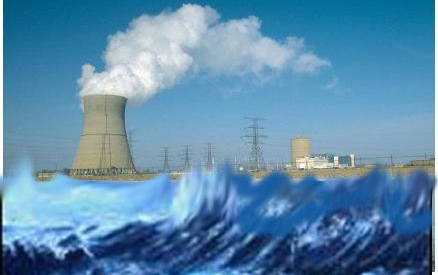
So, given that proposed new UK reactors, together with their radioactive waste stores including spent fuel, will be located on coasts – predicted sea-level rise, shoreline erosion, coastal storms, floods, tidal surges and the evolution of “nuclear islands” stand out as primary concerns. This means that adapting nuclear power to climate change will entail increased expense for construction, operation, waste storage and decommissioning, and the incurring of significant costs to the environment, public health and welfare.
 Robert Griffiths: Although the risk of floods to nuclear power stations must not be ignored, a much more dangerous threat is that of a tsunami. Oldbury, Berkeley and Hinkley Point are all in the area of England’s only known tsunami. This is reported to have occurred on 20 January in 1607. Plaques on local churches indicate the depth of the water may have been 7 to 8 metres, and it is said to have reached Glastonbury Tor, some 22km inland. Flood and erosion problems can be solved by building sea walls around the plants as we approach 2080. Why is no one worried about an unexpected tsunami on top of rising sea levels?
http://www.guardian.co.uk/environment/2012/mar/11/nuclear-sites-sea-rise-tsunamis?newsfeed=true
How would a regional nuclear war affect climate?
 Effects of a regional nuclear war on global temperatures, Chron.com Eric Berger, 10 Mar 12, Despite a flurry of diplomatic efforts tensions between Israel and Iran appear to be reaching a boiling point regarding the latter country’s designs on joining the nuclear club.
This is not a geopolitical blog, but rather a science one. So I want to address the question of nuclear war’s effect on climate.
Rutgers University environmental research Alan Robock has studied this question in a meaningful way, using NASA’s climate ModelE to study the climatic effects of the byproducts of a nuclear war. Let me be clear, its effect on climate change is down the list of problems posed by nuclear weapons, but the long-term effects would nonetheless be profound, most specifically through colder temperatures, shorter growing seasons and famine.
First lets look at the consequences of a regional nuclear war using 100 15-kT (Hiroshima-size) weapons.
In this scenario, using Pakistan and India, weapons were dropped on the 50 targets in each country to produce the maximum smoke. An estimated 20 million would die, and 5 teragrams of smoke would be pumped into the atmosphere. Such a war would encompass just 0.3 percent of the world’s nuclear arsenal.
Here is its effect on global temperatures:..[very good graphs here] ….. there would be a substantial temporary cooling, but within a decade temperatures would likely respond to 1990s levels.
Then, the research group looked at the consequences of a full-scale nuclear war between the United States and Russia. While highly unlikely, the results of such a war on global temperatures live up to the nuclear winter of which Carl Sagan warned. ….. http://blog.chron.com/sciguy/2012/03/effects-of-a-regional-nuclear-war-on-global-temperatures/
Climate change leading to overuse of groundwater
 UN scientists warn of increased groundwater demands due to climate change, Eureka Alert, Philip Riley, SAN FRANCISCO, March 1, 2012 –– Climate change has been studied extensively, but a new body of research guided by a San Francisco State University hydrologist looks beneath the surface of the phenomenon and finds that climate change will put particular strain on one of our most important natural resources: groundwater.
SF State Assistant Professor of Geosciences Jason Gurdak says that as precipitation becomes less frequent due to climate change, lake and reservoir levels will drop and people will increasingly turn to groundwater for agricultural, industrial, and drinking water needs. The resource accounts for nearly half of all drinking water worldwide, but recharges at a much slower rate than aboveground water sources and in many cases is nonrenewable.
“It is clear that groundwater will play a critical role in society’s adaption to climate change,” said Gurdak, who co-led a United Nations-sponsored group of scientists who are now urging policymakers to increase regulations and conservation measures on nonrenewable groundwater.
The scientists recently released a book of their research, titled “Climate Change Effects on Groundwater Resources,” that is the result of a global groundwater initiative by the United Nations Educational, Scientific, and Cultural Organization (UNESCO). They will soon make their case to international policymakers at the March 12-17 World Water Forum in Marseille, France.
The high-profile forum will allow the scientists for the first time to put the comprehensive groundwater findings before decision makers who have the power to enact regulatory changes. Gurdak will recommend closely monitoring or limiting groundwater pumping as well as renewing cooperation from communities to consume less water.
“In many ways, California is leading the way in developing solutions,” he said. “Artificial recharge, managed storage and recovery projects and low impact development around the state will become more important for many local water systems to bank excess water in aquifers.”
The World Water Forum will be held from March 12 to 17 in Marseille, France. ”Climate Change Effects on Groundwater Resources: A Global Synthesis of Findings and Recommendations,” was published in December 2011 by CRC Press. Selections from the book can be read here:  http://userwww.sfsu.edu/~jgurdak/Publications/Treidel_etal_2011_ClimateChange-Groundwater_tableofcontents.pdf http://www.eurekalert.org/pub_releases/2012-03/sfsu-usw030512.php
Climate change tragedy of the Torres Strait islands
A SINKING FEELING IN THE TORRES STRAIT, ABC Radio National, Hagar Cohen.4 March 2012, There are six islands in the Torres Strait facing inundation from tidal flooding. The encroaching sea is slowly washing away everything from building foundations to ancestral graves, and mosquitoes are thriving. One island has had its worst malaria outbreak in 50 years. There is a temporary solution—building seawalls—but the federal and state governments are showing little interest in paying for that, and in the meantime these island communities have a sinking feeling that relocation may be the only option left for them.
http://www.abc.net.au/radionational/programs/backgroundbriefing/2012-03-04/3857272
86% of funds to deal with existing waste – UK’s Department of Energy and Climate Change
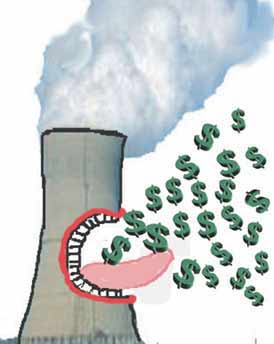 Department of Energy and Climate Change (DECC) is unique among government departments because it has to spend almost half of its budget on dealing with existing nuclear waste.
But to see that this has risen to almost almost 86% of overall DECC spending seemed incredible.
DECC must tell us the truth about nuclear waste, Energy and Environmental Management David Thorpe, 1st November 2011 It’s shocking but true: we are not, as I had always understood, investing in a fund to manage our current nuclear waste in the future.
We are paying lip service to it and dodging the question at the expense of future taxpayers.
Moreover, there is total confusion about what provisions are being put in place to manage any future waste from any new nuclear power stations.
Will the real DECC budget please stand up?
Last week, the Guardian published on its website figures which appeared to show that spending by the Department of Energy and Climate Change on nuclear waste management has risen by an astonishing 81%, as part of an overall budget increase from last year of over 146%.
In trying to find out whether this is true I have found out a truth worse than this, as well as an admission that any new nuclear operators are allegedly being asked to contribute to a fund not only to pay for management and disposal of the new nuclear waste which their plants will create, but also for that of existing nuclear waste!
According to the Guardian, in 2009/10 DECC’s entire spend totaled £3.18bn, but in 2010/11 it is spending £8.06bn, an increase of 146.02% that is largely due to nuclear liabilities.
This spending, according to the Guardian, breaks down as follows:
| DECC spending: £ per topic and change from last year | ||
| Topic | Amount | % increase or decrease |
|---|---|---|
| Nuclear Decommissioning Authority | £6.9bn | +81.12% |
| Committee for Climate Change | £4.4m | +12.12% |
| Low carbon UK | £622.7m | -29.8% |
| International agreement on climate change | £5.4m | +22.42% |
| Promoting low carbon technologies in developing countries |
£278.6m | +159.52% |
| Coal Authority | £0.7m | +87.02% |
| Professional support and infrastructure | £117.7m | -7.62% |
| Energy | £87.2m | +3.33% |
| Historic energy liabilities | £104.5m | -106.8% |
How global warming brings freezing winter to Europe
In particular, the loss of Arctic sea ice could be influencing the development of high-pressure weather systems over northern Russia, which bring very cold winds from the Arctic and Siberia to Western Europe and the British Isles, the scientists believe.
Is Climate Change Bringing the Arctic to Europe? The Energy Collective, Joseph Romm, February 7, 2012 Less Summer Arctic Sea Ice Cover May Mean Some Colder, Snowier Winters in Central Europe [For Now]
[T]he probability of cold winters with much snow in Central Europe rises when the Arctic is covered by less sea ice in summer. Scientists of the Research Unit Potsdam of the Alfred Wegener Institute for Polar and Marine Research in the Helmholtz Association have decrypted a mechanism in which a shrinking summertime sea ice cover changes the air pressure zones in the Arctic atmosphere and impacts our European winter weather. These results of a global climate analysis were recently published in a study in the scientific journal Tellus A.
That’s the news release for yet another new study examining what will inevitably be the huge implications for extreme weather from the massive amount of heat released by the declining Arctic sea ice cover. Arctic sea ice in September 2007 reached its lowest extent on record, approximately 40% lower than when satellite records began in 1979. Sea ice loss in 2011 was virtually tied with the ice loss in 2007, despite weather conditions that were not as unusual in the Arctic. ”Such a large area of open water is bound to cause significant impacts on weather patterns, due to the huge amount of heat and moisture that escapes from the exposed ocean into the atmosphere over a multi-month period following the summer melt.” Continue reading
England’s Conservative Party – a shambles of Climate Change Denialists
 In the main, the Tories are a coalition of climate change sceptics ….. Despite the fact that 60 per cent of voters think it is ‘right’ to ‘subsidise wind farms to encourage more use of wind power’.
Far from being ‘intermittent’ wind turbines operate between 70-80 per cent of the time, currently providing power for the equivalent of 3.3 million homes.
Climate change sceptics and rural romantics – the Tories are a shambles on renewable energy Left Foot Forward, by Kevin Meagher, February 7th 2012 It took less than 24 hours from the resignation of Chris Huhne for the Tories to strike. A hundred and one Tory backbenchers have written to David Cameron calling for an end to public subsidies designed to support Britain’s wind power industry.
They claim that subsidies should be drastically cut and draft planning guidance strengthened to make it easier for objectors to block wind farm schemes. Continue reading
1 This Month





PLEASE OPPOSE HR 8255 AND S.3639 – bills would accelerate satellite deployment, with no environmental review or safeguards – https://ncstd5li.quorum.us/campaign/169331/
To see nuclear-related stories in greater depth and intensity – go to https://nuclearinformation.wordpress.com
-
Archives
- October 2026 (29)
- September 2026 (339)
- August 2026 (330)
- July 2026 (355)
- June 2026 (287)
- May 2026 (306)
- April 2026 (356)
- March 2026 (251)
- February 2026 (267)
- January 2026 (308)
- December 2025 (358)
- November 2025 (359)
-
Categories
- 1
- 1 NUCLEAR ISSUES
- business and costs
- climate change
- culture and arts
- ENERGY
- environment
- health
- history
- indigenous issues
- Legal
- marketing of nuclear
- media
- opposition to nuclear
- PERSONAL STORIES
- politics
- politics international
- Religion and ethics
- safety
- secrets,lies and civil liberties
- spinbuster
- technology
- Uranium
- wastes
- weapons and war
- Women
- 2 WORLD
- ACTION
- AFRICA
- Atrocities
- AUSTRALIA
- Christina's notes
- Christina's themes
- culture and arts
- Events
- Fuk 2022
- Fuk 2023
- Fukushima 2017
- Fukushima 2018
- fukushima 2019
- Fukushima 2020
- Fukushima 2021
- general
- global warming
- Humour (God we need it)
- Nuclear
- RARE EARTHS
- Reference
- resources – print
- Resources -audiovicual
- Weekly Newsletter
- World
- World Nuclear
- YouTube
-
RSS
Entries RSS
Comments RSS

