Media Coverage of Fukushima, Ten Years Later.
Abstract: When taking up the unlearned lessons of Fukushima, one of the biggest may have been the need for more robust oversight of the nuclear industry. In Japan, the failure of the major national news media to scrutinize the industry and hold it accountable was particularly glaring. Despite their own claims to serve as watchdogs on officialdom, the major media have instead covered Japan’s powerful nuclear industry with a mix of silent complicity and outright boosterism. This is true both before and after the Fukushima disaster. In the decades after World War II, when the nuclear industry was established, media played an active role in overcoming public resistance to atomic energy and winning at least passive acceptance of it as a science-based means for Japan to secure energy autonomy.
During the Fukushima disaster, the media served government objectives such as preservation of social order by playing down the size of the accident and severity of radiological releases, resulting in widely divergent coverage from serious overseas media. While a short-lived proliferation of more critical and independent coverage followed the disaster, the old patterns returned with a vengeance after the installment of the pro-nuclear administration of Abe Shinzō. This article will examine the roots of the Japanese media’s failure to challenge or scrutinize the nuclear industry, and how this complicity has played out in the post-Fukushima era. It will use a historical analysis to look at how the current patterns of media coverage were actually established in the immediate postwar period, and the formation of public support for civilian nuclear power.
During my 15 years as a foreign correspondent in Tokyo, including a six-year stint as Tokyo bureau chief of The New York Times (2009-2015), I often covered the same news events as Japanese journalists, standing shoulder-to-shoulder at more press conferences than we’d care to count. While I admire many Japanese colleagues individually as journalists, I was frequently struck by the shortcomings of Japan’s big domestic media and Japanese journalism as an institution.
But never did I feel these structural weaknesses as keenly as I did in the tense weeks that followed the triple meltdown at the Fukushima Daiichi Nuclear Power Station.
In Minami-soma, a city 25 kilometers north of the stricken plant, where some 20,000 remaining residents were cut off from supplies of food, fuel and medicines, I discovered that journalists from major Japanese media were nowhere to be seen. They had withdrawn from Minami-soma, forbidden by their editors in Tokyo from approaching within 30 or 40 kilometers of Fukushima Daiichi.
By doing so, they had essentially abandoned the already isolated residents. But you would never know that from the media’s stories, which made no mention of their own pull out or the perceived risks that had prompted this retreat. Instead, the main newspaper articles uniformly repeated official reassurances that there was no cause for alarm because the radiation posed “no immediate danger to human health,” as the chief cabinet secretary at the time, Edano Yukio, so famously put it.1
The mismatch between word and deed—between what the newspapers were telling their audiences and what they were actually doing to protect their own journalists—was glaring. It turned out that this was only the first of several instances during the Fukushima disaster where I witnessed Japan’s major media adhering to the official narrative regardless of the facts on the ground. I refer to this phenomenon as “media capture,” borrowing from the more widely used term “regulatory capture,” which is used to describe a similar failure of government oversight of the nuclear industry.
Over the months and years that followed the meltdowns, I saw numerous instances of national media refusing to take a critical or distanced stance in their coverage of the nuclear industry and its government regulators. Instead, they repeatedly chose to internalize the official narratives and even adhere to the government-approved language. We saw this is the widely diverging narratives that started appearing in the serious foreign press versus the major domestic media as the accident worsened.
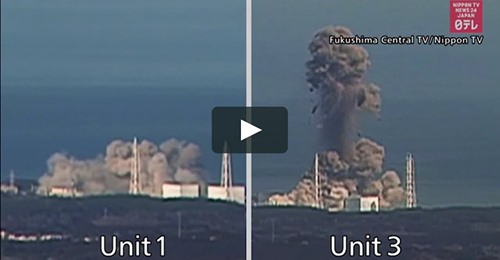
To cite a straightforward example, we started using the word “meltdown” within hours of the first reactor building explosion at the plant, reflecting the almost unanimous view of outside experts that a melting fuel core was the only realistic source of the hydrogen that caused the blast. However, the domestic national dailies and NHK avoided the word “meltdown” (in Japanese, merutodaun) for months, following the insistence of the Ministry of Economics, Trade and Industry (METI), the powerful government agency that both promoted and regulated Japan’s nuclear industry, that a meltdown had not been confirmed. The big Japanese media used other official euphemisms as well, including “explosion-like event” to describe the massive blast at the Unit 3 reactor building, which blew chunks of concrete hundreds of feet into the air.
In fact, I even had Japanese journalists calling me to berate me and my newspaper for using the M-word without METI’s permission. Readers of the Japanese national dailies didn’t see the M-word until mid-May, when METI and the plant’s operator, Tokyo Electric Power Co. or TEPCO, conceded in public that Fukushima Daiichi had indeed suffered a meltdown in mid-March—three meltdowns, in fact.
In the chapter that I wrote for Legacies of Fukushima: 3.11 in Context, I tried to explain some of the reasons why the civilian nuclear power industry could have such a peculiarly strong grip on the media and their narratives. The nuclear industry was a national project that was promoted by the powerful central ministries as a silver bullet for resource-poor Japan’s dependence on imported energy. This gave it an elevated status as the elite bureaucrats guided Japan’s postwar recovery and economic take-off.
I looked at the media’s dependence on Tokyo’s powerful central ministries, which takes its most visible form in the so-called kisha kurabu, or “press clubs.” These are arrangements that allow national media to station their journalists inside the ministries and agencies, where they are given their own room and exclusive access to officials. Much of the reporting by the major Japanese media starts in the kisha kurabu, where journalists gather to wait for the next press conference or off-record briefing from officials. The kisha kurabu system fosters a passive form of journalism, in which reporters become dependent on the ministry within which they are embedded. In pursuit of a scoop that can make or break a career, the journalists compete for handouts from ministry officials. All too often, they enter a Faustian bargain in which the journalists swap narrative control in exchange for exclusive access to information. The result is a passive form of access journalism that ends up repeating spoon-fed official narratives.
I also looked to the past at the emergence of newspapers like the Asahi Shimbun during the early to mid-Meiji era, when the national priority was to protect autonomy by finding a way to catch the industrialized West. I argued that this history baked into the mindset of Japanese journalists a feeling of responsibility for the fate of their nation, including its vital energy needs. It also led to an identification with the government, and particularly the elite officialdom, as protectors of Japan and its people from predatory foreign powers. This inclination to side with the state has continued in the postwar period, when journalists have clearly seen themselves as members of a national elite attached to a broader bureaucratic-led system.
One point that I wanted to underscore was that this media capture was not something so simple or venal as corruption. This is how it is often portrayed by critical Japanese writers, usually freelancers and book authors, who focus on the so-called Nuclear Village, a nexus of business, government, labor unions, academia and news media linked by the cash flowing out of the highly profitable nuclear plants. While money doubtlessly plays a role in many of these relationships, including perhaps the for-profit commercial TV broadcasters, I see no direct evidence that it sways the coverage of the national newspapers. These are privately held companies for whom advertising is a much less important revenue source than subscriptions (or the rent from their valuable real estate holdings in central Tokyo and Osaka).
Regardless of the cause, the result has been generations of postwar journalists who have consistently failed to serve as watchdogs on one of the nation’s most politically powerful industries.2 Starting in the 1990s, public scandals started plaguing the industry, and TEPCO in particular. In 2002, government inspectors announced that TEPCO had been routinely falsifying safety reports to hide minor incidents and equipment problems at reactors including several at Fukushima Daiichi. TEPCO eventually admitted to more than 200 such violations stretching back to 1977. Five years later, TEPCO revealed even more cover-ups of safety issues, which the company had failed to report in the previous inquiry.
Despite what was clearly a chronic and systemic failure of both internal compliance and government oversight, no one was arrested or charged, and the existing regulatory framework left unchanged. The media could have played a role of holding the regulators’ feet to the fire by exposing the structural problems behind this abysmal record of obfuscation and cover-ups. Instead, the watchdogs chose to remain largely silent, reporting on the government’s revelations, but making few efforts at independent investigative reporting.
Of course, such criticisms enjoy the benefits of hindsight, with the accident in 2011 making it easier to see these failures as part of a broader narrative that leads inevitably to Fukushima. But how about after 2011, when the severity of the disaster led to numerous calls for reform? During that time, the national media have also been held up to uncomfortable scrutiny by a jaded and distrustful public, who felt betrayed by their early coverage of the accident.
Unfortunately, ten years later, nothing seems to have changed.
This was apparent in mid-April of 2021, when the Japanese government announced a decision to release into the Pacific Ocean more than 1.2 million tons of radioactive water that has been building up in hundreds of huge metal tanks on the grounds of the Fukushima Daiichi plant. (The accumulation of contaminated water has plagued the plant from the early days of the disaster. TEPCO has resorted to some high-tech solutions with mixed results, including a mile-long “ice wall” of frozen dirt that failed to fully block the water, much of which flows into the plant from underground.)
The water stored in these tanks contains tritium, a radioactive isotope of hydrogen that is best known for its military use as the fuel for thermonuclear warheads (hence the term “hydrogen bomb”). On the spectrum of radioactive substances, tritium emits relatively low levels of radiation in form of beta particles. But it is a radioactive substance nonetheless, a fact that major media played down or even omitted by choosing, once again, to adopt the industry and government’s language to describe the dump. The main news stories in the major national newspapers and TV broadcasts used the official term for this water, which is shorisui, or “treated water.”
While technically correct, this term euphemistically glosses over the fact that this is not the same as, say, treated sewage water. Nor does treated water convey the fact that this water still contains a radionuclide that emits beta radiation.
One result was an interesting battle of words that pitted the mainstream media, which used the approved “treated water,” against journalists who were outside the press club’s inner circle. These publications and web sites chose to use clearer terms such as osensui, or “contaminated water.” The leftist daily Tokyo Shimbun, a smaller regional newspaper that has stood out for its more critical coverage of the nuclear disaster, compromised by calling the water osenshorisui, or “contaminated treated water.”3
More eye-opening was the fact that there were actually efforts to enforce use of the officially approved term. As many journalists discovered, there was an army of social media trolls at ready to pile onto anyone with the temerity to use more critical terminology, and particularly “contaminated water.” TEPCO and the government mobilized university experts and PR professionals to police the public sphere for use of words that were deemed “unscientific” and “ideological.”
Of course, the choice of the word “treated” is itself also highly political. It buttressed the larger message put forth by the government and the plant’s operator that the release of this water was no cause for alarm, but something very common and normal that nuclear plants around the world do all the time. By accepting the official terminology, the media were implicitly adopting this framing of the issue, which focused on the claim that the water could be diluted to the point of being harmless when dumped into the Pacific.
Scientifically, this is a valid claim. My point here is not to take sides. Rather, I am criticizing the large domestic media for failing to do the same: i.e., not take sides. By adopting the official narrative, the media were complicit in the government’s and TEPCO’s exclusion of other, also valid counterarguments. One of the biggest is the fact that this release is anything but normal. No nuclear plant has ever conducted an orchestrated release of such a huge quantity of tritium-laden water. (At the time of writing, the amount, 1.2 million tons, is enough to fill almost 500 Olympic-sized swimming pools.) Worse, the release is to be carried out in the same closed, opaque manner as the rest of Japan’s decade-long response to the disaster. Unless TEPCO and METI break with past precedent to allow full international oversight to verify that the water is as clean as they claim it is, we are left once again to trust actors who have consistently violated public faith.
Just as importantly, there are valid reasons to at least question whether the water is as clean as TEPCO says it is. The company has been telling us for years that it has installed state-of-the-art treatment and filtration technologies that scrub the water of every radioactive particle except tritium. However, in 2018, the plant operator suddenly revealed that 75% of the treated water at the plant still contained excessive amounts of other, more radioactive substances including strontium 90, a dangerous isotope that can embed itself in the living tissue of human bones.4
To be fair, TEPCO may be right in its assessment of the water’s safety. Even so, it is the job of conscientious journalists to take a skeptical attitude toward such claims until they can be independently verified. The media also need to remind why this is necessary, given the company’s and the industry’s history of cover-ups. My goal here is to fault the major domestic media for once again failing to do this, despite the bitter lessons of 2011. Adopting the language of METI and TEPCO privileges the official perspective over others. It shows that the journalists are internalizing the official framing of the event and how it should be discussed and understood.
Officialdom is thus allowed to set the boundaries of public debate, excluding more critical perspectives as “political,” “unscientific” or even “foreign.” The last characterization reflects the fact that the Chinese and South Korean governments raised some of the loudest objections to the release. The media have tended to frame these as the latest in a litany of self-serving complaints by Asian rivals that like to accuse Japan of failing to apologize for World War II-era atrocities. While Beijing and Seoul may have political motives for seizing on the water issue, this shouldn’t be a reason for journalists to avoid taking up more substantive criticisms about the release. Opposition has appeared in many other countries and reflects the failure of Japan to consult with other nations that share the Pacific Ocean, which will be the site of the mass water dump.
This is a failure by media, once again, to inform their readers of the existence of alternative narratives that take a dimmer view of the actions taken by Japan’s officialdom, or that point out where government interests diverge from those of Japan’s public. This is also a failure of a different sort: of media to protect their own intellectual independence. By uncritically adopting the official narratives, the journalists are relinquishing the right to frame in their issues. This surrendering of agency is the central fact of the media capture that I described above.
To be clear, Japan is not unique in suffering from the problem of media capture. The press in other democratic countries face similar challenges. In the United States, we use the term “access journalism” to describe the pitfalls of journalists, often in Washington, who trade autonomy for exclusive access to official sources. However, Japan’s version of access journalism is more extreme, producing a uniformly monolithic coverage closer to that in non-democratic societies. The most apt American equivalent may be the period of extreme patriotic fervor between the September 11, 2001, terrorist attacks and the March 2003 invasion of Iraq, when U.S. media failed to adequately challenge the erroneous claims of the Bush administration that Iraq was in possession of weapons of mass destruction.
In Japan’s ongoing Fukushima disaster, this lack of agency manifests itself as a failure to not only set the narrative, but even to decide what is newsworthy. Most of the coverage is essentially an act of regurgitating the information that was distributed at the ministry’s kisha kurabu. Since the news reports are based on information received from ministry officials, not surprisingly they usually showcase the actions of those officials. Both the pages of Japan’s national dailies and the evening news broadcasts of NHK are filled with stories of Japanese officialdom in action, solving some problem or punishing some wrongdoer. Most news reports are mini-dramas in which officials play the starring role. As such, they serve as demonstrations that agency lies in the elite bureaucracies at the center of the postwar Japanese state, and not the major media, which seems to serve as an appendage.
Even when critical stories appear, they are rarely the work of enterprising reporters unearthing facts that the powerful would rather keep covered. Rather, the revelations tend to come from official actors when they have decided to take action against malfeasance. One example was TEPCO’s cover-ups, mentioned earlier, which were exposed by nuclear regulators, not investigative reporters. A more recent example is revelations that started to become public in March 2021 of years of security lapses at the huge Kashiwazaki-Kariwa nuclear plant in Niigata, facing the Sea of Japan. Over the next two months, news stories dribbled out about workers who were able to access the sensitive areas around the plant’s nuclear reactors without proper ID. In one case in 2015, a man entered the reactor area using the ID of his father, who also worked at the plant. Once again, there lapses were not exposed by intrepid reporters but regulators themselves, who leaked them to prepare the public for their decision to reject TEPCO’s request to restart the plant.5
The lack of media agency is all the more glaring because there have been very notable exceptions. Japan’s journalists have shown that they are capable of true investigative reporting that can define and drive the public narrative. For a brief window of time during the early years of the Fukushima disaster, some major Japanese media experimented with more autonomous journalism. This began in the late summer of 2011, as public disillusionment in the domestic press’s compliant coverage grew. This prompted some media to try to re-engage readers with more hard-hitting reports that challenged the official claims.
The most notable of these efforts was launched by the Asahi Shimbun, Japan’s second-largest daily, which beefed up a new reporting group dedicated to investigative journalism. (By investigative journalism, I mean journalists taking the initiative to pry out hidden truths and assemble these into original, factual narratives that challenge the versions of reality put forth by the powerful.) The Asahi’s investigative division got off to a strong start by winning Japan’s most prestigious press award two years in a row. It scored what it trumpeted as its biggest coup in May 2014, when two of its reporters wrote a front-page story that exposed the dangerously poor crisis management at the plant as it teetered on the brink of catastrophe. The story revealed that the government had hidden testimony by the Fukushima Daiichi plant’s manager during the accident, Yoshida Masao, who later died of cancer. It also recounted what it said was the most explosive revelation of this secret testimony: that hundreds of workers and staff had fled the crippled plant at the most dangerous point in the disaster, despite the fact that Yoshida never gave them the order to leave.
However, the Asahi erred by giving the story a misleading headline, which left readers with the impression that the workers had fled in defiance of Yoshida’s order to stay. (In fact, Yoshida himself says in the testimony that his order didn’t reach these workers—a stunning breakdown in command and control that was lost in the subsequent blow up over the article.) This misstep gave critics the opening that they needed to try to discredit the entire story, and by extension the newspaper’s proactive coverage of the disaster. A host of critics, including the prime minister himself and the rest of the mainstream media, set upon the Asahi with unusual ferocity. After weeks of withering attacks, which essentially accused the newspaper of lacking patriotism and of belittling the heroic plant workers, the Asahi’s president made a dramatic surrender in September 2014, retracting the entire article, gutting the investigative team and resigning his own job to take responsibility for the fiasco.6
Thus marked the end of the Asahi’s short-lived foray into investigative journalism, which I have described in more detail in this journal.7 Suffice it to say here that when forced to make a choice, the Asahi, the nation’s leading liberal voice favored by the intelligentsia, chose to remain on the boat. To preserve the privileged insider status as a member of the kisha kurabu media, the newspaper chose to sacrifice not only its biggest reporting accomplishment of the disaster, but also the journalists who produced it, who were sent into humiliating internal exile. For years afterward, the newspaper shunned proactive reporting on Fukushima, staying within safe confines of the official storyline.
The Asahi’s biggest mistake was its failure to stand behind its journalists. Investigative reporting is by nature a highly risky undertaking, and one that pits a handful of underpaid journalists against some of the most powerful members of society. By not only failing to stand up for its investigative reporters but trying to scapegoat them by punishing them for the mistakes in coverage, the Asahi sent a chilling message to all mainstream journalists: Newspapers don’t have your back. In such an environment, what journalists in their right mind would want to challenge the powers that be?
Admirably, some of the Asahi’s investigative reporters did stand their ground even at the cost of their careers at the newspaper. Soon after the debacle, two of the investigative group’s top reporters quit to launch Japan’s first NGO dedicated to investigative journalism, which in 2021 was renamed Tokyo Investigative Newsroom Tansa.8 Another resigned to join Facta, a Japanese magazine dedicated to investigative coverage (and offering stories that cannot be found in the large national newspapers). These decisions to place principle over company and career underscore my broader point: The sources of Japan’s media capture are bigger than the individual reporters and embedded in the structure of media institutions and the practice in Japan of journalism itself.
The Asahi’s capitulation in 2014 marked the end of not just the Asahi’s but all the mainstream media’s efforts to create new, more critical narratives of the Fukushima disaster. These days, most reporting tends to fall into one of a few prepackaged, safely uncontroversial storylines. There is the Fukushima 50 narrative of successfully overcoming Japan’s biggest trial since World War II. Another is the “baseless rumors” (fuhyō higai) narrative, which casts fears of radiation as over-exaggerated, and usually the creation of women, leftists and foreigners.
Journalists have told me that the Asahi’s surrender created a powerful prohibition on critical coverage. Having seen what happened to Japan’s leading liberal newspaper, and the star reporters there who lost their careers, few journalists have the stomach to challenge the status quo. The result is a grim new conformity.
Adding to the pressure to toe the line has been the appearance post-Fukushima of another new, problem-plagued national project: the Tokyo Summer Olympics, originally scheduled for 2020. Coverage of the Olympics has again tended to adhere to official narratives, even as public misgivings grew in Prime Minister Suga Yoshihide’s decision to go forward with the Games a year later, in 2021, in the midst of the Covid-19 pandemic.
From the start, the government has used the Olympics to divert attention from Fukushima while proclaiming that the disaster is now in the past. While there has been critical coverage, it has been the exception and not the rule. Indeed, the media’s silence was deafening when the previous prime minister, Abe Shinzō, told the International Olympic Committee in Buenos Aires in September 2013 that the plant’s “situation was under control,” even as contaminated water was then still bleeding into the Pacific.
By failing to take the initiative in Fukushima, the media have ended up supporting official efforts to use the Games to put the lid back on the nuclear disaster. The Olympics have become yet one more means for Japan’s elites to regain control of the public sphere, or at least the part of it controlled by the big legacy media. (They have had less success asserting control over the much more anarchic and anonymous world of social media.)
The media’s reluctance to challenge the government has also been apparent during the Covid-19 pandemic. I’m still waiting for the investigative articles that expose the truth behind Tokyo’s biggest failures during the pandemic. The major media emitted barely a peep in response to the government’s blatantly discriminatory decision during the first six months of the pandemic to close Japan’s borders to all foreign nationals, including long-term residents, while allowing Japanese nationals to come and go. More importantly, I would be the first in line to read an investigative exposé into what delayed the roll out of vaccines in Japan.
All too often, coverage of COVID-19 ended up repeating the pattern that we saw in Fukushima. The media once again surrendered their biggest public asset: their power to challenge the official narrative and expose the facts that officials don’t want us to know. Instead, the major domestic media once again show themselves more interested in preserving their privileged insider status. By doing so, they once again do a disservice of their readers.
The need to serve their readers by finding an independent and critical voice should have been the media’s biggest takeaway from Fukushima. Instead, they appear to be merely repeating the mistakes of a decade ago.
References
Brown, A. and Darby, I. (2021) ‘Plan to discharge Fukushima plant water into sea sets a dangerous precedent’, The Japan Times, April 25 [Online]. Accessed: June 25, 2021.
Fackler, M. (2016) ‘Sinking a bold foray into watchdog journalism in Japan’, Columbia Journalism Review [Online]. Accessed: June 25, 2021.
Fackler, M. (2016) ‘The Asahi Shimbun’s failed foray into watchdog journalism’, The Asia Pacific Journal Japan Focus, 14(24) [Online]. Accessed: June 25, 2021.
Jomaru, Y. (2012) Genpatsu to media shinbun jānarizumu ni dome no haiboku [Nuclear Power and the Media: The Second Defeat of Newspaper Journalism]. Tokyo: Asahi Shimbun Shuppan.
Kyodo. (2021) ‘Another security breach at Tepco nuclear plant uncovered’, The Japan Times, May 9 [Online]. Accessed: June 25, 2021.
Ogawa, S. (2021) ‘Fukushima dai ichi genpatsu no osen shorisui, seifu ga kaiyō hōshutsu no hōshin o kettei e 1 3 nichi ni mo kanei kakuryō kaigi [Government Moving Toward Decision to Release the Fukushima Daiichi Nuclear Plant’s Contaminated Treated Water in the Ocean], Tokyo Shimbun, April 9 [Online]. Accessed: June 25, 2021.
Tansa. (2021) Tokyo investigative newsroom Tansa [Online]. Accessed: June 4, 2021.
Notes
SankeiNews (2011). “Edano kanbōchō kankaiken No1 ‘Tadachi ni kenkō shigai wa denai…’” [Chief Cabinet Secretary Press Conference Edano No1 ‘No Immediate Health Damage’]) [Online Video]. Accessed: August 23, 2011.2
Jomaru, 2012.3
Ogawa, 2021.4
Brown and Darby, 2021.5
Kyodo, 2021.6
Fackler, 2016.7
Fackler, 2016.8
Tansa, 2021.
10 years after
September 3, 2021
10th testimony of Fonzy, 10 years after the Fukushima nuclear disaster. Thanks to her for continuing to give us news! The vigilance, even if it is less assiduous, is always necessary.
Hello,
I have been silent for several years. I am fine, I still live in the same place, 280 km from the Fukushima Daiichi plant.
Since the accident of the power plant, 10 years have passed. I must confess that it is difficult to be always on the alert, or in a state of alert all the time. Little by little, I am letting go of the restrictions I had imposed on myself. There are still some things I continue to do, for example:
- Wearing a mask
In 2011, I wore an N95 mask every time I went to Tokyo, even in summer when it was 35 C. Since the N95 mask is expensive, I have been wearing a “normal” mask since 2012, and I still continue to this day. Right now, the mask is almost mandatory even in my neighborhood because of Covid 19.
- More mushrooms
Shiitake, button mushroom, oyster mushroom,… well all kinds of mushrooms are gone from the table. From time to time, I miss Shiitake, but it will not be fatal not to eat mushrooms. On the other hand, eating mushrooms could be…
- Buying products from southwestern Japan
I normally buy vegetables that are produced beyond 500 km from the Daiichi plant. The same goes for fruits. In other words, I buy broccoli from Kyoto, but not lettuce from Chiba (250 km). I used to avoid products from the south of Nagano (300 km from Daiichi) or Gifu (400 km from Daiichi), but now I occasionally buy fruits produced there.
- Eating in restaurants as little as possible
In the early years, I almost never ate in restaurants. When I was forced to attend a party with colleagues, I tried not to eat anything, as it was said that Fukushima products (which should not exceed the limit of 100 Bq/kg) were used in catering. Starting in 2015 or ’16, I began to dine once every two or three months in restaurants that I chose well and that served us products from Kyushu or Shikoku, regions that are in the southwest of Japan.
- Avoiding the rain
I used to like to walk without an umbrella in the rain, especially with a light rain. After Fukushima, as soon as I feel a drop, I open my umbrella. I always have my umbrella when it might rain later in the day. So I always pay close attention to the weather.
Now I tell you what I don’t do anymore.
- Mineral water
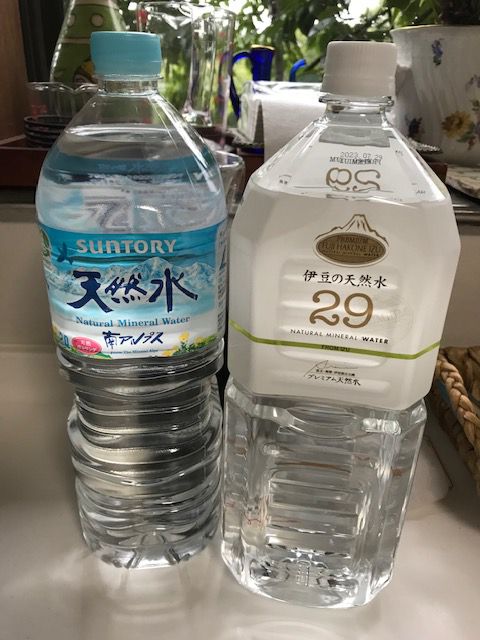
Until March 2021, we only drink mineral water, we only use mineral water to make soup, stew, in short everything that is to be eaten at home. However, the water bottles are heavy, we have to go to the supermarket quite often to buy a box of six bottles that we consume quite quickly. It’s not free either… So we decided to stop using mineral water for cooking. We still drink the mineral water whose radioactivity is measured.
Mineral water: cesium and iodine are measured by the gamma spectrometer (Photo Fonzy). The bottle on the left costs 0.6 euros, the bottle on the right 2.15 euros.
- Fish
For at least eight years after the accident we did not eat fish. However, my partner had colon cancer in 2019, and afterwards he preferred to eat “lightly”, so we resumed the habit of eating fish. I mostly buy fish from southwestern Japan, but occasionally I buy fish from a port near our home, because they are much fresher. I avoid fish from the shallow waters such as sole or turbot.
- Geiger counter
I walked around with my Geiger counter a lot in 2011, and a little less in 2012, and now … I don’t know where it is anymore, maybe in a drawer, but I haven’t seen it for years. I wonder if my friends who had one still use it.
- Anti-nuclear demonstrations
For two or three years after Fukushima, there were many anti-nuclear demonstrations organized not only in Tokyo but also throughout Japan. We shouted in front of the Tepco headquarters, in front of the Parliament, in the streets, we were very numerous at one time. There were activists who made anti-nuclear mobilizations every Friday night in front of the Parliament. This was a success for some time. I too participated often, especially in 2011 and 2012. However, they stopped their movement for good in March 2021 because there were, according to them, much less participants lately and they had no budget to continue. Now anti-nuclear demonstrations are very rare, although there are still some who mobilize from time to time. It seems to me that we Japanese are not very demonstrative. We’ll see…
- Convincing the others
Even though I talked to my friends and relatives about the risks of contamination and the dangers of nuclear power plants, it was almost impossible to convince them to be interested in this kind of problems.
That’s it. I do what I think I can do without too much stress. Still thinking about Fukushima is possible, but now we should have more imagination, because we don’t talk about it anymore. I thank those who continue to think about Fukushima despite so much geographical distance and so many years passed. Thank you for your solidarity.
Fonzy
Commemoration and Meaning: The Case of Fukushima
Robert Jay Lifton and Scott Gabriel Knowles
Abstract: Disaster commemoration serves as a moment to remember victims and honor survivors. In the case of 3.11, commemoration works differently. As a slow disaster, with radiation exposure and evacuation at the center of the story, 3.11 is not yet over. This places special importance on commemoration as a moment for memory, but also for ongoing commitments to research, justice, and health interventions for survivors.
Commemorations of disasters are necessary. They can provide survivors—and the world in general—a sense of where things stand in relation to destruction, the pain caused, and the relief time may have brought. Commemoration can also be a way to give meaning to the disaster itself. But those meanings can be misleading if they minimize the effects of disaster or pronounce shallow claims of recovery.
A case in point is the tenth-year commemoration of the Fukushima Daiichi nuclear meltdown of 2011. The Director General of the International Atomic Energy Agency marked the occasion by claiming that “The equipment reacted just as it was designed to do—it stopped!” He did admit that “the ensuing damage caused nuclides to be released into the environment,” but insisted that “scientists have found no evidence that this caused radiation-induced health effects.”1 The meaning he communicates is that there was a bit of a problem, it was immediately taken care of, some dubious materials might have leaked out, but nothing bad happened. There was no real disaster.
That is not the meaning the event holds for the 37,000 people who had to be evacuated, and have still not returned to Fukushima prefecture.2 Their meaning, and that of most thoughtful outside observers, starts with the vulnerability of the Fukushima Daiichi reactors to the extreme events of earthquake and tsunami. Survivor meaning would also turn on the unknown effects of the recent decision to deposit radioactive materials into the ocean.3 It would focus on the resistance by government and nuclear-industry officials to studies of future dangers from nuclear waste, and from radiation effects that could occur over decades and even centuries. Above all, that survivor meaning would include concerns about prevailing radiation levels as well as danger of future bodily effects on the part of people exposed.
At the heart of this meaning is the fear of what one of us (Lifton) has called “invisible contamination,” a fear of a poison that a survivor cannot see, smell, or feel, and whose effects are so lasting, even if they do not show up in one year—or in one generation—they may well do so in the next. As a Hiroshima survivor put it: “You may look healthy from the outside but all of a sudden something goes wrong and you are sick and you die.”4
Hiroshima survivors described their terror at witnessing and experiencing grotesque radiation symptoms: acute effects of severe diarrhea, bleeding from various bodily orifices, dreaded “purple spots” from bleeding into the skin, extreme weakness and frequent death. Delayed effects including increased incidence of leukemia during early post-bomb years, and later of cancer of the thyroid, stomach, lung, ovary, and uterine cervix. Since it is known that radiation can have genetic effects over the generations, there was much fear in Hiroshima about giving birth to abnormal children.

The full panoply of nuclear fear is a constant anywhere radiation danger is involved. Fear of invisible contamination has been widely identified in people exposed in Fukushima, as well as in many living far beyond that province—this includes evacuees, first responders, and doctors and nurses who stayed behind in Fukushima.5 Such fear also emerged at the American Three Mile Island disaster of 1979, where less radiation was released than at Fukushima.6 With the much greater disaster at Chernobyl in 1986, that fear has been pervasive and remains at a considerable level. The same fear occurred in Americans exposed to nuclear radiation in various other places: to plutonium waste at Hanford, Washington, in connection with the production of the Nagasaki bomb; to nuclear testing over decades at Rocky Flats, Colorado; and to Ground Zero at test sites in Nevada, from which G.I.’s were marched shortly after nuclear explosions. None of this should be dismissed as “hysteria” or “exaggerated psychological reactions.” We are speaking of the nuclear fear—the fear of invisible contamination—that results from substantial release of radiation, no matter what the source.
What does it mean to pass the 10th anniversary of 3.11 under such conditions? Disaster anniversaries sit on the calendar, they are predictable. Historians know that they can reliably look back at news coverage one, five, and ten years after any disaster to see how recovery proceeded, how the disaster was framed by different political regimes, and which victim support groups persisted while others disappeared. But history is not a stable element, and as such anniversaries sometimes re-ignite political battles over the meaning of a disaster. The commemoration of a disaster anniversary opens the possibility for cynical revision and exploitation by politicians and industry groups eager to declare that the past is now safely in the past. Commemoration meaning can be falsified by bureaucratic collusion between industry and government, which can contribute to denial, rejection, and cover-up of radioactive consequences. Such collusion is notorious in Japan. There were significant protests in Japan against the use of nuclear energy, but pro-nuclear forces prevailed, in part by insisting that there was a significant difference between the technology of nuclear power and that of nuclear weapons. This illusory distinction is restated by those who use moments of commemoration to promote nuclear energy.
The anniversary also demands a recapitulation of trauma, a command performance for survivors and families still grieving, as well as those who may have truly integrated the disaster into their lives and chosen no longer to publicly engage with it, if they ever did. A disaster like 3.11 has its own special complications, a combination of earthquake, tsunami, and radiation, affecting people of all ages, from fishermen to nuclear power plant workers—spread out over a large area, and with many thousands of bodies never recovered. There is not a coherent 3.11 experience for survivors. The harms were many, and variable, and this makes activism for victim support more complicated. Due to the radiation exclusion zone going into effect, many survivors have found themselves advocating for resources to return to empty towns and shattered homes they aren’t totally sure they want to live in again.
Nowhere is the timescale of disaster memory more unpredictable than in cases of radiation exposure. With Hiroshima survivors, for instance, every year brings new testimonials from survivors who tell their stories of August of 1945 for the first time. Similarly, as STS scholar Kyoko Sato has noted, there will most certainly be Fukushima survivors who will not share their truths for many years to come.7 In this way it may be possible that Fukushima memory could “puncture the nuclear mystique” that has gripped Japan since reactors were built in the 1960s.8 This can occur only if anniversary discussions give way to a greater focus on survivor-based memory. Victims’ families, and activists can find in such anniversaries the opportunity to bring their own memories and demands into discussion once again for new audiences. Memorial ceremonies, the reconvening of dormant support groups, educational outreach to students, even phone calls and emails from distant friends and family all serve positive roles for a disaster affected community, even ten years later. And the anniversary serves as a meeting ground for disasters past and present—any discussion of Fukushima now, for example, must take place in the context of the COVID-19 pandemic and the ongoing need for strong public health measures.
New dynamics are at play now as well that offer hope Fukushima memory might not recede so easily from the public mind once this year is over. Research and public policy insisting on post-traumatic mental health support (in Japan starting after the 1995 Great Hanshin-Awaji Earthquake) for survivors has been effective in countering the more traditional idea that disasters end once relief payments are made and buildings are rebuilt.9 We are increasingly recognizing that a disaster is a process, not a single event in time. Victims will suffer on the day, and in the aftermath. As we note in the recently published volume Legacies of Fukushima: 3.11 in Context, “the linked disasters of 3.11 were in crucial ways part of a much longer process, a slow disaster that connected the events of a disastrous era … traumas of the Japanese past: radiation exposure, tsunami flooding, seismic destruction, massive evacuation and loss of home and community.”10 Climate change can also be an important factor in causing and sustaining disasters.
Nuclear disaster commemorations can and must leave space for the new exploration of old harms—and they must be in sync with ongoing strategies of mental health service provision as well. Is this too much to ask in a Fukushima commemorative year marked by pandemic and climate change related disasters around the world? Not if disaster history is to be of any use at all in the struggle to reduce disaster risk and heal survivors. As Liz Maly and Mariko Yamazaki note in their recent review of Japanese disaster memorials, 3.11 demands special attention to the overlapping historical trajectories of loss and trauma in Japan. “Important issues for future consideration,” they note, “include comparisons across not only pre-3.11 museums about disasters caused by natural hazard events, but also Japanese precedents of how experiences and lessons from other human-made disasters are conveyed, including by the Nagasaki Atomic Bomb Museum, Hiroshima Peace Memorial Museum, and Minamata Disease Municipal Museum, which tells the story of industrial pollution and poisoning of the local community.”11
What’s needed now in this year of Fukushima commemoration is a turn towards the fusion of these ideas, grounded in the reality that nuclear fear demands. We should emphasize the healing function of commemoration. That includes enhancing the mourning process of survivors, instead of impairing that process by negating their pain. Survivors and victims’ families can find in such anniversaries the opportunity to bring their own memories and demands into discussion for new audiences. Memorial ceremonies can reintegrate sources of support and provide extensive educational outreach. By confronting painful disaster effects, there can emerge valuable forms of what can be called survivor wisdom. These anniversaries can also connect, psychologically and politically, with disasters past and present.
Commemoration events can serve as moments of collective renewal, with survivors in the vanguard.
References
COVIDCalls. (2021) Fukushima and the Pandemic: A 3.11 Memorial Episode with Sulfikar Amir, Kohta Juraku, Kyoko Sato, and Ryuma Shineha [Online video]. March 8. Accessed: July 18, 2021).
Cleveland, K, Knowles, S., and Shineha, R. (eds.) (2021) Legacies of Fukushima: 3.11 in Context. Philadelphia: University of Pennsylvania Press.
Honda, N., Kelman, I., Kikuchi, S., Kim., Y., Kobayashi, N., Nemoto, H., Seto, M., and Tomita, H. (2019) ‘Post-Disaster Mental Health and Psychosocial Support in the Areas Affected by the Great East Japan Earthquake: A Qualitative Study’, BMC Psychiatry, 19(261).
International Atomic Energy Agency. (2021) Ten-year Anniversary of the Fukushima Daiichi Nuclear Power Plant Accident: A Decade of Improving Nuclear Safety [Online] Accessed: June 15, 2021.
Lifton, R. (1968) Death in Life: Survivors of Hiroshima. 2nd edn. Chapel Hill: University of North Carolina Press.
Lifton, R. (1986) ‘Chernobyl, Three Mile Island, Hiroshima’, New York Times, May 18 [Online]. Accessed: July 18, 2021).
Loh, S.L. and Amir, S. (2019) ‘Healing Fukushima: Radiation Hazards and Disaster Medicine in Post-3.11 Japan’, Social Studies of Science, 49(3), pp. 333-354.
Maly, L. and Yamazaki, M. (2021) ‘Disaster Museums in Japan: Telling the Stories of Disasters Before and After 3.11’, Journal of Disaster Research, 16(2), pp. 146-156.
Normile, D. (2021a) ‘This Physician Has Studied the Fukushima Disaster for a Decade—and Found a Surprising Health Threat’, Science, March 4 [Online]. Accessed: July 18, 2021.
Normile, D. (2021b) ‘Japan Plans to Release Fukushima’s Wastewater into the Ocean’, Science, April 13 [Online]. Accessed: July 18, 2021.
Rich, M. and Inoue, M. (2021) ‘Ten Years After Fukushima Disaster, This Nurse May Be the Region’s Best Hope’, New York Times, March 9 [Online]. Accessed: July 18, 2021.
Notes
International Atomic Energy Agency, 2021.2
Normile, 2021a.3
Normile, 2021b.4
Lifton, 1991.5
Rich and Inoue, 2021; Amir and Loh, 2019.6
Lifton, 1986.7
COVIDCalls, 2021.8
Lifton in Cleveland, Knowles, and Shineha, 2021.9
Seto, et. al., 2019.10
Cleveland, Knowles, and Shineha, 2021.11
Maly and Yamazaki, 2021.
Fukushima radiation monitoring posts to be renewed
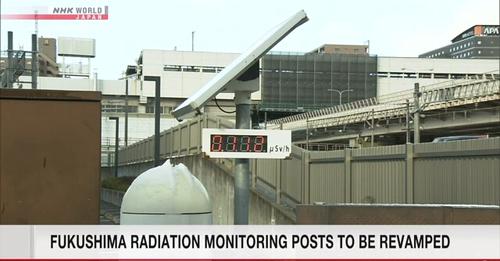
Japan’s nuclear regulators plan to retain radiation monitoring posts in Fukushima Prefecture by replacing old equipment with new.
About 3,000 monitoring posts were set up at schools and other locations across the prefecture following the March 2011 accident at the Fukushima Daiichi nuclear power plant.
The annual test and maintenance cost of the equipment is around 5.5 million dollars.
The Nuclear Regulation Authority decided in 2018 to remove about 80 percent of the monitoring posts, saying that radiation levels had remained low and the posts would likely reach their lifespan of about eight years.
But the authority reversed its decision after it met opposition from local residents.
It decided instead to retain the monitoring posts for the time being to ease local people’s concern about radiation levels and their health.
The authority plans to replace parts in radiation detectors and power supply sources with new ones in the next 10 years. About 300 posts will be renewed annually.
Some 450 monitoring posts containing parts that are hard to obtain will be replaced entirely.
The prefectural government of Fukushima says it wants the authority to continue to measure radiation levels.
New type of fallout from Fukushima Daiichi found a decade after nuclear disaster

15 Mar 2021
New, large and highly radioactive particles have been identified from among the fallout of the 2011 Fukushima Daiichi nuclear disaster in Japan. An international team of researchers has characterized the particles using nuclear forensic techniques and their results shine further light on the nature of the accident while helping to inform clean-up and decommissioning efforts.
This year marks the tenth anniversary of the Fukushima Daiichi disaster, which occurred as a result of a powerful earthquake that struck off of Japan’s east coast, generating a tsunami that reached some 14 m high when it reached the nearby shoreline. Breaching sea defences, the water from the wave shut down emergency generators that were cooling the reactor cores. The result was a series of nuclear meltdowns and hydrogen explosions that released a large amount of radioactive material into the surrounding environment — including microparticles rich in radioactive caesium that reached as far Tokyo, 225 km away.
Recent studies have revealed that the fall-out from reactor unit 1 also included larger caesium-bearing particles, each greater than 300 micron in diameter, which have higher levels of activity in the order of 105 Bq per particle. These particles were found to have been deposited in a narrow zone stretching around 8 km north-northwest from the reactor site.
Surface soil samples
In their study, chemist and environmental scientist Satoshi Utsunomiya of Japan’s Kyushu University and colleagues have analyzed 31 of these particles, which were collected from surface soil taken from roadsides in radiation hotspots.
“[We] discovered a new type of radioactive particle 3.9 km north northwest of the Fukushima Daiichi Nuclear Power Plant, which has the highest caesium-134 and caesium-137 activity yet documented in Fukushima, 105–106 Bq per particle,” Utsunomiya says.
Alongside the record-breaking radioactivity seen in two of the particles (6.1×10⁵ and 2.5×10⁶ Bq, after correction to the date of the accident) the team also found that they had characteristic compositions and textures that differed from those previously seen in the reactor unit 1 fall-out.
Reactor building materials
A combination of techniques including synchrotron-based nano-focus X-ray analysis and transmission electron microscopy indicated that one of the particles was found to be an aggregate of smaller silicate nanoparticles each with a glass-like structure. This is thought to be the remnants of reactor building materials that were first damaged in the explosion and then picked up caesium that had been volatized from the reactor fuel.
The other particle had a glassy carbon core and a surface peppered with other microparticles of various compositions, which are thought to reflect a forensic snapshot of the particles that were airborne within the reactor unit 1 building at the moment of the hydrogen explosion and the physio-chemical phenomena they were subjected to.
“Owing to their large size, the health effects of the new particles are likely limited to external radiation hazards during static contact with skin,” explained Utsunomiya — with the two record-breaking particles thought too large to be inhaled into the respiratory tract.
Impact on wildlife
However, the researchers note that further work is needed to determine the impact on the wildlife living around the Fukushima Daiichi facility — such as, for example, filter feeding marine molluscs which have previously been found susceptible to DNA damage and necrosis on exposure to radioactive particles.
“The half-life of caesium-137 is around 30 years,” Utsunomiya continued, adding: “So, the activity in the newly found highly radioactive particles has not yet decayed significantly. As such, they will remain [radioactive] in the environment for many decades to come, and this type of particle could occasionally still be found in radiation hot spots.”
Nuclear material corrosion expert Claire Corkhill of the University of Sheffield – who was not involved in the study – says that the team have offered new insights into the events that unfurled during the accident. “Although the two particles selected [for analysis] were small, a mighty amount of chemical information was yielded,” she said, noting that some of the boron isotopes the researchers identified could only have come from the nuclear control rods damaged in the accident.
Ongoing clean-up
“This work is important to the ongoing clean-up at Fukushima, not only to the decontamination of the local area, but in defining a baseline understanding of radioactive contamination surrounding the power plant, to ensure that any materials accidentally released during the fuel retrieval operations can be quickly identified and removed,” she adds.
With this study complete, the researchers are now using the particles to better understand the conditions involved in the reactor meltdown, alongside looking quantify the distribution of this fallout across Fukushima, with a focus on identifying resulting radiation hot spots.
“If we can find and remove these particles, we can efficiently lower the radiation dose in the local environment,” Utsunomiya concluded.
Not Seeing the Contaminated Forest for the Decontaminated Trees in Fukushima
Abstract: This article explores how the models of medical risk from radiation established in the aftermath of the nuclear attacks on Hiroshima and Nagasaki are insufficient for understanding the risks faced by people in contaminated environments like Fukushima. These models focus exclusively on levels of external radiation, while the risk faced by people in areas affected by radioactive fallout comes from internalizing fallout particles. These models have helped to obscure the health impacts over the last 76 years of those exposed to fallout, from the people who experienced the Black Rain in Hiroshima, to the global hibakusha exposed through nuclear testing, production and accidents, and now to those living where the plumes deposited radiation in Fukushima.
When nuclear disasters happen, we look to past incidents to help us predict what human health impacts may follow, but not all radiological disasters are alike. The Three Mile Island, Chernobyl and Fukushima nuclear accidents were highly publicized and loom large in the public imagination, but these disasters are mere data points on a graph of nuclear incidents that have exposed the public to radiological harm. The “global hibakusha,” human beings that have been exposed to ionizing radiation, have suffered those exposures in multiple ways. The people of Hiroshima and Nagasaki are the only people to have been directly attacked by nuclear weapons. However, since then there have been more than 2,000 nuclear weapons detonated in tests. The communities downwind from those test sites did not suffer direct attack, but rather, were exposed to radioactive fallout from the mushroom clouds as they drifted. Besides the above listed nuclear meltdowns, multiple accidents have befallen nuclear reactors. Additionally, many people have been exposed to radiation through nuclear production at uranium mines, or plutonium production sites like Hanford. The disease toll from radiological exposure depends on the type of exposure. The most important distinction is between being exposed to radioactive waves that pass through your whole body, and radioactive particles that get inside your body and remain there. The biological routes are different and so the health outcomes also differ.
For the last 12 years I have been working on the Global Hibakusha Project, conducting field work in radiologically contaminated communities and populations all around the world (Broderick and Jacobs, 2018).1 As a historian, it is natural for me to think that looking to the past can help us imagine and anticipate the future. In April of 2015, four years after the Fukushima disaster, I gave a talk as part of the “4.11 International Symposium: From Hiroshima and Bikini to Fukushima and the World,” in Fukushima City. My lecture was titled, “Pretending Fukushima is New: How Studying Sites of Radiological Contamination Around the World Can Help Us to Understand the Present and Future in Fukushima.” The primary health risk that people in Fukushima face is from internalizing alpha-emitting or beta particles through inhalation, swallowing or abrasions. Yet predictions of their risks are almost entirely modeled on data from Hiroshima and Nagasaki where the exposures were predominantly from external gamma waves. This disconnect is visibly reflected to us in the maps of danger that always accompany discussions of the radiological legacy of Fukushima, maps like the one below. This application of data about external exposures to dismiss the health concerns of people immersed in a landscape dense with long-lived radioactive particles is not unique to Fukushima, it is elemental to how the majority of the millions of global hibakusha have remained invisible—have been rendered invisible.

radiating out from the site of the Fukushima Dai’ichi Nuclear Power Plants (Kyodo)
My chapter in Legacies of Fukushima: 3.11 in Context, “Fukushima Radiation Inside/Out,” argues that the maps of contamination we use to understand the risks downwind from the Fukushima Daiichi plant are flawed. They model a pattern of danger and safety that works as hard to obscure certain dynamics as it does to delineate others. These broken maps reflect health models about harm from radiation that are limited yet invariably presented as inclusive and comprehensive.
As mentioned above, we biologically encounter radiation in two distinctly different manners. Our whole bodies are exposed to radioactive rays when we are immersed in high levels of radiation that are external to our bodies, as happened in Hiroshima and Nagasaki. The detonations of those weapons released high-energy gamma and neutron waves that were similar to a single giant x-ray that penetrated entire bodies and extended out several kilometers from the hypocenter. Separately from this form of exposure is when we encounter radionuclides, individual radioactive particles that remain after nuclear detonations, either as beta particles or alpha-emitting particles. We often refer to radiation in this form as “radioactive fallout” since it usually deposits into our ecosystems by “falling out” of clouds drifting from radiological explosions or fires. Once the particles have dispersed into the ecosystem, they are harder to locate. These are primarily dangerous to us if we internalize them inside of our bodies. If they remain inside of our bodies, they emit their very small amounts of radiation to nearby cells 24 hours a day for however long the specific particle remains radioactive. For some particles that is days, for many it’s centuries or longer. Cesium-137, a particle that spread in large amounts after both Chernobyl and Fukushima, remains dangerous to living creatures for 300 years. These two forms of exposure (external whole body vs. internalized in a specific bodily organ) present distinctly different risks to human health (for a primer on these forms of radiation see here).
The risks that people downwind from the Fukushima plants face is primarily from fallout. Large amounts of fallout can also present danger from their collective external radiation when they first deposit, however, now, 10 years later, those particles have distributed into the ecosystem. Settling into soil, moving with rainwater and groundwater, being taken up by plants and animals: they are embedding and migrating. As they spread out, our ability to detect them degrades. Since Geiger Counters measure the external energy that the particles radiate, we usually find them when they are present in large amounts. Now that they are widely dispersed, many have migrated far from the color-coded maps of risk we see of Fukushima. Those maps are snapshots of external readings at a specific moment that has passed.
In Fukushima, relatively few people are being exposed to high levels of external radiation except for the cohorts of onsite workers at the nuclear plant site, those involved in decontamination efforts, and those who lived where the fallout deposited in large amounts. People living in most (but not all) of the areas where heavy fallout deposited were evacuated fairly quickly. For those who continue to live in, or are being returned to areas of lower contamination, we still measure the external levels of gamma radiation to predict the risks they face. However, just as with the Marshallese after US thermonuclear testing, just as the Kazakhs after Soviet testing, and just as with those living in contaminated areas downwind from the Chernobyl plant in Ukraine and Belarus, the primary risk to the public health is not the external radiation, the primary risk is that one may internalize radioactive particles and retain them inside the body. Telling someone that the external levels of radiation are not high is not actually saying that they are not at risk, it is just a way of saying that we only have models that delineate risks from the external levels. And if those are low, we declare, health agencies declare, UN public health bodies declare: there is no significant risk. Yet there is. Those living in contaminated regions of Fukushima join a long list of people whose homes and communities have received significant deposits of radionuclides through fallout. All have invariably had their levels of risk minimalized. Many have had their anxieties cited as irrational and pathologized as “radiophobia.”2 Almost none have received any compensation for their health problems and the loss of value of their lands and businesses.3
In Fukushima, as downwind from nuclear test sites, communities experienced large deposits of radioactive fallout, yet the model that has always been used to predict health outcomes is based on studies of Hiroshima and Nagasaki: this is the wrong model for these disasters. In Hiroshima and Nagasaki there was a massive burst of external radioactive gamma and neutron waves at the moment the nuclear weapons detonated, lasting less than a minute. This was followed by radioactive fallout as the mushroom clouds deposited radioactive particles (beta and alpha-emitters) and drifted.4 The health models built out of Hiroshima and Nagasaki only assessed the harm from the external exposures. These models emerged from studies done at the Atomic Bomb Casualty Commission in Hiroshima and Nagasaki since 1946 (reformed in 1975 as the Radiation Effects Research Foundation), especially the Life Span Study (LSS) which began in 1950. This study establishes a large database, corelating radiation exposures to subsequent health outcomes and early mortality. The study is rigorous, yet its use in the years since Hiroshima and Nagasaki has frequently been careless. The LSS assesses only external radiation exposures, it explicitly excludes consideration of the health effects of internal radiation exposures from living with fallout. There is nothing wrong with this methodological choice. Hiroshima and Nagasaki were events in which a large cohort of people were exposed to a single large dose of external gamma radiation. It would have been very difficult at the time to determine who had internalized a radionuclide and who hadn’t. In the early years of the Cold War, it was assumed that future wars would involve the use of nuclear weaponry and the exposure of many people to large bursts of gamma rays as were the people near the hypocenter of Hiroshima and Nagasaki. But that was not what happened; instead, over 2,000 nuclear weapons were tested, and millions of people were exposed to radioactive fallout. We did not have a robust database on the health consequences that might result from these exposures—so we used the tool we did have, the LSS. The LSS tells us little about the risks faced by people living with large depositions of fallout.
The Cold War period, and beyond, are periods in which the invisibility of the health consequences of exposures of internalized radiation was made invisible, and the misapplication of the LSS was elemental to this cloaking. A key reason that the LSS has been weaponized to obscure the health effects of internalized radiation exposures is that since the exposures did not happen as acts of war, but rather as weapon development, those exposed should be entitled to compensation for their health problems, and the loss of value to contaminated land. This would likely have restricted nuclear weapon testing. These dynamics have been extended to obscure and shield compensation obligations in other historical instances of large-scale radiological contaminations such as waste dumping and nuclear accidents.
All of us have been dealing with the horrors and the terrors of the COVID-19 pandemic since early 2020. Viscerally, we feel the anxieties and fears that accompany uncertainty about dire risks to our lives and loved ones. Being cautious about our public activities in the age of COVID makes intuitive sense. We navigate our potential exposures, work to mitigate our potential contaminations, and worry endlessly about loved ones with health concerns. Each small, unrelated medical symptom a family member exhibits is met with anxiety. This is a reality for people worldwide. Those who live in areas dense with radionuclides face similar anxieties: the locations of the risk are indeterminable; who is being exposed and who is safe is unclear, even while the damage is inflicted; daily life is rife with anxiety. But in radiologically contaminated communities it is not conspiracy theorists on social media dismissing them as irrational, it is state health officials. They draw maps, based entirely on externally measured levels of radiation, and use those maps to tell people to move back to villages where the levels of contamination are “acceptable,” to send their children to schools and move back to towns where the presence of radioactive particles is not dense enough to register on Geiger counters placed high above the ground.

Imagine a map of COVID cases that shows high levels in one city and low levels in the adjoining city, and being told that therefore there is no risk at all once you enter the city with lower levels. We would all continue to be cautious. That is common sense, not (radiophobic) irrationality. If a group of 10 people were to stand downwind from someone coughing out COVID microbes, some may get sick and some may not. Who has inhaled a microbe and who hasn’t will not be visible until the disease presents. This is what it is like to live in an ecosystem with migrating radionuclides. Even if their presence is not significant enough to make a Geiger counter ping, caution is rational. However, the history of fallout contamination is a history of dismissing the health concerns and worries of the populations living in the areas where fallout came down.
A clear way to visualize how the reliance on external measurements to determine risk is problematic is to examine the scientific literature on Fukushima. Biologist Timothy Mousseau, with colleague Anders Møller, has conducted field work in the Zone of Exclusion in Chernobyl for decades (primarily on birds and small insects for whom multiple generations of inheritance have passed), and have sought to conduct corollary field studies in the evacuation zones of Fukushima. Speaking to an IPPNW symposium on the 10th anniversary of Fukushima, Mousseau examined the top 500 articles in the Web of Science database. He found that only 10 out of the top 500 papers (2%) were based on actual biological fieldwork assessing the impacts of radiation on living organisms. Almost all of the other 98% were studies of “calculated doses and the possible link to health impairments rather than any sort of directly measured biological consequences” (Mousseau, 2021).5 Most of the scientific literature around Fukushima, and Chernobyl, are based on estimates of health impacts utilizing externally measured radiation and applying statistical models such as the Life Span Study. These estimates are not observed findings, but predictions of the numbers of cancers and early mortality that may be expected in the future among the exposed population.
This model of utilizing measurements of external radiation and statistical databases of disease probabilities has been a critical component of how the global hibakusha have been ignored since the advent of nuclear weaponry. As radioactive fallout blanketed communities downwind from the Nevada Test Site, and other nuclear test sites around the world, such assessments were routinely used to dismiss the health concerns of downwinders. Now, many of those same individuals (in America) whose health concerns were dismissed are recipients of Radiation Exposure Compensation Act funds from the US government. Ignored and dismissed for decades because of the use of external modeling and statistical correlation of that modeling to the LSS, select members of these communities were only able to obtain recognition and some small compensation late in their lives because they were full citizens with access to legal remedies in a wealthy nation.
As I detail in my forthcoming book Nuclear Bodies, nuclear test sites are not chosen because of their scientific properties, rather, communities are selected to be irradiated because of their political inability to resist such treatment. Nuclear test sites are built upwind of these communities. Hence, most of the exposures of global hibakusha were in colonial or postcolonial spaces, or were citizens of poor or developing nations and have not been recognized or awarded compensation for their suffering.6 Their subaltern political status was fundamental to their communities being chosen as radiologically disposable. For example, the British and French never tested nuclear weapons within their own national borders. Along with the United States, the British and French tested all of their thermonuclear weapons (hydrogen bombs that yield vastly larger fallout clouds) in Pacific nations either directly under their control, or of actual colonial status (specifically, the Marshall Islands, Kiribati and French Polynesia). Keeping these big fallout clouds outside of their own borders was national policy to protect their own populations, and conversely, put them inside the borders of other nations and subjected their populations to risk. This has never been accidental. Nuclear power plants are not sited inside of the urban areas where their electricity is consumed, but in the rural areas at a distance so that if there is a radiological release it exposes less people, but also less politically powerful people. Kate Brown has cited how the Soviet government purposefully seeded clouds from Chernobyl to rainout their particles in Belarus rather than over the large Russian cities they were drifting towards.7
Relying exclusively on maps of externally measurable radiation and medical models based solely on the harm caused by external exposures extends this invisibility for further generations and will continue to legitimize dismissing and ignoring both the health and emotional impacts of radiation exposures into the future. Fukushima is part of a continuum of the dismissal of the harm endured by those who suffer from internal exposures to radioactive particles from nuclear tests, nuclear accidents and nuclear production worldwide. Looking at the broken maps works to obscure the real risks in Fukushima.
Many of the particles embedded in the ecosystem of Fukushima will remain dangerous to living creatures for hundreds, or even thousands of years. During this period, they will not stay put. As I point out in my chapter in Legacies of Fukushima: 3.11 in Context, this reveals the decontamination theater of soil removal in Fukushima. The years since 3.11 have seen a continual media presentation of crews removing radioactive topsoil from towns, schoolyards and homes in Fukushima.

Almost certainly the particles in the forest canopy and on the trees will re-contaminate this roadside within a year.
The reduction in radiation levels is the predicate for declaring towns safe for return. The particles themselves remain radioactive; the fields filled with plastic bags of particles stacked around the region are now nuclear waste sites that must be managed for generations. The theatrical aspect is in pretending that by removing the radioactive particles from the towns they are now “clean.” Since the towns are themselves situated in larger ecosystems full of radionuclides, this “decontamination” cannot last: wind, rain, typhoons will all strip particles down from the forests and mountains surrounding the towns and re-contaminate them. Similar to how the Tokyo 2020 Olympics were meant to produce the impression that Fukushima has recovered, all theater requires the willing suspension of disbelief. When we placed a containment dome over the melted core of Chernobyl reactor unit #4 people assumed that the Chernobyl disaster was clearly over, only to be surprised to read in the papers about ongoing criticalities in the subterranean core that threatened ongoing releases. Long-lived particles create ongoing and fluctuating realities. Fukushima is not simply something that happened, it is something that is still happening.
References
Broderick, M. and Robert J. (2018) ‘The Global Hibakusha Project: Nuclear post-Colonialism and Its Intergenerational Legacy’, Unlikely: Journal for the Creative Arts, 5 [online]. (Accessed: June 5, 2021).
Brown, K. (2019) Manual for Survival: A Chernobyl Guide to the Future. London: Allen Lane.
Jacobs, R. (2013) ‘Nuclear Conquistadors: Military Colonialism in Nuclear Test Site Selection During the Cold War’, Asian Journal of Peacebuilding, 1(2), pp. 157-177.
Mousseau, T. 2021. “Ecology in Fukushima: What Does a Decade Tell Us?” [Online video]. (Accessed June 5, 2021).
Petryna, A. (2013) Life Exposed: Biological Citizenship after Chernobyl. Princeton: Princeton University Press.
Stawkowski, M. (2017) ‘Radiophobia Had to be Reinvented’, Culture, Theory and Critique, 58(4), pp. 357-374.
Notes
The outcomes of this research will be published next year in, Robert Jacobs, Nuclear Bodies: The Global Hibakusha (New Haven: Yale University Press, 2022), forthcoming. Also, see my blog Global Hibakusha.2
Stawkowski, 2017.3
Petryna, 2013.4
The areas where fallout came down most heavily downwind of Hiroshima is referred to as being affected by “black rain,” this is because rain strips fallout particles from the air and brings them down in large quantities, and the black soot from the fires in Hiroshima made the rain black and sticky. The rights of those who suffered illness from exposure to black rain, and also from exposures resulting from entering the city in the weeks after the nuclear attack, are still being litigated and contested in Japanese courts today.5
Mousseau, 2021.6
Jacobs, 2013.7
Brown, 2019, p. 42.
Experts say that the government’s measures against harmful rumors are “an extension of what we’ve been doing for 10 years.
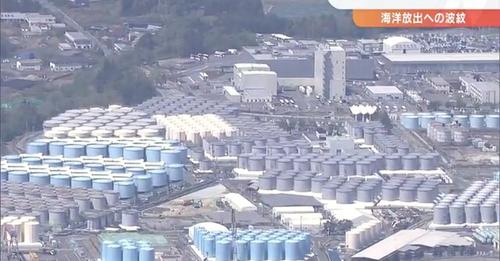
We have been reporting in this series about the ripple effect of the release of tritiated water into the ocean.
Many people concerned about the release of tritium into the sea are concerned about the reputational damage.
On the 24th, the government presented an interim summary of the immediate measures to deal with the reputational damage.
First of all, as a measure to prevent reputational damage, fish should be raised in treated water and information should be disseminated in an easy-to-understand manner.
The measures include monitoring by international organizations and ensuring transparency.
In the event of reputational damage, a new fund will be set up to temporarily purchase frozen marine products, and sufficient compensation will be provided to match the actual damage.
Looking at it this way, it seems to be a continuation of the previous measures. We examined whether these measures are really effective.
Chief Cabinet Secretary Katsunobu Kato
“We will create an environment in which we can overcome rumors and continue our business with peace of mind, even if rumors should arise.
A meeting of relevant ministers on March 24.
The government has put together a list of immediate measures to deal with the reputational damage caused by the release of treated water.
The government and Tokyo Electric Power Company (TEPCO) plan to release treated water from the Fukushima Daiichi Nuclear Power Plant into the sea by the spring of the following year.
One of the fishermen in the prefecture commented on the measures taken.
“One of the fishermen in the prefecture said, “The decision was made without any discussion or explanation.
“One of the fishermen in the prefecture severely criticized the measures, saying, “We can’t accept it and this way of proceeding is unacceptable.
The prefectural fishermen’s federation also said, “We haven’t received an explanation from the government yet, and we want to wait for that before considering our response.
There is a strong opposition to the release of radioactive materials both inside and outside of the prefecture.
“They have not yet fulfilled their promise not to release the radioactive materials without the understanding of the people concerned.
Professor Ryota Koyama of Fukushima University, who has studied reputational damage in the prefecture and served as a member of the government’s subcommittee, points out that the latest measures to curb reputational damage are “almost the same” as the previous measures.
Professor Ryota Koyama, School of Food and Agricultural Sciences, Fukushima University
“I’m concerned that if this is the case, it’s just an extension of what we’ve been doing for the past 10 years, and if we say we’re going to release the pollutants two years from now under the same conditions, the problem will get bigger.
Another problem is the assumption that reputational rumors will occur, according to Professor Koyama.
Professor Ryota Koyama, School of Food and Agricultural Sciences, Fukushima University
“If we assume that harmful rumors will occur, then we cannot agree to that, and I think the whole premise is that we should not create a situation two years from now where the price of (marine products) falls to the point where we have to buy them, or where trading is suspended.
He also said that we need to analyze the current situation and rethink what we should do to prevent harmful rumors.
Professor Ryota Koyama, School of Food and Agricultural Sciences, Fukushima University
Professor Ryota Koyama of Fukushima University’s Department of Food and Agricultural Sciences said, “Consumers and distributors in Tokyo do not have a good understanding of the situation. I would like to see a process of analyzing this lack of progress and then formulating countermeasures based on the current situation.
TEPCO to build new 1km long undersea tunnel to release Fukushima Daiichi radioactive water offshore
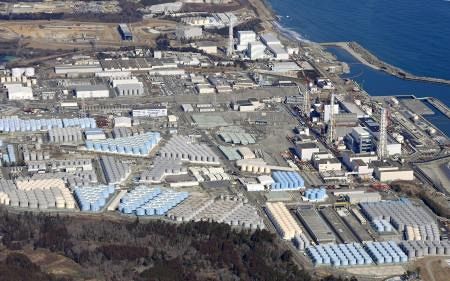
On the 24th, it was learned through interviews with officials that Tokyo Electric Power Company (TEPCO) has decided to build a new submarine tunnel about one kilometer long, run pipes through it, and release the treated water from the Fukushima Daiichi Nuclear Power Plant offshore. The radioactive substance tritium contained in the treated water will be diluted to below the standard value, but by releasing the water offshore, the company hopes to further dilute it and spread it, thereby curbing the reputational damage that the local people are concerned about.
On the same day, the government held a meeting of ministers concerned with the disposal of the treated water. If the release of the water into the ocean causes damage such as a decrease in sales or prices of marine products, the government will purchase the water at its own expense to support the fishermen, and is preparing the environment for the release. On the other hand, there is a deep-rooted opposition from the local community and fishermen, and there are many uncertainties about the future outlook.
Accelerated radiocesium leaching from forest floor litter by heavy rainfall

Radioactive materials including 137Cs (cesium-137, half-life: 30.1 years) were released into the environment following the accident at Fukushima Daiichi Nuclear Power Plant. It has been about 10 years since the accident, but 137Cs remains in the environment, especially in forests. Many researchers have been studying the dynamics and transport processes of radioactive materials in the environment. It has been found that radioactive materials are carried along with the transfer of water and sediment. With the focus on the forested headwaters where radioactive materials remain in large quantities, it has been reported that the concentration of dissolved radiocesium in stream water increases during heavy rainfall.
Since rainwater does not contain radioactive cesium, the research group led by Assistant Professor Koichi Sakakibara of Shinshu University’s Faculty of Science was curious why the concentration of radioactive cesium in stream water increased during heavy rainfall without becoming diluted. The research team thought that radioactive cesium might have leached out from the forest litter and conducted leaching tests. They found that a large amount of radioactive cesium leached from such forest litter.
The next step was to ask the question, “Why does more radioactive cesium leach out of forest litter during heavy rainfall, when forest litter is still on the forest floor when it is not raining? (Background information: Most of the rainwater that falls on forests infiltrates into the subsurface area. The main reason for the increase in stream water volume during rainfall in forests is the discharge of groundwater. The groundwater contains almost no radioactive cesium.) So the research group set out to solve the mystery, “How is litter-derived radiocesium added to stream water during rainstorm?”
In contrast to the rainfall-runoff process, which is often focused only on rainfall and runoff, this study focused on the conversion process from rainfall to runoff, such as the variation of groundwater table level, the generation of saturated surface area at the bottom of the valley, and the variation of water quality and water age during rainfall. As a result, the answer to the problem to be solved in this study is that the main factor is the expansion of the contact area between water and litter due to the expansion of the saturated surface area caused by the rise of the groundwater table level in the forested headwater. Although previous research tended to focus only on the cause (rainfall) and the effect (runoff), Assistant Professor Sakakibara states, “we showed that the breakthrough to solve the unexplained reason lies in why the cause (rainfall) is converted into the effect (runoff).”
Uncertainty of results is inevitable when researching in the natural environment. How do results differ when the study is conducted at different times and places? How much error is there in the results due to the heterogeneity of the acquired samples from the environment? These are some of the questions that need to be answered. In the present study, the following questions were asked in-depth: 1) whether the same conclusions can be drawn for forests other than the target forest, 2) whether the samples collected for the study are representative of the Fukushima region, and 3) whether the results are affected by differences in the timing of litter falling from the trees and the degree of decomposition. Sakakibara says, “the most difficult part was to come up with a clear answer or idea to these uncertainties.”
Assistant Professor Sakakibara says, “the state and transport of radioactive materials in the environment are complex and need to be studied long-term. The half-life of 137Cs is 30 years. The results of this study only partly clarified this issue. Rivers that discharge from the forest area flow downstream to the ocean. We would like to clarify the whole picture of the pathway and process of radioactive materials originating from forests in the hydrological process from the headwater to the ocean. We believe that these findings are essential for creating a safe and secure environment and sustainable future and livelihood.”
The research was published in Science of The Total Environment.
Explore further
Dynamics of radiocesium in forests after the Fukushima disaster: Concerns and some hope
https://phys.org/news/2021-02-dynamics-radiocesium-forests-fukushima-disaster.html
More information: Koichi Sakakibara et al, Radiocesium leaching from litter during rainstorms in the Fukushima broadleaf forest, Science of The Total Environment (2021). DOI: 10.1016/j.scitotenv.2021.148929
https://phys.org/news/2021-08-radiocesium-leaching-forest-floor-litter.html
A message from Forest Measurement Laboratory in Namegawa
March 6, 2021
A message from a representative of the Forest Measurement Laboratory, a group that measures radioactivity in Saitama Prefecture, just north of Tokyo. It was founded in the fall of 2012 mainly by mothers after the Fukushima nuclear disaster.
They thought that measurements by municipalities were not sufficient to protect their children from radiation exposure, so they started this project by themselves.
Fukushima, a ‘coordinator’ for the nuclear-stricken area, takes a cue from the U.S. to break away from reconstruction dependent on the government
March 6, 2021, 18:07 (Kyodo News)
On March 6, a private organization called Fukushima Hamadori Tridec was established to serve as a coordinator between industry, government and academia in the areas affected by the accident at Tokyo Electric Power Company’s Fukushima No. 1 nuclear power plant. In order to promote the reconstruction that the coastal residents of Fukushima Prefecture desire, the organization aims to unite the demands of the region and take the brunt of negotiations with the government and other parties.
The 43 founding members include local business people, researchers, and politicians. The organization will be incorporated as a general incorporated association and will invite individual and corporate members. Takayuki Nakamura, vice president of East Japan International University (Iwaki City), who will serve as the secretariat, said, “We will break away from our traditional stance of depending on the government. We will decide our own fate,” he said of the founding principles.
https://www.tokyo-np.co.jp/article/89939?fbclid=IwAR0IVgauLUBacHECWFx2axSSV7o5CUqvtvxw6KcLJtZ6A1bqoHtwcQ-cEl8
Fukushima nuclear crisis evacuees face unresolved issues 10 years on
Almost 10 years on from a devastating earthquake and tsunami that hit northeastern Japan and triggered one of the worst nuclear disasters in history, Seiichi Nakate still has not returned home.
He is just one of around 30,000 evacuees from Fukushima Prefecture who remained scattered around the country as of February this year, according to government data.

Photo taken Oct. 22, 2017 shows makeshift housing in Iwaki, Fukushima Prefecture, built for evacuees from Futaba, a town co-hosting the crippled Fukushima Daiichi nuclear complex.
March 5, 2021
And while the numbers — including those who voluntarily fled without an evacuation order — have halved from their peak of 62,831 in March 2012, many of the issues facing evacuees remain unresolved.
Nakate, who was living in the prefectural capital of Fukushima when the earthquake struck on March 11, 2011, said the disaster had “pulled the rug out from under” him and left him feeling like he was “fading away.”
While the city was not designated for forced evacuations after the reactor meltdowns at the Fukushima Daiichi nuclear plant some 60 kilometers away, concerns over radiation led Nakate and his wife to decide two weeks later that she and their two children should move to western Japan while he stayed on in the city.
It was not until around a year and a half later that the family finally started living together again, setting up home in Sapporo, the capital of Japan’s northern main island of Hokkaido, where they still remain.
Nakate, 60, currently co-heads Hinan no Kenri, a Hokkaido-based group fighting for the rights of Fukushima evacuees throughout Japan.
The movement was established in 2015 amid government efforts to promote the return of people to Fukushima — a drive that he says was conducted without consideration to the needs and desires of evacuees.
“It had been more than four years since the accident, and the central and local governments were moving forward with lifting evacuation orders, ending compensation, and promoting the return of evacuees as if ignoring our existence and will,” Nakate said.
His organization has a variety of demands for the central government, the foremost being a survey of the actual situation of evacuees, which he believes it has deliberately avoided doing so far.
Critics say the figures compiled by the central government do not accurately reflect reality as they are based on a system under which evacuees voluntarily register themselves as such with their new municipalities of residence.
In December last year, the Fukushima government, using central government data, reported that there were around 36,000 evacuees across Japan, including those within the prefecture. But the total reported by individual local municipalities in Fukushima added up to more than 67,000.
The picture is complicated by the fact that there is no consistency in how municipalities count their evacuees, with some continuing to list all the people who were registered as residents at the time of the disaster.
Nakate also highlighted that economic disparities among evacuees appear to be widening, in part due to “the narrow scope of compensation and the lack of government support.” For example, evacuees who fled from areas without evacuation orders were not eligible for any compensation in terms of rent.
And while some evacuees have fully settled into their new homes, others have been compelled to resettle in the crisis-hit prefecture due to financial difficulties, often caused by family members living separately, he says.
One of the “most pressing issues” his organization is dealing with is trouble over the termination of a scheme financed by Fukushima Prefecture for evacuees to live in vacant units of housing complexes for government workers in other parts of Japan.
The housing was initially offered for free but this arrangement expired in March 2017 for those who fled without an evacuation order, with the accommodation then offered for a maximum of two more years if normal rent was paid.
But some families, claiming financial difficulties, have decided to stay put. The Fukushima government, which had shouldered the rent, demanded in 2019 twice the normal rent as damages and filed a suit last year against four families still living in a Tokyo condominium for bureaucrats.

Yayoi Haraguchi, a sociology professor at Ibaraki University and head of nonprofit organization Fuainet:
Yayoi Haraguchi, a sociology professor at Ibaraki University, said that while most Fukushima evacuees have settled into a rhythm, issues such as poverty, unemployment, a sense of alienation, and mental distress have continued over the past decade.
“It may look like things are alright, but many unseen issues lie under the surface,” said Haraguchi, 48, who also heads Fuainet, a local nonprofit organization providing support to Fukushima evacuees in Ibaraki, northeast of Tokyo.
Haraguchi said she has encountered evacuees in their 20s to 40s who have fallen into depression or become social recluses after they were unable to find a job. Yet others are struggling financially despite having received government compensation for a period of time.
“A study by Fukushima Medical University Hospital showed that those who evacuated to outside Fukushima Prefecture were more likely to suffer from mental issues than those who had evacuated to somewhere within the prefecture,” she said.
While the initial evacuations were often hurried, many of those remaining outside the prefecture have since moved in search of a better life, she said, often choosing to settle in Ibaraki Prefecture bordering Fukushima to its south.
Part of Ibaraki’s appeal to evacuees, she explained, is its cheaper cost of living compared to Tokyo and relatively mild climate.
Post-disaster evacuations were also not limited to Fukushima, with some residents of Tokyo — located about 200 kilometers away from the crippled nuclear power plant — choosing to leave the capital, and even the country, due to their perceptions of how the radiation contamination could affect their health.

Freelance journalist and translator Mari Takenouchi, now based in Okinawa:
Freelance journalist and translator Mari Takenouchi, who has long held strong antinuclear views, fled from Tokyo to Okinawa with her infant son just days after the disaster. She says she picked the southern island prefecture as it is one of the few places in Japan free of nuclear power plants.
“If (the government) doesn’t shut down its nuclear power plants, it is dangerous to live in mainland Japan,” she said. “Japan is on the border of four (tectonic) plates, and 20 percent of the world’s major earthquakes of magnitude 6 or greater occur here.”
Since moving to Okinawa, the 54-year-old has worked to create greater awareness about the effects of radiation on children and fetuses. “The situation after the Fukushima accident has not become better, but worse. Considering the occasional earthquakes, all of us are still at great risk,” she said.

Kaori Nagatsuka, a former Tokyo resident who moved to Malaysia with her two children after the 2011 Fukushima nuclear crisis:
Kaori Nagatsuka, 52, another former resident of Tokyo, moved to Malaysia with her 9-year-old daughter and 2-year-old son in March 2012, also due to concerns over her children’s health.
Shortly after moving to Penang, Nagatsuka assisted other evacuees who were considering migrating outside of Japan by letting them stay in her home and volunteering to show them around potential schools for their children.
“There were quite a lot of people who wanted to emigrate in consideration of their children’s health but in the end couldn’t for various reasons,” said Nagatsuka, who now works for a local Malaysian company as a travel and education consultant.
Nagatsuka said she chose Malaysia due to its lower cost of living compared to other countries and relative proximity to Japan. But despite her husband remaining in Tokyo due to work, she has not returned home even once since leaving.
The family meets on occasion in either Malaysia or Taiwan, where their daughter, now 19, currently studies. And while her children are free to choose where they want to live in the future, Nagatsuka says she personally has taken a liking to Malaysia and has no plans to return to Japan.
“If I return to Japan, my children will likely come and visit me and that worries me because I think it could damage their health,” she said. “I raised my children with an aim that they could live in any country and I fulfilled my goal, so I’m glad I came here.”
Complaint by residents of Iitaté against TEPCo and the State for exposure to radioactivity
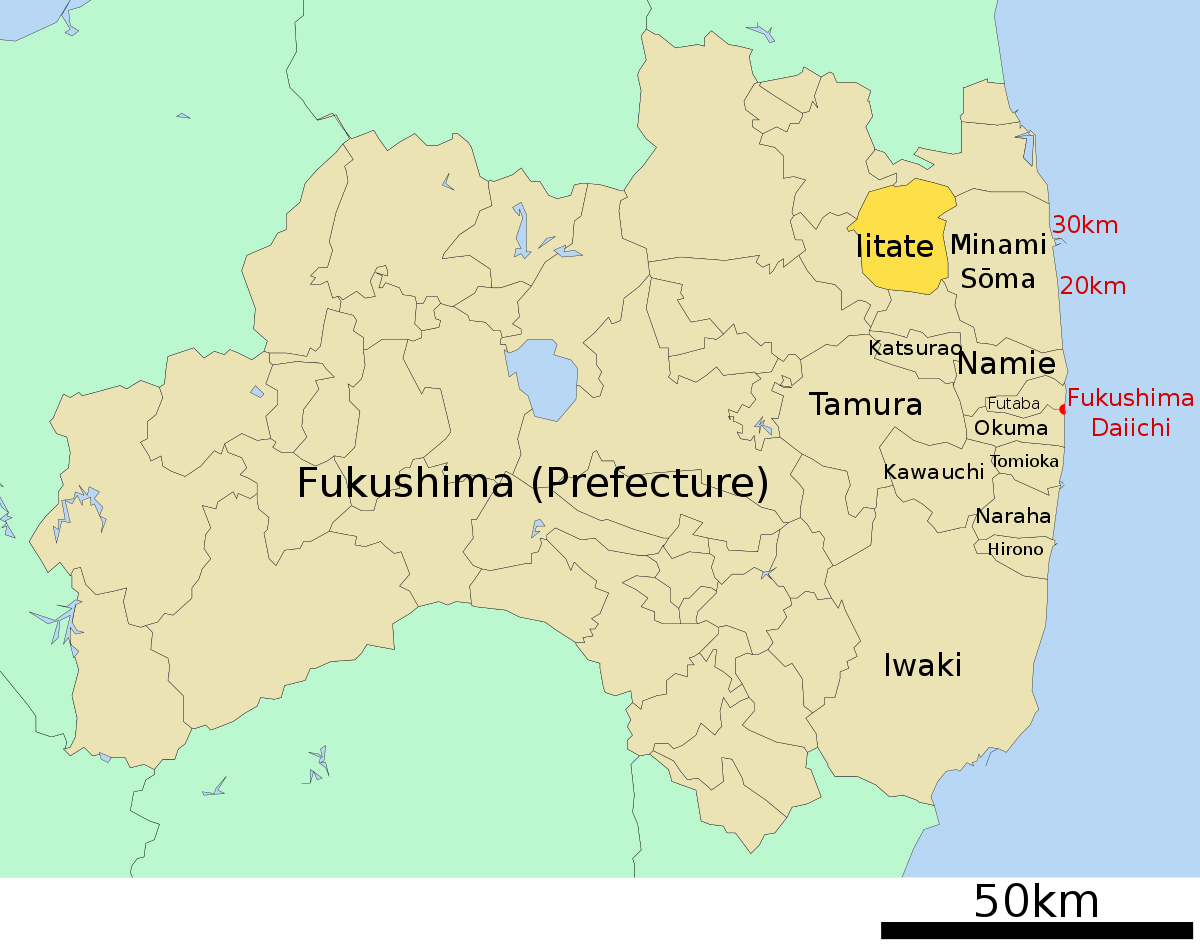
March 5, 2021
The commune of Iitaté, located beyond the 30 km radius, was evacuated late. The order to evacuate was announced on April 11, 2011 and the inhabitants had one month to leave. During this time, those who had not left the area by themselves were exposed to radioactive fallout.
29 residents of Iitaté filed a lawsuit against TEPCo and the State and asked for 200 million yen of damages because the authorities had told them at the beginning of the disaster that it was not necessary to leave. The lack of information about the increase in radiation levels deprived them of their right to evacuate and left them unnecessarily exposed.
They also claim that the subsequent evacuation of the entire village caused them to lose their homes and farms, destroyed their community and deprived them of their hometown.
The leader of the plaintiffs, Kanno Hiroshi, says that he has developed illnesses over the past ten years and that concerns about the effects of radiation will never go away. He holds the government and the plant operator responsible.
This is the first class action suit filed to seek compensation for radiation exposure during the early days of the nuclear accident.
It should be noted that the first independent measurements carried out by ACRO in Japan following the Fukushima nuclear disaster concerned Iitaté. See the results and the press release of the time. These results showed an alarming situation.
ACRO wrote that iodine-131 contamination was preponderant, with levels such that it would be prudent to evacuate the village of Iitate: at the place called Maeda, we had detected 1.9 million becquerels per square meter. Regarding radioactive cesium, almost all the areas monitored by ACRO were above the limits set in Belarus for migration.
After 3/11, emergency import of a concrete pump vehicle from China allowed for nuclear power plant cooling

Translated from Japanese by Dennis Riches
March 13, 2021
In order to prevent further damage caused by the accident at the Fukushima Daiichi Nuclear Power Plant, caused by the Great East Japan Earthquake that occurred on March 11, 2011, it was urgent to cool the reactors. At that time, a concrete pump vehicle from China was used to perform this critical task. This is the story of how it came to be used.
At that time, TEPCO and the Japanese government searched for various ways to cool the reactors, and none of the attempts, such as dropping water from helicopters or releasing water using fire engines, were successful. Because it had to avoid radiation exposure as much as possible, the helicopter was almost completely ineffective. It had to drop water from a fairly high position and it was pushed back by the wind. The fire engine was not high enough at all, so it had no effect.
Therefore, it was understood that the sort of vehicle used for pumping concrete through a long boom would be needed. A concrete pump truck is a machine used in construction that can pump concrete to a high height through a collapsible boom. Thus TEPCO wondered if this machine could be used to pump water into the reactors. This would be more effective than using fire trucks and helicopters, but there was one big problem.
Regulations of the Road Transport Vehicle Act limited the angle and total vehicle weight to 25 tons, so the length of the boom on machines in Japan was limited to a maximum of 36 m, and there were no 60m-class pump vehicles in Japan that could be used for water-pouring work at a nuclear power plant.
As a result of searching around the world, they found a concrete pump vehicle with a boom of 62 meters in length manufactured by a construction machinery manufacturer called Sanshi Heavy Industries in China. In addition, it was a pump vehicle with very good performance, and it was possible to remotely operate it from two kilometers away. TEPCO immediately told Sanshi Heavy Industries in China that it would like to purchase it through Sanshi Heavy Industries’ Japanese subsidiary, but Mr. Liang Onkon, president of Sanshi Heavy Industries, gave a surprising response.
“Please do not sell to Japan. Don’t sell. Japan is a neighboring country. We share the ocean to our east. Now is the time to reach out to help. The pump vehicle will be donated to the disaster-stricken areas of Japan.” In other words, instead of selling a concrete pump vehicle worth 150 million yen, he replied that he wanted to provide it free of charge. And they didn’t just send vehicles. He said that three expert engineers from Sanshi Heavy Industries would also come to Japan to give lessons on how to operate the machine.
The president of WWB Co., Ltd., a Japanese agent of Sanshi Heavy Industries, looks back on the situation at that time. “When the donation was decided, soon Sanshi Heavy Industries searched for a pump truck with a 62m boom. We found that, very fortunately, there happened to be a concrete pump truck in the port of Shanghai that matched the requirements. The machine was due to be shipped to a client in Germany. I was about to leave for Germany, but the German company readily agreed and decided to send it to the disaster-stricken areas of Japan through the Red Cross Society. The concrete pump vehicle was taken from the ship heading to Germany and immediately put on the Suzhou (a ship going from Shanghai to Osaka) and headed for Japan. After arriving in Japan, I spent two days learning how to operate it in Noda City, Chiba Prefecture, and then I left for Fukushima.”
In this interview, we were able to talk in detail with Tomohiro Kawazoe, then president of Sanichi Japan, a Japanese subsidiary of Sanichi Heavy Industries. “I made a trip by myself from Osaka to Chiba to Fukushima because I had to examine the route in detail to check road width, bridges, tunnels, etc. It is a vehicle with a total weight of 55 tons.”
The police in the prefectures along the route also cooperated fully, and traffic restrictions such as 100 blockades of roads were also carried out in some areas so that they could move safely to Fukushima. Police cars in each prefecture escorted the concrete pump vehicle.
Originally, there were various regulations and it would ordinarily take time to travel on public roads in Japan with such an unusual cargo, but this time the issuance of provisional permits was done smoothly. These were extrajudicial measures because the machine was donated with the Red Cross Society as an intermediary. The project was realized in an unusually short period of about two weeks.

https://news.yahoo.co.jp/articles/75482f8d957a3609194000b3cf87145debe1ecc4
I hate those Fukushima disaster anniversaries!

March 11, 2021
For the last ten years, every year, we have the same circus. For one or two weeks the mainstream media comes out with their anniversary articles, over and over repeating the same old songs, old facts, avoiding the really important issues. Along with this the antinuclear divas once a year prerorate their polished spiels basking in their little moment of glory, releasing their pieces on their dot.orgs. while asking for more donations.
In the meantime not much has changed. The ‘decommissioning’ work at the Fukushima Daiichi nuclear plant is a neverending story despite all their nice PR technical blablabla, ignoring the fact that the technology necessary to complete the decommissioning has yet to be invented. At 30 Sieverts level of radiation anyone would get fried within 5 minutes, even their costly robots can’t hold their breath very long.
TEPCO is already gradually releasing partially filtered radioactive water, water still containing radioactive material, into our oceans, our environment. Further, it is their intention to dump all the partially contaminated, radioactive water currently stored in over 1,000 tanks into the sea. The only unknown is exactly when they’ll be able to push it thru.
Despite a few court victories, the victims still have not been properly, sufficiently compensated for all their losses and suffering. People on location are still stuck living in an environment with high levels of radiation, levels the government deems acceptable, thresholds higher than the international standards for nuclear plant workers!
The Japanese government and the nuclear lobby are still orchestrating the denial of threats, of facts, the denial of health risks for the population, campaigning for the evacuees to return.
The Fukushima disaster and its tragic consequences are still hurting the local population. Ten years is NOTHING in terms of radioactive contamination. Contamination that is there to stay. Ongoing… every day.
F these anniversaries!
1 This Month

of the week – Shut Down Drone Warfare!


Tell the Ukrainian Government to Drop Prosecution of Peace Activist Yurii Sheliazhenko

Petition to revoke the licensing of the Near Surface Nuclear Disposal Facility (NSDF) at Chalk River. https://www.ourcommons.ca/petitions/en/Petition/Details?Petition=e-7247
To see nuclear-related stories in greater depth and intensity – go to https://nuclearinformation.wordpress.com
-
Archives
- April 2026 (7)
- March 2026 (251)
- February 2026 (268)
- January 2026 (308)
- December 2025 (358)
- November 2025 (359)
- October 2025 (376)
- September 2025 (257)
- August 2025 (319)
- July 2025 (230)
- June 2025 (348)
- May 2025 (261)
-
Categories
- 1
- 1 NUCLEAR ISSUES
- business and costs
- climate change
- culture and arts
- ENERGY
- environment
- health
- history
- indigenous issues
- Legal
- marketing of nuclear
- media
- opposition to nuclear
- PERSONAL STORIES
- politics
- politics international
- Religion and ethics
- safety
- secrets,lies and civil liberties
- spinbuster
- technology
- Uranium
- wastes
- weapons and war
- Women
- 2 WORLD
- ACTION
- AFRICA
- Atrocities
- AUSTRALIA
- Christina's notes
- Christina's themes
- culture and arts
- Events
- Fuk 2022
- Fuk 2023
- Fukushima 2017
- Fukushima 2018
- fukushima 2019
- Fukushima 2020
- Fukushima 2021
- general
- global warming
- Humour (God we need it)
- Nuclear
- RARE EARTHS
- Reference
- resources – print
- Resources -audiovicual
- Weekly Newsletter
- World
- World Nuclear
- YouTube
-
RSS
Entries RSS
Comments RSS
 nuclear-news