Fukushima Flunks Decontamination

Japan’s Abe administration is pushing very hard to decontaminate land, roads, and buildings throughout Fukushima Prefecture, 105 cities, towns, and villages. Thousands of workers collect toxic material into enormous black one-ton bags, thereby accumulating gigantic geometric structures of bags throughout the landscape, looking evermore like the foreground of iconic ancient temples.
Here’s the big push: PM Abe committed to the 2020 Tokyo Olympics, which shall be a crowning achievement in the face of the Fukushima disaster. Hence, all stops are pulled to repopulate Fukushima Prefecture, especially with Olympic events held within Fukushima, where foodstuff will originate for Olympic attendees.
The Abe government is desperately trying to clean up and repopulate as if nothing happened, whereas Chernobyl (1986) determined at the outset it was an impossible task, a lost cause, declaring a 1,000 square mile no-habitation zone, resettling 350,000 people. It’ll take centuries for the land to return to normal.
Still and all, is it really truly possible to cleanse the Fukushima countryside?
Already, workers have accumulated enough one-ton black bags filled with irradiated soil and debris to stretch from Tokyo to LA. But, that only accounts for about one-half of the job yet to be done. Still, in the face of this commendable herculean effort, analysis of decontamination reveals serious missteps and problems.
Even though the Abe government is encouraging evacuees to move back into villages, towns, and cities of Fukushima Prefecture, Greenpeace nuclear campaigner Heinz Smital claims, in a video – Fukushima: Living with Disaster d/d March 2016: “Radiation is so high here that nobody will be able to live here in the coming years.”
Greenpeace has experts on the ground in Fukushima Prefecture March 2016, testing radiation levels. The numbers do not look good at all. Still, at the insistence of the Abe government, people are moving back into partially contaminated areas. In such a case, and assuming Greenpeace is straightforward, it’s a fair statement that if the Abe government can’t do a better job, then something or somebody needs to change. The Olympics are coming.
The Greenpeace report of March 4, 2016: Radiation Reloaded – Impacts of the Fukushima Daiichi Nuclear Accident 5 Years Later, exposes deeply flawed assumptions by the IAEA and the Abe government in terms of both decontamination and ecosystem risks.
Ever since March 2011, for over 5 years now, Greenpeace has conducted 25 radiological investigations in Fukushima Prefecture, concluding that five years after the Fukushima nuclear accident, it remains clear that the environmental consequences are complex and extensive and hazardous.
A 17-minute video entitled “Fukushima: Living with Disaster,” shows Greenpeace specialists in real time, conducting radiation tests in decontaminated villages and towns of the prefecture. Viewers can see actual real time measurements of radiation on dosimeters.
For example, in the Village of Iitate, 40 kilometers northwest of the Daiichi nuclear plant, Toru Anzai, an evacuee of Iitate, is told decontamination work on his plot of land nearly complete, and he is to rehabitate in 2017. However, Toru has personal doubts about governmental claims. As it happens, Greenpeace tests show abnormally high levels of radiation where decontamination work is already complete.
“Here we have around 0.8 microsieverts (μSv) per hour,” Heinz Smital, nuclear campaigner Greenpeace, “0.23 was the government target for decontamination work.” An adjoining space registers 1.5-2.0 μSv sometimes up to 3.5 μSv. “This is not the kind of count where you can say things are back to normal.”
Throughout the prefecture, decontamination is only partially carried out. For example, decontamination is confined within a 20-meter radius of private plots and along the roads as well as on farmland, leaving vast swaths of hills, valleys, riverbanks, streams, forests, and mountains untouched. Over time, radiation contamination runoff will re-contaminate many previously decontaminated areas.
Alarmingly, Greenpeace found large caches of hidden buried toxic black bags. Over time, it is likely the bags will rot away with radioactivity seeping into groundwater.
At Fukushima City, 60 km from the plant, Greenpeace discovered unacceptable radiation levels with spot readings as high as 4.26, 1.85, 9.06 μSv. According to Greenpeace: “These radiation levels are anything but harmless.”
The government officially informed Miyoko Watanable, an evacuee of Miyakochi, of “radiation eradicated” from her home. But, she says, “I don’t plan to live here again.” Greenpeace confirmed her instincts: “Although work has only recently finished here, we find counts of 1-to-2 μSv per hour… That’s not a satisfactory for the people here in this contaminated area” (Heinz Smital).
Once an area is officially declared “decontaminated,” disaster relief payments for citizens like Miyoko Watanable stop. The government is off the hook.
Without a doubt, the government of Japan is confronted with an extraordinarily difficult challenge, and it may seem unbecoming to ridicule or find fault with the Abe administration in the face of such unprecedented circumstances. But, the issue is much bigger than the weird antics of the Abe government, which passed an absolutely insane secrecy law providing for 10 years in prison to anybody who breathes a secret, undefined.
Rather, whether nuclear power is truly safe is a worldwide issue. In that regard, the nuclear industry has an unfair PR advantage because of the latency effect of radiation. In general, the latency period for cancers is 5-6 years before statistically discernible numbers. People forget.
Consequently, it is important to reflect on key facts:
In a 2014 RT interview, Katsutaka Idogawa, former mayor of Futaba in Fukushima Prefecture, said: “It’s a real shame that the authorities hide the truth from the whole world, from the UN. We need to admit that actually many people are dying. We are not allowed to say that, but TEPCO employees also are dying. But they keep mum about it.”
Alas, two hundred fifty U.S. sailors of the USS Ronald Reagan, on a Fukushima humanitarian rescue mission, have a pending lawsuit against TEPCO, et al claiming they are already experiencing leukemia, ulcers, gall bladder removals, brain cancer, brain tumors, testicular cancer, dysfunctional uterine bleeding, thyroid illness, stomach ailments and other complaints extremely unusual in such young adults. Allegedly, the sailors were led to believe radiation exposure was not a problem.
Theodore Holcomb (38), an aviation mechanic, died from radiation complications, and according to Charles Bonner, attorney for the sailors, at least three sailors have now died from mysterious illnesses (Third US Navy Sailor Dies After Being Exposed to Fukushima Radiation, Natural News, August 24, 2015.) Among the plaintiffs is a sailor who was pregnant during the mission. Her baby was born with multiple genetic mutations.
Reflecting on 30 years ago, Adi Roche, chief executive of Chernobyl Children International, care for 25,000 children so far, says (2014): “The impact of Chernobyl is still very real and very present to the children who must live in an environment poisoned with radioactivity.”
“Children rocking back and forth for hours on end, hitting their heads against walls, grinding their teeth, scraping their faces and putting their hands down their throats… This is what I witnessed when I volunteered at Vesnova Children’s Mental Asylum in Belarus (February 2014),” How my Trip to a Children’s Mental Asylum in Belarus Made me Proud to be Irish, the journal.ie. March 18, 2014 (Cliodhna Russell). Belarus has over 300 institutions like this hidden deep in the backwoods.
Chernobyl is filled with tear-jerking, heart-wrenching stories of deformed, crippled, misshaped, and countless dead because of radiation sickness. It’s enough to turn one’s stomach in the face of any and all apologists for nuclear power.
According to Naoto Kan, Japanese PM 2010-11 during the Fukushima Daiichi Nuclear Power Plant meltdown: “For the good of humanity it is absolutely necessary to shut down all nuclear power plants. That is my firm belief” (source: Greenpeace video, March 2016).
Over 60 nuclear reactors are currently under construction in 15 countries. China has 400 nuclear power plants on the drawing boards. Russia plans mini-nuclear floating power plants to power oil drill rigs in the Arctic by 2020. Honestly!
(part 2) Young woman from Fukushima speaks out
This interview was filmed on February 12, 2016, in Fukushima Prefecture. The young woman was 15 at the time of the nuclear meltdown in Fukushima, and we are releasing this interview with her permission. She is one of the 166 Fukushima residents aged 18 or younger at the time of the nuclear disaster who has been diagnosed with or suspected of having thyroid cancer (as of February 2016).
Fukushima residents who were 18 years old or younger at the time of the nuclear accident have been asked to participate in the voluntary thyroid ultrasound examination which is part of the Fukushima Health Management Survey. However, 18.8% of this age group were not tested in the 1st round of testing.* While the final results for the 2nd round of testing are not yet complete, every year the number of children participating in the official thyroid examinations is decreasing; the number of children who have not participated in the 2nd round of testing is currently 50.7%** For those young people aged 18-21 (as of April 1, 2014) and who were living in Fukushima at the time of the nuclear accident, 74.5% have not yet taken part in the official thyroid ultrasound examination.**
This young woman’s reason for speaking out is to motivate the families of children who have not yet received the thyroid ultrasound examination to have their children tested. However, in sharing her story about a topic which has become increasingly difficult to talk publicly about in Japan, she faces inherent risks which may include those to her work, community life and personal relationships. I therefore ask that her privacy is respected.
Ian Thomas Ash, Director
contact : info@documentingian.com
Nuclear center waits over a year to report cyber-attack
Computer hackers infiltrated a server installed at a facility that oversees handling of plutonium and other nuclear materials, but the breach was not reported for over a year because officials thought it wasn’t serious.
The government-affiliated Nuclear Material Control Center acknowledged on May 18 that the server at one of its facilities in Tokai, Ibaraki Prefecture, was used as a relay point in a cyber-attack in February last year.
Under the law on regulation of nuclear source material, nuclear fuel material and reactors, such security breaches must be reported to authorities. The Tokyo-based center failed to immediately notify the Nuclear Regulation Authority about what had happened.
“We didn’t even think to make a report because we failed to recognize the fact that the attack was something serious,” said Yasuhiro Yokota, a director of the organization.
No data at the facility was compromised.
On Feb. 19, 2015, an outside information security firm notified the center, “Your server is being used as a relay point in a cyber-attack that is sending high volumes of data to an outside target.”
The center changed the settings on its server the following day to prevent further infiltration attempts. The security company did not reveal the target of the cyber-attack.
Center officials apparently learned they were required to report the breach to the NRA when they were investigating a separate computer-related incident in September 2015. A computer used by a center employee had made unauthorized access to an outside server.
The center failed to notify the NRA about this incident as well, and only announced it in January.
Resuspension and atmospheric transport of radionuclides due to wildfires near the Chernobyl Nuclear Power Plant in 2015: An impact assessment
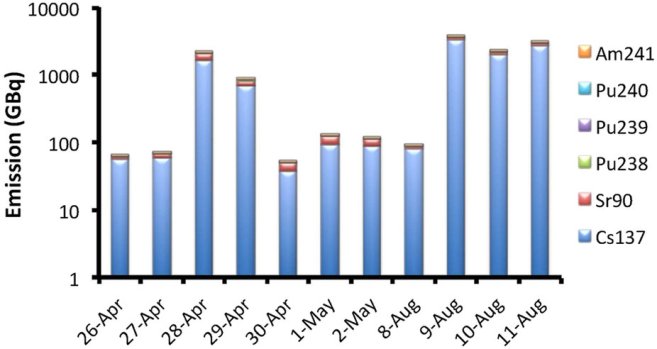
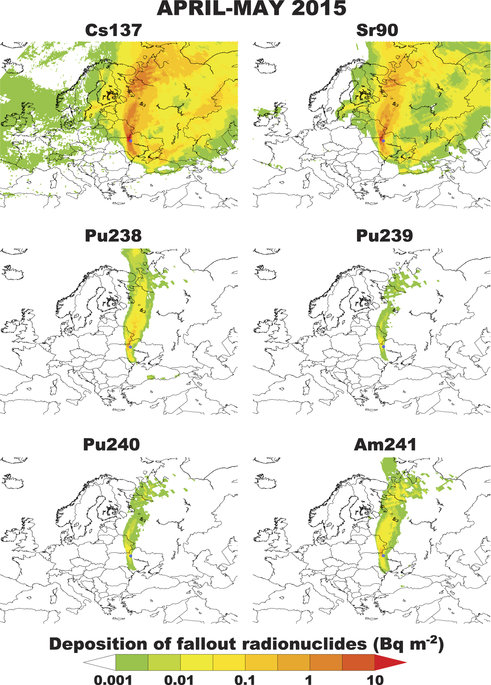
In April and August 2015, two major fires in the Chernobyl Exclusion Zone (CEZ) caused concerns about the secondary radioactive contamination that might have spread over Europe. The present paper assessed, for the first time, the impact of these fires over Europe. About 10.9 TBq of 137Cs, 1.5 TBq of 90Sr, 7.8 GBq of 238Pu, 6.3 GBq of 239Pu, 9.4 GBq of 240Pu and 29.7 GBq of 241Am were released from both fire events corresponding to a serious event. The more labile elements escaped easier from the CEZ, whereas the larger refractory particles were removed more efficiently from the atmosphere mainly affecting the CEZ and its vicinity. During the spring 2015 fires, about 93% of the labile and 97% of the refractory particles ended in Eastern European countries. Similarly, during the summer 2015 fires, about 75% of the labile and 59% of the refractory radionuclides were exported from the CEZ with the majority depositing in Belarus and Russia. Effective doses were above 1 mSv y−1 in the CEZ, but much lower in the rest of Europe contributing an additional dose to the Eastern European population, which is far below a dose from a medical X-ray.
On Sunday 26th April 2015 at 23.30 (local time), exactly 29 years after the Chernobyl Nuclear Power Plant (CNPP) accident, a massive fire started in the Chernobyl Exclusion Zone (CEZ). The next morning (April 27th) at 07.30 the fire was partially stabilised and the fire-fighters focused on only two areas of 4.2 and 4.0 hectares. However, the fire spread to neighbouring areas due to the prevailing strong winds. During the night of April 27th to 28th, 2015, the fire spread to areas close to the Radioactive Waste Disposal Point (RWDP), and burned around 10% of the grassland area at the western of the RWDP1. On April 29th and 30th, 2015, the attempts to stop the fires in the CEZ did not succeed. Fire brigades from Chernobyl and Kiev region supported extinguishing attempts and the last 70 ha were suppressed on May 2nd, 2015. The radiation background is continuously monitored in the CEZ by an automated radiation monitoring system (ARMS) at 39 points1. Given the importance of this fire, background radiation and radionuclide content in the air near the fire were also analysed online.
Another less intensive fire episode took place in August 2015. About 32 hectares were initially burned in the CEZ on August 8th 2. The fires started at three locations in the Ivankovsky area. As of 07.00 on August 9th, the fires had been reportedly localized and fire-fighters continued to extinguish the burning of dry grass and forest. The same fire affected another forested area, known as Chernobylskaya Pushcha. The fire spread through several abandoned villages located in the unconditional (mandatory) resettlement zones of the CEZ and ended on August 11th.
Forest fires can cause resuspension of radionuclides in contaminated areas3. This has caused concern about possible fires in heavily contaminated areas such as the CEZ4. While concerns were initially limited to the vicinity of the fires, Wotawa et al.5 have shown that radionuclides resuspended by forest fires can be transported even over intercontinental distances. Earlier in 2015, Evangeliou et al.6, based on a detailed analysis of the current state of the radioactive forests in Ukraine and Belarus, reported that forest cover in the CEZ has increased from about 50% in 1986 to more than 70% today. Precipitation has declined and temperature has increased substantially making the ecosystem vulnerable to extensive drought. Analysis of future climate using IPCC’s (Intergovernmental Panel on Climate Change) REMO (REgional MOdel) A1B climatic scenario7 showed that the risk of fire in the CEZ is expected to increase further as a result of drought accompanied by lack of forest management (e.g. thinning) and deteriorating fire extinguishing services due to restricted funding. The same group8 considered different scenarios of wildfires burning 10%, 50% and 100% of the contaminated forests. They found that the associated releases of radioactivity would be of such a magnitude that it would be identical to an accident with local and wider consequences9. The additional expected lifetime mortalities due to all solid cancers could reach at least 100 individuals in the worst-case scenario.
This paper aims at defining the extent of the radioactive contamination after fires that started in the CEZ on April 26th (ended 7 days after) and August 8th (ended 4 days after) 2015. We study the emission of the labile long-lived radionuclides 137Cs (t½ = 30.2 y) and 90Sr (t½ = 28.8 y) and the refractory 238Pu (t½ = 87.7 y), 239Pu (t½ = 24,100 y), 240Pu (t½ = 6,563 y) and 241Am (t½ = 432.2 y). These species constitute the radionuclides remaining in significant amounts since the Chernobyl accident about 30 years ago, and their deposition has been monitored continuously by the Ukrainian authorities. The respective deposition measurements have been adopted from Kashparov et al.10,11 and are stored in NILU’s repository website (http://radio.nilu.no). Using an atmospheric dispersion model, we simulate the atmospheric transport and deposition of the radioactive plume released by the forest fires. We also estimate the internal and external exposure of the population living in the path of the radioactive smoke. We assess the significance of the emissions with respect to the INES scale and define the regions over Europe, which were the most severely affected.
See more at: http://www.nature.com/articles/srep26062

Fukui Prefecture plans tax on spent nuclear fuel
FUKUI – The Fukui Prefectural Government is planning to submit an ordinance to an assembly session next month that calls for a tax on spent nuclear fuel stored at nuclear plants in the prefecture, informed sources said Thursday.
The ordinance is aimed at encouraging nuclear plant operators to transfer spent fuel outside the prefecture, the sources said.
It will propose a tax of ¥1,000 per kilogram of spent nuclear fuel that has been cooled for over five years at storage pools and is ready to be relocated.
If the ordinance is passed by the assembly, the prefecture will put it into effect on Nov. 10 after receiving approval from the internal affairs minister.
Fukui will become the first prefecture to tax spent nuclear fuel. Among municipalities, the city of Kashiwazaki, Niigata Prefecture, has a spent nuclear fuel tax. Kashiwazaki and the neighboring village of Kariwa host Tokyo Electric Power Co. Holdings Inc.’s Kashiwazaki-Kariwa nuclear plant.
The Fukui Prefectural Government currently collects nuclear fuel tax from power companies based on thermal output of nuclear reactors at their facilities. Its annual revenue from the tax stands at some ¥6 billion.
The planned new tax is estimated to increase the prefecture’s annual tax revenue by about ¥3 billion, the sources said.
The ordinance will also call for expanding the scope of reactors subject to the existing tax to include those in the decommissioning process — the first such move by a local government in Japan, the sources said.
Currently, local governments cannot impose such nuclear fuel tax on reactors for which the Nuclear Regulation Authority has approved decommissioning.
Noting that safety measures are necessary as long as radioactive materials remain, an official of the Fukui Prefectural Government’s tax division said that the prefecture aims to keep imposing tax until decommissioning is completed.
The amount of the existing nuclear fuel tax will be halved for reactors in the decommissioning process, the sources said.
Among reactors in Fukui, decisions for decommissioning have been made for the No. 1 unit at Japan Atomic Power Co.’s Tsuruga plant, the No. 1 and No. 2 units at Kansai Electric Power Co.’s Mihama plant, and the Japan Atomic Energy Agency’s Fugen advanced converter reactor.
INSIGHT: Fukushima’s ‘caldrons of hell’ keep questions unanswered

A convenience store in Okuma, Fukushima Prefecture, on March 12, 2016, remains as it was when the 2011 earthquake and tsunami triggered the nuclear accident
After spending slightly more than two years in the capital of Fukushima Prefecture, I was assigned to The Asahi Shimbun’s Tokyo head office starting on May 1. I moved house the other day.
I had previously never been based in Fukushima, although I have long covered energy policy and a number of nuclear accidents as a reporter for the newspaper.
On April 11, 2014, shortly after I was assigned to Fukushima, I was told the words that would serve as a starting point for my news-gathering activities there. I am citing that phrase, which I quoted in a previous column, for a second time here:
“Whatever the future of nuclear power generation, it will remain essential to expand renewable energy sources to ensure a stable energy supply and to fight global warming. Fukushima Prefecture has swaths of land and a historical background for doing so.
The energy industry has always been its leading local industry. The prefecture is home to the Joban coal field, and Iwaki was a city of coal mines. Nobody will be able to change Japan unless Fukushima takes it upon itself to do the task.”
The remark was made by Yukihiro Higashi, then professor of thermal energy at Iwaki Meisei University.
After the Great East Japan Earthquake and tsunami triggered the Fukushima nuclear disaster in 2011, the Fukushima prefectural government defined “building communities that do not rely on nuclear energy” as a leading principle of its post-disaster rebuilding efforts.
It set a goal of having renewable energy sources cover all energy demand in the prefecture by around 2040. Higashi played a central role in working out that vision.
The goal may seem preposterous, but the professor’s remarks led me to realize that it isn’t.
LEADING ENERGY PLAYER
Fukushima Prefecture produced 10 percent of Japan’s electricity before it was hit by the nuclear disaster. Most of that electricity was sent to the greater Tokyo area, so the prefecture was sometimes sarcastically referred to as a “colony of Tokyo.”
But all that would have been impossible had it not been for the “swaths of land” and the “historical background” suitable to having electric power generated there.
Energy has always been the representative local product of Fukushima Prefecture. That history dates back to the late Edo Period (1603-1867), when the Joban coal field was discovered.
Energy created in the prefecture continued to support Japan’s modernization even after electricity replaced coal as the leading player.
Living in Fukushima Prefecture provides plenty of opportunities to learn about that history.
A cluster of old hydroelectric plants stands in the environs of Lake Inawashiroko. A dozen of these plants, which were built during the Meiji (1868-1912) and Taisho (1912-1926) eras and taken over by Tokyo Electric Power Co., continue to send electricity to the greater Tokyo area to this day.
A step-like array of hydroelectric plants along the Tadamigawa river in the prefecture’s western Oku-Aizu district was built in the postwar period in a desperate drive to “rebuild Japan.”
Both hydroelectric undertakings drew on the bountiful water resources that are the blessings of the prefecture’s terrain.
Nuclear reactors and a bunch of giant thermal power plants began to spring up along the Pacific coast during the high economic growth of the postwar period.
When cast in the context of that history, the goal set forth by the prefectural government appears to betray the pride of its own “leading local industry.” The prefecture’s people pledged that they are the ones who will replace the leading player of energy.
Ten days after I met Higashi, I visited the Yamatogawa Shuzoten sake brewery in Kitakata, Fukushima Prefecture, to see Yauemon Sato, the ninth-generation chief of the brewery, which has been operating since the mid-Edo Period.
Sato had founded Aizu Electric Power Co. in August 2013, setting out on an ambitious plan to help rebuild the prefecture by means of renewable energy sources.
“You know the caldron of hell?” Sato asked me. “You will be sent to hell and will be boiled in that caldron if you do evil. There are four such caldrons in Fukushima Prefecture. And they are still gaping.”
The No. 1 through No. 4 reactors of TEPCO’s Fukushima No. 1 nuclear power plant, which caused a calamity that will go down in the history of humankind, could certainly be called “caldrons of hell.”
The use of renewable energy sources is a means for closing those caldrons and for obliterating them from Fukushima Prefecture.
More than two years later, the use of renewable energy sources is steadily gaining ground in the prefecture, covering 26.6 percent of all energy demand as of the end of March. The goal remains far in the distance, but the ratio has been gaining about 1 percentage point every year.
The caldrons are still gaping. TEPCO has yet to solve the question of how to block groundwater from flowing into the reactor buildings, which is only increasing the stockpile of water contaminated by radioactive substances. That is preventing the utility from starting serious work to decommission the reactors.
LEFT IN LIMBO
“What should we do?” a 59-year-old woman, evacuated from Okuma, which co-hosts the crippled nuclear power plant, to Koriyama, also in Fukushima Prefecture, asked me when I interviewed her about a year ago.
“Should we go on with our new life here, or should we return to our hometown? My thoughts remain in limbo, and I cannot get around to making up my mind.”
I did not know how to answer her question.
More than 94,000 people of Fukushima Prefecture continue to live as evacuees. The government of the town of Okuma, where all residents remain evacuated, plans to create a rebuilding base with a “habitable environment,” hopefully by fiscal 2018.
But full rebuilding of the town lies far beyond that goal. And that is leaving many people “in limbo.”
What should we do? My pursuit of that unanswered question will continue.
Suspicions grow over Tokyo 2020 Olympic bid team’s payment for ‘consulting fees’
Suspicions have been raised over the credibility of the Tokyo 2020 Olympic bid team’s decision to pay about 230 million yen to the “Black Tidings” company in Singapore for “consulting fees” as part of efforts to win the right to host the Games.
Japanese Olympic Committee (JOC) Chairman Tsunekazu Takeda, who headed the bid team in 2013, was hard-pressed to explain the deal during a meeting on May 16 of the House of Representatives Budget Committee. While the total cost of hosting the 2020 Tokyo Olympic and Paralympic Games is expected to swell, facts about the Olympic bid team going to extremes to win its bid to host the Games have been exposed one after another.
Takeda, the top figure in the Japanese sports world, was grilled as an unsworn witness during the lower house budget committee meeting. Takeda emphasized, “It is a common practice to have contracts with overseas consultants and there will be no success without them. Their consultations were crucial for our last-minute vote counting and winning votes.” He made the statement when he was questioned by Democratic Party (DP) legislator Yuichiro Tamaki.
Each candidate city for hosting Olympic events signs contracts with multiple consulting firms at home and abroad in order to receive guidance on bidding campaign speeches and advice on lobbying activities aimed at collecting votes from International Olympic Committee (IOC) members. In its bid to host the 2020 Tokyo Olympic and Paralympic Games, the bid committee signed contracts with about 10 consulting firms, sources said.
According to the bid committee’s report on its activities, the Tokyo Metropolitan Government and the bid committee footed the bill for bidding activities and spent about 8.9 billion yen between September 2011 and September 2013. Still, that figure is about 60 percent of about 14.9 billion yen spent on Tokyo’s unsuccessful bid for the 2016 Summer Olympics and Paralympics.
Of the 8.9 billion yen, about 4.1 billion yen was used for overseas activities to try to win the bid to host the Games. The “consulting fees” in question were included in expenses for overseas public relations activities — part of international bidding activities. The bid committee, which had collected contributions from the private sector and support money, shouldered the expenses for the “consulting fees.” The Tokyo Metropolitan Government did not directly pay the consulting fees. Furthermore, Takeda insisted that the payment was legitimate because it was audited by a Tokyo-based audit company and approved by the IOC.
Nonetheless, suspicions have been raised about the personal connections of Ian Tan Tong Han, who represented the “Black Tidings” company. The French financial prosecutor’s office has been investigating disgraced former International Association of Athletics Federations President Lamine Diack and his son Papa Massata Diack on suspicion of receiving cash in return for giving silent approval to doping by Russian athletes. The French prosecutors focused their attention on the fact that Papa Massata Diack is a close friend of Ian Tan Tong Han. Allegations have emerged that money aimed at colleting votes was funneled to Papa Massata Diack, who had a voice in the decision on which country would host the games.
Takeda emphasized that he was not aware of the connection between Ian Tan Tong Han and Papa Massata Diack. However, Ian Tan Tong Han has not been reached since the allegations came to light and the flow of the consulting fees has not been confirmed. Sources abroad who have been long involved in Olympic events say that Ian Tan Tong Han is not well known. Ian Tan Tong Han’s Singapore office was in an apartment room. The fact that the Tokyo bid committee paid the massive amount of funds to a company that looked like a shell company has led to a sense of public distrust in the Tokyo Olympic bidding campaign.
In the final round of voting at the IOC general meeting in September 2013, Tokyo won 60 votes against 36 for Istanbul. The result showed a landslide victory for Tokyo, but the competition between the three cities including Madrid had been so keen that it was hard to predict the winner. Before the opening of the IOC general meeting, people linked to the race for the right to host the 2020 Games gathered at a lobby of a Buenos Aires hotel where IOC members were staying. Rumors were swirling that people related to Istanbul were apparently calling in IOC members to try to persuade them to vote for their city. Suspicion was stoking idle fears among people there.
At that time, Tokyo was fighting an uphill battle. Then Tokyo Gov. Naoki Inose, who was chairman of Tokyo’s Olympic bid committee, came under fire for saying in April 2013 that Islamic countries were “fighting with each other.” In July that year, Tokyo’s bid to host the Games was viewed with anxiety as news spread of a leakage of contaminated water at the Fukushima No.1 nuclear power plant.
The Tokyo bid committee regarded the IAAF World Championships in Athletics that opened in Moscow in August 2013 as a major highlight of its activities. That’s because many IOC members, mainly those related to athletic sports, would gather there. Ian Tan Tong Han had already promoted himself. Through Dentsu Inc., a major Japanese international advertising and public relations company, the Tokyo bid committee confirmed that Ian Tan Tong Han had played a role in helping Beijing win the right to host the 2015 IAAF World Championships in Athletics. The bid committee abandoned its pride to pay the consulting fees of 230 million yen.
The murky payment of consulting fees is not the only step taken by the bid committee to win the right to host the Games that sparked public distrust. Although the bid committee changed itself into an organizing committee tasked with preparing and operating the Games in January 2014, it was revealed that the total cost of hosting the world event was underestimated when the bid committee was campaigning for its bid.
Above all, the construction plan for a new Olympic stadium — the main venue for the Games — raised havoc. The construction cost for the new national stadium was estimated at 130 billion yen at the time of the bidding campaign. But after looking into details of the plan, the total cost was expected to soar to about 300 billion yen, forcing the scrapping of the construction plan in July 2015. Meanwhile, the total cost of building temporary venues that are to be dismantled after the Games is likely to rise to about 300 billion yen — about four times the 72.3 billion yen estimated at the time of the bidding campaign. Tokyo 2020 Olympic Organizing Committee President Yoshiro Mori said in July 2015 that the total cost of hosting the Games could exceed 2 trillion yen. It was earlier estimated at 734 billion yen at the time of the bidding campaign.
Why did the Tokyo Olympic committee have to bite off more than it could chew? The root cause of this stems from their eagerness to overcome Tokyo’s weakness shown when it miserably lost its bid to host the 2016 Games. The bid committee set aside hefty funds for overseas consulting fees this time because it had the bitter lesson that it was weak in lobbying activities abroad. Another weakness stems from low support ratings at home for hosting the Games. As compared with Rio de Janeiro, which received a support rate of 84.5 percent for hosting the 2016 Summer Games, Tokyo had only a 55.5 percent support rate for the same event. Tokyo received a support rate of 70 percent for hosting the 2020 Games in a survey conducted in January 2013 by the IOC, but there were persistent views in Japan that priority should be placed on efforts to rebuild the regions battered by the 2011 Great East Japan Earthquake. If the government were to spend huge amounts of money on the Games, it could see public support declining. Holding the estimated cost of hosting the Games down to the minimum was a desperate measure.
A senior official of the organizing committee said the situation looks hopeless. “If we simulated everything at the very outset, we would not be able to host the Olympic Games.” The organizing committee is under pressure to make adjustments to meet realities.
http://mainichi.jp/english/articles/20160517/p2a/00m/0na/019000c
Aspects of DNA Damage from Internal Radionuclides
1. Introduction
In this chapter, there is insufficient space to exhaustively review the research which has been carried out on internal radionuclide effects. I hope only to highlight evidence which shows that internal radionuclides cannot be assessed by the current radiation risk model, and to suggest some research directions that may enable a new model to be developed, one which more accurately quantifies the real effects of such exposures. The biological effects of exposure to ionizing radiation have been studied extensively in the last 70 years and yet very little effort has gone into examining the health effects of exposure to internal incorporated radionuclides. This is curious, since the biosphere has been increasingly contaminated with novel man-made radioactive versions of naturally occurring elements which living creatures have adapted to over evolutionary timescales, and intuition might suggest that these substances could represent a significant hazard to health, one not easily or accurately modelled by analogy with external photon radiation (X-rays and gamma rays).
The question of the health effects of internal radionuclide exposures began to be asked in the early 1950s when there was widespread fallout contamination of food and milk from atmospheric nuclear tests. It quickly became the subject of disagreements between two committees of the newly formed International Commission on Radiological Protection (ICRP)[1]. The questions of the equivalence of internal and external radiation exposure, which were the basis of these disagreements, have still not been resolved. In the West, up to very recently, the whole spectrum of health effects from internal incorporated radionuclides has focused on animal studies of Radium, Plutonium and Strontium-90 and human retrospective studies of those individuals exposed to Radium-226 and Thorium-232 in the contrast medium “Thorotrast”. These studies suffer from a number of problems which will be discussed.
Soviet scientists were more interested in internal radiation effects from fission-product radionuclides, but unfortunately their valuable studies have been difficult to access since they are published in Russian. In 1977 Gracheva and Korolev published a book summarising work in this area which was translated in India in 1980 as Genetic Effects of the Decay of Radionuclides in Cells [2]. This presented a wealth of interesting data relating to beta emitter genetic effects in various systems and drew attention to the distinction that must be made between external and internal radiation. This is important since the whole assessment of radiation in terms of health has been through the quantity “absorbed dose” and what can be called the bag-of-water model.
In this bag of water model, illustrated in Fig 1, the total energy transferred by the radiation to living tissue is diluted into a large mass, greater than a kilogram, as if the effects were uniform throughout the tissue being considered. In Fig 1 the tissue mass A represents an external irradiation by X-rays or gamma rays and here the effects are uniform across the tissue. But in the case B, for internal irradiation, it is clear that it is possible, for certain kinds of exposure, for tissue local to the source to receive very large amounts of radiation energy at the same overall energy transfer to the tissue mass.
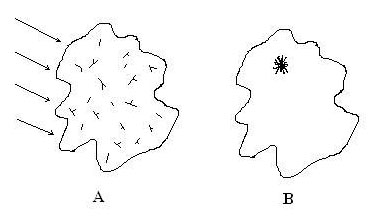
Figure 1.
Comparing external and internal irradiation: the ICRP/ ICRU bag of water model. In case A, external radiation (X-rays or gamma rays) there are 20 events uniformly spaced throughout the tissue and the “absorbed dose” (see text) at any microscopic point is evenly distributed. In case B, for internal irradiation (here from a radioactive particle) there is a very large transfer of energy to a small tissue volume and the concept of “absorbed dose” does not apply.
Thus, in the historic and also the current system of radiation protection, those experts who assess radiation risk, who are termed Health Physicists, calculate the cumulative absorbed dose in Grays, i.e. in terms of the total energy in Joules imparted by the beta electron or alpha particle decays of the internal radionuclide contamination to one kilogram of tissue. For this calculation, the tissue is modelled as water. For example, those whose body contains 100 Bq of Strontium-90 are assessed, for the purposes of radiation protection, as having received a cumulative absorbed dose of 100 x w where w is the “cumulative (absorbed) dose coefficient”, obtained from measurements of the biological half life of the Strontium in the body and the decay energy of each decay in Joules. This number w is to be found in a Table published by the ICRP. In the case of the Strontium-90 contaminated individual, if the person weighed 50 kg, then the mean activity concentration would be 2 Bq/kg. The resulting absorbed dose would then be 2 x 2.8 x 10-8 (this is the ICRP 72 dose coefficient [3]). In other words, the committed dose is 5.6 x 10⁻⁸ Sv (0.056 μSv). But can this be safely compared with a dose from a chest X-ray (40 μSv ) or from natural background radiation (2500 μSv) or from a high dose acute exposure to gamma rays from an atomic bomb linearly scaled to zero dose (the current way of modelling radiation effects)? This chapter explores this question. It is one which has become increasingly necessary as serious health effects, including cancer and leukemia, have been reported in those exposed to internal radioactivity in areas contaminated by radionuclides released from nuclear sites, weapons testing fallout and accidents like Chernobyl and Fukushima, at very low conventionally calculated “absorbed doses”.
The matter has been discussed in some detail since 1998 by the independent European Committee on Radiation Risk (ECRR) whose reports [4, 5] provide a methodology for assessing health effects through a system of weighting factors based on available data. As more and more evidence emerged after 1995 that something was very wrong with the ICRP absorbed dose approach to internal radiation, the UK government set up a Committee Examining Radiation Risk from Internal Emitters (CERRIE). Since there were (and are) political dimensions to the issue, the committee was composed of scientists and experts from the nuclear industry and the official radiation protection organisations in the UK. Unfortunately the 4-years process ended in acrimony, legal threats to member of the committee, and failure to agree a final report. Two reports were issued [6, 7]. However, there was agreement that there were reasonable concerns about the safety of employing “absorbed dose” for certain internal radionuclide situations, and similar concerns about the safety of the ICRP model were made in 2005 by the French IRSN [8]. The error factor that these discussions led to was believed by different ends of the CERRIE process to be between 10-fold and 1000-fold. More recently, the value put on this error factor by the retired Scientific Secretary of the ICRP at a meeting in Stockholm in 2009 was “two orders of magnitude”. What this means, in our Strontium-90 case above, is that the dose from 100Bq contamination to the whole body is no longer 0.056μSv but may now be between 0.56μSv and 56μSv and the risk of fatal cancer is proportionately increased. To put this in perspective, the mean Sr-90 dose over the period 1959-1963 to individuals in the northern hemisphere was given as about 1 mSv [9]. The ICRP risk model gives a 0.45% per Sievert excess lifetime cancer risk. Epidemiological studies suggest that the cancer “epidemic” which began in the 1980s in areas of high rainfall and fallout is a consequence of the earlier fallout exposures [10]. The weighting of dose necessary to explain this is greater than 300 if calculated from the ICRP absolute risk factor of 0.05/Sv [5, 11]. Many other instances of anomalous health effects from exposure to internal radionuclides require hazard weighting factors of between 100-fold and more than 1000-fold, and these are consequences of mechanisms which will be presented.
Former Prime Minister Koizumi backs U.S. sailors suing over Fukushima radiation
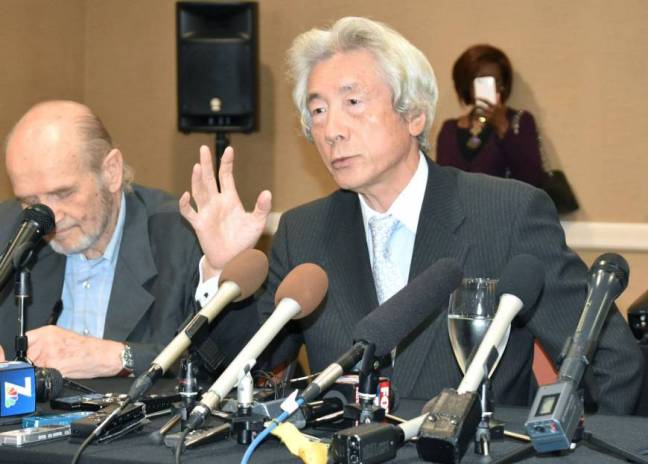
Former Prime Minister Junichiro Koizumi speaks at a news conference Tuesday in Carlsbad, California.
CARLSBAD, CALIFORNIA – Former Prime Minister Junichiro Koizumi said Tuesday he stands behind a group of former U.S. sailors suing the operator of the Fukushima No. 1 nuclear plant, who claim health problems they now suffer were caused by exposure to radiation after three reactors melted down in the days after a devastating earthquake and tsunami in March 2011.
Koizumi made the remarks at a news conference in Carlsbad, California, with some of the plaintiffs in a lawsuit brought in the United States in 2012 against plant operator Tokyo Electric Power Co., which has renamed itself Tokyo Electric Power Company Holdings Inc.
The plaintiffs include crew members of the U.S. aircraft carrier Ronald Reagan, which provided humanitarian relief along the tsunami-battered coastline in a mission dubbed Operation Tomodachi.
“Those who gave their all to assist Japan are now suffering from serious illness. I can’t overlook them,” Koizumi said.
The former premier spent Sunday through Tuesday meeting with roughly 10 of the plaintiffs, asking about the nature of the disaster relief they undertook and about their symptoms.
“I learned that the number of sick people is still increasing, and their symptoms are worsening,” he told the news conference.
Koizumi called on those in Japan, both for and against nuclear power, to come together to think of ways to help the ailing U.S. servicemen.
The group of about 400 former U.S. Navy sailors and Marines alleges the utility, known until recently as Tepco, did not provide accurate information about the dangers of radioactive material being emitted from the disaster-struck plant.
This led the U.S. military to judge the area as being safe to operate in, resulting in the radiation exposure, the group claims.
One of the plaintiffs at the news conference, Daniel Hair, said Koizumi’s involvement made him feel for the first time that Japan is paying serious attention to their plight.
According to lawyers for the group, seven of its members have died so far, including some from leukemia.
Koizumi, who served as prime minister between 2001 and 2006, came out in opposition to nuclear power in the wake of the 2011 disaster. He has repeatedly urged the administration of Prime Minister Shinzo Abe to halt its efforts to restart dormant reactors across Japan.
Young woman from Fukushima speaks out (part 1)

This interview was filmed on February 12, 2016, in Fukushima Prefecture. The young woman was 15 at the time of the nuclear meltdown in Fukushima, and we are releasing this interview with her permission. She is one of the 166 Fukushima residents aged 18 or younger at the time of the nuclear disaster who has been diagnosed with or suspected of having thyroid cancer (as of February 2016).
Fukushima residents who were 18 years old or younger at the time of the nuclear accident have been asked to participate in the voluntary thyroid ultrasound examination which is part of the Fukushima Health Management Survey. However, 18.8% of this age group were not tested in the 1st round of testing.* While the final results for the 2nd round of testing are not yet complete, every year the number of children participating in the official thyroid examinations is decreasing; the number of children who have not participated in the 2nd round of testing is currently 50.7%** For those young people aged 18-21 (as of April 1, 2014) and who were living in Fukushima at the time of the nuclear accident, 74.5% have not yet taken part in the official thyroid ultrasound examination.**
This young woman’s reason for speaking out is to motivate the families of children who have not yet received the thyroid ultrasound examination to have their children tested. However, in sharing her story about a topic which has become increasingly difficult to talk publicly about in Japan, she faces inherent risks which may include those to her work, community life and personal relationships. I therefore ask that her privacy is respected.
Ian Thomas Ash, Director
Pro-nuclear trolls & disinformation

A few links to some articles dealing about about pro-nuclear trolls and their disinformation techniques.

Mayor blasts nuclear power to students visiting from Taiwan
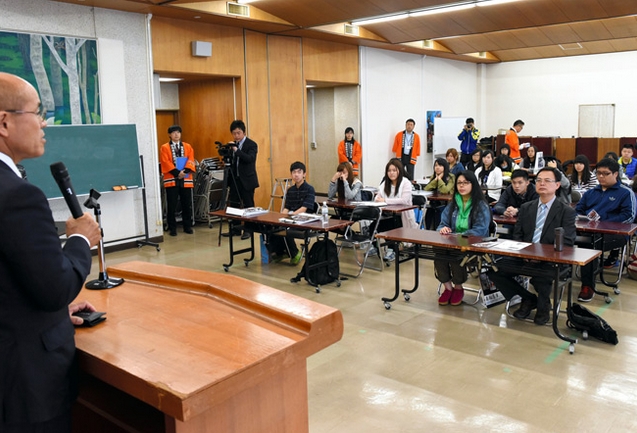
Minami-Soma Mayor Katsunobu Sakurai discusses the city’s experiences after the Fukushima nuclear disaster before Taiwanese students and teachers in Minami-Soma, Fukushima Prefecture, on May 17
MINAMI-SOMA, Fukushima Prefecture–The mayor here has lamented to visiting Taiwanese students how the Fukushima nuclear catastrophe tore his city apart, with 27,000 residents still unable to return to their homes.
Mayor Katsunobu Sakurai went on to blast nuclear energy in an impassioned speech to the 30 visiting students and their teachers on May 17.
“Putting money ahead of people’s lives is totally unacceptable,” he said.
“I was moved by his speech because he is very concerned about the welfare of children,” a 16-year-old girl said, adding that she is worried about nuclear power plants in Taiwan.
Other students said they were able to grasp the enormity of the 2011 disaster at the Fukushima No. 1 nuclear power plant and the city’s efforts to rebuild after Sakurai’s ardent talk.
Sakurai told the students, who are on a school trip from Dali High School in Taipei, that even five years on “27,000 residents including many children are still displaced” and that some elderly citizens died while being evacuated.
The mayor said that the terrible damage was not simply limited to the leakage of radioactive material, and emphasized that nuclear disasters had great potential for driving families apart and destroying local communities.
“Many local leaders tend to refrain from saying this, but I am making a strong plea to the central government, the business circles and the world that nuclear power plants are not needed because (if there is an accident) it can totally ruin people’s lives,” he said.
In replying to a question about the city’s radiation levels, Sakurai reassured the student that readings are now “low enough.” He went on to discuss efforts to decontaminate the local communities and the substantial effort required to rebuild them.
But he added that the municipal government is still monitoring radioactivity in tapping water and food products.
“The fact that we need to conduct such checks even today is unusual,” he said.
Asked about Minami-Soma residents’ reactions to restarting nuclear plants in Japan despite the Fukushima disaster, the mayor said, “An overwhelming majority are against the move to resume the operation of nuclear facilities.”
Minami-Soma is situated between 10 and 40 kilometers from the crippled plant, which stands to the city’s south.
The southern part of the city was designated part of the 20-km “no-entry” zone after the nuclear accident, forcing its residents to evacuate.
At one time, the city, whose population stood at 72,000 before the nuclear accident, had only 10,000 people left because of the evacuation order and voluntary evacation by the residents.
Towards decommissioning Fukushima: ‘Seeing’ boron distribution in molten debris
Japanese researchers map the distribution of boron compounds in a model control rod
Kyoto University

Compilation of control rod cross-sectional images, showing results of high-temperature steam oxidation.
Japanese researchers have mapped the distribution of boron compounds in a model control rod, paving the way for determining re-criticality risk within the reactor.
Decommissioning the Fukushima Daiichi Nuclear Plant just got one step closer. Japanese researchers have mapped the distribution of boron compounds in a model control rod, paving the way for determining re-criticality risk within the reactor.
To this day the precise situation inside the Fukushima Daiichi Nuclear Plant is still unclear. “Removing fuel debris from the reactor contaminant vessel is one of the top priorities for decommissioning,” says lead author Ryuta Kasada of Kyoto University.
Stainless steel tubes filled with boron carbide are used to control energy output in boiling water reactors, including at Fukushima Daiichi, as boron absorbs neutrons resulting from splitting atoms. With such control rods functioning properly, nuclear fission occurs at a steady rate. In an extreme situation, such as during the Fukushima accidents, where overheated vapors come in contact with the rods, boron reacts with surrounding materials like stainless steel to create molten debris.
“When melting happens, phenomena like relocation occur such that the boron atoms — trapped in the debris — accumulate towards the bottom of the reactor,” explains Kasada. “This can lead to a lack of control agents in the upper core structure and thus a higher risk of re-criticality in those areas.”
“It’s crucial to get a picture of how boron atoms are distributed inside the reactor, so that we know which areas have higher risk of re-criticality. It’s also important to know the chemical state of boron, as some boron compounds can affect the formation of radioactive materials released to the environment.”
Kasada and colleagues filled a model control rod with steam at 1250 degrees Celsius to imitate conditions of a severe nuclear accident. The team then mapped the distribution of molten boron debris and simultaneously determined its chemical state with a soft x-ray emission spectrometer, in which they combined a new diffraction grating with a highly-sensitive x-ray CCD camera, equipped to a type of scanning electron microscope. The boron compounds — including boron oxide, boron carbide, and iron boride — each showed different peak structures on the x-ray spectrum.
“Previously this was only possible to visualize in large synchrotron radiation facilities. We’ve shown that the same is possible with laboratory-sized equipment.”
“This finding demonstrated on a micro-scale what needs to be done in Fukushima,” says Kasada. “This can’t yet be applied in the field, but in the meantime, we plan to visualize the chemical state of other elements so as to create a sound materials base for decommissioning Fukushima.”
###
The paper “Chemical State Mapping of Degraded B4C Control Rod Investigated with Soft X-ray Emission Spectrometer in Electron Probe Micro-analysis” will appeared 10 May 2016 in Scientific Reports, with doi: 10.1038/srep25700
Kyoto University is one of Japan and Asia’s premier research institutions, founded in 1897 and responsible for producing numerous Nobel laureates and winners of other prestigious international prizes. A broad curriculum across the arts and sciences at both undergraduate and graduate levels is complemented by numerous research centers, as well as facilities and offices around Japan and the world.
For more information please see: http://www.kyoto-u.ac.jp/en
http://www.eurekalert.org/pub_releases/2016-05/ku-tdf051716.php
Fukushima police arrest 6 construction company employees after body found

Police arrested the head of a construction company and 5 employees for dumping a body believed to be that of a former colleague
FUKUSHIMA (TR) – Fukushima Prefectural Police have arrested six employees of a construction after the body believed to be that of a colleague who had gone missing was found buried on the firm’s premises in Iwaki City, reports Kahoku Shimpo (May 17).
Police arrested Daizo Hyugaji, 35, the president of Musashi Construction, and five other employees for allegedly abandoning a body at a sand storage area for the company company, located in the Hisanohama area.
On Sunday, investigators using a backhoe began digging at the site after receiving a tip that the body of man, who performed decontamination work, had been buried there in the fall of last year. A body believed to be that of the man, aged in 40s, was found on Monday evening.
Police suspect the crime was committed in September of last year. The family of the victim reported him missing the following month.
After confirming the identity of the body, police may apply murder charges to the suspects.
Poet Ryoichi Wago tries to bridge hearts after Fukushima
“For example, Wago says the argument that Japan must rely on nuclear power to some extent may sound rational, but if one spares a thought for the misery of people directly affected by the nuclear disaster then surely championing nuclear power generation does not offer a viable future.
Despite the lack of common ground and the prospect of never resolving such differences, Wago concluded that starting conversations to talk about issues related to the disaster would be a fundamental first step in the right direction.”
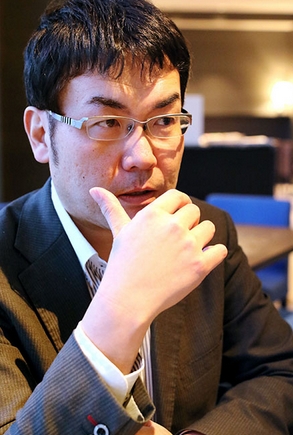
FUKUSHIMA–Ryoichi Wago, a high school teacher who doubles as a poet, rose to national prominence with a series of tweets he posted days after the March 11, 2011, nuclear disaster in his native Fukushima Prefecture.
On March 16 of that year, he tweeted the following short free verse about the drama unfolding at the Fukushima No. 1 nuclear power plant:
“Radiation is falling.
“It is a quiet night.”
Plunged into despair by the nuclear accident, Wago began groping for ways to get a dialogue going involving all sectors of society to bridge differences brought on by the catastrophe.
At the time of the disaster, Wago, now 47, was at his home in Fukushima city, which is situated inland and northwest of the crippled nuclear power plant. It has been estimated that radioactivity levels there were as much as 500 times higher than before the accident.
Like many other local residents, his wife and son left town and took refuge in Yamagata Prefecture, north of Fukushima. But he stayed on, even though the neighborhood felt like a ghost town. A radio station kept blaring, “Keep calm and evacuate.”
“Will I be forced to leave?” Wago feared. “Fukushima will be abandoned by the nation.”
Two months later, he published “Shi no tsubute,” or “Pebbles of poetry,” a compilation of free verse he had tweeted expressing his fears and anguish. Prior to the disaster, he had only four followers. The number quickly rose to 15,000 by the time the book was released.
Clearly, his words and thoughts were reaching a wider audience. But not everyone was in his corner.
One day a message sent through Twitter gave him pause for thought: “You live inland so you are not a disaster victim. You have not lost your hometown nor your family,” the message read, questioning his legitimacy to talk about the disaster as “one of them.”
By April, gas pumps were working again and Wago was able to visit other parts of Fukushima Prefecture to listen to what people were saying. He spent a year doing this, mostly at weekends, and talked to 60 or so people.
During these chats, he noticed a wide disparity in the way people viewed the disaster.
“I want the government to promise to return us to our hometown,” one individual would venture. “I cannot go back, I will make a new life somewhere else,” another would say.
A mother’s wish that her children would ”be able to play outside” invites a stinging rebuke: “Are you trying to make them sick from radiation exposure?”
It occurred to Wago that such disparities must be felt everywhere in Japan after the 3/11 disaster.
For example, Wago says the argument that Japan must rely on nuclear power to some extent may sound rational, but if one spares a thought for the misery of people directly affected by the nuclear disaster then surely championing nuclear power generation does not offer a viable future.
Despite the lack of common ground and the prospect of never resolving such differences, Wago concluded that starting conversations to talk about issues related to the disaster would be a fundamental first step in the right direction.
That was Wago’s starting point for creating Fukushima Mirai (future) Kagura. Kagura is dance and music performed at festivals and rituals as offerings to Shinto deities.
Wago gathered 50 or so locals as production staff and dancers, and held a talk session to get them to state what they wanted to get out of the project.
“I want to tell how much my tsunami-drowned friends would have wanted to live,” said one. “I want to express my anguish that my hometown was contaminated by radiation,” said another.
Wago recalls “some kind of intangible solidarity” was born among the participants.
In August 2015, the presentation of kagura at Fukushima Inarijinja shrine in Fukushima city received an ovation from the 700 or so spectators gathered for the performance.
His kagura is made up of several parts, including poetry reading accompanied by live calligraphy and a drum performance, and dance performance representing foxes and a dragon.
“A willingness to have conversation rather than confrontation is important. It is not necessarily in words either,” said Wago.
In March 2016, Wago published a new poetry book titled “Kinou yorimo yasashiku naritai” (I want to be kinder than yesterday).
One of those poems goes to the heart of what Wago is trying to express.
“From that day, I am having fruitless discussion with him.
“He tells me he cannot understand a single thing I say.
“I also respond flatly that I cannot understand him.
“Still, we have no way but to keep up our dialogue.”
-
Archives
- October 2026 (104)
- September 2026 (339)
- August 2026 (330)
- July 2026 (355)
- June 2026 (287)
- May 2026 (306)
- April 2026 (356)
- March 2026 (251)
- February 2026 (267)
- January 2026 (308)
- December 2025 (358)
- November 2025 (359)
-
Categories
- 1
- 1 NUCLEAR ISSUES
- business and costs
- climate change
- culture and arts
- ENERGY
- environment
- health
- history
- indigenous issues
- Legal
- marketing of nuclear
- media
- opposition to nuclear
- PERSONAL STORIES
- politics
- politics international
- Religion and ethics
- safety
- secrets,lies and civil liberties
- spinbuster
- technology
- Uranium
- wastes
- weapons and war
- Women
- 2 WORLD
- ACTION
- AFRICA
- Atrocities
- AUSTRALIA
- Christina's notes
- Christina's themes
- culture and arts
- Events
- Fuk 2022
- Fuk 2023
- Fukushima 2017
- Fukushima 2018
- fukushima 2019
- Fukushima 2020
- Fukushima 2021
- general
- global warming
- Humour (God we need it)
- Nuclear
- RARE EARTHS
- Reference
- resources – print
- Resources -audiovicual
- Weekly Newsletter
- World
- World Nuclear
- YouTube
-
RSS
Entries RSS
Comments RSS

