nuclear-news

The News That Matters about the Nuclear Industry Fukushima Chernobyl Mayak Three Mile Island Atomic Testing Radiation Isotope

Study: Cesium from Fukushima flowed to Tokyo Bay for 5 years

fukushima cesium 5 years tokyo bay june 7 2018.jpg
A photograph taken from an Asahi Shimbun helicopter shows the Edogawa river emptying into Tokyo Bay.
 
June 7, 2018
Radioactive cesium from the crippled Fukushima No. 1 nuclear power plant continued to flow into Tokyo Bay for five years after the disaster unfolded in March 2011, according to a researcher.
Hideo Yamazaki, a former professor of environmental analysis at Kinki University, led the study on hazardous materials that spewed from the nuclear plant after it was hit by the Great East Japan Earthquake and tsunami on March 11, 2011.
Five months after disaster caused the triple meltdown at the plant, Yamazaki detected 20,100 becquerels of cesium per square meter in mud collected at the mouth of the Kyu-Edogawa river, which empties into Tokyo Bay.
In July 2016, the study team detected a maximum 104,000 becquerels of cesium per square meter from mud collected in the same area of the bay, Yamazaki said.
He said cesium released in the early stages of the Fukushima disaster remained on the ground upstream of the river, such as in Chiba Prefecture. The radioactive substances were eventually washed into the river and carried to Tokyo Bay, where they accumulated in the mud, he said.
On a per kilogram basis, the maximum level of radioactivity of cesium detected in mud that was dried in the July 2016 study was 350 becquerels.
The government says soil with 8,000 becquerels or lower of radioactive cesium per kilogram can be used in road construction and other purposes.
The amount of radioactive cesium in fish in Tokyo remains lower than 100 becquerels per kilogram, the national safety standard for consumption.

June 7, 2018 Posted by | Fukushima 2018 | , , | Leave a comment

Japan asks Philippines to lift ban on Fukushima products

000370511.jpg
 
June 6, 2018,
The Japanese government is asking the Philippines to lift the restrictions it imposed on the importation of agricultural and other food products coming from areas affected by the March 2011 Fukushima nuclear meltdown.
Mitsuhiro Miyakoshi, Special Advisor to Prime Minister Shinzo Abe and in charge of promoting the export of Japanese agricultural products, relayed this message to the Philippine government during a three-day official visit in Manila last week.
In his meeting with Agriculture Secretary Emmanuel Pinol, Miyakoshi noted that the European Union has already lifted some regulations on certain products that include agricultural and fisheries, “based on comprehensive scientific data and analyses.”
Citing the increasing demand for consumption of Japanese products in the country, the government of Japan is eyeing a total of JY1 trillion (PhP47 billion) annual exports to the Philippines until the end of 2019.
In a statement, the Japanese Embassy in Manila said both the Ministry of Agriculture, Forestry and Fisheries (MAFF) and the Japan External Trade Organization (JETRO) are working on several policies related to export promotion in order to facilitate the freer flow of Japanese products to the Philippines.
At the sidelines of the Association of Southeast Asian Nations (ASEAN) summit in Manila last November, Prime Minister Abe also asked the countries in the region to consider accepting imports of food from the affected areas, noting that sufficient time had passed since the earthquake and the food are widely considered safe.
In the aftermath of the 2011 nuclear incident triggered by the earthquake-borne tsunami in the eastern coast of Japan, many countries, including the Philippines, introduced restrictions on agricultural and other food products from areas near the Fukushima power plant.
Some countries and regions have since then eased the restrictions following widespread clean-up and decontamination conducted by Japan.
Alongside with the discussion on the lifting of restrictions of products from Fukushima and nearby prefectures, Miyakoshi also discussed with Pinol the updates on rice production and harvest in the Philippines and Japan, as well as the possible infusion of Japanese development assistance in these areas.
Miyakoshi, together with Ambassador Koji Haneda, also held a meeting with representatives of Japanese companies doing business in the Philippines to discuss ways to further promote exports of Japanese agricultural products.
“Miyakoshi underscored the importance of this matter to Japan, and that the Japanese Government is now exerting its best efforts to increase export in the nearest future,” the Embassy said in the statement.

June 7, 2018 Posted by | Fukushima 2018 | , , | Leave a comment

PART 2: Radioactive water at Fukushima Daiichi: What should be done?
Kyodo-Reuters-water-tank01.jpg

DOES THE PUBLIC HAVE A SAY?

For their part, representatives of the government and TEPCO I have spoken with invariably stress how important it is to them to reach understand and agreement with all stakeholders, the Fukushima fisheries coops in particular, and to respond to their concerns in the decision-making process. They say they are fully prepared to accommodate the fishermen’s desires regarding the quantity and timing of releases, how they will be monitored, and how to adjust the release parameters in response to what is found after the system begins operation. And although when I point out that concern is not limited to fishermen in Fukushima, but that coops in Miyagi and Iwate, as well as Ibaragi and Chiba also consider themselves stakeholders, and that in fact residents internationally along the entire Pacific rim have already expressed concern, officials voice agreement but cannot point to any concrete efforts to communicate with or include anyone outside of Fukushima or the Tokyo power centers. In the same way, the concerns of major food distributors such as supermarket chains, who ultimately make the decision whether or not to purchase and sell Fukushima marine products nationwide, do not seem to be being addressed.

Shuji Okuda, METI’s Director for Decommissioning and Contaminated Water Management, Nuclear Accident Response Office, Agency for Natural Resources and Energy, stressed that no decision has yet been made which of the five options for dealing with the tritiated water detailed in the 2016 Task Force report will be chosen. In other words, although TEPCO, government ministries, and stakeholders are proceeding as if it’s a done deal, no-one with decision-making power has yet made a decision. “It will be a decision of the Japanese Government as a whole,” Okuda explains, “not one made by any single agency. And it will be based on ample discussions with all stakeholders.” Since the release of the Task Force Report in 2016, METI has been discussing the social impacts quite a lot, he noted. They are particularly concerned about “damaging rumors”- fuhyo higai – that will result from any tritiated water release, and have been discussing how to counter them. He continues, “Because the risks have been demonstrated to be very low, it’s less a question of safety, and more one of potential public reaction and reputational damage. We plan to hold further discussions with stakeholders and the general public to increase understanding.” Regarding international communication efforts, he points to English-language materials and reports the ministry releases, but says that since any impacts will involve primarily Japanese local area, information dissemination overseas is limited to experts, administrative officials and some media.”

METI recently announced that meetings will be held where the public can hear explanations of proposed solutions and comment on them. The Subcommittee on Handling Water Treated by the Polynuclide Removal Facility is one of several Japanese government committees organized by METI tasked with formulating a response to the problem of the radioactive water. The planned public sessions were announced at its eighth meeting, on Friday, May 18th. This is a step in the right direction, and is long overdue. Nevertheless it may well be a case of “too little, too late.”

METI, Subcommittee on handling water treated by the polynuclide removal facility, 8th meeting May 18, 2018 (Report regarding upcoming public hearings on tritiated water problem – in Japanese)

Good public communication about the release plan, the ocean science it involves, and what the expected risks are and why, cannot by themselves guarantee public acceptance. But this kind of communication is essential, particularly with such a globally contentious and high-profile issue like releasing radiation into the ocean. The public needs to know the environmental effects, health effects, how it will be monitored, what transparency measures are in place, what the process for adjustment and revision will be. Almost two years have elapsed since the Tritiated Water task Force released its recommendations, and a broad and energetic stakeholder engagement and information effort should have been ongoing since then. But such efforts are now only in the planning stage. It seems that METI and other ministries have been paralyzed, faced with taking responsibility for a politically damaging decision, forced to acknowledge that they support the plan but unable to take concrete steps to implement it or prepare the public. TEPCO, while it accepts its responsibility for the decision, seeks full government support, including robust public communication efforts. It seems extremely unlikely to act without a clear government decision in favor of the release and stipulating its timing. We should be prepared for the government to remain paralyzed until the last possible moment, when crisis is imminent, and then to announce a decision suddenly, justifying it by saying that time has run out and that it “can’t be helped.” As a colleague pointed out, this is, unfortunately, the Kasumigaseki way.*

When asked what the official position of TEPCO was regarding the plan to release the water, Kohta Seto of TEPCO’s Communication Development, Fukushima Daiichi Decontamination and Decommissioning Engineering Company, replied, “We recognize that comprehensive examination of technical and social factors is ongoing currently at the national subcommittee. Our response policy will be made in consultation with the government and related stakeholders based on the subcommittee’s discussions.” This echoes METI’s assertion that no decision has actually been made. But in fact the Tritiated Water Task Force, the subcommittee referred to, has been dormant for over a year, and any further recommendations will come from the higher-level METI Contaminated Water Countermeasures Committee and from the NRA.

Others at TEPCO have acknowledged that the company feels ultimately responsible, and is confronted with a decision that could further damage others. Takahiro Kimoto, General Manager, Nuclear Power & Plant Siting Division, Fukushima Daiichi D&D Engineering Company, notes that under the existing plan and at the current rate, by 2020 there will be no more space to store additional tritiated water onsite at Daiichi. Constructing the dilution facilities and pipelines that the release would require is expected to require almost a year of preparation after any decision is made. At the current rate, that means the “go” signal must be given by early 2019 at the latest. Though TEPCO expects that measures such as the frozen wall and subdrain pumps will continue to reduce the amount of treated water that needs to be stored, nevertheless they recognize that there is a narrowing window for decision and action. The company has no plans to try to obtain land offsite to further expand tank space, which could provide an additional margin of time. Though feasible technically and cost-wise, this would be a stopgap measure that merely delays the decision to deal with the tritium more permanently by the other means already being considered. Kimoto explained that the company does not want to act independently. “The policies can’t and shouldn’t be determined by TEPCO alone, but we continue discussing the available options with government and other stakeholders. How much to empty the tanks, how that should be done to minimize environmental consequences, how to maintain trust and transparency, who we need to engage with on this matter, these are all issues we seek stakeholder engagement on. These discussions are taking a long time, but we consider them essential.” Put bluntly, TEPCO knows they will be the bad guys in this scenario no matter what, and prefer to have as broad support as possible.

TRANSPARENCY

I initially approached this issue as one of transparency and the need to include a broadly-defined base of stakeholders in the decision-making process and subsequent monitoring of the results. That has been experience of SAFECAST, which prioritizes transparency and impartiality, and tries to get as many people involved in environmental monitoring and decision-making as possible, with unprecedented positive results. We have seen similar benefits where citizen groups in Japan monitor food and their own environments, and seek and often gain a vital voice in decisions that affect them. The Fukushima fisheries coops, TEPCO, and METI all said they would welcome transparent, independent, ongoing third-party monitoring of seawater and marine life if and when the tritiated is released. TEPCO and METI say they understand the need for transparency, and are prepared to change their institutional cultures in order to better accommodate it. Okuda of METI observed, “Having accurate data available to the public won’t by itself ensure adequate understanding, but in the end it is essential.”

Based on many conversations, however, I’m not sure enough people in these organizations fully grasp what true transparency means. Dr. Ken Buesseler of Woods Hole Oceanographic Institution, who has been monitoring Fukushima radiation effects in the ocean since immediately after the start of the disaster, started a very effective crowdsourced program to monitor radiation in the Pacific Ocean along the North American coast. He has long complained of the difficulty of getting adequate access to ocean zones close to Daiichi for scientific research. Regarding the need for transparency and independent monitoring he says, “When I talk about independent monitoring, I don’t mean JAEA or IAEA, or other big government-connected institutions, but universities, NGO’s, and other independent research labs.” He adds, “Even before the decision to release the water is made, someone should get a detailed accounting for what is in each tank for all of the radionuclides of concern, not just that they are below detection (using high thresholds), as the large volume of water means even seemingly small amounts add up. This needs to be independent of TEPCO or whoever is in charge of dumping.”

Buesseler and others share my opinion that robust and effective communication is essential, not to persuade the public that official plans are acceptable, but to better equip them to participate in the debate in an informed way, and to push back where they feel it is necessary. More effort should be made in communicating in general, and this requires a better-educated and more scientifically literate public, which means ongoing efforts that begin years before crisis renders it necessary. Independent groups should be involved in interpreting data and presenting the results in a way which does not damage their independence. It may be necessary to set funds for this aside where they cannot be controlled by government or industry. In the case of the tritiated water at Daiichi, though this kind of transparency and engagement will be essential, it will need to be accompanied by appropriate communication efforts. Those responsible for this should not underestimate the challenge or think it can effectively be rolled out in a short period of time.

According to METI, the content, location, and timing of the upcoming public sessions will be discussed at the next subcommitee meeting in July. People unable to attend in person will be able to submit comments and questions via email. Though hastily-planned events could possibly be held before the end of this year, it seems likely they will need to happen in 2019, bumping up against the decision deadline. While some fishermen are likely to attend, the cooperatives themselves will likely refuse. This situation requires the actual involvement of citizens in the decision making process, but it is difficult to find instances of that actually happening in Fukushima since the accident in 2011. At the central government level in particular, it has almost always been DAD — “Decide, Announce, Defend.” Government planners must think seriously about how prevent this from becoming just another clumsy photo-op, a fig leaf that will allow the government to claim it has adequately consulted the public.

A FINAL WORD

Regardless of whether one trusts scientific opinion or TEPCO, the tritiated water cannot be left in the tanks at Daiichi indefinitely, and releasing it to the ocean, though not without risk, is the least objectionable of the available options. As it stands now, given the depth of public mistrust and the nature of misinformation in our current era, the situation is ripe for the maximum misunderstanding and negative social impact to occur if and when this tritiated water is finally released. Unfortunately, I think we should be prepared for things to be done the “Kasumigaseki way,” with much insincere hand-wringing and expressions of regret. There will be negative social impact no matter what, but unless responsible government officials step up soon, own the decision, and ensure that public engagement is genuine, broad, and effective, these negative impacts will be unnecessarily magnified.

* Kasumigaseki is the part of Tokyo where central government functions are located.  It’s similar to Capitol Hill.

Azby Brown

Azby Brown is Safecast’s lead researcher and primary author of the Safecast Report. A widely published authority in the fields of design, architecture, and the environment, he has lived in Japan for over 30 years, and founded the KIT Future Design Institute in 2003. He joined Safecast in mid-2011, and frequently represents the group at international expert conferences.

https://blog.safecast.org/2018/06/part-2-radioactive-water-at-fukushima-daiichi-what-should-be-done/

June 7, 2018 Posted by | Fukushima 2018 | , , | Leave a comment

PART 1: Radioactive water at Fukushima Daiichi: What should be done?

DroneDaiichiJan2018-v01-1.png

850,000 TONS

Of all the conflicts and consequences of the Fukushima Daiichi NPP disaster, the contaminated water issue is one of the most complicated, contentious, and potentially long-term. It’s a multifaceted problem ultimately rooted in the influx of groundwater into the damaged reactor buildings. A large volume of water is pumped into and out of the damaged reactors each day to keep them cool. This is treated to remove salt and most radionuclides and recirculated back into the reactors. If there were no additional water leaking into the reactor basements, this could function as an essentially closed loop. But a volume equal to the additional groundwater inflow needs to be removed from recirculation. It too is treated to remove all radionuclides except tritium, a radioactive form of hydrogen known as H-3, and is being stored in the now familiar rows of tanks onsite at Daiichi. A partially effective underground dam of frozen earth, together with a system of subdrain pumps, has reduced the volume necessary to be removed from about 400 cubic meters per day to about 150-200 cubic meters (though appreciably more when it rains heavily). About 850 large tanks now hold 850,000 tons of tritiated water, and TEPCO says that it will run out of space to store additional water onsite by 2020, so something must be done soon. As far back as 2014, the IAEA recommended a controlled release of this water to the ocean as the safest course of action, and Japan’s Nuclear Regulation Agency (NRA) has made similar recommendations. A Tritiated Water Task Force convened by METI in 2013 examined five options in detail, including evaporating it and releasing it into the atmosphere, releasing it into the atmosphere as hydrogen gas, injecting it into deep geologic strata, storing it underground, and diluting it and discharging it into the ocean. For reasons of cost, available technology, time required, and safety, in its final report issued in June, 2016, the task force concluded that ocean discharge was the least objectionable approach. TEPCO has made it clear that this is its preference as well, and in July of last year Takashi Kawamura, chairman of Tokyo Electric Power Company Holdings, Inc., said publicly that the decision to release the tritiated water had already been made. Many people were alarmed, particularly Fukushima fishermen who expected to be consulted, and the company backpedalled immediately. So far no decision has been officially announced. The reason for the delay in the decision is the very reasonable expectation of a strong public backlash. Meanwhile the window for the decision to be made is rapidly closing.

METI Tritiated Water Task Force Report, June 2016 (English version)

Preliminary Summary Report: IAEA International Peer Review Mission On Mid-And-Long-Term Roadmap Towards The Decommissioning Of Tepco’s Fukushima Daiichi Nuclear Power Station Units 1-4
(Third Mission), Feb. 2015

Japan Times: Regulator urges Tepco to release treated radioactive water from damaged Fukushima No. 1 nuclear plant into the sea, Jan. 11, 2018

Japan Times: Fukushima’s tritiated water to be dumped into sea, TEPCO chief says, July 14, 2017

TEPCO: Response to the article about the release of tritiated water into the ocean, July 14, 2017

Asahi Shimbun: New TEPCO executives tripping over their tongues, July 20, 2017


OPPOSITION

The strongest and most meaningful opposition comes from Fukushima’s fisheries cooperatives, which have suffered tremendously due to the disaster. Not only were their ports and fishing fleets destroyed by the tsunami, but the market for their fish collapsed after the sale of 44 marine species was prohibited by the Japanese government in 2011 due to radioactive contamination. The public seems largely unaware that in the years since the bans were initiated, the percentage of Fukushima marine products exceeding the 100 Bq/kg allowable level of radioactive cesium has decreased rapidly, and has actually been zero since 2015. People are right to be skeptical of this, perhaps, but it has been confirmed by official testing, by independent researchers, and by testing done by independent citizen groups. Testing is done for each marine variety on a fishing ground-by-fishing ground basis, and as they have gradually been demonstrated to meet the requirements, 34 of the 44 initially banned seafood varieties have been allowed back on the market. Thanks to incrementally improving consumer confidence, the market for Fukushima seafood has slowly improved. The Fukushima fisheries coops justifiably fear that if the tritiated water is released to the ocean, the resulting consumer backlash will totally destroy their livelihoods once again.

Fukushima Prefectural Federation of Fisheries Cooperative Associations

Japan Ministry of Agriculture, Forestry, and Fisheries (MAFF): Results of the monitoring on radioactivity level in fisheries products: Summary of Monitoring on fishery products (As of Mar. 31, 2018)

METI has jurisdiction over contaminated water releases from nuclear reactors like Daiichi because it is responsible for overseeing energy production systems as a whole, including accident consequences. The NRA, which is part of the Environment Ministry, has specific jurisdiction for nuclear power, and its evaluations and guidance are also important. But ultimately the decision of whether or not to release the tritiated water is TEPCO’s. A company spokesman explained to me recently that government guidelines and recommendations are taken very seriously, and that the company goes to great lengths to meet government expectations. But ultimately these recommendations are non-binding. TEPCO hopes to get the green light from METI and the NRA, and all of them have been delaying their decisions in the hopes that the approval of the fisheries coops can be obtained as well.

On the face of it, this hope is not totally unfounded, as there is an important precedent. The fisheries coops have been approving the release of water from two specific sources onsite at Daiichi for several years. One is a bypass system uphill of the reactors that intercepts groundwater before it reaches the reactor area. The other is a subdrain system that pumps water from the area around the reactors. In both cases, the water has relatively low levels of radioactive contamination, and is treated to remove radionuclides and then tested by TEPCO and third-parties (JAEA and the Japan Chemical Analysis Center). If the radioactivity is lower than TEPCO’s self-imposed target levels of 1 Bq/L each for Cs137 and Cs134, 5 Bq/L for Gross beta (including strontium), and 1500 Bq/L for tritium — all of which are many times lower than the limits for drinking water set by the WHO — the fisheries coops agree to its release. This agreement has been in place since 2014 for the bypass water, and since 2015 for the subdrain water. It appears to have been functioning smoothly, with over 350,000 tons of bypass water and about 500,000 tons of subdrain water released so far. The participation of third-parties in the monitoring has been the key to gaining trust in the measurements.

TEPCO – Water Discharge Criteria for Groundwater Bypass, February 3, 2014

TEPCO – Groundwater pump-up by Subdrain or Groundwater drain

WE’VE BEEN HERE BEFORE

The tritium in the tanks at Daiichi is much more radioactive than the subdrain or bypass water, however. The concentration levels of tritium in the tanks ranges from about 0.5 to 4 million Bq/L, a total of about 0.76 PBq (trillion Bq) in all. No decision has been made about how much is likely to be released per day, but technical and cost estimates have been based on 400 cubic meters (tons) per day, roughly equal to the maximum daily inflow of groundwater. It is expected that releases would continue for about five years. Under the scenarios being discussed, the water would be diluted to 60,000 Bq/L before being released to the ocean. This number alone seems alarming, but is the concentration level that has been legally allowed to be released from Japanese nuclear power plants and reprocessing facilities such as Tokaimura for decades. The science regarding what is likely to happen to the tritium in terms of dispersal by ocean currents and effects on fish and other biota is fairly well understood, primarily because of decades of monitoring done in Japan and near similar facilities abroad, such as Sellafield in the UK and LaHague in France. Data from the French government shows that the LaHague reprocessing plant releases about 12PBq (12 trillion Bq) per year, and the maximum concentration of tritium in the surrounding ocean has been about 7Bq/L. This means that the amount released yearly from LaHague is over 12 times the total being stored at Daiichi, and the daily release rate is over 20,000 times that expected in Fukushima. Dr. Jota Kanda, a professor at the Department of Ocean Sciences, Tokyo University of Marine Science and Technology, observed that the dispersal and further dilution of tritium is rapid, and says, “Based on what we’ve seen at La Hague, it seems likely that under the ocean release scenario being considered now, tritium concentrations in the ocean off Fukushima will not exceed a few Bq/L and will likely remain close to the background level.” Globally, the background levels of tritium in water currently range between 1 and 4 Bq/L, which includes 0.1 to 0.6 Bq/L that is naturally-occurring and more than doubled by tritium remaining from nuclear testing. In oceans, tritium concentration levels at the surface are around 0.1 to 0.2 Bq/L. For comparison, naturally occurring tritium in rainwater in Japan between 1980-1995 was between 0.5- 1.5 Bq/L, and prior to 2011 in Fukushima rivers and tap water was generally between 0.5-1.5 Bq/L. In the US, the EPA standard for tritium in drinking water is 740 Bq/liter, while the EU imposes a limit of 100Bq/L.

Fujita et al, Environmental Tritium in the Vicinity of Tokai Reprocessing Plant. Journal of Nuclear Science and Technology, 44:11, 1474-1480

Matsuura, et al, Levels of tritium concentration in the environmental samples around JAERI TOKAI. Journal of Radioanalytical and Nuclear Chemistry, Articles, Vol. 197, No. 2 (1995)295-307

METI Task Force Report supplement: About the physical properties of tritium,
Yamanishi Toshihiko, 2013

LaHague tritium release data, cited in METI Task Force Report supplement, p6

Radiological Protection Institute of Ireland (RPII): A survey of tritium in Irish seawater, July 2013

IRSN factsheet: Tritium and the environment

Michio Aoyama: Long-term behavior of 137Cs and 3H activities from TEPCO Fukushima NPP1 accident in the coastal region off Fukushima, Japan. Journal of Radioanalytical and Nuclear Chemistry, 2018

Tsumune et al: Distribution of oceanic 137Cs from the Fukushima Dai-ichi Nuclear Power Plant simulated numerically by a regional ocean model. Journal of Environmental Radioactivity 111 (2012) 100-108

Povinec, et al, Cesium, iodine and tritium in NW Pacific waters – a comparison of the Fukushima impact with global fallout. Biogeosciences Discuss., 10, 6377–6416, 2013

Dr. Kanda further explains that biological organisms such as fish have different concentration factors for different radionuclides. When the ambient level of Cs137 in seawater is 1 Bq/L, for instance, some fish species may show values approaching 100 Bq/kg. But for tritium (H3) the ratio is 1:1, and 1 Bq/L in seawater will result in 1Bq/kg in fish. Again, at La Hague, which has had a much higher release of tritium for decades, the concentrations in marine wildlife near the point of release between 1997-2006 has ranged from 4.0 – 19.0 Bq/kg, with a mean of 11.1 Bq/kg. Using this as a guideline, Kanda estimates that even with an ongoing release of 60,000 Bq/L of tritium offshore of Daiichi, the fish a short distance away are unlikely to exceed 1 Bq/kg. This can, and must be, confirmed by conscientious monitoring.

What about health effects to humans? Though the release from Daiichi would be many times smaller than what is ongoing from LaHague or Sellafield, and the levels in the ocean after release seem likely to be close to that in normal rivers and rainwater, it is understandable that people would be concerned about risk. The scientific consensus is that tritium presents a much lower risk than radionuclides such as radioactive cesium, radioactive iodine, or strontium. This is reflected in allowable limits in drinking water which are generally tens or hundreds of times higher for tritium than for these others, ranging from 100 Bq/L in the European Union, 740 Bq/L in the US, 7000 Bq/L in Canada, 30,000 Bq/L in Finland, and 76,103 Bq/L in Australia. The WHO limit for tritium in drinking water is 10,000 Bq/L. Allowable limits in food have in most cases not been established. While these limits reflect a general scientific consensus that tritium presents a very low risk, the wide range of official values suggests scientific uncertainty about how it actually affects the human body.

Canadian Nuclear Safety Commission (CNSC): Standards and Guidelines for Tritium in Drinking Water, 2008

SCIENTIFIC UNCERTAINTY

Because in its most common form, known as HTO, tritiated water behaves almost identically to water, it is eliminated from the human body with a biological half-life of 10 days, the same as for water. But when it is incorporated into living things or organic matter, a fraction of it binds with organic molecules to become organically bound tritium, known as OBT. In this form it can stay in the body for years, and its risks, while assumed to be fairly low, are not fully understood. Dr. Ian Fairlie, a UK-based researcher who has published widely on the risks of tritium exposure, believes that current guidelines underestimate the nuclide’s true risk. Fairlie points out that there is a long-running controversy among experts regarding the risks of OBT, which many believe are higher than official guidelines currently recognize. Many official agencies, like France’s IRSN, have issued reports that recognize these uncertainties, and Fairlie believes that the research findings indicate that the dose from OBT should be increased by a factor of 5 compared to HTO.

Fairlie: Tritium: Comments on Annex C of UNSCEAR 2016 Report, March 14, 2017

IRSN factsheet: Tritium and the environment

In the ocean release scenarios being considered in Fukushima, Fairlie agrees that there will be high levels of dilution. Nevertheless, as the tritium disperses, he says, “It will be found throughout the entire ocean food chain.” The ICRP suggests that 3% of the tritium metabolized from water by marine life becomes potentially riskier OBT, while the IAEA estimates the fraction at 50%. IRSN and others caution that the biological exchange of tritium and other aspects of its action in organisms, such as the effects of exposure on embryos and foetuses, is incomplete. The METI Tritiated Water Task Force report of June 2016 explains that, “When standard values pertaining to radioactive material in food were established [in Japan] in 2012, it was concluded that “it is difficult to conceive of the concentration of tritium in food reaching a dose that would require attention.” This must not be assumed to be the case. Any estimate of risks to humans from tritium exposure should take the uncertainties as well as the possibility of higher risk from OBT fully into account. That said, the roughly 1Bq/kg maximum expected by experts to be found in fish off Fukushima after release is roughly from 100 to 70,000 times lower than drinking water limits around the world. Assuming that 3%-50% of that 1 Bq/kg is OBT, with a potentially higher risk factor, the human exposure risks from this scenario nevertheless appear to be extremely low, close to those of normal background radiation. The Japanese Gov’t is arguing that it is negligible.

FUKUSHIMA FISHERIES COOPS

TEPCO, METI, and other government bodies which share the mandate for dealing with contaminated water from Fukushima Daiichi believe there is no scientific reason to prevent releasing the tritiated water into the Pacific. For them, the largest stumbling bock is the lack of approval from the Fukushima fisheries cooperatives. As described above, these coops agreed to other releases of treated water from Daiichi as long as it’s compliance with safety regulations could be independently confirmed. Since the science indicates similarly minimal risk from releasing the water from the tanks after considerable dilution, what is their objection now? “We are totally opposed to the planned release,” explained Mr Takaaki Sawada of the Iwaki Office of the Fukushima Prefectural Federation of Fisheries Cooperative Associations, known as FS Gyoren. “It’s not a question of money or compensation,” he continued, “nor of any level of concentration we might accept as safe. There aren’t any conditions we would set, saying ‘If you satisfy these conditions then we will agree.’ We do not think it should be our responsibility to decide whether or not to release it. That entire discussion is inappropriate.”

Over the course of our long conversation, Sawada frankly acknowledged that the scientific consensus indicates very low risk if the water is released. “It’s not a question of scientific understanding,” he said. “We understand that tritiated water is released from other nuclear power plants in Japan and around the world. But we think it will be impossible for the public in general to understand why tritium is considered low risk, and expect there will be a large new backlash against Fukushima marine products no matter how scientifically it is explained.” I pointed out that the coops agreed to the release of the subdrain and bypass water from Daiichi, and asked what was different about this. He pointed out that in those cases, the water is pumped out before it is contaminated, and the public seems to understand that the contamination levels are already very low.

Fisheries coops, or kumai, are organized at each fishing port, of which there are 14 in Fukushima, only 2 of which, in Soma and Iwaki, are now operating commercially. The Fukushima coops have a total of about 1400 members at present. FS Gyoren is a prefectural federation, or rengo kumiai, that exists to facilitate communication and cooperation among the individual coops. There is a national rengo kumiai as well, called Zengyoren. These are not companies, and are not top-down organizations. Rather, each local port kumiai maintains independence. And though in meetings with Tepco or the government FS Gyoren communicates the concerns of members based on the kumai’s own meetings, no real full consensus has been reached regarding the proposed releases. It is a difficult situation with many possibilities for dissatisfaction and dissent. As an outside observer, I expected that some trust-building conditions, such as more transparent and conscientious monitoring, or further limits to the concentration and quantities released, could be satisfied which would allow the coops to agree to the ocean discharge. But now I think they won’t budge, particularly after TEPCO chairman Kawamura’s surprise announcement last summer that the decision had already been made without their approval. The kumiai will, I think, force the decision to be made against their strong opposition. I think they’re right that Japanese society is primed for a large backlash against Fukushima seafood no matter what the science and measurement shows.

Azby Brown

Azby Brown is Safecast’s lead researcher and primary author of the Safecast Report. A widely published authority in the fields of design, architecture, and the environment, he has lived in Japan for over 30 years, and founded the KIT Future Design Institute in 2003. He joined Safecast in mid-2011, and frequently represents the group at international expert conferences.

https://blog.safecast.org/2018/06/part-1-radioactive-water-at-fukushima-daiichi-what-should-be-done/

June 7, 2018 Posted by | Fukushima 2018 | , , | Leave a comment

About that tritiated water: Who will decide and when?

p9-brown-a-20180606-870x593.jpg
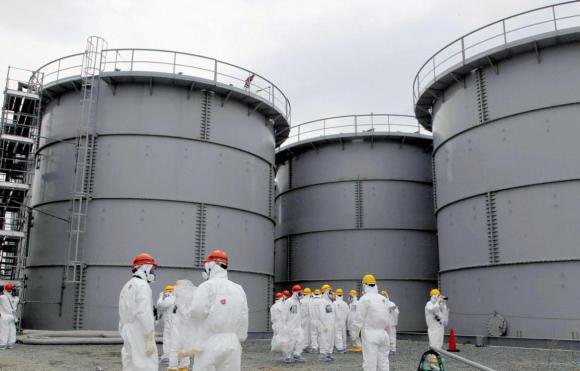
Storage tanks of contaminated water stand at Tepco’s Fukushima No. 1 nuclear power plant. Tepco estimates that at the current rate it will run out of tank space in 2020, and a decision must be made on what to do with the water well before then.
 
June 5, 2018
Virtually every news story about the Fukushima No. 1 nuclear power plant acknowledges the tremendous ongoing problem of contaminated water that is accumulating in approximately 850 large tanks on-site. There are about 850,000 tons of water in the tanks at present, from which all radionuclides of concern except tritium — radioactive hydrogen — have been effectively removed. More water accumulates each day, in quantities roughly equal to the amount of groundwater that seeps into the damaged reactor buildings. Tokyo Electric Power Company Holdings estimates that at the current rate it will run out of tank space in 2020. Something needs to be done well before then, and the decision should address the concerns of all stakeholders, public and private.
The Ministry of Economy, Trade and Industry recently announced that meetings will be held where the public can hear explanations of proposed solutions and comment on them. Unless they think seriously about how to prevent this from becoming yet another clumsy exercise in DAD — “decide, announce, defend” — these meetings will be a mere fig leaf that will allow the government to claim it has adequately consulted the public.
As it is, the government’s decision-making process itself appears to be dysfunctional, and we have reason to be skeptical that it will be possible to avert very bad domestic and international public reactions if and when this water is disposed of.
The Subcommittee on Handling Water Treated by the Polynuclide Removal Facility is one of several Japanese government committees organized by METI tasked with formulating a response to the problem of the radioactive water. The planned public sessions were announced at its eighth meeting, on May 18.
This is a step in the right direction, and is long overdue. Nevertheless it may well be a case of “too little, too late.” The decision, delayed for years, will almost certainly be to dilute the water and release it to the ocean, and meanwhile, public opposition to this idea has hardened. The issue hinges on both scientific understanding and public perception.
What is tritium?
Tritium, scientifically indicated as “H3,” occurs both naturally and through man-made processes. Tritiated water (HTO), like that accumulating at the No. 1 nuclear power plant, behaves almost identically to normal water, and can be taken up easily by living organisms. The scientific consensus is that the health risks from exposure to tritium are several orders of magnitude lower than those from radionuclides like cesium, radioactive iodine or strontium. This is reflected in allowable limits in drinking water, which are generally tens or hundreds of times higher for tritium than for these others, ranging from 100 Bq/L in the European Union to 76,103 Bq/L in Australia. Nevertheless, the scientific community acknowledges some uncertainty about these risks.
Leaving the tritiated water in the tanks at No. 1 is the riskiest thing to do, due to the possibility of ruptures or uncontrolled leaks. As far back as 2014, the International Atomic Energy Agency recommended a controlled release to the ocean as the safest course of action, and Japan’s Nuclear Regulation Agency concurred.
A Tritiated Water Task Force convened by METI in 2013 examined five options in detail, and in 2016 concluded that for reasons of cost, available technology, time required, and safety, diluting and discharging it to the ocean was the least objectionable approach. The task force presented relevant monitoring data from decades of similar releases of tritium to the ocean from nuclear facilities in Japan and abroad, noting that the quantities from the No. 1 plant would be many times smaller and the tritium levels in ocean life too low to be of real concern.
Tepco has made it clear that ocean release is its preference as well. The company says that it strives to meet government recommendations, and does not intend to act without government support, but is ultimately responsible for any actual decision.
In July 2017 Takashi Kawamura, chairman of Tepco, said publicly that the decision to release the tritiated water had already been made, and the public outcry was immediate, particularly from Fukushima fishermen who expected to be consulted. The company quickly backpedaled.
Constructing the dilution facilities and pipelines that an ocean release would require is expected to require almost a year after any decision is made. At the current rate, that means the “go” signal must be given by early 2019 at the latest. That no decision has been officially announced to date can be ascribed to the very reasonable expectation of a strong public backlash, and, I believe, the reluctance of any responsible government officials to be associated with such an unpopular decision.
Fishermen’s opposition
The strongest and most meaningful opposition comes from Fukushima’s fisheries cooperatives, which have suffered tremendously due to the 2011 disaster. Representatives of Tepco, METI and other government bodies that share the mandate for dealing with the contaminated water invariably stress how important it is to them to reach understanding and agreement with all stakeholders, the fisheries cooperatives in particular.
Takahiro Kimoto, a general manager in Tepco’s nuclear power division, explained, “The policies can’t and shouldn’t be determined by Tepco alone, but we continue discussing the available options with government and other stakeholders. These discussions are taking a long time, but we consider them essential.” Put bluntly, Tepco knows they will be pilloried no matter what, and seeks broad support.
Shuji Okuda, METI’s director for decommissioning and contaminated water management, stressed that no decision has yet been made regarding which of the five options for dealing with the tritiated water will be chosen. “It will be a decision of the Japanese government as a whole,” Okuda explains, “not one made by any single agency. And it will be based on ample discussions with all stakeholders.”
Although Tepco and METI indicate that they are prepared to accommodate the fishermen’s conditions regarding the release, the cooperatives are adamant. “We are totally opposed to the planned release,” explained Takaaki Sawada of the Iwaki Office of the Fukushima Prefectural Federation of Fisheries Cooperative Associations, known as FS Gyoren. “It’s not a question of money or compensation,” he continued, “nor of any level of concentration we might accept as safe. We do not think it should be our responsibility to decide whether or not to release it. We think it will be impossible for the public in general to understand why tritium is considered low risk,” he continued, “and expect there will be a large new backlash against Fukushima marine products no matter how scientifically it is explained.”
Much hinges on public understanding of the risks, and therefore on transparency. Robust and effective two-way communication is essential, not to persuade the public that official plans are acceptable, but to better equip them to participate in the debate in an informed way, and to push back where they feel it is necessary. It is the public’s right to demand this kind of inclusion.
Communication should be aimed not only at fishermen and Japanese consumers, but internationally to all who are concerned about what the effect on the Pacific will be. The government has been sitting on the Task Force recommendations for almost two years without taking action. That it has taken this long to even begin planning to engage the public on this issue is, again, because no one in a governmental decision-making position wants to be politically associated with the consequences of a tritium release.
According to METI, the content, location and timing of the public sessions will be discussed at the next subcommitee meeting in July. People unable to attend in person will be able to submit comments and questions via email. Though hastily planned events could possibly be held before the end of this year, it seems likely they will need to happen in 2019, bumping up against the decision deadline.
While some fishermen are likely to attend, the cooperatives themselves will likely refuse. This situation requires the actual involvement of citizens in the decision making process, but it is difficult to find instances of that actually happening in Fukushima since the accident in 2011. At the central government level in particular, it has almost always been DAD.
Regardless of whether one trusts scientific opinion or Tepco, the tritiated water cannot be left in the tanks at No. 1 indefinitely, and releasing it to the ocean, though not without risk, is the least objectionable of the available options. As it stands now, given the depth of public mistrust and the nature of misinformation in our current era, the situation is ripe for the maximum misunderstanding and negative social impact to occur if and when this tritiated water is finally released.
Unfortunately, I think we should be prepared for things to be done the “Kasumigaseki way”: for the decision to be avoided until the last possible moment, and for government officials to claim then that an unavoidable emergency had arisen and it couldn’t be helped.
There will be negative social impact no matter what, but unless responsible government officials step up soon, own the decision and ensure that public engagement is genuine, broad, and effective, these negative impacts will be unnecessarily magnified.
Azby Brown is the lead researcher for Safecast, a volunteer-based NPO that conducts open, independent, citizen-run monitoring of radiation and other environmental hazards worldwide. http://www.safecast.org

June 7, 2018 Posted by | Fukushima continuing | , , | Leave a comment

Hong Kong should ease post-Fukushima ban on some Japanese food imports, government says

05 June, 2018
Centre for Food Safety plans to resume imports of fruit, vegetables, milk and dairy from four prefectures neighbouring stricken area, as long as they pass radiation tests
ghghl.jpg
Hong Kong should relax a ban on food imported from Japan which has been in place since the Fukushima nuclear disaster, the government proposed on Tuesday, saying it considered the health risk low.
The suggestion of relaxing the seven-year-old ban was based on a scientific assessment of food safety, said a government source, who said trade was not the main concern.
In the wake of the 2011 earthquake and nuclear meltdown in Fukushima, Hong Kong banned the import of fresh produce and milk from the prefecture and four nearby prefectures – Chiba, Ibaraki, Tochigi, and Gunma – while also testing fresh produce from the rest of the country for radiation. Hong Kong has been the top market for Japanese food for more than a decade, taking 26 per cent of the country’s food exports in 2016, according to Japan’s agriculture ministry.
But the government plans to resume imports of fruit, vegetables, milk and dairy from the four neighbouring prefectures, as long as they pass radiation tests. The ban on produce from Fukushima should stay in place “with a view to addressing the concerns of the public”, said the proposal submitted to the Legislative Council on Tuesday by the Centre for Food Safety, under the Food and Health Bureau.
“The proposed amendment is made based on the scientific data on food safety,” a government source said. “Trade consideration with Japan is not a concern that should came before food safety.”
But he added that Hong Kong should also consider measures taken elsewhere when issuing an import ban, as the city is a member of the World Trade Organisation. Many countries which had similar bans – including Canada, Australia, the United States and Singapore – had lifted them totally or partially in recent years, the report said.
dfghj.jpg
The proposal will be discussed by a Legco panel on June 12, and can be gazetted and implement once it gets lawmakers’ approval.
But legislator Helena Wong Pik-wan disagreed that the ban should be relaxed at all.
“There is no food shortage in Hong Kong and there is no urgency to relax the ban,” she said. “The government should have public health as the foremost consideration, instead of putting it at unnecessary risk.”
She expressed worries that contamination in Japan is not over, as it can take up to 30 years for radiation to wear off. She pointed out that mainland China, Taiwan and South Korea had maintained their bans.
Since the ban came in, the centre has tested 490,000 food samples from Japan and found low radiation levels in 46. The most recent tainted sample was found in September 2016.
Japanese health officials said more than 2 million food samples had been collected in the country for radiation testing by early March, and most of the 1,200 found with unacceptable radiation levels were taken before March 2013, nearly 60 per cent of them from Fukushima.
Secretary for Food and Health Professor Sophia Chan Siu-chee said on Tuesday that local authorities would implement two levels of gatekeeping to ensure the safety of food from the radiation-affected prefectures once imports resume.
Food products from the four prefectures would have to meet Japanese requirements to get export certificates, which Hong Kong officials would check. The centre would then scan all Japanese food products, not just those from the affected prefectures, for radiation.
In March, Chief Executive Carrie Lam Cheng Yuet-ngor met Japanese foreign minister Taro Kono to discuss the removal of restrictions, which Lam rejected, citing safety concerns. But last month Japanese news agency Kyodo reported that Lam had promised she was exploring measures to scrap the restrictions.

June 7, 2018 Posted by | Fukushima 2018 | , , | Leave a comment

TEPCO Opens Up Space in Common Pool at Fukushima Daiichi to Receive Spent Fuel from Unit 3

X6atUnit5-e1528099313801.jpg
“X-6 penetration” at Unit 5
4 June, 2018
On May 31, the Tokyo Electric Power Co. (TEPCO) released a progress report on the decommissioning at the Fukushima Daiichi Nuclear Power Plants.
Four days earlier, on May 27, the power company began transferring some of the spent fuel currently stored in a common pool to a temporary facility at the site, for storage in dry casks, to create enough space in the pool to store spent fuel taken from the Unit 3 spent fuel pool when that is eventually removed.
At the temporary storage facility, TEPCO will pack the spent fuel in dry casks providing shielding and heat removal (with natural air circulation outside the casks) and store it under stable conditions.
By August, 483 spent fuel assemblies from the common pool will have been transferred to the facility using seven transport and storage casks, in anticipation of the arrival of 566 fuel assemblies (including unused 52 assemblies) from Unit 3.
On May 11, a problem was found at Unit 3—where a fuel handling machine has been in trial operation since March—inside a control panel for a crane used for moving fuel transportation containers to the ground. TEPCO nevertheless aims to begin removing fuel from the spent fuel pool around mid-FY18, as initially planned.
TEPCO will determine a method for removing fuel debris from the first unit by FY19 (April 2019 to March 2020), and the status of that effort was also included in the status report on May 31. The approach is to proceed after heightened understanding is made of internal conditions, the nature of the debris, and the effects when removed.
As that has not yet been fully completed, though, the effort will proceed gradually and incrementally, as follows: first investigating the interiors of the primary containment vessels (PCVs) through sampling, then carrying out small-scale removal of debris, followed by large-scale removal.
As for small-scale fuel removal, one promising method seems to be using a “X-6 penetration” rail to access the interiors of the PCVs (found in all the units) from the side, in order to exchange the control rod drive mechanism (CRDM). That method is already being used for inserting investigation devices into PCVs.

June 7, 2018 Posted by | Fukushima 2018 | , , | Leave a comment

Giving new status to 30-km zones within nuclear plants

shimane.jpg
The No. 3 reactor of the Shimane nuclear power plant stands in the foreground, with the No. 1 and No. 2 reactors in the background.
June 2, 2018
The 2011 Fukushima nuclear disaster provided graphic evidence of the lasting and far-reaching damage that can result when this technology goes askew.
Electric utilities that operate nuclear power plants have a duty to respond with utmost sincerity to safety concerns among local governments and communities, especially cities and towns within 30-kilometer emergency planning zones. Utilities should treat local governments within the zones, which are required to develop emergency evacuation plans under stringent new regulations introduced after the March 2011 emergency, equally as the governments in nuclear host communities.
Chugoku Electric Power Co. recently took the first step toward the start of operations of the Shimane nuclear power plant’s new reactor, whose construction was halted following the Fukushima catastrophe.
The utility, based in Hiroshima, asked the Shimane prefectural government and the Matsue city government to approve its application to the Nuclear Regulation Authority (NRA) for safety screening of the No. 3 reactor under the new regulatory standards.
The No. 3 reactor was close to completion when the Fukushima No. 1 nuclear power plant went in a triple meltdown. Work to install the necessary safety measures is expected to finish in the first half of 2019.
This facility could become the first new nuclear reactor in Japan to start operation after the Fukushima disaster, an event that triggered tighter safety standards for nuclear plants.
The new reactor, if cleared for operation, will be in service until around 2060 under the principle that imposes a 40-year limit on the operational life of a reactor.
The reactor is part of a complex that has the distinction of being the only nuclear power plant located in the capital of a prefecture.
Within 30 km of the plant lie three other cities in Shimane as well as the cities of Sakaiminato and Yonago in neighboring Tottori Prefecture. Some 470,000 people live in the 30-km zone.
In 2011, authorities in Tottori Prefecture and the two cities signed an agreement with Chugoku Electric Power that commits the utility to put top priority on the safety of local residents in operating the plant.
These local governments have been demanding that the utility apply the procedures for obtaining consent for reactor operations from the Shimane and Matsue governments also to the local governments in Tottori Prefecture.
In April this year, the prefectural and municipal governments in Tottori formed a joint task force to assess the safety of the new reactor with the help of the utility.
Chugoku Electric Power’s move to seek the consent of only the Shimane prefectural government and the Matsue city government to start the process of bringing the reactor online has caused “considerable confusion” among the local communities in Tottori Prefecture, according to Tottori Governor Shinji Hirai.
“I feel bewildered” at the way the utility is going ahead with the plan, Hirai said with obvious and justifiable discontent.
Safety agreements between nuclear plant operators and local governments generally require utilities to secure the advance consent of the local governments when new reactors are built or important changes are made to existing facilities. In most cases, however, the scope of the local governments covered is limited to the prefectures and municipalities where the plants are located.
But an agreement was reached this spring between Japan Atomic Power Co. (JAPC), the operator of the Tokai No. 2 nuclear power plant in Ibaraki Prefecture, and five surrounding municipalities that commits JAPC to seek approval from these municipalities within the 30-km zone before bringing its idled reactor back on stream. They include the city of Mito, as well as Tokai village, which hosts the nuclear plant, and the prefecture.
Some local governments around the Shimane nuclear plant are calling on Chugoku Electric Power to hold advance talks over the operation of the new reactor with all the six cities within the 30-km zone. The utility should treat all the local governments within the emergency planning zone like host communities.
When Kyushu Electric Power Co. moved to restart the No. 3 reactor at its Genkai nuclear power plant in Saga Prefecture, four of the eight municipalities in three prefectures located within the 30-km zone were up in arms over the plan. But the procedures for the restart went ahead after the town of Genkai, which hosts the plant, and Saga Prefecture gave their consent.
Shimane Governor Zenbe Mizoguchi has indicated his intention to listen to the opinions of all the surrounding local governments, including those in Tottori Prefecture. The Shimane and Matsue governments plan to propose this approach to their respective local assemblies. The case of the Genkai plant should serve as a cautionary tale for these local governments.

June 5, 2018 Posted by | Japan | , | Leave a comment

Fukushima tells world radiation is down, exports up after nuclear crisis

Japanese “sake” from Fukushima, anyone?
The governor of Fukushima was in NYC promoting their food products.
Promoting Fukushima foods is national policy of Japan. No other prefecture in Japan gets this kind of support. Here is a page from the official government’s site:

Fukushima Foods: Safe and Delicious: Six years have passed since the 2011 Great East Japan Earthquake, and the prefecture of Fukushima is making steady progress in its reconstruction and revitalization. Fukushima has long been famous for its agriculture, known since old times as one of Japan’s premier rice-growing regions, and also earning the nickname “The Fruit Kingdom.” Fukushima’s agriculture suffered drastically after the earthquake and the nuclear power accident that followed, but as a result of thorough safety measures implemented through national efforts, foods produced in Fukushima have been recognized as safe by the FAO (Food and Agriculture Organization of the United Nations), as well as by many individual countries, and the prefecture’s exports are increasing. Japan hopes that more and more people will enjoy the safe and delicious foods from Fukushima in the years to come.


n-fukushima-a-20180601-870x674.jpg
Fukushima Gov. Masao Uchibori speaks about the current conditions of Fukushima Prefecture on Wednesday at One World Trade Center in New York.
May 31, 2018
NEW YORK – Fukushima Gov. Masao Uchibori on Wednesday told the international community that the nuclear-crisis-hit prefecture is mostly decontaminated and that its food exports are picking up.
“Our consistent efforts over the seven years have borne fruit and recovery is underway,” Uchibori said at a news conference at One World Trade Center in New York, a site symbolizing the U.S. recovery from the Sept. 11, 2001, terror attacks.
He said the prefecture has completed decontamination work for 97 percent of its land after a magnitude-9.0 earthquake and tsunami on March 11, 2011, triggered reactor meltdowns at the Fukushima No. 1 nuclear power plant. The governor also said the size of evacuation zones has dropped to 3 percent of prefectural land from the peak of 12 percent.
“The radiation levels of the cities within the prefecture are now the same as any other major city in the world,” he said.
Although a stigma is still attached to Fukushima food products, exports in the year through this March stood at about 210 tons, eclipsing the pre-crisis level of roughly 150 tons in fiscal 2010, according to Uchibori.
Rice and peaches are being exported to countries including Malaysia and Vietnam and a store dealing in its local sake is opening in New York.
As of May 17, about 12,000 Fukushima residents were still under evacuation, according to the Reconstruction Agency. The decommissioning of the crippled nuclear power plant of Tokyo Electric Power Company Holdings Inc. is expected to take 30 to 40 years.

June 5, 2018 Posted by | Fukushima 2018 | , , , , | Leave a comment

TEPCO prepares to remove fuel from damaged reactor


May 28, 2018
The operator of the damaged Fukushima Daiichi nuclear power plant has started laying the groundwork to retrieve fuel from one of the plant’s reactor buildings. It’s a crucial step toward scrapping the complex.
 
Tokyo Electric Power Company began the work on Monday to move 615 fuel rod units from a storage pool on the top floor of the No. 2 reactor to a more secure location.
 
The No. 2 reactor is one of 3 at the plant that melted down in the 2011 accident. Radiation levels inside the reactor building remain high.
 
TEPCO will open a hole measuring 5 by 7 meters in the building’s wall and send a robot through it to measure radiation levels inside.
 
A section of the wall will be divided into 29 blocks, each with a handle to facilitate its removal.
 
From a control room some distance from the reactor building, TEPCO officials will remotely operate a machine to remove the blocks.
 
The work is expected to continue until mid-June.
 
The plant operator will measure radiation levels before deciding how to retrieve the fuel rods. The company plans to start retrieving the fuel in fiscal 2023.
 
TEPCO official Hiroshi Noda says that although the decommissioning work for the No. 2 reactor has just started, it’s a major step forward.
 
He says the company will make sure that the work will have no impact on the environment.


June 5, 2018 Posted by | Fukushima 2018 | , | Leave a comment

Japan’s divestment campaign pits Buddhist priest against banks

May.27.2018
In the wake of Fukushima, Tomonobu Narita is at the forefront of a movement to withdraw money from banks that back environmentally harmful energy projects.
YOKOHAMA, Japan — Buddhist priest Tomonobu Narita admits he hadn’t thought much about energy policy until the Fukushima nuclear meltdown forced tens of thousands of people to flee their homes in 2011.
Now he’s at the forefront of a budding movement in Japan to withdraw money from banks that provide finance for environmentally harmful energy projects.
“I was taught about the idea of how changing your bank account can contribute to bettering the environment, and that was an enlightenment for me,” said Narita, the third-generation head priest of a temple in Yokohama, south of Tokyo.
The campaign to “divest” from fossil fuels such as coal has gained traction in the United States, Europe and Australia in recent years, but environmental activists are now targeting Japan. They see the country as crucial to the success of international efforts to address climate change.
On top of fossil fuels — which release greenhouse gases into the atmosphere when burned, contributing to global warming — campaigners here are working to oppose nuclear power.
While advocates of nuclear power say it can provide carbon emissions-free energy, critics say the overall dangers are too high.
Residents are still barred from returning to some of the towns closest to the Fukushima Daiichi nuclear power station, where three reactor meltdowns occurred after the March 2011 earthquake and tsunami disaster.
Most of the country’s nuclear plants remain offline amid safety checks and legal challenges.
Driven by concern about nuclear power, Narita recently shifted some of his temple’s funds to a financial firm that is rated as one of Japan’s 45 “earth-friendly” banks. This means the bank is not known to provide finance for the fossil fuel and nuclear sectors.
Narita told NBC News he planned to explain the decision to his counterparts in other temples, believing that “we need to be more mindful of what we’re blessed with.”
180523-japan-temple-investment-mn-1440_a8935ab6c528ec40ebce51efb73439e5.fit-560w.jpg
Tomonobu Narita is the head priest of Totsuka Zenryo Temple in Yokohama, Japan.
 
“That small action when combined [with the actions of others] leads to a bigger effect, so I hope for divestment to have that kind of spread in Japan,” he said during an interview at Totsuka Zenryo Temple.
In the next room, about 100 people gathered to hear from the veteran American climate campaigner Bill McKibben, who co-founded the global divestment and climate action movement known as 350.org and has organized rallies around the world.
McKibben described being jolted into action by a visit to Bangladesh more than a decade ago when he saw people die from dengue — a mosquito-borne viral illness that is projected to worsen in that country as the globe warms. McKibben said he viewed it as “very unfair” that Bangladesh would bear major impacts from climate change when it had not been the source of most of the world’s greenhouse gas emissions.
“They’re suffering from a problem that they didn’t cause, a problem that we caused,” McKibben said. “And so, when I went back to the United States, I decided that the time had come to fight — in a good, nonviolent, Buddhist peaceful way,” he quipped to the temple crowd.
Now, McKibben said, it was important for the divestment movement to spread to Japan “because Japanese banks are now the biggest lenders of money for coal projects around the world.”
Japan’s Mizuho provided an estimated $11.5 billion in loans to the world’s top coal-plant developers from January 2014 to September 2017, according to analysis published by BankTrack, a pro-renewable energy network. That led to Mizuho being assessed as the most prolific lender in that category, followed by another Japanese financial group, MUFG, in second place, while Sumitomo Mitsui Banking Corporation came in at fifth.
These banks have signaled that they are weighing their future lending criteria.
Mizuho said on its website that it was currently discussing the “best due diligence methods” for reducing environmental and social risks, while MUFG told investors it would strengthen its focus on financing renewable energy.
A spokesperson for Sumitomo Mitsui told NBC News: “Coal-fired thermal power generation is considered as a relatively low-cost power generation method; however, since we consider that the impact on climate change is significant, we are considering [reviewing] our current credit policy.”
Still, the number of ordinary people in Japan actively divesting from fossil fuels remains small: Just 146 individuals have so far reported divestments worth 568.2 million yen ($5.1 million) since the campaign launched late last year, according to 350.org Japan.
Takejiro Sueyoshi, a former senior banking executive who is now a special adviser to the United Nations Environment Program Finance Initiative, believes it will require strong government leadership for banks to take a more assertive step toward renewables.
“Many people are very well aware of this matter, but what they are saying is: ‘Personally I understand that, but under the current situation no Japanese government [has set] any new direction, new policy, new strategy.’”
This was because the Japanese business culture tended to be “government-oriented,” he explained. “When the Japanese central government says ‘do this,’ they follow. And if the Japanese central government does not say anything about something, no institutions or companies will [act].”
Some senior government figures, at least, seem to be paying attention. The foreign minister, Taro Kono, recently blasted his country’s lackluster embrace of renewable sources like wind and solar as “lamentable.”
Japan’s target for renewables to make up 22 percent to 24 percent of its overall energy mix by 2030 is low, Kono said in a speech in January. He pointed out that such technology already accounts for about a quarter of the total global energy mix, and there had been a “dramatic decrease” in the price of renewables.
“We have prioritized keeping the status quo for fear of change,” said Kono, whose climate advisory panel warned the following month that Japan was facing increasing scrutiny from other countries about its plans to build dozens of new coal-fired power plants.
As the government and experts continue to debate the best way forward in terms of policy, campaigners will step up their efforts to build community momentum for change.
Narita, the Buddhist priest, said he had not sought media attention for his decision to divest but simply wanted to do his part “to contribute to society.” The action is grounded in his beliefs.
“Right now the greenery that we have, the earth, the soil — everything is a product of the things that people who have come before us have left behind, so we can’t just treat those things carelessly,” Narita said.

June 5, 2018 Posted by | Japan | , , | Leave a comment

NHK’s new documentary, Meltdown: Cooling Water Crisis provides new insight into a series of less known events in the Fukushima disaster.

June 5, 2018 Posted by | Fukushima 2018 | , , | Leave a comment

Novel Method of Quantifying Radioactive Cesium-Rich Microparticles (CsMPs) in the Environment from the Fukushima Daiichi Nuclear Power Plant

ghghkj.jpg
 
Novel Method of Quantifying Radioactive Cesium-Rich Microparticles (CsMPs) in the Environment from the Fukushima Daiichi Nuclear Power Plant” has been published in the journal of Environmental Science:
Highly radioactive cesium-rich microparticles (CsMPs) were released from the Fukushima Daiichi nuclear power plant (FDNPP) to the surrounding environment at an early stage of the nuclear disaster in March of 2011; however, the quantity of released CsMPs remains undetermined. Here, we report a novel method to quantify the number of CsMPs in surface soils at or around Fukushima and the fraction of radioactivity they contribute, which we call “quantification of CsMPs” (QCP) and is based on autoradiography. Here, photostimulated luminescence (PSL) is linearly correlated to the radioactivity of various microparticles, with a regression coefficient of 0.0523 becquerel/PSL/h (Bq/PSL/h). In soil collected from Nagadoro, Fukushima, Japan, CsMPs were detected in soil sieved with a 114 μm mesh. There was no overlap between the radioactivities of CsMPs and clay particles adsorbing Cs. Based on the distribution of radioactivity of CsMPs, the threshold radioactivity of CsMPs in the size fraction of <114 μm was determined to be 0.06 Bq. Based on this method, the number and radioactivity fraction of CsMPs in four surface soils collected from the vicinity of the FDNPP were determined to be 48–318 particles per gram and 8.53–31.8%, respectively. The QCP method is applicable to soils with a total radioactivity as high as ∼106 Bq/kg. This novel method is critically important and can be used to quantitatively understand the distribution and migration of the highly radioactive CsMPs in near-surface environments surrounding Fukushima.

May 27, 2018 Posted by | Fukushima 2018 | , , , | Leave a comment

Fukushima-Daiichi radioactive particle release was significant says new research

1920_fukushima-crop.jpg
24 May 2018
Scientists say there was a significant release of radioactive particles during the Fukushima-Daiichi nuclear accident.
The researchers identified the contamination using a new method and say if the particles are inhaled they could pose long-term health risks to humans.
The new method allows scientists to quickly count the number of caesium-rich micro-particles in Fukushima soils and quantify the amount of radioactivity associated with these particles.
The research, which was carried out by scientists from Kyushu University, Japan, and The University of Manchester, UK, was published in Environmental Science and Technology.
In the immediate aftermath of the Fukushima Daiichi nuclear accident, it was thought that only volatile, gaseous radionuclides, such as caesium and iodine, were released from the damaged reactors. However, in recent years it has become apparent that small radioactive particles, termed caesium-rich micro-particles, were also released. Scientists have shown that these particles are mainly made of glass, and that they contain significant amounts of radioactive caesium, as well as smaller amounts of other radioisotopes, such as uranium and technetium.
The abundance of these micro-particles in Japanese soils and sediments, and their environmental impact is poorly understood. But the particles are very small and do not dissolve easily, meaning they could pose long-term health risks to humans if inhaled.
Therefore, scientists need to understand how many of the micro-particles are present in Fukushima soils and how much of the soil radioactivity can be attributed to the particles. Until recently, these measurements have proven challenging.
The new method makes use of a technique that is readily available in most Radiochemistry Laboratories called Autoradiography. In the method, an imaging plate is placed over contaminated soil samples covered with a plastic wrap, and the radioactive decay from the soil is recorded as an image on the plate. The image from plate is then read onto a computer.
“We now need to push forward and better understand if caesium micro-particles are abundant throughout not only the exclusion zone, but also elsewhere in the Fukushima prefecture; then we can start to gauge their impact”. 
Dr Gareth Law
The scientists say radioactive decay from the caesium-rich micro particles can be differentiated from other forms of caesium contamination in the soil.
The scientists tested the new method on rice paddy soil samples retrieved from different locations within the Fukushima prefecture. The samples were taken close to (4 km) and far away (40 km) from the damaged nuclear reactors. The new method found caesium-rich micro-particles in all of the samples and showed that the amount of caesium associated with the micro-particles in the soil was much larger than expected.
Dr Satoshi Utsunomiya, Associate Professor at Kyushu University, Japan, and the lead author of the study says “when we first started to find caesium-rich micro-particles in Fukushima soil samples, we thought they would turn out to be relatively rare. Now, using this method, we find there are lots of caesium-rich microparticles in exclusion zone soils and also in the soils collected from outside of the exclusion zone”.
Dr Gareth Law, Senior Lecturer in Analytical Radiochemistry at the University of Manchester and an author on the paper, adds: “Our research indicates that significant amounts of caesium were released from the Fukushima Daiichi reactors in particle form.
“This particle form of caesium behaves differently to the other, more soluble forms of caesium in the environment. We now need to push forward and better understand if caesium micro-particles are abundant throughout not only the exclusion zone, but also elsewhere in the Fukushima prefecture; then we can start to gauge their impact”.
The new method can be easily used by other research teams investigating the environmental impact of the Fukushima Daiichi accident.
Dr Utsunomiya adds: “we hope that our method will allow scientists to quickly measure the abundance of caesium-rich micro-particles at other locations and estimate the amount of caesium radioactivity associated with the particles. This information can then inform cost effective, safe management and clean-up of soils contaminated by the nuclear accident”.
 
The paper, ‘Novel Method of Quantifying Radioactive Cesium-Rich Microparticles (CsMPs) in the Environment from the Fukushima Daiichi Nuclear Power Plant’ has been published in the journal of Environmental Science – DOI:10.1021/acs.est.7b06693
Energy is one of The University of Manchester’s research beacons – examples of pioneering discoveries, interdisciplinary collaboration and cross-sector partnerships that are tackling some of the biggest questions facing the planet. #ResearchBeacons

May 27, 2018 Posted by | Fukushima 2018 | , , , | Leave a comment

Nuclear issue again takes center stage in Niigata election

gjhmm.jpg
The three independent candidates for Niigata governor are, from left: Chikako Ikeda, Hideyo Hanazumi and Satoshi Annaka.
 
May 25, 2018
NIIGATA–The election for a new governor of Niigata Prefecture was triggered by a sex scandal, but the key issue facing voters is where the candidates stand on restarting the Kashiwazaki-Kariwa nuclear power plant, one of the world’s biggest nuclear facilities.
Campaigning officially kicked off May 24.
The outcome of the June 10 vote could have a bearing on the Abe administration’s moves to bring more nuclear plants back online.
Although the candidates are running as independents, two are supported by political parties.
In early speeches, they all outlined their position on the nuclear plant operated by Tokyo Electric Power Co., but residents are calling on them to be less cautious and state where they truly stand.
“Many people are still suffering (because of the Fukushima nuclear disaster), and there are still many people living as evacuees,” said a female resident, 66. “Some kids have even been bullied. So I really want the candidates to state clearly that Niigata doesn’t need a nuclear plant anymore.”
On the other hand, a 70-year-old female resident argued that local people “cannot flatly oppose the restart of the nuclear plant because of the impact it will have on economy.”
For this reason, she said, “I cannot easily say I am against it.”
The election is expected to come down to a battle between Hideyo Hanazumi, 60, a former vice commandant of the Japan Coast Guard, and Chikako Ikeda, 57, a former member of the prefectural assembly.
Hanazumi is supported by the ruling coalition of the Liberal Democratic Party and Komeito, while Ikeda is backed by five opposition parties.
The other candidate is Satoshi Annaka, 40, a former member of the Gosen municipal assembly.
The election was triggered by the April resignation of Ryuichi Yoneyama after he admitted to paying women for sexual favors.
Yoneyama, 50, had taken a cautious stance on restarting the Kashiwazaki-Kariwa complex.
Hanazumi declared that he would take over an investigation started by Yoneyama to understand the fundamental cause of the triple meltdown at the Fukushima No. 1 nuclear plant in 2011, and reach his decision on the issue when the investigation ends in several years.
Ikeda stressed the significance of reviewing the Fukushima nuclear disaster, stating that continuing with the investigation is “the most basic of basics.”
She said the matter must be pursued rigorously.
Ikeda added that she would make a final decision on the restart issue after careful discussions with residents and other parties.
“I will seek a zero-nuclear Niigata Prefecture,” she said.

May 27, 2018 Posted by | Japan | , , | Leave a comment



