Japan recognizes first death related to Fukushima cleanup

September 7, 2018
The Japanese government has recognized the first death associated with cleanup work at the Fukushima Daiichi nuclear power plant after the tsunami disaster in March 2011, according to the Ministry of Health, Labour and Welfare.
The government designated the death of an unnamed man in his 50s as an “industrial accident.” The man, who had worked at the plant from 1980 to 2015, was diagnosed with lung cancer in February 2016.
After the 2011 tsunami that was triggered by a 9.0-magnitude earthquake, the man was assigned to “radiation control” work in which he was responsible for monitoring radiation levels and work time of cleanup crews.
The Ministry of Health, Labour and Welfare recognized his cancer and death as related to his work at the plant. A committee of experts determined his accumulated radiation level exceeded government standards.
Kunihiko Konagamitsu of the ministry said 17 workers had applied to be considered cases with an “industrial accident” designation, including three with leukemia and one with thyroid cancer. Two workers withdrew their requests, five were dismissed, and five are still under review.
The March 11, 2011, quake was the worst to hit Japan and lasted nearly six minutes. More than 20,000 people died or went missing in the earthquake and tsunami that followed.
Three reactors at the Fukushima Daiichi nuclear plant, operated by Tokyo Electric Power Co. or TEPCO, melted down in the nation’s worst nuclear disaster. The damaged reactors released radioactive materials into the air and more than 100,000 people were evacuated from the area. Forty-five thousand workers were involved in the ensuing cleanup.
In 2015 Japan health officials confirmed the first case of cancer linked to cleanup work at the plant.
In 2016, TEPCO said that decommissioning the reactor was like climbing a mountain and that it could take as long as 40 years.
Fukushima unrecognized threat of radioactive microparticles
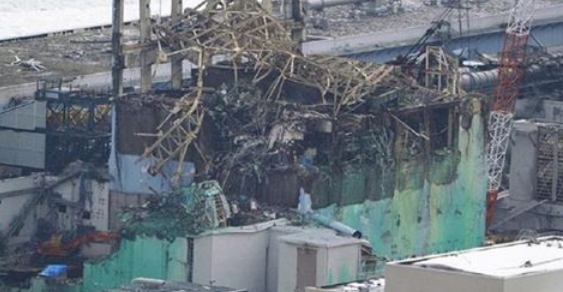
Fukushima Microparticles, An Unrecognized Threat
In the years since the initial disaster there have been disparities between the official radiation exposure estimates and the subsequent health problems in Japan. In some cases the estimates were based on faulty or limited early data. Where a better understanding of the exposure levels is known there still remained an anomaly in some of the health problems vs. the exposure dose. Rapid onset cancers also caused concern. The missing piece of the puzzle may be insoluble microparticles from the damaged reactors.
What are microparticles ?
These microscopic bits of fuel and other materials from the reactor meltdowns have been found around Japan since soon after the disaster. Citizens with hand held radiation meters first discovered them as highly radioactive fine black sands on roadsides and gutters. These substances eventually caught the attention of researchers who determined they are tiny fused particles of vaporized reactor fuel, meltdown byproducts, structural components of the reactors and sometimes concrete from the reactor containments. The Fukushima microparticles are similar to “fuel fleas” or “hot particles“. Hot particles or fuel fleas have been found at operating nuclear reactors that had damaged fuel assemblies. These fused particles found around Japan are different in that they are a byproduct of the reactor meltdowns.
The small size of these microparticles, smaller than 114 μm makes them an inhalation risk. Other studies have also confirmed the size is small enough to inhale. These microparticles have been found near Fukushima Daiichi, in the evacuation zone, outside of the evacuation zone and as far away as Tokyo.
How microparticles were created at Fukushima Daiichi
The heat of the meltdown processes reached temperatures high enough to cause the nuclear fuel and other materials to break down into small particles. The uranium in the fuel further oxidized and then volatilized once temperatures reached 1900K. As these materials broke down into nanoparticle sized components of the fuel melt process, this set up the conditions for them to condense. As these materials cooled the fused microparticles were created. Newer studies call these microparticles “CsMPs” (Cesium bearing micro particles). A 2018 study of how these microparticles were created gives a plain language explanation of the process. https://pubs.acs.org/doi/pdf/10.1021/acs.est.7b06309
“From these data, part of the process that the FDNPP fuels experienced during the meltdown can be summarized as the follows: Cooling waters vaporized, and the steam reacted with Zr and Fe forming their oxides after the loss of power to the cooling system. UO2, which is the main composition of fuels, partially oxidized and volatilized at greater than ∼1900 K. (9,10) The fuel assemblies melted unevenly with relatively less irradiated fuels being heated to a higher temperature as compared with the high burnup fuels and volatilized as evidenced by the 235U/238U isotopic ratio.(9) The fuel assembly collapsed and moved to the bottom of RPV. The temperature increased locally to at least greater than 2400 K based on the liquidus temperature of U−Zr oxides. Locally formed oxides melted to a heterogeneous composition, including a small amount of Fe oxides,(27) which then became a source of Fe−U single crystals and U−Zr-oxide eutectic phases. Specifically, euhedral magnetite nanocrystals encapsulated euhedral uraninite nanocrystals, which would have crystallized slowly at this stage. Liquid U−Zr-oxide nanodroplets were rapidly cooled and solidified to a cubic structure. When the molten fuels hit the concrete pedestal of the PCV, SiO gas was generated at the interfaces between the melted core and concrete and instantly condensed to form CsMPs.(5) The U−Zr-oxide nanoparticles or the magnetite nanocrystals subsequently formed aggregates with CsMPs. Finally, the reactor debris fragments were released to the environment along with CsMPs.”
The microparticles may have left the reactors through multiple processes including containment leaks, containment venting operations, hydrogen explosions and the later reduction and addition of water in an attempt to control the molten fuel.
New study looks at how to quantify these substances
A new study found a useful way to quantify how much of the contamination in an area is due to microparticles (hot particles). By using autoradiography they were able to confirm the number of microparticles in a sample. Soil samples near Fukushima Daiichi ranged from 48–318 microparticles per gram. The microparticles had high concentrations of radioactive cesiums, in the range of ∼1011 Bq/g. The study stresses the health concern that these microparticles pose due to cellular damage from the highly concentrated radiation level. The authors also mention the risk re-suspension of microparticles in the air poses to the public.
Not just cesiums
A separate study found strontium-90 in the Fukushima microparticles at a ratio similar to what has been found in contaminated soil samples. This study included the amount of hot particles (aka: microparticles) found in soil samples taken in the fallout zone in Fukushima north-west of the plant. They ranged from 0-18 microparticles per square meter of soil. This information confirms that strontium-90 is part of some of these fused microparticles. https://academic.oup.com/jrr/advance-article/doi/10.1093/jrr/rry063/5074550
An ongoing research project and paper by Marco Kaltofen documents these hot particles further. In the 2017 paper they found more than 300 such hot particles from Fukushima Daiichi in Japanese samples. A hot particle was found in a vacuum cleaner bag from Nagoya, over 300 km from the disaster site. https://www.sciencedirect.com/science/article/pii/S0048969717317953?via%3Dihub
“300 individual radioactively-hot particles were identified in samples from Japan; composed of 1% or more of the elements cesium, americium, radium, polonium, thorium, tellurium, or strontium. Some particles reached specific activities in the MBq μg− 1 level and higher.”
The study found americium 241 in two house dust samples from Tokyo and in one from Sendai, 100 km north of the disaster site. The sample set collected in 2016 showed a similar instance of highly radioactive hot particles compared to the 2011 samples. This appears to show that the threat from these reactor ejected hot particles has not gone away. A majority of the collected samples were from locations declared decontaminated by the national government.
The above graph is from the 2017 Kaltofen paper. These represent the highest readings for cesium found in their microparticle samples. The highest in the graph is Namie black sand. These black sand substances found around Fukushima prefecture and as far south as Tokyo were discovered to be largely made up of ejected reactor materials based on multiple studies.
The 2018 study we cited earlier in this report to explain the microparticle creation process also confirms some of these microparticles also contain radioactive isotopes of uranium. This further confirms the creation of some of these microparticles from the fuel itself. Uranium poses a particular concern due to the extremely long half lives involved.
How these act differently in the environment
In the case of the microparticles that contained Strontium 90, the isotope would normally move with water in the environment. Due to the insolubility of the microparticles, the strontium 90 stays in the top soils. Studies on microparticles predominantly carrying radioactive cesiums showed that the radioactive substances did not migrate through the environment as expected.
Microparticles were found in road gutters, sediment that collected in parking lots, below downspouts and similar places where sediments could concentrate. These initial discoveries hint at how the microparticles could migrate through the environment. The findings of the 2017 Kaltofen study indicate that microparticles can persist years later, even in places that were decontaminated. This may be due to the natural processes that have caused many areas to recontaminate after being cleaned up. There has been no effort to clean up forest areas in Japan. Doing so was found to be extremely difficult. The forest runoff may be one method of recontamination.
The risk to humans and animals
The subject of hot particles and the risk that they might pose to human or animal health has been controversial in recent years. Some studies found increased risks, others claimed a lesser risk from these substances. One study we reviewed may have discovered the nuances of when these substances are more damaging.
Most studies on hot particles aimed to determine if they were more damaging than that of a uniform radiation exposure to the same body part. A 1988 study by Hoffman et. al. found that hot particle damage varied by the radiation level of the particle, distance to nearby cells and the movement of the particle within the tissue. A high radiation particle might kill all the nearby cells but cause transformation in cells further away. Those dead cells near the hot particle would stimulate the transformed cells to reproduce faster to replace the dead cells. https://academic.oup.com/rpd/article-abstract/22/3/149/161256
A hot particle of moderate radiation would cause more transformations than cell death of nearby cells. High radiation hot particles that moved around in the organ, in this case the lung, would cause the most transformations. These acted like multiple moderate radiation hot particles transforming cells as they moved around. Those transformations are what can turn into cancers. This study’s findings appear to explain the results found in other studies where fewer cancers were found than they expected in certain groups.
A veteran who was exposed during US atomic testing had experience over 300 basal cell carcinomas. The study concluded that the skin cancers in atomic veterans could be induced by their radiation exposure. Continued exposure to ultraviolet radiation then promoted those cancers.
Other studies found damage in animal models. A study of hot particles on pig skin showed roughly half of the exposures caused small skin lesions. Two in the higher exposure group caused infections, one of these resulted in a systemic infection. https://inis.iaea.org/collection/NCLCollectionStore/_Public/28/061/28061202.pdf
A mouse study where hot particles were implanted into the skin found increased cancers of the skin. https://www.tandfonline.com/doi/abs/10.1080/09553009314550501
Workers at Fukushima Daiichi in the group with some of the highest radiation exposures were discovered to have these insoluble microparticles lodged in their lungs. When the workers radiation levels didn’t decrease as expected, further tests were done. Scans found the bulk of the worker’s body contamination was in their lungs. The lung contamination persisted on subsequent scans. The looming concern is that these microparticles in the lungs can not be ejected by the body.
Risks have been known for decades
The US NRC issued an information notice related to a series of hot particle exposures at nuclear plants where workers were exposed beyond legal limits. https://www.nrc.gov/reading-rm/doc-collections/gen-comm/info-notices/1987/in87039.html
Damaged fuel was the source in all cases. Even improperly laundered protective clothing was found to be a risk factor. Contaminated clothing from one facility could make it through the laundry process with a hot particle undetected on bulk scans of finished laundry. This would then result in an exposure to a different worker at a different plant who donned the contaminated gear. The hot particles when in contact with skin can give a high dose rate. Plants with even small fuel assembly leaks saw significant increases in worker exposure levels.
“In addition to any increased risk of cancer, large doses to the skin from hot particles also may produce observable effects such as reddening, hardening, peeling, or ulceration of the skin immediately around the particle. “
These problems are thought to only occur in high dose exposures from hot particles. One worker in the review had an estimated 512 rem radiation exposure from a hot particle. Workers at US nuclear power plants are subjected to strict screening programs when they exit or return to work. This increases the chance of detecting and removing a hot particle before it can do more damage. This also lessens the potential for one to leave the plant site. The general public exposed to a nuclear plant disaster does not receive this level of scrutiny.
How this risk may have played out in Fukushima
Soon after the reactor explosions ripped through Fukushima Daiichi, people in the region began complaining of nosebleeds and flu like symptoms. These eventually began being reported as far south as Chiba and Tokyo. https://www.aljazeera.com/indepth/features/2011/08/201181665921711896.html
The government responded that these complaints were “hysteria” or people trying to scare others. These problems were so widespread and coming from diverse people it had seemed to be a significant sign in the events that unfolded.
On March 21, 2011 there was rain in Tokyo that may have washed out contamination still being ejected at the plant. Events at Daiichi between March 17-21 caused increased radiation releases.
In 2013 there was an unusual uptick in complaints about severe nosebleeds. This happened at the time typhoon Man-yi made landfall in Tokyo. The bulk of the people who responded to a survey by a foreign policy expert working in the office of a member of Japan’s Diet were from the Kanto region (Tokyo) where the typhoon made landfall.
Children in the Fukushima region that were found to have thyroid problems also complained of frequent nosebleeds and skin rashes. People have described unusual ongoing health problems such as this woman in Minami Soma near Fukushima Daiichi who had odd rashes, a rapid loss of teeth etc. Cattle housed 14 km from the disaster site have shown with white spots all over their hides, something previously seen after US nuclear tests. https://www.huffingtonpost.com/evaggelos-vallianatos/the-nuclear-meltdown-at-f_b_4209766.html
The USS Reagan was offshore of Fukushima Daiichi March 11 to 14th. Plume maps for iodine 131 (a gaseous release from the meltdowns) blew in the wind north and at times east out to sea during those dates. These same winds could have carried microparticles out to sea. A number of sailors on the Reagan and those working with the rescue helicopters have fallen ill. Eight have died since the disaster. This newer account of the events on the Reagan raise even more concerns about what happened to those trying to save people after the tsunami.
Namie Mayor, Tamotsu Baba resigned his office in June 2018 after a year of off and on hospitalization. He had been undergoing treatment for gastric cancer. He died a few weeks after resigning. His cancer may have predated the disaster, but in the last year his health drastically declined. Namie is in the area of some of the highest fallout from the disaster.
Fukushima plant manager Masao Yoshida died of esophageal cancer in 2013. TEPCO insisted his cancer was not related to the disaster due to the rapid onset. This is a common claim around cancers that could be tied to Fukushima, yet the number of cancers soon after the disaster has been hard to ignore.
As we neared completion of this report the labor ministry announced that the lung cancer death of a Fukushima Daiichi worker was tied to his work during the disaster. The worker was at the plant during the early months of the disaster and worked there until 2015. TEPCO didn’t give specifics of his work role, only mentioning he took radiation levels. TEPCO mentioned that the worker wore a “full face mask respirator” during his work. All of the workers at Daiichi wore the same after ordered to do so after meltdowns were underway. The worker was not among the highest exposure bracket so he may not have been receiving detailed health monitoring. Radiation exposure monitoring during the early months of the disaster was inconsistent and sometimes missed exposures. https://mainichi.jp/english/articles/20180905/p2a/00m/0na/004000c
What microparticles change about the disaster
Highly radioactive microparticles were released to the environment during the meltdowns, explosions and subsequent processes in units 1-3 at Fukushima Daiichi.
Microparticles have been found near the disaster site, in the evacuation zone, far outside of the evacuation zone and south into the Tokyo region. These substances persist in the environment and have been found in areas previously decontaminated.
These microparticles significantly change the exposure estimates for the general public. Individual exposures can not be accurately estimated by the use of generic environmental radiation levels as this does not account for the individual’s exposure to microparticles.
Microparticle exposure has multiple variables that create a unique level of risk to the exposed human or animal. They can in the right circumstances cause significant damage to nearby tissues, persist in the body, cause damage, initiate or promote a cancer.
Microparticle exposures may be the missing puzzle piece that explains a number of odd problems tied to the Fukushima disaster. Health problems that showed up soon after the disaster. Exposed populations with aggressive or sudden cancers and other serious health problems that can be created or exacerbated by radiation exposure.
Microparticles continue to pose a public health risk in some parts of Japan that experienced fallout and increased radiation levels due to the disaster.
What is tritium and why is its disposal difficult?
Another propaganda piece to justify Tepco and Japanese goverment’s decision to dump the 7 years plus accumulated radioactive water into the sea. Mind you in that water it is not only tritium but other types of harmful radionuclides are present.
Look how they phrased their B.S. :
1. “water containing tritium” used when talking about the treatment of contaminated water at the Fukushima No. 1 Nuclear Power Plant operated by the Tokyo Electric Power Co. (TEPCO).” Of course not mentioning the other contained radionuclides, lying by omission!!!
2. “Tritium emits beta radiation that has weak energy, and will mostly pass through the body if drank. Its effects on the human body are said to be minimal compared to radioactive cesium.” Said to be, does not mean it to be true!!!

In this July 17, 2018 file photo, tanks containing water contaminated with radioactive materials are seen on the grounds of the Fukushima No. 1 Nuclear Power Plant in Okuma, Fukushima Prefecture
September 6, 2018
The Mainichi Shimbun answers some common questions readers may have about the characteristics of tritium, and why it is hard to dispose of water containing the radioactive element.
Question: I heard the term “water containing tritium” used when talking about the treatment of contaminated water at the Fukushima No. 1 Nuclear Power Plant operated by the Tokyo Electric Power Co. (TEPCO).
Answer: It refers to treated water including tritium. The element cannot be removed using the current purification method used at the crippled nuclear power plant. The government and TEPCO are considering ways to dispose of the liquid, which is continuing to fill waste water tanks at the plant.
Q: What kind of substance is tritium?
A: Tritium is a radioactive isotope of hydrogen containing one proton and two neutrons while the ordinary hydrogen nucleus contains just one proton. It has a half-life of about 12.3 years, which is the time required to reduce half of its radioactivity.
Q: Is tritium found only in the treated water from the damaged nuclear plant?
A: Tritium can also develop when oxygen and nitrogen in the atmosphere react to cosmic neutrons. Around 70 quadrillion becquerels appear naturally per year, and around a total of 223 trillion becquerels are contained in Japan’s annual rainfall, according to data compiled by the Ministry of Economy, Trade and Industry (METI). Coolant in normal operating nuclear reactors also carries tritium. At the Fukushima No. 1 Nuclear Power Plant, tritium is generated in groundwater pouring into the buildings that house reactors, and in water used to cool melted fuel debris.
Q: Why is it difficult to dispose of tritium?
A: Other radioactive substances can be removed using specific disposal equipment for filtration and absorption to levels below the allowed ceiling. However, separation is very hard for water containing tritium because its characteristics, including the boiling temperature, are similar to those of normal water.
Q: What about the impact it will have on human health, as it is radioactive?
A: Tritium emits beta radiation that has weak energy, and will mostly pass through the body if drank. Its effects on the human body are said to be minimal compared to radioactive cesium. Nuclear power plants around the world are disposing water containing tritium according to regulations, in oceans and other places, once it has been diluted to a radiation level that falls below standard limits. According to METI, Japan released into oceans around 380 trillion becquerels of tritium per year on average for five years before the Fukushima nuclear disaster.
(Answers by Riki Iwama, Science & Environment News Department)
80% of local heads in nuke disaster areas say they can’t meet population goals: poll
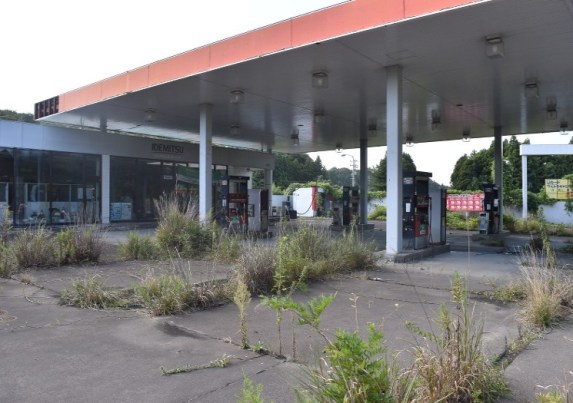
Weeds grow through the pavement at a derelict gas station in Tomioka, Fukushima Prefecture, in this Aug. 22, 2018
September 6, 2018
TOKYO — About 80 percent of 45 administrative district heads inside six municipalities in Fukushima Prefecture with areas rendered difficult to live because of the March 2011 nuclear accident said it is impossible for enough evacuated residents to return to meet population goals at “reconstruction hub areas” set by those local governments, a Mainichi Shimbun survey has found.
The heads said meeting those goals as part of recovery efforts is not possible because many of the evacuees now have new jobs and homes, and aging is advancing among them. The survey results placed a question mark on the feasibility of the local governments’ recovery plans.
The population goals for the northern Japan municipalities are set for around 2027 or 2028, five years after evacuation orders for difficult to return areas would presumably be lifted in 2022 or 2023. The numbers are calculated based on evacuees’ positive or undecided responses to opinion polls conducted by the municipalities.
The reconstruction hub areas receive national funding for decontamination and will have concentrated residential areas and infrastructure. They were incorporated in a special law for the reconstruction of Fukushima areas affected by the nuclear disaster, and the six municipalities received the central government’s approval for their reconstruction hub plans and their population goals by the spring of this year.
The population goals were 2,000 for the town of Futaba, 2,600 for the town of Okuma, 1,500 for the town of Namie, 1,600 for the town of Tomioka, 180 for the village of Iitate and 80 for the village of Katsurao.
The Mainichi survey of the administrative district heads was conducted by mail and other means from July through August of this year. Questionnaires were sent to 59 heads, and 45 of them responded. Of the total respondents, 37 said it is impossible to meet the goals, while six said it is conceivable, and the remaining two gave other answers.
When asked why they think that the population goals are not feasible, 16 said it is because evacuees established their base of living in new places, while 10 cited fear of radiation. Five said it is because the evacuees are aging.
A local head in Futaba said seven years of life in refuge was “too long,” while an official from Okuma pointed out that young people are especially worried about radiation. Another local leader from Okuma said aged people will not return unless medical and other facilities are available.
Local heads with positive responses said meeting the population goals depends on the influx of new residents who would move to their districts to carry out work decommissioning the Fukushima No. 1 Nuclear Power Plant operated by the Tokyo Electric Power Co. (TEPCO). The plant’s three reactors leaked massive amounts of radioactive materials after fuel rods in their cores melted because of cooling system shutdowns triggered by the massive earthquake and tsunami. The six municipalities around the plant became contaminated by the fallout.
After the nuclear accident, 11 cities, towns and villages came under government evacuation orders. Currently, entry is restricted at all of Futaba and Okuma, where the plant is located, as well as parts of Namie, Tomioka, Iitate and Katsurao. Even in areas where evacuation orders are lifted, populations are around 20 percent of the registered numbers of residents.
Associate professor Fuminori Tanba of Ritsumeikan University, a specialist on social welfare, explained that the population goals reflect the hopeful expectations of those municipalities counting on the inflow of decommission workers and researchers, and they are different from the perception of evacuees. “Town planning should be done by seeking the participation of returning evacuees, those going back and forth between their old and new homes, and new residents including plant workers,” said Tanba. “They should have plans suitable for returnees, and it is important to have plans going beyond municipal boundaries and assigning different roles to towns and villages involved.
(Japanese original by Toshiki Miyazaki and Keita Kishi, Fukushima Bureau)
All options need to be weighed for Fukushima plant tainted water
“A task force of the Ministry of Economy, Trade and Industry has considered five options, including release into the Pacific Ocean after dilution, injection into deep underground strata and release into the air after vaporization. The group has concluded that dumping the water into the ocean would be the quickest and least costly way to get rid of it.
This is seen as the best option within the government.”
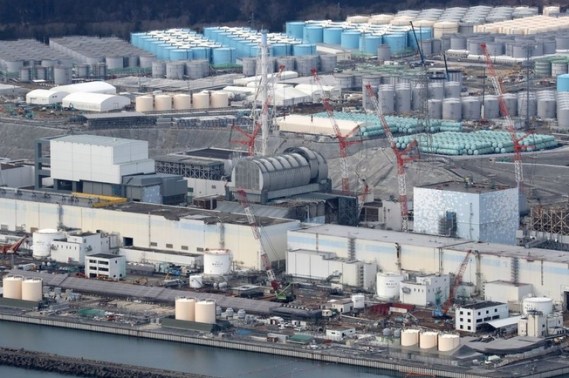
Contaminated water is stored in large tanks at the crippled Fukushima No. 1 nuclear power plant.
September 6, 2018
The government has held public hearings on plans to deal with growing amounts of radioactive water from the ruined Fukushima No. 1 nuclear power plant.
The hearings, held in Tomioka and Koriyama in Fukushima Prefecture as well as in Tokyo, underscored the enormous difficulty government policymakers are having in grappling with the complicated policy challenge.
The crippled reactors at the plant are still generating huge amounts of water contaminated with radiation every day. Tons of groundwater percolating into the damaged reactor buildings as well as water being injected into the reactors to cool the melted fuel are constantly becoming contaminated.
Almost all the radioactive elements are removed from the water with a filtering system. But the system cannot catch tritium, a mildly radioactive isotope of hydrogen.
The tritium-contaminated water is stored on-site in hundreds of large tanks. As the number of tanks has reached 900, the remaining space for them is shrinking and expected to run out by around 2020, according to the government.
Clearly, time is growing short on deciding what to do about the problem.
A task force of the Ministry of Economy, Trade and Industry has considered five options, including release into the Pacific Ocean after dilution, injection into deep underground strata and release into the air after vaporization. The group has concluded that dumping the water into the ocean would be the quickest and least costly way to get rid of it.
This is seen as the best option within the government.
Tritium is a common radioactive element in the environment that is formed naturally by atmospheric processes. Nuclear power plants across the nation release tritium produced in their operations into the sea according to legal safety standards.
But these facts do not automatically mean that releasing the tritium-laced water into the sea off Fukushima is a good approach to the problem.
Local communities in areas affected by the 2011 nuclear disaster are making strenuous efforts to rebuild the local fishing and agricultural industries that have been battered by the radiation scare. There are still countries that ban imports of foodstuffs produced in Fukushima Prefecture.
Local fishermen and other community members have every reason to oppose the idea of releasing tritium into the ocean. They are naturally concerned that the discharge would produce new bad rumors that deliver an additional blow to the reputation and sales of Fukushima food products.
Unsurprisingly, most of the citizens who spoke at the hearings voiced their opposition to the idea.
Moreover, it was reported last month that high levels of radioactive strontium and iodine surpassing safety standards had been detected in the treated water.
The revelation has made local communities even more distrustful of what they have been told about operations to deal with the radioactive water.
It is obvious that the hearings at only three locations are not enough to sell any plan to cope with the sticky problem to skeptical local residents. The government needs to create more opportunities for communication with them.
In doing so, the government should show a flexible stance without adamantly making the case for the idea of releasing the water into the sea. Otherwise, there can be no constructive debate on the issue.
It can only hope to win the trust of the local communities if it gives serious consideration to other options as well.
During the hearings, many speakers suggested that the water should be kept in large tanks until the radioactivity level falls to a very low level.
The pros and cons of all possible options, including this proposal, should be weighed carefully through cool-headed debate before the decision is made.
Repeated discussions with fruitful exchanges of views among experts and citizens including local residents are crucial for ensuring that the final decision on the plan will win broad public support.
The government and Tokyo Electric Power Co., the operator of the Fukushima plant, should disclose sufficient information for such discussions and give thoughtful and scrupulous explanations about relevant issues and details.
The government, which has been promoting nuclear power generation as a national policy priority, has the responsibility of building a broad and solid consensus on this problem.
Court accepts statement in TEPCO trial to show negligence
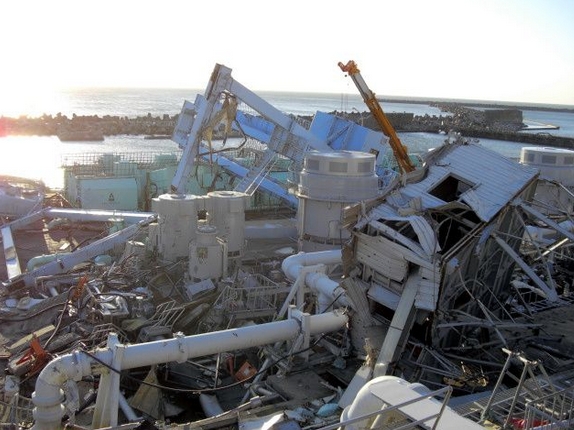
A collapsed crane and other debris at the crippled Fukushima No. 1 nuclear power plant after tsunami devastated the area on March 11, 2011
September 6, 2018
The Tokyo District Court on Sept. 5 accepted the written statement of a former Tokyo Electric Power Co. executive who claimed that his boss abruptly postponed tsunami prevention measures at the Fukushima No. 1 nuclear power plant in 2008.
The postponement reportedly occurred almost three years before the plant was engulfed by a tsunami on March 11, 2011, resulting in the most serious nuclear accident since the 1986 Chernobyl disaster.
The statement was made by Kazuhiko Yamashita, former head of TEPCO’s center tasked with compiling steps against tsunami at the earthquake countermeasures, to prosecutors from 2012 to 2014. It was read out during the 24th hearing at the court on Sept. 5.
Tsunehisa Katsumata, 78, former TEPCO chairman, former TEPCO Vice President Sakae Muto, 68, and Ichiro Takekuro, 72, former TEPCO vice president, are on trial on charges of professional negligence resulting in death and injury from the 2011 nuclear disaster.
Yamashita’s statement, recorded by investigators, supported arguments by lawyers serving as prosecutors that “defendants postponed measures to protect the plant despite having recognized the necessity for such measures.”
To prove negligence, prosecutors are trying to show that the top executives could have predicted the height of the tsunami that swamped the plant.
Defense lawyers have argued that “the nation’s earthquake forecast was not reliable and measures against tsunami had not been decided yet.”
According to Yamashita’s statement, the three executives approved the implementation of anti-tsunami prevention measures based on earthquake forecast issued by the government professional body but later put off the enforcement of the measures at the plant.
Yamashita was originally scheduled to provide sworn testimony. Instead, Presiding Judge Kenichi Nagabuchi accepted Yamashita’s statement, saying, “(Yamashita) is not in a condition able to testify at the court.”
The statement said TEPCO initially considered options based on a long-term assessment of the probability of major earthquakes released by the science ministry’s Headquarters for Earthquake Research Promotion in 2002.
The utility estimated that a tsunami more than 7.7 meters high could hit its Fukushima No. 1 nuclear power plant based on its trial calculation.
In February 2008, when Yamashita proposed the tsunami measures in light of a long-term tsunami risk assessment during a meeting in which Katsumata and two other executives attended, the policy was accepted without opposition and was also adopted at a managing directors’ meeting the following month.
Based on Muto’s instructions, the team had mulled procedures on obtaining a permit to build a seawall to protect the Fukushima No. 1 plant, according to a TEPCO employee who testified at an April hearing.
However, when a TEPCO subsidiary conducted a detailed study on the maximum height of a tsunami on the basis of the assessment, it found in March the same year that a tsunami of “a maximum 15.7 meters” could engulf the Fukushima plant, surpassing the 10-meter height of the site of the plant where major facilities were located.
The findings were reported to TEPCO executives in June 2008 and then to Muto.
Muto in July 2008 decided to put off measures based on the 15.7-meter estimate, according to the statement.
TEPCO’s policy shift was the result of its “executives’ recognition that such measures require massive construction and would make it difficult for TEPCO to explain to the central government and locals that the plant was still safe, which could lead their demands for halting operations of the plant,” the statement said.
“I was surprised that a TEPCO executive had already revealed the inside details of the entity to such an extent,” said lawyer Yuichi Kaido, who is acting on behalf of the independent judicial panel of citizens who recommended the indictment of the three former TEPCO executives. “(TEPCO’s) extraordinariness that it did nothing because it couldn’t take measures was clearly exposed.”
Japan nuclear plant’s power restored after quake triggers Hokkaido blackout

August 6, 2018
(Reuters) – Power was restored to a nuclear energy plant in Hokkaido, northern Japan on Thursday after a strong earthquake left it relying on emergency generators for 10 nervous hours, but it may be a week before lights are back on all over the major island.
Triggering a blackout just after 3 a.m. local time, the magnitude 6.7 quake left at least seven people dead, more than 100 injured and dozens missing on Hokkaido, an island of about 5.3 million people whose capital is Sapporo. A major coal-fired power station was also damaged in the temblor that shut down the grid.
The situation at utility Hokkaido Electric Power’s (9509.T) three-reactor Tomari nuclear plant provided an uncomfortable, if comparatively brief, echo of the Fukushima Daiichi nuclear disaster in 2011. Reactors there melted down after a massive tsunami knocked out back-up generators, designed to maintain power to cool reactors in emergencies.
Hokkaido’s Tomari NPP using emergency generators after powerful M6.7 earthquake
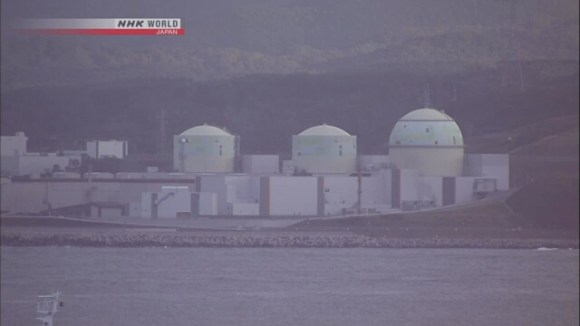
Tomari nuclear plant using emergency generators
Aug. 6, 2018
Japan’s nuclear regulatory body says the Tomari nuclear power plant in Hokkaido is using emergency generators to cool fuel after the region was hit by a powerful earthquake.
The plant’s operator Hokkaido Electric Power Company says all 3 channels from outside power sources were cut off about 20 minutes after the quake struck early Thursday.
The plant’s 3 reactors are all currently offline, with a total of 1,527 fuel assemblies in its storage pools.
Following the quake, 6 emergency diesel-powered generators automatically switched on to cool the nuclear fuel. No changes in storage pool water levels or temperature have been reported.
The Nuclear Regulation Authority and Hokkaido Electric say it is not yet clear when outside power sources will be restored, with all thermal power plants in Hokkaido currently shut down.
The emergency generators will be able to keep the Tomari plant running for at least 7 days, based on diesel fuel supplies stored on its premises.
They added that the earthquake did not seem to cause any irregularities in key plant facilities and radiation monitoring posts have shown no change.
Hokkaido nuclear plant on backup power after quake, reviving memories of Fukushima disaster
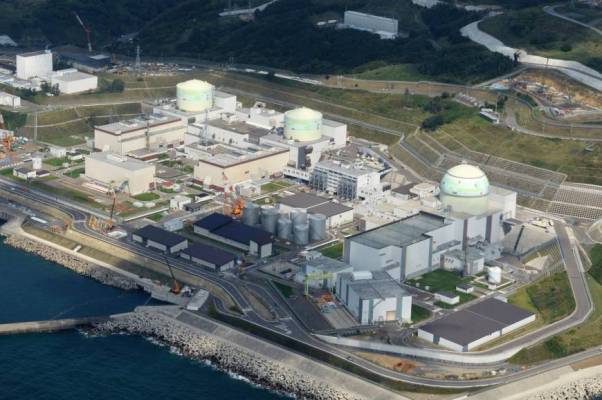
Tomari Nuclear Power Station in the village of Tomari, Hokkaido, is seen in 2015. The plant is running on emergency power after a powerful earthquake knocked out electricity in Hokkaido on Thursday
September 6, 2018
A nuclear power station in Hokkaido is relying on emergency backup power after a powerful earthquake knocked out electricity on the northern island Thursday, offering a stark reminder of the 2011 Fukushima disaster.
The three-reactor Tomari nuclear plant, operated by Hokkaido Electric Power Co. and in shutdown since the aftermath of the Fukushima disaster, lost power after a magnitude 6.7 quake hit the island in the early hours, the government said.
The plant’s fuel rods are being cooled with emergency power supplied by diesel generators, Chief Cabinet Secretary Yoshihide Suga told reporters Thursday.
There were no radiation irregularities at the plant, Suga said, citing the operator.
The atomic regulator said the diesel generators have enough fuel to last seven days.
Hokkaido Electric has shut down all fossil fuel plants, cutting power to all its nearly 3 million customers, a spokesman said.
Industry minister Hiroshige Seko has instructed Hokkaido Electric to restart its biggest coal plant after the station was tripped by the earthquake.
The blackout shut down Hokkaido’s New Chitose Airport, a popular gateway to the island, making it the second major airport to be knocked out in the country in two days after a typhoon swamped Kansai International Airport, the nation’s third biggest.
The March 11, 2011, magnitude 9 earthquake that struck off the northern Honshu coast set off a massive tsunami that devastated a wide swath of the Pacific coastline and left nearly 20,000 dead.
The quake knocked out power to the Fukushima No. 1 nuclear power plant, and the tsunami swamped diesel generators placed low in reactor buildings, leading to a series of explosions and meltdowns in the world’s worst nuclear disaster for 25 years.
The crisis led to the shutdown of the country’s nuclear industry, once the world’s third biggest. Seven reactors have come back online after a protracted relicensing process.
The majority of Japanese remain opposed to nuclear power after Fukushima highlighted failings in regulation and operational procedures in the industry.
Fukushima nuclear plant worker died from radiation exposure on the job: ministry
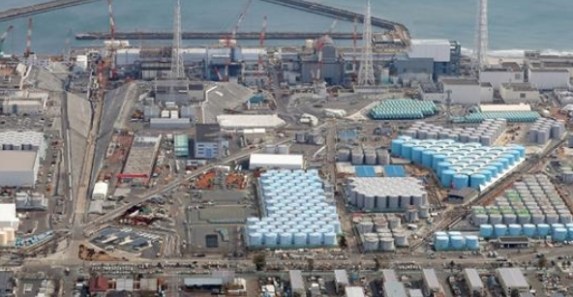
The Fukushima No. 1 Nuclear Power Plant is seen in this Feb. 15, 2018
September 5, 2018
TOKYO — The death from lung cancer of a male worker at the crippled Fukushima No. 1 Nuclear Power Plant operated by Tokyo Electric Power Co. (TEPCO) in the northeastern prefecture of Fukushima has been confirmed as work-related, the Ministry of Health, Labor and Welfare announced on Sept. 4.
The announcement marks the government’s first recognition of a fatality linked to radiation exposure at the facility since a triple core meltdown occurred there in March 2011.
The ministry ruled in favor of granting workman’s compensation on Aug. 31. According to the ministry, the man had worked mainly at the Fukushima No. 1 nuclear plant and other atomic power stations nationwide over a period of about 28 years and three months between June 1980 and September 2015. He was exposed to a total radiation dose of approximately 195 millisieverts.
After the March 2011 disaster triggered by the massive Great East Japan Earthquake and tsunami, the worker, who was in his 50s, was exposed to roughly 34 millisieverts of radiation by December 2011. In September 2015, his exposure reached around 74 millisieverts. He was in charge of measuring radiation on the premises of the Fukushima No. 1 plant, and he is said to have worn a full-face mask and protective suit while working, according to the ministry.
The man was diagnosed with lung cancer in February 2016. The timing of his death was withheld in accordance with his bereaved family’s wishes, ministry officials explained.
For the death by lung cancer of a worker at a nuclear power plant to be recognized as work-related under current guidelines, the individual must be exposed to 100 millisieverts or more of radiation and the development of the disease must happen five years or more after the exposure.
The ministry made the latest recognition based on opinions of a panel of experts specializing in radiology and other disciplines.
A public relations official of TEPCO Holdings Inc. commented, “We would like to continue to secure the safety of power plants and improve the work environment.”
(Japanese original by Shunsuke Kamiashi, City News Department)
Fukushima episode of Netflix’s Dark Tourist sparks offence in Japan

05 September, 2018,
Government unhappy after programme hints food in region is still contaminated with radiation and host enters clearly marked no-go zone
The recent Netflix series Dark Tourist is a grimy window into areas scarred by tragedy, providing a perspective as rare as it is compelling – but a controversial Japan-set entry in the series may have gone too far.
The country’s Reconstruction Agency is set to hold talks with the Fukushima prefectural government about a unified response to the second episode in the series, which looked at a tour for foreign visitors to some of the areas worst affected by the 2011 tsunami, earthquake and nuclear-plant disaster.
The episode raised hackles in Tokyo and Fukushima after David Farrier, the New Zealand journalist who hosts the series, was filmed eating at a restaurant in the town of Namie – a former nuclear ghost town which reopened its doors to visitors in April 2017 – and stating that he expected the food to be contaminated with radiation.
Farrier was also filmed aboard a tour bus nervously watching as the numbers on a Geiger counter continued to rise beyond levels members of the party had been told were considered safe.
At one point in the programme, which was released on July 20, a woman holding a Geiger counter says radiation levels “are higher than around Chernobyl”.
Farrier also slips away from the group without permission, and enters an abandoned game arcade within the no-go zone around the Fukushima Dai-ichi nuclear plant.
The prefectural government and the Reconstruction Agency, which was set up after the disaster to oversee the nuclear clean-up and rebuilding efforts in the region, are reported to be unhappy that Farrier entered a clearly marked no-go zone and the programme’s suggestion that food in northeast Japan was not safe to eat.
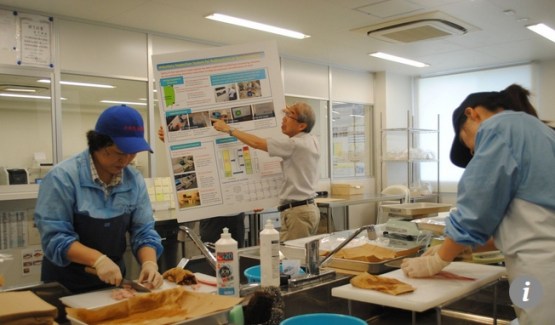
Authorities are also unhappy the programme failed to specify that the high levels of radiation initially reported in the area have fallen significantly, and only a relatively small area is still officially listed as “difficult to return to” for local residents.
“We are examining the content of the video,” a prefecture official told the Jiji news agency.
The Fukushima government declined to provide further comment on Dark Tourist or the action that it might take.
A spokesman for the Reconstruction Agency in Tokyo told the South China Morning Post a response would be prepared after consultations with the prefectural authorities.
“We would like to provide accurate knowledge and correct information about the situation surrounding radiation in Fukushima Prefecture to the domestic and international media,” the official said. “We cannot comment specifically on the Netflix case at this point.”
An estimated 100,000 foreign tourists have visited Fukushima last year, many attracted by the offer of trips described as “dark tourism”.
Authorities, however, have been working hard to get across the message that the vast majority of the Tohoku region of northeast Japan is perfectly safe to visit and that local food and produce is safe to consume.
Campaigns are also under way to rebuild export markets for local foodstuffs.
The condemnation from authorities comes as Japan acknowledges for the first time that a worker at the Fukushima plant died in 2016 from radiation exposure.
The country’s Health, Labour and Welfare Ministry ruled that compensation should be paid to the family of the man in his 50s who died from lung cancer, an official said.
The worker had spent his career working at nuclear plants around Japan and worked at the Fukushima plant at least twice after the March 2011 meltdowns. He was diagnosed with cancer in February 2016, the official said.
Fukushima government considers action over Dark Tourist episode
September 4, 2018
DARK Tourist has been a global hit, but officials in Japan are not happy with scenes in this episode.
ITS willingness to boldly take audiences to some of the most offbeat, off-putting and downright disturbing places on the planet has made the Netflix series Dark Tourist a global sensation.
The first season of the groundbreaking documentary series, which was released in July, follows host David Farrier’s excursions to grim locations, from a forbidden ghost city on Cyprus to the Milwaukee sites where serial killer Jeffrey Dahmer murdered his victims.
But the series has landed in hot water due to its second episode that was filmed in Japan.
There, government officials are considering taking action against Netflix over footage from inside Fukushima, which was devastated by an earthquake and tsunami in March 2011.

The second episode of Dark Tourist sees host David Farrier on a nuclear bus tour in Fukushima.
In the episode, Farrier, a New Zealand journalist, takes a bus tour with other foreign sightseers into areas affected by the catastrophic nuclear meltdown at the Fukushima Daiichi plant.
The bus passes radioactive exclusion zones and Farrier and the other tourists become increasingly nervous by the skyrocketing readings on their Geiger counters, which measure radiation.
At one point in the episode, the reading is 50 times higher than levels deemed to be safe.
In another scene, the group visits a local restaurant where Farrier is concerned about eating locally sourced food that may be contaminated.

Farrier was unsure about eating local food.
In another, he comes close to being arrested after sneaking into an abandoned arcade that was deemed a no-go zone by the government.
Now, officials from the Fukushima Prefectural Government said they are investigating the Dark Tourist episode, concerned it would “fuel unreasonable fears related to the March 2011 disaster at Tokyo’s Electric’s tsunami-stricken Fukushima No. 1 nuclear plant”.
A senior government official told The Japan Times they are working with the Reconstruction Agency in considering how to respond to the footage.

The camera followed Farrier as he broke away from the tour group and entered an off-limits arcade.
“We’re examining the video content,” the official said.
The three issues of apparent concern to officials were Farrier being worried about eating the restaurant’s food, his visit to the off-limits arcade, and the exact location of the bus not being specified when the high radiation readings alarmed the tourists.
Farrier previously said it was “super disconcerting” to visit the areas affected by the Fukushima nuclear disaster.
“Essentially, you’re in the middle of a microwave,” he told the New Zealand Herald.
“You can’t feel anything but this device is telling you that the radiation is way higher than is safe.”

In the episode, Farrier and the other tourists are concerned about the readings on their Geiger counters.
Hundreds of thousands of people fled for their lives when a tsunami swept through Fukushima and set off three nuclear meltdowns at the Daiichi power plant, exposing the region to radioactive material.
The Japanese government has deemed some of the affected areas to be safe to return to, but many remain abandoned. Other areas are still designated as off limits.
But Fukushima’s perceived nuclear danger and its eerie setting have made it one of the world’s most popular drawcards for “dark tourists” — travellers who seek out locations with disturbing histories and associations with death and tragedy.

Although dark tourism is booming, many area of Fukushima remain no-go zones.
So-called nuclear tourism attracted about 94,000 overseas visitors to Fukushima in 2017.
Similar nuclear tours operate in the Ukrainian ghost town of Pripyat, which has been a radioactive wasteland since the Chernobyl nuclear disaster in 1986.
The Department of Foreign Affairs and Trade urges Australian travellers to exercise a high degree of caution in Areas 1 and 2 near the Fukushima Daiichi power plant and advises against all travel to Area 3 due to “very high” health and safety risks.
B.S. Propaganda Explaining that Radioactive Water Sea Dumping in Fukushima is Essential
As always the propaganda organs of the nuclear village and of the Japanese government are lying by omission, twisting the real facts, in order to justify their intention to dump the Fukushima daiichi’s 7 years accumulated radioactive water at Fukushima Daiichi nuclear plant into the sea, to dump it into the Pacif Ocean would be criminal, plain ecocide.
As this 920 000 tons of radioactive water is not only tritium-laced water as the media would like the public to believe. It contains also other types of harmful radionuclides as Tepco has recently admitted:
TEPCO Admitted Almost 200 Billion Bq of Priorly Undeclared Radionuclides Water Contamination
Radioactive tritium and other types of radionuclides in Fukushima nuclear plant water, despite water treatment

‘Carefully explaining treated water discharge in Fukushima essential’
Sept. 4, 2018
How should “treated water,” which continues to accumulate at Tokyo Electric Power Company Holdings, Inc.’s Fukushima No. 1 nuclear power plant, be disposed of? A plan must be quickly decided so this water does not cause delays in reactor decommissioning work.
Water is used to cool the reactor cores that melted down at the nuclear plant. Groundwater also flows into the plant, where it becomes contaminated by radioactive substances. Water collected at the site and passed through a purification facility is called “treated water.”
More than 900,000 tons of such water is being stored in tanks. This volume is said to be expected to increase by 50,000 tons to 80,000 tons each year.
About 900 tanks of various types already have been built on the plant’s premises. Finding space for additional tanks is becoming increasingly difficult, and plans to build more tanks run only until the end of 2020. If these tanks fill up the plant’s premises, there likely will not be enough room to perform the work needed to decommission the reactors.
The problem is that about 900 trillion becquerels of the radioactive substance tritium (an isotope known as hydrogen-3) remain in the treated water. In principle, removing tritium from water is difficult. The most promising option is releasing this water into the ocean. This would be done after dilution to bring the concentration of tritium to acceptable standards.
Tritium is generated daily at nuclear plants in Japan and overseas and then discharged into the sea in accordance with set standards. The volume released from Japanese nuclear power plants during the five years before the March 2011 Great East Japan Earthquake averaged about 380 trillion becquerels per year.
Relieve locals’ concerns
Each year, cosmic rays create about 70 quadrillion becquerels of tritium. Japan’s annual rainfall naturally contains about 223 trillion becquerels. The Economy, Trade and Industry Ministry and the Nuclear Regulation Authority have explained that levels of tritium below a certain concentration have no negative impact on the environment, among other things.
Releasing tritiated water into the ocean, after the safety of this process has been thoroughly confirmed, is unavoidable.
At public hearings held by the ministry in a bid to turn this plan into reality, many attendees offered the opinion that assurances of the safety of discharging this water “couldn’t be trusted.”
Although this is a technically complex problem, the materials and explanations given at these hearings were very simple. As the explanations were made on the assumption that attendees had basic knowledge about topics such as radiation, attendees demanded the ministry “reexamine the plan from scratch.”
Criticism also focused on the fact that radioactive substances other than tritium remain in the treated water. This was triggered by some media reports on the issue just before the hearings.
Since four years ago, TEPCO has explained it attached great importance to efficiency in the purification process. This was to reduce the impact of radiation on workers at the plant and other people. TEPCO plans to remove the remaining radioactive substances when the water is discharged, but this process was not mentioned in the materials distributed at the hearings.
It appears the lack of explanation about possible risks has fueled the backlash to the discharge plan.
Locals, including people involved in the fishing industry, oppose releasing the water into the ocean because of possible damage and losses arising from negative public misperceptions. They are concerned that discharging treated water could once again have a negative impact on confidence in products from the area, which has been slowly recovering.
Of course, efforts must be made to call on local residents to get behind the plan. The government and TEPCO also should take stronger measures over wide areas to counter harmful misperceptions.
Extended screening pushes back MOX fuel plant construction for 3rd time

Sep 4, 2018
AOMORI – Construction in Aomori Prefecture of the world’s first commercial reactor to operate solely on plutonium-uranium mixed oxide fuel will be pushed back for the third time due to prolonged safety checks, the utility building the reactor said Tuesday.
Electric Power Development Co. had been planning to begin construction of major facilities at the Oma nuclear power plant in the prefecture during the latter half of this year, but told the Oma Municipal Assembly on Tuesday it has decided to delay the work by about two years. The delay means the new target for the reactor to begin operations is fiscal now 2026.
The move clouds the course of Japan’s policy for the nuclear fuel cycle, in which the reactor was supposed to play a key role. Mixed oxide (MOX) fuel is produced by extracting plutonium from spent nuclear fuel and mixing it with uranium. Tokyo is also under international pressure to slash its stockpile of plutonium, which has the potential to be used to produce nuclear weapons.
“We would like Electric Power Development to put top priority on safety and respond appropriately to the Nuclear Regulation Authority’s screening,” industry minister Hiroshige Seko said at a news conference.
The company, also known as J-Power, initially sought to start operations at the nuclear plant, to be located in the Aomori town of Oma with an output of 1.38 million kilowatts, in fiscal 2021, but put it back by one year in 2015 and then postponed it to fiscal 2024 in 2016.

Construction of the reactor began in 2008 after gaining state approval, but was stalled following the nuclear meltdowns at the Fukushima No. 1 power plant triggered by the 2011 earthquake and tsunami disaster.
About 40 percent of the construction has been completed, but work so far has centered on setting up office buildings and conducting road repairs.
J-Power applied for safety checks in December 2014, but NRA examinations have focused on assumptions about tsunami and earthquake risk at the overall complex and not at its nuclear facilities. An official at the company told the Oma Municipal Assembly that it may take two more years for the reactor to pass the screening.
J-Power said it hopes to start construction of the reactor and other facilities in the latter half of 2020 and complete it by the second half of 2025.
“It’s very regrettable that the project will be postponed once again. I hope (J-Power) will strive to swiftly pass the screening and help revitalize the regional economy,” Oma Mayor Mitsuharu Kanazawa said at the assembly meeting after hearing from the company official.
The Oma plant has also faced lawsuits seeking suspension of the project.
Residents in Hakodate, Hokkaido, which is some 23 kilometers northwest of Oma across the Tsugaru Strait, filed a lawsuit against the company and the central government with the Hakodate District Court in July 2010, claiming they are concerned about the large amount of highly toxic plutonium that will be used as reactor fuel.
The city of Hakodate also filed suit against the two parties with the Tokyo District Court in April 2014, saying it fears the impact of an accident at a so-called full-MOX reactor will be far more devastating than that of the Fukushima disaster, which led to the long-term evacuation of many local residents.
Japan’s Fukushima Considering Action Over Netflix’s ‘Dark Tourist’ Nuclear Episode

August 3, 2018
The local government and the Reconstruction Agency are not happy with portrayals of unspecified high-radiation locations and speculation over contaminated food.
Japan’s Reconstruction Agency and Fukushima Prefectural Government are considering legal action over the episode of Netflix’s Dark Tourist, which visited places still dealing with the aftermath of the March 2011 triple nuclear meltdown.
The episode, the second in the series released on the streaming giant July 20, sees New Zealand journalist David Farrier visit Japan, with just more than half of the program following him on an organized bus tour through areas near the Fukushima Daiichi Nuclear Plant.
Farrier and the other tourists become concerned as the readings on their Geiger counters showed radiation higher than they were told to expect and what is deemed to be safe levels. The group eventually decides to cut the tour short, but not before eating at a restaurant in the area and Farrier leaving the group to enter an off-limit gaming arcade. While at the restaurant, Farrier talks about his concerns about the food being unsafe, before finishing his meal.
“We’re examining the video content,” a senior official from the prefecture told news agency Jiji.
The parts of the video that the authorities have taken objection to are the section showing the high radiation levels, but not saying where they were filmed, the speculation about food contamination and Farrier’s excursion into the off-limits area.
Almost 100,000 foreign tourists are estimated to have visited Fukushima last year on what have been dubbed nuclear tourism tours.
Nearly 20,000 people died in March 2011, when a huge earthquake set off a devastating tsunami that knocked the cooling systems of the nuclear plant out of action, leading to three reactors at Daiichi melting down.
The local and national government have been working to have bans on food produces from the area rescinded, which they have been gradually achieving.
During the episode, Farrier also visits the Aokigahara forest, an area known for suicides. YouTuber Paul Logan faced a backlash at the beginning of the year after posting a video from the forest, where he had discovered a corpse. Farrier also stays in a robot-run hotel and takes a tour to the abandoned Hashima Island. Once a coal mine, the industrial wasteland of the island has attracted tourists and attention in recent years, appearing in the James Bond film Skyfall and the Japanese Attack on Titan live-action movies.
Other episodes feature tourism related to voodoo, drug barons, mass murderers and survivalists.
Fukushima mulls action against Netflix over Dark Tourist video of 3/11 hot zone

The crippled Fukushima No. 1 nuclear plant is seen from the sky in February.
Sep 1, 2018
FUKUSHIMA – The Fukushima Prefectural Government and the Reconstruction Agency are considering taking action against a video from the Dark Tourist series of U.S. online video streaming giant Netflix Inc., informed sources said Saturday.
The video shows a tour organized for foreigners of areas affected by the March 2011 triple core meltdown in Fukushima. During the tour, a New Zealand journalist, the host of the video series, suspects a meal served at a restaurant in the town of Namie has been contaminated by radiation.
The prefecture and the agency are concerned the video could fuel unreasonable fears related to the March 2011 disaster at Tokyo Electric’s tsunami-stricken Fukushima No. 1 nuclear plant, the sources said.
The video also shows the journalist entering the no-go zone around the crippled nuclear plant without permission and reporting from an abandoned game arcade there.
Furthermore, the video shows tour participants getting upset by rising radiation readings on their bus, although where the bus was traveling is not specified.
The video of the Fukushima tour attracted attention initially online and has been covered by overseas media.
Alarmed by the situation, the Fukushima Prefectural Government has decided to cooperate with the Reconstruction Agency in responding to the matter, the sources said. The defunct atomic plant is managed by Tokyo Electric Power Company Holdings Inc.
“We’re examining the video content,” a senior official from the prefecture said.
Netflix offers unlimited access to online movies and TV dramas at flat rates. It has about 130 million subscribers in 190 countries.
In its Dark Tourist series, the New Zealand journalist travels to places associated with negative historical events around the world, including a former nuclear test site in Kazakhstan.
1 This Month

petition to oppose the rapid increase of space-military industry threatening Jeju Island and the region.
[Petition by April 19th (KST)] Stop the joint military-Hanwha Systems-Jeju Provincial Government Sea Launch!
Chernobyl: The Lost Tapes – A good documentary on Chernobyl on SBS available On Demand for the next 3 weeks– https://www.sbs.com.au/ondemand/tv-program/chernobyl-the-lost-tapes/2352741955560

of the week–London Campaign for Nuclear Disarmament

Tell the Ukrainian Government to Drop Prosecution of Peace Activist Yurii Sheliazhenko
To see nuclear-related stories in greater depth and intensity – go to https://nuclearinformation.wordpress.com
-
Archives
- April 2026 (194)
- March 2026 (251)
- February 2026 (268)
- January 2026 (308)
- December 2025 (358)
- November 2025 (359)
- October 2025 (376)
- September 2025 (257)
- August 2025 (319)
- July 2025 (230)
- June 2025 (348)
- May 2025 (261)
-
Categories
- 1
- 1 NUCLEAR ISSUES
- business and costs
- climate change
- culture and arts
- ENERGY
- environment
- health
- history
- indigenous issues
- Legal
- marketing of nuclear
- media
- opposition to nuclear
- PERSONAL STORIES
- politics
- politics international
- Religion and ethics
- safety
- secrets,lies and civil liberties
- spinbuster
- technology
- Uranium
- wastes
- weapons and war
- Women
- 2 WORLD
- ACTION
- AFRICA
- Atrocities
- AUSTRALIA
- Christina's notes
- Christina's themes
- culture and arts
- Events
- Fuk 2022
- Fuk 2023
- Fukushima 2017
- Fukushima 2018
- fukushima 2019
- Fukushima 2020
- Fukushima 2021
- general
- global warming
- Humour (God we need it)
- Nuclear
- RARE EARTHS
- Reference
- resources – print
- Resources -audiovicual
- Weekly Newsletter
- World
- World Nuclear
- YouTube
-
RSS
Entries RSS
Comments RSS
 nuclear-news