Ministry of the Environment Plans Demonstration Test for Reuse of Decontaminated Soil from Fukushima in Shinjuku Gyoen, Tokyo

Friday, December 9, 2022 11:53
Minister of the Environment Yoshiaki Nishimura announced that the Ministry of the Environment is planning to conduct a demonstration test at the Shinjuku Imperial Garden in Tokyo to see if the “decontaminated soil” generated during the decontamination process after the Fukushima Daiichi Nuclear Power Plant accident can be reused.
The government has indicated that it intends to reuse the large amount of “decontaminated soil” in Fukushima Prefecture for public works projects if the concentration of radioactive materials is below a certain standard value.
At a press conference today, Environment Minister Nishimura announced that the Ministry of the Environment is planning to conduct a demonstration test at the Shinjuku Gyoen, which is managed by the Ministry of the Environment, to demonstrate the reuse of the soil. The plan is to create flower beds using decontaminated soil in areas that are off limits to the general public, and to test the radiation levels in the surrounding areas.
This is the second time that a demonstration test is being planned outside of Fukushima Prefecture, following Tokorozawa City in Saitama Prefecture, and the other is in Tsukuba City, Ibaraki Prefecture.
https://newsdig.tbs.co.jp/articles/-/225831?display=1
Kashiwazaki Kariwa, a Distant Recovery of Confidence TEPCO Shares Crisis Awareness to Prevent Misconduct

Deputy General Manager Daito explains the operating floor. Before entering the building, biometric authentication and other enhancements were in place.
December 19, 2022
A series of scandals, including flaws in anti-terrorism measures, at the Kashiwazaki Kariwa Nuclear Power Plant (Niigata Prefecture), which Tokyo Electric Power Company (TEPCO) aims to restart, has called into question TEPCO’s efforts to restore trust. If distrust grows, it could affect the decommissioning of the Fukushima Daiichi Nuclear Power Plant, which caused the accident. As an operator involved in nuclear power generation, TEPCO is required to improve its internal structure to prevent misconduct, such as by ensuring that each and every employee shares a sense of crisis.
Crisis awareness “is a weak point
In October, the Local Newspaper Energy Study Group, a group of local newspapers in areas where nuclear facilities are located, visited the Kashiwazaki Kariwa Nuclear Power Plant to observe the status of remedial measures being taken. Masaki Daito, 56, deputy director of the Kashiwazaki Kariwa Nuclear Power Plant, admitted to a lack of awareness of the crisis, saying, “There were parts of the situation that we should have been aware of, but we were naive in our understanding of the situation.
In September 2008, an employee of the plant took a colleague’s ID card without permission and entered the central control room illegally, and in April 2009, the Nuclear Regulation Authority issued an order prohibiting the transfer of nuclear fuel. In April 2009, the Regulatory Commission issued a de facto operation ban order prohibiting the transfer of nuclear fuel. The restart of the plant has been put on hold, and TEPCO officials stress that they will work to restore trust in the plant, saying, “Without the understanding of the local community, we will not be able to restart the plant.
Improvement Measures, Starting with Greetings
In response to the series of scandals, TEPCO is working on 36 improvement measures related to the protection of nuclear materials. A Security Management Department has been established within the power plant, the personnel structure has been reviewed, and the budget for equipment has been expanded from 20 billion yen to 58 billion yen. During the inspection tour, the monitoring system was strengthened, with biometric authentication required to enter the “operating floor,” the upper level of the Unit 6 reactor.
TEPCO believes that a lack of communication with employees and workers at partner companies is behind the scandals. The company explained that as a measure to improve the situation, executives and others are standing at the main gate in the morning and making efforts to conduct a “greeting campaign,” but an unusual situation comes to mind in which a review of the basics is unavoidable.
Response is backward and “lousy.
How did the local administration, business community, and residents react to the scandal? The study group interviewed Masahiro Sakurai, 60, mayor of Kashiwazaki City, and Masao Nishikawa, 66, chairman of the Kashiwazaki Chamber of Commerce and Industry. Both are in favor of restarting the nuclear reactors, but they are also very critical of TEPCO in light of the scandals.
In a word, they are lousy. Mayor Sakurai laments TEPCO’s backward steps, such as strengthening biometric authentication after the scandal. While he praises TEPCO’s measures to deal with the scandal, saying that “they are making efforts,” he also points out that a sense of tension and crisis awareness has not penetrated the company’s ranks. Chairman Nishikawa also stated that “the relationship of trust has broken down,” and revealed that he had submitted a letter of request to TEPCO to protest the situation.
Kazuyuki Takemoto, 72, a resident of Kariwa Village who has been campaigning against the plant, questioned the government’s nuclear fuel cycle policy, including the disposal of spent nuclear fuel, saying, “The government is desperately trying to get the plant restarted, but can it really be moved? TEPCO wants to move forward with the restart, but it must not forget the lessons of the nuclear accident. In the visitor’s house at the Kashiwazaki Kariwa Nuclear Power Plant, there is a panel that reads, “Our responsibility for the recovery of Fukushima. How will they face these words and show them through their actions? The public is watching closely. (News Department, Satoshi Mizuno)
https://www.minyu-net.com/news/news/FM20221219-747455.php?fbclid=IwAR0nhAklKQFJuZM0ZvTte_9cByVby2h11Vbls1yTWLwR_nCduxxv2KmD5mE
Data rewriting and erroneous statements…Sloppy handling continues at Tsuruga Nuclear Power Plant Unit No.2 of JAERI, Regulatory Commission suggests termination of review if no improvement is made

Tsuruga Nuclear Power Plant (photo taken in January 2021)
December 19, 2022
At a special meeting on December 19, the Nuclear Regulation Authority (NRA) exchanged opinions with Mamoru Muramatsu, president of Japan Atomic Power Company (JAERI), and others regarding the review of Tsuruga Unit 2 (Fukui Prefecture), where inappropriate rewriting of geological data was discovered. Shinsuke Yamanaka, chairman of the regulatory commission, said that if the data is not improved in the future, “the commission will have to discuss whether to continue the examination,” and indicated that he would consider suspending or terminating the examination.
The rewriting of the data was discovered in February 2020 when the regulatory commission pointed it out. In order to determine whether the fault directly under the reactor building was an active fault that could cause an earthquake, the state of the geological strata taken out by drilling was rewritten in 80 locations. Many other errors were also found.
The regulatory commission’s examination, which had been suspended, resumed on March 9 because the company had established rules for entering data, but at that time, new errors were also found. The number of errors in the data has totaled 1,296 so far.
At the meeting, Akira Ishiwata, a member of the committee in charge of reviewing earthquake and tsunami countermeasures, said, “There are 1,300 errors, and only JAEPCO would submit such materials. If there are any more errors, it will be difficult to continue the examination. Mr. Yamanaka expressed his distrust, asking, “Are they sure about their technical capabilities? (Nozomi Masui)
https://www.tokyo-np.co.jp/article/220955?fbclid=IwAR0zWkMDa8kLYoQqx-3FpsSe9F3BX2-Wui23ftKuWyptnwDgOWydI2QcdWU
Fukushima, Our ongoing accident.
Dec 19, 2022
What happens to the damaged reactors? The territories evacuated by 160 000 people? What are the new conditions for their return to the contaminated area since the lifting of the governmental aid procedures? Are lessons still being learned by our national operator for its own nuclear plants? We must not forget that a disaster is still unfolding in Japan and that EDF was supposed to upgrade its fleet on the basis of this feedback, which has still not been finalized.
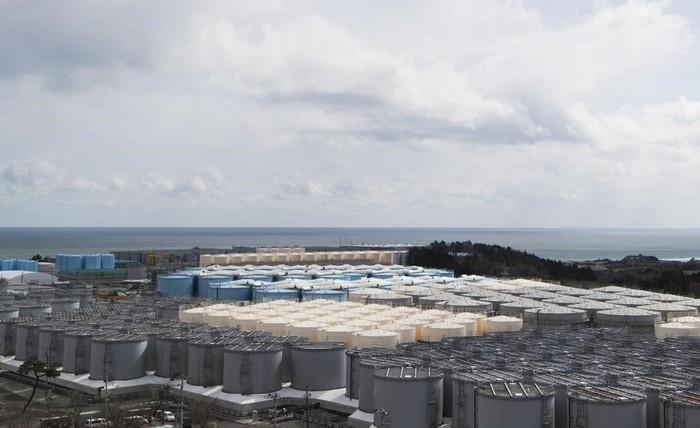
Almost twelve years after the Fukushima disaster, Japan is still in the process of dismantling and ‘decontaminating’ the nuclear power plant, probably for the next thirty to forty years as well. In the very short term, the challenges are posed by the management of contaminated water.
- All the contaminated water will be evacuated into the sea, by dilution over decades
- Each intervention in the accident reactors brings out new elements
- This has an impact on the schedule and the efficiency of the means used
- At the same time, the Japanese government’s objective is to rehabilitate the contaminated areas at any cost
- None of the French reactors is up to date with its safety level according to the post-Fukushima measures promulgated
- Japan will resume its nuclear policy, time having done its work on memories
The great water cycle
Although Japanese politicians claim that they have finally mastered the monster, the colossal task of cleaning up the site is still far from being completed to allow for the ultimate dismantling, with the length of time competing with the endless financing.
After so many years of effort, from decontamination to the management of radioactive materials and maneuvers within the dismantled plant, the actions on site require more and more exceptional means, exclusive procedures, and unprecedented engineering feats (such as robotic probes), while the nuclear fuel inside continues to be cooled permanently by water (not without generating, to repeat, millions of liters of radioactive water).
But the hardest part is yet to come: containing the corium, an estimated 880 tons of molten radioactive waste created during this meltdown of the reactor cores, and managing the thousands of fuel rods. So much so that the complete cleanup and dismantling of the plant could take a generation or more for a total estimated cost of more than 200 billion dollars (according to an assessment published by the German insurer Munich Re, Japan is 150 billion euros), a low range since other estimates raise the bill between 470 and 660 billion dollars, which is not in contradiction with the costs of an accident projected by the IRSN in France.
The removal of this corium will remain the most essential unresolved issue for a long time. Without it, the contamination of this area will continue. In February 2022, the operator Tepco (Tokyo Electric Power Company Holdings Inc.) tried again to approach the molten fuel in the containment of a reactor after a few more or less unsuccessful attempts, the radioactivity of 2 sieverts/hour being the end of everything, including electronic robots. This withdrawal seems quite hypothetical, even the Chernobyl reactor has never been removed and remains contained in a sarcophagus.
(source: Fukushima blog and Japan’s Nuclear Safety Authority NRA)
Until that distant prospect arrives, the 1.37 million tons of water will have filled the maximum storage capacity. This water was used to cool the molten fuel in the reactor and then mixed with rainwater and groundwater. The treatment via an Advanced Liquid Processing System (ALPS) is touted as efficient, but does not remove tritium. Relative performance: Tepco has been repeatedly criticized for concealing and belatedly disclosing problems with filters designed to prevent particles from escaping into the air from the contaminated water treatment system: 24 of the 25 filters attached to the water treatment equipment were found to be damaged in 2021, an already known defect that resulted in no investigation of the cause of the problem and no preventive measures after the filters were replaced.
The management of this type of liquid waste is a problem shared by the Americans. On site, experts say that the tanks would present flooding and radiation hazards and would hamper the plant’s decontamination efforts. So much so that nuclear scientists, including members of the International Atomic Energy Agency (IAEA) and the Japanese Nuclear Regulatory Authority, have recommended controlled release of the water into the sea as the only scientifically and financially realistic option.
In the end, contaminated water would have to be released into the sea through an underwater tunnel about a kilometer offshore, after diluting it to bring the concentration of tritium well below the percentage allowed by regulation (the concentration would be below the maximum limit of tritium recommended by the World Health Organization for drinking water). Scientists say that the effects of long-term, low-dose exposure to tritium on the environment and humans are still unknown, but that tritium would affect humans more when consumed in fish. The health impact will therefore be monitored, which the government already assures us it is anticipating by analyzing 90,000 samples of treated water each year.
Assessment studies on the potential impact that the release of stored contaminated water into the ocean could have therefore seem insufficient. For tritium, in the form of tritiated water or bound to organic matter, in addition to its diverse behavior according to these configurations, is only part of the problem. Some data show great variability in the concentrations of contaminants between the thousand reservoirs, as well as differences in their relative quantities: some reservoirs that are poor in tritium are rich in strontium 90 and vice versa, suggesting a high variability in the concentrations of other radionuclides and a dilution rate that is not so constant. All the ignorance currently resides on the still unknown interactions of the long-lived radioactive isotopes contained in the contaminated water with the marine biology. It is in order to remove all questions that a complete and independent evaluation of the sixty or so radioisotopes is required by many organizations.
As it stands, with the support of the IAEA so that dilution meets expectations, depending on currents, flows …, the release of contaminated materials would take at least forty years. Opponents of such releases persist in proposing an alternative solution of storage in earthquake-resistant tanks in and around the Fukushima facility. For them, “given the 12.3-year half-life of tritium for radioactive decay, in 40 to 60 years, more than 90% of the tritium will have disappeared and the risks will be considerably reduced,” reducing the direct nuisance that could affect the marine environment and even the food chain.
Modelling of marine movements could lead the waste to Korea, then to China, and finally to the Federated States of Micronesia and Palau. As such, each of the impacted countries could bring an action against Japan before the International Tribunal for the Law of the Sea to demand an injunction or provisional measures under international law.
Faced with these unresolved health issues, China, South Korea, Taiwan, local fishing communities continue to oppose this management plan, but the work is far from being completed and the problem of storage remains. Just like the ice wall built into the floor of the power plant, the release of contaminated water requires huge new works: the underwater pipe starts at about 16 meters underground and is drilled at a rate of five to six meters per day.
Time is of the essence. The tanks should reach their maximum capacity by the fall of 2023 (the volume of radioactive water is growing at a rate of about 130 to 140 tons per day). But above all, it is necessary to act quickly because the area is likely to suffer another earthquake, a fear noted by all stakeholders. With the major concern of managing the uranium fuel rods stored in the reactors, the risks that radioactivity will be less contained increase with the years.In France, releases to the sea are not as much of a problem: the La Hague waste reprocessing site in France releases more than 11,000 terabecquerels per year, whereas here we are talking about 22 terabecquerels that would be released each year, which is much less than most of the power plants in the world. But we will come back to this atypical French case…
Giant Mikado
The operator Tepco has successfully removed more than 1500 fuel bundles from the reactor No. 4 of the plant since late 2014, but the hundreds still in place in the other three units must undergo the same type of sensitive operation. To do this, again and again, undertake in detail the clearing of rubble, the installation of shields, the dismantling of the roofs of buildings and the installation of platforms and special equipment to remove the rods… And ultimately decide where all the fuel and other solid radioactive debris will have to be stored or disposed of in the long term. A challenge.
The fuel is the biggest obstacle to dismantling. The solution could lie, according to some engineers, in the construction of a huge water-filled concrete tank around one of the damaged reactors and to carry out the dismantling work in an underwater manner. Objectives and benefits? To prevent radiation from proliferating in the environment and exposing workers (water is a radiation insulator, we use this technique in our cooling pools in France) and to maximize the space to operate the heavy dismantling equipment being made. An immersion solution made illusory for the moment: the steel structure enveloping the building before being filled with water is not feasible as long as radiation levels are so high in the reactor building, preventing access by human teams. In short, all this requires a multitude of refinements, the complexity of the reactors adding to the situations made difficult by the disaster.
Experience, which is exceptional in this field, is in any case lacking. What would guarantee the resistance of the concrete of the tanks over such long periods of time, under such hydraulic pressures? The stability of the soils supporting such structures? How can the concrete be made the least vulnerable possible to future earthquakes? How to replace them in the future?

All these difficulties begin to explain largely the delays of 30 to 40 to dismantle. The reactors are indeed severely damaged. And lethal radiation levels equivalent to melted nuclear fuel have been detected near one of the reactor covers, beyond simulations and well above previously assumed levels. Each of the reactors consists of three 150-ton covers, 12 meters in diameter and 60 centimeters thick: the radiation of 1.2 sieverts per hour is prohibitive, especially in this highly technical context. There is also no doubt that other hotspots will be revealed as investigations are carried out at the respective sites. The Nuclear Damage Compensation and Decommissioning Facilitation Corporation (NDF), created in 2014, has the very objective of trying to formulate strategic and technical plans in order to proceed with the dismantling of said reactors. Given the physical and radiological conditions, the technical and logistical high-wire act.
Also, each plan is revised as information is discovered, as investigations are conducted when they are operable. For example, the reinforcing bars of the pedestal, which are normally covered with concrete, are exposed inside Reactor No. 1. The concrete support foundation of a reactor whose core has melted has deteriorated so badly that rebar is now exposed.
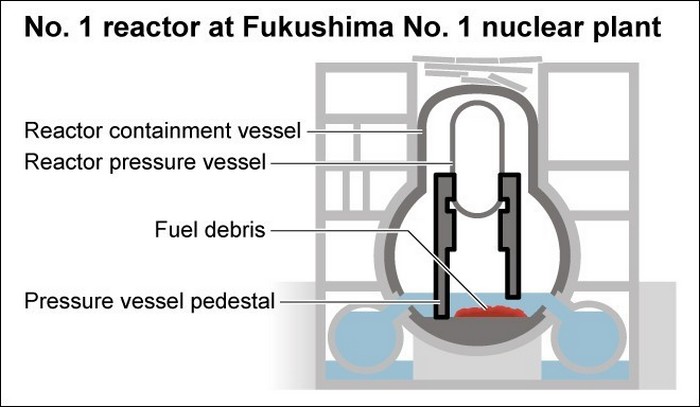
The cylindrical base, whose wall is 1.2 meters thick, is 6 meters in diameter. It supports the 440-ton reactor pressure vessel. The reinforcing rods normally covered with concrete are now bare and the upper parts are covered with sediment that could be nuclear fuel debris. The concrete probably melted under the high temperature of the debris. The strength of the pedestal is a major concern, as any defect could prove critical in terms of earthquake resistance.
Nothing is simple. The management of human material appears less complex.
Bringing back to life, whatever it takes
In the mountains of eastern Fukushima Prefecture, one of the main traditional shiitake mushroom industries is now almost always shut down. The reason? Radioactive caesium exceeding the government’s maximum of 50 becquerels per kilogram, largely absorbed by the trees during their growth. More than ten years after the nuclear disaster, tests have revealed caesium levels between 100 and 540 becquerels per kilogram. While cesium C134 has a radioactive half-life of about two years and has almost disappeared by now, the half-life of cesium C137 is about 30 years and thus retains 30% of its radioactivity 50 years after the disaster, and 10% after a century.
As more than two thirds of Fukushima prefecture is covered by forests, nothing seems favorable in the short term to get rid of all or part of the deposited radioactivity, as forests are not part of the areas eligible for ‘decontamination’, unlike residential areas and their immediate surroundings.
On the side of the contaminated residential and agricultural areas, ‘decontamination’ measures have been undertaken. But soil erosion and the transfer of contaminants into waterways, frequent due to typhoons and other intense rain events, are causing the radioactive elements to return, moving them incessantly. Scientists are trying to track radioactive substances to better anticipate geographical fluctuations in doses, but nothing is simple: the phenomena of redistribution of the initial contamination deposits from the mountains to the inhabited low-lying areas are eternal.
The Ministry of the Environment is considering the reuse of decontaminated soils (official threshold of 8,000 becquerels per kilogram), with tests to be conducted. For now, a law requires the final disposal of contaminated soil outside Fukushima Prefecture by 2045, which represents about 14 million cubic meters (excluding areas where radiation levels remain high). This reuse would reduce the total volume before legal disposal.
More generally, Japan has for some years now opted for the strategy of holding radiological contamination as zero and/or harmless. This is illustrated by the representative example of the financial compensation given to farmers, designed so that the difference between pre- and post-accident sales is paid to them as compensation for “image damage”, verbatim.
Finally, in the midst of these piles of scrap metal and debris, it is necessary to make what can be made invisible. Concerning radioactive waste for example, it must be stored in time. On the west coast of the island of Hokkaidō, the villages of Suttsu and Kamoenai have been selected for a burial project. Stainless steel containers would be stored in a vitrified state. But consultation with the residents has not yet been carried out. This is not insignificant, because no less than 19,000 tons of waste are accumulating in the accidental, saturated power plants, and must find a place to rest for hundreds of years to come.
In this sparsely populated and isolated rural area, as in other designated sites, to help with acceptance, 15 million euros are being paid to each of the two municipalities to start the studies from 2020. 53 million are planned for the second phase, and much more in the final stages. This burial solution seems inevitable for Japan, as the waste cannot remain at the level of the surface power plants and is subject at all times to the earthquakes that are bound to occur over such long periods (strong earthquakes have struck off the prefecture in 2021 and 2022). The degrees of dangerousness thus allow the government to impose a default choice, for lack of anything better.
On December 6, 2022, the Director General of the IRSN met with the President of Fukushima University and with a manager of the Institute of Environmental Radioactivity (IER). What was the objective? To show the willingness of both parties to continue ongoing projects on the effects of radioactive contamination on biodiversity and environmental resilience.
But France will not have waited for the health results of a disaster to learn and commit itself to take into account any improvement likely to improve the nuclear safety of its reactors. No ?
Experience feedback
After a few reactor restarts that marked a major change in its nuclear energy policy (ten nuclear reactors from six plants out of a total of fifty-four were restarted by June 2022), the Japanese government is nonetheless planning to build new generation nuclear power plants to support its carbon emission reduction targets. (A memorandum of understanding was signed by the Japan Atomic Energy Agency, Mitsubishi Heavy Industries and Mitsubishi FBR Systems with the American start-up TerraPower to share data for the Natrium fast neutron reactor project; the American company NuScale Power presented its modular reactor technology). But above all, the government is considering extending the maximum service life of existing nuclear reactors beyond 60 years. Following the disaster, Japan had introduced stricter safety standards limiting the operation of nuclear reactors to 40 years, but there is now talk of modernizing the reactors with safety features presented as “the strictest in the world”, necessarily, to meet safety expectations. Their program is worthy of a major refurbishment (GK).
But in France, where are we with our supplementary safety assessments?
The steps taken after the Fukushima disaster to reassess the safety of French nuclear facilities were designed to integrate this feedback in ten years. More than ten years after the start of this process of carrying out complementary safety assessments (CSA), this integration remains limited and the program has been largely delayed in its implementation.
Apparently, ten years to learn all the lessons of this unthinkable accident was not enough. Fear of the probable occurrence of the impossible was not the best motivation to protect the French nuclear fleet from this type of catastrophic scenario, based solely on these new standards. Concerning in detail the reality of the 23 measures identified to be implemented (reinforcement of resistance to earthquake and flooding, automatic shutdown in the event of an earthquake, ultimate water top-up for the reactor and cooling pool, detection of corium in the reactor vessel, etc.), the observation is even distressing: not a single reactor in operation is completely up to standard.
According to NegaWatt’s calculations, at the current rate of progress and assuming that funding and skills are never lacking, it would take until 2040 for the post-Fukushima standards to be finally respected in all French reactors. And even then, some of the measures reported as being in place are not the most efficient and functional (we will come back to the Diesels d’ultime secours, the DUS of such a sensitive model).
Even for the ASN, the reception of the public in the context of post-accident management could appear more important than the effectiveness of the implementation of the measures urgently imposed.
Then, let us complete by confirming that France and Japan have a great and long common history which does not stop in nuclear matters. Among this history, let us recall that Japan lacks facilities to treat the waste from its own nuclear reactors and sends most of it abroad, especially to France. The previous transport of highly radioactive Mox (a mixture of highly toxic plutonium oxide and reprocessed uranium oxide) to Japan dates back to September 2021, not without risk even for the British company specialized in this field, a subsidiary of Orano. The final request for approval for the completion of the Rokkasho reprocessing plant, an important partnership and technology transfer project, is expected in December 2022, although the last shipments to Japan suffered from defective products from Orano’s Melox plant, a frequent occurrence because of a lack of good technical homogenization of the products.
No one is immortal
In the meantime, the ex-managers of the nuclear power plant have been sentenced to pay 95 billion euros for having caused the disaster of the entire eastern region of Japan. They were found guilty, above all, of not having sufficiently taken into account the risk of a tsunami at the Fukushima-Daiichi site, despite studies showing that waves of up to 15 meters could hit the reactor cores. Precisely the scenario that took place.
Worse, Tepco will be able to regret for a long time to have made plan the cliff which, naturally high of 35 meters, formed a natural dam against the ocean and the relatively frequent tsunamis in this seismic zone. This action was validated by the Japanese nuclear safety authorities, no less culpable, on the basis of the work of seismologists and according to economic considerations that once again prevailed (among other things, it was a question of minimizing the costs of cooling the reactors, which would have been operated with seawater pumps).
The world’s fourth largest public utility, familiar with scandals in the sector for half a century, Tepco must take charge of all the work of nuclear dismantling and treatment of contaminated water. With confidence. The final total estimates are constantly being revised upwards, from 11,000 billion to 21,500 billion yen, future budgets that are borrowed from financial institutions, among others, with the commitments to be repaid via the future revenues of the electricity companies. A whole financial package that will rely on which final payer?
Because Tepco’s financial situation and technical difficulties are deteriorating to such an extent that such forty-year timetable projections remain very hypothetical, and the intervention of the State as a last resort is becoming more and more obvious. For example, the Japanese government has stated that the repayment of more than $68 billion in government funding (interest-free loans, currently financed by government bonds) for cleanup and compensation for the Fukushima Daiichi nuclear power plant disaster, owed by Tepco, has been delayed. Tepco’s mandatory repayments have been reduced to $270 million per year from the previous $470 million per year. It is as much to say that the envisaged repayment periods are as spread out as the Japanese debt is abysmal.
Despite this chaotic long-term management, the Japanese government has stated that it is considering the construction of the next generation of nuclear power plants, given the international energy supply environment and Japan’s dependence on imported natural resources. Once the shock is over, business and realpolitik resume.
On a human scale, only radioactivity is immortal.
Tepco denies radioactive water discharge claims
“For a radionuclide such as Iodine-129, this could be 160 million years.”

19 December 2022
The Tokyo Electric Power Company (Tepco) has denied allegations it plans to discharge radioactive wastewater from Japan’s Fukushima Daiichi nuclear power plant into the Pacific Ocean.
An emerging collective of community members, academics, legal experts, non-governmental organisations and activists from across the Pacific, who met through the Nuclear Connections Across Oceania Conference in Dunedin last month, condemned Tepco last week and called on the company to halt its discharge plans.
Three reactors at the Fukushima facility had meltdowns following a major earthquake on March 11, 2011, and work to clean up the radioactive contamination is continuing.
University of Otago Centre for Sustainability research fellow Dr Karly Burch said many people might be surprised to hear the Japanese government had approved Tepco’s plan to discharge more than 1.3million tonnes of radioactive wastewater into the Pacific Ocean for about 30 years, starting next year.
However, Tepco’s corporate communications office contacted the Otago Daily Times to explain the discharged water would be treated using multiple types of equipment, such as the Advanced Liquid Processing System (ALPS) which would remove multi-nuclides, and then be diluted so that it would meet the Japanese Government’s regulatory standards.
A company spokesman said in addition to complying with legally-based Government regulations, the company would also ensure the water was “safe” and conformed to international law and practices.
“In particular, the water to be discharged will be purified and diluted in two stages.
“During the first stage the water will be purified with ALPS until the concentration of radioactive substances, excluding tritium, falls below regulatory standards for discharge into the environment.
“Water with the sum of ratios of the concentration of each radionuclide other than tritium to the regulatory concentration of each, is less than one.
“And, prior to dilution, the concentration of radioactive substances in ALPS treated water will be measured/assessed and the results confirmed by a third-party.
“During the second stage, we will dilute tritium with a large volume of seawater (more than 100 times), thereby reducing its concentration to less than 1500Bq/l, which is 1/40 of Government regulations for discharge into the environment, as well as approximately 1/7 of the World Health Organisation’s drinking water quality guidelines (10,000 Bq/l).”
The Nuclear Connections Across Oceania Conference collective was not convinced and last week, they also called for the New Zealand Government to “stay true to its dedication to a nuclear-free Pacific” by taking a case to the International Tribunal for the Law of the Sea against Japan’s plans.
Dr Burch said predictive models showed radioactive particles released could spread to the northern Pacific.
“To ensure they do not cause biological or ecological harm, these uranium-derived radionuclide need to be stored securely for the amount of time it takes for them to decay to a more stable state.
“For a radionuclide such as Iodine-129, this could be 160 million years.”
https://www.odt.co.nz/news/dunedin/tepco-denies-radioactive-water-discharge-claims
NZ and Pacific urged to ‘step up’ against Japan’s nuclear plan

An estimated 30,000 anti-nuclear activists attended a rally in Tokyo’s Yoyogi Park, in 2012, to protest against the government’s plan to reopen several of Japan’s nuclear reactors.
Dec 17 2022
Japan’s decision to discharge nuclear wastewater into the Pacific Ocean for the next 30 years has been condemned by a Pacific alliance.
And the group of community members, academics, legal experts, NGOs and activists is calling on New Zealand and the Pacific to act to stop Japan.
Three reactors at the Fukushima Daiichi nuclear power plant had meltdowns after the earthquake and tsunami on March 11, 2011 which left more than 15,000 people dead.
The Japanese government said work to clean up the radioactive contamination would take up to 40 years.
Following the Nuclear Connections Across Oceania Conference at the University of Otago last month, a working group was formed to address the planned discharge.
Dr Karly Burch at the OU’s Centre for Sustainability said many people might be surprised to hear that the Japanese government has instructed Tokyo Electric Power Company (Tepco) to discharge more than 1.3 million tonnes of radioactive wastewater into the ocean from next year.
Burch said they had called on Tepco to halt its discharge plans, and the New Zealand Government to “step up against Japan”.
In June, Prime Minister Jacinda Ardern called for nuclear disarmament during her speech at the Nato Leaders’ Summit in Madrid.

Jacinda Ardern with Pacific Islands Forum secretary-general Henry Puna, left, and forum chair and Fijian PM Frank Bainimarama during the leaders’ summit in Fiji in July.
“New Zealand is a Pacific nation and our region bears the scars of decades of nuclear testing. It was because of these lessons that New Zealand has long declared itself proudly nuclear-free,” Ardern said.
Burch said the Government must “stay true to its dedication to a nuclear-free Pacific” by taking a case to the International Tribunal for the Law of the Sea against Japan.
“This issue is complex and relates to nuclear safety rather than nuclear weapons or nuclear disarmament,” the Ministry of Foreign Affairs and Trade said in a statement on Friday.
“Japan is talking to Pacific partners in light of their concerns about the release of treated water from Fukushima and Aotearoa New Zealand supports the continuation of this dialogue.
“There is also an important role for the global expert authority on nuclear safety issues, the International Atomic Energy Agency (IAEA), which Japan has invited to review and monitor its plans.
“Aotearoa New Zealand is following the reports released by the IAEA Task Force closely and has full confidence in its advice,” MFAT said.
In Onahama, 60km from the power station, fish stocks have dwindled, said Nozaki Tetsu, of the Fukushima Fisheries Co-operative Associations.
“From 25,000 tonnes per year before 2011, only 5000 tonnes of fish are now caught,” he said. “We are against the release of radioactive materials into our waters. What worries us is the negative reputation this creates.”

Storage tanks for radioactive water stand at Tokyo Electric Power Co.’s (Tepco) Fukushima Dai-ichi nuclear power plant on January 29, 2020 in Okuma, Fukushima Prefecture, Japan.
Japan needs nuclear power because its energy grid is not connected to neighbouring countries nor is it able to boost output of domestic fossil fuels, a government official in Tokyo said in a statement.
Japan has kept most of its nuclear plants idled since the 2011 earthquake and tsunami. In September, the government announced it would restart the power plants to develop the country’s next-generation nuclear reactors.
Japan has been decommissioning and decontaminating the Fukushima nuclear power plant.
Now, it must urgently empty its water tanks.
Burch said predictive models showed radioactive particles released would spread to the northern Pacific.

Dr Karly Burch says the New Zealand Government must stay true to its dedication to a nuclear-free Pacific.
“To ensure they do not cause biological or ecological harm, these uranium-derived radionuclides need to be stored securely for the amount of time it takes for them to decay to a more stable state. For a radionuclide such as Iodine-129, this could be 160 million years.”
Burch said Tepco had been using advanced liquid processing system technology to filter uranium-derived radionuclides from the wastewater that had been cooling the damaged reactors since 2011.
Burch said the Japanese government was aware in August 2018 that the treated wastewater contained long-lasting radionuclides such as Iodine-129 in quantities exceeding government regulations.
She has called for clarity from Tokyo, the International Atomic Energy Agency, the Pacific Islands Forum Secretariat, Pacific Oceans Commission, and a Pacific panel of independent global experts on nuclear issues on the outcome of numerous meetings they have had about the discharge.
“We want a transparent and accountable consultation process which would include Japanese civil society groups, Pacific leaders and regional organisations.
“These processes must be directed by impacted communities within Japan and throughout the Pacific to facilitate fair and open public deliberations and rigorous scientific debate,” Burch said.
The Pacific Islands Forum secretary-general, Henry Puna, has been approached for comment.
Decontamination work to start in more parts of Fukushima in FY 2023
Dec. 16, 2022
The Japanese government says decontamination work will start next fiscal year in more parts of Fukushima Prefecture that remain off limits following the March 2011 nuclear accident.
Authorities designated the areas as “difficult-to-return zones”, and evacuation orders remain in effect.
On Friday, Reconstruction Minister Akiba Kenya said the decontamination work includes parts of Okuma and Futaba towns.
A detailed schedule remains undecided, but the work will begin in the fiscal year starting next April.
The government plans to fund the work with 6 billion yen, or nearly 44 million dollars, from the state budget.
Some parts of the “difficult-to-return zones” have already been cleaned up so that people can return.
The ruling coalition has been urging the government to decontaminate more areas.
METI panel of experts approves policy of extending operating period and promoting rebuilding of nuclear power plants
December 16, 2022
The Ministry of Economy, Trade, and Industry (METI) has approved a proposal for the utilization of nuclear power plants by the Ministry of Economy, Trade, and Industry (METI), which focuses on the reconstruction (replacement) of nuclear power plants that the government has kept under wraps following the TEPCO Fukushima Daiichi nuclear accident, at a meeting on December 16. This is a clear shift in nuclear energy policy only less than five months after Prime Minister Fumio Kishida’s order, amid the ongoing restoration work from the Fukushima accident and compensation for the victims of the disaster. The government will make a formal decision at the Green Transformation (GX) Implementation Conference to be held before the end of the year.

At a meeting of the Basic Policy Subcommittee of the Advisory Committee on Natural Resources and Energy, Yasutoshi Nishimura, Minister of Economy, Trade, and Industry, said, “We would like to move forward with concrete steps to rebuild the reactors we have decided to decommission into next-generation innovative reactors (next-generation nuclear power plants)” on the premise that safety is assured and local governments understand the situation.
The law was amended after the Fukushima accident to limit the operating period of nuclear power plants to “40 years in principle, with a maximum of 60 years,” but by excluding the shutdown period due to the Nuclear Regulation Authority’s review and other factors, it will be possible to operate nuclear power plants for over 60 years. The government is expected to submit the revised bill to the ordinary Diet session next year.
At the end of July, the prime minister had ordered a study of measures to ensure a stable energy supply toward a decarbonized society. (Shinichi Ogawa)
◆An overwhelming majority of committee members advocate the promotion of nuclear power generation
On July 16, the Ministry of Economy, Trade, and Industry (METI) held a meeting of its experts, the Subcommittee on Basic Policy of the Advisory Committee on Natural Resources and Energy, and approved the ministry’s policy, which focuses on rebuilding (replacing) nuclear power plants and allowing them to operate for 60 years or longer. The committee approved the policy. While an overwhelming majority of the committee members advocated the promotion of nuclear power plants, only one member called for careful discussion.
At 1:00 p.m. in a conference room on the 17th floor of the Ministry of Economy, Trade and Industry (METI) in Kasumigaseki, Tokyo. Eighteen of the 21 committee members were present, including online, and three were absent. In addition to METI Minister Yasutoshi Nishimura, the meeting was attended by executives including Hosaka Shin, director general of the Agency for Natural Resources and Energy.
The METI officials explained that the public discussion should be held over a period of about one year. The only one who “waited” on the METI’s proposed policy on the use of nuclear power plants was Ms. Chisato Murakami, an advisor to the committee on consumer affairs. Murakami also criticized the ministry’s approach to the discussion, saying that it was “too hasty” at another METI expert panel meeting on the nuclear energy subcommittee, which discussed the use of nuclear power plants in detail.
Each committee member had five minutes to express his or her opinion. The other committee members supported METI’s policy, calling it “groundbreaking. Shuzo Sumi, a member of the committee and Senior Advisor to Tokio Marine & Nichido Fire Insurance, commented, “Construction of nuclear power plants has been halted for more than 10 years. We need to make a decision now in terms of human resources and industry.
Commissioner Takeo Tachibanagawa, Vice President of Kokusai University, said that while nuclear power plants are necessary, he disagreed with the current policy. He pointed out the contradiction in the policy, saying, “Extending the operation of nuclear power plants will postpone the construction of next-generation innovative reactors (next-generation nuclear power plants), which will cost about 1 trillion yen. He also questioned the policy guideline, the Basic Energy Plan, which calls for renewable energy to be the main source of power, but “there was not much talk about renewable energy.
The meeting ended in two hours, 30 minutes earlier than scheduled. The executives of the Agency for Natural Resources and Energy, who had been looking at each other sternly, left the meeting room looking relaxed and chatting with the committee members. (The meeting ended 30 minutes early.)
https://www.tokyo-np.co.jp/article/220394
Discharging treated water from Fukushima Daiichi Nuclear Power Plant “Not just a problem for Japan” International forum online Opposition from around the world

Citizens, lawyers, and scientists from Japan, the U.S., and other countries exchange opinions about the release of contaminated water from TEPCO’s Fukushima Daiichi Nuclear Power Plant after purification and treatment at sea at an online forum.
December 17, 2022
Citizens of Fukushima Prefecture and others have been discussing a plan to discharge contaminated water from TEPCO’s Fukushima Daiichi Nuclear Power Plant into the ocean. Citizens’ Council” held an online international forum on December 17, inviting citizens, scientists, lawyers, and others from countries and regions around the world, including the United States, Australia, and China. The participants commented, “The oceans are connected. It is not just a problem for Japan.” A number of participants expressed opposition to ocean discharge.
One hundred and eighty-eight people participated in the forum. A video was shown by Bedi Rasoulay, a student from the Marshall Islands in the Pacific Ocean, which has been the site of nuclear tests by the United States, Europe, and other nations. In the video, Ms. Lasure touched on the health problems faced by residents who returned to the islands after being told that they were safe to live there, and she said, “The ocean is our life. The Pacific Ocean is neither a nuclear test site nor a place to dump nuclear waste. If we discharge it into the ocean, it will be irreversible. I am against it.
Dr. Arjun McJourney, director of the U.S. Institute for Energy and Environmental Research, analyzed the data released by TEPCO with experts in oceanography, ecology, nuclear physics, and other fields. He said that the amount of sampling and the types of radioactive materials being monitored are too small to make the water safe for discharge, and pointed out that “there is a lack of research on the impact on the ecosystem and that other viable alternatives have not been adequately considered because of the oceanic discharge. He stated, “All options should be considered, and methods to minimize risk should be scientifically verified.”
Environmental groups from China, South Korea, Taiwan, Australia, and other countries sent messages saying that if the waste is discharged into the ocean, pollution will spread and affect not only neighboring countries in the Asia-Pacific region but also other countries in the region, and reported on the opposition movements in their respective regions.
Mr. Forss, an anti-nuclear activist from California, USA, suggested that “we should take action around the world at the same time in order to raise awareness of the issue.
Ruiko Muto, a member of the organizing group and a resident of Miharu-cho, Fukushima Prefecture, said, “We now know that the ocean discharge is a major international problem because it is an environmental pollution of the earth. We want to work together to prevent further environmental pollution by radiation from getting worse. (Natsuko Katayama)
https://www.tokyo-np.co.jp/article/220606?fbclid=IwAR3OcWXBYNTFX0R3Zu23sNPq
Pacific Alliance condemns radioactive discharge from Fukushima Daiichi – calls for NZ action

Panel organiser Dr Karly Burch and panellists discussing TEPCO’s wastewater discharge plan at the Nuclear Connections Across Oceania Conference 2022.
15 December 2022
Plans to discharge tonnes of radioactive wastewater into the Pacific Ocean for around thirty years have been condemned in a statement issued today by a Pacific-wide alliance.
Dr Karly Burch, of Otago’s Centre for Sustainability, says many people will be surprised to hear that the Japanese government has approved Tokyo Electric Power Company (TEPCO) to discharge more than 1.3 million tonnes of radioactive wastewater, starting next year and for approximately 30 years.
Following the Nuclear Connections Across Oceania Conference, held at the University of Otago late last month, a working group was formed to address the planned radioactive wastewater discharge from TEPCO’s Fukushima Daiichi nuclear power plant impacted by the 2011 tsunami.
“We learned at our conference that people in Japan and throughout the Pacific are deeply concerned about the radioactive wastewater discharge,” says Dr Burch.
The emerging collective of community members, academics, legal experts, NGOs and activists from Japan and across the Pacific, who met through the conference, have co‑authored a statement of solidarity calling on TEPCO to halt their discharge plans and for the New Zealand Government to “stay true to its commitment to a nuclear free Pacific” by taking a case to the International Tribunal for the Law of the Sea against Japan’s nuclear waste disposal plans.
Greenpeace Aotearoa Senior Campaigner Steve Abel says: “It’s right that the New Zealand government should stand in solidarity with Pacific neighbours and through international legal action directly oppose the discharge of nuclear waste into the Pacific Ocean.”
Dr Burch says predictive models show that radioactive particles released will spread to the northern Pacific, so secure on-land storage should be used instead.
Most of the radionuclides that will be released in the wastewater discharge have been produced through the nuclear fission of uranium.
“To ensure they do not cause biological or ecological harm, these uranium-derived radionuclides need to be stored securely for the amount of time it takes for them to decay to a more stable state – for a radionuclide such as Iodine-129, this could be 160 million years,” says Dr Burch.
TEPCO is using Advanced Liquid Processing System (ALPS) technology to filter uranium-derived radionuclides from the wastewater that has been cooling damaged reactors at Fukushima Daiichi since the onset of the 2011 nuclear disaster.
“While in Japanese the radioactive wastewater is often referred to as ‘treated water’, this does not automatically mean that the water is free from uranium-derived radionuclides. It simply means the amount of measurable radionuclides are under a designated threshold limit.
“One thing the statement highlights is that the Japanese government has known since at least August 2018 that ALPS-treated wastewater contains long-lasting radionuclides such as Iodine-129 in quantities exceeding government regulations,” Dr Burch shared.
The statement of solidarity calls for the following resolutions:
- We call on TEPCO and the Japanese Government to immediately end its plan to discharge radioactive wastewater from Fukushima Daiichi into the Pacific Ocean.
- We call on the New Zealand government to stay true to its commitment to a nuclear free Pacific, and to support other concerned Pacific governments by playing a leading role in taking a case to the International Tribunal for the Law of the Sea against Japan concerning the proposed radioactive release from TEPCO’s Fukushima Daiichi.
- We seek clarity from the Japanese Government, the International Atomic Energy Agency, Henry Puna (the Secretary General of the Pacific Islands Forum Secretariat and Pacific Ocean Commissioner), and the Pacific Panel of Independent Global Experts on Nuclear Issues on the outcome of numerous meetings they had about the radioactive wastewater discharge.
- We call for a transparent and accountable consultation process as called for by Japanese civil society groups, Pacific leaders, and regional organisations. This consultation would be between the Japanese government and its neighbours throughout the Pacific. These processes must be directed by impacted communities within Japan and throughout the Pacific to facilitate fair and open public deliberations and rigorous scientific debate.
“We invite anyone interested in this topic to read and sign our statement of solidarity,” says Dr Burch.
The full statement can be found on the Nuclear Connections Across Oceania website:
Our contaminated future

A rice field in Iitate, Fukushima prefecture, Japan, 2016.
is an assistant professor in the department of anthropology at Université Laval, in Quebec City, Canada. He is working on a book about the 2011 Fukushima nuclear disaster, ‘Radioactive Governance: The Politics of Revitalization after Fukushima’.
As a farmer, Atsuo Tanizaki did not care much for the state’s maps of radioactive contamination. Colour-coded zoning restrictions might make sense for government workers, he told me, but ‘real’ people did not experience their environment through shades of red, orange and green. Instead, they navigated the landscape one field, one tree, one measurement at a time. ‘Case by case,’ he said, grimly, as he guided me along the narrow paths that separated his rice fields, on the outskirts of a small village in Japan’s Fukushima prefecture.

The author examines maps of radioactive contamination in Fukushima.
It was spring in 2016 when I first visited Tanizaki’s farm. The air was warm. The nearby mountains were thick with emerald forests of Japanese cedar, konara oak and hinoki cypress. A troop of wild red-faced monkeys stopped foraging to watch us as we walked by. And woven through it all – air, water, land, plants, and living bodies – were unseen radioactive pollutants. Almost everything now carried invisible traces of the 2011 meltdown at the Fukushima Daiichi nuclear power plant.
Tanizaki began taking measurements. With his Geiger counter, he showed me how radioactive elements were indifferent to the cartographic logic of the state. In some places, the radiation level dropped low, becoming almost insignificant. But here and there, beside a ditch or near a pond, the level was elevated dangerously high. Tanizaki called these areas ‘hot spots’ and they were scattered across the landscape, even within supposedly ‘safe’ zones on government maps. Contamination in Fukushima, he believed, was structured in a way that no state was prepared to solve.
A decade after the 2011 meltdown, the region remains contaminated by industrial pollution. Though attempts at removing pollutants continue, a new realisation has taken hold among many of Fukushima’s farmers: there’s no going back to an uncontaminated way of life.
Watching Tanizaki measuring industrial pollution in a toxic landscape neglected by the state, I began to wonder: is this a future that awaits us all?
As an anthropologist interested in contamination, Fukushima throws into sharp relief the question of what it means to live in a permanently polluted world. That is why I began coming to Japan, and spending time with farmers such as Tanizaki. I wanted to understand the social dynamics of this new world: to understand how radioactivity is governed after a nuclear disaster, and how different groups clash and collaborate as they attempt to navigate the road to recovery.
I expected to find social bonds pushed to breaking point. Stories of post-disaster collapse circulate in our collective consciousness – tales of mistrust, fear and isolation, accompanied by images of abandoned homes and towns reclaimed by plants and wildlife. And I found plenty of that. A sense of unravelling has indeed taken hold in rural Fukushima. Residents remain uncertain about the adverse health effects of living in the region. Village life has been transformed by forced evacuations and ongoing relocations. And state-sponsored attempts at revitalisation have been ineffective, or complete failures. Many communities remain fragmented. Some villages are still abandoned.
Farmers took matters into their own hands, embracing novel practices for living with toxic pollution
In Fukushima, I found a society collapsing under the weight of industrial pollution. But that’s only part of the story. I also found toxic solidarity.
Rather than giving up, Tanizaki and other farmers have taken matters into their own hands, embracing novel practices for living alongside toxic pollution. These practices go far beyond traditional ‘farming’. They involve weaving relationships with scientists, starting independent decontamination experiments, piloting projects to create food security, and developing new ways to monitor a changing environment. Among rice fields, orchards and flower beds, novel modes of social organisation are emerging – new ways of living from a future we will one day all reckon with.
But the story of toxic solidarity in Fukushima doesn’t begin among rice fields and farms. It begins under the Pacific Ocean, at 2:46pm on 11 March 2011. At that moment, a magnitude 9.0-9.1 earthquake off the coast of northeastern Japan caused a devastating tsunami that set in motion a chain of events leading to the meltdown of three reactors at the Fukushima Daiichi nuclear power plant. Soon, Fukushima would find its place alongside Three Mile Island and Chernobyl as an icon of nuclear disaster – and an emblem of the Anthropocene, the period when human activity has become the dominant influence on environmental change. As the reactors began to meltdown, pressure mounted in the power station’s facilities, leading to explosions that released dangerous radionuclides into the air, including caesium-134, caesium-137, strontium-90 and iodine-131. These isotopes, with lifespans ranging from days to centuries, blew across Fukushima and northeastern Japan. And as they accumulated, health risks increased – risks of cancers and ailments affecting the immune system. To protect the population, the Japanese state forced tens of thousands of citizens living near the reactors to evacuate.

Furekonbaggu, bags of contaminated soil, piled neatly in the Fukushima countryside.
At first, Tanizaki believed he had escaped the worst of the radiation because his village was not in the mandatory evacuation area. But when the wind carried radionuclides – invisible, tasteless, odourless – far beyond the government models, his village became one of the most contaminated areas in Fukushima. He learned he had been exposed to harmful radiation only when the government forced him to leave.
Tanizaki and other evacuated villagers were relocated to ‘temporary’ housing. As the months became years, Tanizaki longed to return to his life as a farmer. But what would he farm? His land had been irradiated, and no one wanted to eat food grown in radioactive topsoil. To help Fukushima’s rural citizens retrieve their farms, the Japanese government launched an official politics of revitalisation in Fukushima, investing trillions of yen to clean and decontaminate the region before repatriating evacuees. Part of the cleanup involved storing tainted topsoil in large black plastic bags known as furekonbaggu (literally ‘flexible container bags’), which were then stacked in piles throughout the countryside. To keep residents safe, the government also promised to track contamination through a monitoring system. At the time, the possibility of a pristine Fukushima seemed within reach.
In June 2015, after four years of forced evacuation, Tanizaki was finally allowed to return to his farm. But the decontamination efforts had failed. He and many others felt they had been returned to a region abandoned by the government. The landscape was now covered in millions of bags of radioactive topsoil – black pyramids of the Anthropocene – while the government waited for a permanent disposal site. Also, the plastic in some furekonbaggu had already broken down, spilling radioactive soil over freshly decontaminated land. The state’s monitoring efforts were equally inadequate. In Tanizaki’s village, the monitoring of airborne radiation produced measurements that were rarely precise enough to give a complete picture of shifting contamination. Villagers lived with constant uncertainty: is the garden contaminated? Are the trees behind the house safe? Are mushrooms in the forest still edible?
I saw dead sunflowers rooted in irradiated fields – withered emblems of dreams to retrieve Fukushima
For some, the uncertainty was too much. Tens of thousands relocated to other parts of Japan rather than returning. In 2010, the region registered 82,000 people whose main income came from farming. But by 2020, that number had fallen to around 50,000. Abandoned greenhouses and fields can still be found dotted across the landscape.

Withered sunflowers in irradiated fields.
Knowing that government efforts weren’t going to help, some returnees began to decontaminate their own villages and farms. There was hope that the region could be returned to its former uncontaminated glory. One proposed method involved planting sunflowers, which were believed to absorb radiation as they grew. Yellow flowers bloomed across the farmlands of Fukushima. However, the results were unsatisfactory. Even during my time in Japan, years after the disaster, I saw dead sunflowers still rooted in irradiated fields – withered emblems of early dreams to retrieve a pre-disaster Fukushima. I also witnessed decontamination experiments in rice paddies: farmers would flood their fields, and then use tools to mix the water with the irradiated topsoil below, stirring up and dislodging radioactive pollutants such as caesium. The muddy water was then pushed out of the field using large stiff-bristled brushes. This project also failed. Some paddy fields are still so contaminated they can’t grow rice that’s safe for human consumption.
These failures significantly affected the morale of Fukushima’s farmers, especially considering the importance of the region as a rice-growing capital. Once easy decontamination efforts failed, returnees were forced to ask themselves difficult questions about their homes, livelihoods and identities: what will happen if farming is impossible? What does it mean to be a rice farmer when you can’t grow rice? What if life has been irrevocably altered?
Even the mushrooms tasted different. One farmer, Takeshi Mito, told me he had learned to grow shiitake mushrooms on artificial tree trunks, since real trees were too contaminated to produce edible fungi. ‘Now the taste of the shiitake has changed,’ he mumbled, a strange sadness filling his voice. The ‘real’ trees had given the mushrooms a special flavour, just like ageing a whisky in a sherry cask. ‘Yeah,’ he said, pausing to remember. ‘They were good.’
A new reality was emerging. Farmers were learning to accept that life in Fukushima would never be the same. Small details are constant reminders of that transformation, like the taste of mushrooms, or the library in Tanizaki’s home, which is now filled with books on Chernobyl, nuclear power, radioactive contamination, and food safety. This is new terrain, in which everyone carries a monitoring device, and in which everyone must learn to live with contamination. A former way of life may be impossible to retrieve, and attempts at decontamination may have failed, but farmers such as Tanizaki are learning to form new relationships to their irradiated environment. They’re forging new communities, reshaping notions of recovery, and reimagining their shared identities and values. Contamination may appear to have divided Fukushima’s farmers, but it has also united them in strange and unexpected ways.
By the time the evacuees were allowed to return to their homes, government mistrust had become widespread. Official promises were made to Fukushima residents that a nuclear disaster was impossible. These promises were spectacularly broken when radiation spread across the region. A lack of information from state sources made things only worse, leading to a growing sense that the government was unable to provide any real solutions. Not trusting state scientists, but still wanting to know more about the invisible harm in their villages, farmers reached out to academics, nongovernmental organisations and independent scientists in the hope of better understanding radioactivity.
These new relationships quickly changed social life in rural communities, and brought an influx of radiation monitoring devices. Rather than asking for additional state resources (or waiting endlessly for official responses to questions), farmers worked with their new networks to track radiation, measuring roads, houses, crop fields, forest areas and wildlife. Everyone learned to use radiation monitoring devices, which quickly became essential bodily extensions to navigate a changed Fukushima. Many rural communities even began to use them to develop their own maps. I remember the walls of Tanizaki’s home being covered in printed images showing the topography of the local landscape, with up-to-date information about radiation often provided by farmers. Local knowledge of the environment, combined with the technical savoir faire of independent scientists, produced far more accurate representations of contamination than the state maps made by government experts.
Sharing the work of living with contamination provided a feeling of communal life that returnees had so missed
Thanks to these maps, Tanizaki now knew that radiation doses were higher at the bottom of a slope or in ditches (where radionuclides could accumulate, forming ‘hot spots’). He also knew that the trees outside someone’s home increased the radiation levels inside. Through this mapping work, many farmers developed a kind of tacit knowledge of radiation, intuitively understanding how it moved through the landscape. In some cases, it moved far beyond the colour-coded zones around the reactors, or even the boundaries of Fukushima itself. A major culprit of this spread has been inoshishi (wild boar), who eat contaminated mushrooms before migrating outside irradiated areas, where their highly contaminated flesh can be eaten by unsuspecting hunters. To address this problem, monitoring programmes were developed based on the knowledge of farmers, who were familiar with the feeding and migration patterns of wild boar. Once a delicacy, inoshishi have become what the anthropologist Joseph Masco calls ‘environmental sentinels’: a new way to visualise and track an invisible harm.
But monitoring is more than a pragmatic tool for avoiding harm. In many instances, it also became a means of forging new communities. After returning, farmers began to share their knowledge and data with scientists, gathering to talk about areas that need to be avoided, or holding workshops on radiation remediation. Ironically, sharing the work of living with contamination provided a feeling of communal life that returnees had so missed. Ionising radiation can ‘cut’ the chemical bonds of a cell. Based on the experiences of Tanizaki and other farmers, it can also create novel connections.
Many farmers told me of their amazement at the sheer diversity of people who had come to support the revitalisation efforts. And it wasn’t only former evacuees who were drawn into these new communities. It was also the volunteers who came to help from other parts of Japan. One scientist I spoke with, who specialised in radiation monitoring, ended up permanently moving to a village in Fukushima, which he now considers his hometown. There are many similar cases, and they’re especially welcome in the aftermath of a disaster that has deeply fragmented Fukushima’s rural community. Some farmers told me there were times when they would go weeks without speaking to anyone. Life in a polluted, post-disaster landscape can be lonely.
Monitoring might have helped residents avoid harmful radiation, but it didn’t necessarily help with farming. Often, the new maps revealed that crops grown in certain areas would fall beyond the official permissible thresholds for radiation in food. And so, farmers who could no longer farm were forced to develop alternatives. In collaboration with university scientists, some former rice farmers began growing silver grass as a potential source of biofuel that would provide energy for their region. ‘If we can’t grow food, we can at least make energy!’ one scientist told me.

Other farmers now use their irradiated fields to grow ornamental flowers. In the solarium of an elderly man named Noriko Atsumi, I saw rows of beautiful Alstroemeria flowers that are native to South America. When I visited in 2017, Atsumi was happy to talk about his flowers with me, and eager to show his solarium. ‘At the beginning,’ he told me, ‘it was really hard to try to grow flowers all alone, especially in these horrible conditions, but now I’m happy I did.’ Another elderly Fukushima farmer, Masao Tanaka, who lives alone on his farm, also dreamt of having a personal flower garden. I saw hundreds of narcissus flower bulbs he’d planted in a small field once used to grow commercial crops.
The flower gardens of Fukushima are an attempt to forge new relationships
For farmers such as Atsumi and Tanaka, growing flowers has become a new hobby. But ‘hobby’ is the key word here: Japan remains anxious about radiation in Fukushima produce, so most flowers are simply given away rather than sold. Though these ornamental flowers are not commodities like rice, they fall within an aesthetic of revitalisation. They’re little sprouts of precarious hope – the dream of a Fukushima that a new generation of farmers might one day call home. One village official explained this hope (and its complexities) to me like this:
I don’t know what kind of impression you have of our village. It used to be one of the top 10 prettiest villages in Japan. Now, there are 1.5 millionfurekonbaggu across it. They are left right next to paddy fields. Citizens are seeing these bags every day and asking themselves: ‘Can we really go back?’ They are being told that everything is safe, but when they see those bags, how can they be sure?
In a landscape of black bags, the flower gardens of Fukushima are an attempt to forge new relationships – an attempt to bring colours back to a post-disaster landscape and to the lives of those who live in it. Flowers represent a communal attempt to reshape the narrative of village life, which has been shadowed by tragedy. Flowers have allowed communities to make their villages beautiful again, and allowed farmers to take some pride in their decision to return to what many believed was a ‘ruined’ agricultural region.
On one trip to Fukushima, I visited a long plastic greenhouse where fire-red strawberries were being cultivated by a group of farmers and scientists. Inside, I saw rows of strawberries growing on the ground, fed by filtered water from a system of tubes. This watering system ran in and out of soil that was thick with pebbles, which a scientist told me were ‘volcanic gravels from Kagoshima’ on the other side of Japan, hundreds of kilometres away. They were using these gravels, he said, because the soil in Fukushima was ‘too contaminated to harvest safe products’. In fact, almost everything that the strawberries needed to grow, from the plastic greenhouse to the filtered water, had come from elsewhere. I couldn’t help asking: ‘Can you really say these strawberries came from Fukushima?’
One scientist working in the greenhouse seemed offended by my question. ‘We are using the safest technology in the world!’ he said. ‘It cannot be safer than that. The bad part is that people don’t write about this. All they write about are the plastic bags that you see everywhere!’
I was confused. I’d asked a question about provenance but was given an answer about safety. In the post-disaster landscape, safety had paradoxically become an integrated component of the products of Fukushima. The new agricultural products of Fukushima have become known not merely by the environment they grew in, but by the technologies that have allowed them to resist that environment. The scientist’s response showed some of the ways that Fukushima is embodying new values after the disaster. New products, like little red strawberries grown with imported soil, are becoming symbols of resilience, adaptation and recovery – part of the fabric of solidarity in a new Fukushima.
Toxic solidarity has been encouraged by the same organisations responsible for the disaster
But not everyone can share the embrace of toxic solidarity. In Tanizaki’s village, many young people have permanently left, wary of the health risks of residual radiation. These risks are especially concerning to new parents. During my fieldwork, I heard mothers complain about strange ailments their children experienced right after the disaster: chronic diarrhoea, tiredness, and recurrent nosebleeds that were ‘a very dark and unusual colour’. Concerns are not only anecdotal. After the disaster, thyroid cancers among children increased in Fukushima, which some believe was caused by exposure to iodine-131 from the meltdown. For some parents, leaving has been the only way to protect themselves and their children.
Complicating the binary between those working with or against contamination, toxic solidarity has been encouraged by the same organisations responsible for the disaster. For example, Japanese state ministries and nuclear-related organisations have increasingly encouraged returnees such as Tanizaki to become responsible for keeping their dose of radiation exposure as low as possible. In this way, safe living conditions become the responsibility of citizens themselves, as tropes of resilience are conveniently deployed by the state, and financial supports for disaster victims are gradually cut off. Those who refuse to participate in these projects have been labelled hikokumin (unpatriotic citizens), who hamper the revitalisation of Japan. What we find in this co-option is an unreflexive celebration of farmers’ resilience – a celebration that serves the status quo and the vested interests of state agencies, corporate polluters and nuclear lobbies. Through this logic, disaster can be mitigated, free of charge, by the victims themselves.
These blind celebrations of toxic solidarity only legitimise further polluting practices and further delegations by polluters. In a way, it is no different to the strategies of tobacco lobbies in the mid-20th century, who tried to market smoking as a form of group bonding, a personal choice or an act of freedom (represented by those many Marlboro Men who would eventually die from smoking-related diseases). While toxic solidarity can be applauded as a grassroots act of survival and creativity, it is also the direct result of broader structural patterns: the fact that polluting industries are often installed in peripheral, poor and depopulated regions; the repeated claims of government that toxic disasters can never happen; and the over-reliance on technological fixes that rarely solve social problems. When all else fails, it is always up to the ‘small’ people to pick up the pieces as best they can.
Contamination isn’t going away. Radiation will continue to travel through the landscape, pooling in rice paddies, accumulating in mushrooms and forests, and travelling in the bodies of migrating boar. Some areas remain so irradiated that they’re still bright red on the government maps. These are the prohibited ‘exclusion zones’, known in Japanese as kikan konnan kuiki (literally, ‘difficult-to-return zones’). They may not be reopened in our lifetimes.
One afternoon, someone from Tanizaki’s village took me to see the entrance to the nearby exclusion zone, which is blocked by a wide three-metre-long metal gate, barricades, and a guard. By the gate, in a small wooden cabin, a lonely policeman acted as a watchman. The gate, painted bright green, is supposed to separate people from an environment that is considered dangerous, but almost anybody can easily cross into the forbidden zone. Some farmers even have official access to the kikan konnan kuiki, so that they can check on the condition of their homes in the red zone. Cars and small pickup trucks go in and out, without any form of decontamination.
As I took a picture of the gate, the guard looked over and a farmer, perhaps worried I would get in trouble, came to explain: ‘He’s a foreigner you know, he just wants to see.’ It was forbidden for a non-Japanese person like me to enter the area. The same interdiction did not apply to locals. One Japanese citizen who had come with us was critical of this double standard: ‘The people of Fukushima are no longer normal people.’
In the post-disaster landscape, we can begin to see novel forms of community, resistance, agency and innovation
In the years since that day at the edge of the red zone, I have pondered this phrase many times. In the Anthropocene, when Earth has become permanently polluted – with microplastics, ‘forever chemicals’ and other traces of toxicity accumulating in our bodies – are any of us still ‘normal people’? The problems of Tanizaki and other Fukushima farmers will soon become everybody’s concern, if they haven’t already. How might we respond to this new reality?
The current mode of governing life in an age of contamination is built on a promise that we can isolate ourselves from pollution. This is a false promise. So-called decontamination measures in Fukushima are a crystal-clear example that this doesn’t work. There’s no simple way to ‘decontaminate’ our world from ubiquitous pollution: from mercury in sea life, endocrine disruptors in furniture, pesticide in breast milk, heavy metals in clothing, alongside an almost neverending list of other toxicants.
The experiences of Fukushima’s farmers show us how to navigate the uncharted, polluted seas of our age. Their stories show how new communities might express agency and creativity, even in toxic conditions. They also show how that agency and creativity can be co-opted and exploited by dubious actors. In the post-disaster landscape of rural Fukushima, we can begin to see the outlines of novel forms of community, resistance, agency and innovation that might shape our own future – a future that will hopefully be better, in which economic prosperity is not pitched against environmental wellbeing. In the end, these stories allow us to think about the kinds of toxic solidarity that we can nurture, as opposed to those that have historically been imposed on the wretched.
Someday, when we acknowledge we are no longer ‘normal’, Tanizaki’s story is one we must all learn to tell.
https://aeon.co/essays/life-in-fukushima-is-a-glimpse-into-our-contaminated-future
No nuclear power plant in the world has been in operation for more than 60 years. Troubles continue to occur
Beznau nuclear power plant in northern Switzerland in 2012, after 53 years of operation.
December 9, 2022
The draft action guidelines for the utilization of nuclear power plants, which were discussed at the METI’s experts’ meeting on December 8, would maintain the current restriction on the operating period and allow operation beyond the “maximum 60 years,” with a view to eliminating the limit in the future. However, there is not a single example in the world of a nuclear power plant that has operated for more than 60 years. In Japan, there has been a string of troubles due to equipment deterioration, and the Nuclear Regulation Authority is having a hard time regulating this “unexplored area. (The Nuclear Regulation Authority of Japan is having a hard time regulating this “unexplored area.)

A thin piece of iron rust (triangle in the center) stuck in a pipe (bottom right) inside the steam generator at the Takahama Unit 4 nuclear power plant in Fukui Prefecture (courtesy of Kansai Electric Power Co.).
According to the International Atomic Energy Agency (IAEA), the longest operating period of a nuclear power plant in the world, including those that have already been decommissioned, is 53 years and one month for India’s Tarapur reactors Nos. 1 and 2. All four reactors are still in operation.
Like Japan, the U.S. has a 40-year operating period, but if a plant passes a regulatory review, it can be extended for 20 years, and there is no limit to the number of extensions. In the U.K. and France, there is no upper limit to the operating period, and a review is required every 10 years.
However, many nuclear power plants were designed and built with a 40-year service life in mind. As nuclear power plants age, maintenance and management costs become higher, and many operators are likely to choose decommissioning over long-term operation.
Even nuclear power plants in Japan that are less than 40 years old are experiencing problems due to deterioration.
Since 2018, KEPCO’s Takahama Units 3 and 4 (Fukui Prefecture), which have been in operation for 37 years, have experienced a series of troubles in which flakes of iron rust have accumulated in the steam generators connected to the reactors over many years of operation, hitting and damaging pipes. The problem was confirmed six times during regular inspections and recurred even after the steam generators were cleaned.
Even more serious are inspection leaks. In 2004, at Mihama Unit 3, which had been in operation for less than 30 years, a pipe that had been omitted from the inspection list and never checked became thin and broke due to age-related deterioration, spewing hot water and steam that killed five people and seriously injured six others.
At TEPCO’s Kashiwazaki Kariwa Nuclear Power Station in Niigata Prefecture, it was discovered in October of this year that the piping in the turbine building of Unit 7, which was shut down shortly after the Fukushima Daiichi nuclear accident, had not been inspected in 11 years and had developed holes due to corrosion.
Hiromitsu Ino, professor emeritus of metallurgy and materials science at the University of Tokyo, said, “Ultrasonic inspection to check the deterioration status is difficult to measure behind the pipes. If deterioration progresses due to long-term operation, the risk of inspection leakage increases, leading to a serious accident,” he warned.
The Regulatory Commission, which examines whether or not to extend operation from the aspect of safety, has been unable to begin considering concrete measures on how to regulate nuclear power plants that are over 60 years old.
A major hurdle is the lack of data on how reactors actually deteriorate. The way of understanding the degree of deterioration differs from that of the U.S., which is ahead of the U.S. in the examination of operation extensions. Shinsuke Yamanaka, the chairman of the committee, said at a press conference, “The period beyond 60 years is an unknown area. We need to create Japan’s own rules,” he said, acknowledging the difficulty of the study.
While the regulations remain unclear, only the mechanism to make it possible to exceed 60 years is moving ahead. Mr. Ino emphasizes. Japan has many earthquakes and a high population density. The situation is different from other countries. Nuclear power plants should be operated for 40 years, which is the design guideline.”
https://www.tokyo-np.co.jp/article/218838.
Tokyo enacts ordinance mandating solar power for homes, first in Japan, starting in spring of 2025
December 15, 2022
On December 15, the final day of the regular session of the Tokyo Metropolitan Assembly, a revised ordinance related to the nation’s first mandatory installation of solar panels on newly constructed single-family homes was passed and enacted with a majority of votes in favor. The aim is to reduce greenhouse gas emissions in the residential sector. The new system will begin in April 2025, after a preparatory period to support businesses and inform residents.
According to the Tokyo Metropolitan Government, major housing manufacturers will be obligated to install panels on buildings with a total floor area of less than 2,000 square meters, including residences. Purchasers will be required to reduce the environmental impact of their homes as an obligation to make an effort.
The TMG estimates that if 4-kilowatt panels are installed, the initial cost of 980,000 yen can be recovered in 10 years through the income from electricity sales, and only 6 years if the TMG subsidy is used.
https://www.tokyo-np.co.jp/article/220091
Fukushima: Japan prepares to discharge water from the plant into the sea

13/12/2022
11 years after the Fukushima disaster, Japan is working hard to overcome challenges posed by its water. Since the Tohoku tsunami of 11 March 2011, Japan has been decommissioning and decontaminating the nuclear power plant, which is expected to take 30 to 40 years.
Now, the plant must urgently empty its water tanks.
Euronews spoke to Kimoto Takahiro, the Deputy Site Superintendent at D&D Communication Center, Fukushima Daiichi D&D., Co., Tokyo Electric Power Company (TEPCO) to ask where the water comes from.
“The water that accumulates every day was used to cool the molten fuel”, Kimoto explained. “And there is also water from underground springs or rain that accumulates.”
This water is treated in ALPS, a unit specially designed for Fukushima. It removes almost all the radioactive substances.
The treated water is then stored in a thousand tanks, but they have reached their maximum capacity. Next year, Japan will release the treated water into the sea.
However, a small amount of radioactive substance, called tritium, still remains, as it’s inseparable from the water.
90,000 samples of treated water are analysed in a laboratory each year in preparation for dilution in the sea. After a second treatment in ALPS, the water will be discharged into the sea through a tunnel, which is one kilometre long and built at a depth of 16 metres. The tunnel is set to be completed next spring.

The tunnel, which is one kilometre long and 16 metres deep, is set to be completed next spring
Just before it reaches the Pacific, the water will be diluted one last time in large seawater pools.
In order to find out whether marine life will be affected by the radioactivity, the nuclear power plant is rearing fish in separate pools.
“There are basins of natural seawater on one side, and basins of treated water mixed with seawater on the other”, Kimoto Takahiro told Euronews.
“We are going to discharge water at a much lower level than the drinking water standard set by the WHO”, he added.
But the fishermen of Fukushima are worried about the reputation of their products. In the port of Onahama, 60 kilometres from the power station, their work has already suffered from apprehension among consumers. From 25,000 tonnes per year before 2011, only 5,000 tonnes of fish are now caught, according to the president of the fishermen’s association.
“As a fisherman in Fukushima, I am against the release of radioactive materials into our workplace. What worries us is the negative reputation this creates”, said Nozaki Tetsu, Chairman of the Fukushima Prefectural Federation of Fisheries Cooperative Associations.
However, Nozaki recognised that “in terms of the explanations we’ve had from the government over the last 10 years, they have not been false, so we appreciate their efforts. And therefore, if we can also presume their scientific explanations haven’t been false, we will make an effort to continue fishing while at the same time fostering better consumer understanding, and, by doing this, I think we can limit most of the reputational damage.”
After the daily catch, one fish of each species is analysed in this laboratory in the port. Everything is monitored.
Of the 63 species tested while Euronews was present, not a single one had any trace of radioactivity. That means they are all for sale.
In one year, only once has a fish exceeded the authorised stage. This stage is strictly set at 50 bequerel in Fukushima, whereas the international standard allows 1000 bequerel. The monitoring will continue after the discharge of water.
The authorities repeat that the dose of tritium released will not be dangerous:
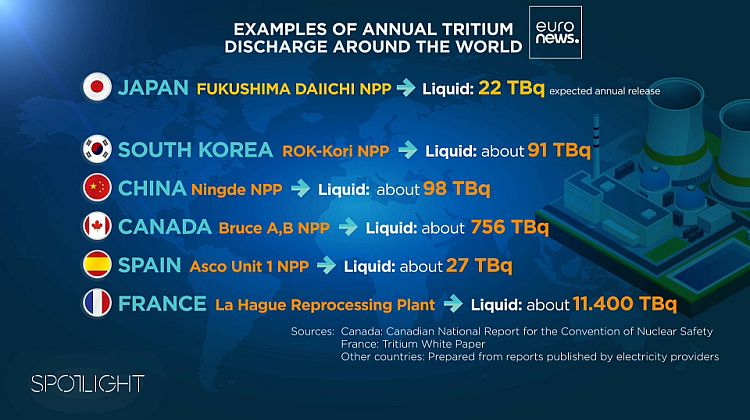
Just 22 terabecquerel will be released each year, which accounts for far less than most power plants in the world.
22 terabecquerel will be released each year — which accounts for far less than most power plants in the world. The waste reprocessing site of La Hague in France releases more than 11,000 terabecquerel annually.
Opponents say tritium from a nuclear accident is more dangerous. But one French scientist who has visited the Fukushima site 30 times insists that that is not true.
“Tritium is a radioactive element that is only slightly dangerous”, explained Jean-Christophe Gariel, the Deputy Director of the Institute of Radiological Protection and Nuclear Safety. “There are no different types of tritium. The characteristics of the tritium that will be released at Fukushima are similar to the characteristics of those released by nuclear power plants around the world”.
The Japanese government is pleased that Great Britain lifted import restrictions on products from the region last June, showing a sign of renewed confidence, after years of effort by Japan.
Tanabe Yuki, the Director for International Issues at the Nuclear Accident Response Office at the Ministry of Economy, Trade and Industry told Euronews that, “so far, we have organised about 700 meetings with stakeholders, including the fishery industry. We have developed concrete projects to combat the bad reputation.”
Indeed, Japan has taken all the necessary precautions on the sensitive issue regarding the discharge of treated water and has asked the International Atomic Energy Agency to supervise the operations.
In May 2022, the Director General of the International Atomic Energy Agency Rafael Grossi visited Fukushima.
The IAEA chief said in a statement that, “the request for IAEA reviews demonstrates Japan’s commitment and will help send a message of transparency and confidence to the people in Japan and beyond”, emphasising the “remarkable progress on decommissioning at Fukushima Daiichi since my last visit two years ago.”
The UN agency has set up a special task force. Last November, Gustavo Caruso, Director of Safety and Security Coordination. Department of Nuclear Safety and Security, and the head of this mission, returned to Fukushima.
“The task force held its third mission to Japan and it was this time composed of experts from Argentina, China, Canada, France, the Republic of Korea, Marshall Islands, the Russian Federation, the United Kingdom, the United States of America, and Vietnam”, he announced.
The objective of the mission was to ensure the safety of the discharge. The UN agency examines the regulatory aspects and carries out analyses in independent laboratories.
“The evaluation report and the conclusions will be released in approximately three months, and the IAEA task force will also carry out another mission in Japan in January before the water discharge begins. The IAEA will issue a comprehensive report containing all the collective findings until now, and our conclusions about this process. All the standards that we apply are representing a high level of safety”, Gustavo Caruso confirmed.
The first discharge should take place next year.
Japan is doing everything possible to make this operation a success and to protect the inhabitants and the environment. It’s the latest step in the reconstruction of a region that believes in its future.
Tim Deere-Jones on the Fukushima Daiichi Radioactive Water Discharge into the Ocean

December 13 2022
The archive video of the zoom conference on 5 November 2022 given by Tim Deere-Jones on the issues of discharging Fukushima Daiichi radioactive water into the ocean, and of seabed dredging — a comparison between Fukushima Daiichi and Hinkley Point, is now available.
With English/Japanese interpretation.
Radioactive materials released in large quantities on the days following the beginning of the TEPCO Fukushima Daiichi Nuclear Power Station accident flew over the Pacific Ocean on the prevailing westerly winds, falling and depositing on the ocean floor.
Radioactive fallout on land also flowed into the sea washed by rain and carried by rivers. Uncontrolled inflow of contaminated water from the Fukushima Daiichi Nuclear Power Plant site into the ocean has also increased the contamination of the seabed.
Such radioactive materials from the accident can be transferred from sea to land by the wind and contaminate the environment, including pastures and crops.
Tim Deere-Jones points out the risks of the wide rediffusion of the contamination mainly towards the south, situated downstream of the ocean current, by the release of the treated radio-contaminated water. This discharge of radioactive water is planned for over a period of 10 years. Further contamination can also be caused by the construction work of the discharge facilities.
Approximate timing of the video
0:06-17:03 Video viewing: Message against the discharge of contaminated water into the sea by Tim Deere-Jones (video created by Yosomono Net).
It can be viewed here separately:
16:58-1:36:50 Talk by Tim Deere-Jones
1:37:34 – 1:42:21 Questions and Answers
1 This Month

Petition to revoke the licensing of the Near Surface Nuclear Disposal Facility (NSDF) at Chalk River. https://www.ourcommons.ca/petitions/en/Petition/Details?Petition=e-7247


of the week – STOP SMALL MODULAR REACTORS IN CANADA
To see nuclear-related stories in greater depth and intensity – go to https://nuclearinformation.wordpress.com
-
Archives
- March 2026 (153)
- February 2026 (268)
- January 2026 (308)
- December 2025 (358)
- November 2025 (359)
- October 2025 (376)
- September 2025 (258)
- August 2025 (319)
- July 2025 (230)
- June 2025 (348)
- May 2025 (261)
- April 2025 (305)
-
Categories
- 1
- 1 NUCLEAR ISSUES
- business and costs
- climate change
- culture and arts
- ENERGY
- environment
- health
- history
- indigenous issues
- Legal
- marketing of nuclear
- media
- opposition to nuclear
- PERSONAL STORIES
- politics
- politics international
- Religion and ethics
- safety
- secrets,lies and civil liberties
- spinbuster
- technology
- Uranium
- wastes
- weapons and war
- Women
- 2 WORLD
- ACTION
- AFRICA
- Atrocities
- AUSTRALIA
- Christina's notes
- Christina's themes
- culture and arts
- Events
- Fuk 2022
- Fuk 2023
- Fukushima 2017
- Fukushima 2018
- fukushima 2019
- Fukushima 2020
- Fukushima 2021
- general
- global warming
- Humour (God we need it)
- Nuclear
- RARE EARTHS
- Reference
- resources – print
- Resources -audiovicual
- Weekly Newsletter
- World
- World Nuclear
- YouTube
-
RSS
Entries RSS
Comments RSS
 nuclear-news