Varoufakis on Palantir and its 22 points
28 Apr 26
Palantir were kind enough to sum up its hideous ideology in 22 points. And I have taken the liberty of annotating each one of them. Here is my interpretation of all 22 of them (preserving the original numbering ):
1. Silicon Valley owes an immeasurable debt to the ruling class who bailed out the criminal bankers that wrecked the livelihood of the majority of Americans. The engineering elite of Silicon Valley will defend that ruling class to the death (literally!), in the name of the majority of Americans whom they treat with contempt – i.e., like cattle that have lost their market value.
2. Palantir is eyeing the Apple Store, salivating over the prospect of creating its own technofeudal estate. Time to replace the iPhone with another device that dissolves what is left of people’s privacy.
3. Palantir shall give nothing away for free. It cares uniquely over its own growth which it pursues by sowing fear so that it can sell a fake sense of security.
4. Glory to brute force! Ethics is for suckers. The West needs more of Palantir’s murderous software.
5. AI-powered killer robots are coming. The task is to profit magnificently by building killer robots first and ask questions later. To be able to do so, Palantir will do whatever it takes to avoid at all cost any international treaties that limit AI-driven killer robots.
6. Every poor sod (lacking the connections to avoid being thrown into the trenches with killer drones targeting them from the sky) must be drafted into the army. Forget paying soldiers a salary. All payments should be directed to Palantir, where our own people will be serving their ‘national service’ – leaving the dying to non-shareholders.
7. Palantir works overtime to equip US Marines with killer bots that take away from the US Marines whatever remnants of ethical judgment they are left with on the battlefield. American society should be rendered perfectly incapable of any debate that restricts Palantir’s capacity to get the US Military to eliminate any remaining opportunity to reject its software’s choice of targets.
8. Palantir deplores the fact that the public sector is still not totally devoid of a conscience. Public servants must be fired en masse, except some very few approved by Palantir who will receive huge salaries, paid by taxpayers.
9. Palantir thinks that Donald Trump must be beatified for throwing himself into public service. Not forgiving folks like Trump everything risks our soul, not to mention that it raises the prospect of officials that restrict Palantir’s evil project.
10. Politics needs to be AI-like, devoid of anything that can be mistaken for human empathy. Those who look to the political arena to nourish their soul and sense of self must be sent to the gulag forthwith!
11. There are some people too eager to hasten Palantir’s demise. They should rethink, or else!
12. Palantir makes no nuclear weapons but is happily developing other weapons of mass destruction. We proudly announce that we are now ready to add to nuclear Armageddon the AI-driven threat to humanity’s existence.
13. No other country in the history of the world has committed so many war crimes in the name of progress and freedom. The United States offers infinite freedom to people like Palantir’s founders to profit so handsomely by inflicting so much damage upon humanity.
14. American power has feasted on causing one war after another, one putsch after another, one avoidable financial disaster after another. Too many have forgotten or perhaps have taken for granted America’s capacity to pursue forever wars in the name of peace and democracy.
15. German and Japanese Fascism must be made great again. The denazification of Germany was an overcorrection for which Europe is now paying a heavy price. A similar and highly misplaced commitment to Japanese pacifism must also end immediately!
16. We should applaud those who attempt to monopolise everything by means of generous government contracts. Billionaires must not be satisfied merely with their billions. To become even more obscenely rich they need grand narratives that help them convince the poor to use their freedom to keep them, the billionaires, in power. And, by the way, Palantir loves Elon, especially his grand apartheid-inspired narrative.
17. Silicon Valley must be free to do in America’s cities what it did in Gaza. Many politicians across the United States have essentially shrugged when it came to granting Palantir the right to annihilate all remaining civil liberties and human rights. This must end.
18. Epstein’s syndicate should be forgotten lest lovely people like Trump and the Clintons are deterred from entering government. The public arena must be scrutiny-free unless subversives like Sanders or Mamdani enter it.
19. We love banal public figures as long as they give Palantir all the juicy contracts. We also love colourful public figures who give Palantir all the juicy contracts.
20. We need more opium for the masses, as they are not sufficiently inebriated for us to be unimpeded in the pursuit of their complete subjugation. Questioning organised superstition is dangerous and must end.
21. Time to bring back Hitler’s hierarchy of races, with Palantir’s founders and Elon at its Aryan pinnacle. The idea that it is wrong to judge someone by the colour of their skin or their ethnicity or their religion must be jettisoned.
22. Blacks, Muslims, most Asians, and of course women, are inferior untermensch. Blokes in America, and more broadly the West, have for the past half century resisted putting these subhumans in their places in the name of inclusivity. It was a mistake. Such subhumans must never be allowed in, except as servants or sex service providers – at least until we can improve our robots, in which case we won’t need them at all.
What are Palantir’s 22 points?

Palantir’s 22 points summarize CEO Alex Karp’s vision for the 21st century, emphasizing national defense, AI, societal order, and a pro-Western ideological stance.
Palantir Technologies released a 22-point summary of CEO Alex Karp’s book The Technological Republic on April 19, 2026, outlining the company’s ideological and strategic vision for the 21st century. The manifesto addresses the role of technology, national defense, AI, and societal culture, and has sparked significant debate due to its controversial positions.
Palantir’s 22 Points summarize:
1. Moral Duty of Tech Companies: Silicon Valley owes a moral debt to the U.S., and tech elites have an obligation to participate in national defense.
2. Hard Power over Soft Power: The manifesto argues that liberal democracies require hard power, particularly software and AI, to maintain security and influence.
3. AI and Military Deterrence: The atomic age is ending, and a new era of AI-based deterrence is beginning. Palantir emphasizes that AI weapons will be built, and the question is who builds them and for what purpose.
4. National Service: The U.S. should consider reinstating universal national service, moving away from an all-volunteer military.
5. Support for Military Personnel: If a U.S. Marine or soldier requires better equipment or software, the country should provide it, reflecting a commitment to those in harm’s way.
6. Governance and Public Life: Public officials should be treated with tolerance, and society should allow room for human complexity to avoid incompetent leadership.
7. Geopolitical Repositioning: The manifesto calls for reversing the postwar demilitarization of Germany and Japan, warning that current pacifism could shift the balance of power in Asia.
8. Cultural Evaluation: Some cultures are described as producing vital advances, while others are labeled regressive or harmful. The manifesto criticizes “vacant and hollow pluralism” and emphasizes the importance of recognizing cultural contributions.
9. Role of Silicon Valley in Crime and Society: Tech companies should actively address violent crime and societal challenges, rather than remaining passive.
Implications and Controversy
The 22 points have been described as a corporate political manifesto, linking Palantir’s software and AI capabilities to national defense, law enforcement, and immigration control. Critics have labeled it “technofascist” or likened it to a supervillain’s vision due to its advocacy for AI weapons, national service, and cultural hierarchies. Supporters argue it reflects a clear moral and strategic stance for tech companies in global security.
Summary
In essence, Palantir’s 22 points articulate a vision where technology, national defense, and societal order are intertwined, emphasizing AI, military readiness, and a pro-Western ideological framework. The manifesto has generated both praise and criticism, highlighting the company’s unique position at the intersection of tech, politics, and global security.
Iran’s Supreme Leader Says It Won’t Give Up Nuclear Assets In Rare Public Statement
By Sara Dorn, Forbes Staff. Sara Dorn is a Forbes news reporter who covers politics. Apr 30, 2026, https://www.forbes.com/sites/saradorn/2026/04/30/irans-supreme-leader-says-it-wont-give-up-nuclear-assets-in-rare-public-statement/
Iran’s Supreme Leader Ayatollah Mojtaba Khamenei vowed Thursday not to give up the country’s “nuclear and missile capabilities” in a rare statement Thursday—making clear Iran rejects the U.S.’s key demand to end the war.
Key Facts
An anchor on Iranian TV read the statement from Khamenei, who has not appeared or spoken in public since he took over for his father, who was killed in the initial wave of U.S. strikes in February.
Khamenei said Iran would maintain ownership of “all national assets,” including “nuclear and missile technologies,” according to an English translation of his statement published in Iranian state media.
Khamenei vowed Iran would “end the hostile misuse” of the Strait of Hormuz and Persian Gulf region and criticized U.S. military action in the key waterway as a “humiliating failure.”
Khamenei has not appeared or spoken in public since he took over for his father, who was killed in the initial wave of U.S. strikes in February.
Giving up its nuclear weapons and allowing free passage through the Strait of Hormuz are key provisions for the U.S. in agreeing to permanently end the conflict.
Meanwhile, President Donald Trump has vowed to maintain its naval blockade of vessels coming to and from Iran, telling Axios on Wednesday the maneuver is “somewhat more effective than the bombing” and is “choking” Iran’s economy.
Shortly after Khamenei released his statement, the White House tweeted a previous quote from Trump that said “there will never be a deal unless [Iran] agrees that there will be no nuclear weapons.”
What To Watch For
The Pentagon has prepared plans for new strikes against Iran in an effort to force Iran back to the negotiating table, Axios reported Wednesday, citing two unnamed sources. One of the plans reportedly involves the U.S. taking control over part of the Strait of Hormuz and reopening it to commercial shipping traffic—an operation that could involve ground troops. Trump is expected to receive a briefing on the plan Thursday. He would not comment on any potential military action when he spoke to Axios Wednesday.
Tangent
Global oil prices have skyrocketed since the start of the Iran war, reaching a four-year high of more than $120 a barrel on Thursday. U.S. gas prices also increased 27 cents in the past week, to $4.30 a gallon.
Key Background
The dispute over the Strait of Hormuz has brought negotiations between Iran and the U.S. to a standstill, though the ceasefire between the two countries that took effect on April 30 remains in place. Iran reportedly presented the U.S. with a new plan to reopen the strait on Sunday, contingent on delaying nuclear talks, The New York Times reported, citing three unnamed Iranian officials. The plan would allow Iran to continue tolling ships for passage through the strait. The U.S. hasn’t publicly responded, but officials have repeatedly said Iran must agree to give up its stockpile of enriched uranium and agree to end its nuclear program as part of a deal for a lasting ceasefire.
Charles III and Britain’s pathological obsession with Russia

British political class has had a pathological obsession with Russia for nearly two centuries, and has been scheming to wage wars against her at least since the Crimean War of 1853. In all cases, Britain is always eager to lead such wars from behind and incite other powers to do the actual fighting. One of the most blatant examples was their weaponizing of Hitler’s Germany in preparation for the largest ever invasion force in 1941, counting over 3.8 million troops. This was not really a “German invasion” as our historical curriculum suggests; it was a German-led invasion.
Yesterday, Charles III called for World War III, echoing the 1945 “Project Unthinkable” Britain’s obsession with waging war on Russia is now a mortal danger to all of us.
Alex Krainer, Apr 30, 2026, https://alexkrainer.substack.com/p/charles-iii-and-britains-pathological?utm_source=post-email-title&publication_id=1063805&post_id=195907312&utm_campaign=email-post-title&isFreemail=true&r=1ise1&triedRedirect=true&utm_medium=email
On Monday, 27 April, Britain’s king Charles III came to Washington for a four-day state visit to the United States hosted by President Donald Trump. His “majsesty,” is also known to his fans as late Jimmy Saville’s BFF and the brother of Jeffrey Epstein’s BFF Andrew, formerly known as prince.
Yesterday, Charles graced the joint session of U.S. Congress with an inspiring speech during which he found it appropriate to call on his American audience to get on with the business of World War III already. Thus spoke his majesty:
“In the immediate aftermath of 9/11 when NATO invoked Article 5 for the first time, and the United Nations Security Council was united in the face of terror, we answered the call together as our people have done so for more than a century, shoulder to shoulder through two world wars, the Cold War, Afghanistan, and moments that have defined our shared security. Today, Mr. Speaker, that same unyielding resolve is needed for the defence of Ukraine and her most courageous people.”
Glorifying wars of the past, particularly Afghanistan, and invoking NATO Article 5 which was “needed for the defence of Ukraine and her most courageous people,” was a naked call for the United States to commit to war against Russia: another great war on the European continent.
Given that the last two World Wars resulted in some 70 million casualties, one would think that the king’s warmongering would prompt U.S. elected representatives to tar and feather the British royal and run him out of town on a rail, but of course, one would be wrong. King’s call for World War III elicited an enthusiastic standing ovation from the politicians, otherwise passionately supportive of the ‘no kings’ protests in their country.
Britain’s incurable Russia derangement
British political class has had a pathological obsession with Russia for nearly two centuries, and has been scheming to wage wars against her at least since the Crimean War of 1853. In all cases, Britain is always eager to lead such wars from behind and incite other powers to do the actual fighting. One of the most blatant examples was their weaponizing of Hitler’s Germany in preparation for the largest ever invasion force in 1941, counting over 3.8 million troops. This was not really a “German invasion” as our historical curriculum suggests; it was a German-led invasion.
The 3.8 million strong invasion force (which grew to six million within its first year of fighting) was sourced from nearly all European countries. Soviet Union repelled that invasion at a cost of 27 million casualties. One in 9 Russians died and almost every Russian family lost someone in that war. When it became clear that the invasion had failed and that Hitler’s army would be defeated, British Joint Planning Staff thought up “Project Unthinkable”: a new&improved plan to attack Russia.
The document was submitted to Winston Churchill on 22 May 1945 (it is available at this link) proposing a surprise attack against Russia, planned for July 1, 1945 by the combined UK and the US forces, supported by the Polish and German troops. The project’s political objective was to submit Russia “to our will”:
“A quick success might induce the Russians to submit to our will at least for the time being; but it might not. … if they want total war, they are in the position to have it.”
The “elites” in London were dreaming up a new war against Russia even as World War 2 was still raging and the Soviet Union was finishing off Hitler’s Wehrmacht at the Eastern front. Britain was ostensibly allied with the USSR at that time, but the king and the cabal, as Winston Churchill named it, were secretly rooting for Hitler.
A total war is necessary
Britain’s Joint Planning Staff advanced two hypotheses: (1) that “a total war is necessary,” and (2) that “a quick success would suffice to gain our political objective.” However, the quick victory in a surprise attack might only yield a temporary result. A lasting one would require victory in a total war:
“The only way we can achieve our object with certainty and lasting results is by victory in a total war.”
However, this “total war,” as they well understood, would have to be a very long term project:
To achieve the decisive defeat of Russia in a total war would require, in particular, the mobilisation of manpower to counteract their present enormous manpower resources. This is a very long term project and would involve: the deployment in Europe of a large proportion of the vast resources of the United States; and the re-equipment and reorganization of German manpower and of all the Western allies.
It would be interesting to know what made the Joint Planning Staff believe that they could reorganize German manpower together with the “vast resources of the United States?” Whatever it was that they knew, they concluded that, “the only thing certain is that to win it would take us a very long time.”
Exactly how long was unclear, but perhaps it was the time needed to organize some form of a North Atlantic Treaty Alliance, to dismember the USSR and to weaponize at least one of its former republics, like Ukraine, as a battering ram to wield against Russia.
High cabal… has made us what we are
Two years after formulating “Project Unthinkable,” the British government drafted the “Fundamentals of Our Defence Policy,” reaffirming that, “The most likely and most formidable threat to our interests comes from Russia,” and that, “Ensuring that we have the active and early support of the United States of America and of the Western European States” was essential.
Well, as the war in Ukraine is now clearly headed for the same result as Hitler’s “Operation Barbarossa,” active support of the United States of America is now quite urgent, and this is why king Chuck was busy charming his American audience to revive Project Unthinkable.
The king’s speech and his kingdom’s foreign policy over decades suggest that their obsession with waging a total war against Russia remains all consuming for the British political class. This poses a mortal danger to the whole world by now, and we can be sure their obsession won’t stop with a speech: furious lobbying and influence campaigns will be unleashed, perhaps only requiring a well-orchestrated false flag attack attributed to Russia.
If they are successful in their endeavor, we can expect a nuclear war. Recall, last year we learned that the UK was/is willing and ready to help Ukraine build a nuclear weapon. The criminal insanity of it is truly hard to fathom, calling to mind Winston Churchill’s cryptic quip upon learning about the allies’ brutal bombardment of Rotterdam: “Unrestricted submarine warfare. Unrestricted air bombings – this is total war… Time and ocean and some guiding star and high cabal have made us what we are.”
US and Israel Claimed to Be Fighting for Iranian Minorities — While Bombing Them
One day before the U.S.-Iran ceasefire went into effect on April 8, a 68-year-old synagogue in the Iranian capital was damaged in airstrikes for which the Israeli military claimed responsibility. The Israeli military said it was trying to target a military commander living nearby and regretted the destruction, which it referred to as “collateral damage.”
“If we believe that destroying a synagogue in Israel would be treated as an outrage against civilization, then a synagogue in Tehran must not be treated as a regrettable footnote.
Already marginalized, Iran’s religious minority communities are overlooked victims of the US-Israeli war on Iran.
By Kourosh Ziabari , Truthout, April 27, 2026
Iranians of all stripes have been affected by the U.S.-Israeli war on their country, and the civilian cost of the conflict has yet to be fully understood. The United Nations Development Programme has raised the alarm about the “development in reverse” pushing more than 32 million people back into poverty globally, and economists have warned that 10 to 12 million Iranians, representing nearly half of the country’s workforce, are now on the brink of unemployment.
But the effect of the U.S.-Israeli aggression on Iran’s religious minorities has received comparatively little attention. Beset by years of neglect and underrepresentation at home, faith groups are now coming to grips with the cruelty of war and the devastation it has inflicted on their vulnerable institutions and houses of worship.
In Tehran, U.S.-Israeli airstrikes damaged two major churches, St. Nicholas Orthodox Church and the Greek Orthodox Church of Saint Mary, drawing condemnation from Tehran’s Christian communities. Although there have not been many updates on the status of the Church of Saint Mary, St. Nicholas Church, which is a major Russian cultural site in Iran, was reportedly closed on Easter due to the extent of the damages.
One day before the U.S.-Iran ceasefire went into effect on April 8, a 68-year-old synagogue in the Iranian capital was damaged in airstrikes for which the Israeli military claimed responsibility. The Israeli military said it was trying to target a military commander living nearby and regretted the destruction, which it referred to as “collateral damage.”
The attack put further strain on Iranian Jews as they navigate the challenges of a war waged by the United States and Israel under the pretenses of bringing liberation to the country. Iranian Jewish politicians and community leaders have been vocal in criticizing the attacks targeting houses of worship and civilian sites.
“Our holy books were buried under the rubble, burnt, and torn, and all of this is an indication of the indifference of the Zionist regime to Judaism as a religion and the instructions of Prophet Moses,” said Homayoun Sameh, a Jewish member of parliament as he talked to reporters in Tehran. Truthout reached out to his office for comment but didn’t hear back.
Lior Sternfeld, a scholar of Jewish studies and history at Pennsylvania State University, told Truthout that Israel has long demonstrated disregard for Jewish life and heritage in the Middle East outside of Israel, a pattern which is now stretching to Iran.
“There are credible reports on Israeli involvement in several attacks on Jewish establishments in Iraq in the early 1950s to speed up the process of Jews registering for departure,” Sternfeld told Truthout. “A couple of years later, Israeli agencies knowingly operated a small network of poorly trained Jewish spies, in what came to be known as Operation Susannah,” with the intent of attacking civilian targets in Egypt and falsely blaming the attacks on local forces.
“In 1982, the IDF [Israel Defense Forces] shelled the Maghen Abraham Synagogue in Beirut, claiming there were PLO [Palestine Liberation Organization] militants it was targeting nearby,” he added, noting that the recent synagogue strike in Tehran appears as an extension of this history.
Beyond religious and cultural sites, residential areas populated by Iran’s ethnic minorities were also attacked. On March 10, the historic Majidieh neighborhood in eastern Tehran, a major hub for Iran’s Armenian community in the capital, was bombed by the United States and Israel, destroying multiple buildings, including a locally run kindergarten………………………………………………………………………………………………………………………………………………………………………………………………………………………………………………………..
the fact that the bombings targeting an array of different religious and ethnic groups and their cultural sites have drawn little attention internationally points to continued flaws in the media framing of the war. Crackdowns on the press are not limited to authoritarian regimes. In democracies also, reporters are being pressured to toe the government line on key political fault lines.
In March, Federal Communications Commission Chair Brendan Carr issued a rare threat to major networks and their local affiliates, warning them to “correct course” on their coverage of the war in Iran before their license renewals are due. On multiple occasions, Defense Secretary Pete Hegseth has assailed the media for their reporting on the conflict, demanding a more “patriotic” coverage.
In the meantime, stereotypes still dominate the corporate media portrayals of Iran, even in the middle of a war of aggression on the country. Hawkish commentators making the case for sanctions and military action are frequently called to appear on primetime shows, and there is no active debate on the enormous civilian toll of the war on millions of Iranians, including marginalized groups.
“If we believe that destroying a synagogue in Israel would be treated as an outrage against civilization, then a synagogue in Tehran must not be treated as a regrettable footnote. Sacred loss does not become less sacred because the world responds selectively to some victims and not others,” said Dabbagh.
Other observers have argued that undermining Iran’s religious and cultural diversity is a key U.S. and Israeli goal in the war, exemplified by a range of airstrikes targeting UNESCO-registered world heritage sites, alarming rhetoric about the erasure of Iranian civilization coming from Trump and other officials, and dehumanizing propaganda about the Iranian people.
“For both the Israelis and Americans, the presence of Iranian Jews or Palestinian Christians and Lebanese Christians is a huge problem,” said Omid Safi, a professor of Asian and Middle Eastern Studies at Duke University. “When they come to terms with the fact that in Iran itself there is a Jewish community that is more than 2,000 years old, then all of a sudden they have to come to terms with the pluralism and inherent diversity of Iranian society.”
“The targeting of the synagogue and some churches by the Israelis and Americans with no apologies or acknowledgement follows in the footsteps of what we’ve already seen with the targeting of dialysis treatment centers, the girls’ school in Minab, 31 universities, and multiple hospitals,” he added, arguing that the bombing campaign has shown Iranian human rights are not being respected by the perpetrators………………………………………………………………………………………………
In Iran’s sanctions-hit economy where even international organizations are hamstrung in delivering humanitarian assistance and development aid, a sweeping conflict like the U.S.-Israeli military campaign can produce irreversible harms, especially affecting the less protected religious and ethnic minority groups.
In some cases, Iranians haven’t yet completed the reconstruction efforts that followed the eight-year Iran-Iraq War of 1980, when the former Iraqi dictator Saddam Hussein was encouraged by a coalition of world powers to invade Iran and stymie the newly born revolution. According to official data, 90 Iranian Christians, 11 Iranian Jews, and 32 Iranian Zoroastrians were killed in that war.
Right now, the future is uncertain as both Tehran and Washington seem unprepared to engage in a sustainable diplomatic process. Meanwhile, the disenfranchised institutions of Iran’s civil society — including religious minority groups, which have sustained themselves over the years without external support or preferential treatment at home — will pay the highest price. https://truthout.org/articles/us-and-israel-claim-to-be-fighting-for-iranian-minorities-while-bombing-them/?utm_source=Truthout&utm_campaign=4b4dfd3a01-EMAIL_CAMPAIGN_2026_04_27_08_16&utm_medium=email&utm_term=0_bbb541a1db-4b4dfd3a01-650192793
‘I miss our land. Chernobyl broke us’: The families who lost their homes after world’s worst nuclear accident

For 40 years, the residents of northern Ukraine and southern Belarus have grappled with the devastating effects of the world’s worst nuclear accident. They tell Alex Croft about the day that their lives were changed forever
25 April2026, https://www.independent.co.uk/news/world/europe/chernobyl-40-years-family-reel-hostages-b2963417.html EXCELLENT PHOTOS
lena Maruzhenko remembers her mother sobbing when Soviet police told them to evacuate their home in the village of Korogod in northern Ukraine.
Just 12km away, a reactor at the Chernobyl nuclear power plant had exploded, sending a shaft of blue light into the night sky and throwing clouds of radioactive material into the surrounding area.
Local authorities told Olena and their mother that they would only need to leave their home for three days. They had no idea that the worst nuclear disaster in history had unfolded.
“We believed we would definitely return,” Olena recalls to The Independent as the world marks the 40th anniversary of the Chernobyl disaster.
“The 26 April, 1986, is a date that is forever etched in my memory with black sadness. We could not imagine leaving our homes without knowing where to go.”
Olena and her mother were among 350,000 people who were evacuated from the Chernobyl exclusion zone. Hundreds of buses were sent to ferry workers from Pripyat, an industrial city created to house workers from the nearby plant located around 100km north of Kyiv.
The disaster began when reactor number 4 at the power plant exploded at 1.23am, after a test went catastrophically wrong.
In the days that followed, a massive and uncontainable release of radioactive material spread across Europe. Firefighters and workers were exposed to lethal radiation as they attempted to contain the blaze. Thousands of animals were mercifully slaughtered as residents were evacuated from nearby towns.
The Soviet government sought to downplay the scale of the accident.
In the 40 years since Chernobyl, thousands of people have suffered devastating health consequences due to high radiation exposure, including thyroid cancer.
Vast areas were contaminated by the radiation, devastating the region’s environment. Luscious green forests turned a reddish brown, while vital soil for agriculture was polluted for decades.
Korogod was once a town surrounded by forests, rivers and lakes that provided rich sources of mushrooms, berries, fish and herbs sold in bustling local markets. After the disaster, it became a grey and decrepit ghost town in the Chernobyl Exclusion Zone, a 30km area restricted to human habitation.
The official Soviet death toll, given in 1987, was 31. But after including those who suffered lasting health effects, the toll is significantly higher.
The husband of Natalia Dykun, another resident of Korogod, was one such person. He was diagnosed with cancer after the disaster and eventually died from the disease.
“We became hostages of the Chernobyl disaster,” she says. “The treatment did not help and he died very young. In almost every house near us, someone from the family began to get sick, and later almost every family lost a relative to cancer.”
Natalia was 28 at the time of the explosion. She recalls the silence from the Soviet authorities causing “great harm”, with residents “completely unprotected, both morally and physically”.
Most residents from the towns near Chernobyl only truly understood the scale of what had happened when they discovered new towns were being built to house them.
Natalia says she was “devastated” to see a new village being built in an open field with “no forest or water nearby”. Her home used to be surrounded by nature.
Olga Mikhalova was only 15 when she learned she would never be returning home. “The accident and evacuation changed us forever,” she says.
“Family ties were broken, neighbourly ties. We would not wish this on anyone.”
Olena, who was living with strangers in the aftermath of the tragedy, watched the news in tears when she found out new homes were being built. “I still dream of my village, my native house. I miss our land. The Chernobyl accident broke us.”
Slavutych, a planned city on the western bank of the Dnieper River, still houses around 20,000 people. It was built for those evacuated from the abandoned city of Pripyat, perhaps the most famous of those evacuated after the explosion. Chilling images of Pripyat, including its haunting abandoned fairground, are an enduring symbol of the lives and communities lost in just a matter of hours.
“When we realised that we would not return home, it was very difficult for us, the young, to come to terms with this, and it was even more difficult for the older generation,” says Olga. “This is a tragedy for many generations.”
As war rages in Ukraine, with Russian forces playing fast and loose around Chernobyl and the southern Zaporizhzhia nuclear power plant, experts have told The Independent that we are closer than ever to another nuclear disaster.
For those who have suffered the most catastrophic effects of a nuclear accident, this is unthinkable.
“As a person who survived the evacuation, I feel especially acute anxiety when war touches nuclear facilities,” Olena says. “This causes fear and incomprehension, why humanity, having had such an experience, is taking risks again.”
Natalie fears for the future generations. “This irresponsibility of the enemy and the risks for the surrounding world of a repeat of the disaster are very frightening and we are in constant stress and fear. We are no longer afraid for ourselves, but for our children and grandchildren.
“Irresponsibility and insecurity in relation to nuclear energy and infrastructure is a crime before the whole world.”
Inside Chornobyl: 40 years after disaster, nuclear site still at risk.

Sat 25 Apr 2026 , Guardian,
In February 2025, a cheap Russian drone tore through Chornobyl’s confinement shelter. Workers warn the site of the world’s worst nuclear accident is not safe yet.
The dosimeter clipped to your chest ticks faster the moment you step off the designated path inside the Chornobyl nuclear power plant. Step back, and it slows again – an invisible line between clean ground and contamination.
Above rises the “new safe confinement” (NSC) – the largest movable steel structure ever built, taller than the Statue of Liberty, wider than the Colosseum, its arch curving overhead like an aircraft hangar built for giant planes.
Completed in 2019 at a cost of $2.5bn (£1.85bn) and funded by 45 countries, the NSC was built to shield the world from what lies beneath it. It sits at the heart of a vast exclusion zone, a radioactive landscape the size of Cyprus, largely abandoned by humanity. Stray dogs roam the plant in packs – workers advise against petting them.
Inside is “the sarcophagus” – a grey concrete tomb erected in just 206 days to cover the ruins of reactor No 4, which exploded on 26 April 1986 in the worst nuclear accident to date.
Up close, the sarcophagus looks almost makeshift – massive slabs stacked like giant building blocks, rust streaking the joins. Inside, 180 tonnes of nuclear fuel and four to five tonnes of radioactive dust remain trapped.
The NSC was constructed to buy time: to allow the unstable sarcophagus to be dismantled safely over decades, while shielding against the consequences in case it collapses.
What its funders did not anticipate was a war – Chornobyl was occupied in the first weeks of Russia’s 2022 invasion of Ukraine – much less a drone strike on the facility three years later.
In the north-west corner of the roof, a temporary patch marks where a cheap $20,000 Russian drone tore through the structure on 14 February 2025, punching a hole in the arch and compromising the very function the arch was built for.
“If the sarcophagus collapses, over a hundred tonnes of nuclear fuel would be released into the air,” said the plant’s director general, Serhii Tarakanov.
A full repair is required within four years, Ukrainian officials and western experts say, or the NSC’s 100-year lifespan can no longer be guaranteed. It is estimated to cost up to €500m (£432m) – money that Ukraine’s cash-strapped government has not yet found.
Meanwhile, war continues in Ukraine, and Russia has repeatedly launched drones and missiles along flight paths near the Chornobyl nuclear plant, raising the risk of another disaster.
On the 40th anniversary of the Chornobyl disaster, one of the world’s most vulnerable sites remains under threat…………………………………………………………………………..
Should the sarcophagus collapse – whether from a strike, structural failure or age (built for 20 years, now standing for 40) – experts say it would release another cloud of radioactive particles into the air with no safeguard to contain it.
“The collapse of the sarcophagus would primarily be an enormous hazard for those working at the Chornobyl plant and set back dealing with the disaster for many more years,” said Shaun Burnie, a senior nuclear specialist with Greenpeace.
Beyond the financial costs and the war, there is the question of how the repairs of the confinement shelter are done at all. High radiation levels directly above the damaged section mean workers can legally spend no more than about 20 hours a year in that zone before hitting their annual dose limit.
“Workers will be able to perform their assignment there for a few hours, if not just a few minutes at a time,” said Tarakanov, adding that the work would require about 100 qualified construction workers operating in short rotations at height on a curved, contaminated surface……………………………………………………………………………………………………………………………………………………………………………………………………………………………………………………………………………………..
the exclusion zone’s isolation offers no protection from the war.
The plant has experienced four total blackouts since October 2024 caused by Russian strikes on the electricity grid, each requiring emergency diesel generators to keep the spent fuel cooling systems running.
Additional air defences and soldiers have been brought in, said Vadim Slipukha, the deputy director general for security at the site, though the threat has not gone away, he said. Even an unintentional strike from a drone knocked off course by electronic warfare could trigger a collapse of the sarcophagus.
“We are begging the international community to understand,” said Tarakanov. “There is a real risk of a new incident. It could happen any night, any day.” https://www.theguardian.com/news/ng-interactive/2026/apr/25/chornobyl-power-plant-at-risk-amid-russia-
Dangerous and expensive, nuclear power is a dead end for Scotland

I’ve been through every argument that the nuclear industry
makes promoting new nuclear power stations – but scratch the surface and
they just melt through the floor. New nuclear is fundamentally not needed –
numerous studies, including by Stanford University and renowned energy
modellers at LUT show that the UK, and indeed most, if not all, other
countries can meet their energy needs with 100% renewables.
Politicians’ fears about the wind and sun and the rain and the waves and tides being
unable to meet all our needs are misplaced. Renewables, energy storage,
energy efficiency and flexible power with a modern upgraded grid can do it
all – cheaper, quicker, safer and a hell of a lot cleaner, and create many
more thousands of jobs.
The cost of nuclear power is eye-watering. Look at
Hinkley Point C and Sizewell C – nearly £100bn to build them both with
massive delays and cost -over-runs. That is enough to install a 5kWh
battery in every one of the 28 million homes in Britain, and leave £44bn
for other things. Combine that with solar and every home becomes a power
station with its own ‘baseload’.
Alternatively, £100bn could fund planned
upgrades to the grid needed to facilitate large and small renewables, twice
over. The Coire Glas pumped hydro storage project in the Highlands could be
built 50 times over. £100bn spent on a nuclear-free transition could be
revolutionary.
What a renewables-based system needs is flexible power,
energy storage and a smart, modern grid. Surplus renewable electricity
could also be used to generate ”green hydrogen” to generate electricity
on calm, dull days. It could also be used to power heavy transport and
industry.
Battery systems, including compressed air and pumped storage
hydro, alongside vehicle-to-grid technology, can all be parts of the
bedrock of energy security and an energy system that would be cooking with
green power 24/7.
Nuclear does nothing to help any of this. Indeed, it is
worse, it directly causes wind and solar plants to be switched off when
green power is plentiful, because nuclear is so inflexible. Not only does
nuclear cost an arm and a leg, it adds cost to the consumer for renewables
We only have to look at the recent history of nuclear power to see how
dangerous and polluting it is. Fukushima remains a slow motion disaster for
Japan as they scramble to deal with millions of gallons of radioactive
water and melted reactor cores. Chernobyl’s 40-year anniversary this week
is another timely reminder, that when things go wrong, they can go very
wrong.
At least when a wind turbine breaks down you don’t need an exclusion
zone for decades and mass public health measures – you just get some
engineers with a crane and some spanners to go fix it.
And despite what the
‘nuke, baby, nuke’ lobby says, there is no solution for the waste yet,
other than to store and guard the most highly radioactive cores for
hundreds of years to cool down out of the way somewhere. That’s the
solution!
The hype about Small Modular Reactors is just that, hype. In
fact, the only two operational SMRs are in China and Russia, and both have
been beset by delays and cost increases. The economies of scale are lost,
and studies have shown that they produce more highly radioactive waste for
the same generating capacity than their slightly larger cousins.
These projects are pure spin, a clever wheeze by industry lobbyists intended to
promote nuclear acceptability – small, click and collect, a kind of
middle-aisle at LIDL feel to it. In the words of energy expert Amory Lovins
on SMRs: “This illusion neatly fits the industry’s business-model shift
from selling products to harvesting subsidies.”
The Rolls Royce SMR –
chosen by Great British Energy-Nuclear to be built at Wylfa in North Wales
– is a 470MW reactor, not much smaller than the two Torness reactors, which
are about 600MW each. And then there is the fuel – uranium ore is needed
and we don’t have any, (and the mining of it is handily missed out in
nuclear promotional graphics comparing its land use to renewables, which
also fail to point out that the land around solar arrays and turbines can
still be used for traditional purposes).
Mind you, there is some
recoverable uranium ore on the Orkney mainland – and when it was proposed
to dig it up to use it at Dounreay last century, all hell broke loose and
Orcadians stopped it by popular protest. So we would have to rely on
imports of this global commodity – a market that is dominated by Russia and
associates.
Pete Roche of SCRAM put this well when commenting on a recent
poll indicating only 14% of Scots thought we should focus on uranium
fuelled nuclear reactors for our long term energy security needs:
“Relying on a uranium-fuelled nuclear future is like jumping out of the
oil and gas frying pan and into a nuclear fire – it makes no sense and
Scots seem to get that.”
We should just get on with building a country
that is a renewable energy powerhouse so that future generations can look
back and thank us for choosing a green, clean and sustainable energy route.
Nuclear is NOT a natural partner with renewables, indeed, it is a delaying
tactic, holding back rapid decarbonisation, and adds extra and unnecessary
cost to a renewables-based energy system.
Herald 29th April 2026, https://www.heraldscotland.com/politics/viewpoint/26064131.dangerous-expensive-nuclear-power-dead-end-scotland/
Greg Jackson brands new nuclear a ‘fantasy future’
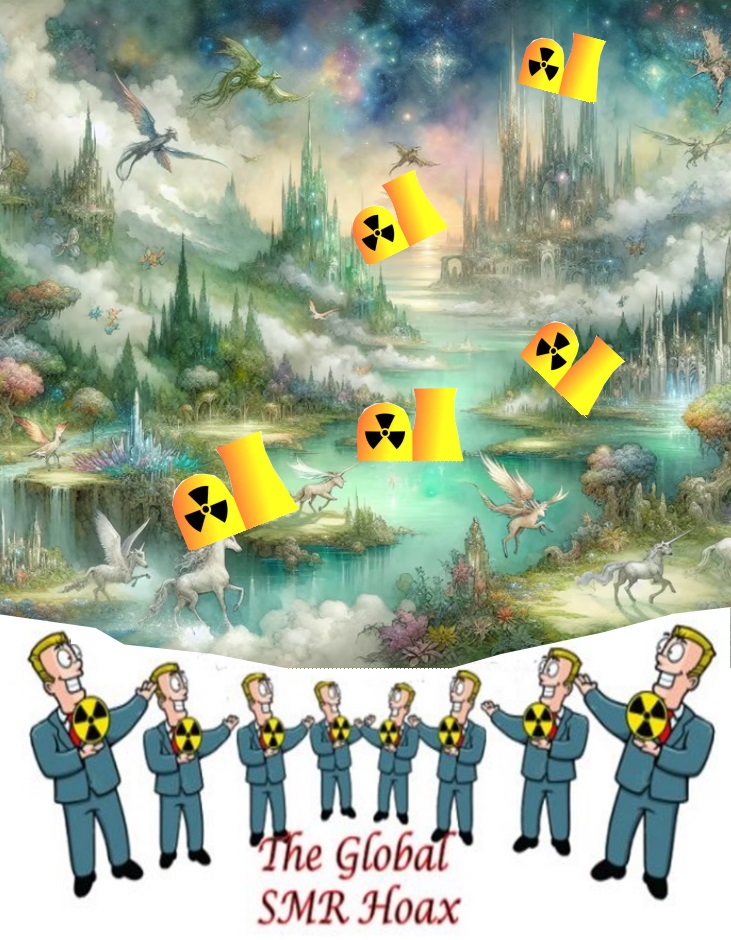
Greg Jackson brands new nuclear a ‘fantasy future’ due to the high
costs and impracticality of using hydrogen for heating. He believes that
renewable energy forecasts have been revised upwards, indicating a more
optimistic outlook for the future. Jackson’s perspective on nuclear energy
reflects a broader skepticism towards its role in the energy transition,
emphasizing the need for more affordable and efficient renewable energy
solutions.
Utility Week 27th April 2026,
https://utilityweek.co.uk/greg-jackson-brands-new-nuclear-as-fantasy-future/
Toxins plus climate harms likely cause of reduced fertility, study finds

Simultaneous exposure to toxic chemicals and climate change’s impacts
likely generates an additive or synergistic effect that increases
reproductive harm, and may contribute to the broad global drop in
fertility, new peer-reviewed research finds. The review of scientific
literature considers how endocrine-disrupting chemicals, often found in
plastic, coupled with climate change’s effects, such as heat stress, are
each linked to reductions in fertility and fecundity across global species
– including in humans, wildlife and invertebrates.
Guardian 26th April 2026,
https://www.theguardian.com/science/2026/apr/26/toxic-exposure-climate-crisis-study
The US Tech Giant Where Employees Wear Israeli Defense Force Uniforms To Work
Nate Bear, Apr 28, 2026, https://www.donotpanic.news/p/exclusive-the-us-tech-giant-where
The American tech giant behind the most popular tax filing software in the US allows employees to wear their IDF uniforms to work and also permits them to take months off the job to fight Israel’s wars.
Last month, Tom Yacobi, a data analyst at financial tech giant Intuit, whose products include the widely-used tax return program TurboTax, showed up to an all-hands company Zoom call in his full IDF uniform.
Yacobi works in TurboTax’s trust and safety team which handles the most sensitive personally identifiable information of TurboTax customers and users.
The whistleblower who provided me with this screenshot told me that since the beginning of the Gaza genocide, Israeli employees of California-based Intuit have, like Yacobi, been allowed to take as long as three or four months off work, often with minimal notice, to serve as reservists in the IDF.
“Intuit has shown no consideration for how these disruptions affect workflows and operations for employees in the US who have had to put processes on hold and postpone meetings to cater to Israeli employees’ army schedules,” PM (not their real initials) told me. “And of course, there has been no concern for the emotional and mental health impact on US employees who have been put in the awkward position of joining Zoom calls with active soldiers implicated in genocide and war crimes.”
Showing up to work in a military uniform, let alone the uniform of a military which has committed genocide and war crimes, and whose former head is an ICC-indicted war criminal, is not only unprofessional and unethical, but clearly an unabashed display of arrogance and impunity.
PM said one senior manager took three consecutive months off work from October to December 2023 to participate in the genocide of Gaza. PM says Israeli employees continue to take two-week stints off work for IDF reserve duty.
PM has never raised the issue with HR or management for fear of the consequences at such an openly pro-Israel and pro-genocide company.
“What discouraged me the most was the shocking depravity of hearing directly from chief information security officer, Atticus Tysen, that the company had selected the Israel office as a ‘strategic growth site’ during the peak of the Gaza genocide, in December 2023. This was announced at the same time as the company was down-sizing certain American and Canadian offices.”
According to PM, Intuit employees are regularly required to think about Israeli feelings. PM says that on numerous occasions since October 2023, Intuit management have posted on the company-wide Slack messaging app “about the need to show our Israeli colleagues extra kindness and grace because of their distressful circumstances.” Needless to say, Intuit management have never posted similar messages concerning the distress of those who may have been affected by the Israeli genocide of Gaza or Israel’s mass murder of civilians in Lebanon and Iran.
PM adds that “many” of Intuit’s Israeli employees have moved to the US on an L-1 visa in the last few years, with the process for approval much easier than for an H-1B visa. An L-1 visa allows multinationals to transfer employees from their overseas offices to their US offices, and is a straightforward pathway to permanent US residency.
Zionists serve in key leadership positions at Intuit.
Marianna Tessel, an executive vice-president and general manager, is an Israeli-American who served as a captain at Mamram, the computing centre and IT backbone of the Israeli military. In 2023 Tessel posted on LinkedIn about her visit to Intuit’s Israel-based R&D centre which is staffed almost exclusively by former Israeli intelligence officers.
In 2023 the Jerusalem Post reported that Intuit’s Israeli employees were going to lead on integrating generative AI into TurboTax software. Tessel said Intuit’s Israel office creates “some of our fintech software, and much of the AI.”
David Hahn, another executive vice-president and general manager at Intuit, is a friend and confidante of Jewish-Zionist venture capitalist Keith Rabois, who he met when both worked at LinkedIn. Rabois is married to Jacob Helberg, an undersecretary of state in the Trump administration and an influential, if little-known Zionist voice in the US government. Rabois is often referred to, alongside Peter Thiel and Elon Musk, as a member of the ‘Paypal Mafia’ for his role in launching Paypal.
Nations have chance to break ‘fossil fuel mindset’: Mary Robinson
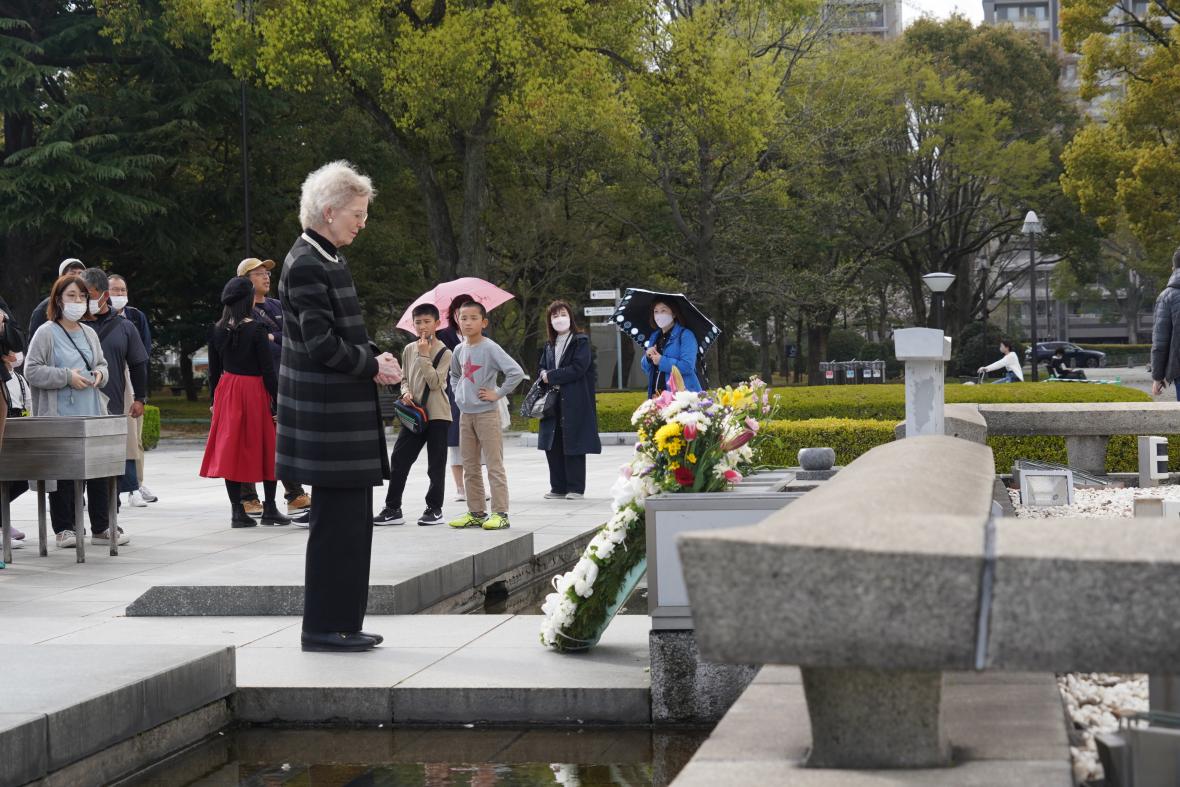
Santa Marta (Colombia) (AFP) – Former Irish President Mary Robinson has had a front-row seat to historic change — and senses another turning point coming at a fossil fuel phaseout meeting in Colombia.
28/04/2026 – https://www.france24.com/en/live-news/20260427-nations-have-chance-to-break-fossil-fuel-mindset-mary-robinson
She casts the Santa Marta conference as a rare opportunity to break the “fossil fuel mindset” — and as the Iran war roils energy markets, it spotlights the risks of coal, oil and gas dependence, particularly for the poor she has long championed.
Speaking to AFP on Monday in Santa Marta ahead of the high-level talks on April 28-29, Robinson also described how listening to a calving glacier brought her to tears — and crystallized the urgency of the climate fight.
This interview with Robinson, a member of The Elders group of former heads of state founded by Nelson Mandela, has been edited for length and clarity.
A: “I do believe the COP (UN Conference of the Parties) is still very important and I hope that Santa Marta will be a complement to it and feed into the process.
“There are many other ways in which we need the COP. But we failed in Belem (at COP30) to get reference to phasing out fossil fuel because of the penetration of the fossil fuel lobbies. So that’s a reality.
“But when we planned Santa Marta we didn’t know we’d be in the worst crisis of oil and gas. The timing is important. Now is the time to change the mindset — get out of a fossil fuel mindset into a future-oriented clean energy, renewable energy.
“It’s the way we have to go, it’s the way we are going, but we need to go far much faster.”
A: “There are real possibilities. We really have never had the time and space before to do it. It’s not a negotiated conference — you don’t have to worry about negotiation.
“Countries have come thinking of what they are prepared do: governments, sub-national organizations, business generally, civil society, and the energy of the people summit. The dynamic is real.
“We’re on the brink of a new dynamic way forward of doers, coalitions of doers and it has to be the outcome of Santa Marta.”
“They are the very citizens who are suffering now from this conflict, which has choked off 20 percent of oil and gas. And it’s the poorest that suffer most from the rise in prices, the farmers can’t get the fertilizer, etc. This is not a reliable future. I think that’s a really important moment for Santa Marta.”
A: “We are coming close to real tipping points, and the scientists have been warning us for years. But they are worried that things are accelerating.
“Not enough of the planning of governments is grounded in the science. One of the things we’re calling for — and I’m very keen on this — is that governments should have chief planetary scientists. During COVID, lots of countries had chief medical officers, and we listened because we were scared. They had a lot of authority.
“We’re in the same position. We haven’t thought it through yet, but we are.”
A: “When you hear the science, it is scary. And we should be more scared.
“Part of it is aligning ourselves with nature. I had an experience of doing that. I was lucky enough to be on a scientific expedition in Greenland where we were told to just be on your own and listen to the glacier.
“I was listening to the sound of thunder — which was a major calving — and then sharp, smaller calving like rifle shots, I found myself crying. I was on my own, listening to nature and I was crying because I knew it wasn’t right, I knew what we were doing, we shouldn’t be doing.
“I was so grateful to that moment of really understanding that nature was talking to us and saying, stop this.
“And so it’s the urgency of the science, the opportunity at the moment, and the space that is provided by Santa Marta. We must avail of it, and we must build momentum.”
Why should Scotland wait 15 years for nuclear power we don’t need?

29th April, Garry Thomson, https://www.thenational.scot/politics/26058055.scotland-wait-15-years-nuclear-power/
SARWAR has been touting nuclear power stations as the way forward for Scotland without any serious challenge from the media. The Hinkley Point C nuclear project in England is significantly over budget, with costs estimated at £35 billion (in 2015 prices) or up to £46bn-plus in current prices. This is more than double the initial 2016 estimate of £18 billion. Operation is delayed, with the first reactor now expected in 2030, a further one-year delay.
There’s also the cost of decommissioning, which is not included, and the risk of radioactive leaks which have recently been covered up in Scotland. Why would Scots wait for 15 years to build nuclear power plants rather than continuing to develop further renewable energy with battery storage farms and improvements to infrastructure connectivity, when we are already well down that road?
Could it be to satisfy the nuclear lobbyists that are so close to Labour! Sarwar needs to answer these questions and the media needs to ask them before the May election.
Nuclear Fusion’s Funding Rush Comes With a Catch
By Leonard Hyman & William Tilles – Apr 27, 2026, https://oilprice.com/Alternative-Energy/Nuclear-Power/Nuclear-Fusions-Funding-Rush-Comes-With-a-Catch.html
- Fusion firms are turning to SPACs for funding, using faster, less restrictive public-market routes to raise the massive capital needed for commercialization.
- SPACs offer speed but come with heavy downsides, including significant equity dilution, weak investor protections, and high risk—often likened to “junk” equity.
- Investments remain highly speculative, as fusion companies are still pre-revenue R&D ventures with uncertain technological outcomes despite growing momentum.
As nuclear fusion technologies move towards commercialization, the industry will need hundreds of millions, if not billions of dollars of new capital, either from public or private sources, in order to grow. Two nuclear fusion companies have chosen to access the public capital markets via special purpose acquisition corporations. (SPACs).which are often referred to as “blank check companies” because investors give money to a sponsor, typically an investment bank, to find a good business to invest in, without knowing in advance where the money will go.
Before going into specifics, we should explain how a SPAC works. It is an equity vehicle that affords the issuer both advantages and disadvantages over a conventional equity offering via an initial public offering (IPO). There are two principal advantages to SPACs from an issuer’s perspective. They can be offered more quickly than an IPO, and they also do not require pesky financial details like earnings forecasts and cash flow projections. SPACs are a financing vehicle for companies with big ideas, lots of potential, but zero revenues. There are two major downsides to this financial structure, though. First, the sponsor takes a big chunk of the equity as its fee, so there’s a lot of equity dilution right at the outset, like 30%+ dilution. The sponsors typically also receive warrants, which, when exercised, further increase the stock float and exacerbate dilution. And then there’s the phantom equity problem. SPAC investors can demand their money back from the sponsor, typically $10 per share if no investment has been made. However, the outstanding shares are not retired, and this also exacerbates a stock dilution problem.
As if to prove our point, one of the first nuclear fusion companies to form a SPAC, TAE Enterprises, formerly Tri Alpha Energy, did so in a 50-50 merger with the President’s Trump Media and Technology Group, the owner of Truth Social. The CEO of TAE, and Truth Social’s CEO, former congressman Devin Nunes, were to be co-heads of this new venture. Mr. Nunes has been fired. Nevertheless, TAE is a real technological competitor in the nuclear fusion race. Its newest reactor, called Copernicus, uniquely uses hydrogen-boron fuel (versus deuterium-tritium in more conventional systems). The advantage is a great diminution in radioactive waste, but the extreme temperatures needed, 1-5 billion degrees Celsius, pose ignition challenges. TAE previously raised over a billion dollars from Google, Chevron, and others and, like everyone else, expects to have a commercial reactor operating in the early 2030s. TAE’s field-reversed configuration of magnetic confinement loosely resembles a tokamak, but with a much simpler, cheaper architecture.
A second company, General Fusion, announced plans to go public via a SPAC shortly after TAE. Its sponsor, more conventionally, is a Dallas-based investment bank, and its SPAC is called the Spring Valley Acquisition Corporation III (that’s Roman numeral three). Deal number one, by the way, was the SMR company NuScale. That deal is expected to close some time around mid-year, and the company plans to be NASDAQ-listed under the stock ticker GFUZ. General Fusion describes its magnetized target fusion (MTF) technology as a more practical fusion alternative to both tokamak and laser-driven systems. The value of this transaction was expected to be about $1 billion at closing.
Lastly, we want to mention Zap Energy which is developing the so-called “sheared flow stabilized Z-pinch fusion technology” and is often cited as next in line to go public in some form. Zap has raised over $300 million dollars from Bill Gates’ Breakthrough Energy Ventures, Chevron, Mizuho, Soros Foundation, and others. Zap’s website describes the company as “building a seriously cheap, compact, scalable fusion energy technology with potentially the shortest path to commercially viable fusion and (using) orders of magnitude less capital than traditional approaches.” Zap’s website also teases the competitors with a large headline stating, “No Magnets Needed.
People often ask us whether SPACs are an appropriate investment vehicle for typical retail investors. The short answer is no. The long answer is also no, by the way. And that’s for a simple reason. These SPACs are not businesses in the conventional sense of the term. They are late stage research and development projects looking to establish a technological proof of design or a working prototype. They will consume vast amounts of capital for research with no associated revenues for years. And who knows which of these competing technologies will ultimately prevail in the energy marketplace and which will be discarded as ultimately impractical. In a way, the SPAC financial format, as we suggested earlier, is like a non-investment grade rating, but for equities, which should serve as a warning for potential investors. It’s a high cost, high risk financial structure, but perhaps one not inappropriate to the business of trying to capture the sun in a magnetic bottle as some have labeled the pursuit of nuclear fusion.
Entire NSF science advisory board fired by Trump administration

Members of the National Science Board, which the US Congress founded in 1950, were given no explanation for their termination.
By Dan Garisto, 6 April 2026
All 22 members of the advisory board that oversees the US National Science Foundation (NSF), a leading funder of fundamental science, were fired on 24 April without explanation. Every member of the NSF’s National Science Board (NSB) received an e-mail on Friday afternoon saying that “on behalf of President Donald J. Trump”, their positions were “terminated, effective immediately”.
Members of the NSB are appointed by the president and serve six-year terms that are staggered, avoiding complete turnover. Asked about the reason for the termination, a White House spokesperson said that the 2021 Supreme Court decision United States v. Arthrex, Inc. “raised constitutional questions about whether non-Senate confirmed appointees can exercise the authorities that Congress gave the National Science Board”. Members of the NSB were initially confirmed by the Senate, but have not been since 2012.
“This action to dismiss the NSB is unprecedented,” says Dan Reed, a computer scientist at the University of Utah in Salt Lake City and chair of the NSB from 2022 to 2024. “We need a vibrant, independent NSB, one representative of the broad science and engineering enterprise.”
Zoe Lofgren, a member of the US House of Representatives from California and the ranking Democrat on the House Committee on Science, Space, and Technology, criticized the move. “This is the latest stupid move made by a president who continues to harm science and American innovation,” she said in a statement. “It unfortunately is no surprise a president who has attacked NSF from day one would seek to destroy the board that helps guide the Foundation.”
But House science committee chairman Brian Babin, a Republican from Texas, said, “Every President expects advisors to serve in a manner consistent with executive and legislative priorities. I look forward to seeing whom President Trump selects to fill the NSB and refocus our science agencies on their core mission: pursuing science.”
This is not the first time the Trump administration has ousted federal science advisers en masse. Last year, the administration fired all 17 members of the Advisory Committee on Immunization Practices, which played a crucial part in US vaccine policy, and eliminated 14 advisory committees at the NSF. Also last year, Trump issued an order eliminating several advisory committees, including one on long COVID, to reduce government spending and “promote American freedom and innovation”.
Long history
The NSF and the NSB were established by Congress in 1950. The board meets five times a year and publishes reports on the state of US science and engineering that help to guide the president and Congress. Its next meeting was set for 5 May, and members say a report about the United States ceding scientific ground to China was set to be released.
“Where will advice come from?” asks Roger Beachy, a biologist at Washington University in St. Louis, Missouri. He was appointed to the NSB by US President Barack Obama in 2014 and reappointed by Trump in 2020 before being fired on Friday. “Who will help with what is the future of science in this nation?”
Keivan Stassun, an astrophysicist at Vanderbilt University in Nashville, Tennessee, says that the termination of NSB members fits into a pattern of the Trump administration’s approach to science advice, which is being “systematically either dissolved or eviscerated”, he says. “It felt like only a matter of time” before that happened to the NSB, he says.
Members of the National Science Board, which the US Congress founded in 1950, were given no explanation for their termination.
This is not the first time the Trump administration has ousted federal science advisers en masse. Last year, the administration fired all 17 members of the Advisory Committee on Immunization Practices, which played a crucial part in US vaccine policy, and eliminated 14 advisory committees at the NSF. Also last year, Trump issued an order eliminating several advisory committees, including one on long COVID, to reduce government spending and “promote American freedom and innovation”.
Long history
The NSF and the NSB were established by Congress in 1950. The board meets five times a year and publishes reports on the state of US science and engineering that help to guide the president and Congress. Its next meeting was set for 5 May, and members say a report about the United States ceding scientific ground to China was set to be released.
Tumultuous times
The firing of NSB members comes amid other turmoil at the NSF. The Trump administration proposed two years in a row to cut the NSF budget by more than half. (Congress declined to approve that proposal for the 2026 budget.) The agency has lost more than 30% of its staff since January 2025, and in December, it had to cede its headquarters to another federal agency. This year, new grants at the agency have been issued at a trickle, as the agency prepares major cuts to its divisions.
One of the NSB’s key statutory roles is to approve the NSF’s budget. But multiple NSB members say that the White House Office of Management and Budget (OMB), which oversees federal spending, told NSF leadership not to share details about the agency’s spending with board members…………………………………………. (Subscribers only) https://www.nature.com/articles/d41586-026-01361-7
1 This Month
6 June – WEBINAR- Get Inspired by Protests Against Military Bases!


Cuba Is Not a Failed State – It Is a Besieged State
PETITION: “Global Appeal to Endorse Palestinian Right of Return of Refugees”


of the week– Nuclear Reactor Information Task Force
To see nuclear-related stories in greater depth and intensity – go to https://nuclearinformation.wordpress.com
-
Archives
- June 2026 (34)
- May 2026 (306)
- April 2026 (356)
- March 2026 (251)
- February 2026 (268)
- January 2026 (308)
- December 2025 (358)
- November 2025 (359)
- October 2025 (376)
- September 2025 (257)
- August 2025 (319)
- July 2025 (230)
-
Categories
- 1
- 1 NUCLEAR ISSUES
- business and costs
- climate change
- culture and arts
- ENERGY
- environment
- health
- history
- indigenous issues
- Legal
- marketing of nuclear
- media
- opposition to nuclear
- PERSONAL STORIES
- politics
- politics international
- Religion and ethics
- safety
- secrets,lies and civil liberties
- spinbuster
- technology
- Uranium
- wastes
- weapons and war
- Women
- 2 WORLD
- ACTION
- AFRICA
- Atrocities
- AUSTRALIA
- Christina's notes
- Christina's themes
- culture and arts
- Events
- Fuk 2022
- Fuk 2023
- Fukushima 2017
- Fukushima 2018
- fukushima 2019
- Fukushima 2020
- Fukushima 2021
- general
- global warming
- Humour (God we need it)
- Nuclear
- RARE EARTHS
- Reference
- resources – print
- Resources -audiovicual
- Weekly Newsletter
- World
- World Nuclear
- YouTube
-
RSS
Entries RSS
Comments RSS
 nuclear-news