Putin’s Strong Message to Europe at the Valdai Club: Stop the March Towards War
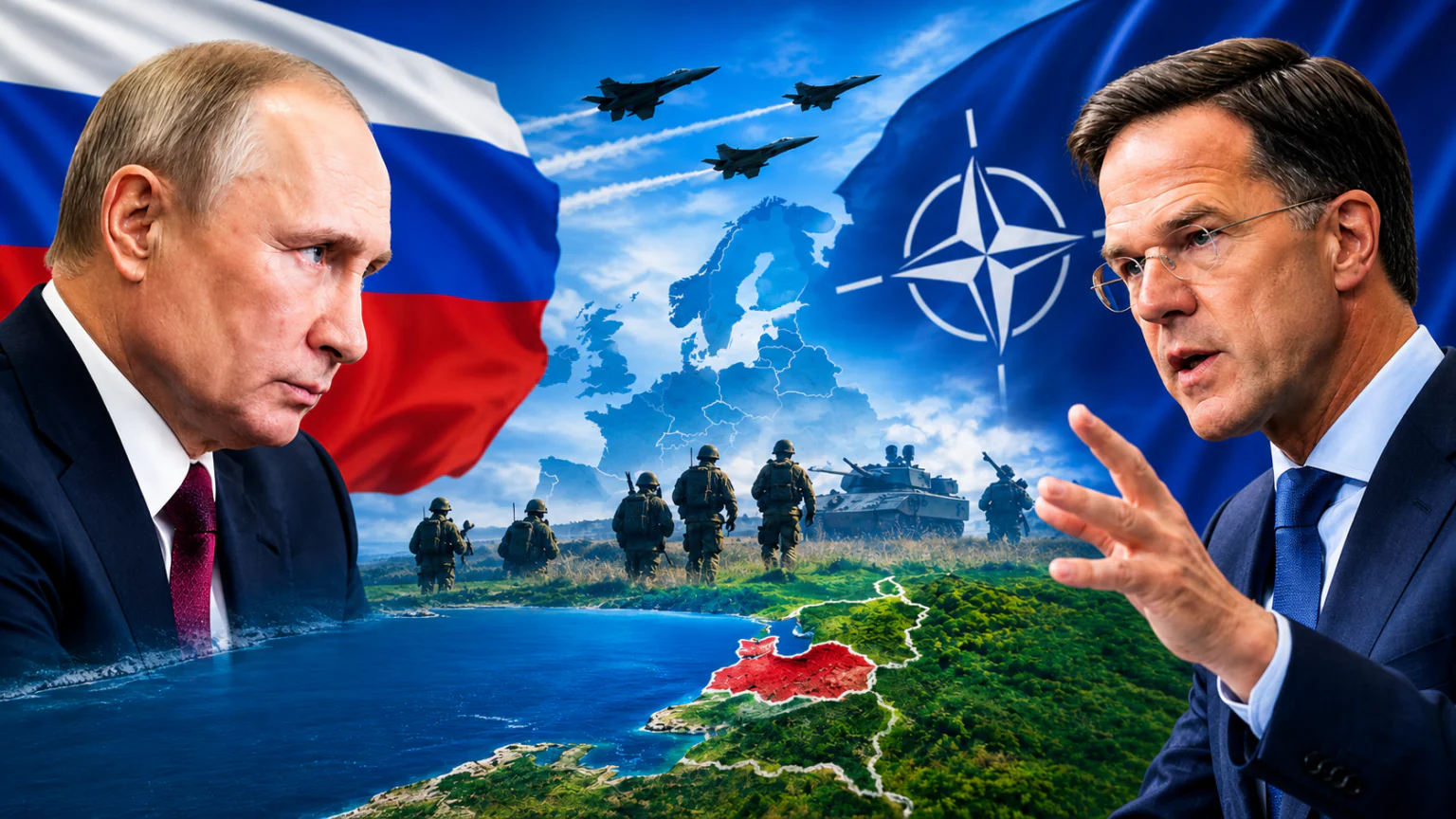
If Russia is weak and having military difficulties, if Putin is intimidated, if NATO is considerably stronger and if there is no immediate threat of a Russian attack, then why is European public opinion always being prepared for a major war?
Europe should therefore pose itself a simple question: is Russia really about to attack NATO — or is Europe preparing for a war that its own rhetoric is helping to make it more plausible?
Ricardo Martins, New Eastern Outlook, October 09, 2026
As NATO Secretary General Mark Rutte and European leaders increasingly warn of a looming Russian threat, Vladimir Putin used the Valdai Discussion Club to deliver a very different message: Europe is feeding an escalation spiral it may no longer be able to control.
Europe is being told to prepare for war, and the rearmament is being crafted as an economic and political project in itself. Europe is manufacturing a permanent war psychology while simultaneously insisting that Russia poses no imminent military threat.
Mark Rutte, the Secretary General of NATO, has on several occasions told that Russia might at some point launch an attack on NATO territory. The European governments are currently considering matters relating to hybrid attacks which can result in a large number of casualties, the establishment of new security arrangements and how to deal with a major confrontation with Moscow. The tone being used is becoming more and more dramatic, alongside unprecedented defence spending record levels.
With this background in mind, Vladimir Putin gave his reply at the Valdai Discussion Club.
His view was not that war was certain, rather it was the opposite—he advocated stopping the escalation before war became irreversible.
Putin’s argument is that Europe is trapped in a dangerous cycle in which military exercises, sanctions, weapons deliveries, threats and counter-threats are producing precisely the escalation that European governments claim they want to prevent.
This clear message is even more evident in what he said regarding Kaliningrad.
Rutte’s Russia narrative: threat, fear and rearmament
Mark Rutte is now one of the most prominent voices in Europe when warning about Russia.
In June 2025 he famously said to the Europeans: “You should learn to speak Russian or spend more on defence”, on the grounds that the possibility of future Russian aggression would mean a need for considerably increased defence spending over cuts on social security and pensions. He then warned that Russia might be ready to use military force against NATO within five years and, more recently, has spoken of Russia “testing us throughout Europe” as well as accusing Moscow of carrying out hybrid attacks, sabotage and attempts to split up the Alliance.
There is an extraordinary contradiction in Rutte’s most recent rhetoric.
On 30 September he stated that Putin was “a bit worried and a bit rattled” since the situation in Ukraine was supposedly not progressing well. He stressed that “Putin is not winning this” and claimed that Putin could never defeat NATO. At the same time, however, Rutte admitted that there was no immediate threat to NATO territory.
Then what is Europe actually getting ready for?
If Russia is weak and having military difficulties, if Putin is intimidated, if NATO is considerably stronger and if there is no immediate threat of a Russian attack, then why is European public opinion always being prepared for a major war?
It is worth posing that question.
The European public is being asked to agree to increased military spending, which could mean cutting back on social priorities, while at the same time a continuous state of insecurity is being fostered concerning Russia. The political message is remarkably consistent in telling people to spend more, to arm more and to get ready more – because Russia might launch an attack.
Fear is a highly effective political tool.
The issue is that fear may also come true on its own.
Putin’s warning over Kaliningrad
When asked about the increasingly aggressive rhetoric concerning Kaliningrad, Putin was especially straightforward.
He denied the notion that Russia was attempting to intimidate Europe, stating that Moscow’s warning was in fact ‘a response to an attempt to intimidate us‘.
He specifically referred to the European statements concerning preparations for a possible war with Russia in 2029 or 2030, the NATO exercises in the Baltic region, and the attempts to detain Russian vessels.
His argument is that this constitutes an escalation, and he gave a warning that was remarkably serious.
According to Putin, if Kaliningrad were the object of a direct attack or blockade, Russia would have to consider putting into use “all the forces and means at our disposal”. He made it clear that this was not necessarily a threat to employ nuclear weapons, but rather an assertion that Russia would make use of whatever measures it regarded as necessary for its defence.
It is exactly the kind of statement which European governments should take seriously — not since it is certain that Russia intends to attack Europe, but because a military confrontation between nuclear powers leaves little room for miscalculation.
The main thing that Putin warned about was an escalation.
His analogy was in the form of a spiral since provocative actions led to countermeasures, these countermeasures in turn caused further escalation, and eventually the process could get to a stage at which no one was completely in control.
That is the true danger.
What is the reason why Europe needs Russia to be its permanent enemy?
Putin’s more general explanation extends beyond Ukraine.
He contends that Europe has never really settled the security arrangements that followed the end of the Cold War. Rather than establishing a true pan-European security structure, NATO extended itself eastward and as a result Russia became increasingly excluded from the European security system.
He referred to Egon Bahr, the late German Social Democrat, who in 1990 had warned that if the division of Europe into hostile blocs was not overcome the Soviet Union would be isolated and a highly unfavourable future would result.
For Putin, Bahr’s warning was foretelling.
He also looked at how relations declined during NATO’s intervention in Yugoslavia, as a result of NATO’s enlargement, the changes that took place after the breakup of the Soviet Union and finally in the case of Ukraine. Even if one does not agree with this view, it does show a consistent way of understanding the past three decades from the Russian perspective: Russia has on numerous occasions sought integration with the West, found that this was not desired, and has in the end come to the conclusion that the European order that emerged after the Cold War was designed against Russia.
That is the reason why the message that Putin gave at Valdai was not merely about Ukraine. The main topic was the future of Europe.
Europe’s war preparation may be hiding a deeper crisis………………………………………………………………..
Putin’s answer: the world is changing
The most important aspect of Putin’s speech at Valdai was not Ukraine. It was his conception of the future international order.
Putin stated that the world is moving from Western hegemony towards a multipolar international system and that this transformation is inevitable, adding that the former hegemony would eventually have to acknowledge the reality of a world in which Asia, Africa, Latin America, the Middle East and other centres of power demand a greater role.
This is the point at which Europe must make its real strategic choice.
It can continue to base its security mainly on NATO, move ever more closely in line with Washington’s strategic priorities and regard Russia as a permanent adversary.
Alternatively, it could try to regain what Europe once said that it stood for: strategic autonomy, diplomacy, and the ability to build bridges between opposing powers.
Putin’s vision is not the kind of vision held by liberals in Europe. It does not have to be one that Europeans accept without question. It is rather a vision of a world which is no longer arranged around a single dominant centre, and Europe will not be able to stop this transformation.
The choice Europe still has
The Valdai speech concluded with a warning which should be heard well beyond Moscow.
The greater the extent to which the confrontation becomes uncompromising and the more openly the strategic defeat of an opponent is declared, the more likely it is that the conflict will reach its most dangerous stage. He cautions against arrogance, overconfidence and the uncontrolled escalation of reciprocal responses.
This is no appeal for Europe to give in. It is a plea to acknowledge the consequences of confrontation.
Europe should therefore pose itself a simple question: is Russia really about to attack NATO — or is Europe preparing for a war that its own rhetoric is helping to make it more plausible?
Rutte states that there is no immediate Russian attack that NATO is much stronger, and that Putin is intimidated and that Russia is having difficulties.
Then why the hysteria? Why the permanent mobilisation? Why the preparation for a war that nobody claims is imminent?
At Valdai, Putin made it clear that the world is changing, that multipolarity is inevitable, and that military escalation is not a replacement for diplomacy.
Although Europe may reject Putin’s worldview, but it cannot ignore his warning. Because the greatest danger is not necessarily that Russia wants a war with Europe. It may be that, after years of escalating rhetoric, Europe forgets how to prevent one. https://journal-neo.su/2026/10/09/putins-strong-message-to-europe-at-the-valdai-club-stop-the-march-towards-war/
No comments yet.
1 This Month
15 October. Joint Appeal for Nuclear Abolition Day -presentation to the UN on October 15 will be live on UNWebTV
Endorse the Nuclear Abolition Day Appeal
23-25 October – on Zoom – World BEYOND War’s annual global conference

To see nuclear-related stories in greater depth and intensity – go to https://nuclearinformation.wordpress.com
-
Archives
- October 2026 (137)
- September 2026 (339)
- August 2026 (330)
- July 2026 (355)
- June 2026 (287)
- May 2026 (306)
- April 2026 (356)
- March 2026 (251)
- February 2026 (267)
- January 2026 (308)
- December 2025 (358)
- November 2025 (359)
-
Categories
- 1
- 1 NUCLEAR ISSUES
- business and costs
- climate change
- culture and arts
- ENERGY
- environment
- health
- history
- indigenous issues
- Legal
- marketing of nuclear
- media
- opposition to nuclear
- PERSONAL STORIES
- politics
- politics international
- Religion and ethics
- safety
- secrets,lies and civil liberties
- spinbuster
- technology
- Uranium
- wastes
- weapons and war
- Women
- 2 WORLD
- ACTION
- AFRICA
- Atrocities
- AUSTRALIA
- Christina's notes
- Christina's themes
- culture and arts
- Events
- Fuk 2022
- Fuk 2023
- Fukushima 2017
- Fukushima 2018
- fukushima 2019
- Fukushima 2020
- Fukushima 2021
- general
- global warming
- Humour (God we need it)
- Nuclear
- RARE EARTHS
- Reference
- resources – print
- Resources -audiovicual
- Weekly Newsletter
- World
- World Nuclear
- YouTube
-
RSS
Entries RSS
Comments RSS


Leave a Reply