1 B1 Mapped: Who’s building nuclear SMRs?
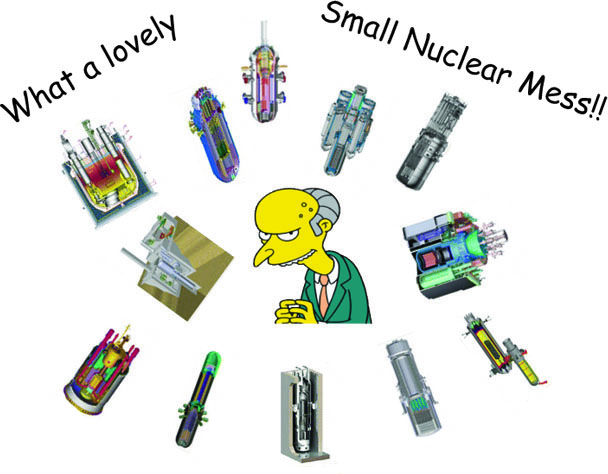
none of the new generation of land-based SMR plants in the western world have yet made it from the drawing board to become a commercial reality.
Neil Gerrard, Senior Editor, Construction Briefing, 12 October 2026
One of the big challenges of the data centre boom is how to power all those electricity-hungry computing facilities.
One possible answer is small modular nuclear reactors (SMRs). The concept of nuclear plants that can be built cheaply and safety with a repeatable, modular design, has held promise for years.
But none of the new generation of land-based SMR plants in the western world have yet made it from the drawing board to become a commercial reality.
However, some SMR projects are now starting to get off the ground and could provide a major new source of construction work in the coming years if ambition survives reality.
That is why there has been a flurry of news stories about SMRs recently, from Rolls-Royce SMR launching a new supplier programme for £1.4 billion worth of contracts as it prepares to build three reactors in the UK, to Samsung C&T, GE Vernova Hitachi, and Studsvik teaming up to advance a 1.2GW power project in Sweden.
Keeping track of who plans to build what, where, when and with whom is becoming an increasingly bewildering exercise.
That’s why the Construction Briefing team has put together a map and article that track exactly that.
The global pipeline of SMRs ranges from licensed projects to preliminary agreements. To complicate matters further, several programmes have already changed direction, stalled, or hit the buffers completely.
Projects in Canada, China and the US have progressed into construction or commissioning. Elsewhere, developers have secured customers and engineering contracts but still face decisions on financing, licensing and construction.
Our tracker looks at the different nascent SMR technologies out there and charts how far advanced projects involving those reactors are.
Although SMRs are typically defined as reactors with a rated electrical power of 300 MWe or less, it also includes larger modular designs marketed alongside SMRs, such as Rolls-Royce’s reactor (470 MWe) and TerraPower’s sodium-cooled Natrium reactor (345-500 MWe).
The global pipeline of SMRs ranges from licensed projects to preliminary agreements. To complicate matters further, several programmes have already changed direction, stalled, or hit the buffers completely.
Projects in Canada, China and the US have progressed into construction or commissioning. Elsewhere, developers have secured customers and engineering contracts but still face decisions on financing, licensing and construction.
Our tracker looks at the different nascent SMR technologies out there and charts how far advanced projects involving those reactors are.
Although SMRs are typically defined as reactors with a rated electrical power of 300 MWe or less, it also includes larger modular designs marketed alongside SMRs, such as Rolls-Royce’s reactor (470 MWe) and TerraPower’s sodium-cooled Natrium reactor (345-500 MWe)…………………………………………………………………………………………………………………………………………………………………………………………………………………………………………………………………………………. https://www.constructionbriefing.com/news/mapped-whos-building-nuclear-smrs/8133242.article
No comments yet.
1 This Month
15 October. Joint Appeal for Nuclear Abolition Day -presentation to the UN on October 15 will be live on UNWebTV
Endorse the Nuclear Abolition Day Appeal
23-25 October – on Zoom – World BEYOND War’s annual global conference

To see nuclear-related stories in greater depth and intensity – go to https://nuclearinformation.wordpress.com
-
Archives
- October 2026 (149)
- September 2026 (339)
- August 2026 (330)
- July 2026 (355)
- June 2026 (287)
- May 2026 (306)
- April 2026 (356)
- March 2026 (251)
- February 2026 (267)
- January 2026 (308)
- December 2025 (358)
- November 2025 (359)
-
Categories
- 1
- 1 NUCLEAR ISSUES
- business and costs
- climate change
- culture and arts
- ENERGY
- environment
- health
- history
- indigenous issues
- Legal
- marketing of nuclear
- media
- opposition to nuclear
- PERSONAL STORIES
- politics
- politics international
- Religion and ethics
- safety
- secrets,lies and civil liberties
- spinbuster
- technology
- Uranium
- wastes
- weapons and war
- Women
- 2 WORLD
- ACTION
- AFRICA
- Atrocities
- AUSTRALIA
- Christina's notes
- Christina's themes
- culture and arts
- Events
- Fuk 2022
- Fuk 2023
- Fukushima 2017
- Fukushima 2018
- fukushima 2019
- Fukushima 2020
- Fukushima 2021
- general
- global warming
- Humour (God we need it)
- Nuclear
- RARE EARTHS
- Reference
- resources – print
- Resources -audiovicual
- Weekly Newsletter
- World
- World Nuclear
- YouTube
-
RSS
Entries RSS
Comments RSS


Leave a Reply