CANDU’s nuclear reactor business is unsupportable without overseas sales.

Magnificent projections of nuclear expansion within Canada have vanished in a puff of smoke. The industry tantalizes politicians with great expectations of fabulous success just around the corner. Without any public debate, the politicians are quite easily suckered in – only to find that the promises were based on engineering euphoria and little else.
Gordon Edwards, 29 October 26
There have been no domestic sales of CANDU reactors since 1979. And the overseas sales have been minimal – 6 reactor sales in 48 years (since 1979), on average one sale every eight years. That’s not enough business to keep the industry alive.
Overseas customers have been India (2), Pakistan (1), South Korea (1), Argentina (1) and Romania (1) – all before 1979 – and South Korea (3), China (2), and Romania (1) after 1979. The Türkiye sale, if it proceeds, would be new territory for CANDU sales.
Here’s what the World Nuclear organization has to say about the Monark reactor, which is essentially a reactor of the Darlington CANDU design – with modifications – but encased in a single reactor building (without a vacuum building) similar to the Point Lepreau CANDU-6 design.
From https://world-nuclear.org/information-library/country-profiles/countries-a-f/canada-nuclear-power
“In late 2023, AtkinsRéalis (formerly SNC-Lavalin) announced its new Candu Monark design, with several passive safety features. The 1000 MWe design is a heavy water cooled and moderated Candu reactor core of 480 channels, with a two-loop ‘figure of eight’ heat transport system, similar to the design used for the Darlington plant. The fuel is natural uranium in 37-element bundles (37M). The conceptual design was completed in September 2024, and in October 2024 AtkinsRéalis signed a service agreement with the CNSC for familiarization and planning of a future pre-licensing design review. A CNSC preliminary regulatory design assessment of the Candu Monark-D, the variant referenced to the refurbished Darlington plant, began in March 2026. In the same month Candu Energy signed a memorandum of understanding with Türkiye Nuclear Energy Company (TÜNAŞ) to assess Candu deployment there.”
Back in 1982, I wrote two articles in business magazines based on a study by the federal government about the sad state of affairs for the CANDU industry. One was printed in the
Canadian Business Review (Cost Disadvantages of Expanding the Nuclear Industry 1982), the other was for the Canadian
Journal of Business Administration.(Canada’s Nuclear Dilemma 1983). Magnificent projections of nuclear expansion within Canada have vanished in a puff of smoke. The industry tantalizes politicians with great expectations of fabulous success just around the corner. Without any public debate, the politicians are quite easily suckered in – only to find that the promises were based on engineering euphoria and little else.
There were other articles about CANDU export sales from the same period of time. They are illuminating in terms of past examples of overblown hype from the nuclear industry, promises of expansion and foreign sales that did not turn out well. It is useful to know something about the past history….
Feeding the Nuclear Dragon: CANDU exports to China
By Dave Martin, 1995
Documents related to the Sale of CANDU reactors to ChinaMiscellaneous, 1996
Exporting Disaster: The Cost of Selling CANDU ReactorsBy Dave Martin, 1996
Nuclear Sunset: The Economic Cost of the Canadian Nuclear IndustryBy Dave Martin and David Argue, 1996
The CANDU Syndrome: Canada’s Bid to Export Nuclear Reactors to Turkey
By Dave Martin, 1997
Appeal regarding the Akkuyu Nuclear Plant in Turkey
By Dave Martin and the Nuclear Awareness Project
As the AI Bubble Threatens to Burst, We Must Prepare to Fight a Big Tech Bailout

October 28, 2026, By Alexis Goldstein, https://scheerpost.com/2026/10/28/as-the-ai-bubble-threatens-to-burst-we-must-prepare-to-fight-a-big-tech-bailout/
As firms like CoreWeave and NVIDIA start to wobble, let’s demand that the public won’t be the one left holding the bag.
AI data centers are unpopular for good reason: they drive up utility costs for communities, crowd out everything from schools to family farms, and they’re bad for our health. But these data centers are also a financial crisis in slow motion.
The AI ecosystem is built on mountains of debt taken on not only by tech firms like Meta (which borrowed a record-breaking $25 billion in late 2025 to fund the building of data centers), but also by the companies that lease data center space to the Big Tech firms. Many of these firms have spent far more than they have come close to earning in profits: One estimate puts tech industry spending to build data centers at $1.9 trillion, but less than half of that money has been made in revenue.
The financial markets are taking notice.
There’s been significant turmoil in the tech sector over the past month — and at one critical company in particular: CoreWeave.
CoreWeave used to be a Bitcoin mining firm called Atlantic Crypto, but it started to pivot to AI in 2019. CoreWeave leases space to Big Tech firms at data centers they build and maintain. CoreWeave has paid for most of its data centers by borrowing: it currently owes more than $51 billion to investors, including two of the most infamous financial firms: Magnetar and Blackstone, as documented by journalist Elizabeth Lopatto at The Verge.
CoreWeave’s troubles have been piling up: its stock lost a quarter of its value — a 25 percent drop — last week, then dropped another 10 percent on October 22. Bond investors are demanding more money if they’re going to take on the risk of buying CoreWeave debt, a sign the markets are worried about CoreWeave going bust. Investors used to be content to be paid 9.75 percent a year to loan CoreWeave money until 2031; now bond market investors won’t take that risk without being paid almost 15 percent in annual interest.
But perhaps the worst bit of news for CoreWeave is in the market’s falling confidence in its ability to survive, as measured by the cost of an instrument known as the credit default swap, which is essentially a bet that a company is going to go bankrupt (it’s also described as insurance against that company’s bankruptcy). The cost of buying a five-year-long credit default swap for CoreWeave has increased over 164 percent in the past year.
It’s not just CoreWeave facing trouble. One of the most significant companies in the AI ecosystem is NVIDIA, the graphics card maker, which, on September 28, spent $150 billion to buy back shares of its own stock from the overall market.
It was a record-breaking stock buyback — no other company in history had ever purchased that much of its own stock. One reason companies buy back their own stock is to artificially boost the stock price. Often the CEO’s compensation is tied to the price of the stock, and so the company purchases its own stock back to drive up the price, thus guaranteeing the CEO higher compensation.
The market sometimes perceives a stock buyback as a sign of confidence, reinforcing the idea that the company itself is underpriced. But in the case of NVIDIA, it seemed to be an indication that there’s nowhere higher to go, and the only way to raise the price of NVIDIA stock, which has been on a record tear, is to artificially boost it. Financial journalists have questioned NVIDIA’s ability to keep rocketing upward since late 2025. NVIDIA stock is down around 5 percent since this latest buyback.
AI has been sold to the general public as everything from a panacea to a danger to humanity to a roaring bull market, but it’s starting to look more like financial mania.
In late 2025, OpenAI CFO Sarah Friar caused a stir when she suggested the government should backstop AI firms like hers. Astra Taylor and Naomi Klein warned about the potential for an AI bailout in their new book End Times Fascism: And the Fight for the Living World, and propose a new disarmament movement.
To disarm the big tech bomb, including AI, the public needs to be on high alert — as AI firms start to visibly wobble, we need clear demands and firm commitments from our leaders that if it all comes crashing down, the public won’t be the one left holding the bag.
Norway and Finland’s Mediation on Ukraine Will Fail: Europe Cannot do Diplomacy

Serious diplomacy requires a willingness to talk to the other side about things they care about, even when those things are uncomfortable. It requires accepting that a negotiated settlement will not look like a victory parade.
A conversation with Dr Matthew Blackburn
Ian Proud, Oct 27, 2026, https://thepeacemonger.substack.com/p/norway-and-finlands-mediation-on?utm_source=post-email-title&publication_id=3221990&post_id=222317380&utm_campaign=email-post-title&isFreemail=true&r=1ise1&triedRedirect=true&utm_medium=email
Dr Matthew Blackburn of the Norwegian Institute of International Affairs (NUPI) is a friend. We disagree on plenty, and this latest exchange was deliberately sharp, but that doesn’t change the fact that I rate him.
He has written a thoughtful piece for Responsible Statecraft arguing that Norway and Finland are beginning to open a constructive diplomatic path on Ukraine that the rest of Europe has so far refused.
Indeed, on the back of the recent Zelensky visit to Oslo, Støre and Stubb have held a phone call with Putin, the first explicit diplomatic engagement by European nations since Macron called in July 2025.
I read the article, then spent an hour telling him why I think the Norway-Finland effort at mediation will fail. I hope I’m wrong.
Nonetheless, the piece is worth reading. Blackburn points to the strategic cultures of Oslo and Helsinki, the long-standing Norwegian practice of balancing deterrence with reassurance, Finland’s history of managing a difficult neighbour without losing its democracy, and the recent language coming from Støre, Stubb, and Espen Barth Eide.
He sees small states filling a leadership vacuum that the big three (Britain, France and Germany) cannot or will not fill.
He is right that France, Germany, and Britain are all domestically paralysed. He is also right that maximalist rhetoric has crowded out any serious discussion of how this war actually ends.
Where I part company is on the claim that Norway and Finland are now serious about diplomacy in a way that matters. Serious diplomacy requires a willingness to talk to the other side about things they care about, even when those things are uncomfortable. It requires accepting that a negotiated settlement will not look like a victory parade. It requires politicians who are prepared to tell their own publics that some of the slogans of the last three years no longer hold.
I see none of that happening yet.
What I hear instead is the same stock phrases that have blocked talks since 2022: no reward for aggression, Ukraine must be allowed to flourish, a just peace. These are not negotiating positions. They are the price of admission to the European conversation.
Once they have been said, the substantive part is usually that Europe must stay united, that pressure must continue, and that any deal must still somehow punish Russia. That is not an off-ramp. It is a stay-on-the-ramp of diplomacy denial.
Blackburn argues that values and realism can be combined. I understand the attraction of the idea. The problem is that once a war is under way, values mostly function as reasons not to talk. They become the language in which leaders explain to their own people why compromise is betrayal.
Europe does not currently possess the military or economic power to impose its values on Russia. Continuing to act as though it does simply prolongs the conflict and raises the eventual cost to Ukraine.
The Oslo meeting with Zelenskyy changed nothing material. Two Nordic leaders can host a press conference and speak in more moderate tones than Kaja Kallas or Radosław Sikorski. That is not the same as building a workable diplomatic process.
Until European governments are prepared to discuss security architecture, force limitations, and the future of immobilized assets in concrete terms with the Russians, the mediation talk remains nothing more than theatre.
I hope I am wrong.
A serious European contribution to ending the war would be better for everyone, especially Ukrainians. I just do not see the evidence that Norway and Finland, or anyone else in Europe, are ready to supply it.
The constraints that have produced four years of diplomatic paralysis—political survival, bureaucratic risk aversion, and the belief that unity matters more than results—have not disappeared. They have merely found slightly more polite spokesmen in Støre and Stubb, neither of whom jump off of the page as died-in-the-wool doves.
Foreign Office issues urgent warning as UK makes ‘unusual’ nuclear submarine decision
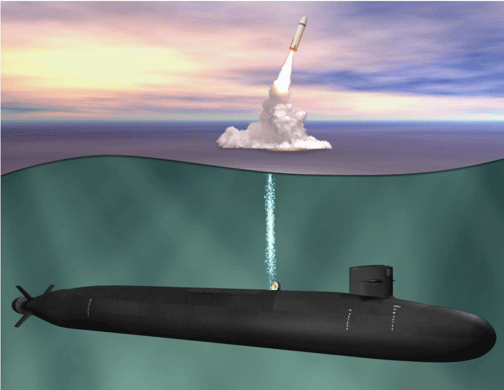
Brits have been warned of travel disruption as tensions in the Middle East escalate, with the UK deploying three nuclear submarines simultaneously
Olivia Beeson UK & World News Reporter, 27 Oct 2026,
https://www.mirror.co.uk/news/uk-news/foreign-office-warning-middle-east-37816937
The Foreign Office has issued an urgent warning to Brits as tensions in the Middle East continue to escalate, with the UK deploying nuclear submarines in an “unusual” action.
The warning was updated on Tuesday, October 27 and warns Brits to prepare for possible flight cancellations and travel disruptions as “the risk of sudden escalation is high” in the Middle East.
The Foreign Office alert covers travel for multiple countries, including Israel, Iran, Saudi Arabia, the UAE, Qatar, Iraq, Jordan, and Yemen.
It comes as Iran has stated its intention to target locations associated with the US and Israel.
The guidance was issued as it is understood that three of the UK’s four nuclear deterrent submarines are out at sea.
The reason for the move is yet to be confirmed, though at least one will be armed with nuclear warheads and on routine patrol, according to Sky.
The other could be working to take over the patrol with the third potentially undergoing sea trials, an expert claimed.
The deployment of the subs suggests improved availability, a problem for the Royal Navy’s submarine service in recent years.
Having three submarines at sea simultaneously is “unusual” for the UK, a source told The Times, though there was no further explanation.
It will definitely be noted by enemies and NATO allies, and could be seen as a signal to opponents. The fourth of the Trident submarines, HMS Victorious, is in Devonport naval base, undergoing maintenance.
A Ministry of Defence spokesperson said: “Our nuclear deterrent is the cornerstone of our national security, protecting the UK and our NATO allies every moment of every day.
“We remain the only European ally to commit its nuclear deterrent to the defence of NATO. This means that all NATO Allies already benefit from the protection of our nuclear deterrent.”
Sellafield reveals £25m Windscale reactor decommissioning plans
By Darren Shield, Carlisle News & Star 28th Oct 2026,
https://www.newsandstar.co.uk/news/26673731.sellafield-reveals-25m-windscale-reactor-decommissioning-plans/
Contractors are being sought for up to £25 million of decommissioning and demolition work at the former Windscale nuclear reactor complex at Sellafield.
Two procurement notices published within five days outline the next stages of work at the Windscale Advanced Gas-cooled Reactor (WAGR), which helped pioneer Britain’s second generation of nuclear power stations.
The larger contract, worth between £10 million and £20 million, involves stripping out buildings, managing radioactive waste, removing asbestos and preparing the complex for further demolition.
A notice published on October 21 states: “The facility is now progressing towards its final phase of decommissioning and demolition.”
It reveals that records confirm the presence of both low-level and intermediate-level radioactive waste, resulting in continuing radiological and contamination hazards.
Buildings within the complex remain under active surveillance and maintenance and are classified as ‘Beta Gamma contamination facilities’.
The contract includes the removal of equipment and other internal structures, radioactive waste management, decontamination, scaffolding and safety-related work.
It is scheduled to run from April 2027 until April 2031.
A separate tender, published on Monday, October 26, seeks a contractor for the demolition of the B55 Office Complex and B55.2 Turbine Hall, at an estimated cost of between £2.5 million and £5 million.
The buildings will be dismantled down to their existing ground-floor slabs using high-reach demolition machinery.
However, contractors face a particular challenge because an electrical substation located within the structures must remain operational throughout the work.
The notice states: “A key constraint is Substation 65, which is located within the B55/B55.2 structure and must remain operational and be protected from demolition impacts, dust and water ingress throughout the works.”
It also highlights uncertainties involving ‘ageing structures, buried services, below-ground voids and incomplete historical information’.
Detailed surveys and demolition engineering will be required to manage the risks.
The WAGR reactor was commissioned in 1962 and operated until 1981, serving as a prototype for advanced gas-cooled reactors subsequently developed for commercial electricity generation.
Its distinctive spherical containment building became a familiar feature of the Sellafield skyline.
Following the dismantling and removal of its reactor core, completed by 2012, the complex entered a period of care and maintenance.
The latest contracts represent further steps towards decommissioning the remaining facilities, although neither notice confirms a date for demolition of the spherical reactor building itself.
Both contracts are being procured by A2R, a joint venture between Altrad and AtkinsRéalis, under Sellafield’s Decommissioning and Nuclear Waste Partnership framework.
The contracts are advertised as suitable for small and medium-sized businesses.
Bids for the larger contract close on November 3, while companies have until November 10 to bid for the B55 demolition work, which is scheduled for April to December 2027.
UN puts media giants on notice over Gaza as journalists’ death toll spirals
by Aleta Moriarty | Oct 27, 2026, https://michaelwest.com.au/un-puts-media-giants-on-notice-over-gaza-as-journalists-death-toll-spirals/
UN Special Rapporteur, Francesca Albanese has released a blistering report on media complicity in war crimes as Israelis head to the polls. Aleta Moriarty reports.
United Nations Special Rapporteur report.
The report, Truth under the rubble: media in the time of genocide, by Special Rapporteur Francesca Albanese, was presented to the General Assembly recently and publicly launched today. It finds Israel’s failure to stop incitement on its airwaves is a continuing breach of the Genocide Convention and defies the International Court of Justice’s January 2024 order to prevent and punish it.
It also puts broadcasters and social media companies on notice: since that order, saying no platform can claim ignorance of the risk, and where a company knowingly provides practical assistance that has a substantial effect on international crimes, “questions of complicity arise”.
Massive toll on Palestinian journalists and their families
The Committee to Protect Journalists calls Gaza the deadliest war for journalists ever recorded. Israeli forces have wounded more than 400 journalists, and the report finds around
“70 of those killed were killed as reprisal for their work.“
More than 150 journalists’ homes and media offices and institutions have been destroyed, and Israel has completely destroyed 81 per cent of Gaza’s information and communications infrastructure. This devastation has not just been focused on the journalists, with around 710 journalists’ relatives also killed, 436 of them in the first four months alone.
More than 150 journalists’ homes and media offices and institutions have been destroyed, and Israel has completely destroyed 81 per cent of Gaza’s information and communications infrastructure. This devastation has not just been focused on the journalists, with around 710 journalists’ relatives also killed, 436 of them in the first four months alone.
Deliberate targetting
Photojournalist Fatma Hassouna was killed with five family members when precision-guided munitions struck their apartment in April 2025, a day after her documentary about life during the genocide was selected for Cannes.
In August 2025 a “double-tap” strike on Nasser Hospital killed 22 people. The first strike killed Reuters cameraman Hussam Al-Masri, and the second killed four more journalists who’d rushed to the scene. Israel said it had hit a “Hamas camera”. It belonged to Reuters.
Israel’s military says it doesn’t intentionally target journalists. In October 2023 the Israeli military reportedly set up a “legitimisation cell” that has systematically recast Gaza-based journalists as Hamas operatives, the report says, creating a pretext before attacks and a justification after them.
More than 100 Palestinian journalists and media workers have been detained since October 2023, and around 30 are still held. Those released describe physical assaults, sexual violence including rape, forced stress positions, sensory deprivation and medical neglect.
Dehumanisation and incitement to genocide
Dehumanisation and incitement to genocide
Under Article III of the Genocide Convention, direct and public incitement to commit genocide is a crime in its own right, the report explains, “complete upon utterance or publication and applicable to officials, broadcasters and private media actors”. No one has to act on it. Albanese finds that some statements broadcast in Israel meet that threshold.
Most people picture arms manufacturers when they think of business entities complicit in genocide. However, according to a 2024 Israel Law Review paper on Ben & Jerry’s exit from Israeli settlements, only two cases before international criminal tribunals since Nuremberg have held individual corporate defendants accountable, and both arose from Rwanda’s 1994 genocide.
The best known is the Media Case. In December 2003 the International Criminal Tribunal for Rwanda convicted RTLM executives Ferdinand Nahimana and Jean-Bosco Barayagwiza, whose station became known as “Radio Machete”, along with Kangura owner and editor Hassan Ngeze. A third case, against RTLM founder Félicien Kabuga, collapsed when he was found unfit to stand trial.
Broadcasters culpable
Albanese leans on the Nahimana judgment to argue that when presenters’ calls for genocide go unchallenged and unrepudiated by the broadcaster, the people who control the outlet carry the responsibility.
There are several worrying examples cited in the report. Channel 14 aired singer Eyal Golan’s call to “erase Gaza, don’t leave a single person there”, along with statements calling for a “Holocaust”, including “gas chambers”, and urging viewers to “destroy, kill, and obliterate”.
Three Israeli civil society groups listed hundreds of instances of incitement on the channel in a May 2025 High Court petition, yet the broadcasts continue unchecked. Channel 12 journalist Yehuda Schlesinger, who argued sexual violence against Palestinian detainees should become state policy, was temporarily suspended, then joined Channel 14.
Mainstream and pro-government Israeli media have described Palestinians as “Amalek”, “monsters”, “a cancerous growth” and
“even “cannibals” who “must be eradicated”.“
The report says this rhetoric comes with a denial of civilian status, with Israeli media asserting that “there are no innocents” in Gaza, that Palestinians are “not civilians” and that Gaza is inhabited by “two and a half million terrorists”.
Double standards and censorship
Double standards and censorship
The report highlights how western outlets widely reported unverified claims, including that Hamas beheaded babies on October 7 and that Palestinian journalists killed by Israel were “terrorists”, the report says, while corrections received far less prominence.
German broadcaster ARD’s editorial guidance presents civilian casualties as primarily a consequence of Hamas’s alleged use of “human shields”. Much of the media reproduced what Albanese calls “humanitarian camouflage”, presenting so-called safe zones and evacuation orders as civilian protection.
Content analysis cited in the report found the BBC downplayed or omitted Israeli responsibility in 83 per cent of relevant headlines, and The New York Times in 65 per cent. The BBC still runs its story on six-year-old Hind Rajab, killed by Israeli forces, under the headline
“Hind Rajab, 6, found dead in Gaza days after phone calls for help“.
lp“.
Between October 2023 and August 2025, the Times invoked Hamas “human shields” 176 times and the BBC 81 times. The Times mentioned sexual violence against Israelis 76 times and against Palestinians four times across two sample periods.
At Germany’s ZDF, 90.7 per cent of uses of “barbaric” referred to Israeli victims, and the word was never applied to attacks on Palestinians. Palestinian children made up about 99.7 per cent of child deaths, yet appeared in just over half of CNN’s personalised stories about child victims.
Israel’s most important ‘weapon’
Alongside propaganda, high levels of censorship are also reported. Israel’s military censor banned 1,635 articles in 2024 and redacted another 6,265, 21 interventions a day. Prime Minister Benjamin Netanyahu has described social media to US-based influencers as Israel’s most important “weapon” in what he calls the “battle for truth”.
“The report also explicitly names Antoinette Lattouf,“
itly names Antoinette Lattouf,
unlawfully dismissed by the ABC after reposting a Human Rights Watch report on starvation in Gaza.
The report saves some of its sharpest findings for tech companies.
With Palestinian journalists killed and foreign media shut out of Gaza, Meta, X and Alphabet Inc. (Google) became the principal gatekeepers of information on Palestine, and the report finds recurring patterns of discriminatory moderation, censorship and amplification of Israeli government narratives.
Leaked Meta data shows about 38.8 million Facebook and Instagram posts have been removed, banned or suppressed since late 2023, and engagement with major Palestinian news outlets has fallen 77 per cent. TikTok and Meta reported compliance rates of 99.2 and 94 per cent with Israel’s takedown requests.
“Meta had been warned before.“
In 2018 the UN fact-finding mission on Myanmar found Facebook had been “a useful instrument for those seeking to spread hate,” a conclusion Meta’s own commissioned assessment accepted.
Israel signed contracts worth roughly US$50 million, including with Google and X, for ads dismissing famine reports, among them a message telling viewers “There is food in Gaza. Any other claim is a lie“.
Platforms kept taking that money after famine had been confirmed and the ICJ had ordered aid let in. Google reportedly concluded the famine-denial ads didn’t breach its policies, and it carried paid ads calling the ICJ genocide case a “blood libel”, discouraging donations to UNRWA and attacking Albanese’s previous report.
Platforms also left up campaigns smearing Palestinian journalists before they were killed, including claims that Reuters and AP reporters had advance knowledge of 7 October, which both agencies refuted.
What the Report demands
What the Report demands
Albanese wants the International Criminal Court prosecutor to investigate direct and public incitement to genocide by government officials and media figures, and the General Assembly to set up an independent mechanism to preserve evidence of crimes against journalists, secure the release of detained journalists and open Gaza to international media and human rights monitors.
Governments are urged to prosecute attacks on Palestinian journalists, treat their footage and archives as evidence, and review public funding and partnerships with media organisations and platforms that spread incitement or help conceal atrocity crimes.
Media organisations and platforms are told to stop “laundering propaganda through the journalistic form”, verify belligerents’ claims before publishing, run corrections as prominently as the original story and stop retaliating against journalists. “Accountability depends on the survival of the record,” the report concludes. “Without it, neither justice nor the prevention of future atrocities remains possible.”
Aleta Moriarty
Aleta is a practitioner researcher in human rights, disability inclusion and gender. She is completing a PhD at University of Melbourne and has twenty years of experience working across agencies including the United Nations, UN Women, World Bank, and the University of Melbourne. She is currently standing as an Independent Candidate for Western Victoria. Her website is www.aletamoriarty.com
Revolution Or Extinction. The Choice Is Ours.
Caitlin Johnstone, 28 Oct 26, https://www.caitlinjohnst.one/p/revolution-or-extinction-the-choice?utm_source=post-email-title&publication_id=82124&post_id=222446048&utm_campaign=email-post-title&isFreemail=true&r=1ise1&triedRedirect=true&utm_medium=email
Humanity has the freedom to fail this test and go the way of the dinosaur. We’re allowed to take that path if that’s what we collectively choose to do.
We can allow a few massively outnumbered plutocrats and empire managers to drive our species to extinction via climate disaster, nuclear holocaust, or AI apocalypse if we want to. We are completely free to do that.
I don’t know about you, but I actually find this a comforting thought.
When you take a close look at the existential hurdles that humanity is faced with, it can feel pretty bleak. Global capitalism is destroying the biosphere we all depend on for survival. The western empire is getting increasingly comfortable engaging in reckless brinkmanship with nuclear-armed rivals. The AI arms race is shoving through wildly unpredictable technologies at a rapidly accelerating rate with alarmingly little institutional oversight or caution.
But when you notice that all of these existential threats are entirely man-made, you realize that this means humanity has the ability to un-make them as well. We have the freedom to do either. It’s up to us.
I find this a comforting insight because it puts the ball in our court. We can choose to rise up and use the power of our numbers to save ourselves from doom, or we can choose not to. The universe, apparently, is fine with either choice. If it wasn’t, we wouldn’t be holding the ball.
And who am I to argue with the universe? If the universe wants humanity to have the freedom to either go extinct in the near term or survive deep into the distant future, then I can make space within myself to allow that freedom, too.
Whether or not we make it is not up to me as an individual. I can control my own actions, but I cannot control the actions of my fellow homo sapiens as a whole. And if our species as a collective decides that revolutionary change is not desirable enough or too scary or too difficult to seize, then I can submit to the will of the collective. I can hold enough grace and compassion for my species to honor its sovereign decision.
“We’ll either pass the test or we won’t.” That’s what I tell myself when things are looking dark. I give humanity the freedom to make its decision, and in so doing I free myself. I do what I can to move the needle in whatever way my limited means allow me to, and then beyond that I submit to the will of our better angels.
I do my work, and then I let go. I let go and enjoy my time on this beautiful blue planet here. Because I don’t know how much longer it will last.
Ukraine quagmire? Yes, but it’s for NATO, not Russia
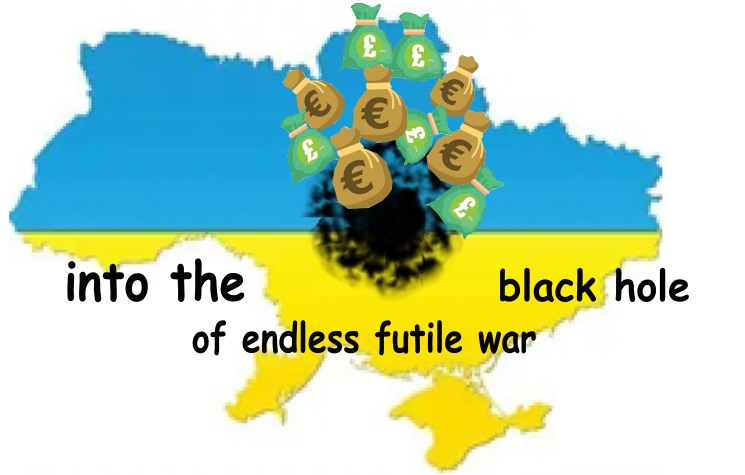
the EU is donating €90 billion to Ukraine just for 2026 and 2027 alone, never mind the €200 bn it gave from 2022 to 2025. About one-third of this money is used to manufacture and supply drones. This vast expenditure has transformed Ukrainian territory into a giant high-tech killing field. Traversing such territory is an unprecedented challenge.
Finian Cunningham, October 27, 2026, https://strategic-culture.su/news/2026/10/27/ukraine-quagmire-yes-but-its-for-nato-not-russia/
Strategic Culture Foundation spoke with Aiden Minnis, a British-Irish volunteer fighting for Russia on the frontline in Kharkov Oblast.
Aiden Minnis left Britain in 2023 as a volunteer to fight for Russia Western politicians and media claim that Russia is bogged down in a Ukrainian quagmire. We are told that Russian forces are taking heavy losses, held in a stalemate by gritty Ukrainian soldiers. Nearly five years after invading, it is claimed, Russia’s military is still confined to Ukraine’s far eastern territory with little progress.
But this upbeat Western narrative is flawed and wearing thin. The NATO-backed Ukrainian regime is straining from collapse. The grinding losses on the battlefield, as disproportionate body exchanges attest, the corruption within the Kiev regime, the dredging of conscripts to include women, and the incessant pounding by Russian air strikes are exposing a state teetering on defeat.
Even U.S. President Donald Trump seems to have sobered up from drinking the Kool-Aid about Ukraine winning. He’s peeved and telling Vladimir Zelensky it’s time for him to step aside and cut a peace deal.
There is a growing foreboding sense that European NATO leaders are dreading the inevitable implosion of their “Ukraine project”. As German MEP Michael von der Schulesburg pointed out in an interview with Glenn Diesen, European politicians are increasingly uneasy that their lies about Ukraine will soon be blown wide open. There will be hell to pay for bankrupt economies and impoverished societies, all based on lies.
Still, it is a fair question: why aren’t Russian forces making more rapid advance along the 1,000 kilometer front line? If the Kiev regime is so shaky, why isn’t Russia finishing it off quickly?
Aiden Minnis, a British-Irish volunteer serving in the Russian army, said he believes that victory is coming and is inevitable. But he explains that the advance is deliberately slow. The “meatgrinder” people refer to about the battlefield is not just about inflicting losses of military personnel. He says the conflict in Ukraine is being fought strategically as an attritional war to defeat the Western NATO alliance.
“We have defeated the Ukrainian army three times over from the losses it has suffered,” says Minnis. “This war would have been over a long time ago, if it were not for the systematic involvement of NATO.”
The amount of weaponry and personnel that NATO has funneled into Ukraine is on a scale that few in the West can imagine, he noted.
“NATO effectively runs and directs the war for Ukraine. That includes generals and special forces from NATO countries inside command structures and military units in Ukraine, and not always sheep dipped into the foreign legion either. Some are outright working without cover.
“They use NATO radars and intelligence to conduct combat operations and terrorist attacks inside Russia. None of the fighting, or rather 90 per cent of it in Ukraine, would be possible without massive Western assistance,” says Minnis.
For example, the EU is donating €90 billion to Ukraine just for 2026 and 2027 alone, never mind the €200 bn it gave from 2022 to 2025. About one-third of this money is used to manufacture and supply drones. This vast expenditure has transformed Ukrainian territory into a giant high-tech killing field. Traversing such territory is an unprecedented challenge.
Aiden Minnis left Britain in 2023 as a volunteer to fight for Russia. He has served in Donetsk and Lugansk as a sapper clearing explosives, as well as in the evacuation of civilians and wounded. Currently, he is deployed as a rifleman in a regiment on the front line in Kharkov Oblast near Kupiansk.
The British media have called him a criminal and a traitor. He says he doesn’t care because he has no intention of returning to the United Kingdom.
“I am labelled a traitor, but I only ever swore allegiance to one country… Russia, and I never broke it. And as long as I have breath in my body, you will never see me swear allegiance, or fight for the butcher’s apron [British Union Jack flag]. My soul is Irish and now Russian.”
Minnis says that what the Western media report about the war in Ukraine is “total lies”.
He says that Russian forces are making slow but relentless advances along most of the frontline. The pace is incremental because the Russian military is trying to minimize casualties among its troops and the civilian population.
“If you look at the exchanges of dead soldiers that are agreed upon from time to time, the Ukrainian side’s casualties are 10 times those of Russia.
“Also, despite the scale of this war – the biggest in Europe since World War Two – the number of civilian deaths is relatively low, and that’s because Russia is trying to minimize these casualties,” he says.
Minnis says that another factor that makes advances slow-going is that the NATO-backed regime uses tactics of boobytrapping buildings with civilians inside them. He says that when Russian forces take a village or town, the houses are often rigged with explosives, with families inside. This makes for painstaking work by sappers to defuse boobytraps.
And, of course, the massive deployment of drones is a big problem for infantry. The European Union and Britain have flooded Ukraine with drones that create “death zones.”
“The use of drone walls is in place of dwindling Ukrainian conscripts. These death zones make our ground progress difficult.”
However, Minnis said NATO’s deployment in Ukraine is a double-edged sword. The 27-nation military bloc has certainly made a Russian victory more difficult to achieve. It has prolonged the proxy war with millions of Ukrainian casualties.
But this war of attrition is grinding down the NATO arsenal with colossal impact. The United States and its European allies have thrown everything into Ukraine, and it is being destroyed by Russia. It’s a giant demolition site. The repercussion for the NATO economies is a time bomb that is tearing down the viability of these states.
Ukraine is a quagmire for NATO, not Russia. The battlefield does not have to move westwards; the Western powers are being sucked under.
In World War Two, the Soviet Red Army pushed all the way to Berlin. In today’s war, the new Berlin is in Ukraine, where Russia’s enemies are being ground down, hollowed out, and buried.
Aiden Minnis adds: “Russian leader Vladimir Putin is fighting this war very humanely; dare I say such a thing is possible in a war. But it’s a two-fold strategy: it’s to limit civilian casualties, but also a war of attrition, because what’s happening in real time is the demilitarisation of Ukraine, which won’t be able to wage a war again once this war is won by Russia, and also the demilitarisation and deindustrialization of NATO countries.”
‘It’s offensively cheap’: How solar power is quietly becoming bigger than nuclear.
Jocelyn Timperley, 26 Oct 26 https://www.bbc.com/future/article/20261023-how-solar-became-bigger-than-nuclear
After defying projections, solar’s dramatic growth means it is now overtaking nuclear as a global power source. Here are seven reasons for solar’s success, and where it might go from here.
The world’s solar power is crossing a threshold. A decade ago, it barely registered on a global scale, providing just 1% of the world’s power. In 2026, it will almost certainly increase to 10% of power, and overtake nuclear, a mainstay of electricity since the late 1970s.
Globally, solar electricity generation quietly overtook nuclear power (just) in 2025, according to statistics from UK-based energy think tank Ember. And BBC analysis of Ember data over the past 12 months up to September 2026 shows it clearly outstripping nuclear, producing 13% more power.
“[Solar] generating more electricity than all the world’s nuclear power plants is a pretty insane stat, for sure,” says Dave Jones, co-founder of Ember.
From China’s vast arrays to a recent solar upsurge driven by escalating oil prices, the incredible rise of solar power has defied all projections. Here are seven ways it has become an apparently “unstoppable force” – and what the future looks like from here.
1. An underestimated force
“Solar is now the engine of the power transition,” says Jan Rosenow, a professor of energy and climate policy at the University of Oxford in the UK.
Solar has become the fastest-growing source of new electricity in history, and by far the largest source of new electricity globally. In 2025, it met three-quarters of the growth in the world’s demand for electricity, overtaking wind power generation (wind power is also growing, just a little more slowly).
That’s where solar’s going, to not just be king of electricity, but king of energy – Dave Jones
“It wasn’t expected,” says Rosenow. Mainstream projections, he says, have underestimated solar year after year. Outlooks such as those from the International Energy Agency (IEA), an influential intergovernmental organisation based in Paris, “assumed linear growth and slowly falling costs, and got both wrong”.
Over 2026, multiple sources indicate solar electricity generation will almost certainly far exceed nuclear globally. Nuclear’s electricity generation has remained more or less constant since 2000, while solar’s has increased some 2,700-fold.
2. ‘Offensively cheap’
Solar, a mature technology for some 15 years now, became the cheapest electricity in history in 2020. Since then, solar has scaled, efficiency has risen, and the amount of silicon and silver used in panels has gone down, leading prices to fall yet further, says Jones.
“Massive Chinese manufacturing scale and current overcapacity have pushed module prices to record lows,” says Rosenow.
In particular, a large fall in the price of panels in 2023-24 pushed us into the current era of what Jones calls “offensively cheap” solar. “A panel in itself is just so unbelievably cheap,” he says. “It’s well under $100 (£75)… and that’s going to keep you generating electricity for 30, 40 years without any input at all.”
Of course, it’s not just in purely economic terms that solar is bringing down costs. Researchers have calculated the US’s rising wind and solar generation brought it $249bn (£186bn) in climate and health benefits between 2019 and 2022.
3. Global uptake
China is still the world’s biggest solar power by far but is by no means the only player.
Despite the US imposing a variety of tariffs on solar, it remains the second country when it comes to installations, which are still skyrocketing – especially in states won by President Trump in 2024. In fact, the US now has enough solar to power more than one-third of its households.
“Tariffs and other federal policies that constrain renewable energy growth are certainly expected to raise costs and slow expansion relative to what we otherwise would have seen,” says Alicia Zhao, an expert in US mitigation pathways at the University of Maryland.
“However, economics are a key part of why solar has been able to grow so quickly. Even with rising costs, solar is still one of the cheapest sources of new power in the US. And it is getting built regardless of political lines.”
India, meanwhile, is moving away from fossil fuels far faster than China did, and new solar has met 60% of its rise in power demand in the past two years.
In Australia, over four million homes now have rooftop solar: well over a third of all households.
4. Unreliable fossil fuels
Countries like Pakistan and Lebanon have also begun installing solar at breakneck speeds, while across Africa countries are installing some 100,000 solar panels per day.
In many places, escalating diesel prices, driven by the Russia-Ukraine conflict and US-Israel war with Iran, has swung the cost needle yet further in solar’s favour. This is especially the case in many African countries where home diesel generators are a mainstay due to unreliable grids. Rooftop solar panels, nearly all of them imported from China, have now taken off as an alternative.
Ethiopia has even banned the import of petrol and diesel cars in a bid to tackle oil dependency and pollution, says Jones.
Solar is also rapidly providing new electricity where fossil-based grids can’t keep up with demand. Pakistan, for example, has become a surprising poster child for the solar revolution due to its extraordinarily rapid rise in installations. In 2019, solar provided less than 2% of its electricity; now it’s 24%, driven by costly, unreliable grid electricity combined and cheap solar imports from China.
“What’s really incredible in Pakistan is… generally most of the solar boom has been out of people’s pockets,” says Jones. “People can afford it, without needing to take out loans.”
A similar story has been seen in several other “sun belt” countries, from Lebanon to Nigeria. “[Solar] lets households act without waiting for governments or utilities,” says Rosenow. “In uncertain times, that speed and independence is extremely valuable.”
5. Battery revolution
Solar power, of course, can only be produced during the day when the sun is shining. To turn it into electricity that can be dispatched at any time, it needs to be paired with batteries.
Fortunately, batteries have been having their own cost revolution, transforming their ability to support the solar rollout. “Solar plus storage is now routinely cheaper than new fossil plants in sunny regions,” says Rosenow. “Batteries have largely solved the daily problem of shifting midday sun into the evening.”
In California, for example, solar and batteries met on average over a quarter of electricity demand from 19:00-21:00 (the evening peak) over the first half of 2026. US states such as Vermont are now rolling out grid-integrated systems of home batteries, often paired with solar.
Barriers still remain for longer-term storage of solar across seasons, cloudy periods and monsoon seasons, though, both Rosenow and Jones say. It means the integration of solar into the wider electricity system still matters, says Rosenow.
6. Electrify everything
Solar is seen as a key part of the push towards electrification, reducing fossil fuel use in areas that previously didn’t use electricity, such as via electric cars. Electrification has been chosen as a major theme at this year’s UN climate talks in Turkey.
“That’s where solar’s going, to not just be king of electricity, but king of energy,” says Jones.
Still, it all requires a plan, Julia Souder, chief executive of the Long Duration Energy Storage Council, a global executive-led non-profit established at COP26, warned recently. “There is an inherent danger in uncontrolled electrification, and adding massive new loads without built-in flexibility creates a fragile system,” she wrote in a blog for international policy network Ren21. “Electrification is not automatically resilient.”
The limits on solar are now grids, storage and how fast we electrify demand, says Rosenow – not panels or cost. “The bigger question is no longer whether solar grows but whether our power systems and institutions can keep up.”
In the US, data centres and electrification mean power demand is growing for the first time in decades, says Zhao, with energy security a national priority.
“Renewables already make up over 90% of new capacity in the US,” she says. “This need for secure, quickly deployable electricity could create a critical opportunity for [further] renewable energy growth even without support from the current federal government.”
7. Expanding tech
In the past few years, plug-in panels (or “balcony solar”), have started spreading rapidly in Germany. These generate less electricity than rooftop panels but feed it directly into homes via a standard socket.
They have now been approved in several other countries and US states including California.
Meanwhile, agrivoltaics, which combines food production and solar panels, is being touted as a solution to concerns in some areas about the land use of solar.
Other technologies from floating and “mirror” solar plants to perovskite panels and solar windows could all see growth in coming years.
What’s next for solar
In 2026, the world’s solar capacity will go on rising, but the rate of expansion may slow down for the first time ever, says Jones.
This is down to China: last summer, it changed its regime for managing and supporting new solar installations, leading to a burst of installations in 2025 to fall under the old price regime. Elsewhere, it’s a different picture. “If you exclude China, there’s more panels being installed this year than last year,” says Jones.
By 2030, the IEA thinks solar power generation will have reached double that of 2025’s levels, with solar overtaking hydro to become the world’s third-largest electricity source.
“Wherever grid power is costly and unreliable, the economics keep pulling people towards solar,” says Rosenow. “There is one caveat: if Chinese solar panels are difficult to import this will not happen at speed.”
There has been a lot of bad news about the climate recently. It’s now incredibly likely the 1.5C global limit set in Paris in 2015 will be breached, the world is seeing rising climate impacts and is edging towards several climate tipping points this century.
But the solar success story shows we are also making progress in ways that were never anticipated. A decade ago, “no one was getting close to expecting that to happen”, says Jones, noting that the growth in clean electricity has directly translated to fewer coal plants being built.
“Now, worst cases [of climate change] are somewhere between 2-3C of warming, rather than 4C of warming.”
Data Centers Are War Targets Now
MATTHEW GAULT·OCT 15, 2026, https://www.404media.co/data-centers-are-war-targets-now/
Ukrainian drones hit Russia’s largest data center on Wednesday. This was Ukraine’s fourth strike on Russian data centers in the past week and confirmation of a new reality of war: data centers are valuable enemy assets and they will be targeted.
In 2006, British economist Clive Humby declared “data is the new oil,” and big tech adopted the metaphor. Twenty years later, a dark side of the truism has been revealed. If the places where oil is refined are valuable targets in a war then so, too, are the places where data is refined. We’ve seen this not just in the Russia-Ukraine war, but also with Iran hitting Amazon Web Services data centers in Dubai in retaliation for America’s strikes on the country
Ukrainian President Volodymyr Zelenskyy confirmed strikes on Russian data centers and oil refineries in a post on X and called them a “symmetrical response” to Russian aggression. Here we have oil and data together again, not as a metaphor in an economics lecture, but in the pronouncement of a world leader defending his country. conducting a war.
Three of Ukraine’s strikes hit data centers that belonged to Yandex, Russia’s Google-equivalent, and damaged the company’s supercomputers that housed some of its AI models. The latest attack hit a data center operated by Sberbank, Russia’s largest bank. It’s too early to tell what the effects of the strike on the Sberbank data center will be, but the three strikes on Yandex have disrupted internet and communications across Russia.
An online rumor said that the strikes on Yandex had the effect of taking down Russian bot farms, but this wasn’t true. The effects of the strikes on the civilian population were much more severe. Yandex is ubiquitous in Russia — it has its own app store, payment services, dating services, taxi and bus apps, and email services. The company operates six data centers in Russia and the strikes knocked two of them offline completely. People in Russia have lost access to their email, some of their data is seemingly gone, and taxi and bus apps only work intermittently.
ChrisO_wiki, an anonymous researcher who translates Russian social media posts for the western web, chronicled how the Yandex outages are hitting everyday Russians. “A taxi driver from Yekaterinburg says that after the service disruptions, he can no longer view his order history, and the status of trips is updated with a delay,” ChrisO_wiki said in a post on X and Bluesky.
“The loss of Yandex’s cloud services is also having severe impacts on Russian commercial logistics. Those who work with electronic document management are unable to register incoming goods, severely affecting manufacturers and distributors,” they said in another post.
These attacks are just the latest in a long line of strikes on data centers this year. Russia has been targeting Ukrainian data centers for months and Iran hit AWS data centers in Dubai in March, knocking out digital infrastructure in the Middle East.
Klaudia Klonowska, a researcher who studies the effects of emerging technologies on international law, told 404 Media that attacks on data centers are so new that international law around them is still developing. “You have very limited situations in which they would actually qualify as lawful targets when they’re used by the military, and even then, it’s very difficult for the attackers to know whether that’s happening or not,” Klonowska said.
If the data centers are purely processing military data, then they could be legitimate targets, according to Klonowska. But many, if not most, data centers are dual-use, meaning they house both civilian and military data. In many cases, disrupting daily life seems to be part of the point.
When Russia struck data centers in Ukraine in September, state-backed news agencies claimed it hosted data for Palantir that supported Ukrainian intelligence efforts and was a lawful target. Ukraine denied the allegation. “So you see how difficult, because of the nature of these centers, it’s really to pinpoint what is happening with them and who is using them and for what means,” Klonowska said. “Sometimes [Ukraine] mentions that these data centers contribute to Moscow’s revenues that then fuel the war machine. But that’s not enough to make them lawful targets. Retaliation is not enough under law.”
Klonowska noted that it is civilians who suffer most, not the military, when data centers go offline. “There are questions about proportionality given how widespread the attacks are,” she said. “A lack of internet access for very prolonged periods affects everything. It’s all of the civilian services that are being disrupted, which you can imagine also includes things like hospitals, traffic, judicial services, etc. etc.” It’s worth noting that Russia has repeatedly attacked civilian targets in Ukraine, including apartment buildings, public transportation, and hospitals.
According to Klonowska, international and humanitarian law needs to catch up with the issue and that scholars like herself are only just starting to understand the ramifications. “I think there’s also another bigger question behind all of this,” she said. “Why have we gotten to the point where we have permitted militaries of various states to use civilian commercial data centers for their military purposes? By potentially using them and relying on them, they have opened them up to the possibility of becoming military targets.”
Disentangling civilian and military data probably won’t take data centers off the target list, but it will make international law more clear on which buildings are legitimate targets. It may also change how data centers processing military data are built.
“France has recently announced that they have unveiled their underground data center on the outskirts of Paris that will be exclusively for military use,” Klonowska said. “Just as we expect them not to use schools or hospitals or other civilian residential areas to host weapons or other military equipment, we would, I think, increasingly need to mention this in the case of data centers.”
The idea that a data center might be a military target is not lost on the American communities facing construction of them in their backyards. America’s nuclear weapons scientists at Los Alamos National Laboratories (LANL) have partnered with the University of Michigan in an attempt to build a data center in Ypsilanti Township, Michigan. The people and government of the Township aren’t thrilled about it for a number of reasons and the city attorney has said that the data center would be a “high value target” in wars of the future. Los Alamos pushed back on this in a letter to the community in September, around the same time Russia was striking data centers in Ukraine. LANL accused the township attorney of creating “that terminology without basis. It should not be interpreted as evidence of a known, specific, or imminent threat to the facility or the surrounding community,” the letter said.
“Like other major research facilities, the center would employ appropriate security measures, including controlled access, cameras, and on-site security personnel,” it said. “Los Alamos and U-M would coordinate with local, state, and federal partners on matters related to safety and security.”
It’s easy to see where the people of Ypsilanti Township are coming from. When Ukraine struck three Yandex data centers in Russia over the weekend, its drones slipped past Russia’s air defenses. The idea that a town next to a data center, especially one with ties to America’s nuclear weapons programs, could sustain damage if the data center was ever attacked isn’t unfounded. The data centers smoldering in the world’s war zones proved that the township’s fears aren’t theoretical..
US, Israel Plan Major Assault On Iran ‘Post-Midterms’ -Report
Iranian officials called US hopes of a quick campaign a ‘fantasy,’ recalling Trump’s February promise of a two-week war
October 23, 2026, News Desk, The Cradle. https://thecradle.co/articles/us-israel-plan-major-assault-on-iran-post-midterms-report
The US and Israel have drafted plans for an assault on Iran’s nuclear, energy, and defense infrastructure post-midterm elections in a new bid to force Tehran to negotiate on less favorable terms, the New York Times (NYT) reported on 21 October.
Some US planners contend that a concentrated and intense three-day bombardment would be sufficient to force Tehran into yielding at the negotiating table.
Washington continues to brandish the threat of renewed war as a bargaining chip, seeking to extract concessions on Tehran’s nuclear program and its grip on Hormuz.
Tehran has refused to make any nuclear concessions thus far, insisting the issue be deferred to a later stage of negotiations.
This comes after US Secretary of War Pete Hegseth traveled to Israel this week to confer with Israeli Prime Minister Benjamin Netanyahu on the planned strikes, as US and Israeli warplanes intensify military drills over Iraq to rehearse their attack maneuvers.
US President Donald Trump has repeatedly shelved or abandoned plans to attack Iran ahead of the midterm elections, as his approval rating plunges to record lows, public support for the war erodes, and the fallout from earlier attacks weighs heavily on the US economy.
Tehran is bracing for a war that may stretch on for months, tightening its hold on the Strait of Hormuz, and striking vessels that ignore its designated shipping routes.
Should the fighting resume, Tehran warns, its retaliation will reach beyond merchant vessels and the region’s energy facilities to data centers and the internet cables running along the seabed.
Mahdi Mohammadi, a senior advisor to Iranian negotiator Mohammad Bagher Ghalibaf, dismissed as a “fantasy” the notion that Washington could conclude a fresh wave of strikes within 72 hours, recalling Trump’s February forecast of a two-week war.
“Our attacks will be more fierce, creative, and different,” Mohammadi said.
Washington has dispatched the USS Theodore Roosevelt carrier strike group, the USS Makin Island amphibious group, and some 9,000 additional troops to West Asia, US officials revealed on 1 October, reinforcing roughly 50,000 US troops already stationed across the region.
The buildup could see three carriers operating there simultaneously before the end of October, a concentration of force seen only once before since 2003.
Hegseth declared US forces “ready to go” should Trump order renewed attacks.
The Pentagon is weighing the use of the GBU-43/B Massive Ordnance Air Blast (MOAB), dubbed the “Mother of All Bombs” and Washington’s most powerful conventional weapon, against Iran’s nuclear and energy sites according to a recent CNN report.
US officials doubt the bomb can reach far enough underground to hit Iran’s buried nuclear sites, let alone force Tehran’s surrender.
Instead, they value it for the mass destruction, civilian deaths, and lasting trauma it would inflict on Iranians, a symbolic act of terror that would let Trump withdraw from a failed war while claiming victory.
Recommendations on the dangerous plan to renew Cameco’s licence for the Port Hope Conversion Facility
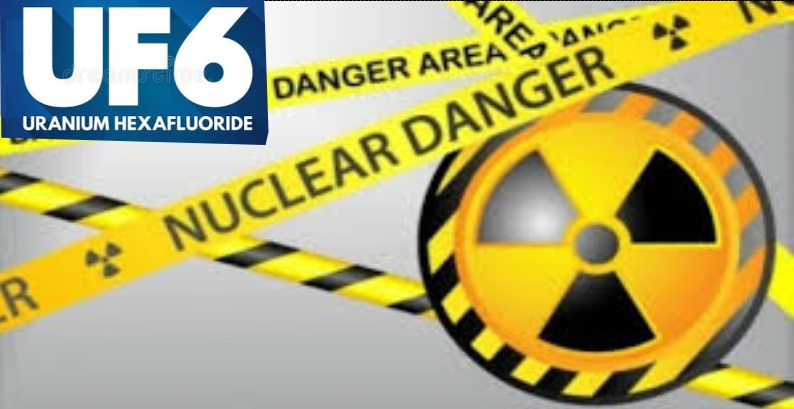
On contact with skin or lungs, HF becomes liquid hydrofluoric acid. It causes deep caustic burns, sometimes right to the bone, severe respiratory damage, and pulmonary edema (whereby fluid builds up in the tiny air sacs of the lungs, making it very hard to breathe). It attacks eyes, destroys corneal tissue and can cause blindness. Acute high-dose exposurecan be fatal, as in the 1986 Sequoyah Fuels incident discussed below. If uranyl fluoride is inhaled, serious cellular damage to the kidneys can occur within 24 to 48 hours. At the same time, radioactive material lodges in the lung, increasing the risk of cancer years later
We Will Not Compromise Safety,
October 2, 2026, Canadian Coalition for Nuclear Responsibility
Cameco has applied to renew its operating licence for the Port Hope Conversion Facility
(PHCF) for a term of 20 years. The present 10-year licence expires on February 28, 2027.
The applicant is not asking for any changes in the current conditions of the licence, going
forward, other than extending the term from 10 years to 20 years.
Uranium is a naturally occurring radioactive heavy metal. The Port Hope plant produces
two specific chemical compounds of uranium: uranium hexafluoride (UF6) for export and
uranium dioxide (UO2) for domestic use.
Canada is the world’s second largest producer and exporter of uranium. Uranium ore is
mined and milled in Northern Saskatchewan. From the mill, a solid uranium concentrate–
commonly called “yellowcake” – is packed in drums as a fine powder and trucked to the
Blind River refinery in Ontario. Yellowcake is a semi-processed mix of uranium oxides,
mainly U3O8. It does not react readily with air or with water, but it is easily inhaled if spilled.
It is a powerful nephrotoxic heavy metal that can severely damage the kidneys if inhaled.
Uranium mining and milling leaves a long-lived radioactive footprint. Voluminous sand-like
radioactive wastes called “uranium mill tailings” are left behind as an unwanted byproduct
of the milling process. Canada has so far accumulated about 230 million tonnes of
uranium tailings in Ontario, Saskatchewan and the Northwest Territories. These tailings
contain over 70 percent of the total radioactivity present in the original ore. To be precise,
the wastes contain most of the naturally-occurring radioactive byproducts of uranium such
as radium-226, thorium-230, polonium-210, lead-210, and radon-222, all created
spontaneously from the disintegration of uranium atoms over millions of years. . Uranium
mill tailings will remain radiotoxic for hundreds of thousands of years to come.
The Blind River facility, situated on the north shore of Georgian Bay, receives yellowcake
from Canada, the United States and Australia for further processing. It is the largest
uranium refinery in the western world……………………………..
Cameco’s Port Hope facility (PHCF) converts 85 to 90 percent of the refined uranium
trioxide from Blind River to a hazardous and highly reactive chemical compound called
uranium hexafluoride (UF6), while the other 10 to 15 percent is converted into a much more
stable compound called uranium dioxide (UO2). These two conversions are separate
processes taking place within the Port Hope facility. Uranium hexafluoride is slated for
export; it is solely intended for the purpose of uranium enrichment. Uranium dioxide is for
domestic use; it is sent to an Ontario fuel fabrication plant prior to its use in CANDU
nuclear reactors.
The export product, uranium hexafluoride – known in the industry as “hex” – is an extremely
dangerous compound. It has to be handled very carefully. It reacts violently on contact with
water or moist air, releasing toxic and corrosive chemicals. The rapid and energetic
reaction creates a dense white cloud of corrosive gas, posing serious health hazards. The
cloud is made of gaseous hydrogen fluoride (HF) and tiny particulates of solid uranyl fluoride (UO2F2)
On contact with skin or lungs, HF becomes liquid hydrofluoric acid. It causes deep caustic
burns, sometimes right to the bone, severe respiratory damage, and pulmonary edema
(whereby fluid builds up in the tiny air sacs of the lungs, making it very hard to breathe). It
attacks eyes, destroys corneal tissue and can cause blindness. Acute high-dose exposure
can be fatal, as in the 1986 Sequoyah Fuels incident discussed below. If uranyl fluoride is
inhaled, serious cellular damage to the kidneys can occur within 24 to 48 hours. At the
same time, radioactive material lodges in the lung, increasing the risk of cancer years later
The Sequoyah Fuels plant, located in Gore, Oklahoma. was a uranium hexafluoride
conversion facility years ago. It began operations in 1970. The Sequoyah plant suffered a
serious accident in 1986 when an overfilled UF6 cylinder was heated by workers (contrary
to regulations) and internal gas pressure made it burst. Worker James Harrison (25) was
killed; over 100 workers, travelers, and residents required medical evaluation and treatment
for toxic gas exposure due to hydrofluoric acid and uranyl fluoride exposures as well.
Twenty-one of them were hospitalized. Interstate highway 40 and several local areas faced
temporary closures, as the toxic cloud travelled 29 kilometres in a 40 km/hr wind
Bear in mind that the consequences described above resulted from the accidental release
of the UF6 in one transport cylinder only. Evidently a much more severe accident would
have correspondingly more serious consequences. The Sequoyah plant was forced to shut
down in 1992 for safety reasons, after another toxic release occurred.
The immediate chemical hazard from UF6 is entirely due to hydrogen fluoride gas…………………………………………………………………………………………………………………………………………………………………………………………………………………………………………
Recommendation 1. That CNSC require Cameco to establish and maintain an “exclusion zone” of at least 2 kilometres around the PHCF plant as a prudent margin of safety for the population in case of a large release of uranium hexafluoride or hydrogen fluoride.
Recommendation 2. That CNSC not grant a licence to Cameco for the PHCF for a period of more than two years, so that if recommendation 1 cannot be fulfilled for any reason, the PHCF can be relocated to a site that will be able to accommodate such an exclusion zone………………………………………………………………………………………………………………………………………………………………………
Recommendation 3. That CNSC not grant a licence to Cameco for the Port Hope
Conversion Facility for a period exceeding two years, during which time Cameco be
required to devise a detailed emergency measures plan with a well-publicized evacuation
plan for the entire downtown area of Port Hope including a full rehearsal of such an
emergency evacuation plan, based on the contingency of a malicious act against the plant. https://www.ccnr.org/CCNR_PHCF_CNSC_2026.pdf
US Nuclear Uprates Gain Slew of Firm Commitments
Nearly 1.7 GW in new nuclear capacity via US reactor uprates has been backstopped by long-term purchase deals over the last year.
US DOE financial commitments are also ramping up, working in tandem with the end-use agreements to derisk uprate projects.Alongside reactor license extensions, uprates are considered a near-term tool to meet rising US power demand ahead of new reactors that would take far longer to get running.
Energy Intelligence 16th Oct 2026 Lauren Craft, Washington, Editor, Phil Chaffee
https://www.energyintel.com/000001a1-42b1-daa6-a7b3-eab1109f0000Climate scientists and campaigners round on English Greens over nuclear U-turn
ZACK Polanski’s English and Welsh Greens have been sharply
criticised by a raft of leading climate campaigners and scientists for
ditching their blanket opposition to nuclear power.
An open letter signed by 39 top activists and eminent environmental experts warned the Green
Party of England and Wales (GPEW) that “nuclear reduces and delays
climate action”.
The party voted to ditch its default opposition to
atomic energy at its recent conference in Brighton. Instead, the GPEW
“accepts this power source is here to stay for now” and will examine
any future proposals for new nuclear power plants on a case-by-case basis.
The letter, signed by Mike Childs, head of science, policy and research at
Friends of the Earth, Dr Doug Parr, Greenpeace UK’s chief scientist and
Jonathon Porritt, a former Green Party co-chair, said: “The very long
nuclear development and build times means much longer fossil fuel burn.
Nuclear is just too slow, too hazardous, and too costly for the climate and
energy crises. The Green Party of England and Wales have taken a wrong turn
on nuclear.”
It also raised security concerns, with the signatories
pointing to recent events in Ukraine and the Middle East which they said
showed “civil nuclear infrastructure is increasingly vulnerable to
military attack and AI cyber threat”.
The letter, which was also signed
by Prof Susan Roaf, Emeritus Professor of architectural engineering at
Heriot-Watt University, Pete Roche of the Scottish Campaign to Resist the
Atomic Menace and Prof Peter Strachan of Robert Gordon University, said:
“As we’ve seen in Ukraine and the Gulf, civil nuclear infrastructure is
increasingly vulnerable to military attack and AI cyber threat. Crucially,
both coastal and inland nuclear will be at significant risk from ramping
climate impact.
The National 25th Oct 2026,
https://www.thenational.scot/news/26665517.climate-scientists-campaigners-round-english-greens-nuclear/
Gap between renewables and nuclear widens
Renew Extra 24th Oct 2026,
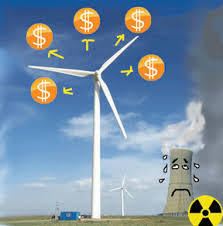
Renewables outpace and overtake nuclear
For the first time ever, in 2025 solar photovoltaics provided more electricity in the world than nuclear reactors. Adding wind turbines, these two renewable energy technologies generated more than twice as many kilowatt-hours than nuclear plants. And with solar and wind still expanding, solar in particular, and nuclear more or less static globally, the gap between nuclear and the main new renewable energy technologies is growing.
These are some of the findings of the World Nuclear Industry Status Report 2026, with Mycle Schneider, WNISR Coordinator and Publisher, saying: ‘It is remarkable to what extent public perception of the status of the nuclear sector fundamentally differs from industrial reality’. For example, he notes that China was ‘really the only country significantly expanding its nuclear program’, but it had actually added ‘120 times more solar megawatts than nuclear capacity in the past year.’ It also has a huge hydro capacity – much larger than its nuclear capacity.
While there has been a barrage of pro-nuclear propaganda of late, the WNIRS claims that ‘there have been no remarkable changes in nuclear industry trends: stagnation at best’. It notes that in 2025, ‘more reactors were closed than new ones started up; operating capacity was slightly down’; and while ‘nuclear power generation increased slightly on a global level’, it decreased outside China. Overall the nuclear share in the global electricity mix ‘has continued its decline’ ongoing since 1996. That is despite the Chinese expansion- and also Russia’s efforts to expand its nuclear technology sales globally.
Russia is certainly trying move ahead. Dmitry Gorchakov, a WNISR Contributing Author, noted that in 2025 it ‘increased enriched uranium exports to the EU, the US, and China’. But at the same time, ‘sanctions pressure on Russia has caused significant problems and delays for a number of Rosatom’s foreign projects including in Turkey and Hungary, even leading to a decline in its foreign revenue for the first time in a decade’.
So what next globally? Of late, the nuclear lobby has looked to the East to rescue nuclear from decline. However, although there are some new projects in Asia, notably in China, renewables are doing very much better there. For example, China’s solar and wind generation are now 5 times its nuclear generation. And it plans to push renewables very hard – its 2030 target is 3,500GW. Whereas its current target for nuclear is around 110GW by 2030, with WNISR saying that it ‘has fallen short of its ambitious nuclear construction targets in recent years’.
Earlier this year, the World Nuclear Association produced its own annual world nuclear outlook which saw nuclear expanding rapidly, to nearly 1 TW by 2050, mainly led by China and the USA. Well, even given that China is good at pushing technology fast these days, as noted above, that seems a bit of a stretch. The USA is a bit further ahead on nuclear, already at around 100 GW, but the prospects for very rapid expansion there seem even more limited than in China. WNISR notes that ‘it has been two years since a new reactor was connected to the grid and the US fleet continues to age, with a mid-2026 average of 44.7 years, making it amongst the oldest in the world’. It added, although there are plans, ‘there are no new reactors under construction in the US’. There is of course much talk in the US (and elsewhere) of small modular reactors, but WNISR notes that construction of one has only just started – in Canada. And even that now looks somewhat uncertain.
So, for the moment, in terms of nuclear expansion, all we are left with is the Chinese programme and a contribution from India. Although renewables are expanding faster there too – it now has two times more renewable capacity than nuclear. With the exception of Russia, which has hardly bothered with renewables, it’s the same for most places that have nuclear programmes, and especially the UK, where one new plant is under construction but renewables now supply 52% of its power, with the aim being to get to over 80% by 2030. It is always possible that there will be some new nuclear initiatives somewhere in the world. For example South Korea has surprisingly announced a major $120bn investment in large US nuclear plants. But, despite Trumps efforts to block wind projects, more backing for renewables is also possible there and elsewhere, and arguably is a better bet most places to meet power and also energy needs. And avoid climate change…………………………………………….
https://renewextraweekly.blogspot.com/2026/10/gap-between-renewables-and-nuclear.html
1 This Month



19 November – Webinar – The Reality of Reprocessing
Time: 11:00 AM Pacific Time (US & Canada) / 2:00 PM Eastern / 7:00 PM UK / 8:00 PM CET
Register for the Zoom Event Here



Shut down the radiation-damaged Heysham nuclear reactors now
To see nuclear-related stories in greater depth and intensity – go to https://nuclearinformation.wordpress.com

Say No to NASA’s Reckless Nuclear Reactor on the Moon
Say No to NASA’s Reckless Nuclear Reactor on the Moon
-
Archives
- November 2026 (43)
- October 2026 (302)
- September 2026 (339)
- August 2026 (330)
- July 2026 (355)
- June 2026 (287)
- May 2026 (306)
- April 2026 (356)
- March 2026 (251)
- February 2026 (267)
- January 2026 (308)
- December 2025 (358)
-
Categories
- 1
- 1 NUCLEAR ISSUES
- business and costs
- climate change
- culture and arts
- ENERGY
- environment
- health
- history
- indigenous issues
- Legal
- marketing of nuclear
- media
- opposition to nuclear
- PERSONAL STORIES
- politics
- politics international
- Religion and ethics
- safety
- secrets,lies and civil liberties
- spinbuster
- technology
- Uranium
- wastes
- weapons and war
- Women
- 2 WORLD
- ACTION
- AFRICA
- Atrocities
- AUSTRALIA
- Christina's notes
- Christina's themes
- culture and arts
- Events
- Fuk 2022
- Fuk 2023
- Fukushima 2017
- Fukushima 2018
- fukushima 2019
- Fukushima 2020
- Fukushima 2021
- general
- global warming
- Humour (God we need it)
- Nuclear
- RARE EARTHS
- Reference
- resources – print
- Resources -audiovicual
- Weekly Newsletter
- World
- World Nuclear
- YouTube
-
RSS
Entries RSS
Comments RSS

