Norway and Finland’s Mediation on Ukraine Will Fail: Europe Cannot do Diplomacy
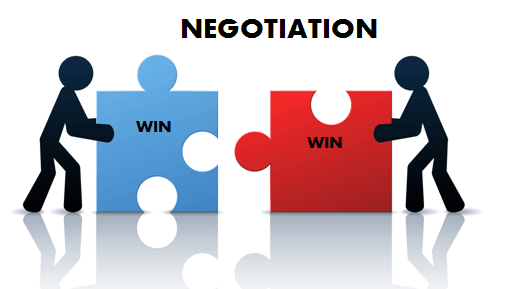
Serious diplomacy requires a willingness to talk to the other side about things they care about, even when those things are uncomfortable. It requires accepting that a negotiated settlement will not look like a victory parade.
A conversation with Dr Matthew Blackburn
Ian Proud, Oct 27, 2026, https://thepeacemonger.substack.com/p/norway-and-finlands-mediation-on?utm_source=post-email-title&publication_id=3221990&post_id=222317380&utm_campaign=email-post-title&isFreemail=true&r=1ise1&triedRedirect=true&utm_medium=email
Dr Matthew Blackburn of the Norwegian Institute of International Affairs (NUPI) is a friend. We disagree on plenty, and this latest exchange was deliberately sharp, but that doesn’t change the fact that I rate him.
He has written a thoughtful piece for Responsible Statecraft arguing that Norway and Finland are beginning to open a constructive diplomatic path on Ukraine that the rest of Europe has so far refused.
Indeed, on the back of the recent Zelensky visit to Oslo, Støre and Stubb have held a phone call with Putin, the first explicit diplomatic engagement by European nations since Macron called in July 2025.
I read the article, then spent an hour telling him why I think the Norway-Finland effort at mediation will fail. I hope I’m wrong.
Nonetheless, the piece is worth reading. Blackburn points to the strategic cultures of Oslo and Helsinki, the long-standing Norwegian practice of balancing deterrence with reassurance, Finland’s history of managing a difficult neighbour without losing its democracy, and the recent language coming from Støre, Stubb, and Espen Barth Eide.
He sees small states filling a leadership vacuum that the big three (Britain, France and Germany) cannot or will not fill.
He is right that France, Germany, and Britain are all domestically paralysed. He is also right that maximalist rhetoric has crowded out any serious discussion of how this war actually ends.
Where I part company is on the claim that Norway and Finland are now serious about diplomacy in a way that matters. Serious diplomacy requires a willingness to talk to the other side about things they care about, even when those things are uncomfortable. It requires accepting that a negotiated settlement will not look like a victory parade. It requires politicians who are prepared to tell their own publics that some of the slogans of the last three years no longer hold.
I see none of that happening yet.
What I hear instead is the same stock phrases that have blocked talks since 2022: no reward for aggression, Ukraine must be allowed to flourish, a just peace. These are not negotiating positions. They are the price of admission to the European conversation.
Once they have been said, the substantive part is usually that Europe must stay united, that pressure must continue, and that any deal must still somehow punish Russia. That is not an off-ramp. It is a stay-on-the-ramp of diplomacy denial.
Blackburn argues that values and realism can be combined. I understand the attraction of the idea. The problem is that once a war is under way, values mostly function as reasons not to talk. They become the language in which leaders explain to their own people why compromise is betrayal.
Europe does not currently possess the military or economic power to impose its values on Russia. Continuing to act as though it does simply prolongs the conflict and raises the eventual cost to Ukraine.
The Oslo meeting with Zelenskyy changed nothing material. Two Nordic leaders can host a press conference and speak in more moderate tones than Kaja Kallas or Radosław Sikorski. That is not the same as building a workable diplomatic process.
Until European governments are prepared to discuss security architecture, force limitations, and the future of immobilized assets in concrete terms with the Russians, the mediation talk remains nothing more than theatre.
I hope I am wrong.
A serious European contribution to ending the war would be better for everyone, especially Ukrainians. I just do not see the evidence that Norway and Finland, or anyone else in Europe, are ready to supply it.
The constraints that have produced four years of diplomatic paralysis—political survival, bureaucratic risk aversion, and the belief that unity matters more than results—have not disappeared. They have merely found slightly more polite spokesmen in Støre and Stubb, neither of whom jump off of the page as died-in-the-wool doves.
No comments yet.
1 This Month




Shut down the radiation-damaged Heysham nuclear reactors now
To see nuclear-related stories in greater depth and intensity – go to https://nuclearinformation.wordpress.com

Say No to NASA’s Reckless Nuclear Reactor on the Moon
Say No to NASA’s Reckless Nuclear Reactor on the Moon
-
Archives
- October 2026 (289)
- September 2026 (339)
- August 2026 (330)
- July 2026 (355)
- June 2026 (287)
- May 2026 (306)
- April 2026 (356)
- March 2026 (251)
- February 2026 (267)
- January 2026 (308)
- December 2025 (358)
- November 2025 (359)
-
Categories
- 1
- 1 NUCLEAR ISSUES
- business and costs
- climate change
- culture and arts
- ENERGY
- environment
- health
- history
- indigenous issues
- Legal
- marketing of nuclear
- media
- opposition to nuclear
- PERSONAL STORIES
- politics
- politics international
- Religion and ethics
- safety
- secrets,lies and civil liberties
- spinbuster
- technology
- Uranium
- wastes
- weapons and war
- Women
- 2 WORLD
- ACTION
- AFRICA
- Atrocities
- AUSTRALIA
- Christina's notes
- Christina's themes
- culture and arts
- Events
- Fuk 2022
- Fuk 2023
- Fukushima 2017
- Fukushima 2018
- fukushima 2019
- Fukushima 2020
- Fukushima 2021
- general
- global warming
- Humour (God we need it)
- Nuclear
- RARE EARTHS
- Reference
- resources – print
- Resources -audiovicual
- Weekly Newsletter
- World
- World Nuclear
- YouTube
-
RSS
Entries RSS
Comments RSS


Leave a Reply