‘It’s offensively cheap’: How solar power is quietly becoming bigger than nuclear.

Jocelyn Timperley, 26 Oct 26 https://www.bbc.com/future/article/20261023-how-solar-became-bigger-than-nuclear
After defying projections, solar’s dramatic growth means it is now overtaking nuclear as a global power source. Here are seven reasons for solar’s success, and where it might go from here.
The world’s solar power is crossing a threshold. A decade ago, it barely registered on a global scale, providing just 1% of the world’s power. In 2026, it will almost certainly increase to 10% of power, and overtake nuclear, a mainstay of electricity since the late 1970s.
Globally, solar electricity generation quietly overtook nuclear power (just) in 2025, according to statistics from UK-based energy think tank Ember. And BBC analysis of Ember data over the past 12 months up to September 2026 shows it clearly outstripping nuclear, producing 13% more power.
“[Solar] generating more electricity than all the world’s nuclear power plants is a pretty insane stat, for sure,” says Dave Jones, co-founder of Ember.
From China’s vast arrays to a recent solar upsurge driven by escalating oil prices, the incredible rise of solar power has defied all projections. Here are seven ways it has become an apparently “unstoppable force” – and what the future looks like from here.
1. An underestimated force
“Solar is now the engine of the power transition,” says Jan Rosenow, a professor of energy and climate policy at the University of Oxford in the UK.
Solar has become the fastest-growing source of new electricity in history, and by far the largest source of new electricity globally. In 2025, it met three-quarters of the growth in the world’s demand for electricity, overtaking wind power generation (wind power is also growing, just a little more slowly).
That’s where solar’s going, to not just be king of electricity, but king of energy – Dave Jones
“It wasn’t expected,” says Rosenow. Mainstream projections, he says, have underestimated solar year after year. Outlooks such as those from the International Energy Agency (IEA), an influential intergovernmental organisation based in Paris, “assumed linear growth and slowly falling costs, and got both wrong”.
Over 2026, multiple sources indicate solar electricity generation will almost certainly far exceed nuclear globally. Nuclear’s electricity generation has remained more or less constant since 2000, while solar’s has increased some 2,700-fold.
2. ‘Offensively cheap’
Solar, a mature technology for some 15 years now, became the cheapest electricity in history in 2020. Since then, solar has scaled, efficiency has risen, and the amount of silicon and silver used in panels has gone down, leading prices to fall yet further, says Jones.
“Massive Chinese manufacturing scale and current overcapacity have pushed module prices to record lows,” says Rosenow.
In particular, a large fall in the price of panels in 2023-24 pushed us into the current era of what Jones calls “offensively cheap” solar. “A panel in itself is just so unbelievably cheap,” he says. “It’s well under $100 (£75)… and that’s going to keep you generating electricity for 30, 40 years without any input at all.”
Of course, it’s not just in purely economic terms that solar is bringing down costs. Researchers have calculated the US’s rising wind and solar generation brought it $249bn (£186bn) in climate and health benefits between 2019 and 2022.
3. Global uptake
China is still the world’s biggest solar power by far but is by no means the only player.
Despite the US imposing a variety of tariffs on solar, it remains the second country when it comes to installations, which are still skyrocketing – especially in states won by President Trump in 2024. In fact, the US now has enough solar to power more than one-third of its households.
“Tariffs and other federal policies that constrain renewable energy growth are certainly expected to raise costs and slow expansion relative to what we otherwise would have seen,” says Alicia Zhao, an expert in US mitigation pathways at the University of Maryland.
“However, economics are a key part of why solar has been able to grow so quickly. Even with rising costs, solar is still one of the cheapest sources of new power in the US. And it is getting built regardless of political lines.”
India, meanwhile, is moving away from fossil fuels far faster than China did, and new solar has met 60% of its rise in power demand in the past two years.
In Australia, over four million homes now have rooftop solar: well over a third of all households.
4. Unreliable fossil fuels
Countries like Pakistan and Lebanon have also begun installing solar at breakneck speeds, while across Africa countries are installing some 100,000 solar panels per day.
In many places, escalating diesel prices, driven by the Russia-Ukraine conflict and US-Israel war with Iran, has swung the cost needle yet further in solar’s favour. This is especially the case in many African countries where home diesel generators are a mainstay due to unreliable grids. Rooftop solar panels, nearly all of them imported from China, have now taken off as an alternative.
Ethiopia has even banned the import of petrol and diesel cars in a bid to tackle oil dependency and pollution, says Jones.
Solar is also rapidly providing new electricity where fossil-based grids can’t keep up with demand. Pakistan, for example, has become a surprising poster child for the solar revolution due to its extraordinarily rapid rise in installations. In 2019, solar provided less than 2% of its electricity; now it’s 24%, driven by costly, unreliable grid electricity combined and cheap solar imports from China.
“What’s really incredible in Pakistan is… generally most of the solar boom has been out of people’s pockets,” says Jones. “People can afford it, without needing to take out loans.”
A similar story has been seen in several other “sun belt” countries, from Lebanon to Nigeria. “[Solar] lets households act without waiting for governments or utilities,” says Rosenow. “In uncertain times, that speed and independence is extremely valuable.”
5. Battery revolution
Solar power, of course, can only be produced during the day when the sun is shining. To turn it into electricity that can be dispatched at any time, it needs to be paired with batteries.
Fortunately, batteries have been having their own cost revolution, transforming their ability to support the solar rollout. “Solar plus storage is now routinely cheaper than new fossil plants in sunny regions,” says Rosenow. “Batteries have largely solved the daily problem of shifting midday sun into the evening.”
In California, for example, solar and batteries met on average over a quarter of electricity demand from 19:00-21:00 (the evening peak) over the first half of 2026. US states such as Vermont are now rolling out grid-integrated systems of home batteries, often paired with solar.
Barriers still remain for longer-term storage of solar across seasons, cloudy periods and monsoon seasons, though, both Rosenow and Jones say. It means the integration of solar into the wider electricity system still matters, says Rosenow.
6. Electrify everything
Solar is seen as a key part of the push towards electrification, reducing fossil fuel use in areas that previously didn’t use electricity, such as via electric cars. Electrification has been chosen as a major theme at this year’s UN climate talks in Turkey.
“That’s where solar’s going, to not just be king of electricity, but king of energy,” says Jones.
Still, it all requires a plan, Julia Souder, chief executive of the Long Duration Energy Storage Council, a global executive-led non-profit established at COP26, warned recently. “There is an inherent danger in uncontrolled electrification, and adding massive new loads without built-in flexibility creates a fragile system,” she wrote in a blog for international policy network Ren21. “Electrification is not automatically resilient.”
The limits on solar are now grids, storage and how fast we electrify demand, says Rosenow – not panels or cost. “The bigger question is no longer whether solar grows but whether our power systems and institutions can keep up.”
In the US, data centres and electrification mean power demand is growing for the first time in decades, says Zhao, with energy security a national priority.
“Renewables already make up over 90% of new capacity in the US,” she says. “This need for secure, quickly deployable electricity could create a critical opportunity for [further] renewable energy growth even without support from the current federal government.”
7. Expanding tech
In the past few years, plug-in panels (or “balcony solar”), have started spreading rapidly in Germany. These generate less electricity than rooftop panels but feed it directly into homes via a standard socket.
They have now been approved in several other countries and US states including California.
Meanwhile, agrivoltaics, which combines food production and solar panels, is being touted as a solution to concerns in some areas about the land use of solar.
Other technologies from floating and “mirror” solar plants to perovskite panels and solar windows could all see growth in coming years.
What’s next for solar
In 2026, the world’s solar capacity will go on rising, but the rate of expansion may slow down for the first time ever, says Jones.
This is down to China: last summer, it changed its regime for managing and supporting new solar installations, leading to a burst of installations in 2025 to fall under the old price regime. Elsewhere, it’s a different picture. “If you exclude China, there’s more panels being installed this year than last year,” says Jones.
By 2030, the IEA thinks solar power generation will have reached double that of 2025’s levels, with solar overtaking hydro to become the world’s third-largest electricity source.
“Wherever grid power is costly and unreliable, the economics keep pulling people towards solar,” says Rosenow. “There is one caveat: if Chinese solar panels are difficult to import this will not happen at speed.”
There has been a lot of bad news about the climate recently. It’s now incredibly likely the 1.5C global limit set in Paris in 2015 will be breached, the world is seeing rising climate impacts and is edging towards several climate tipping points this century.
But the solar success story shows we are also making progress in ways that were never anticipated. A decade ago, “no one was getting close to expecting that to happen”, says Jones, noting that the growth in clean electricity has directly translated to fewer coal plants being built.
“Now, worst cases [of climate change] are somewhere between 2-3C of warming, rather than 4C of warming.”
Data Centers Are War Targets Now
MATTHEW GAULT·OCT 15, 2026, https://www.404media.co/data-centers-are-war-targets-now/
Ukrainian drones hit Russia’s largest data center on Wednesday. This was Ukraine’s fourth strike on Russian data centers in the past week and confirmation of a new reality of war: data centers are valuable enemy assets and they will be targeted.
In 2006, British economist Clive Humby declared “data is the new oil,” and big tech adopted the metaphor. Twenty years later, a dark side of the truism has been revealed. If the places where oil is refined are valuable targets in a war then so, too, are the places where data is refined. We’ve seen this not just in the Russia-Ukraine war, but also with Iran hitting Amazon Web Services data centers in Dubai in retaliation for America’s strikes on the country
Ukrainian President Volodymyr Zelenskyy confirmed strikes on Russian data centers and oil refineries in a post on X and called them a “symmetrical response” to Russian aggression. Here we have oil and data together again, not as a metaphor in an economics lecture, but in the pronouncement of a world leader defending his country. conducting a war.
Three of Ukraine’s strikes hit data centers that belonged to Yandex, Russia’s Google-equivalent, and damaged the company’s supercomputers that housed some of its AI models. The latest attack hit a data center operated by Sberbank, Russia’s largest bank. It’s too early to tell what the effects of the strike on the Sberbank data center will be, but the three strikes on Yandex have disrupted internet and communications across Russia.
An online rumor said that the strikes on Yandex had the effect of taking down Russian bot farms, but this wasn’t true. The effects of the strikes on the civilian population were much more severe. Yandex is ubiquitous in Russia — it has its own app store, payment services, dating services, taxi and bus apps, and email services. The company operates six data centers in Russia and the strikes knocked two of them offline completely. People in Russia have lost access to their email, some of their data is seemingly gone, and taxi and bus apps only work intermittently.
ChrisO_wiki, an anonymous researcher who translates Russian social media posts for the western web, chronicled how the Yandex outages are hitting everyday Russians. “A taxi driver from Yekaterinburg says that after the service disruptions, he can no longer view his order history, and the status of trips is updated with a delay,” ChrisO_wiki said in a post on X and Bluesky.
“The loss of Yandex’s cloud services is also having severe impacts on Russian commercial logistics. Those who work with electronic document management are unable to register incoming goods, severely affecting manufacturers and distributors,” they said in another post.
These attacks are just the latest in a long line of strikes on data centers this year. Russia has been targeting Ukrainian data centers for months and Iran hit AWS data centers in Dubai in March, knocking out digital infrastructure in the Middle East.
Klaudia Klonowska, a researcher who studies the effects of emerging technologies on international law, told 404 Media that attacks on data centers are so new that international law around them is still developing. “You have very limited situations in which they would actually qualify as lawful targets when they’re used by the military, and even then, it’s very difficult for the attackers to know whether that’s happening or not,” Klonowska said.
If the data centers are purely processing military data, then they could be legitimate targets, according to Klonowska. But many, if not most, data centers are dual-use, meaning they house both civilian and military data. In many cases, disrupting daily life seems to be part of the point.
When Russia struck data centers in Ukraine in September, state-backed news agencies claimed it hosted data for Palantir that supported Ukrainian intelligence efforts and was a lawful target. Ukraine denied the allegation. “So you see how difficult, because of the nature of these centers, it’s really to pinpoint what is happening with them and who is using them and for what means,” Klonowska said. “Sometimes [Ukraine] mentions that these data centers contribute to Moscow’s revenues that then fuel the war machine. But that’s not enough to make them lawful targets. Retaliation is not enough under law.”
Klonowska noted that it is civilians who suffer most, not the military, when data centers go offline. “There are questions about proportionality given how widespread the attacks are,” she said. “A lack of internet access for very prolonged periods affects everything. It’s all of the civilian services that are being disrupted, which you can imagine also includes things like hospitals, traffic, judicial services, etc. etc.” It’s worth noting that Russia has repeatedly attacked civilian targets in Ukraine, including apartment buildings, public transportation, and hospitals.
According to Klonowska, international and humanitarian law needs to catch up with the issue and that scholars like herself are only just starting to understand the ramifications. “I think there’s also another bigger question behind all of this,” she said. “Why have we gotten to the point where we have permitted militaries of various states to use civilian commercial data centers for their military purposes? By potentially using them and relying on them, they have opened them up to the possibility of becoming military targets.”
Disentangling civilian and military data probably won’t take data centers off the target list, but it will make international law more clear on which buildings are legitimate targets. It may also change how data centers processing military data are built.
“France has recently announced that they have unveiled their underground data center on the outskirts of Paris that will be exclusively for military use,” Klonowska said. “Just as we expect them not to use schools or hospitals or other civilian residential areas to host weapons or other military equipment, we would, I think, increasingly need to mention this in the case of data centers.”
The idea that a data center might be a military target is not lost on the American communities facing construction of them in their backyards. America’s nuclear weapons scientists at Los Alamos National Laboratories (LANL) have partnered with the University of Michigan in an attempt to build a data center in Ypsilanti Township, Michigan. The people and government of the Township aren’t thrilled about it for a number of reasons and the city attorney has said that the data center would be a “high value target” in wars of the future. Los Alamos pushed back on this in a letter to the community in September, around the same time Russia was striking data centers in Ukraine. LANL accused the township attorney of creating “that terminology without basis. It should not be interpreted as evidence of a known, specific, or imminent threat to the facility or the surrounding community,” the letter said.
“Like other major research facilities, the center would employ appropriate security measures, including controlled access, cameras, and on-site security personnel,” it said. “Los Alamos and U-M would coordinate with local, state, and federal partners on matters related to safety and security.”
It’s easy to see where the people of Ypsilanti Township are coming from. When Ukraine struck three Yandex data centers in Russia over the weekend, its drones slipped past Russia’s air defenses. The idea that a town next to a data center, especially one with ties to America’s nuclear weapons programs, could sustain damage if the data center was ever attacked isn’t unfounded. The data centers smoldering in the world’s war zones proved that the township’s fears aren’t theoretical..
US, Israel Plan Major Assault On Iran ‘Post-Midterms’ -Report
Iranian officials called US hopes of a quick campaign a ‘fantasy,’ recalling Trump’s February promise of a two-week war
October 23, 2026, News Desk, The Cradle. https://thecradle.co/articles/us-israel-plan-major-assault-on-iran-post-midterms-report
The US and Israel have drafted plans for an assault on Iran’s nuclear, energy, and defense infrastructure post-midterm elections in a new bid to force Tehran to negotiate on less favorable terms, the New York Times (NYT) reported on 21 October.
Some US planners contend that a concentrated and intense three-day bombardment would be sufficient to force Tehran into yielding at the negotiating table.
Washington continues to brandish the threat of renewed war as a bargaining chip, seeking to extract concessions on Tehran’s nuclear program and its grip on Hormuz.
Tehran has refused to make any nuclear concessions thus far, insisting the issue be deferred to a later stage of negotiations.
This comes after US Secretary of War Pete Hegseth traveled to Israel this week to confer with Israeli Prime Minister Benjamin Netanyahu on the planned strikes, as US and Israeli warplanes intensify military drills over Iraq to rehearse their attack maneuvers.
US President Donald Trump has repeatedly shelved or abandoned plans to attack Iran ahead of the midterm elections, as his approval rating plunges to record lows, public support for the war erodes, and the fallout from earlier attacks weighs heavily on the US economy.
Tehran is bracing for a war that may stretch on for months, tightening its hold on the Strait of Hormuz, and striking vessels that ignore its designated shipping routes.
Should the fighting resume, Tehran warns, its retaliation will reach beyond merchant vessels and the region’s energy facilities to data centers and the internet cables running along the seabed.
Mahdi Mohammadi, a senior advisor to Iranian negotiator Mohammad Bagher Ghalibaf, dismissed as a “fantasy” the notion that Washington could conclude a fresh wave of strikes within 72 hours, recalling Trump’s February forecast of a two-week war.
“Our attacks will be more fierce, creative, and different,” Mohammadi said.
Washington has dispatched the USS Theodore Roosevelt carrier strike group, the USS Makin Island amphibious group, and some 9,000 additional troops to West Asia, US officials revealed on 1 October, reinforcing roughly 50,000 US troops already stationed across the region.
The buildup could see three carriers operating there simultaneously before the end of October, a concentration of force seen only once before since 2003.
Hegseth declared US forces “ready to go” should Trump order renewed attacks.
The Pentagon is weighing the use of the GBU-43/B Massive Ordnance Air Blast (MOAB), dubbed the “Mother of All Bombs” and Washington’s most powerful conventional weapon, against Iran’s nuclear and energy sites according to a recent CNN report.
US officials doubt the bomb can reach far enough underground to hit Iran’s buried nuclear sites, let alone force Tehran’s surrender.
Instead, they value it for the mass destruction, civilian deaths, and lasting trauma it would inflict on Iranians, a symbolic act of terror that would let Trump withdraw from a failed war while claiming victory.
Recommendations on the dangerous plan to renew Cameco’s licence for the Port Hope Conversion Facility
On contact with skin or lungs, HF becomes liquid hydrofluoric acid. It causes deep caustic burns, sometimes right to the bone, severe respiratory damage, and pulmonary edema (whereby fluid builds up in the tiny air sacs of the lungs, making it very hard to breathe). It attacks eyes, destroys corneal tissue and can cause blindness. Acute high-dose exposurecan be fatal, as in the 1986 Sequoyah Fuels incident discussed below. If uranyl fluoride is inhaled, serious cellular damage to the kidneys can occur within 24 to 48 hours. At the same time, radioactive material lodges in the lung, increasing the risk of cancer years later
We Will Not Compromise Safety,
October 2, 2026, Canadian Coalition for Nuclear Responsibility
Cameco has applied to renew its operating licence for the Port Hope Conversion Facility
(PHCF) for a term of 20 years. The present 10-year licence expires on February 28, 2027.
The applicant is not asking for any changes in the current conditions of the licence, going
forward, other than extending the term from 10 years to 20 years.
Uranium is a naturally occurring radioactive heavy metal. The Port Hope plant produces
two specific chemical compounds of uranium: uranium hexafluoride (UF6) for export and
uranium dioxide (UO2) for domestic use.
Canada is the world’s second largest producer and exporter of uranium. Uranium ore is
mined and milled in Northern Saskatchewan. From the mill, a solid uranium concentrate–
commonly called “yellowcake” – is packed in drums as a fine powder and trucked to the
Blind River refinery in Ontario. Yellowcake is a semi-processed mix of uranium oxides,
mainly U3O8. It does not react readily with air or with water, but it is easily inhaled if spilled.
It is a powerful nephrotoxic heavy metal that can severely damage the kidneys if inhaled.
Uranium mining and milling leaves a long-lived radioactive footprint. Voluminous sand-like
radioactive wastes called “uranium mill tailings” are left behind as an unwanted byproduct
of the milling process. Canada has so far accumulated about 230 million tonnes of
uranium tailings in Ontario, Saskatchewan and the Northwest Territories. These tailings
contain over 70 percent of the total radioactivity present in the original ore. To be precise,
the wastes contain most of the naturally-occurring radioactive byproducts of uranium such
as radium-226, thorium-230, polonium-210, lead-210, and radon-222, all created
spontaneously from the disintegration of uranium atoms over millions of years. . Uranium
mill tailings will remain radiotoxic for hundreds of thousands of years to come.
The Blind River facility, situated on the north shore of Georgian Bay, receives yellowcake
from Canada, the United States and Australia for further processing. It is the largest
uranium refinery in the western world……………………………..
Cameco’s Port Hope facility (PHCF) converts 85 to 90 percent of the refined uranium
trioxide from Blind River to a hazardous and highly reactive chemical compound called
uranium hexafluoride (UF6), while the other 10 to 15 percent is converted into a much more
stable compound called uranium dioxide (UO2). These two conversions are separate
processes taking place within the Port Hope facility. Uranium hexafluoride is slated for
export; it is solely intended for the purpose of uranium enrichment. Uranium dioxide is for
domestic use; it is sent to an Ontario fuel fabrication plant prior to its use in CANDU
nuclear reactors.
The export product, uranium hexafluoride – known in the industry as “hex” – is an extremely
dangerous compound. It has to be handled very carefully. It reacts violently on contact with
water or moist air, releasing toxic and corrosive chemicals. The rapid and energetic
reaction creates a dense white cloud of corrosive gas, posing serious health hazards. The
cloud is made of gaseous hydrogen fluoride (HF) and tiny particulates of solid uranyl fluoride (UO2F2)
On contact with skin or lungs, HF becomes liquid hydrofluoric acid. It causes deep caustic
burns, sometimes right to the bone, severe respiratory damage, and pulmonary edema
(whereby fluid builds up in the tiny air sacs of the lungs, making it very hard to breathe). It
attacks eyes, destroys corneal tissue and can cause blindness. Acute high-dose exposure
can be fatal, as in the 1986 Sequoyah Fuels incident discussed below. If uranyl fluoride is
inhaled, serious cellular damage to the kidneys can occur within 24 to 48 hours. At the
same time, radioactive material lodges in the lung, increasing the risk of cancer years later
The Sequoyah Fuels plant, located in Gore, Oklahoma. was a uranium hexafluoride
conversion facility years ago. It began operations in 1970. The Sequoyah plant suffered a
serious accident in 1986 when an overfilled UF6 cylinder was heated by workers (contrary
to regulations) and internal gas pressure made it burst. Worker James Harrison (25) was
killed; over 100 workers, travelers, and residents required medical evaluation and treatment
for toxic gas exposure due to hydrofluoric acid and uranyl fluoride exposures as well.
Twenty-one of them were hospitalized. Interstate highway 40 and several local areas faced
temporary closures, as the toxic cloud travelled 29 kilometres in a 40 km/hr wind
Bear in mind that the consequences described above resulted from the accidental release
of the UF6 in one transport cylinder only. Evidently a much more severe accident would
have correspondingly more serious consequences. The Sequoyah plant was forced to shut
down in 1992 for safety reasons, after another toxic release occurred.
The immediate chemical hazard from UF6 is entirely due to hydrogen fluoride gas…………………………………………………………………………………………………………………………………………………………………………………………………………………………………………
Recommendation 1. That CNSC require Cameco to establish and maintain an “exclusion zone” of at least 2 kilometres around the PHCF plant as a prudent margin of safety for the population in case of a large release of uranium hexafluoride or hydrogen fluoride.
Recommendation 2. That CNSC not grant a licence to Cameco for the PHCF for a period of more than two years, so that if recommendation 1 cannot be fulfilled for any reason, the PHCF can be relocated to a site that will be able to accommodate such an exclusion zone………………………………………………………………………………………………………………………………………………………………………
Recommendation 3. That CNSC not grant a licence to Cameco for the Port Hope
Conversion Facility for a period exceeding two years, during which time Cameco be
required to devise a detailed emergency measures plan with a well-publicized evacuation
plan for the entire downtown area of Port Hope including a full rehearsal of such an
emergency evacuation plan, based on the contingency of a malicious act against the plant. https://www.ccnr.org/CCNR_PHCF_CNSC_2026.pdf
US Nuclear Uprates Gain Slew of Firm Commitments
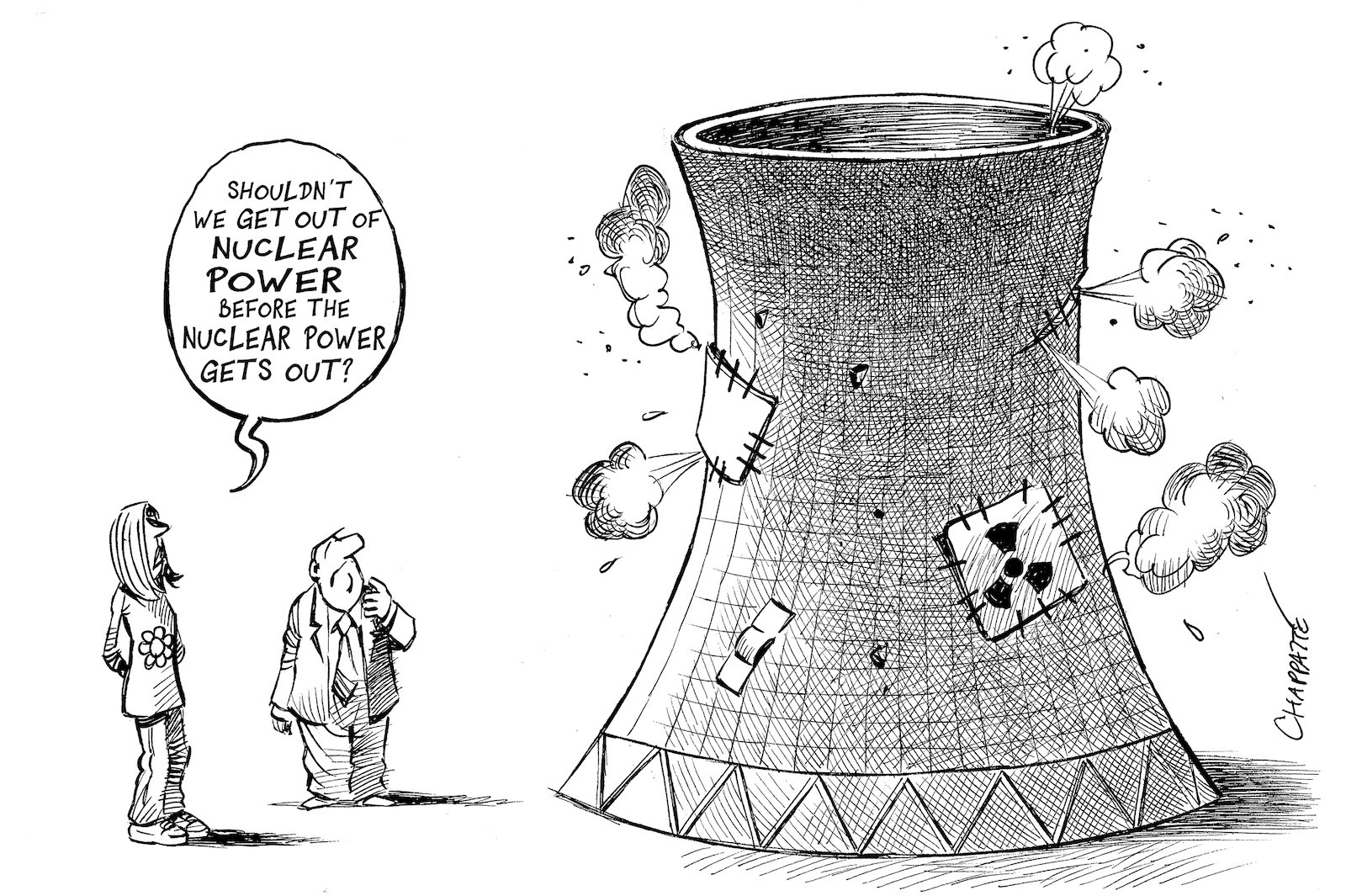
Nearly 1.7 GW in new nuclear capacity via US reactor uprates has been backstopped by long-term purchase deals over the last year.
US DOE financial commitments are also ramping up, working in tandem with the end-use agreements to derisk uprate projects.Alongside reactor license extensions, uprates are considered a near-term tool to meet rising US power demand ahead of new reactors that would take far longer to get running.
Energy Intelligence 16th Oct 2026 Lauren Craft, Washington, Editor, Phil Chaffee
https://www.energyintel.com/000001a1-42b1-daa6-a7b3-eab1109f0000Climate scientists and campaigners round on English Greens over nuclear U-turn

ZACK Polanski’s English and Welsh Greens have been sharply
criticised by a raft of leading climate campaigners and scientists for
ditching their blanket opposition to nuclear power.
An open letter signed by 39 top activists and eminent environmental experts warned the Green
Party of England and Wales (GPEW) that “nuclear reduces and delays
climate action”.
The party voted to ditch its default opposition to
atomic energy at its recent conference in Brighton. Instead, the GPEW
“accepts this power source is here to stay for now” and will examine
any future proposals for new nuclear power plants on a case-by-case basis.
The letter, signed by Mike Childs, head of science, policy and research at
Friends of the Earth, Dr Doug Parr, Greenpeace UK’s chief scientist and
Jonathon Porritt, a former Green Party co-chair, said: “The very long
nuclear development and build times means much longer fossil fuel burn.
Nuclear is just too slow, too hazardous, and too costly for the climate and
energy crises. The Green Party of England and Wales have taken a wrong turn
on nuclear.”
It also raised security concerns, with the signatories
pointing to recent events in Ukraine and the Middle East which they said
showed “civil nuclear infrastructure is increasingly vulnerable to
military attack and AI cyber threat”.
The letter, which was also signed
by Prof Susan Roaf, Emeritus Professor of architectural engineering at
Heriot-Watt University, Pete Roche of the Scottish Campaign to Resist the
Atomic Menace and Prof Peter Strachan of Robert Gordon University, said:
“As we’ve seen in Ukraine and the Gulf, civil nuclear infrastructure is
increasingly vulnerable to military attack and AI cyber threat. Crucially,
both coastal and inland nuclear will be at significant risk from ramping
climate impact.
The National 25th Oct 2026,
https://www.thenational.scot/news/26665517.climate-scientists-campaigners-round-english-greens-nuclear/
Gap between renewables and nuclear widens
Renew Extra 24th Oct 2026,
Renewables outpace and overtake nuclear
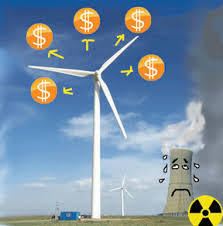
For the first time ever, in 2025 solar photovoltaics provided more electricity in the world than nuclear reactors. Adding wind turbines, these two renewable energy technologies generated more than twice as many kilowatt-hours than nuclear plants. And with solar and wind still expanding, solar in particular, and nuclear more or less static globally, the gap between nuclear and the main new renewable energy technologies is growing.
These are some of the findings of the World Nuclear Industry Status Report 2026, with Mycle Schneider, WNISR Coordinator and Publisher, saying: ‘It is remarkable to what extent public perception of the status of the nuclear sector fundamentally differs from industrial reality’. For example, he notes that China was ‘really the only country significantly expanding its nuclear program’, but it had actually added ‘120 times more solar megawatts than nuclear capacity in the past year.’ It also has a huge hydro capacity – much larger than its nuclear capacity.
While there has been a barrage of pro-nuclear propaganda of late, the WNIRS claims that ‘there have been no remarkable changes in nuclear industry trends: stagnation at best’. It notes that in 2025, ‘more reactors were closed than new ones started up; operating capacity was slightly down’; and while ‘nuclear power generation increased slightly on a global level’, it decreased outside China. Overall the nuclear share in the global electricity mix ‘has continued its decline’ ongoing since 1996. That is despite the Chinese expansion- and also Russia’s efforts to expand its nuclear technology sales globally.
Russia is certainly trying move ahead. Dmitry Gorchakov, a WNISR Contributing Author, noted that in 2025 it ‘increased enriched uranium exports to the EU, the US, and China’. But at the same time, ‘sanctions pressure on Russia has caused significant problems and delays for a number of Rosatom’s foreign projects including in Turkey and Hungary, even leading to a decline in its foreign revenue for the first time in a decade’.
So what next globally? Of late, the nuclear lobby has looked to the East to rescue nuclear from decline. However, although there are some new projects in Asia, notably in China, renewables are doing very much better there. For example, China’s solar and wind generation are now 5 times its nuclear generation. And it plans to push renewables very hard – its 2030 target is 3,500GW. Whereas its current target for nuclear is around 110GW by 2030, with WNISR saying that it ‘has fallen short of its ambitious nuclear construction targets in recent years’.
Earlier this year, the World Nuclear Association produced its own annual world nuclear outlook which saw nuclear expanding rapidly, to nearly 1 TW by 2050, mainly led by China and the USA. Well, even given that China is good at pushing technology fast these days, as noted above, that seems a bit of a stretch. The USA is a bit further ahead on nuclear, already at around 100 GW, but the prospects for very rapid expansion there seem even more limited than in China. WNISR notes that ‘it has been two years since a new reactor was connected to the grid and the US fleet continues to age, with a mid-2026 average of 44.7 years, making it amongst the oldest in the world’. It added, although there are plans, ‘there are no new reactors under construction in the US’. There is of course much talk in the US (and elsewhere) of small modular reactors, but WNISR notes that construction of one has only just started – in Canada. And even that now looks somewhat uncertain.
So, for the moment, in terms of nuclear expansion, all we are left with is the Chinese programme and a contribution from India. Although renewables are expanding faster there too – it now has two times more renewable capacity than nuclear. With the exception of Russia, which has hardly bothered with renewables, it’s the same for most places that have nuclear programmes, and especially the UK, where one new plant is under construction but renewables now supply 52% of its power, with the aim being to get to over 80% by 2030. It is always possible that there will be some new nuclear initiatives somewhere in the world. For example South Korea has surprisingly announced a major $120bn investment in large US nuclear plants. But, despite Trumps efforts to block wind projects, more backing for renewables is also possible there and elsewhere, and arguably is a better bet most places to meet power and also energy needs. And avoid climate change…………………………………………….
https://renewextraweekly.blogspot.com/2026/10/gap-between-renewables-and-nuclear.html
Adam Johnson: How U.S. Media Helped Sell Israel’s Genocide in Gaza

October 24, 2026, Joshua Scheer, SCHEERPOST
“The word genocide has implications and obligations. It’s not just a buzzword.”
The bombs come from Washington. The justifications come through the news. As Israel devastated Gaza, leading U.S. media organizations repeatedly amplified official claims, minimized Palestinian suffering and presented the politicians supplying the weapons as concerned observers struggling to stop the killing. On FAIR’s CounterSpin, media analyst Adam Johnson joins host Janine Jackson to examine how that coverage helped make mass death politically acceptable.
Johnson, cohost of Citations Needed and author of How to Sell a Genocide: The Media’s Complicity in the Destruction of Gaza, argues that this failure reaches beyond individual falsehoods or careless headlines.
It rests on a hierarchy of human worth: Israeli deaths demand outrage, while Palestinian deaths are explained away as the unfortunate consequences of military necessity. The language of news coverage, he argues, teaches audiences whose lives to mourn—and whose destruction to accept.
The conversation examines how sensational claims can retain their political power long after they unravel. Officials receive prominent platforms to spread allegations; subsequent challenges receive less attention, and the same sources return to shape the next story. Johnson describes a succession of propaganda claims that keep journalists and critics chasing corrections while the violence those claims helped justify continues.
He also challenges coverage that portrayed the Biden administration as powerless to restrain Israel while it continued supplying arms. In Johnson’s account, this framing obscured U.S. responsibility, turning material support for the destruction of Gaza into a story about frustrated diplomacy and good intentions.
For Johnson, accountability requires confronting the institutions and political figures that enabled the killing—including those who claim the language of liberalism and human rights. This CounterSpin discussion asks what journalism becomes when it grants power the authority to explain away its victims, and what meaningful accountability would demand from the media and politicians who helped sell the war.
Read The Transcript Below.
Corporate Media Need a Watchdog.
When powerful interests shape the headlines, somebody needs to challenge the story. Since 1986, Fairness & Accuracy In Reporting (FAIR) has exposed media bias, challenged censorship and called out coverage that sidelines dissent while giving power a free pass. Through CounterSpin, Extra! and incisive media criticism, FAIR pushes readers to question whose voices get heard—and whose get buried………………………………………………………………………………………………………………………………………………………………………………………………………………………………………………………………….. https://scheerpost.com/2026/10/24/adam-johnson-how-u-s-media-helped-sell-israels-genocide-in-gaza/
Trump’s Ballroom Is a Monument to the Failure of Congress and the Supreme Court to Do Their Jobs

October 27, 2026, Austin Sarat ScheerPost, https://scheerpost.com/2026/10/27/trumps-ballroom-is-a-monument-to-the-failure-of-congress-and-the-supreme-court-to-do-their-jobs/
Sometimes a ballroom is more than a ballroom. In President Trump’s case, it is much more than a builder’s dream.
It is a material expression of his willingness to flout the law and disregard the Constitution. It is what authoritarianism looks like when displayed in concrete and marble.
Polls show that Americans do not share Trump’s ballroom obsession. They see the ballroom as an extravagant distraction from this country’s real problems.
Over the weekend, protesters at Trump rallies registered their feelings when they shouted: “Shove that ballroom up your a**!” But Trump is undaunted.
Just last week, the White House released a video of the ballroom construction, taken from the president’s helicopter.
We wouldn’t be having to witness the ballroom spectacle if Congress and the Supreme Court had done their jobs.
For example, at the end of August, the Supreme Court lifted an injunction that had stopped most of the ballroom’s construction. The litigation had been filed by the National Trust for Historic Preservation, which claimed that the president’s action in tearing down the White House’s East Wing and constructing a ballroom to replace it was illegal.
The Court did not address that issue. Instead, it ruled that the National Trust for Historic Preservation did not have a right to sue because it lacked “standing.”
As the Court explained, “To secure standing to sue in federal court consistent… a plaintiff must establish that it has suffered an ‘injury in fact’—that is, the ‘invasion of a legally protected interest.’… Further, the plaintiff must demonstrate that its injury is ‘(a) concrete and particularized . . . and (b) actual or imminent.’”
Its ruling allowed the president to continue living outside the law.
As Chief Justice John Roberts noted in his dissent, “Pursuant to its plenary constitutional authority over the District of Columbia and federal property, Congress has explicitly prohibited the construction of any ‘building or structure . . . on any reservation, park, or public grounds of the Federal Government in the District of Columbia without express authority of Congress.’ The ballroom is a building or structure being erected on federal park grounds—President’s Park—in the District of Columbia.”
“Yet,” Roberts continued, “Congress has not passed any law resembling ‘express authority’ for the Executive’s construction of it.”
While some may rightly criticize the Court for allowing that to happen, the real villain of the piece is Congress for failing to defend its Constitutional prerogatives. Before explaining why, let me say more about the Court’s August 31 decision.
The Washington Post explains that “The National Trust’s case to stop Trump’s ballroom was built on a declaration by board member Alison Hoagland, a historian who lives on Capitol Hill and regularly walks by the White House. She said the scale, height and massing of the ballroom project damaged her ‘aesthetic, cultural, and historical interests’.”
To reach its preferred result, the Court had to dance around one of its own precedents. As Roberts explained, “(W)e said in one of our leading standing precedents that it was ‘[o]f course’ true that a ‘desire to . . . observe an animal species…even for purely esthetic purposes,’ was ‘undeniably a cognizable interest for purpose of standing.’”
The majority acted as if those sentences had never been written. “This Court,” it said, “has not found standing in circumstances like these before. To the contrary, we have repeatedly held that mere offense, disagreement, or distaste does not qualify as a concrete and particularized injury.”
Splitting hairs in a game of “which of these things is not like the other” is, of course, what lawyers and judges do. But as Roberts noted, denying standing to the National Trust for Historic Preservation allows the president to continue acting in a way that is “likely unlawful.”
But, as I’ve already argued, the primary responsibility for allowing him to get away with that really rests with Congress, not the Court.
Congress failed in two ways.
First, the Republican leadership of the House of Representatives and the Senate voiced no objection to the president’s demolition and construction plan, and none of the relevant congressional committees convened hearings to hold the administration accountable.
In fact, several Republican members of Congress have publicly supported it. Last April, following the foiled assassination attempt at the White House Correspondents Dinner, Politico reported that House Speaker Mike Johnson “said…the structure would be a ‘safe environment’ for events. Rep. Mike Lawler (R-N.Y.)…(observed that) constructing the ballroom… ‘imperative.’ And Sen. Tim Sheehy (R-Mont.) called the project ‘common sense.’”
And when the president, who promised that the ballroom would be entirely funded by private donations, asked Congress for a billion dollars to supplement those funds, Senate Majority Leader John Thune endorsed the president’s bait and switch. “We want to make sure,” he suggested, “that any additions made down there are completed in a way that ensures that the president and others in his administration are safe and secure. I do believe there’s certainly some expectation that there would be dollars allocated for that purpose that would go above and beyond the private money that’s been raised.”
Nary a word about the authority of Congress that Roberts highlighted or the illegality of his action.
James Madison must be rolling over in his grave. Recall his elaborate defense of the Constitution’s system of separated powers and checks and balances among the three branches of government.
Writing in 1788, Madison argued that “the great security against a gradual concentration of the several powers in the same department, consists in giving to those who administer each department the necessary constitutional means and personal motives to resist encroachments of the others….Ambition must be made to counteract ambition.”
“The interest of the man,” he added, “must be connected with the constitutional rights of the place.”
For the constitutional system to work, members of each branch of the government must stand up for and defend the prerogatives of the branch in which they serve. Acquiescing in President Trump’s ballroom plan is an abrogation of that duty by Republicans who control both the House and Senate.
But their failure doesn’t stop there.
While the National Trust for Historic Preservation’s right to sue may be debatable, there is no question that Congress itself would have had standing to sue to stop construction of the ballroom. Almost thirty years ago, in 1997, the Supreme Court held that legislatures can act as “an institutional plaintiff asserting an institutional injury…after authorizing votes in both of its chambers.”
Republicans should know that. A little more than a decade ago, the House of Representatives, then controlled by the GOP, voted to sue President Obama over the implementation of the Affordable Care Act. The lawsuit alleged that “Sylvia Burwell, the Secretary of Health and Human Services, Jacob Lew, the Secretary of the Treasury, and their respective departments …have spent billions of unappropriated dollars to support the Patient Protection and Affordable Care Act (and)… that Secretary Lew and Treasury have… effectively amended the Affordable Care Act’s employer mandate by delaying its effect and narrowing its scope.”
The courts allowed the suit to proceed. Congress is failing the American people in many ways, but none is more consequential than standing idly by while the president ignores laws it passed and the authority granted to it by the Constitution.
The White House ballroom will be a monument to its failure.
The war against the Slavs in Ukraine is drawing to a close
It is likely that, in the aftermath of this carnage—which has claimed the lives of more than a million people—it will not just be Volodymyr Zelensky who flees the scene, but also various political leaders from the European Union and Canada.
Yet, on October 26, Germany, France, Italy, Poland, and the United Kingdom signed a joint declaration, underscoring their unwavering commitment to Ukraine and announcing their intention to strengthen their role within NATO
by Thierry Meyssan, Voltaire Network | Paris (France) | 27 October 2026 https://www.voltairenet.org/article225105.html
The moment is approaching when the West must accept its defeat in Ukraine. President Trump is determined to bypass Volodymyr Zelensky, who has formed alliances with criminal organizations that oppose the United States. The Russian army continues to advance. Elon Musk, who has prohibited the use of the Starlink network for attacks and killing, has now throttled its bandwidth in Ukraine. Russia is on the verge of achieving its military objective. The question remains: what will the Europeans do to mask their failure?
t took a long time for Russia to fulfill the role assigned to it by UN Security Council Resolution 2202 [1] and to launch its “special military operation” in Ukraine.
It is true that its German and French partners—also designated as guarantor powers for the Minsk Agreements—did absolutely nothing.
President Vladimir Putin even reprimanded the oligarch Konstantin Malofeev, who, in the name of “Holy Russia,” had recruited Cossacks to assist the inhabitants of the Donbas—people who were being massacred by “integral nationalists” with the tacit approval of President Petro Poroshenko. It is worth noting that Malofeev—owner of the Tsargrad media group and a stakeholder in the telecommunications firm Rostelecom—is a monarchist who was acting on behalf of a Grand Duke. The President reminded him that, in this day and age, possessing vast resources does not grant one the right to act in place of the State.
Vladimir Putin only intervened when hardline nationalists planned a large-scale military operation—not just in the Donbas, but also against Crimea, which had joined the Russian Federation [2]. He acted in haste, recognizing the Donbas republics as sovereign states on February 21, 2022—before the Kremlin had even managed to procure flags for the Donetsk and Luhansk People’s Republics.
The military objective he set at the time was to liberate the entirety of these regions—a goal expected to be reached in the coming weeks. It was only because Western powers supplied the Ukrainians with weapons, causing the war to drag on, that Vladimir Putin considered liberating Novorossiya as well—a new objective expected to be achieved in the coming months.
In any event, Donald Trump succeeded Joe Biden. Unlike his predecessor, he had no private interests in the conflict. He therefore attempted to bring it to an end, publicly admonishing Volodymyr Zelensky at the White House on February 28, 2025. However, Zelensky—heavily backed by the international press—managed to obscure the fact that he had been nothing more than an impostor for the previous nine months (his term having ended in May 2024) and succeeded in swaying Western public opinion in his favor.
Donald Trump proposed several rounds of negotiations, none of which bore fruit. Zelensky was caught red-handed, yet he deflected blame—first onto his chief of staff, Andriy Yermak, and subsequently onto his replacement, Mariia Vitushok. He managed to hush up corruption scandals involving his team—most notably the “Midas affair”—and even the role played by his own business associate, Timour Minditch, in the Jeffrey Epstein scandal.
However, emboldened by a sense of impunity, Volodymyr Zelensky has gone so far as to form an alliance with Mexican drug cartels—groups that President Trump had designated as “foreign terrorist organizations” and against which he waged a ruthless war [3]. Within a few weeks, in Latin America, these narco-traffickers launched attacks against police forces and agents of the Drug Enforcement Agency (DEA). They managed to monitor drug shipments crossing the Mexico–U.S. border and even assassinated U.S. officials. Meanwhile, their drugs are readily available throughout the EU, entering the bloc without risk via the Ukrainian border.
Consequently, President Trump decided it was time to put an end to this state of affairs. He dispatched his special representative, Steve Witkoff, to Ukraine, then to Norway for meetings with European representatives, and finally to Russia. His associate, Jared Kushner, followed these contacts via teleconference—though he found himself caught off guard while conducting business elsewhere, just as a book exposing his own shady dealings was published.
At the same time, upon discovering that the Ukrainian military was using its access to Starlink for offensive operations—in violation of its contract—Elon Musk restricted the service’s bandwidth in Ukraine. When criticized for this decision, he reposted a statement from Volodymyr Zelensky in which the latter boasted about using the network to attack Russia [5].
Dmitry Medvedev, the former Russian president and current secretary of his country’s Security Council, released a list of the problems created for Trump by the “drug addict from Kyiv”
“1. He has always and everywhere openly supported “old man” Biden.
2. He refused to provide Trump with genuine, damaging information about his rival during the previous election.
3. With tiresome persistence—much like a large, buzzing blowfly that has fallen into a pot of honey—and in a crude tone, he demanded money and weaponry from Trump to wage war against Russia.
4. He manipulated European leaders, turning them daily against Trump and his team.
5. On numerous occasions, he rebuffed Trump and his associates when they presented him with various proposals for negotiating an end to the conflict.
6. He disregarded the American side, refusing to halt his attacks on Russian refineries and ignoring Trump’s arguments regarding the impact of these actions on global petroleum prices and the situation within the United States on the eve of the election.
7. Through his reckless behavior, he has brought the United States and NATO to the brink of a global nuclear conflict with Russia.
- Together with his cronies—such as the fugitive Minditch or Yermak (who has since fallen from grace)—he shamelessly siphoned off the U.S. funds that “old man” Biden had so generously provided for the war; he continued to dip into the remainder of these sums even under the Trump administration.
- He forged ties with Mexican cartels—which Trump detests—who sent their henchmen to Ukraine to learn how to operate drones, paying the “drug addict from Kyiv” with proceeds from the sale of illicit substances in the United States.
- Instead of taking Washington’s position into account, he resorted to blackmailing the United States, brandishing the threat of a defeat in Ukraine and conjuring up the specter of disastrous consequences for the entire Western world.
It is clear that, this time, there will be no way out.
Yuri Ushakov, former Russian ambassador to Washington and current advisor to Vladimir Putin, indicated that trilateral negotiations between Russia, Ukraine, and the U.S. could take place in Abu Dhabi after November 4. He noted that a previous proposal from Moscow, for talks between September 18 and 20, had been rejected by the Ukrainian side
Kremlin spokesperson Dmitry Peskov commented on the EU’s search for a negotiator, noting that no concrete action has been taken: “They keep talking, but they aren’t making any decisions.” Regarding the potential appointment of Finnish President Alexander Stubb, he stated: “If there is a negotiator, that’s fine. If it’s a negotiator who will sincerely strive to contribute to a peaceful settlement, that would be even better.”
The Kremlin makes no secret of its preference for former German Chancellor Gerhard Schröder, who currently serves on the board of Gazprom.
MP Leonid Slutsky, leader of the Liberal Democratic Party (founded by Vladimir Zhirinovsky), declared: “Kyiv is not seeking peace negotiations. Zelensky previously sabotaged a significant trilateral initiative concerning the Ukrainian diaspora by carrying out brutal raids on polling stations during the State Duma elections. He has now chosen to repeat this behavior ahead of the planned meeting in Abu Dhabi. The U.S. side should also draw its own conclusions—and not just ’freeze’ its stance, but also completely halt all military aid to Ukraine. That would be a genuine contribution to the peace process.”
Typically, the Kremlin uses this party to voice sentiments that diplomatic decorum otherwise forbids.
The Kremlin curtly dismisses any suggestions for a simple, limited ceasefire. It now insists on a comprehensive peace treaty—in the full sense of the term—which includes the “denazification” of the country.
All the powers that are members of the “Coalition of the willing” are now coming to terms with the consequences of all this.
- How will it be acknowledged that, yes, there were “integral nationalists”—”Banderites”—within the Ukrainian government?
- How will it be acknowledged that they did not even consider themselves to be Slavs, but rather sought to eradicate all Slavs—Ukrainians and Russians alike—down to the very last child?
- How will it be acknowledged that these are the very people who were extensively supported—funded by the heavy burden of taxpayers’ money—in the European Union and Canada?
It is likely that, in the aftermath of this carnage—which has claimed the lives of more than a million people—it will not just be Volodymyr Zelensky who flees the scene, but also various political leaders from the European Union and Canada.
Yet, on October 26, Germany, France, Italy, Poland, and the United Kingdom signed a joint declaration, underscoring their unwavering commitment to Ukraine and announcing their intention to strengthen their role within NATO
UK Announces It Will Officially Brainwash Children To Be Hateful Zionists
The entire “antisemitism” debate across the west is utterly, shockingly fraudulent. It’s fake, a lie. ……………..There are a lot of people angry at the genocide committed by the Jewish state
October 23, 2026, Nate Bear Do Not Panic, https://scheerpost.com/2026/10/23/uk-announces-it-will-officially-brainwash-children-to-be-hateful-zionists/
A UK taskforce has just released a report detailing 27 recommendations for “ending antisemitism in schools and colleges” which the government has agreed to adopt in full.
The second recommendation is that teachers shouldn’t wear pro-Palestine pins.
This alone tells anyone with half a brain what this report, like so many of the reports about “antisemitism” over the last few years is actually about: shutting down criticism of Israeli apartheid and genocide.
The report, like so much fake antisemitism panic in the west, is so transparently an attempt to protect Israel over its genocide of Gaza, and to make sure children don’t grow up questioning Israel, it’s hard to know where to start.
Firstly, the report was supposedly commissioned because of an increase in antisemitism, yet it mentions Israel 60 times, Palestine or Palestinian 35 times and Zionism or Zionist 11 times.
This is a classic tactic. Judaism and Israel have nothing to do with each other when it suits the establishment narrative (Israel is distinct from Jewish identity and many Jews oppose Israel, so we shouldn’t conflate the two) but at other times, especially when a pretext is being sought to shut down criticism of Israel, the narrative is manufactured to purposefully conflate Israel with all Jews. As this fraudulent report does.
And it doesn’t even try hard to hide it.
The most revealing sentence comes 30 pages in.
British attitudes
“Anti-Jewish attitudes are typically less prevalent and have remained more stable whereas anti-Israel sentiments are more prevalent and have been increasing.”
Can you believe it? The report explicitly says that the only “problem” is increased criticism of Israel. Why would attitudes to Israel have any bearing on the scope of a report into antisemitism, unless what they really mean by antisemitism is antizionism. Which of course is exactly what they mean! This is an astonishing admission and fully exposes the true intentions of this report: making sure young people aren’t exposed to any criticism of Israel and raising them instead to be loyal Zionists.
The 27 recommendations make this clear. As well as banning pro-Palestine pins in schools, the report encourages schools to adopt the IHRA definition of antisemitism (which says that criticism of Israel is antisemitism) and urges that the “history of the Israel-Palestine conflict is taught fairly and sensitively.” We know exactly what this will mean. It will mean whitewashing Israel’s crimes, omitting its history of ethnic cleansing, pretending history began on October 7th, and dehumanising the Palestinians.
The entire “antisemitism” debate across the west is utterly, shockingly fraudulent. It’s fake, a lie. There is no structural hatred of Jews or discrimination against Jews in the west. As the report itself literally states. There are a lot of people angry at the genocide committed by the Jewish state, which has led many to question the legitimacy of such a state. Just as one would rightly question the legitimacy of any apartheid state which committed genocide.
Being a Jewish Zionist is the most protected characteristic in the world today. if you are a Jewish Zionist you will be prioritised and protected over every and all other racial or ethnic groups. And if you are confronted because of your adherence to a genocidal ideology, the full power of the state will be mobilised to extinguish any opposition to that ideology to ensure you feel safe. That power will extend to banning protests, charging grandmothers holding pro-Palestine placards as terrorists, and indoctrinating children into your ideology so you don’t face any opposition from the next generation.
It almost feels like the UK is one more fake antisemitism panic away from encouraging all school-age children to convert to Judaism and enlist in the IDF.
It’s incredible. Some posts on Twitter put it well.
And all this happens while the people being genocided by the Jewish state are not even an afterthought. A people, who, right now, are once again going hungry because the World Food Programme says that because of funding cuts it can no longer afford to feed half a million people in Gaza. A people who will go hungry, and once again face the spectre of famine, while living among the ruins and dust of their former homes. Homes destroyed with the full complicity of our governments, and by a country and its military which is funded with our taxes.
It’s disgraceful.
What we need are 27 recommendations for children to ensure schools and colleges don’t become breeding grounds for the scourge of Zionism.
So I’ve come up with my own:
- Explain that Israel wasn’t founded as a response to the Nazi holocaust and that Zionism as an ideology emerged in the 1850s
- Explain that Zionism as the ideological basis for Israel has always been an explicitly racist and exclusionary ideology which long advocated for the removal of the Palestinians from Palestine
- Teach children about the Nakba and the ethnic cleansing of 750,000 Palestinians, many of whom were forced from their homes at gun point while Jews stole the family homes they’d lived in for generations
- Teach children about Jewish Zionist terror groups such as the Irgun, the Haganah and the Stern gang which killed hundreds of Palestinians in the decades before Israel’s founding
- Explain the process by which the leaders of these terror groups became the leaders of Israel
- Explain that these Jewish Zionist terror groups never gave up their arms, but were absorbed into and became the foundational components of the Israeli state military
- Teach children how Israel expanded beyond its UN borders, denied statehood to Palestinians and has illegally and violently occupied Gaza and the West Bank for nearly 80 years
- Teach children that Gaza was and is the world’s largest open air concentration camp, the people trapped and controlled by an occupying power who imposed a near-twenty year blockade on the territory
- Teach children that October the 7th was a response to this occupation and to decades of Israeli terror, an act of rebellion and resistance, not an act of terrorism
- Explain that Hamas was not a terrorist group but a resistance group and that its armed wing was made up primarily of orphans whose parents had been murdered by Israel
- Teach children that for 30 years Israel had a policy referred to as “mowing the lawn” which entailed randomly killing scores of Palestinians in Gaza on a frequent basis to ensure obedience and a baseline level of terror
- Teach children that the genocide of Gaza had been long-planned by Israel and October 7th was merely the pretext
- Teach children that most of the Israelis killed on October 7th were military personnel, and that many others were killed by their own government after the Israeli military invoked the so-called Hannibal directive
- Teach children about the apartheid structure of Israel and Israeli society which includes curfews for Palestinians, over 500 military-controlled checkpoints for Palestinians and separate fenced off areas for Palestinians only who are required to carry permits to move between zones
- Teach children that Israel burns down Palestinian-owned olive groves as a tactic not just to deprive Palestinians of income, but to strip away their familial connections to the land
- Document the torture prisons operated by Israel in which many women have reported being raped
- Explain Israel’s practice of child-detention without charge which means that over 10,000 Palestinian children have been held in military detention, the only children in the world systematically prosecuted in military courts
- Explain that Israel created the largest cohort of child amputees in the world
- Show the wealth of evidence documenting the genocide of Gaza, including videos of Israeli soldiers proudly committing war crimes
- Detail the various findings by experts and UN expert groups that Israel has committed genocide in Gaza
- Explore in detail the story of Hind Rajab and how her murder is emblematic of Israel and Israeli society
- Detail the ICJ warrant for Israeli leaders and how Netanyahu and others have escaped justice
- Explain how international Jewish paedophiles flee to Israel for safety because they know they won’t get extradited or prosecuted
- Examine how the “law of return” enabling any Jew to move to Israel contributes to Israel’s military system and bolsters its international impunity
- Examine the Zionist lobby in the west and how it has infiltrated political systems to ensure Israel is protected and never answers for its crimes
- Explore how Israeli military systems are tested on Palestinians before being sold to governments around the world
- Explain that for a future of true humanity and justice all this must change and Palestine must be free
1 This Month



Shut down the radiation-damaged Heysham nuclear reactors now
To see nuclear-related stories in greater depth and intensity – go to https://nuclearinformation.wordpress.com

Say No to NASA’s Reckless Nuclear Reactor on the Moon
Say No to NASA’s Reckless Nuclear Reactor on the Moon
-
Archives
- October 2026 (279)
- September 2026 (339)
- August 2026 (330)
- July 2026 (355)
- June 2026 (287)
- May 2026 (306)
- April 2026 (356)
- March 2026 (251)
- February 2026 (267)
- January 2026 (308)
- December 2025 (358)
- November 2025 (359)
-
Categories
- 1
- 1 NUCLEAR ISSUES
- business and costs
- climate change
- culture and arts
- ENERGY
- environment
- health
- history
- indigenous issues
- Legal
- marketing of nuclear
- media
- opposition to nuclear
- PERSONAL STORIES
- politics
- politics international
- Religion and ethics
- safety
- secrets,lies and civil liberties
- spinbuster
- technology
- Uranium
- wastes
- weapons and war
- Women
- 2 WORLD
- ACTION
- AFRICA
- Atrocities
- AUSTRALIA
- Christina's notes
- Christina's themes
- culture and arts
- Events
- Fuk 2022
- Fuk 2023
- Fukushima 2017
- Fukushima 2018
- fukushima 2019
- Fukushima 2020
- Fukushima 2021
- general
- global warming
- Humour (God we need it)
- Nuclear
- RARE EARTHS
- Reference
- resources – print
- Resources -audiovicual
- Weekly Newsletter
- World
- World Nuclear
- YouTube
-
RSS
Entries RSS
Comments RSS

