Radiation dose and gene expression analysis of wild boar 10 years after the Fukushima Daiichi Nuclear Plant accident
Abstract
The Fukushima Daiichi Nuclear Power Plant accident led to contamination with radioactive cesium in an extensive environment in Japan in 2011. We evaluated the concentration of radioactive cesium in the skeletal muscles of 22 wild boars and the expression of IFN-γ, TLR3, and CyclinG1 in the small intestine and compared them with those of wild boar samples collected from Hyogo prefecture. The average 137Cs radioactivity concentration in wild boars in the ex-evacuation zone was 470 Bq/kg. Most of samples still showed radioactivity concentration that exceeded the regulatory limit for foods, but the dose remarkably decreased compared with samples just after the accident. IFN-γ expression was significantly higher in wild boars in the ex-evacuation zone than in samples from Hyogo prefecture. TLR3 expression was also upregulated. CyclinG1 expression also tended to be high. Hence, wild boars might have received some effects of low-dose radiation, and immune cells were activated to some extent. However, pathological examination revealed no inflammatory cell infiltration or pathological damage in the small intestine of wild boars in the ex-evacuation area. Long-term monitoring would be necessary, but we consider that the living body responds appropriately to a stimulus from a contaminated environment.
Introduction
On March 11, 2011, the Great East Japan Earthquake was one of the most significant disasters caused by earthquakes and tsunamis. Moreover, the accident at the Fukushima Daiichi Nuclear Power Plant resulted in widespread contamination of radioactive materials. After the accident, more than 165,000 people were evacuated, but wild and livestock animals were left behind in the evacuation zone at that time. We had earlier investigated the effect of radiation on those animals, and the results were published in several research papers1,2,3,4,5,6 and a book chapter7. However, because the half-life of 137Cesium is approximately 30 years, a long-term environmental survey in the ex-evacuation area is necessary to understand the impact of chronic low-dose radiation on wildlife physiology.
Ten years have elapsed since the earthquake, much of the area where people lived has been decontaminated already, and humans are returning now. Although several people are evacuating, the remaining wild animals are free to live contaminated with radioactive materials. Recent research has revealed that numerous wildlife species are now abundant throughout the ex-evacuation zone8. Hunters in Fukushima have exterminated numerous wild animals, but they are not used for human consumption due to the contamination. Even after the Chernobyl accident, wildlife surveys have reported high radioactive contamination rates in wild boars even after several years9. In a previous research that examined 213 wild boar muscles in Tomioka town, Fukushima Prefecture, in 2019, it was observed that 98.6% of the samples had radioactivity concentration that exceeded the standard value (100 Bq/kg)10 as a general food. Therefore, the meats of those wild boars are not edible and are discarded. However, these wild boars are considered to be affected by low doses of radiation, and analyzing them is important considering the effects on humans.
The physiological functions and immune systems of pigs are extremely similar to those of humans11,12,13. Therefore, we intended to understand the responses in abandoned pigs to radioactive contamination, which can be helpful in understanding the radiation effects and responses in humans. Our previous report demonstrated that there were alterations in gene expression in the small intestine of animals in the ex-evacuation zone after radiation4. The genes involved in inflammation showed significantly higher expression in pigs in the ex-evacuation zone than in control pigs. Therefore, exposed pigs could have an inflammatory response due to oxidative stress with the indirect action of radiation. This is caused by breaking the O–H bonds of water molecules in the body and generating reactive oxygen species14,15. As superoxide and hydroxyl radicals of reactive oxygen species have unpaired electrons, they oxidize DNA, proteins, and lipids16,17,18. Consequently, the biomolecules would be damaged. However, the body has a mechanism to eliminate reactive oxygen species. Nevertheless, if numerous reactive oxygen species are generated by radiation, the elimination will be insufficient, leading to oxidative stress. Chronic inflammation due to oxidative stress is known to induce cancer, lifestyle-related diseases, and immune-related diseases. Therefore, we performed a follow-up investigation using wild boars, which are biologically the same species as pigs, in this study. Muscles and small intestines were collected from the wild boars that were exterminated by the Hunting Association. These samples were evaluated for the amount of radioactive cesium, and the changes in the expression of genes responsible for immunological or physiological functions were analyzed (Fig. 1).

Results
Radioactivity concentration in skeletal muscles and total exposure dose rates of wild boars
Figure 2 shows relationship between the total exposure dose rates and the radioactivity concentration in the skeletal muscles of wild boars. The total exposure dose rates are summation of internal and external dose rates of whole body. Average 137Cs radioactivity concentration and total dose rates in 22 wild boars in the ex-evacuation zone were 470 Bq/kg and 7.2 µGy/d, respectively. The lowest and highest values were 124 and 1667 Bq/kg, respectively. And the medians were 289 Bq/kg and 6.8 µGy/d. In contrast, the average 137Cs radioactivity concentration and total dose rates of the three wild boars in Hyogo prefecture were 1.5 Bq/kg and 0.0 µGy. The lowest and highest values were 0.6 and 2.7 Bq/kg, respectively, and the median was 1.2 Bq/kg.

Gene expressions in the small intestine
In our previous study conducted in 2012, microarray analysis revealed that several genes in the small intestine exhibited significant expression differences after radiation in abandoned pigs. More detailed experiments using real-time PCR confirmed that IFN-γ and TLR3 expressions were significantly increased after radiation in abandoned pigs. Furthermore, our subsequent study of wild boars in the ex-evacuation zone in 2015 showed that CyclinG1 expression was significantly higher than that in the control group4. Therefore, we focused on the expression of IFN-γ, TLR3, and CyclinG1 in the present study as a follow-up survey. We found that IFN-γ and TLR3 expressions were significantly higher in Fukushima wild boars than in Hyogo wild boars. The expression of CyclinG1 also tended to be higher (Fig. 3).

Pathological and morphological changes in the small intestine
In the pathological analysis, tissues were fixed and cut for HE staining to examine whether intestinal tissues were damaged or showed inflammation because of radiation exposure. No morphological changes and infiltration of inflammatory cells were observed (Fig. 4).

Discussion
Although 10 years have elapsed since the earthquake, the reconstruction of the disaster area is in progress. In Fukushima, there are still areas where it is difficult to return home. However, decontamination of urban regions and agricultural land is progressing, and residents are rebuilding their lives. Moreover, agricultural products are sold after being thoroughly inspected for radiation dose and confirmed to be safe. It is the increase in the number of wild animals that threatens the livelihoods of the returning people. From 2016 to 2017, Lyons et al.8 surveyed the ecology of wild animals using network cameras. They found that wildlife preferred the environment without humans and increased in number in the ex-evacuation zone, despite chronic radiation exposure. The wild boar was the most abundant species in the ex-evacuation zone. Even before the Fukushima Daiichi accident, wild boars were targeted for extermination, and the Hunting Association was hunting, but at that time, the meat was also edible in this area. However, it is now just discarded after hunting. The wild boars present in the mountains have not been decontaminated but eat contaminated food and water. Several studies on the Chernobyl accident demonstrated that the pollution of mushrooms in the mountain range continued for a long time19,20.
The intestine can be significantly affected by radiation through internal exposure after oral intake of contaminated food. It is also one of the essential organs of the immune system. Therefore, we evaluated whether the expression of genes responsible for the immune system and cell cycles in the small intestine of wild boars in the ex-evacuation area is altered compared to that in animals in the noncontaminated area.
Our results demonstrated that IFN-γ and TLR3 were significantly upregulated in Fukushima wild boars compared to those in Hyogo wild boars. Moreover, CyclinG1 expression tended to increase. As mentioned earlier, these genes were selected from the microarray analysis in our previous research4. IFN-γ is one of the crucial cytokines for acquired immunity and inflammation. Recently, Zha et al. described that IFN-γ is a master regulator for several cytokines involved in numerous biological processes21. It functions as a master switch to operate cell activation or inhibition. In comparison, the major portion of innate immune cell activation is mediated by TLRs. TLR3 is involved in dsRNA recognition and is associated with antiviral responses. Furthermore, TLR3 is an important molecule for radiation susceptibility. Takemura et al. reported that TLR3-deficient mice exhibited substantial resistance to gastrointestinal syndrome (GIS)22. TLR3 is bound to cellular RNA leaking from damaged cells and induces inflammation. CyclinG1 is one of the target genes of the transcription factor p53 and is induced in response to DNA damage. It also plays a role in G2/M arrest in response to DNA damage recovery and growth promotion after cell stress23. Therefore, the changes in the expressions of the genes encoding these proteins suggested that the immune system and cell cycles in wild boars in the ex-evacuation zone were affected by low-dose radiation. These results are consistent with our previous investigation conducted in 2012. A state of high IFN-γ expression suggests an activated state of immune cells. Despite the low-dose, radiation-induced oxidative stress may result in elevated expression of inflammatory cytokines. However, no correlation was observed between IFN-γ expression and radiation levels in the skeletal muscle of wild boars in this study (data not shown). This could be due to the lower doses of 137Cs observed in the present study rather than those in the previous investigation. Furthermore, pathological examination revealed no infiltration of immune cells in the submucosa of small intestines of wild boars in the ex-evacuation area.
Therefore, the elevated expression of these genes can be considered as a consequence of the living body’s ability to appropriately process the effects of low-dose radiation. The highest radiation concentration in the skeletal muscle was 1667 Bq/kg, which was much lower than that in abandoned pigs investigated in 2012, at > 15,000 Bq/kg on average. Cui et al. investigated 213 wild boars and reported a median 137Cs value of 420 Bq/kg in 201910. Most samples collected from the wild boars in the ex-evacuation zone still showed radioactivity concentration that exceeded the regulatory radiocesium limit for foods in the present study, but the dose is steadily decreasing. Cunningham et al. investigated DNA damage and concluded that there was no evidence of significant harmful impacts to wild boars exposed to low-dose radiation24.
Furthermore, Pederson et al. investigated whether chronic low-dose radiation affects cataract prevalence in wild boars but reported no significantly higher risk in the animals in the exclusion zone25. Finally, we also report the results of this study as a record of 10 years after the accident. Although an increase in the expression of IFN-γ, TLR3, and CyclinG1 was detected, there were no pathological abnormalities in wild boars in the ex-evacuation zone. However, it is difficult to conclude the effects of radiation only ten years after the accident. We intend to continue conducting wild boar surveys regularly to elucidate the effects of long-term low-dose radiation exposure.
Fukushima wild boar leather baby shoes?

Gun control heartburn: Radioactive boars are amok in Fukushima

The “most adaptable animals that you’ll ever find” are running rampant across parts of rural Japan in the wake of the 2011 nuclear catastrophe and strict gun laws aren’t helping.
The Fukushima Daiichi nuclear disaster, in which a boiling water reactor nuclear power plant largely went Chernobyl after a tsunami knocked it offline has left Japan with a host of problems to include radiation-induced health impacts, some 200,000 displaced locals and possible exposure of groundwater to melted down nuclear fuel for decades to come.
Oh yeah, and the wild hogs.
According to an article in The Washington Post last April, the boar population, lacking natural predators is booming. Worse, thousands of the animals roam an area where highly radioactive caesium-137, which has a half-life of 30 years, has been confirmed.
Most agree that the best way to eradicate the rapid population of would-be Orcs is through hunting, but in gun control-friendly Japan, that is easier said than done.
“Something that complicates wild boar management in Japan is the exceptionally restrictive ownership, use, and access to firearms,” says Dr. Mark Smith, a forestry and wildlife professor at Auburn University, told Outside online. “This includes not only the general populace, but also with researchers, wildlife biologists, and natural resource managers.”
According to the Australian-based Small Arms Survey, the rate of private gun ownership in Japan is 0.6 per 100 people with only 77 handguns in circulation and just 0.8 percent of Japanese households containing one or more legal guns, most often shotguns.
Smith went to Japan to study the problem in 2013.
“Although [recreational] hunting does occur in Japan, it is very limited,” says Smith, “and hunter numbers are declining by the year, so there are fewer and fewer hunters out there harvesting wild boar.”
Plus there is the problem with the meat. In short, there is no good way to make caesium-137 infused pork a balanced part of your complete meal without the diner glowing in the dark, no matter how much BBQ sauce you use.
In Japan, they have to incinerate the carcasses (at 1,771 degrees Fahrenheit) then obliterate the fragments left over with hammers and box them up. Carefully.
Furthermore, the animals are very smart.
“They are the most adaptable animals that you’ll ever find: we call them the ‘opportunistic omnivore,’” says Smith.
http://www.guns.com/2017/01/03/gun-control-heartburn-radioactive-boars-are-amok-in-fukushima/
Radioactive Boar Are Thriving And Causing Havoc Near The Fukushima Power Plant
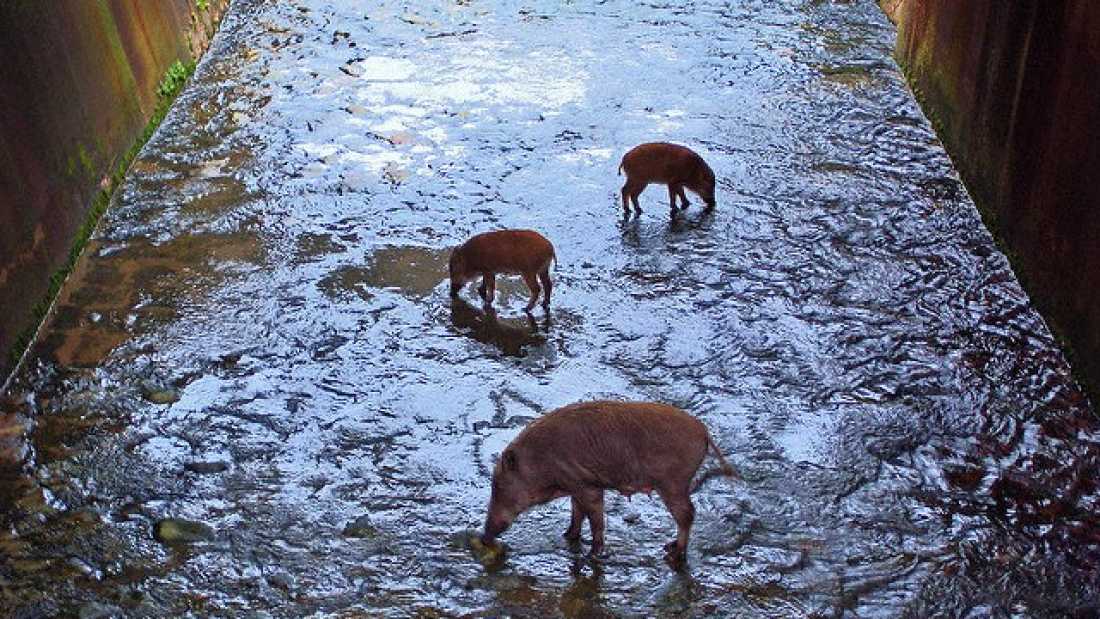
It’s been over five years since tsunami waves crashed into the Fukushima Daiichi power plant and led to its nuclear meltdown. While 20 kilometers (12 miles) of the land around the plant remains a dangerous exclusion zone, the area’s wildlife is taking full advantage of the peace.
Since the nuclear disaster, the population of wild boars has rocketed, much to the dismay of surrounding communities, The Times has reported. In the four years following the disaster, the population of boars is thought to have boomed from 3,000 to 13,000. You might think this ancient Japanese symbol of prosperity and fertility might be welcomed, but it’s estimated they have caused $15 million worth of damage to local agriculture.
Assistant ecology professor Okuda Keitokunin told the Japanese Mainichi newspaper that wild boar, along with racoons, have been using the abandoned houses and emptied buildings in the evacuation zone as a place to breed and shelter.
However, this post-nuclear meltdown town isn’t exactly a safe haven for the boars. It’s thought their diet of roots, nuts, berries and water all contain particularly high concentrations of radiation. The animals show no immediate signs of harm from the radiation, however samples from Fukushima’s wild boar meat has shown they contain 300 times the safe amount of the radioactive element caesium-137. Another study on the area’s fir trees showed evidence of growth mutations.
Hunters have been offered rewards to cull the boars by local authorities. However, the animals are breeding so quickly they can’t keep up. The city of Nihonmatsu, around 56 kilometers (35 miles) from the Fukushima plant, has dug three mass graves capable of holding 1,800 dead boars. Recently, these have become overfilled and authorities are now struggling to cope with the influx of culled beasts.
The boom in boars is a similar story to Chernobyl’s post-meltdown wildlife. A study from late last year showed that the populations of deer and wild boar are thriving in the area surrounding the Ukrainian nuclear power plant.
In a statement Jim Smith, one of the authors of the Chernobyl study, explained, “It’s very likely that wildlife numbers at Chernobyl are much higher than they were before the accident. This doesn’t mean radiation is good for wildlife, just that the effects of human habitation, including hunting, farming, and forestry, are a lot worse.”
960 Bq/kg of Cs-134/137 detected from wild boar in Fukushima

According to MHLW (Ministry of Health, Labour and Welfare), 960 Bq/Kg of Cesium-134/137 was measured from the meat of wild boar in Fukushima.
The sampling date was 6/11/2016. This reading is over 9 times much as food safety limit.
Cs-134 density was 154 Bq/Kg to prove it is contaminated from Fukushima accident.
From this report MHLW released on 7/19/2016, significant density of Cs-134/137 was detected from all of 33 wild boar samples and it exceeded the food safety limit (100 Bq/Kg) in 2/3 samples.
MHLW reports none of these wild boar meat was distributed for sale.
http://www.mhlw.go.jp/file/04-Houdouhappyou-11135000-Shokuhinanzenbu-Kanshianzenka/0000123667_18.pdf
http://fukushima-diary.com/2016/07/960-bqkg-of-cs-134137-detected-from-wild-boar-in-fukushima/
1 This Month


Petition to revoke the licensing of the Near Surface Nuclear Disposal Facility (NSDF) at Chalk River. https://www.ourcommons.ca/petitions/en/Petition/Details?Petition=e-7247


of the week – STOP SMALL MODULAR REACTORS IN CANADA
To see nuclear-related stories in greater depth and intensity – go to https://nuclearinformation.wordpress.com
-
Archives
- March 2026 (163)
- February 2026 (268)
- January 2026 (308)
- December 2025 (358)
- November 2025 (359)
- October 2025 (376)
- September 2025 (258)
- August 2025 (319)
- July 2025 (230)
- June 2025 (348)
- May 2025 (261)
- April 2025 (305)
-
Categories
- 1
- 1 NUCLEAR ISSUES
- business and costs
- climate change
- culture and arts
- ENERGY
- environment
- health
- history
- indigenous issues
- Legal
- marketing of nuclear
- media
- opposition to nuclear
- PERSONAL STORIES
- politics
- politics international
- Religion and ethics
- safety
- secrets,lies and civil liberties
- spinbuster
- technology
- Uranium
- wastes
- weapons and war
- Women
- 2 WORLD
- ACTION
- AFRICA
- Atrocities
- AUSTRALIA
- Christina's notes
- Christina's themes
- culture and arts
- Events
- Fuk 2022
- Fuk 2023
- Fukushima 2017
- Fukushima 2018
- fukushima 2019
- Fukushima 2020
- Fukushima 2021
- general
- global warming
- Humour (God we need it)
- Nuclear
- RARE EARTHS
- Reference
- resources – print
- Resources -audiovicual
- Weekly Newsletter
- World
- World Nuclear
- YouTube
-
RSS
Entries RSS
Comments RSS
 nuclear-news