Not willing to Lie, the Chairman of the Fukushima Thyroid Examination Assessment Subcommittee Resigned
Of course this news was not released in the Japanese national main media nor in the Fukushima local media, it was only released in the Hokkaido Shimbun, a local media from the northern island Hokkaido.
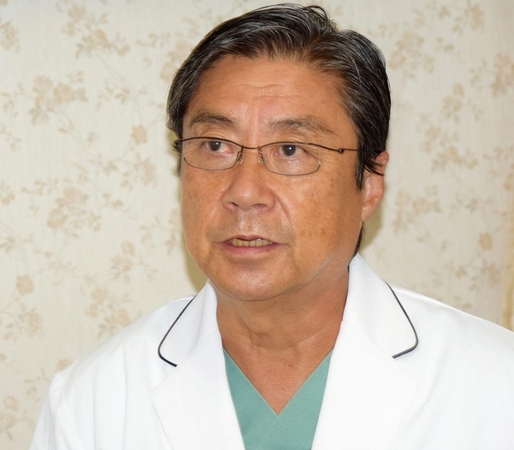
Dr. Kazuo Shimizu
Dr. Kazuo Shimizu, Chairman of the Thyroid Examination Assessment Subcommittee and member of the Oversight Committee for the Fukushima Health Management Survey, a thyroid surgeon and Honorary Director at Kanaji Hospital, and Professor Emeritus at Nippon Medical School, and former chair of the board of the Japanese Society of Thyroid Surgery, submitted his resignation as Chairman of the Thyroid Examination Assessment Subcommittee.
As Chairman of the Thyroid Examination Assessment Subcommittee, he does not personally agree with the interim report conclusion that “it is unlikely that the effects of radiation” caused the high incidence of thyroid cancer found in the Fukushima Prefecture. Not agreeing with the drawn conclusions of the interim report and as Chairman not free to have a personal opinion, nor to express it, he decided to resign.
Dr. Kazuo Shimizu is a doctor, a leading authority in endoscopic surgery of the thyroid gland. Within the Fukushima population, 380,000 children below 18 years old at the time of the Fukushima Daiichi nuclear plant accident in March 2011 have been examined. 174 people have been so far diagnosed with thyroid cancer or suspected thyroid cancer.
Dr. Kazuo Shimizu says that such high incidence of thyroid cancer, from his long clinical experience, is unnatural. That frequency is a fact, which should not be explained, nor discarded by just the “It is unlikely that the effects of radiation.” caused that high incidence conclusion.
In the former Soviet Union after the 1986 Chernobyl nuclear accident, thyroid cancer was frequent in children due the released iodine-131.
http://headlines.yahoo.co.jp/hl?a=20161021-00010003-doshin-soci
However, it is not that surprising. When Oshidori Mako interviewing Dr. Kazuo Shimizu in May 2015 asked « Is it really overdiagnosis that is going on? », Dr. Kazuo Shimizu answered :“I am not in a position to be able to say, ‘It is not due to overdiagnosis.’ As chair of the Subcommittee, I cannot validate opinions of either side. It is hard for me. I would have been able to voice my opinions more clearly if I hadn’t been elected chair of the Subcommittee.”
http://fukushimavoice-eng2.blogspot.fr/2015/08/oshidori-mako-interviews-experts.html
Fukushima Apples Are Very Hot In Cocktails
Here is another propaganda article on Forbes from James Conca, the highest paid pro-nuke shill, wanting us to believe that Fukushima Apples are dynamite in cocktails.
They are certainly not dynamite, but surely hot!

Fukushima Apples Are Dynamite In Cocktails
The 42nd World Cocktail Championships, which kicked off in Tokyo this week, is an unusual event to discuss a nuclear disaster. But that is exactly what Yoshikazu Suda, a bartender in Tokyo’s Ginza district who hails from Fukushima, is doing.
And his demonstration of solidarity with farmers and the people of Fukushima is in the form of some very cool drinks.
Bartenders and mixologists from over from 53 countries will gather in Tokyo to take part in the drink-creating championships. But the International Bartenders Association is no ordinary group. Founded in 1951, the IBA represents the National Bartender Guilds in 64 countries around the world. Over 500 bartenders and mixologists will gather at the event, which is being held in Japan for the first time in 20 years.
The International Bartenders Association is committed to responsible drinking and dispelling myths about alcohol. But this World Cocktail Championship will dispel a completely different type of myth – that Fukushima food is contaminated by radiation. It certainly is not.
During the contest at Tokyo’s Imperial Hotel, several varieties of fruit will be used, but only Fukushima-grown apples will be used in the fruit-cutting event, specifically apples grown by Fukushima farmer Chusaku Anzai.
Five years ago, a magnitude 9 earthquake on the Tohoku Fault off the east coast of Japan sent a 50-foot tsunami crashing into the coast with almost no warning, flooding over 500 square miles of land, killing almost 20,000 people and destroying a million homes and businesses.
About Fukushima
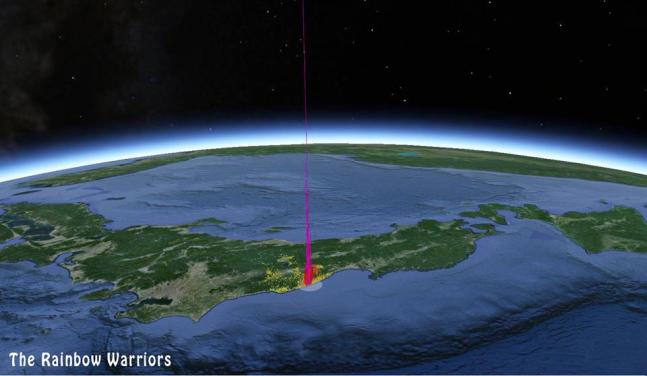
If in 2010 there was one birth and one death every 28 seconds in Japon, beginning 2014 there was one death every 25 seconds and a birth every 31 seconds: a differential of 2 seconds per year, this seems little yet it is significantly faster than in Ukraine.
Fukushima is much more severe, because there were 4 reactors instead of one, and the reactor 3 was using plutonium MOX, with at proximity a dense population. If the wind was favorable three days out of 4, it was also unfavorable 1 day out of 4.
The first 6 months of the Fukushima nuclear catastrophe in 2011, Tepco and the Japanese government were putting a lid on informations inside Japan, then gradually that omerta was broken by the people sharing informations on Twitter, Facebook, and blogs.
However, a language barrier remained. As of today there is a lot of informations in japanese circulated inside Japan, about radiation and contamination, about health issues, etc. Unfortunately those informations are not getting translated from japanese to english, due to the shortage of capable translators. As a result almost none of those important informations are getting outside of Japan reaching the outside world to teach the people everywhere the scale of the disaster and how it affects all those people lives.
The only informations coming out in english are those in the articles of the Japanese main stream media which are strongly under government influence when not just plain censorship, therefore publishing very sanitized informations, and the Western main stream media which are either under the nuclear lobby financial influence, or lacking the indepth details.
Not to mention the nonsense sensationalism of some of the American websites or Youtubers, produced only to increase visitors traffic and donations, which deals only in hyperboles, exaggerations, when not just plain lunacy.
The overall result is that we have an ongoing nuclear catastrophe now for 5 years and half, affecting millions of people on location in Japan, which outside of Japan most of the people are not aware, as it had not happened, was not happening.
The two main reasons being:
1. The sanitizing of information by the main stream media owned by the same financial interests which own the nuclear industry.
2. The language barrier which hinders the real facts, the real details to spread out of Japan.
And thanks to the continuous ignorance about the ongoing Fukushima Daiichi nuclear catastrophe, us not being capable to learn from it, its human tragedy, its harmful consequences to health and environment, it is like the whole world is ready for another new nuclear catastrophe, accepting it to come.
Why can’t we learn from our mistakes…
I wish to thank here Mochizuki Cheshire Iori of the Fukushima diary blog, Nancy Foust of Fukuleaks, and Pierre Fetet of the Fukushima blog, for their efforts year after year during the past 5 years and half to inform about Fukushima, those persons have accomplished an excellent and tremendous job, with integrity and no nonsense. My respect to you.
http://www.fukushima-blog.com/
Credit to Xavier Nast for the population statistics.
Tokyo Responsibility to Reveal Truth of Fukushima
We already know what is Tokyo definition of “truth”: five years and half of continuous deception, lies and cover-ups, tidbits of truth released only when forced to do so….
More than five years after the meltdown of the Fukushima Daiichi nuclear power plant in Japan, the legacy of the accident continues, characterized by constant radiation exposure and an ever-lasting sense of fear, not only in this island country but also beyond its territory.
Numerous reports about nuclear radiation and its damage to human bodies have been filed since the Fukushima disaster. An Asahi Shimbun article in 2014 revealed that high levels of accumulated radioactive cesium had been detected in the mud of 468 reservoirs outside of the Fukushima evacuation zone.
But more discouraging news awaits. According to a recent report by The Mainichi, an Environment Ministry survey found that high concentrations of radioactive cesium have been accumulating at the bottom of 10 major dams 50 kilometers away from Fukushima No.1 nuclear power plant, yet officials were quoted as saying that “it is best to contain cesium at those dams.”
It is the inaction that is most depressing. As people’s physical health is exposed to possible risks, the psychological fallout from the accident is worrying as well. As nuclear radiation reports are always published, people affected by the nuclear leak are fearful.
The aftermath of the Fukushima disaster that concerns the lives of millions has failed to prompt the Japanese government to assume responsibility actively on a massive scale.
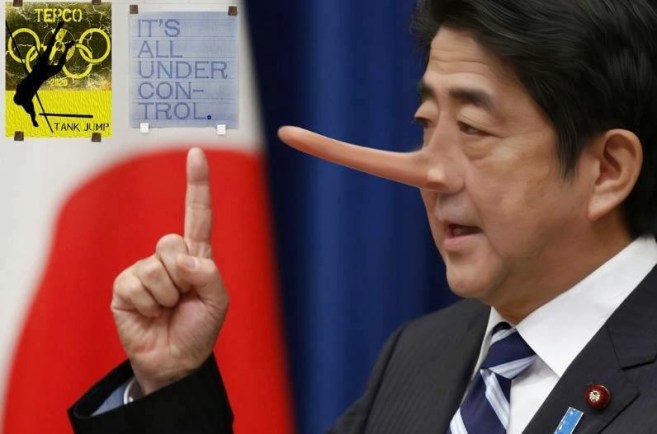
Earlier this month, former Japanese prime minister Junichiro Koizumi accused current leader Shinzo Abe of lying to the international community that the situation at the nuclear power plant is under control.
Those in a position of Japanese authority should release information about Fukushima-related contamination once and for all. The government should also set up a mechanism which can inform the country and the international community of new findings in a timely manner.
As a neighbor of Japan, China has also felt uneasy with the radiation from the disaster. Years after the meltdown of the Fukushima reactors, Chinese travelers are still asking if it is safe to go to Japan. In terms of food safety, despite a ban by Chinese authorities on food imports and agricultural products from Fukushima and 11 other Japanese regions affected by nuclear contamination since the accident, potentially radiation-tainted seafood from Fukushima smuggled to China poses health threats to the Chinese people.
Since a large number of Chinese travelers are going to Japan, related information is indispensable. Therefore, China should also come up with solutions such as assigning experts to monitor the situation in Japan and offer credible advice to the anxious public. This “nuclear war without a war” will attest to the responsibility of a government to its people.
http://www.globaltimes.cn/content/1008771.shtml#.V-sabiwjxlg.facebook
Canada activist found guilty of harassing scientists over Fukushima fallout
Dana Dunford has sensationalized on Youtube for lucrative reasons the Pacific ocean contamination from Fukushima to the American public, having found that making the buzz was quite a good mean to raise donations from people .
He did threaten those scientists with physical violence on his Youtube videos, calling his fans to carry out “justice”.
Though those scientists studies and research depending on funding from government and corporations may be subjected to their influence, I do not believe that threats of violence are proper nor acceptable.
I personally believe that exaggeration, sensationalism, to not talk about insult and personal threat are absolutely counterproductive to our antinuclear cause.
Only truth will set us free from nuclear. Only stating facts with solid reliable proofs will help us to inform adequately the people to become able to get this dangerous, harmful, obsolete industry stopped. Furthermore, any wild exaggeration can be later used by the nuclear lobby to discredit our antinuclear cause, such as in this present occurence.

Canada activist found guilty of harassing scientists over Fukushima fallout
A Canadian environmental activist who waged a sustained online campaign against two prominent marine scientists was found guilty of criminal harassment by a court in Victoria, British Columbia, on Thursday.
The court heard that Dana Durnford, 54, threatened violence against Jay Cullen, of the University of Victoria, and Ken Buesseler, of Woods Hole Oceanographic Institution in Massachusetts, and accused them of underplaying the extent of damage to Pacific ecosystems from the 2011 Fukushima disaster.
Durnford was sentenced to three years’ probation.
“I expected and was pleased with the judge’s ruling,” Cullen said after the verdict. “Mr. Durnford, on many occasions, threatened physical violence against scientists and others who have focused their attention and expertise to better understand how the Fukushima nuclear disaster has affected the marine environment and human health. Such behavior is criminal.”
Buesseler also welcomed the ruling. Threatening violence is “never an appropriate response to scientific findings you might disagree with,” he said.
Durnford, a former professional diver, has a large online presence.
His unscripted videos, recorded in a mock television studio, present what he purports to be research that contradicts mainstream scientific findings.
He alleges collusion between the global scientific establishment and the nuclear industry over the dangers presented by the nuclear industry and, in particular, the Fukushima debacle.
Durnford, of Powell River, British Columbia, did not respond to phone calls and an email for comment on Friday.
In a video apparently recorded shortly before the trial began this week, he alluded to trouble meeting court-related costs.
“They bankrupted us in these court proceedings in order to silence us,” he told viewers.
Fukushima Backlash Hits Japan Prime Minister
Nuclear power may never recover its cachet as a clean energy source, irrespective of safety concerns, because of the ongoing saga of meltdown 3/11/11 at Fukushima Daiichi Nuclear Power Plant. Over time, the story only grows more horrific, painful, deceitful. It’s a story that will continue for generations to come.
Here’s why it holds pertinence: As a result of total 100% meltdown, TEPCO (Tokyo Electric Power Company) cannot locate or remove the radioactive molten core or corium from the reactors. Nobody knows where it is. It is missing. If it is missing from within the reactor structures, has it burrowed into the ground? There are no ready answers.
And, the destroyed nuclear plants are way too radioactive for humans to get close enough for inspection. And, robotic cameras get zapped! Corium is highly radioactive material, begging the question: If it has burrowed thru the containment vessel, does it spread underground, contaminating farmland and water resources and if so, how far away? Nobody knows?
According to TEPCO, removing the melted cores from reactors 1,2 and 3 will take upwards of 20 years, or more, again who knows.
But still, Japan will hold Olympic events in Fukushima in 2020 whilst out-of-control radioactive masses of goo are nowhere to be found. TEPCO expects decades before the cleanup is complete, if ever. Fortunately, for Tokyo 2020 (the Olympic designation) radiation’s impact has a latency effect, i.e., it takes a few years to show up as cancer in the human body.
A week ago on September 7th, Former PM Junichiro Koizumi, one of Japan’s most revered former prime ministers, lambasted the current Abe administration, as well as recovery efforts by TEPCO. At a news conference he said PM Shinzō Abe lied to the Olympic committee in 2013 in order to host the 2020 Summer Olympics in Japan.
“That was a lie,” Mr Koizumi told reporters when asked about Mr Abe’s remark that Fukushima was “under control,” Abe Lied to IOC About Nuke Plant, ex-PM Says, The Straits Times, Sep 8, 2016. The former PM also went on to explain TEPCO, after 5 years of struggling, still has not been able to effectively control contaminated water at the plant.
According to The Straits Times article: “Speaking to the IOC in September 2013, before the Olympic vote, PM Abe acknowledged concerns but stressed there was no need to worry: “Let me assure you, the situation is under control.”
PM Abe’s irresponsible statement before the world community essentially puts a dagger into the heart of nuclear advocacy and former PM Koizumi deepens the insertion. After all, who can be truthfully trusted? Mr Koizumi was a supporter of nuclear power while in office from 2001-2006, but he has since turned into a vocal opponent.
Speaking at the Foreign Correspondents Club of Japan in Tokyo, Mr Koizumi said: “The nuclear power industry says safety is their top priority, but profit is in fact what comes first… Japan can grow if the country relies on more renewable energy,” (Ayako Mie, staff writer, Despite Dwindling Momentum, Koizumi Pursues Anti-Nuclear Goals, The Japan Times, Sept. 7, 2016).
Mr Koizumi makes a good point. There have been no blackouts in Japan sans nuclear power. The country functioned well without nuclear.
Further to the point of nuclear versus nonnuclear, Katsunobu Sakurai, mayor of Minamisoma, a city of 70,000 located 25 km north of Fukushima No. 1 nuclear plant, at a news conference in Tokyo, said: “As a citizen and as a resident of an area affected by the nuclear power plant disaster, I must express great anger at this act… it is necessary for all of Japan to change its way of thinking, and its way of life too – to move to become a society like Germany, which is no longer reliant on nuclear power,” (Sarai Flores, Minamisoma Mayor Sees Future for Fukushima ‘Nonnuclear’ City in Energy Independence, The Japan Times, March 9, 2016).
In March of 2015, Minamisoma declared as a Nonnuclear City, turning to solar and wind power in tandem with energy-saving measures.
Meanwhile, at the insistence of the Abe administration, seven nuclear reactors could restart by the end of FY2016 followed by a total of 19 units over the next 12 months (Source: Japanese Institute Sees 19 Reactor Restarts by March 2018, World Nuclear News, July 28, 2016).
Greenpeace/Japan Discovers Widespread Radioactivity
One of the issues surrounding the Fukushima incident and the upcoming Olympics is whom to trust. Already TEPCO has admitted to misleading the public about reports on the status of the nuclear meltdown, and PM Abe has been caught with his hand in the proverbial cookie jar, but even much worse, lying to a major international sports tribunal. His credibility is down the drain.
As such, maybe third party sources can be trusted to tell the truth. In that regard, Greenpeace/Japan, which does not have a vested interest in nuclear power, may be one of the only reliable sources, especially since it has boots on the ground, testing for radiation. Since 2011, Greenpeace has conducted over 25 extensive surveys for radiation throughout Fukushima Prefecture.
In which case, the Japanese people should take heed because PM Abe is pushing hard to reopen nuclear plants and pushing hard to repopulate Fukushima, of course, well ahead of the 2020 Tokyo Olympics since there will be events held in Fukushima Prefecture. After all, how can one expect Olympians to populate Fukushima if Japan’s own citizens do not? But, as of now to a certain extent citizens are pushing back. Maybe they instinctively do not trust their own government’s assurances.
But, more chilling yet, after extensive boots-on-the-ground analyses, Greenpeace issued the following statement in March 2016: “Unfortunately, the crux of the nuclear contamination issue – from Kyshtym to Chernobyl to Fukushima- is this: When a major radiological disaster happens and impacts vast tracts of land, it cannot be ‘cleaned up’ or ‘fixed’.” (Source: Hanis Maketab, Environmental Impacts of Fukushima Nuclear Disaster Will Last ‘decades to centuries’ – Greenpeace, Asia Correspondent, March 4, 2016).
That is a blunt way of saying sayonara to habitation on radioactive contaminated land. That’s why Chernobyl is a permanently closed restricted zone for the past 30 years.
As far as “returning home” goes, if Greenpeace/Japan ran the show rather than PM Abe, it appears they would say ‘no’. Greenpeace does not believe it is safe. Greenpeace International issued a press release a little over one month ago with the headline: Radiation Along Fukushima Rivers up to 200 Times Higher Than Pacific Ocean Seabed – Greenpeace Press Release, July 21, 2016.
Here’s what they discovered: “The extremely high levels of radioactivity we found along the river systems highlights the enormity and longevity of both the environmental contamination and the public health risks resulting from the Fukushima disaster,” says Ai Kashiwagi, Energy Campaigner at Greenpeace Japan.
“These river samples were taken in areas where the Abe government is stating it is safe for people to live. But the results show there is no return to normal after this nuclear catastrophe,” claims Kashiwagi.
“Riverbank sediment samples taken along the Niida River in Minami Soma, measured as high as 29,800 Bq/kg for radiocaesium (Cs-134 and 137). The Niida samples were taken where there are no restrictions on people living, as were other river samples. At the estuary of the Abukuma River in Miyagi prefecture, which lies more than 90km north of the Fukushima Daiichi plant, levels measured in sediment samples were as high as 6,500 Bq/kg” (Greenpeace).
The prescribed safe limit of radioactive cesium for drinking water is 200 Bq/kg. A Becquerel (“Bq”) is a gauge of strength of radioactivity in materials such as Iodine-131 and Cesium-137 (Source: Safe Limits for Consuming Radiation-Contaminated Food, Bloomberg, March 20, 2011).
“The lifting of evacuation orders in March 2017 for areas that remain highly contaminated is a looming human rights crisis and cannot be permitted to stand. The vast expanses of contaminated forests and freshwater systems will remain a perennial source of radioactivity for the foreseeable future, as these ecosystems cannot simply be decontaminated” (Greenpeace).
Still, the Abe administration is to be commended for its herculean effort to try to clean up radioactivity throughout Fukushima Prefecture, but at the end of the day, it may be for naught. A massive cleanup effort is impossible in the hills, in the mountains, in the valleys, in the vast forests, along riverbeds and lakes, across extensive meadows in the wild where radiation levels remain deadly dangerous. Over time, it leaches back into decontaminated areas.
And as significantly, if not more so, what happens to the out-of-control radioactive blobs of corium? Nobody knows where those are, or what to do about it. It’s kinda like the mystery surrounding black holes in outer space, but nobody dares go there.
Fukushima is a story for the ages because radiation doesn’t quit. Still, the Olympics must go on, but where?
http://www.counterpunch.org/2016/09/12/fukushima-backlash-hits-japan-prime-minister/
Science Subverted by Politics in Fukushima
The high rate of thyroid cancer occuring in Fukushima is not caused by radiation. Or so the government would like everyone to believe!
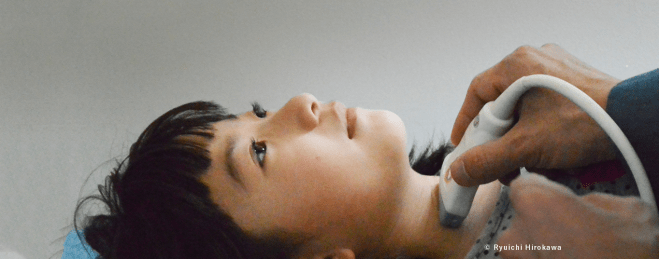
Study draws a blank on thyroid cancer and 2011 nuclear disaster
Researchers have found no correlation between radiation exposure and the incidence rate of thyroid cancer among 300,000 children living in Fukushima Prefecture at the time of the 2011 nuclear disaster.
But the team at Fukushima Medical University, which carried out the study, cautioned that the health of local children should continue to be monitored to be more definitive.
“At the present stage, we have found no evidence pointing to any relationship between doses of external radiation resulting from the nuclear accident and the thyroid cancer rate,” said Tetsuya Ohira, a professor of epidemiology at the university. “But we need to continue to look into the situation.”
The study involves 300,476 children in Fukushima Prefecture who were aged 18 or younger when the Fukushima No. 1 nuclear power plant went into a triple meltdown in March 2011 after the Great East Japan Earthquake and tsunami.
The children underwent the first round of health checks between October 2011 and June 2015.
Of the total, 112 were tentatively diagnosed as having thyroid cancer.
There are two types of radiation exposure: external exposure in which a person is exposed to radiation in the atmosphere, and internal exposure in which a person is exposed through the intake of contaminated food, water and air.
For the study, municipalities in the prefecture were classified into three groups based on the estimate for residents’ external exposure. That data was obtained during a prefecture-wide health survey carried out after the disaster occurred.
The first group is a zone where people with an accumulative dose of 5 millisieverts or more represented 1 percent or more of the population there. The second group is a zone where people with an accumulative dose of up to 1 millisievert account for 99.9 percent or more of the population. The third group is a zone that falls into neither of the other two groups.
The scientists looked at the incidence rate for thyroid cancer in each group and concluded there is almost no difference among the groups.
The number of subjects diagnosed with thyroid cancer was 48 per 100,000 people in the first group, 41 in the second group and 36 in the third group.
The finding was similar to a separate survey in which researchers looked into the possible association among 130,000 or so children whose radiation exposure had been estimated.
Hokuto Hoshi, head of a health survey panel set up at the prefectural government after the nuclear disaster, said he will closely follow the results of future studies to offer a more conclusive finding.
“The outcome of the recent study provides one indication in making any overall judgment,” said Hoshi, who also serves as vice chairman of the Fukushima Medical Association. “The study is substantial and we are going to pay attention to the findings of further studies.”
http://www.asahi.com/ajw/articles/AJ201609100031.html
Former Japan PM accuses Abe of lying over Fukushima pledge
Junichiro Koizumi disputes current leader’s description of situation at stricken nuclear power plant as being under control

Junichiro Koizumi is supporting US sailors and marines who claim they developed illness after being exposed to Fukushima radiation while helping with relief operations.
Japan’s former prime minister Junichiro Koizumi has labelled the country’s current leader, Shinzo Abe, a “liar” for telling the international community that the situation at the wrecked Fukushima Daiichi nuclear power plant is under control.
Koizumi, who became one of Japan’s most popular postwar leaders during his 2001-06 premiership, has used his retirement from frontline politics to become a leading campaigner against nuclear restarts in Japan in defiance of Abe, a fellow conservative Liberal Democratic party (LDP) politician who was once regarded as his natural successor.
Abe told members of the International Olympic Committee (IOC) in Buenos Aires in September 2013 that the situation at Fukushima Daiichi nuclear power plant was “under control”, shortly before Tokyo was awarded the 2020 Games.
IOC officials were concerned by reports about the huge build-up of contaminated water at the Fukushima site, more than two years after the disaster forced the evacuation of tens of thousands of residents.
“When [Abe] said the situation was under control, he was lying,” Koizumi told reporters in Tokyo. “It is not under control,” he added, noting the problems the plant’s operator, Tokyo Electric Power (Tepco), has experienced with a costly subterranean ice wall that is supposed to prevent groundwater from flowing into the basements of the damaged reactors, where it becomes highly contaminated.
“They keep saying they can do it, but they can’t,” Koizumi said. He went on to claim that Abe had been fooled by industry experts who claim that nuclear is the safest, cleanest and cheapest form of energy for resource-poor Japan.
“He believes what he’s being told by nuclear experts,” Koizumi said. “I believed them, too, when I was prime minister. I think Abe understands the arguments on both sides of the debate, but he has chosen to believe the pro-nuclear lobby.”
After the Fukushima crisis, Koizumi said he had “studied the process, reality and history of the introduction of nuclear power, and became ashamed of myself for believing such lies”.
Abe has pushed for the restart of Japan’s nuclear reactors, while the government says it wants nuclear to account for a fifth of Japan’s total energy mix by 2030. Just three of the country’s dozens of nuclear reactors are in operation, and two will be taken offline later this year for maintenance.
Koizumi, 74, has also thrown his support behind hundreds of US sailors and marines who claim they developed leukaemia and other serious health problems after being exposed to Fukushima radiation plumes while helping with relief operations – nicknamed Operation Tomodachi (friend) – following the 11 March 2011 earthquake and tsunami.
In 2012 the service personnel launched a lawsuit accusing Tepco of failing to prevent the accident and of lying about the levels of radiation from the stricken reactors, putting US personnel at risk.
Most of the 400 plaintiffs were aboard the USS Ronald Reagan, a nuclear-powered aircraft carrier that was anchored off Japan’s north-east coast while helicopters flew emergency supplies to survivors of the tsunami, which killed almost 19,000 people.
Medical experts, however, said the sailors would have received only small, non-harmful doses of radiation; a US defence department report published in 2014 said no link had been established between the sailors’ health problems and their exposure to low doses of Fukushima radiation.
Koizumi, who met several of the sick servicemen in San Diego in May, plans to raise $1m by the end of next March to help cover the sailors’ medical expenses.
“I felt I had to do something to help those who worked so hard for Japan,” he said. “That won’t be enough money, but at least it will show that Japan is grateful for what they did for us.”
Despite his opposition to Abe’s pro-nuclear policies, Koizumi was complimentary about his performance as prime minister during his second time in office in the past decade.
“As far as nuclear power is concerned, we are totally at odds,” Koizumi said. “But I think he’s reflected on the mistakes he made during his first time as leader and is doing a much better job second time around.”
In political longevity terms, Abe’s performance could hardly be worse. He resigned in September 2007 after less than a year in office, following a series of ministerial scandals, a debilitating bowel condition and a disastrous performance by the LDP in upper house elections.

Former Japanese Prime Minister Junichiro Koizumi poses for photos as he arrives for a press conference at the Foreign Correspondents’ Club of Japan in Tokyo Wednesday, Sept. 7, 2016. Koizumi is raising money for the hundreds of American sailors who say they got sick from radiation after taking part in disaster relief for the 2011 tsunami that set off the Fukushima nuclear catastrophe.
Former Japan Premier Accuses Abe of ‘a Lie’ on Fukushima Safety
Koizumi says situation at Fukushima plant not under control
After previously backing nuclear power, Koizumi now opposes it
Former Japanese Prime Minister Junichiro Koizumi blasted current premier Shinzo Abe’s stance that the situation at the crippled Fukushima nuclear power plant is under control.
“It’s a lie,” an impassioned Koizumi, 74, told reporters in Tokyo on Wednesday. “They keep saying it’s going to be under control, but still it’s not effective. I really want to know how you can tell a lie like that.”
A spokesman for Abe’s office didn’t immediately respond to a phone call and e-mail requesting comment.
More than five years after the meltdowns at the Fukushima Dai-Ichi plant, the operator — Tokyo Electric Power Co. Holdings Inc. — continues to struggle to contain the radiation-contaminated water that inundates the plant. Tepco is using a frozen “ice wall” to stop water from entering the wrecked facility, but still about 300 metric tons of water flows into the reactor building daily, mixing with melted fuel and becoming tainted, according to the company’s website.
Company spokesman Tatsuhiro Yamagishi said by e-mail that a process to bolster the ice wall is beginning to have an effect, adding that the company believes no underground water is flowing into the sea without being treated. All radioactive materials are under measurable limits, he said.
Koizumi was speaking at an event to publicize his campaign to raise money to help U.S. servicemen who say they contracted radiation sickness while working on the cleanup after the March 2011 earthquake, tsunami and meltdown.
The former prime minister backed the use of nuclear power during his years in office from 2001-2006, but now says he regrets that he had been ignorant about its risks and is campaigning for its abolition.
“When I was prime minister, I believed what they told me. I believed it was a cheap, safe and clean form of energy,” Koizumi said. “I’m now ashamed of myself for believing those lies for so long.”
Restart Roadblocks
Koizumi also blasted Japan’s Nuclear Regulation Authority, saying that its chief, Shunichi Tanaka, gave permission to restart the Sendai reactor in the southern Japanese island of Kyushu despite having reservations about its safety.
The authority wasn’t immediately available to comment outside of business hours.
Local courts and governments have been one of the biggest roadblocks to restarting more reactors, crimping Abe’s goal of deriving as much as 22 percent of the nation’s energy needs from nuclear by 2030.
The Otsu District Court earlier this year made a surprise decision that restricted Kansai Electric Power Co. from operating two reactors in western Japan only weeks after they’d been turned back on.
On March 10, the eve of the fifth anniversary of the disaster, Abe said that Japan can’t do without nuclear power.
‘No Perfect Source’
Just three of the nation’s 42 operable reactors are currently online. Kyushu Electric Power Co.’s Sendai No. 1 and 2 reactors, which restarted last year, are facing opposition from the region’s new governor, who has twice formally demanded that they be temporarily shut for inspection.
“There is no perfect source for electricity,” Dale Klein, an adviser to Tepco and a former chairman of the U.S. Nuclear Regulatory Commission, said in an interview in Tokyo last week. “If there were a perfect source, we wouldn’t be having our energy debates. Wind has its problems, solar has its problems, coal has its problems. But at the end of the day, we need electricity. And I think nuclear is an environmentally viable way to produce electricity.”
Koizumi contested claims by Abe’s administration that the nuclear watchdog is imposing the world’s most stringent safety standards in the earthquake-prone nation. “If you compare the Japanese regulations to those in America, you realize how much looser the Japanese regulations are,” he said.
“Abe knows the arguments on both sides, but he still believes the arguments for nuclear power generation,” Koizumi added.
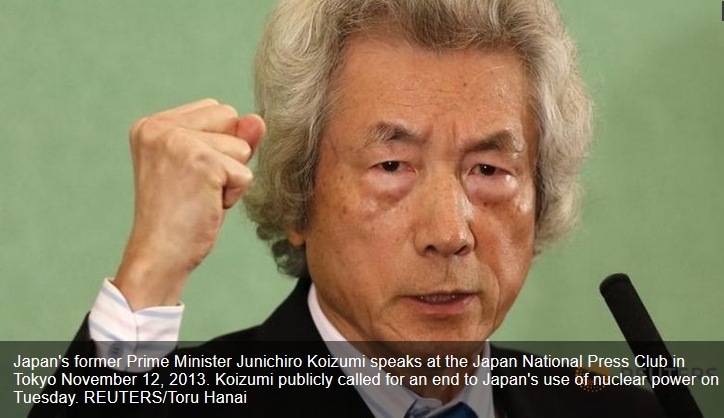
Abe’s Fukushima ‘under control’ pledge to secure Olympics was a lie – former PM
TOKYO: Japanese Prime Minister Shinzo Abe’s promise that the crippled Fukushima nuclear plant was “under control” in his successful pitch three years ago for Tokyo to host the 2020 Olympic Games “was a lie”, former premier Junichiro Koizumi said on Wednesday.
Koizumi, one of Japan’s most popular premiers during his 2001-2006 term, became an outspoken critic of nuclear energy after a March 2011 earthquake and tsunami triggered meltdowns at Tokyo Electric Power Co’s (Tepco) Fukushima Daiichi plant, the worst nuclear disaster since Chernobyl in 1986.
Abe gave the assurances about safety at the Fukushima plant in his September 2013 speech to the International Olympic Committee to allay concerns about awarding the Games to Tokyo. The comment met with considerable criticism at the time.
“Mr. Abe’s ‘under control’ remark, that was a lie,” Koizumi, now 74 and his unruly mane of hair turned white, told a news conference where he repeated his opposition to nuclear power.
“It is not under control,” Koizumi added, citing as an example Tepco’s widely questioned efforts to build the world’s biggest “ice wall” to keep groundwater from flowing into the basements of the damaged reactors and getting contaminated.
“They keep saying they can do it, but they can’t,” Koizumi said. Experts say handling the nearly million tonnes of radioactive water stored in tanks on the Fukushima site is one of the biggest challenges.
Koizumi also said he was “ashamed” that he had believed experts who assured him that nuclear power was cheap, clean and safe and that resource-poor Japan had to rely on nuclear energy.
After the Fukushima crisis, Koizumi said, “I studied the process, reality and history of the introduction of nuclear power and became ashamed of myself for believing such lies.”
All Japan’s nuclear plants – which had supplied about 30 percent of its electricity – were closed after the Fukushima disaster and utilities have struggled to get running again in the face of a sceptical public. Only three are operating now.
Abe’s government has set a target for nuclear power to supply a fifth of energy generation by 2030.
The meltdowns in three Fukushima reactors spewed radiation over a wide area of the countryside, contaminating water, food and air. More than 160,000 people were evacuated from nearby towns.
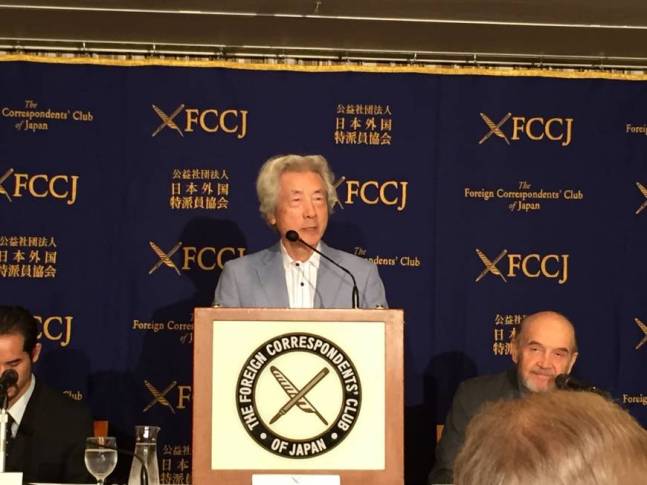
Despite dwindling momentum, Koizumi pursues anti-nuclear goals
While Japan’s once-charged anti-nuclear movement struggles to retain its momentum five years after the 2011 Fukushima catastrophe, former Prime Minister Junichiro Koizumi remains doggedly determined to attain his goal of ending the country’s reliance on atomic energy.
On Wednesday, he renewed his pledge to help ill U.S. veterans whose conditions they claim are linked to the release of radioactive plumes from the Fukushima No. 1 nuclear plant.
Koizumi, who is opposed to Prime Minister Shinzo Abe’s pro-nuclear stance, said it was an “outright lie” when Abe said during Tokyo’s final presentation for the bid to host the 2020 Olympics that the contaminated water situation at the Fukushima No. 1 power plant is under control.
Koizumi also said Japan can be put on a sustainable path without atomic power.
“The nuclear power industry says safety is their top priority, but profit is in fact what comes first,” Koizumi told an audience of more than 180 who had gathered for his news conference at the Foreign Correspondents’ Club of Japan in Tokyo. “Japan can grow if the country relies more renewable energy.”
As part of his anti-nuclear push, the 74-year-old former leader set up a fund in July to help U.S. sailors with conditions such as leukemia that they say was caused by radioactive fallout from Fukushima No. 1. He said the fund has raised about ¥40 million so far, with a goal of topping ¥100 million by next March 31.
In May, Koizumi visited Carlsbad, California, to speak to several veterans with health conditions who had taken part in Operation Tomodachi while aboard the aircraft carrier USS Ronald Reagan.
Those veterans had provided humanitarian assistance and disaster relief to the Tohoku region after quake and tsunami of March 11, 2011, at the request of the Japanese government.
“After talking to the sailors, I thought it would not be enough for me to simply say ‘I’m sorry’ and leave,” Koizumi said, explaining the impetus for setting up the fund.”Words alone would not be enough and I thought that I had to do something.”
Currently, about 400 U.S. veterans are taking part in a class-action lawsuit in California against Tokyo Electric Power Company Holdings Inc., operator of the stricken plant. The lawsuit says that some suffer from leukemia, testicular cancer and thyroid problems, or have experienced rectal and gynecological bleeding.
However, a 2014 report by the U.S. Defense Department determined that there was no causal relationship between radiation exposure during Operation Tomodachi and their illnesses.
Koizumi noted that while expressing sympathy for the veterans, a Foreign Ministry official had even said that there was nothing the Japanese government could do.
“I’m not a doctor, but using common sense one can infer their conditions were caused by radiation, since strong and healthy sailors just don’t find tumors or suffer from conditions like nasal hemorrhages,” Koizumi said.
He was a backer of nuclear power while leader between 2001 and 2006.
But Fukushima changed all that.
After the disaster, he became one of the most outspoken opponents of atomic energy, calling the often-repeated mantra of “clean, safe, cheap” nuclear power a lie.
With the shift, he set up a foundation with former Prime Minister Morihiro Hosokawa in 2014 to call for an immediate phasing out of nuclear power to be replaced with a renewable energy policy.
Yet, Abe’s government sees nuclear energy as a key plank in his bid to export infrastructure and hopes to restart the nation’s reactors so that nuclear can supply 20 to 22 percent of Japan’s electricity by 2030.
Currently, two reactors at the Sendai power plant in Kagoshima Prefecture and one reactor at the Ikata plant in Ehime Prefecture are operating.
On Wednesday a request by Kagoshima Gov. Satoshi Mitazono to suspend power generation at the Sendai plant was snubbed by operator Kyushu Electric Power Co.
http://www.japantimes.co.jp/news/2016/09/07/national/politics-diplomacy/despite-dwindling-momentum-koizumi-pursues-anti-nuclear-goals/#.V9BHrzVbGM8
Damage caused only by misconceptions about the nuclear incident not by the nuclear accident itself, according to the Yomiuri Shimbun, a pro-government newspaper
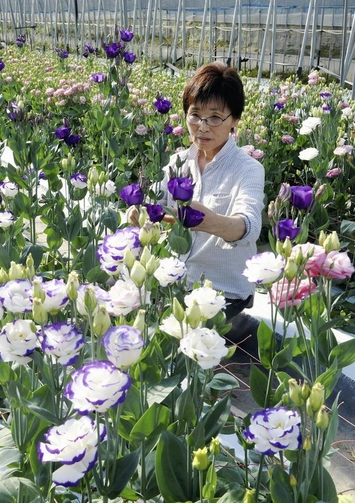
Fukushima farmers plant flowers to revive agriculture
Tomoko Horiuchi checks eustoma she grows in Minami-Soma, Fukushima Prefecture, in early August.
FUKUSHIMA — Farmers from Fukushima Prefecture’s municipalities who have received the government’s evacuation directives in the wake of the 2011 disaster at the Fukushima No. 1 nuclear power plant are cultivating flowers as a new agricultural business to rebuild their lives.
The climate in these areas is suited to growing colorful flowers, as it has abundant sunshine and a relatively large change in temperature between day and night.
After the nuclear crisis, the price of rice harvested in the prefecture has hovered at low levels because of the damaged perception of crops grown in the area.
But because growing flowers is less susceptible to damage caused by misconceptions about the nuclear incident, an increasing number of local farmers actively cultivate eustoma and other popular ornamental flowers.
Junichi Futatsuya, 65, from the Haramachi district in Minami-Soma, began cultivating eustoma in the spring of 2014 using an idle greenhouse where he used to raise rice seedlings. In 2015, a local agricultural cooperative that covers Minami-Soma formed a section to grow eustoma, with Futatsuya participating in the project. Membership has now grown to 25 people.
Stable prices
In July, the evacuation directives were lifted in most areas of Minami-Soma, and many farmers now sell their flowers in Tokyo in the hopes of gaining recognition for them in areas that are major markets.
Futatsuya, who restarted cultivating rice this year, said, “I’m expecting to secure income by growing rice and flowers.”
Kawasaki Flora Auction Market Co. trades in flowers produced by Futatsuya and other farmers from the prefecture.
“We don’t hear any dealers in the market saying they would shy away from the products because the flowers are produced in Fukushima Prefecture,” said Manabu Aishima, 49, a section chief of the Kawasaki-based company. “Farmers can expect all-year shipping with adequate investment in plants and equipment.”
Tomoko Horiuchi, 69, also grows eustoma in the district. She said she did not experience a wide fluctuation in prices before or after the crisis.
“It made me realize that flowers are not susceptible [to damage caused by misconceptions]. I would like fellow producers to increase to more stably supply flowers to the market,” she said.
Supporting ambition
Daytime entry is allowed in areas where evacuation directives have been issued as long as these areas are not designated as “difficult-to-return zones” due to high levels of radiation exposure.
In July last year, six farmers in the town of Namie formed a study group to grow flowers, and one of the farmers was able to grow and ship eustoma to customers.
The Namie town government plans to conduct a survey to find places suitable for flower cultivation and is considering consolidating greenhouses near the town office.
Meanwhile, in the village of Iitate, evacuation directives are scheduled to be lifted in most places at the end of March 2017. Four farmers will build greenhouses in the village to grow baby’s-breath flowers on a trial basis.
The Fukushima prefectural government is also financially supporting farmers if they build greenhouses and purchase equipment to make flower cultivation a new business in the Hamadori area, which is close to the nuclear plant.
“We’d like to support ambitious farmers,” said Masatoshi Kanno, vice chief of the prefectural government’s horticulture section.
‘99% effective’ Fukushima ice wall fails to seal off crippled nuclear plant
« TEPCO has been repeatedly facing criticism for handling of the Fukushima crisis which occurred after a massive earthquake and subsequent tsunami led to a meltdown of reactors at the facility in March 2011.
The company has admitted that it did not act properly during the disaster, confessing in February that it announced the nuclear meltdowns far too late. It also stated in a 2012 report that it downplayed safety risks caused by the incident, out of fear that additional measures would lead to a shutdown of the plant and further fuel public anxiety and anti-nuclear campaigns. »
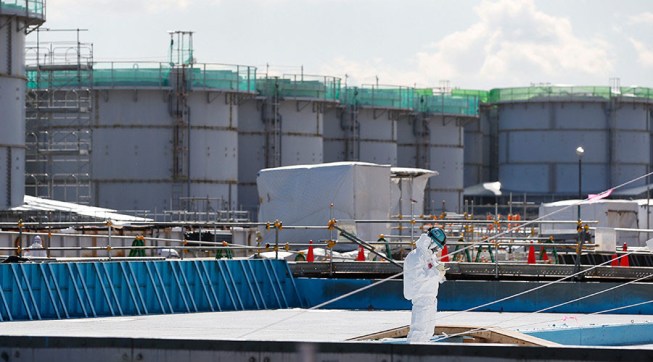
An “almost” watertight ice wall built around the Fukushima nuclear plant in a bid to prevent groundwater from entering the site has, quite predictably, proven to be not good enough, with Japan’s nuclear watchdog now urging TEPCO to find a better solution.
An expert panel with the Japanese Nuclear Regulation Authority examined the latest TEPCO report this week to assess how far and how successfully the project had been implemented, Japanese newspaper Asahi Shimbun reports. The members of the panel concluded that the ice wall was not working and a new plan was necessary to prevent groundwater getting mixed up with radioactive substances.
“The plan to block groundwater with a frozen wall of earth is failing,” said Yoshinori Kitsutaka, a panel member and a professor of engineering at Tokyo Metropolitan University.
“They need to come up with another solution, even if they keep going forward with the plan.”
In March, construction company Kajima Corp. began building the frozen wall of earth around the four damaged nuclear reactors and has completed most of the 1.5-km (1 mile) barrier. TEPCO hoped that the frozen earth barrier would thwart most of the groundwater from reaching the plant and divert it into the ocean instead. However, little or no success was recorded in the wall’s ability to block the groundwater during the five-month-period. The amount of groundwater reaching the plant has not changed after the wall was built, experts said.
The problem is said to lie in the wall’s gaps, or parts where the barrier is not frozen. According to TEPCO, 99 percent of their thermometer readings showed that the wall’s temperatures are at or below the freezing point, meaning the wall is mostly solid. However, a remaining one percent of the readings showed temperatures above the freezing point, which means the wall is not solid at those parts.
Those constitute a mere one percent of the 820-meter-long barrier, but these sections, where the earth is not frozen, are enough to ruin the entire project as they were found in areas with high levels of groundwater concentration.
TEPCO however believes that the unfrozen sections can be fixed if coated with concrete.
In April a chief architect of the project said that gaps in the wall and rainfall will still allow for water to creep into the facility and reach the damaged nuclear reactors, which will in turn create as much as 50 tons of contaminated water each day.
“It’s not zero,” Yuichi Okamura, a general manager at Tokyo Electric Power Co. (TEPCO) said referring to the amount of groundwater flowing into the plant. “It’s a vicious cycle, like a cat-and-mouse game…we have come up against many unexpected problems.”
Fukushima ice wall won’t stop radioactive groundwater from seeping out – chief architect https://t.co/57C1J48VHOpic.twitter.com/em5d53Cbtr
— RT (@RT_com) April 29, 2016
TEPCO has been repeatedly facing criticism for handling of the Fukushima crisis which occurred after a massive earthquake and subsequent tsunami led to a meltdown of reactors at the facility in March 2011.
The company has admitted that it did not act properly during the disaster, confessing in February that it announced the nuclear meltdowns far too late. It also stated in a 2012 report that it downplayed safety risks caused by the incident, out of fear that additional measures would lead to a shutdown of the plant and further fuel public anxiety and anti-nuclear campaigns.
Despite the ongoing problems encountered following the meltdowns, TEPCO has set 2020 as the goal for ending the plant’s water problem – an aim which critics say is far too optimistic. The problem of water contamination is just one of many surrounding the dismantling and containing of the Fukushima plant debris which is estimated to take at least 40 years.
Fukushima Myth: Pacific Genocide
The latest video from Goddard
I have always been opposed to the minimalist lies of the pro-nuke spinners aiming to trivialize the Fukushima ongoing catastrophe but I have always been opposed also to the exaggerated claims of the sensationalists feeding their fear hungry gullible fans with much nonsense.
Like the sharp edge of a razor is that path, so the wise say—hard to tread and difficult to cross.
I always also said that the sensationalists with their exaggerated claims provide the fodder to be later used against us anti-nukers to suppress our rightful concerns in the eyes of the general public.
I have always been opposed to the sensationalization of Fukushima, the “Pacific is dying from Fukushima”, high-pitched drama on internet played by some websites, bloggers, Youtubers, the same ones that Goddard is now quoting in this video: Enenews, Natural News, Info Wars, Kevin Blanch and others.
There are many things causing the North American Pacific coastline ecocide at the same time, it is a convergence of many factors. These pre-date Fukushima.
That said I do believe that there should be wide scale fish testing, not just due to Fukushima but to the long term radioactive contamination of the Pacific. But having that happen, having it done properly and without it being hijacked by vested interests is extremely difficult. Why there should be wide scale fish testing is to determine the range of contamination among fish and where the high readings pop up to try to better understand where and what species are showing up with high readings and also what are the real averages being seen. Again, a big undertaking that can easily be hijacked making it meaningless.
The main danger is for the people living in eastern Japan, which has been contaminated at various degrees depending on the locations. The contaminated food, which when constantly consumed, even at a low level of contamination, will certainly have mid-term and long-term harmful consequences on the health of the people.
Another danger is the danger of radiation contaminated food products exported from Japan oversea to other countries with more lax radiation control and regulations, where people will buy them and consume them unknowingly of their contamination. As an example, in 2013 some tuna fish imported from the Philippines which was radiation contaminated was found sold in a supermarket in Switzerland. Of course that Philippines tuna had been contaminated by radioactive nanoparticles coming from Fukushima Daiichi in nearby Japan, and not from Diablo Canyon in far-away California.
To expose the false exaggerated claims, the sensationalism and the sensationalists, still does not change nor remove the fact that Fukushima contamination is spreading slowly but surely into our environment, and therefore there should be more measures and controls made to protect the people from possibly present radioactive contamination. As our governments are more busy protecting the financial interests than the people health, concerned citizens should organize themselves in local radwatch groups, to learn and to practice radiation measuring, in their surrounding environment and in their food, so as to protect themselves.
To resume: the Pacific ocean is not dying from Fukushima, but Fukushima radioactive contamination is slowly but surely, continously spreading into our environment, to slowly bioaccumulate and to affect the food chain.
That said, the biggest risks are still for the Fukushima people who are being left on location to live everyday with omnipresent radiation and contamination.
As I See It: Has nothing been learned from TEPCO’s ‘meltdown’ cover-up?

The March 14, 2011 press conference at the Tokyo Electric Power Co. (TEPCO) head office in Tokyo in which then TEPCO vice president Sakae Muto (second from right) was reportedly told by then company president Masataka Shimizu not to use the expression “core meltdown.”
A third-party panel set up by Tokyo Electric Power Co. (TEPCO) to investigate the company’s cover-up of the core meltdowns that occurred at its Fukushima No. 1 Nuclear Power Plant following the March 11, 2011 Great East Japan Earthquake and tsunami revealed in a report last month that then TEPCO president Masataka Shimizu had ordered the company not to use the term “meltdown” to describe what had occurred. The report also stated that the organizational cover-up took place against a backdrop of “what is presumed to be a request that came from the prime minister’s office.”
Then Chief Cabinet Secretary Yukio Edano has objected to the report, saying that the very people who were involved, himself included, were not consulted by the panel before it drew its conclusion. Edano also said that he sent a letter of protest to TEPCO seeking an apology and a retraction of the report.
There are many missing pieces to the investigative report, but without a doubt, TEPCO acted irresponsibly toward local residents. A meltdown refers to a severe incident in which nuclear fuel melts and leeches out. If the facts had been revealed to the public, they could have fled further and avoided going outdoors. TEPCO bears a heavy responsibility for exposing local residents to risks more dangerous than they would have been otherwise.
On March 14, 2011, three days after the nuclear crisis broke out, then TEPCO vice president Sakae Muto was in the midst of a press conference when a company PR official passed him a handwritten note indicating that a core meltdown had taken place, and whispered into his ear that “the prime minister’s office has instructed that this expression not be used.” The third-party investigative panel concluded that this message was from then TEPCO president Shimizu. In accordance with the instructions, Muto and TEPCO used the term “core damage,” a word with a less serious connotation than core meltdown, making the incident seem less severe than it actually was.
The residents of the Fukushima Prefecture town of Namie — the northerly neighbor of the town of Futaba, one of the two towns that the stricken nuclear plant straddles — were forced to evacuate without crucial information. According to the Namie Municipal Government, some 8,000 of the town’s 21,000 or so residents evacuated on March 12, 2011, to the town’s Tsushima district, further northwest of the nuclear plant. At the time, however, the wind had been blowing in that direction, putting the residents directly in the path of radioactive materials being emitted in massive amounts from the crippled nuclear plant.
Local resident Hidezo Sato, 71, evacuated from the town center and stayed at a community center in Tsushima until March 15. “There were other evacuees who said we should be fleeing farther away, but I didn’t think the situation was that grave,” he recalls. “If we’d known there’d been a core meltdown, it would’ve determined how we evacuated.” The community center where he was taking refuge was overflowing with people. Not knowing that he was downwind from the troubled nuclear plant, Sato sat by a fire outdoors. He also saw children going into grassy areas, where radioactive materials are known to collect.
“I would’ve avoided going outdoors had I known there’d been a meltdown,” says Yoko Hashimoto, 64, who also evacuated to the Tsushima district. “Five years have passed since the disaster broke out, and I’m worried that I’ll start seeing the health effects of radiation exposure. Why wasn’t the meltdown announced right away?” It is only natural for residents whose safety was all but ignored by TEPCO to feel anger toward the utility. The power company had always emphasized the happy coexistence of its nuclear plants and local communities. Yet when a serious incident took place, the local residents were neglected. This more than explains why the residents are distrustful and angry.
It wasn’t until at least two months later that TEPCO admitted that core meltdowns had occurred. And even then, it was only because the then Nuclear and Industrial Safety Agency, which has since been disbanded, demanded an overall report on the disaster. Moreover, it wasn’t until February of this year that TEPCO announced that it had discovered an internal company manual stipulating that damage to 5 percent or more of nuclear fuel be defined as a nuclear meltdown. Until then, the utility had cited the fact that it didn’t have any standards by which to define nuclear meltdowns as its excuse for delaying the announcement that such a phenomenon had occurred. But indeed, according to the manual, then vice president Muto could have said at the press conference on March 14, 2011, that a nuclear meltdown had taken place.
Hirotada Hirose, professor emeritus at Tokyo Woman’s Christian University and an expert in disaster risk studies, says that while local residents may have been thrown into confusion if information about the core meltdown had been made public, the merits of them evacuating farther away and reducing their exposure to radiation would have outweighed the possible risks of panic. “The physical and psychological damage that residents have suffered because information was not provided to them are far greater.” He adds, “Regardless of whether or not TEPCO actually received instructions from the prime minister’s office (not to use the expression ‘core meltdown’), it should have decided on its own to release accurate information. TEPCO lacks awareness and responsibility as the operator of nuclear plants that are at risk of creating serious crises.”
There is still much more room for improvement in TEPCO’s attitude toward its responsibilities. After the report on the meltdown cover-up was released, TEPCO President Naomi Hirose was asked at a press conference how the utility expected to work with the prime minister’s office if another serious incident were to occur. He refused to respond in clear-cut terms, instead stating, “That’s a difficult question to answer in general terms.”
On the one hand, the third-party investigative panel should be praised for digging up the fact that then TEPCO president Shimizu instructed the cover-up. On the other hand, however, the probe into the utility’s relationship with the prime minister’s office is insufficient. Residents harbor distrust toward not just TEPCO, but the government as well. Local residents will remain unconvinced unless further investigation into the extent and the manner in which the government interfered with the nuclear crisis is conducted.
Core meltdowns are not a problem specific to TEPCO. Whenever there’s a problem surrounding a nuclear plant, it often turns out that similar things are taking place at other plants run by other utilities. Can we say that TEPCO’s latest case is an isolated event? There’s a fear that when a nuclear accident takes place, we won’t be able to trust the power companies involved to provide us with appropriate information that respects and reflects the needs of affected residents. If utilities are going to restart halted nuclear reactors and extend the number of years its aging reactors are allowed to operate, they must take away important lessons from the Fukushima crisis and be prepared to disseminate information to the public from their standpoint. (By Mirai Nagira, Science and Environment News Department)
http://mainichi.jp/english/articles/20160706/p2a/00m/0na/008000c
Don’t Say Meltdown: Japan’s Coverup and US’ ‘Radioactive Russian Roulette’

Japan finds itself in the midst of a fresh scandal, as the president of the Tokyo Electric Power Company (TEPCO) has publicly admitted that the company staged a cover-up during the disastrous Fukushima nuclear meltdown in March of 2011.
Radio Sputnik’s Loud & Clear spoke with Kevin Kamps, from Beyond Nuclear, about the coverup and its possible implications for the US.
Kamps documented how TEPCO knew about the meltdown from the beginning, and understated the true extent of the damage. “They clearly did conceal the three meltdowns for two months,” he said. “They [TEPCO] knew really within the first day or two that they had a meltdown, and they simply covered it up for as long as they could.”
Kamps pointed out a recent report in which the company attempted to dodge responsibility for their duplicity. “What’s interesting now is this panel report is trying to shift the blame from Tokyo Electric to the serving government at the time, which was the Democratic Party of Japan. They’re trying to blame Prime Minister [Naoto] Kan and his chief spokesman Yukio Edano, both of whom have really come out swinging against this report, saying it’s preposterous [and that] they made no order to TEPCO to not use the word ‘meltdown,’ but that’s what TEPCO’s trying to say, that’s it’s the government’s fault.”
Kamps explained that, at first, TEPCO spokespeople described the meltdown as “‘core damage,’ in that the solid nuclear fuel, the fuel rods in the core of these three reactors, had suffered damage, had released some of their radioactive activity out into the environment.”
“But a meltdown indicates that you’ve lost complete control of the integrity of the nuclear fuel cores, they have literally melted down because of the hellish thermal heat levels and have formed a molten mass that can then burn its way through the reactor pressure vessel and even the containment structures, into the earth. And they knew, by their own regulations and their own instruction manuals, that 5% or more core damage equals a meltdown, and they knew that, in unit 1, they had 55% core damage, they knew in unit 3 they had 25% damage, they knew this within a couple days.”
Loud & Clear host Brian Becker asked Kamps if TEPCO is aware of what happened to the cores. Kamps replied, “They still don’t know where the cores are. Tokyo Electric optimistically assumes that they are still located within containment structures, which are obviously damaged or even destroyed, because of the levels of radioactivity that have escaped and is still escaping. They don’t know for sure.”
Kamps noted the drastic impact that nuclear reactor meltdowns have on the environment in contaminating soil and groundwater, and that similar incidents are possible in the US because the same technology is still being used. “We have 22 reactors in the United States that are of the same design of Fukushima-Daiichi,” he said. “We have another eight that are closely related, so that’s 30 of these radioactive Russian-roulette games going on in the United States.”
http://sputniknews.com/asia/20160706/1042496696/japanese-company-covers-up-meltodown.html
Writing History and the Legacy of the Fukushima Daiichi Nuclear Accident
Official histories are always full of omissions and strategic ambiguities. History is, after all, written by those in power.
Howard Zinn, among many others, taught us (i.e., the governed or the “people”) the importance of documenting alternative histories that reflect the perspectives and empirical realities experienced by everyday people and by marginalized authorities whose unwillingness to parrot official narratives leads to their censure.
The official Fukushima narrative is predicated upon four assumptions, all of which I call false:
1. The plant is officially in cold shutdown and radiation contamination is contained
2. No one died from the disaster and long term deaths are likely to be trivial
3. Fukushima produced less environmental contamination than Chernobyl
4. The indisputable ocean contamination produced by Fukushima is now gone
Assumptions 2 and 4 are evident in this article published by the Japan Times declaring that the Pacific Ocean is back to “normal”:
Pacific Ocean radiation back near normal after Fukushima: study. AFP-JIJI Jul 4, 2016 http://www.japantimes.co.jp/news/2016/07/04/national/science-health/pacific-ocean-radiation-back-near-normal-after-fukushima-study/#.V3vWMKKYK5o
SYDNEY – Radiation levels across the Pacific Ocean are rapidly returning to normal five years after the crisis at the Fukushima No. 1 nuclear plant spewed gases and liquids into the sea, according to a study released Monday….
…Although no one is recorded as having died as a direct result of the nuclear accident, tens of thousands of people were uprooted, with many still unable to return home because of persistent contamination. Much could be said about this article but in this post I will focus on the assumption that levels of radioactivity in ocean water are returning to normal.
That statement can be both true and not-true simultaneously. The radionuclides may no longer be suspended in tested waters but that doesn’t mean they are gone and that the Pacific ocean eco-system has returned to “normal.”
In fact, it is empirically and logically impossible for most of the radionuclides from Fukushima in the ocean to have disappeared.
Radionuclides have a known decay pattern. Iodine-131 has an approximately 8 day half-life while Cesium-137 has an approximately 30 year half-life. Americium-241 has a 432 year half life.
While the Iodine-131 is probably gone, the Iodine-129 (with a 15.7 million half-life) is still there and contributing to radioactive contamination already present from dumping, atmospheric testing and nuclear accidents. As Wikipedia explains, “Most 129I derived radioactivity on Earth is man-made, an unwanted long-lived byproduct of early nuclear tests and nuclear fission accidents.” https://en.wikipedia.org/wiki/Isotopes_of_iodine
Radionuclides with long half-lives contaminating the ocean are STILL THERE, still in the ocean, but perhaps they are no longer suspended in surface waters but rather have been absorbed by biological life or are suspended at lower levels in the water column.
BIOACCUMULATION
Official authorities can make the claim that the water has returned to “normal” (whatever that is after decades of dumping of waste and the effects of testing and accidents) because they are not examining how radionuclides have been sequestered in biological life.
In 2014, I conducted a historical search for bioaccumulation using the JSTOR index, focusing on the radionuclides known to present the majority sources of radiation derived from nuclear fallout: 241Am, 90Sr, 137Cs, 238Pu, 239Pu, and 240Pu (DOE, 1997, http://www.atsdr.cdc.gov/toxprofiles/tp156-c6.pdf).
Search results from the JSTOR index indicate that bioaccumulation was first studied in the late 1950s by scientists looking at the dispersion of radionuclides in the environment. They tended to be funded by government: for example, Oak Ridge National Laboratory funded research on bioaccumulation of radionuclides in “the marine environment.”
The research cited below finds clear evidence of bioaccumulation of a wide range of radionuclides by aquatic life: Marine organisms concentrate cesium 3-30 times over the levels in the surrounding water, although concentration can be much higher, by two or three orders of magnitude (Polikarpov 1966; Wolfe, 1971), especially in animals situated at the top of the food chain, as modeled by Alva and Gobas for killer whales (Hat Tip Enenews poster but forgot source [sorry]):
Alva, Juan & Gobas, Frank (2011, October 4). Modeling the Bioaccumulation Potential of Cesium-137 in a Marine Food Web of the Northwest Pacific, Canada[9080]. Paper presented at SETAC North America 32nd Annual Meeting in Session 498: Environmental Radiation: What Do We Know and What Should We Know for Assessing Risks http://www.researchgate.net/publication/233869698_Modeling_the_Bioaccumulation_Potential_of_Cesium_137_in_a_Marine_Food_Web_of_the_Northwest_Pacific_Canada
Other highly chemically and radiologically genotoxic radionuclides, such as Americium and Plutonium, are highly BIO-AVAILABLE. For example, research conducted by Fisher, Bjerregaard and Fowler (1983) found that Plutonium, Americium, and Californium concentrate readily in marine plankton:
Nicholas S. Fisher, Poul Bjerregaard and Scott W. Fowler (1983). Interactions of Marine Plankton with Transuranic Elements. 1. Biokinetics of Neptunium, Plutonium, Americium, and Californium in Phytoplankton. Limnology and Oceanography, 28(3) (May, 1983), pp. 432-447 Published by: American Society of Limnology and Oceanography. Stable URL: http://www.jstor.org/stable/2835825
“The results suggest that Pu, Cf, and Am would associate with marine particles which could transport them vertically, transfer them into the marine food web, or both”Page 445; Our results are consistent with the hypothesis that the reactive transuranic elements (e.g. Pu, Am, Co are likely to reach an equilibrium between surfaces of suspended particles and ambient seawater and that the adsorptive properties of particles scavenging these (and other) metals are governed by organic coatings (Balistrieri et al. 1981).
Phytoplankton particles with associated transuranics may sink slowly, transporting these elements to deeper waters and sediments (Bowen et al. 1980; Santschi et al. 1980), or they may be ingested by herbivores in surface waters. Once ingested, radionuclides may be assimilated into food chains (Lowman et al. 1971; Koide et al. 1981) or defecated in the form of fast-sinking fecal pellets (Higgo et al. 1977).
It is interesting that radionuclides such as Cesium and Americium bioaccumulate in different areas of organisms, and at different concentrations with Americium levels higher than Cesium, as illustrated by this study:
Metian, Marc, Warnau, Michel, Teyssie, Jean-Louis, Bustamante, Paco (2011) Characterization of Am-241 and Cs-134 bioaccumulation in the king scallop Pecten maximus: investigation via three exposure pathways. Journal of Environmental Radioactivity, 102(6), 543-550 DOI: 10.1016/j.jenvrad.2011.02.008
[Abstract] In order to understand the bioaccumulation of Am-241 and Cs-134 in scallops living in sediments, the uptake and depuration kinetics of these two elements were investigated in the king scallop Pecten maximus exposed via seawater, food, or sediment under laboratory conditions. Generally, Am-241 accumulation was higher and its retention was stronger than Cs-134.
This was especially obvious when considering whole animals exposed through seawater with whole-body concentration factors (CF7d) of 62 vs. 1, absorption efficiencies (A(0l)) of 78 vs. 45 for seawater and biological half-lives (T-b1/2l) of 892 d vs. 22 d for Am-241 and Cs-134, respectively. In contrast, following a single feeding with radiolabelled phytoplankton, the assimilation efficiency (AE) and T-b1/2l of Cs-134 were higher than those of Am-241 (AE: 28% vs. 20%; T-b1/2l: 14 d vs. 9 d).
Among scallop tissues, the shells always contained the higher proportion of the total body burden of Am-241 whatever the exposure pathway. In contrast, the whole soft parts presented the major fraction of whole-body burden of Cs-134, which was generally associated with muscular tissues. Our results showed that the two radionuclides have contrasting behaviors in scallops, in relation to their physico-chemical properties.
Through absorption and adsorption radionuclides in the water column are readily assimilated by phytoplankton, whereupon they are either consumed – resulting in biomagnification – or fall towards the bottom of the ocean. A significant percentage (estimated at about a 1/2 of cellular load) of Pu and Am accumulated by plankton fall to intermediate depths, where they remain suspended, resulting in the “enrichment of waters of intermediate depth with Pu or Am lost from sinking algal cells” (Fisher et al, 1983).
In other words, the radioactive and chemically toxic radionuclides are still present but are not suspended in surface waters. They are interred in biological life!
FUKUSHMA IS A CONTAMINATED-WATER PRODUCING MACHINE AND IT AINT’ OVER YET
TEPCO has been dumping radioactive water deliberately for years. I have documented this claim in my 2013 and 2016 monographs (see Nadesan Fukushim and the Privatization of Risk 2013 AND Crisis Communication, Liberal Democracy, and Ecological Sustainability 2016).
Moreover, Fukushima is STILL leaking contaminated water into the ocean. That water is highly radioactive, as evidenced by rising ground water contamination at the plant. That is why TEPCO built the ice-wall, which has not been successful according to company officials.
You can see documentation of rising ground water contamination here:
http://majiasblog.blogspot.com/2015/03/ground-water-contamination-rising-at.html
There exists good evidence that part of the reactor fuel from units 1-3 is located in the underground river that empties into the Pacific Ocean:

This scenario will result in endless contamination of the ocean with rising levels of Strontium contamination, according to the German Risk Studies.
The “German Risk Study, Phase B” found that a core meltdown accident could result in complete failures of all structural containment, causing melted fuel to exit the reactor foundation within five days (cited in Bayer, Tromm, & Al-Omari 1989).
Moreover, the study found that even in the event of an intact building foundation, passing groundwater would be in direct contact with fuel, causing leaching of fission products. Strontium leaches slower than cesium. A follow-up German study, “Dispersion of Radionuclides and Radiation Exposure after Leaching by Groundwater of a Solidified Core-Concrete Melt,” predicted that strontium contamination levels would rise exponentially years after a full melt-through located adjacent to a river (Bayer, Tromm, & Al-Omari, 1989).
The study’s experimental conditions are roughly similar to Daiichi’s site conditions, including groundwater emptying into an adjacent river, whereas Daiichi is physically situated above an underground river emptying into the sea.
The study predicted concentrations of Strontium-90 in river water would spike relatively suddenly, but maintain extraordinarily high levels of contamination for years: “The highest radionuclide concentration of approx. 1010 Bq/m3 is reached by Sr-90 after some 5000 days.”
CONCLUSIONS
The alternative narrative I have written here is precisely that, alternative. I am a peon. I have no authority to speak as a “social scientist,” as I have been reminded by trolls and certain polemical scientists over the last 5 years.
However, my lack of official expertise does not mean I am wrong.
The contradictions and elisions marring the official narrative will become more glaring with time, as Pacific life continues its inexorable collapse, offering fodder for those like myself who persist in challenging the genocidal authority of the nuclear-security state with alternative narratives, which lack official legitimacy but are no less true because of that deficiency.
REFERENCES
Bayer, A., Al-Omari, I., & Tromm, W. (1989). Dispersion of radionuclides and radiation exposure after leaching by groundwater of a solidified core-concrete (No. KFK-4512). Available http://www.irpa.net/irpa8/cdrom/VOL.1/M1_97.PDF
Gesellschaft fur Reaktorsicherheit (GRS) Deutsche Risikikostudie Kernkraftwerke, Phase B Report GRS-89 cited in Bayer, A., Al-Omari, I., & Tromm, W. (1989). Dispersion of radionuclides and radiation exposure after leaching by groundwater of a solidified core-concrete (No. KFK-4512). Available http://www.irpa.net/irpa8/cdrom/VOL.1/M1_97.PDF
“TEPCO Announced Record Cesium Level Found in Groundwater Beneath Fukushima Levee” The Asahi Shimbun (February 14, 2014): http://ajw.asahi.com/article/0311disaster/fukushima/AJ201402140041). The article said that cesium found in groundwater under a coastal levee near unit 1 spiked from 76,000 Becquerels per liter on February 12, 2014 to 130,000 Becquerels per liter on February 13, reaching the highest level of cesium ever detected at that location
Record strontium-90 level in Fukushima groundwater sample last July. (2014, February 7). The Japan Times. Available http://www.japantimes.co.jp/news/2014/02/07/national/record-strontium-90-level-in-fukushima-groundwater-sample-last-july/#.U2XIw17K3yh
Source : Majia’s Blog
https://majiasblog.blogspot.fr/2016/07/writing-history-and-legacy-of-fukushima.html
A Massive Campaign of Disinformation to Trivialize Fukushima Health Risks

I am being nice, I did not add a 4th monkey to this picture, to represent the selling-out “scientists”….
5 years have past, we are now submerged by a massive campaign of lies, spinned propaganda, that everything is now fine about Fukushima. Some articles spreading plain nonsense, lies without any fear to be accused to be lying. Some our friends even sharing those B.S. articles on their FB pages or FB group without even having the intelligence to write an introduction to those articles, exposing the lies of those articles.
As an example, this article “Scientists Find New Kind Of Fukushima Fallout” where they say: ““He cautions that any internal radiation from particles containing cesium-137 would be much less than the doses people got from external radiation, which would come from cesium-137 and other radioactive elements in the soil or the environment around them.”
http://www.forbes.com/sites/samlemonick/2016/06/30/scientists-find-new-kind-of-fukushima-fallout/#636c0d6a4126
Which is absolute bullshit, nonsense, a lie, It completely ignores what science and multiple studies have already well established, that internal radiation is 100 times more harmful than external radiation.
Also the recently released report from the conclusions of a major 5 year review, with multi-international authors who are all working together as part of a Scientific Committee on Oceanic Research (SCOR) Working Group. The report is being presented at the Goldschmidt geochemistry conference in Japan.
http://phys.org/news/2016-06-fukushima-oceans-years.html#jCp
Which says: ” Uptake by marine life. In 2011, around half the fish samples in coastal waters off Fukushima had radiocesium levels above the Japanese 100Bq/kg limit, but by 2015 this had dropped to less than 1% above the limit. High levels are still found in fish around the FDNPP port. High levels of 131I were measured in fish in April 2011, but as this has a short radioactive half-life, it is now below detection levels. Generally, with the exception of species close to the FDNPP, there seem to be little long-term measurable effects on marine life.”
It takes 12 years for the TRITIUM to lose half of its radioactivity and 120 years for it to lose it all, And 30 years and 300 years for CESIUM, and tens of thousands of years to the PLUTONIUM etc But according to their report the Pacific is now clean just after 5 years.
That report also says: “Risk to Humans. The radiation risk to human life is comparatively modest in comparison to the 15,000 lives were lost as a result to the Tohoku earthquake and tsunami. So far, there have been no direct radiation deaths. The most exposed FDNPP evacuees received a total dose of 70 mSv, which (if they are representative of the general population) would increase their lifetime fatal cancer risk from 24% to 24.4%. However, there are still over 100,000 evacuees from the Fukushima area, and many industries such as fishing and tourism have been badly hit.”
Thus that report is completely ignoring the well proven harmful effects of a constant low dose radiation on human life, and of course completely omitting to talk about the dangers of internal exposure by contaminated food and liquid for the Fukushima population.
When I shared this report on my blog, I wrote an introduction saying: “This report raises certainly a lot of questions about today’s scientific community unbiasedness and independance from governmental and corporated powers.”
A marine biologist came to argue with me on Twitter, reproaching me to not accept science. I answered to him that I do respect science but I won’t stand for bias, for that “science” which is being influenced, bought, twisted or silenced by financial and political interests.
1 This Month

of the week – Shut Down Drone Warfare!


Tell the Ukrainian Government to Drop Prosecution of Peace Activist Yurii Sheliazhenko

Petition to revoke the licensing of the Near Surface Nuclear Disposal Facility (NSDF) at Chalk River. https://www.ourcommons.ca/petitions/en/Petition/Details?Petition=e-7247
To see nuclear-related stories in greater depth and intensity – go to https://nuclearinformation.wordpress.com
-
Archives
- March 2026 (244)
- February 2026 (268)
- January 2026 (308)
- December 2025 (358)
- November 2025 (359)
- October 2025 (376)
- September 2025 (257)
- August 2025 (319)
- July 2025 (230)
- June 2025 (348)
- May 2025 (261)
- April 2025 (305)
-
Categories
- 1
- 1 NUCLEAR ISSUES
- business and costs
- climate change
- culture and arts
- ENERGY
- environment
- health
- history
- indigenous issues
- Legal
- marketing of nuclear
- media
- opposition to nuclear
- PERSONAL STORIES
- politics
- politics international
- Religion and ethics
- safety
- secrets,lies and civil liberties
- spinbuster
- technology
- Uranium
- wastes
- weapons and war
- Women
- 2 WORLD
- ACTION
- AFRICA
- Atrocities
- AUSTRALIA
- Christina's notes
- Christina's themes
- culture and arts
- Events
- Fuk 2022
- Fuk 2023
- Fukushima 2017
- Fukushima 2018
- fukushima 2019
- Fukushima 2020
- Fukushima 2021
- general
- global warming
- Humour (God we need it)
- Nuclear
- RARE EARTHS
- Reference
- resources – print
- Resources -audiovicual
- Weekly Newsletter
- World
- World Nuclear
- YouTube
-
RSS
Entries RSS
Comments RSS
 nuclear-news