Soil Freezing Around Reactors Not As Effective As expected

This was to be the ultimate solution for controlling groundwater infiltration in the basement of damaged reactors where it mixes with highly contaminated cooling water. With a total cost of 34.5 billion yen (298 million dollars) paid by Japanese taxpayers, this unprecedented government project was to confirm the Prime Minister’s assertions to the Olympic Committee in 2013 that the situation ” Is under control “.
Begun in June 2016, soil freezing around the four damaged reactors was expected to limit groundwater infiltration and leakage of contaminated water. Since the areas with the strongest phreatic currents did not freeze, TEPCO had to pour concrete in certain areas. But the results have been slow and TEPCO was always demanding more time for the project to prove itself. According to the Asahi, the Nuclear Regulatory Authority, the NRA, seriously doubts the effectiveness of this technique, which it now considers as secondary. Media actions are not enough.
Indeed, according to the NRA, despite the low rainfall, the amount of water pumped in the basements of the reactors and in the contaminated groundwater around the wall does not drop enough. It therefore considers that the solution goes through pumping, not the wall. In response, TEPCO is committed to doubling its pumping capacity to 800 m3 per day in groundwater in the fall.
The NRA also authorized complete soil freeze upstream of the reactors, although it did not block downstream flows.
According to the soil temperature maps published by TEPCO beginning December (www.tepco.co.jp/en/nu/fukushima-np/handouts/2016/images/handouts_161208_01-e.pdf) or more recently (www.tepco.co.jp/en/nu/fukushima-np/handouts/2016/images/handouts_161222_02-e.pdf) some portions were still not frozen upstream. According to the latter document, TEPCO always injects chemicals into the soil where it does not freeze. It also gives the planning of future work. It will be necessary to wait until February 2017 to obtain the complete freezing upstream.
Soil freezing over such a distance for years is a very complex technology to implement. TEPCO reported a leak of the coolant discovered last December 19th without the cause being known. (www.tepco.co.jp/en/nu/fukushima-np/handouts/2016/images/handouts_161222_02-e.pdf)
As the company recalls, the primary purpose of these operations is to reduce groundwater infiltration in order to slow down the increase in the stock of contaminated water in tanks at the site.
According to the Asahi, before the soil was frozen, TEPCO pumped on average 300 m3 per day of contaminated water in the basements of the reactors in addition to the water injected for cooling. This became now 130 m3 per day, which is still more than the 70 m3 per day targeted.
The latest data published by TEPCO show an increase to 176 m3 per day at the end of December, to which must be added the too contaminated or salt groundwater to be treated directly and which is therefore mixed with the water in the basements. The latter is down to 58 m3 per day. The total reached 234 m3 / day. The impact of soil freezing is not obvious on this graph. (www.tepco.co.jp/en/nu/fukushima-np/handouts/2016/images/handouts_161226_01-e.pdf)
It should be noted that TEPCO injects a hundred cubic meters of water into each of the three accidented reactors daily to cool the fuel. And this water, very contaminated, leaks to the basements. TEPCO’s latest report shows a partially treated contaminated water stock of almost one million cubic meters, to which 60,000 m3 of reactors and 9,156 m3 of liquid waste are added. (www.tepco.co.jp/en/press/corp-com/release/betu16_e/images/161226e0201.pdf)
In addition, TEPCO has installed sensors at the port exit in front of the rugged power station to continuously measure the concentration of cesium and total beta in seawater.(http://www.tepco.co.jp/en/nu/fukushima-np/f1/seawater/index-e.html)
Translated from french by Dun Renard (Hervé Courtois)
http://fukushima.eu.org/le-gel-du-sol-autour-des-reacteurs-pas-aussi-efficace-que-prevu/
Government inquiry into nuclear accident: some testimonies will remain secret
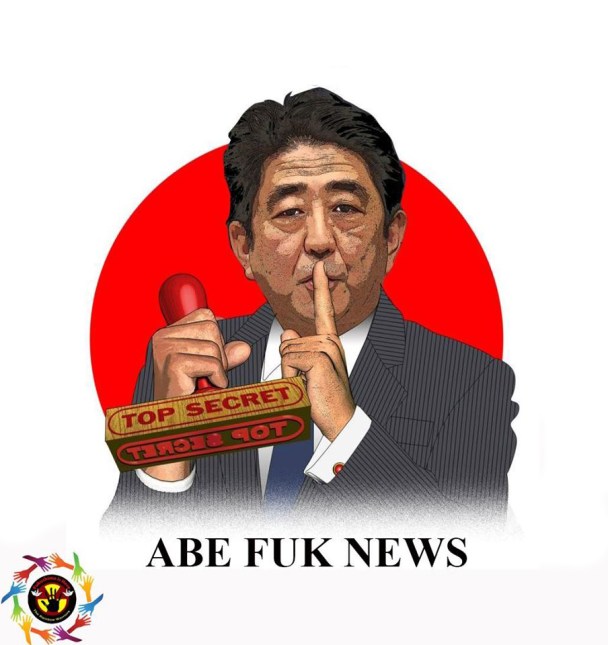
The commission of inquiry set up by the government after the nuclear disaster at the Fukusima dai-ichi plant has recorded some 770 testimonies. 240 have been made public since, with the agreement of the interviewees, including that of the former director of the plant, Masao Yoshida, now deceased.
TEPCO shareholders filed a lawsuit for the publication of the testimonies from 11 executives of TEPCO and 3 executives of NISA, which was the regulator at the time. They have just been dismissed.
Justice considered that if these documents were disclosed, it would be difficult to obtain the cooperation of the concerned persons in the future. The same applies to the secret portions of partially published testimonies.
Contaminated Glove, Jacket, pants worn by a Fukushima Daiichi worker
By Marco Kaltofen
Activity is 0.7 to 240 kBq/kg, surface rad to 59 uR/hr.
http://bostonchemicaldata.com/data.html

35.5 kBq/kg

0.11 to 0.24 kBq/kg

ND (<0.01) to 17.1 kBq/kg
Debris Removal at Reactor # 3 Delayed, but Arrival of the First Elements of the New Building for its Spent Fuel Removal
Transportation of the supporting part of a new roof for the Unit 3 fuel removal at Fukushima Daiichi Nuclear Power Station
The clearing of debris from reactor # 3 is delayed, delaying the construction of the new building to remove spent fuel from the pool. The debris removal was to be done in order to build a new workshop to remove the fuels from the pool.
The removal of the spent fuel should have started in January 2018. In the beginning, TEPCo was to start in 2015. We do not know their new schedule yet.
On the other hand, TEPCO communicated on the arrival of the first elements of the new building, with photos and video.

The dose rates on the site are here. There is up to 2.6 mSv / h in the vicinity of reactor No.3.

Links from TEPCO:
Photos of the new building
Click to access handouts_161220_01-e.pdf
Video
http://photo.tepco.co.jp/en/date/2016/201612-e/161220-01e.html
Dose rates in Reactor 3 vicinity
http://www.tepco.co.jp/en/nu/fukushima-np/f1/surveymap/images/f1-sv-20161219-e.pdf
2.46μSv/h Hot Spot in Misato, Saitama Prefecture, at Tokyo’s door

Hot Spot (2.46μSv/h at ground level, 0.64μSv/h at 50cm from the ground) in Misato, Saitama Prefecture.


The sign says in Japanese “We will keep the river clean”.
Misato, Saitama Prefecture is at 32km from Tokyo’s center and 223km from Fukushima Daiichi.

Misato, Saitama Prefecture is at 223km from Fukushima Daiichi.

Misato, Saitama Prefecture is at 32km from Tokyo’s center
Source: Sugar Nat https://www.facebook.com/shinpei.tn
0.72μSv in Nasunagahara Park, Nasu, Tochigi Prefecture
People when thinking about the nuclear disaster of Tepco’s Fukushima Daiichi often are misled by the mainstream media to think that only Fukushima Prefecture is affected by the radiation. That is so untrue.
Actually the Fukushima Daiichi ‘s radioactive plume has contaminated many other prefectures of Eastern Japan, prefectures of Tohoku region and prefectures of Kanto region (Tokyo area), radiation having being spread unevenly as a leopard skin, with hot spots everywhere, needing to be identified, indicated for public protection, and decontaminated..

This measurement was taken in the public park of Nasu, Tochigi Prefecture, 122km from Fukushima Daiichi and 188km from Tokyo.

Nasu, Tochigi Prefecture, 122km from Fukushima Daiichi

Nasu, Tochigi Prefecture, 188km from Tokyo
The children playing there will be exposed to radiation if it is not decontaminated nor indicated by a warning sign.

Source: http://ameblo.jp/kienaiyoru/entry-12234453760.html
Seaborne Fukushima Radiation Plume Hit West Coast, Corporate Media Reported It Dangerously
(EnviroNews DC News Bureau) — “It is not a question any more: radiation produces cancer, and the evidence is good all the way down to the lowest doses,” says the late Dr. John Gofman, Professor Emeritus at the University of California, Berkley, in his book Nuclear Witnesses: Insiders Speak Out.
On December 12, 2016, EnviroNews USA‘s own Editor-in-Chief Emerson Urry touched off a firestorm with his news article titled, “It’s Finally Here: Radioactive Plume From Fukushima Makes Landfall on America’s West Coast,” which claimed “medical science and epidemiological studies have demonstrated time and again that there is no safe amount of radiation for a living organism to be subjected to — period.”
In his piece, Urry also exposed other news agencies like NBC, the New York Post, USA Today and The Inquisitr, catching them with their pants down, in the act of repeating the false assertions of the U.S. and Canadian researchers, telling people not to worry about the recently detected low amounts of cesium 134 found in salmon, and that the levels were within “safe” or “accepted” thresholds for human health. [EDITOR’S NOTE: Emerson Urry recused himself from all editorial duties on this news story.]
Thom Hartmann picked up the article by Urry and read it on his show. Then Hartmann offered up his own journalistic explanation on how radiation works, and addressed the problem with the proclamation that there is a “safe” level of radiation to consume or be exposed to.
“As the element is decaying it is throwing off radiation, and the radiation, if it hits the DNA in the nucleolus and the nucleus of a cell, can alter that DNA in ways that can produce things like cancer,” Hartmann said. “Now it can also cause simply the cell to die or it can mutate the cell in all kinds of other weird ways, and so it’s kind of a numbers game. If you irradiate a million cells… you might get two or three that become cancerous. That’s all it takes, right? You’ve got cancer,” Hartmann continued in his video report. “The cesium could cause no cancer, or it could cause cancer in the first cell it irradiates. To say that there is a safe level of radiation is frankly wrong. It’s just wrong.”
Urry said later in a statement, “It’s one thing for the media to regurgitate trivial facts on trivial matters, but to blindly repeat that consuming low levels of radiation is ‘safe,’ is irresponsible reporting and borders on dangerous. News editors should take care to do their due diligence on a matter as serious as leading readers to believe consuming any amount of radiation is ‘safe’ when medical science and epidemiology, dating back 50 years to the present, have demonstrated repeatedly that that’s just not true. Even the smallest exposures increase the risk of cancer to the subject.”
According to the Agency for Toxic Substances and Disease Registry’s (ATSDR) report titled, “Public Health Statement for Cesium” from 2004, “stable and radioactive cesium can enter your body from the food you eat or the water you drink, from the air you breathe, or from contact with your skin. When you eat, drink, breathe, or touch things containing cesium compounds that can easily be dissolved in water, cesium enters your blood and is carried to all parts of your body… No known taste or odor is associated with cesium compounds.”
Cesium is similar enough to potassium that it can fool the body. This results in its bioaccumulation. When cesium enters the biological system of a fish, which is then eaten by a larger fish, the larger fish becomes contaminated. As the larger fish eats more, it becomes more contaminated. The cesium accumulates in its body. When a person eats that fish, he or she also ingests the cesium that hasn’t decayed or been excreted. The more seafood that person eats, the more radioactive material he or she will be exposed to.
The researchers who discovered the cesium recently also made the mistake of equating the dangers of consuming seaborne isotopes to that of receiving an x-ray, missing the point entirely that ingested or inhaled “internal particle emitters” are known to be especially hazardous.
“Consuming food containing radionuclides is particularly dangerous. If an individual ingests or inhales a radioactive particle, it continues to irradiate the body as long as it remains radioactive and stays in the body,” said Dr. Alan Lockwood, MD in an article on Fox News Health.
“Children are much more susceptible to the effects of radiation and stand a much greater chance of developing cancer than adults,” said Andrew Kanter, MD, President of the Board for Physicians for Social Responsibility (PSR) in that same Fox News Health article. “So it is particularly dangerous when they consume radioactive food or water.”
Those who might expect the government to protect them from contamination by radiation have only to look at the downwinder situation in Utah or the consequences of Gofman’s research in the late 1960s. According to Gofman’s obituary in the L.A. Times, “Gofman and his colleague at Lawrence Livermore National Laboratory, Arthur R. Tamplin, developed data in 1969 showing that the risk from low doses of radiation was 20 times higher than stated by the government. Their publication of the data, despite strong efforts to censor it, led them to lose virtually all of their research funding and, eventually, their positions at the government laboratory.” Their conclusions were for the most part, later validated.
“There is no safe level of radionuclide exposure, whether from food, water or other sources, period,” said Jeff Patterson, DO, immediate past President of PSR, in late March of 2011 in the immediate aftermath of the meltdowns. “Exposure to radionuclides, such as iodine 131 and cesium 137, increases the incidence of cancer. For this reason, every effort must be taken to minimize the radionuclide content in food and water.”
“There is no safe dose of radiation,” says Prof. Edward P. Radford, Physician and Epidemiologist as quoted by GreenMedInfo.
In an email to EnviroNews, nuclear expert Arnie Gundersen said Japan had raised the maximum allowable exposure by 20 times the previous number for civilians to be able to return to their homes. The U.S. and the EPA have considered such plans in the case of a nuclear accident. In food, the U.S. has an allowable dosage of radiation that is 12 times what Japan allows.
“Corporations get the benefit, civilians take the risk,” Gundersen wrote.
While Urry and Hartmann have sounded the alarm, there remain unanswered questions that desperately need to be resolved. Who will clean up the contamination in the food chain? How much radiation exposure will governments continue to say is safe in spite of the medical research? How can people trust what’s on their plate and in their corporate owned media?
Court denies disclosure of Tepco officials’ testimony about Fukushima disaster

The Tokyo District Court has dismissed an appeal by Tepco shareholders calling for disclosure of a government panel’s records of questioning of executives over the March 2011 crisis at the Fukushima No. 1 nuclear power plant.
“The decision accepted all of what the government claimed and therefore is regrettable,” the shareholders said in a statement following the ruling Tuesday. They said they would file an immediate appeal.
The Fukushima Nuclear Accident Independent Investigation Commission was formed in 2011 to investigate the causes of the nuclear disaster by questioning executives of the utility, now called Tokyo Electric Power Company Holdings Inc., including Tsunehisa Katsumata, former chairman of the utility, and others.
The questioning was conducted on condition that it would not be used to assign blame.
Only the records of the interviews of those who agreed that their answers would be made public have been disclosed, including Masao Yoshida, the late former chief of Fukushima No. 1.
The shareholders are seeking disclosure of the records on 11 Tepco officials and three officials of the now-defunct Nuclear and Industrial Safety Agency.
“If the records are disclosed, it would be extremely difficult to gain cooperation from related parties in future investigations,” presiding Judge Akihiko Otake said, deciding that the disclosure could disrupt the execution of official duties.
The court also concluded that the undisclosed portion of the records that was not revealed in previous disclosures should be kept confidential.
Initially, the records of questioning of some 770 Tepco and government officials in 2011 and 2012 were all kept under wraps. But following media reports on the Yoshida interview, the government decided to change its policy and disclose them with interviewees’ consent.
Since September 2014, the government has disclosed the records of some 240 interviewees.
Fukushima, the Gift That Keeps on Giving

Radiation from Fukushima has now officially entered the food chain, can it be fixed?
Fukushima, as you may recall, was an accident at a Japanese nuclear complex back in 2011. A combination of an earthquake and a tsunami damaged the facility, allowing radioactive water to pour into the ocean. In fact, ABC news reported that — “The 2011 quake of magnitude-9 was the strongest quake ever recorded in Japan, and it generated a tsunami that knocked out the Fukushima plant, causing the worst nuclear crisis since Chernobyl a quarter of a century earlier.”
Since then, there have been various plans to stabilize the situation, but all have failed. Robots sent in to find the cores have failed. The National Post wrote that — “It takes two years to build them. Each operator trains for a month before picking up their controls. And they get fried by radiation after working for just 10 hours.” That’s right. In just 10 hours, the robots are so damaged, they don’t work. In fact, the article continued by writing — “The reason the robots need to get inside core is that officials need to locate the plant’s melted (and still very radioactive) fuel rods before they can plan on what to do next”.
Wait, you might be asking yourself, what about the ice wall? Well, RT reported that — “In March, (a Japanese) construction company began building the frozen wall of earth around the four damaged nuclear reactors and had completed most of the 1.5-km (1 mile) barrier. TEPCO hoped that the frozen earth barrier would thwart most of the groundwater from reaching the plant and divert it into the ocean instead.
However, little or no success was recorded in the wall’s ability to block the groundwater during the five-month-period. The amount of groundwater reaching the plant has not changed after the wall was built.” That’s right. This plan has also failed.
And while media has effectively been silent on the issue, it does pop up from time to time, such as this article in Science World Report — “(a) Woods Hole chemical oceanographer, tracked down the radiation plume in the seawater. He proposed that the (contaminated) seawater crossed the Pacific Ocean and reached (America’s) west coast.” In fact, that article revealed that — “the seawater samples collected last winter from the Tillamook Bay and Gold Beach in the west coast indicated the presence of low levels of nuclear radiations. Thankfully, the levels were calculated too low to cause any harmful impact on the human or animal population of the region.” But that is missing the point – radiation has now officially entered the food chain.
Although the article in Science World Report notes that the levels were low, it should also be noted that their samples were all the way across the ocean. What if they took a sample in other places? Surely, logic would dictate that it would become stronger, the closer one gets to Japan.
It should also be noted that radioactive water continues to pour into the ocean on a daily, hourly, and by the minute basis. That hasn’t stopped. It is happening right now. It happens while you sleep. It happens while you are awake. It happens even if no one is talking about it and has been happening for more than 5 years, and there is no plan to stop it.
NRA: Ice wall effects ‘limited’ at Fukushima nuclear plant
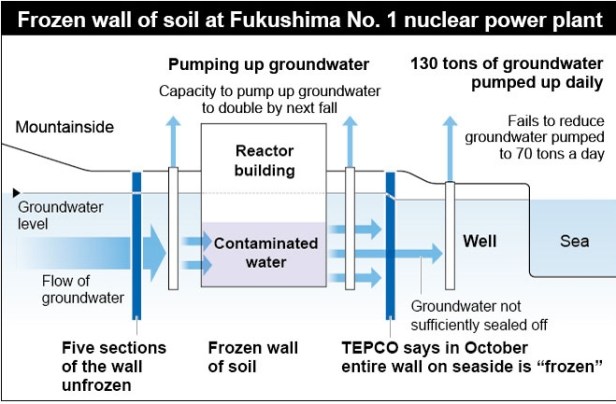
Citing “limited, if any effects,” the Nuclear Regulation Authority said a highly touted “frozen soil wall” should be relegated to a secondary role in reducing contaminated groundwater at the Fukushima No. 1 nuclear plant.
The government spent 34.5 billion yen ($292 million) to build the underground ice wall to prevent groundwater from mixing with radioactive water in four reactor buildings at the crippled plant.
But the NRA, Japan’s nuclear watchdog, concluded on Dec. 26 that the wall has been ineffective in diverting the water away from the buildings. It said that despite the low rainfall over the past several months, the amount of groundwater pumped up through wells outside the frozen wall on the seaside is still well above the reduction target.
It urged the plant operator, Tokyo Electric Power Co., to tackle the groundwater problem primarily with pumps, not the ice wall.
In response, TEPCO at the meeting said that by next autumn, it will double its capacity to pump up groundwater from the current 800 tons a day.
About 400 tons of groundwater enters the damaged reactor buildings each day and mixes with highly radioactive water used to cool melted nuclear fuel.
The ice wall project, compiled by the industry ministry in May 2013, was seen as a fundamental solution to this problem that has hampered TEPCO’s cleanup efforts since the triple meltdown in March 2011.
Some 1,568 frozen ducts were inserted 30 meters deep into the ground to circulate a liquid at 30 degrees below zero. The freezing process was supposed to have created a solid wall of ice that could block the groundwater.
TEPCO began freezing the wall on the seaside in March. It announced in the middle of October that the temperature at all measuring points in that area was below zero.
Before the frozen wall project, TEPCO had to pump up about 300 tons of contaminated water a day. The daily volume dropped to about 130 tons in recent weeks, but it was still well beyond the target of 70 tons.
Still, TEPCO boasted about the effectiveness of the ice wall at the meeting with the NRA on Dec. 26, saying, “We are seeing certain results.”
The NRA, however, said the results are limited at best.
Toyoshi Fuketa, an NRA commissioner, already warned TEPCO in October that it cannot expect the ice wall to be highly effective in containing the groundwater.
“Pumping up groundwater through wells should be the main player because it can reliably control the groundwater level,” Fuketa said at that time. “The ice wall will play a supporting role.”
That sentiment was echoed at the Dec. 26 meeting.
However, the NRA approved the utility’s plan to begin freezing dirt for a wall on the mountain side of the nuclear plant.
The NRA was previously concerned about risks posed by the new ice wall. If it totally blocked groundwater from the mountain side, the water level within the frozen soil near the reactors could become too low, allowing highly contaminated water inside the reactor buildings to flow out more rapidly.
The NRA urged TEPCO to delay work on the mountain side until the ice wall on the seaside portion proved effective.
But it reversed its stance, saying a sharp drop in the groundwater level is unlikely based on the ineffectiveness of the existing ice wall.
“The frozen wall on the mountain side will not be able to block groundwater because the wall on the seaside was also unable to do so,” Fuketa said. “It will not be very dangerous to freeze the wall on the mountain side as long as the work is carried out carefully.”
TEPCO will start the work to freeze the ducts at five sections as early as next year.
Masashi Kamon, professor emeritus of geotechniques at Kyoto University, expressed skepticism about continuing the ice wall project without a full scrutiny of the underground conditions.
“Soil around the tunnels for underground pipes must be hard to freeze,” he said. “TEPCO should find out the conditions of the very bottom of the ice wall by drilling at least one section. It is questionable to continue with the project without a review.”
Completion of drilling a hole toward investigation inside Unit 2 Primary Containment Vessel (PCV) at Fukushima Daiichi
TEPCO released a video showing a drilling rig, used in preparation for internal investigation of containment vessel No. 2 of Fukushima Daiichi Nuclear Power Station. The drilling was seated against the CRD hatch inside unit 2, the selected site where a robot will be inserted into unit 2 containment to collect data and images.
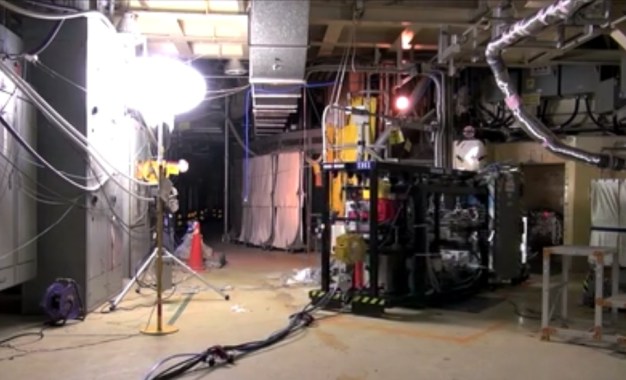
Due to shielding blocks difficult to remove and high radiation levels found where the hatch gasket had melted away, this work has been repeatedly delayed.
Logos from IRID, Toshiba and IHI are displayed on that drilling rig. IRID is the decommissioning research and development group. Toshiba handles the inspection and response work at the site and was a prime contractor at Daiichi before the disaster. IHI Corporation does a variety of high tech work including the energy and aerospace industries.
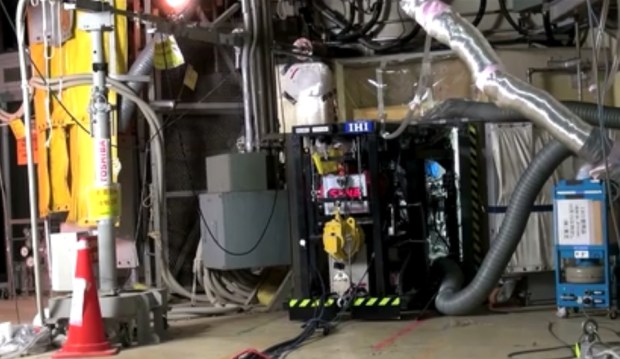
Little is known about the capabilities of that drilling rig. To conduct the containment inspection the workers will have to insert a robot into the CRD hatch tube.Earlier in the process it was decided to drill out an opening on the hatch rathen than trying to open it. In similar works at unit 1 a large tube shaped rig is connected to the containment port to act as a hot cell, to enable the robot to enter and exit the containment structure without having radiation or radioactive materials to escape.
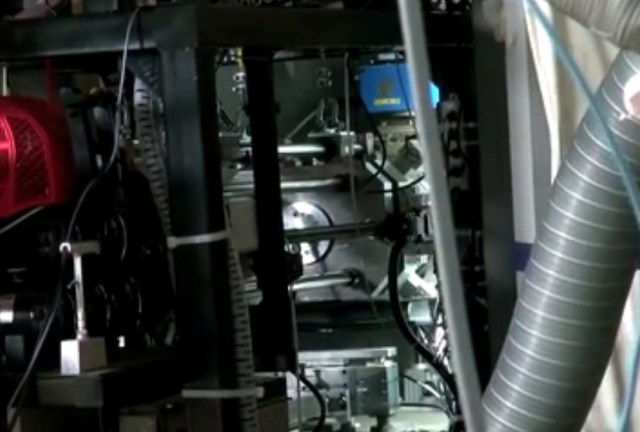
Similar efforts at unit 1 involved connecting a large tube shaped rig to the containment port that acts as a hot cell. This allows the robot to enter and exit the containment structure without allowing radiation or radioactive materials to escape. Earlier practiced work at Unit 2 showed workers training with such a hot cell unit.
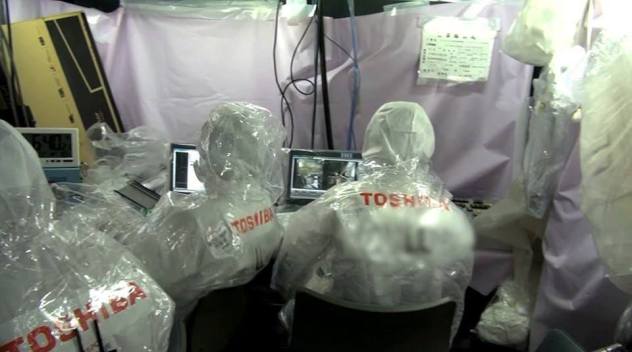
Asahi Shimbun had reported on September 2016 that TEPCO has announced they would begin the robotic containment inspection of unit 2’s containment in early 2017. This new development might be a sign that they have overcome the difficulties that caused delays since 2014.
Sources :
http://www.tepco.co.jp/en/news/library/archive-e.html?video_uuid=e5z65pib&catid=69631
http://www.asahi.com/ajw/articles/AJ201609060001.html
Fuel removal at Fukushima reactor again faces delay
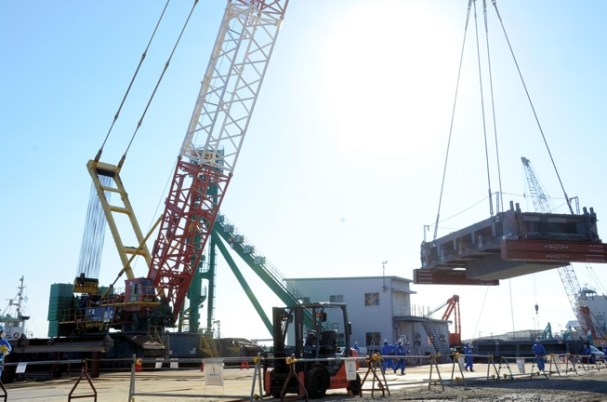
Steel frames are transported at the Fukushima No. 1 nuclear power plant on Dec. 20 to prepare for work to retrieve spent nuclear fuel from the storage pool of the damaged No. 3 reactor building.
Work to retrieve spent nuclear fuel in the No. 3 reactor building storage pool of the crippled Fukushima No. 1 nuclear power plant will again be postponed due to a delay in clearing radioactive debris at the site.
TEPCO planned to begin removing 566 spent nuclear fuel assemblies in the storage pool in January 2018. However, the government and the plant operator, Tokyo Electric Power Co., decided on the postponement, sources said on Dec. 22. They will decide on a new timetable in a few weeks.
The work was initially scheduled for fiscal 2015, but had been pushed back because of high radiation readings in and around the No. 3 reactor building. The building was heavily damaged by a hydrogen explosion in the days following the disaster, triggered by the 2011 Great East Japan Earthquake and tsunami.
TEPCO had attempted to lower radiation levels by clearing the radioactive debris remaining at the site.
But the clearing work took longer than expected due to contamination being more widespread than previously thought, forcing TEPCO and the government to again put off the retrieval.
Radiation levels have now dropped as almost all of wreckage at the site has been cleared, TEPCO said. The government and TEPCO have said fuel retrieval at the No. 1 and No. 2 reactor buildings will start in fiscal 2020 or later.
For 6,000, the daily bus ride takes them to Fukushima plant
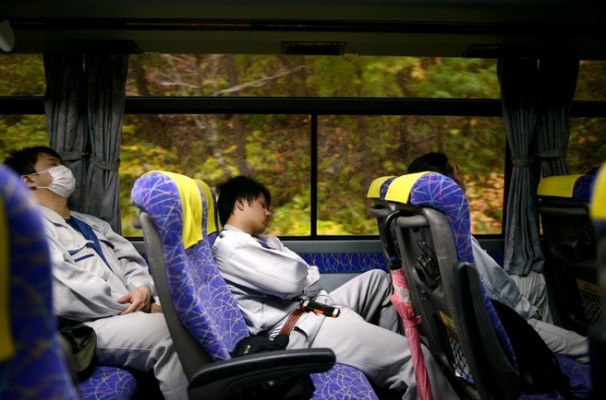
A shuttle bus takes workers in deep sleep from the Fukushima No. 1 nuclear plant to J-Village, where their temporary dormitories are located.
A shuttle bus takes workers in deep sleep from the Fukushima No. 1 nuclear plant to J-Village, where their temporary dormitories are located. (Shigeta Kodama)
NARAHA, Fukushima Prefecture–Despite the predawn hour, few people are sleeping on a bus that steadily makes its way north on National Route 6.
Some passengers are planning for the work ahead. One is looking forward to chatting with his colleagues. And a few wonder if today will be the day when their annual radiation doses reach the safety limit.
Every day, buses like this take 6,000 workers to the Fukushima No. 1 nuclear power plant. And every day, the same buses take the exhausted and mostly sleeping workers back to their base at the Japan Football Village (J-Village) in Naraha.
Although the Fukushima plant is still decades away from being decommissioned, without this daily routine of the workers who toil amid an invisible danger, the situation at the site would be much more difficult.
407 DAILY BUS RIDES
One of them, the 49-year-old leader of a group of metal workers from Iwaki, Fukushima Prefecture, has been working at nuclear plants, including the Kashiwazaki-Kariwa power station in Niigata Prefecture, for nearly 20 years.
He was at the Fukushima No. 1 nuclear plant when the Great East Japan Earthquake and tsunami triggered the triple meltdown there in March 2011.
“Nobody can get close to the area where the melted nuclear fuel remains due to high radiation doses,” the man said. “Even if we could approach the area, we would have no way out if something happens. The situation is harsh.”
Those metal workers install tanks for the contaminated water that keeps accumulating at the plant.
Although there are plenty of empty seats, the young workers sit in front and the older workers take the back seats.
Thousands of workers are staying at temporary dormitories set up in J-Village, a soccer training complex.
Tokyo Electric Power Company Holdings Inc., operator of the nuclear plant, hired a local bus company to transport the workers to the plant because securing parking areas near the site has been difficult since the 2011 disaster.
The company provides 407 services a day to and from the plant. Each trip takes about 30 minutes.
The first shuttle bus departs from J-Village at 3:30 a.m., while the last bus leaves the Fukushima plant at 9:45 p.m.
In mid-November amid torrential rain, one bus picked up a man taking shelter under the eaves of a bus stop.
He said he is in charge of managing data related to radiation doses of fittings and other equipment at the plant.
“We have many different types of work here,” the man proudly said.
Also on the way to the nuclear plant, a 53-year-old employee of a security company was thinking about personnel distribution.
Like other workers there, security guards must be replaced when their annual radiation doses reach a certain level set by the government.
He said he has difficulties making ends meet with a limited number of guards who have knowledge about radiation.
Suddenly, the man’s cellphone rings, and the caller orders the deployment of additional security guards to the plant.
A 52-year-old TEPCO employee was on the way to the nearby Fukushima No. 2 nuclear power plant to provide a safety training program for workers, many of whom are victims of the triple disaster.
“I want to convey to workers how precious their lives are and how important safety is in a way that doesn’t make me sound hypocritical,” the employee said.
The triple meltdown has been called a “man-made disaster” caused by the failure of both TEPCO’s management and the government’s regulatory authorities.
The TEPCO employee will use props, such as a ladder, and pretend to be a worker to explain dangerous cases at the No. 1 plant.
PREMIUM SEATS
On the trip back to J-Village, a different atmosphere exists on the bus.
Although dazzling sunlight shines through the windows and stunning views of the ocean are available, most of the workers are fast asleep in their wrinkled uniforms.
“Few people stay awake. I don’t even switch on the radio. They must be tired after their work,” said Nobuyuki Kimura, 52, who has driven the shuttle bus for one-and-a-half years.
In Kimura’s bus that departed the plant at 2:30 p.m., all 50 seats and some of the auxiliary seats were filled. The few passengers who stayed awake remained quiet.
By early evening, fewer workers boarded the bus at the plant.
Window seats at the back of the bus are desirable on all rides because they have an enough room for the seats to recline, allowing passengers to cross their legs.
A 21-year-old worker from Iwaki went for a window seat at the back after standing at the front of a line waiting for the bus.
“I can relax sitting here. This is the premium seat,” said the man who collects waste materials, such as boots and socks, at the site.
Although he works in protective gear in an area with high radiation levels, he said he has never thought about quitting his job.
He said he became fed up with school as a junior high school student, and did not bother going to senior high school.
At the age of 18, he joined his current company, and his first assignment was at the Fukushima No. 1 plant.
“I became acquaintances with more and more people. It’s fun to speak with people at work,” he said.
Through his work at the nuclear plant, his weight has dropped from 115 kilograms to 93 kg.
Thirty to 40 years are needed to decommission the Fukushima No. 1 plant, according to the mid- and-long-term roadmap compiled by the government and TEPCO.
To reduce the groundwater flowing into the buildings housing the No. 1 to No. 4 reactors, TEPCO installed coolant pipes this year to create an underground frozen soil wall to divert the water into the ocean.
TEPCO announced in October that the ice wall on the sea side was nearly frozen, but groundwater is believed to be seeping through it.
The utility plans to start removing spent fuel from the No. 3 reactor building in fiscal 2017. It also has plans to begin the daunting task of removing the melted fuel from the No. 1 to No. 3 reactor containment vessels in 2021.
However, extremely high radiation levels have prevented workers from approaching and understanding the condition of the melted fuel. The removal method has yet to be decided.
The estimated cost of work for decommissioning and dealing with the contaminated water has ballooned to 8 trillion yen ($68.1 billion).
Fukushima’s ¥8 trillion cleanup leaves foreign firms in the cold
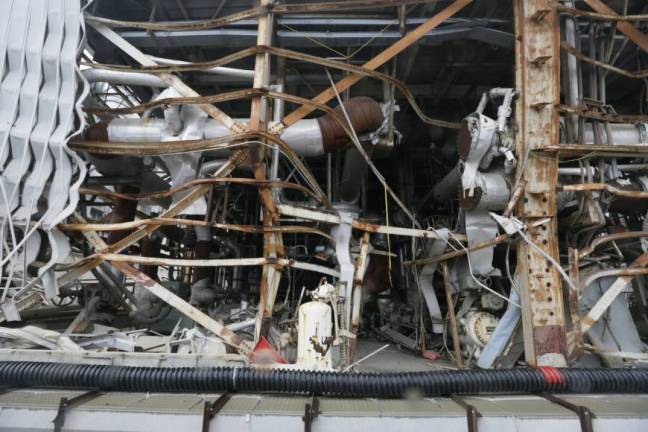
Damaged building housing the No. 4 reactor
Cleaning up the Fukushima nuclear plant — a task predicted to cost 86 times the amount earmarked for decommissioning Japan’s first commercial reactor — is the mother of all salvage jobs. Still, foreign firms with decades of experience are seeing little of the spoils.
Safely dismantling the Japanese power plant, wrecked by the 2011 earthquake and tsunami, will cost about ¥8 trillion ($70 billion), the Ministry of Economy, Trade and Industry said on Dec. 9, quadrupling the previous estimate. While a contract to help clean up the facility would be a windfall for any firm with specialized technology, the lion’s share of the work has gone to local companies that designed and built most of Japan’s atomic infrastructure.
The bidding process for Fukushima contracts should be more open to foreigners, as Japan has never finished decommissioning a commercial nuclear plant, let alone one that experienced a triple meltdown, according to Lake Barrett, an independent adviser at Japan’s International Research Institute for Nuclear Decommissioning. While the Fukushima cleanup is unlike any nuclear disaster in history, foreign firms that have experience decommissioning regular facilities could provide much-needed support, according to Barrett, and even the plant’s operator, Tokyo Electric Power Co. Holdings Inc.
‘Cultural Resistance’
“Internationally, there is a lot more decontamination and decommissioning knowledge than you have in Japan,” Barrett, a former official at the U.S. Nuclear Regulatory Commission, said in an interview in Tokyo. “I hope the Japanese contracting system improves to get this job done safely. There is this cultural resistance — it is almost like there is an isolated nuclear village still.”
An opaque bidding process plays to the heart of criticisms put forward by independent investigators, who said in a 2012 report that collusion between the government, regulators and the plant’s operator contributed to the scale of the disaster.
Of 44 subsidized projects publicly awarded by the trade and economy ministry since 2014, about 80 percent went to the International Research Institute for Nuclear Decommissioning. The group, known as IRID, was established in the wake of the Fukushima disaster and is comprised entirely of Japanese corporations, according to the ministry’s website.
Japan’s trade and industry ministry awarded funds directly to only two foreign firms during the same period. Many of the contracts had only one or two bidders.
Of about 70 contracts awarded since the March 2011 disaster, nine have gone to foreign companies, according to an official in the ministry’s Agency of Natural Resources and Energy who asked not be named, citing internal policy.
To provide opportunities for foreign companies, the ministry has created an English website for bids and also provides English information sessions to explain the contracts, the official said.
Toshiba, Hitachi
IRID’s contracts are given to its members, including Toshiba Corp., Hitachi Ltd. and Mitsubishi Heavy Industries Ltd., which have partnerships and joint ventures with foreign firms, spokesman Yoshio Haruyama said by phone. While it doesn’t directly contract work to companies overseas, IRID taps foreign experts as advisers and participates in international collaborative projects, he said.
Mitsubishi Heavy has about five or six contracts through IRID, but can’t share how many partnerships it has with foreign firms, spokesman Shimon Ikeya said by phone. Hitachi has sub-contracts with foreign suppliers related to the Fukushima cleanup, but can’t provide details about these agreements because they aren’t public, a spokesperson said by email.
As of March, IRID had about ¥30 billion worth of ongoing contracts primarily related to research and development of fuel removal and waste treatment. IRID, which aims to “gather knowledge and ideas from around the world” for the purpose of nuclear decommissioning, doesn’t disclose how much of their money ultimately goes to foreign businesses, according to its spokesman. Barrett, its adviser, said he thinks it’s “very low,” but should ideally be 5 percent to 10 percent.
‘Nuclear Village’
Japan’s biggest nuclear disaster isn’t void of foreign technology. Toshiba, which owns Pennsylvania-based Westinghouse Electric Co., and Hitachi, which has a joint venture with General Electric Co., are tapping American expertise. A giant crane and pulley system supplied by Toshiba to remove spent fuel from the wrecked reactors employs technology developed by Westinghouse.
“We bring in knowledge from foreign companies, organizations and specialists in order to safely decommission the reactors,” Tatsuhiro Yamagishi, spokesman for Tepco, said by email. While the company can’t say the exact number of foreign firms involved in the Fukushima cleanup, companies including Paris-based Areva SA, California-based Kurion Inc. and Massachusetts-based Endeavor Robotics are engaged in work at the site, according to Yamagishi.
For foreign firms, however, independently securing contracts is still a tall order.
“When it comes to Japan’s nuclear industry, the bidding system is completely unclear,” Hiroaki Koide, a former assistant professor at Kyoto University Research Reactor Institute, said in an email. “The system is designed to strengthen the profits of Japan’s nuclear village,” he added, referring to the alliance of pro-nuclear politicians, bureaucrats and power companies that promote reactors.
Tepco’s annual cost to decommission its Fukushima plant may blow out to several hundred billion yen a year, up from the current estimate of ¥80 billion, the trade and industry ministry said in October. As of June, almost ¥1 trillion has been allocated for decommissioning and treating water at Fukushima, according to Tepco’s Yamagishi.
‘Ripe for Corruption’
With that much money at stake, Japan has become ground zero for a plethora of companies looking to benefit from the cleanup work. The structure of Japan’s nuclear industry and the closed procurement preferred by the utilities that operate atomic plants means that the most lucrative opportunities for foreign companies are in the area of subcontracting, according to a report by the EU-Japan Centre for Industrial Cooperation released in March.
“Foreign firms have long argued that the Japanese bidding process is one that is ripe for corruption due to a lack of openness and transparency,” Daniel Aldrich, professor and director of the security and resilience studies program at Northeastern University in Boston, said in an email. For nuclear decommissioning “there is even less clarity and transparency due to security and proliferation concerns,” he said.
Rigging Bids
The Japan Fair Trade Commission raided the offices of five companies last year in relation to rigged bids for maintenance contracts from Tepco, according to Jiji Press. Eleven road-paving companies were fined in September on projects to repair roads following the March 2011 earthquake and tsunami, Jiji reported.
Andrew DeWit, a political economy professor at Rikkyo University in Tokyo, agrees that the contract-awarding process isn’t transparent. A lot of foreign companies seek Japanese partners to better their chances, he said.
Purolite Corp., a closely held water purifying company, spent millions of dollars developing and testing a system that could be used to treat radioactive water at Fukushima. Pennsylvania-based Purolite partnered with Hitachi to help win a contract to use its technology at the wrecked facility.
Those plans didn’t pan out. Purolite is suing Hitachi in New York and Tokyo, alleging that Hitachi is using its technology at Fukushima in breach of agreements made in 2011, shutting it out of more than $1 billion in contracts, according to court documents filed in September.
Hitachi doesn’t comment on ongoing legal matters, a spokesperson said by email.
“With a smaller pool of competitors, firms can expand their profit margins,” said Northeastern University’s Aldrich. “There are French and Russian firms that have the technical expertise to participate in nuclear decommissioning processes, but it is unclear if they will be able to compete on a level playing field with Japanese firms, which have far more experience with Japanese regulations and expectations.”
Panel wants new power suppliers to add charges to bills to cover Fukushima costs
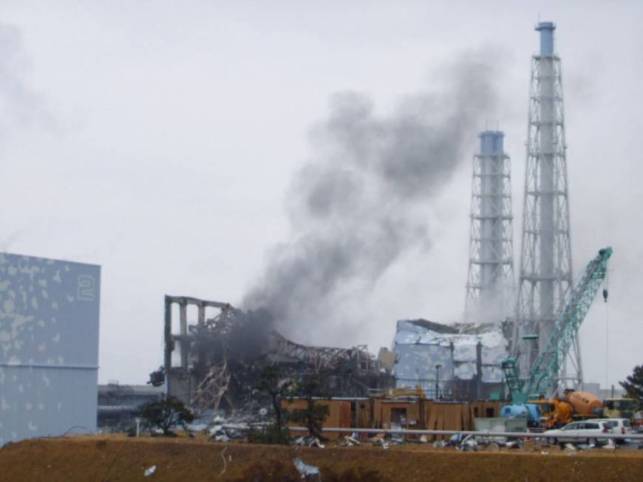
An expert committee of the Ministry of Economy, Trade and Industry put together a recommendation on Dec. 16 for energy policy revisions that would have new, small-scale power suppliers also help cover compensation for the Fukushima nuclear disaster and reactor decommissioning costs by adding charges to consumer power bills.
The estimated total cost of handling the Fukushima disaster has nearly doubled from 11 trillion yen to 21.5 trillion yen, with further increases possible. Since the disaster, Tokyo Electric Power Co. (TEPCO), the operator of the disaster-stricken Fukushima No. 1 Nuclear Power Plant, has been paying around 70 billion yen a year in disaster-related costs from its own money. TEPCO and other major power providers have also been paying around an additional 163 billion yen a year by charging higher power bills.
The plan would raise consumers’ share of the burden yet further. Under a scenario recommended by the committee, up to 60 billion yen a year for 40 years starting from fiscal 2020, or up to a total of 2.4 trillion yen, would be paid through charges to the power transmission costs of both traditional power producers and new producers.
Regarding this 2.4 trillion yen, the ministry argues, “The money should have been prepared prior to the accident at the Fukushima plant,” but says that, since that didn’t happen, “It is appropriate for all past users of cheap power (including those who switched to non-nuclear sources after the disaster) to equally share the burden (of post-disaster costs.)” Under ministry calculations, the proposal would lead to an additional payment of 18 yen per month for 40 years for an average household.
Additionally, the plan, which would also start in fiscal 2020, would have new power producers help finance the plans of major power producers to decommission aging nuclear reactors through higher power transmission costs.
In exchange for new power producers paying part of the compensation costs, major utilities would supply more power from cheap sources to the market, such as nuclear power and coal, which can be used by smaller providers.
Yoh Yasuda, specially-appointed professor at Kyoto University, is critical of this, saying, “This will lead to the protection of traditional power sources like coal and nuclear, and serve as a barrier to new technologies like renewable energy entering the market.”
The economy ministry argues that even with the extra costs for the Fukushima disaster added on, nuclear power is still cheaper than thermal power. At the meeting on Dec. 16, committee member Toshihiro Matsumura, a professor at the University of Tokyo, criticized the move, saying, “If the ministry claims that nuclear power is still cheap even after including the massive compensation costs, nuclear power producers and the ministry should realize that there will be people who say those utilities should cover the costs themselves instead of pushing the burden onto others.” However, most of the committee members generally agreed on the plan. After soliciting opinions from the public, the proposal will be officially decided upon.
The plan would go into effect with just a ministry order, not requiring a law amendment through the Diet, and there is criticism that the plan is being made without enough input from the public. The non-partisan Diet group working for zero nuclear power plants, jointly headed by Taro Kono of the ruling Liberal Democratic Party and Shoichi Kondo of the main opposition Democratic Party, has released a statement saying, “The idea of adopting a proposal after no public discussion, with no participation from the Diet at all in its creation, is unspeakable, as it will twist the basis of power system reforms and increase the burden on the people.”
http://mainichi.jp/english/articles/20161217/p2a/00m/0na/006000c
1 This Month

of the week – Shut Down Drone Warfare!


Tell the Ukrainian Government to Drop Prosecution of Peace Activist Yurii Sheliazhenko

Petition to revoke the licensing of the Near Surface Nuclear Disposal Facility (NSDF) at Chalk River. https://www.ourcommons.ca/petitions/en/Petition/Details?Petition=e-7247
To see nuclear-related stories in greater depth and intensity – go to https://nuclearinformation.wordpress.com
-
Archives
- April 2026 (114)
- March 2026 (251)
- February 2026 (268)
- January 2026 (308)
- December 2025 (358)
- November 2025 (359)
- October 2025 (376)
- September 2025 (257)
- August 2025 (319)
- July 2025 (230)
- June 2025 (348)
- May 2025 (261)
-
Categories
- 1
- 1 NUCLEAR ISSUES
- business and costs
- climate change
- culture and arts
- ENERGY
- environment
- health
- history
- indigenous issues
- Legal
- marketing of nuclear
- media
- opposition to nuclear
- PERSONAL STORIES
- politics
- politics international
- Religion and ethics
- safety
- secrets,lies and civil liberties
- spinbuster
- technology
- Uranium
- wastes
- weapons and war
- Women
- 2 WORLD
- ACTION
- AFRICA
- Atrocities
- AUSTRALIA
- Christina's notes
- Christina's themes
- culture and arts
- Events
- Fuk 2022
- Fuk 2023
- Fukushima 2017
- Fukushima 2018
- fukushima 2019
- Fukushima 2020
- Fukushima 2021
- general
- global warming
- Humour (God we need it)
- Nuclear
- RARE EARTHS
- Reference
- resources – print
- Resources -audiovicual
- Weekly Newsletter
- World
- World Nuclear
- YouTube
-
RSS
Entries RSS
Comments RSS
 nuclear-news