Ex-Tepco execs’ lawyers make final plea for acquittal over negligence in Fukushima nuclear crisis
The trial, which began in June 2017, ended on Tuesday. The court is expected to deliver its sentence on September 19.
March 12, 2019
Lawyers for three former executives of Tokyo Electric Power Company Holdings Inc. called for their acquittal in their final defense plea on Tuesday in a negligence case stemming from the Fukushima nuclear crisis in 2011.
The defense team said that it was impossible for them to foresee the massive tsunami that engulfed the Fukushima No. 1 power plant and caused fuel meltdowns following a 9.0 magnitude earthquake that rocked the coastal Tohoku region.
The day after the nation marked the eighth anniversary of the March 11, 2011, disasters, the lawyers for Tsunehisa Katsumata, 78, Tepco chairman at the time of the crisis, and Ichiro Takekuro, 72, and Sakae Muto, 68, both vice presidents, told the Tokyo District Court they “do not recognize any predictability in the disaster.”
The three men have been indicted for allegedly failing to take measures against the massive tsunami and causing the deaths of 44 hospital inpatients and injuries to 13 others during the evacuations prompted by fuel meltdowns and hydrogen explosions at the plant.
Court-appointed lawyers acting as prosecutors have called for five-year prison terms for the three, claiming they could have prevented the nuclear disaster had they fulfilled their responsibilities in collecting information and taking safety measures.
Read more :
https://www.japantimes.co.jp/news/2019/03/12/national/crime-legal/ex-tepco-execs-lawyers-make-final-plea-acquittal-negligence-fukushima-nuclear-crisis/?fbclid=IwAR2diwN8B9xxWiBJU5dy6WbXrgx8tSoW32lwWTqR5Vi6gRuwf04Pmi8Ziq8#.XIhZmMn7Tcs
Radioactive Glass Beads May Tell the Terrible Tale of How the Fukushima Meltdown Unfolded
 An autoradiograph image of a radioactive cesium microparticle, which shows the relatively high levels of radioactivity contained in the particle. Credit: Dr. Satoshi Utsunomiya
March 11, 2019
The microscopic particles unleashed by the plant’s explosions are also a potential environmental and health concern
On March 14 and 15, 2011, explosions unleashed invisible radioactive plumes from the Fukushima Daiichi Nuclear Power Plant, crippled three days earlier when the strongest recorded earthquake in Japan’s history triggered a massive tsunami. As the plumes drifted over the neighboring countryside, their contents—including radioactive cesium, a by-product of the plant’s fission reactions—fell to the ground and over the ocean.
What no one knew or expected was the fallout also contained bacteria-size glassy beads, with concentrations of radioactive cesium that were far higher than those in similar-size motes of tainted dust or dirt.
Since these particles were discovered in 2013, scientists have plucked them from soil samples and air filters throughout the contamination zone, including filters as far away as Tokyo. The beads could pose an under-recognized heath risk, researchers say, because they are tiny enough to be inhaled deep into the lungs—and their glassy makeup means they may not easily dissolve or erode. They also present an opportunity to conduct what one researcher called “nuclear forensics”: By analyzing the particles’ composition, scientists can piece together a clearer image of what happened during the white-hot violence inside the plant itself, and of the current condition of the debris in the three reactors that experienced meltdowns. This could help inform the strategy for cleaning up the ruins of the plant.
Researchers say a picture of the unusual beads is coming into focus against a backdrop of the Japanese public’s general nuclear wariness, and the government’s desire to put the Fukushima incident behind it—particularly with Tokyo poised to host the 2020 Olympics. “I think, unfortunately, the reaction to this discovery [of the beads] has been not very welcomed in Japan,” says Rod Ewing, a mineralogist and nuclear materials expert who co-directs the Center for International Security and Cooperation at Stanford University.
Read more :
8 years on, contaminated water remains big problem for Fukushima clean-up

March 10, 2019
Okuma – Eight years after the Fukushima nuclear crisis, a fresh obstacle threatens to undermine the massive clean-up: 1 million tons of contaminated water must be stored, possibly for years, at the power plant.
Last year, Tokyo Electric Power Co (TEPCO) said a system meant to purify contaminated water had failed to remove dangerous radioactive contaminants.
That means most of that water – stored in 1,000 tanks around the plant – will need to be reprocessed before it is released into the ocean, the most likely scenario for disposal…
…. Fanning out across the plant’s property are enough tanks to fill 400 Olympic-sized swimming pools. Machines called Advanced Liquid Processing Systems, or ALPS, had treated the water inside them.
TEPCO said the equipment could remove all radionuclides except tritium, a relatively harmless hydrogen isotope that is hard to separate from water. Tritium-laced water is released into the environment at nuclear sites around the world.
But after newspaper reports last year questioned the effectiveness of ALPS-processed water, TEPCO acknowledged that strontium-90 and other radioactive elements remained in many of the tanks.
TEPCO said the problems occurred because absorbent materials in the equipment had not been changed frequently enough.
The utility has promised to re-purify the water if the government decides that releasing it into the ocean is the best solution. It is the cheapest of five options a government task force considered in 2016; others included evaporation and burial…
….Another option is to store the water for decades in enormous tanks normally used for crude oil. The tanks have been tested for durability, said Yasuro Kawai, a plant engineer and a member of Citizens’ Commission on Nuclear Energy, a group advocating abandoning nuclear energy.
Each tank holds 100,000 tons, so 10 such tanks could store the roughly 1 million tons of water processed by ALPS so far, he said.
The commission proposes holding the tritium-laced water, which has a half life of 12.3 years, in tanks for 123 years. After that, it will be one thousandth as radioactive as it was when it went into storage…
Read more :
Eight years after Fukushima nuclear meltdown, workers still facing radiation risk

Fukushima The Seal of the Sun 太陽の蓋
February 24, 2019
This February 20th I was invited by my friend Kolin Kobayashi in Paris to the avant-première of the movie Fukushima The Seal of the Sun, followed by a short debate, then to the private reception where Japan ex-prime Minister Naoto Kan was present.
Watching this movie brought to my mind the words of Gregory Jaczko, the former chairman of the U.S. Nuclear Regulatory Commission in 2011, in his recently released book titled Confessions of a rogue nuclear regulator :
« And what about the problems that no engineer, scientist, or safety regulator can foresee. No amount of planning can prepare a plant for every situation. Every disaster makes its own rules – and humans cannot learn them in advance ».
« Generations of nuclear professionals have never experienced the confusion of a nuclear accident as it is happening. So it is essential that we remember and teach the lessons of Three Mile Island, chernobyl and Fukushima, for reviewing these accidents shows common themes of missed opportunities, human failings, and technological overconfidence. No amount of forgetting can change these simple facts. »
« As I learned in the wake of the Fukushima accident, crises on this scale are often characterized by incoherent communication and conflicting information. Both the Three Mile island and the Fukushima disasters featured contradictory assessments of the state of the reactor, a limited appreciation of the fact that the damage to the reactor had occured very early, and rapidly changing statements from elected officials. To the public, these statements can appear to suggest prevarication or incompetence. But when government officials – imperfect human beings like everyone else – try to make sense of the complicated physics of a nuclear reactor, they will invariably make mistakes in communication. »
Especially as in the Fukushima accident where TEPCO was not straightforward in giving the true facts to the Japanese government, but always prevaricating.

Synopsis of the movie Fukushima The Seal of the Sun
On March 11, 2011, Japan is rocked by an earthquake, followed by a tsunami and the triple nuclear disaster of Fukushima. Prime Minister Naoto Kan’s team is trying to cope with this situation. What really happened at the Prime Minister’s residence at the time of the worst crisis in the country’s history? Has the truth been fully revealed?
3 questions to the director – Futoshi Sato
How did you arrive on this project and how did you work with the producer and actors of the film?
Born in the area that was devastated by the 2011 earthquake, I wanted to talk about it, but I was wondering what might be the approach to make it a movie. For his part, Mr. Tamiyoshi Tachibana wondered about the possibility of adapting the book written by Tetsuro Fukuyama, Deputy Director of the Cabinet of Naoto Kan. “The Nuclear Crisis – A Testimony from the Residence of the Prime Minister” is a fundamental work that tells the truth of the events that occurred on those days at the Residence.
If this project was able to start and be realized, it is thanks to the total and complete implication of Mr Tamiyoshi Tachibana. The entire project team has been involved in the discussions around the script and during our debates, we thought it was necessary to make a choral film with in the center, the members of the Cabinet, but also with the journalists on the lookout for scoops, the workers of the power plant, as well as the inhabitants of the surrounding villages. As for casting, we managed to bring together actors who were completely convinced of the importance of the subject. We gave them all the information so that they thoroughly understand the issues of the film and their characters.
Was it important to you that the events would be experienced in a balanced way through the politicians and the people directly at the forefront of the disaster?
According to the people who experienced these events, their feeling completely varies. To make it a film capable of witnessing this story in all its diversity, we decided to adopt the different points of view of the protagonists. It was not possible to convey this reality to the public otherwise.
I remember that Naoto Kan told us: “If you represent the truth about the nuclear accident with firmness in the film, you can choose any method of expression.” He wanted the facts to be well presented. I started filming in a direction that was not meant to be easy. Instead, it was necessary to treat with audacity, an atmosphere of crisis due to a management and consequences quite unknown.
Which part of the movie is truth and which part is fiction?
The information, as to the reactions and attitudes of TEPCO following the nuclear accident, and those that have been passed on to the government are all true. We also had to do some research to recreate some scenes. In addition, about what had happened during these 5 days, it was impossible to extract and reproduce the huge amount of data.
For these reasons, and in order to stay true to the facts and to make a fiction easier to understand, we created a fictional character unfolding the story. We have made this journalist a kind of guide, to follow this whole story. The words and situations of certain scenes have been created to cover all events. On the other hand, the politicians, who are public figures, appear in the film under their true identities. Their dialogues and actions are also based on true facts.
3 questions au producteur – Tamiyoshi Tachibana
In 2011, you were close to Naoto Kan, the Japanese Prime Minister. Through this film, was it your intention to restore a truth that the latter experienced during this crisis?
At the time, I was simply a friend, one of his cadets in politics. It was only after the earthquake that I became a real member of his support group. It is not to reproduce the experience of the crisis experienced by Naoto Kan that I produced this film. The media and public opinion, manipulated by the latter, were totally hostile to the Prime Minister, accusing him of having aggravated the accident and amplified the damage. Faced with this rejection, I was plagued by anger and disgust as they led me to make this film to put things in order.
The reactors’ accident could, in the worst case, have caused the evacuation of the entire population living within a radius of 250km, including Tokyo, a total of 50 million people. Naoto Kan was the only one to have guessed the extreme gravity of the accident and to have realized that we were one step away from the collapse of Japan. If he had not been Prime Minister, if the crisis had to be managed by another in his place, the country could have been completely destroyed.
You have kept the real names of the various protagonists. What were the reactions of the people implicated, in particular the leaders of TEPCO, the company that managed the Fukushima power station?
Four politicians appear under their real names. In the history of Japanese cinema, this is the first time that characters, in a fiction film, take the true identity of people who really exist. Thus Naoto Kan is still present in the political life of Japan.
As for the other members of the government, as well as the officials and employees of TEPCO (TOBI in the film), these are not their real names, but we can easily imagine who they are!
However, there was no protest or legal proceedings on their part. I do not know if they saw the movie … or not. If they saw it, they did not want to talk about it publicly. I hope that today, they are a little ashamed of this catastrophic situation of which they are, in part, responsible.
What was the impact of the film when it was released in Japan? Has it sparked a real public debate as Japanese nuclear power resumed its place in the country, as if nothing had happened in 2011?
The accident at the Fukushima nuclear power station inspired the authors of “Shin Godzilla” (the new Gozilla), a movie released in Japan on July 29, 2016. That movie was designed by two of the largest film production companies for a total budget of 13 million euros. Thanks to this film, the producers have earned more than 64 million euros!
On our side, our film was screened in independent theaters. Obviously, this has not been the same success, especially in terms of financial benefits.
Citizens continue to organize weekly independent screenings. It should be noted that the 54 nuclear reactors, distributed among the 18 Japanese plants, were shut down in September 2013.
7 years after the disaster, 9 units restarted. The film has become a powerful vector for citizens who speak out against the restart.
Aujourd’hui, environ 70 % de la population est en effet opposée à l’énergie nucléaire.
Sources :
Synopsis of the movie, provided by Destiny Films, translated by Hervé Courtois (D’un Renard)
Confessions of a rogue nuclear regulator by gregory B. Jaczko, published by Simon & Schuster, New York, 2019
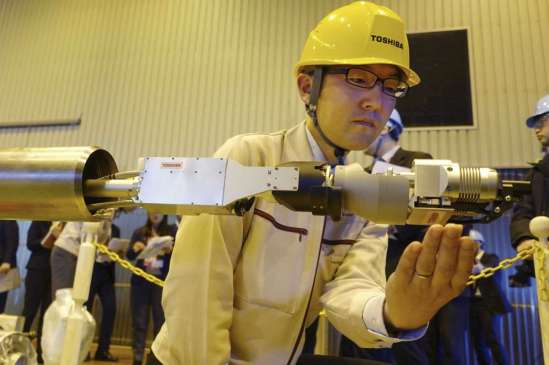
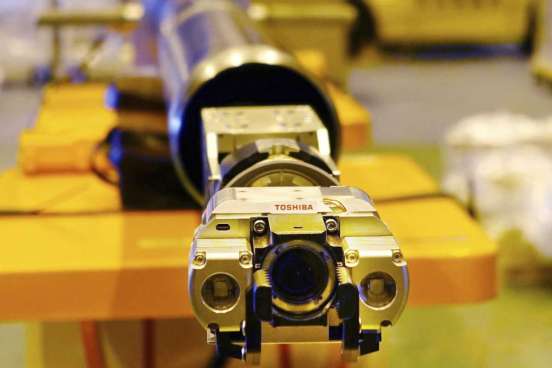
Probe shows challenges posed by melted fuel at Fukushima plant

TEPCO finds some debris in Fukushima N°2 reactor could be removed

Fukushima Daiichi: probe touched suspected fuel debris in reactor#2
IAEA Urges Patience For Fukushima Nuclear Cleanup

TEPCO to survey suspected fuel debris in reactor
The State of Nuclear Emergency Declared after the Fukushima Meltdown is Still On Today!!!

IAEA urges Japan to take ample time in Fukushima cleanup

One more expensive robot to go probe in and to get fried
TEPCO failed to spot leak of contaminated water
Confessions of a Rogue Nuclear regulator: nuclear is dangerous, a failed technology, not a safe bet for combating climate change
“Jaczko headed the NRC from 2009 to 2012 under former President Barack Obama. During his tenure, he oversaw several of nuclear’s worst battles and disasters, including Yucca Mountain, the proposed nuclear waste depository, and the Fukushima meltdown in Japan. He writes that what he witnessed was an agency overpowered by the agenda of the nuclear industry. Decisions were based on politics, not safety or the public’s best interests. After witnessing several close calls with plants and the aftermath of Fukushima, he’s come to the conclusion that there is no such thing as safe nuclear power.”

Former NRC head disagrees with Bill Gates, says nuclear not a safe bet for combating climate change
“Nuclear: Dangerous, A Failed Technology” – Former Nuke Regulatory Chief Greg Jaczko Goes Rogue
Greg Jaczko, the former Chair of the Nuclear Regulatory Commission, has published an explosive new book: Confessions of a Rogue Nuclear Regulator. In it, he gets honest with the American people about the dangers of nuclear technology, which he labels “failed,” “dangerous,” “not reliable.” He particularly comes down against nuclear as having any part in mitigating the problems of climate change/global warming. In this extended Nuclear Hotseat interview, Jaczko brings us inside the NRC’s response to Fukushima, the “precipice” on which nuclear safety balances, his own growing doubts about how safe nuclear reactors are in the United States, and how, ultimately, it was that concern with safety that probably brought him down.
Confessions of a Rogue Nuclear Regulator
Former nuclear regulator sounds alarms about the industry
Gregory Jaczko uses his tenure at the U.S. Nuclear Regulatory Commission to discuss the nuclear industry in his new book ‘Confessions of a Rogue Nuclear Regulator.
1 This Month

of the week – Shut Down Drone Warfare!


Tell the Ukrainian Government to Drop Prosecution of Peace Activist Yurii Sheliazhenko

Petition to revoke the licensing of the Near Surface Nuclear Disposal Facility (NSDF) at Chalk River. https://www.ourcommons.ca/petitions/en/Petition/Details?Petition=e-7247
To see nuclear-related stories in greater depth and intensity – go to https://nuclearinformation.wordpress.com
-
Archives
- April 2026 (91)
- March 2026 (251)
- February 2026 (268)
- January 2026 (308)
- December 2025 (358)
- November 2025 (359)
- October 2025 (376)
- September 2025 (257)
- August 2025 (319)
- July 2025 (230)
- June 2025 (348)
- May 2025 (261)
-
Categories
- 1
- 1 NUCLEAR ISSUES
- business and costs
- climate change
- culture and arts
- ENERGY
- environment
- health
- history
- indigenous issues
- Legal
- marketing of nuclear
- media
- opposition to nuclear
- PERSONAL STORIES
- politics
- politics international
- Religion and ethics
- safety
- secrets,lies and civil liberties
- spinbuster
- technology
- Uranium
- wastes
- weapons and war
- Women
- 2 WORLD
- ACTION
- AFRICA
- Atrocities
- AUSTRALIA
- Christina's notes
- Christina's themes
- culture and arts
- Events
- Fuk 2022
- Fuk 2023
- Fukushima 2017
- Fukushima 2018
- fukushima 2019
- Fukushima 2020
- Fukushima 2021
- general
- global warming
- Humour (God we need it)
- Nuclear
- RARE EARTHS
- Reference
- resources – print
- Resources -audiovicual
- Weekly Newsletter
- World
- World Nuclear
- YouTube
-
RSS
Entries RSS
Comments RSS
 nuclear-news